Take 3: Young Washington Review

2026 marks the 250th birthday of the United States of America’s founding. Because of this major milestone, MovieRob selected July’s Genre Grandeur theme as “Red, White and Blue Movies”. This means a chosen film has to deal “with The American Revolution, American Patriotism or related to the 4th itself”. For my selection, Young Washington, I had planned to publish my review on July 4th. But because of my schedule at the time, I didn’t get the chance to see the 2026 picture as soon as I had hoped. Now that I’ve seen the movie, I can finally post my review for MovieRob’s Genre Grandeur Blogathon! As I already mentioned in this introduction, a chosen film for the event had to deal “with The American Revolution”. When George Washington appears in entertainment media revolving around this period in history, the story itself focuses on what led up to the signing of The Declaration of Independence. In Young Washington, however, the story explores the events that shaped George into the leader history remembers him as today. Reflecting on The American Revolution related pieces of entertainment media I’ve seen, heard, or read, Young Washington’s approach to this specific time period seems to have addressed a creative void.
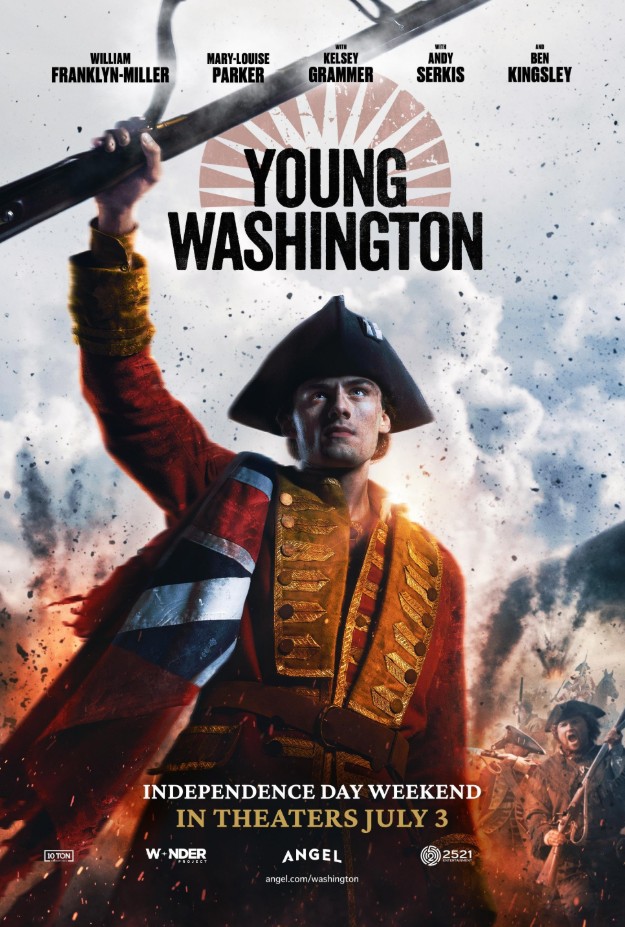
Young Washington poster created by Wonder Project, 2521 Entertainment, Angel, Provident Films, Radar Pictures, Red 56, Ten Ton Studio, and Wild Atlantic Pictures

Things I liked about the film:

Incorporation of the story’s natural landscape: IMDB lists Ireland as Young Washington’s primary filming location. Yet the story is set in Virginia. Since the majority of the movie takes place outdoors, the forest landscape of America’s tenth state was given center-stage through long and medium shots. Clear blue waters, rolling green hills, and what appears to be pine trees literally and figuratively represent the “calm before the storm”, as the Ohio Territories are at the center of a major conflict. This same landscape was also shown at different times of the day as well as in different climates. On a few occasions, snow covered the forest floor and trees. Paired with a gray-blue sky, this landscape visually presented a peaceful environment, despite the uncertainty this type of terrain brings. The incorporation of Young Washington’s natural landscape added natural beauty to the film. This creative decision also reminded me of Europe’s natural landscape receiving importance in I Am David, showing a side of the United States of America that could be easily taken for granted.

The acting: As I just mentioned in this review, the Ohio Territories are at the center of a major conflict in Young Washington. The reason is because the French desire to claim the land as their own. In order to convince the French to leave, George is tasked with persuading a French military officer named Joseph Jumonville. In a scene where George negotiates with Joseph, Joseph, at first, appears very jovial. His huge smile, jolly demeanor, and laughter gives George (and the audience) the impression things will go George’s way. But as soon as George addresses the French residing on the Ohio Territories, Joseph’s attitude immediately changes. His intense stare and sharp tone of voice lets George (as well as the audience) know he means business. Joseph’s change in attitude causes a shift in the scene’s atmosphere, raising the stakes of the situation. Despite having a limited presence in Young Washington, Joseph became such a memorable part of the movie! That’s because the actor who portrayed Joseph, Clement Toyon, gave a performance that was captivating due to his flawless transition between attitudes. With that said, I wish Joseph made a few more appearances in the film.

While George and a surveyor named Christopher are surveying the Ohio Territories, they cross paths with Half-King Tanacharison. Similar to Joseph Jumonville, Half-King Tanacharison appears in Young Washington for a limited period of time. Also similar to Clement Toyon’s portrayal of Joseph, Half-King Tanacharison was so memorable because of Ryan Begay’s performance! Whenever he showed up in the story, Half-King Tanacharison carried himself with a strong confidence, his demeanor letting others know how he should be taken seriously. At the same time, Half-King Tanacharison carried a gentleness which emphasized how he was a leader who sought fairness. These combined characteristics in demeanor allowed Ryan’s performance to contain a commanding presence. Because we’re on the subject of leaders, I must talk about William Franklyn-Miller’s portrayal of George Washington! Like I said about Liev Schreiber’s portrayal of Orson Welles in RKO 281 and Tom Hulce’s portrayal of Amadeus in Amadeus, William brought humanity back to George’s name by finding the heart of the “genius” and putting some genuine emotion behind it. What I also liked about William’s performance is how it possessed a strong sense of realism. This element didn’t show an actor portraying a historical figure, but, instead, a young man becoming the leader he was destined to be. Working in William’s favor as well is his understanding how to utilize emotion and when to increase or decrease the intensity of those emotions.

Historical accuracy: Filmmakers have the ability to create the illusion of immersion. This illusion makes the audience feel immersed in a movie’s world, giving them a reason to stay invested in the story. One way to achieve the illusion of immersion is through historical accuracy. When a film’s creative team adopts that element of storytelling, research and attention to detail must be prioritized in order to effectively bring the chosen time period back to life. While watching Young Washington, the historical accuracy could be seen as well as felt! One of my favorite examples is when George attends a party at the Belvoir plantation. Every room within the plantation is lit by candles. Throughout scenes taking place at the plantation, the lighting was consistently dim. Looking back on the movies I’ve seen (and even reviewed) relying on historical accuracy, I never thought about how a film’s lighting could affect a film’s historical accuracy, let alone illusion of immersion. The example I brought up of the dim lighting in Young Washington allows the audience to grasp how different lighting options were in the 1700s.

The dialogue: An underrated film-making element is the quality of a script’s dialogue. If the dialogue among a movie’s characters is good, it can become a memorable component of the movie itself. As I watched Young Washington, there was dialogue that stood out to me because of how good it was! When George applies for the British Army, he is ultimately rejected due to his social status. To prove his worth, George presents his collection of quotes he wrote down while being tutored by his half-brother, Lawrence. But George is told how an imitation of great men doesn’t make him one. This quote not only encourages George to forge his own path in life, it also foreshadows George’s future. Earlier in the story, Lawrence teaches George how to play chess. During the lesson, Lawrence says how a pawn can take a king. This quote was, once again, clever foreshadowing, as George’s role in the American Revolution helped the Thirteen Colonies break away from a king ruled government to form the United States of America. The two examples of dialogue I presented in this review show how much thought and effort went into the screenwriting as well as how the dialogue was delivered!

Children holding American flags during a sunset image created by rawpixel.com at freepik.com. <a href=”https://www.freepik.com/free-photos-vectors/people”>People photo created by rawpixel.com – http://www.freepik.com</a>. Image found at freepik.com.

What I didn’t like about the film:

Inconsistent incorporation of subtitles: Earlier in this review, I brought up how George and Christopher cross paths with Half-King Tanacharison while surveying the Ohio Territories. Christopher and Half-King Tanacharison share a conversation, despite never meeting before. Half-King Tanacharison and Christopher’s conversation is not in English, yet no subtitles appear on the screen during their conversation. But any other time characters speak to one another in a language that isn’t English, subtitles are present on the screen. This inconsistency became noticeable to me by the third non-English conversation characters shared in Young Washington.

A missing “And then what happened” segment: In movies based on true stories, there is sometimes a segment toward the end of the movie explaining what happened to the story’s key individuals after the events presented in the movie. But Young Washington lacked this kind of segment. Toward the end of the 2026 film, on-screen text reveals a few of the events leading up to the signing of the Declaration of Independence. However, what happened to key people from Young Washington, like Sally Cary, David Frisk, and even Robert Dinwiddie, was not brought up. This creative decision left me disappointed, as I wanted to know more about the people in the story.

Some underutilized talent: Before watching Young Washington, I knew Kelsey Grammer starred in the movie. From what I remember, he was heavily featured in the movie’s marketing. At the end of the film, Kelsey himself delivered a message on the film’s importance. Yet he appeared in Young Washington in two scenes as Lord Fairfax. One of my family members almost forgot Kelsey was cast in the movie due to his very limited screen-time. While I understand why Kelsey starred in the film for a short period of time, this was one example where, to me, talent was underutilized.

Since colonial style hats were worn throughout Young Washington, including a photo of the small colonial style hat from my Oh Lil Christmas Tree collection made sense. Screenshot taken by me, Sally Silverscreen.

My overall impression:

The best way I can describe Young Washington is a “hero’s journey” woven into a history lesson. Throughout the 2026 movie, the audience sees George experience both trials and triumphs. What the audience of Young Washington also sees is solid acting performances, immersive historical accuracy, and a beautiful forest landscape. They can hear dialogue that is well written and delivered, as well as good messages and themes. Another strength of Young Washington is the ebb and flow between action-heavy, suspenseful scenes and quieter, slower-paced scenes. This ebb and flow maintained the story’s intrigue, keeping me invested in what was happening on screen. There are flaws within the 2026 picture, like inconsistent incorporation of subtitles and some underutilized talent. But, in my opinion, there’s a lot Young Washington got right when it comes to film-making. Now that we’re at the halfway point of 2026, I can honestly say I’ve seen more movies, so far, I liked than didn’t. Young Washington is one of those films belonging to the first category of movies I liked!

Overall score: 8 out of 10

Have you seen Young Washington? Is there a movie set around the American Revolution you like? Please tell me in the comment section!

Have fun at the movies!

Sally Silverscreen
Take 3: Playing with Fire (1985) Review

Have you come across a movie that fell into your lap at the right place and time? That’s what happened before I reviewed the 1985 television film, Playing with Fire. This is a movie I not only had never seen, I had never heard of. But that changed when I listened to the Telehell Podcast episode, ‘The Top 8 Darkest Moments in Kids TV Cartoons’, as the upcoming episode about Playing with Fire was advertised at the end of the episode about the darkest moments from kids TV cartoons. According to Telehell’s episode, ‘Prologue of Fire (“Playing with Fire” PREVIEW)’, the 1985 movie was considered “lost media” up until 2024. As someone interested in the subject of “lost media”, I think it’s worth celebrating when a sought-after piece of “lost media” like Playing with Fire not only gets found, but is also archived on Youtube. For any “lost media” that was eventually found, however, one has to wonder why it was “lost” in the first place? In this review of Playing with Fire, I hope to find an answer to that question!

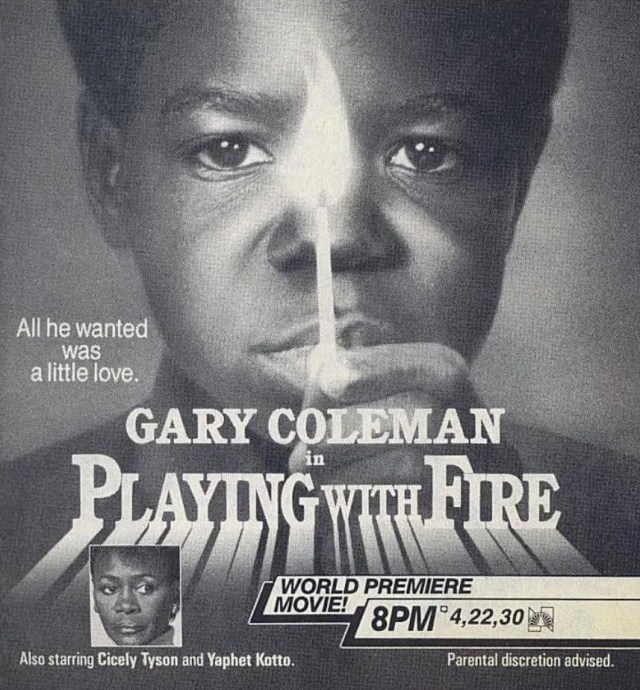
Playing with Fire (1985) poster created by New World Television, Zephyr Productions, and National Broadcasting Company (NBC)

Things I liked about the film:

Characters who subvert expectations: In Playing with Fire, Mike Harris is a friend of the protagonist, David. Based on his personality and appearance, Mike would be considered a “bully” in other ‘80s entertainment media. Throughout the 1985 movie, he teases David, pulls pranks, and doesn’t seem to take school seriously. But when David starts a fire in a trash can (because he was upset Mike wouldn’t play basketball with him), Mike pulled David away from the fire as well as encouraged David to pull their school’s fire alarm in order to get help. Mike even warns a fellow student named Pamela about David’s issues. These actions and choices help Mike subvert expectations, showing the audience how, despite his initial introduction, he actually cares about David’s wellbeing.

Entertainment media from the ‘80s that revolves around younger characters will sometimes feature a school principal who is a stickler for the rules. This creative decision may be made to either emphasize how much “cooler” the younger characters are or to show how the principal is holding the younger characters back from being themselves. But in Playing with Fire, Principal Sweeney subverts those aforementioned expectations. In a meeting between Principal Sweeney and David’s parents, Principal Sweeney acknowledges how intelligent David is. He’s also brutally honest about how it’s the responsibility of David’s parents to help David with his problems. Principal Sweeney even puts David on probation in an attempt to assist David in resolving his issues. Because of the subversion of expectations, Principal Sweeney is presented as a character who actually prioritizes the wellbeing of all his students.

The role of Fire Chief Walker: Throughout Playing with Fire, Fire Chief Walker tries to solve the mystery of who started a series of fires around his neighborhood. He wants David to admit he’s responsible for creating the fires. But Fire Chief Walker doesn’t want David to tell the truth in order to arrest him. Instead, he believes David is worth saving. Fire Chief Walker encourages David’s family to seek out family counselling, in order to help them solve their personal problems. He also encourages David to talk to his parents about how he feels, acknowledging how David is causing fires for a reason. It would have been easy for the creative team behind Playing with Fire to show their protagonist simply facing the consequences of his actions. Instead, the role of Fire Chief Walker shows how there is more than one way to solve a problem, with a way being getting to the heart of an issue to resolve it as well as preventing it from escalating.

Showing the reasons behind the behavior: The synopsis for Playing with Fire on IMDB gives David the label of “teenage arsonist”, due to how often he starts fires. The creative team behind the movie could have focused on David’s problematic behavior in order to give their project “shock value”. But instead, the script emphasizes the reasons behind the behavior. Sparks fly (literally and figuratively) due to David’s parents having marital issues. These issues cause a domino effect in David’s life, from failing grades at school to becoming easily angry. Starting fires is a manifestation of David’s unresolved feelings toward the problems within David’s parents’ marriage. By showing the reasons behind David’s behavior, the creative team behind Playing with Fire gives their audience a reason to empathize with David and his family.

Campfire with marshmellows and shooting stars image created by macrovector at freepik.com.

What I didn’t like about the film:

David as a static character: As I already mentioned in this review, showing the reasons behind David’s behavior gives the audience a reason to empathize with David and his family. But for the majority of Playing with Fire, David remained a static character. He doesn’t come to terms with his decision to start fires until an hour and forty-seven minutes into an hour and fifty-five-minute movie. This means he spends more time remaining bitter and angry about the problems in his life instead of transforming his life for the better over the course of the story. I recognize resolving problems like David’s takes time. But the static status of David held back his character development.

Fire related scenes feeling like PSAs: David starts multiple fires over the course of Playing with Fire. While these moments are frightening due to how dangerous they are, it felt like the story shifted to present a somewhat subtle PSA (public service announcement) about fire safety. One way this feeling is achieved is how causes of fire or safety measures are heavily emphasized. In a scene where David causes his first fire within his home, his mother asks him how the fire started. David explains how an overloaded electrical socket was likely the cause, followed by a close-up shot of an overloaded electrical socket. This approach to the fire related scenes made the overall movie kind of seem like an “afterschool special”.

The disappearance of Mike and Pamela: Like I mentioned earlier in this review, Mike is a friend of David who actually cares about his friend’s wellbeing. Pamela is also a friend of David, someone who kind of understands how David feels due to her parents’ divorce. Both of these characters were interesting. While Mike was subverting expectations, I wanted to see where Pamela’s character development went as the story progressed. But Pamela and Mike disappear from the story after about the film’s halfway point. Even though Pamela returns toward the end of Playing with Fire, she’s only on screen for almost four minutes. I wish Mike and Pamela played a more consistent role in the story, as they could have represented what to do if someone is afraid to speak up or doesn’t know how to help a loved one.

Breaking heart image created by Kjpargeter at freepik.com. <a href=’https://www.freepik.com/free-vector/broken-heart-valentine-background_1041991.htm’>Designed by Freepik</a>. <a href=”https://www.freepik.com/free-photos-vectors/background”>Background vector created by Kjpargeter – Freepik.com</a>. Image found at freepik.com.

My overall impression:

In the introduction of my review, I said I hoped to find an answer to the question of how Playing with Fire became “lost” in the first place. Now that I’ve seen the movie for myself, I think the movie just, simply, fell through the cracks of time. The way I feel about the 1985 movie is similar to the way I felt about the 1988 television film, Dance ‘Til Dawn; it didn’t go above and beyond enough to be considered good or great, but it wasn’t offensive enough to be bad or even disappointing. While there were elements of Playing with Fire I liked, such as how showing the reasons behind David’s behavior gives the audience a reason to empathize with David and his family, there were flaws that held the movie back from being a stronger picture. Some of these flaws include keeping David a static character for the majority of the movie, fire related scenes feeling like somewhat subtle PSAs, and Mike and Pamela disappearing from the story. At best, Playing with Fire is ok. It seems like the creative team behind the 1985 presentation had their hearts in the right place. But, at worst, the film feels like an hour and fifty-five-minute PSA about fire safety. There was even a video message at the end of Playing with Fire where Gary Coleman (the actor who portrayed David) explains the dangers of arson. With everything said, it’ll be interesting to hear what the consensus will be for the movie on the Telehell Podcast.

Overall score: 6-6.1 out of 10

Have you seen Playing with Fire? Is there a piece of “lost media” you’d like to see become discovered? Let me know in the comment section!

Have fun at the movies!

Sally Silverscreen

If you want to check out the podcast episodes I referenced in this review, visit the Youtube channel, Telehell Podcast, and listen to the episodes, ‘The Top 8 Darkest Moments in Kids TV Cartoons’ and ‘Prologue of Fire (“Playing with Fire” PREVIEW)’.

Take 3: The Assassination of Jesse James by the Coward Robert Ford Review

June’s theme for Genre Grandeur is “Movies With Genre Bending themes”. I spent a lot of time researching potential titles due to how specific this theme is. But with this month’s Genre Grandeur overlapping with the Legends of Western Cinema Week Blogathon, I chose the 2007 movie, The Assassination of Jesse James by the Coward Robert Ford. According to an article of The 10 Best Genre-Bending Movies Of All Time from the website, Taste of Cinema, “What makes the film [The Assassination of Jesse James by the Coward Robert Ford] one of the true genre-bending westerns is how it chooses to present it mythology of the west”. The author of the article, Mark Serravalle, explained how “The characters are more life-like and complicated than how they are made out in the stories that are told about them”. I will admit that, even though I’ve heard of him, I know very little about Jesse James. In fact, the titles I’ve selected for past Legends of Western Cinema Week Blogathons have revolved around either fictional or fictionalized stories. Therefore, reviewing The Assassination of Jesse James by the Coward Robert Ford is not only a learning opportunity for 18 Cinema Lane, it’s allowing my blog to travel newer paths within the realm of blogathons.

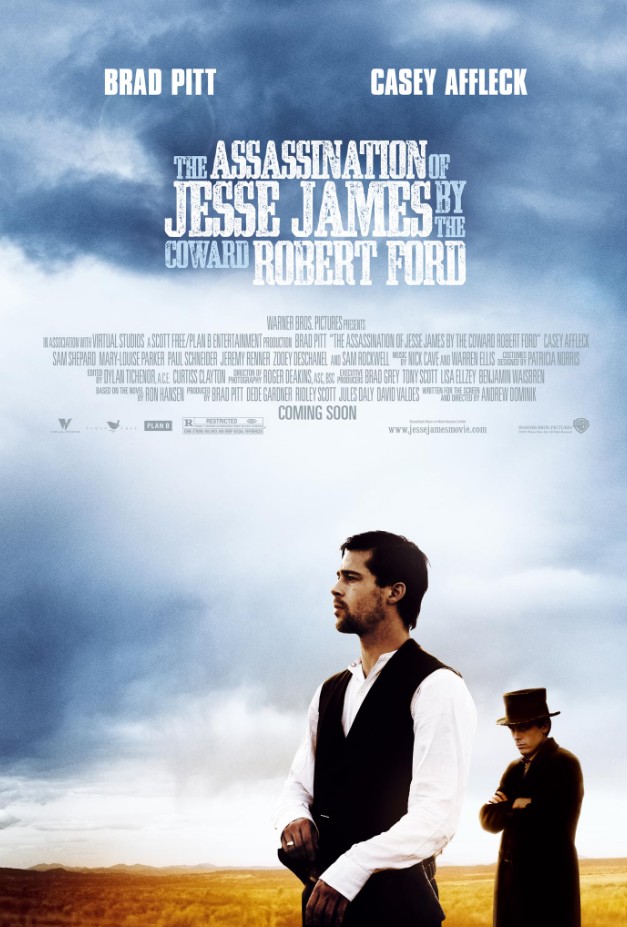
The Assassination of Jesse James by the Coward Robert Ford poster created by Warner Bros., Virtual Studios, Scott Free Productions, Plan B Entertainment, Alberta Film Entertainment, and Warner Bros. Pictures International

Things I liked about the film:

The acting: The Assassination of Jesse James by the Coward Robert Ford received two nominations at the 80th Academy Awards. One of those nominations was given to Casey Affleck for his portrayal of the titular Robert Ford. Looking back on the 2007 movie, I can agree with the Academy’s decision! What I liked about Casey’s performance is his ability to say so much without saying anything at all. A perfect example is when Robert is reflecting on the similarities he and Jesse share. Throughout this recollection, Robert appears disappointed and even defeated. His eyes and the slight frown his mouth adopts give these feelings away. But every now and then, a smile shows up on Robert’s face and his eyebrows even move upwards. This moment effectively illustrates how Robert has become disillusioned by the reality of who Jesse really is, yet fondly remembers his fabricated image of him.

If I had to be brutally honest, I think Brad Pitt should have been nominated for his portrayal of Jesse James. This is because, through his acting talents, Brad presented Jesse as the opposite of what one might expect. When it comes to legendary figures like Jesse James, presentations of being “larger than life” and a “showman” could give the impression Jesse was an untouchable, unstoppable force. But Brad’s portrayal of Jesse emphasizes the human he was; capable of feeling fear, making mistakes, and constantly looking over his shoulder. A perfect example of this point is when Jesse is interrogating Robert’s cousin, Albert. When Albert claims he doesn’t know Robert’s whereabouts, Jesse beats Albert up because he thinks Albert is lying. During the beating, the anger on Jesse’s face is very evident. But as he realizes Albert is, indeed, telling the truth, Jesse’s face quickly goes from angry to confused. He adopts a “thousand yard stare” as well as a look of disbelief, wondering how he could be so wrong. Several minutes later, as he’s preparing to leave on horseback, Jesse bursts into tears, realizing he just crossed a line.

The cast of The Assassination of Jesse James by the Coward Robert Ford gave performances that were well-done. However, I was pleasantly surprised to see Jeremy Renner star in the film as Wood Hite! Before reviewing the 2007 film, I had seen Jeremy’s portrayal of Clint Barton/Hawkeye throughout the Marvel Cinematic Universe (MCU) and his portrayal of Aaron Cross from The Bourne Legacy. But what was different about Jeremy’s portrayal of Wood is how he had to rely more on emotion in order to carry the character through the story. During an exchange between Wood and Robert, Wood shares how his mother is Jesse’s father’s sister. He tries to use his familial connection as leverage against Robert, smugly smiling and his tone of voice sounding very arrogant. When Robert questions this familial connection, Wood’s face quickly changes to a look of shock. His tone of voice becomes defensive and his eyes grow wide. This example shows how, even though Jeremy appeared in The Assassination of Jesse James by the Coward Robert Ford for a limited period of time, the versatility of his acting talents were on full display!

The cinematography: Remember when I said The Assassination of Jesse James by the Coward Robert Ford received two nominations at the 80th Academy Awards? Well, the other nomination was given to Roger Deakins for the Cinematography category. Once again, this is a decision I agree with the Academy on! Two of the best examples of the cinematography’s mastery in The Assassination of Jesse James by the Coward Robert Ford happens during a train robbery taking place toward the beginning of the movie. When the train stops right in front of Jesse, only the train’s front light is shining. White smoke forms around both the train and Jesse. Because of the minimal lighting, Jesse is presented as a silhouette. He’s presented as a silhouette again when he’s walking beside the train, emerging from the aforementioned white smoke. Only the light from the train’s window illuminates the scene, giving the scene itself a warm, orange glow. Through the cinematography, these two examples elaborate how Jesse was depicted by those who didn’t know him well; a mysterious myth who seized the attention of others.

More unique ideas brought to the Western genre’s table: It seems like the two most common settings in the Western genre are deserts and plains. But what if I told you a forest is where parts of The Assassination of Jesse James by the Coward Robert Ford take place? While there were plains in the 2007 film, I’d argue forests were featured in the story the most. Because forests are usually not known for being a Western genre location, The Assassination of Jesse James by the Coward Robert Ford brings something more unique to the genre’s table. In Western genre films revolving around legendary figures like Jesse James, the script typically focuses on the prime of the figure’s life, highlighting the most exciting, thrilling parts of their story. But The Assassination of Jesse James by the Coward Robert Ford showcases Jesse and his gang’s life after crime. Even the train robbery I referenced earlier was not presented as a thrilling, exciting event. Instead, that train robbery is shown as a scary event full of uncertainty, fear, and even violence. These screenwriting choices gave the 2007 movie a sense of honesty that isn’t always found in the Western genre.

Legends of Western Cinema Week banner created by Hamlette from Hamlette’s Soliloquy and Heidi from Along the Brandywine

What I didn’t like about the film:

The run-time: As listed on IMDB, The Assassination of Jesse James by the Coward Robert Ford’s run-time is two-hours and forty-minutes. Similar to my thoughts about Gods and Generals’s run-time, the 2007 film’s run-time can definitely be felt. The story of Jesse James and his gang’s life after crime is told at a slower pace. That paired with the aforementioned run-time causes The Assassination of Jesse James by the Coward Robert Ford to feel unnecessarily stretched out. I found myself zoning in and out while watching the movie, concerned I’d fall asleep during my movie-viewing experience. One solution to this flaw would have been to trim scenes that linger, such as a scene where Jesse stares at his brother, Frank, for what seems like a minute.

A somewhat misleading title: When I recently reviewed The Naked Jungle, I criticized the movie for its somewhat misleading title. Even though the titular jungle played a role in the story, it didn’t appear until about the last forty minutes of the hour and thirty-five minute film. The Assassination of Jesse James by the Coward Robert Ford possesses the same flaw. Based on the title alone, one would believe the titular event would serve as the story’s primary focus. But that event doesn’t end up happening until the film’s last twenty-seven minutes. This means during The Assassination of Jesse James by the Coward Robert Ford’s two-hour and forty-minute run-time, most of that time is spent leading up to the event itself. The audience is forced to wait over two hours for Jesse’s other shoe to drop.

The dialect: The Assassination of Jesse James by the Coward Robert Ford takes place during the late 1800s. This setting in time encouraged the film’s creative team to adopt historical accuracy. While that aspect of filmmaking was achieved visually, it was also achieved vocally, as the cast spoke with the dialect (as well as the dialogue) of the story’s time. Despite these historically accurate achievements, there were times I found it difficult to understand what the characters were saying. Because I don’t hear that dialect (and dialogue) consistently, I was forced to actively pay attention to what was being said. Otherwise, there’s a good chance I would have missed important context.

Sheriff badge image created by Freepik at freepik.com. <a href=’https://www.freepik.com/free-vector/brown-cowboy-label-set_1543252.htm’>Designed by Freepik</a>. <a href=”https://www.freepik.com/free-photos-vectors/vintage”>Vintage vector created by Freepik</a>. Image found at freepik.com.

My overall impression:

The more I think about The Assassination of Jesse James by the Coward Robert Ford, the more it reminds me of Gods and Generals and The Naked Jungle. Not only does the 2007 movie possess a run-time that is, in my opinion, too long (like Gods and Generals), its title is also somewhat misleading (like The Naked Jungle). While I appreciate the creative team’s efforts to make their film look and sound historically accurate, I sometimes found it difficult to understand what the characters were saying. But despite these flaws, it’s evident there was merit put toward the project. Besides the historically accurate appearance of The Assassination of Jesse James by the Coward Robert Ford, the cinematography made the film visually interesting. The train robbery scene proves how the movie’s creative team took advantage of film’s visual medium to present their intended ideas. The cast as a whole gave good performances, especially Casey Affleck, Brad Pitt, and Jeremy Renner. But what I appreciate the most about The Assassination of Jesse James by the Coward Robert Ford is how more unique ideas were brought to the table of the Western genre. From setting parts of the story in a forest to showcasing Jesse and his gang’s life after crime, these creative choices prevent the Western genre from becoming stagnant. It also illustrates how creatively diverse the Western genre can be.

Overall score: 6 out of 10

Have you seen The Assassination of Jesse James by the Coward Robert Ford? What creatively unique ideas from the Western genre have stood out to you? Let me know in the comment section below!

Have fun at the movies!

Sally Silverscreen

Here’s the link to the article I referenced in this review if you’re interested in reading it: https://www.tasteofcinema.com/2023/the-10-best-genre-bending-movies-of-all-time/

Take 3: The Naked Jungle (1954) Review

This is my third time participating in the Luso World Cinema Blogathon. Back in 2021, I wrote about the 2005 film, Ladies in Lavender, which I thought was just ok. Then last year, I reviewed Jasmine Guy’s episodes of Touched by An Angel. While the episodes, “Sympathy for the Devil” and “Lost and Found”, were fine, “Clipped Wings” became my least favorite Touched by An Angel episode reviewed on 18 Cinema Lane, so far. But these previous entries for the Luso World Cinema Blogathon were chosen based on a particular actor’s or actress’s involvement in a project. For this year’s event, I decided to select a movie based on its location. Therefore, I picked the 1954 film, The Naked Jungle! According to the criteria for the Luso World Cinema Blogathon, The Naked Jungle takes place in Brazil. The movie was also recommended to me by Maddy (from Maddy Loves Her Classic Films). Both Charlton Heston and Eleanor Parker are no strangers to 18 Cinema Lane. Not only have I covered 1959’s Ben-Hur, I’ve also written about Interrupted Melody, The Man with the Golden Arm, and Return to Peyton Place!

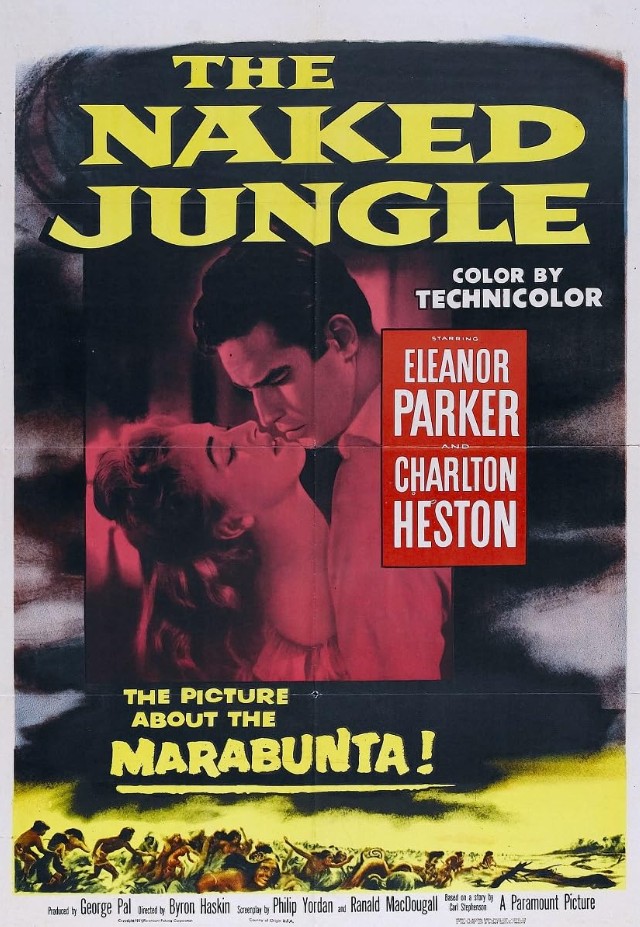
The Naked Jungle (1954) poster created by Paramount Pictures

Things I liked about the film:

The acting: In this review’s introduction, I stated how both Charlton Heston and Eleanor Parker are no strangers to 18 Cinema Lane. After reviewing three of Eleanor’s movies, what I’ve noticed is how Eleanor uses emotion to her advantage. Despite only writing about one of Charlton’s films, Ben-Hur, I can appreciate the consistency of his acting strengths. These compliments can be applied to Eleanor’s and Charlton’s portrayal of Joanna and Christopher in The Naked Jungle! Throughout the 1954 picture, Christopher is a stoic man who prioritizes his plantation. So, when Joanna comes into his life, he carries frustration, pride, and even entitlement in his eyes, through his voice, as well as his body language. Meanwhile, Joanna is a sweet and gentle woman who is open-minded to her new life with Christopher. But when Christopher becomes argumentative with her, Joanna shows little to no fear, effortlessly replacing sweetness with fierce confidence. Because of how strong both Charlton’s and Eleanor’s performance was, their characters were interesting to watch! One of my favorite scenes in The Naked Jungle is when Joanna meets a Commissioner who happened to board the same boat as her. Portrayed by William Conrad, the Commissioner had the charisma and friendly personality to brighten up a room. I could even sense nice on-screen chemistry between William and Eleanor. These factors made me look forward to scenes featuring the Commissioner!

The set design: When it comes to set design, sometimes less is more. This was definitely the case for The Naked Jungle! My favorite set was Joanna’s room because of how pops of color were incorporated into the space. Standing out against the white walls and shutters were gold sconces, dark wood furniture, and bright hued chairs. The vanity area was, in my opinion, the most impressive! An ornate, gold mirror proudly hung on the wall. Right underneath the mirror was a dark wood vanity table, nicely complimenting the mirror’s shiny frame. A chair with green cushions provided a visually appealing bridge between the darker and brighter hues. Though all the pieces of décor were simplistic in design, the overall room presented an elegant, classy, and timeless space!

The dialogue: I sometimes come across films where some of the dialogue is so clever, it sticks in my memory. The Naked Jungle happens to be one of those films! An example of memorably clever dialogue is when Joanna arrives in Brazil for the first time. As Christopher’s “number one man”, Incacha, introduces himself, even bringing up his title, Joanna addresses herself as Christopher’s “number one wife”, as she desperately wants to know where her husband is. The quick response and immediate play on words make this response cordial and somewhat hilarious. Another great example arrives after Joanna and Christopher meet. When Christopher tells Joanna how the tropics have their own schedule, Joanna asks, “What time is bedtime”? Christopher replies by saying, “Whenever you wish, madam”. Joanna then tells Christopher with a hint of playful sarcasm, “I wouldn’t want to upset your schedule”. This comeback works because of the screenwriting and Eleanor’s performance!

6th Luso World Cinema Blogathon banner created by Le from Crítica Retro and Beth Ann from Spellbound With Beth Ann

What I didn’t like about the film:

Lack of on-screen chemistry: As I previously talked about in this review, I liked the acting performances of Charlton Heston and Eleanor Parker. But what I didn’t like about their portrayals of Christopher and Joanna was their lack of on-screen chemistry. In this case, the fault lies in the screenwriters. Not only was the relationship between Joanna and Christopher tense, this tension between them lasted the majority of the movie. By the time Christopher and Joanna finally got around to appreciating the other’s company, this renewal of chemistry came too little too late. That writing choice made it difficult, for me, to determine if Charlton and Eleanor truly possessed any on-screen chemistry.

The “locals” as background characters: “Locals” of the story’s Brazilian setting make appearances throughout The Naked Jungle. But these “locals” aren’t given much to do in the story. Among them was a gentleman who not only possessed Mayan ancestry within his family tree, he also carried around a small head known as his “treasure”. Because of these details, I thought he’d make a fascinating addition to The Naked Jungle’s script, using his family history and maybe even his “treasure” to help resolve the film’s overarching conflict. Unfortunately, this gentleman barely said anything in the one scene he was featured in. Even Incacha, the “number one man” of Christopher, receives a smaller role within the script. Despite dealing with a personal conflict of his own, that conflict has little bearing over the movie’s plot. I was disappointed by the creative decision to turn the “locals” into background characters. This is because their inclusion in the film made me want to learn more about their culture and perspective.

A somewhat misleading title and synopsis: According to The Naked Jungle’s synopsis on IMDB, “a 2-mile-wide, 20-mile-long column of army ants” plan to destroy anything in their path, including Christopher’s plantation. With a movie titled, The Naked Jungle, one would think the titular jungle would play a significant role in the story. But the jungle doesn’t actually appear in the movie until about the last forty minutes. Meanwhile, the “army ants” I previously brought up aren’t shown on screen until about the last thirty minutes of the movie. Keeping in mind The Naked Jungle has a run-time of an hour and thirty-five minutes, this means the majority of the script prioritizes the tension between Christopher and Joanna. These creative choices I talked about make the title and synopsis seem kind of misleading.

String of musical notes image created by Freepik at freepik.com. <a href=’https://www.freepik.com/free-vector/pentagram-vector_710290.htm’>Designed by Freepik</a> <a href=”https://www.freepik.com/free-photos-vectors/background”>Background vector created by Freepik</a>. Image found at freepik.com. 

My overall impression:

Have you ever seen a movie where it wasn’t bad, but it just didn’t meet or exceed your expectations? That’s how I felt after watching The Naked Jungle. Before reviewing the 1954 film, I expected a story where a husband and wife worked together to solve the problem of an ant infestation. But what I got instead was a movie that prioritized the tense relationship of Joanna and Christopher, the aforementioned husband and wife. While there was an ant infestation and the titular jungle did play a role in the story, these parts of the script didn’t arrive until toward the end of the movie. But as I waited for these arrivals, I came to appreciate certain aspects of The Naked Jungle. Not only did I like the “less is more” approach to the set design, I also liked how clever some of the dialogue was. I even liked the acting performances, including those from Eleanor and Charlton. When it comes to The Naked Jungle, however, I was left desiring more. Maybe I’ll review a film where the “locals” are given center stage.

Overall score: 6 out of 10

Have you seen The Naked Jungle? Is there a movie from Charlton Heston’s and/or Eleanor Parker’s filmography you’d like to see me review next? Please tell me in the comment section!

Have fun at the movies!

Sally Silverscreen
Take 3: The Children’s Hour Review

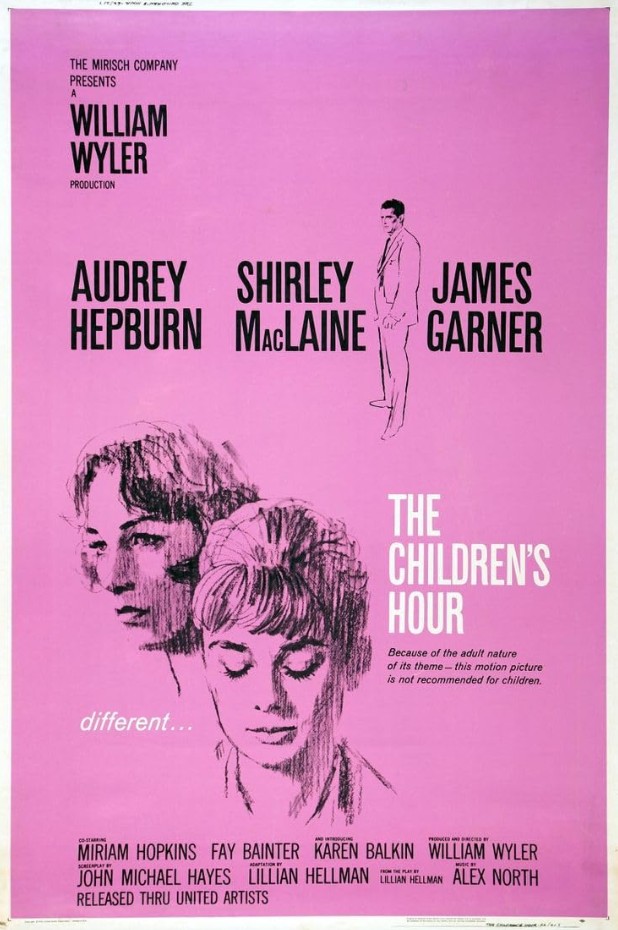
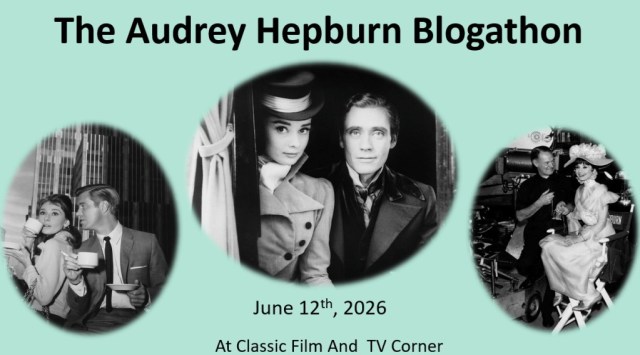
Audrey Hepburn is no stranger to 18 Cinema Lane. In the eight years I’ve been blogging, I have reviewed The Nun’s Story (which I liked), Funny Face (which I also liked), and Roman Holiday (which was, in my opinion, ok). For Classic Film And TV Corner’s Audrey Hepburn Blogathon, I decided to pick a movie I don’t often hear in the discussion of Audrey’s films. Over the years, I’ve heard 1961’s The Children’s Hour has been considered “controversial”. Though I wasn’t sure if the movie still carried that title today or if it once held that title when the film was originally released. Wanting to find an answer to that question, I selected The Children’s Hour to write about for the event. Another actor who’s no stranger to 18 Cinema Lane is James Garner. Despite only reviewing one of his films, Hallmark Hall of Fame’s Promise, I have seen other projects from his filmography, such as Atlantis: The Lost Empire, The Notebook, and Hallmark Hall of Fame’s Decoration Day. So, I was pleasantly surprised to discover James starred in The Children’s Hour.

The Children’s Hour poster created by The Mirisch Corporation and United Artists

Things I liked about the film:

The acting: As I said in this review’s introduction, I’ve written about three of Audrey Hepburn’s films; The Nun’s Story, Funny Face, and Roman Holiday. Through her roles in these films, Audrey has proven to be a very expressive actress who allows her characters to adapt to any situation. This sentiment holds true in The Children’s Hour, as Audrey portrays a teacher named Karen. One great example of Audrey’s expressiveness takes place during a conversation Karen shares with a doctor named Joe (portrayed by James Garner). Throughout their conversation, Karen shares her desire to get married. As soon as Joe agrees to marry Karen, her face lights up, complete with wide eyes and a big ear-to-ear smile. It also helps how this reaction from Karen appears genuine. Speaking of James Garner, I also want to talk about his portrayal of Joe. During his and Karen’s aforementioned conversation, Joe is frustrated by lack of funds and resources at the hospital where he works. As he takes Karen for a car ride, Joe carries that frustration on his face, from a narrowed stare to his mouth turning in a scowl. The look on Joe’s face is consistent from a previous conversation he shared with Karen’s friend, Martha (portrayed by Shirley MacLaine). In his and Martha’s conversation, Joe expressed his frustration through his facial expressions and tone of voice. This consistency, as well as his versatility, showed just how strong of a performance James gave in The Children’s Hour!

Like I mentioned earlier, Audrey portrays a teacher named Karen. This means throughout The Children’s Hour, Karen’s students appear in the story from time to time. Out of the young actresses who received lines in the movie, two of the strongest performances came from Karen Balkin and Veronica Cartwright! In The Children’s Hour, Karen portrays Mary, a manipulative girl who never takes ‘no’ for an answer. Meanwhile, Veronica portrays Rosalie, a fellow student of Mary’s who is terrified of Mary. Whenever Mary tries to control Rosalie into following a plan of hers, Rosalie’s terror for Mary is visibly displayed through her wide eyes and appearance of fear on the rest of her face. Even when she’s questioned about the rumor about Martha and Karen, Rosalie bursts into tears as Mary’s figurative grip on her is just too powerful. On the other hand, Mary’s mood changes depending on the situation. One moment, as she’s presenting flowers to another teacher named Lily, Mary displays a sweet demeanor with a smile on her face. But when Karen catches Mary in a lie about those flowers, Mary’s attitude immediately changes to being defensive, complete with a sharp tone of voice and an angry look in her eyes. The strong execution of Karen’s and Veronica’s performance made me, as a viewer, effectively empathize with Rosalie and despise Mary.

The dialogue: I brought up earlier in this review how Shirley MacLaine portrayed Karen’s friend, Martha. One of the reasons why I liked her performance was her execution of the dialogue. To add to this, some of the dialogue in The Children’s Hour was cleverly written. A great example takes place during a conversation between Martha and Karen. While bringing up the subject of money, Karen addresses her concern for Martha’s wardrobe. Martha casually and confidently responds to Karen’s concern by saying, “I’m a skirt-and-blouse character. We’re always in style”. Later in The Children’s Hour, Martha and Lily have a disagreement. During this disagreement, Martha suggests Lily leave to pursue her Broadway dreams, even offering to give her money. Lily refuses to accept Martha’s offer and says she’d “rather scrub floors first”. Martha, her voice fueled with sarcasm, replies “You’ll change your mind after the first floor”. The cleverness of the dialogue’s writing, as well as the dialogue’s delivery, was such a pleasant surprise!

The mise-en-scène: While watching The Children’s Hour, I noticed interesting mise-en-scène that was sometimes utilized during the movie. One example shows Mary spying on Karen and Martha as they share a conversation in Martha’s room. The door to Martha’s room is in the background near the left-hand side of the frame. In the foreground near the right-hand side of the frame is Mary’s face hiding behind the door of her room. Shots like the one I described present the illusion of putting the audience in a scene alongside the characters. This creative decision was, for me, an unexpected yet memorable aspect of the movie!

The Audrey Hepburn Blogathon banner created by Maddy from Classic Film And TV Corner

What I didn’t like about the film:

Telling instead of showing: Throughout The Children’s Hour, Martha and Karen recount how Mary’s rumor negatively impacted their lives and careers. They planned on filing a libel and slander lawsuit, but ended up losing that lawsuit. The rumor became national news, as Martha mentions it made the front page. But none of these events are shown in the film. No newspapers are presented with that rumor as headline news. There’s no courtroom scenes either, so the audience is forced to take Karen and Martha’s word for it. Because of the script’s reliance on telling instead of showing, the severity of the situation isn’t fully felt. The closest The Children’s Hour gets to addressing the severity is when the students actively leave the school.

Not addressing Mary’s accountability: Karen, Martha, and even Joe are hated by Mary because they do what Mary’s grandmother failed to do: hold Mary accountable for her bad decisions. This hatred is what caused Mary to start the rumor about Martha and Karen in the first place. But The Children’s Hour spends so much time focusing on the fallout from the rumor, Mary isn’t shown facing any accountability for creating the rumor. Sure, the rumor is debunked and Mary’s grandmother discovers the truth. However, the script never addresses what happened to Mary when the truth came to light. As a viewer who was waiting for Mary to face her comeuppance, I was disappointed.

Drawn-out scenes: There were a few times within The Children’s Hour where scenes were drawn out longer than necessary. One example is when Joe confronts Karen about the rumor. While I understand this scene was intended for Karen to debunk the rumor and re-confirm the status of her and Joe’s relationship, the scene itself felt like it lasted between five to ten minutes. Because there’s only so much story you can tell in an hour and forty-eight minutes, I believe scenes like the one I described should have been trimmed a bit.

Chalkboard image created by Freepik at freepik.com. <a href=’https://www.freepik.com/free-photo/mathematical-operation-written-on-blackboard_1357576.htm’>Designed by Freepik</a>. <a href=”https://www.freepik.com/free-photos-vectors/background”>Background image created by Freepik</a>. Image found at freepik.com.

My overall impression:

In the world of cinema, there are three types of movies: those that stand the test of time, those that were ahead of its time, and those that are a product of its time. Personally, I think The Children’s Hour fits in the latter category, primarily due to how the dialogue tries to skirt around the rumor instead of being straightforward about it. However, I don’t believe this makes The Children’s Hour a bad movie. In fact, the 1961 picture has its merits. The acting was solid, from Audrey’s portrayal of Karen and James’ portrayal of Joe to the performances from the younger actresses like Veronica and Karen. I also liked how clever some of the dialogue was and how the mise-en-scène was utilized. But the creative team behind The Children’s Hour didn’t take the opportunity to expand the story beyond the stage it was adapted from. The script relied on telling instead of showing, which prevented the severity of the situation from being fully felt. Some scenes were drawn out longer than necessary and Mary’s accountability for starting the rumor isn’t addressed in the story. Therefore, I like Funny Face and The Nun’s Story over The Children’s Hour.

Overall score: 6.1 out of 10

Have you seen The Children’s Hour? Which movie from Audrey Hepburn’s filmography would you like to see me review next? Let me know in the comment section below!

Have fun at the movies!

Sally Silverscreen
Take 3: The Misfits (1961) Review

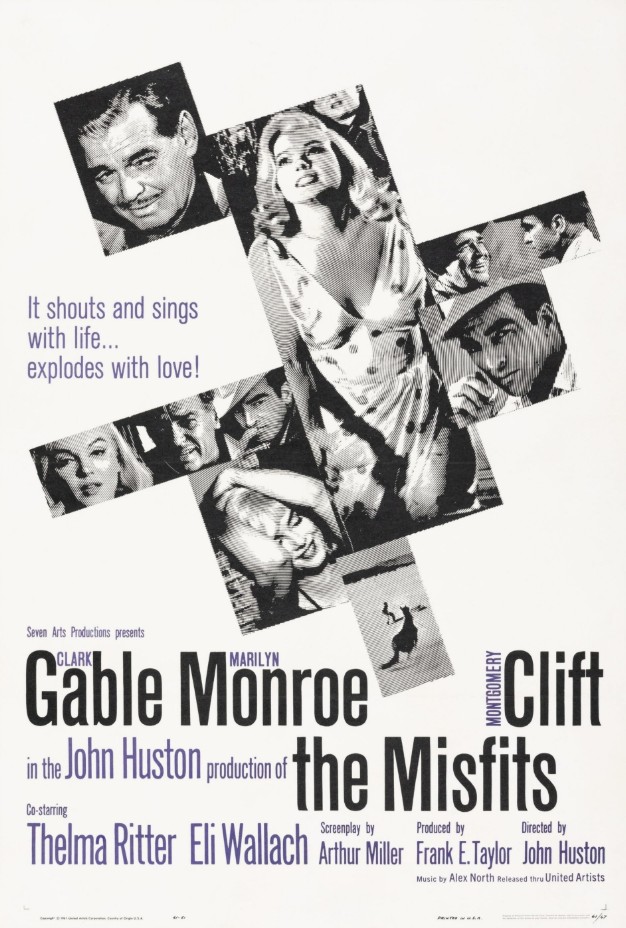
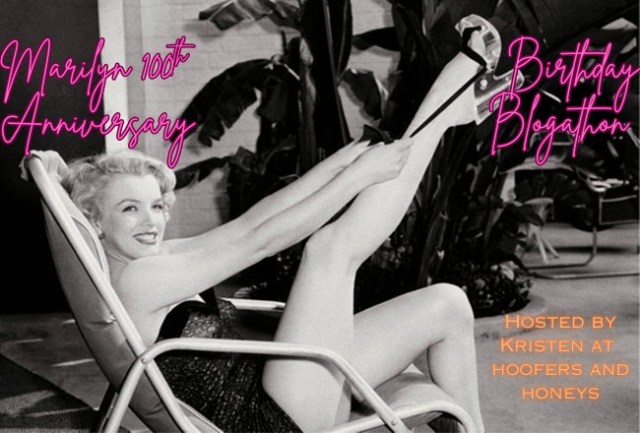
Marilyn Monroe is a woman who needs no introduction. One of the most popular actresses of all time, almost everyone knows who Marilyn is, even if they’ve never seen any of her movies. I remember a time when I would go to a store and find memorabilia with Marilyn’s picture or likeness on it, from metal wall signs to Christmas ornaments. I even recall a church named after her in the 1975 movie, Tommy. But when the Marilyn Monroe – 100th Birthday Anniversary Blogathon was announced, I remembered one of her films was recommended to me. That film is 1961’s The Misfits, suggested by Eric Binford (from Diary of a Movie Maniac)! On my blog’s Year-Long Bingo Card, one of the squares is labeled “Review a movie from the Western genre”. This became another reason why I chose to review The Misfits, as the movie is classified as a “contemporary western”. However, I had no idea Marilyn ever starred in a western genre picture until I selected the 1961 title for the blogathon. My aforementioned reasons, including the fact I don’t review western genre movies often, finally gave me an opportunity to write about The Misfits!

The Misfits (1961) poster created by United Artists and Seven Arts Productions

Things I liked about the film:

The acting: Throughout my years of watching and reviewing movies, I’ve heard Marilyn Monroe receive titles like “icon” and “sex symbol”. But as I reflect on her performance in The Misfits, I feel those titles do her acting talents a huge disservice. Toward the beginning of the 1961 film, Marilyn’s character, Roslyn, is questioning what her life will look like after her recent divorce. She’s hunched over her drink and her hands are folded, appearing as if she’s lost in thought. Roslyn’s eyes show how she’s trying to make a thousand decisions in a single moment, but not in a way that makes her look overwhelmed. She’s carefully processing what her new steps will be, coming up with a strategy that will prevent her from repeating her mistakes. As I watched this scene unfold, I was so focused on Roslyn and what decisions she was going to make, I had completely forgotten I was watching an actress portray a character. This is just one example of how Marilyn’s performance was one of the best parts of The Misfits!

Clark Gable is an actor I am definitely familiar with. Not only have I seen Gone with the Wind, I reviewed China Seas back in 2021. His portrayal of Gaylord in The Misfits is quite different from his two previously mentioned roles. That’s because it didn’t feel like Gaylord had something to prove, yet was emotionally versatile. One of the saddest scenes is when Gaylord is trying to find his children. As he drunkenly stumbles throughout and out of the saloon, he calls out his children’s names. A mixture of pain, confusion, and longing can be heard in his voice. Even his eyes were filled to the brim with sadness. In that scene, I, honestly, couldn’t help feeling sorry for Gaylord. Clark’s solid performance certainly contributed to that.

While I’m on the subject of the acting performances in The Misfits, I want to bring up Eli Wallach and Montgomery Clift. As I watched this movie, I was impressed by Eli’s portrayal of Gaylord’s friend, Guido, as well as Montgomery’s portrayal of a rodeo rider named Perce. One stand-out moment was when Guido is talking to Roslyn about his deceased wife. His voice quivers during the conversation and his eyes even appear on the verge of tears. Eli’s performance presents one of those times where a character can say so much as they say very little. In a different conversation with Roslyn, Perce shares his life story with her. Throughout his reflections, his wide eyes look like they’re searching for something. But it’s not because he’s lost, it’s because he’s trying to find something to focus on after a recent head injury. Montgomery’s expressive eyes are one of the reasons why his performance was captivating to watch!

The dialogue: Sometimes, a movie’s dialogue can be so thoughtfully written, it sounds profound without trying too hard to be. That was definitely the case for The Misfits! Honestly, it’s difficult to choose a favorite quote because several quotes were so thought-provoking. But I will provide a few examples to prove my previously stated point. At one moment in the movie, Isabelle, Roslyn’s former landlady and current friend, claims to know Nevada’s slogan. She says it’s “Anything goes, but don’t complain if it went”. Poignant reminders of how unpredictable life is and how some things were or were not meant to be are shared in that one line. During a conversation with Roslyn, Guido tells her, “You have the gift for life, Roslyn. The rest of us, we’re just looking for a place to hide and watch it all go by”. This piece of dialogue simply, yet effectively, differentiates between people who allow life to pass them by and those who fearlessly grab the steering wheel.

Providing creativity to the western genre: When it comes to means of travel within the western genre, horseback riding, horse drawn carriages/wagons, and trains are typically shown on screen. These modes of travel provide a stone in the western genre’s foundation, making the genre itself what it is. But what if I told you there was a plane in The Misfits? In the 1961 movie, Guido says he was a pilot in the war, likely referring to World War II. He uses his piloting skills to not only fly a plane, but to also wrangle a group of wild horses with that same plane. I bring this up because, prior to reviewing The Misfits, I had never seen, let alone heard of, a plane in a western genre film. Incorporating any aircraft into the movie added creativity to the western genre. It also gave The Misfits a unique identity.

Marilyn Monroe – 100th Birthday Anniversary Blogathon banner created by Kristen from Hoofers and Honeys

What I didn’t like about the film:

Guido’s unaddressed jealousy: At Guido’s house, Roslyn and Gaylord share a dance together. When Guido sees Gaylord and Roslyn together, the look on Guido’s face appears to be that of jealousy. But throughout The Misfits, this apparent jealousy wasn’t addressed. I honestly thought it was going to lead to a love triangle or Guido and Gaylord fighting for Roslyn’s love. Looking back on the 1961 movie, I wonder what the purpose was of showing Guido looking jealous if that feeling didn’t play a role in the story? Guido’s apparent jealousy could have led to an interesting conflict within the script had that feeling been acknowledged.

The run-time: IMDB lists The Misfits’ run-time as a little over two hours. Personally, I think that run-time is a bit excessive. Not only is the story pretty straightforward and easier to follow, the cast is smaller, which helps the audience remember who is who. These elements should have led to a tighter script. Plus, some scenes were drawn out too long, such as when Gaylord, Guido, and Perce wrangle the wild horses. If scenes like the one I brought up were trimmed down, the run-time of The Misfits could (and should) have been, at least, an hour and thirty to forty minutes. Important points in the story could have been reached sooner as well.

Perce’s underutilized backstory: In my opinion, Perce was the most interesting character in The Misfits. His backstory, along with his phone conversation with his mother, made him intriguing. I was genuinely curious about where Perce’s part of the story would go. But, unfortunately, his backstory became underutilized. During a conversation with Roslyn, Perce brings up how he was denied inheriting his father’s ranch. This could have provided Perce with a motive to carry his story forward. After his conversation with Roslyn, however, this detail is barely brought up again. In fact, Perce’s backstory becomes an afterthought as the movie progresses.

Joshua Tree National Park in California image created by Welcomia at freepik.com. <a href=”https://www.freepik.com/free-photos-vectors/tree”>Tree photo created by welcomia – http://www.freepik.com</a>. Image found at freepik.com.

My overall impression:

Have you ever watched a movie where you didn’t know what the movie’s creative team was trying to say? That was my experience watching The Misfits. I think I know what the film was supposed to tell me. But I don’t know for certain if that’s what The Misfits’ creative team wanted to tell their audience. However, I don’t believe the 1961 movie is bad. In fact, I thought it was just ok. The acting performances, including Marilyn Monroe’s, were certainly worth watching. Not only was the dialogue, at times, thought-provoking, the inclusion of a plane added creativity to the western genre. But there were flaws that held The Misfits back from being a stronger movie. I didn’t like how Perce’s backstory was underutilized and how Guido’s jealousy was unaddressed. Plus, the run-time was, in my opinion, a bit excessive. Despite those flaws, I am thankful to have received an opportunity to finally watch (and review) The Misfits!

Overall score: 6 out of 10

Have you seen The Misfits? Which film from Marilyn Monroe’s filmography would you like to see me review next? Let me know in the comment section!

Have fun at the movies!

Sally Silverscreen

Take 3: Titan A.E. (2000) Review

Participating in this month’s Genre Grandeur feels, to me, like déjà vu. That’s because the theme is “Movies Featuring Reluctant Heroes”, the same theme (and month) when I participated in Genre Grandeur back in 2020. Back then, I reviewed the 2014 film, Captain Sabertooth and the Treasure of Lama Rama. That movie ended up being the most disappointing one I saw that year. For this month’s (and year’s) Genre Grandeur, I decided to select 2000’s Titan A.E., a title I actually have seen before. However, it’s been so long since I’ve seen it, I have vague recollections of the film. On my blog’s Year-Long Bingo Card, there are two squares labeled “Review an animated film” and “Science Fiction”. That, along with how Titan A.E. fits this month’s Genre Grandeur theme, gave me an excuse to revisit the 26-year-old movie!

Titan A.E. (2000) poster created by 20th Century Fox Animation, David Kirschner Productions, Fox Animation Studios, 20th Century Fox, and Walt Disney Studios

Things I liked about the film:

The use of color: As I said in the introduction of this review, I have vague recollections of Titan A.E. because it’s been so long since I’ve seen the film. Because of that, I’d forgotten how colorful this movie is. Using color, as well as understanding how to use color, can contribute to a movie’s visual appeal. With the creative team behind Titan A.E. possessing and executing that understanding, the film’s visual appeal was achieved! In one beautiful example, Cale and his team travel to a planet called Sesharrim. As they sail through the planet, they are greeted by a landscape of rich reds. The deep purple waters are right under bright yellow balloons of light. The combination of hues on Sesharrim created an environment promoting peace and serenity.

Incorporation of clever ideas: At the beginning of Titan A.E., Cale (the film’s protagonist and reluctant hero) receives a gold ring from his father before they part ways. Since that moment, Cale (as well as the audience) believes this ring is, simply, a treasured memento. But when he meets a character named Joseph Korso, Cale learns his ring provides a map to a life-saving spacecraft called Titan. Cale receives another surprise when he discovers his ring also contains a compass. The movie’s “MacGuffin” is Titan, as the characters spend most of the story looking for it. But in stories like Titan A.E., so much focus in placed on the “MacGuffin” itself, the bridge to the “MacGuffin” is usually overlooked. In the 2000 film, however, Cale’s ring becomes a tool used to help the characters reach their goal. The purpose of Cale’s ring was not only such a clever idea for a simple piece of jewelry, it’s just one example of the incorporation of clever ideas in Titan A.E.!

Blend of 2-D and 3-D animation: Titan A.E.’s claim to fame is blending 2-D animation (hand-drawn animation) and 3-D animation (computer created images). This major creative decision brought something unique to the table of animation, as well as film! What it also did was visually complement the story’s conflict. In the world of Titan A.E., the Drejs are a villainous group of aliens who want to control the universe by outnumbering the humans. The Drejs are presented as bright blue, 3-D animated characters, while the human characters were created with 2-D animation. In one example, after Cale meets Korso, the Drejs track Cale down. Because the majority of that scene is presented through 2-D animation, it forces the audience to focus on the Drejs, with their color and animated appearance highlighting their distinctness. But what that scene also shows is how the blend of 2-D and 3-D animation gave Titan A.E. visual depth.

Colorful galaxy image created by Freepik at freepik.com. <a href=’https://www.freepik.com/free-vector/lovely-hand-drawn-galaxy-background_2943080.htm’>Designed by Freepik</a>. <a href=”https://www.freepik.com/free-photos-vectors/background”>Background vector created by Freepik</a>. Image found at freepik.com.

What I didn’t like about the film:

The Drejs: Like I already mentioned in my review, the Drejs are a villainous group of aliens who want to outnumber the humans. But while I was watching Titan A.E., I never felt they were a strong threat to Cale and his team. That’s because the Drejs had such a limited presence in the film. In fact, their presence was so limited, it felt like the Drejs appeared in the movie for the sake of plot convenience. These flaws prevented the Drejs from being effective villains.

The run-time: According to IMDB, Titan A.E.’s run-time is an hour and thirty-four minutes. As I watched the movie, however, it felt a bit longer than its run-time. The reason for this is how a few scenes were unnecessarily drawn out. For example, a scene where Cale is driving a spacecraft in a non-dangerous environment seemed to last about five minutes. While the scene contained plot development, most of the scene felt like padding. Had that scene been trimmed down, its intended point could have been reached sooner. The script could have been a bit tighter as well.

Inconsistent character development: In any story, character development is an important component. This part of storytelling allows the audience to truly get to know the characters, which gives them a reason to stay invested in what the characters are doing on screen. When it came to the human characters in Titan A.E., I thought the character development was well done, as I learned more about them as the movie went on. But when it came to the alien characters, like Gune and Stith, I felt like I only became familiar with them. The inconsistent character development in Titan A.E. not only prevented me from truly getting to know every member of Cale’s team, the camaraderie between these characters wasn’t as strong as it could have been.

Movie items image created by Freepik at freepik.com. <a href=’https://www.freepik.com/free-vector/flat-modern-cinema-elements_847506.htm’>Designed by Freepik</a>. <a href=”https://www.freepik.com/free-photos-vectors/frame”>Frame vector created by Freepik</a>. Image found at freepik.com.

My overall impression:

When a movie performs poorly at the box office, one of the potential reasons may be it was “ahead of its time”. If someone wanted to apply this reasoning to Titan A.E., I’d buy that reasoning at full price. As I mentioned in this review, the 2000 presentation is known for blending 2-D animation (hand-drawn animation) and 3-D animation (computer created images). Even though this creative risk hurt the film’s financial earnings, it did show the world the possibilities animation (let alone filmmaking) had to offer. It also showed how 2-D and 3-D animation can complete one another instead of compete against each other. Though looking at how the cinematic landscape has changed in twenty-six years, 3-D animation has become so common, 2-D animation has ended up becoming scarce. As for my opinion of Titan A.E., I thought it was a fine, interesting enough movie. But for all the reasons I brought up, I believe this film deserves more love and appreciation.

Overall score: 7.2 out of 10

Have you seen Titan A.E.? Which underrated animated movie do you wish received more love and appreciation? Let me know in the comment section!

Have fun at the movies!

Sally Silverscreen
Take 3: Best Served Cold: A Hannah Swensen Mystery Review

Since 2023, when I reviewed Carrot Cake Murder: A Hannah Swensen Mystery, I have expressed my frustrations over the re-brand of the Murder, She Baked/Hannah Swensen series. It got to the point where, by the time I wrote about Reality Bites: A Hannah Swensen Mystery, I wasn’t looking forward to future installments. But that started to change when I saw Pie To Die For: A Hannah Swensen Mystery. Even though the movie was just ok, it was slightly better than its predecessor. Then, when I reviewed Sugar & Vice: A Hannah Swensen Mystery, I found that film ok as well. As I learned about another chapter in the series, Best Served Cold: A Hannah Swensen Mystery, I was ready to discuss the film with an open mind! Would that movie be ok like the previous two chapters? Keep reading my review to find out!

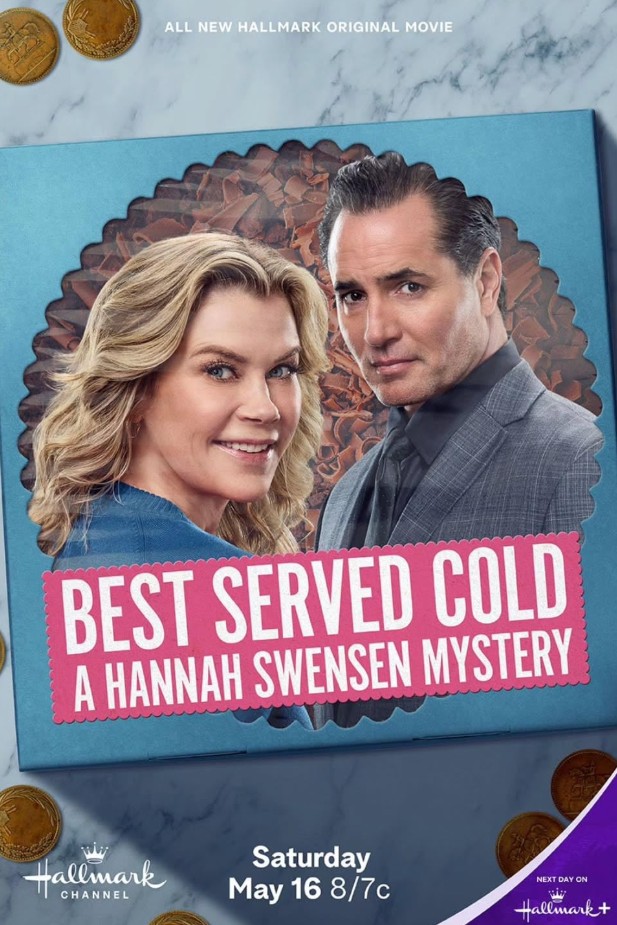
Best Served Cold: A Hannah Swensen Mystery poster created by Hallmark Media and Hallmark Channel

Things I liked about the film:

Incorporation of Delores’ private investigation business: When I talked about One Bad Apple: A Hannah Swensen Mystery in my list of the worst movies I saw in 2024, I criticized the creative decision of allowing Delores to become a private investigator. At the time, I believed this creative choice went against Delores’ character, especially after spending years objecting to Hannah getting involved in cases. But in Best Served Cold: A Hannah Swensen Mystery, Delores’ role as a private investigator made sense within the context of the story. One of the plots of this chapter is a court case involving fraudulent coins. Not only did Chad use Delores’ evidence in the case, Delores also testified during the case’s trial. Along with making sense, incorporating Delores’ private investigation business into Best Served Cold: A Hannah Swensen Mystery gave Delores more involvement in, at least, one area of the script.

Michelle’s wardrobe: Since her debut in Sweet Revenge: A Hannah Swensen Mystery, Hannah’s younger sister, Michelle, has been known for being a free-spirited and creative woman. These personality traits have been reflected through her wardrobe, with Michelle’s wardrobe in Best Served Cold: A Hannah Swensen Mystery being no exception! When Michelle visits The Cookie Jar (Hannah’s bakery), she wears an outfit consisting of a black shirt, black leather jacket, a short yellow plaid skirt, black tights, and black boots. Michelle even wore a pair of yellow smiley face earrings, providing a nice bridge between the black and yellow hues of the outfit. During another trip to The Cookie Jar, Michelle’s outfit boasts a brown and white color combination. But this time, she wears an ensemble made up of a long brown and white cow print skirt, a white shirt, brown sweater, and brown boots. Earrings were, once again, the statement accessory. However, Michelle’s earrings looked like cowgirl boots. Kelsey Baran, the costume designer of Best Served Cold: A Hannah Swensen Mystery, did a great job putting together attire that complements both Michelle and the actress who portrays her, Tess Atkins!

Utilizing Hannah’s “quirk”: I’ve mentioned in the past how detectives in pop culture, especially those that are more well-known, have a “quirk”. This “quirk” helps set fictional detectives apart from other fictional detectives, whether it’s a catchphrase, special interest, or having a signature style. However, a “quirk” isn’t always utilized in solving cases. Hannah has gained a reputation for being a respected baker, as well as the successful proprietor of her bakery, The Cookie Jar, setting the Murder, She Baked/Hannah Swensen series apart from other Hallmark mystery series. From what I remember, though, I don’t recall Hannah using her baking skills to solve a case. But in Best Served Cold: A Hannah Swensen Mystery, Hannah was able to use her baking skills in her favor! I can’t say exactly the role Hannah’s skills played in the film’s mystery, as I don’t want to spoil the film. What I will say is the way they were written into the story was not only clever, but also unique for the series. Sometimes, a fictional detective’s “quirk” can contribute to their perspective, especially when approaching a case. Hannah’s baking skills certainly achieved this, as she was able to notice details overlooked by other characters! The utilization of Hannah’s “quirk” was refreshing, especially compared to a movie like One Bad Apple: A Hannah Swensen Mystery, where Hannah didn’t even solve the mystery.

Silver coin image created by Welcomia at freepik.com. <a href=’https://www.freepik.com/free-photo/american-one-dollar-coin_1180385.htm’>Designed by Freepik</a>. <a href=”https://www.freepik.com/free-photos-vectors/money”>Money image created by Welcomia – Freepik.com</a>. Image found at freepik.com.

What I didn’t like about the film:

Lack of urgency: I brought up earlier in this review how one of the plots of Best Served Cold: A Hannah Swensen Mystery is a court case involving fraudulent coins. The other two plots were a murder mystery and a missing person case. While these three plots interconnected with one another, the court case was prioritized in the script. This creative decision caused the story to lack urgency, which seems to be a consistent flaw in the more recent Murder, She Baked/Hannah Swensen movies. With so much emphasis on the court case, it felt like characters were taking their time solving both the missing person case and the murder mystery. Intrigue was decreased because of the lack of urgency.

Limited number of suspects: Like I just mentioned in my review, the script of Best Served Cold: A Hannah Swensen Mystery emphasized the fraudulent coin court case. Few key characters were involved in the court case, which provided a limited number of suspects. When a mystery story features a collection of suspects, it can add to the fun of trying to figure out “whodunit”, as the audience plays an engaging guessing game. It can also maintain a sense of intrigue to help viewers hold their interest in the film. Sadly, these elements were absent due to how few suspects were in Best Served Cold: A Hannah Swensen Mystery. This creative decision made the mystery’s reveal feel a bit predictable as well.

Underutilized part of the story: Toward the beginning of Best Served Cold: A Hannah Swensen Mystery, Hannah is testing new recipes for an upcoming baking contest. She even offers one of her new pastries to Delores. But other than being brought up in two scenes, this baking contest barely plays a role in the script. In fact, it’s never revealed which pastry Hannah will submit to the contest. I found this underutilized part of the story disappointing because of its wasted potential. I recall the baking contest being international, which could have served either an interesting subplot or main plot. Looking back on Best Served Cold: A Hannah Swensen Mystery, as well as the more recent Murder, She Baked/Hannah Swensen movies, it seems like underutilizing elements of the story is a trend within this series.

Interior image of detective’s office created by Vectorpocket at freepik.com. <a href=”https://www.freepik.com/free-photos-vectors/vintage”>Vintage vector created by vectorpocket – http://www.freepik.com</a>. Image found at freepik.com.

My overall impression:

When I talked about Reality Bites: A Hannah Swensen Mystery in my list of the best and worst movies I saw in 2025, I said if the Murder, She Baked/Hannah Swensen series continues in 2026, I’d like to see the quality become more consistent. Reflecting on Best Served Cold: A Hannah Swensen Mystery (as well as Pie To Die For: A Hannah Swensen Mystery and Sugar & Vice: A Hannah Swensen Mystery), I would say this consistency was achieved! Best Served Cold: A Hannah Swensen Mystery was, in my opinion, just ok. However, this movie improved upon some of the series’ flaws. Not only was Delores’ antics toned down again, her private investigation business was incorporated into the story in a way that made sense. This latest chapter in the Murder, She Baked/Hannah Swensen series contributed its own set of strengths, such as Hannah’s “quirk” becoming utilized within the script. But there are weaknesses in this series, including in Best Served Cold: A Hannah Swensen Mystery, I wish were not consistent, like the lack of urgency and underutilizing parts of the story. According to IMDB, ‘Cooked to Death: A Hannah Swensen Mystery’ is currently in pre-production. There also appears to be an Alison Sweeney and Ashley Williams project in development. Even though no official word has been made about the future of the Murder, She Baked/Hannah Swensen series, it’ll be interesting to see where this story goes from here.

Overall score: 6-6.1 out of 10

Have you seen Best Served Cold: A Hannah Swensen Mystery? Would you like to see the Murder, She Baked/Hannah Swensen series continue? Please tell me in the comment section!

Have fun at The Cookie Jar!

Sally Silverscreen

IMDB pages I referenced in this review: https://www.imdb.com/title/tt40629979/?ref_=tt_mlt_t_1, https://www.imdb.com/title/tt34094007/?ref_=tt_mlt_t_7

Take 3: The Little Match Girl (1987) Review (Golden Double Double Feature Part 4)

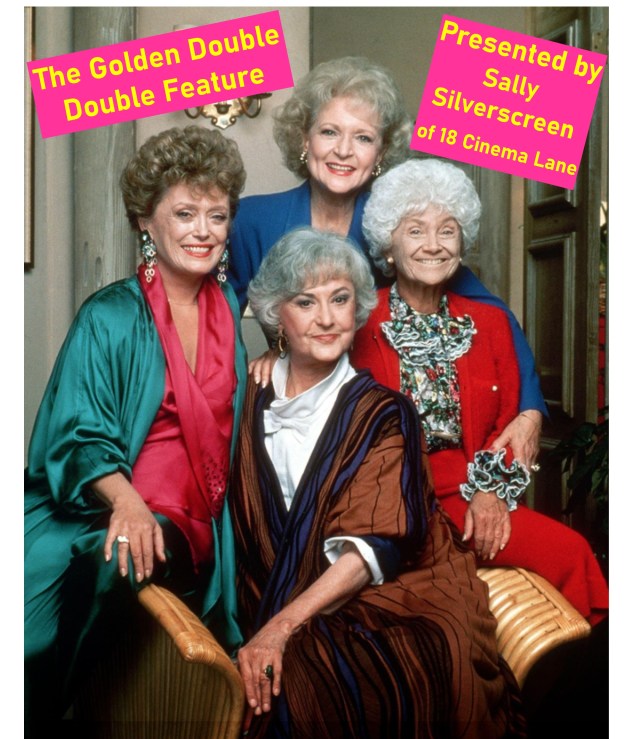
Thanks for joining me for the fourth part of my Golden Double Double Feature! The majority of my review of The Little Match Girl is spoiler-free. If you’d like to learn more about why I chose this year’s double feature theme, you can check out the introduction in the link below.

Announcing The Golden Double Double Feature!

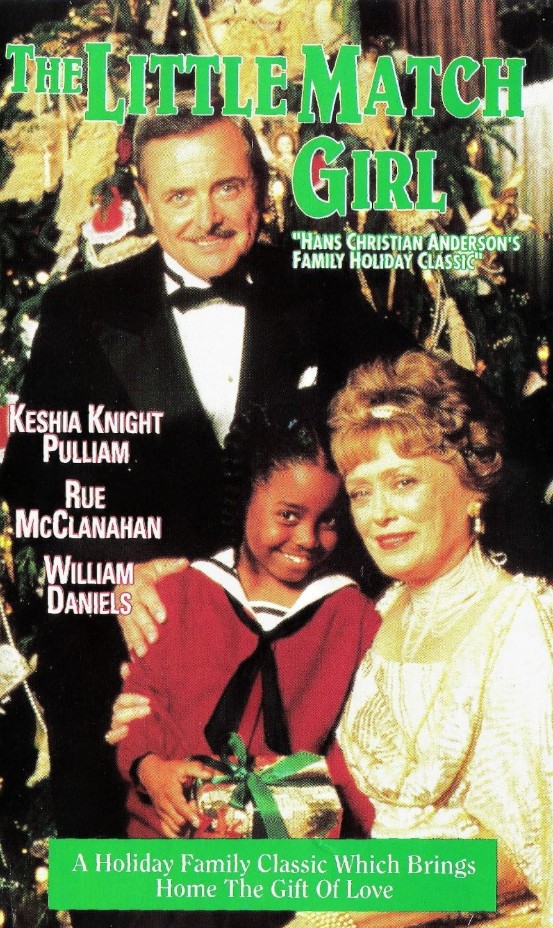
The Little Match Girl (1987) poster created by NBC Productions and National Broadcasting Company (NBC).

1. Out of the movies from Rue McClanahan’s filmography, why did you select The Little Match Girl?

Unlike my decision to review Mask and Mame, I knew Rue starred in The Little Match Girl before selecting the movie for the Golden Double Double Feature. However, similar to when I wrote about Mame and Mask, I had heard of The Little Match Girl, but hadn’t seen it prior to this double feature review. I also knew the 1987 film was an adaptation of one of Hans Christian Andersen’s stories. When it comes to The Little Match Girl, though, I was surprised to learn how many times that story was adapted, including in the 1980s. Throughout my eight-year blogging journey, I have covered my fair share of Christmas movies, especially those of the made-for-TV variety. With all that said, I decided to give The Little Match Girl a chance!

2. In The Little Match Girl, Rue portrays Frances Dutton. How is Frances Dutton similar or different from Blanche?

From what I remember, Blanche Devereaux came from a wealthy, Southern background. This fact was brought up from time to time on The Golden Girls. Rue’s character in The Little Match Girl, Frances Dutton, comes from a wealthier background as well. However, Frances and Blanche possess a major difference. While Blanche is sassy, bold, and even flirty, Frances is the complete opposite. In The Little Match Girl, Frances is not only soft-spoken and tender-hearted, she also has a gentler persona. So, it was interesting to see Rue portray a very different character in the 1987 Christmas film.

3. According to The Little Match Girl’s poster, the movie is based on Hans Christian Andersen’s story of the same name. Is there any story from Hans’ bibliography you wish had received a film adaptation?

As I mentioned in answer number one, I was surprised to learn how many times The Little Match Girl was adapted, including in the 1980s. But there have been other stories from Hans’ bibliography that received adaptations, with The Little Mermaid being a notable one. Therefore, I’d like to see an adaptation of one of Hans’ more overlooked titles. For example, The Bell revolves around the mystery of a bell that only rings at sunset. With nature playing a major role in The Bell, an adaptation of this story could be presented as live-action, with the cinematography of natural landscapes stealing the show. However, I think The Bell could also work as an animated project.

4. Was there anything about The Little Match Girl you liked or didn’t like?

Screenwriting, including the dialogue, in made-for-TV movies can be hit or miss. In 1987’s The Little Match Girl, however, I found some of the dialogue cleverly written. One example is when Neville meets the titular little match girl, Molly. When he orders a coffee, Neville adds alcohol from his flask. After Molly asks Neville about the flask, he tells her its “courage”. Molly then responds by telling him, “It doesn’t come in a bottle”. Later in the film, Police Chief Murphy threatens to shut down a local newspaper if there are any reports of Fennel Street’s residents being forced to leave their homes before Christmas. Joseph, the newspaper’s editor, tells Murphy, “Why don’t you crawl back in my father’s pocket where you belong”? Murphy spats out his response to Joseph when he says, “Cause I’m too big”. Because of how clever these responses were, it made these interactions (and the scenes themselves) memorable.

Like I just mentioned in this review, Police Chief Murphy threatens to shut down a local newspaper if there are any reports of Fennel Street’s residents being forced to leave their homes before Christmas. Joseph wants to report this injustice in order to save the homes of Fennel Street’s residents. One tactic is placing Molly’s picture on the newspaper’s front page to draw empathy for the intended cause. But the movie’s viewers don’t know if this tactic worked. That’s because the viewers never see the newspaper with Molly’s picture on the front page in circulation. This is an example of telling instead of showing. It’s also an example of how the movie prioritizes the stories of the grown-up characters despite The Little Match Girl being the movie’s title.

5. As I mentioned in my review of 1974’s Mame, there were two Christmas episodes of The Golden Girls; ‘ ‘Twas the Nightmare Before Christmas’ and ‘Have Yourself a Very Little Christmas’. If the show had created more Christmas episodes, what type of story would you have proposed?

In The Golden Girls’ sixteenth episode from the fourth season, ‘Two Rode Together’, Dorothy and Sophia take a trip to Walt Disney World. This creative decision was part of a trend where various sitcoms would set aside a special episode showing their characters taking a Walt Disney World trip. Based on what I recall, I don’t think any of these episodes take place around Christmastime. So, I would propose an episode of The Golden Girls where the “golden girls” spend Christmas in Orlando. Walt Disney World at Christmastime has been known for its beautiful decorations. Plus, I can think of hilarious antics that could be written into a story like this. Since three of Walt Disney World’s parks were open during the lifespan of The Golden Girls, there are a variety of attractions that could be featured in the episode.

Adorable Santa image created by Freepik at freepik.com. <a href=’https://www.freepik.com/free-vector/christmas-background-with-funny-santa_1324597.htm’>Designed by Freepik</a>. <a href=”https://www.freepik.com/free-photos-vectors/background”>Background vector created by Freepik</a>. Image found at freepik.com.

6. Did you develop any thoughts and/or questions while watching this film?

For this part of my review, I will spoil The Little Match Girl. If you have not seen this movie and are planning on watching it, skip ahead to question number seven.

Whenever Molly uses one of her matches, the flame sparkles. A snow angel she makes toward the beginning of the movie sparkles as well. In one scene, Molly explains to Joseph’s son, Jamie, that angels ride on shooting stars directly from Heaven if anyone in the world is in trouble. When Molly is discovered missing by Jamie’s grandpa, Haywood, it’s implied Molly was an angel the entire time. While this was an interesting plot twist, it’s a creative decision that left me with more questions than the movie was willing to provide answers for. Did Molly pass away prior to the events of The Little Match Girl or was she an angel that always existed in Heaven, similar to the angels from Touched by An Angel? How long has Molly been an angel? Has anyone known about Molly’s angel identity? The more I think about this plot twist, I more I believe there’s important lore missing from the script.

7. Throughout The Golden Girls, cheesecake became an iconic staple of the show. What would you say is the iconic staple of The Little Match Girl?

You would think I’d choose Molly’s matches, as the 1987 film is titled The Little Match Girl. But I’m selecting a candle instead. The residents of Fennel Street organize a protest at the Dutton family house, in an effort to save their homes. During the protest, they carry candles, with one of the protesters’ candles being lit by Molly herself. Toward the end of The Little Match Girl, Molly lights the candles of an angel themed Christmas decoration. But beyond the movie itself, candles are sometimes associated with Christmas décor; from candles in windows to candles placed on Christmas trees. Light is also a major theme of the Christmas holiday, such as the season of Advent and the Nativity Star. I’d even say light is a major theme of The Little Match Girl.

8. The Little Match Girl is a made-for-TV film. How does this movie compare to other Christmas television movies you’ve seen and even reviewed?

Looking back on the Christmas television films I’ve seen and reviewed, some of those titles featured at least one younger protagonist. But if I had to compare The Little Match Girl to another made-for-TV movie I’ve covered, it would have to be the 1999 film, If You Believe. Both stories possess a younger protagonist whose actions significantly impact the life of at least one of the story’s key characters. If You Believe and The Little Match Girl contain a sense of magical realism. These movies share the flaw of telling instead of showing as well.

9. The Little Match Girl was released on December 21st, 1987 (within the third season of The Golden Girls). Do you think the show had any impact on the movie?

In my review of Hallmark Hall of Fame’s The Lost Valentine, I speculated why the Hallmark Hall of Fame collection may not have cast any of the “golden girls” (Rue, Bea, Estelle, and Betty) in their movies during The Golden Girls’ lifespan. One of those speculated reasons was how Hallmark Hall of Fame and The Golden Girls were broadcast on separate networks. According to IMDB, 1987’s The Little Match Girl was not only produced by NBC Productions, it was also distributed by National Broadcasting Company (NBC). As I mentioned in my Hallmark Hall of Fame’s The Lost Valentine review, The Golden Girls aired on NBC. With that said, I don’t believe it was a coincidence for The Little Match Girl’s creative team to consider casting Rue in their movie.

10. After watching The Little Match Girl, is there anything you can take away from your movie-viewing experience?

Like I said in answer number one, I have covered my fair share of Christmas movies throughout my eight-year blogging journey, especially those of the made-for-TV variety. When it comes to 1987’s The Little Match Girl, I found the movie fine and serviceable. While there were strengths within the film, such as the acting performances and the cleverly written dialogue, the movie’s flaws held it back from being a stronger presentation. Despite the movie’s title being The Little Match Girl, the script prioritizes the stories of the grown-up characters. This creative decision kind of makes the title seem misleading, as I expected the story to focus more on the titular little match girl, Molly. Even though the plot twist was interesting, it left behind more questions than the movie was willing to provide answers for. In my opinion, it feels like important lore may have been omitted from the script. Reflecting on The Little Match Girl, as well as other Christmas films I’ve seen and reviewed, I can think of titles that are stronger than the 1987 picture. However, I can also think of movies that are weaker than The Little Match Girl.

The Golden Double Double Feature banner created by me, Sally Silverscreen. Original image created by Touchstone Television, Witt/Thomas/Harris Productions, 20th Television, and National Broadcasting Company (NBC)

Thank you for being a friend!

Sally Silverscreen
Take 3: Witness for the Prosecution (1957) Review

April’s theme for the Genre Grandeur blogathon is “Courtroom Dramas”. Upon researching eligible titles for this review, I came across one I have heard of before. That title was 1957’s Witness for the Prosecution! Though this adaptation was recommended to me by Emily (from The Flapper Dame) and Eric Binford (from Diary of a Movie Maniac), it’s not the first time I’ve seen (and reviewed) any Witness for the Prosecution adaptation. Back in 2022, I wrote about 1982’s version from the Hallmark Hall of Fame collection. In that review, I criticized Wilfred (the film’s protagonist) spending more time on the story’s court case than the mystery wrapped around it. I believed that creative decision decreased the audience’s engagement. This is one of the reasons why I thought Hallmark Hall of Fame’s adaptation of Witness for the Prosecution was just ok. But will I feel similarly about the 1957 version of this story? In order to solve this mystery, you’ll have to read my review!

Witness for the Prosecution (1957) poster created by Edward Small Productions and United Artists

Things I liked about the film:

The acting: When I wrote about the Hallmark Hall of Fame presentation of Witness for the Prosecution, I praised the acting performances of Diana Rigg, Deborah Kerr, and Beau Bridges. Not only did Beau and Deborah utilize a variety of expressions and emotions, Diana’s portrayal of Christine was consistent. The acting performances in the 1957 adaptation of Witness for the Prosecution were also a highlight! But if I could use one word to describe them, it would be “animated”. Throughout 1957’s Witness for the Prosecution, Wilfrid (the movie’s protagonist) is a grumpy man who stubbornly likes to do things his way. However, the strength of Charles Laughton’s portrayal prevented Wilfrid from becoming a one-dimensional character. In a scene where Wilfrid rides on an elevating stair chair, Wilfrid smiles with a sneaky look in his eyes, scheming a way to foil Miss Plimsoll’s plans. Meanwhile, Tyrone Power gave a very well-rounded portrayal of Leonard Vole! One of the best examples of this statement is when Leonard finds out about his inheritance from the murder victim, Emily Jane French. Leonard’s eyes become very wide as he excitedly reacts to his new-found wealth. This excitement can also be heard in his voice. Then, without hesitation, Leonard’s face falls as he realizes this recently discovered information gives him a motive for murder. Concern replaced excitement in Leonard’s voice and fear even found a reason to exist in his eyes.

As I just mentioned in this review, Diana Rigg’s portrayal of Christine in Hallmark Hall of Fame’s Witness for the Prosecution was consistent. This was also the case for Marlene Dietrich’s portrayal of Christine in 1957’s Witness for the Prosecution. But like I said in this review, the cast’s performances in the 1957 movie were “animated”. That animation was woven into Marlene’s portrayal as well. Throughout Witness for the Prosecution, Christine carried herself with a poised confidence, refusing to let anything get to her. A perfect example is when she outsmarted Wilfrid’s “monocle test”. During Leonard’s trial, however, Christine’s emotions burst into the courtroom. Sometimes, she yelled out her answers with an intensely serious look on her face. There was even a scene where tears spilled from her eyes. Marlene’s performance added enjoyment to my movie-viewing experience!

The set design: One of the strengths from 1982’s Witness for the Prosecution was the set design. In my review of that film, I described the court room as well as Wilfred’s office, with the latter being my favorite set in the Hallmark Hall of Fame presentation. But in the 1957 version of Witness for the Prosecution, my favorite set was Emily Jane French’s living room! The room consisted of two closely situated spaces; a sitting area by a large window and a sitting area by a fireplace. The sitting area by the window featured at least one wicker chair, a hanging plant, and a magazine rack. Meanwhile, the sitting area by the fireplace proudly displayed African artifacts on the walls. The white walls surrounding the living room and the décor’s lighter hues helped the artifacts stand out. Mosaic tiles with a flower design added daintiness to the fireplace itself. Two matching wicker cabinets and a transparent shelf provided storage to the living room. The lower ceiling in the living room helped incorporate a sense of coziness. With everything I described, I wish Emily’s living room was featured more in 1957’s Witness for the Prosecution.

Showing as well as telling: A flaw I talked about in my review for Hallmark Hall of Fame’s Witness for the Prosecution was how dialogue heavy the story was. The emphasis of telling over showing left me disappointed. But this flaw was remedied in Witness for the Prosecution from 1957! Flashbacks presented how Leonard met Emily and Christine, which added context to the dialogue. Later in 1957’s Witness for the Prosecution, Wilfrid discovers evidence that could impact Leonard’s case. This discovery is actually shown on screen, with the mystery surrounding who gave Wilfrid the evidence and where that person got the evidence from providing intrigue. A handful of Wilfrid’s pills cleverly show the progression of time during Leonard’s case. Though the 1957 version of Witness for the Prosecution relies on dialogue, the creative decision to show and tell made the movie more engaging than Hallmark Hall of Fame’s adaptation!

Sketch of London image created by Archjoe at freepik.com. <a href=’https://www.freepik.com/free-vector/hand-drawn-houses-of-parliament_1133950.htm’>Designed by Archjoe</a>. <a href=”https://www.freepik.com/free-photos-vectors/background”>Background vector created by Archjoe – Freepik.com</a>. Image found at freepik.com.

What I didn’t like about the film:

Prolonged involvement: In my review of Hallmark Hall of Fame’s adaptation of Witness for the Prosecution, I was critical of Wilfred’s inactive detective role. The 1982 film placed more emphasis on showing Wilfred resolving Leonard’s case than solving the mystery surrounding the case. Witness for the Prosecution from 1957 still places emphasis on showing Wilfrid resolving Leonard’s case. But this time, he doesn’t officially get involved in Leonard’s case until about forty minutes into the hour and fifty-six-minute film. I understand any mystery movie, let alone a courtroom drama, requires build-up. However, in my opinion, the build-up in 1957’s Witness for the Prosecution lasted too long.

An underutilized character: Before Wilfrid officially becomes Leonard’s solicitor, Leonard meets Wilfrid with his solicitor, Mr. Mayhew. If Mr. Mayhew hadn’t given Wilfrid the information about Leonard’s case, Wilfrid would have never known about Leonard’s case. But after Wilfrid becomes Leonard’s solicitor, Mr. Mayhew disappears from the story. I was disappointed by his underutilization because he could have, somehow, continued contributing to Leonard’s case. This underutilization also does a disservice to the actor who portrayed Mr. Mayhew, Henry Daniell.

A predictable detail: Leonard is questioned about Christine when he first meets Wilfrid. During this questioning, Leonard shares an important detail about her that affects the movie’s later events. But as soon as Leonard brought this detail up, I knew how it would impact the story’s outcome. In fact, I saw a plot twist coming because that aforementioned detail about Christine was revealed earlier in the movie. Due to how soon Wilfrid (and the audience) found out about Christine’s detail, it kind of made the movie’s ending predictable.

Courtroom image created by Macrovector at freepik.com. <a href=”https://www.freepik.com/free-photos-vectors/isometric”>Isometric vector created by macrovector – http://www.freepik.com</a>. Image found at freepik.com.

My overall impression:

In the introduction of this review, I asked if I’d feel similarly about 1957’s Witness for the Prosecution as I did Hallmark Hall of Fame’s version of the story. Now that I’ve seen (and reviewed) both adaptations, I can honestly say I like the 1957 film over the one from 1982! One improvement was the creative decision to show as well as tell, which added intrigue and engagement to the movie. It also helps how the purpose of Wilfrid’s “magical monocle” was brought up in the dialogue. Witness for the Prosecution from 1957 shares some of the same strengths as the Hallmark Hall of Fame presentation, such as the acting performances and the set design. However, the 1957 version of the story has its flaws. Because of how soon a detail about Christine was revealed, it kind of made the film’s ending predictable. I not only wasn’t a fan of how underutilized Mr. Mayhew became, I also didn’t like how Wilfrid got involved in Leonard’s case about forty minutes into the hour and fifty-six-minute movie. I’m glad I was recommended the 1957 production of Witness for the Prosecution! It gave me another chance to witness a different approach to one of Agatha Christie’s stories.

Overall score: 7.3-7.4 out of 10

Have you seen 1957’s Witness for the Prosecution? Are there any adaptations of Agatha Christie’s work you’d like to see me review? Please tell me in the comment section!

Have fun at the movies!

Sally Silverscreen