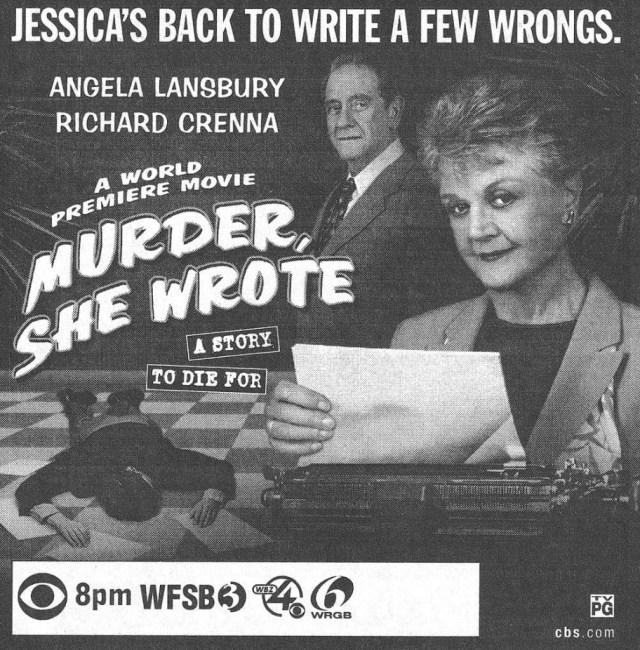
Sally Watches…Murder, She Wrote (Absence Makes the Heart Grow Fonder)!

For this year’s Favourite TV Show Episode Blogathon, I decided to talk about a show I haven’t discussed in a while. Reflecting on the programs covered on 18 Cinema Lane, I made a surprising discovery. The last time I reviewed any episodes of Murder, She Wrote was all the way back in 2020, when I wrote about Van Johnson’s episodes of the show. To make up for lost time, I selected three episodes of Murder, She Wrote for the 12th Annual Favourite TV Show Episode Blogathon! But, for this year’s event, the episodes I chose correlate with the dates of the blogathon. In fact, each Murder, She Wrote episode is reviewed in order of the blogathon’s dates. Also, each episode review will cover what I liked about the episode, what I didn’t like about the episode, the mystery itself, the other factors from the episode, and my overall thoughts. So, now let’s begin this review of these episodes of Murder, She Wrote!

Name: The Dream Team

Season 11, Episode 18

Premiere Date: March 19th, 1995

Screenshot of ‘The Dream Team’ title card taken by me, Sally Silverscreen.

What I liked about this episode:

Any time I’ve reviewed television show episodes, I have rarely addressed the dialogue as a strength of the episode. But in the case of this Murder, She Wrote episode, ‘The Dream Team’, the dialogue was cleverly written! Before attending a presentation about a development project from a company called Marina Americana, Jessica gives Seth some books about lighthouses. These books are intended to help Seth craft a strong argument for saving Cabot Cove’s lighthouse, which is an important landmark in the town. When Jessica brings up how the books could provide information for the hook of Seth’s argument, Seth says, “The hook I showed you last night will do just fine, thank you”. Sheriff Mort Metzger replies to Seth, “Maybe for the worm hanging from it”. At the presentation, Jessica’s nephew, Grady, reveals his colleague, J. Peter Carmody, plans to restore the lighthouse. Caught off-guard by this revelation, Metzger says, “Yeah, I think he [J. Peter Carmody] was rendered speechless by the Doc’s party trick; putting both feet in his mouth at the same time”. Along with being cleverly written, these quotes I brought up were hilarious!

What I didn’t like about this episode:

The beginning of a typical Murder, She Wrote episode will take the time to establish the characters and their potential motives. This creative decision gives the audience options in figuring out whodunit, as well as provide the story with red herrings. The establishment of characters and their motives in ‘The Dream Team’ took about half the episode. With the titular murder taking place at the episode’s halfway point, the audience is only given half the episode to help Jessica solve the case. Personally, I prefer stories that give viewers more time to figure the mystery out.

The mystery itself:

There are two interconnected stories in ‘The Dream Team’; the murder of a developer’s wife and the Marina Americana development project. But in this almost hour-long episode, more emphasis was placed on whether the development project would come to fruition. It also doesn’t help how, as I mentioned earlier, the audience was only given half the episode to figure the mystery out. In some Murder, She Wrote episodes, the guilty party will be revealed based on at least one small detail most viewers may miss. Though this was the case for ‘The Dream Team’, several smaller clues led up to the culprit’s reveal. Overall, I wish there was a balance between both stories and the audience was given more time to help Jessica solve the case.

The other factors from this episode:

  • As Seth explains his thoughts on the Marina Americana development project, Jessica expresses her impatience over how long Seth takes to get to his point. Seth then tells Jessica, “Now that you’re living in New York, you’re becoming as impatient as the rest of those people down there”. In several episodes of Murder, She Wrote, Jessica lived in New York, though this new living arrangement was only meant to be temporary. By having Seth address this part of Murder, She Wrote’s story, it was a good way to incorporate the show’s continuity.
  • While we’re on the subject of Seth, I want to address his desire to save Cabot Cove’s lighthouse. At the beginning of ‘The Dream Team’, Seth is against the Marina Americana development project because he fears the lighthouse will be destroyed. He goes so far as to create flyers in an attempt to make the developers feel guilty about risking the lighthouse’s future. However, the amount of time, money, and resources Seth puts toward those flyers could have gone toward actually restoring the lighthouse he claims to care about. If anything, Seth prioritizes talking about the problem instead of trying to solve it.
  • Grady is one of the developers of the Marina Americana development project. But when the fruition of the project is in jeopardy, so is Grady’s job. When he shares this information with Jessica, he says, “It’s so damn frustrating. I really believed in this project and, well obviously, so did a lot of other people”. What Grady said brings up an excellent point about how a neighborhood’s residents are not the only people impacted by any change within a neighborhood. In fact, I hadn’t come to this realization until I heard Grady’s quote.

My overall thoughts:

The way I feel about ‘The Dream Team’ is similar to how I feel about ‘The Legacy of Borbey House’; disappointment that Cabot Cove’s maintenance received precedence over the mystery itself. Also, like ‘The Legacy of Borbey House’, the entire first half of ‘The Dream Team’ was devoted to establishing characters and their potential motives. This left only half the episode for the audience to help Jessica solve the mystery. However, I did find the dialogue cleverly written. The examples I provided in this review were hilarious as well. I not only liked the inclusion of Murder, She Wrote’s continuity, I also found Grady’s quote thought-provoking. What I also found thought-provoking was the idea of Cabot Cove changing. As I watched ‘The Dream Team’, I thought about what would happen if Cabot Cove were a real town. Would it adapt with the times or would it stay frozen in time?

Rating: A 3 out of 5

The 12th Annual Favourite TV Show Episode Blogathon banner created by Terence from A Shroud of Thoughts

Name: Dead to Rights

Season 9, Episode 18

Premiere Date: March 21st, 1993

Screenshot of ‘Dead to Rights’ title card taken by me, Sally Silverscreen.

What I liked about this episode:

In this episode of Murder, She Wrote, ‘Dead to Rights’, Jessica’s former researcher, Dana Ballard, is accused of murdering her new boss. A major reason for this accusation is how she constantly lies. Dana goes so far as to impersonate Jessica, as well as change Jessica’s answering machine message, in order to be selected for a new job. But one person who sees past Dana’s lying is Missy, the wife of Dana’s new boss, Ethan. During a conversation between the two women, Dana shows off a sweet, even a bit naïve, personality, acting as if she’s oblivious of Missy’s suspicions. When Missy confronts Dana about her suspicions, Dana effortlessly transforms into an irritated, manipulative woman. Because of the screenwriting and Molly Hagan’s (the actress who portrayed Dana) performance, the creative team behind ‘Dead to Rights’ did a good job at establishing Dana as a potential suspect. However, I would like to point out the script provides a reason for Dana’s lying; “borderline psychosis” (as Jessica put it).

What I didn’t like about this episode:

As I just mentioned in this review, Dana is accused of murdering her new boss, Ethan. While this gave Jessica a personal reason for solving the case, the majority of the story focused on proving Dana’s innocence. ‘Dead to Rights’ did a good job at establishing characters and their potential motives. However, this build-up became an afterthought as the episode progressed due to the aforementioned focus on the truth about Dana. Similar to ‘The Dream Team’, the guilty party in ‘Dead to Rights’ was revealed based on a small detail. Had the script provided a balance between proving Dana’s innocence and figuring out who was guilty, the story might have been stronger.

The mystery itself:

Like I’ve already stated in my review, most of the story focused on proving Dana’s innocence. I also stated how the mystery’s guilty party was revealed based on a small detail. Another aspect of the mystery I’d like to bring up is how Jessica works with a lawyer named Vincent to solve the case. Typically, Murder, She Wrote shows Jessica collaborating with police officers, detectives, or investigators when it comes to catching whodunit. So, seeing Jessica engage with the more legal side of the mystery genre was a good change of pace for her!

The other factors from this episode:

  • Some scenes in ‘Dead to Rights’ show a large train display the length of the entire wall in Ethan’s office. This train display not only surrounds a miniature town, a large painted backdrop of a desert landscape covered the wall behind the train display. Even though the train display and everything surrounding it was impressive, its inclusion in ‘Dead to Rights’ was random. None of the characters acknowledged the display itself. Plus, Ethan’s reason for the display being in his office was never provided.
  • Toward the beginning of the episode, on-screen text reveals how most of the story takes place in Portland, Maine. But in an establishing shot of a hotel’s exterior (implying that’s the hotel Jessica is staying at), Maine’s state flag is not displayed on the hotel. Instead, the state flags for Maryland, Virginia, and Washington D.C. are prominently featured on the hotel’s exterior. In past reviews of Murder, She Wrote, I have complimented the show’s creative team for its location scouting because of how visually appealing the locations themselves have been. So, I’m surprised this film-making mistake went overlooked.
  • During Jessica’s and Vincent’s investigation, Vincent turns to a woman named Wanda for assistance. A few scenes show Vincent and Jessica visiting Wanda at her home. Her office/living room is filled with a collection of décor; from a cylindrical fish tank to a colorful pinball game. Because Wanda had such a quirky personality, the creative team behind ‘Dead to Rights’ did a good job utilizing these pieces of décor to paint a picture of who Wanda is. The décor itself also made Wanda’s home look like a cool space!

My overall thoughts:

At best, ‘Dead to Rights’ is an ok episode. But, at worst, the story was weaker than I had hoped. So much emphasis was placed on proving Dana’s innocence, the build-up of the characters and their potential motives became an afterthought as the episode went on. What I also found frustrating was how the guilty party was revealed based on a small detail I think most viewers might overlook. However, there are aspects of ‘Dead to Rights’ I liked. The combination of Molly Hagan’s performance and the screenwriting effectively established Dana Ballard as a potential suspect. The episode’s creative team did a good job showcasing Wanda’s personality through the set design. However, there were some questionable creative choices, like Ethan’s train display and the lack of Maine state flags on the hotel. Now I wonder what other production errors from Murder, She Wrote actually appeared on the show?

Rating: A 3 out of 5

As I point out in this screenshot, the on-screen text clearly states most of the story takes place in Portland, Maine. Screenshot taken by me, Sally Silverscreen.
In this establishing shot, these flags would indicate the hotel is not located near Maine. Screenshot taken by me, Sally Silverscreen.

Name: No Accounting for Murder

Season 3, Episode 19

Premiere Date: March 22nd, 1987

Screenshot of ‘No Accounting for Murder’ title card taken by me, Sally Silverscreen.

What I liked about this episode:

One of the strengths of Murder, She Wrote has been the set design. This episode, ‘No Accounting for Murder’ is a perfect example of this statement! The accounting firm Grady works for is one of the most opulent looking businesses I’ve ever seen in entertainment media. The office of a colleague named Paul Carlisle boasts stunning design choices, including gold wallpaper that sparkled in the light, a white upholstered office chair, and gold décor. Even the accounting firm’s lobby fit the opulent style found in Paul’s office! Deep wood pillars and window frames provide a nice contrast to the light-colored carpet and wallpaper. Similar to Paul’s office, the sofa in the lobby was also upholstered. A gold table lamp adds a touch of elegance to the space. Once again, the creative team behind Murder, She Wrote knew what they were doing when it came to designing this particular set!

What I didn’t like about this episode:

When I reviewed ‘The Dream Team’ and ‘Dead to Rights’, I talked about how the characters and their potential motives were established within the story. But in ‘No Accounting for Murder’, some of the characters aren’t given a potential motive. The characters that do have a potential motive receive it as the story went along instead of toward the beginning of the episode. What also didn’t help was how the culprit was revealed because of a small detail mentioned by one of the characters. The fact only some characters were given a potential motive caused the script to lack red herrings.

The mystery itself:

There are two mysteries within ‘No Accounting for Murder’; the murder of one of Grady’s colleagues, Ralph Whitman, and the “ghost” inhabiting the accounting firm. Unlike the stories in ‘The Dream Team’, the stories in ‘No Accounting for Murder’ didn’t feel connected. In fact, each story felt like it belonged in their own separate episode. Personally, I thought the “ghost” story was more intriguing, as there were more mysterious elements to it. By the episode’s conclusion, however, I was disappointed by the unsatisfactory resolution of that story.

The other factors from this episode:

  • In ‘No Accounting for Murder’, Jessica works alongside Lieutenant Timothy Hanratty while trying to solve the case. In a car ride through New York City, Timothy brings up some of Jessica’s past cases and even wonders why she hasn’t received a gold badge from her own police department yet. Jessica replies by saying, “It’s just a quirk of mine, really. The way I see things, you know?” When Jessica said this, I thought about other detectives, both amateur and professional, from entertainment media. They seem to possess a gift for observation, picking up on little details buried among facts, clues, and speculation. What these characters bring to their respective tables is just extraordinary. Any time I’ve watched Murder, She Wrote, I believed Jessica just happened to be that good at being a detective. But after watching ‘No Accounting for Murder’, I now see Jessica possessing a brilliance, similar to other detectives from television and film.
  • Last year, when I reviewed the Touched by An Angel episode, ‘Sympathy for the Devil’, I brought up one of the most unintentionally funny moments of the show; when Ty Duncan called his son “Chicken Boy” as an insult. In the Murder, She Wrote, episode, ‘No Accounting for Murder’, an unintentionally funny moment took place during a confrontation between Paul and the murder victim’s wife, Lana Whitman. As an insult, Lana calls Paul an “arrogant horse’s batootie”. Because of how goofy this insult sounded, I ended up bursting out laughing.
  • While watching ‘No Accounting for Murder’, I spotted a familiar face among the cast of characters. Ron Masak portrayed a salesman named Marty Giles, who happened to be a potential suspect. Fans of Murder, She Wrote would recognize Ron as Sheriff Mort Metzger, one of the most beloved residents of Cabot Cove. This discovery was such a surprise for me, as I didn’t know Ron had portrayed other characters on Murder, She Wrote besides Metzger. This makes me wonder how often actors and actresses portrayed more than one character on Murder, She Wrote?

My overall thoughts:

Like ‘The Dream Team’ and ‘Dead to Rights’, ‘No Accounting for Murder’ was just ok. Even though I liked the accounting firm’s set design, I didn’t like how some of the characters didn’t receive a potential motive. I also didn’t like how the mystery stories felt disconnected. However, the “ghost” story was intriguing enough to keep me invested in the episode, despite its resolution being unsatisfactory. ‘No Accounting for Murder’ has made me see Jessica in a slightly different way, leaving me appreciative of what she has to offer to the mystery genre’s table. It was nice to see Ron Masak appear in this episode as well. But as I look back on the episodes of Murder, She Wrote I’ve written about, ‘No Accounting for Murder’ will not be reflected on as fondly as other episodes.

Rating: A 3 out of 5

Design details like the sparkling gold wallpaper and the velvety green curtains add opulence to the set. Screenshot taken by me, Sally Silverscreen.
The opulence I mentioned while discussing Paul’s office is also reflected in the lobby of the accounting firm. Screenshot taken by me, Sally Silverscreen.

What are your thoughts on these episodes of Murder, She Wrote? Are there any episodes you’d like to see me review? Tell me in the comment section!

Have fun in Cabot Cove!

Sally Silverscreen

Sunset Over Hope Valley: Heroes in Disguise

The trial over the fire investigation has finally taken place. But as the trial goes on, hope seems to be slipping away from Hearties’ favorite characters. Until a hero in disguise swoops in to save the day. Throughout the lifespan of When Calls the Heart, heroes have come and went in Hope Valley. Sometimes, their actions have been grand, attracting the attention of everyone affected. But other times, these heroic actions have been quieter, causing a ripple effect that is felt by the other characters. What the heroes of Hope Valley have in common is how they are disguised as neighbors, friends, and family. They are ordinary residents who go the extra mile for the people around them. When the heroism of Hope Valley’s heroes is recognized, they don’t allow the attention to get to their head. Instead, they remain humble and continue to be their genuine selves.

Just a reminder: If you did not see this episode of When Calls the Heart, there will be spoilers within this re-cap.

When Calls the Heart season thirteen poster created by Hallmark Media, Crown Media Family Networks and Hallmark Channel

Season: 13

Episode: 11

Name: Trials and Trails and Tribulations

Major story:

Because Benson Hills’ courthouse is still under construction, the fire investigation’s trial is taking place in Hope Valley. The judge overseeing the trial is Judge Wakefield. When both sides are questioned, they recall information that was discovered in this season’s previous episodes. However, Judge Wakefield won’t allow the information discovered from the “drip test” to be used in court, as he feels it is entrapment. As a final effort to find Christopher, Elizabeth suggests having Henry contact his son through Rosemary’s radio show. This plan ends up working, as Christopher shows up to court with the buried transformer. His confession helps Judge Wakefield declare National Insurance and Pioneer Electric guilty of starting the fire.

Courtroom image created by Macrovector at freepik.com. <a href=”https://www.freepik.com/free-photos-vectors/isometric”>Isometric vector created by macrovector – http://www.freepik.com</a>. Image found at freepik.com.

Minor stories:

Nathan prepares to propose to Elizabeth. But, as he tells Allie, he wants the proposal to take place after the trial. When the trial eventually concludes, Nathan decides to propose to Elizabeth during dinner. As he’s about to ask Elizabeth the long-awaited question, the dinner is interrupted by Allie. According to Allie, LJ climbed up a tree but had difficulty climbing down. When Elizabeth and Nathan rescue LJ, LJ expresses his frustrations over not being allowed to travel to Parson’s Peak. Elizabeth worries about LJ missing out on adventures. However, Nathan reassures Elizabeth how she’ll know when it’s the right time to let LJ spread his wings and fly.

Lucas works on preparations for his re-election campaign. One of those preparations is practicing for an upcoming debate. As Lucas makes his case for why he deserves to be re-elected, Maisie acts as his debate opponent. When Lucas expresses his frustrations over how little he believes he accomplished, Maisie encourages him to love the game or find a new one. Meanwhile, Joseph is hesitant to forgive Christopher for not coming forward with the truth about the fire sooner. Cooper, on the other hand, is willing to forgive Christopher, even pointing out how Joseph’s recent sermon was about forgiveness. Joseph explains to his son how he isn’t ready to forgive yet.

Small, western town image created by Freepik at freepik.com. <a href=”https://www.freepik.com/free-photos-vectors/background”>Background vector created by freepik – http://www.freepik.com</a>. Image found at freepik.com.

Some thoughts to consider:

  • While I’m glad the fire investigation and its trial was resolved, the resolution was, in my opinion, a bit predictable. In season thirteen, episodes one through six prioritized the mystery surrounding the fire. But since episode seven, the priority shifted toward stories with lower stakes, such as Rosemary’s silent movie. Even in this episode, it almost feels like When Calls the Heart’s creative team wanted to complete this story just so they could move on to something else. I wish the resolution to the fire investigation and its trial had included a plot twist to add some excitement to that story.
  • According to the commercial for the season finale (as well as fan responses on social media), a lot of people expect Elizabeth and Nathan to become engaged at the end of season thirteen. But I think Nathan’s proposal will become interrupted (again), with the cause of the interruption dealt with toward the beginning of season fourteen. One possible interruption could be Toby, Cooper, and Rupert experiencing an emergency on Parson’s Peak. I did notice how these three students were not featured in the season finale commercial.
  • After Christopher shows up at the trial and comes forward with his confession, Henry lets his son know how he’ll support him any way he can. Reflecting on how Henry’s and Christopher’s story turned out, I noticed how they have paralleled one another. Both Christopher’s and Henry’s redemption arc started with a trial, with their actions and choices impacting multiple lives. Though Christopher’s redemption arc just begun, he is seeking forgiveness, similar to how Henry has sought forgiveness in seasons’ past. Henry’s redemption arc led him to become Hope Valley’s “Voice of Reason”. So, it’ll be interesting to see who Christopher becomes as his redemption arc continues.
Sunset image created by Photoangel at freepik.com. <a href=”https://www.freepik.com/free-photos-vectors/background”>Background image created by Photoangel – Freepik.com</a>.<a href=’https://www.freepik.com/free-photo/red-sunset-clouds-over-trees_1254327.htm’>Designed by Freepik</a>. Image found at freepik.com.

What are your thoughts on this episode of When Calls the Heart? Do you think Nathan’s proposal will become interrupted again? Please tell me in the comment section below!

Have fun in Hope Valley!

Sally Silverscreen

Comparing with the Critics – Best of 1978 – Autumn Sonata

This review is from my series, Comparing with the Critics. If you’d like to learn more about the series, click on the link below.

Introducing my new series, Comparing with the Critics!

March’s theme for Genre Grandeur is “Oscar Losing Movies (Oscar nominees that failed to garner even one win)”. Upon learning this theme, I was going to select a movie nominated for the 76th Academy Awards, when The Lord of the Rings: The Return of the King won a history-making eleven awards. But after researching which films were nominated the evening of February 29th, 2004, I discovered other pictures besides The Lord of the Rings: The Return of the King walked away with a trophy. This discovery meant there weren’t as many Oscar “losers” as I initially believed. So, as I continued my research for March’s Genre Grandeur, I learned Autumn Sonata was nominated for two awards at the 51st Academy Awards. These categories were Best Writing and Best Leading Actress. Sadly, Autumn Sonata lost both categories to a movie titled Coming Home. I have heard of Autumn Sonata prior to choosing it for this particular review. Not only was the film recommended to me by Virginie (from The Wonderful World of Cinema), it was also featured in ‘The Best Films of 1978’ episode of Gene Siskel’s and Roger Ebert’s show, Sneak Previews. In that episode, both Roger and Gene admitted to placing Autumn Sonata on their lists of the ten best films of 1978. Now that I’ve seen the movie for myself, I can understand why it would find a place on their lists. I can also understand why Autumn Sonata was nominated for its respective categories at the 51st Academy Awards in 1979.

Autumn Sonata poster created by Persona Film, Suede Film, Incorporated Television Company (ITC), Svensk Filmindustri, Constantin Film, ITC Film Distributors, and New World Pictures

As I just mentioned in this review’s introduction, Autumn Sonata was nominated for two awards at the 51st Academy Awards. One of these categories was Best Leading Actress, with Ingrid Bergman as one of five actresses to receive a nomination. While discussing Autumn Sonata in Sneak Previews’ ‘The Best Films of 1978’ episode, Gene called Ingrid’s portrayal of Charlotte Andergast “riveting”. Even after a scene featuring Ingrid and Liv Ullmann (who portrayed Charlotte’s daughter, Eva) is presented in the episode, Gene says “Again, some real pain there”, referring to the emotions on display through Liv’s and Ingrid’s performance. Though I agree with Gene’s assessment of Ingrid’s portrayal of Charlotte, the word I’d use to describe it (as well as Liv’s portrayal of Eva) is captivating. In one of the best scenes from Autumn Sonata, Charlotte shares with Eva how her close friend, Leonardo, passed away. Throughout her recount of Leonardo’s last days in the hospital, Charlotte has a pained, disgusted look on her face. With a glossy, teary-eyed stare and a drawn-out frown, Charlotte is heartbroken over the loss of her friend. When I saw that scene, I wasn’t watching an actress portraying a character. I was witnessing a woman experiencing grief, with Ingrid’s performance possessing a strong sense of realism.

String of musical notes image created by Freepik at freepik.com. <a href=’https://www.freepik.com/free-vector/pentagram-vector_710290.htm’>Designed by Freepik</a> <a href=”https://www.freepik.com/free-photos-vectors/background”>Background vector created by Freepik</a>. Image found at freepik.com. 

Like I also said in my review, Liv Ullmann’s portrayal of Charlotte’s daughter, Eva, was captivating. This is because Liv was able to go toe-to-toe with Ingrid, acting-wise, understanding how to utilize emotion to her character’s advantage, as well as when to increase or decrease the intensity of those emotions. As I previously mentioned, there was a scene from Autumn Sonata featuring Ingrid and Liv in Sneak Previews’ ‘The Best Films of 1978’ episode. In that scene, Charlotte and Eva share an emotionally explosive conversation over the reasons why their relationship is strained. Eva states how she didn’t like Charlotte’s desire to turn her daughter into someone she wasn’t. During her reflections of her past, Eva is visibly distraught. With gritted teeth and eyes overflowing with tears, even shaking at one point, Eva confesses how Charlotte’s decisions have deeply impacted her and her life choices. Because of her performance in Autumn Sonata, I wish Liv Ullmann had been nominated for an Oscar as well.

Image by macrovector on Freepik

During their discussion of Autumn Sonata in ‘The Best Films of 1978’ episode of Sneak Previews, neither Roger nor Gene brought up the film’s screenwriting. This is a shame, as the screenwriting was one of the movie’s strengths. Autumn Sonata is a character-driven, “slice of life” story. However, the quality of the dialogue made conversations between characters sound emotionally deep and thought provoking. In one scene, Eva asks her husband, Viktor, if he thinks she’s an adult. Viktor responds by telling her, “I guess being an adult is being able to handle your dreams and hopes, not longing for things”. He could have simply given his wife a “yes” or “no” answer. But Viktor’s response gives Eva, as well as the audience, meaningful insight about growing up, managing expectations, and even gratitude. Later in Autumn Sonata, Charlotte confesses one of her realizations to Eva. She says, “I have never grown up. My face and my body have aged. I acquire memories and experiences but inside all that I haven’t even been born.” Similar to Viktor’s aforementioned quote, Charlotte’s quote addresses growing up. In Charlotte’s case, however, her reflections sound more regretful. Disappointment can even be heard in her voice, with those pent-up feelings finally being addressed through words. As I stated in this review’s introduction, Autumn Sonata was nominated for the Best Writing category. Through a thoughtfully crafted script, that nomination was, in my opinion, earned.

Envelope with hearts image created by Freepik at freepik.com. <a href=’https://www.freepik.com/free-photo/hearts-and-pink-envelope-for-mothers-day_1950691.htm’>Designed by Freepik</a>. <a href=”https://www.freepik.com/free-photos-vectors/love”>Love image created by Freepik</a>. Image found at freepik.com.

While continuing their discussion of Autumn Sonata, Roger tells Gene about a call he received from a reader who was interested in seeing Autumn Sonata. Roger then says the reader told him, “I couldn’t make head or tail of it. What is it about?” Meanwhile, Gene claims “the conflict is how do you reconcile your public career with your personal responsibilities to your family”. Based on my experience watching Autumn Sonata, I think it’s not just about balancing a public and personal life. I think it’s also about the brutal honesty of strained familial relationships. When Eva and Charlotte talk about the past, no figurative punches are held back. They tell each other exactly what’s on their minds and hearts, no matter who’s feelings get hurt. It would have been easy for Autumn Sonata’s creative team to paint either Charlotte or Eva as the “villain” of the story. Instead, both women are not only flawed, they have valid points to their sides of the narrative. How the story plays out kind of reminds me of The Royal Tenenbaums, where the strained relationship between Eva and Charlotte is the result of little things culminating over time. The acting performances and the screenwriting successfully bring a sense of realism to Autumn Sonata.

Norway’s past and present image created by Macrovector at freepik.com. <a href=”https://www.freepik.com/free-photos-vectors/poster”>Poster vector created by macrovector – http://www.freepik.com</a>. Image found at freepik.com.

According to IMDB, Autumn Sonata was filmed in Norway. Based on the scene where Charlotte drives to Eva and Viktor’s house, the Norwegian scenery looked like a beautiful painting. But the majestic hills, mountains, and large body of water from Norway wasn’t incorporated into Autumn Sonata beyond that one scene. I wish the “autumn” in Autumn Sonata played a larger role in the story, perhaps visually representing some of the movie’s themes. Another aspect of the story I wish had been utilized more was Eva’s sister, Helena. When Charlotte first arrives at Eva and Viktor’s house, Eva reveals how Helena is now living at their house instead of at a hospital. Throughout Autumn Sonata, Helena deals with an illness that greatly affects her mobility. I thought she was intended to be a bridge between Eva and Charlotte, helping them find a more peaceful middle ground. One reason for this belief came from Helena falling out of her bed during an emotionally explosive conversation between Charlotte and Eva. Sadly, it seems like Helena was in Autumn Sonata just for the sake of it.

Comparing with the Critics banner created by me, Sally Silverscreen. TV show title cards created by WTTW National Productions, WTTW, Public Broadcasting Service (PBS), Lifetime Television, Tribune Entertainment, Buena Vista Television, and Disney-ABC Domestic Television

Prior to reviewing Autumn Sonata, the only movie I agreed with Gene and Roger on was 1984’s Amadeus. I could also see why the film was, at least, nominated for an Oscar. Now I can confidently say that Autumn Sonata is the second film I agree with Roger and Gene on! While I typically don’t gravitate toward “slice of life” stories, the 1978 movie works because of the strength of the screenwriting and acting performances. Similar to The Royal Tenenbaums, the brutal honesty woven into the script brought a sense of realism when to came to addressing strained familial relationships. The story itself was emotionally deep and thought provoking because of the effort put into it by Autumn Sonata’s creative team. I understand why the movie is titled Autumn Sonata, as music plays an integral role in Charlotte’s life. However, I wish the “autumn” in Autumn Sonata was utilized more in the story, especially considering how beautiful the Norwegian landscape was in the film. The movie also doesn’t have a high rewatchability rate due the some of the heavier subject matter incorporated into the story. But I can honestly say that Autumn Sonata is one of the best films I’ve seen in 2026, so far!

This review was brought to you by

Sally Silverscreen

Sunset Over Hope Valley: The Ring Makes It Real

Nathan plans on proposing to Elizabeth. In this episode of When Calls the Heart, he tries to figure out Elizabeth’s ring size so he can purchase an engagement ring. As Ned shows Nathan and Allie the engagement rings available to purchase, Ned tells them, “the ring makes it real”. When Ned said this, it made me think about how rings are more than just a statement piece or an item from a jewelry collection. It can be an extension of a person’s life story. Class rings or engagement rings symbolize the achievement of a major milestone. Mood rings make a wearer’s mood more visual. Even decorative rings or costume jewelry can hold a personal meaning to the person who owns that ring. It fascinates me how such a small piece of jewelry can represent so much. Now, when I see a character wearing a ring, I will wonder what the story behind it is.

Just a reminder: If you did not see this episode of When Calls the Heart, there will be spoilers within this re-cap.

When Calls the Heart season thirteen poster created by Hallmark Media, Crown Media Family Networks and Hallmark Channel

Season: 13

Episode: 10

Name: Blessings

Major stories:

Nathan shares with Ned how he’s planning on proposing to Elizabeth. But in order to propose to Elizabeth, Nathan needs to get an engagement ring that fits her. For most of the episode, Nathan, as well as Allie, try to find a way to measure Elizabeth’s ring. When Allie and Oliver visit the pharmacy/ice cream parlor and walk in on Mei and Mike making clay bowls together, Allie develops an idea. She invites Elizabeth to a pottery class Mei is hosting at the ice cream parlor/pharmacy. During the pottery class, Allie suggests everyone close their eyes as they knead the clay. While Elizabeth has her eyes closed, Allie uses a small piece of clay to create an impression of Elizabeth’s ring (which she removed at the beginning of the pottery class). Allie and Nathan are able to use the clay to choose the perfect engagement ring. Later in the episode, Nathan asks for Charlotte’s blessing, as Charlotte has extended her stay in Hope Valley. He also asks Jack Thornton for his blessing, even taking Charlotte to the graveyard with him to visit Jack.

While figuring out where to take the fire investigation next, Nathan comes up with an idea to prove the alliance between Pioneer Electric and National Insurance. He believes if one company receives information about the fire, that information will be passed to the other company. For this idea to work, someone needs to give the information to one of these companies. Nathan, Georgie, and Bill select Rosemary to go undercover for them. They create a script for Rosemary about how she’s trying to obtain an insurance claim for her playhouse. Using her script during her meeting with Mr. Throckmorton, from National Insurance, Rosemary tells him how she heard a local farm called LeVeaux Farms was conducting a controlled burn around the time the forest fire at Goldie National Park started. Later in the episode, Mr. Whitaker, from Pioneer Electric, comes to Nathan with the information Rosemary gave to Mr. Throckmorton. This proves Nathan’s plan worked, giving him, Bill, and Georgie evidence of National Trust’s and Pioneer Electric’s alliance.

Fancy jewelry image created by Freepic.diller at freepik.com. <a href=”https://www.freepik.com/free-photos-vectors/wedding”>Wedding photo created by freepic.diller – http://www.freepik.com</a>. Image found at freepik.com.

Minor stories:

The minor stories in this episode of When Calls the Heart are focused on relationships. First, Mike becomes interested in pottery after Mei shows him a bowl she and her grandmother made. This interest not only leads to Mei and Mike making clay bowls together, it also leads to Mei hosting a pottery class. Later in the episode, Mei expresses her gratitude to Mike for caring about her past. Meanwhile, at the Queen of Hearts, Lucas has a heart-to-heart conversation with Lee about his feelings for Edie. Lee tells Lucas how he shouldn’t let his past experiences get in the way of what makes him happy now. He even shares with Lucas how he didn’t let his past mistakes prevent him from falling in love with Rosemary. Toward the end of the episode, Bill expresses his interest in pursuing a romantic relationship with Georgie. At first, Georgie is hesitant because she thinks the relationship won’t work out. But she becomes more open-minded to the idea of being in a romantic relationship with Bill when they agree to be honest with each other.

Heart image created by Dashu83 at freepik.com <a href=”https://www.freepik.com/free-photos-vectors/background”>Background image created by Dashu83 – Freepik.com</a> <a href=’https://www.freepik.com/free-photo/happy-valentines-day-and-heart-card-with-happy-valentines-day-and-heart_1747001.htm’>Designed by Freepik</a> Image found at freepik.com

Some thoughts to consider:

  • As I said in this re-cap of When Calls the Heart, Charlotte has extended her stay in Hope Valley. During this stay, Charlotte admits to Elizabeth how she hasn’t been to Jack’s gravesite, let alone gone to the funeral. This piece of dialogue was a good way to address the continuity of Brooke Shields reprising her role as Charlotte for the first time since season three.
  • If a character is getting married in a Hallmark program, their wedding dress will sometimes not be revealed until the wedding takes place. This creative decision delivers a sense of surprise for the groom as well as the audience. One of the main stories in this When Calls the Heart episode revolves around Nathan’s plan to propose to Elizabeth. When he and Allie select an engagement ring for Elizabeth, their choice isn’t shown on screen. That creative decision is similar to the aforementioned wedding dress; giving a moment of shared surprise for Elizabeth and the audience.
  • In the commercial for the next episode of When Calls the Heart, Henry, through Rosemary’s radio show, encourages Christopher to come home. Within the context of the thirteenth season, Christopher has been missing for several weeks. With that said, why didn’t anyone think of using Rosemary’s radio show to contact Christopher sooner? I hope this potential plot hole is addressed in this season’s eleventh episode.
Sunset image created by Photoangel at freepik.com. <a href=”https://www.freepik.com/free-photos-vectors/background”>Background image created by Photoangel – Freepik.com</a>.<a href=’https://www.freepik.com/free-photo/red-sunset-clouds-over-trees_1254327.htm’>Designed by Freepik</a>. Image found at freepik.com.

What are your thoughts on this episode of When Calls the Heart? How do you think Nathan will propose to Elizabeth? Let me know in the comment section below!

Have fun in Hope Valley!

Sally Silverscreen

Take 3: Sugar & Vice: A Hannah Swensen Mystery Review

As I’ve said before on 18 Cinema Lane, the overall quality of Hallmark’s Murder She Baked/Hannah Swensen series regressed when the series changed its name from Murder She Baked to Hannah Swensen. Most of the movies released since the name change have been either disappointing or ok, in my opinion. However, I keep watching the Murder She Baked/Hannah Swensen series in the hopes the quality will get better. When I discovered another chapter in the series, Sugar & Vice: A Hannah Swensen Mystery, was on the way, I was actually intrigued. The idea of Hannah and company forced to solve a mystery while stuck at a costume party sounded reminiscent of Curious Caterer: Foiled Plans. Because of how much I liked that film, I was interested in seeing how the creative team behind the Murder She Baked/Hannah Swensen series would approach the concept of a locked room mystery revolving around a costume party. How does Sugar & Vice: A Hannah Swensen Mystery compare to Curious Caterer: Foiled Plans? Keep reading my review to find out!

Sugar & Vice: A Hannah Swensen Mystery poster created by Hallmark Media and Hallmark Channel

Things I liked about the film:

The costume design: Like I said in this review’s introduction, Sugar & Vice: A Hannah Swensen Mystery shows Hannah and company forced to solve a mystery while stuck at a costume party. If a movie’s creative team is planning on incorporating a costume party into their story, giving the cast costumes that are not only visually appealing, but also compliments the cast members should be a top priority. This was achieved in Sugar & Vice: A Hannah Swensen Mystery. However, the creative team’s attention to detail is one of the ways the visual appeal and complimentary appearance of the costumes was achieved! Hannah dresses up as a mermaid at Lake Eden Inn’s masquerade party. Her sky-blue dress was covered in sparkles and pearls. Netting material with attached starfish presents the illusion the “mermaid” is wearing a skirt. A blue and pink tiara, as well as a teal necklace, not only compliments Alison Sweeney’s blue eyes, they also correlate nicely with Hannah’s teal phone case. Other examples of wardrobe details that work in the costumes’ favor are red sneakers for a costume of Dorothy (from The Wizard of Oz) and a sparkly red heart purse for Delores’ Red Queen (from Alice in Wonderland) costume.

The costume party’s set design: The majority of Sugar & Vice: A Hannah Swensen Mystery takes place at the aforementioned Lake Eden Inn’s masquerade party. To make a movie’s party space inviting, the creative team needs to utilize their budget, resources, and location provided to plan an event that feels fun and festive. Similar to what I said about the costume design in Sugar & Vice: A Hannah Swensen Mystery, the fun and festive appearance of the masquerade party was achieved through attention to detail! The walls were covered with a black curtain-like material. Black mesh-like material was draped across the ceiling with string lights, creating a cozy tent around the dance floor. String lights were tied together on gold curtains and black support pillars glowed with yellow light around the party area. On one wall, masquerade masks were placed inside picture frames, showcasing themed “masterpieces” as official party décor. Even miniature masquerade masks helped create colorfully adorable centerpieces. I really liked how Lake Eden Inn’s masquerade party looked because of how much detail was given to this space!

Delores’ toned down antics: Ever since Delores was given the private investigator subplot in One Bad Apple: A Hannah Swensen Mystery, her antics have been silly and over-the-topic in the Murder She Baked/Hannah Swensen series. In fact, her antics have been so over-the-topic and silly, I couldn’t take her seriously as a character. Fortunately, that wasn’t the case in Sugar & Vice: A Hannah Swensen Mystery. While Delores was the sassy, head-strong woman she’s always been known as, her antics were toned down. This allowed her interactions with other characters to feel believable, such as when she’s interrogating a suspect. Delores’ toned-down antics also made her a more likable character compared to some of the series’ more recent previous films.

Young chef image created by Iconicbestiary at freepik.com <a href=”https://www.freepik.com/free-photos-vectors/background”>Background vector created by Iconicbestiary – Freepik.com</a> <a href=’https://www.freepik.com/free-vector/young-cook-background_1311107.htm’>Designed by Freepik</a> Image found at freepik.com

What I didn’t like about the film:

Lack of urgency: Murder mystery stories taking place in the present typically include a sense of urgency. This gives the characters motivation to solve the mystery before the guilty culprit hurts other people. But in Sugar & Vice: A Hannah Swensen Mystery, that sense of urgency was lacking. It’s understandable for Hannah and company to keep the news about the murder mystery from the party guests, in order to prevent panic and fear. However, the characters seemed to be taking their time solving the case, even though the guilty culprit was right under their noses. The creative decision to not prioritize a sense of urgency within Sugar & Vice: A Hannah Swensen Mystery slowed down the movie’s pace and drew the story out a bit.

Hannah and Chad’s inconsistent screen-time together: Since Victor Webster joined the cast of the Murder She Baked/Hannah Swensen series, his on-screen chemistry with Alison Sweeney was the strongest in Sugar & Vice: A Hannah Swensen Mystery. This helped make Chad and Hannah’s relationship finally feel believable to me. But in this newest Murder She Baked/Hannah Swensen chapter, Hannah and Chad’s screen-time together was inconsistent. One reason why is how Chad and Hannah worked separately when attempting to solve the murder mystery. Another reason is how there was no subplot revolving around their relationship. I was disappointed by these creative choices because I actually looked forward to seeing Hannah and Chad together.

Underutilization of Michelle: Hannah’s sister, Michelle, is featured in Sugar & Vice: A Hannah Swensen Mystery. When it comes to her involvement in the story, however, she only appears in about three scenes total. Plus, Michelle has little to no participation in solving the case. In my opinion, it was such a missed opportunity not to utilize Michelle more in this newest Murder She Baked/Hannah Swensen movie. Since she is a photographer, perhaps she could have been recruited as the masquerade party’s official photographer.

Blue masquerade party Image by freepik

My overall impression:

In the introduction of this review, I asked how Sugar & Vice: A Hannah Swensen Mystery compares to Curious Caterer: Foiled Plans. Now that I’ve seen the latest installment in the Murder She Baked/Hannah Swensen series, I have an answer to that question. At best, Sugar & Vice: A Hannah Swensen Mystery is an ok film. But, at worst, it’s a weaker version of Curious Caterer: Foiled Plans. The lack of urgency made Hannah and company seem to be taking their time solving the case, slowing down the movie’s pace and drawing the story out a bit. I also didn’t like how Hannah and Chad shared an inconsistent amount of screen-time together. Michelle, Hannah’s sister, could have been utilized more throughout the story, such as being the official photographer of Lake Eden Inn’s masquerade party. Despite these flaws, Sugar & Vice: A Hannah Swensen Mystery does contain elements I did like. The costume design, as well as the costume party’s set design, featured a lot of attention to detail, making those parts of the movie visually appealing and memorable. I even could take Delores seriously as a character because her antics were toned down. If anything, though, Sugar & Vice: A Hannah Swensen Mystery prioritized style over substance.

Overall score: 6 out of 10

Have you seen Sugar & Vice: A Hannah Swensen Mystery? If the Murder She Baked/Hannah Swensen series continues, what would you like the next story to be about? Please tell me in the comment section!

Have fun at the bakery!

Sally Silverscreen

Word on the Street: DreamWorks’ Animated Film, ‘The Wild Robot’, Has Been Granted a Sequel

I first brought up The Wild Robot last March in my list of the Top Ten Best Stand-Alone Films. Then, in another list, I brought up the 2024 movie again. This time it was The Best and Worst Movies I Saw in 2025. As I was talking about the second best film I saw last year, I said while it was too early to say how The Wild Robot will stand in the test of time, I think it has potential. With the announcement of a sequel, this second chapter could help strengthen The Wild Robot’s legacy. Jeff Dodge, from ScreenRant, reported the creative talent involved in the upcoming project. The sequel, which is currently titled The Wild Robot Escapes, will be directed by Troy Quane. Directing alongside Troy is Heidi Jo Gilbert, who was promoted from The Wild Robot’s story team. Jeff Hermann will return as one of the sequel’s producers and Chris Sanders will also return to write the film’s screenplay. At the time of this Word on the Street article’s publication, the cast list and release date for The Wild Robot Escapes are still unknown.

Movie time image created by Freepik at freepik.com. <a href=”https://www.freepik.com/free-photos-vectors/food”>Food photo created by freepik – http://www.freepik.com</a>. Image found at freepik.com.

As I said in this Word on the Street article, The Wild Robot was the second best film I saw last year. Not only was the animation itself impressive, I was pleasantly surprised by the movie’s emotional depth as well as an abundance of good messages and themes. With all that said, the news about The Wild Robot Escapes is, for me, an intriguing piece of movie news! What’s also intriguing is how The Wild Robot and The Wild Robot Escapes are adaptations of a pre-existing book trilogy. I honestly didn’t know about the book trilogy until I learned about The Wild Robot’s upcoming sequel. It looks like I may have some reading to do while waiting for the release of The Wild Robot Escapes!

What are your thoughts on this piece of movie news? Have you seen The Wild Robot? Tell me in the comment section!

Have fun at the movies!

Sally Silverscreen

Reference: https://screenrant.com/the-wild-robot-2-confirmed-story-director-details/

Sunset Over Hope Valley: It Started with a Man

This episode of When Calls the Heart primarily resolves around a scavenger hunt Elizabeth, Nathan, and Allie organize for LJ. The twist is, throughout the scavenger hunt, LJ receives memories of his late father, Jack Thornton. Some of the residents of Hope Valley share stories about Jack and even bring up how he impacted their lives. The way these characters talked about Jack reminded me of Clarence’s quote from It’s a Wonderful Life, when he told George, “Each man’s life touches so many other lives”. From season one to most of season five, Jack’s actions caused a ripple effect that led to other events that happened in later seasons. If it wasn’t for Jack, Faith never would have come to Hope Valley, let alone become a doctor. Rosemary’s radio show wouldn’t exist, as Jack was the reason Rosemary came to Hope Valley all the way back in season one. And Henry would be living a completely different life had it not been for Jack’s kindness. Until this episode of When Calls the Heart, I hadn’t realized Jack Thornton was the glue that not only kept the show together, but kept the Hearties together as well. But what I do know is the loss of Jack has been both seen and felt.

Just a reminder: If you did not see this episode of When Calls the Heart, there will be spoilers within this re-cap.

When Calls the Heart season thirteen poster created by Hallmark Media, Crown Media Family Networks and Hallmark Channel

Season: 13

Episode: 9

Name: Lost and Found Again

Major stories:

LJ is upset when he discovers Jack’s medal is missing. Nathan, Bill, and Oliver search for the medal, but are unable to locate it, even by the end of the episode. When LJ becomes mesmerized by the Jack Thornton School’s/church’s blueprints Lee brings to Elizabeth’s class, Elizabeth comes up with an idea to give her son more memories of the father he never knew. One day, in Hope Valley, Elizabeth, Nathan, and Allie host a scavenger hunt to LJ. But, as Allie points out, LJ will receive memories instead of prizes. Throughout the scavenger hunt, LJ hears stories about Jack from Elizabeth, Faith, Rosemary, Lee, and Henry. Charlotte even arrives in Hope Valley for a surprise visit, sharing a letter Jack wrote with LJ. But Allie feels bad about not having her own memories of Jack to share. So, she works with Oliver to adapt one of Jack’s cases into a storybook. At the end of the episode, Allie gives the book to LJ, with Elizabeth expressing her excitement over Allie’s writing talent.

Most of the houses in Benson Hills have been rebuilt. For Lee’s construction company’s next project, the rebuilding of Benson Hills’ school will soon begin. But the students from Benson Hills aren’t looking forward to this development, primarily because they don’t know where their learning will take place. To get these students excited about their new school, Lee hosts a contest to determine the school’s official blueprint. The winning design will be brought to life by Lee’s construction company. Inspired by the designs of Ancient Rome, Rupert is looking forward to potentially creating his new school. However, he has difficulty coming up with a design that will impress the judges. Elizabeth suggests Rupert work with Opal, as Opal is also interested in architecture. Taking Elizabeth’s advice, Rupert, as well as Opal, invent a design that not only reflects the architecture of Ancient Rome, it centers around the library. All three judges, Lee, Rosemary, and Lucas, love Opal and Rupert’s design so much, it gets selected as the official blueprint of Benson Hills’ school.

Mountie face image created by Bakar015 at freepik.com. <a href=’https://www.freepik.com/free-vector/a-set-of-canada-icons_1050671.htm’>Designed by Freepik</a>. <a href=”https://www.freepik.com/free-photos-vectors/food”>Food vector created by Bakar015 – Freepik.com</a>. Image found at freepik.com.

Minor story:

Lucas learns the funds for the rebuilding of Benson Hills’ school have been moved to another department. This department plans to use the money for city related projects. Unsure how to solve the problem, Lucas calls Edie, who now works in Union City for the Franklin And Sons Foundation. She suggests asking the Foundation for a grant to rebuild Benson Hills’ school, as education is an important cause for Mrs. Franklin (one of the creators of the Franklin And Sons Foundation). This idea ends up working, with the Benson Hills school rebuild continuing as planned. Lucas also expresses his feelings for Edie, but Edie tells him how they shouldn’t dwell on the past.

Old fashioned telephone image created by Kues1 at freepik.com. <a href=”https://www.freepik.com/free-photos-vectors/vintage”>Vintage photo created by kues1 – http://www.freepik.com</a>. Image found at freepik.com.

Some thoughts to consider:

  • On two separate occasions, there was an autumn leaf garland on display in the background. This simple design choice was an effective way to show the progression of time. I also appreciate hearing how the rebuilding of Benson Hills has been moving forward. Even though these homes weren’t shown on screen, at least the characters talked about it.
  • In my past re-cap posts for season thirteen, I’ve brought up the fire investigation and the developments made by the characters. But in this re-cap post, I didn’t address this overarching mystery. That’s because there were no updates made in this episode of When Calls the Heart. Ever since Christopher left Hope Valley, it seems like the mystery has been put on pause in favor of the stories with lower stakes. With the next episode seemingly revolving around Nathan’s proposal to Elizabeth, it looks like the fire investigation mystery will be paused for a little while longer.
  • For a story centered around sharing memories about Jack Thornton, it was nice to see Charlotte included in this narrative. But what also would have made sense is having Tom Thornton participate in the scavenger hunt. Not only did he grow up with Jack (as Tom is Jack’s younger brother), Jack is the reason why Tom has any career at all, with Jack’s encouragement inspiring Tom to turn his life around. Personally, I think Tom being absent from this episode was a missed opportunity.
Sunset image created by Photoangel at freepik.com. <a href=”https://www.freepik.com/free-photos-vectors/background”>Background image created by Photoangel – Freepik.com</a>.<a href=’https://www.freepik.com/free-photo/red-sunset-clouds-over-trees_1254327.htm’>Designed by Freepik</a>. Image found at freepik.com.

What are your thoughts on this episode of When Calls the Heart? Do you think Edie will stay in Union City or move back to Hope Valley? Tell me in the comment section!

Have fun in Hope Valley!

Sally Silverscreen

The 8th Annual Gold Sally Awards Have Arrived!

The Gold Sally Awards, a beloved tradition on 18 Cinema Lane, have returned! For those new to my blog, this is an annual post I publish to commemorate my blog’s anniversary. Winners of the Gold Sally Awards are chosen based on movies I saw the previous year. The award categories are created by me, based on topics I’ve brought up on 18 Cinema Lane. Every year, I try to introduce at least one new award category. But in 2026, I’ve brought back two existing categories instead. I will discuss why I chose each recipient, like I’ve done in past award posts. So now, let the 8th Annual Gold Sally Awards begin!

8th Annual Gold Sally Awards Winners created by me, Sally Silverscreen.

The Standing Ovation Award

(Character Most Deserving of Receiving Their Full Potential)

Alfred White from Saving the Titanic

Overcoming a fear takes bravery, determination, and perseverance. When one conquers a fear that was holding them back, it is an accomplishment worth celebrating, especially considering what that person may have gone through to reach that accomplishment. In Saving the Titanic, Alfred White had a fear of heights. He eventually overcame his fear when tasked with reporting everything happening above Titanic’s deck. The fact Alfred faced and conquered his fear during the highly stressful time of Titanic’s sinking is quite amazing. But as Alfred was addressing his fear of heights, he also taught me about the Titanic’s fourth fake funnel, a fact I was unaware of before watching Saving the Titanic. For these reasons, I have chosen Alfred White to receive this year’s Standing Ovation Award!

The Hallmark Hall of Fame Award

(Movie That Feels Like It Belongs in the Hallmark Hall of Fame Collection)

An Old Fashioned Thanksgiving

When I gave Hallmark’s Frankenstein the Hallmark Hall of Fame Award last year, I described the 2004 television movie as an immersive experience. The combination of screenwriting, acting performances, set design, and costume design presented the illusion of transporting me to another time and place. This is exactly how I felt when revisiting An Old Fashioned Thanksgiving! In the case of the 2008 tv film, this illusion was achieved through attention to detail and historical accuracy. Similar to Hallmark’s Frankenstein, I’m surprised An Old Fashioned Thanksgiving wasn’t a Hallmark Hall of Fame presentation. It’s even more surprising none of Louisa May Alcott’s literary work was adapted into Hallmark Hall of Fame titles. So, those are the reasons why I chose An Old Fashioned Thanksgiving for this year’s Hallmark Hall of Fame Award!

The “She Won’t Give Me My Chocolate” Award

(Best Quote from a Movie)

“For those who make history needn’t read about it” – Eva, The Bride (1985)

I will admit this was the most difficult category to choose a winner for. That’s because there were several strong quotes that were deserving of this year’s “She Won’t Give Me My Chocolate” Award. But the quote I ended up selecting was the one Eva told Josef in 1985’s The Bride. Outside the movie’s context, the quote itself is powerful and epic. Within the movie, however, it’s a simplistic yet meaningful acknowledgment of how far Eva came from when she was first introduced in the story. By Eva telling Josef, “For those who make history needn’t read about it”, she’s no longer the blank slate Frankenstein originally created her to be. Instead, Eva can think and speak for herself, even if she did need some help along the way. This quote provides character development in an interesting and memorable way!

The Edwin P. Christy Award

(Most Annoying Character in Film)

Cameron Shannon from An Old Fashioned Christmas

Looking back on 2025, Cameron Shannon, from An Old Fashioned Christmas, sticks out in my memory. But his memorability is for the wrong reasons. As I said in my review of the 2010 tv picture, Cameron was the worst character in An Old Fashioned Christmas. This was due to how annoying he became over the course of the movie. Cameron always acted like he had something to prove, as well as attempting to get the last word in every argument or conversation. So, it was satisfying to see Gad confront Cameron toward the end of the story. Like I also said in my An Old Fashioned Christmas review, the majority of the film emphasized the love triangle between Tilly, Gad, and Cameron. Honestly, I don’t know what Tilly saw in Cameron because his unlikability was static.

The Edward Boult Award

(Missed Opportunity in Cinema)

Not giving Perry Mason: The Case of the Heartbroken Bride a unique and memorable story

Last July, when I reviewed Perry Mason: The Case of the Heartbroken Bride, I criticized the movie for its missed creative opportunities. This major flaw made the twenty-third chapter in the Perry Mason movie series lackluster. In my review, I gave two subplot ideas that could have helped Perry Mason: The Case of the Heartbroken Bride obtain a more memorable story. The first is how Hannah, the sister of Kaitlynn’s fiancé, converted her failed music career into a promising legal career. Kaitlynn’s real personality being quite different from her celebrity persona serves as the second subplot idea. Sadly, these ideas weren’t utilized nor did they contribute to the mystery of Perry Mason: The Case of the Heartbroken Bride. The 1992 television film was Perry Mason’s “bad day at the office”.

The “Based on a Book I Haven’t Read Yet” Award

(Movie Based on Source Material I Have Not Yet Read)

An Old-Fashioned Thanksgiving

Louisa May Alcott is best known for her iconic novel, Little Women. But she has written some short stories throughout her career. One of those short stories was An Old-Fashioned Thanksgiving, which was the source material for the 2008 Hallmark Channel movie of the same name. You’d think with how much I adore An Old-Fashioned Thanksgiving’s film adaptation, I would have read the source material by now. But as of late February to early March, 2026, I still have not read Louisa May Alcott’s short story. Hopefully, I can finally check out An Old-Fashioned Thanksgiving this year!

The Nosferatu vs. Dracula Award

(Two Movies That Feel Like You’re Watching the Same One)

From the Mixed-Up Files of Mrs. Basil E. Frankweiler from 1973 and 1995

If you read my review of 1973’s From the Mixed-Up Files of Mrs. Basil E. Frankweiler, you would know this adaptation, as well as the 1995 version, would likely receive the Nosferatu vs. Dracula Award. This is due to both movies sharing a lot of the same strengths and flaws. Even though each version of From the Mixed-Up Files of Mrs. Basil E. Frankweiler does have its differences, it’s not enough to give the films strong differentiations between them. Even though I slightly prefer the 1995 adaptation over the 1973 version, these movies made me feel like I was watching the same film twice.

The Kay’s Costume Party Dress Award

(Best Outfit from a Movie)

Marion’s Angel Costume from Wings of Desire

In my Comparing with the Critics review of Wings of Desire, I complimented the movie’s costume design. I even described one of Marion’s trapeze artist costumes in detail. That costume is the angel costume Marion wore when she was first introduced in Wings of Desire. The craftsmanship and detail that went into creating the costume allowed the costume itself to stand out long after the movie was over. As I said in my review, the exquisiteness of Marion’s costumes, including her angel costume, makes me wish they were shown in color more consistently.

Sally’s MVP Award

(Character Who Left a Memorable, Showstopping Impression)

Rinaldo from The Bride (1985)

Back in June, 2025, when I reviewed The Bride, I proclaimed Rinaldo was the movie’s MVP. So, when it came time to decide who should receive the Sally’s MVP Award, I already knew the perfect winner! From the moment he meets Viktor, Rinaldo genuinely has Viktor’s best interests at heart. He strives to give Viktor a better life than Frankenstein did, even going so far as to educating Viktor on the importance of his name, which means “He will win”. Rinaldo always refers to Viktor as “his friend”. If it wasn’t for Rinaldo, I don’t believe Viktor would have received the “hero’s journey” he did in The Bride. Similar to when I gave Madmartigan the Sally’s MVP Award last year, Rinaldo became The Bride’s MVP because of David Rappaport’s performance and the screenwriting.

The They Deserve an Award Award

(Someone Associated with a Movie Who Deserves Recognition)

Monika Jacobs (for her costume designs in Wings of Desire)

In the past, I would give this award to actors or actresses who gave a performance that was memorably showstopping. But this year, I decided to expand the They Deserve an Award Award to other departments of film-making. That’s because there are other important components of creating a movie besides acting. When I reviewed Wings of Desire, I praised the film’s costume design, specifically pointing out one of Marion’s trapeze artist costumes. I said I wish Wings of Desire’s costume designer, Monika Jacobs, was nominated for, at least, one award. Costume design isn’t just about crafting attire that’s appealing to the eye. It’s also about creating attire that compliments the actor or actress wearing it. Through Marion’s wardrobe in Wings of Desire, Monika achieved these objectives. Even though Marion’s trapeze artist costumes were stunning, her casual and formal attire made Solveig Dommartin look like the best dressed star of Wings of Desire!

Have fun at the movies!

Sally Silverscreen

Sunset Over Hope Valley: Flickers of Light

Fernando has made his presence known in Hope Valley. According to Edie, he’s gotten to know everyone’s name despite being in Hope Valley for only a week. In this episode of When Calls the Heart, Rosemary directs a silent film. Fernando has been tasked with the film’s lighting. He tells Edie, Mei, and Faith how film is flickers of light. What Fernando said made me think about not just his time on the show, but the other characters on the show as well. When a character is introduced on When Calls the Heart, they bring a light that makes them memorable and valuable. If that character leaves the show, they take their light elsewhere. But for the characters that stay in Hope Valley, their light grows brighter, strengthening as the series progresses. Together, the residents of Hope Valley shine like the lights on a Christmas tree. As for Fernando, he’s, so far, found a way to shine. From rescuing Bucky the horse to playing a role in Rosemary’s movie, Fernando’s light has brought a positive spark to When Calls the Heart!

Just a reminder: If you did not see this episode of When Calls the Heart, there will be spoilers within this re-cap.

When Calls the Heart season thirteen poster created by Hallmark Media, Crown Media Family Networks and Hallmark Channel

Season: 13

Episode: 8

Name: Take Two

Major stories:

Rosemary decides to create a silent movie after seeing a Zorro movie poster at the Queen of Hearts hotel and saloon. She recruits Opal as a producer and Elizabeth as the screenwriter. After turning down several story ideas, Rosemary chooses a story about a Mountie rescuing a schoolteacher. She also casts Elizabeth and Nathan in the film’s starring roles. Leading up the filming of the movie, some of Hope Valley’s residents contribute to the movie’s production. From Fernando on the lighting crew to Ned starring as the movie’s villain, creating the movie becomes a team effort. But when filming begins, Rosemary believes Nathan and Elizabeth can’t portray their characters believably. So, she recasts the movie’s main characters, selecting Fernando and Faith instead. Their performance captures Rosemary’s vision and allows the movie’s production to continue.

Georgie returns to Hope Valley to help Edie with the insurance claims cases. She also provides some insight into the fire investigation. After looking at a fraudulent map from Pioneer Electric, Georgie recognizes the map’s craftmanship as the work of Clement Scoggins. Later in the episode, Nathan, Bill, and Georgie confront Clement at the Queen of Hearts hotel and saloon about his potential involvement in how the fire started. But Clement quickly leaves without giving them any information. When Bill and Georgie listen in on Clement’s phone call, they learn he’s still working for Pioneer Electric. Meanwhile, Christopher was spotted in a pub in Union City. By the end of the episode, though, he still hasn’t been found.

Image of vintage movie camera created by Macrovector at freepik.com. <a href=”https://www.freepik.com/free-photos-vectors/background”>Background vector created by macrovector – http://www.freepik.com</a>. Image found at freepik.com.

Minor stories:

Though it seems like Edie’s path has crossed with Fernando’s path more than Lucas’ path, she still doesn’t have any romantic feelings for Fernando. Edie confronts Fernando about how she feels, with Fernando seeming to accept her decision. But when Lucas sees Edie kissing Fernando on the cheek, he believes he needs time before entering another romantic relationship. This is because he doesn’t want his heart to get broken again. Toward the end of the episode, Lucas talks to Mike about his hesitation over starting a romantic relationship with Edie. Mike tells Lucas not let his past steal his future. Unfortunately, Lucas can’t put Mike’s words into practice because Edie left Hope Valley to work with the Franklin And Sons Foundation, an organization Georgie introduced her to.

Mollie has been receiving mysterious letters recently. These letters make Florence curious, especially since Mollie won’t reveal who the letters are from. Later in the episode, at the Queens of Hearts hotel and saloon, Mollie spots Florence kissing a man she doesn’t recognize. But when she confronts Florence and the “mystery man”, she learns the “mystery man” is actually Ned in his villain disguise from the silent movie. Florence uses this opportunity to confront Mollie about the letters. She tells Mollie how Elizabeth told her about the nursing correspondence course Mollie has been taking. Mollie shares how she was afraid of failing, with that being reason for the secrecy. But Mollie reveals how she passed the course, making her an official practicing nurse.

Heartbeat image created by Freepik at freepik.com. <a href=’https://www.freepik.com/free-vector/medical-logo_763775.htm’>Designed by Freepik</a>. <a href=”https://www.freepik.com/free-photos-vectors/logo”>Logo vector created by Freepik</a>. Image found at freepik.com.

Some thoughts to consider:

  • Now that we’re more than half-way through season thirteen, I’m frustrated over a flaw that’s becoming more consistent. In seasons eleven and twelve, large scale projects were introduced at the beginning of the story, giving Hearties excitement over new additions to Hope Valley’s landscape. But as the seasons went on, little to no progress was made toward those projects, leaving the characters empty-handed by the end of the story. Based on season thirteen’s overarching story, so far, I have a feeling the rebuilding of Benson Hills, Goldie National Park, and Rosemary’s Playhouse won’t be near completion by the end of season thirteen. While I’m aware these types of projects take time to be accomplished in real life, it’s starting to seem like season thirteen’s aforementioned projects aren’t being prioritized within When Calls the Heart’s combined twelve hours of storytelling. If this is an issue related to resources and budget, why would the show’s creative team entertain the idea of large-scale projects in the first place?
  • In my last Sunset Over Hope Valley re-cap post, I believed there wouldn’t be a love triangle between Fernando, Edie, and Lucas based on Fernando’s screen-time and Edie’s lack of romantic feelings for Fernando. But after this episode of When Calls the Heart, I’m starting to think the writers don’t know what they want for Edie. If she truly doesn’t want to fall in love with Fernando again, why does it seem like her path is crossing with Fernando’s path more than Lucas’ path? If Lucas and Edie are meant to share a romantic relationship, why does it seem like that relationship is stuck in place? I’d like to believe this storyline will be revolved at least by the end of the season. But with a fourteenth season on the horizon, I’m not so sure.
  • Though it was nice to see Rosemary passionate about her silent movie project, I think all that time, money, and resources spent on the silent movie could have gone toward rebuilding Rosemary’s Playhouse. I also believe this storyline did not need to serve as the episode’s main story. This is also how I feel about the next episode’s story, where LJ goes on a memory themed scavenger hunt. While it’s a nice idea for a subplot, having the scavenger hunt serve as the main plot makes the episode seem like a “filler” episode.
Sunset image created by Photoangel at freepik.com. <a href=”https://www.freepik.com/free-photos-vectors/background”>Background image created by Photoangel – Freepik.com</a>.<a href=’https://www.freepik.com/free-photo/red-sunset-clouds-over-trees_1254327.htm’>Designed by Freepik</a>. Image found at freepik.com.

What are your thoughts on this episode of When Calls the Heart? Would you like to see Rosemary’s Playhouse rebuilt by the end of the season? Please tell me in the comment section below!

Have fun in Hope Valley!

Sally Silverscreen
Take 3: Aladdin and the Forty Thieves (1984) Review

I will admit I wasn’t familiar with Kenneth Williams as an actor before joining the Carry On Kenny! 100 Years of Kenneth Williams Blogathon. But like other blogathons I’ve participated in, I saw the event as an opportunity to expand my cinematic horizons. As I looked through Kenneth’s filmography, I discovered he starred in the 1984 made-for-tv movie, Aladdin and the Forty Thieves. Since I cover my fair share of television films, including those from the 1980s, I chose this production as my blogathon entry! When I recently wrote about Brigadoon, I said the fantasy genre was underrepresented on 18 Cinema Lane. I also said Brigadoon itself was a fine, pleasant presentation. With Aladdin and the Forty Thieves being the second movie from the fantasy genre to be reviewed this year, it almost seems like I’m making up for lost time. And now that I’ve seen the 1984 television film, I can say whether its stronger or weaker than Brigadoon.

Since Aladdin and the Forty Thieves doesn’t have an offical movie poster, I have to use this title card for my review. Title card created by British Broadcasting Corporation (BBC)

Things I liked about the film:

Kenneth Williams’ performance: Since Kenneth Williams is the reason why I chose to review Aladdin and the Forty Thieves, I’ll talk about his portrayal of Mustapha Drink. In the 1984 movie, Mustapha is a storyteller who shares a tale about two Mandarins named Wing and Wong. Throughout this tale, Kenneth utilizes facial expressions and vocal inflictions to bring the story to life. He even gives the characters distinct voices to add memorability to the tale. Even though Mustapha appeared in only one scene, Kenneth did a good job, acting wise, with the material he was given. I, honestly, wish Kenneth had been the narrator of Aladdin’s story, presenting the illusion he was reading a storybook to the audience.

The costume design: While we’re on the subject of Kenneth’s portrayal of Mustapha Drink, I want to talk about the movie’s costume design. As he told the tale of Wing and Wong, Mustapha wore a long blue jacket with gold trim and detailing. Whether he walked or sat, the jacket sparkled in the light. Mustapha also wore a long red gown boasting an intricate gold design. The elegance of his outfit allowed Mustapha to stand out, even though he appeared in only one scene. This is just one example of the attention to detail and effort that went into the costume design of Aladdin and the Forty Thieves!

Certain ways Aladdin’s story was adapted: I must confess the adaptation of Aladdin’s story I’m most familiar with is the Disney animated picture from 1992. With that said, it was interesting to see how Aladdin and the Forty Thieves adapted Aladdin’s story compared to Disney’s production. The 1984 film features two genies, Genie of the Lamp and Genie of the Ring. Though I think it was a missed opportunity not to have the genies interact with one another, it was still an interesting creative decision to have more than one genie solve the characters’ problems. Toward the end of Aladdin and the Forty Thieves, Aladdin and The Princess Balroubador receive a magic carpet as a wedding gift. From what I remember of the 1992 movie, the magic carpet was more of a sidekick for Aladdin. The iconic “A Whole New World” scene just wouldn’t be the same without the magic carpet. Though Aladdin and the Forty Thieves and the Disney film each approached the same story, they brought it to life in their own unique way!

The Carry On Kenny! 100 Years of Kenneth Williams Blogathon banner created by Virginie from The Wonderful World of Cinema

What I didn’t like about the film:

The musical numbers: Before I selected Aladdin and the Forty Thieves for the Carry On Kenny! 100 Years of Kenneth Williams Blogathon, I had no idea it was a musical. So, you can imagine my surprise when Genie of the Ring started randomly singing and dancing. Though the musical numbers themselves weren’t bad, some of them seemed like they were added to the movie just for the sake of including a musical number. When Aladdin’s Chinese village was first introduced in Aladdin and the Forty Thieves, some of the residents sang “Zip-a-Dee-Doo-Dah”. As I was watching this musical number unfold, I kept wondering what this song had to do with Aladdin and his story, especially considering the song itself was released in 1946. Creative decisions like this musical number left me confused of the creative team’s intent.

Unclear time period: Remember when I questioned the inclusion of “Zip-a-Dee-Doo-Dah” in Aladdin and the Forty Thieves, pointing out how the song was released in 1946? I brought this up to address one of the flaws of the 1984 television film; an unclear time-period. Based on the set and costume design, it appears the story takes place in Ancient China. Yet, in one scene, a vending machine not only served drinks, but also “hot & cold food”. Because of creative choices like the two I described, it makes Aladdin and the Forty Thieves look like it’s having an identity crisis.

The special effects: I know a television movie is, more often than not, going to receive a smaller budget. I’m also aware how cinematic technology from the 1980s is going to be different from today’s cinematic technology. But with all that said, I couldn’t look past the poor special effects throughout Aladdin and the Forty Thieves. One painfully obvious example is when, toward the beginning of the film, Abanazar transforms into a bird. This very fake-looking bird is superimposed over still photographs of landscapes, trying to present the illusion of traveling from one place to another. Making a movie isn’t easy and does require working within your means. However, I think using special effects hurt Aladdin and the Forty Thieves instead of helped it.

Fancy jewelry image created by Freepic.diller at freepik.com. <a href=”https://www.freepik.com/free-photos-vectors/wedding”>Wedding photo created by freepic.diller – http://www.freepik.com</a>. Image found at freepik.com.

My overall impression:

Have you ever watched a movie and wondered “what the heck did I just watch”? That’s what I was thinking when I saw Aladdin and the Forty Thieves. Was the 1984 movie supposed to be taken seriously or was it supposed to be silly, goofy fun? Why was it difficult to determine the story’s time period? It’s a shame this wasn’t a stronger picture because there are aspects of it I liked. Kenneth Williams did a good job, acting wise, in his role as Mustapha Drink. In fact, I think Kenneth should have been the one narrating Aladdin’s story. It looked like there was a good amount of effort and detail put toward the set and costume design. I even liked some of the ways Aladdin’s story was adapted in the 1984 film. But I have no idea what I was supposed to get out of Aladdin and the Forty Thieves. Therefore, I hesitate recommending it.

Overall score: 5.3 out of 10

Have you seen Aladdin and the Forty Thieves? Which adaptation of Aladdin’s story is your favorite? Let me know in the comment section!

Have fun at the movies!

Sally Silverscreen