
This review is from my series, Comparing with the Critics. If you’d like to learn more about the series, click on the link below.
Introducing my new series, Comparing with the Critics!
Siskel & Ebert and 18 Cinema Lane share one thing in common: the fantasy genre is underrepresented. This is a reason why I not only chose to participate in the Barbarians at the Gates Blogathon, it’s also a reason why I selected Willow for this review of Comparing with the Critics. But another reason why I picked Willow is how the film was featured in Siskel & Ebert’s Worst of 1988 episode. After hearing good things over the years about the movie, even some people giving it the coveted title of “classic”, I was shocked to see Willow included among the worst of 1988. But since I didn’t see the film before the Barbarians at the Gates Blogathon, I couldn’t agree or disagree with Siskel and Ebert. Film is subjective, with this subjectivity being the reason why I created the Comparing with the Critics series. So far, I disagreed with the critics on Network and Harry & Son, yet agreed with them on Amadeus. With that said, I’d have to say I disagree, yet again, with Ebert and Siskel. While Willow has its flaws, its placement in the Worst of 1988 episode is unjustified.
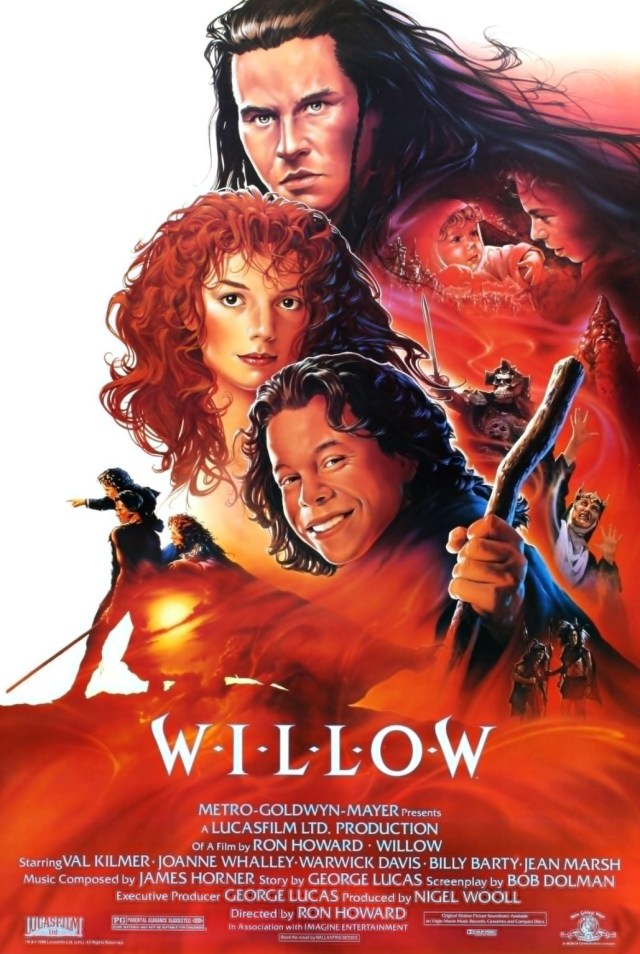
Before going over his complete list of the worst films from 1988, Gene Siskel introduces the episode’s segment on Willow. He calls the film “a heavy duty and quite dreary production”. I will admit there are darker moments within the story. However, the movie was more humorous than I expected it to be! Most of the humor came from Madmartigan, portrayed by Val Kilmer. Because of the screenwriting and Val’s versatile performance, the comedic timing was effectively executed. One of the funniest scenes in Willow is when Madmartigan and Willow are traveling on a sled down a snowy hill. During this trip, Madmartigan falls off the sled. But instead of being left behind, Madmartigan rolls down the hill, becoming a giant snow ball. When Madmartigan was introduced in Willow as the story’s comic relief, I knew he was going to be a character I would like. His personality, along with the dialogue shared between him and Willow, presented someone who captivated my attention and kept me invested in his story. It also helps that Madmartigan is hilarious, as he is the reason why I burst out laughing several times while watching Willow!
Gene Siskel is not the only critic who disliked Willow. Though he didn’t put the movie on his list of the worst films of 1988, Roger Ebert expressed his disapproval over how the story seemed similar to Star Wars, claiming children who liked the movie “hadn’t seen it a hundred times before”. I can only speak for myself, but Star Wars never crossed my mind as I watched Willow. But some moments did feel reminiscent of The Wizard of Oz. The film clip included in the Worst of 1988 episode shows Cherlindrea, a fairy queen, revealing to Willow the purpose of his journey. She even gives him a wand to help him accomplish his mission. The scene reminded me of when Glinda explained to Dorothy how she could return home. The iconic ruby slippers became a tool to help Dorothy along her way to Emerald City. Story ideas are bound to get repeated over time. Therefore, moments in Willow feeling reminiscent of The Wizard of Oz didn’t bother me. Instead, it showed me how a film’s creative team can take a familiar story idea and add their own unique perspective on it!
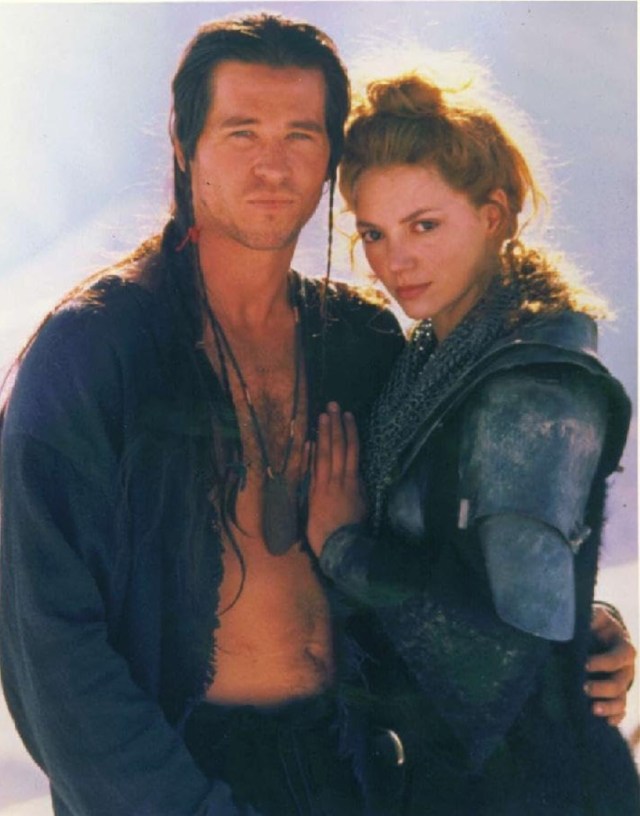
Another criticism Gene had about Willow was the film’s setting, stating “I’m tired of seeing epic pictures set in forests with lots of people running around and, uh, hitting each other over the head”. Personally, I was not bothered by this, as I felt the setting fit the story Willow’s creative team was trying to tell. What did bother me was how the build-up of Madmartigan and Sorsha going from enemies to lovers happened too quickly. Incorporating the “enemies to lovers” trope works in a fantasy story like Willow, where there is at least one battle and a major theme is good versus evil. It should be noted how Val Kilmer and Joanne Whalley had nice on-screen chemistry, as well as Sorsha and Madmartigan appearing photogenic together. I still wish the aforementioned build-up had been more gradual. As the story progressed, Sorsha evolved from villain to hero. Unfortunately, this evolution was too abrupt. While Sorsha’s change of heart gave her some character development, it left some questions unanswered. Perhaps a scene explaining this transformation didn’t find its way into the movie?

In past reviews, I criticized films for containing parts of a story that didn’t make sense. Willow is a film that doesn’t avoid this flaw. Bavmorda is the villain of the story. When the heroes attempt to defeat Bavmorda, she uses a spell to transform the heroes into pigs, with Willow and a sorceress named Fin Raziel being the only exceptions. This spell takes place in a short amount of time, with the afflicted heroes becoming pigs all at once. When Fin Raziel reverses the spell, this proves to be a lengthy process, as she uses her magic on one person at a time. This creative choice left me wondering why Fin Raziel wouldn’t use her magic on all the heroes all at once similar to Bavmorda? To me, it didn’t make sense, especially since the heroes didn’t have the luxury of time.
During their discussion of Willow in Siskel & Ebert’s Worst of 1988 episode, Roger reminds Gene how, despite the movie’s bad reviews, it became the top selling video and was successful at the box office. Had I seen Willow sooner, I might have contributed to the movie’s statistics. This is another Comparing with the Critics review where I found myself disagreeing with Siskel and Ebert. That’s because I had a genuinely good time watching Willow! I brought up in this review how the project has its flaws. But the story was simplistic and straight-forward, which made it easier to follow what was happening on screen. Even though Willow was the movie’s protagonist, it was Madmartigan who stole the show! In fact, I’d say he was the MVP of this story, as his personality and comedic timing left a good impression. There were moments in the film that felt reminiscent of The Wizard of Oz. However, I saw those moments as ways for Willow’s creative team to bring their own unique perspective to familiar story ideas. I have to say I’m glad I chose to review Willow for this edition of Comparing with the Critics! Now if you’ll excuse me, I have to watch the Siskel & Ebert 1988 Holiday Video Gift Guide episode in the hopes something Willow related can be included in my Movie Blogger’s Christmas Wish List.
This review was brought to you by
Sally Silverscreen
 18 Cinema Lane
Wow, I had no idea Siskel and Ebert hated on this movie so hard. No wonder I rarely pay attention to critics! I have loved this movie since I first saw it at a slumber party while in my teens, in the ’90s. It’s a major reason why I became a Val Kilmer fan 😉
I agree it really doesn’t remind me of Star Wars. It definitely has a lot of similarities to Lord of the Rings, but that’s because they both pull a lot from the great archetypes and story elements of myth-based storytelling (and so does Star Wars), so of course they’re going to have similarities. They’re classic Hero’s Journeys, after all.
Val Kilmer and Joanne Whalley definitely have great chemistry — in fact, they fell in love while filming this and were married for quite a while.
My kids love this movie now too, so much so that we currently have a hamster named Madmartigan 😀
Thanks for joining the blogathon!
LikeLiked by 1 person
You’re welcome and thanks for reading my review! As I mentioned in my article, Madmartigan was the film’s comic relief. However, he never came across as being so goofy, I couldn’t take him seriously. For this, credit has to be given to Val’s performance and the screenwriting. I was also amazed by how most of the special effects held up. Looking back on Willow, this is definitely a picture that has stood the test of time!
LikeLike
You know something I love about this movie? How it flips the tradition of “the dwarf is the comic relief” on its head. Willow is the straight man and the hero. The tall, “normal” guy is the comic relief and the sidekick. So cool.
LikeLiked by 1 person
You’re absolutely right! That’s a sign of a good movie; when you can revisit a film and pick up on things you missed during your first viewing!
LikeLike
I haven’t seen this in a looong time but remember liking it and no way was it the worst of that or any year. Siskel and Ebert had some pretty questionable opinions sometimes when it came to their “bad” picks. I need to see it again soon
LikeLiked by 1 person
Thank you for reading my review, Speakeasy! The fact we can see the same movie and form our own opinions on it proves the subjectivity of film. If you do revisit ‘Willow’, I’d love to read your thoughts on the movie!
LikeLiked by 1 person
This movie has been on my radar ever since I heard a movie podcast that specialized in so called bad films. If you tell me something is really bad movie-wise, that’s like a I dare you and I am prone to taking dares. So eventually I want to watch. Thanks for playing along in the blogathon.
LikeLiked by 1 person
You’re welcome and thanks for checking out my review! If you do decide to watch ‘Willow’, I’d be interested in reading your thoughts on the film!
LikeLike
This is one of my husband’s favorites, but I’ve always been kind of mixed about “Willow.” I don’t know why–there’s nothing wrong with it. It definitely proved there was more to Lucas than Star Wars. The remake, on the other hand, is pretty ghastly…
LikeLike
Pingback: The Top Ten Best Movies I Saw in 2024 – 18 Cinema Lane