Take 3: Night of the Comet Review (80s-tastic Mall-tacular Double Feature Part 1)

Hello and welcome to the first part of the 80s-tastic Mall-tacular Double Feature! Before this review begins, I’d like to remind my readers there will be spoilers for Night of the Comet. If you’re interested, you can check out the double feature’s introduction at this link:

The 80s-tastic Mall-tacular Double Feature Introduction!

Night of the Comet poster created by Thomas Coleman and Michael Rosenblatt Productions, Film Development Fund, and Atlantic Releasing Corporation

1. How were you introduced to Night of the Comet?

At the beginning of Dan’s video, ‘DEAD MALL SERIES : Back to the 80s : The Gallery in Philadelphia (Hologram Plaza – Disconscious)’, the scene where Regina and Samantha, the film’s protagonists, go to the mall is included in the introduction. That scene is spliced with Dan’s footage of The Gallery in Philadelphia, as the song, Enter Through the Lobby by Disconscious, plays over the images. In Dan’s video, ‘DEAD MALL SERIES : Best Fountain in the US : Burlington Center Mall NJ **CLOSED**’, he brings up several of his favorite “mall movies”. One of these movies is Night of the Comet.

2. Was Night of the Comet filmed in a mall? If so, which one?

According to a Youtube comment, Night of the Comet was filmed at Bullocks Wilshire. Upon further research, I learned it was a high-end, Los Angeles department store, complete with its own tea room. As of late 2022, the building is owned by Southwestern Law School.

3. What role did the mall play in Night of the Comet?

Before Regina suggests she and Samantha go to the mall, their world had been turned outside down. Most of the population had either been disintegrated into dust or turned into a zombie, due to the aftermath of the titular comet. The sisters are at their wits end, desperately trying to not only defend themselves, but also trying to find answers. After Samantha tearfully confesses how a guy from her class was going to ask her out on a date, Regina sees going to the mall as an opportunity to get their minds off the confusion surrounding them.

4. Why do you think the mall was in the film for a short amount of time?

When Dan Bell referred to Night of the Comet as a “mall movie”, I assumed the mall would play a significant role in the story. I even predicted the mall would play a bigger role in Night of the Comet than in The Legend of Billie Jean, as I thought the story would primarily take place in one location. But the 1984 title is a more expansive narrative. Not only is the aftermath of the comet more widespread, there are more locations for the characters to explore. While Regina and Samantha’s mall excursion was fun to watch, it was interesting to see the comet’s effects on other locales, like the local movie theater and a mysterious science headquarters.

5. Besides including a mall and focusing on teenage characters, do The Legend of Billie Jean and Night of the Comet share a common theme, idea, or message?

I haven’t seen The Legend of Billie Jean yet. But based on the introduction of Dan’s video, ‘DEAD MALL SERIES : Tour of the SUNRISE MALL from THE LEGEND OF BILLIE JEAN (1985)’, I can safely assume a shared idea between The Legend of Billie Jean and Night of the Comet is younger characters taking matters into their own hands. As I mentioned in answer number three, Regina and Samantha are at their wits end, as they desperately try to defend themselves and figure out what is truly going on. Since there are very few people to turn to, they rely on themselves and each other, proving they are capable of anything they set their mind on. Through strength, resilience, and adversity, Regina and Samantha become the embodiment of Christopher Robin’s quote:

“You’re braver than you believe, stronger than you seem, and smarter than you think.”

Colorful galaxy image created by Freepik at freepik.com. <a href=’https://www.freepik.com/free-vector/lovely-hand-drawn-galaxy-background_2943080.htm’>Designed by Freepik</a>. <a href=”https://www.freepik.com/free-photos-vectors/background”>Background vector created by Freepik</a>. Image found at freepik.com.

6. Is there anything about Night of the Comet you liked or didn’t like?

Based on the synopsis and Dan’s thoughts on Night of the Comet, I knew the protagonists were described as “valley girls”. But I didn’t know what to expect from Regina and Samantha. When I watched the movie, though, I adored these characters, as they were so endearing! In fact, they’ve become two of my favorite characters from film! Part of this is due to Catherine Mary Stewart’s and Kelli Maroney’s performance. Through their well-rounded portrayals, Catherine and Kelli carried this film, making it worth the price of admission. No matter what their characters experienced, their expressions and reactions felt realistic. Even the on-screen camaraderie was believable, successfully selling the idea Regina and Samantha were sisters. According to Wikipedia, Thom Eberhardt, Night of the Comet’s director, asked teenage girls how they’d respond to a large-scale catastrophe while working on PBS specials. The answers he received were used as inspiration for the film’s script, adding to Regina and Samantha’s believability.

When creating a science fiction story, you need to explain the science in a way that satisfies the audience. Even if the science was made specifically for the story, you still need to provide a logical explanation. With Night of the Comet, though, most of the science was left unexplained. There were also parts of the story that were under-utilized. At the beginning of the movie, Regina is playing an arcade game. She discovers a gamer named “DMK” has beaten her high score. Not only does Regina attempt to beat “DMK”’s high score, she wonders who “DMK” is. While the audience learns the identity of “DMK” (a random survivor named Danny, who used his initials to record his high score), this part of the story was forgotten about until the end of the movie. To me, this was a missed opportunity. Regina could have used her video game/arcade game skills to save the day. She and “DMK” could have met face-to-face earlier in the story, setting aside their differences to recruit more survivors to safety. But, alas, it just wasn’t meant to be.

7. Did you develop any thoughts and/or questions while watching this film?

As I said in answer number six, most of the science was left unexplained. While watching Night of the Comet, I found myself more confused than entertained. I’ll list some of the questions I had after I saw the movie, as I don’t want this review to become even longer than it already is:

  • Why did the effects of the comet cause some people to disintegrate into dust while causing others to become zombies?
  • Why exactly did steel protect Samantha, Regina, and the other survivors from the comet’s effects?
  • How did Brian and Sarah survive? Where did they come from?
  • Why did Willy and his gang of zombies possess more intelligence than other zombies the survivors encountered?
  •  What was the mission of the scientists? Were they trying to save or harm humanity?
  • Why did Audrey White go rogue? Was she a zombie?

8. In your double feature for Rich Kids and Over the Edge, you discussed certain events from the ‘70s that likely influenced the creation of those films. Is there anything from the ‘80s that you think either affected Night of the Comet or teenagers from that time?

Imagine you’re a teenager in the 1980s. You’ve got a lot of your plate as it is, from trying to pass your upcoming math test to figuring out how you’re going to get that latest album from the music store. But from time to time, you hear about this thing called The Cold War. That phrase puts a concerned look on your parent’s face as they drive you to school. You hear about it on the news, with the President pleading to “tear down that wall”. Even your favorite tv show is bringing it up. The Cold War seems to be everywhere. You wish there was something you could do to end this conflict. But because you’re just a teenager, you feel powerless, like there’s not much you can do. As you’re reading this, you’re probably wondering, “What does The Cold War have to do with Night of the Comet”? Even though The Cold War isn’t brought up in the story, it was present around the time of the film’s release. And yes, the film is meant to be a form of escapism. However, through Regina and Samantha’s adventures, teenagers at that time could see there were things within their control they could do.

9. A lot has changed since the release of Night of the Comet. Have you come across any recent pieces of media that prominently feature a mall?

For this answer, I’m not going to bring up a piece of media. Instead, I’ll talk about an experience, as it makes more sense with Night of the Comet. In the U.K., there is a company called Zombie Experiences, providing customers with the opportunity to explore abandoned locations and defeat zombies. One of those locations was a mall. But according to Zombie Experiences’ website, this experience ended in February 2018. They did re-locate this particular experience to a shopping complex. However, on Zombie Infection’s website, it will end this December. There are two other shopping mall experiences offered, but they seem inactive at the time of this review’s publication.

10. After watching this movie, is there anything you can take away from your movie viewing experience?

Calling Night of the Comet a “mall movie” is, in my opinion, a bit of a stretch. This is because the mall only appears in a few scenes. If I had to call Night of the Comet anything, I’d call it an “alternative Christmas film”. The story takes place around Christmastime, but doesn’t rely on the tropes and clichés typically found in Christmas movies. Like I said in answer number seven, I was more confused than entertained by Night of the Comet. After watching this film, I was left with more questions than I planned to have. But one of the reasons why I kept watching was Catherine’s and Kelli’s performance. I also think the story itself contained interesting ideas. Overall, I think Night of the Comet is an ok film with some bright spots.

Image by evening_tao on Freepik

Have fun at the mall!

Sally Silverscreen

The 80s-tastic Mall-tacular Double Feature Introduction!

Whenever I publish 100 posts, I coordinate a special double feature. Back in January, my 600th post was my Buzzwordathon review of How to Write Good by Ryan Higa. Since then, I’ve been waiting for the right time to talk about my next double feature. Now, I’m excited to finally publish these long over-due articles! With the changing of the seasons from summer to fall, there’s one place that has remained a constant staple: the mall. Back to school shopping may be in full swing, depending on when a given school distinct begins their year. Some people might consider starting their Christmas/holiday shopping, especially to avoid the crowds. Maybe a local mall has a reputation of gathering the community, from being a popular hangout spot to hosting community events. With that said, this double feature will revolve around the mall!

There are several movies from several decades where a mall is a story’s setting. For this double feature, though, both films were released in the ‘80s. Within that decade alone, there are several options I could have selected. But I ended up going with The Legend of Billie Jean and Night of the Comet! At first glance, pairing these films together seems like a no-brainer. However, I intentionally chose these titles because they were referenced on the Dead Mall Series, created by Youtuber, This is Dan Bell.

Image by Freepik

In my double features, I attempt to answer a question through both of my reviews. But this time, I will only make a prediction, as I haven’t made a prediction since my Halloween double feature back in 2018. For this double feature, my prediction is the mall in Night of the Comet will play a bigger role than the mall in The Legend of Billie Jean. I haven’t seen any of these films prior to these reviews. Based on the clips that were in the introduction of Dan’s video, ‘DEAD MALL SERIES : Tour of the SUNRISE MALL from THE LEGEND OF BILLIE JEAN (1985)’, my guess is the story of The Legend of Billie Jean will revolve around a conflict that is not confined to the mall. I once read a synopsis for Night of the Comet that stated the film contained a zombie apocalypse. If this is true, the script would present a logical explanation for the story remaining in one location.

Have fun at the mall!

Sally Silverscreen

My Conclusion to the National Read a Book Day Double Feature

For the remaining days of October, I will try my best to “clean house”. This means I will be publishing articles that I’ve been meaning to post for some time. One of these posts is my conclusion to last month’s National Read a Book Day Double Feature! In September, I sought to answer the question, Would these adaptations [of Saint Maybe and At Home in Mitford] encourage the viewers to read their source material or any other book? Now that I’ve seen and reviewed both films, I’ve come to the realization how difficult it is to answer this question.

Library image created by Freepik at freepik.com. <a href=’https://www.freepik.com/free-photo/stack-of-books-on-library-desk_2509490.htm’>Designed by Freepik</a>. <a href=”https://www.freepik.com/free-photos-vectors/school”>School image created by Freepik</a>. Image found at freepik.com.

While reading some of Saint Maybe’s reviews on IMDB, one of them stood out to me. Its title read “Made me want to read the book”. Written by someone named bkgmoonstar, they claim the movie was missing too much detail. After they read the novel, they said “the movie was actually quite faithful to the book”. This review represents the opinion of just one reader. There are many readers who choose to read a given book for various reasons. They also have their own preferences and literary interests.

Interior view of library image created by Macrovector at freepik.com. <a href=”https://www.freepik.com/free-photos-vectors/business”>Business vector created by macrovector – http://www.freepik.com</a>. Image found at freepik.com.

Like readers, there are many movie-goers with their own tastes in cinema. Some of the films of their choosing may be an adaptation. But even if they enjoy an adaptation, it doesn’t mean they’ll reach for the source material. This decision could be made for a variety of reasons. When I asked my aforementioned question in my reviews of Saint Maybe and At Home in Mitford, I wasn’t really able to give a definitive answer. That’s because the only reader I can speak for is myself. Therefore, if I had to answer the question, I think it all depends who you ask.

Have fun at the movies!

Sally Silverscreen
If you want to read the other articles associated with this double feature, I’ll provide the links here:

The National Read a Book Day’s Double Feature Introduction

Take 3: Anne Tyler’s Saint Maybe Review (National Read a Book Day Double Feature Part 1)

Take 3: At Home in Mitford Review (National Read a Book Day Double Feature Part 2)

Take 3: At Home in Mitford Review (National Read a Book Day Double Feature Part 2)

Happy National Read a Book Day! I want to let you know there will be spoilers for both the book and movie in this review. If you want to check out this double feature’s introduction, you can visit this link:

The National Read a Book Day’s Double Feature Introduction

At Home in Mitford poster created by Crown Media Family Networks and Hallmark Channel
1. How did you come to know of this film?

I remember when Hallmark’s adaptation was announced four years ago. The biggest news associated with the project was the casting of Cameron Mathison and Andie MacDowell as Father Tim Kavanagh and Cynthia Coppersmith. This news made fans upset, due to the fact both Andie and Cameron were younger than their characters were described in the book. Their disapproval of the casting led the movie to be one of the lowest viewed films on Hallmark Channel that year, with 1.34 million viewers. I also remember the movie didn’t receive an encore presentation, as is customary for the majority of Hallmark productions. While I’m not sure if this information is accurate, I have heard Jan Karon, the author of the Mitford series, didn’t promote the film.

2. How did you acquire this movie’s respective source material?

Two years ago, I purchased a used copy of At Home in Mitford at a library book sale. I became interested in reading the series before the adaptation’s premiere, as I heard so many good things about it. Since I never got to read any of the books before the movie aired, I was curious to see how different the book was from the film. At the sale, they had the whole series available for purchase. But since I didn’t know if I would like the series, I just bought the first book.

3. Have you read Jan Karon‘s work before? What are your thoughts on her writing?

Like I mentioned in the introduction, I have never read anything by Jan Karon before. So, I didn’t know what to expect from the book. Jan’s emphasis on detail was one of At Home in Mitford’s strengths! An example is when things are being listed off. In the book, Father Tim and Cynthia go to the movies. Within a paragraph, Jan takes the time to mention the snacks they purchased, saying “they went into the empty row with a box of popcorn, a Diet Sprite, a Coke, and a box of Milk Duds”. It’s details like these that make the characters and the story itself feel realistic.

Similar to Saint Maybe, At Home in Mitford is mostly a “slice of life” story. But there are a series of mysteries that are drawn out throughout the text. Because this book has elements of mystery, but is not a mystery novel, the overall sense of urgency was low. At times, it felt like there were too many characters and storylines. Mitford seemed like any other small town I’ve seen in Hallmark’s programming. While reading this book, I kept asking myself, “How is Mitford any different from Cedar Cove? Or Chesapeake Shores?” Maybe if I had read At Home in Mitford before watching any of those programs, I would think differently. But, at the end of the day, I thought this book was a fine, wholesome story.

4. Was the movie different from its source material? If so, how?

Even though there were some similarities between the movie and the book, At Home in Mitford’s film adaptation contained more differences. Some characters were either omitted or changed from the text. One of these characters was Olivia Davenport. In the film, she was a parishioner who was seeking Tim’s guidance for her rocky marriage. Her presence in the movie was very limited, which is different from the book. In the novel, Olivia was a part of At Home in Mitford’s ensemble cast of characters. Her storyline was one of the most important, as she desperately needed a heart transplant. Olivia also helped Mitford’s doctor, Hoppy Harper, move forward from the loss of his deceased wife. As I said in answer number three, I, at times, felt like there were too many characters and storylines in the book. Therefore, I don’t fault Hallmark for leaving out certain parts of the source material. However, if the adaptation’s creative team knew they were going to include one of the book’s characters in their script, then they should have given Olivia a greater significance in the film.

Despite the film adaptation’s differences from the book, some of them had purpose. The novel and film featured a character named Marge Owen. While she became pregnant in both versions of the story, she was given a greater importance in the movie. The book never revealed her occupation, where the film shows Marge owning her own bookstore. She also provides friendship and guidance to Cynthia in the adaptation. As a way to overcome her writer’s block, Cynthia volunteers to restore the church’s paintings. In Jan Karon’s book, Cynthia wasn’t involved with the church. She does attend church services, but she doesn’t go the extra mile for the parish. The movie version of Cynthia tells Tim that she wants to give back. Cynthia’s decision not only gives her a stronger connection to the church, but it also shows how someone living their faith can come in different forms.

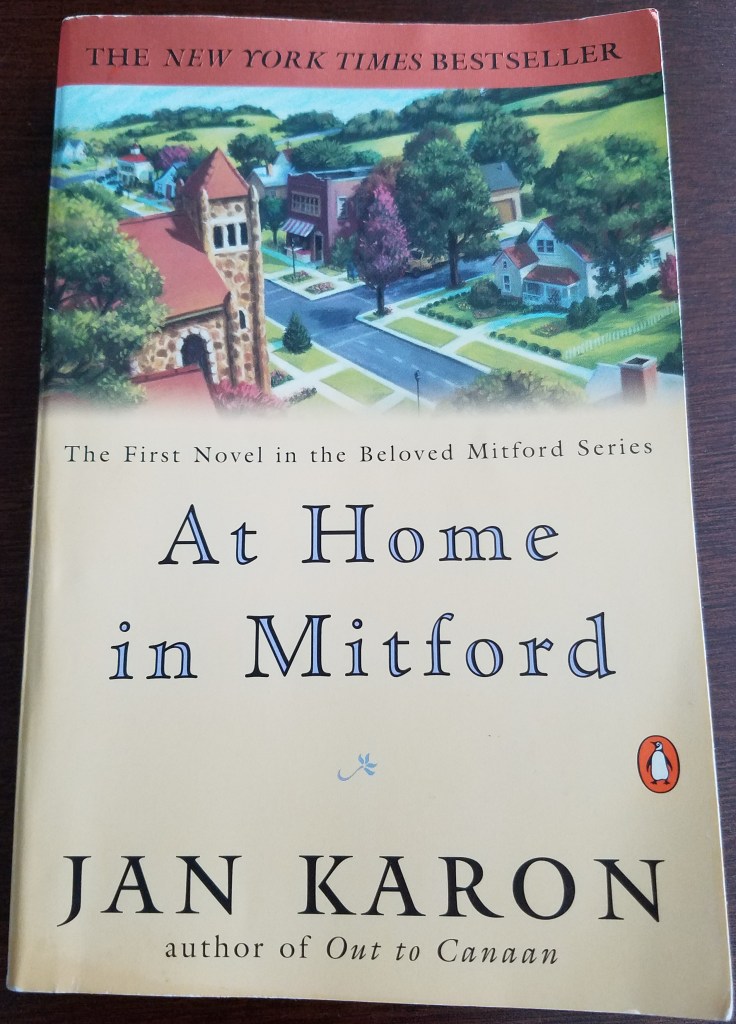
This is the copy of At Home in Mitford I purchased two years ago. Screenshot taken by me, Sally Silverscreen.
5. Do you think the movie was better than the book or was the book better than the movie?

When it comes to At Home in Mitford, I can’t give a yes or no answer. So, I’ll say it like this: As a movie, At Home in Mitford is a fine, run-of-the-mill Hallmark Channel production, with some of the film’s changes improving upon the book. But as an adaptation, it feels like the network was trying to fit a round peg into a square hole. The first book in Jar Karon’s series was published before Hallmark Channel came into existence. By the time the adaptation was filmed, Hallmark was already well versed in their formula. Because the adaptation’s creative team tried so hard to fit At Home in Mitford into Hallmark’s brand of film-making, the story was watered down. If Hallmark were serious about faithfully adapting At Home in Mitford, they should have adapted it into a television show, as that is how the book read to me. I also think Jan Karon herself should have been one of the movie’s screen-writers.

6. Saint Maybe and At Home in Mitford share some similarities, such as how both books are written by women. Are there any other similarities you can think of?

Like I said in answer number three, At Home in Mitford is mostly a “slice of life” story. While there are mysteries within the text, the mysteries themselves feel lower in stakes. In the book, Father Tim finds some stolen jewels in an urn. Even though these jewels were connected to an international crime, Jan finds a way to connect this crime directly to Mitford. Father Tim wonders if his antique shop owner friend, Andrew Gregory, may have imported the jewels by hiding them in antique furniture. However, the culprit was a man named George Gaynor, a criminal on-the-run who found solace in Father Tim’s religious wisdom. Though George was arrested for his crime, he received the opportunity to become baptized. Father Tim even kept in touch with George after he left Mitford.

Saint Maybe is also a “slice of life” story featuring several mysteries. Similar to At Home in Mitford, the stakes of these mysteries were lower. Back in my review of Saint Maybe’s film adaptation, I mentioned how Ian discovered the identity of Agatha and Thomas’ father. Because this information was discovered long after Ian agreed to help raise Agatha and Thomas, there wasn’t a strong sense of urgency to do anything about the situation. He doesn’t even tell his family what he found. In fact, after speaking with Agatha and Thomas’ maternal grandmother, the movie version of Ian says to himself, “Thank goodness I didn’t find this information sooner”.

7. Should Hallmark adapt Jan Karon‘s other work? If so, why?

If At Home in Mitford’s film adaptation had received better reception from the viewers, then I’d be curious to see Hallmark adapt the other books in the Mitford series. Because that didn’t happen, Hallmark would have difficulty adapting Jan Karon’s other work, as most of her books are Mitford related. But since Hallmark created a few animated films in the past, I could honestly see them adapting Miss Fannie’s Hat or Jeremy: The Tale of An Honest Bunny. Similar to properties like Hoops and Yo-yo, Hallmark could create merchandise related to these stories as well. I’ve never read Miss Fannie’s Hat or Jeremy: The Tale of An Honest Bunny. But as long as Jan herself is involved with the project, I’d be fine with Hallmark adapting these books.

8. Is there anything about At Home in Mitford you liked or didn’t like?

I’ve heard complaints from Mitford fans about how different Dooley is in the film compared to the book.  While I do agree about Dooley being very different in the movie, I actually liked the movie version of his character. Dooley was sometimes the comic-relief in the story. His grandfather, Russell, even called him “a prankster”. My favorite scene was when Dooley removed the ‘Dog Found’ posters almost immediately after Father Tim posted them. Throughout the film, Father Tim actively sought out Barnabas’ former pet parent. He spreads the word about the dog’s current whereabouts by posting ‘Dog Found’ posters throughout Mitford. Since Dooley doesn’t want to see Barnabas go away, he removes these posters behind Father Tim’s back. This scene was hilarious because of its believability.

Compared to the book, At Home in Mitford’s film adaptation felt formulaic. Like I said in answer number five, the movie’s creative team tried so hard to fit At Home in Mitford into Hallmark’s brand of film-making. Instead, the story followed the same beats and tropes/cliches as other Hallmark titles. The film included an adaptation exclusive character named Jack Emery. Throughout the story, he embodied the “business person is a jerk and/or out of touch” cliché, with his sole purpose being the worse datable candidate compared to Father Tim. At Home in Mitford’s film adaptation was released in 2017, two years after All of My Heart. The 2015 movie was one of the network’s most notable films to challenge the aforementioned cliché. Therefore, it made At Home in Mitford kind of seem outdated by comparison.

Old-fashioned books image created by Macrovector at freepik.com. <a href=’https://www.freepik.com/free-vector/books-seamless-pattern_1539033.htm’>Designed by Macrovector</a>. <a href=”https://www.freepik.com/free-photos-vectors/background”>Background vector created by Macrovector – Freepik.com</a>. Image found at freepik.com.
9. Did you develop any thoughts and/or questions while watching this film?

Similar to Saint Maybe, religion/faith was downplayed in At Home in Mitford’s film adaptation. Both Father Tim and Cynthia mentioned they were Episcopalian. In answer number four, I talked about how Cynthia volunteers to restore the church’s paintings. Even though several scenes took place inside the church, we don’t see any characters worshipping within its walls. The tail end of Father Tim’s sermon was shown as well. The book showed how religion/faith played a role in Father Tim’s everyday life. He quoted a Scripture passage to fit almost any situation, even using Scripture to discipline Barnabas. Father Tim also turned toward everyday life to find inspiration for his sermons. Because Hallmark gave us Signed, Sealed, Delivered and has incorporated faith into When Calls the Heart, I’m surprised the network chose to tone down the religion/faith in the At Home in Mitford movie. But, once again, it feels like a missed opportunity.

10. Would At Home in Mitford encourage viewers to read either its source material or any other book?

Because of how many differences are found in the adaptation, I think it might encourage some viewers to check the book out. I can only speak for myself, but this is what inspired me to read the first book in the Mitford series. When I started reading At Home in Mitford, I could immediately tell how different each story was. I said in answer number five that the book read more like a television show. This is because the story was abundant with characters and storylines, as well as storylines being drawn-out. If viewers find themselves watching more tv series than movies, then the book might be for them.

11. After watching this movie, is there anything you can take away from your movie viewing experience?

Because the stories in At Home in Mitford revolve around the citizens of a small town, I can see why Hallmark would want to adapt Jan Karon’s series. At the time of the film adaptation’s release, small towns were an exhausted backdrop in Hallmark’s productions, with most of their characters being former or current small-town residents. But it seems like the network was so eager to potentially start a new series, that they lost sight of who this project was intended for. Excluding Jan Karon from the creative process doesn’t help Hallmark’s case. Their inability to adapt pre-existing material, At Home in Mitford in this case, shows how creatively dependent they’ve become on the rom-com genre. In my honest opinion, this movie was made a decade or two too late. Since Hallmark spent so much time showing how every small town was special, Mitford wasn’t given the opportunity to stand out. This movie should have been released either as a Hallmark Hall of Fame production prior to 2010 or on Hallmark Channel between 2001 to 2007.

Have fun at the movies!

Sally Silverscreen

Take 3: Anne Tyler’s Saint Maybe Review (National Read a Book Day Double Feature Part 1)

Happy National Read a Book Day! I want to let you know there will be spoilers for both the book and movie in this review. If you want to check out this double feature’s introduction, you can visit this link:

The National Read a Book Day’s Double Feature Introduction

Anne Tyler’s Saint Maybe poster created by Hallmark Hall of Fame Productions and CBS
1. How did you come to know of this film?

If you’ve been following my blog, you would know that my least favorite Hallmark Hall of Fame movie is Back When We Were Grownups. Like a lot of Hallmark Hall of Fame productions, the 2004 film was based on pre-existing source material; a novel written by Anne Tyler. Over the years, I discovered that two other Hallmark Hall of Fame movies have been based on Anne’s work: Breathing Lessons and Saint Maybe. Before this double feature, I had never seen either film. All I knew about Hallmark’s 1998 adaptation was that a man took in a deceased relative’s children and that the story had something to do with forgiveness. I also remember how the film would sometimes air during Hallmark Movies & Mysteries’ ‘Miracles of Christmas’ marathon.

2. How did you acquire this movie’s respective source material?

I purchased a second-hand copy of Saint Maybe at an estate sale earlier this year. As soon as I saw the book on a shelf, it reminded me of my Hallmark Hall of Fame Reading Challenge. Back in 2019, I created a reading challenge based on the books or plays that were adapted into Hallmark Hall of Fame titles. Since I’d like to read as many of these works as I realistically can, I purchased the book with that intention.

3. Have you read Anne Tyler‘s work before? What are thoughts on her writing?

As I said in the introduction, this was my first time reading anything by Anne Tyler. Based on what I read and based on what I saw in Back When We Were Grownups, I’m going to guess her forte is writing about larger families that are somewhat dysfunctional. Out of those two stories, I liked Saint Maybe more than Back When We Were Grownups. There was heart incorporated in the narrative and the Bedloe family had a legitimate reason for their dysfunctionality. I was also surprised by the inclusion of religion/faith. But I didn’t like how the chapters were too long. What Anne should have done instead is write shorter chapters and include them in separate sections for each character. I, personally, am not a fan of “slice of life” stories. About eighty percent of Saint Maybe is just that: a “slice of life” story. With all that said, I thought the novel was well-meaning and fine.

4. Was the movie different from its source material? If so, how?

For the most part, Saint Maybe was faithful to the source material, especially when it came to the most important parts of the story. But there were changes found in the adaptation. One of these changes was Agatha’s personality. In the book, when Agatha was introduced in the story as a young child, she came across as distant and matter-of-fact. As she grows up, Agatha comes to despise religion, as she feels religion was forced upon her life. The movie version of Agatha adopts the personality Thomas had in the book, coming across as sweet and mild-mannered. She grows up to be a friendly doctor who has no known opinion on religion. While she does criticize The Church of the Second Chance, she does this because she wants Ian to live his best life. Her criticism has nothing to do with religion itself.

Another difference between the movie and its source material is how Ian figures out the identity of Agatha and Thomas’ father. Agatha, in the book, is very protective over a jewelry box she claims belonged to her mother. Ian stumbles across this box by accident and finds Agatha’s and Thomas’ birth certificates among the jewelry and other items. These certificates reveal their father’s last name; Dulsimore. Ian learns this information differently in the movie. Similar to the book, Thomas and Agatha own a doll named Dulcimer. While Agatha is at Ian’s parents’ house, the audience can see her trying to remove something from the back of the doll. However, this information isn’t revealed until later in the movie. When the Bedloe family hires Rita diCarlo to organize their house, a lot of items end up getting thrown out. One of these items was Dulcimer the doll. As Ian is leaving the house, he sees the doll in a garbage bag. When he picks it up, he finds a slip of paper hidden in the doll’s back, revealing the doll’s name was also the last name of Agatha and Thomas’ father.

5. Do you think the movie was better than the book or was the book better than the movie?

Like its source material, I thought the movie adaptation of Saint Maybe was fine. Therefore, this is a difficult question to answer. But I will try to answer this question as best as I can by saying this: If you want to see a story about a family dealing with a personal tragedy, I’d recommend the movie. This is because the movie gets straight to the story’s point a lot sooner than the book did. If you’re interested in a story where the protagonist overcomes guilt and sin through religion/faith, I’d recommend the book. As I’ll explain later in this review, the movie didn’t feature religion/faith as much as in the book.

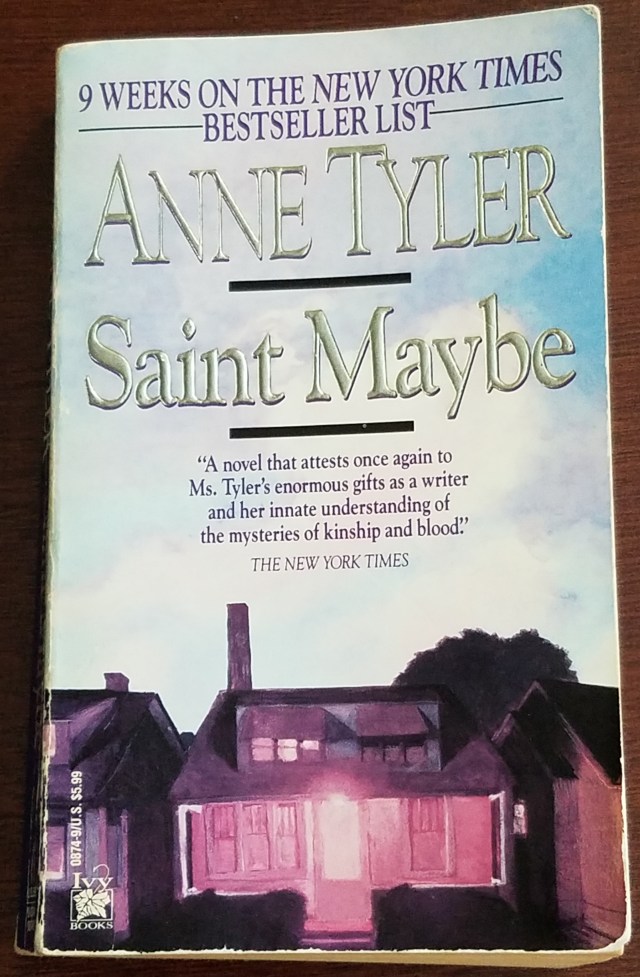
This is the copy of Saint Maybe I purchased earlier this year. Screenshot taken by me, Sally Silverscreen.
6. Saint Maybe and At Home in Mitford share some similarities, such as how both books were published in the 1990s. Are there any other similarities you can think of?

As I said in answer number three, I was surprised by the inclusion of religion/faith in Saint Maybe. Even though the movie and its source material are titled Saint Maybe, I wasn’t expecting religion/faith to play a large role in the text. But religion/faith is a cornerstone of both Saint Maybe and At Home in Mitford.  References to God, the Bible, and Christianity can be found in each book. However, the way both authors incorporated these ideas into their stories is very distinct.Throughout Saint Maybe, the congregation of The Church of the Second Chance obeyed a rule that forbade them from consuming sugar. While this rule seems ridiculous on the surface, it is used as a metaphor for sin. Reverend Emmett, the leader of The Church of the Second Chance, explains that if one actively avoids sugar, they are actively avoiding sin. If someone tries to make excuses for consuming sugar, they are making excuses for committing sin.

7. Should Hallmark adapt Anne Tyler‘s other work? If so, why?

As of early September 2021, Hallmark has not made any announcements on whether they are bringing back the Hallmark Hall of Fame collection. But if Hallmark does choose to create more Hallmark Hall of Fame titles and would like to adapt more of Anne Tyler’s novels, there are plenty of stories for them to choose from. According to Goodreads, twenty-four books written by Anne Tyler have not been adapted into a Hallmark production. Since I’ve never read any of those books, I can’t say which one is more deserving of receiving an adaptation. But if I had to pick at least one title Hallmark should adapt into a film, it would either be A Patchwork Planet or Digging to America. This is based on each book’s synopsis, as I have not read either book.

Personally, I wouldn’t be opposed to seeing Hallmark adapt more of Anne Tyler’s stories. Based on my experience with Saint Maybe, the movie was mostly faithful to the source material. So, with the right creative team involved, maybe another Anne Tyler story could be lucky enough to receive similar treatment. Because three of Anne Tyler’s books have been adapted into Hallmark Hall of Fame titles, it appears Hallmark has had a good working relationship with the author. I’m not sure how much creative control Anne had on either film. But if Hallmark wants to work with Anne again, I’m pretty sure an agreement between both parties could be reached.

8. Is there anything about Saint Maybe you liked or didn’t like?

Saint Maybe is a story that takes place over the course of several years. In the movie, there were subtle clues revealing which time period was portrayed on screen. One establishing shot showed a boy riding his banana seat bicycle down the sidewalk. This brief image indicated how that specific part of the story took place in the 1970s, as banana seat bicycles were popular within that decade. During the movie, Ian adopted a pair of large rimmed glasses. Because this style of glasses was common in the 1980s, Ian’s accessory is very telling of how much time had passed since the beginning of the film. Movies are a visual form of story-telling. So, I liked how the film’s creative team took the initiative to show the passage of time in a creative way.

 My favorite part of the book was when Daphne tried to set up Ian with her fifth-grade teacher, Miss Pennington. It was in this chapter that I started to like Daphne as a character, her free-spirited personality being introduced to me as the reader. Unfortunately, this part of the book wasn’t translated to the screen. I was disappointed by the omission of the book’s seventh chapter. The audience could have witnessed the evolution of Daphne’s personality, gaining an understanding of why she became who she was by the end of the story. Instead, there was a huge time jump from five-year-old girl to free-spirited woman. Because of missing context, this left questions without answers. But I recognize there is only so much story you can tell in eighty-four minutes.

Antique car image created by Freepik at freepik.com. <a href=’https://www.freepik.com/free-vector/red-classic-car_803652.htm’>Designed by Freepik</a>. <a href=”https://www.freepik.com/free-photos-vectors/vintage”>Vintage vector created by Freepik</a>. Image found at freepik.com.
9. Did you develop any thoughts and/or questions while watching this film?

While I didn’t develop any questions, I was surprised by how religion/faith was downplayed in Saint Maybe’s film adaptation. Yes, Ian’s introduction to The Church of the Second Chance was similar to the book. Agatha and Thomas tell Ian what they learned at summer camp, which was run by The Church of the Second Chance. Toward the end of the film, the Bedloe family are seen going to church. Other than these moments, religion/faith didn’t have an influence over the character’s lives. The Sugar Rule I talked about in answer number six was never brought up in the script. Reverend Emmett’s beliefs on how his congregation was led didn’t appear in any of the character’s dialogue. Even Reverend Emmett himself showed up in two or three scenes, having a much smaller presence than he did in the book. Saint Maybe’s film adaptation was released in 1998, a time when shows like Touched by An Angel were finding success on mainstream television. In hindsight, Hallmark choosing not to ride Touched by An Angel’s coattails kind of seems like a missed opportunity.

10. Would Saint Maybe encourage viewers to read either its source material or any other book?

I think it depends on what type of story someone wants to consume. As I said in answer number five, I’d recommend the book if you’re interested in a story where religion/faith is one of the key themes. But if you like films from the drama genre, those that explore relationships between characters, then the film adaptation is for you. I’ve said before that I am not a fan of “slice of life” stories. Like I mentioned in answer number three, Saint Maybe is primarily a “slice of life” story. If I hadn’t read the book beforehand, I would probably choose the movie over the text.

11. After watching this movie, is there anything you can take away from your movie viewing experience?

I now understand why Saint Maybe was sometimes shown during Hallmark Movies & Mysteries’ ‘Miracles of Christmas’ marathon. Several scenes took place during Christmas-time, with decorations associated with the holiday shown in the background. But I wouldn’t necessarily call Saint Maybe a Christmas story/movie. I said in answer number eight that this story took place over the course of several years. The themes and messages within the text are not exclusive to the Christmas season. In 2019, I created a tier rank list of every Hallmark Hall of Fame movie I’ve ever seen. Since posting that list, I have renamed each category. For Saint Maybe, I’d place this film adaptation in the category titled ‘Bought It at a Garage Sale for a Dollar’. The movie itself was fine, but I wouldn’t pay $20 if it was sold on DVD.

Have fun at the movies!

Sally Silverscreen

The National Read a Book Day’s Double Feature Introduction

Back in March, I published my review of The Abominable Dr. Phibes. That post became my 500th. Every time I publish 100 posts, I host a special double feature. For months, I was trying to find the right theme for these reviews. Remembering how my first milestone double feature was published on Halloween, I decided to commemorate another holiday. However, I wanted to choose a holiday that is lesser known. After doing some research on the internet, I learned National Read a Book Day is celebrated on September 6th. This caused me to remember how I not only had the 2017 movie, At Home in Mitford, on my DVR, but I also owned a copy of the book it is based on. Then I remembered I had a copy of Saint Maybe, the same book that was adapted into a Hallmark Hall of Fame film. That was when the idea for this double feature was born! With every double feature, I try to answer a thought-provoking question related to both films. Since I read both aforementioned books before watching each movie, I am asking the following question:

Would these adaptations encourage the viewers to read their source material or any other book?

Prior to this double feature, I had never read anything by Jan Karon or Anne Tyler. I also have never seen the Hallmark Hall of Fame adaptation of Saint Maybe before. But this will be my second time watching At Home in Mitford, as I first saw the film when it released in 2017. Similar to my PB & J double feature, there are no pre-movie thoughts and/or questions this time.

Happy reading place image created by Freepik at freepik.com. <a href=”https://www.freepik.com/free-photos-vectors/background”>Background vector created by freepik – http://www.freepik.com</a>. Image found at freepik.com.

Have fun at the movies!

Sally Silverscreen

Take 3: The Karate Kid Part II Review (Olympic Dreams Double Feature Part 2)

Now that I’ve seen 1984’s The Karate Kid, it’s time for me to review its respective sequel; The Karate Kid Part II! Long before I even thought about starting a movie blog, I had only seen a snippet of this film. Like I said before, I am willing to give a chance to movies I haven’t watched in their entirety. Because of that and because the majority of The Karate Kid Part II takes place in Japan, which has hosted the Olympics four times, my blogathon became a good excuse for checking this sequel out! Sequels, like any type of film, can be hit or miss. There are times when the next chapter can allow the overall story to “go the distance”; expanding the narrative and bringing something new to the table. Meanwhile, there are sequels that waste their potential by trying to recapture the magic of the previous installment. At the end of the day, it all comes down to the creative team and their intention for creating another film. If you want to know what type of sequel The Karate Kid Part II is, you’ll just have to keep reading this review!

Because I had The Karate Kid Part II on my DVR since last year, I decided to use a screenshot of the movie’s poster from my television. Screenshot taken by me, Sally Silverscreen.

Things I liked about the film:

More focus on Mr. Miyagi: The first film was about Daniel’s personal journey; hence the film being titled The Karate Kid. While the majority of the movie revolved around the protagonist, we get to learn about Mr. Miyagi through his interactions with Daniel. But only parts of Mr. Miyagi’s backstory are revealed in these interactions. The Karate Kid Part II places more emphasis on Mr. Miyagi’s story. As I mentioned in the introduction, the sequel takes place in Japan, where Mr. Miyagi is originally from. However, the audience also witnesses people from Mr. Miyagi’s past interacting with him. The reason for the sequel primarily taking place in Japan is because Mr. Miyagi receives a letter from his former love interest, Yukie, about his father’s ill-health. By crossing paths with Yukie again, Mr. Miyagi is given the opportunity to reflect on past life choices. He also has to deal with the ramifications those choices had created. This new direction in the overall story shows that even though Mr. Miyagi is a good teacher with plenty of wisdom to share, he is still a human who, like Daniel, is constantly learning.

Interactions among the characters:  In my review for The Karate Kid, I talked about how the interactions among the characters were one of the strongest parts of that film. The sequel has the same strength as its predecessor, which provides consistency to the overall story! Having Ralph Macchio and Noriyuki “Pat” Morita reprise their roles helps maintain this consistency, as both actors are now familiar with each other’s talents. One of the strongest scenes in the movie is when Daniel and Mr. Miyagi are watching the sunset on the beach. In this moment, we not only learn more about Daniel, but we get to see him support his mentor and friend. The Karate Kid Part II shows Daniel having grown up since the events of the first film. Even though Daniel is still a teenager with a teenage perspective, he is more willing to put others before himself, as well as open his mind to new opportunities and experiences. Right as Mr. Miyagi boards his plane, Daniel joins him in the plane terminal. The reason why he wants to join Mr. Miyagi on this trip is because he wants to be there for his friend and mentor, especially since that friend and mentor has been there for Daniel. Not only does Daniel purchase a book about the specific place in Japan where Mr. Miyagi is from, but Daniel also uses some of the money from his savings account to pay for his ticket. Like I said in my review for the first movie, interactions like Mr. Miyagi and Daniel’s were made possible by the quality of the acting performances and the screenwriting!

The scenery: Although most of The Karate Kid Part II takes place in Japan, the movie was actually filmed in Oahu, Hawaii. Despite this change in location, the scenery was simply beautiful! Because Okinawa is presented in the film as a seaside town, there are several shots of the water that are featured. As I previously mentioned, Mr. Miyagi and Daniel are watching the sunset on the beach. Parts of this scene are shown through long shots, capturing the sun’s soft orange glow against the gray of the sky and water. In my review of the first installment, I talked about how one scene transitioned from a medium to a long shot, in an effort to showcase a part of the Grand Canyon. A scene where Daniel is practicing a breathing technique on a dock uses a similar transition. However, instead of starting with a medium shot, it begins with a close-up of Daniel. It then evolves into a long shot of the ocean, with clear blue water surrounding the dock and green palm trees found in the background.

Created by me, Sally Silverscreen, on Adobe Spark.

What I didn’t like about the film:

A limited presence of Kumiko and Daniel’s relationship: Before watching The Karate Kid Part II, I was interested in seeing how Kumiko and Daniel’s relationship differed from his relationship with Ali. Even though I liked seeing Ali and Daniel together, I can see why their relationship didn’t survive past the first film. Daniel and Kumiko were a nice couple. It also helps that Ralph and Tamlyn Tomita had really good on-screen chemistry. But Daniel and Kumiko’s relationship was shown less than Ali and Daniel’s relationship. Because of this, it caused their relationship to feel rushed. In one scene, when Daniel is getting into Kumiko’s car, Peter Cetera’s “Glory of Love” is playing on the radio. This is not only the film’s official song, but the song’s official music video heavily emphasizes Kumiko and Daniel’s relationship. Anyone who has heard “Glory of Love” would agree that it is better suited as a “wedding song”. Having this piece of music surround a teenage couple that has known each other for about less than three months feels a bit misleading. Also, The Karate Kid is a trilogy, followed by the television show, Cobra Kai. If the third movie and/or TV show is anything like the beginning of the second film, “this could all end in tears” (Bartok’s (from 1997’s Anastasia) words, not mine).

Karate fight sequences being used sparingly: One of the flaws of the first movie was how the karate fight sequences had a limited presence in the overall story. In The Karate Kid Part II, there are even less karate fight sequences. With a movie called The Karate Kid, you expect a certain amount of karate to be featured in the film. While both movies are not action oriented, fight sequences can add excitement to the overall story. Fighting was primarily avoided in The Karate Kid Part II, as both Mr. Miyagi and Daniel try to find other ways to resolve their issues. This was one of the central themes of the narrative: exploring other problem-solving avenues before using fighting as a last resort. However, karate is the heart of this series. When you choose to show only a handful of fight sequences, you have little exciting material to work with.

No satisfying resolutions for parts of the story: In The Karate Kid Part II, there were a few parts of the story that were not consistently told within the overall film. Because of this, I feel their resolutions were not satisfying. While taking a trip through town, Kumiko reveals to Daniel that she dreams of becoming a dancer. However, the type of dancing she’s interested in is not taught in Okinawa. Toward the end of the film, Kumiko tells Daniel that she plans on going to the United States in order to pursue her dream. But this resolution feels kind of random. There is no lead up to the resolution itself. Daniel also doesn’t provide any advice to Kumiko in regards to her personal dilemma. For this part of the story, the journey from Point A to Point B was missing.

Okinawa, Japan image created by Charlie Balch at freeimages.com. “FreeImages.com/Charlie Balch.”

My overall impression:

 The Karate Kid Part II is a fine film. But I don’t think the script was as tight as it was the first time around. I like how the story focused on Mr. Miyagi, as it offered new story-telling opportunities. But, to a degree, it came at the expense of Kumiko and Daniel’s relationship, as it was shown for a limited amount of time. If Peter Cetera’s “Glory of Love” had revolved around Mr. Miyagi and Yukie’s relationship, it would have made more sense. Not only is The Karate Kid Part II primarily Mr. Miyagi’s story, but he and Yukie have history together. While the theme of using fighting as a last resort is important, it prevented the movie from featuring more karate fight sequences than the previous film. As I’ve stated before on my blog, a movie’s title partially serves as a promise to the audience. With The Karate Kid Part II, I can’t say this promise was completely broken. This is because, according to Mr. Miyagi, karate should be used in self-defense only, emphasizing how karate consists of more than just fight sequences. But when a movie features any form of marital art, people, more often than not, come for the cool-looking and exciting fight sequences. I appreciate how this film wasn’t just a carbon copy of its predecessor. It shows the creative team put legitimate thought and care into their project. If you enjoyed the first film, I’d say give its second chapter a chance. Even though there are stronger sequels out there, The Karate Kid Part II is certainly not one of the worst.

Overall score: 7.3 out of 10

Have you seen The Karate Kid Part II? Are there any sequels you are a fan of? Please tell me in the comment section!

Have fun at the movies!

Sally Silverscreen

Take 3: The Karate Kid (1984) Review (Olympic Dreams Double Feature Part 1)

For my first two blogathons, I wrote editorials as my contribution for the event. These articles were ‘Phantom of the Megaplex’ at 20: A Reflection on the Movie-Going Experience and Roger Ebert’s Movie Yearbooks: How Relevant are They Anyway? This time around, I wanted to do something different. Therefore, I chose to write a double feature review! Because this year’s blogathon is Olympic themed, I selected The Karate Kid and The Karate Kid Part II. In 1984, the Summer Olympics were held in Los Angeles. The Karate Kid not only takes place in California, but it was also released in 1984. Years ago, I had seen about half of this movie. As I said in my review for It’s a Mad, Mad, Mad, Mad, World, I am willing to give films a second chance if I haven’t finished them or haven’t watched them in several years. It’s been a long while since I have seen The Karate Kid, so I thought my blogathon would provide a good excuse to revisit it.

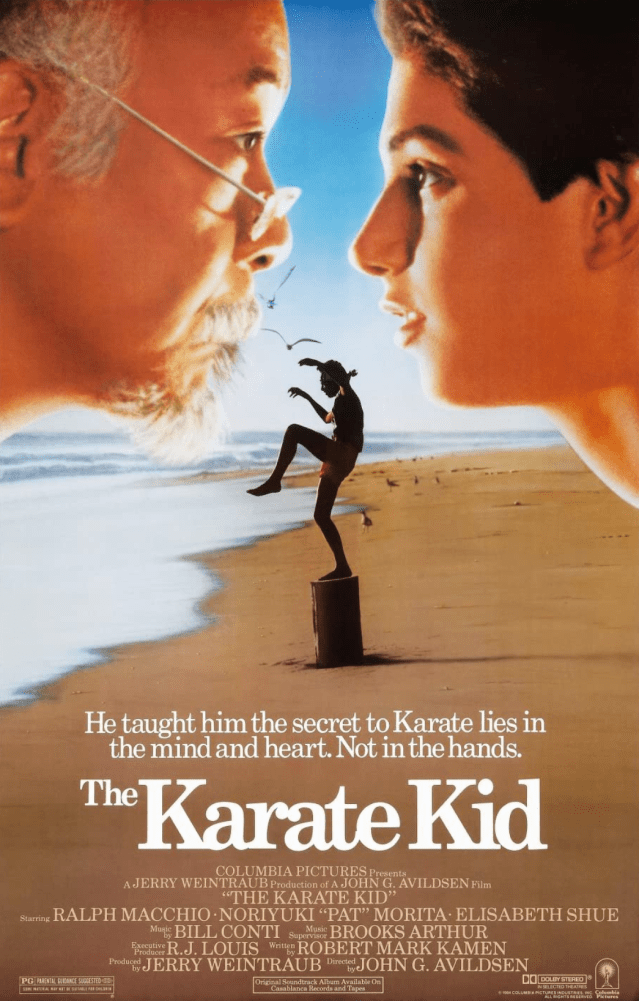
The Karate Kid (1984) poster created by Delphi II Productions, Jerry Weintraub Productions, and Columbia Pictures

Things I liked about the film:

The interactions among the characters: In stories that heavily rely on the relationships between various characters, how well-acted those characters are and the quality of their interactions will make or break that story. With The Karate Kid, these interactions served as one of the strongest parts of the film! That is because all of them felt natural and believable. When Daniel and Ali go to Golf N’ Stuff for the first time, you can see these characters are genuinely having a good time. They acted the way you’d expect a typical teenager would; smiling while racing each other at the go-kart track, laughing as their bumper boat crashed into another boat, and critiquing their pictures from the photobooth. Because of Ralph Macchio and Elisabeth Shue’s performance, as well as the script, their relationship came across as realistic. When it comes to Daniel’s relationship with Mr. Miyagi, we are given the opportunity to witness healthy mentor/student interactions. If one were given instructions, but not the reason behind those instructions, it can be easy to get frustrated. This happens after Daniel receives a series of instructions from Mr. Miyagi. But when Daniel discovers the reason why he has been following these instructions, you start to see him gain an understanding and appreciation for what Mr. Miyagi has taught him. Similar to what I said before about Daniel and Ali’s relationship, this period of learning and discovery contains a lot of realism. It shows that, with the right support and guidance, we can learn things such as how to think for ourselves.

The cinematography: The Karate Kid is a movie that has better cinematography than most of the film fan community gives it credit for. To prove my point, I will bring up one of the film’s earliest scenes as an example. At the beginning of the movie, Daniel and his mom are driving through Arizona. This particular scene starts with a medium shot, placing primary emphasis on Daniel’s mom’s car. As their journey down this road plays out, the camera pulls away from the car and delivers a long shot of a section of the Grand Canyon. Characters’ interactions are also captured well on film! At a Halloween party, Daniel is dressed up as a shower. When Ali wants to talk to Daniel, she goes behind the costume’s curtain. Their conversation is shown in a close-up shot, which allows the audience to feel like they are that small space with Ali and Daniel. I really liked how the karate tournament was filmed! It involved a combination of medium and close-up shots, allowing the audience to witness the action. The camera was also steady, which made the scenes appear clear.

The music: Music is an important component of any movie. A song or instrumental piece can elevate the mood within a scene or highlight a scene’s intended point. The scene where Daniel attends his first day of school serves as a great example. In the background, “Cruel Summer” by Bananarama can be heard. Having this song play during this scene makes sense for several reasons. Daniel’s story starts in September, which is technically summer until September 21st or as late as September 24th. Daniel is also having a difficult time adjusting to his new home, believing the move to be a “cruel” gesture on his mother’s part. The music itself is light with a higher tempo, as the sunny California environment pairs nicely with the tune. The struggles Daniel is experiencing are heavily emphasized, with the help of Bananarama’s “Cruel Summer”.

Created by me, Sally Silverscreen, on Adobe Spark.

What I didn’t like about the film:

The on again/off again nature of Daniel and Ali’s relationship: I liked seeing Daniel and Ali together and I thought Ralph and Elisabeth had good on-screen chemistry. However, I didn’t like the on again/off again nature of their relationship. I know that every relationship, whether platonic or romantic, has their issues to deal with. I also understand that a relationship where both parties are younger are going to handle those issues differently than a relationship where both parties are older. With Ali and Daniel, they became frustrated over their issues too easily. This causes them to enter and exit their relationship too quickly. While I was glad to see Daniel and Ali work things out, I wish they were less hasty about their relationship by talking things through.

A limited presence of karate fight sequences: The Karate Kid is not an action movie, but a coming-of-age story where one develops a better understanding of karate. Even though I knew that before watching this film, I feel the presence of karate fight sequences was limited. We see about three fight sequences toward the beginning of the film, with the majority of them taking place during the tournament. The rest of the story focuses on Mr. Miyagi teaching Daniel the foundations of karate. In the middle of the movie, I think there should have been one or two fight sequences. For example, instead of simply showing Mr. Miyagi breaking the loiters’ glass bottles at the beach, a karate fight sequence had taken place. That way, the excitement that comes from these sequences would be consistent throughout the movie.

Small details that don’t make sense: While watching The Karate Kid, I noticed some small details that, to me, didn’t make sense. In one scene, Mr. Miyagi tells Daniel that karate is about what is in your mind and heart, not about what belt you have. If that is the case, why do belt ranks exist in the first place? Why work toward earning another belt when what’s in your mind and heart are more important? At the tournament, the people running the event acted like they weren’t familiar with Mr. Miyagi’s “dojo”. Yet, on the scoreboard, there is a pre-made logo next to Daniel’s name. How was this logo able to be made if no one organizing the tournament had heard of Mr. Miyagi’s “dojo”?

Martial arts image created by Freepik at freepik.com. <a href=”https://www.freepik.com/free-photos-vectors/red”>Red vector created by freepik – http://www.freepik.com</a>. Image found at freepik.com. 

My overall impression:

The Karate Kid is a film that is considered a “classic” for good reason. It not only features exciting karate fight sequences, but it also uses one-liners well and has a strong script. But, in my opinion, the reason why the 1984 picture has earned this title is because it’s the type of movie that sticks with you. “Wax on, Wax off” is one of the most quotable lines in film history. Whenever I hear that line, I think about how there’s a reason for everything. I also remember how Daniel had to learn the meaning of “Wax on, Wax off” for himself instead of Mr. Miyagi telling him what it means. The Karate Kid is also a movie that has the ability to make you think. Whether or not this was intentional, you can’t help but reflect on the things that Mr. Miyagi says. You also can’t help but think about how those things can apply to real life. It’s been amazing exploring the world of ‘80s cinema. I’ve found some hidden gems, revisited some classics, and stumbled upon some stinkers. With The Karate Kid, I’d say it is definitely a keeper! I hope you stick around, because I’ll be reviewing this story’s second chapter!

Overall score: 8.2 out of 10

Have you seen The Karate Kid? Are you looking forward to my review of The Karate Kid Part II? Let me know in the comment section!

Have fun at the movies!

Sally Silverscreen

Take 3: To Catch a Spy Review (Hallmark Mysteries Double Feature Part 2)

Now, the moment you’ve been waiting for; the second part of my Hallmark Mysteries Double Feature! I recently saw the latest mystery film from the network: To Catch a Spy. This picture’s location made the film seem interesting. When I think of movies taking place outside of North America, I can’t think of many that feature Malta as a prominent backdrop. In fact, this is the first Hallmark project to take place and be filmed in Malta! But “destination” movies from Hallmark have been met with mixed results. One of the best films I saw in 2019 was Rome in Love. To me, it captured almost everything this location had to offer. However, not every “destination” film can be as good as Rome in Love. How will To Catch a Spy compare? Keep reading my review if you want to find out!

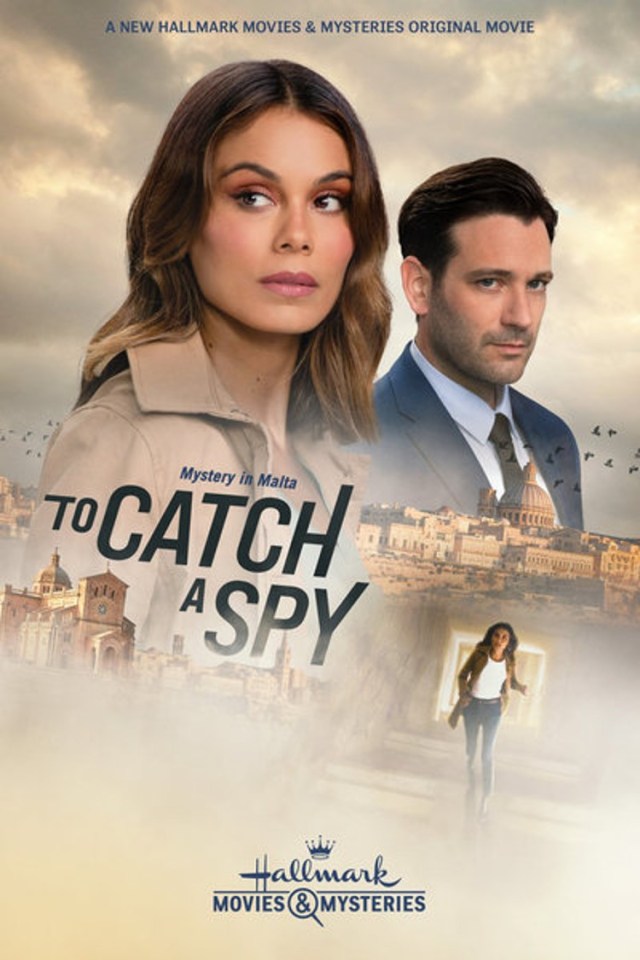
To Catch a Spy poster created by Crown Media Family Networks and Hallmark Movies & Mysteries

Things I liked about the film:

Standout performances: Within the movie, I saw standout performances from some of the actors and actresses. One of the film’s leads, Colin Donnell, gave one of those performances! His portrayal of Agent Aaron Maxwell came across as natural and believable. It reminded me of Stephen Huszar’s performance in the Ruby Herring series. His interactions with Nathalie Kelley’s character, Chloe, showcase this realism well. In the supporting cast, Joe Azzopardi portrayed a hotel employee named Isaac. His best scene was when Isaac’s true identity was revealed. Joe carried his character with suave confidence. This made Isaac so captivating to watch. Another captivating performance came from Becky Camilleri, who portrayed a maid named Rianne. What made her character so memorable was how expressive she was throughout the film! When Chloe is trying to check out of her hotel room, she runs into the hotel’s manager. After their interaction, Rianne walks into the room, appearing genuinely confused. Becky’s expressions helped her stand out among the cast!

Interior design: There were two rooms in To Catch a Spy that boasted fantastic interior design! The first was a sitting room inside Malta’s U.S. Embassy building. Beige and white wallpaper surrounded the interior, with white marble covering the floor. Providing pops of color were a dark wood table and chair set and a green potted plant. These elements came together to create a space that was both classy and elegant. The second space was a local church. When the interior of this location was first introduced, a painted mural on the church’s curved ceiling greeted the audience. Along the walls and pillars, gold was abundantly featured. This large venue could easily rival the Sistine Chapel. Because of everything I just said, I wish this church was shown in more than one scene.

Footage of Malta: According to IMDB, To Catch a Spy not only takes place in Malta, but the movie was filmed there as well. The creative team behind the project definitely took advantage of the country’s picturesque scenery by including it in establishing shots and in the background of some scenes. When Chloe goes on her hotel room’s balcony for the first time, she meets a beautiful view of the clear blue ocean and a city skyline. Because of the buildings’ sandy hue, the skyline ended up complimenting the ocean! In one scene, Aaron and Chloe are walking through a park. This location shared the same sandy stone as the buildings from Malta’s city skyline. It also paired well with a green, grassy field. The peaceful nature of the park certainly made this space inviting to the viewer!

Travel suitcase image created by Freepik at freepik.com. <a href=’https://www.freepik.com/free-vector/water-color-travel-bag-background_1177013.htm’>Designed by Freepik</a>. <a href=”https://www.freepik.com/free-photos-vectors/background”>Background vector created by Freepik</a>. Image found at freepik.com.

What I didn’t like about the film:

A disjointed story: There are three plots within To Catch a Spy. They are the travel writing plot, the murder mystery plot, and the international FBI plot. While these plots are interesting on their own, they ended up having a very loose connection. This caused the story as a whole to feel disjointed. Chloe’s occupation and Aaron’s role in the FBI prevented them from interacting with each other like other mystery film protagonists. In fact, Chloe’s skills as a travel writer weren’t really utilized when it came to being an amateur detective. Personally, I think the movie’s creative team should have chosen one or two of these plots and stuck with them.

Things that don’t make sense: Certain things happened in To Catch a Spy that, to me, didn’t make sense. Both examples I will give involve Chloe. After having a scary experience in the city, Chloe tells Aaron she doesn’t want the FBI badge anymore, indicating she doesn’t want any involvement in the case. A scene later, she eagerly attempts to follow a lead related to that case. The fact Chloe changed her mind so quickly was both confusing and jarring. Earlier in the film, one of Chloe’s friends goes missing. She enters her friend’s hotel room in order to discover what happened. Chloe finds two potential clues on the floor and picks them up with her bare hands. This is the same character who not only reads mystery novels in her spare time, but can also guess the guilty culprit early on. Because of this, wouldn’t Chloe know not to leave fingerprints on potential evidence?

Wasted potential for an overarching series storyline: In more recent series from Hallmark Movies & Mysteries, a storyline that is carried from film to film is included in the script. A perfect example is in the Martha’s Vineyard Mystery series, where Jeff is trying to figure out who shot him prior to the events of the series. In To Catch a Spy, the FBI was attempting to catch a criminal named Zypher. While watching the movie, I thought this would be the perfect overarching storyline if this film became a series. However, due to what happens in the movie, this idea did not become a reality. I was disappointed because of how the creative team wasted a potential storyline in their first film. Not every movie is meant to start a series. But if To Catch a Spy leads to a series, it makes me wonder what overarching storyline they could create?

Evening view of Malta skyline image created by bearfotos at freepik.com. Travel photo created by bearfotos – www.freepik.com

My overall impression:

Like any type of movie, Hallmark’s “destination” pictures are hit or miss. There have been some I liked, such as Rome in Love and Pearl in Paradise. But other titles featuring an exciting location have disappointed, like Christmas at Dollywood. With To Catch a Spy, it reminded me more of Christmas at Dollywood than Rome in Love. Sure, we got to see Malta in its picturesque beauty. However, as Dory said in an episode of the Hallmarkies Podcast, “The scenery can’t save you”. Unlike the protagonists in Rome in Love, we never get to see any of the characters experiencing the country’s culture or learning from the people of Malta. When Chloe’s co-worker, Sara, is asking Rianne about the history of Malta, the audience doesn’t get to hear what Rianne has to say. Plus, one of the film’s biggest flaws was its disjointed story. There is potential for this movie to start a new series. But if that is Hallmark’s plan, I don’t know how they’re going to, realistically, make it happen. As I said in my review, To Catch a Spy was filmed in Malta. Traveling to various countries in order to film on-location is going to get expensive. I guess we’re just going to have to wait and see.

Overall score: 7 out of 10

Have you seen To Catch a Spy? Do you want to see this story become its own series? Let me know in the comment section!

Have fun at the movies!

Sally Silverscreen

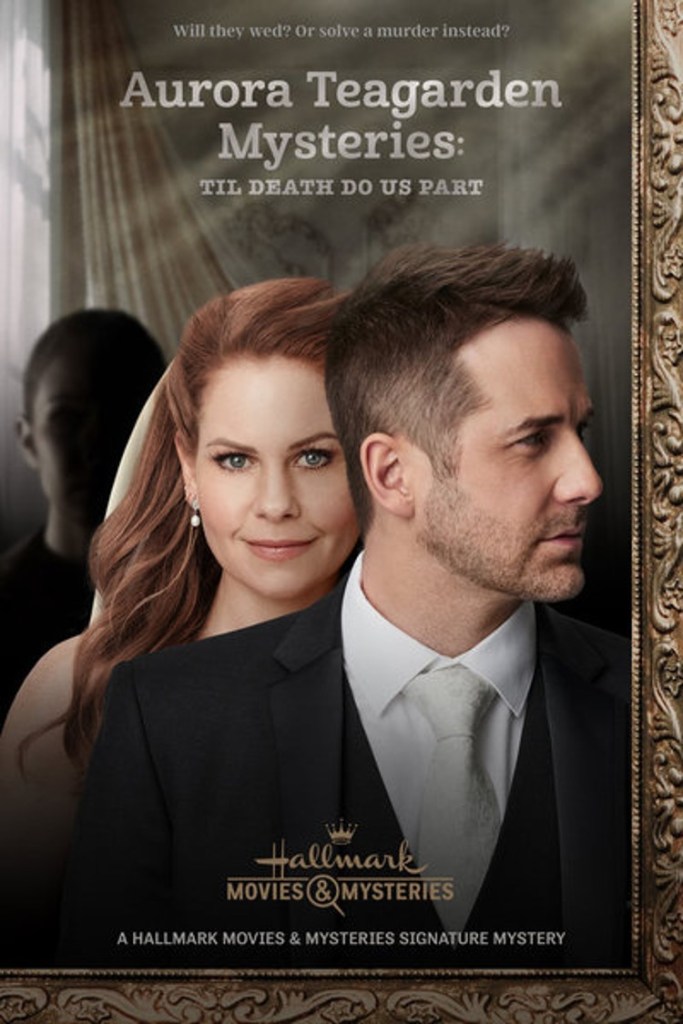
Take 3: Aurora Teagarden Mysteries: Til Death Do Us Part Review (Hallmark Mysteries Double Feature Part 1)

Because I haven’t reviewed a Hallmark Movies & Mysteries film since January, I thought writing about the newest Aurora Teagarden movie was a good idea! I also watched the latest mystery film, To Catch a Spy. Therefore, I decided to make my reviews a double feature! First though, we need to talk about Aurora Teagarden Mysteries: Til Death Do Us Part! While weddings have been shown in Hallmark’s mystery films, this is the first time one of the protagonists has gotten married within their respective series. Having Aurora finally walk down the aisle makes sense, especially since the Aurora Teagarden series has been on the air the longest. However, it’s still nice to see Aurora and her fiancé, Nick, reach this milestone in the lives. Speaking of miles and stones, let’s hop, skip, and jump through this review of Aurora Teagarden Mysteries: Til Death Do Us Part!

Aurora Teagarden Mysteries: Til Death Do Us Part poster created by Crown Media Family Networks and Hallmark Movies & Mysteries

Things I liked about the film:

Omitting the “planning-a-wedding-in-an-unrealistic-time-period” cliché: Anyone who has read my list of The Top 10 Worst Cliches from Hallmark Movies would know I am not a fan of the “planning-a-wedding-in-an-unrealistic-time-period” cliché. Because this is the first time Aurora and Nick have gotten married, let alone planned a wedding, it would have been easy for the series’ creative team to include this cliché in the script. Instead, part of the story revolved around Aurora and Nick finalizing wedding plans days before their big celebration. I like how the creative team took a different approach when it came to the subject of weddings. It also helps that the wedding itself didn’t dominate the story, like in some wedding movies. Showing a wedding’s planning process in a realistic fashion is quite refreshing. At one point in the film, Nick and Aurora seriously consider postponing their wedding, a conversation that felt mature and considerate. It was nice to see soon-to-be newlyweds take the planning process seriously instead of a) relying on the “power of love” to make everything fall into place or b) become so attached to a physical location, that they do anything it takes just to get married there.

A cold case mystery: Hallmark’s mystery series have sometimes featured cold cases. But these types of cases are not featured as often as cases that take place in an immediate time frame. This is especially true when it comes to the Aurora Teagarden series. The mystery in Aurora Teagarden Mysteries: Til Death Do Us Part first took place over twenty years ago. Not only that, but it also relied on dialogue as clues more than physical objects. This kind of story-telling is rarely seen in Hallmark mystery films. It gives the audience a reason to stay invested in the movie, as it forces them to pay attention to what the characters are saying and doing. I also applaud Aurora Teagarden’s creative team for choosing a different kind of mystery for this story. It keeps the overall series fresh and exciting!

Aurora’s wardrobe: An underrated strength in the Aurora Teagarden series is Aurora’s wardrobe! The outfits found in this film not only appeared stylish and modest, but they also complimented Candace Cameron Bure. In a scene where Nick brings Aurora donuts for breakfast, Aurora’s outfit consisted of a simple green skirt and a gray sweater with a green, yellow, and purple plaid pattern. When a piece of clothing features a pattern, you should pair it with a plain colored piece. This is the reason why Aurora’s outfit worked. Another memorable outfit was the one Aurora wore to her rehearsal dinner. The pink, short-sleeved dress was complimented by simple gold and silver jewelry. When Aurora went outside, she wore a navy-blue coat that boasted a light and dark pink plaid pattern. Because the coat featured the same color of pink as the dress, both pieces paired well together!

Wedding couple image created by Freepik at freepik.com. <a href=’https://www.freepik.com/free-vector/hand-drawn-wedding-invitation-with-happy-couple_1259848.htm’>Designed by Freepik</a>. <a href=”https://www.freepik.com/free-photos-vectors/wedding”>Wedding vector created by Freepik</a>. Image found at freepik.com.

What I didn’t like about the film:

A limited amount of humor: In Hallmark’s mystery series, including the Aurora Teagarden series, a certain amount of humor is incorporated into each story. This element prevents the film from becoming too dark. But Aurora Teagarden Mysteries: Til Death Do Us Part didn’t feature as much humor as other movies in the series. One reason for this was the absence of Miranda Frigon, who has portrayed Lynn since the series’ beginning. Her dry humor and criticism of Aurora’s involvement in each case has served as comic relief. Without Lynn, a percentage of the series’ humor is gone. Even though, there were two scenes that made me laugh out loud, this movie was one of the more serious stories in the series.

The mystery’s weak connection to the wedding: While I did like the film’s cold case mystery and how the wedding didn’t dominate the story, the mystery itself didn’t connect to the wedding. As I mentioned in this review, the mystery took place over twenty years ago. But as I watched the movie, I felt it could have been placed in its own story. I found myself wondering, “Do we really need a wedding to break up the darkness of this case”? If the series’ creative team really wanted Nick and Aurora’s wedding to remain an important part of the story, the mystery could have been something along the lines of a cold case being connected to the wedding reception venue or a florist being kidnapped.

The dynamic of Charles and Aida’s relationship: Aurora’s father, Charles, attends Aurora and Nick’s wedding. Because Charles and Aida, Aurora’s mother, divorced when Aurora was in college, this is the first time Aurora’s parents have interacted in years. If this had happened in real life, there would be a certain amount of awkwardness and discomfort between both parties. But for Aida and Charles, it seemed like they picked up where they left off. I can see the film’s creative team wanted to showcase cordial, co-parenting exes, similar to the Hallmark Channel movie, Love to the Rescue. What made that concept work in the 2019 film is how Nikki DeLoach’s character and her ex were currently raising a school-aged child. Therefore, both parents needed to co-parent. In the newest Aurora Teagarden chapter, Aurora is an adult. At this point in Aurora’s life, Aida and Charles no longer need to co-parent, let alone be on the same page when it comes to their daughter.

Magnifying glass and fingerprint image created by Alvaro_Cabrera at freepik.com. <a href=’https://www.freepik.com/free-vector/loupe-over-a-fingerprint_853908.htm’>Designed by alvaro_cabrera</a>. <a href=”https://www.freepik.com/free-photos-vectors/glass”>Glass vector created by Alvaro_cabrera – Freepik.com</a>. Image found at freepik.com.

My overall impression:

The Aurora Teagarden series is Hallmark Movies & Mysteries’ longest running series. Since 2015, fans have watched Aurora solve multiple murders, navigate her love life, and lead the Real Murders Club. With Aurora Teagarden Mysteries: Til Death Do Us Part, Aurora, as well as Nick, reach a new chapter in their lives. At the same time, our favorite librarian does what she does best: solve a mystery. This new film contains elements that serve as the series’ strengths; such as showing a type of mystery that isn’t always featured on the network and utilizing different ways to present clues. However, the film is one of the more serious titles in the series. Miranda Frigon’s absence was seen and felt. Because some of the series’ humor comes from her character, most of Aurora Teagarden’s comedy was not there. While Marilu Henner and Andrew Airlie, who portray Aida and Charles Teagarden, have good on-chemistry, I didn’t think the dynamic of their characters’ relationship was well executed. For this flaw, the fault lies in the screenwriting. I’m looking forward to the next installment in the series, Aurora Teagarden Mysteries: Honeymoon, Honeymurder! Since Hallmark hasn’t created any programs about a honeymoon before, it’ll be interesting to see how the overall story will play out.

Overall score: 7.5-7.6 out of 10

Have you seen Aurora Teagarden Mysteries: Til Death Do Us Part? Are you looking forward to Aurora Teagarden Mysteries: Honeymoon, Honeymurder? Let me know in the comment section below!

Have fun at the wedding!

Sally Silverscreen