Take 3: I Am David Review (Double Feature: 2004 Edition Part 1)

Thank you for joining me for the first part of Double Feature: 2004 Edition! Similar to last year’s review of The Great Muppet Caper, my review of I Am David is spoiler-free. If you’re curious about why I chose I Am David for this double feature, you can check out the introduction in the link below.

Introducing my Double Feature: 2004 Edition!

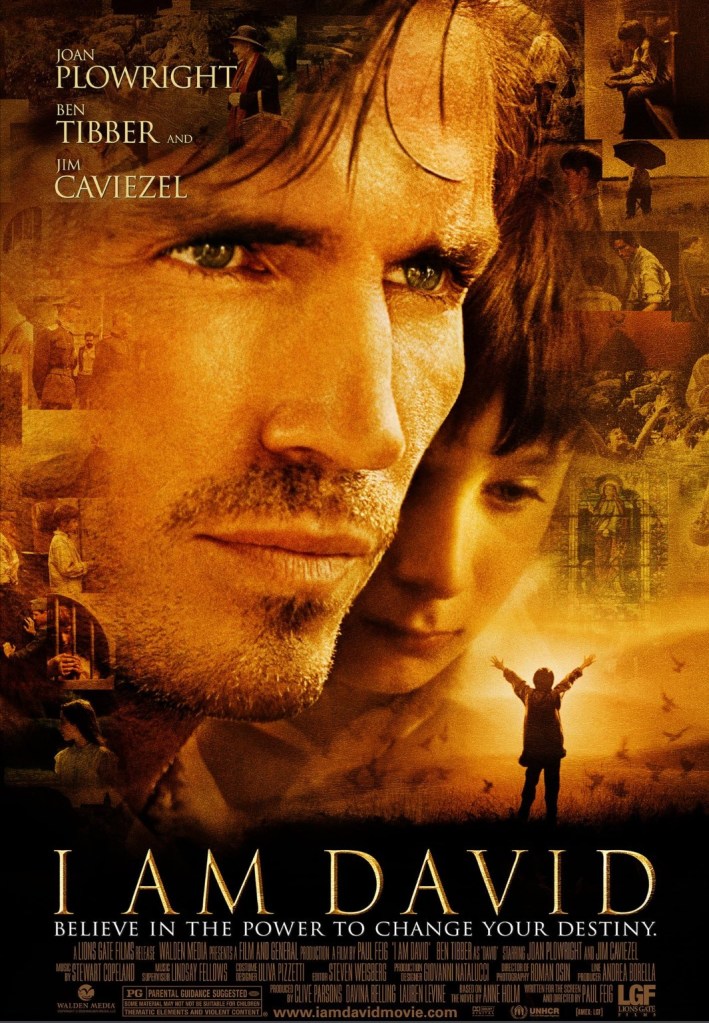
I Am David poster created by Walden Media, Film and General Productions, Lionsgate Films, Artisan Entertainment, and David Productions Ltd.

1. What are your thoughts on 2004 as a cinematic year?

When I look back on the cinematic landscape of 2004, my first thought is how studios and film companies were more willing to create stand-alone productions. Twenty years ago, about fifteen sequels were released in theaters. In 2024, that number has increased, with about twenty-three sequels scheduled to premiere. My second thought about 2004 is how creativity was celebrated at the box office. The Polar Express, the reason why this double feature exists, was the tenth highest grossing film of 2004. Even though that movie was based on a pre-existing book, the production was not a remake or a sequel of a preceding film. Plus, The Polar Express brought something new to the cinematic table, as the movie was created through motion-capture technology.

2. I Am David was released on December 3rd, 2004 (around “award season”). Why do you think the film was overlooked on the award circuit?

The 77th Academy Awards was a televised event. This means those involved with the creation of the show had to make decisions that would increase or maintain higher viewership numbers. Million Dollar Baby, the movie that won Best Picture, was a film the majority of the Academy Awards’ audience had either heard of or seen. The movie was directed by Clint Eastwood and starred Hilary Swank, two actors this same Academy Awards audience were familiar with. Because I Am David premiered around the same time as Million Dollar Baby and lacked the star power Million Dollar Baby had, I Am David became overshadowed by a bigger, more popular production.

2004 was when The Passion of the Christ made waves at the box office. Becoming the third highest grossing film of that year, it earned the distinction of being one of the most successful faith-based movies in history. Similar to Million Dollar Baby, The Passion of the Christ contained star power, directed by Mel Gibson and starring Jim Caviezel. I wouldn’t go so far as to call I Am David a faith-based movie. However, elements of faith are woven into the story. While Jim Caviezel stars in I Am David, his presence in this film is very limited. With all that said, I Am David became overshadowed by another big, more popular title.

3. Is there anything about I Am David you liked or didn’t like?

The story of I Am David revolves around the titular character escaping from a Bulgarian labor camp in 1952. Throughout his journey, David takes refuge in the natural landscape surrounding him. The natural environment in this film serves two purposes; protecting David and giving him a gateway to freedom. A peaceful scene where he casually walks through a tunnel of trees beautifully captures this idea, providing a symbolic light at the end of the tunnel. The importance given to Europe’s natural landscape allows it to become its own character, with the elements, more often than not, working in David’s favor. It also showcases a side of Europe that could be easily taken for granted.

I Am David is a story where the audience learns more about David as the film progresses. While this keeps the audience invested in the film, this creative decision means answers aren’t provided until toward the end of the movie. On the one hand, I, kind of, wish some of the revelations about David were revealed sooner. But, on the other hand, major questions were answered within two plot twists that I found effective. Even though the longer wait for answers is a flaw, I was able to, for the most part, overlook it because of the strength of the plot twists.

4. In your Word on the Street story about a potential sequel for The Polar Express, you mentioned the technology that was applied to the film. Could you detect any technology incorporated into I Am David?

As far as I could tell, I didn’t sense any technology within I Am David other than cinematography, sound, and editing. Because of the nature of the movie, though, I don’t think technological film-making techniques were necessary.

Italian countryside image created by Bill Silvermintz at freeimages.com. “FreeImages.com/Bill Silvermintz.” Photo by <a href=”/photographer/edudflog-58908″>Bill Silvermintz</a> from <a href=”https://freeimages.com/”>FreeImages</a&gt;.

5. I Am David is based on a book published in the 1960s. Has the entertainment industry changed its approach to adapting pre-established stories?

Throughout 2004, about twenty adaptations based on literature premiered in theaters. Out of those twenty, eleven adaptations contained a built-in audience for a variety of reasons. Observing which movies are scheduled to premiere in 2024, the entertainment industry is, once again, choosing source material with a built-in audience. But now this selection process has expanded beyond literature; with movies, tv shows, and popular characters receiving their own adaptations. Even though there were productions in 2004 based on popular IPs (intellectual properties), the number of adaptations based on IPs has doubled in twenty years, with about 44 of 2024’s films fitting this criterion. One of these films is the musical remake of Mean Girls. While the original movie was based on the book, Queen Bees and Wannabes by Rosalind Wiseman, the remake is based on the 2004 film.

6. Did you develop any thoughts and/or questions while watching this film?

I didn’t develop any questions while watching I Am David. But as I followed the story, I took note of the film’s exploration of light and darkness. When the film begins, David attempts his escape from the labor camp. This scene is intense, emphasizing David’s dire situation through limited lighting, cinematography, and music. Flashbacks are sprinkled throughout the story, showing only enough harshness to get the point across. When the lighter moments appear in the movie, they feel earned, taking place after David experiences a trial in his journey. Primarily showcased in bright lights and with peaceful, even cheery music playing in the background, these lighter moments address how our world can be a beautiful place. Showing the light and darkness taking place in the world, especially in Europe post World War II, is a more balanced way of presenting the environment surrounding David.

7. On Ebert & Roeper, I Am David was not covered. Why do you think the movie was omitted from the show?

Ebert & Roeper, one of the iterations of At the Movies, was a nationally televised program. Smaller titles with limited releases were sometimes featured on the show. But the types of movies that populated the program were mainstream productions with widespread releases. This decision was likely made to maintain the show’s viewership, similar to the aforementioned 77th Academy Awards. The choice to emphasize more mainstream films was also probably made to provide the show’s audience with a chance to check out the movies brought up on the show, as those titles would be showing in more theaters.

8. Now that it’s been twenty years since I Am David premiered, has the movie stood the test of time or become a product of its time?

This film has definitely stood the test of time! A major reason for this is due to the timeless, universal messages woven into the script. Perseverance, trying to find the goodness in our world, and kindness progressing the journey forward are messages most people can appreciate. These messages may also inspire audience members to apply them to their own lives.

9. After watching I Am David, is there anything you can take away from your movie viewing experience?

If I could describe I Am David in one word, it would be ‘genuine’. Every aspect of this film, from the acting performances to the screenwriting, allowed the story of David and his journey to be told with genuine emotion and sincerity! Creative decisions were delivered as pleasant surprises for me, such as the plot twists that caught me off guard. I was really impressed by the inclusion of Europe’s natural landscape, given enough emphasis to be its own character. The exploration of light and darkness provided a more balanced perspective on David’s world. I Am David is a movie I wish had been nominated during “award season”. In fact, I wish more people knew about this film! But if someone wanted to watch I Am David, I would suggest watching it knowing as little information about the story as possible, as I don’t want the film’s aforementioned plot twists to be spoiled for first time viewers.

Popcorn and movie ticket image created by Freepik at freepik.com. <a href=’https://www.freepik.com/free-photo/cinema-tickets-in-bucket-with-popcorn_2303439.htm’>Designed by Freepik</a>. <a href=”https://www.freepik.com/free-photos-vectors/layout”>Layout image created by Freepik</a>. Image found at freepik.com.

Have fun at the movies!

Sally Silverscreen

Introducing my Double Feature: 2004 Edition!

Every time I publish one hundred posts, I commemorate the achievement by creating a double feature; reviewing two films that have at least one thing in common. My 800th blog post was a Word on the Street story about the possibility of a sequel for The Polar Express. Since that movie was released in 2004, I chose two titles from that year to review in this double feature. Those titles are I Am David and Hallmark’s adaptation of Frankenstein. It’s been a while since I attempted to answer a question through my double feature reviews. So, this time, I will try to find an answer to the following question:

Based on these two movies, how has the cinematic landscape changed in twenty years?

Popcorn and movie ticket image created by Freepik at freepik.com. <a href=’https://www.freepik.com/free-photo/cinema-tickets-in-bucket-with-popcorn_2303439.htm’>Designed by Freepik</a>. <a href=”https://www.freepik.com/free-photos-vectors/layout”>Layout image created by Freepik</a>. Image found at freepik.com.

Have fun at the movies!

Sally Silverscreen

The Sun Sets on My Great Muppet Guest Star Caper Double Feature!

Now that The Great Muppet Guest Star Caper Blogathon has concluded and I reviewed both films, it’s time to share my overall thoughts! First, I’d like to thank Gill, from Realweegiemidget Reviews, and Rebecca, from Taking Up Room, for hosting this event! A Muppets themed blogathon was not only a creative idea, it also gave me an excuse to check out Muppet related films. Out of the two movies I reviewed, The Great Muppet Caper and Follow That Bird, one clearly stood out more than the other. That would be 1981’s The Great Muppet Caper! I had such a great experience watching this movie! It felt reminiscent of productions like Anchors Aweigh and Singin in the Rain, where the interactions between the characters and the musical numbers prevented the simpler story from being weak or predictable. Follow That Bird, on the other hand, was a fine, first attempt at creating a film. However, there were several story-telling elements within the project that weren’t utilized to their fullest extent. Some creative decisions were confusing as well. Now that another successful double feature has been completed, I wonder what will be the theme of my next double feature?

The Great Muppet Guest Star Caper banner created by Rebecca from Taking Up Room and Gill from Realweegiemidget Reviews

Have fun on Sesame Street!

Sally Silverscreen

Take 3: Sesame Street Presents: Follow That Bird Review (The Great Muppet Guest Star Caper Double Feature Part 2)

Welcome to part two of The Great Muppet Guest Star Caper Double Feature! Like my review of The Great Muppet Caper, this review of Sesame Street Presents: Follow That Bird will be spoiler-free. I will also be referring to the movie as ‘Follow That Bird’ instead of its full title. If you would like to know why I selected this movie, I will provide the link to this double feature’s introduction. The link to my review of The Great Muppet Caper will be provided as well.

The Great Muppet Guest Star Caper Double Feature is On Its Way!

Take 3: The Great Muppet Caper Review (The Great Muppet Guest Star Caper Double Feature Part 1)

Sesame Street Presents: Follow That Bird poster created by Warner Bros. and Children’s Television Workshop

1. Were you familiar with Follow That Bird before The Great Muppet Guest Star Caper Blogathon?

Similar to The Great Muppet Caper, I was familiar with Follow That Bird before participating in the blogathon. I own a copy of the film’s soundtrack, so I knew what the story was about. When it comes to the movie itself, I’d only seen pieces of it.

2. Who was the featured guest star in Follow That Bird?

Sesame Street’s Big Bird was a guest on The Muppet Show. As I said in my review of The Great Muppet Caper, The Muppets and Sesame Street were created by Jim Henson. Keeping this fact in mind, I’ve always seen the characters from each intellectual property (IP) as being extended members of the same family. So, when it comes to The Muppet Show, I was surprised Big Bird was considered a “guest”.

3. How would Follow That Bird’s story change if a different Sesame Street character was the main character?

Like The Muppets, Sesame Street has a large cast of characters. Whether that character is a human or a muppet, each one has their own unique personality, set of likes and dislikes, and talents to offer. With that said, this would be a completely different movie if the story revolved around a different Sesame Street character. Grover is one example, as an important part of his character is his desire to become a superhero. If Grover were the main character of a Sesame Street movie, his story would likely be a “superhero’s tale”, where the protagonist fights crime and saves the day with superpowers.

4. Did you develop any thoughts and/or questions while watching this film?

While watching Follow That Bird, I found some parts of the story confusing. As some of the characters watch a news report on a television at Mr. Hooper’s store, Chevy Chase makes a cameo appearance as a newscaster. During the weather report, he quotes the theme song to Mister Rogers’ Neighborhood. Out of all the references Chevy could make in a Sesame Street movie, why that one? Wouldn’t it make more sense for Fred Rogers to appear in the film and quote the theme song of his own show? Another example is when several characters spot Big Bird in a parade. These characters can clearly see their feathered friend, but their path is blocked due to the parade taking place. How come none of the characters considered getting out of their car and following Big Bird through the parade on foot? It’s decisions like this one that, for me, didn’t make sense.

Similar to The Great Muppet Caper, I was surprised by which characters were included in the movie and how much screen-time they received. Toward the end of Follow That Bird, Elmo makes such a brief cameo appearance, he doesn’t even have any lines. On one hand, Elmo was introduced on Sesame Street in 1980. By the time Follow That Bird was released in theaters, he had been on the show for about five years. On the other hand, at the time of Follow That Bird’s premiere, Elmo was not as popular as he would later become. Despite these facts, I was kind of surprised by Elmo’s limited appearance.

5. Follow That Bird was the first Sesame Street movie ever created. Why do you think it took the show’s creative team that long to make a film?

I have two answers why this decision was likely made. A lot of the cast members from the Sesame Street show worked on Follow That Bird. This includes cast members who worked on Muppet related projects, such as The Great Muppet Caper and The Muppet Show. Like I said in my review of The Great Muppet Caper, my guess is Sesame Street’s creative team wanted to prevent creative burn-out and spreading their talent too thin.

At the time Follow That Bird was released, Sesame Street had been on the air for sixteen years. During that time, the show’s creative team worked very hard to cultivate a program that was creatively and educationally consistent. Like any television show, Sesame Street’s audience grew over time. When it comes to creating a movie, I would guess Warner Brothers, the studio who distributed Follow That Bird, and Children’s Television Workshop, Sesame Street’s production company, wanted to wait until they felt they could make a satisfying profit on the film.

The Great Muppet Guest Star Caper banner created by Rebecca from Taking Up Room and Gill from Realweegiemidget Reviews

6. Is there anything about Follow That Bird you liked or didn’t like?

As I said in answer number four, I was surprised by which characters were included in the movie and how much screen-time they received. But I also found it interesting how these characters were utilized in the story. On Sesame Street, Oscar the Grouch, more often than not, stays in his trash can and maintains a negative disposition. These factors cause Oscar to appear on the show in certain situations, such as interacting with The Wicked Witch of the West from The Wizard of Oz. While he still had a negative disposition in Follow That Bird, Oscar explored the world beyond his trash can. That’s because he was one of the assigned drivers searching for Big Bird. In Follow That Bird, Oscar was a lot more humorous than I expected. My favorite line of his was spoken during the road trip preparations. Oscar exclaims how he loves a good goose chase. Then, he randomly says, “Let’s get lost”. Giving Oscar more humorous lines and allowing him to join the road trip gave this character an opportunity to be utilized more than he has on the show!

In my review of The Great Muppet Caper, I mentioned the characters’ knowledge of being in a movie as one of the story’s overarching jokes. This was one of the highlights of the 1981 film, as the dialogue relating to the joke was cleverly written and successfully delivered. Two of the characters in Follow That Bird, Oscar the Grouch and Count von Count, acknowledged the film’s audience was watching their movie. But other than “The Grouch Anthem” and the end credits, this knowledge was not consistently brought up in the script. That is just one example of a creative element that wasn’t fully utilized in the 1985 movie.

7. Could a new Sesame Street movie work in 2023?

Since its debut in 1969, Sesame Street has become a global phenomenon. The success of the show has encouraged countries outside of the United States to create their own version of Sesame Street. In the thirty-eight years since Follow That Bird’s premiere, the cinematic landscape has become more globalized. If Sesame Street’s creative team wanted to make another movie, an important question they would have to answer is which characters will be included in the story. Would it exclusively focus on the characters from Sesame Street or would it also feature characters from one of the international shows? If you wanted to create a movie in 1985, you had three distribution options: releasing the film in theaters, premiering the movie on television, or putting the production directly on video cassette. With the invention of streaming services, studios and production companies are now given the option to forgo the process of theatrical releases, as well as selling a movie on physical media. The distribution of a Sesame Street film is another important question the show’s creative team would have to address.

8. What does Sesame Street mean to you?

To me, Sesame Street represents the idea of timelessness. The show has found its place in the pop cultural landscape and stayed there for over fifty years. In that timeframe, the world and Sesame Street itself has seen so many changes. But despite all of that, some elements of the program have remained the same. Each episode has been given an official letter and number. Follow That Bird even adopted this component from the show, with ‘W’ and ‘B’ being the movie’s letters, representing the studio that distributed the film, Warner Brothers. That simple creative decision has taught children the alphabet and how to count. This knowledge lays the educational foundation so children can master other skills, such as constructing sentences and mathematical equations. The simplicity and consistency of including letters and numbers into Sesame Street is a reminder of the timeless nature of these lessons.

9. After watching Follow That Bird, is there anything you can take away from your movie viewing experience?

According to Muppet Wiki, Sesame Street created three television specials in the 1980s focusing on Big Bird traveling around the world; Big Bird in China, Big Bird in Australia, and Big Bird in Japan. With Follow That Bird being released in 1985 and with the story about Big Bird traveling outside of Sesame Street, it makes me wonder if the movie was meant to correlate with the aforementioned television specials? Speaking of the movie, I thought it was a fine, pleasant, cute enough production. But compared to The Great Muppet Caper, Follow That Bird could have been stronger. There were several creative elements within the movie that weren’t consistently utilized. “The Grouch Anthem” and the end credits being the only two instances of the characters acknowledging the audience is watching their movie is just one example I mentioned in my review. As I also mentioned in my review, some creative decisions didn’t make sense, such as Chevy Chase quoting the theme song of Mister Rogers’ Neighborhood. However, this wasn’t a bad first attempt at making a movie. In fact, there are aspects of the project that worked in the movie’s favor, like the musical numbers! I feel Follow That Bird is one of those films that younger children would enjoy more than an older audience member would.

Image of Colorado road created by welcomia at freepik.com. <a href=”https://www.freepik.com/free-photos-vectors/mountain”>Mountain photo created by welcomia – http://www.freepik.com</a>. Image found at freepik.com.

Have fun at the blogathon!

Sally Silverscreen

Take 3: The Great Muppet Caper Review (The Great Muppet Guest Star Caper Double Feature Part 1)

Welcome to part one of The Great Muppet Guest Star Caper Double Feature! Unlike past double feature reviews, my review of The Great Muppet Caper is spoiler-free. If you’re wondering why I chose this movie for the blogathon, you can check out this double feature’s introduction at the link below.

The Great Muppet Guest Star Caper Double Feature is On Its Way!

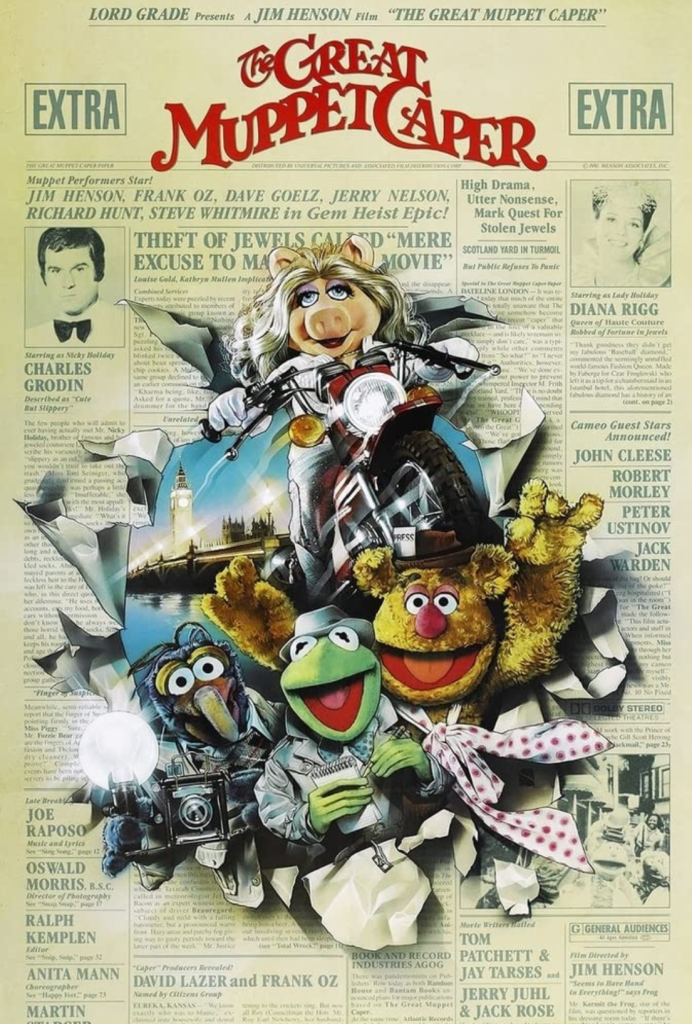
The Great Muppet Caper poster created by
ITC Entertainment, Henson Associates, and
Universal Pictures

1. Were you familiar with The Great Muppet Caper before The Great Muppet Guest Star Caper Blogathon?

I had heard of The Great Muppet Caper prior to being invited to the blogathon. One reason why I’m familiar with the 1981 film is Christine Elizabeth Nelson’s cameo. Christine is the daughter of Jerry Nelson, who was not only a member of The Muppets cast, he also worked on The Great Muppet Caper. Christine’s mother, Jacquie Gordon, wrote a book about her, titled Give Me One Wish: A True Story of Courage and Love, which chronicled Christine’s young life with a Cystic Fibrosis diagnosis. When I sought out her cameo, before seeing The Great Muppet Caper, I admit I was confused why Christine referred to Kermit as a bear. But as I watched the movie, I realized her line was part of a running joke where Kermit and Fozzie Bear are mistaken for twins, as they wear similar looking hats.

2. Who was the featured guest star in The Great Muppet Caper?

That would be John Cleese! He portrayed a character named Neville, a wealthy British resident. John and Joan Sanderson were featured in the scene where Miss Piggy breaks into a high-end home in an attempt to portray her boss, Lady Holiday.

3. If Neville was portrayed by a different actor, how would his role in The Great Muppet Caper change?

The Great Muppet Caper is similar to It’s a Mad, Mad, Mad, Mad, World in that the majority of the cast is given smaller roles, which results in a shorter amount of time on-screen. This surprised me, as I expected John to have more appearances in the movie. While John did a good job with the limited material given, I don’t think the role of Neville would change no matter who portrayed him. This is because The Muppets were the stars of the show, which is expected for this particular title.

4. Did you develop any thoughts and/or questions while watching this film?

In the film’s opening number, “Hey A Movie!”, a city landscape served as the number’s backdrop. From what I could tell, the city didn’t look like the background on Sesame Street. I was surprised by this creative decision, as both The Muppets and Sesame Street were created by Jim Henson. Because of this fact, I expected more cross-overs between the two intellectual properties (IPs). But the only Sesame Street reference I could find in The Great Muppet Caper was a cameo appearance from Oscar the Grouch. Personally, I think having Sesame Street serve as the backdrop for “Hey A Movie!” would have been a nice nod to that show. With both Sesame Street and The Muppets containing their own large cast of characters and their own specific stories, it makes sense why The Great Muppet Caper featured little acknowledgement of Sesame Street.

The inclusion and exclusion of certain Muppet characters also surprised me. Looking back on The Great Muppet Caper, I remember Pepe the King Prawn was nowhere to be found. In my recollections of The Muppets, Pepe and The Great Gonzo have been good friends. So, I was a bit confused why Pepe wasn’t featured in the story. After doing some research about the character, I learned he joined The Muppets family in 1996, a decade after The Great Muppet Caper premiered. Had Pepe starred in this movie, he likely would have worked with Lady Holiday’s fashion label.

The Great Muppet Guest Star Caper banner created by Rebecca from Taking Up Room and Gill from Realweegiemidget Reviews

5. The Great Muppet Caper was not only the second Muppet movie created, it was also released at the end of The Muppet Show’s run. Why do you think the creative team behind the Muppets chose to make and premiere this film toward the end of the show’s lifespan?

If you want to create a movie, especially a good one, there is a lot of time, dedication, creative energy, and resources needed to make that a reality. This can also be said for the creation of a television show. Many cast members from The Muppet Show also worked on The Great Muppet Caper. Had both of these programs been created around the same time, this creative team would have run the risk of their talent being spread too thin as well as creative burn-out.

6. Is there anything about The Great Muppet Caper you liked or didn’t like?

One of the overarching jokes in this story was the characters’ knowledge of being in a movie. The way this knowledge was written and delivered felt like the film’s creative team was winking at the audience. One example is when Lady Holiday, portrayed by Diana Rigg, tells Miss Piggy about her brother, Nicky, and why she doesn’t like him. After Miss Piggy asks Lady Holiday why she’s telling her this information, Lady Holiday responds, in a nonchalant and matter-of-fact way, that what she said is exposition and it needs to go somewhere. I liked this part of the story because of how it was cleverly incorporated into the script. The quality of the screen-writing made this overarching joke feel like it fit within the movie’s world.

The plot of The Great Muppet Caper revolves around Kermit, Fozzie Bear, and The Great Gonzo solving the mystery of stolen jewels. As someone who seeks out media from the mystery genre, I was intrigued by the idea of a mystery story starring The Muppets. But when I watched the movie, I quickly learned the musical numbers were given more emphasis than the mystery. Because I enjoyed watching and hearing these numbers, I didn’t mind this creative decision too much. However, I still wish the mystery itself was given a little more focus.

7. Could a new Muppets movie work in 2023?

In the short term, I believe a new Muppet movie could work, purely based on nostalgia. The Muppets is an IP (intellectual property) many people are fond of, so the movie itself might have a huge draw on opening weekend. But for long term success, meaning memorability, merchandising, and home entertainment sales, the story needs to be able to stand the test of time. To achieve that, the script has to be timeless and straight-forward.

8. What does The Muppet Show mean to you?

When I think of The Muppet Show, the word “tradition” comes to mind. It’s one of those shows the family can watch together, sitting around the television every weekend and enjoying the program, as well as each other’s company. With the large cast of characters, a variety of guest stars, and plenty of musical numbers, there seems to be something for everyone. Sadly, I can’t think of many shows today like The Muppet Show, a show that brings families together.

9. After watching The Great Muppet Caper, is there anything you can take away from your movie viewing experience?

When it comes to movies, especially musicals, sometimes the simplest, most straight-forward stories are the ones that work the best. As I reflect on The Great Muppet Caper, I am reminded of Singin in the Rain and Anchors Aweigh. These three films contain stories that are easier to follow. But the strength of the talent, pleasant musical numbers, and execution of the final product worked in the story’s favor, making each title so enjoyable to watch! Seeing The Great Muppet Caper was such a fun experience! I found myself laughing and smiling during the film, as it exuded so much joy. That joy will carry in my heart long after the end credits roll. Then again, how can you not feel joy when The Muppets come around?

Sketch of London image created by Archjoe at freepik.com. <a href=’https://www.freepik.com/free-vector/hand-drawn-houses-of-parliament_1133950.htm’>Designed by Archjoe</a>. <a href=”https://www.freepik.com/free-photos-vectors/background”>Background vector created by Archjoe – Freepik.com</a>. Image found at freepik.com.

Have fun at the blogathon!

Sally Silverscreen

The Great Muppet Guest Star Caper Double Feature is On Its Way!

Last December, when I published my review of the 1981 made-for-TV movie, When the Circus Came to Town, it was my 700th post! For those who are not familiar with my annual double features, I commemorate the accomplishment of publishing 100 articles by hosting a special double feature, written in an interview style. In the past, my double features sought to answer a pre-selected question or see whether a prediction was correct. This time around, I will not include a pre-determined prediction or question. That’s because this double feature will correlate with The Great Muppet Guest Star Caper Blogathon! When I was invited by Gill (from Realweegiemidget Reviews) to join the event, I was told duplicates were not allowed. Keeping this in mind, I was surprised none of the Muppet movies had been chosen. I was also surprised to discover Big Bird (of Sesame Street fame) had been a guest star on The Muppet Show. With all of that said, I will be reviewing The Great Muppet Caper and Follow That Bird for the 700th double feature!

The Great Muppet Guest Star Caper banner created by Rebecca from Taking Up Room and Gill from Realweegiemidget Reviews

Have fun at the blogathon!

Sally Silverscreen

The Conclusion to my 80s-tastic Mall-tacular Double Feature!

The films I reviewed in this double feature, The Legend of Billie Jean and Night of the Comet, were referenced by Dan, from the Youtube channel, This is Dan Bell. Because both movies were classified as “mall movies”, I assumed at least one of these titles would primarily take place in a mall. But after I watched The Legend of Billie Jean and Night of the Comet, I discovered this was not the case, as both stories featured a mall for a very short amount of time. This made me reflect on the idea of movies being defined by a singular location and the inconsistency of that idea. As I’ve already said, Night of the Comet and The Legend of Billie Jean are labeled “mall movies”, despite their respective malls not being the story’s primary setting. Yet, I have never heard anyone call Phantom of the Megaplex a “movie theater movie”, even though more than fifty percent of that film takes place at the Megaplex movie theater. This can also be said about the “destination film”. Whenever a protagonist in a Hallmark movie travels to somewhere other than their small hometown, “destination film” is the distinction these titles are given. But by Hallmark’s logic, wouldn’t the Fast & Furious films be considered “destination films”, especially since, more often than not, the characters are shown traveling to destinations outside the United States? The idea of movies being defined by a singular location and its inconsistency is a fascinating one that might be covered in a future editorial or double feature!

Have fun at the movies!

Sally Silverscreen

Image by Freepik

If you want to read the other articles associated with this double feature, I’ll provide the links here:

The 80s-tastic Mall-tacular Double Feature Introduction!

Take 3: Night of the Comet Review (80s-tastic Mall-tacular Double Feature Part 1)

Take 3: The Legend of Billie Jean Review (80s-tastic Mall-tacular Double Feature Part 2)

Take 3: The Legend of Billie Jean Review (80s-tastic Mall-tacular Double Feature Part 2)

Hello and welcome to the second part of the 80s-tastic Mall-tacular Double Feature! Before this review begins, I’d like to remind my readers there will be spoilers for The Legend of Billie Jean. If you’re interested, you can check out the double feature’s introduction and first part at these links:

The 80s-tastic Mall-tacular Double Feature Introduction!

Take 3: Night of the Comet Review (80s-tastic Mall-tacular Double Feature Part 1)

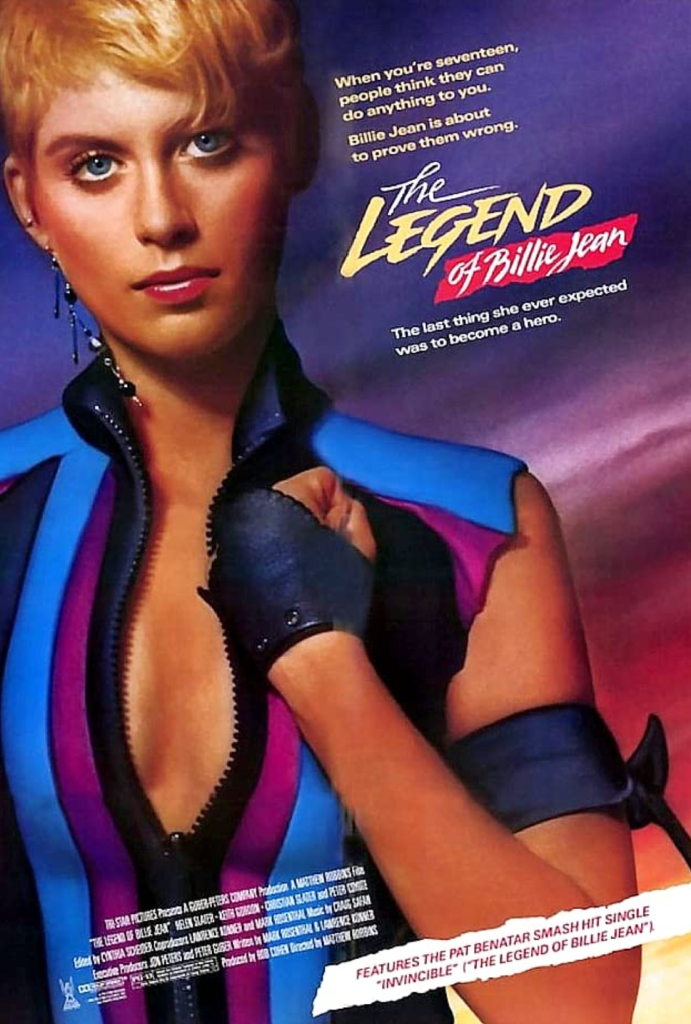
The Legend of Billie Jean poster created by Delphi III Productions, The Guber-Peters Company, and Tri-Star Pictures

1. How were you introduced to The Legend of Billie Jean?

Before I started watching Dan Bell’s Dead Mall series, I had heard of The Legend of Billie Jean. It wasn’t until I saw the video, ‘DEAD MALL SERIES : Tour of the SUNRISE MALL from THE LEGEND OF BILLIE JEAN (1985)’, that my interest in the film piqued. In this 2016 video, Dan uses clips from The Legend of Billie Jean to compare how Sunrise Mall looks in the 21st century. He even discusses the history of the mall itself.

2. As of 2022, what is the state of the Sunrise Mall?

The portions of the mall that were featured in Dan’s video permanently closed in 2019. Only three tenants are still standing, which are connected to the mall’s exterior.

3. What role did the Sunrise Mall play in The Legend of Billie Jean?

In The Legend of Billie Jean, the Sunrise Mall was called ‘Ocean Park Mall’. It was the place Billie Jean agreed to meet the police in order to accept the money. Prior to this arrangement, Billie Jean’s brother, Binx, had his scooter destroyed. Billie Jean and her friends turn to the police with little success. She even tries to acquire the money to repair Binx’s scooter. One thing leads to another, causing Billie Jean, Binx, and her friends to run from the law. When Billie Jean arrives at Ocean Park Mall, she thinks she’ll finally get the money. But those plans don’t work out, with a chase scene ensuing.

4. Why do you think the Sunrise Mall was in the film for a short amount of time?

The Legend of Billie Jean is an expansive narrative, similar to Night of the Comet. As I said in answer number three, Billie Jean, Binx, and her friends go on the run. Because of this, the characters are not going to stay in the same place for an extended period of time. Around the filming and release of The Legend of Billie Jean, the Sunrise Mall was a business that relied on daily revenue and foot traffic. Therefore, the mall could only allow filming to take place within a certain time period.

5. Besides including a mall and focusing on teenage characters, do The Legend of Billie Jean and Night of the Comet share a common theme, idea, or message?

Like I mentioned in answer number three, the film’s conflict started because Binx’s scooter was destroyed. After the scooter was stolen by a neighborhood bully named Hubie, Binx’s attempt to retrieve it resulted in him getting beaten up by Hubie and his friends. This is when Billie Jean decided more needed to be done to help her brother. Billie Jean and Binx reminded me of Regina and Samantha from Night of the Comet. Both pairs of siblings are prominently featured in their respective story, with each pair trying to make the best of a complicated situation. Throughout each film, both sibling pairs appear to get along well with each other, displaying a good sense of camaraderie.

Money image created by Freepik at freepik.com. <a href=’https://www.freepik.com/free-vector/bills-and-coins-in-isometric-design_1065328.htm’>Designed by Freepik</a>. <a href=”https://www.freepik.com/free-photos-vectors/business”>Business vector created by Freepik</a>. Image found at freepik.com.

6. Is there anything about The Legend of Billie Jean you liked or didn’t like?

A pleasant surprise while watching The Legend of Billie Jean was the discovery of mixed media! Throughout the film, voice-overs from a radio station were heard. A newspaper would appear in the story from time to time. Video footage of Billie Jean also made an appearance in the story. The inclusion of mixed media led to creative and interesting ways it was used in the movie. Radio station voice-overs featured calls from listeners, sharing their support for Billie Jean and her cause. Newspaper articles shared details to progress the story forward, from the health status of Hubie’s father to the identity of Lloyd. In an effort to clear her name, Billie Jean, Binx, and her friends create a video and give copies to the police and various tv stations. Mixed media allowed the movie to receive a unique and memorable identity!

The majority of this story focused on the conflict of how Billie Jean, Binx, and her friends would obtain the money to repair Binx’s scooter. Billie Jean received the most character development, as she is the titular character. While I thought the story was interesting and while I liked Billie Jean as a character, I wish some of the other characters had received more character development. Toward the beginning of the film, one of Billie Jean’s friends, Putter, is watching a female wrestling match on tv. When she learns of Billie Jean’s plan to report Binx’s stolen scooter, Putter eagerly looks forward to this excursion to the police station. As I was watching the movie, I was curious about Putter’s interest in going to the police station and watching wrestling on television.  Unfortunately, these parts of the story were not explained.

7. Did you develop any thoughts and/or questions while watching this film?

While I didn’t develop any questions, I did notice some interesting coincidences. During my viewing of The Legend of Billie Jean, I learned the movie was a “modern” Joan of Arc story. After Billie Jean, Binx, and her friends break into Lloyd’s house, Lloyd introduces them to the story of Joan of Arc. Billie Jean is so inspired by what Lloyd told her, she decides to cut her hair short to reflect Joan’s appearance. There’s even a parallel between Joan of Arc getting burned at the stake and a statue of Billie Jean getting burned in a fire toward the end of the movie. Now here’s where the interesting coincidences come in. Last year, I reviewed the Touched by an Angel episode, “The Spirit of Liberty Moon”. That episode was not only a “modern” Joan of Arc story, Bai Ling’s character was named Jean. Yes, I know the name, Jean, is Billie’s middle name. But according to Jean’s friend in “The Spirit of Liberty Moon”, Jean is the French version of Joan. Plus, I reviewed both the Touched by an Angel episode and The Legend of Billie Jean in October.

8. In your double feature for Rich Kids and Over the Edge, you discussed certain events from the ‘70s that likely influenced the creation of those films. Is there anything from the ‘80s that you think either affected The Legend of Billie Jean or teenagers from that time?

Imagine, once again, you’re a teenager in the 1980s. You have so much to be thankful for, from a family that loves and supports you to that new set of wheels you just got as a gift. But, sometimes, you think life can be a little unfair. On your way home from school, you see a homeless person on a street corner, asking for money or even a sandwich. A flyer appears in your family’s mailbox from time to time, asking for food bank donations. No matter how respectful you are to the homeless person on the street corner or how many donations you take to the food bank, you wonder if your efforts are enough to truly make a long-lasting impact. Then, you hear about an event called Hands Across America. Everyone is talking about it, from your next-door neighbor to the cashier at your local grocery store. There’s even an assembly at your school about the event. The more you think about Hands Across America, the more you realize there are other people that have the same thought as you do: try to make the world a better place than how you found it.

Hands Across America was not mentioned in The Legend of Billie Jean. In fact, the event took place a year after the film was released. But there was one scene that reminded me of this piece of ‘80s history. While Billie Jean, Binx, and her friends are on the run, a group of children ask for Billie Jean’s help. They lead her to a house where one of their friends is being physically abused by his father. The small group grows larger as Billie Jean makes her way to the house. Binx and Billie Jean’s friends eventually join the group, adding their support for Billie Jean’s mission. Now you’re probably wondering, “What does this scene have to do with Hands Across America”? Well, it’s the idea of people from all walks of life coming together to support a common goal. In the case of The Legend of Billie Jean, those children, plus Billie Jean, Binx, and her friends, shared the same idea: save the young boy from his abusive dad. Before Billie Jean succeeded in her rescue effort, the large group of children circled around the boy’s house, intimidating the boy’s father. The film itself, as well as Hands Across America, showed teenagers at that time there were other teens who shared their same goals and dreams.

9. A lot has changed since the release of The Legend of Billie Jean. Have you come across any recent pieces of media that prominently feature a mall?

After breaking into Lloyd’s house, Billie Jean discovers a room upstairs. In this room, there are Halloween masks, security monitors, even video equipment. The room itself could make any Halloween costume store jealous, with dim lighting, candles, and cobwebs adding to the room’s eerie atmosphere. Even the build-up to the room’s discovery was straight out of a horror movie, as a costumed Lloyd follows Billie Jean. Later in the film, it is discovered Lloyd is a member of his school’s drama club, explaining why the aforementioned room contained so many costumes.

The scene I just described reminded me of a Hallmark film titled hoops&yoyo’s Haunted Halloween. In this animated film, the protagonists, Hoops and Yoyo, along with their friend, Piddles, go Halloween costume shopping at their local mall. During their trip, they become locked inside the mall after hours. I’ve only seen pieces of this 2012 movie. But based on what I have seen, the film is more spooky than scary. However, I do think it’s an interesting coincidence how both hoops&yoyo’s Haunted Halloween and The Legend of Billie Jean feature a mall in their respective story.

10. After watching this movie, is there anything you can take away from your movie viewing experience?

Calling The Legend of Billie Jean a “mall movie” is, in my opinion, a bit of a stretch. Similar to Night of the Comet, the Sunrise Mall was featured in only a few scenes. If anything, The Legend of Billie Jean is a “coming of age” story, as Billie Jean, Binx, and her friends experience personal growth over the course of the film. I liked The Legend of Billie Jean more than Night of the Comet. The story in the 1985 movie was pretty straight forward, making the film easier to follow. It was also interesting how mixed media was incorporated into the story. The Legend of Billie Jean is a fine, competently made film, complete with its own merits and flaws. The film’s message of how “fair is fair” is just as relevant now as it was in 1985, allowing the movie to be a more timeless title.

Image by Freepik

Have fun at the mall!

Sally Silverscreen

Take 3: Night of the Comet Review (80s-tastic Mall-tacular Double Feature Part 1)

Hello and welcome to the first part of the 80s-tastic Mall-tacular Double Feature! Before this review begins, I’d like to remind my readers there will be spoilers for Night of the Comet. If you’re interested, you can check out the double feature’s introduction at this link:

The 80s-tastic Mall-tacular Double Feature Introduction!

Night of the Comet poster created by Thomas Coleman and Michael Rosenblatt Productions, Film Development Fund, and Atlantic Releasing Corporation

1. How were you introduced to Night of the Comet?

At the beginning of Dan’s video, ‘DEAD MALL SERIES : Back to the 80s : The Gallery in Philadelphia (Hologram Plaza – Disconscious)’, the scene where Regina and Samantha, the film’s protagonists, go to the mall is included in the introduction. That scene is spliced with Dan’s footage of The Gallery in Philadelphia, as the song, Enter Through the Lobby by Disconscious, plays over the images. In Dan’s video, ‘DEAD MALL SERIES : Best Fountain in the US : Burlington Center Mall NJ **CLOSED**’, he brings up several of his favorite “mall movies”. One of these movies is Night of the Comet.

2. Was Night of the Comet filmed in a mall? If so, which one?

According to a Youtube comment, Night of the Comet was filmed at Bullocks Wilshire. Upon further research, I learned it was a high-end, Los Angeles department store, complete with its own tea room. As of late 2022, the building is owned by Southwestern Law School.

3. What role did the mall play in Night of the Comet?

Before Regina suggests she and Samantha go to the mall, their world had been turned outside down. Most of the population had either been disintegrated into dust or turned into a zombie, due to the aftermath of the titular comet. The sisters are at their wits end, desperately trying to not only defend themselves, but also trying to find answers. After Samantha tearfully confesses how a guy from her class was going to ask her out on a date, Regina sees going to the mall as an opportunity to get their minds off the confusion surrounding them.

4. Why do you think the mall was in the film for a short amount of time?

When Dan Bell referred to Night of the Comet as a “mall movie”, I assumed the mall would play a significant role in the story. I even predicted the mall would play a bigger role in Night of the Comet than in The Legend of Billie Jean, as I thought the story would primarily take place in one location. But the 1984 title is a more expansive narrative. Not only is the aftermath of the comet more widespread, there are more locations for the characters to explore. While Regina and Samantha’s mall excursion was fun to watch, it was interesting to see the comet’s effects on other locales, like the local movie theater and a mysterious science headquarters.

5. Besides including a mall and focusing on teenage characters, do The Legend of Billie Jean and Night of the Comet share a common theme, idea, or message?

I haven’t seen The Legend of Billie Jean yet. But based on the introduction of Dan’s video, ‘DEAD MALL SERIES : Tour of the SUNRISE MALL from THE LEGEND OF BILLIE JEAN (1985)’, I can safely assume a shared idea between The Legend of Billie Jean and Night of the Comet is younger characters taking matters into their own hands. As I mentioned in answer number three, Regina and Samantha are at their wits end, as they desperately try to defend themselves and figure out what is truly going on. Since there are very few people to turn to, they rely on themselves and each other, proving they are capable of anything they set their mind on. Through strength, resilience, and adversity, Regina and Samantha become the embodiment of Christopher Robin’s quote:

“You’re braver than you believe, stronger than you seem, and smarter than you think.”

Colorful galaxy image created by Freepik at freepik.com. <a href=’https://www.freepik.com/free-vector/lovely-hand-drawn-galaxy-background_2943080.htm’>Designed by Freepik</a>. <a href=”https://www.freepik.com/free-photos-vectors/background”>Background vector created by Freepik</a>. Image found at freepik.com.

6. Is there anything about Night of the Comet you liked or didn’t like?

Based on the synopsis and Dan’s thoughts on Night of the Comet, I knew the protagonists were described as “valley girls”. But I didn’t know what to expect from Regina and Samantha. When I watched the movie, though, I adored these characters, as they were so endearing! In fact, they’ve become two of my favorite characters from film! Part of this is due to Catherine Mary Stewart’s and Kelli Maroney’s performance. Through their well-rounded portrayals, Catherine and Kelli carried this film, making it worth the price of admission. No matter what their characters experienced, their expressions and reactions felt realistic. Even the on-screen camaraderie was believable, successfully selling the idea Regina and Samantha were sisters. According to Wikipedia, Thom Eberhardt, Night of the Comet’s director, asked teenage girls how they’d respond to a large-scale catastrophe while working on PBS specials. The answers he received were used as inspiration for the film’s script, adding to Regina and Samantha’s believability.

When creating a science fiction story, you need to explain the science in a way that satisfies the audience. Even if the science was made specifically for the story, you still need to provide a logical explanation. With Night of the Comet, though, most of the science was left unexplained. There were also parts of the story that were under-utilized. At the beginning of the movie, Regina is playing an arcade game. She discovers a gamer named “DMK” has beaten her high score. Not only does Regina attempt to beat “DMK”’s high score, she wonders who “DMK” is. While the audience learns the identity of “DMK” (a random survivor named Danny, who used his initials to record his high score), this part of the story was forgotten about until the end of the movie. To me, this was a missed opportunity. Regina could have used her video game/arcade game skills to save the day. She and “DMK” could have met face-to-face earlier in the story, setting aside their differences to recruit more survivors to safety. But, alas, it just wasn’t meant to be.

7. Did you develop any thoughts and/or questions while watching this film?

As I said in answer number six, most of the science was left unexplained. While watching Night of the Comet, I found myself more confused than entertained. I’ll list some of the questions I had after I saw the movie, as I don’t want this review to become even longer than it already is:

  • Why did the effects of the comet cause some people to disintegrate into dust while causing others to become zombies?
  • Why exactly did steel protect Samantha, Regina, and the other survivors from the comet’s effects?
  • How did Brian and Sarah survive? Where did they come from?
  • Why did Willy and his gang of zombies possess more intelligence than other zombies the survivors encountered?
  •  What was the mission of the scientists? Were they trying to save or harm humanity?
  • Why did Audrey White go rogue? Was she a zombie?

8. In your double feature for Rich Kids and Over the Edge, you discussed certain events from the ‘70s that likely influenced the creation of those films. Is there anything from the ‘80s that you think either affected Night of the Comet or teenagers from that time?

Imagine you’re a teenager in the 1980s. You’ve got a lot of your plate as it is, from trying to pass your upcoming math test to figuring out how you’re going to get that latest album from the music store. But from time to time, you hear about this thing called The Cold War. That phrase puts a concerned look on your parent’s face as they drive you to school. You hear about it on the news, with the President pleading to “tear down that wall”. Even your favorite tv show is bringing it up. The Cold War seems to be everywhere. You wish there was something you could do to end this conflict. But because you’re just a teenager, you feel powerless, like there’s not much you can do. As you’re reading this, you’re probably wondering, “What does The Cold War have to do with Night of the Comet”? Even though The Cold War isn’t brought up in the story, it was present around the time of the film’s release. And yes, the film is meant to be a form of escapism. However, through Regina and Samantha’s adventures, teenagers at that time could see there were things within their control they could do.

9. A lot has changed since the release of Night of the Comet. Have you come across any recent pieces of media that prominently feature a mall?

For this answer, I’m not going to bring up a piece of media. Instead, I’ll talk about an experience, as it makes more sense with Night of the Comet. In the U.K., there is a company called Zombie Experiences, providing customers with the opportunity to explore abandoned locations and defeat zombies. One of those locations was a mall. But according to Zombie Experiences’ website, this experience ended in February 2018. They did re-locate this particular experience to a shopping complex. However, on Zombie Infection’s website, it will end this December. There are two other shopping mall experiences offered, but they seem inactive at the time of this review’s publication.

10. After watching this movie, is there anything you can take away from your movie viewing experience?

Calling Night of the Comet a “mall movie” is, in my opinion, a bit of a stretch. This is because the mall only appears in a few scenes. If I had to call Night of the Comet anything, I’d call it an “alternative Christmas film”. The story takes place around Christmastime, but doesn’t rely on the tropes and clichés typically found in Christmas movies. Like I said in answer number seven, I was more confused than entertained by Night of the Comet. After watching this film, I was left with more questions than I planned to have. But one of the reasons why I kept watching was Catherine’s and Kelli’s performance. I also think the story itself contained interesting ideas. Overall, I think Night of the Comet is an ok film with some bright spots.

Image by evening_tao on Freepik

Have fun at the mall!

Sally Silverscreen

The 80s-tastic Mall-tacular Double Feature Introduction!

Whenever I publish 100 posts, I coordinate a special double feature. Back in January, my 600th post was my Buzzwordathon review of How to Write Good by Ryan Higa. Since then, I’ve been waiting for the right time to talk about my next double feature. Now, I’m excited to finally publish these long over-due articles! With the changing of the seasons from summer to fall, there’s one place that has remained a constant staple: the mall. Back to school shopping may be in full swing, depending on when a given school distinct begins their year. Some people might consider starting their Christmas/holiday shopping, especially to avoid the crowds. Maybe a local mall has a reputation of gathering the community, from being a popular hangout spot to hosting community events. With that said, this double feature will revolve around the mall!

There are several movies from several decades where a mall is a story’s setting. For this double feature, though, both films were released in the ‘80s. Within that decade alone, there are several options I could have selected. But I ended up going with The Legend of Billie Jean and Night of the Comet! At first glance, pairing these films together seems like a no-brainer. However, I intentionally chose these titles because they were referenced on the Dead Mall Series, created by Youtuber, This is Dan Bell.

Image by Freepik

In my double features, I attempt to answer a question through both of my reviews. But this time, I will only make a prediction, as I haven’t made a prediction since my Halloween double feature back in 2018. For this double feature, my prediction is the mall in Night of the Comet will play a bigger role than the mall in The Legend of Billie Jean. I haven’t seen any of these films prior to these reviews. Based on the clips that were in the introduction of Dan’s video, ‘DEAD MALL SERIES : Tour of the SUNRISE MALL from THE LEGEND OF BILLIE JEAN (1985)’, my guess is the story of The Legend of Billie Jean will revolve around a conflict that is not confined to the mall. I once read a synopsis for Night of the Comet that stated the film contained a zombie apocalypse. If this is true, the script would present a logical explanation for the story remaining in one location.

Have fun at the mall!

Sally Silverscreen