I Owe Hallmark Hall of Fame’s ‘Back When We Were Grownups’ An Apology

If you have followed 18 Cinema Lane long enough, you would know how much I have strongly disliked the 2004 Hallmark Hall of Fame movie, Back When We Were Grownups. Not only did I choose this film as the number one worst Hallmark movie of all time, I also criticized the Davitch family (the protagonist’s family in Back When We Were Grownups) for being a dysfunctional family for the sake of it. But since creating my list of the Top 10 Worst Hallmark Movies of All Time back in 2018, I have watched (and even wrote about) Hallmark presentations that I think are worse than Back When We Were Grownups. This made me wonder if the 2004 Hallmark Hall of Fame production was truly as bad as I remembered. For the It Grew On Me Blogathon from Taking Up Room (an event about movies or TV shows a blogathon participant changed their mind on), I decided to find an answer to that question. When I revisited Back When We Were Grownups (over eight years after first watching it), I realized it wasn’t as bad as I initially believed. In fact, I thought it was good! So, for this editorial, I will explain why I’ve changed my mind about this film, arguing against statements I’ve made in the past about Back When We Were Grownups.

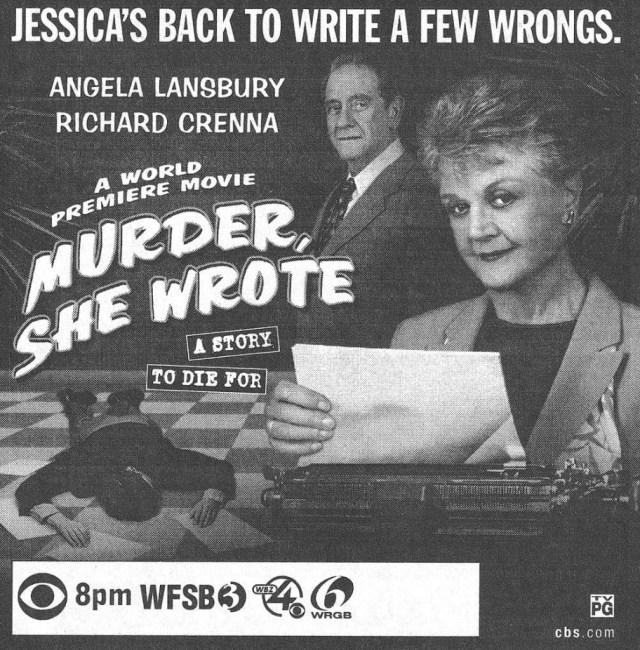
Hallmark Hall of Fame’s Back When We Were Grownups poster created by Hallmark Hall of Fame Productions, McGee Street Productions, and CBS

“Rebecca Davitch is one of the worst protagonists in Hallmark movie history, mainly because she doesn’t do anything in the film that seems memorable or note-worthy”.

In Back When We Were Grownups’ synopsis on IMDB and Goodreads, it’s stated how Rebecca Davitch (the protagonist of the 2004 Hallmark Hall of Fame presentation) believes she became “the wrong person”. That’s because Rebecca has doubts about how her life turned out, wondering if she could have made choices that would have produced better outcomes. Her personal conflict leads her to make changes in her life, from continuing her research on Robert E. Lee to adopting a new wardrobe. Even though this personal conflict was a driving force for Rebecca throughout the story, that’s not the only thing she did in Back When We Were Grownups. As the owner of the party planning business, The Open Arms, Rebecca is almost always hosting events, either for family or clients. She also provides her support to members of the Davitch family who truly need it, such as when Rebecca agrees to attend a Grandparents’ Day exhibition at Peter’s (her step-grandson) school. Rebecca even provides advice to clients of The Open Arms, such as when she advised someone to host a graduation party despite the graduate in question failing to graduate (to show the graduate the party’s guests still support them no matter the academic outcome). These examples show how Rebecca is a very active character who is open to making progress in her life. The memorable and note-worthy things she does throughout Back When We Were Grownups place her in situations the audience could find relatable.

The It Grew On Me Blogathon banner created by Rebecca from Taking Up Room.

“The [Davitch] family seems dysfunctional just for the sake of it, with the cast having little material to work with”.

The dysfunctionality of the Davitch family has been one of my biggest criticisms of Back When We Were Grownups, as it felt like the family was dysfunctional just for the sake of it when I first watched the movie. But calling the Davitch family “dysfunctional” is one of the biggest overstatements on 18 Cinema Lane. In fact, the most dysfunctional family in the 2004 Hallmark Hall of Fame presentation is Dr. Will Allenby (Rebecca’s ex-boyfriend) and his daughter, Beatrice, whose two scenes together were filled with tension and animosity. If I could select words to describe the Davitch family, it would be either “colorful” or “quirky”. While the Davitch family has their issues, they are still able to put their differences aside to help each other where help is needed and enjoy one another’s company at family gatherings. Plus, everyone in the Davitch family appears to live typical, well-adjusted, productive lives, with each family member possessing their own interests and perspectives. This distinctness was partly made possible by the cast themselves, as their chemistry and camaraderie naturally blended together. The acting overall was actually so strong, it was easy to stay invested in Back When We Were Grownups’ story and forget the actors and actresses were portraying a character. One of the best scenes in this film is when Rebecca invites Will to one of her family dinners. During the dinner itself, Rebecca recalls a memory of one of her first party planning jobs. Because the memory brings up positive feelings, the Davitch family is smiling, laughing, and appearing very jovial during Rebecca’s recollection. Meanwhile, confusion is painted on Will’s face as he looks lost and awkward. This described scene perfectly showcases the feeling of being an outsider looking in, especially when it comes to family related events.

Waffle and maple syrup as best friends image created by Freepik at freepik.com. <a href=’https://www.freepik.com/free-vector/friendship-day-background-with-cartoon-food_2416674.htm’>Designed by Freepik</a>. <a href=”https://www.freepik.com/free-photos-vectors/background”>Background vector created by Freepik</a>. Image found at freepik.com.

Speaking of “colorful”, I’d like to point out how Back When We Were Grownups is one of the most colorful pictures from the Hallmark Hall of Fame collection. I’m pointing this out because of how color was incorporated into the set design. In Rebecca’s kitchen, themed boxes based on different holidays and special events found a home on a tower of shelves. These boxes are coated in hues of red, pink, purple, and even green, becoming a focal point in a kitchen adopting softer hues like pale yellow and beige. While decorating for an upcoming graduation party, the blue decorations nicely stand out against the faded yellow and red walls of the sitting rooms within the Davitch family home. Even during a backyard wedding, rows of hot pink flowers pop within a gray stone fountain. I found this aspect of Back When We Were Grownups such a pleasant surprise because it showed the creative team’s understanding for how and when to utilize color in their project.

Bunch of flowers image created by V.ivash at freepik.com. <a href=’https://www.freepik.com/free-photo/landscape-bow-bouquet-gift-outdoor_1150128.htm’>Designed by V.ivash</a>. <a href=”https://www.freepik.com/free-photos-vectors/flower”>Flower image created by V.ivash – Freepik.com</a>. Image found at freepik.com.

Back When We Were Grownups doesn’t run on a plot or storyline, but rather on the reactions of (mostly) the main protagonist (who doesn’t seem to put in a lot of effort into solving her family’s dysfunctionality)”.

As I’ve already mentioned in this editorial, Rebecca deals with a personal conflict surrounding her doubts over how her life turned out and questioning the choices she could have made instead. She also lives a very active life, from running a party planning business to hosting family gatherings. Therefore, what I said about Back When We Were Grownups running on the reactions of (mostly) the main protagonist is completely false. What’s false as well is what I said about Rebecca not seeming to put in a lot of effort into solving her family’s dysfunctionality. Why should that be her problem to solve if dysfunctionality isn’t the Davitch family’s problem at all? But another false claim I made was how Back When We Were Grownups doesn’t run on a plot or storyline. Because of Rebecca’s personal conflict, the story is very reflective and poignant, addressing themes and messages that are relatable for an older audience. As Rebecca looks back on her younger years, flashbacks are woven into the production. These flashbacks produce a softer light and hazy cinematography, which allows them to appear distinct from the “present day” scenes. The costume design and music selections effectively bring the 1960s back to life in a believable presentation. Even the dialogue carries the poignancy related to Rebecca’s personal conflict. As Rebecca and Peter are playing a game of Scrabble, Rebecca expresses her frustrations over hosting the 100th birthday party of a family member named Poppy. She claims Poppy will forget about the party after it happens, trying to justify cancelling the party altogether. But Peter reminds Rebecca how Poppy will remember the party as it’s happening, with Peter’s statement encouraging Rebecca to continue hosting the party. This piece of dialogue respectfully addresses the importance of actively showing up and making an effort for loved ones.

While Back When We Were Grownups will forever be remembered for the “Happy 100th Poopy” banner, I was actually able to, kind of, overlook it during my second viewing of the movie. Screenshot taken by me, Sally Silverscreen.

“As a Warehouse 13 fan, I was excited to see Allison Scagliotti’s performance in this film [Back When We Were Grownups], but, unfortunately, she was featured in this movie for about two minutes or less”.

This is less of a criticism of the movie and more of a personal nitpick. Like I’ve stated in the past, I’m a Warehouse 13 fan, with Claudia Donovan being my favorite character from the show. So, when I discovered Allison Scagliotti (the actress who portrayed Claudia) had starred in a Hallmark Hall of Fame movie, I was excited to see her performance in the film. You can imagine my disappointment when I found out her character, Emmy, was given a shorter length of screen-time in Back When We Were Grownups. However, as I reflected on this disappointment after watching the 2004 Hallmark Hall of Fame film for a second time, I was reminded of my disappointment over Amédée only appearing in two scenes in the 1992 Hallmark Hall of Fame film, O Pioneers!. While I haven’t read the source material for Back When We Were Grownups, I have read the source material for O Pioneers!. Even though I’m not a fan of how Amédée’s part of the story turned out in both the book and its adaptation, I have a better understanding why he was in that overall story for such a short amount of time. O Pioneers! revolves around the Bergson family, with a rotation of friends and neighbors making appearances throughout the story. Since Amédée was a friend of Emil’s (the protagonist, Alexandra’s, brother) and possessed a life of his own, it makes sense for him to have a very limited presence in O Pioneers!. It’s a similar scenario for Emmy in Back When We Were Grownups. She’s the granddaughter of Rebecca who does not reside in the same household as her grandmother. Plus, Emmy never experiences any issues Rebecca needed to resolve. As I mentioned earlier in this review, Back When We Were Grownups addresses themes and messages that are relatable for an older audience. With everything said, plus the movie containing an ensemble cast, it explains why Emmy’s role in the overall story was so small. Yet again, I don’t know what her role was like in the book the movie is based on.

Since I brought up Allison Scagliotti’s portrayal of Emmy in Hallmark Hall of Fame’s Back When We Were Grownups, I thought including a portrait of her in this review makes sense.

The more I think about Back When We Were Grownups, the more it reminds me of It’s a Wonderful Life. Though the 2004 Hallmark Hall of Fame presentation doesn’t contain a personal crisis, angels, or a story revolving around Christmas, it does focus on a protagonist who other characters depend on and cherish. When Rebecca is upset over her absence in a collection of home videos, her brother-in-law, Zeb, reminds her how she’s the glue that keeps the Davitch family together. Another reminder of It’s a Wonderful Life is how, in Back When We Were Grownups, Rebecca reflects on her life and wonders how different it might have been if other choices were made. But in the case of the Hallmark Hall of Fame production, this reflection serves as a driving force for Rebecca to make changes in her life. These changes, along with the messages and themes of Back When We Were Grownups, were woven into a movie that made me laugh, cry, think, and care. That’s what a good movie, let alone one from the Hallmark Hall of Fame collection, should do; make the audience care about the story and its characters. Back When We Were Grownups actually reminded me of Hallmark’s motto, “When you care enough to send the very best”. But what this movie shows is how it’s not just about sending the very best. It’s also about choosing the very best, making sure the very best is indeed “the very best”, and having the very best be special and memorable. While I wouldn’t say Back When We Were Grownups is the “best” Hallmark Hall of Fame movie, as it does have its flaws, it’s certainly better than I initially believed.

Have fun at the movies!

Sally Silverscreen

A Movie Blogger’s Ten “Hot Takes” on Television

I published a list article last December about my ten “hot takes” on film. That was the first time I had ever written a list exclusively about movie “hot takes”. Since publishing that article, it has been well received by 18 Cinema Lane’s readers, obtaining over one thousand views. This success inspired me to write another “hot takes” list. But this time, I’ll be discussing my ten “hot takes” on television, as I have talked about TV shows and television related topics from time to time on my blog. Like my movie “hot takes” list, all my TV “hot takes” have never been brought up on 18 Cinema Lane before, in order to keep the list interesting and fresh. Also, like my movie “hot takes” list, I organized each television “hot take” based on how “hot” each take could be perceived. Before I begin this list, I’d like to state how my list is not intended to be mean-spirited or negative. It’s just simply a way to express my opinion.

Campfire with marshmellows and shooting stars image created by macrovector at freepik.com.

10. Harris Trinsky Should Have Appeared in the Freaks and Geeks episode, ‘Chokin’ and Tokin’’

Last year, I published an editorial explaining the similarities between Harris Trinsky (from Freaks and Geeks) and Eddie Munson (from Stranger Things). One of my main talking points was how Harris (as well as Eddie) showed his leadership through putting others before himself, using the example of Harris’ attempts to protect the younger “geeks” (Bill, Sam, and Neil) from Alan (the “freshman tormentor”/bully of the “geeks”) in the Freaks and Geeks’ Halloween episode, “Tricks and Treats”. But another episode I think Harris should have appeared in is “Chokin’ and Tokin’”. In this episode, Alan believes Bill is lying about having a peanut allergy. To prove Bill is telling the truth, Alan contaminates Bill’s sandwich with peanuts, causing Bill to have a severe allergic reaction. Had Harris appeared in “Chokin’ and Tokin’”, the audience could have seen how Bill’s emergency affected him, especially since a) Harris knows what Alan is capable of when it comes to his bullying behavior, b) Harris was bullied when he was a freshman (to the point his tailbone became broken), and c) Harris knows about Bill’s peanut allergy (Bill admitted this while Harris and the “geeks” went trick-or-treating in the episode, “Tricks and Treats”). The dynamic of the friendship between Harris and the “geeks” not only could have been further explored, the audience also could have learned more about Harris, better understanding why he is an older brother figure to the “geeks”. I think this aspect of the story would have been more compelling than the redemption arc Freaks and Geeks’ creative team tried giving Alan in “Chokin’ and Tokin’”, which I, personally, don’t believe was affective. This “hot take” is placed at the bottom of my list due to Freaks and Geeks lasting only one season.

9. Moses Valentine, from Miss Scarlet, Should Have Received His Own Spin-off Show

While I have talked about Miss Scarlet before on my blog, I’ve never talked about my favorite character from the show, Moses Valentine. For three seasons, he possessed a captivatingly commanding presence, using his charm and street smarts to help Eliza Scarlet (the show’s titular character) solve mysteries. In the third episode of Miss Scarlet’s sixth season, ‘The Delivery’, the story primarily revolves around Moses as he searches for a missing diamond. Not only was this the best episode from the sixth season (in my opinion), it made me wish Moses had received his own spin-off show. From seasons four to six, Moses has been living in Paris. This backdrop could have given the spin-off show a colorful landscape and an eccentric group of characters, allowing the show to be distinct from Miss Scarlet’s London environment. It was revealed in ‘The Delivery’ and the fifth episode of Miss Scarlet’s sixth season, ‘The Night Shift’, that Moses is not only married, he also has a son. His family would have offered a unique dynamic from Miss Scarlet, as Eliza is not married and isn’t a mother. There could have even been a crossover episode between Moses’ spin-off show and Miss Scarlet, where Eliza visits Moses in Paris and helps him solve a mystery. But, sadly, a Moses centered spin-off show will likely not happen because the seventh season of Miss Scarlet will be the show’s last.

8. I Don’t Think Lauren Should Have Won the Reach for the Stars Competition in the Matlock episode, ‘The Starlet’

Toward the beginning of the Matlock episode, ‘The Starlet’, a talent contest called the Reach for the Stars Competition takes place. Whoever wins the competition will receive a two-year studio contract, a brand-new car, and $25,000. The final four contestants, Morgan, Dana, Abby, and Lauren, have their talent performances featured in ‘The Starlet’. While Morgan captivated by singing an energetic pop song, Abby sang a country song that sounded like it came straight from the heart. Dana’s performance of a song on saxophone was solid, adding her strong contribution to the soundtrack of the 1980s. But Lauren’s performance, which helped her win the Reach for the Stars Competition, was, in my opinion, unimpressive compared to the aforementioned three performances. Lauren performed a dance routine that was, to put it simply, basic. Its contents were a few arm movements, stepping in place several times, and some simple turns. I know Lauren’s victory was intended to create a domino effect for the events that took place in ‘The Starlet’. I also recognize what the creative team behind this Matlock episode was trying to say about connections being prioritized over talent when it comes to success, as Lauren’s mother, Janet, won the very first Reach for the Stars Competition. But I still don’t think Lauren should have won the contest based on talent performance alone.

7. I wish Tommy Vaughn Hadn’t Been the Murder Victim in the Murder, She Wrote episode, ‘Murder in Tempo’

In the Murder, She Wrote episode, ‘Murder in Tempo’, Dr. Seth Hazlitt organizes a benefit concert in an effort to save a local forest called Cabot Woods, with a band named In Tempo being the stars of the concert. One of In Tempo’s band members, Tommy Vaughn, has a dinner plate full of personal issues; from alcohol dependency that led him to rehab to dealing with a stalker prior to coming to Cabot Cove and even almost getting shot during the band’s concert rehearsal. But during his interactions with a Cabot Cove resident named Rachel, there are glimmers of hope that Tommy could, potentially, turn his life around. In a conversation he shared with Rachel, Tommy confesses his father passed away in an alcoholic ward, admitting his father’s issues made him look at the world pessimistically. He also acknowledges how he’s developed a poor reputation and how he needs to seek medical attention when he experiences problems with his vocal cords. Tommy even agreed to perform at the benefit concert because he truly believed in the cause of saving Cabot Woods, refusing to quit the concert despite pressure from the band’s manager, Wylie Trey. I’m aware Murder, She Wrote possesses a limited number of recurring characters and ‘Murder in Tempo’ premiered within the show’s last season. But I’d like to think if Tommy’s life had been spared, he would have received a second chance to obtain a happier next chapter to his story. Tommy could have even appeared in one of Murder, She Wrote’s made-for-TV movies or one of the books from the Murder, She Wrote book series. While advocating for the preservation of Cabot Woods, Jessica Fletcher says, “But even small battles are important”. Sadly, Tommy never got the chance to win at least one of his “small battles”.

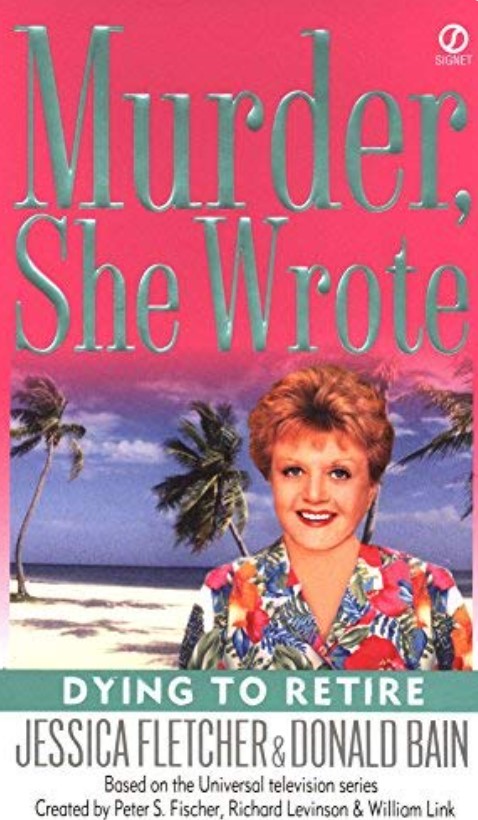
Since one of my television “hot takes” relates to Murder, She Wrote, I thought featuring the book cover for Murder, She Wrote: Dying to Retire in this list article made sense. Murder, She Wrote: Dying to Retire book cover found on Goodreads

6. One of the HGTV Dream Homes Should Have Been Built in Hawaii

For almost thirty years, HGTV (Home and Garden Television) has hosted their annual Dream Home sweepstakes, with a completely furnished house as the grand prize. Eighteen of the fifty United States have hosted a prize home in varying styles and diverse landscapes. But, in my opinion, one of those states should have been Hawaii. The “gimmick” of HGTV’s Dream Home sweepstakes is for someone to win a “dream” home in a “dream” location. For years, Hawaii has been known as a “dream” travel destination for many people, yet owning a home in Hawaii is a “dream” few people can achieve for a variety of reasons. Realistically, I’m not sure what the logistics would be in order to make an HGTV Dream Home in Hawaii a reality. On paper, however, a Hawaiian Dream Home would fit the intent of HGTV’s contest.

5. I wish Sophia’s Son, Phil, Had Made, At Least, One On-Screen Appearance on The Golden Girls

Looking back on all the times I’ve watched The Golden Girls, one consistent story element always comes to mind; how Sophia singles out her son, Phil, whenever she brought up her children. Because it seemed like he was mentioned often on the show, I always wondered if what was said about him by the other characters was true. This curiosity made me want to see, at least, one on-screen appearance of him, in order to learn more about Phil from his perspective. Unfortunately, this never happened as Phil died off screen, with his death acknowledged in the season six episode, ‘Ebbtide’s Revenge’. It would have been fascinating to see Phil’s interactions not only with Sophia, but with the other “golden girls” as well. Plus, this role would have given an up-and-coming or underrated actor a chance to start or progress his career, especially considering The Golden Girls is one of the most successful and beloved television shows of all time. It also would have been interesting to see how The Golden Girls’ audience responded to Phil’s appearance on the show, if perhaps he had become a fan favorite. Though to quote the iconic Tootsie Pop commercial, “the world may never know”.

4. I Don’t Find the Gilligan’s Island episode, ‘The Hunter’, Funny or Entertaining

Gilligan’s Island is a show that is known for being light-hearted and hilarious, typically presenting the characters in low-stakes situations despite being stranded on the titular island. But the episode, ‘The Hunter’ is quite different from what the show is known for. Jonathan Kincaid is introduced in this episode as a big-game hunter. When he is unable to find any animals on the island to hunt, Jonathan then decides to hunt the other characters. The story of ‘The Hunter’ is tonally inappropriate for the type of program Gilligan’s Island is. With the show’s laugh track still featured in this episode, it makes the characters’ fear seem like it is played for laughs instead of being taken seriously. I was so horrified by ‘The Hunter’, I couldn’t find anything entertaining or funny about it. I, honestly, questioned what the creative team behind Gilligan’s Island was thinking creating and airing the episode. Because ‘The Hunter’ has been received better than other episodes of Gilligan’s Island, obtaining a 7.3 out of 10 on IMDB, this “hot take” is ranked higher on my list.

3. I Don’t Understand the Hype Surrounding ‘Shark Week’

According to Wikipedia, Shark Week debuted almost forty years ago on Discovery Channel with educational intentions, emphasizing conservation and debunking misconceptions. But as time went on, the annual event grew a life of its own. The term “shark week” has been added to the pop cultural lexicon, with people knowing what that is even if they’ve never watched any program associated with the event. Merchandise has been created to capitalize Shark Week, from shirts to scouting patches and even stuffed animal sharks from Build-A-Bear Workshop. But despite the promotion and fanfare it’s received, I don’t understand the hype surrounding Shark Week. With the amount of information available about sharks now than there was thirty-eight years ago, it almost seems unnecessary to reserve only one week to shark related education. In fact, shark related education can be accessed any time of year. Because sharks are such a specific subject, the event could run the risk of running out of content or programming. Plus, there are other animals who would also benefit from receiving education about them and conversation efforts for them. Yet they don’t receive their own special week.

2. If Eddie Munson Had Been Introduced on Stranger Things Sooner, The Show’s Creative Team Would Have Prioritized His Popularity, Similar to Steve Urkel (from Family Matters)

Once upon a time, on December 15th, 1989, Steve Urkel made his debut on the sitcom, Family Matters. What started as Steve asking one of the show’s key family members, Laura Winslow, to a dance turned into Steve becoming one of the most popular characters in television history. As Steve’s popularity grew, he received more screen-time and significance in the story. He not only became very marketable, having products based off Steve like Urkel-O’s Cereal and a talking doll, Family Matters also became defined by Steve’s iconic catchphrase, “Did I do that?”. But Steve’s popularity came at the expense of the titular Winslow family and their matters, which defied the original intent of the sitcom. If Eddie Munson had been introduced on Stranger Things sooner, I believe the show’s creative team would have allowed a similar scenario to happen. Like Steve Urkel, Eddie Munson became very popular after appearing in one season of his respective show. Also, like Steve, Eddie became very marketable, with products ranging from a replica of his Hellfire Club shirt to books about Eddie’s side of the story. But Eddie made his debut in Stranger Things’ fourth out of five seasons, with Eddie also passing away at the end of the fourth season. Though if Eddie had debuted in either season one or two, Eddie’s popularity would have given the show’s creative team an excuse to not only keep him on the show, but to also upgrade his status from ‘recurring’ to ‘main’ character. But, similar to Steve on Family Matters, the emphasis on Eddie’s popularity could have run the risk of other characters and stories getting overshadowed, potentially leaving mysteries and story-threads unresolved. There’s also a chance Stranger Things‘ creative team could have turned Eddie into “too much of a good thing”, giving Eddie elements to his story that may not make sense, such as receiving a catchphrase that seems unnecessary.

1. Writing Jack Thornton Off When Calls the Heart is the Show’s Biggest Mistake

    When the creative team behind When Calls the Heart decided to write Jack Thornton (one of the show’s main characters) off the show by having him die off screen, that was one of the most controversial creative decisions in Hallmark Channel history, as characters are typically not written off the network’s programs in this fashion. But looking back on this creative choice eight years later, writing Jack off When Calls the Heart has proven, in my opinion, to be pointless. If Jack had stayed on the show, other creative decisions I’m, personally, not a fan of wouldn’t have been made. Some of these decisions are the love triangle between Elizabeth, Lucas, and Nathan (that lasted three seasons), as well as backtracking Elizabeth’s decision to fall in love with and become engaged to Lucas. When it comes to the argument for why Elizabeth should be in a romantic relationship with Nathan, the McGarries (fans of Elizabeth and Nathan) have claimed that because Elizabeth falls in love with a Mountie in the book series the show is based on, she has to fall in love with a Mountie on the television show. With that logic in mind, if it was so important for Elizabeth to be in a romantic relationship with a Mountie, why write Jack off the show at all? I’m aware of Daniel Lissing’s (the actor who portrayed Jack) desire to leave the show to pursue other projects. However, I think recasting Jack would have attracted less backlash than writing him off the show. When Jack was still on When Calls the Heart, it seemed like his relationship with Elizabeth organically complimented the show’s overarching story. It also helped that Daniel and Erin Krakow (the actress who portrays Elizabeth) had stronger on-screen chemistry together. But now that Elizabeth and Nathan’s relationship has been prioritized since season eleven, its promotion, in my opinion, not only feels forcefully manufactured, it has come at the expense of other characters and stories, such as Rosemary, once again, not receiving her theater and new characters like Fernando becoming underutilized.

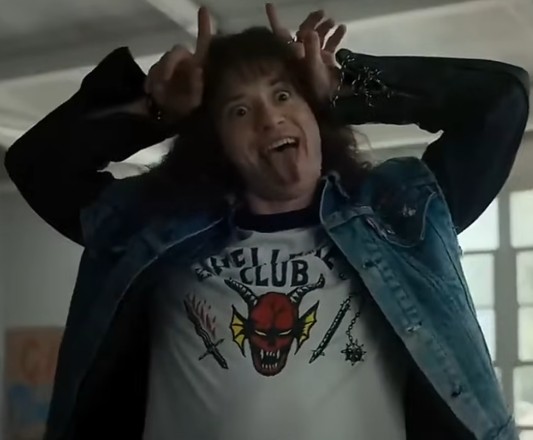
    Since another television “hot take” in this list article relates to Eddie Munson and Stranger Things, I believed including this iconic picture of Eddie in this post was appropriate. Original image created by 21 Laps Entertainment, Monkey Massacre, Netflix, and Upside Down Pictures

    What are your thoughts on my TV “hot takes”? Do you have a TV related “hot take” you’d like to share? Please tell me in the comment section below!

    Have fun on television!

    Sally Silverscreen