
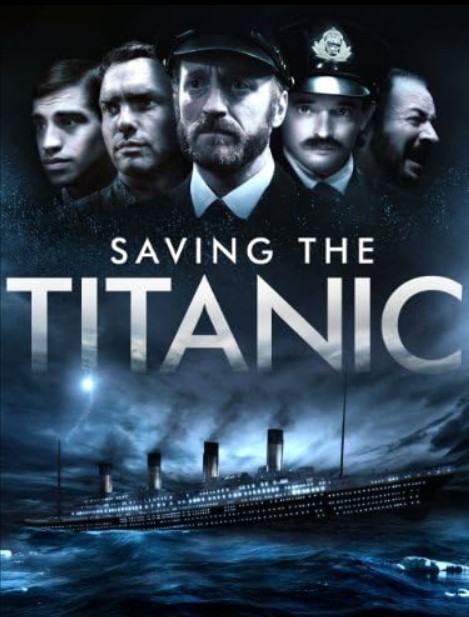
When it comes to the Titanic, the sinking of the “unsinkable” ship and the tragedy that followed are the two most emphasized parts of the watercraft’s history. During the one hundred and thirteen years since the infamous disaster, multiple survivors (either real or fictional) have shared their stories through various forms of media. However, I have observed how the majority of these recollections have been from the perspectives of the passengers. While the passengers’ point of view is important, it seems like the media rarely captures the perspective of Titanic’s employees. This is the reason I chose to review Saving the Titanic for The Titanic In Pop Culture Blogathon. Whenever I participate in a blogathon, I will sometimes review a made-for-TV film. This decision is made because television movies are rarely included in blogging events. I also try to write about a subject that presents a blogathon’s theme in a more unique way. As I already mentioned, Saving the Titanic addresses a point of view that seems less frequent. So, without further delay, let’s begin my review of the 2012 TV production.
Things I liked about the film:
How the lower budget was utilized: Made-for-TV movies have historically received lower budgets. According to IMDB, the estimated budget for Saving the Titanic was €1,600,000 (or $1.8 million). Despite the limited funds, the creative team behind the 2012 television production saw this aspect as a challenge instead of a hinderance. The story revolves around the Titanic’s electricians, engineers, and “firemen” (those who feed fire to the ship’s boilers). Because their roles take place below deck, there’s only a few locations where the employees either reside or work. This allowed the movie’s creative team to recycle sets, featuring a handful of locations in multiple scenes. Medium and close-up shots of the employees and the ship’s machinery not only encourage the audience to focus on how the Titanic operated, they also show how frugal the creative team was with the space they were given. Because of the clever ways the budget was utilized in Saving the Titanic, it was easy to forget how low the budget was.
Use of mixed media: If I had to classify Saving the Titanic, I would call it a “docudrama”. While the majority of the film is a dramatization of the events surrounding the Titanic, the movie features mixed media, which is sometimes found in documentaries. From time to time, blueprints of the Titanic would appear onscreen as a voice-over explained the significance of each featured area. Real-life photographs emphasized how actual lives were impacted by every aspect of the ship. Even the Titanic’s first distress call was typed out on screen, giving the audience an idea of what nautical communication looked like in the 1910s. The inclusion of mixed media created an enriching viewing experience. That element highlights how the Titanic is as multi-faceted as the stories surrounding it.
Learning something new: Over the years, I’ve learned a lot about the Titanic. From discovering the ship did, indeed, have a swimming pool to what the last dinner was served in first class, I thought I knew a satisfying amount of information. But by watching Saving the Titanic, I learned even more about the titular ship, partly due to the perspective of the employees. The fourth funnel on the ship was fake. However, this design choice was a blessing in disguise for one of Titanic’s crew members. A greaser named Alfred White refuses to climb to the top of the fourth funnel due to his fear of heights. Later in the movie, he is ordered by Joseph Bell to report everything happening above deck. This order helps Alfred overcome his fear and accomplish his task, as he had to climb up the same funnel he refused to climb before. Had it not been for Alfred’s part of the story, I might have never known only three of Titanic’s funnels were functional.

What I didn’t like about the film:
No explanation for surviving crew members: Toward the beginning of Saving the Titanic, a small group of Titanic’s surviving crew members are at the White Star Line Office. Two of those crew members are featured throughout the film, Alfred White and Frederick Barrett. On screen text revealed the movie was “based on testimonies from surviving crew of RMS Titanic”. So, I was curious about what happened to Frederick and Alfred after they arrived in New York. Unfortunately, the film doesn’t address this information. Instead, the end of the film acknowledged the deceased crew members, such as Joseph Bell. Even though recognizing the crew members who perished is important, I wish the crew members who survived were recognized as well.
Thick accents: When I reviewed Crimes of Fashion: Killer Clutch last year, I pointed out how difficult it was to understand characters who spoke with thick French accents. Saving the Titanic has a similar issue. A voice-over explains how the majority of Titanic’s employees came from Southampton. This means the ship’s crew members spoke to one another with English accents in varying degrees of thickness. For employees with thick accents, I, once again, found it difficult to understand what they were saying. While this wasn’t a consistent issue, it was enough for me to point it out.
Frederick Barrett’s “plot twist”: For this part of my review, I will spoil Saving the Titanic. If you have not seen this movie and are planning on watching it, skip ahead to the part of my review titled “My overall impression”.
Throughout his time on the Titanic, Frederick Barrett is very secretive about his past. When he is asked about his life before boarding the famous ship, his answers are vague. In a tense moment while the Titanic is sinking, Frederick explains to Joseph Bell how his wife cheated on him. He wanted to kill his wife and her lover, but chose to join the Titanic’s crew instead. As I mentioned earlier in this review, Saving the Titanic was “based on testimonies from surviving crew of RMS Titanic”. Therefore, the crew members featured in the film were actual people. The way the aforementioned part of Frederick’s story was presented felt like the movie’s creative team wanted to include a plot twist in a real-life story. Not only was this delivery unnecessary, I, personally, think there were better ways to write facts about Frederick’s life into the script.
My overall impression:
At the beginning of Saving the Titanic, Frederick Barrett is being interviewed about the Titanic disaster. Members of White Star Line tell Frederick they want to reassure the public of White Star Line’s nautical quality by bringing up heroes who helped rescue lives on that infamous April night. But, later in the film, Frederick calls out White Star Line’s members for trying to find heroes to fit the company’s narrative. He also refers to himself as a survivor, not a hero. The story of the Titanic is wrapped in tragedy, fear, and cruel irony. So much emphasis is placed on these aspects of the Titanic’s history, it may be easy to forget there were, indeed, people boarding the ship who were heroes in someone else’s eyes. Whether they are known or not, these people guided someone toward a lifeboat, fetched a life vest for a passenger who might not have received one, or simply tried to ease a frightened crew member’s anxiety. Saving the Titanic brings up some of those names and allows their stories to be told. Like I mentioned in my review’s introduction, the 2012 television presentation addresses a point of view that seems less frequent, which is Titanic’s employees in this case. Though the movie is flawed, I am thankful a production like this exists. It not only teaches viewers about the Titanic from a different perspective, it also shares a side of the story that seems rarely covered in media.
Overall score: 7.1 out of 10
Have you seen Saving the Titanic? Are there aspects of the Titanic’s story you’d like to hear more from? Please tell me in the comment section.
Have fun at the movies.
Sally Silverscreen
 18 Cinema Lane
Pingback: The Titanic In Pop Culture Blogathon Has Arrived – Taking Up Room
Worth checking out. Good review.
LikeLiked by 1 person
Thanks for checking out my review, wjquiggy! If you do watch Saving the Titanic, I’d be interested in hearing your thoughts on the film.
LikeLike
Good review, Sally!
I haven’t seen Saving the Titanic, but I like how it’s focused on the crew. You’re right, the employees on board have not received as much attention. I guess I would like to see a film deal with the second class passengers a little more. It’s typically either first class and/or steerage who receives the primary focus.
LikeLiked by 1 person
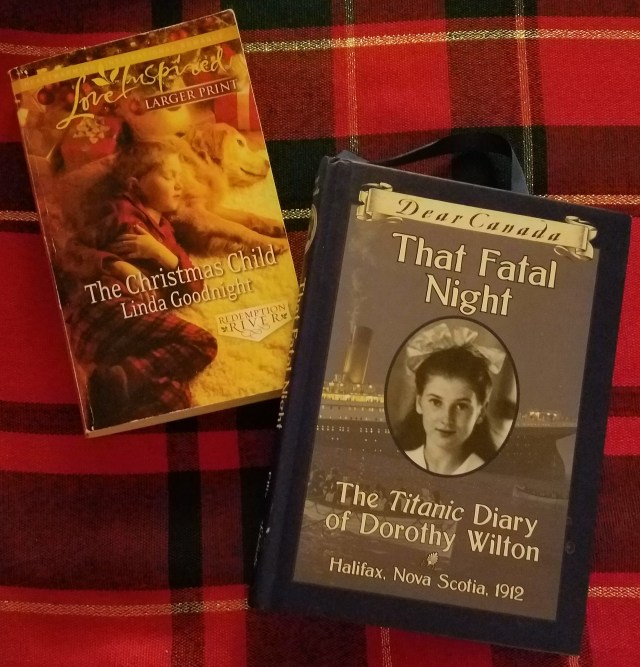
Thank you for reading my review, John! That Fatal Night: The Titanic Diary of Dorothy Wilton is about a (fictional) second-class passenger; the titular Dorothy Wilton. However, I do agree that when it comes to films about the Titanic, second-class passengers seem to get overlooked.
LikeLike
This would be very interesting to watch, and I can imagine a person would learn a lot about the Titanic here. It’s too bad, like you said, they didn’t dwell so much on the surviving crew members.
Thanks for your fab review, and for the introduction to this film.
LikeLiked by 1 person
You’re welcome and thanks for checking out my review! Saving the Titanic is a very informative film, with the facts and mixed media sprinkled throughout the movie providing an educational and enriching viewing experience. If you do watch Saving the Titanic, I’d be interested in reading your thoughts on the film!
LikeLiked by 1 person
What a cool, unusual way to tackle showing this tragedy onscreen! You’re right, we really don’t focus much at all on the crew, and I hadn’t noticed/thought of that before. We talk about the captain, and Mr. Ismay, and that’s about it. Huh.
LikeLiked by 1 person
Thank you for reading my review, Hamlette! As I said in my review, I am thankful a production like this exists, as it shares a perspective that isn’t often brought up.
LikeLike
It’s really true–we don’t get stories about the Titanic from the point of view of the crew. They’re just kinda there. So this is a very interesting angle. Thanks again for joining the blogathon with this very interesting review. 🙂
LikeLiked by 1 person
You’re welcome and thanks for checking out my review! Looking forward to the next blogathon!
LikeLiked by 1 person