Last week, I published a Word on the Street story about an upcoming Hallmark movie titled “A Christmas Through Your Eyes”. In this article, I speculated whether the Gloria Estefan song, “Christmas Through Your Eyes”, would share any connection with the movie. Now, as of early September, 2026, the cast has been revealed on the official IMDB page of “A Christmas Through Your Eyes”! The cast members and their characters’ names are the following:
At the time of this Word of the Street story’s publication, it’s unknown if more cast members will be revealed in the coming weeks. It’s also unknown if “A Christmas Through Your Eyes” will premiere during this year’s Countdown to Christmas line-up, even though 2026 is listed next to both of the film’s distributors on IMDB. But what I noticed about the listed cast is how most of them have appeared in at least one Hallmark production prior to “A Christmas Through Your Eyes”. In fact, three cast members, Madison Ryne Smith, Amanda Khan, and Daniel Bacon, have starred in at least one Hallmark Christmas film before. With that said, it’s nice to see Hallmark utilizing the talent within their community.
What are your thoughts on this piece of movie news? Do you think “A Christmas Through Your Eyes” will be released during this year’s Countdown to Christmas line-up? Let me know in the comment section!
I’ve brought it to my own attention how, in the eight years 18 Cinema Lane has existed, I have never reviewed any program from PBS Masterpiece. While I have brought up Miss Scarlet in the past, I didn’t review any episodes of the show. So, I chose to write about the mini-series, Small Island, with one reason being to make up for lost time. The other reason is because I wanted to write about one of the projects from Naomie Harris’ filmography, in honor of her birthday. Five years ago, when I created a post about The We Heart Pirates Week Tag, I mentioned how Calypso/Tia Dalma is my favorite character from a pirate movie. I explained Naomie’s portrayal of Calypso/Tia Dalma is one of the reasons why Calypso/Tia Dalma is a favorite character of mine. To show my gratitude as a fan, I checked out Small Island, especially since I have been meaning to see this mini-series for several years. As I just mentioned in this introduction, Small Island is a mini-series. Yet, on IMDB, the official run-time is an hour and thirty minutes, which is the typical run-time of a television movie. Therefore, I will refer to Small Island as a film/mini-series or a movie/mini-series for the sake of this review.
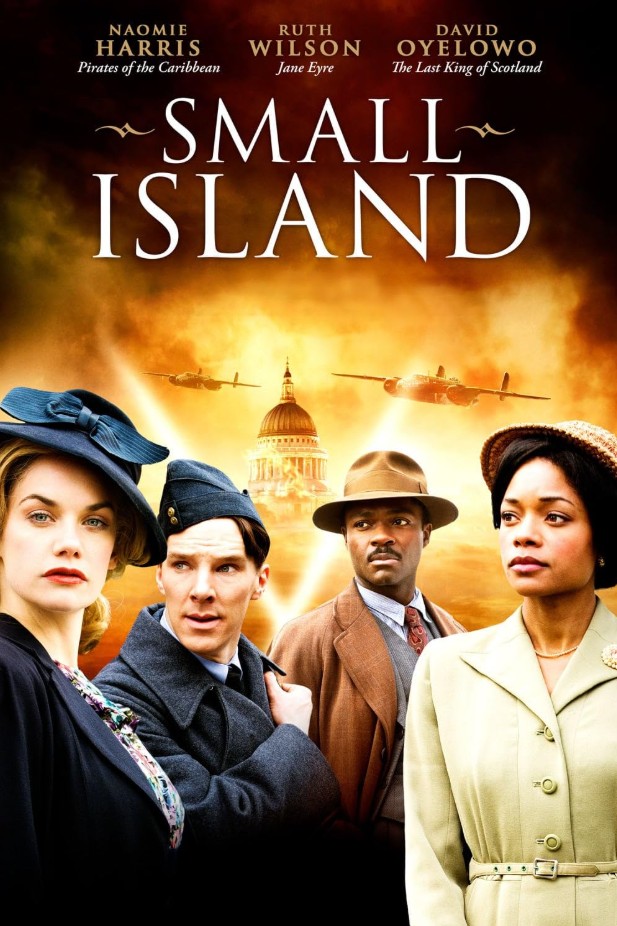
Small Island poster created by BBC Television, British Broadcasting Corporation (BBC), Ruby Films, BBC One, Masterpiece Theatre, PBS Video, and Public Broadcasting Service (PBS)
Things I liked about the film/mini-series:
The acting: Whether in the Pirates of the Caribbean trilogy, the Jame Bond franchise, or in Small Island, Naomie Harris goes above and beyond when it comes to her performance. This is achieved due to how fluid her acting abilities are. That fluidity allowed her portrayal of Hortense Roberts, as well as the story surrounding Hortense, to be compelling. A great example is when Hortense receives a letter after class. As she’s reading the letter in question, Hortense is excited to hear word about a man she cares about named Michael. Her eyes light up with joy and her mouth is presented in a smile. But while she’s reading the letter, Hortense realizes it contains some troubling news. This causes Hortense to turn her mouth in a slight frown and her eyes to appear worried. But Hortense quickly goes back to looking happy, giving a brave face to the woman who gave Hortense the letter. The aforementioned fluidity of Naomie’s performance helped Hortense’s transition between emotions appear seamless!
While I’m still on the subject of Naomie’s performance, I want to talk about her on-screen chemistry with David Oyelowo! In Small Island, David portrays Hortense’s husband, Gilbert Joseph. The strength of Naomie’s and David’s acting abilities effectively showcased Hortense and Gilbert’s relationship blossoming over the course of the film/mini-series. One of their best scenes together takes place after Hortense encounters a setback. After being told her teaching qualifications from Jamaica aren’t eligible in the United Kingdom, Hortense tearfully explains her dilemma to Gilbert. She even confesses how she mistook a storage closet for an exit. With a smile on his face and jovial demeanor, Gilbert points out how disorganized the storage closet was as Hortense describes what she saw in it. As their conversation continues, Gilbert makes Hortense feel better when he suggests they face their problems like the British do: drink tea. This scene is a perfect example of how Hortense and Gilbert brought out the best in each other, with Naomie’s and David’s acting talents successfully presenting that idea in Small Island!
Another strong performance in Small Island came from Ruth Wilson! Her portrayal of Queenie Bligh was captivating due to her strong adaptability. In one great example, Queenie is distraught over the passing of her aunt, Dorothy. At Dorothy’s funeral reception, Queenie’s mother questions what her daughter’s future will look like. This questioning causes Queenie to adopt an overwhelming sense of anxiety in her eyes. But when Bernard (portrayed by Benedict Cumberbatch) confidently proclaims he and Queenie will soon get married, Barnard’s confidence rubs off on Queenie. She then carries herself confidently as well, complete with her eyes displaying a look of determination. Similar to what I said about Naomie’s performance, Ruth’s performance in Small Island helped make Queenie’s part of the story engaging because of how seamless transitions between emotions were!
Historical accuracy: Even though I haven’t seen many programs from PBS Masterpiece, the ones I have seen have showcased historical accuracy as one of their major strengths. Small Island contributes to that strength, as the creative team behind the movie/mini-series prioritized how their production looked and felt. I’ve brought up before on 18 Cinema Lane the idea of “illusion of immersion”. One of the ways this idea is achieved, as demonstrated within Small Island, is the attention to detail. Dainty lace gloves and simple, yet elegant, pearl necklaces within Hortense’s wardrobe emphasize the conservative style women embraced in the 1940s. The shape of milk bottles reminds the audience how families in the ‘40s had milk delivered to their homes. Even the colors and fonts on items such as a box of cereal or a postcard help viewers feel transported to another time and place. Though the details I mentioned were small, the creative team’s efforts to make them and everything surrounding them appear historically accurate shows the care they placed into Small Island.
Use of piano music: Because this detail is smaller compared to other strengths in Small Island, I wanted to point it out so it didn’t become overlooked. In some scenes, the use of piano music not only emotionally elevated a given scene, it also made the scene itself feel more complete. When Hortense leaves home in order to attend college, the moment is intended to be sad, as Hortense departs from the place where she grew up. Playing over that scene is piano music with a touch of sadness woven through it, emphasizing the feelings Hortense is experiencing without utilizing dialogue. Later in Small Island, Queenie and Michael (the same Michael I referenced earlier in this review) share a discussion about hummingbirds. As Michael describes a hummingbird to Queenie, soft piano music can be heard. The gentleness of the music actually compliments the gentle nature of hummingbirds. It also highlights the tenderness shared between Queenie and Michael.
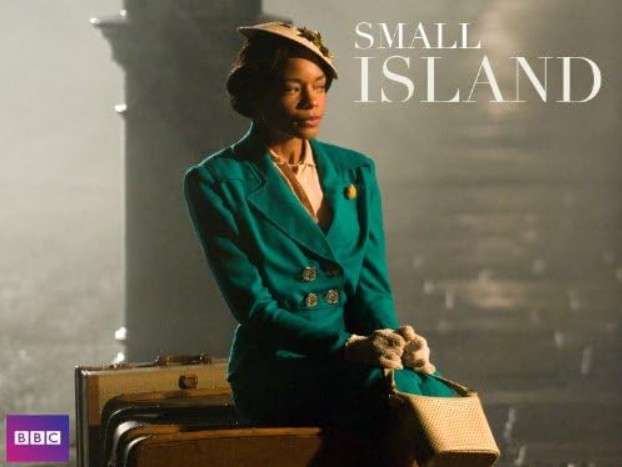
Since I’m reviewing Small Island on Naomie Harris’ birthday, I thought including a picture of her character, Hortense Roberts, in this review made sense. Image created by BBC Television, British Broadcasting Corporation (BBC), Ruby Films, BBC One, Masterpiece Theatre, PBS Video, and Public Broadcasting Service (PBS)
What I didn’t like about the film/mini-series:
The underutilization of Benedict Cumberbatch: Like I mentioned earlier in this review, Benedict Cumberbatch portrays Bernard, a man who desires to marry Queenie. In fact, Benedict is one of the top billed actors in Small Island. This detail led me to believe his acting talents would be utilized to their fullest extent. But throughout the hour and thirty-minute presentation, Benedict only appeared in a handful of scenes. Contextually speaking, I understand why he was in the film/mini-series for a shorter amount of time. But as someone who has only seen Benedict’s performances in Avengers: Infinity War and Avengers: Endgame, I was disappointed to see Benedict and his acting talents underutilized.
Scene transitions feeling contextually and emotionally abrupt: Small Island juggles the stories of five key characters. The script bounces between the past and present in order to explain how these characters’ paths cross. But sometimes, mostly in the first half of Small Island, the transition between scenes felt contextually and emotionally abrupt, partly due to the abundance of stories. In the scene I brought up earlier in this review, where Hortense receives a letter about Michael’s whereabouts, the scene ends with Hortense screaming and sobbing over the potential fate of Michael. The next scene shows Gilbert and Queenie sharing tea while waiting for Queenie’s father-in-law, Arthur, to show up. This scene between Queenie and Gilbert is more emotionally light than Hortense’s scene, with very little time for the audience to sit with the characters’ emotions. Even though Small Island utilizes on-screen text and a voice-over, these resources weren’t consistently used in the movie/mini-series. If they had, some moments wouldn’t feel emotionally jarring and a bit confusing.
Competing stories in the first half: When I just talked about scene transitions feeling contextually and emotionally abrupt in Small Island, I brought up how the script bounces between the past and present in order to explain how the characters’ paths cross. Two interconnecting stories are Queenie’s and Hortense’s. The dream Hortense works toward of becoming a teacher in England provided an engaging story for her. Meanwhile, Queenie’s decision to “seize the day” also gave her an interesting story. But Hortense and Queenie spend the majority of Small Island’s first half carrying on separate stories, not really crossing paths until the second half. This creative decision made Queenie’s and Hortense’s story feel like they competed against one another for screen time, especially since Small Island only had an hour and thirty-minutes (not to mention split into two parts) to tell their story. As I watched Small Island, I sometimes found myself wondering why the movie/mini-series wasn’t just about Hortense’s story. This is because I initially believed Hortense’s and Queenie’s story were strong enough to stand on their own. However, when Queenie’s and Hortense’s path intertwines, their stories become more complimentary of one another.
2026 has become one of the best years for movies on 18 Cinema Lane. This is because I’ve seen more movies I’ve enjoyed than not. Small Island is one of the titles that has contributed to 2026 being a good year, as it is a film/mini-series that got better the longer I watched it! Like other PBS Masterpiece programs I’ve seen, the historical accuracy in Small Island successfully achieved the illusion of immersion due to the care placed in attention to detail. The acting also helped Small Island become an entertaining presentation. Even creative decisions like the use of piano music showcased how the creative team put genuine effort into how their production looked, felt, and sounded. However, there were flaws that held Small Island back from being a stronger picture. Some scene transitions felt contextually and emotionally abrupt. I also didn’t like how Benedict Cumberbatch’s acting talents were underutilized. It didn’t help as well how, in the first half of Small Island, Hortense’s and Queenie’s story felt more competitive than complimentary. But despite these flaws, I would recommend Small Island, especially if you want to check out more projects from PBS Masterpiece and/or Naomie Harris’ filmography!
Overall score: 7.6 out of 10
Have you seen Small Island? Are there any titles from PBS Masterpiece you’d like to see? Let me know in the comment section below!
Production Weekly is a website that records movies and television shows that are either currently in production or about to enter production. In the most recent listing from August 27th, a project titled “Christmas Through Your Eyes” was included. My first thought when I saw that title was “Is the Gloria Estefan song finally receiving a film adaptation?”, as I’ve always wanted to see her song turned into a movie. I then searched for this title on IMDB, in order to learn more information about the project. The only upcoming production matching the title “Christmas Through Your Eyes” listed on IMDB is a television movie called “A Christmas Through Your Eyes”. At the time of this Word on the Street story’s publication, the following information is the only known information about the film:
The original title of “A Christmas Through Your Eyes” was “Untitled Snow Globe Project”.
The TV Movie has received a TV-G rating.
“A Christmas Through Your Eyes” is currently in pre-production.
“Holiday Comedy” and “Comedy” are the official classifications for the movie.
The official synopsis for the film is “A town where everybody wants to fall in love and get engaged”.
“A Christmas Through Your Eyes” will be directed by Peter Benson and written by Nicole Drespel.
One of the movie’s production companies is Hallmark Media, with Hallmark Channel as one of the distributors. The year 2026 is listed next to Hallmark Channel’s name.
As I already mentioned in this Word on the Street story, I wondered if Gloria Estefan’s song was going to receive a film adaptation when I saw the title “Christmas Through Your Eyes” on Production Weekly. Besides the song and upcoming Hallmark movie sharing the same title, there are other reasons why I wonder if Gloria’s song will have any influence over the film. Like I said earlier in this article, the official synopsis of “A Christmas Through Your Eyes” is “A town where everybody wants to fall in love and get engaged”. Though there is no strong indication the narrator of the song, “Christmas Through Your Eyes”, is referring to a romance, a romance could be interpreted, especially with the line “Never afraid to let your love show, Won’t you show me how”. According to the official IMDB page for “A Christmas Through Your Eyes”, one of the listed plot details is “cynicism”. In Gloria’s song, “Christmas Through Your Eyes”, the narrator admits cynicism is a reason why they no longer see Christmas the same way they did when they were younger. The line, “Had to grow up and see the world, Through different shades of doubt” emphasizes this. But as of the publication of this Word on the Street story, there is no confirmation Gloria’s song and the upcoming Hallmark film share any connection. At this point, it is pure speculation.
What are your thoughts on this piece of movie news? Do you think Gloria Estefan’s song shares any connection with the Hallmark Christmas movie, “A Christmas Through Your Eyes”? Please tell me in the comment section!
If you have followed 18 Cinema Lane long enough, you would know how much I have strongly disliked the 2004 Hallmark Hall of Fame movie, Back When We Were Grownups. Not only did I choose this film as the number one worst Hallmark movie of all time, I also criticized the Davitch family (the protagonist’s family in Back When We Were Grownups) for being a dysfunctional family for the sake of it. But since creating my list of the Top 10 Worst Hallmark Movies of All Time back in 2018, I have watched (and even wrote about) Hallmark presentations that I think are worse than Back When We Were Grownups. This made me wonder if the 2004 Hallmark Hall of Fame production was truly as bad as I remembered. For the It Grew On Me Blogathon from Taking Up Room (an event about movies or TV shows a blogathon participant changed their mind on), I decided to find an answer to that question. When I revisited Back When We Were Grownups (over eight years after first watching it), I realized it wasn’t as bad as I initially believed. In fact, I thought it was good! So, for this editorial, I will explain why I’ve changed my mind about this film, arguing against statements I’ve made in the past about Back When We Were Grownups.
Hallmark Hall of Fame’s Back When We Were Grownupsposter created by Hallmark Hall of Fame Productions, McGee Street Productions, and CBS
“Rebecca Davitch is one of the worst protagonists in Hallmark movie history, mainly because she doesn’t do anything in the film that seems memorable or note-worthy”.
In Back When We Were Grownups’ synopsis on IMDB and Goodreads, it’s stated how Rebecca Davitch (the protagonist of the 2004 Hallmark Hall of Fame presentation) believes she became “the wrong person”. That’s because Rebecca has doubts about how her life turned out, wondering if she could have made choices that would have produced better outcomes. Her personal conflict leads her to make changes in her life, from continuing her research on Robert E. Lee to adopting a new wardrobe. Even though this personal conflict was a driving force for Rebecca throughout the story, that’s not the only thing she did in Back When We Were Grownups. As the owner of the party planning business, The Open Arms, Rebecca is almost always hosting events, either for family or clients. She also provides her support to members of the Davitch family who truly need it, such as when Rebecca agrees to attend a Grandparents’ Day exhibition at Peter’s (her step-grandson) school. Rebecca even provides advice to clients of The Open Arms, such as when she advised someone to host a graduation party despite the graduate in question failing to graduate (to show the graduate the party’s guests still support them no matter the academic outcome). These examples show how Rebecca is a very active character who is open to making progress in her life. The memorable and note-worthy things she does throughout Back When We Were Grownups place her in situations the audience could find relatable.
“The [Davitch] family seems dysfunctional just for the sake of it, with the cast having little material to work with”.
The dysfunctionality of the Davitch family has been one of my biggest criticisms of Back When We Were Grownups, as it felt like the family was dysfunctional just for the sake of it when I first watched the movie. But calling the Davitch family “dysfunctional” is one of the biggest overstatements on 18 Cinema Lane. In fact, the most dysfunctional family in the 2004 Hallmark Hall of Fame presentation is Dr. Will Allenby (Rebecca’s ex-boyfriend) and his daughter, Beatrice, whose two scenes together were filled with tension and animosity. If I could select words to describe the Davitch family, it would be either “colorful” or “quirky”. While the Davitch family has their issues, they are still able to put their differences aside to help each other where help is needed and enjoy one another’s company at family gatherings. Plus, everyone in the Davitch family appears to live typical, well-adjusted, productive lives, with each family member possessing their own interests and perspectives. This distinctness was partly made possible by the cast themselves, as their chemistry and camaraderie naturally blended together. The acting overall was actually so strong, it was easy to stay invested in Back When We Were Grownups’ story and forget the actors and actresses were portraying a character. One of the best scenes in this film is when Rebecca invites Will to one of her family dinners. During the dinner itself, Rebecca recalls a memory of one of her first party planning jobs. Because the memory brings up positive feelings, the Davitch family is smiling, laughing, and appearing very jovial during Rebecca’s recollection. Meanwhile, confusion is painted on Will’s face as he looks lost and awkward. This described scene perfectly showcases the feeling of being an outsider looking in, especially when it comes to family related events.
Speaking of “colorful”, I’d like to point out how Back When We Were Grownups is one of the most colorful pictures from the Hallmark Hall of Fame collection. I’m pointing this out because of how color was incorporated into the set design. In Rebecca’s kitchen, themed boxes based on different holidays and special events found a home on a tower of shelves. These boxes are coated in hues of red, pink, purple, and even green, becoming a focal point in a kitchen adopting softer hues like pale yellow and beige. While decorating for an upcoming graduation party, the blue decorations nicely stand out against the faded yellow and red walls of the sitting rooms within the Davitch family home. Even during a backyard wedding, rows of hot pink flowers pop within a gray stone fountain. I found this aspect of Back When We Were Grownups such a pleasant surprise because it showed the creative team’s understanding for how and when to utilize color in their project.
“Back When We Were Grownupsdoesn’t run on a plot or storyline, but rather on the reactions of (mostly) the main protagonist (who doesn’t seem to put in a lot of effort into solving her family’s dysfunctionality)”.
As I’ve already mentioned in this editorial, Rebecca deals with a personal conflict surrounding her doubts over how her life turned out and questioning the choices she could have made instead. She also lives a very active life, from running a party planning business to hosting family gatherings. Therefore, what I said about Back When We Were Grownups running on the reactions of (mostly) the main protagonist is completely false. What’s false as well is what I said about Rebecca not seeming to put in a lot of effort into solving her family’s dysfunctionality. Why should that be her problem to solve if dysfunctionality isn’t the Davitch family’s problem at all? But another false claim I made was how Back When We Were Grownups doesn’t run on a plot or storyline. Because of Rebecca’s personal conflict, the story is very reflective and poignant, addressing themes and messages that are relatable for an older audience. As Rebecca looks back on her younger years, flashbacks are woven into the production. These flashbacks produce a softer light and hazy cinematography, which allows them to appear distinct from the “present day” scenes. The costume design and music selections effectively bring the 1960s back to life in a believable presentation. Even the dialogue carries the poignancy related to Rebecca’s personal conflict. As Rebecca and Peter are playing a game of Scrabble, Rebecca expresses her frustrations over hosting the 100th birthday party of a family member named Poppy. She claims Poppy will forget about the party after it happens, trying to justify cancelling the party altogether. But Peter reminds Rebecca how Poppy will remember the party as it’s happening, with Peter’s statement encouraging Rebecca to continue hosting the party. This piece of dialogue respectfully addresses the importance of actively showing up and making an effort for loved ones.
While Back When We Were Grownups will forever be remembered for the “Happy 100th Poopy” banner, I was actually able to, kind of, overlook it during my second viewing of the movie. Screenshot taken by me, Sally Silverscreen.
“As a Warehouse 13 fan, I was excited to see Allison Scagliotti’s performance in this film [BackWhen We Were Grownups],but, unfortunately, she was featured in this movie for about two minutes or less”.
This is less of a criticism of the movie and more of a personal nitpick. Like I’ve stated in the past, I’m a Warehouse 13 fan, with Claudia Donovan being my favorite character from the show. So, when I discovered Allison Scagliotti (the actress who portrayed Claudia) had starred in a Hallmark Hall of Fame movie, I was excited to see her performance in the film. You can imagine my disappointment when I found out her character, Emmy, was given a shorter length of screen-time in Back When We Were Grownups. However, as I reflected on this disappointment after watching the 2004 Hallmark Hall of Fame film for a second time, I was reminded of my disappointment over Amédée only appearing in two scenes in the 1992 Hallmark Hall of Fame film, O Pioneers!. While I haven’t read the source material for Back When We Were Grownups, I have read the source material for O Pioneers!. Even though I’m not a fan of how Amédée’s part of the story turned out in both the book and its adaptation, I have a better understanding why he was in that overall story for such a short amount of time. O Pioneers! revolves around the Bergson family, with a rotation of friends and neighbors making appearances throughout the story. Since Amédée was a friend of Emil’s (the protagonist, Alexandra’s, brother) and possessed a life of his own, it makes sense for him to have a very limited presence in O Pioneers!. It’s a similar scenario for Emmy in Back When We Were Grownups. She’s the granddaughter of Rebecca who does not reside in the same household as her grandmother. Plus, Emmy never experiences any issues Rebecca needed to resolve. As I mentioned earlier in this review, Back When We Were Grownups addresses themes and messages that are relatable for an older audience. With everything said, plus the movie containing an ensemble cast, it explains why Emmy’s role in the overall story was so small. Yet again, I don’t know what her role was like in the book the movie is based on.
Since I brought up Allison Scagliotti’s portrayal of Emmy in Hallmark Hall of Fame’s Back When We Were Grownups, I thought including a portrait of her in this review makes sense.
The more I think about Back When We Were Grownups, the more it reminds me of It’s a Wonderful Life. Though the 2004 Hallmark Hall of Fame presentation doesn’t contain a personal crisis, angels, or a story revolving around Christmas, it does focus on a protagonist who other characters depend on and cherish. When Rebecca is upset over her absence in a collection of home videos, her brother-in-law, Zeb, reminds her how she’s the glue that keeps the Davitch family together. Another reminder of It’s a Wonderful Life is how, in Back When We Were Grownups, Rebecca reflects on her life and wonders how different it might have been if other choices were made. But in the case of the Hallmark Hall of Fame production, this reflection serves as a driving force for Rebecca to make changes in her life. These changes, along with the messages and themes of Back When We Were Grownups, were woven into a movie that made me laugh, cry, think, and care. That’s what a good movie, let alone one from the Hallmark Hall of Fame collection, should do; make the audience care about the story and its characters. Back When We Were Grownups actually reminded me of Hallmark’s motto, “When you care enough to send the very best”. But what this movie shows is how it’s not just about sending the very best. It’s also about choosing the very best, making sure the very best is indeed “the very best”, and having the very best be special and memorable. While I wouldn’t say Back When We Were Grownups is the “best” Hallmark Hall of Fame movie, as it does have its flaws, it’s certainly better than I initially believed.
Among the three times I’ve participated in the Classic Literature on Film Blogathon, I reviewed To Kill a Mockingbird, 1948’s The Three Musketeers, and The Grapes of Wrath. Looking back on these selections, I’m surprised I haven’t chosen a title from William Shakespeare sooner. In fact, as of July, 2026, the only Shakespeare adaptation I covered on 18 Cinema Lane (so far) is the 2000 film, Romeo Must Die, which I reviewed all the way back in 2019. So, you could say another article about a Shakespeare adaptation is long overdue. Because it fits the criteria for the Classic Literature on Film Blogathon and because it was recommended by Hamlette (from Hamlette’s Soliloquy), I will review the 2000 television movie, Hamlet! Similar to Romeo Must Die, the TV film version of Hamlet is a “modern” adaptation of a famous William Shakespeare story. But this time, the production “is revisioned in America at the turn of the 20th Century” (according to IMDB). Did I enjoy watching Hamlet as much as or more than Romeo Must Die? Thanks for joining me for this review, as we’re now about to answer that question!
Hamlet(2000) poster created by Hallmark Entertainment, Spare Room Productions, Artisan Home Entertainment, Cowboy Booking International, and Lions Gate Films Home Entertainment
Things I liked about the film:
The acting: Campbell Scott portrays Hamlet in the 2000 adaptation of William Shakespeare’s story. If I could describe Campbell’s performance in one word, it would be ‘fluid’! During the famous “To be or not to be” monologue, Campbell adopts a variety of facial expressions, vocal inflections, emotions through the eyes, and even movements of the head to showcase Hamlet’s ever-changing mood. Not only that, Campbell’s transitions between emotions are so effortless, Hamlet possesses a captivating presence within the movie. Ophelia also has a captivating presence in Hamlet! Portrayed by LisaGay Hamilton, Ophelia’s expressions of emotion always appeared genuine. A great example is when she is sharing her concerns about Hamlet with her father, Polonius. With a furrow in her brow and speaking carefully in a calm yet concerned voice, Ophelia gives her father (and the audience) a reason to take note of her serious observations. Blair Brown delivers a strong performance as well, portraying Hamlet’s mother, Gertrude! Whether frightened by the horrifying emotional deterioration of her son to her joy as she awaits the start of a play, Blair carries her character so believably, it was easy to forget I was watching an actress portray a character. What worked in her performance’s favor was her understanding of how and when to utilize emotions to her advantage. Even though I liked the three performances mentioned, I thought the cast as a whole was strong!
The set design: The original source material of Hamlet revolves around royalty. This component of the text was translated to the 2000 adaptation, as Hamlet and his family are sometimes referred to by their royal titles. Since the majority of this film version of Hamlet takes place within Hamlet’s family’s home, the set design effectively represented their opulence. Home décor pieces, like gold sconces, rich wood furniture, and ornate rugs, found their place throughout the story. Chairs boasted intricately woven designs, appearing as their own form of art. Carved detailing was present on a wooden staircase, a stone fireplace, and even on a ceiling in one scene. Smaller pieces of set design were not overlooked either, such as a burning piece of paper being placed on a silver platter. Not only did Hamlet’s set design make its project visually elegant, it complimented Shakespeare’s source material as well!
Use of music: When a movie’s creative team incorporates music into their project, the intended mood of a given scene can be elevated. This is how the creative team behind Hamlet approached the musical element of the 2000 adaptation. Whenever a suspenseful moment took place, such as the ghost of Hamlet’s father suddenly appearing, the rhythmic sound of drums played in the background. Because the sound of the drums was loud and with the drums possessing a quicker rhythm, the feelings of fear, confusion, and even irritation rose among the characters who could visualize the ghost for themselves. Raised adrenaline from the audience can also happen because of the drum music’s incorporation within Hamlet. That music contributes to a viewer’s feeling of being on the edge of the seat, eager to discover what will happen next!
Shakespearian speech in a “modern” story: As I mentioned in my Romeo Must Die review, I was not a fan of Romeo + Juliet. The reason is how the characters adopt Shakespearian speech while the movie appears to take place in 1995-1996. The 2000 adaptation of Hamlet makes the same creative choice. Like I brought up in this review’s introduction, Hamlet “is revisioned in America at the turn of the 20th Century”. So, the references to kings, Denmark, and Norway don’t make sense. Having the characters speak in the Shakespearian manner sounds jarring, as it breaks the illusion of immersion of the late 1800s to early 1900s presented on screen. Because I don’t hear Shakespearian speech often, I not only had to actively pay attention to what was happening in the film (or else I would have missed important context), I was sometimes confused by what the characters were saying. This aspect of the project became a frustrating part of my movie-viewing experience.
Forgotten storylines: Ophelia’s brother, Laertes, desires to travel to France. Even though their father, Polonius, allows Laertes to journey to France, he has his doubts of whether his son will behave himself in a gentlemanly fashion while there. This storyline from Hamlet became forgotten as the film progressed. That was due to the script prioritizing Hamlet’s downward spiral. Even though Laertes returns later in the movie, his trip to France wasn’t brought up. I was disappointed Laertes’ French travels didn’t play a bigger role in the 2000 adaptation of Hamlet, as there was potential for that narrative to be intriguing. However, I’m not sure how much influence Laertes’ adventure through France had in the original source material.
The run-time: The Hamlet adaptation from 2000 received a run-time of two hours and fifty-eight minutes (according to IMDB). Similar to my thoughts on Gods and Generals and The Assassination of Jesse James by the Coward Robert Ford, Hamlet’s run-time could certainly be felt. The pace of Hamlet is mostly slower, with a few action-packed, suspenseful scenes incorporated into the story. That, along with the movie’s two hour and fifty-eight-minute run-time, makes the 2000 adaptation feel unnecessarily stretched out. Like my experience watching The Assassination of Jesse James by the Coward Robert Ford, I was zoning in and out while watching Hamlet, trying not to fall asleep during this movie-viewing experience. Had the 2000 adaptation of Hamlet been split into two parts, like Hallmark’s 2004 adaptation of Frankenstein, the movie wouldn’t run the risk of feeling like an endurance test.
To review or not to review, that is the question (ok, I couldn’t resist making that reference, especially in this review). Back in 2019, I shared in my Romeo Must Die review how much I liked that film. Because it was a “modern” adaptation of Romeo and Juliet featuring martial arts, the 2000 movie was successfully able to create a unique version of William Shakespeare’s story. Seven years later, after watching the 2000 adaptation of Hamlet, I find the picture just ok. The creative team behind Hamlet had visual ambition, setting their interpretation “in America at the turn of the 20th Century”. This ambition could be seen in the set and costume design, attempting to bring the late 1800s to early 1900s back to life through elegance and historical accuracy. But having the characters adopt Shakespearian speech breaks that illusion of immersion. Having a two hour and fifty-eight-minute run-time also negatively impacts the film’s chances for rewatchability. However, the cast as a whole gave strong performances, with everyone doing a good job, acting wise, with the material they received. The movie itself is also a competently made project, incorporating elements that enhanced the movie-viewing experience, such as the use of music. But at the end of the year, when I look back on the movies I’ve seen (and even reviewed), the adaptation of Hamlet from 2000 will not be a film I reflect on as fondly as other films.
Overall score: 6-6.1 out of 10
Have you seen the 2000 adaptation of Hamlet? Are there any “modern” adaptations of William Shakespeare’s stories you’d like to check out? Please share your thoughts in the comment section!
Have you come across a movie that fell into your lap at the right place and time? That’s what happened before I reviewed the 1985 television film, Playing with Fire. This is a movie I not only had never seen, I had never heard of. But that changed when I listened to the Telehell Podcast episode, ‘The Top 8 Darkest Moments in Kids TV Cartoons’, as the upcoming episode about Playing with Fire was advertised at the end of the episode about the darkest moments from kids TV cartoons. According to Telehell’s episode, ‘Prologue of Fire (“Playing with Fire” PREVIEW)’, the 1985 movie was considered “lost media” up until 2024. As someone interested in the subject of “lost media”, I think it’s worth celebrating when a sought-after piece of “lost media” like Playing with Fire not only gets found, but is also archived on Youtube. For any “lost media” that was eventually found, however, one has to wonder why it was “lost” in the first place? In this review of Playing with Fire, I hope to find an answer to that question!
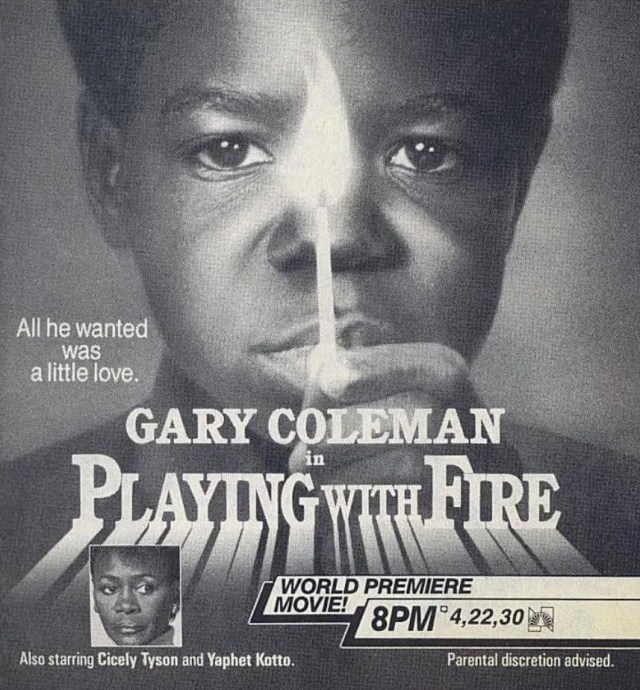
Playing with Fire(1985) poster created by New World Television, Zephyr Productions, and National Broadcasting Company (NBC)
Things I liked about the film:
Characters who subvert expectations: In Playing with Fire, Mike Harris is a friend of the protagonist, David. Based on his personality and appearance, Mike would be considered a “bully” in other ‘80s entertainment media. Throughout the 1985 movie, he teases David, pulls pranks, and doesn’t seem to take school seriously. But when David starts a fire in a trash can (because he was upset Mike wouldn’t play basketball with him), Mike pulled David away from the fire as well as encouraged David to pull their school’s fire alarm in order to get help. Mike even warns a fellow student named Pamela about David’s issues. These actions and choices help Mike subvert expectations, showing the audience how, despite his initial introduction, he actually cares about David’s wellbeing.
Entertainment media from the ‘80s that revolves around younger characters will sometimes feature a school principal who is a stickler for the rules. This creative decision may be made to either emphasize how much “cooler” the younger characters are or to show how the principal is holding the younger characters back from being themselves. But in Playing with Fire, Principal Sweeney subverts those aforementioned expectations. In a meeting between Principal Sweeney and David’s parents, Principal Sweeney acknowledges how intelligent David is. He’s also brutally honest about how it’s the responsibility of David’s parents to help David with his problems. Principal Sweeney even puts David on probation in an attempt to assist David in resolving his issues. Because of the subversion of expectations, Principal Sweeney is presented as a character who actually prioritizes the wellbeing of all his students.
The role of Fire Chief Walker: Throughout Playing with Fire, Fire Chief Walker tries to solve the mystery of who started a series of fires around his neighborhood. He wants David to admit he’s responsible for creating the fires. But Fire Chief Walker doesn’t want David to tell the truth in order to arrest him. Instead, he believes David is worth saving. Fire Chief Walker encourages David’s family to seek out family counselling, in order to help them solve their personal problems. He also encourages David to talk to his parents about how he feels, acknowledging how David is causing fires for a reason. It would have been easy for the creative team behind Playing with Fire to show their protagonist simply facing the consequences of his actions. Instead, the role of Fire Chief Walker shows how there is more than one way to solve a problem, with a way being getting to the heart of an issue to resolve it as well as preventing it from escalating.
Showing the reasons behind the behavior: The synopsis for Playing with Fire on IMDB gives David the label of “teenage arsonist”, due to how often he starts fires. The creative team behind the movie could have focused on David’s problematic behavior in order to give their project “shock value”. But instead, the script emphasizes the reasons behind the behavior. Sparks fly (literally and figuratively) due to David’s parents having marital issues. These issues cause a domino effect in David’s life, from failing grades at school to becoming easily angry. Starting fires is a manifestation of David’s unresolved feelings toward the problems within David’s parents’ marriage. By showing the reasons behind David’s behavior, the creative team behind Playing with Fire gives their audience a reason to empathize with David and his family.
Campfire with marshmellows and shooting stars image created by macrovector at freepik.com.
What I didn’t like about the film:
David as a static character: As I already mentioned in this review, showing the reasons behind David’s behavior gives the audience a reason to empathize with David and his family. But for the majority of Playing with Fire, David remained a static character. He doesn’t come to terms with his decision to start fires until an hour and forty-seven minutes into an hour and fifty-five-minute movie. This means he spends more time remaining bitter and angry about the problems in his life instead of transforming his life for the better over the course of the story. I recognize resolving problems like David’s takes time. But the static status of David held back his character development.
Fire related scenes feeling like PSAs: David starts multiple fires over the course of Playing with Fire. While these moments are frightening due to how dangerous they are, it felt like the story shifted to present a somewhat subtle PSA (public service announcement) about fire safety. One way this feeling is achieved is how causes of fire or safety measures are heavily emphasized. In a scene where David causes his first fire within his home, his mother asks him how the fire started. David explains how an overloaded electrical socket was likely the cause, followed by a close-up shot of an overloaded electrical socket. This approach to the fire related scenes made the overall movie kind of seem like an “afterschool special”.
The disappearance of Mike and Pamela: Like I mentioned earlier in this review, Mike is a friend of David who actually cares about his friend’s wellbeing. Pamela is also a friend of David, someone who kind of understands how David feels due to her parents’ divorce. Both of these characters were interesting. While Mike was subverting expectations, I wanted to see where Pamela’s character development went as the story progressed. But Pamela and Mike disappear from the story after about the film’s halfway point. Even though Pamela returns toward the end of Playing with Fire, she’s only on screen for almost four minutes. I wish Mike and Pamela played a more consistent role in the story, as they could have represented what to do if someone is afraid to speak up or doesn’t know how to help a loved one.
In the introduction of my review, I said I hoped to find an answer to the question of how Playing with Fire became “lost” in the first place. Now that I’ve seen the movie for myself, I think the movie just, simply, fell through the cracks of time. The way I feel about the 1985 movie is similar to the way I felt about the 1988 television film, Dance ‘Til Dawn; it didn’t go above and beyond enough to be considered good or great, but it wasn’t offensive enough to be bad or even disappointing. While there were elements of Playing with Fire I liked, such as how showing the reasons behind David’s behavior gives the audience a reason to empathize with David and his family, there were flaws that held the movie back from being a stronger picture. Some of these flaws include keeping David a static character for the majority of the movie, fire related scenes feeling like somewhat subtle PSAs, and Mike and Pamela disappearing from the story. At best, Playing with Fire is ok. It seems like the creative team behind the 1985 presentation had their hearts in the right place. But, at worst, the film feels like an hour and fifty-five-minute PSA about fire safety. There was even a video message at the end of Playing with Fire where Gary Coleman (the actor who portrayed David) explains the dangers of arson. With everything said, it’ll be interesting to hear what the consensus will be for the movie on the Telehell Podcast.
Overall score: 6-6.1 out of 10
Have you seen Playing with Fire? Is there a piece of “lost media” you’d like to see become discovered? Let me know in the comment section!
Have fun at the movies!
Sally Silverscreen
If you want to check out the podcast episodes I referenced in this review, visit the Youtube channel, Telehell Podcast, and listen to the episodes, ‘The Top 8 Darkest Moments in Kids TV Cartoons’ and ‘Prologue of Fire (“Playing with Fire” PREVIEW)’.
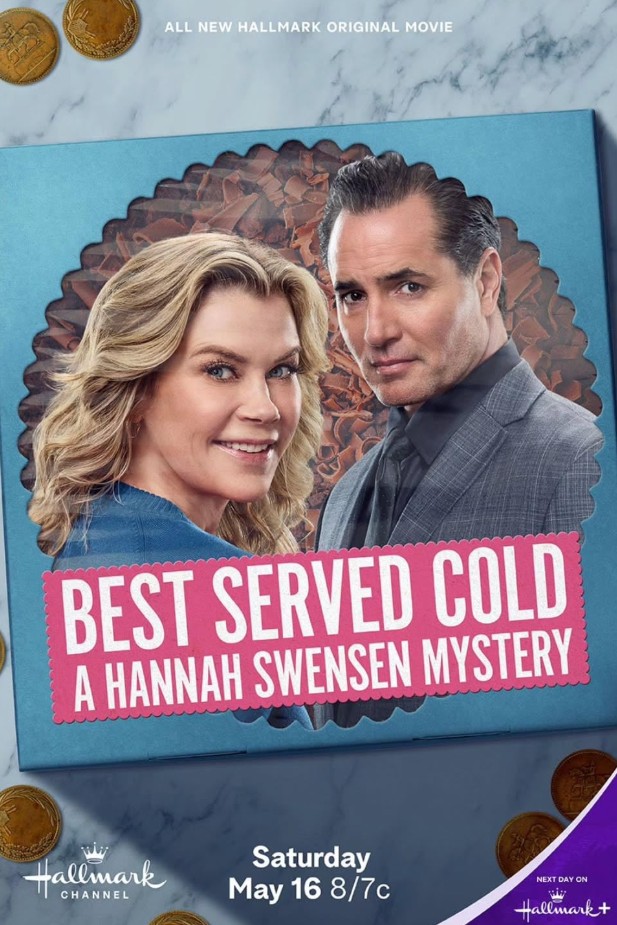
Since 2023, when I reviewed Carrot Cake Murder: A Hannah Swensen Mystery, I have expressed my frustrations over the re-brand of the Murder, She Baked/Hannah Swensen series. It got to the point where, by the time I wrote about Reality Bites: A Hannah Swensen Mystery, I wasn’t looking forward to future installments. But that started to change when I saw Pie To Die For: A Hannah Swensen Mystery. Even though the movie was just ok, it was slightly better than its predecessor. Then, when I reviewed Sugar & Vice: A Hannah Swensen Mystery, I found that film ok as well. As I learned about another chapter in the series, Best Served Cold: A Hannah Swensen Mystery, I was ready to discuss the film with an open mind! Would that movie be ok like the previous two chapters? Keep reading my review to find out!
Incorporation of Delores’ private investigation business: When I talked about One Bad Apple: A Hannah Swensen Mystery in my list of the worst movies I saw in 2024, I criticized the creative decision of allowing Delores to become a private investigator. At the time, I believed this creative choice went against Delores’ character, especially after spending years objecting to Hannah getting involved in cases. But in Best Served Cold: A Hannah Swensen Mystery, Delores’ role as a private investigator made sense within the context of the story. One of the plots of this chapter is a court case involving fraudulent coins. Not only did Chad use Delores’ evidence in the case, Delores also testified during the case’s trial. Along with making sense, incorporating Delores’ private investigation business into Best Served Cold: A Hannah Swensen Mystery gave Delores more involvement in, at least, one area of the script.
Michelle’s wardrobe: Since her debut in Sweet Revenge: A Hannah Swensen Mystery, Hannah’s younger sister, Michelle, has been known for being a free-spirited and creative woman. These personality traits have been reflected through her wardrobe, with Michelle’s wardrobe in Best Served Cold: A Hannah Swensen Mystery being no exception! When Michelle visits The Cookie Jar (Hannah’s bakery), she wears an outfit consisting of a black shirt, black leather jacket, a short yellow plaid skirt, black tights, and black boots. Michelle even wore a pair of yellow smiley face earrings, providing a nice bridge between the black and yellow hues of the outfit. During another trip to The Cookie Jar, Michelle’s outfit boasts a brown and white color combination. But this time, she wears an ensemble made up of a long brown and white cow print skirt, a white shirt, brown sweater, and brown boots. Earrings were, once again, the statement accessory. However, Michelle’s earrings looked like cowgirl boots. Kelsey Baran, the costume designer of Best Served Cold: A Hannah Swensen Mystery, did a great job putting together attire that complements both Michelle and the actress who portrays her, Tess Atkins!
Utilizing Hannah’s “quirk”: I’ve mentioned in the past how detectives in pop culture, especially those that are more well-known, have a “quirk”. This “quirk” helps set fictional detectives apart from other fictional detectives, whether it’s a catchphrase, special interest, or having a signature style. However, a “quirk” isn’t always utilized in solving cases. Hannah has gained a reputation for being a respected baker, as well as the successful proprietor of her bakery, The Cookie Jar, setting the Murder, She Baked/Hannah Swensen series apart from other Hallmark mystery series. From what I remember, though, I don’t recall Hannah using her baking skills to solve a case. But in Best Served Cold: A Hannah Swensen Mystery, Hannah was able to use her baking skills in her favor! I can’t say exactly the role Hannah’s skills played in the film’s mystery, as I don’t want to spoil the film. What I will say is the way they were written into the story was not only clever, but also unique for the series. Sometimes, a fictional detective’s “quirk” can contribute to their perspective, especially when approaching a case. Hannah’s baking skills certainly achieved this, as she was able to notice details overlooked by other characters! The utilization of Hannah’s “quirk” was refreshing, especially compared to a movie like One Bad Apple: A Hannah Swensen Mystery, where Hannah didn’t even solve the mystery.
Lack of urgency: I brought up earlier in this review how one of the plots of Best Served Cold: A Hannah Swensen Mystery is a court case involving fraudulent coins. The other two plots were a murder mystery and a missing person case. While these three plots interconnected with one another, the court case was prioritized in the script. This creative decision caused the story to lack urgency, which seems to be a consistent flaw in the more recent Murder, She Baked/Hannah Swensen movies. With so much emphasis on the court case, it felt like characters were taking their time solving both the missing person case and the murder mystery. Intrigue was decreased because of the lack of urgency.
Limited number of suspects: Like I just mentioned in my review, the script of Best Served Cold: A Hannah Swensen Mystery emphasized the fraudulent coin court case. Few key characters were involved in the court case, which provided a limited number of suspects. When a mystery story features a collection of suspects, it can add to the fun of trying to figure out “whodunit”, as the audience plays an engaging guessing game. It can also maintain a sense of intrigue to help viewers hold their interest in the film. Sadly, these elements were absent due to how few suspects were in Best Served Cold: A Hannah Swensen Mystery. This creative decision made the mystery’s reveal feel a bit predictable as well.
Underutilized part of the story: Toward the beginning of Best Served Cold: A Hannah Swensen Mystery, Hannah is testing new recipes for an upcoming baking contest. She even offers one of her new pastries to Delores. But other than being brought up in two scenes, this baking contest barely plays a role in the script. In fact, it’s never revealed which pastry Hannah will submit to the contest. I found this underutilized part of the story disappointing because of its wasted potential. I recall the baking contest being international, which could have served either an interesting subplot or main plot. Looking back on Best Served Cold: A Hannah Swensen Mystery, as well as the more recent Murder, She Baked/Hannah Swensen movies, it seems like underutilizing elements of the story is a trend within this series.
When I talked about Reality Bites: A Hannah Swensen Mystery in my list of the best and worst movies I saw in 2025, I saidif the Murder, She Baked/Hannah Swensen series continues in 2026, I’d like to see the quality become more consistent. Reflecting on Best Served Cold: A Hannah Swensen Mystery (as well as Pie To Die For: A Hannah Swensen Mystery and Sugar & Vice: A Hannah Swensen Mystery), I would say this consistency was achieved! Best Served Cold: A Hannah Swensen Mystery was, in my opinion, just ok. However, this movie improved upon some of the series’ flaws. Not only was Delores’ antics toned down again, her private investigation business was incorporated into the story in a way that made sense. This latest chapter in the Murder, She Baked/Hannah Swensen series contributed its own set of strengths, such as Hannah’s “quirk” becoming utilized within the script. But there are weaknesses in this series, including in Best Served Cold: A Hannah Swensen Mystery, I wish were not consistent, like the lack of urgency and underutilizing parts of the story. According to IMDB, ‘Cooked to Death: A Hannah Swensen Mystery’ is currently in pre-production. There also appears to be an Alison Sweeney and Ashley Williams project in development. Even though no official word has been made about the future of the Murder, She Baked/Hannah Swensen series, it’ll be interesting to see where this story goes from here.
Overall score: 6-6.1 out of 10
Have you seen Best Served Cold: A Hannah Swensen Mystery? Would you like to see the Murder, She Baked/Hannah Swensen series continue? Please tell me in the comment section!
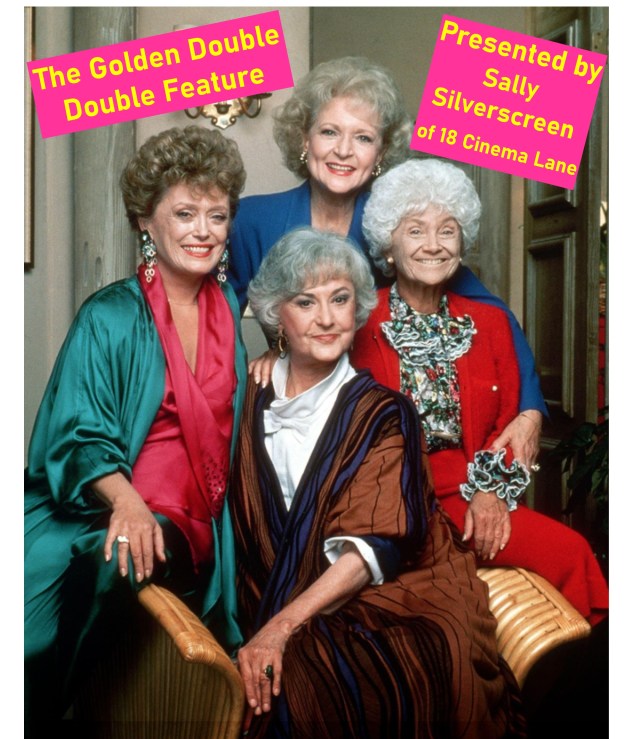
When I chose the theme for this year’s double feature, I wanted to do something different from previous double features I’ve hosted by reviewing four films. With The Golden Girls featuring four main stars (Betty White, Estelle Getty, Bea Arthur, and Rue McClanahan) and with those stars possessing their own filmographies, I found a reason to seek out more of their projects. The movies I selected, Hallmark Hall of Fame’s The Lost Valentine, Mask, Mame, and The Little Match Girl, are just as unique as the “golden girls” themselves! I was reminded why I like Hallmark Hall of Fame’s The Lost Valentine when I decided to revisit it. Not only did I rediscover forgotten elements like the story’s humor, I, once again, came to appreciate what makes the film good. Mask was such a pleasant surprise because of how solid the movie is! It’s a biopic that brings something different to the genre’s table as well as genuineness. While I found both Mame and The Little Match Girl fine, I enjoyed the films for different reasons. Mame’s choreography and colorful palette helped make the film as entertaining as it was. Meanwhile, the cleverly written dialogue in The Little Match Girl allowed interactions between characters to be memorable. Now, as the sun sets on Miami and all the cheesecake has been eaten, I’d like to say thank you for being a friend of the Golden Double Double Feature!
The Golden Double Double Feature banner created by me, Sally Silverscreen. Original image created by Touchstone Television, Witt/Thomas/Harris Productions, 20th Television, and National Broadcasting Company (NBC)
Thanks for joining me for the fourth part of my Golden Double Double Feature! The majority of my review of The Little Match Girl is spoiler-free. If you’d like to learn more about why I chose this year’s double feature theme, you can check out the introduction in the link below.
The Little Match Girl(1987) poster created by NBC Productions and National Broadcasting Company (NBC).
1. Out of the movies from Rue McClanahan’s filmography, why did you select The Little Match Girl?
Unlike my decision to review Mask and Mame, I knew Rue starred in The Little Match Girl before selecting the movie for the Golden Double Double Feature. However, similar to when I wrote about Mame and Mask, I had heard of The Little Match Girl, but hadn’t seen it prior to this double feature review. I also knew the 1987 film was an adaptation of one of Hans Christian Andersen’s stories. When it comes to The Little Match Girl, though, I was surprised to learn how many times that story was adapted, including in the 1980s. Throughout my eight-year blogging journey, I have covered my fair share of Christmas movies, especially those of the made-for-TV variety. With all that said, I decided to give The Little Match Girl a chance!
2. In The Little Match Girl, Rue portrays Frances Dutton. How is Frances Dutton similar or different from Blanche?
From what I remember, Blanche Devereaux came from a wealthy, Southern background. This fact was brought up from time to time on The Golden Girls. Rue’s character in The Little Match Girl, Frances Dutton, comes from a wealthier background as well. However, Frances and Blanche possess a major difference. While Blanche is sassy, bold, and even flirty, Frances is the complete opposite. In The Little Match Girl, Frances is not only soft-spoken and tender-hearted, she also has a gentler persona. So, it was interesting to see Rue portray a very different character in the 1987 Christmas film.
3. According to The Little Match Girl’s poster, the movie is based on Hans Christian Andersen’s story of the same name. Is there any story from Hans’ bibliography you wish had received a film adaptation?
As I mentioned in answer number one, I was surprised to learn how many times The Little Match Girl was adapted, including in the 1980s. But there have been other stories from Hans’ bibliography that received adaptations, with The Little Mermaid being a notable one. Therefore, I’d like to see an adaptation of one of Hans’ more overlooked titles. For example, The Bell revolves around the mystery of a bell that only rings at sunset. With nature playing a major role in The Bell, an adaptation of this story could be presented as live-action, with the cinematography of natural landscapes stealing the show. However, I think The Bell could also work as an animated project.
4. Was there anything about The Little Match Girl you liked or didn’t like?
Screenwriting, including the dialogue, in made-for-TV movies can be hit or miss. In 1987’s The Little Match Girl, however, I found some of the dialogue cleverly written. One example is when Neville meets the titular little match girl, Molly. When he orders a coffee, Neville adds alcohol from his flask. After Molly asks Neville about the flask, he tells her its “courage”. Molly then responds by telling him, “It doesn’t come in a bottle”. Later in the film, Police Chief Murphy threatens to shut down a local newspaper if there are any reports of Fennel Street’s residents being forced to leave their homes before Christmas. Joseph, the newspaper’s editor, tells Murphy, “Why don’t you crawl back in my father’s pocket where you belong”? Murphy spats out his response to Joseph when he says, “Cause I’m too big”. Because of how clever these responses were, it made these interactions (and the scenes themselves) memorable.
Like I just mentioned in this review, Police Chief Murphy threatens to shut down a local newspaper if there are any reports of Fennel Street’s residents being forced to leave their homes before Christmas. Joseph wants to report this injustice in order to save the homes of Fennel Street’s residents. One tactic is placing Molly’s picture on the newspaper’s front page to draw empathy for the intended cause. But the movie’s viewers don’t know if this tactic worked. That’s because the viewers never see the newspaper with Molly’s picture on the front page in circulation. This is an example of telling instead of showing. It’s also an example of how the movie prioritizes the stories of the grown-up characters despite The Little Match Girl being the movie’s title.
5. As I mentioned in my review of 1974’s Mame, there were two Christmas episodes of The Golden Girls; ‘ ‘Twas the Nightmare Before Christmas’ and ‘Have Yourself a Very Little Christmas’. If the show had created more Christmas episodes, what type of story would you have proposed?
In The Golden Girls’ sixteenth episode from the fourth season, ‘Two Rode Together’, Dorothy and Sophia take a trip to Walt Disney World. This creative decision was part of a trend where various sitcoms would set aside a special episode showing their characters taking a Walt Disney World trip. Based on what I recall, I don’t think any of these episodes take place around Christmastime. So, I would propose an episode of The Golden Girls where the “golden girls” spend Christmas in Orlando. Walt Disney World at Christmastime has been known for its beautiful decorations. Plus, I can think of hilarious antics that could be written into a story like this. Since three of Walt Disney World’s parks were open during the lifespan of The Golden Girls, there are a variety of attractions that could be featured in the episode.
6. Did you develop any thoughts and/or questions while watching this film?
For this part of my review, I will spoil The Little Match Girl. If you have not seen this movie and are planning on watching it, skip ahead to question number seven.
Whenever Molly uses one of her matches, the flame sparkles. A snow angel she makes toward the beginning of the movie sparkles as well. In one scene, Molly explains to Joseph’s son, Jamie, that angels ride on shooting stars directly from Heaven if anyone in the world is in trouble. When Molly is discovered missing by Jamie’s grandpa, Haywood, it’s implied Molly was an angel the entire time. While this was an interesting plot twist, it’s a creative decision that left me with more questions than the movie was willing to provide answers for. Did Molly pass away prior to the events of The Little Match Girl or was she an angel that always existed in Heaven, similar to the angels from Touched by An Angel? How long has Molly been an angel? Has anyone known about Molly’s angel identity? The more I think about this plot twist, I more I believe there’s important lore missing from the script.
7. Throughout The Golden Girls, cheesecake became an iconic staple of the show. What would you say is the iconic staple of The Little Match Girl?
You would think I’d choose Molly’s matches, as the 1987 film is titled The Little Match Girl. But I’m selecting a candle instead. The residents of Fennel Street organize a protest at the Dutton family house, in an effort to save their homes. During the protest, they carry candles, with one of the protesters’ candles being lit by Molly herself. Toward the end of The Little Match Girl, Molly lights the candles of an angel themed Christmas decoration. But beyond the movie itself, candles are sometimes associated with Christmas décor; from candles in windows to candles placed on Christmas trees. Light is also a major theme of the Christmas holiday, such as the season of Advent and the Nativity Star. I’d even say light is a major theme of The Little Match Girl.
8. The Little Match Girl is a made-for-TV film. How does this movie compare to other Christmas television movies you’ve seen and even reviewed?
Looking back on the Christmas television films I’ve seen and reviewed, some of those titles featured at least one younger protagonist. But if I had to compare The Little Match Girl to another made-for-TV movie I’ve covered, it would have to be the 1999 film, If You Believe. Both stories possess a younger protagonist whose actions significantly impact the life of at least one of the story’s key characters. If You Believe and The Little Match Girl contain a sense of magical realism. These movies share the flaw of telling instead of showing as well.
9. The Little Match Girl was released on December 21st, 1987 (within the third season of The Golden Girls). Do you think the show had any impact on the movie?
In my review of Hallmark Hall of Fame’s The Lost Valentine, I speculated why the Hallmark Hall of Fame collection may not have cast any of the “golden girls” (Rue, Bea, Estelle, and Betty) in their movies during The Golden Girls’ lifespan. One of those speculated reasons was how Hallmark Hall of Fame and The Golden Girls were broadcast on separate networks. According to IMDB, 1987’s The Little Match Girl was not only produced by NBC Productions, it was also distributed by National Broadcasting Company (NBC). As I mentioned in my Hallmark Hall of Fame’s The Lost Valentine review, The Golden Girls aired on NBC. With that said, I don’t believe it was a coincidence for The Little Match Girl’s creative team to consider casting Rue in their movie.
10. After watching The Little Match Girl, is there anything you can take away from your movie-viewing experience?
Like I said in answer number one, I have covered my fair share of Christmas movies throughout my eight-year blogging journey, especially those of the made-for-TV variety. When it comes to 1987’s The Little Match Girl, I found the movie fine and serviceable. While there were strengths within the film, such as the acting performances and the cleverly written dialogue, the movie’s flaws held it back from being a stronger presentation. Despite the movie’s title being The Little Match Girl, the script prioritizes the stories of the grown-up characters. This creative decision kind of makes the title seem misleading, as I expected the story to focus more on the titular little match girl, Molly. Even though the plot twist was interesting, it left behind more questions than the movie was willing to provide answers for. In my opinion, it feels like important lore may have been omitted from the script. Reflecting on The Little Match Girl, as well as other Christmas films I’ve seen and reviewed, I can think of titles that are stronger than the 1987 picture. However, I can also think of movies that are weaker than The Little Match Girl.
The Golden Double Double Feature banner created by me, Sally Silverscreen. Original image created by Touchstone Television, Witt/Thomas/Harris Productions, 20th Television, and National Broadcasting Company (NBC)
Thanks for joining me for the first part of my Golden Double Double Feature! The majority of my review of Hallmark Hall of Fame’s The Lost Valentine is spoiler-free. If you’d like to learn more about why I chose this year’s double feature theme, you can check out the introduction in the link below.
Hallmark Hall of Fame’s The Lost Valentineposter created by Hallmark Hall of Fame Productions, Ridini Entertainment, and CBS
1. Out of the movies from Betty White’s filmography, why did you select Hallmark Hall of Fame’s The Lost Valentine?
When I created my Hallmark Hall of Fame tier rank list in 2020, I not only placed The Lost Valentine in the “Get It On Sale for Half Off” (a.k.a. Good) tier, I also recommended the film because of the use of flashbacks and recognition of Valentine’s Day. But it’s been over eight years since I’ve seen The Lost Valentine. While selecting the 2011 Hallmark Hall of Fame picture for this review, I didn’t know if my opinion on the film would remain the same as it was years ago. On my Year-Long Bingo Card, three of the bingo squares are “Review at least 2 Hallmark Hall of Fame films”, “Revisit a movie you haven’t seen in over 5 years”, and “Review a holiday themed movie that isn’t Christmas”. So, when I saw The Lost Valentine on Betty’s filmography, I remembered liking the movie, as well as how the movie would complete those aforementioned bingo squares.
2. In Hallmark Hall of Fame’s The Lost Valentine, Betty portrays Caroline Thomas. How is Caroline Thomas similar or different from Rose?
On The Golden Girls, Rose Nylund is known for her innocence and naivete. These qualities add charm to Rose’s character, as well as provide some of the show’s comedic moments. Betty’s character in The Lost Valentine, Caroline Thomas, lacks Rose’s naivete for two reasons. Caroline’s experiences during World War II and even afterwards give her an awareness of how unpredictable life can truly be. Her lack of naivete also makes sense with the story itself, as The Lost Valentine is a serious drama grounded in reality.
3. Hallmark Hall of Fame’s The Lost Valentine is based on a book by James Michael Pratt. What book adaptation would you have liked to see Betty star in?
For 2024’s Eurovisionathon readathon, I read The Readers of Broken Wheel Recommend by Katarina Bivald. From what I remember of the book, I could picture Betty portraying a character from that story. Katarina crafted characters that sounded and felt distinct from one another. Plus, the small-town setting seemed Hallmark-esque, creating a sense of community through dramatic and comedic character interactions. The “golden girls” have distinct personalities on The Golden Girls, allowing each character to be unique. Even though the show is classified as a sit-com, there were emotional, serious moments woven into episodes. With all that said, I think a story like The Readers of Broken Wheel Recommend would have complimented Betty’s acting talents, as The Lost Valentine perfectly showcased her comedic and dramatic timing.
4. Was there anything about Hallmark Hall of Fame’s The Lost Valentine you liked or didn’t like?
As I mentioned in answer number one, I recommended The Lost Valentine because of the use of flashbacks. These flashbacks added context to the events presented on screen, especially when it came to Caroline’s part of the story. Meghann Fahy portrayed Caroline’s younger self while Billy Magnussen portrayed Caroline’s husband, Neil. Both Meghann’s and Billy’s acting performance was strong. But together, their on-screen chemistry effectively sold the believability of Neil and Caroline’s relationship! What works in the favor on this relationship is the emotional depth Billy and Meghann bring. A great example is how Caroline’s and Neil’s eyes possessed the pain of being apart from each other. Watching Meghann’s and Billy’s performance felt like witnessing a couple upholding their promise of love instead of two actors simply portraying characters. I wish Billy and Meghann had been cast in more Hallmark projects together.
Jennifer Love Hewitt stars in The Lost Valentine as a television reporter named Susan Allison. Susan received a subplot where she contemplates her future with her boyfriend, Andrew. This is one of those subplots where you know the relationship isn’t going to last because the film’s female protagonist will eventually fall in love with the male protagonist, which, in The Lost Valentine, is Caroline’s grandson, Lucas. That creative decision led to Susan’s subplot being predictable. Instead, her subplot should have prioritized her reconciliation with her family, especially since Susan mentioned toward the beginning of The Lost Valentine how she doesn’t have a strong relationship with them.
5. The Golden Girls didn’t receive any television films (like other shows such as Little House on the Prairie, Murder, She Wrote, etc.) In your opinion, why do you think this creative decision was made?
A typical episode of The Golden Girls is about thirty minutes long. Meanwhile, most television movies receive a run-time between an hour and thirty minutes to two hours. If a tv show’s creative team chooses to make a made-for-TV movie, they need to create a story that justifies a longer length of time. So, I’m guessing the creative team behind The Golden Girls never figured out a story that couldn’t be told in half an hour.
6. Did you develop any thoughts and/or questions while watching this film?
Like I said in my number one answer, it’s been over eight years since I’ve seen The Lost Valentine. Because of this, I had completely forgotten the humor woven into the story. Comedic moments sprinkled throughout the film was such a pleasant surprise for me. One of my favorite scenes was when Caroline reads a sports magazine to a group of veterans at a local hospital. While she’s talking about the New York Yankees, Caroline says she doesn’t hate the team, she just doesn’t like it when they beat a team she likes more. How that piece of dialogue was written, as well as Betty’s sweetly honest delivery, created a scene that was genuinely hilarious. Moments like the one I described alleviated some of The Lost Valentine’s heavier scenes yet never overshadowed the story’s serious subject matter.
For this part of my review, I will spoil The Lost Valentine. If you have not seen this movie and are planning on watching it, skip ahead to question number seven.
Toward the end of The Lost Valentine, after Caroline welcomes Neil home, she discovers rose buds growing on a rose bush in her garden. That specific rose bush was not only the first plant Caroline and Neil planted when they moved into their home, the rose bush was believed to be dead for the majority of the movie. When Caroline discovers the rose buds, she reminisces about Neil as she dances to music from the past. All of a sudden, a man who I assumed was Neil’s ghost appeared behind Caroline. After that, the hose Caroline was holding falls to the ground. But the scenes that follow are flashbacks of Caroline and Neil and scenes featuring Lucas and Susan. Is the fallen hose implying Caroline passed away, joining Neil in the afterlife? Or was Caroline so caught up in remembering the past, she dropped the hose by accident? That part of the story was, in my opinion, too open-ended for a stand-alone film. But because The Lost Valentine is based on a book, maybe the source material would provide a clearer explanation than the adaptation did.
7. Throughout The Golden Girls, cheesecake became an iconic staple of the show. What would you say is the iconic staple of Hallmark Hall of Fame’s The Lost Valentine?
You’d think I’d pick the titular valentine, as it plays a significant role in The Lost Valentine. But, instead, I’m choosing the red rose. When it comes to growing roses, it takes time, patience, commitment, and care. Even as Lucas wants to uproot a rose bush he believes is dead, Caroline reminds her grandson how she doesn’t give up on things that easily. These aspects perfectly represent some of the major themes of The Lost Valentine; like serving others and putting your love toward something you believe matters. Caroline’s rose bush also provides the story with a nice full-circle moment.
8. The Hallmark Hall of Fame collection overlapped with The Golden Girls (in terms of existence). Why do you think Hallmark Hall of Fame didn’t try to capitalize on the popularity of the “golden girls”?
From 1979 to 2011, Hallmark Hall of Fame movies aired on CBS. The Golden Girls existed on NBC. While Hallmark Hall of Fame and The Golden Girls overlapped (between 1985 to 1992), there were two to four Hallmark Hall of Fame films released per year, implying tighter production schedules. Though a typical season of The Golden Girls ran from September to May, a certain amount of time needed to be set aside to film episodes, especially since The Golden Girls was filmed in front of a live studio audience. These factors may have made casting any of the “golden girls” in a Hallmark Hall of Fame presentation difficult, but not impossible. However, trying to accommodate any of the “golden girls” schedules could have affected the schedules of the other cast and crew members of a Hallmark Hall of Fame project.
9. Hallmark Hall of Fame’s The Lost Valentine was released in 2011 (19 years after The Golden Girls ended). Is there any element from the movie you wish was incorporated on the show?
One of the overarching themes of The Lost Valentine is serving others. A great example is when Caroline visits veterans at a local hospital. On The Golden Girls, there were two episodes involving veterans; ‘From Here to the Pharmacy’ and ‘Charlie’s Buddy’. However, these episodes prioritized Rose’s and Blanche’s attempt to finding romance. As far as I know, there wasn’t an episode of The Golden Girls where the “golden girls” took the time to honor veterans. Therefore, I wish this type of story had been incorporated on the show. One example is the “golden girls” volunteering at an Honor Flight ceremony.
10. After watching Hallmark Hall of Fame’s The Lost Valentine, is there anything you can take away from your movie-viewing experience?
For years, Hallmark’s motto has been “When you care enough to send the very best”. Hallmark Hall of Fame’s The Lost Valentine perfectly represents that motto! The amount of care that Caroline put into waiting for Neil is a beautiful display of putting the needs of others before oneself, one of the major themes of The Lost Valentine. Other parts of the story represent this theme as well, such as Susan’s quest to find the truth about Neil’s whereabouts. By revisiting the 2011 Hallmark Hall of Fame movie, I was reminded why I like it. Strong elements, such as the acting performances and the screenwriting, made my movie-viewing experience enjoyable. I was also reminded of things I had completely forgotten, like the humor woven into the story. As I said in this review, the comedic moments alleviated some of The Lost Valentine’s heavier scenes yet never overshadowed the story’s serious subject matter. This is a Hallmark Hall of Fame movie that still holds up, even fifteen years later. Therefore, it will stay in the “Get It On Sale for Half Off” (a.k.a. Good) tier of my Hallmark Hall of Fame tier rank list!
The Golden Double Double Feature banner created by me, Sally Silverscreen. Original image created by Touchstone Television, Witt/Thomas/Harris Productions, 20th Television, and National Broadcasting Company (NBC)