Take 3: Murder on the Orient Express (1974) Review

For The 8th Wonderful Ingrid Bergman Blogathon, I had two movie options for this review; Murder on the Orient Express and Cactus Flower. With both films recommended by this blogathon’s creator (Virginie from The Wonderful World of Cinema), I selected the 1974 mystery picture. Though this is the first time I’ve seen this version of Murder on the Orient Express, this is not the first time I’ve seen any adaptation of this story. Years ago, I saw the 2017 version of Murder on the Orient Express. Though I thought the film was fine, I was not a fan of the movie’s ending. Since then, I have searched for an Agatha Christie adaptation I like. But, as of 2026, the only ones I’ve seen have been either ok or decent. Will this version of Murder on the Orient Express change this pattern? Keep reading my review in order to solve this mystery!
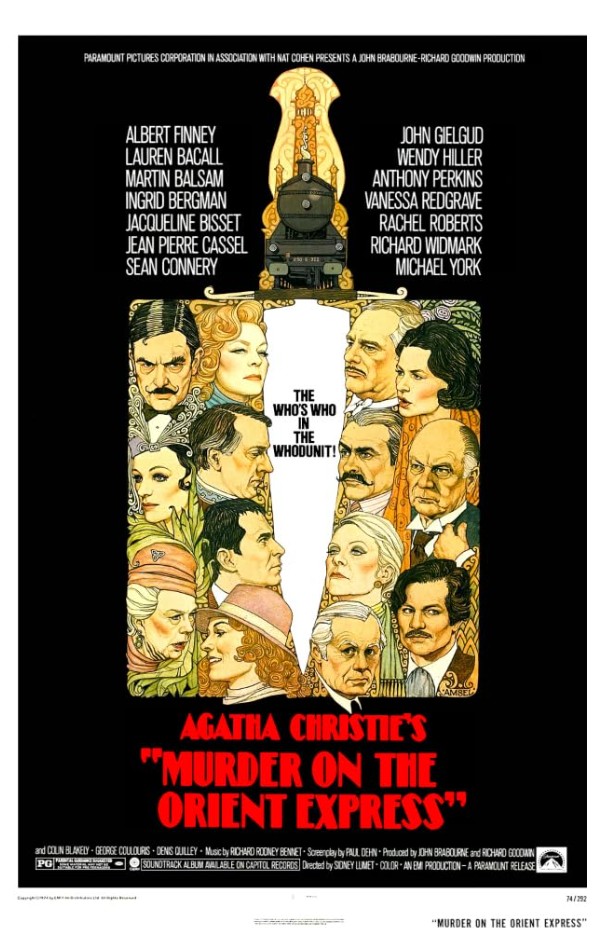
Murder on the Orient Express poster created by EMI Film Distributors, G. W. Films Limited, StudioCanal International, Anglo-EMI Film Distributors, and Paramount Pictures

Things I liked about the film:

The distinctness of the characters: On the poster for Murder on the Orient Express, a quote states the movie is “the who’s who in the whodunit!”. This quote is placed in the center of the poster, boasting the ensemble cast working together to carry the story. But the ensemble cast in Murder on the Orient Express portrays a collection of characters with distinct characteristics, personalities, and backstories. While the screenwriting contributes to this strength, the acting performances also deserve praise. The anxious look in Ingrid Bergman’s eyes and the way her face always appears fearful allows her character, Greta Ohlsson, to seem less confident than Lauren Bacall’s character, Mrs. Harriet Belinda Hubbard. The outspoken persona of Harriet helps the audience tell her and Greta apart. Some of the performances not only allowed characters to be memorable, it also allowed actors to work with different material than in other projects they starred in. Anthony Perkins is known to many film fans as Norman Bates in Psycho. The most memorable aspect of that character is the sinister stare he gives the camera (and audience), emphasizing the disturbing persona bubbling under the surface. But in Murder on the Orient Express, he portrays a secretary named Hector McQueen. He sometimes appears unsure of himself, but not to the same degree as Greta. Hector’s personality appears more easy-going, always finding a way to help his boss, Ratchett. His genuine smile and business-like way he carries himself lets the other characters (and the audience) know how seriously he takes his job. Anthony’s performance in Murder on the Orient Express was quite different from his performance in Psycho, showing off how capable he is of effectively portraying a different type of character.

Interior design of the boat: On his way to the titular Orient Express, Hercule Poirot (the protagonist of Murder on the Orient Express) boards a luxurious boat. Despite this boat appearing in only a handful of scenes, the interior design left a strong impression on me because of how gorgeous it was! Railings surrounding the dining space were constructed in what looks like golden metal, the zigzag design giving off the impression of shiny lightning bolts. Gold is also used in other pieces of décor, from giant palm tree lamps to a golden based dish that sat on a table. I recall seeing large red and green gemstones brightly glistening on wall sconces, providing a burst of color to the dining space. Green foliage is strategically placed throughout the set, achieving the illusion of a private oasis on the water. Because the interior design was aesthetically pleasing to the eye, I wish this boat was featured on screen longer in Murder on the Orient Express!

How blue light was used: Lighting is an important component of any film, as film is a visual medium. Not only can it help the audience see what’s happening on screen, it can also be utilized in creative ways, such as to emphasize a specific part of the story. Throughout Murder on the Orient Express, blue light was incorporated into the production. Toward the beginning of the movie, a blue glow covered landscapes, indicating the early morning hours the story is taking place in. Then, when a murder is discovered on the Orient Express, a blue light shines in the room the body was found in. This moment is what sparks Hercule’s investigation, a significant turning point in the script. The interesting ways blue light was woven into Murder on the Orient Express were such memorable creative choices!
The 8th Wonderful Ingrid Bergman Blogathon banner created by Virginie from The Wonderful World of Cinema

What I didn’t like about the film:

Keeping track of who’s who: Because Murder on the Orient Express contains an ensemble cast, they are a larger group of characters for the audience to keep track of. Distinct characteristics, personalities, and backstories certainly help viewers tell these characters apart. But in the case of the 1974 picture, the characters don’t consistently interact with one another. That’s because Hercule is interrogating each character about the story’s mystery. When a character was referenced in another character’s recollection, it took a little while for me to remember which character was being brought up. Some of my focus on the story was taken away due to more time being spent on figuring out who was who.

A dialogue heavy story: In any movie, dialogue plays a key role in the story. When it comes to the mystery genre, dialogue may contain clues, details about potential suspects, and important information relevant to the case. But if a movie, let alone one from the mystery genre, is heavy on the dialogue, it forces the audience to actively pay attention to what is happening on screen. If they don’t, they’ll miss important context, which will lead to frustration and confusion. Murder on the Orient Express is a dialogue heavy story, with the majority of the mystery contained within the dialogue. While there are physical clues woven into the movie, the script’s emphasis rests in the conversations among the characters. The priority placed on the dialogue actually took away some of the story’s sense of urgency. Instead of watching a detective race against the clock to stop a murderer, Murder on the Orient Express shows Hercule taking his time discussing the case with each passenger. This weaker sense of urgency kind of made Murder on the Orient Express feel longer than its two hour and eight-minute run-time.

The ending: For this part of my review, I will spoil Murder on the Orient Express. If you haven’t seen this movie and are planning on watching it, skip ahead to the part of my review titled, “My overall impression”.

At the beginning of Murder on the Orient Express, a collection of newspaper articles and spliced together scenes reveal the kidnapping and murder of a little girl named Daisy Armstrong. Five years later, Hercule discovers a passenger named Ratchett (his real name is Lanfranco Cassetti) was responsible for the kidnapping and murder of Daisy. Hercule learns over the course of the story that Ratchett’s/Lanfranco’s actions created a domino effect of tragedy for those directly connected to the Armstrong family, which happens to be all of the passengers on the Orient Express. Fueled by revenge, each passenger plays a role in murdering Ratchett/Lanfranco. After figuring out the truth, Hercule decides to tell the police a different explanation for how Ratchett/Lanfranco died, claiming this explanation is “simpler”. Following Hercule’s decision, the passengers are shown hugging one another and toasting champagne, with joyous music playing over the scene. I recognize what Murder on the Orient Express was trying to say; actions have consequences. Ratchett/Lanfranco definitely should have faced the consequences for his horrible actions, with his comeuppance emphasizing that message. However, Hercule’s decision to stay quiet about what the passengers did prevents them from facing the consequences of their actions. That creative choice made the film’s message incredibly inconsistent. Plus, the addition of hugging, champagne toasting, and joyous music downplays the severity of the passengers’ actions.
Railway Train image created by Freepik at freepik.com. <a href=’https://www.freepik.com/free-vector/hand-drawn-train-retro-background_1112415.htm’>Designed by Freepik</a>. <a href=”https://www.freepik.com/free-photos-vectors/background”>Background vector created by Freepik</a>. Image found at freepik.com.

My overall impression:

Have you ever watched an adaptation and felt like you ended up seeing the same movie twice? That’s kind of how I feel about the 1974 version of Murder on the Orient Express. As I stated in this review’s introduction, I had seen the 2017 adaptation prior to checking out the film from 1974. Other than casting and stylistic choices, both presentations follow the same story patterns. They even have an ending I wasn’t a fan of. However, both movies do have their strengths. Specifically speaking about 1974’s Murder on the Orient Express, the acting talents from every cast member, as well as the screenwriting, helped the characters be memorably distinct from one another. The multi-purpose way blue light was incorporated into the film was creative. Even the interior design of a boat Hercule briefly boarded left a beautifully strong impression. But if you’ve seen Murder on the Orient Express from 1974, you’ve already seen the version from 2017, and vice versa.

Overall score: 7 out of 10

Have you seen 1974’s Murder on the Orient Express? What’s your favorite movie from Ingrid Bergman’s filmography? Please let me know in the comment section below!

Have fun at the movies!

Sally Silverscreen
Sunset Over Hope Valley: Enjoying the Time We Have

Going into the twelfth season of When Calls the Heart, a Heartie can’t help but become reflective over their favorite show. However, it seems like When Calls the Heart’s creative team wanted their fans to look back at how far the show has come. A few examples are Elizabeth teaching her son the meaning of the word, ‘reflective’, and Rosemary reminding Nathan how no one knows what the future holds. It’s amazing this program has stayed on the air for eleven years and twelve seasons! In the history of television, few shows have made it that far. But if the history of television has taught us anything, another season is not guaranteed. While renewal news has usually come quickly for When Calls the Heart, it’s easy for Hearties to take that news for granted. Earlier in this introduction, I mentioned Rosemary telling Nathan how no one knows what the future holds. She followed that up by saying how we should enjoy the time we have. So, let’s enjoy this re-cap of When Calls the Heart’s season twelve premiere!

Just a reminder: If you did not see the season premiere of When Calls the Heart, there will be spoilers within this re-cap.

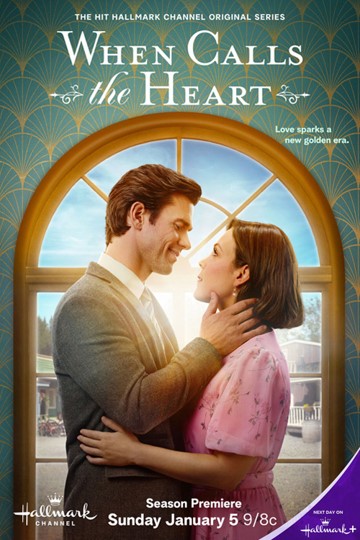
When Calls the Heart season twelve poster created by Hallmark Media, Crown Media Family Networks and Hallmark Channel

Season: 12

Episode: 1

Name: The Mountie Way

Major stories:

Superintendent Andrew Hargreaves arrives in Hope Valley to give Elizabeth one of Jack’s prized possessions. This object is a medal Jack earned before he passed away. The medal leads Elizabeth to explain to her son what ‘reflective’ means. She also allows Jack Jr. to wear his father’s medal on his first day of school. Inspired by Jack’s bravery, Jack Jr. lets Lilly borrow the medal when he learns she’s nervous about being one of the youngest kids in Elizabeth’s class. Jack Jr. and Elizabeth also agree how having the medal is a reminder that Jack will always be with them. Meanwhile, Superintendent Hargreaves assigns Nathan to train a Mountie cadet named Oliver Garrett. Nathan is told Oliver is at the bottom of his class. But after he and Bill talk to Oliver, they think something isn’t adding up. That’s because Oliver seems enthusiastic about being a Mountie. In fact, he expresses interest in the forensic and scientific sides of the profession.

Throughout this episode, Lucas encourages Lee to go to Capitol City to work on their national park project. Lee is hesitant because of how much time he thinks he’ll spend away from his family. Rosemary is also hesitant about Lee’s potential travels for the same reason. Henry comes up with the idea to name the national park after Goldy. This development makes Rosemary reconsider letting Lee go to Capitol City. In the end, Lee and Rosemary compromise. Lee goes to Capitol City during the week and comes home on the weekends. When Lee is contemplating his potential trips to Capitol City, Rosemary is frustrated by The Valley Voice’s decreased readership. Lee jokingly recommends radio shows advertise in the newspaper. This suggestion inspires Rosemary to create her own radio program.

Winner’s medal image created by Freepik at freepik.com. <a href=’https://www.freepik.com/free-vector/golden-awards-set-with-colors-details_844356.htm’>Designed by Freepik</a>. <a href=”https://www.freepik.com/free-photos-vectors/gold”>Gold vector created by Freepik</a>. Image found at freepik.com.

Minor story:

Lucas and Lee have different priorities when it comes to the national park project. For Lucas, it’s about revitalizing his disastrous approval rating. For Lee, on the other hand, the project is about providing Goldy and her generation with a gift that keeps on giving. On the train ride to Capital City, Lee and Lucas cross paths with Edwin Mitchel, who used to work with Lucas. Edwin brings up Lucas’ approval rating and says he has some ideas to save Lucas’ reputation. Even though Lee is skeptical of Edwin’s offer, Lucas is open to hearing what Edwin has to say.

Railway Train image created by Freepik at freepik.com. <a href=’https://www.freepik.com/free-vector/hand-drawn-train-retro-background_1112415.htm’>Designed by Freepik</a>. <a href=”https://www.freepik.com/free-photos-vectors/background”>Background vector created by Freepik</a>. Image found at freepik.com.

Some thoughts to consider:

  • Back in 2021, I wrote a list of the top ten things I’d like to see in When Calls the Heart’s ninth season. One of those things was Hope Valley’s first female Mountie. When I discovered a new Mountie would be introduced in season twelve, I was so excited at possibly getting my wish. But season twelve’s premiere left me disappointed. Oliver has potential to be a well-written, well-acted character. However, not giving Hope Valley their first female Mountie is such a missed opportunity.
  • Is it just me or has Lee’s sawmill disappeared from Hope Valley? When Lee made his debut in season two, one of his purposes was to open a sawmill and provide job opportunities for Hope Valley’s residents, especially after the coal mine’s closure. But ever since Rosemary started the town’s newspaper, it seems like the sawmill isn’t a priority for Lee like in past seasons. In fact, the sawmill wasn’t brought up in this episode. If Lee is not running his sawmill anymore, who is?
  • Throughout season twelve’s premiere, the children of Hope Valley become obsessed with a comic book about a character named Captain Billie. It even gets to the point where the children debate if comic books should be considered literature. I found this debate ironic because When Calls the Heart is based on a pre-existing book series. I also think it would be a good idea for Elizabeth to take that aforementioned obsession and turn it into a class project where her students create their own comic books!
  • In this re-cap, I mentioned Rosemary being inspired to create her own radio show. For me, this part of the episode was ironic. That’s because, in my re-cap post about season ten’s finale, I said I wanted to see Fiona create her own radio show. From the way Rosemary described her ideal radio program, the primary focus would be on news within Hope Valley and its surrounding areas. Since Rosemary has written for The Valley Voice for a few seasons, this seems like a good idea that I can’t wait to see upfold!
Sunset image created by Photoangel at freepik.com. <a href=”https://www.freepik.com/free-photos-vectors/background”>Background image created by Photoangel – Freepik.com</a>.<a href=’https://www.freepik.com/free-photo/red-sunset-clouds-over-trees_1254327.htm’>Designed by Freepik</a>. Image found at freepik.com.

What are your thoughts on When Calls the Heart’s season twelve premiere? What are you most excited about this season? Please tell me in the comment section below!

Have fun in Hope Valley!

Sally Silverscreen

Sunset Over Hope Valley: How Did We Get Here?

While waiting for the arrival of Jeanette, Lucas asks Henry “you ever find yourself asking how you got here”? Henry responds by telling Lucas, “Just about all the time”. Lucas’ question was a very poignant inclusion in this episode. As When Calls the Heart is close to wrapping up their eleventh season and will soon embark on a twelfth season, it can be easy to think about and ask a question similar to Lucas’. Fans of a television show are so invested in what is happening on screen, they may not realize how much time has passed.  When that realization dawns on a fan, they might wonder “where has all that time gone”? I guess Lucas’ question is a testament of the longevity of When Calls the Heart. Captivating stories and memorable characters have made each episode feel shorter than an hour.

Just a reminder: If you did not see this episode of When Calls the Heart, there will be spoilers within this re-cap.

When Calls the Heart season eleven poster created by Hallmark Media, Crown Media Family Networks and Hallmark Channel

Season: 11

Episode: 10

Name: What Goes Around

Major stories:

Allie still has her heart set on meeting her father, Dylan. Though she has money for a train ticket, Angela gives Allie more money to afford a hotel room if necessary. At the Jack Thornton School, Elizabeth organizes a day to restock school supplies, with some of her students volunteering to help. But when Allie doesn’t show up, Elizabeth and Nathan become concerned with Allie’s whereabouts. Angela confesses Allie’s plan to Nathan and Elizabeth. Nathan finally realizes why he received a phone call about Grandville prison earlier in the episode. When Elizabeth and Nathan arrive at the prison, they find Allie in tears. Allie tells Nathan Dylan didn’t want to see her. This crushing reality hurts Allie for most of the episode. As she wonders why her own father would reject her, Nathan explains to Allie how Dylan made a mistake by refusing to see his daughter. Nathan also stresses how lucky he has been to have received the opportunity to raise Allie. Toward the end of the episode, Nathan thanks Elizabeth for supporting both him and Allie. Elizabeth tells him how she will always to there for them.

As a last resort, Lucas agrees to meet with Jeanette about her hotel bid. Even though Henry claims everything seems legitimate, Lucas still has his doubts. Similar to his meeting with Montague, Lucas wants to keep this meeting a secret. This secrecy concerns Lee and he turns to Maisie to share these concerns. For the first time, Maisie and Lee agree on something. They come together to create a statement pulling their support for the hotel. After Lucas receives this statement, he regains his memory. Lucas not only remembers Jeanette visiting him the night he got shot, he also remembers a man named Casimir Shaw shooting him. When he confronts Jeanette about these memories, she confesses how Casimir forced her to work with him. Jeanette shares Casimir’s involvement in the hotel bid as well. In response to all this news, Lucas cancels the hotel indefinitely. He also encourages Jeanette to leave Hope Valley in the middle of the night.

Small, western town image created by Freepik at freepik.com. <a href=”https://www.freepik.com/free-photos-vectors/background”>Background vector created by freepik – http://www.freepik.com</a>. Image found at freepik.com.

Minor stories:

Faith spends one more day with Lily before Dora comes to retrieve her. One of the things they do is have ice cream at the Ice Cream Parlor. Later in the episode, Dora arrives in Hope Valley. Though Lily is excited about her grandmother’s return, she’s also heartbroken about leaving “Auntie Faith”. Seeing how upset Lily is about saying goodbye to Faith, Dora and Faith come to a mutual agreement: Lily will permanently stay with Faith. Dora also agrees to visit Lily from time to time.

At the Queen of Hearts Hotel, Maisie tells Mei how her and Mike’s mother would love to meet Mei. Brother and sister agree for Mei and their mother to meet over dinner in a few days. Despite being put on the spot, Mei accepts the offer. While Mei comes up with a meal plan for the dinner, Mike confesses to Mei how Maisie invited the whole family to meet Mei. Even though she receives unexpected news, Mei still agrees to the dinner. When the dinner finally arrives, Mei not only meets Mike and Maisie’s mother, she also meets Maisie and Mike’s sisters. After all the curve balls during the planning process, the dinner itself is a success.

Railway Train image created by Freepik at freepik.com. <a href=’https://www.freepik.com/free-vector/hand-drawn-train-retro-background_1112415.htm’>Designed by Freepik</a>. <a href=”https://www.freepik.com/free-photos-vectors/background”>Background vector created by Freepik</a>. Image found at freepik.com.

Some thoughts to consider:

  • In my last Sunset Over Hope Valley re-cap post, I stated how the hotel was not worth losing friends over. I still stand by that statement. But from a production perspective, it seems like the creative team behind the show made a promise they likely couldn’t keep. As I said in one of my re-cap posts from this season, creating a television show is like trying to solve a math equation. One aspect of that equation is figuring out how to utilize funds and manage a budget. Building a set piece, whether it’s the Jack Thornton School or a hotel, costs money. The longer a television show stays on the air, the more money required to keep that show running. With all that said, I wonder why the show’s creative team would entertain the idea of a hotel if they probably couldn’t afford to create one?
  • Back in season five, one of the overarching subjects was the creation of a train depot. Since this depot had been heard but not seen, I honestly didn’t think it would ever appear on the show. However, this is the second episode this season where Hope Valley’s train depot was featured! It actually looks like a nice location. Plus, the train depot proves how Hope Valley has become a desirable travel destination since the show began in 2014. With Hope Valley and Benson Hills merging in the future, I wonder what will happen to the train depot?
  • Strong acting performances have been showcased throughout the lifespan of When Calls the Heart. But in this episode, I thought the strongest performances were Kevin McGarry’s and Jaeda Lily Miller’s! One of the best scenes this season was when Nathan explains to Allie why Dylan didn’t want to see his daughter. The emotion expressed between these characters appeared genuine. The sincerity of Allie and Nathan’s emotions and expressions were the result of Jaeda and Kevin’s acting talents!
Sunset image created by Photoangel at freepik.com. <a href=”https://www.freepik.com/free-photos-vectors/background”>Background image created by Photoangel – Freepik.com</a>.<a href=’https://www.freepik.com/free-photo/red-sunset-clouds-over-trees_1254327.htm’>Designed by Freepik</a>. Image found at freepik.com.

What are your thoughts on this episode? How do you feel about the hotel being indefinitely canceled? Share your thoughts in the comment section!

Have fun in Hope Valley!

Sally Silverscreen

Take 3: Twentieth Century Review

Originally, I was going to write a double feature for The Sixth Annual Barrymore Trilogy Blogathon by reviewing Twentieth Century and Young at Heart. However, due to technical difficulties on my end, I was only able to find the time to publish one review. Because I’ve written about five of Frank Sinatra’s movies this year, I chose to take a break by selecting Twentieth Century. Back in January, I watched and reviewed In Name Only for The Carole Lombard Memorial Blogathon. At the time, it was my first time seeing any film from Carole’s filmography. Despite this, I ended up liking the film! As I have mentioned before, I try to feature movies on my blog that were recommended by visitors and followers of 18 Cinema Lane. Twentieth Century was suggested by Patricia from Caftan Woman and Vincent from Carole & Co.

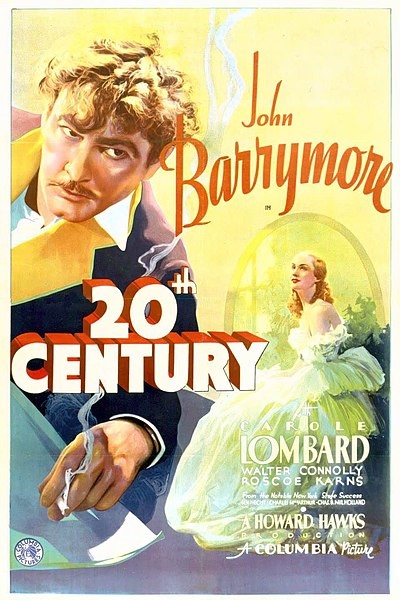
Twentieth Century poster created by Columbia Pictures.

Things I liked about the film:

The acting: In my review of In Name Only, I praised Carole’s portrayal of Julie Eden, as her on-screen personality was down-to-earth and her overall performance contained the right amount of emotion. Carole portrays Lily in Twentieth Century, a character who is very different from Julie in In Name Only. This is because Lily experiences frustration on several occasions. One example is when Lily is forced to stay late at rehearsal because Oscar wants her to scream. Lily’s emotions spill over, causing her to yell and burst into tears because of her pent-up frustration. These emotions were able to be felt through the screen because of how good Carole Lombard’s talents were in this film! Speaking of Oscar, I liked watching John Barrymore’s performance in Twentieth Century! It showed a transition from a theater director who seemed to have his heart in the right place to a man who let power and influence get to his head. After Lily’s first performance on stage, Oscar visits her in her dressing room. The way he speaks to her indicates he is putting all his attention on her. But when you look and listen closely, there are hints of his possessive mentality. A good example is when Oscar tells Lily she was a diamond who needed some polishing.

The set design: While watching Twentieth Century, there was some impressive set design I noticed! Toward the beginning of the film, Oscar’s office was shown. Dark wood walls surrounded the space, with a medium shot signifying the room’s high ceiling. Eye-catching details helped give the space a unique identity, such as the inclusion of a suit of armor and stained-glass windows. Details in other scenes stood out, stealing the show whenever they appeared on screen. Lily’s bed is just one example, a massive piece of furniture that was shaped like a boat. It’s white woodwork and bedding is paired beautifully with dark wood carvings on the bed. On the train, there are sketches of animals located near the ceiling of the sitting room area. The style of the sketches looked like they came from a storybook from Medieval times.

Carole’s wardrobe:  I really liked seeing Carole’s wardrobe in Twentieth Century! However, there were two outfits that were the most memorable! On the night of Lily’s first performance, she wears an off the shoulder sparkly white dress. Despite the film being presented in black-and-white, the sparkly nature of the dress shown through beautifully! The second outfit was a silk pair of pajamas, complete with fine detailing on the shirt. The pajamas complimented Carole very well, highlighting her true beauty!

Masks of comedy and tragedy images created by freepik at freepik.com. <a href=”https://www.freepik.com/free-photos-vectors/background”>Background vector created by freepik – http://www.freepik.com</a>. Image found at freepik.com.

What I didn’t like about the film:

The mystery: In Twentieth Century, there was an on-going mystery revolving around the appearance of religious stickers on the train. The mystery itself felt randomly placed in the overall story, offering no strong significance within the plot. Had the religious stickers served as a reminder to not lose personal beliefs and values in the quest for fame and fortune, that would have added a meaningful moral to the movie. Sadly, it was a small piece just to keep the plot moving forward. When the guilty party is finally revealed, it seems like the script is providing them with excuses for their destruction of public and personal property. This can be heard through the characters’ dialogue; from the train security saying the guilty party has a “sickness” to describing the guilty party as “a little crazy, but harmless”.

An awful group of characters: I understand characters from any movie are not going to be everyone’s “cup of tea”. However, there is a fine line between personal preference and the characters themselves being awful. Twentieth Century is a perfect example of this, featuring a host of characters that are unlikeable to varying degrees. Oscar treats everyone around him horribly. He “fires” his friends on multiple occasions and he is abusive toward Lily, even after their relationship ends. Despite this, Oscar’s friends still try to help him fix his relationship with Lily, even going so far as to blame her for Oscar’s failures. Meanwhile, Lily turns into a diva after she becomes a movie star. It got to the point where I found myself not caring about the characters’ outcomes because their ugly personalities made me lose investment in them.

Lily and Oscar’s abusive relationship: I briefly mentioned in my previous point that Oscar is abusive toward Lily, even after their relationship ends. In the beginning, when Lily was starting out as an actress, Oscar gives the impression of having her best interests in mind. An example of this is when, after Lily expresses her frustrations over staying late at rehearsal, Oscar reminds her of her dream and how he’ll help her reach that dream. As Lily’s career grows, so does Oscar’s jealousy and obsession. He not only controls Lily’s life, but he also physically harms her, poking her with a pin just to get her to scream on stage. Oscar even goes so far as to threaten suicide if Lily does not stay with him. Even though Lily ends the relationship, Oscar is still obsessed with her. One of his worst actions in Twentieth Century is faking his own death just to trick Lily into signing his contract.

The Sixth Annual Barrymore Trilogy Blogathon banner created by Crystal from In the Good Old Days of Classic Hollywood.

My overall impression:

Back in January, when I reviewed Marriage on the Rocks, I said the film made me feel uncomfortable because of the movie’s one-sided view on marriage and divorce. Watching Twentieth Century made me appalled for several reasons. The abusive nature of Lily and Oscar’s relationship is just one example, especially since it exists throughout the whole film. It also doesn’t help that Oscar doesn’t face any accountability for his actions and behavior.  Another issue is the characters themselves, as all of them are horrible to certain degrees. Despite being poorly treated by Oscar, Oscar’s friends still support him. They even encourage Oscar to get back together with Lily. According to IMDB and Wikipedia, Twentieth Century is labeled as a “romantic comedy”. I will admit there were a handful of moments I found funny. But the aforementioned relationship, random mystery, terrible characters, and the story being ninety one minutes of those same characters complaining about their personal issues overshadows all of the movie’s strengths.

Overall score: 4.4 out of 10

Have you seen any of Carole Lombard’s or John Barrymore’s films? If so, which one do you like the most? Please let me know in the comment section!

Have fun at the movies!

Sally Silverscreen