Take 3: Nosferatu Review (A Month Without the Code — #1)

Like last month, I will be participating in Pure Entertainment Preservation Society’s A Month Without the Code Blogathon! Unlike the Clean Movie Month Blogathon, the purpose of this month’s blogathon is to watch and talk about films that were released outside of the Breen Code era. That way, elements of the Breen Code can be applied to these films through discussion and analysis. For the very first review, I have chosen Nosferatu! It’s a film that I had definitely heard of, but had never seen. So far, I’ve had a good track record when it comes to the silent film genre. The Kid, Wild Oranges, and Sunnyside are films that I have seen and enjoyed. Also, I thought it would be interesting to apply the Breen Code to a film that was released before the Breen Code existed. It’s time to start this unfrightening and not-so-spooky review of 1922’s Nosferatu!

20190803_151228[1]
Like the poster for Les Enfants Terribles, I’ve seen other posters for Nosferatu. This one, however, is the one I like the most! Screenshot taken by me, Sally Silverscreen.
Things I liked about the film:

The acting: As I’ve said in my review of Wild Oranges, actors and actresses in silent films have to rely on body language, facial expressions, and actions/behaviors. The cast in Nosferatu used these acting elements to their full advantage, as if the “silent” part of silent films was never considered as a disadvantage. Both Gustav von Wangenheim and Greta Schroder, the actors who portrayed the characters of Hutter and Ellen, were very expressive! Their acting abilities helped the audience figure out what their characters were thinking and feeling. The two actors that stole the show, though, were Max Schreck and Alexander Granach! Even though their characters, Count Orlok/Nosferatu and Knock, are only on-screen for a limited time, they made the most of their on-screen presence. Both of these actors use their facial expressions to make their characters appear as creepy as possible. Because their acting abilities were that good, it made the portrayal of their characters appear believable!


The music: Similar to films like Sunnyside, the music in Nosferatu represented the tone of the overall film. This movie is classified as a horror movie, so the music during frightening scenes was tense and suspenseful. For less scary moments, the music was calmer and gentler. While Hutter visits an inn on his trip to Count Orlok’s castle, the music is light-hearted. This shows what Hutter is feeling, which is excitement toward his journey. When he shares his destination with the innkeeper, every patron in the inn becomes scared. At this moment, the music quickly changes to sound more mysterious and eerie. The fact that the music was always on-point with what was happening on-screen helped make the movie-viewing experience that much more engaging!


The on-screen chemistry: Even though their relationship wasn’t featured on-screen for very long, I liked seeing the on-screen chemistry between Gustav von Wangenheim and Greta Schroder! Anytime Hutter and Ellen interacted with each other, it was apparent that these characters truly cared about one another. As I already said, Gustav and Greta’s performances were very expressive. This not only helped make their portrayals endearing, but also help the audience stay invested in Hutter and Ellen’s relationship. This part of the story was a good way to balance out the scariness of Count Orlok/Nosferatu’s character. It was just one way of providing enough light-hearted moments to not frighten the audience too much.

176402-OWIP8M-64
Happy vampire image created by Freepik at freepik.com. <a href=’https://www.freepik.com/free-vector/several-vampires-ready-for-halloween_1317599.htm’>Designed by Freepik</a>. <a href=”https://www.freepik.com/free-photos-vectors/party”>Party vector created by Freepik</a>. Image found at freepik.com.

What I didn’t like about the film:

Nosferatu’s limited presence: Before I watched this film, I had assumed that Count Orlok/Nosferatu would have a significantly large presence on-screen. Unfortunately, he was only featured in a handful of scenes. I also thought that most of the plot would revolve around Count Orlok/Nosferatu, especially since the movie is titled Nosferatu. However, the plot was about the fear associated with this character. While Count Orlok/Nosferatu was not an afterthought, it felt like the movie was about everything but him. This character ended up serving the plot very sparingly.


Not so subtle dialogue: Because Nosferatu is a “silent film”, the film’s dialogue is featured on title cards and shots that look like the audience is reading a page from a book. But this dialogue didn’t want to hide the fact that there was a vampire in the movie. Toward the beginning of the film, Knock, Hutter’s boss, tells him that in order to sell a house to Count Orlok, it would require a little bit of blood. When Count Orlok sees a picture of Hutter’s wife, Ellen, he says that she has a nice-looking neck. These are just two examples of how this dialogue was not so subtle about who Count Orlok really was. This happened so frequently, that I felt annoyed by it.


Contradicting logic: In, at least, two instances, there were times when logic in Nosferatu was contradicted. One example is when Count Orlok tells Hutter that he only sleeps during the day, which causes people to think that he doesn’t exist. But, when he boards a ship on his way to Wisborg, Count Orlok/Nosferatu walks around the ship’s deck in broad daylight. In a shot that was sharing the film’s plot, it was revealed that the people of Wisborg were afraid to leave their homes because they were unaware of who was affected by the “plague”. When they accused Knock of infecting the town with the “plague”, these same townspeople were chasing Knock throughout the town and a neighboring field. Moments like these made the story seem like it wasn’t as strong as it could have been.
A Month Without the Code banner
A Month Without the Code Blogathon banner created by Tiffany and Rebekah Brannan from Pure Entertainment Preservation Society. Image found at https://pureentertainmentpreservationsociety.wordpress.com/2019/07/31/announcing-amonthwithoutthecode65/.

My overall impression:

After watching Nosferatu, I can see that this year’s A Month Without the Code is off to a good start! I have been lucky when it comes to the silent film genre, as I enjoyed every film I’ve seen and/or reviewed so far! Nosferatu has such a rich story, making for an interesting and engaging movie. The stories of how this project was made and restored are also fascinating. It makes me thankful that someone went out of their way to preserve this piece of cinema and save it from obscurity. If this film was created during the Breen Code era, it would be very different. For one thing, it would not be a silent film, as movies released between 1934 to 1954 had audio where cast members could be heard. From the perspective of content, there are a few things that would need to change. These things are the following:


  • The references to blood would need to be reduced. Since one of the characters in Nosferatu is a vampire, talking about blood makes sense. But, because mentions of bodily functions are looked down on, blood would have to be talked about at a minimum.


  • There are two shots in this movie that could be seen as disturbing: one shows a Venus Fly Trap eating a fly and one shows a spider eating its prey. These scenes would have to be removed.


  • On two separate occasions, a dead body is shown on-screen. These images would have to be removed and the on-screen deaths would need to be implied either through dialogue or clever visuals.


Overall score: 7.5 out of 10


Have you seen Nosferatu? What is your favorite movie featuring vampires? Share your thoughts in the comment section!


Have fun at the movies!

Sally Silverscreen
What the Code Means to Me: Breen, Hallmark, and Me

Dumbo (2019). Men in Black International. Poms. Dark Phoenix. These are a few examples of movies that have, recently, lost their battles in the Cinematic Colosseum. When a film underperforms or doesn’t reach expectations, people always look for reasons why this happened. It is a way of providing a sense of closure to the situation. Some say that the reason why 2019 has seen more cinematic failures than successes is because of an absence of original and innovative ideas. Others say that the creative teams behind these projects put more emphasis on politics than the story itself. Another reason that has been discussed is having too many remakes, sequels, and franchise continuations competing against each other within a short amount of time. Whatever the reason, I think we can all agree that these films probably failed because, simply, movie-goers just weren’t interested in the overall product. This seems very different from the time-period of 1934 to 1954, when the Breen era not only existed, but also thrived. During this particular stretch of time, it feels like more films were both successful and memorable for the right reasons. Take 1939, for example. Within this year alone, movie-goers were given three films that cemented their place in cinematic history; Gone with the Wind, Mr. Smith Goes to Washington, and The Wizard of Oz. The fact that these very distinct films placed in the Top 10 at that year’s box office proves that during the Breen era, there was something for everyone at the cinema. With the Breen Code absent in today’s cinematic world, an interesting media company that, I feel, has embraced Joseph I. Breen’s way of thinking is Hallmark. The more I’ve thought about the Breen Code and its impact on film, the more I see the similarities within the kinds of movies that Hallmark creates. Even though these films are featured on either television or digital services, it proves that there is hope for the Breen Code to make a comeback.

What the Code Means to Me poster
What the Code Means to Me poster created by Tiffany and Rebekah Brannan from Pure Entertainment Preservation Society. Image found at https://pureentertainmentpreservationsociety.wordpress.com/2018/12/17/what-the-code-means-to-me/.

Before discovering the blog, Pure Entertainment Preservation Society, I had never known about Joseph I. Breen and the Breen Code. In fact, I had always believed that the MPAA (the Motion Picture Association of America) was the “end all, be all” when it came to judging a film’s content. It wasn’t until I watched the video, “Why You Shouldn’t Listen to the MPAA (Podcast Excerpt)” from the Youtube channel, Rachel’s Reviews, that I started to change my views about this particular rating system. In this video, Rachel and her friend, Conrado, talk about why movie-goers should form their own self-censorship than solely rely on the MPAA. When I came across Pure Entertainment Preservation Society last October, while looking for upcoming blogathons to participate in, I was introduced to who Joseph I. Breen was as well as the Breen Code itself. In preparation for this article, I read as much as I could about Joseph and his Code. Tiffany and Rebekah Brannan, the creators of Pure Entertainment Preservation Society, have done a wonderful job at educating their readers and followers about the Breen Code and advocating its return to entertainment. Their articles are very informative and interesting to read. After learning all of this information, I feel that a newer and stronger code for judging a film’s content needs to be put in place. While having the MPAA is better than having nothing at all, its rules and guidelines seem to be more on the relaxed side. In the previously mentioned video, Rachel and Conrado discuss some of the ways that a film receives a particular rating. One example is the use of blood within the film’s context. Rachel brings up the example of The Hunger Games receiving a PG-13 rating due to the absence of blood while “contestants” are dying during the event within the story. She feels that because blood isn’t shown during these moments, the film is “dehumanizing the situation”. Had The Hunger Games been created during a time when something similar to the Breen Code existed, either this film would have never seen the light of day or the “contestants” would have died off-screen.

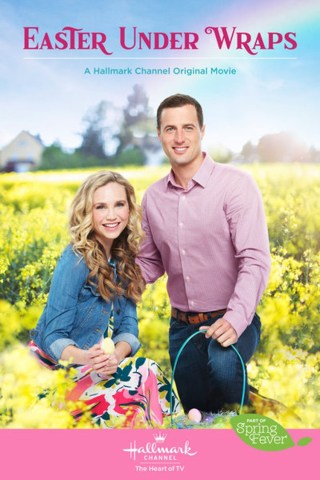
Easter Under Wraps poster
Easter Under Wraps poster created by Crown Media Family Networks and Hallmark Channel. Image found at https://www.crownmediapress.com/Shows/PRShowDetail?SiteID=142&FeedBoxID=845&NodeID=302&ShowType=&ShowTitle=Easter%20Under%20Wraps&IsSeries=False.

The movies and shows from Hallmark make up a large percentage of the content on my blog. Sometimes, I review films from Hallmark Channel, Hallmark Movies & Mysteries, and Hallmark Hall of Fame. In some of my Word on the Street posts, I’ve talked about movie news related to upcoming Hallmark projects. I also conduct two re-cap series for When Calls the Heart and Chesapeake Shores. Hallmark has created a reputation as being a family-friendly company in both appearance and content. As I mentioned in the introduction, things within the Breen Code sound like the type of material that Hallmark creates and distributes on their networks. Within the Hallmark entertainment spectrum, there are three television networks that air movies; Hallmark Channel, Hallmark Movies & Mysteries, and Hallmark Drama. Each network has their own unique and consistent tone, while still maintaining the company’s created image. Hallmark Channel features films that primarily contain light-hearted, romance stories. However, the relationships featured in these movies are wholesome. In the Breen Code, it states that “pictures shall not infer that low forms of sex relationship are the accepted or common thing”. Typical Hallmark Channel films do not feature or talk about sex. The only two films that I can think of that either mention sex or imply that a couple was having sex are A Family Thanksgiving and Audrey’s Rain. Hallmark Movies & Mysteries has a darker tone than Hallmark Channel, as the majority of the network’s content is mystery related. The type of mystery that is common in these movies is the murder mystery. However, this aspect of the story is always handled in a very tasteful way. Not only is a small amount of violence shown, but a limited amount of blood is featured on-screen. The Breen Code contains a whole section about featuring murder in film. One of the points in this section says that “methods of crime should not be explicitly presented”. Sometimes, these films show how a victim is murdered. This is included to introduce the mystery and present the seriousness of the situation. Toward the end of the movie, the guilty party reveals how and why they committed the crime. But the guilty party is never “presented in such a way as to throw sympathy with the crime”. Even though Hallmark Drama has only been around for two years, it has been a network where Hallmark’s more dramatic films can be seen. These types of films are either from Hallmark Hall of Fame or from Hallmark Channel and Hallmark Movies & Mysteries that haven’t be aired in recent years. Some of these projects were created before Hallmark embraced the image they have today, even before the Hallmark Channel was introduced back in 2001. One of these films is Ellen Foster, which is a Hallmark Hall of Fame movie that was released in 1997. In this film, there is one scene where Ellen is being physically abused by her father. If this exact same movie were released by Hallmark today, that scene would never have been featured in the film. The subject of child abuse would have only been implied through the use of dialogue and subtle visual references. This suggestion would fit with the Breen Code and Hallmark’s current image, as the Code itself states that “excessive and inhuman acts of cruelty and brutality shall not be presented. This includes all detailed and protracted presentation of physical violence, torture, and abuse”. Despite this aforementioned detail, Hallmark Drama still features content that is family oriented.

Crossword Mysteries -- A Puzzle to Die For poster
Crossword Mysteries: A Puzzle to Die For poster created by Crown Media Family Networks and Hallmark Movies & Mysteries. Image found at https://www.crownmediapress.com/Shows/PRShowDetail?SiteID=143&FeedBoxID=845&NodeID=307&ShowType=&ShowTitle=Crossword+Mysteries+A+Puzzle+to+Die+For.

The previous paragraph contains some examples of how the Breen Code can be found within Hallmark’s movies. I could provide more examples, but that would mean this article would be longer than it already is. Hallmark’s commitment to providing family friendly content to their audience shows that the Breen Code, or some form of it, can return to the entertainment world. It will most likely happen in a process of events rather than a quick succession. However, this is proof that Joseph I. Breen’s intentions still have a place in our world. In the article, “The Production Code of 1930’s Impact on America” from Pure Entertainment Preservation Society, it was said that “films are merely rated but not censored”. Since this is the case, we, the movie-goers, need to take the initiative to discover a film’s content, understand why a rating was given to a particular film, and form our own choice to view or not view a film. Until the day when Joseph I. Breen’s dream can come true again, this is the only option that movie-goers currently have.

Hallmark Hall of Fame's Love Takes Flight review
Hallmark Hall of Fame’s Love Takes Flight poster created by Crown Media Family Networks and Hallmark Channel. Image found at https://www.crownmediapress.com/Shows/PRShowDetail?SiteID=142&FeedBoxID=845&NodeID=302&ShowType=&ShowTitle=Love+Takes+Flight.

For my two Breening Thursday suggestions, I would like to recommend Wild Oranges and The Trouble with Angels. Wild Oranges is a silent film from 1924 that I reviewed when I received 95 followers on my blog. The Trouble with Angels is one of the films that I reviewed during the Rosalind Russell blogathon earlier this month. It was released in 1966.


Have fun at the movies!

Sally Silverscreen
 

If you want to check out the references I mentioned in this editorial, you can type “Why You Shouldn’t Listen to the MPAA (Podcast Excerpt)”  into Youtube’s search bar or visit Rachel’s Youtube channel, Rachel’s Reviews. You can also visit these links:

The Motion Picture Production Code with Its Revisions

The Production Code of 1930’s Impact on America

Take 3: Sunnyside Review + 100 Follower Thank You

Well, I did it. I finally received 100 followers! When I started 18 Cinema Lane last February, I never thought I would achieve this many followers in such a short amount of time! So, I’d like to say thank you to every single person who has chosen to follow my blog. If it weren’t for you, I never would have reached this milestone so soon. You’re probably thinking that it would be nearly impossible to find a movie that was released 100 years ago, in 1919. But, surprisingly, I ended up finding a movie on Turner Classic Movies’ (TCM’s) schedule. It’s a movie titled Sunnyside, which was directed, written, produced, composed by and starred Charlie Chaplin. In my Wild Oranges review, I mentioned that the only other silent film I’d seen was The Kid. By reviewing Sunnyside, it means that this is not only the third silent film I’ve seen, it’s also the second Charlie Chaplin picture that I’ve seen. When I recorded this movie on my DVR, I was shocked to discover that the film itself was less than an hour long. But, since Sunnyside is considered a short film, I realized that this run-time actually made sense. So, let the sunshine come pouring into your heart, as we’re about to begin this review of Sunnyside!

20190509_213523[1]
Not only did I surprise myself by finding a movie that was released 100 years ago, but I also found a poster of the movie (which appeared on my TV). Screenshot taken by me, Sally Silverscreen.
Things I liked about the film:

  • The comedy: Out of the two films of Charlie Chaplin’s that I’ve seen, it seems like Charlie’s cinematic work is known for being humorous. Because Sunnyside is a silent film, the creative team behind this movie had to rely on physical comedy, such as silly behaviors and actions, to make the audience laugh. This style of comedy was executed well in the film! While this form of comedy was more simplistic, I felt like it was effective! One such example is when Charlie’s character brings a cow into his house and milks it on the spot just so he can put milk in his beverage. The incorporation of humor helped make Sunnyside an interesting film!


  • The music: As I’ve mentioned in the introduction, Charlie Chaplin composed the music in Sunnyside. It felt like Charlie put a good amount of thought into the type of music that was incorporated into the film. Throughout the movie, I noticed that the overarching music matched the mood of whatever scene it was featured in. Whenever the scene was humorous, light-hearted music could be heard. If the scene had a more serious tone, dramatic music was placed over the on-screen events. This aspect of the movie provided a sense of understanding to what was happening in the story!


  • The use of title cards: In my review of Wild Oranges, I talked about the importance of title cards within the film. Just like that movie, Sunnyside also used title cards to their full advantage. These title cards were, sometimes, placed at the beginning of each scene. This helped introduce locations and characters to the audience. Title cards were also used to provide dialogue between some of the characters. It assisted the audience in helping them figure out what was going on within the narrative.
125843-OSCVR0-64
Happy sun image created by Freepik at freepik.com. <a href=”https://www.freepik.com/free-photos-vectors/background”>Background vector created by freepik – http://www.freepik.com</a>. Image found at freepik.com.

What I didn’t like about the film:

  • Some scenes lasting longer than others: Throughout Sunnyside, I noticed that some of the scenes lasted longer than others. One example is the opening scene, when Charlie’s character wakes up in the morning. For scenes like this, I felt that they were as long as they were just to satisfy the film’s run-time. In my opinion, these specific scenes could have been cut to a shorter length.


  • A simplistic story: The main plot of Sunnyside was more on the simpler side. Because of this, it caused the first half of the movie to appear as a series of vignettes. The story didn’t seem to have a cohesive narrative until the character called “City Chap” showed up in the film. It made the film like it was an experiment of how to make a movie.


  • A drowned out piano: In Sunnyside, there was one scene where Charlie’s character is playing the piano. However, when he did play the piano, the instrument’s sound was drowned out by the overarching music featured in that scene. I understand that the cinematic technology of 1919 was vastly different than what it is today. But I think the sound of the piano should have been omitted from this film. That way, the only sound that the audience should focus on is the music that helps highlight the mood of that scene.
Note_lines_horizontal1
String of musical notes image created by Freepik at freepik.com. <a href=’https://www.freepik.com/free-vector/pentagram-vector_710290.htm’>Designed by Freepik</a> <a href=”https://www.freepik.com/free-photos-vectors/background”>Backgroundvector created by Freepik</a>. Image found at freepik.com.

My overall impression:

As I’ve said in my Wild Oranges review, I don’t often watch movies in the silent film genre. However, because Sunnyside was the only film from 1919 that I was able to find, I decided to give the movie the chance. I’m glad I did, as this ended up being a good film! Because this was a short film and because, for the most part, I was able to understand what was going on in the narrative, I didn’t have a need to provide my own commentary to the film. It is interesting to see how movies have evolved over these 100 years. Seeing what’s changed and what’s remained the same in cinema is fascinating. This makes me appreciate the earlier projects of film, including Sunnyside.


Overall score: 7.6 out of 10


Do you watch silent films? Have you seen any of Charlie Chaplin’s movies? Let me know in the comment section!


Have fun at the movies!

Sally Silverscreen

Take 3: Wild Oranges Review + 95 Follower Thank You

18 Cinema Lane received 95 followers last week! To all of my followers, thank you for helping me achieve this milestone! Your interest in this blog means a lot to me. Because I now have 95 followers, I can review a film that was released 95 years ago (in 1924). One day, when I was scrolling through Turner Classic Movies’ (TCM’s) schedule, I discovered a film called Wild Oranges. Before choosing this movie for this post, I had never heard of this title. In fact, the only silent film I’ve seen prior to the aforementioned movie was The Kid, starring Charlie Chaplin. So, I thought this would be a good opportunity to expand my cinematic horizons. According to the pre-movie commentary, Wild Oranges was one of the first movies to be filmed on-location as well as having a smaller cast. These facts interested me into seeing how they would work within the overall context of the film. Before I begin this review, I would just like to share that I actually ate oranges while watching Wild Oranges (I thought it would appropriately fit the occasion).

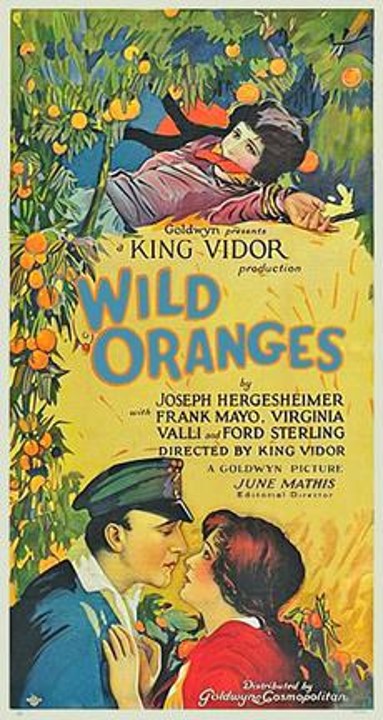
Wild Oranges poster
Wild Oranges poster created by Goldwyn Pictures. Image found at https://en.wikipedia.org/wiki/File:Wild_Oranges_(film_poster).jpg

Things I liked about the film:

  • The acting: Because Wild Oranges is a silent movie, the actors have to rely on body language, facial expressions, and actions/behaviors to portray what their characters are saying and feeling. All of the actors in this cast accomplished their goal of doing just that! The acting performances in this movie played an essential role in telling this story, helping to fill in the blanks when words were not available. These performances were also well-rounded, adding to the intrigue and investment of the film. Looking back, I believe the most memorable performance in this movie came from Charles A. Post as the film’s antagonist, Iscah Nicholas! Despite the unheard dialogue, Charles effectively conveyed the nasty and disturbing nature that his character contained. This performance truly added a sense of suspense and dread whenever he appeared on-screen.


  • The scenery: As I mentioned in the introduction, Wild Oranges was one of the first movies to be filmed on-location. According to TCM’s pre-movie commentary, this movie was filmed in Georgia and Florida. Filming on-location was the right decision, as it gave a sense of realism to the movie. The natural elements of the scenery, from the forests to the dilapidated home of the Stope family, added a haunting feel to the overall atmosphere. Even the beauty of the beachfront was captured very well within the lighter moments of the film. This element made Wild Oranges a wonderful sight to see!


  • The use of title cards: While the body language, facial expressions, and actions/behaviors of the actors helped carry the story, there were times when title cards were necessary. In Wild Oranges, title cards were used to not only highlight the dialogue between the characters, but also to transition between scenes. These title cards provided some depth to the narrative, as it explained things that the acting performances couldn’t. Having the title cards be presented on illustrations of oranges trees was very creative. It also fit with the continuity of the film.
wormsloe-plantation-ii-1334468-1278x677
Forest in Georgia image created by Roger Kirby at freeimages.com. “FreeImages.com/Roger Kirby.”

What I didn’t like about the film:

  • A limited amount of title cards: While I liked the use the title cards in Wild Oranges, I thought that the amount of them was fewer than I’d expected. Some scenes were accompanied with very few title cards to support the dialogue or other details within the narrative. This left me guessing as to what was going on in the film. It also debunked my personal stereotypical view of title cards in silent films, where title cards are used to explain everything. Wild Oranges definitely could have benefited from the use of more title cards.


  • The run-time: At an hour and twenty-eight minutes, I felt that Wild Oranges was a little too long. Sometimes, there were scenes that went on longer than they should have. Two examples of this are a fight sequence between the antagonist and protagonist as well as a boating scene. If these scenes were a little bit shorter, it would have had a big impact on the overall run-time. In my opinion, this movie should have been, at least, an hour.


  • An unclear connection between Nicholas and the Stope family: While watching this movie, I was really confused about the connection between Nicholas and the Stope family. Sure, Nicholas was in love with Millie. However, Nicholas was allowed on the Stope family property without any issues. Even though Millie revealed more about Nicholas’ character to John Woolfolk, it didn’t explain what his connection was to her family. The only thing I was able to do was guess this connection as I continued watching the film.
oranges-at-tree-1325437-1280x960
Oranges in tree image created by Jose Luis Navarro at freeimages.com. “FreeImages.com/Jose Luis Navarro.”

My overall impression:

The silent film genre is one that I don’t watch often. The two reasons for this are 1.) Silent films are not as easily available as other genres and 2.) The on-screen events might be confusing to decipher without dialogue. Despite these concerns, I ended up having an enjoyable experience watching Wild Oranges! Part of this has to do with the fact that I was able to provide my own personal commentary to the film. Besides this, the movie itself stands on its own, thanks to the merits found in the film. The various creative pieces came together to tell a cohesive story. The historic choices that were made, such as filming on-location, ended up working in this film’s favor. It gave the project a special uniqueness that helped make the film so memorable. If you haven’t seen silent films before and would like to give them a chance, I think Wild Oranges is a good introduction to the genre!


Overall score: 7.6 out of 10


Have you seen any silent films? Would you want to give silent films a chance? Put your thoughts in the comment section!


Have fun at the movies!

Sally Silverscreen