Take 3: Murder on the Orient Express (1974) Review

For The 8th Wonderful Ingrid Bergman Blogathon, I had two movie options for this review; Murder on the Orient Express and Cactus Flower. With both films recommended by this blogathon’s creator (Virginie from The Wonderful World of Cinema), I selected the 1974 mystery picture. Though this is the first time I’ve seen this version of Murder on the Orient Express, this is not the first time I’ve seen any adaptation of this story. Years ago, I saw the 2017 version of Murder on the Orient Express. Though I thought the film was fine, I was not a fan of the movie’s ending. Since then, I have searched for an Agatha Christie adaptation I like. But, as of 2026, the only ones I’ve seen have been either ok or decent. Will this version of Murder on the Orient Express change this pattern? Keep reading my review in order to solve this mystery!
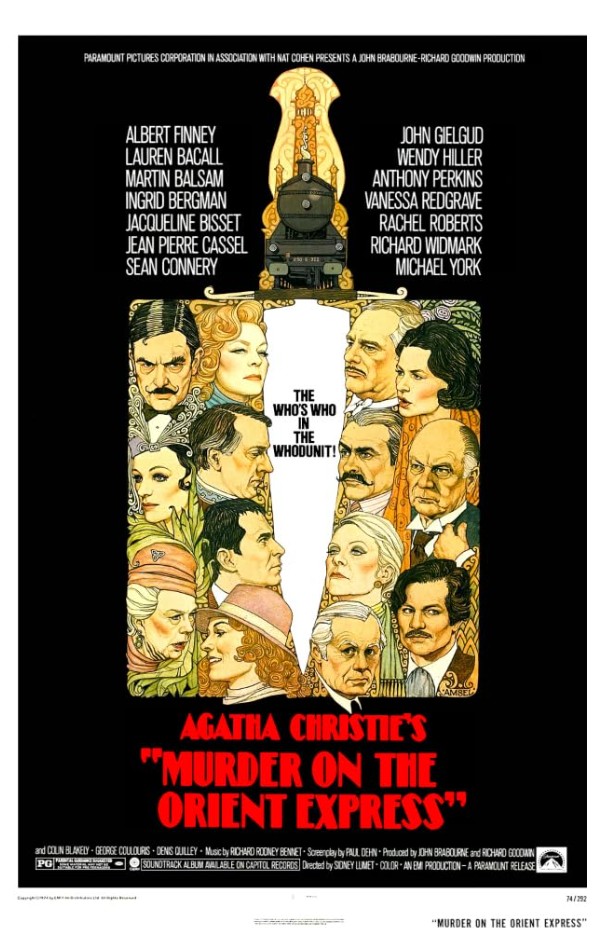
Murder on the Orient Express poster created by EMI Film Distributors, G. W. Films Limited, StudioCanal International, Anglo-EMI Film Distributors, and Paramount Pictures

Things I liked about the film:

The distinctness of the characters: On the poster for Murder on the Orient Express, a quote states the movie is “the who’s who in the whodunit!”. This quote is placed in the center of the poster, boasting the ensemble cast working together to carry the story. But the ensemble cast in Murder on the Orient Express portrays a collection of characters with distinct characteristics, personalities, and backstories. While the screenwriting contributes to this strength, the acting performances also deserve praise. The anxious look in Ingrid Bergman’s eyes and the way her face always appears fearful allows her character, Greta Ohlsson, to seem less confident than Lauren Bacall’s character, Mrs. Harriet Belinda Hubbard. The outspoken persona of Harriet helps the audience tell her and Greta apart. Some of the performances not only allowed characters to be memorable, it also allowed actors to work with different material than in other projects they starred in. Anthony Perkins is known to many film fans as Norman Bates in Psycho. The most memorable aspect of that character is the sinister stare he gives the camera (and audience), emphasizing the disturbing persona bubbling under the surface. But in Murder on the Orient Express, he portrays a secretary named Hector McQueen. He sometimes appears unsure of himself, but not to the same degree as Greta. Hector’s personality appears more easy-going, always finding a way to help his boss, Ratchett. His genuine smile and business-like way he carries himself lets the other characters (and the audience) know how seriously he takes his job. Anthony’s performance in Murder on the Orient Express was quite different from his performance in Psycho, showing off how capable he is of effectively portraying a different type of character.

Interior design of the boat: On his way to the titular Orient Express, Hercule Poirot (the protagonist of Murder on the Orient Express) boards a luxurious boat. Despite this boat appearing in only a handful of scenes, the interior design left a strong impression on me because of how gorgeous it was! Railings surrounding the dining space were constructed in what looks like golden metal, the zigzag design giving off the impression of shiny lightning bolts. Gold is also used in other pieces of décor, from giant palm tree lamps to a golden based dish that sat on a table. I recall seeing large red and green gemstones brightly glistening on wall sconces, providing a burst of color to the dining space. Green foliage is strategically placed throughout the set, achieving the illusion of a private oasis on the water. Because the interior design was aesthetically pleasing to the eye, I wish this boat was featured on screen longer in Murder on the Orient Express!

How blue light was used: Lighting is an important component of any film, as film is a visual medium. Not only can it help the audience see what’s happening on screen, it can also be utilized in creative ways, such as to emphasize a specific part of the story. Throughout Murder on the Orient Express, blue light was incorporated into the production. Toward the beginning of the movie, a blue glow covered landscapes, indicating the early morning hours the story is taking place in. Then, when a murder is discovered on the Orient Express, a blue light shines in the room the body was found in. This moment is what sparks Hercule’s investigation, a significant turning point in the script. The interesting ways blue light was woven into Murder on the Orient Express were such memorable creative choices!
The 8th Wonderful Ingrid Bergman Blogathon banner created by Virginie from The Wonderful World of Cinema

What I didn’t like about the film:

Keeping track of who’s who: Because Murder on the Orient Express contains an ensemble cast, they are a larger group of characters for the audience to keep track of. Distinct characteristics, personalities, and backstories certainly help viewers tell these characters apart. But in the case of the 1974 picture, the characters don’t consistently interact with one another. That’s because Hercule is interrogating each character about the story’s mystery. When a character was referenced in another character’s recollection, it took a little while for me to remember which character was being brought up. Some of my focus on the story was taken away due to more time being spent on figuring out who was who.

A dialogue heavy story: In any movie, dialogue plays a key role in the story. When it comes to the mystery genre, dialogue may contain clues, details about potential suspects, and important information relevant to the case. But if a movie, let alone one from the mystery genre, is heavy on the dialogue, it forces the audience to actively pay attention to what is happening on screen. If they don’t, they’ll miss important context, which will lead to frustration and confusion. Murder on the Orient Express is a dialogue heavy story, with the majority of the mystery contained within the dialogue. While there are physical clues woven into the movie, the script’s emphasis rests in the conversations among the characters. The priority placed on the dialogue actually took away some of the story’s sense of urgency. Instead of watching a detective race against the clock to stop a murderer, Murder on the Orient Express shows Hercule taking his time discussing the case with each passenger. This weaker sense of urgency kind of made Murder on the Orient Express feel longer than its two hour and eight-minute run-time.

The ending: For this part of my review, I will spoil Murder on the Orient Express. If you haven’t seen this movie and are planning on watching it, skip ahead to the part of my review titled, “My overall impression”.

At the beginning of Murder on the Orient Express, a collection of newspaper articles and spliced together scenes reveal the kidnapping and murder of a little girl named Daisy Armstrong. Five years later, Hercule discovers a passenger named Ratchett (his real name is Lanfranco Cassetti) was responsible for the kidnapping and murder of Daisy. Hercule learns over the course of the story that Ratchett’s/Lanfranco’s actions created a domino effect of tragedy for those directly connected to the Armstrong family, which happens to be all of the passengers on the Orient Express. Fueled by revenge, each passenger plays a role in murdering Ratchett/Lanfranco. After figuring out the truth, Hercule decides to tell the police a different explanation for how Ratchett/Lanfranco died, claiming this explanation is “simpler”. Following Hercule’s decision, the passengers are shown hugging one another and toasting champagne, with joyous music playing over the scene. I recognize what Murder on the Orient Express was trying to say; actions have consequences. Ratchett/Lanfranco definitely should have faced the consequences for his horrible actions, with his comeuppance emphasizing that message. However, Hercule’s decision to stay quiet about what the passengers did prevents them from facing the consequences of their actions. That creative choice made the film’s message incredibly inconsistent. Plus, the addition of hugging, champagne toasting, and joyous music downplays the severity of the passengers’ actions.
Railway Train image created by Freepik at freepik.com. <a href=’https://www.freepik.com/free-vector/hand-drawn-train-retro-background_1112415.htm’>Designed by Freepik</a>. <a href=”https://www.freepik.com/free-photos-vectors/background”>Background vector created by Freepik</a>. Image found at freepik.com.

My overall impression:

Have you ever watched an adaptation and felt like you ended up seeing the same movie twice? That’s kind of how I feel about the 1974 version of Murder on the Orient Express. As I stated in this review’s introduction, I had seen the 2017 adaptation prior to checking out the film from 1974. Other than casting and stylistic choices, both presentations follow the same story patterns. They even have an ending I wasn’t a fan of. However, both movies do have their strengths. Specifically speaking about 1974’s Murder on the Orient Express, the acting talents from every cast member, as well as the screenwriting, helped the characters be memorably distinct from one another. The multi-purpose way blue light was incorporated into the film was creative. Even the interior design of a boat Hercule briefly boarded left a beautifully strong impression. But if you’ve seen Murder on the Orient Express from 1974, you’ve already seen the version from 2017, and vice versa.

Overall score: 7 out of 10

Have you seen 1974’s Murder on the Orient Express? What’s your favorite movie from Ingrid Bergman’s filmography? Please let me know in the comment section below!

Have fun at the movies!

Sally Silverscreen

Take 3: From the Mixed-Up Files of Mrs. Basil E. Frankweiler (1995) Review

When Crystal, from In The Good Old Days Of Classic Hollywood, invited me to join her Third Annual Lauren Bacall Blogathon, I was aware of who Lauren is as an actress. In fact, I reviewed The Big Sleep for a blog follower dedication review back in August. For this blogathon, I wanted to pick one of Lauren’s films from outside the Classic/Golden Era of Hollywood. After looking through her filmography, I decided to review From the Mixed-Up Files of Mrs. Basil E. Frankweiler! Before watching this movie, I knew that it was based on a book. However, I have never read the book or seen the film adaptation from 1973. I also heard that there was a mystery within this story. Because I like movies such as those from Hallmark Movies & Mysteries, I felt that this would be a film I might enjoy.

20191121_230936[1]
Because I had difficulty uploading an image of this poster, I decided to take a picture of it on my phone. Screenshot taken by me, Sally Silverscreen.
Things I liked about the film:

The acting: Films that feature young actors as the leads can be hit or miss. Because of their limited talents, it’s difficult for the audience to know what to expect from that actor or actress. In From the Mixed-Up Files of Mrs. Basil E. Frankweiler, the lead actors did a good job with the acting material they were given! Jean Marie Barnwell, who portrayed Claudia, and Jesse Lee Soffer, who portrayed Jamie, were both expressive and believable in their roles. They brought their characters to life with versatility, helping them present reactions that appeared realistic for children in that kind of situation. The supporting cast was also memorable in this film! Miriam Flynn, who portrayed Claudia and Jamie’s mom, mastered her role! She did this by bringing animation and emotion to her character. Miriam helped make her role distinct from the others in this film. She also had good on-screen chemistry with her fellow co-stars!


The cinematography: This film had better cinematography than I expected! The creative team behind the movie made some interesting choices when it came to how certain scenes were presented. One example is when Claudia and Jamie are hiding on the school bus. There was one scene where the camera was looking upward from the floor, focusing on the view from the window. This helped the audience picture the moment from the kids’ perspective. In the museum, there were close-ups of various artifacts. At opening or closing time, these close-ups emphasized the lights shining on these objects. Shots like these made the film visually appealing!


The locations of the museum and Mrs. Frankweiler’s house: Whenever I’ve talked about Murder, She Wrote, I almost always talk about how great the locations are. That series shares a similarity with this film. The museum and Mrs. Frankweiler’s house were the two best locations in the movie! Filmed in Los Angeles, both locations were captured very well on screen. They represent the impression that the creative team was going for: larger than life and exquisite. Not only were the exteriors impressive, but so were the interiors. From the domed ceiling of the museum to the grand staircase of Mrs. Frankweiler’s house, these facilities were some of the best parts of this project!

OLYMPUS DIGITAL CAMERA
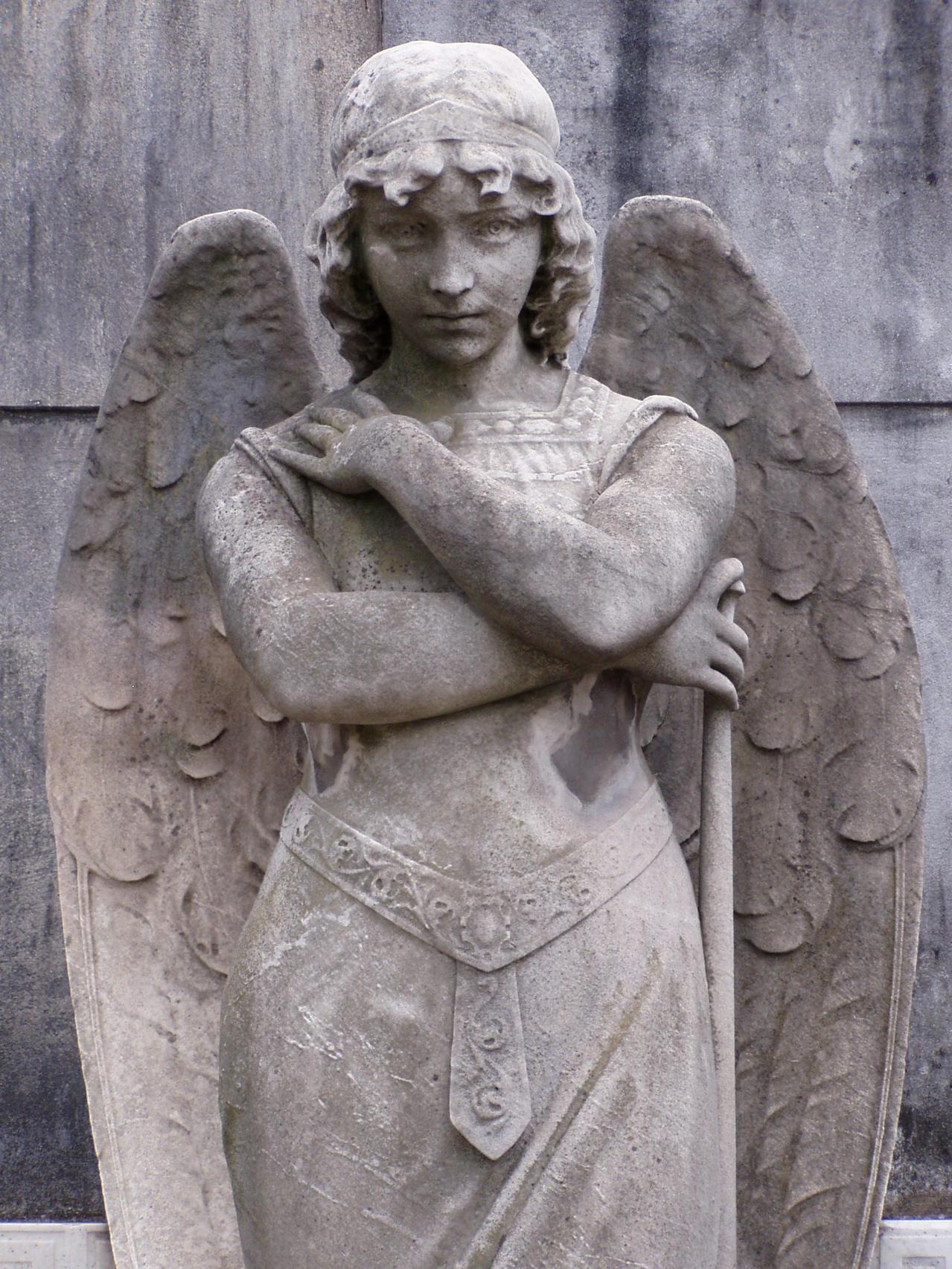
Angelic statue image created by Marcelo Gerpe at freeimages.com. “FreeImages.com/Marcelo Gerpe.”

What I didn’t like about the film:

Lauren Bacall’s brief appearance: In my review of One Christmas, I shared that Katharine Hepburn’s limited presence was something that I didn’t like about the film. From the Mixed-Up Files of Mrs. Basil E. Frankweiler had the same problem. Like One Christmas, Lauren was the top-billed actor for this movie. This had given me the impression that she would appear in the majority of the project. But, similar to Katharine, Lauren only showed up in five scenes. Like I said in my One Christmas review, giving an actress like Lauren Bacall few opportunities to showcase her acting abilities does her a disservice. It also makes the movie’s creative team look like they’re making a promise they know they can’t keep. This decision came across as frustrating and misleading.


Over-shadowing the mystery: This story features a mystery about the authenticity of an angelic statue. While this was an interesting part of the overall narrative, it wasn’t given as much attention as I expected. Most of the story focused on Claudia and Jamie running away from home. The mystery itself wasn’t presented until forty minutes into the movie. Even then, the mystery was only discussed in a few scenes. It took a lot of intrigue out of the film, causing the story not to be as engaging or interactive.


Too much suspension of disbelief: I’ve said before on my blog that movies with fictional stories require their audience to suspend a certain amount of disbelief. But for From the Mixed-Up Files of Mrs. Basil E. Frankweiler asked me to suspend my belief more than I had planned to. One example is how the police don’t play a big role in trying to find Claudia and Jamie. I found that to be very unbelievable, considering the fact that these children have been missing for three days. The idea of people living in a museum is also not realistic, especially since most facilities have things like motion sensors and security cameras. Things like this partially took me out of the film.

Third Annual Lauren Bacall Blogathon banner
The Third Annual Lauren Bacall Blogathon banner created by Crystal from In the Good Old Days of Classic Hollywood. Image found at https://crystalkalyana.wordpress.com/2019/09/16/announcing-the-third-lauren-bacall-blogathon/.

My overall impression:

While I’m glad that I gave this film a chance, I can honestly say that it was just ok. Sure, there were things about the movie that I liked. But there were also aspects that could have made it stronger. From the Mixed-Up Files of Mrs. Basil E. Frankweiler made the same mistake that One Christmas did: incorporating a legendary actress but not utilizing her talents to the fullest extent. After I watched Lauren’s film, I realized that her movie and Katharine’s movie were both released in the mid – ‘90s. I’m now starting to wonder if this was a trend from that decade? Until that question is answered, I just wanted to thank Crystal for inviting me to join her blogathon! I’ve participated in several of her movie related events and she is an excellent host! I can’t wait for the next blogathon!


Overall score: 6 out of 10


Have you seen any of Lauren Bacall’s films? If so, which one is your favorite? Please tell me in the comment section!


Have fun at the movies!

Sally Silverscreen

Take 3: The Big Sleep Review + 130 Follower Thank You

My blog received 130 followers last week! To all of my followers, thank you for helping 18 Cinema Lane become this successful! This review would not be possible without you! For this blog follower dedication review, I have chosen a movie that was released in August of 1946. By looking at the title, you would know that the film I selected is The Big Sleep! I’m going to be honest; I don’t watch films from the film-noir genre often. It’s just not a genre that I purposefully go out of my way to watch. However, because I, as a movie blogger, try to go out of my cinematic comfort zone, I still chose to watch The Big Sleep. I also discovered that this movie is labeled as a mystery. Since I review mystery films from time to time, I figured this would be something that I might enjoy. Choosing this particular movie for this review makes sense, especially since the last time I reviewed a mystery film for a blog follower dedication review was when I wrote about The Moon-Spinners back in January.

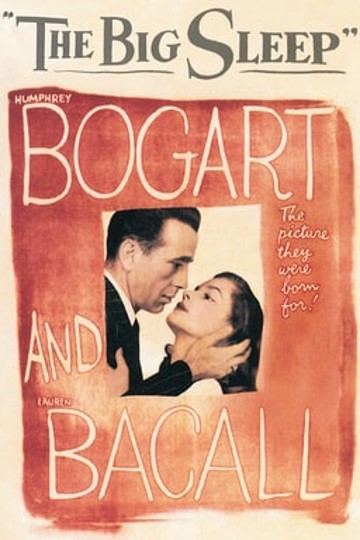
The Big Sleep poster
The Big Sleep poster created by Warner Bros. Image found at https://www.warnerbros.com/movies/big-sleep/.

Things I liked about the film:

The acting: What helped bring this story to life was the acting performances! I’ve seen Humphrey Bogart in Casablanca, so I was familiar with his acting style. His performance in The Big Sleep embodied the tone and attitude of the film. Humphrey’s character, Philip, could either be mysterious and serious or charming and suave. That’s because he was able to effectively portray those emotions and personas when he needed to. Before watching The Big Sleep, I was more familiar with Lauren Bacall’s voice-acting work than her on-screen performances. However, I was very impressed by her portrayal of Vivian Rutledge! Her acting style is similar to Humphrey’s, in that her performance is more subtle in presentation. Her on-screen personality ranged from serious and head-strong to flirty and charismatic. With each scene and scenario, Lauren brought believability to her role.


The mystery: If you’ve ever visited my blog, you’d know that I watch and review a lot of the programming on Hallmark Movies & Mysteries. What makes The Big Sleep different from those movies is how the mystery is written. As the mystery plays out on screen, the audience gets to experience the events alongside the characters. This allows the surprises and twists to catch viewers off-guard. The way this mystery is written also gives the audience the feeling that they are sharing moments with the characters. It helps them connect with the protagonist and the people around him.


The tone: Because The Big Sleep is a part of the film-noir genre, the tone is darker and more serious. A strength this movie has is how consistent it was. Throughout the film, the subjects and ideas that were expressed belonged to the real world. This kept the story grounded and the characters realistic. Since there were stakes in The Big Sleep, everything was handled with seriousness and reverence. These things made the story mature without becoming too dark or unpleasant. All of the aforementioned components helped maintain this tone’s consistency.

detective-desktop-1240088-1280x960
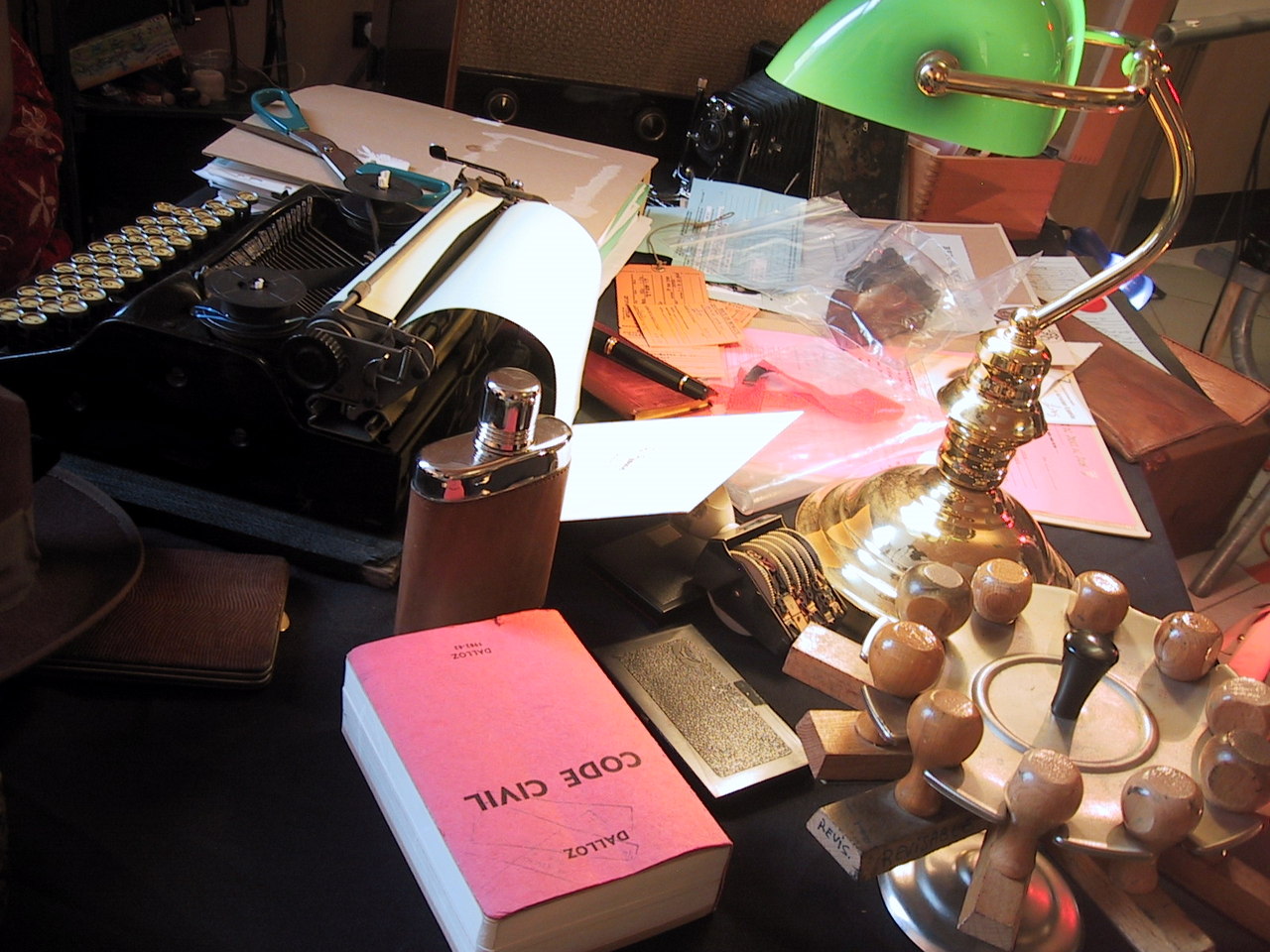
Vintage detective desk photo created by Olivier Bourgeois at freeimages.com. Photo by <a href=”/photographer/ornicar69-54520″>Olivier Bourgeois</a> from <a href=”https://freeimages.com/”>FreeImages</a&gt; Image found at freeimages.com.

What I didn’t like about the film:

A limited amount of suspense: In some mystery stories, the suspense is consistent throughout the film. Unfortunately, The Big Sleep was not one of those films. The suspense in this movie was very limited. It almost seemed like it was utilized for the sake of plot convenience. This made some parts of the movie more interesting than others.


So many characters: Mystery movies usually have a larger cast of characters. Some of them serve as suspects for the mystery. In The Big Sleep, I felt like there were too many characters. Sometimes, it was difficult to remember who was who and their connection to the mystery. What didn’t help was having some characters appear on screen for a short amount of time. Not every character was introduced toward the beginning of the film, like most of the films on Hallmark Movie & Mysteries. This felt like the characters could come and go whenever they pleased.


Lack of lighting: There were some scenes in The Big Sleep that featured very little lighting. Because of this, I had a difficult time trying to see what was happening on screen. One example is the scene where the person who shot Arthur Gwynne Geiger was being arrested. I understand that this movie is classified as film-noir. But just because a film’s tone is dark, that doesn’t mean the scenes have to be dark in presentation.

Private detective office interior cartoon vector
Interior image of detective’s office created by Vectorpocket at freepik.com. <a href=”https://www.freepik.com/free-photos-vectors/vintage”>Vintage vector created by vectorpocket – http://www.freepik.com</a>. Image found at freepik.com.

My overall impression:

As I said in my introduction, film-noir is a genre that I don’t watch often. But, because this review is meant to thank my followers, I was willing to go out of my cinematic comfort zone and share my thoughts on films that I think are worth my followers’ time. The Big Sleep is a movie that I ended up liking. The mystery was interesting and I enjoyed seeing the acting performances. However, this film does have its flaws, such as having too many characters and lack of lighting. For someone, like me, who doesn’t watch a lot of movies from the film-noir genre, I’m glad I gave this film a chance! Something that I mentioned in my review was how I watch a lot of content from Hallmark Movies & Mysteries. When I talk about films like The Big Sleep, it helps me expand my cinematic horizons when it comes to mystery films. For my blog follower dedication reviews, I will continue to share films that are different from the last.


Overall score: 7.5 out of 10


Do you watch films from the film-noir genre? If so, which one is your favorite? Let me know in the comment section!


Have fun at the movies!

Sally Silverscreen