Take 3: Hallmark Hall of Fame’s Brush with Fate Review + 490 Follower Thank You

Recently, I published a list of the top ten “icks” from Hallmark
Hall of Fame movies. The list consisted of ten aspects of Hallmark Hall of Fame
films I don’t like. One of these “icks” is when a movie from this collection
glosses over a serious subject. Shortly after I published my list, I found I wasn’t
the only blogger to not like this particular “ick”. A fellow blogger,
Ospreyshire, brought up the 2003 Hallmark Hall of Fame production, Brush with
Fate
, as an example of how Hallmark Hall of Fame can incorporate serious
issues into their stories. Since I hadn’t seen the film yet, I chose Brush with
Fate
for this Blog Follower Dedication Review! This is only the second project
from the Hallmark Hall of Fame collection I’ve reviewed this year, so far. A
month ago, I wrote about the 1987 movie, Pack of Lies. Unfortunately, I
found the film disappointing, as the story was a two-hour build-up to an
underwhelming resolution. So, here’s hoping Brush with Fate is a more
enjoyable picture!

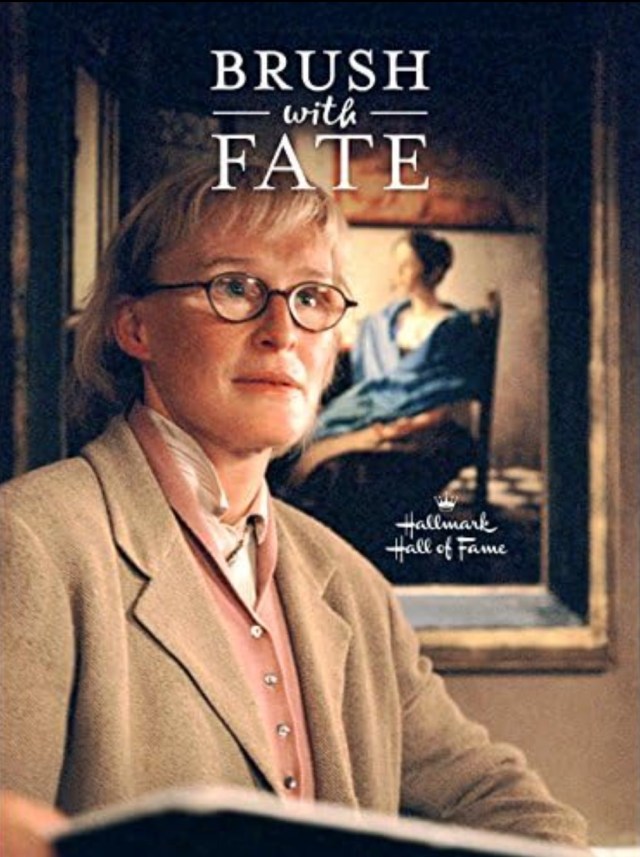
Hallmark Hall of Fame’s Brush with Fate poster created by CBS and Hallmark Hall of Fame Productions

Things I liked about the film:

An immersive experience: A movie’s creative team has the potential
to provide an immersive experience for their audience. To achieve this, attention
to detail must be emphasized. That piece of advice can work in the favor of a
historical period film. Brush with Fate explores several time periods and how a
valuable painting exists within a given period. Each time period represented
looked and felt historically accurate! Not only does every featured period
appear well researched, every detail was tended to. From the architecture to
the machinery, even right down to the characters’ shoes, the aforementioned attention
to detail was adopted by Brush with Fate’s creative team. The effort the
creative team took to make each part of the story appear authentic helped
create an immersive experience for the viewer!


Visual transitions: When a story moves from one point to
another, scenes will transition using visual cues to let the audience know when
the story is moving forward. Because Brush with Fate explores several
time periods, there are multiple transitions throughout the movie. These transitions
are creative and use visually interesting parallels. Toward the beginning of
the story, Cornelia puts her hand on her family’s
prized painting. As she begins to share the history of the painting, the next
part of the story begins with Laurens putting his hand on the same painting,
signaling a change in time periods. The transitions during Brush with Fate were also seamless, allowing
the story to maintain a steady flow.


Lessons taught by the painting: More often than not,
Hallmark Hall of Fame movies weave important lessons into their stories. While Brush
with Fate
is no different, the way the story’s lessons were incorporated was
unique compared to other Hallmark Hall of Fame titles. In the 2003 film, different
characters learn a different lesson based on their experience with the
painting. In one part of the story, a woman from 1717 struggles to feed her
family. At the same time, she adores a painting she and her husband found.
Turning to her mother for advice, the woman is reminded how the painting is not
a blessing. This statement expresses that paintings are replaceable luxuries
compared to irreplaceable things like family.

Paint palette image created by Freepik at freepik.com <a href=’https://www.freepik.com/free-vector/hand-drawn-artsy-tools_836777.htm’>Designed by Freepik</a> <a href=”https://www.freepik.com/free-photos-vectors/hand”>Hand vector created by Freepik</a> Image found at freepik.com

What I didn’t like about the film:

Characters touching the painting with their bare hands: Fictional
movies typically make their audience suspend their disbelief. Sometimes, though,
audiences are asked to suspend more disbelief than they bargained for. Brush
with Fate
revolves around a Vermeer painting that is known for being valuable
in historical and monetary importance. But throughout the movie, multiple
characters touch the painting with their bare hands, including Cornelia , who is well aware of the painting’s value. It
may seem petty of me to critique the movie for this small detail. However, this
happened enough times in the movie that I couldn’t look past it.


An unchronological story: As I mentioned earlier in this
review, Brush with Fate explores several time periods and how a valuable
painting exists within a given period. However, this story is not told in
chronological order. Instead, Cornelia shares the painting’s history by bouncing
around between time, going backwards and then forwards. Not telling the story
in chronological order raises unanswered questions, such as what happened to
the baby from the family in 1717 and who acquired the painting after Laurens’
daughter and her fiancé. Without spoiling the movie, I will say I know why this
creative decision was made. But I still wish Brush with Fate was told in
chronological order.

An abrupt ending:  Most
Hallmark Hall of Fame movies are stand-alone stories where the conclusions are
definitive. However, there are exceptions to the rule, such as Sweet Nothing
in My Ear
and A Painted House. Brush with Fate is one of these exceptions. But, in my opinion, I don’t think this
movie should have received an open ending. The purpose of showcasing the
painting in multiple time periods is to elaborate how the painting’s history is
long-lasting. With the rather abrupt ending, this purpose seems defeated, like
the painting’s history has stopped short. It also leaves some unresolved loose
ends.

Art tools image created by Freepik at freepik.com. <a href=’https://www.freepik.com/free-vector/flar-art-tools-pack_835368.htm’>Designed by Freepik</a>.  <a href=”https://www.freepik.com/free-photos-vectors/paint”>Paint vector created by Freepik</a>. Image found at freepik.com.

My overall impression:

Before I share my thoughts on Brush with Fate, I want
to thank every follower of 18 Cinema Lane! With each movie review, including
these Blog Follower Dedication Reviews, I try to find films I can recommend to
my readers. Looking back on this Hallmark Hall of Fame picture, I think I could
recommend it. This is a project where attention to detail was emphasized so
much, some parts of the movie felt theatrical. The creative team behind Brush
with Fate
allowed their production to be an immersive experience for their
audience. However, I think this story would be benefitted by being presented as
a multi-part mini-series. With several time periods being explored, as well as
many heavy subjects woven into the script, there’s only so much story to tell
in two hours. By giving each time period their own episode, more time could be
spent getting to know the characters and receiving answers to certain
questions. Like many Hallmark Hall of Fame movies, Brush with Fate is
based on a pre-existing book I haven’t read yet. Therefore, I can only review
this film as a film and not an adaptation.


Overall score: 7.1-7.2 out of 10


Have you seen Brush with Fate? Which book do you
think should have been adapted into a Hallmark Hall of Fame movie? Let me know
in the comment section!


Have fun at the movies!

Sally Silverscreen
Top 10 “Icks” from Hallmark Hall of Fame Movies

To address the elephant in the room (or on the blog in this case), the lack of blog posts this past week is due to how much time I’ve spent collecting research for my upcoming Sally Solves a Mystery article. While I have been working to solve a television-related mystery, the subject of Hallmark Hall of Fame movies came to mind. I’ve seen over fifty films from the Hallmark Hall of Fame collection. At this point, I, as a viewer, know what I like and don’t like when it comes to storytelling from this particular branch of Hallmark entertainment. These preferences are what inspired me to create this list of the top ten “icks” from Hallmark Hall of Fame movies! For my list, I will share which aspects of Hallmark Hall of Fame films I am not a fan of, providing examples from various titles in this collection. Before I begin the list, I want to address how this list is not meant to be mean-spirited or negative. My article is, simply, a way to express my opinion.

Taking out the trash photo created by Katemangostar at freepik.com. <a href=’https://www.freepik.com/free-photo/unhappy-woman-holding-trash-with-disgusting-smell_1305783.htm’>Designed by Freepik</a>. <a href=”https://www.freepik.com/free-photos-vectors/person”>Person image created by Katemangostar – Freepik.com</a>. Image found on freepik.com.

1. Underutilizing Talent

    In past movie reviews, I have pointed out when I felt an actor or actress’s talents were underutilized. What I’ve meant by this is an actress or actor’s talents not being incorporated into a film to the fullest extent. This can range from an actor or actress being miscast to an actor or actress having a limited presence in the movie, the latter serving two examples for this list. Marguerite Moreau’s involvement in 2002’s The Locket is one of the reasons why I wanted to check the film out. Because she was cast as the movie’s main supporting actress, I expected Marguerite to have a more consistent presence in the film than she actually did. As I said in my review of The Locket, Marguerite’s character barely appeared in the movie’s second half. Based on her performances I have seen from a variety of movies and television shows, I think Karina Arroyave’s acting talents could have lent themselves to a larger role in 2000’s Missing Pieces. Sadly, Karina’s on-screen appearances were so short, they seemed like “don’t blink or you’ll miss her” moments. While she was given a little more screen-time in the 1993 film, Blind Spot, I still feel Karina’s acting talents were underutilized.

    2. Films That Feel like Televised Plays

    When I choose to watch a Hallmark Hall of Fame movie, I expect to see a cinematic production of an original or pre-existing story. Some of these pre-existing stories happen to be plays. But there are times when a project’s creative team didn’t take advantage of how expansive film-making can be. Instead, they kept their adaptation as limited as the boundaries of the stages these plays came from. Like I pointed out in my review of the 1987 film, Foxfire, the cast is smaller and the story is condensed, forcing the characters to remain near or in Annie’s house. With the story surrounded by the natural beauty of Appalachia, I wish the movie’s emphasis had been placed on showcasing a variety of locations from this region. The 1972 remake of Harvey made similar creative choices, such as showing fewer locations throughout the story. This is different from the 1950 version of Harvey, where Elwood moves to multiple places.

    3. Oversimplifying Adoption/Foster Care

    Back in 2022, when I published my list of the top ten worst movies I saw that year, 1994’s A Place for Annie ended up as a Dishonorable Mention. One reason why I didn’t like this film is how the subject of adoption/foster care was oversimplified. For those who have never seen or heard of the movie, A Place for Annie is about a woman taking in a baby who is HIV positive. Over the course of the story, the woman, portrayed by Sissy Spacek, is in the process of adopting the baby. But she experiences an unexpected conflict when the baby’s biological mother shows up. The way Sissy’s and Mary-Louise Parker’s characters were portrayed and written presented a “good” mother vs. “bad” mother dynamic, even right down to the way each character dressed. Sissy’s character, Susan, becomes upset at the idea of Mary-Louise’s character, Linda, reuniting with her daughter, even though the intended purpose of foster care is for children to be reunited with their biological families. Because of the oversimplification of adoption/foster care in A Place for Annie, I couldn’t take the movie seriously.

    4. Characters Not Receiving Their Full Potential

    Speaking of articles from 2022, I’ll now bring up my list of top ten characters who didn’t reach their full potential. When I published this list, I explained when a character doesn’t receive their full potential, they aren’t given the opportunity to reach their goals, make their dreams come true, and allow their stories to be told to a satisfying extent. This list featured two characters from Hallmark Hall of Fame movies; Barry Klemper from The Boys Next Door and Amédée Chevalier from O Pioneers!. In the case of these characters, their stories were adapted from pre-existing source material. While I haven’t seen or read a stage version of The Boys Next Door, I have read O Pioneers!. I can understand why Willa Cather made certain creative decisions related to Amédée, as well as Hallmark Hall of Fame’s desire to keep the adaptation as close to the source material as possible. However, I still wish Amédée had received his full potential.

    5. Rehashed Stories

    For this part of my list, I am not talking about Hallmark Hall of Fame productions that are adapted from pre-existing plays or books. I am referring to Hallmark Hall of Fame movies that seem to copy stories from other films. Earlier in this list, I referenced the 1972 and 1950 versions of Harvey. After watching both versions, it feels like I watched the same movie twice, due to little variation between the two versions. I also felt this way about the 1996 film, The Summer of Ben Tyler. The movie seemed so similar to To Kill a Mockingbird, I wondered if Hallmark Hall of Fame was trying to remake the aforementioned film. I know story ideas are bound to get repeated over time. But, in my opinion, the Hallmark Hall of Fame productions should strive to create unique, distinct projects.

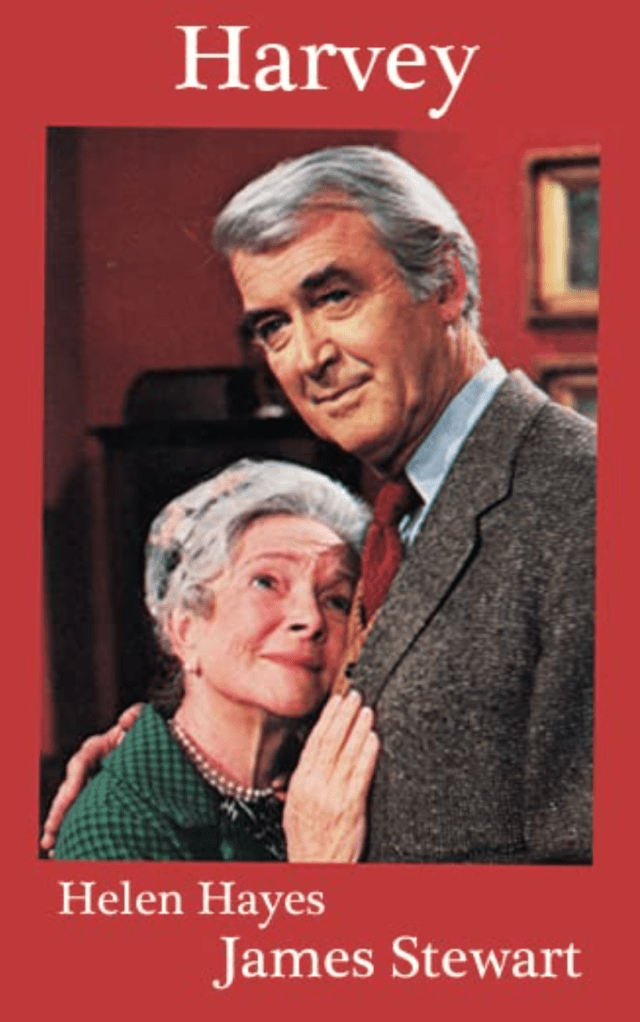
    Harvey (1972) poster created by Foote, Cone and Belding Productions, Hallmark Hall of Fame Productions, Talent Associates-Norton Simon, and National Broadcasting Company (NBC)

    6. Terrible Grandparents

    Grandparents, like any family member in a protagonist’s life, should, in my opinion, be a kind, friendly character that the audience can root for. Unfortunately, some protagonists aren’t so lucky. For the fifth annual Gold Sally Awards, when I created the inaugural Edwin P. Christy Award for most annoying character in film, I gave that award to Grandpa Marcus from 1995’s Journey. I explained how obsessed he became of his photography hobby, to the point where he became negligent of his grandchildren’s safety. In one scene, Grandpa Marcus makes his grandson, who doesn’t appear old enough to obtain a driver’s permit yet, drive a car so Grandpa Marcus can take pictures. The grandchildren make a joking comment about how their grandpa will photograph their car accident if something should happen to them, with the scene itself meant to be played as a wholesome, hilarious moment.

    Leonora Nelson is a bitter, mean-spirited woman in the 1997 film, Ellen Foster. At her daughter’s burial, Leonora blames her son-in-law for her daughter dying. She yells and screams at her son-in-law just seconds after her daughter’s casket was buried. As the story progresses, Leonora’s hatred for her son-in-law grows. Her actions range from smashing his Purple Heart medal with a hammer to telling her granddaughter, the titular Ellen Foster, she hates her because she looks like her father. I recognize Leonora is intended to be an awful character, serving as one of the many obstacles Ellen had to overcome. But that doesn’t take away from how, in my opinion, Leonora Nelson is one of the worst characters in Hallmark movie history.

    7. Productions That Feel Like Hallmark Channel Films

    Hallmark Hall of Fame movies began to premiere on Hallmark Channel in 2014. While there are films from this time period I like, such as Love Takes Flight and The Beach House, I am aware how, more often than not, these projects bear a formula similar to those from Hallmark Channel. One such example is how a romance is usually the center of a given story. The identities of films like The Beach House and Love Takes Flight are not as unique as Hallmark Hall of Fame movies from years past. Take, for instance, Missing Pieces and Caroline? from 1990. Both of these films revolve around mystery stories. However, each title presents its own distinct identity, with these two movies bringing something different to the Hallmark Hall of Fame collection.

    8. Unsupportive Parents

    Similar to what I said earlier about grandparents, parents of protagonists should, in my opinion, at least be supportive. Sadly, a protagonist’s parents may be unsupportive for a variety of reasons. In my list of top ten characters who didn’t reach their full potential, I mentioned how Barry Klemper’s father destroyed the momentum Barry had in The Boys Next Door. Long before his father showed up, Barry dreaded the meeting because of how unsupportive his father is. On the day of the meeting, Barry’s father intimidated and belittled his son, even making Barry feel incapable of performing a simple golf maneuver. There are times, however, when a protagonist’s unsupportive parents do not intend to be unsupportive. Heidi and Winston’s mother is a perfect example. In the 1990 movie, Caroline?, Winston and Heidi’s mother is overprotective due to Heidi having a disability. Her good intentions not only lead Heidi to be treated younger than her age, but also prevent Heidi’s academic needs from being met.

    9. Glossing Over Serious Subjects

    The Hallmark Hall of Fame collection has covered its fair share of serious subjects, ranging from the aforementioned adoption/foster care to terminal illnesses. But sometimes, a Hallmark Hall of Fame production will miss a good opportunity to address an important topic by glossing it over. The subject of racism is woven into the text of The Flamingo Rising book, with racism causing the protagonist, Abraham, to have self-image related issues. When the book was adapted into a Hallmark Hall of Fame movie in 2001, all mentions of racism were eliminated from the script. This decision was likely made to keep The Flamingo Rising movie “Hallmark appropriate”. At a very random moment in the 1996 film, Calm at Sunset, Russell Pfeiffer admits he has a drug addiction. There was no lead up to this revelation and the revelation itself was never addressed afterward. Calm at Sunset is based on a book I haven’t read. Therefore, I don’t know how the subject of addiction was addressed in the source material compared to the adaptation.

    10. A Dysfunctional Family for the Sake of It

      Six years ago, when I published my list of the top ten worst Hallmark movies of all time, I put the 2004 film, Back When We Were Grownups, at number one. As I mentioned in that list, the story’s family seems dysfunctional just for the sake of it. From what I remember, there was no clear reason for the family to be dysfunctional. This is very different from another Hallmark Hall of Fame production, 1998’s Saint Maybe. In that movie, a death in the family causes a ripple effect which leads to the family becoming dysfunctional. The dysfunctional nature of the family serves as motivation for various characters to make impactful changes in their lives. Comparing these two Hallmark Hall of Fame films, which are both adaptations of Anne Tyler’s books, I think Saint Maybe did a better job at showcasing how a dysfunctional family live their lives and work through their problems.

      Group of unhappy image created by Rawpixel.com at freepik.com. <a href=”https://www.freepik.com/free-photos-vectors/background”>Background vector created by rawpixel.com – http://www.freepik.com</a>. Image found at freepik.com.

      Have fun at the movies!

      Sally Silverscreen

      Concluding my Double Feature: 2004 Edition

      It’s time to wrap up another double feature, as both chosen titles, Hallmark’s Frankenstein and I Am David, have now been watched and reviewed! In the introduction, I brought up the following question:

      Based on these two movies, how has the cinematic landscape changed in twenty years?

      Looking back on each movie, a realization came to me. One thing I Am David and Hallmark’s Frankenstein have in common is the timelessness each story contains. It also helps how these stories are more straight-forward, which makes it easier for the audience to understand what is happening on screen. Realizing these statements could also be applied to The Polar Express, my answer to the aforementioned question is how, back in 2004, it seems like there was a desire on the cinematic landscape to create timeless entertainment. Now, twenty years later, studios and film companies are competing with one another to make the most relevant titles possible. On the current cinematic landscape, it’s all about capitalizing on trends and fads, creating titles for the here and the now. The problem with this film-making approach is how five, even ten plus years from that movie’s release, that movie will be dated on arrival. This film-making approach also makes movies seem more disposable instead of a long-lasting product with more opportunities to be revisited.

      Popcorn and movie ticket image created by Freepik at freepik.com. <a href=’https://www.freepik.com/free-photo/cinema-tickets-in-bucket-with-popcorn_2303439.htm’>Designed by Freepik</a>. <a href=”https://www.freepik.com/free-photos-vectors/layout”>Layout image created by Freepik</a>. Image found at freepik.com.

      Have fun at the movies!

      Sally Silverscreen

      Take 3: Hallmark’s Frankenstein (2004) Review (Double Feature: 2004 Edition Part 2)

      Thank you for joining me for the second part of Double Feature: 2004 Edition! Similar to my review of Sesame Street Presents: Follow That Bird, this review of Hallmark’s Frankenstein will be spoiler-free. If you’re curious about why I chose Hallmark’s Frankenstein for this double feature, you can check out the introduction in the link below.

      Introducing my Double Feature: 2004 Edition!

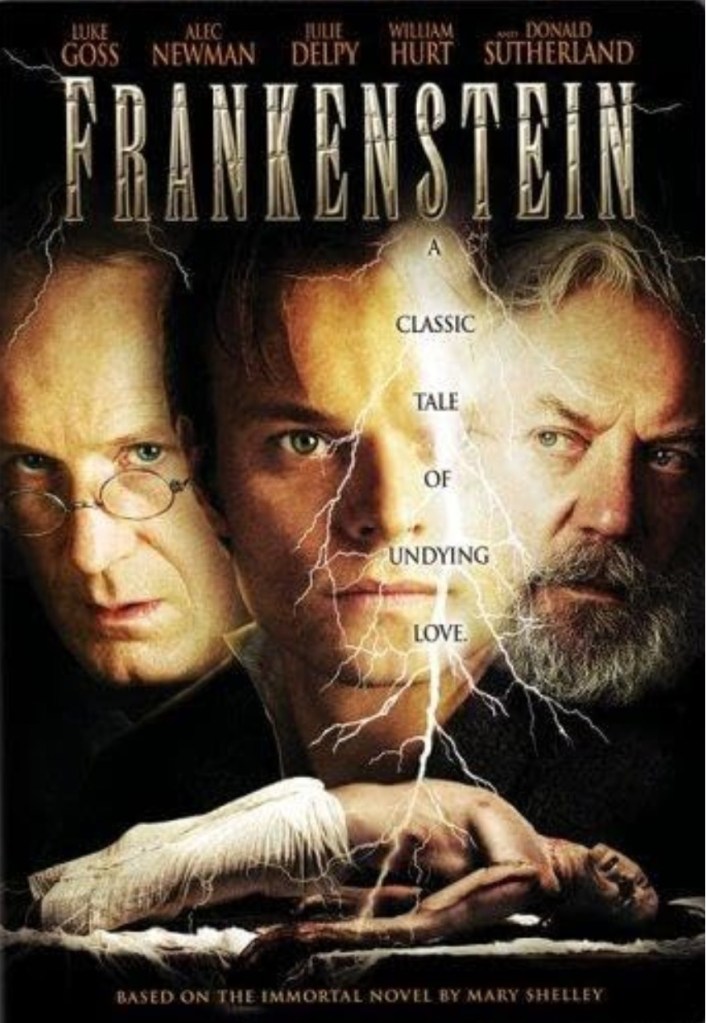
      Hallmark’s Frankenstein poster created by Hallmark Entertainment, Hallmark Channel, Silverstar Ltd., Larry Levinson Productions, and RTL

      Before I start this review, I need to explain why I’m referring
      to this version of Frankenstein as ‘Hallmark’s Frankenstein’. On
      Wikipedia, there is a page chronicling all the Hallmark Channel movies released
      between 2000 to 2015. In the section listing Hallmark Channel’s films from
      2004, Vincent Perez is listed as one of the stars of Hallmark’s version of Frankenstein.
      But if you click on the italicized title of Frankenstein, the link goes
      directly to Wikipedia’s page about the Hallmark movie starring Alec Newman. While
      Vincent did star in an adaptation of Frankenstein released in 2004, it
      is not the Hallmark version. I didn’t discover this error until after I had
      seen Vincent’s film.

      The reason why I included this screenshot in my review is to show my readers how Hallmark’s Frankenstein is listed on Wikipedia. Screenshot taken by me, Sally Silverscreen.

      1. What are your thoughts on 2004 as a cinematic year?

      2004 was a year where “event entertainment” took place. When I say “event entertainment”, I mean television or movie premieres that are popular enough to become anticipated events. I remember when full print ads would boast a new Hallmark Hall of Fame production, marking the movie itself as “must see television”. Four sequels for popular predecessors were released in 2004, earning a spot among the top ten highest grossing films of the year. Twenty years later, consumers have more options when it comes to entertainment. This provides fewer opportunities for “event entertainment” to take place. Even events that have always been considered “event television” are struggling to capture audience’s attention.

      2. Frankenstein premiered on Hallmark Channel on October 5th and 6th, 2004. How has the network evolved since the movie’s release?

      When Hallmark’s adaptation of Frankenstein premiered, Hallmark Channel was three years old. At the time, the network didn’t have the distinct identity it does today.  This allowed content to be less restrictive when it comes to creativity. 2004 saw the debut of Hallmark’s second network, Hallmark Movie Channel. On that network, a lot of Hallmark Channel’s previously aired programming made up Hallmark Movie Channel’s catalogue, as well as Hallmark Hall of Fame titles and acquired content. But in the twenty years this second network has existed, the channel’s name has changed twice, with the network now known as Hallmark Mystery. With Hallmark creating two channels, it provided more opportunities to create movies. As time passed, both networks adopted a more distinguishable identity.

      3. Is there anything about Frankenstein you liked or didn’t like?

      While I think the acting was one of the strengths of this movie, the two strongest performances came from Alec Newman and Luke Goss! Alec’s portrayal of Victor Frankenstein was so captivating because of the wide range of emotions incorporated into the role. His versatility made Victor feel like an authentic human being. From crying over the loss of a loved one to playfully teasing Elizabeth, Alec’s performance allowed Victor’s interactions with other characters to be interesting, with each interaction appearing genuine. Meanwhile, Luke utilized emotion to make The Creature a complicated character like he was in the novel. In fact, Luke’s emotionality spoke volumes in scenes where dialogue wasn’t required. One example shows The Creature after he escapes from Victor’s laboratory. When he seeks refuge in a barn, The Creature bursts into tears, overwhelmed by the fear and rejection directed toward him.

      When Frankenstein premiered on Hallmark Channel, it was released as a two-part mini-series. The first part revolved around Victor’s desire to create life, leading up to The Creature coming to fruition. But the second part was more drawn out, with scenes either longer than necessary or completely unnecessary. Frankenstein’s second part features a wedding reception that lasts about five minutes. I understand why that scene was included in the adaptation. In my opinion, though, the wedding reception should have been cut shorter or omitted from the script.

      4. In your Word on the Street story about a potential sequel for The Polar Express, you talked about the technology applied to that film. Could you detect any technology incorporated into Frankenstein?

      There were a few scenes where it appears CGI (computer generated images) was included in the film. Other than that, it didn’t look like technology (besides cinematography, sound editing, etc.) was relied on to create this adaptation.

      Snowy mountain image created by Freepik at freepik.com. <a href=’https://www.freepik.com/free-vector/landscape-background-of-snow-track-and-mountains_968656.htm’>Designed by Freepik</a>. <a href=”https://www.freepik.com/free-photos-vectors/background”>Background vector created by Freepik</a>. Image found at freepik.com.

      5. Did you develop any thoughts and/or questions while watching this film?

      In one of Victor’s science classes, Victor claims the brain is the most important body part because of its electrical connections between nerves and other body parts. As he is attempting to create life, Victor collects various body parts from the morgue and the graveyard. When The Creature is awakened, wouldn’t he remember his life and identity prior to passing away? Wouldn’t The Creature recognize the body Victor gave him is not the body he was born with? With Victor’s statement about the brain, wouldn’t the nerves in The Creature’s brain not connect with the rest of his body? I never thought of these questions until I saw Hallmark’s adaptation of Frankenstein.

      6. You’ve mentioned reading Frankenstein, but seeing few adaptations of the story. How does Hallmark’s version compare or contrast to the Frankenstein related movies you’ve seen?

      Besides Hallmark’s adaptation of Frankenstein, I’ve seen three films that incorporate elements of Mary Shelley’s story. But because The Curse of Frankenstein follows the source material closer than the other two films, I’ll be discussing that movie alongside Hallmark’s version of Frankenstein. When I reviewed The Curse of Frankenstein last year, I was disappointed by the creative liberties the film’s creative team adopted. One of these creative liberties was presenting The Creature as a bumbling, destructive machine. As I mentioned in answer number three, The Creature was a complicated character in the novel. While he was destructive, The Creature’s actions were not always impulsive. In Hallmark’s adaptation of Frankenstein, Luke’s performance and the screenwriting illustrated how complicated The Creature is. The Creature’s intelligence was also highlighted in this adaptation, adding to The Creature’s complexity. Shortly after he escapes from Victor’s laboratory, the audience can hear how The Creature already understands the English language, grasping concepts like God and Heaven, as well as reading Paradise Lost.

      7. Hallmark’s adaptation of Frankenstein is a made-for-TV production. Has there been a change in small screen cinema from 2004 to now?

      In the same year Hallmark Channel premiered their version of Frankenstein, Hallmark Hall of Fame movies debuted on major networks. But fast forward to 2024, Hallmark Hall of Fame is no longer utilized by Hallmark, even after moving to Hallmark Channel in 2014. These decisions are examples of how made-for-TV programming has become more exclusive. Since 2004, Hallmark Channel has grown into one of the biggest creators of made-for-TV content. In fact, Hallmark Channel and its two networks, Hallmark Mystery and Hallmark Family, are three of the few places creating and/or distributing made-for-TV movies today. Rewinding to twenty years ago, major networks were still willing to include made-for-TV programs in their schedules. With the changing television landscape, including the invention of streaming services, major networks are just trying to stay afloat.

      8. Now that it’s been twenty years since Frankenstein premiered, has it stood the test of time or become a product of its time?

      For the most part, Hallmark’s adaptation of Frankenstein stands the test of time! It helps how this project is bringing to life a story that is iconic and timeless. I mentioned in my review of The Curse of Frankenstein how an overarching message in Mary Shelley’s novel is some good intentions possibly leading to bad results. This message also overarches Hallmark’s adaptation of Frankenstein, as Victor strives to do the impossible. There are other timeless messages in this version of Mary’s story, such as prioritizing what is irreplaceable.

      9. After watching Frankenstein, is there anything you can take away from your movie viewing experience?

      Similar to my review of I Am David, I will describe Hallmark’s version of Frankenstein in one word. That word would be ‘immersive’. This production made me feel like I was transported to another time and place. A combination of the acting performances, set design, costume design, and screenwriting achieved the illusion of an immersive experience. As someone who has read Mary Shelley’s novel, I appreciate how close to the source material Hallmark’s project is. From what I remember, the majority of the book’s key events and elements were included in the script. With that said, I understand why Hallmark chose to split Frankenstein into two parts. But, in my opinion, the second part was weaker than the first part. Looking back on Hallmark’s adaptation and I Am David, Frankenstein is a more underrated film that was not only forgotten by time, but also overshadowed by other titles released in 2004, like A Boyfriend for Christmas and Love’s Enduring Promise. I’m hoping my review inspires other fans of Hallmark to discover this hidden gem!

      Popcorn and movie ticket image created by Freepik at freepik.com. <a href=’https://www.freepik.com/free-photo/cinema-tickets-in-bucket-with-popcorn_2303439.htm’>Designed by Freepik</a>. <a href=”https://www.freepik.com/free-photos-vectors/layout”>Layout image created by Freepik</a>. Image found at freepik.com.

      Have fun at the movies!

      Sally Silverscreen



      Take 3: I Am David Review (Double Feature: 2004 Edition Part 1)

      Thank you for joining me for the first part of Double Feature: 2004 Edition! Similar to last year’s review of The Great Muppet Caper, my review of I Am David is spoiler-free. If you’re curious about why I chose I Am David for this double feature, you can check out the introduction in the link below.

      Introducing my Double Feature: 2004 Edition!

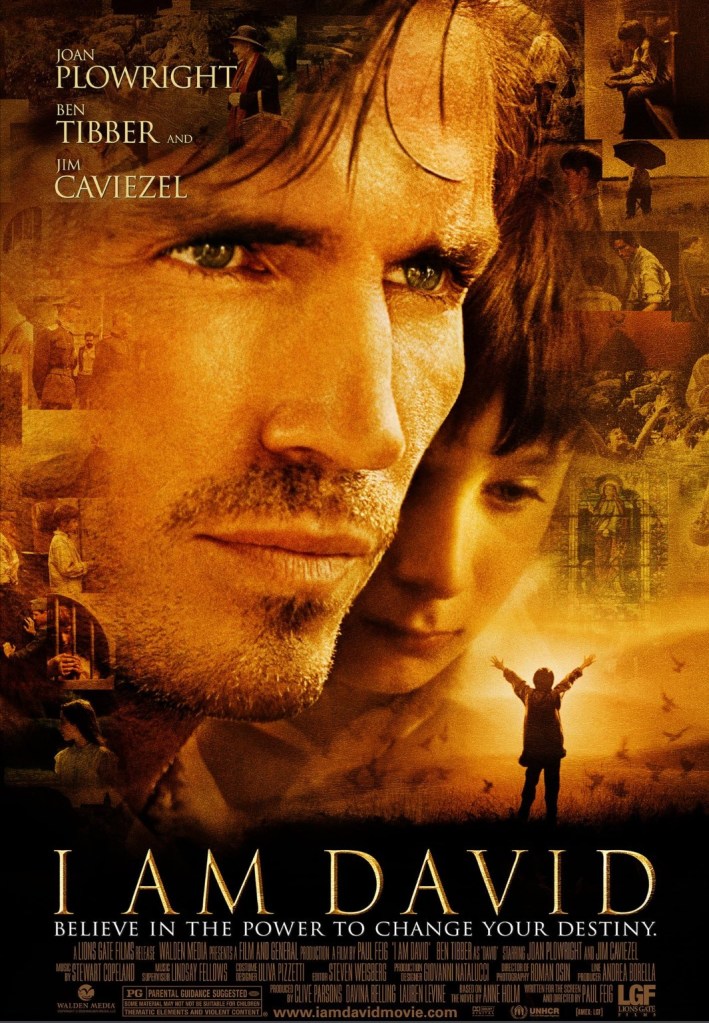
      I Am David poster created by Walden Media, Film and General Productions, Lionsgate Films, Artisan Entertainment, and David Productions Ltd.

      1. What are your thoughts on 2004 as a cinematic year?

      When I look back on the cinematic landscape of 2004, my first thought is how studios and film companies were more willing to create stand-alone productions. Twenty years ago, about fifteen sequels were released in theaters. In 2024, that number has increased, with about twenty-three sequels scheduled to premiere. My second thought about 2004 is how creativity was celebrated at the box office. The Polar Express, the reason why this double feature exists, was the tenth highest grossing film of 2004. Even though that movie was based on a pre-existing book, the production was not a remake or a sequel of a preceding film. Plus, The Polar Express brought something new to the cinematic table, as the movie was created through motion-capture technology.

      2. I Am David was released on December 3rd, 2004 (around “award season”). Why do you think the film was overlooked on the award circuit?

      The 77th Academy Awards was a televised event. This means those involved with the creation of the show had to make decisions that would increase or maintain higher viewership numbers. Million Dollar Baby, the movie that won Best Picture, was a film the majority of the Academy Awards’ audience had either heard of or seen. The movie was directed by Clint Eastwood and starred Hilary Swank, two actors this same Academy Awards audience were familiar with. Because I Am David premiered around the same time as Million Dollar Baby and lacked the star power Million Dollar Baby had, I Am David became overshadowed by a bigger, more popular production.

      2004 was when The Passion of the Christ made waves at the box office. Becoming the third highest grossing film of that year, it earned the distinction of being one of the most successful faith-based movies in history. Similar to Million Dollar Baby, The Passion of the Christ contained star power, directed by Mel Gibson and starring Jim Caviezel. I wouldn’t go so far as to call I Am David a faith-based movie. However, elements of faith are woven into the story. While Jim Caviezel stars in I Am David, his presence in this film is very limited. With all that said, I Am David became overshadowed by another big, more popular title.

      3. Is there anything about I Am David you liked or didn’t like?

      The story of I Am David revolves around the titular character escaping from a Bulgarian labor camp in 1952. Throughout his journey, David takes refuge in the natural landscape surrounding him. The natural environment in this film serves two purposes; protecting David and giving him a gateway to freedom. A peaceful scene where he casually walks through a tunnel of trees beautifully captures this idea, providing a symbolic light at the end of the tunnel. The importance given to Europe’s natural landscape allows it to become its own character, with the elements, more often than not, working in David’s favor. It also showcases a side of Europe that could be easily taken for granted.

      I Am David is a story where the audience learns more about David as the film progresses. While this keeps the audience invested in the film, this creative decision means answers aren’t provided until toward the end of the movie. On the one hand, I, kind of, wish some of the revelations about David were revealed sooner. But, on the other hand, major questions were answered within two plot twists that I found effective. Even though the longer wait for answers is a flaw, I was able to, for the most part, overlook it because of the strength of the plot twists.

      4. In your Word on the Street story about a potential sequel for The Polar Express, you mentioned the technology that was applied to the film. Could you detect any technology incorporated into I Am David?

      As far as I could tell, I didn’t sense any technology within I Am David other than cinematography, sound, and editing. Because of the nature of the movie, though, I don’t think technological film-making techniques were necessary.

      Italian countryside image created by Bill Silvermintz at freeimages.com. “FreeImages.com/Bill Silvermintz.” Photo by <a href=”/photographer/edudflog-58908″>Bill Silvermintz</a> from <a href=”https://freeimages.com/”>FreeImages</a&gt;.

      5. I Am David is based on a book published in the 1960s. Has the entertainment industry changed its approach to adapting pre-established stories?

      Throughout 2004, about twenty adaptations based on literature premiered in theaters. Out of those twenty, eleven adaptations contained a built-in audience for a variety of reasons. Observing which movies are scheduled to premiere in 2024, the entertainment industry is, once again, choosing source material with a built-in audience. But now this selection process has expanded beyond literature; with movies, tv shows, and popular characters receiving their own adaptations. Even though there were productions in 2004 based on popular IPs (intellectual properties), the number of adaptations based on IPs has doubled in twenty years, with about 44 of 2024’s films fitting this criterion. One of these films is the musical remake of Mean Girls. While the original movie was based on the book, Queen Bees and Wannabes by Rosalind Wiseman, the remake is based on the 2004 film.

      6. Did you develop any thoughts and/or questions while watching this film?

      I didn’t develop any questions while watching I Am David. But as I followed the story, I took note of the film’s exploration of light and darkness. When the film begins, David attempts his escape from the labor camp. This scene is intense, emphasizing David’s dire situation through limited lighting, cinematography, and music. Flashbacks are sprinkled throughout the story, showing only enough harshness to get the point across. When the lighter moments appear in the movie, they feel earned, taking place after David experiences a trial in his journey. Primarily showcased in bright lights and with peaceful, even cheery music playing in the background, these lighter moments address how our world can be a beautiful place. Showing the light and darkness taking place in the world, especially in Europe post World War II, is a more balanced way of presenting the environment surrounding David.

      7. On Ebert & Roeper, I Am David was not covered. Why do you think the movie was omitted from the show?

      Ebert & Roeper, one of the iterations of At the Movies, was a nationally televised program. Smaller titles with limited releases were sometimes featured on the show. But the types of movies that populated the program were mainstream productions with widespread releases. This decision was likely made to maintain the show’s viewership, similar to the aforementioned 77th Academy Awards. The choice to emphasize more mainstream films was also probably made to provide the show’s audience with a chance to check out the movies brought up on the show, as those titles would be showing in more theaters.

      8. Now that it’s been twenty years since I Am David premiered, has the movie stood the test of time or become a product of its time?

      This film has definitely stood the test of time! A major reason for this is due to the timeless, universal messages woven into the script. Perseverance, trying to find the goodness in our world, and kindness progressing the journey forward are messages most people can appreciate. These messages may also inspire audience members to apply them to their own lives.

      9. After watching I Am David, is there anything you can take away from your movie viewing experience?

      If I could describe I Am David in one word, it would be ‘genuine’. Every aspect of this film, from the acting performances to the screenwriting, allowed the story of David and his journey to be told with genuine emotion and sincerity! Creative decisions were delivered as pleasant surprises for me, such as the plot twists that caught me off guard. I was really impressed by the inclusion of Europe’s natural landscape, given enough emphasis to be its own character. The exploration of light and darkness provided a more balanced perspective on David’s world. I Am David is a movie I wish had been nominated during “award season”. In fact, I wish more people knew about this film! But if someone wanted to watch I Am David, I would suggest watching it knowing as little information about the story as possible, as I don’t want the film’s aforementioned plot twists to be spoiled for first time viewers.

      Popcorn and movie ticket image created by Freepik at freepik.com. <a href=’https://www.freepik.com/free-photo/cinema-tickets-in-bucket-with-popcorn_2303439.htm’>Designed by Freepik</a>. <a href=”https://www.freepik.com/free-photos-vectors/layout”>Layout image created by Freepik</a>. Image found at freepik.com.

      Have fun at the movies!

      Sally Silverscreen
      Introducing my Double Feature: 2004 Edition!

      Every time I publish one hundred posts, I commemorate the achievement by creating a double feature; reviewing two films that have at least one thing in common. My 800th blog post was a Word on the Street story about the possibility of a sequel for The Polar Express. Since that movie was released in 2004, I chose two titles from that year to review in this double feature. Those titles are I Am David and Hallmark’s adaptation of Frankenstein. It’s been a while since I attempted to answer a question through my double feature reviews. So, this time, I will try to find an answer to the following question:

      Based on these two movies, how has the cinematic landscape changed in twenty years?

      Popcorn and movie ticket image created by Freepik at freepik.com. <a href=’https://www.freepik.com/free-photo/cinema-tickets-in-bucket-with-popcorn_2303439.htm’>Designed by Freepik</a>. <a href=”https://www.freepik.com/free-photos-vectors/layout”>Layout image created by Freepik</a>. Image found at freepik.com.

      Have fun at the movies!

      Sally Silverscreen

      The 6th Annual Gold Sally Awards are Here!

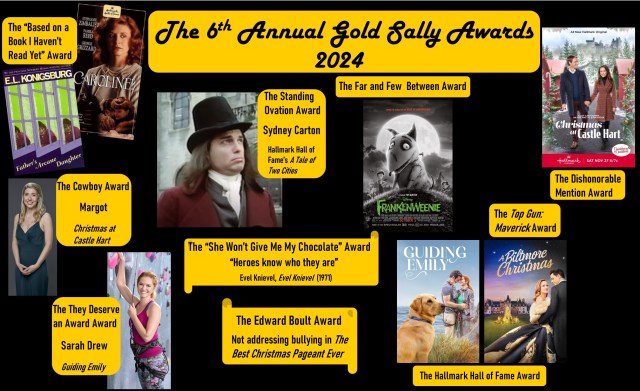
      Since 2024 is a Leap Year, I wasn’t going to miss the opportunity to publish the Gold Sally Awards on Leap Day! For new readers of 18 Cinema Lane, the Gold Sally Awards are one of my blog’s annual traditions to commemorate 18 Cinema Lane’s anniversary. These award categories are created by me, based on topics I’ve brought up on my blog. While most of the awards are the same as in 2023, a few of them have changed. For those awards, I’ll explain the significance of those categories. But just like last year, I will discuss why I chose each recipient. So, now, the moment you’ve been waiting for! The 6th Annual Gold Sally Awards are about to begin!

      6th Annual Gold Sally Awards Winners created by me, Sally Silverscreen.

      The “She Won’t Give Me My Chocolate” Award

      (Best Quote from a Movie)

      “Heroes know who they are” – Evel Knievel, Evel Knievel (1971)

      In my review of the 1971 biopic, Evel Knievel, I mentioned how surprised I was by the story’s messages and themes. One example I provided was when Evel explained to Linda why he doesn’t want a lettermen sweater. To elaborate how he doesn’t need to prove he’s a hero, Evel says to Linda, “heroes know who they are”. This quote is not only though-provoking, it is also profound without trying too hard to be. To me, that quote (as well as that scene) was given a lot of thought by the biopic’s creative team!

      The Standing Ovation Award

      (Character Most Deserving of Receiving Their Full Potential)

      Sydney Carton from Hallmark Hall of Fame’s A Tale of Two Cities

      My favorite character from Hallmark Hall of Fame’s A Tale of Two Cities is Sydney Carton! Because of his personality, I wanted to know more about him. I was also curious to see where his story would go. Without spoiling this movie, though, all I’ll say is Sydney deserved more than the story provided him. Similar to Kili from The Hobbit trilogy, Sydney is, in my opinion, the MVP of A Tale of Two Cities!

      The They Deserve an Award Award

      (An Actor or Actress Who Deserves Recognition)

      Sarah Drew (for her performance in Guiding Emily)

      In the Hallmark Movies & Mysteries film, Guiding Emily, the protagonist loses her eyesight. This prevented Sarah Drew, the actress who portrayed Emily, from using her eyes for emotional expression. However, she used other acting techniques to her advantage; such as body language, vocal inflections, and movements of the mouth. Sarah’s performance in Guiding Emily was so good, I specifically highlighted it in my review of the 2023 movie! Through versatility in her acting abilities, Sarah’s portrayal of Emily appeared believable! In fact, I think Sarah should have, at least, been nominated for an award.

      The Cowboy Award

      (Character Who Makes an Unnecessary, Drastic Change)

      Margot from Christmas at Castle Hart

      Cowboy, from the Hallmark Hall of Fame movie, A Painted House, is a character I’ve mentioned on 18 Cinema Lane. The context was when he was featured in the dishonorable mentions section of my list of the top ten characters ruined by Hallmark. Because I won’t spoil the aforementioned Hallmark Hall of Fame film, all I will say is Cowboy makes an unnecessary, drastic change that, in my opinion, was jarring to witness. It was also jarring to watch Margot, from Christmas at Castle Hart, drastically change. For most of the 2021 movie, Margot comes across as a somewhat annoying character obsessed with Irish stereotypes. But when her sister, Brooke, confronts her about how they should stop lying, Margot becomes a selfish and manipulative person. She even convinces Brooke into believing that if their lies fall apart, it will be Brooke’s fault. In an instant, Margot became a character who cared more about her career than about how others would be affected by her lies.

      The “Based on a Book I Haven’t Read Yet” Award

      (Movie Based on Source Material I Have Not Yet Read)

      Hallmark Hall of Fame’s Caroline?

      Hallmark Hall of Fame’s Caroline? became my favorite movie of 2023! After watching the film, I remembered how it was based on the book, Father’s Arcane Daughter by E. L. Konigsburg. As well as trying to check out as many Hallmark Hall of Fame movies as I realistically can, I’d like to read as many books based on Hallmark Hall of Fame movies as possible. In fact, I even created a Hallmark Hall of Fame reading challenge! Since I haven’t read Father’s Arcane Daughter yet, I need to find an excuse to finally seek this book out.

      The Edward Boult Award

      (Missed Opportunity in Cinema)

      Not Addressing Bullying in The Best Christmas Pageant Ever

      If you’re going to create a story for a younger audience, you need to be mindful when it comes to addressing serious, real-world issues. That’s because a younger audience can be very impressionable. The creative team behind the 1983 television production, The Best Christmas Pageant Ever, should have kept this in mind when they chose to not address bullying in their film. As I talked about in my review, the Herdman children bully their peers. The bullied children don’t stand up for themselves against the Herdmans. It also doesn’t help how the adults in the story do not resolve this issue. Because of everything I just said, some younger audience members might believe they shouldn’t bring up bullying if it occurs in their life.

      The Top Gun: Maverick Award

      (Movie That Exceeded My Low Expectations)

      A Biltmore Christmas

      When I included Top Gun: Maverick in my list of the top ten best movies I saw in 2022, I admitted how skeptical I was about the movie’s quality. As I said in that list, sequels released over ten years after their predecessor can be hit or miss. But Top Gun: Maverick exceeded my expectations, becoming my second favorite picture from that year! In 2023, I was skeptical about A Biltmore Christmas due to its hype and publicity. Similar to Top Gun: Maverick, A Biltmore Christmas was so good, it ended up in the top three of my year end best movies list! Like I said in my list of the best movies I saw in 2023, there were so many things Hallmark got right in this Christmas movie. It also helps how the story provided a different type of narrative for Hallmark’s Christmas presentations. Because of how much I liked A Biltmore Christmas, I’m looking forward to seeing what Hallmark has in store for this year’s Christmas season!

      The Dishonorable Mention Award

      (Worst Movie from the Dishonorable Mention Category)

      Christmas at Castle Hart

      Because I didn’t see enough movies to include an honorable mention category, I wasn’t able to award a winner for the Honorable Mention Award. Since my worst movies of 2023 list featured a dishonorable mention category, I was able to find a recipient for this year’s Gold Sally Awards. Christmas at Castle Hart is the most disappointing film to not make my worst films of the year list. In my review of that movie, I stated how I had waited since 2018 to see Stuart Townsend star in a Hallmark production. Sadly, the final product Hallmark gave me wasn’t worth the wait. Stuart’s acting talents were underutilized to the point where his character, Aiden, spent most of the story driving the female protagonist around Ireland. Christmas at Castle Hart contained other flaws, such as bad CGI and an underutilized subplot. Looking back on the Dishonorable Mention Award, I realized how both recipients were Hallmark films.

      The Far and Few Between Award

      (Best Movie from a Genre, Film Category, or Decade Not Often Covered on 18 Cinema Lane)

      Frankenweenie (2012)

      Even though 18 Cinema Lane has been around for six years, there are some areas of cinema that are not often covered on my blog. One of those areas is animation. While it’s rare for an animated movie to receive a movie review, it’s even rarer for an animated movie to appear on my best films of the year list. 2012’s Frankenweenie achieved these feats in 2023, presenting a collection of good creative choices as well as heart. This movie was such a pleasant, memorable surprise, which surpassed my expectations. I’m thankful I took the chance to write about it!

      The Hallmark Hall of Fame Award

      (Movie That Feels Like It Belongs in the Hallmark Hall of Fame Collection)

      Guiding Emily and A Biltmore Christmas

      When I shared my overall impression of Guiding Emily, I said how the movie felt reminiscent of Hallmark Hall of Fame projects of yesteryear. This is because the film tells a more unique story from what Hallmark typically creates today. In the case of A Biltmore Christmas, the story provided a different type of narrative within Hallmark’s Christmas films. It also included a historical component to the story. When Hallmark Hall of Fame was in its prime, historical/period films or movies with inspirational themes were added to the Hallmark Hall of Fame collection. If this collection still existed, Guiding Emily and A Biltmore Christmas would have been chosen as 2023’s Hallmark Hall of Fame presentations.

      Have fun at the movies!

      Sally Silverscreen

      Take 3: The Deep End of the Ocean Review

      In the We Heart Siblings Stories Week event, hosted by Hamlette (from Hamlette’s Soliloquy), I wanted to review a movie that was more underrated. While searching for the perfect title, I discovered a list on IMDB about the best movies about siblings. On that list, the 1999 movie, The Deep End of the Ocean, was featured. Back in 2021, when I reviewed Taming Andrew, I remember Gill, from Realweegiemidget Reviews, recommending The Deep End of the Ocean for a future review. Since I try to write about a recommended picture every now and then and since the 1999 film fit the blogathon’s criteria, I found the perfect title to discuss! Similar to Taming Andrew, The Deep End of the Ocean revolves around a family whose child was kidnapped and eventually returned. Since the missing child in the 1999 movie has siblings, those children’s perspective are included in the story. So, without further delay, let’s begin this review of The Deep End of the Ocean.

      The Deep End of the Ocean poster created by Columbia Pictures, Mandalay Entertainment, Via Rosa Productions, and Sony Pictures Releasing

      Things I like about the film:

      The acting: If a story includes a teenage character, it can be easy for that character to be written as an angsty or rebellious stereotype. But in The Deep End of the Ocean, Vincent never seemed like a stereotype or caricature.  Through Jonathan Jackson’s performance, Vincent came across as a realistic individual, trying his best to bottle up his emotions while putting on a brave face. After Ben/Sam was identified as Beth and Pat’s son, Vincent reveals to Beth how he has seen Ben/Sam around their neighborhood. When Beth questions him about this occurrence, Vincent’s demeanor is very nonchalant. His face displays a relaxed look and the tone of his voice sounds annoyed. But as the conversation continued, Vincent’s tone changed to irritation, his words sharply leaving his mouth. His eyes also took on an intense stare, which sometimes happens when Vincent is included in more dramatic scenes. This portrayal of Vincent was consistent with his younger self, keeping his feelings to himself while also trying to keep his family together. The subtle expressions from Jonathan Jackson do a good job at showing how emotions can trickle out of a character who has bottled up their emotions for so long.

      Treat Williams is an actor I’m familiar with because of his inclusion in the Hallmark community. Through his involvement in projects such as Chesapeake Shores, his emotions and expressions have always come across as genuine. This is also the case for his portrayal of Pat in The Deep End of the Ocean. One morning, Pat brings up the idea of growing their family with his wife, Beth. At the start of this conversation, Pat appears happy, even adopting a playful tone in his voice. When Beth, portrayed by Michelle Pfeiffer, explains why she doesn’t want more children, Pat gradually becomes frustrated. This frustration grows into anger, with both Pat and Beth yelling at each other. The way this argument unfolds feels realistic, each character bringing up good points with a sense of honesty. Because of the acting abilities and on-screen chemistry of Michelle and Treat, scenes like this one don’t feel over-the-top or melodramatic.

      Because this story revolves around the disappearance of Ben/Sam, I need to talk about Ryan Merriman’s performance. When I reviewed Taming Andrew, I said casting a young actor or actress who could, talent-wise, carry most of the movie is essential when a story revolves around a young character. The difference between Taming Andrew and The Deep End of the Ocean is how the whole family deals with Ben’s/Sam’s kidnapping in the 1999 movie, allowing Ryan is carry only part of the film. Despite this, Ryan still brought a good performance to the table, with a variety of emotions and expressions displayed. A great example was when Ben/Sam plays basketball with Vincent. The game starts off as a friendly duel, all smiles and playful banter. As the game continues, Ben/Sam becomes confused and even afraid as Vincent’s demeanor changes. Slowly but surely, Vincent allows his frustrations and irritation to get the better of him, going so far as to accidently hit Ben/Sam in the face. Ryan’s acting talents help Ben’s/Sam’s interactions with various characters create an interesting dynamic within the story.

      Showing the process of searching and locating a missing person: As I just mentioned in this review, the difference between Taming Andrew and The Deep End of the Ocean is how the whole family deals with Ben’s/Sam’s kidnapping in the 1999 movie. Another major difference between the two films is how The Deep End of the Ocean shows the entire process of searching and locating a missing person. When Ben/Sam is first reported missing, the story addresses the sense of urgency in the 24 hours to about a week after Ben/Sam is kidnapped. A clock is routinely shown to indicate how much time has passed. A television interview and a cover of People magazine show the desperation Ben’s/Sam’s family has in finding Ben/Sam. Even the community surrounding Ben’s/Sam’s family come together to create posters and make phone calls. Even though Ben/Sam is found almost ten years later, this part of the process is also taken seriously, from addressing the need for a search warrant to placing Ben/Sam in a foster home before reintroducing him to his family. Because this entire process was shown in the movie, it gives the audience a sense of closure.

      Featuring different perspectives: Like I’ve been saying in this review, The Deep End of the Ocean addresses how the whole family deals with Ben’s/Sam’s kidnapping. Each member of Ben’s/Sam’s family handles his disappearance differently throughout the course of the story. Beth is filled with grief over the situation. From giving up on her photography career to staying in bed most of the day, she carries a great sadness in her mind and heart. Meanwhile, Pat tries desperately to find the silver lining in life. He continues to work at a local restaurant while maintaining his dream of opening his own restaurant. Young Vincent is troubled by what happened, as well as becoming overshadowed by his little brother. He bottles up his feelings and tries to hold his family together. With the strength of the acting performances and the screenwriting, the dynamic among the family becomes fascinating to watch.

      The We Heart Sibling Stories Week banner created by Hamlette from Hamlette’s Soliloquy

      What I didn’t like about the film:

      An underutilized perspective: When Ben/Sam was kidnapped, Kerry was just a baby. Years later, Kerry is confused by her mother’s, Beth’s, reaction after a chance encounter with Ben/Sam. This is because she has no recollection of the events surrounding her brother’s disappearance. Because of everything I just said, Kerry’s perspective didn’t add much to the overall story. In order to utilize Kerry’s perspective, I wish she was written as either a teenager or slightly younger than Vincent at the time of Ben’s/Sam’s kidnapping.

      A few continuity errors: After the time jump from the late ‘80s to “nine years later”, Vincent is reintroduced as a sixteen-year-old with long hair. In the very next scene he’s featured in, Vincent is shown with short hair. No explanation is provided for the sudden change in hair style and none of the other members in Vincent’s family seem to notice this change. Yes, Officer Candy Bliss mentioned to Beth how Vincent needs a haircut. But that doesn’t explain this error in continuity. Even though this flaw was a minor one in The Deep End of the Ocean, the specific continuity issue I described is a glaring one.

      A random dramatic moment: Toward the end of The Deep End of the Ocean, Vincent is arrested. To me, this dramatic moment felt random. I’m aware how this film is based on a book I haven’t read. But according to what the movie shows, Vincent never came across as a character who was a trouble-maker or someone seeking attention. Jonathan Jackson’s portrayal of Vincent shows this is a character that is not a stereotypical teenager displaying “teenage angst”. With the inclusion of Vincent’s arrest, however, it almost seems like that part of the story is contributing to the angsty and rebellious teenager stereotype.

      Restaurant waitress and guest image created by Freepik at freepik.com. <a href=”https://www.freepik.com/free-photos-vectors/food”>Food vector created by freepik – http://www.freepik.com</a>. Image found at freepik.com.

      My overall impression:

      Throughout this review, I’ve been comparing and contrasting Taming Andrew and The Deep End of the Ocean. That’s because I was recommended The Deep End of the Ocean when I reviewed Taming Andrew. After seeing (and writing about) both films, it seems the only similarity these titles have is how the story revolves around a missing child being reunited with their family. If anything, The Deep End of the Ocean shares similar ideas and themes with The Face on the Milk Carton. Speaking specifically about the 1999 movie, this is a production I could take seriously. The acting performances were strong, creating a dynamic among the characters that was interesting to watch unfold. The screenwriting allowed the story and subjects within them to be honestly and respectfully told. But because of how serious the subject matter is, The Deep End of the Ocean does not have a high re-watchability rate. However, the film provides a mostly complete picture of the emotional rollercoaster the story’s family experienced.

      Overall score: 7.3 out of 10

      Have you seen The Deep End of the Ocean? Have you read the movie’s source material? Tell me in the comment section below!

      Have fun at the movies!

      Sally Silverscreen
      Word on the Street: Could a Sequel to ‘The Polar Express’ Come to a Theater Near You?

      While conducting research for this year’s Sally Solves a Mystery article, I came across an interesting movie news story from the website, ComicBook. Gary Goetzman, one of the producers of the 2004 Christmas film, The Polar Express, is eager to work on a sequel for the aforementioned movie. Despite the excitement, Gary recognizes the challenges of creating a sequel twenty years after the first film. In an article written by Brandon Davis, Gary talks about his film-making plans, stating, “But it becomes, there’s so much involved with, ‘Who’s artistic property would that be? Would that be?’ It’s just not like, ‘Hey, let’s go do another free sailing! So, they all take time and that’s okay because we don’t mind things going slowly. But that is trying to be worked out now, for sure, Polar 2. Yes.”

      Railway Train image created by Freepik at freepik.com. <a href=’https://www.freepik.com/free-vector/hand-drawn-train-retro-background_1112415.htm’>Designed by Freepik</a>. <a href=”https://www.freepik.com/free-photos-vectors/background”>Background vector created by Freepik</a>. Image found at freepik.com.

      When I first heard of this piece of movie news, two thoughts came to mind. The first thought was how will the creative team behind a sequel to The Polar Express prevent the film from looking dated? One reason why The Polar Express is such a note-worthy title in cinematic history is the motion capture technology that was applied to the film. In 2004, that style of film-making was revolutionary, viewed then as “ahead of its time”. But twenty years later, some people have criticized The Polar Express for appearing as “uncanny valley” due to how fluid technology is. The second thought was how a sequel to The Polar Express likely won’t have long term success at the box office. 2024 will be oversaturated with sequels, with about twenty-three sequels planning to premiere in theaters. Some notable sequels received disappointing box office results in 2023, such as Fast X, Indiana Jones and the Dial of Destiny, and Shazam: Fury of the Gods. With that said, I think Gary Goetzman should take the money, time, and energy that would have gone toward a sequel to The Polar Express and adapt a different Christmas story.

      Santa stationary image created by Freepik at freepik.com. <a href=’https://www.freepik.com/free-vector/creative-christmas-letter-and-envelope-template_3281562.htm’>Designed by Freepik</a>. <a href=”https://www.freepik.com/free-photos-vectors/christmas”>Christmas vector created by Freepik</a>. Image found at freepik.com. 

      What are your thoughts on this piece of movie news? Do you like the idea of The Polar Express receiving a sequel? Tell me in the comment section!

      Have fun at the movies!

      Sally Silverscreen

      Link to the referenced article: https://comicbook.com/movies/news/polar-express-2-development-gary-goetzman-tom-hanks/

      The Top Ten Best Movies I Saw in 2023

      As I mentioned in my list of the top ten worst movies I saw in 2023, I saw enough films to create a best movies of the year list! But because I saw more movies I disliked than liked, there aren’t enough films to create an honorable mentions section. When I look back on the best films I saw this year, I realize the majority of the titles are made-for-TV productions. Looking specifically at the top three best movies of 2023, I noticed a shared theme; all of the movies contain historical fiction stories. Since I reviewed most of the films on this list, I will provide the links to those reviews in this article. So, as the sun sets on 2023, let’s start my list of the top ten best movies I saw this year!

      Image by Freepik

      10. Curious Caterer: Grilling Season

      Out of all the movies in the Curious Caterer trilogy, I’d say Curious Caterer: Grilling Season is the best film! It improves on some of the predecessor’s flaws, like adding more humor into the script. The film also made different creative decisions, such as giving Marla more involvement in the mystery, that proved this series still has many ideas at the creative team’s disposal. One of the strengths of the Curious Caterer series, including the sequel, is the quality of the acting performances! From the main actors to the supporting talent, each on-screen interaction appeared so natural, it allowed the story to feel immersive. As of late 2023/early 2024, there have only been two mystery movies announced by Hallmark Movies & Mysteries; True Justice: Family Ties and Gilded Newport Mysteries: Murder at the Breakers. Hopefully, the network will consider continuing the Curious Caterer series.

      Take 3: Curious Caterer: Grilling Season Review + 455 Follower Thank You

      9. Christmas Princess (2017)

      Revisiting this film after seeing it for the first time six years ago, Christmas Princess still holds up! What works in this movie’s favor is how it focuses on Donaly’s journey to the Rose Court. This creative choice not only prevented the 2017 made-for-TV project from adopting several Christmas related tropes and cliches, it also gave the movie a chance to tell a more unique story for a Christmas production. Other good creative decisions include Donaly’s wardrobe and providing a thorough explanation of the Rose Court process. Looking back on Christmas Princess, I’m surprised there hasn’t been more movies made related to the Tournament of Roses. It’ll be interesting to see if a studio or network finds a story inspiring enough to adapt into a film!

      Take 3: Christmas Princess (2017) Review

      8. Frankenweenie (2012)

      As I’ve said in past reviews, I rarely receive an opportunity to write about animated movies. So, it is even rarer for an animated title to appear on my best of the year list. What made 2012’s Frankenweenie so memorable was a collection of good creative choices. Some of them include the creatures within the story, presenting the film in black-and-white imagery, and sprinkling “Easter Eggs” throughout the movie. But another reason why Frankenweenie landed on my best movies of the year list is how much heart this story contained. Sure, I knew this project would be a cute take on Mary Shelley’s book. However, the heart-filled nature of the film’s story was such a pleasant surprise!

      Take 3: Frankenweenie (2012) Review + 470 Follower Thank You

      7. Mystery on Mistletoe Lane

      After the release of Murder, She Baked: A Plum Pudding Mystery, I’ve always wondered why Hallmark Movies & Mysteries didn’t create more Christmas themed mystery films. Mystery on Mistletoe Lane proved that the network should, at least, consider making more mystery stories that take place around Christmastime. With festive clues and well-written riddles, the mystery itself left me on the edge of my seat, curious to see how the mystery would be resolved. I also liked the movie’s subplot, as it was interesting to see the creative ways Christmas activities were incorporated into the story. Another factor that worked in the favor of Mystery on Mistletoe Lane is how the mystery provided lower stakes. This allowed the movie to maintain the cheerful and light-hearted tone most viewers expect from Hallmark’s Christmas offerings.

      6. RKO 281

      Toward the end of my review of RKO 281, I said good films leave a lasting impression. Not only did the 1999 movie leave a lasting impression, it earned a spot on my best of the year list! There are many aspects of RKO 281 that are so good, you will find yourself saying, “Wait, this is an HBO film”? Every component of this movie goes above and beyond, looking and feeling like it should have received a theatrical premiere. For every “classic” or “iconic” film, there is a journey for how that film came to exist. The journey shown in RKO 281 made me appreciate the efforts taken to bring Citizen Kane to the big screen. Reflecting on both Citizen Kane and RKO 281, it makes me wonder if other well-known movies have an incredible behind-the-scenes story worthy of its own film?

      Take 3: RKO 281 (1999) Review

      Curious Caterer: Grilling Season poster created by Crown Media Family Networks and Hallmark Movies & Mysteries

      5. Haunted Harmony Mysteries: Murder in G Major

      When I talked about Jesse Stone: Night Passage in my top ten worst movies I saw in 2023 list, I mentioned how, for me, 2023 was not the year for mysteries. However, there were a few stand-out mystery movies, with Haunted Harmony Mysteries: Murder in G Major being one of them. In the 2020s so far, Hallmark Movies & Mysteries have premiered mystery films that lack the “coziness” viewers have come to expect from the network’s mystery projects. Haunted Harmony Mysteries: Murder in G Major brought that “coziness” back, filling a void Hallmark Movies & Mysteries have been abandoning. Because the story incorporates a ghost, it gives this movie a unique identity and adds more creativity to the realm of Hallmark’s mystery library. As I said earlier in this list, there have, so far, only been two mystery movies announced by Hallmark Movies & Mysteries. Sometime in 2024, I hope Hallmark turns Haunted Harmony Mysteries into a series, as there is so much potential for this story to lend itself to a multi-chapter title!

      4. The Great Muppet Caper

      If I could describe The Great Muppet Caper in one word, it would be “joyful”. That’s because, as I said in my review, this movie exudes so much joy! Each Muppet character had a specific purpose within the story, making every Muppet feel important. The jokes were well delivered, thanks to clever writing and solid acting. The Great Muppet Caper contains a simpler story that is easier to follow. But because of how good other aspects of this film are, that simplistic story works in The Great Muppet Caper’s favor. Since I liked the 1981 movie, maybe, in 2024, I’ll check out other productions featuring the Muppets!

      Take 3: The Great Muppet Caper Review (The Great Muppet Guest Star Caper Double Feature Part 1)

      3. A Biltmore Christmas

      Similar to Top Gun: Maverick, I had low expectations for A Biltmore Christmas. Hallmark’s decision to give the 2023 Christmas movie a lot of hype and publicity made me skeptical of the movie’s quality. When I finally checked the film out, I was pleasantly surprised by how good it was! There was so many things Hallmark got right; from the strength of the cast to the attention given to historical accuracy. While this type of story is nothing new for romance films, it does provide Hallmark Channel with a different type of narrative for their Christmas pictures. Within the 2020s so far, I noticed how Hallmark is creating more projects that have historical fiction elements. I’m interested to see what the network’s next big, historical fiction, Christmas movie ends up being in 2024!

      2. Hallmark Hall of Fame’s A Tale of Two Cities

      When I shared my overall impression of A Tale of Two Cities, I stated how both Oliver! and Nicholas Nickelby found a place in my year-end best movies lists. I also stated how that tradition would continue, as the Hallmark Hall of Fame adaptation of A Tale of Two Cities left such a good impression on me. However, this is the first time a Charles Dickens adaptation has earned a spot in my best list’s top three! Even though this film is longer than most Hallmark productions, it never feels like two hours and thirty-six minutes. Instead, A Tale of Two Cities feels like a well-paced, well-written, and well-acted depiction of Charles Dickens’ work. The creative team’s attention to detail also added to the movie’s great quality. It showed me the people who created this adaptation cared about the project they were working on. I have said before how I wanted to see as many Hallmark Hall of Fame productions as realistically possible. I hope to find more Hallmark Hall of Fame movies that are just as good as A Tale of Two Cities!

      Take 3: Hallmark Hall of Fame’s A Tale of Two Cities Review

      1. Hallmark Hall of Fame’s Caroline?

      I know there’s no such thing as the “perfect” Hallmark Hall of Fame movie. But 1990’s Caroline? is the closest thing to it! The strengths of the project far outweigh the flaws, coming together to create a film that is intriguing, creative, and even thought-provoking. I liked seeing the characters’ interactions, as they made the movie captivating to watch. Similar to Hallmark Hall of Fame’s A Tale of Two Cities, the creative team behind Caroline? gave attention to detail. In the case of the 1990 film, this attention to detail was placed in differentiating between the past and the “present”. In my opinion, Caroline? is one of the more underrated Hallmark productions. I also believe it should have been re-released on DVD.

      Take 3: Hallmark Hall of Fame’s Caroline? Review + 460 Follower Thank You

      Hallmark Hall of Fame’s Caroline? poster created by Hallmark Hall of Fame productions, CBS, and Republic Pictures Home Video

      Have fun in 2024!

      Sally Silverscreen