Before I start this tag, I’d like remind everyone that Thursday, March 19th, is the last day to cast your vote for the Best Actor of the 2nd Annual Gold Sally Awards! The Best Actress poll will be re-posted on the 20th! Here is the link to the poll:
Originally, I was going to talk about Black Widow being postponed because of the Coronavirus or the possibility of Apple buying Disney. However, I already published a Word on the Street story discussing several movies’ release dates being affected by the Coronavirus, including some titles from Disney. I also mentioned the Coronavirus on two separate occasions; in the aforementioned Word on the Street story and in the most recent re-cap of When Calls the Heart. So, I won’t be talking about those things in an effort in sound less repetitive. Instead, I’ll be participating in the TBR Tag, in honor of achieving the milestone of publishing 350 posts! Posting this tag is very fitting, since March is National Reading Month. I also got the idea to participate in this tag after reading Katie’s post from Never Not Reading. To my readers, followers, and visitors who are not aware, TBR stands for “To Be Read”. TBRs are comprised of lists and collections of books that one would like to read. While I primarily talk about movies on 18 Cinema Lane, I do like to talk about books from time to time.
If you’d like to read Katie’s post, here’s the link:
For me, I have two ways of organizing which books are on my read-ar (get it? Radar? Reading?). I have a real-life bookshelf in my house where I place several books that I’d like to read. My private board on Pinterest contains a list of books that sound interesting to me. For books that I’m unsure about, I have a list called the “TBR Holding List”, where I’ll write down the name of the book and author until I can determine if I’ll add it to my Pinterest board.
2. Is your TBR mostly print or ebook?
I would say that the majority of my TBR collection consists of physical books. However, there are a few ebooks that have caught my eye, such as Chip Crockett’s Christmas Carol.
3. How do you determine which book from your TBR to read next?
This question depends on two things. The first is what I feel like reading at that given time. Right now, I’m finishing a book that has over 300 pages, so my next read will contain a shorter page count. The second is whether I’m participating in a readathon. I try to match prompts with books I already own. If one of the books I have conveniently matches one of the prompts, I’ll likely read that book sooner.
4. A book that’s been on your TBR the longest.
That would have to be Two Little Girls in Blue by Mary Higgins Clark! I saw the book’s cover in a magazine advertisement years ago. When I read the synopsis, I knew I wanted to eventually read it. Fortunately, I purchased the book at a rummage sale three years ago! Now, all I have to do is set aside some time to read the book.
5. A book that you recently added to your TBR.
For my real-life bookshelf, I added Amy Foster and Words on Bathroom Walls, as I received those books as Christmas presents. For my Pinterest board, the last book I added to that list is December Stillness by Mary Downing Hahn.
6. A book on your TBR strictly because of its beautiful cover.
Whenever I add a book to my collection, it’s because the story itself sounds interesting. Even though I have books on my shelf and list that have photogenic covers, the way a book looks is not the sole reason why I want to read any story.
This is a picture of my copy of Amy Foster I received for Christmas. Screenshot taken by me, Sally Silverscreen.7. A book on your TBR that you NEVER plan on actually reading.
Currently, I can’t think of any books that I’m not interested in reading. If a book is on my shelf or list, it’s because I want to read it. It wouldn’t be there if I didn’t want to check it out.
8. An unpublished book on your TBR that you’re excited for.
Unfortunately, I don’t have any answers for this prompt, as every book in my TBR collection has been published at some point.
9. A book on your TBR that basically everyone has read except you.
I will say The Night Circus by Erin Morgenstern! I’ve seen this book on several Booktube (the book community on Youtube) videos. I do own a physical copy of the story. However, I still haven’t read it.
10. A book on your TBR that everyone recommends to you.
There are so many Booktube videos that have brought up The Selection series by Kiera Cass. Some people seem to like it, while others dislike the books. Since I own the first book in the series, I would like to read it, as I want to see where my opinions lie on this particular spectrum.
11. A book on your TBR that you’re just dying to read.
As I’ve mentioned before, I’m really looking forward to the film adaptation of Words on Bathroom Walls! However, as of March 2020, the movie is still in post-production. Until it’s finally released, I’ll just read my copy of the book. Fortunately, I plan on reading it very soon!
12. The number of books on your Goodreads TBR shelf.
I don’t have a Goodreads account. But, as I’ve mentioned in this tag, I do have a real-life shelf. On it, I own 51 books that are a part of my TBR collection. Meanwhile, my Pinterest board boasts 186 books. In total, my collection contains 237 books!
Before I start this blog follower dedication review, I’d like remind everyone that Thursday, March 12th, is the last day to cast your vote for the Best Actress of the 2nd Annual Gold Sally Awards! The Best Actor poll will be posted on the 13th! Here is the link to the poll:
Last week, I received 185 followers on 18 Cinema Lane! To everyone that chose to follow my blog, thank you so much! Your belief in me, as a blogger, is what keeps this site going! Because of this achievement, it’s time for another blog follower dedication review! For this post, I’ll be talking about a film that was released in March of 2013. The only movie with a 2013 release date on my DVR was The Carpenter’s Miracle. Not only did it premiere in March of that year, but reviewing it now is very fitting. The Lenten season is upon us. This is a collection of days leading up to the Easter celebration. The events in The Carpenter’s Miracle revolve around the Easter holiday, making the film an appropriate choice for this time of year. Before watching this movie, I had seen Cameron Matheson’s acting work from Hallmark, as well as in the Lifetime movie, The Wife He Met Online. Some of those projects have been better than others. However, Cameron always finds a way to bring the best of his acting abilities to the screen!
This poster for The Carpenter’s Miracle verifies that I, indeed, saw this movie. Screenshot taken by me, Sally Silverscreen.Things I liked about the film:
The acting: As I said in the introduction, I’ve enjoyed watching Cameron Matheson’s performances in various Hallmark films. The believability he brings to his roles is what makes these performances so great to watch! Cameron’s portrayal of Joshua was no different, showcasing how broad his acting range is. In the film’s opening scene, Joshua can be seen trying to save a young boy’s life. This scene is a perfect example of how good Cameron’s acting abilities are. I also felt the same way when I saw Michelle Harrison’s performance! Like Cameron, Michelle has appeared in several Hallmark pictures, including the upcoming film, Aurora Teagarden Mysteries: Heist and Seek. When her character, Sarah, finds out her son had died, Michelle’s acting talents really shined through. Not only was her portrayal believable, but she was also allowed to show off her broad acting range! Another actress that has appeared in Hallmark’s movies is Sarah-Jane Redmond. What I liked about her performance was how she effectively used facial expressions and voice inflections in a variety of scenarios. These things helped her portrayal of Delia seem convincing! A great example is in the scene where her character meets Joshua for the first time.
The cinematography: The Carpenter’s Miracle had better cinematography than I expected! The way some of these scenes were presented was creative and appealing to the eye! In one scene, Joshua visits his mother, Helen, at a local nursing home. While there, they watch the rain-drops falling on the window. During this scene, the camera cuts between the characters and the window. This creative choice gives the audience a chance to view that scene from Joshua and Helen’s perspective. The movie’s first scene was presented in a gray hue, showing Joshua’s act of rescuing a young boy as a dire situation. Because of this scene’s presentation, it brought forth the feelings of fear and uncertainty.
How Christianity/faith was included in the story: References to Jesus and the Bible were made throughout the story. The events in the film also take place around the Easter holiday. However, these references never feel preachy or heavy-handed. Instead, any mention of Jesus and Biblical themes are naturally woven into the script. The way they were written felt like they contained a double meaning: one connected to the film’s events and the other toward Christian messages and themes. The narrative itself placed more emphasis on a story than on delivering a message. Any Christian messages that appeared in the movie organically grew from the situations the characters experienced.
The protagonist given little to do: In the Bible, Jesus performs many acts that impact a variety of people. Because Joshua is meant to be a Jesus-esque figure in The Carpenter’s Miracle, you’d think he would have a packed schedule within the story. But within an hour and twenty-seven minutes, Joshua isn’t given much to do. Yes, he does help others through the power of healing. However, he only creates three miracles in the movie. One of them is heavily prioritized, causing the story to focus on the aftermath of the event. For the majority of the film, Joshua is seen spending time with Sarah, visiting his mother, or performing small maintenance jobs.
Limited journalistic presence: The main plot of The Carpenter’s Miracle is about how Joshua saves a young boy’s life. This event causes Joshua to receive a lot of attention. If a situation like this happened in real life, it would likely be covered in the news for about a week. People would also be talking about it on social media, with an official hashtag possibly being created to commemorate the act. In The Carpenter’s Miracle, the presence of journalism was very limited. The aforementioned event was covered on only one local news station. This same event was addressed on a nationally aired news program weeks after it occurred. The journalistic presence in the movie not only felt unrealistic, but it also seemed like there was little to no sense of urgency.
Too many plot points: There were several plot points featured in The Carpenter’s Miracle. This caused some of them to be addressed more than others. One example revolves around Joshua’s mother, Helen. Throughout the movie, she deals with a serious medical condition. While this situation does get resolved, it feels like it gets taken care of as a result of the film’s run-time. Personally, I wish this film had fewer plot points than it did. That way, they could have all been equally explored.
The Carpenter’s Miracle is not the first faith-based film I’ve reviewed, especially for a blog follower dedication review. Last January, when I received 60 followers, I reviewed the 1959 movie, Ben-Hur. Looking back on both pictures, I can honestly say that Ben-Hur is a stronger project than The Carpenter’s Miracle. The story of the latter film could have been given a stronger script. It wasn’t as impactful as I had hoped. Despite this, the movie did contain aspects that I liked. For one thing, I did like the inclusion of Christianity/faith. The Easter holiday highlights themes like putting the needs of others before one’s self. Ideas such as this one were expressed well within the story. Even though I thought The Carpenter’s Miracle was an ok film, it is an interesting film to watch during the Lenten season. I’ve seen other movies with a similar story, with Working Miracles being one example. However, I do think the 2013 Up Network film is a better project than the 2010 Hallmark movie.
Overall score: 6 out of 10
Have you watched any of Up Network’s films? If so, which one is your favorite? Please tell me in the comment section!
Before I start the introduction of this review, I want to remind everyone that Thursday, February 13th, is the last day to cast vote in the first poll of the 2nd Annual Gold Sally Awards! The second poll will be posted on Valentine’s Day! Here is the link to the poll:
In the past two years, I have reviewed a Valentine’s themed Hallmark movie on February 14th. But since this year’s polls for the Gold Sally Awards are taking place on Fridays and because Hallmark has chosen not to air a new Valentine’s themed movie on Valentine’s Day, I decided to do something different in 2020. Five days ago, 18 Cinema Lane received 180 followers! For this review, I chose to talk about Dracula for three reasons. 1. This movie was released in February of 1931. 2. The movie premiered on Valentine’s Day. 3. Valentine’s Day is a time when we show appreciation to those who have helped us along the way. My followers have definitely done that during my two years of blogging. With that, I have dedicated this special blog follower dedication review to all my followers in honor of Valentine’s Day! As I discuss this film, I realize Dracula is the fifth vampire movie I’ve reviewed on my blog! Who knew that vampires in cinema would be a recurring topic at 18 Cinema Lane?
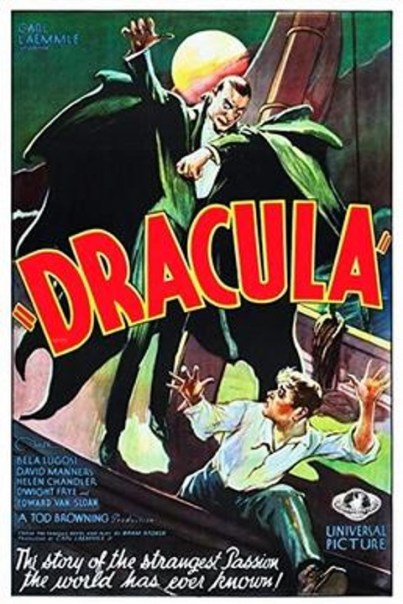
Dracula (1931) poster image created by Universal Pictures. Image found at en.wikipedia.org/wiki/File:Dracula _-_1931_theatrical_poster.jpg
Things I liked about the film:
The acting: For years, I have heard great things about Bela Lugosi as an actor. Even though this is the first film of Bela’s I have seen, I can understand why people give him this amount of praise! His portrayal of Dracula was commanding and captivating, effortlessly directing the audience’s attention towards him. Bela was very expressive through his facial expressions and body language. But the emotions in his eyes are what elevated his performance! Great examples of this are whenever Dracula appeared in front of his victims. Another expressive performance came from Dwight Frye! The character of Renfield was executed really well because of the versatility of Dwight’s acting abilities. Before and during his stay at Dracula’s castle, his demeanor was calm and collected. After becoming Dracula’s victim, his persona changes to being paranoid and on-edge. I was also impressed with Helen Chandler’s portrayal of Mina! Her on-screen personality was likable and sweet. Similar to Bela Lugosi, her eyes provided the emotion for her performance. A great example is when Mina is looking intently at her fiancé toward the end of the film.
The set design: I really liked seeing the overall set design in Dracula! It was constructed really well and fit the world the film’s creative team was trying to bring to life. Dracula’s castle and the Abbey in London were the two best locations in this movie! These places were grand in scale and felt larger than life. For Dracula’s castle, elements like spiderwebs and trees growing through broken windows created an unsettling environment. In the Abbey, a large, winding staircase was impressively captured on film. The locations in this movie were grandiose and had a sense of style to them!
The lighting: The way that lighting was used in this film was very interesting! Even though parts of the movie took place at nighttime, enough lighting was used to show what was taking place on screen. The times when Dracula is waking up from his coffin are good examples. Another creative way that lighting was used was anytime Dracula approached his victims. His eyes are the only things captured by the light, highlighting one of Bela’s best qualities as an actor. It also indicates how intense the power of his eyes is on humans. The lighting in Dracula helped make the project visually appealing!
Limited amount of music: The power of music can be very influential when it comes to film. Music can be used to set a tone for a particular scene or enhance the events happening on screen. In Dracula, however, music was used sparingly. Only two scenes and the opening credits is where music could be heard. The rest of the movie is music-free. Had there been orchestral music during moments when Dracula is in the presence of his victims, it would have brought a certain intensity toward those moments. It also would have highlighted the fear that can come from such an event. Sadly, music in this project felt underutilized.
Treading on familiar territory: It has been said that Nosferatu is the story of Dracula. But because of copyright laws at the time of the film’s creation, direct references to Dracula had to be removed. While watching the 1931 version of Dracula, I could tell that certain patterns in story-telling mirrored the 1922 silent film. In fact, certain events almost followed the predecessor beat-by-beat. Since I saw Nosferatu prior to seeing the 1931 picture, I feel like I knew what would happen, leaving little to no room for any surprises. While this movie did have some differences from the 1922 film, it wasn’t enough to create its own identity.
The run-time: Dracula is a one hour and fifteen-minute film. After Renfield meets Dracula in his castle, the movie kind of drags on, making it feel longer than its run-time suggests. Some moments felt like they were included to provide padding, such as the “woman in white” story. Personally, I think this film should have been less than an hour. This story is pretty straight-forward and has a recognizable character. If it were eighty or ninety minutes, the film could get straight to the point sooner.
Dracula is a film that I found to be decent. There are aspects within the project that I liked, such as Bela Lugosi’s performance. However, the script played it safe when it came to the story. The creative team behind the movie didn’t really take any chances or try to think outside the box. In the end, the final product failed to create its own identity from its predecessor, Nosferatu. What I can say about this film is if you’ve seen Nosferatu, you’ve already seen Dracula. Compared to the other vampire movies I’ve reviewed, this movie would be placed around the same range as Queen of the Damned. While I liked both films for what they were, I think they could have been stronger. Before I end this review, I’d like to thank my followers for helping 18 Cinema Lane get this far! This blog has thrived every day because of you!
Overall score: 7 out of 10
What you do think of this special blog follower dedication review? Are you looking forward to seeing what I review when I receive 185 followers? Let me know in the comment section!
Last month, my review of A Time to Remember became my 150th movie review! In that review, I said that I would be publishing a special post to commemorate this achievement. For the Mystery Mania Blogathon last March, I wrote an article where I reviewed some episodes of Murder, She Wrote. After I published that article, the moderator of that blogathon, Robin from Pop Culture Reverie, recommended some episodes for me to watch. So, in this post, I’m bringing back “Sally Watches…Murder, She Wrote”! This time, however, I’ll be reviewing the episodes that Robin shared with me in the comment section!
Since I reviewed this book last October, this image felt like a good fit for this post. Screenshot taken by me, Sally Silverscreen.Name: We’re Off to Kill the Wizard
Season 1, Episode 7
Premiere Date: December 9th, 1984
The title card for “We’re Off to Kill the Wizard”. Screenshot taken by me, Sally Silverscreen.What I liked about this episode:
In some Murder, She Wrote episodes, the mystery starts at the halfway point. But the mystery in ‘We’re Off to Kill the Wizard’ began fifteen minutes into the episode. This allowed the mystery to be explored much sooner. It also kept the audience’s interest in what was happening in the story. When it came to exposition, there was enough room set aside to keep viewers satisfied. Within the first fifteen minutes, the audience was introduced to the characters, setting, and lead-up to the mystery in an effective way. In this period of time, nothing felt rushed or overlooked. The screenwriters associated with this episode took their time in an effort to let all story-telling elements flourish.
What I didn’t like about this episode:
When I discovered this episode would take place in an amusement park, I was excited to see what kind of perspective would be associated with this location. While it was interesting to see the behind-the-scenes aspect of theme parks, I was disappointed by how there was no educational or insightful commentary provided. For example, in the episode, ‘Film Flam’, the different steps involved with organizing a movie premiere were showcased. This process was an educational and insightful look into the movie industry. With ‘We’re Off to Kill the Wizard’, I don’t feel like I learned anything new about the amusement park industry. Not including this kind of information in the episode seems like a missed opportunity.
The mystery itself:
I found the mystery in ‘We’re Off to Kill the Wizard’ to be interactive and engaging! As I already mentioned, it helps that the mystery started fifteen minutes into the episode. It gave the audience an opportunity to solve the mystery alongside Jessica. However, I think the resolution was met way too quickly and it was a little too far-fetched. I’m not going to spoil this episode if you haven’t seen it. But it required more suspension of disbelieve than I expected.
The other factors from this episode:
When Robin recommended this episode to me, she brought it to my attention that Joaquin Phoenix guest starred in this episode. I’m glad she pointed this out because I wouldn’t have known that piece of information otherwise. It’s always nice to see a familiar face on Murder, She Wrote! It’s also interesting to see how far Joaquin has come as an actor.
In the haunted house attraction at the amusement park, there was a prop that consisted of a giant face. All I’ll say is, to me, it looked creepy.
During this episode, one of the male employees at the amusement park made a comment to Jessica about seduction. I understand that the ‘80s were a different time compared to today. But, personally, I don’t think this comment aged very well. It made me feel uncomfortable and was very off-putting. I’m honestly surprised that the comment wasn’t omitted from the script.
Toward the beginning of this episode, there was a demonstration where a few actors were acting out a scene to promote the theme park’s haunted house attraction. This demonstration was so convincing, that I honestly thought the episode’s murder had taken place. Fortunately, none of the characters were harmed and it was all an act. That specific scene shows just how talented the actors and screenwriters were in this episode!
My overall thoughts:
I liked ‘We’re Off to Kill the Wizard’ more than other episodes I’ve seen. However, there are elements in this episode that could have made it stronger. I wish this script would have left some room to provide educational or insightful commentary about the amusement park industry. It would have provided interesting content for the story. Also, the resolution of the mystery was far-fetched and way too easily resolved. This took away some of the narrative’s believability. While I respect the show’s creative team for thinking outside the box, the execution could have been better.
Rating: A 3.5 out of 5
Yesterday: Guest star on Murder, She Wrote Today: Cinematic champion Screenshot taken by me, Sally Silverscreen.Name: Paint Me a Murder
Season 1, Episode 14
Premiere Date: February 17th, 1985
The title card for “Paint Me a Murder”. Screenshot taken by me, Sally Silverscreen.What I liked about this episode:
The biggest showstopper in ‘Paint Me a Murder’ was the scenery! According to IMDB, this episode was filmed in California. Since the Golden State does have picturesque beaches and appealing foliage, it makes sense for the creative team to take advantage of this location. From the beach to the grounds of Diego’s photogenic house, everything was appealing to look at and was captured well on camera. Like I’ve said before, the show’s location scout deserves a Lifetime Achievement Award!
What I didn’t like about this episode:
Because the subject of art was incorporated in this story, I was hoping to learn more about the art industry through this episode. But, similar to ‘We’re Off to Kill the Wizard’, no commentary was provided in the narrative. In fact, art didn’t play as big of a role in this story as I expected. If anything, it felt like it was an afterthought. The limited amount of attention for this subject made me disappointed. Also, like ‘We’re Off to Kill the Wizard’, this lack of commentary was a missed opportunity.
The mystery itself:
‘Paint Me a Murder’ consisted of two mysteries, as there are two murders taking place in the story. There’s also a guest that’s trying to harm Diego. Even though there were more mysteries in this episode than are usually on Murder, She Wrote, I still found them to be engaging! Enough suspects and clues keep the audience invested in the story. Another thing that helped was letting the audience solve the mystery alongside Jessica. This creative choice allowed a sense of interactivity to be incorporated into the episode.
The other factors from this episode:
Out of all the Murder, She Wrote episodes I’ve seen, the cast in ‘Paint Me a Murder’ is one of the most star-studded! Besides having Angela Lansbury as the lead actress of the episode, some of the guest stars include Cesar Romero, Stewart Granger, and Robert Goulet. I’d say that the star power is strong with this story!
At one point in this episode, Diego shares how his faith has influenced his art. As I said in my review of “The Days Dwindle Down”, Murder, She Wrote is not known for introducing thought-provoking dialogue and encouraging conversation. But seeing the idea of faith playing a role in one of the character’s lives was interesting to see in this episode. It reminded me of the brief discussion about how different people view topics relating to belief systems from “The Legacy of Borbey House”.
The biggest flaw of ‘Paint Me a Murder’ was how it sometimes felt like a soap opera. There were some scenes where characters would sit around and talk about their problems. Relationship drama is also a common occurrence in this episode. Personally, I didn’t find this part of the story to be interesting.
My overall thoughts:
Even though I liked this episode more than ‘We’re Off to Kill the Wizard’, it still had its flaws. The soap opera element of the story should have been left out. There also should have been some commentary about the art world. However, I did think the mysteries were interesting. I also liked the cast in this episode, as it consisted of very talented actors and actresses. The best part of ‘Paint Me a Murder’ is the scenery! Murder, She Wrote has a good track record when it comes to their sets and backdrops. This episode is a perfect example of this!
Rating: A 3.7 out of 5
How can anyone look at this beach and not think it’s breathtaking? Screenshot taken by me, Sally Silverscreen.Name: Murder Takes the Bus
Season 1, Episode 18
Premiere Date: March 17th, 1985
The title card for “Murder Takes the Bus”. Screenshot taken by me, Sally Silverscreen.What I liked about this episode:
In this episode, the show’s creative team did a good job when it came to paying homage to the classic film, Psycho. The setting was a dark and stormy night, similar to the setting in Alfred Hitchcock’s film. The weather condition causes the characters in the episode to rest at a road-side diner. This situation is similar to how Marion ended up at the Bates Motel. Another similarity is the murder in each story takes place at the rest-stop. Details like this that are found in the story show how much the show’s creative team respected this iconic film.
What I didn’t like about this episode:
Unlike the film this episode was paying tribute to, ‘Murder Takes the Bus’ featured too many characters in the story. Because there were so many people in this episode, it was difficult to keep track of who was who. It also didn’t allow the characters to be fully developed in their own narratives. There wasn’t enough time or room in the script to truly get to know these characters. This did a disservice to the actors and actresses in this episode.
The mystery itself:
Since there were so many characters in this episode, it took the primary focus away from solving the mystery. Instead, the episode was about the characters and their various conversations. This brought down the intrigue of the story and I did not find it to be very interesting. The mystery started within the first twelve minutes of the episode. But that’s the only good thing I can say about it.
The other factors from this episode:
As I already mentioned, the setting of ‘Murder Takes the Bus’ is a dark and stormy night. I’ve seen other episodes where this setting has been placed in the story. Every time this has happened, the creative team does a good job creating the setting! Even though the lighting is used sparingly, it’s still enough to see what is going on in the scenes. This choice is to represent lightening and it appears effective on screen! It also sets the mood for the rest of the episode.
It was nice to see Rue McClanahan guest star in this episode! I’ve seen her acting work on The Golden Girls and in a few Hallmark films. Her role in ‘Murder Takes the Bus’ was different from those other projects. This gave Rue the opportunity to move out of her acting comfort zone!
My overall thoughts:
I was not a fan of this episode. The homage toward Psycho was a nice touch, but the episode itself was executed poorly. Having too many characters was the biggest flaw of ‘Murder Takes the Bus’. It tampered with every element of the story, from the character development to the mystery itself. Speaking of the mystery, it felt like an afterthought within this mystery story. Similar to ‘Paint Me a Murder’, I was not a fan of the drama among the characters. The overall episode was not interesting and had little to no intrigue.
Rating: A 2 out of 5
I couldn’t tell what book Jessica was holding, but I’m wondering if it’s one of her own books? Screenshot taken by me, Sally Silverscreen.Name: Crossed Up
Season 3, Episode 13
Premiere Date: February 1st, 1987
The title card for “Crossed Up”. Screenshot taken by me, Sally Silverscreen.What I liked about this episode:
In my review of “The Days Dwindle Down”, I talked about how I loved the Jarvis house in that episode. That same house makes an appearance in ‘Crossed Up’! The same interior and exterior shots were shown in the episode. But new perspectives were given to this location in an attempt to show it in a different light. In this episode, more exterior shots were presented, highlighting the size of the front yard. It also emphasized the wealth of the characters living there.
What I didn’t like about this episode:
Throughout the episode, Jessica’s loved ones and friends don’t believe her when she tries to warn them about an upcoming murder. They honestly think she’s crazy. Had this episode aired within the show’s first season, the idea of the people in Jessica’s life looking out for her would make more sense. But because this episode was featured in the third season, it feels unnecessary. By this time, Jessica has successfully solved several mysteries. So, the warnings she receives seem out of place.
The mystery itself:
Like the other episodes I reviewed in this post, the mystery in ‘Crossed Up’ started early. This gave the audience a chance to solve the mystery alongside the characters. However, I didn’t like how Jessica didn’t solve the case by herself. This show is called Murder, She Wrote for a reason. If Jessica isn’t involved in the story, it defeats the purpose of that title. What makes the show work is Jessica’s intelligence and wit when it comes to each case. That aspect was lost in this episode.
The other factors from this episode:
Just like I said about ‘Murder Takes the Bus’, the creative team did a good job creating the setting of a dark and stormy night. From the lighting to the sound effects, it definitely fits the tone they were going for!
In this episode, Jessica is bed-ridden due to a back injury. However, the people in Jessica’s life act like her back injury is worse than it really is. I understand that back injuries can be painful and disruptive. But the other characters view Jessica’s injury as something she needs to spend more than a week in bed for. This seemed very confusing and wasn’t as effective as the screenwriters thought.
My overall thoughts:
This episode of Murder, She Wrote was ok. I respect the show’s creative team for trying something new. But it didn’t work as well as it could have. ‘Crossed Up’ should have been placed somewhere in the first season. In that context, the things the characters in Jessica’s life are saying would make more sense. It also doesn’t help that Jessica doesn’t play a big role in this story. This episode kind of defeated the purpose of the show’s title.
Rating: A mid 3 out of 5
This shot of the house showcases just how grand this location is! Screenshot taken by me, Sally Silverscreen.What are your thoughts on these reviews? Are they any episodes of Murder, She Wrote you’d like me to discuss? Please tell me in the comment section!
From January 7th to the 14th, I participated in a readathon called Filmathon! As I explained in my post, “Goodbye 2019, Hello 2020!”, the reason why I wanted to join this readathon is because it’s the only one I’m aware of that is movie themed. Originally, I was planning on reading three books to complete all six prompts. But I ended up reading only one of those books. The good news is that book completed half of the prompts! So, for this first round of Filmathon, I feel pretty proud of myself! What book am I talking about? That would be Amy Foster by Joseph Conrad. Below, I will list which prompts this book met and the “cinema tickets” (points) it helped me earn.
This is a picture of my copy of Amy Foster I received for Christmas. Screenshot taken by me, Sally Silverscreen.
Fight Club – Read an underrated book (2 cinema tickets) In my opinion, I think Amy Foster is not only an underrated story, but I also think its film adaptation, Swept from the Sea is underrated.
Casablanca – Read a book that is either romance in genre or has romantic elements (3 cinema tickets) One of the most important parts of this story is Yanko and Amy falling in love.
Pulp Fiction – Read a book in an unconventional format (3 cinema tickets) Amy Foster is actually a short story. I feel most of the stories that get published are written in a novel format.
Since this was only the first round, I’m looking forward to the next round and the progress I might make!
Last week, Zoe, from Hollywood Genes, nominated me for my third Liebster Award! It was such an unexpected surprise, as I just happened to notice my name while reading Zoe’s Liebster Award post! Thank you so much, Zoe, for this nomination! It amazes me how, in only two years, I’ve becoming a multi-award-winning blogger! These awards would have never been earned had it not been for the nominators who believed in me. If you want to visit Zoe, please visit her blog at this link:
And now, for the official rules of the Liebster Award!
Thank the nominator in your award post.
Place the award logo somewhere on your blog.
Share 11 facts about yourself.
Answer the questions your nominator provided.
Nominate up to 11 nominees.
Ask your nominees 11 questions.
Since steps 1 and 2 are completed, let’s move on to step 3!
The 11 Facts
I’ve never won a trophy before
My favorite style of pizza is Deep Dish
I only went on one out-of-country trip
I’m a proud owner of a cardboard standup from the movie theater (it’s of Bucky from Captain America: Civil War)
I’ve participated in 40 blogathons (and counting)
Once, I went Black Friday shopping (and I wasn’t a fan of it)
I’ve donated my hair to charity twice
I, sometimes, journal in my spare time
I attended the midnight premiere of Harry Potter and the Deathly Hallows: Part 2
I love Fuze Iced Tea in raspberry flavor
I own two books that were signed by their respective authors
Since this is an award post, I thought this royal image of Bucky was an appropriate choice. Screenshot taken by me, Sally Silverscreen.
My Answers to Zoe’s 11 Questions:
1. What is the strangest or most off-brand topic/thing you’ve blogged about?
Out of all the 325 articles I’ve ever published, there’s only two I can think of that are the closest to being off-brand. The first is my entry for the Murder, She Wrote Cookalong. While I have talked about Murder, She Wrote before, that was the first and, so far, only time I ever talked about cooking on my blog. The second is my review for California Angel by Nancy Taylor Rosenberg. Yes, I occasionally talk about books on 18 Cinema Lane. However, this was the only time where my review was completely negative. In the case where I review a movie I don’t like, I always try to share the things I liked about it. This is to show my readers how to find the good in almost any film. When it comes to California Angel, I just couldn’t find anything good to say about it. If you want to check out these articles, I’ll provide the links to them here:
I’ve shared this before, but I’m more than happy to share it again! In R.J. Palacio’s book, Wonder, Auggie says “Everyone in the world should get a standing ovation at least once in their life because we all overcometh the world”. That quote is what gave me the initiative to start 18 Cinema Lane! It also has become a statement that I try my best to follow as I continue to blog. With 176 followers, it looks like Auggie’s message has resonated with others as well!
3. & 4.Recast one of your favorite classic movies (pre 1970s) with modern actors & Recast one of your favorite modern movies with classic actors
For questions three and four, I decided to take a different approach. Instead of picking my favorite movies (because the acting is one of the reasons why they’re my favorites), I picked two movies that I didn’t dislike, but could be improved with certain casting choices. The movie I chose for question number three is Edward, My Son. In my review of that film, I shared that I wasn’t a fan of Edward’s absence. To correct this creative error, I would cast Charlie Plummer in that role. Because he’s in his early 20s, Charlie would be old enough to portray Edward in his teenage and young adult years. Also, he has a good amount of experience acting in films and television shows.
The film I chose for question number four is The Christmas Card. While this movie had stand-out performances, I feel the performances from the leads were not as strong or memorable as they could have been. So, I would switch them for Cary Grant and Carole Lombard. Two weeks ago, I reviewed In Name Only for the Carole Lombard Memorial Blogathon. While watching that film, I enjoyed seeing Cary and Carole’s individual performances and felt their on-screen chemistry was really good! If cast in The Christmas Card, I could totally see Cary portray a soldier in the military and Carole as the small-town woman with a big heart!
5. What is a book that you would love to see adapted into a film and why?
As I said in my post, A Movie Blogger’s Christmas Wish-List 2019, I would love to see Murder on Ice by Alina Adams become a Hallmark Movies & Mysteries film! In fact, I think it would be great if the entire Figure Skating Mystery series were adapted into a Hallmark Movies & Mysteries series! If you want to learn more about why I feel this way, check out my Wish-List at this link:
6. What do you consider the biggest misstep behind the scenes in the cinema world (i.e. not casting someone for a role, a specific directorial choice, a remake that shouldn’t have happened, an interview that went on to haunt someone, etc.)
In the mid to late ‘90s, Dreamworks devoted a lot of time, effort, and talent to one of their earlier releases, The Prince of Egypt. Because of this, it caused another project of theirs, The Road to El Dorado, to become an afterthought. This led to the movie receiving several setbacks, from a delayed release to a poor advertising campaign. These things resulted in a box office failure. If Dreamworks had given both films an equal amount of attention, maybe they both would have been successful. Years after these missteps, however, The Road to El Dorado is remembered more fondly than The Prince of Egypt. So, I guess The Road to El Dorado didn’t completely lose.
7. What do you consider the most fascinating film community scandal (past or present)?
In 2013, Legends of Oz: Dorothy’s Return arrived in theaters to scathing reviews and a disastrous box office. At that time, however, the public wasn’t aware of the behind-the-scenes issues that led to the movie’s premiere. Years later, it was revealed that the entire operation was a scam. As of 2019, a lawsuit was filed against the creators of the film. If this lawsuit turns into an official case, more legal action could take place. Despite all of this happening, very few people have shed light on this situation. If you’re interested in learning more about this incident, AniMat, from the Youtube channel, ElectricDragon505, created two very informative and well documented videos about it on his channel. These videos are called “The History of Legends of Oz: Animation’s Biggest Scam” and “The UPDATED History of Legends of Oz: The Scam’s Return (including Noah Centineo)”.
8. Which actor or actress do you think died way too soon and where would you have liked to see their career go had they lived?
For this question, I have two choices. They are Heather O’Rourke and Judith Barsi. For those of you who don’t know, Heather portrayed Carol Anne in the Poltergeist trilogy and Judith provided the voices for Ducky in The Land Before Time and Ann-Marie in All Dogs Go to Heaven. Both of them passed away before they became teenagers. According to a post I found about Judith, she “loved voice acting, and wanted to do it into adulthood”. So, I’m guessing that, had she lived, Judith would have become a successful voice actress and probably one of the most beloved in that field. As for Heather, I honestly can’t say where her career would have gone. In a video from the Youtube channel, Daze with Jordan the Lion, it was said that Heather had a successful film and television career. Also, there’s always the possibility she could have fallen in love with a different profession. If you want to watch Jordan’s video, you can find it on their channel under the title, “#1185 What Happened to HEATHER O’ROURKE of POLTERGEIST Grave (11/4/19)”. You can also check out the post about Judith Barsi I referenced at this link:
9. Which actor or actress missed their calling in a specific genre and why do you think they would or would have excelled in this vein?
According to his IMDB filmography, Burl Ives has several voice acting credits to his name. However, most of these roles consist of narrating or singing a song. I think it would have been fascinating if Burl had devoted his acting career to voice acting. The characters he could have voiced and the movies he could have starred in would have been interesting!
10. Which 6 guests would you invite to your Hollywood party and why these specific 6?
After thinking it over, I chose these six people based on their impact on me or because I feel they deserve more recognition. These people are the following:
Sebastian Stan (He portrays my favorite superhero in the MCU, Bucky Barnes)
Vincent Perez (Despite watching only two of his movies, I’ve come to appreciate Vincent as an actor)
Cree Summer (She provided the voice for Kida, my favorite Disney princess)
R.J. Palacio (the author of Wonder)
John Christian Plummer (one of the screenwriters of Hallmark Movies & Mysteries’ Mystery 101 series and Charlie Plummer’s dad)
Jonathan Hall Kovacs (he portrayed my favorite character from Little House on the Prairie, Matthew Rogers)
11. Which onscreen outfit would you wear everyday if you could and why did you pick this one?
I gave this last question a lot of thought. In the end, though, I chose the outfit Jesse wore in the climax of Queen of the Damned! The primary components of this outfit consist of a red tank top and a long black skirt with gold sequins and embroidery. What’s great about this outfit is how it’s a good choice for warmer weather. When it’s cold out, layers can be added to the outfit. If the weather is too hot, you can just stay indoors.
Just three days ago, 18 Cinema Lane received 175 followers! It still amazes me how successful this blog has become in such a short amount of time. To all of my followers, thank you for exceeding my expectations! You are the reason why 18 Cinema Lane keeps going! As I was about to find a movie that premiered in January of 2003, I realized I had a 2003 release on my DVR. Even though A Time to Remember first aired in November, I thought it would be a good choice for this particular review! I’ve been taking advantage of UP Network’s decision to air older Hallmark films, as I have been trying to see as many of them as realistically possible. Also, the last time I reviewed a Hallmark movie for a blog follower dedication review was last July, when I talked about a Western called Desolation Canyon. Before I end this introduction, I’d like to share that this is my 150th movie review! I’ll be publishing a special post to commemorate this achievement in early to mid-February, as there are some blog posts I’d like to publish before the end of January.
Since I wasn’t able to find a poster for this film on Crown Media Family Networks’ website, I just took a picture of the poster that appeared on my television. Screenshot taken by me, Sally Silverscreen.Things I liked about the film:
The acting: While the cast in this film was good, the two stand-out performances came from Doris Roberts and Dana Delany! I’m more familiar with Doris’ comedic talents on Everybody Loves Raymond. Because a show like that mostly relies on humor, there aren’t many opportunities for the actors and actresses to pull off any dramatic performances. As I was watching A Time to Remember, I was very impressed with Doris’ portrayal of Maggie Calhoun! What stood out to me was how Doris’ eyes contained emotion throughout the movie, even when Maggie was experiencing the symptoms of Alzheimer’s. Any time I see an actor’s performance, I always focus on their eyes to determine how much emotion is in them. For me, this usually makes or breaks the quality of an actor’s talents. This aspect of Doris’ performance not only helped bring a sense of realism to her character, but it also made her portrayal of Maggie effective. As for Dana, she displayed a variety of emotions in her portrayal of Britt Calhoun. What worked in her favor was how well she was able to seamlessly transition between these emotions. In a scene where Britt and her friend are sitting by a pond, Britt is happy to be spending time with this friend one minute and then overwhelmed at being a single parent the next. Similar to Doris’ performance, Britt felt realistic as a character because of the quality of Dana’s acting talents!
How exposition was incorporated: Hallmark movies usually devote the first twenty minutes to delivering the exposition to their audience. This is done through lengthy conversation or drawn out montages. In A Time to Remember, the exposition was brief, subtle, and wasn’t just reserved for the beginning of the movie. Towards the middle of the film, the backstory of Billy, portrayed by Louise Fletcher, is revealed in a conversation with Britt. What Billy shares provides enough information for the audience to know this character to a satisfying extent. Another way that exposition was incorporated was through natural sounding dialogue. In a phone conversation between Britt and Valetta, portrayed by Megan Gallagher, the audience learns about the strained relationship between Britt and her mother. Through tone of voice and specific choices of words, it also reveals how the sisters view one another. The conversation itself sounds typical, but realistic. It also lasts long enough to get straight to the point.
The horse-riding scene: In one scene, Britt is riding horses with her childhood friend. I really liked this scene because of how well it was executed! It starts with a beautiful sunrise, which was simply picturesque. The locations surrounding the characters, from a grassy field to an isolated pond, appeared peaceful and serene. Their appearance is the result of how well they were captured on film! Speaking of film, the horses were sometimes filmed in slow-motion when they were running. This made them look majestic and powerful! All of these elements helped create a scene that was truly memorable!
Too many storylines: A Time to Remember contained six major stories. Personally, I think this was too many for one script. Because of this creative choice, it felt like all six stories were competing against each other to win the attention of the viewers. It also felt like there wasn’t enough time for each story to be fleshed out. This caused their conflicts to be resolved way too quickly and easily. Just one example is Valetta and Julian’s marital issues. The script tries to accomplish too much in two hours.
The discussion of Alzheimer’s: Historically, Hallmark has incorporated serious, real-life issues into their films. A Time to Remember attempts to shed light on the complicated and life-altering condition of Alzheimer’s. While I commend this movie’s creative team for addressing this particular medical situation, I think this discussion could have been executed better. For most of the film, the members of Britt’s family are either hiding Maggie’s Alzheimer’s diagnosis from Britt or trying to find the right time to tell her about the diagnosis. This makes the script look like it is unintentionally skirting the issue. This also ends up doing a disservice to the audience, especially those who have been affected by Alzheimer’s in some fashion. When Alzheimer’s is finally acknowledged in the story, within the last forty minutes, the characters’ conversations consist of talking about a game plan instead of actually coming up with one. These discussions didn’t feel productive or proactive.
The small presence of Thanksgiving: On my list of The Top 10 Worst Hallmark Movies of All Time, I talked about a movie called A Family Thanksgiving. One of the reasons why I don’t like this movie is because of how few references the Thanksgiving holiday received in that story. A Time to Remember, unfortunately, makes the exact same mistake. Throughout the movie, Thanksgiving is barely brought up by the characters. The story itself doesn’t really make a big deal out of the special occasion. The film’s last thirty minutes is when Thanksgiving finally gets the recognition it deserves. This aspect of the movie disappointed me because I was hoping this holiday would be given more emphasis in the story, similar to An Old Fashioned Thanksgiving or any of Hallmark’s Christmas films. If A Time to Remember took place in any other time of year, it wouldn’t change that much.
A Time to Remember made me feel the same way When Calls the Heart: Home for Christmas did, as both films tried to say so much, but ended up saying so little. Another thing these films have in common is how they have too many stories featured in their respective scripts. For A Time to Remember, this choice hurt the film’s potential impact on its audience. Personally, I think the movie should have kept its primary focus on Maggie receiving an Alzheimer’s diagnosis. This way, the story could have explored the idea of finding adversity, hope, and the love of family in a time of hardship and uncertainty. It also doesn’t help that Thanksgiving plays such a minor role in this film. Since the three women of the Calhoun family, Maggie, Britt, and Valetta, are mothers, it would have made more sense for this movie to have been Mother’s Day themed. This choice would have better reflected the landscape of the project, as all the locations in this film looked more like springtime than autumn. It also would have been better reflected through the film’s messages and themes.
Overall score: 6.1 out of 10
Have you watched any of the films from UP Network’s current collection? Are there any older Hallmark films you’d like to me to review? Let me know in the comment section!
In my post called ‘Goodbye 2019, Hello 2020!’, I shared that every time I publish 100 posts, I coordinate a double feature in honor of the accomplishment. Because I published 300 posts at the end of last year, I scheduled the double feature for January. In my aforementioned post, I also mentioned the reason why this series of reviews and articles were focusing on youth-led films. This is because January’s theme for MovieRob’s Genre Grandeur is “Youth-Led Movies”. Since I’ll be participating in that blogathon, I figured it would a good idea to use my achievement to highlight my involvement.
While creating my first blogathon, “Siskel and Ebert at the Blogathon”, I came across a video on Youtube of one of their episodes of “Sneak Previews”. While watching that video, I became fascinated by how two youth-led films, Rich Kids and Over the Edge, were not only released in the same year, but also around the same time (according to the Siskel and Ebert video). Not knowing whether or not this scheduling choice was intentional, I chose these two films for my next double feature! While I had never heard of Over the Edge before, I was aware of Rich Kids‘ existence. When I watched Siskel and Ebert’s discussion of this film, I was surprised to discover that it was about a completely different story from what I expected. Before choosing to watch this film, I thought the movie was a documentary style film about a group of rich kids growing up over a period of time.
For these reviews, I’ll be answering a series of ten questions related to the movies I watched. However, the three questions that will receive primary focus are the following:
Is there any aspect of either film that could be seen as relevant today?
Besides having young actors as the leads, do these films share any similarities?
Do the socio-economics of each film’s world affect the characters or the story?
Before I end this introduction, I’d like to say that there will be no pre-movie thoughts and/or questions for this double feature.
If you want to watch the video I referenced in this introduction, type ‘WTTW Channel 11 – Sneak Previews – “Real Life, Rich Kids, & More” (Complete Broadcast, 9/20/1979)’ into Youtube’s search bar. Siskel and Ebert’s discussion on Rich Kids starts at 1:41 and ends at 7:01. Their discussion on Over the Edge starts at 21:48 and ends at 24:49. If you are planning on watching this video, I just want to let you know there are sensitive topics that do get brought up at some points of the episode.
Last week, I received a special surprise from fellow blogger, Ospreyshire! They gave me my second Blogger Recognition Award! What a great way to start the new year! For those who don’t know, Ospreyshire created the blog, Iridium Eye Reviews. Films that don’t often get talked about are covered there. You might say that Ospreyshire is trying to give those projects their “standing ovation”. Before I list the rules for the Blogger Recognition Award, I just want to thank my nominator for their thoughtfulness. It’s nice to know that, in the movie blogging community, fellow bloggers look out for one another. If you want to read Ospreyshire’s articles or pay them a visit, here’s the link to their blog:
Now, it’s time for me to list the official rules, which are the following:
Thank the blogger who nominated you and provide a link to their blog.
Place the award banner somewhere on your blog
Share the story or history behind the creation of your blog.
Provide two or more pieces of advice for new bloggers.
Nominate 10 other bloggers and link their blogs.
Share the exciting news with your nominees
Since I completed the first and second rules, let’s move on to rule number three!
Because I have won this award before, I already shared the reason why I started 18 Cinema Lane. I also talked about this in my very first blog post. I’ll provide links to both of those articles:
The first piece of advice is to stay true to yourself. The internet is a vast and expanding place, filled with thousands of movie related content. But, when everything is said and done, there will only be one you. Create a blog and a series of posts that truly reflect the unique individual that you are. The second piece of advice I’ll give is to always be on the lookout for inspiration. For me, I turn to other forms of media when I’m searching for ideas for future blog posts. There have even been times where I’ve gotten inspiration from Youtube videos. Be open to any and every possibility where inspiration may present itself.
The next ten nominees who will receive the Blogger Recognition Award are the following:
Maddy from Maddy Loves Her Classic Films
Pale Writer from Pale Writer
Eric from Diary of a Movie Maniac
The Classic Movie Muse from The Classic Movie Muse
Zoe from Hollywood Genes
Hannes from Wandering Ambivert
Mark from Mark Arnold Blog
Lou from Space Time Bae
Meg from Hallmark in Real Life
Anglo from PassiveDough.com
Congratulations to these newly nominated bloggers!
At the beginning of the month, my blog received 165 followers! While I was figuring out which movie I would review, I was creating a new blogging schedule for myself. Several days ago, 18 Cinema Lane received its 170th follower! So, for this blog follower dedication review, I decided to write about one movie while acknowledging both milestones. I chose to talk about a French film called Au revoir les enfants! Foreign films are rarely talked about when it comes to these specific reviews. In fact, the first one I discussed was Vampyr last October. Au revoir les enfants has also been on my DVR since last February. So, I thought these reasons would be a good excuse to finally watch this film! While Vampyr is a French and German production, I have reviewed a French film on this blog before. For Clean Movie Month, I talked about the 1950 project, Les Enfants Terribles. Will my thoughts on Au revoir les enfants be similar to those on the aforementioned French film I reviewed last year? You’ll just have to read this post if you want to find the answer!
I chose to use this poster for the review because it verifies that I, indeed, watched this film. Screenshot taken by me, Sally Silverscreen.Things I liked about the film:
The acting: Movies that have young actors make up the majority of the cast can be hit-or-miss. In the case of Au revoir les enfants, this aspect worked in the film’s favor! All of the young actors were not only allowed to act their age, but they were able to work alongside other actors within their age group. This made their performances feel genuine and realistic. Speaking of realism, I noticed that all of the character portrayals and the situations showcased in the movie appeared like it came directly from real-life. It gave these elements a sense of authenticity. Because this film is based on a true story, the creative team’s focus on making the characters and situations look and feel believable seemed to be taken very seriously.
The historical accuracy: This film takes place in early 1944. Because of this, all of the material elements of the project looked like it came directly from that period in time. The wardrobe of all the characters feature articles of clothing that one would likely find within the mid ‘40s. The architecture of the boarding school shows off the preserved interior and exterior style from an era gone by. Even the finer details of the picture, such as the books, feel like relics of that specific year. While watching this film, I noticed the way the characters spoke also reflected the time period. Whenever subjects related to World War II were brought up, it was done in a very subtle way. Even though this was a period film, I never felt like I was being talked down to or like the movie was treating itself like a history lesson. If anything, I felt like I was watching a moment in time.
The presentation of the subtitles: How the subtitles are presented in foreign films is very important. If they can be seen clearly, it allows the audience to better understand what the characters are saying. I liked how the subtitles were showcased in Au revoir les enfants! While all of the text was white, it was presented against backgrounds that were dark in hue. The very first scene in the movie is a great example of this. The station and train itself adopted colors of black and gray. None of the characters in this scene wore bright colors. Because of this creative decision, I never had a difficult time reading the subtitles.
A weak plot: The more movies I watch, the more I realize that “slice of life” stories aren’t my thing. That’s because I don’t find them to be as intriguing as other cinematic stories. That’s what the majority of Au revoir les enfants is: a “slice of life” story. To me, it didn’t contain as much interest as it could have. It felt like the screenwriter put so much emphasis on the premise of Julien and Jean’s relationship, that there was nothing else to offer in the narrative.
A somewhat mis-leading premise: In the synopsis I read for this movie, it said the film was about a Catholic boy and a Jewish boy becoming friends during World War II. However, the friendship aspect of their relationship isn’t portrayed until about the last twenty minutes of the film. Julien and Jean spend most of the movie apart than together. In fact, Julien starts off not liking Jean as a person. Julien does become nicer to Jean as the film progresses. When this does happen, it just makes them seem like acquaintances more than anything.
Situations being shown, but not explained: Throughout Au revoir les enfants, there are situations shown on screen that aren’t given explanations. One example is when Julien pokes his hand with a compass. As he is doing this, he tells the classmate sitting next to him how it doesn’t hurt. Not only was this action never explained, but it’s never referenced again in the movie. Julien’s action didn’t seem to serve a purpose for his character development or the overall narrative. Moments like this one happened at several times in the film and I found myself being frustrating by them.
Before I share my final thoughts on this film, I want to thank each and every one of the followers! 18 Cinema Lane would not be the success it is today without you. Now, on to my overall impression of Au revoir les enfants! Personally, I thought it was just ok. The movie does have merits that are earned, as well as a plot twist that works. But the overall project could have been stronger. As I mentioned in my review, Au revoir les enfants is based on a true story. It felt like the creative team approached the narrative as respectfully as possible. Because the creation of the movie was handled with a sense of reverence, it allowed the film to have the emotional weight it contained. The realism of the acting and writing gave me a reason to stay invested in what the characters were saying and doing. I’m not often given opportunities to watch and review French films. However, I’m glad I chose this movie for my latest blog follower dedication review!
Overall score: 6.1 out of 10
What are your thoughts on my review? Are there any French films you’d like to see me review? Tell me in the comment section!


![20200131_114149[1]](https://18cinemalane.com/wp-content/uploads/2020/01/20200131_1141491-e1580494503595.jpg?w=434&h=666)

![20200309_222723[1]](https://18cinemalane.com/wp-content/uploads/2020/03/20200309_2227231-e1583962914463.jpg?w=433&h=564)



![20191024_192420[1]](https://18cinemalane.com/wp-content/uploads/2019/10/20191024_1924201-e1572050213175.jpg?w=404&h=640)
![20191104_195844[1]](https://18cinemalane.com/wp-content/uploads/2020/02/20191104_1958441-e1581385499130.jpg?w=614)
![20191104_200341[1]](https://18cinemalane.com/wp-content/uploads/2020/02/20191104_2003411-e1581385794975.jpg?w=585)
![20191104_192956[1]](https://18cinemalane.com/wp-content/uploads/2020/02/20191104_1929561-e1581386078616.jpg?w=588&h=420)
![20191104_195645[1]](https://18cinemalane.com/wp-content/uploads/2020/02/20191104_1956451-e1581386262402.jpg?w=584&h=442)
![20191126_220242[1]](https://18cinemalane.com/wp-content/uploads/2020/02/20191126_2202421-e1581386464739.jpg?w=613)
![20191126_220618[1]](https://18cinemalane.com/wp-content/uploads/2020/02/20191126_2206181-e1581386577330.jpg?w=599&h=450)
![20191206_170953[1]](https://18cinemalane.com/wp-content/uploads/2020/02/20191206_1709531-e1581386728787.jpg?w=613)
![20191206_171415[1]](https://18cinemalane.com/wp-content/uploads/2020/02/20191206_1714151-e1581387017849.jpg?w=598&h=452)
![20200131_114149[1]](https://18cinemalane.com/wp-content/uploads/2020/01/20200131_1141491-e1580494503595.jpg?w=401&h=615)

![20191231_153854[1]](https://18cinemalane.com/wp-content/uploads/2019/12/20191231_1538541-e1577846902328.jpg?w=403&h=842)

![20200124_214502[1]](https://18cinemalane.com/wp-content/uploads/2020/01/20200124_2145021-e1580164263366.jpg?w=444)






![20200111_230227[1]](https://18cinemalane.com/wp-content/uploads/2020/01/20200111_2302271-e1578952146970.jpg?w=438&h=568)


 18 Cinema Lane