Take 3: A Boyfriend for Christmas Review

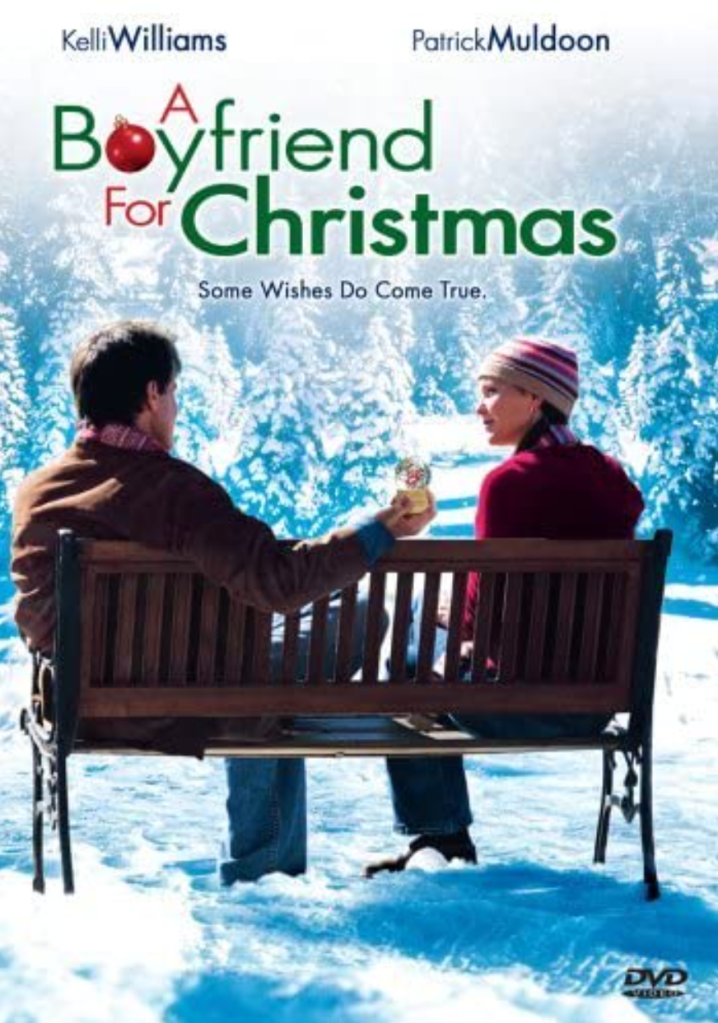
This month’s Genre Grandeur theme is ‘Films With Santa Claus or Santa Claus impersonators’. With that in mind, I knew I’d find at least one Hallmark movie starring jolly old St. Nick. While reflecting on various titles, I remembered one film I had never seen in its entirety. That film is 2004’s A Boyfriend for Christmas. Over the eighteen years since its release, this movie has garnered a reputation among the Hallmark fan community. A Boyfriend for Christmas has been labeled a “classic”, as well as, more often than not, securing a place in Hallmark’s annual Christmas line-ups. When it comes to Hallmark Christmas movies with notoriety, I try to check them out in an attempt to discover if their “hype” is deserved. This is why I reviewed The Christmas Card and The Nine Lives of Christmas in the past. So, has A Boyfriend for Christmas earned its reputation? Keep reading my review while you’re waiting for Santa’s arrival!

A Boyfriend for Christmas poster created by Hallmark Entertainment,  MAT IV,  Alpine Medien Productions, Larry Levinson Productions, Gaiam Entertainment, and Hallmark Channel 

Things I liked about the film:

The parallels between Holly and Ryan: When the audience meets the film’s protagonists, Holly and Ryan, in “present day”, they see these two characters are at odds with each other. On the surface, Ryan and Holly are as different as night and day. But in one specific scene, it is shown they have more in common than they realize. In this scene, Holly and Ryan come home after a long day. The choices they make in their respective home are presented in parallels, alternating between the two characters. For example, Holly turns on the radio at her house, while Ryan turns on his television at his apartment. Toward the end of this scene, Holly and Ryan look out their window to observe their landscape. Ryan is greeted to a lighted city skyline and Holly sees her neighbor’s outdoor Christmas decorations, as well as the moon. Through these visuals and without the use of dialogue, the idea of Ryan and Holly sharing more similarities was effectively showcased!

Holly’s figure skating past:  When Ryan shares dinner with Holly’s family, he and the audience learn about Holly’s figure skating talents. Not only did she place second in a state final (when she was younger), she also has the trophies to prove her dedication and athleticism. As indicated in the dialogue, Holly retired from the world of figure skating. However, she performs an impromptu skating solo at a local outdoor rink. This was the most interesting part of Holly’s story! I wanted to learn more about her relationship with the sport. It’s too bad this side of Holly was only brought up in passing, as it could have lent itself to a fascinating subplot.

Ice skating pair photo created by fxquadro at freepik.com. Image by fxquadro on Freepik

What I didn’t like about the film:

Inconsistent writing: Throughout A Boyfriend for Christmas, there were several instances of inconsistent writing. Holly’s interactions with Ryan are a perfect example. Toward the beginning of the story, it is revealed she and Ryan are working on the same pro bono case. This scene’s dialogue gives the impression Holly has met Ryan before. While leaving the court house, she crosses paths with Ryan, hearing his voice and seeing his face. But when Holly and Ryan interact at a Christmas tree lot several hours later, it doesn’t seem to cross her mind that she’s recently heard his voice. Even when Ryan arrives at Holly’s house on Christmas Day, she acts like she’s never met him. Inconsistencies like this one made the story too unbelievable for my liking.

Lack of Christmas magic: When I reviewed Chasing Leprechauns last March, I said the film wanted to have its cake and eat it too. This was because the story included a magical element (leprechauns), yet prioritized the realistic aspects of the movie’s world. A Boyfriend for Christmas makes the exact same mistake. Santa appears several times in this story. Yet, he never utilizes any Christmas magic. Even when he’s giving Holly her titular boyfriend for Christmas, the execution of her wish was not magical or whimsical. It honestly makes me wonder why Santa was incorporated in the movie at all?

Holly’s subplot with Ted: Ted is Holly’s ex-boyfriend. His behaviors and actions clearly indicate how he’s “bad news”, providing one reason why he and Holly aren’t meant to be. I know his inclusion in the story was intended to present a conflict for the protagonists. However, it reminded me of Paul and his conflict from The Christmas Card. Ted’s personality, plus Holly’s lack of interest in getting back together with him, gives the audience the impression this relationship isn’t going anywhere. Because of that, this subplot felt like a waste of time.

The fast pace of Holly and Ryan’s relationship: In a typical Hallmark movie, the protagonists’ relationship progresses in a shorter amount of time. But in A Boyfriend for Christmas, Ryan and Holly’s relationship evolved too quickly. In fact, it felt very “insta-love”. Despite acting like she’s never met Ryan before, Holly almost immediately falls head over heels for him. She doesn’t even question why Ryan is suddenly interested in her. Because of how fast this on-screen relationship progressed, it was difficult to determine if Kelli Williams and Patrick Muldoon had any on-screen chemistry.

Santa stationary image created by Freepik at freepik.com. <a href=’https://www.freepik.com/free-vector/creative-christmas-letter-and-envelope-template_3281562.htm’>Designed by Freepik</a>. <a href=”https://www.freepik.com/free-photos-vectors/christmas”>Christmas vector created by Freepik</a>. Image found at freepik.com. 

My overall impression:

There are some Hallmark Christmas movies that have gained notoriety. Some of this “hype” was earned, such as the case for The Nine Lives of Christmas. Other times, the “hype” felt more over-rated, like how I kind of feel about The Christmas Card. Sadly, A Boyfriend for Christmas falls into the latter category. This is not a movie I was impressed with. The script was one of the weakest I’ve ever witnessed in a film. Like I said in my Lake Effects review, if the script isn’t strong, there’s only so much a creative team can do to remedy the issue. Unfortunately, the other aspects of the movie didn’t make up for the script’s weaknesses. The acting ranged from wooden to serviceable. The set design didn’t leave a memorable impression. There was no charm, whimsy, or Christmas magic present in the story. If anything, A Boyfriend for Christmas was a huge letdown from what it could have been.

Overall score: 4.3 out of 10

Have you seen A Boyfriend for Christmas? What Hallmark Christmas movies do you think are surrounded in “hype”? Tell me in the comment section!

Have fun at the movies!

Sally Silverscreen

Four Reasons Why ‘The Flamingo Rising’s Adaptation is Different from its Book

When we talk about book-to-film adaptations, we are quick to point out how both pieces of media are different. Some of these differences can lead to insightful conversations between the fans and the casual audience. Other differences can cause a negative reaction, from readers walking out of the theater mid-film to Youtube videos showcasing fans’ rants and complaints. But one topic I haven’t heard addressed is why these changes between book and film likely happened. This topic can be applied to any adaptation. For the sake of my editorial, though, I’m writing about Hallmark Hall of Fame’s The Flamingo Rising. Back in June, I published a list of the top ten movies I’d love to, one day, review. The 2001 Hallmark Hall of Fame movie was on that list. Because I own a copy of Larry Baker’s novel, I thought it would be interesting to read the book after I saw the movie. Now that I’ve consumed both pieces of media, I have gained an understanding for why Hallmark likely made the changes they did. There are four main reasons why The Flamingo Rising’s book is different from its adaptation, which will be explored in this editorial. This article contains spoilers for the story of The Flamingo Rising.

Created by Sally Silverscreen at Adobe Creative Cloud Express

The Run-Time

Abraham Isaac Lee is the protagonist of The Flamingo Rising. In Larry Baker’s novel, Abraham takes a biographical approach to telling the story, reflecting on various moments that occurred in his life. He even goes into detail about the history of his parents and Grace’s parents. According to IMDB, Hallmark Hall of Fame’s The Flamingo Rising has an hour and thirty-four-minute run-time. As I’ve said before on 18 Cinema Lane, that run-time gives a film’s creative team only so much time to tell a story. Hallmark Hall of Fame’s adaptation of The Flamingo Rising condensed the events in Abraham’s and his family’s life. The book explains how Hubert, Abraham’s father, purchased the land for The Flamingo Drive-In before Abraham and his sister, Louise, were adopted. While Hubert was a soldier in the Korean War, he sent building plans and business ideas to his wife, Edna, who was put in charge of putting those plans into fruition. The purchase of the land and creation of The Flamingo Drive-In, in the movie, took place long after Hubert left the military and in a shorter amount of time. Both Abraham and Louise are teenagers for the majority of the movie, with only one flashback showing the siblings as babies.

There are many characters in The Flamingo Rising. While reflecting on his life, Abraham takes the time to explain who each person in his life is, as well as giving these people a significant presence in the story. Most of these characters were present in The Flamingo Rising movie. But because the film’s run-time is an hour and thirty-four-minutes, their parts of the story were reduced. Abraham’s sister, Louise, is one of these characters. The book reveals Louise grew up to become an actress, as Abraham claims she had the talent for it. In one scene, Louise expresses interest in flying in Harry “Judge” Lester’s plane. This interest was sparked by a promise Hubert made to his children. The movie’s script, however, never addresses why Louise wants to fly with “Judge”. In fact, the audience never sees her flying in “Judge’s” plane. When it comes to Louise’s acting, it was only mentioned once throughout the movie. During a conversation between Abraham and his friend, Gary, Abraham mentions how his sister wants to be an actress someday.

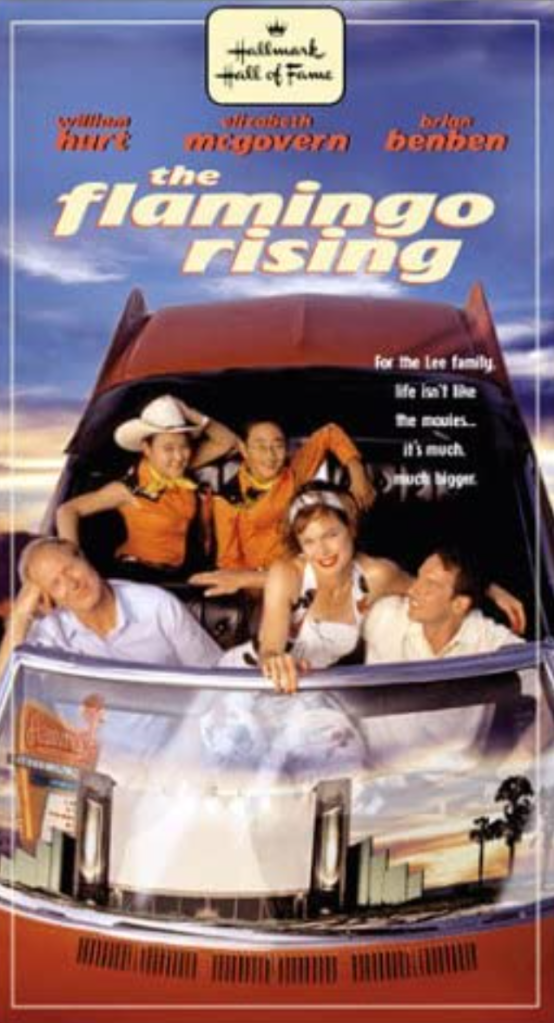
Hallmark Hall of Fame’s The Flamingo Rising VHS cover created by Hallmark Entertainment, Hallmark Hall of Fame Productions, McGee Street Productions, CBS, and Artisan Entertainment 

The Budget

From what I’ve heard over the years, a typical made-for-TV movie costs somewhere between one to three million dollars. While that sounds like a lot of money to the average movie blogger, that amount is actually on the lower end of the financial spectrum, when it comes to making movies. If the aforementioned millions were the budget for Hallmark Hall of Fame’s The Flamingo Rising, it would explain why some parts of the source material were cut from the movie. In the book, Abraham shares his family had a temperamental dog named Frank. This dog was so unstable, he not only bit Louise, he was forced to live in an empty room above Abraham’s room, due to the dog’s behavior. In the film, however, Frank the dog is nowhere to be seen and is never acknowledged by any of the characters. If a movie’s creative team chooses to include an animal in their production, the training, veterinary care, and other related expenses will need to be factored into the overall budget. Working with an animal trainer also requires time, something the creative team behind The Flamingo Rising only had so much to spend. Therefore, the inclusion of Frank the dog was an expense the adaptation’s creative team likely thought was unnecessary.

Location scouting is a film-making component also affected by a creative team’s budget. Like I said in my editorial, ‘Redwood Curtain’: From Stage to Screen, a location scout might not be able to secure a location similar to one described in the source material. Even if they succeeded, there’s a process in order to film at a residential building, especially if it’s someone’s real-life home. This process, along with the budget, is the probable reason why the funeral home has a different appearance in the movie than described in the book. Larry Baker’s novel gives the West Funeral Home the look of a “Southern plantation style house”, complete with white columns and Jeffersonian arches. The Home also contains a garage full of hearses and limousines. The Flamingo Rising’s adaptation gives the funeral home a different exterior. Referred to as the Knight Funeral Home in the movie, the facility boasts a bungalow style in a dark green hue. The Home’s garage is not shown on-screen. However, the Home itself does feature a full-sized porch. The funeral home’s interior has more appearances in the book than in the movie. In fact, the only time the Lee family enter the Knight Funeral Home is shortly after Edna dies. For those two scenes, the creative team may have filmed them on a set, away from the building that portrayed the funeral home.

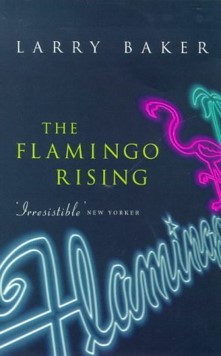
Image of The Flamingo Rising by Larry Baker found on Goodreads

Appropriateness of Content

For many years, Hallmark garnered a reputation for presenting themselves as a “family-friendly” company. This has been reflected in their programming, including their Hallmark Hall of Fame productions. As someone who’s read The Flamingo Rising book, I’ll be the first person to say there are some parts of the story that are not “Hallmark appropriate”. One of these parts is Louise’s social life. Abraham, in the novel, recalls how, one night at The Flamingo Drive-In, Louise snuck out with some male college students. During this interaction, these males attempt to take advantage of her. Even though Louise is saved just in time by some of the drive-in’s employees, the ordeal is a frightening one. This event is not included in the movie. The only older characters Louise is friends with are Polly and Alice, who all happen to work at the drive-in. It should also be noted that Abraham and Gary are the only male characters Louise hangs out with in the film.

Louise’s story was not the only one to change in Hallmark’s efforts to keep the adaptation “Hallmark appropriate”. Polly, an employee of The Flamingo Drive-In, is a very problematic character in the book. A reason for this is due to her racism. Polly expresses how she didn’t like her high school becoming integrated. She also thinks Abraham is “too brown”, causing Abraham to have self-image related issues. Even though Polly’s role in the movie is smaller, she never comes across as racist. In fact, racism is never addressed in the film. Polly, along with Alice, appear to get along with both Abraham and Louise. Alice, throughout her time at the drive-in, gives Abraham advice and looks out for him, like an older sibling would look out for their younger brother or sister.

Antique car image created by Freepik at freepik.com. <a href=’https://www.freepik.com/free-vector/red-classic-car_803652.htm’>Designed by Freepik</a>. <a href=”https://www.freepik.com/free-photos-vectors/vintage”>Vintage vector created by Freepik</a>. Image found at freepik.com.

The Casting

When an author creates a story, they sometimes don’t consider how that work could be translated to film or television. If that author’s work does receive an adaptation, the casting can dictate how the story changes. Abraham describes Alice Kite, in the book, as being “as tall as my mother”. Edna is six feet tall in the novel. Because of her height, Alice wore baggy jeans and shirts, never shorts. Elizabeth McGovern and Angela Bettis were cast as Edna and Alice in the Hallmark Hall of Fame adaptation. According to IMDB, Elizabeth is 5’7, while Angela is 5’3. Alice wardrobe’s, in the movie, included tank tops and shorts. This creative decision was likely made to compliment Angela’s height.

In both the book and movie, Grace looks like her mother. Turner, Grace’s father, tells Edna, in the film, “she looks just like her”, referring to his daughter’s resemblance of his late wife. But Grace’s mother never makes an on-screen appearance, as she dies before the movie’s events. Therefore, The Flamingo Rising’s creative team cast an actress that resembled the actor portraying Turner. William Hurt portrayed the owner of Knight Funeral Home. He appears blonde in the film, despite his character having “coal-black hair” in the book. Erin Broderick was cast as Grace, though it isn’t known if Erin or William was recruited to the movie first.

Since The Flamingo Rising takes place in Florida, I figured featuring this screenshot was appropriate. Screenshot taken by me, Sally Silverscreen. Image originally found at https://www.youtube.com/watch?v=tiBkULOrf7Y.

When I reviewed the Hallmark Hall of Fame movie, O Pioneers!, back in July, I said that story should have been adapted into a multi-part mini-series or a television show. That’s because I felt an hour and thirty-seven minutes was not enough time to tell a story with that many moving parts. I feel similarly about The Flamingo Rising. Because Abraham, in the book, is reflecting on his life, there are a lot of characters and plot points included in the text. With the Hallmark Hall of Fame adaptation being an hour and thirty-four-minutes, Larry Baker’s story was forced to be condensed.

There are several parts of The Flamingo Rising book that were either omitted or changed in the adaptation, due to these parts not being “Hallmark appropriate”. With that said, it makes wonder why Hallmark Hall of Fame chose to adapt Larry Baker’s novel over a story that was more “Hallmark appropriate”? This situation kind of reminds me of when Hallmark Channel adapted At Home in Mitford. Last September, I reviewed the 2017 film for one of my double features. After reading the book and watching its adaptation, I came to the conclusion the network was attempting to fit a round peg into a square hole, trying so hard to fit At Home in Mitford into their brand of film-making. Perhaps something similar happened to The Flamingo Rising, causing history to repeat itself sixteen years later?

Have fun at the movies!

Sally Silverscreen

Top 5 Hallmark Films Based on a True Story

Last December, I was nominated for The Pick My Movie Tag by Gill from Realweegiemidget Reviews. My selected topic was “A list of must-watch Hallmark film star biopics”. In my quest to find these kinds of films, however, I found very few Hallmark titles about film stars, especially those I’ve seen. More often than not, I came across Hallmark movies that were based on true stories that were not celebrity related. Therefore, I decided for this tag I would write about the top five Hallmark films based on a true story! Before I list the tag’s rules, I’d like to thank Gill for the nomination, as Gill’s thoughtfulness is appreciated.

The Tag’s Rules

  • Nominate one or more people to review the film or films of your choice. Or you can request they review something from a certain year, genre, or star. Everyone can review the same thing, or you can request each person cover something different. As long as it’s something they haven’t written about yet, you’re good.
  • Nominees are allowed to request a different pick for whatever reason no more than five times. Stuff happens. We all know it.
  • Nominees must thank the person who nominated them and provide a link their blog.
  • Nominees may nominate others to keep the tag going. Picking the person who nominated them is allowed, or they can nominate someone else. Maybe both.
  • All participants need to include these rules in their post, whether they’re nominees or picking nominees.
  • All participants should use the “Pick My Movie” banner or something similar in their posts.
  • Have fun!
The Pick My Movie Tag banner created by Rebecca from Taking Up Room and found on Realweegiemidget Reviews

1. The Christmas Choir (2008)

It’s been years since I’ve seen The Christmas Choir. From what I remember, I enjoyed this film! The cast as a whole is strong. Quality in acting talents and screenwriting allow the characters to come across as realistic and endearing. The Christmas Choir is one of Hallmark’s more unique Christmas titles, as it doesn’t follow a formula or contain a certain set of Christmas movie tropes and cliches. In fact, it’s surprising this film isn’t a Hallmark Hall of Fame production, as the story of a choir that started in a homeless shelter seems like the perfect material for that collection of movies. Another thing I remember about The Christmas Choir is the genuine good-heartedness the film exuded. As the Christmas season is on the horizon, this may be a movie I end up revisiting!

2. Hallmark Hall of Fame’s The Courageous Heart of Irena Sendler (2009)

I first talked about this film in my tier rank list of all the Hallmark Hall of Fame movies I’ve seen. In that list, I mentioned the film’s presentation, as the film itself felt like a theatrical release. However, that’s not the only strength The Courageous Heart of Irena Sendler contains. Historical accuracy is an element that Hallmark Hall of Fame productions have, more often than not, executed well. This film is no exception, as the movie appropriately reflects the story’s time period! Movies like The Courageous Heart of Irena Sendler make me wish Hallmark had created more period dramas. Yes, we have When Calls the Heart. But, to me, that feels like the exception to the rule.

3. Hallmark Hall of Fame’s A Smile as Big as the Moon (2012)

If you asked me to name a “space camp” movie, A Smile as Big as the Moon is the first one that comes to mind. As I said in my aforementioned tier rank list, this film is the perfect example of what a Hall of Fame title should be. I still stand by that statement, with the movie containing so many good components! Similar to The Christmas Choir, the strong acting performances and screenwriting brought to life characters that were worth rooting for. It was also interesting to see what it takes to be enrolled in space camp. The story’s messages and themes are just as relevant today as they were in 2012 or even the late 80s, when the story takes place. A Smile as Big as the Moon is a Hallmark Hall of Fame title that I consider a classic!

4. The Color of Rain (2014)

In my opinion, The Color of Rain is Lacey Chabert’s best film from Hallmark. One reason why is the story in this film is so different from those in Lacey’s other Hallmark movies. The Color of Rain does contain sadder moments, as both families are dealing with the death of a family member. But similar to films like Holly and Ivy, the movie’s creative team adopted a balance between sorrow and joy. It also helps how the cast’s acting talents were strong, as it allowed the characters to be memorable. The more I think about The Color of Rain, the more it feels like a Hallmark Hall of Fame title.

5. A Godwink Christmas: Meant for Love (2019)

Personally, I enjoyed this sequel in the “Godwink” series more than the first film. A Godwink Christmas: Meant for Love does a better job at explaining and showcasing what a “Godwink” is. Like Holly and Ivy and The Color of Rain, this movie’s creative team successfully balances joy and sorrow. I also think Cindy Busby’s portrayal of Alice is one of her best performances, as it is well-rounded and contained emotionality. In a year when Hallmark premiered new films weekend after weekend, A Godwink Christmas: Meant for Love was, to me, one of their stand-outs. I may have to seek out the other two films in this series.

Movie time image created by Freepik at freepik.com. <a href=”https://www.freepik.com/free-photos-vectors/food”>Food photo created by freepik – http://www.freepik.com</a>. Image found at freepik.com.

Nominations

  • Jillian from The Classic Film Connection – A Hallmark Hall of Fame movie starring at least one “classic” film star
  • Rebecca from Taking Up Room – A vampire film released after 1960
  • Eric from Diary of a Movie Maniac – A made-for-TV movie from the 1990s
  • Andrew from The Stop Button – An underrated sports film
  • J-Dub from Dubsism – Another entry in the Movies Everybody Loves That I Hate series

Have fun at the movies!

Sally Silverscreen

Take 3: Point of Origin Review

When the subject of “disaster films” is brought up, one will usually think of films revolving around over-exaggerated, fictionalized disasters. Whether it’s Sharknado or The Day After Tomorrow, these types of titles have become the faces of the “disaster film” category. But what if a movie depicts a real-life disaster that could be experienced by anyone? This is the case of my Disaster Blog-a-Thon entry, Point of Origin. Last month, I searched on Wikipedia for a title to review for May’s Genre Grandeur. During that search, I stumbled across the aforementioned 2002 HBO production. After reading the film was a “fact-based drama about an arson investigator searching for the perpetrator of a string of deadly fires in 1980s California”, I knew it was the perfect choice for J-Dub and Pale Writer’s event! Before I start this review, I would like to point out how this marks two firsts for 18 Cinema Lane. Not only is this my first time participating in the Disaster Blog-a-Thon, this is also the first HBO film reviewed on my blog!

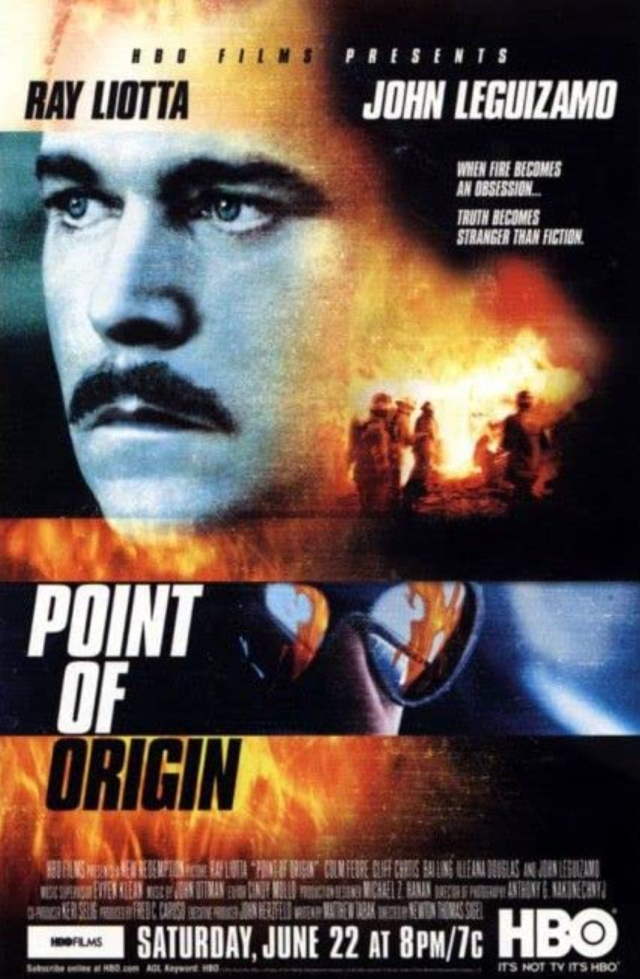
Point of Origin poster created by HBO Films and New Redemption Pictures

Things I liked about the film:

The mystery: For the most part, the mystery in Point of Origin allowed the audience to experience it alongside the characters. What also helps is how the mystery started right at the beginning of the film. This immediately hooked the audience into the story, while also giving them a shared journey with the key players on screen. There was room for viewers to speculate what would happen in the story. That gave them the opportunity to interact with the film’s mystery. Three separate components played a role in the overarching narrative. While I won’t give anything away, it was interesting to see these components come together.

The special effects: When John was investigating a crime scene, he would attempt to figure out how the fire started. Toward the beginning of the film, this thought process was visualized through special effects. As John is recounting the information, the actual fire is played out in reverse on screen. This is very different from other mystery movies, as flashbacks might be utilized to speculate the cause of a crime. When it came to the fires themselves, it appeared as if they actually took place in a given scene. It may have been possible for the movie’s creative team to insert footage of fires through editing or CGI, as Point of Origin was released in 2002. However, practical effects were an interesting choice. This creative decision reminded me of productions like The Crow.

Showcasing the dangers of fire: While investigating a local fire, John and his co-worker, Keith, examine a young boy who died on the crime scene. Despite only the victim’s face being shown, it is blackened due to smoke and flame exposure. Later in the film, John visits a surviving burn victim in the hospital. The victim’s face and part of his hand are covered in burns. He even claims that it hurts to open his eyes. Due to the nature of Point of Origin, the story is heavier in tone. However, the incorporation of the dangers of fire never felt like they were there for “shock value” or as a tactic to scare the audience. If anything, it was shown just enough to get the point across.

The Second Disaster Blog-A-Thon banner created by J-Dub from Dubsism and Pale Writer from Pale Writer

What I didn’t like about the film:

Bai Ling’s limited presence: Bai Ling was cast as John’s wife, Wanda Orr, in the 2002 HBO film. Her involvement in Point of Origin is one of the reasons why I sought out this movie, as she is the top billed actress. When I watched the film, however, I discovered Bai appeared in only a handful of scenes. Compared to some of Bai’s other projects, her talents were under-utilized in Point of Origin. It also seems like the main supporting actress, Illeana Douglas, received more screen-time than Bai. Bai did a good job with the acting material she was given. But this situation is very reminiscent of Katharine Hepburn’s involvement in 1994’s One Christmas, where Katharine appeared in about five scenes despite being that film’s top billed actor.

A confusing time period: As I mentioned in the introduction, Point of Origin takes place in the 1980s. Elements from that decade were incorporated into the film, such as vehicles and a typewriter used by John at various moments in the story. Meanwhile, Bai’s wardrobe looked like it came straight from the early 2000s. There was also a scene where a store patron tells another patron not to smoke in the store. This attitude was more prevalent in the 2000s, as smoking in public places was more accepted in the 1980s. The inconsistency with the film’s historical accuracy was so confusing, it was, on a few occasions, distracting.

An unidentified red-haired man: Throughout the movie, a red-haired man made multiple appearances. I won’t spoil the movie for anyone who hasn’t seen it. But I will say when everything was said and done, I don’t feel like I received a satisfying explanation of who that character is. Yes, I can assume the red-haired man’s identity. However, when it comes to that character, the movie was building up to something without providing a pay-off.

Magnifying glass and fingerprint image created by Alvaro_Cabrera at freepik.com. <a href=’https://www.freepik.com/free-vector/loupe-over-a-fingerprint_853908.htm’>Designed by alvaro_cabrera</a>. <a href=”https://www.freepik.com/free-photos-vectors/glass”>Glass vector created by Alvaro_cabrera – Freepik.com</a>. Image found at freepik.com.

My overall impression:

For the Disaster Blog-a-Thon, I chose to talk about a film that revolved around a real-life disaster. This is because, in my opinion, these types of titles aren’t talked about as much within the realm of “disaster films”. When it comes to Point of Origin specifically, it was a fine, competently made, intriguing movie. But the 2002 HBO project made me feel similarly to Red Corner. This is ironic, as Bai Ling was cast as the lead actress in both films. What I mean by my aforementioned statement is I held higher expectations for each film, only to be somewhat let down by them. As I’ve said before on 18 Cinema Lane, the historical accuracy works when the creative team places emphasis on the details. In Point of Origin, however, it seems like the film’s creative team forgot, at times, their project took place in the 1980s. This is because some aspects of the film reflected the time of the film’s release; the early 2000s. I haven’t seen a lot of HBO films, so I can’t make any comparisons with Point of Origin. But I will say, based on other made-for-TV mystery productions, this one felt closer to the middle of the road.

Overall score: 7.2 out of 10

Have you seen Point of Origin? Are there any HBO films you’d like to see reviewed on 18 Cinema Lane? Please let me know in the comment section!

Have fun at the movies!

Sally Silverscreen

Travel Lessons I Learned from Movies and TV

Movies and television not only provide entertainment, they also tell a story through a visual medium. Something else movies and television do is teach lessons through those stories. Throughout my life, I have learned so many lessons from various movies and television shows. How to travel smart has been one of them. As my blogathon’s theme this year is ‘Travel Gone Wrong’, I have decided to share a list of six travel related lessons I’ve learned over the years! This is especially exciting, as it’s the first list I’ve created for one of my blogathons! The list is based off of movies and shows I have personally watched. I also tried to present a combination of programs where the mishaps were met with either hilarious or horrifying results. Now, have your boarding ticket ready, as we’re about to start this list!

Created by Sally Silverscreen at Adobe Creative Cloud Express

Never Tell Strangers Where You Will be Staying (Especially if You’re Traveling Alone)

When I reviewed the 1962 film, Cape Fear, I said the most effective “scary movies” are the ones that involve real-life situations. A movie that definitely belongs in that discussion is the classic, Taken. The 2008 title showcases the dangers that can sometimes present themselves in international travel, without coming across as a PSA/cautionary tale/“after school special” type story. This is because the film places more emphasis on the action within the project. Every time I think of this movie, I always speculate how Kim and Amanda might have avoided their plight had they not told a group of strangers, who ended up being human traffickers, which hotel they were staying at. It also didn’t help how they revealed they were both traveling alone. There’s a saying that goes “Strangers are friends you haven’t met yet”. Well, as Kim and Amanda’s situation shows, that isn’t always the case, especially since some people’s intentions are not great. Watching Taken reminded me how you should only share your hotel and travel status with people you know and trust.

Pink travel backpack image created by Pikisuperstar at freepik.com. <a href=”https://www.freepik.com/free-photos-vectors/watercolor”>Watercolor vector created by Pikisuperstar – Freepik.com</a>. <a href=’https://www.freepik.com/free-vector/travel-lettering-with-watercolor-pink-backpack_2686676.htm’>Designed by Freepik</a>. Image found at freepik.com.

If You Want to Start any Relationships with the “Locals”, Take the Time to Know Them First

When I refer to “locals”, I’m referring to anyone who is from a particular travel destination, whether it’s “across the pond” or across town. For this point, I have two examples to share. The first is from a movie I reviewed back in January, Red Corner. While in China for business related reasons, Jack becomes attracted to a woman he briefly met at a nightclub. Attraction gets the better of them, as they end up sharing intimate relations with one another. The woman is discovered dead the following morning, with Jack declared a suspect in her murder. The second example, which also involves a man named Jack, is the Lost episode “Stranger in a Strange Land”. Within the flashbacks from that episode, Jack forms a month-long, intimate relationship with Achara, a character I mentioned in my latest Sunset Over Hope Valley re-cap. During their relationship, Jack becomes frustrated that Achara won’t share what her “gift” is with him. Taking matters into his own hands, he barges into her place of employment and demands an explanation. When Achara’s revelation isn’t enough, Jack forces her to give him a tattoo, even though she initially refuses his request. Their relationship ends disastrously, with Achara in tears and Jack unofficially banned from Thailand.

Screenshot taken by me, Sally Silverscreen. Photo originally found at https://www.thehollywoodroosevelt.com/pool/tropicana-pool-cafe.

I’ve said before that, in my opinion, starting or ending a relationship shouldn’t be taken lightly. I’ve also said that both members of a relationship should be equal to one another. Taking that into account, it’s important to remember when two people come together to form a relationship, they bring with them elements of their lives, which includes their respective cultures. This is where my two examples come in. Despite Jack from Red Corner spending such a short amount of time with the aforementioned woman, he had to deal with her government, a government he was not familiar with. He was also not familiar with the Chinese language and cultural beliefs. This, to an extent, left Jack at a disadvantage. Meanwhile, in Thailand, Jack from Lost didn’t respect Achara’s cultural boundaries. As I mentioned earlier, she initially refused his tattoo request. During their confrontation, Achara told Jack her tattoos are “not decoration, it is definition”. Achara also said Jack couldn’t receive a tattoo because he was “an outsider”. Though she doesn’t provide details to her comments, Achara implies her tattoos have a strong connection to her culture. But whenever Jack and Achara are shown having a conversation, they seem to purposefully avoid talking about anything personal. When I first reflected on “Stranger in a Strange Land”, I knew Achara and Jack’s relationship didn’t last for a reason. Rewatching it years later reminded me why. Honestly, both parties from both relationships could have avoided so much heartache if they had taken the time to learn about and from one another. Sometimes, the best way to know more about a specific culture is to interact with those who are a part of it. Seems to me both aforementioned relationships missed a great opportunity.

Illustrated African landscape image created by Macrovector at freepik.com. Background vector created by macrovector – www.freepik.com

Be Mindful Who You Place Your Valuable Belongings With

Traveling with valuable belongings is inevitable. This has been the case since the concept of traveling was born. A valuable belonging can be almost anything, especially according to the decade. In the 1980s, one of these valuable belongings was camcorders/video cameras. Priceless, irreplaceable family memories were captured on these devices. At the time, they also carried an expensive price tag. I’ve only seen about half of National Lampoon’s European Vacation. The one scene I vividly remember is when the Griswald family have their video camera stolen. Clark asks a passerby to take his family’s picture with the camera. During this photo session, the passerby suggests the family stand in a nearby fountain. After the Griswalds take this suggestion, the passerby runs away with their video camera. While this scene is meant to be played for laughs, a serious point is to be made. There’s nothing wrong with asking someone to take a picture of you with your chosen electronic device. However, if you are in possession of a valuable item, being mindful is key. If something doesn’t add up, don’t hesitate to say or do something about the situation. Similar to what I said about Taken, place your belongings with those you trust.

Travel suitcase image created by Freepik at freepik.com. <a href=’https://www.freepik.com/free-vector/water-color-travel-bag-background_1177013.htm’>Designed by Freepik</a>. <a href=”https://www.freepik.com/free-photos-vectors/background”>Background vector created by Freepik</a>. Image found at freepik.com.

On Your Trip, Know Where Every Member of Your Party Is

A movie I have never talked about on my blog before is the live-action adaptation, Madeline. I’ll admit it has been years since I’ve seen this film. But from what I remember, there is one scene that perfectly fits this discussion. The titular character and her classmates are at a local carnival on a field trip. Toward the end of this trip, Madeline is late for their bus ride home. To avoid getting in trouble, one of Madeline’s classmates holds up a hat to look like Madeline was sitting in her seat. This leads Miss Clavel to assume Madeline was with the rest of the class. But, in reality, she was somewhere else. During any trip, there is so much to think about. Keeping your party together is one of them. If Madeline had told one of her classmates or even Miss Clavel where she was going or how long she would be gone for, the school community would have one less thing to worry about. There’s no “modern” technology present in this film. But if Madeline had access to a cell phone, she should have kept it on and with her at all times. Miss Clavel is known for saying “Something is not right”. Had Madeline been in worse danger than was depicted in the movie, something would have been very wrong.

Snowy mountain image created by Freepik at freepik.com. <a href=’https://www.freepik.com/free-vector/landscape-background-of-snow-track-and-mountains_968656.htm’>Designed by Freepik</a>. <a href=”https://www.freepik.com/free-photos-vectors/background”>Background vector created by Freepik</a>. Image found at freepik.com.

Leave Enough Time to Gather All Your Belongings

A running joke on The Middle is “the blue bag”. This blue bag contains important items, such as snacks, and is meant to travel with the Heck family whenever they go on a trip. Unfortunately, this bag is, more often than not, forgotten. When this realization occurs, the family typically asks in unison, “You forgot the blue bag”? A reason why this bag gets left behind is because the Heck family usually rushes to get to their destination. In my years of travelling and watching The Middle, I know how essential it is to be prepared. This is why I always pack the day before I leave for a trip. The day before I plan to leave, I also gather what I know I will pack and put those items in one place. This has saved me so much headache and stress.

Colorful travel suitcase image created by Pikisuperstar at freepik.com. <a href=’https://www.freepik.com/free-vector/beautiful-illustration-of-travel_2686674.htm’>Designed by Freepik</a>. <a href=”https://www.freepik.com/free-photos-vectors/watercolor”>Watercolor vector created by Pikisuperstar – Freepik.com</a>. Image found at freepik.com.

Take Advantage of the Opportunities Around You

Ok, so I know I’ve been sharing lessons I’ve learned relating to more serious, travel related situations. Well, this lesson is serious, but not in the same way. Travelling, whether near or far, can give you opportunities to explore new places, meet new people, and grow as an individual. Two characters who take advantage of this are Brooklyn and Joe from Anchors Aweigh! For the majority of this story, Joe and Brooklyn travel to Los Angeles/Hollywood after receiving permission to leave their Navy base. During their travels, they make new friends, fall in love, even helping make a dream come true. Brooklyn and Joe also visit places not highlighted in a travel guide. But none of that would have been possible if they hadn’t been open to the possibilities of their surroundings. So many discoveries are waiting to be found when you travel. They can come in all different shapes and sizes. How do you find them, you ask? Just be aware of what your surroundings have to offer.

Have fun on your travels!

Sally Silverscreen

The Travel Gone Wrong Blogathon is Ready to Set Sail!

All aboard the blogathon train! Spring is a time when vacations are either in the planning stage or just beginning. This is one of the inspirations for my Travel Gone Wrong Blogathon! As was mentioned in the official announcement post, plans can either go hilariously or horrifyingly wrong. So, for this year’s event, entries are classified accordingly. All the participant’s posts will be found on this one communal post, in order to locate them easier. With that said, grab your suitcase and fasten your seatbelts! We’re off on a blogathon adventure!

Created by Sally Silverscreen at Adobe Creative Cloud Express

Sally from 18 Cinema Lane — Travel Lessons I Learned from Movies and TV

Hilariously Wrong

Gill from Realweegiemidget Reviews — FILMS… Our Ladies (2019)

Ruth from Silver Screenings — How to Have a Miserable Vacation

Rebecca from Taking Up Room — The Hardys Take Manhattan

J-Dub from Dubsism — Sports Analogies Hidden In Classic Movies – Volume 131: “Planes, Trains, and Automobiles”

Hamlette from Hamlette’s Soliloquy — “French Kiss” (1995)

Classic Movie Muse from The Classic Movie Muse — 5 Reasons Why You Should Watch The Great Race (1965)

Horrifyingly Wrong

Debbie from Moon In Gemini — The Travel Gone Wrong Blogathon: Train to Busan (2016)

geelw from “DESTROY ALL FANBOYS”! — The Passenger, Or: Boarding? Pass!, The Gift Or: “Where’s Waldo?” Or: “Really Dead Letter Office”

J-Dub from Dubsism — Sports Analogies Hidden In Classic Movies – Volume 130: “Airport”

Eric from Diary of A Movie Maniac — THE LOST WEEKEND (1945)

Evaschon98 from Classics and Craziness — movie review: flightplan (2005).

Take 3: Sailor Moon S: The Movie Review

When Gill, from Realweegiemidget Reviews, invited me to join the Wilhelm Scream Blogathon, I had no idea the “Wilhelm Scream” was even a thing. However, I was determined to find the perfect selection for the event! After searching high and low on the internet, it was down to two choices: F9 and Sailor Moon S: The Movie. I ultimately selected the latter because it’s been some time since I last reviewed an animated movie. As a matter of fact, the most recent animated film reviewed on 18 Cinema Lane was 1990’s The Nutcracker Prince back in December of 2021. I was also surprised to discover the “Wilhelm Scream” was featured in Sailor Moon S: The Movie! Even though this is my first time writing about anything Sailor Moon related, I have watched the English dub version of the show years ago. With that said, it has been years since I’ve seen anything Sailor Moon related. To avoid confusion for my readers, I will refer to the characters by their Japanese and Americanized names, if applicable. The version of Sailor Moon S: The Movie I watched is the English dub version. So, “in the name of the moon”, let’s start this review!

Sailor Moon S: The Movie (English dub) poster created by Viz Media, Pioneer Entertainment, Optimum Productions, and Studiopolis

Things I liked about the film:

The animation: Despite Sailor Moon being released in the ‘90s and 2000s, the animation quality still holds up! One consistent element was the use of color! Princess Snow Kaguya, the film’s villain, wants to blanket the world in an infinite layer of snow and ice. Even though wintery environments typically don’t feature an expansive color palette, Kaguya was presented in hues of blue, green, and purple. The wardrobe of the Sailor Guardians/Sailor Scouts boasted bright hues; from Makoto’s/Lita’s orange sweatshirt to Usagi’s/Serena’s pale green sweater. This showed the creative team’s incentive to use as much color as possible. In some scenes, sparkles were added to provide a layer of dimension to a specific piece of animation. One example is when Luna is looking out at the ocean, as the sparkles give the illusion of the water moving. Another example involving Luna is when she is crying, with the sparkles emphasizing Luna’s emotions. Though the sparkles don’t make the animation 3-D, they do bring depth, in varying degrees, to the film. The fluidity of the animation’s movements also showcase the impressiveness of the movie! In some scenes, snow falls from the sky. The snowflakes fall in a steady progression, to the point where you forget it was likely added as an extra layer of animation. The fluid movement of these snowflakes brought realism to a given scene as well as the world of Sailor Moon!

Interconnected stories: Sailor Moon S: The Movie contains three plots. But it never felt like these plots were clashing or in competition with one another. Instead, they were interconnected, woven together by a strong thread! Two of the plots, Luna’s growing feelings for Kakeru and Himeko’s space journey were heavily affected by Kaguya’s attempts to cover Earth in snow and ice. While Kaguya’s plans provided the tenser moments of the movie, the other two plots served gentler moments, where the scripts messages of selflessness, dreams, and doing the right thing are instilled on the audience. The Sailor Guardians/Sailor Scouts are the glue that keeps the stories together, as they have some connection to each one. All of these components help the script move in a cycle.

Differing views on astronomy: In the Diagnosis Murder episode, “An Education in Murder”, Dr. Mark Sloan explains to his class how medicine is both an art and a science. This statement, though applying to astronomy this time, is brought to life in Sailor Moon S: The Movie! As I just mentioned, Himeko, a local astronaut, is preparing to make a journey to space. Her approach to astronomy is more scientific, as she chooses to think logically and “by the book”. Her friend, Kakeru, is also an astronomer. But his approach to the subject is more artistic. This is because he uses his knowledge and skills to prove the existence of a moon princess. These characters don’t see eye-to-eye when it comes to their respective scientific field. However, they not only care about one another, but they also recognize the importance of space exploration. Himeko and Kakeru’s story shows the audience how everyone can come to any subject differently.

The Wilhelm Scream Blogathon banner created by Gill from Realweegiemidget Reviews

What I didn’t like about the film:

Not feeling cinematic: When I choose to watch a movie, I expect that production to feel cinematic in some capacity. However, that wasn’t really the case for Sailor Moon S: The Movie. Most of the story was episodic, as these plots could have also been featured on the show. As good as the animation was, it looked like it came straight from one of the show’s episodes. The moment that truly felt cinematic was the final battle, with the Sailor Guardians/Sailor Scouts going up against Kaguya. Every member of the Sailor Guardians/Sailor Scouts present and the high energy excitement serve as two reasons for the cinematic feel. Even Usagi’s/Serena’s monologue about protecting life made that scene feel larger in scale. But outside that moment, Sailor Moon S: The Movie feels more like an extended episode.

The limited presence of Haruka/Amara, Michiru/Michelle, and Setsuna/Trista: The Sailor Guardians/Sailor Scouts from the Outer Planets, Haruka/Amara, Michiru/Michelle, and Setsuna/Trista make an appearance in Sailor Moon S: The Movie. But outside of their transformations as Sailor Uranus, Sailor Neptune, and Sailor Pluto, they only appeared in the film twice. Their limited presence was a missed opportunity to learn more about Haruka/Amara, Michiru/Michelle, and Setsuna/Trista. It also prevented these characters from having a stronger connection to the three aforementioned plots. If anything, the presence of Haruka/Amara, Michiru/Michelle, and Setsuna/Trista make it feel like they were there for plot convenience.

Confusion over the moon princess: As I mentioned earlier, Kakeru uses his knowledge and skills to prove the existence of a moon princess. While this part of the movie was easy to understand, I was confused over the true identity of who this princess was. Based on what some of the characters said, it seemed like Kaguya claimed to be the moon princess. Her place of origin happened to be the moon itself. But Luna planned on pretending to be the moon princess, in order to make Kakeru’s dream come true. When everything was said and done, I don’t feel like I received a definitive answer of who the moon princess was meant to be.

Many years ago, I purchased these Sailor Moon S VHS tapes at a video store sale. However, I’d like to call them relics. Screenshots taken by me, Sally Silverscreen.

My overall impression:

One of my reasons for reviewing Sailor Moon S: The Movie was the inclusion of the “Wilhelm Scream”. Unfortunately, I didn’t hear this scream while watching the film. Then again, I was so engrossed in the story that I must have missed it. As I said in the introduction, it has been years since I’ve seen anything Sailor Moon related. However, it was nice to revisit the series, even for an hour! The animation still holds up, maintaining its color, depth, and fluidity over twenty years later. Like the show, Sailor Moon S: The Movie features important messages and themes. But it also contained differing views on astronomy, a topic that wouldn’t typically be found in the Sailor Moon series. Despite all these strengths, I wish the movie felt like a movie, instead of an extended tv episode. I also wish Haruka/Amara, Michiru/Michelle, and Setsuna/Trista had more appearances in the story. If you are a fan of Sailor Moon, ‘90s entertainment, or animation in general, then this is worth an hour of your time!

Overall score: 7.5 out of 10

Have you watched Sailor Moon? Do you prefer the Japanese version or the English dubbed version? Let me know in the comment section!

Have fun at the movies!

Sally Silverscreen
Take 3: Hallmark Hall of Fame’s The Lost Child Review + 395 Follower Thank You

To all 395 followers, thank you for helping make 18 Cinema Lane the success it is today! With a new blog follower milestone comes a new blog follower dedication review! I recently read Black Star, Bright Dawn by Scott O’Dell. After reading that book, I realized how rarely I review films revolving around Native American stories. The last one I reviewed was Luna: Spirit of the Whale, with that review published two years ago. To make up for that, I decided to select Hallmark Hall of Fame’s The Lost Child to write about and discuss! It also has been several months since I reviewed a Hallmark Hall of Fame production, with my review of Saint Maybe published last September. Within Hallmark’s library of films, those containing Native American stories are far and few between. These handful of movies have ranged in quality, with Dear Prudence being the best one, in my opinion. So, where does The Lost Child rank? The only way to find out is to keep reading!

Since I had The Lost Child recorded on my DVR, I took a screenshot of the film’s poster with my phone. Screenshot taken by me, Sally Silverscreen
Things I liked about the film:

The acting: Mercedes Ruehl and Jamey Sheridan are no strangers to the world of Hallmark entertainment, as both actors have appeared in at least one Hallmark film besides The Lost Child. Back in 2013, Mercedes starred in Banner 4th of July, a film I haven’t seen. A movie I have seen is 2008’s Dear Prudence, which starred Jamey Sheridan. I don’t believe Mercedes and Jamey appeared in a movie together prior to The Lost Child. Despite this, they had really nice on-screen chemistry! Their characters, Rebecca and Jack, seemed like kindred spirits. The acting abilities of Jamey and Mercedes are part of the reason why this is the case! When Rebecca first meets Jack at a bar, the audience can tell how in sync these two characters are. Jack and Rebecca appear to enjoy each other’s company, with the body language and facial expressions of each actor showing how their characters feel. Mercedes and Jamey not only had good chemistry with each other, they had good chemistry with the other cast members as well! Even though they weren’t on screen together, the scene where Grace, portrayed by Irene Bedard, calls Rebecca is one of the strongest scenes in The Lost Child. Throughout their phone conversation, genuine emotions were shared between both women. The strength of Mercedes’ and Irene’s acting abilities elevated the scene itself, as their conversation revolves around a very emotional subject. A combination of facial expressions, tone of voice, and use of emotionality worked in the favor of each actress, as the scene felt believable!

The scenery: The Lost Child was filmed in Superior, Arizona, according to IMDB. This is because the majority of the story takes place on a Navajo reservation. At several moments in the movie, the film’s creative team took advantage of The Grand Canyon State’s beauty by incorporating the natural landscape within establishing shots or weaving them into the story. A woman named Aunt Mary gives Rebecca a tour of the reservation. During this tour, Aunt Mary takes Rebecca to the spot where Rebecca’s biological parents got married. It’s easy to see why they chose to get married in that spot, as a piece of canyon rock dominates the space. Set against a clear, blue sky, this rock contrasts beautifully with the sky’s hue, as well as the green of nearby cactus. Before Rebecca meets Aunt Mary, she watches the sun rise. The sky gives off hues of orange and yellow, which help the audience focus on this part of natural majesty. Scenes like the two I mentioned are examples of the creative team taking initiative to show how beautiful Arizona can be!

An introduction to Native American culture: As I previously stated, the majority of The Lost Child takes place on a Navajo reservation. Because of this, Rebecca and her family spend time interacting with other members of the Navajo community. Through these interactions, Rebecca’s family, as well as the audience, learn about some aspects of the Navajo culture. When she’s trying to learn how to weave, Aunt Mary tells Rebecca to make a break in her blanket design, in order to prevent losing her spirit in her work. This simple piece of advice teaches Rebecca and the viewers how blankets created by Navajo members carry a special meaning with each design. One evening, Rebecca’s biological family gather around a fire and dance around that fire together. When Rebecca arrives, she asks what her family is celebrating. Her cousin shares how there doesn’t need to be a celebration to have a good time. The Lost Child is not the “end all, be all” when it comes to Navajo culture. However, if one is interested in learning more, this movie provides a good starting point!

Illustrated image of Arizona desert created by pikisuperstar at freepik.com. Background vector created by pikisuperstar – www.freepik.com

What I didn’t like about the film:

A not so compelling conflict: In The Lost Child, Rebecca not only learns she is a Navajo woman, her biological family having been looking for her as well. However, this conflict is resolved within the first thirty minutes of the movie. To make up for the short resolution, the rest of the story focuses on Rebecca and her family acclimating to reservation life. Without spoiling the movie, I can see why Rebecca would make the choices she did. But I didn’t find this overarching conflict to be as compelling as Rebecca’s search for her family. Part of this has to do with how I’m not a fan of “slice of life” stories. The Lost Child is based on a book I haven’t read. Therefore, I’m not sure which parts are straight from the source material and which are creative liberties.

A missing twin brother: When Rebecca is around the age of thirteen, she accidently finds out she has a twin brother. Years later, she posts notices on the internet, in an attempt to find him. These posts are what lead Rebecca to Grace, one of her sisters. But when Rebecca meets her biological family, she abandons the search for her brother. Throughout the story, this twin is brought up in passing. His whereabouts or his name are never mentioned. Like I previously stated, this movie is based on a pre-existing book. Despite that fact, I was frustrated by this huge loose end.

Too many story ideas: I know there is only so much story you can tell in two hours, the run-time for The Lost Child. Therefore, you need enough story material to not only satisfy that run-time, but also hold the audience’s attention. In the case of this movie, there are too many ideas found within the story. Some of these ideas could have warranted its own film. One of them revolves around Rebecca’s daughter, Caroline, being bullied at her new school. Because of how many story ideas were in this film, some of those ideas get lost in the shuffle. A good example is Rebecca’s youngest daughter being diagnosed with a food sensitivity. Looking back on The Lost Child, it felt like the creative team tried to tackle so much in a short amount of time.

White horse image created by Gabor Palla at freeimages.com. “FreeImages.com/Gabor Palla.”

My overall impression:

The Lost Child is the forty-seventh Hallmark Hall of Fame movie I’ve seen in my life. At this point, I know what I like and expect to see in a film of this nature. Personally, I thought the 2000 production was just fine. But it didn’t leave a strong impression on me like other Hall of Fame titles have. I wish the story had focused more on Rebecca’s search for her family, as I found that more interesting than her reservation life. However, I recognize that the film is based on pre-existing material. As I said in the introduction, Hallmark movies revolving around Native American stories are far and few between. This can also be said for the coverage of these films on 18 Cinema Lane. When I do chance upon a movie containing Native American stories, I approach them in the hope they are good. For The Lost Child, it was about as enjoyable as Luna: Spirit of the Whale was, a movie I reviewed back in 2020. A good thing I can say about the Hallmark Hall of Fame project is how it does introduce the audience to the Navajo culture. Having beautiful scenery and containing strong acting performances also help its case. I happen to have other Hall of Fame titles on my DVR. The question is, which one will I review next?

Overall score: 7 out of 10

Do you watch Hallmark Hall of Fame movies? Are there any you’d like to see me review? Let me know in the comment section!

Have fun at the movies!

Sally Silverscreen

The Top 10 Worst Movies I Saw in 2021

When it comes to my best and worst of the year lists, 2021 is a little different. For one, this is the first year where I don’t have any Dishonorable Mentions. This is because I didn’t see enough movies to justify having this portion on the list. For another, my list has the least number of movies that were “so bad they were bad”. The reason is most of the films on this year’s list were disappointments. When I look back on my movie viewing in 2021, I feel most of the titles I saw and/or reviewed were either ok or fine/decent. Sure, I did see several films I liked. But some of those will be discussed on my best of the year list. Speaking of lists, let’s start counting down the top ten worst movies I saw in 2021!

Two disclaimers:

  1. As I’ve said in past lists, I did not write this list to be mean-spirited or negative. It’s simply a way to expressive my own, honest opinion.
  2. Some of the movies on this list have been reviewed on my blog. I will include a link to my reviews of these films.
<a href=”http://<a href=’https://www.freepik.com/vectors/background’>Background vector created by pikisuperstar – http://www.freepik.com</a>&quot; data-type=”URL” data-id=”<a href=’https://www.freepik.com/vectors/background’>Background vector created by pikisuperstar – http://www.freepik.comColorful 2021 image created by Pikisuperstar at freepik.com.

10. I Dream of Jeanie (1952)

This movie made me wish I had saved an hour and twenty-nine-minutes by reading Stephen Foster’s Wikipedia page. For a “biopic”, I Dream of Jeanie wasn’t very informative. While I did learn a few things, the story didn’t capture an almost complete picture of the famous composer. It also showcased him in a not-so-favorable light. Because he was portrayed as a desperate push-over, Stephen was a character that exuded sympathy to the audience. What did not help was how the film placed more focus on other characters and events as well, such as the oh so annoying Edwin P. Christy. Speaking of Edwin, this movie would be called “The Edwin P. Christy Show” if given an honest title.

Take 3: I Dream of Jeanie (1952) Review

9. Country at Heart

This movie is notorious among the Hallmark fans for having more than one release date between 2019 to 2020. Too bad it wasn’t worth the wait. What could have been an interesting story turned out to be another tale of a woman from the city coming back to her small hometown. This is also one of those films where the protagonist says they are going to do something, but ends up spending most of the movie not doing the aforementioned thing. Country at Heart’s biggest flaw, though, lay in the singing abilities of the main character, Shayna. Throughout the story, Shayna’s talents were treated as if she were the next great undiscovered talent. But, in reality, her talents were, at best, fine. I don’t know if Jessy Schram sang in the movie or if there was a singing double. However, this part of the film dissuaded me from buying what the movie was selling.

8. The Trap (1959)

What a weird coincidence for another movie from the ‘50s to end up on my worst list. Even though The Trap is classified as a drama, the creative team placed more emphasis on the drama within the story. When you have gangsters in your film, this is not the genre you want to place your movie in. Since my warning came way too late, the 1959 title was a boring combination of a Suddenly rip-off and a road trip picture. Adding insult to injury, the excitement and action you’d expect from a gangster film was so far and few between. I’m honestly surprised I didn’t fall asleep during this movie, as I wanted to on more than one occasion.

Take 3: The Trap (1959) Review

7. Jane Doe: Ties That Bind

It is possible to make a good movie revolving around a debate. The Hallmark Hall of Fame film, Sweet Nothing in My Ear, is a beautiful example of this. With Jane Doe: Ties That Bind, however, adding a debate to a mystery story doesn’t work. This is because it goes against the very nature of the mystery genre, which emphasizes finding a concrete resolution to the story’s conflict. Unfortunately for the 2007 movie, a debate was the most focused part of the script. Because of that decision, the debate overshadowed the mystery itself. When everything was said and done, the debate wasn’t resolved. If I could summarize this film in one meme, it would be the one where the woman asks “You did this for what”?

6. Hometown Hero

It’s a shame that not one, but two PixL movies ended up on my list, especially since I rarely talk about their films on my blog. The reason why Hometown Hero is considered one of the worst movies I saw this year is because of how bland it was. This caused me not to care about any of the characters or their stories. It also doesn’t help that the main actor and actress had such weak on-screen chemistry, it felt like their characters were becoming good friends instead of romantic significant others. Similar to what I said about choice number seven, I would choose the meme of the woman asking “Where’s the flavor”? if I needed to summarize Hometown Hero in one meme.

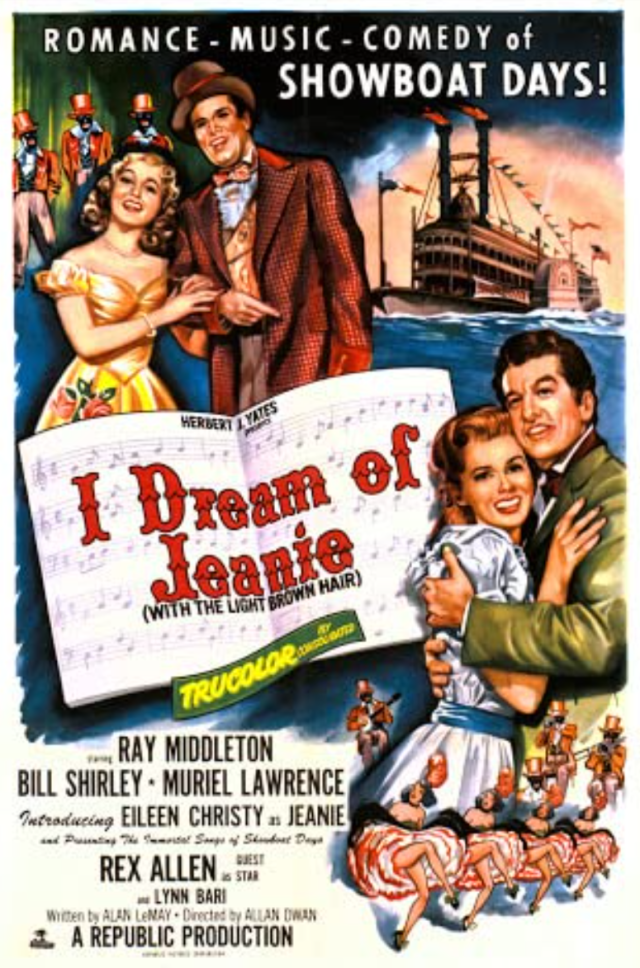
I Dream of Jeanie (1952) poster created by Republic Pictures

5. The Price of Fitting In

Lifetime has an infamous history of creating PSA/“after school special”/cautionary tale movies, which cover a variety of serious, real world subjects. When I came across this 2021 title, I was curious to see what new topics and issues would be discussed in this film, especially considering it’s been a long while since Lifetime created a movie of this nature. But unlike the network’s other PSA/“after school special”/cautionary tale productions from decades past, The Price of Fitting In suffers from an identity crisis. The script spends the entire movie trying to figure out what type of story it wants to adopt. This led several parts of the narrative to either be underdeveloped or unresolved. The Price of Fitting In does recognize how a robotics team can experience similar peer-related situations like other extracurriculars, so I’ll give the movie credit where it’s due. I just wish that idea had belonged in a better film.

4. Raising Arizona

The best way to describe how I feel about this movie is by using an analogy: You’re listening to someone tell a joke. But when it’s time to deliver the punchline, that person forgets what it is. So instead, they either try to come up with a new punchline on the spot or they attempt to figure out what the original punchline was.  In Raising Arizona, the comedic moments lasted so long, the punchline got lost in translation. Some of the jokes didn’t make sense because of this. The characters were not charming or likable enough to make their dysfunctionality tolerable for the audience. If anything, they were one-dimensional and uninteresting. The only part of the movie that prevented me from DNFing (did not finish) it was Leonard Smalls. He was such a mysterious and intriguing character, that I wish I watched a movie about a character like Leonard.

3. Durango

As I said in my review from July, Hallmark Hall of Fame’s Durango is “the first western set in Ireland”, according to IMDB. For the first of its kind, it was a step in the wrong direction. Stories in the western genre are known for having higher stakes, giving the audience an excuse to stay invested in the characters’ well-being. Durango didn’t get that memo because most of the stakes were so low, the characters’ plans worked out too perfectly. Despite never reading the book this Hallmark Hall of Fame title is based on, I can tell how weak this script was. What was also weak was Matt Keeslar’s performance and his on-screen chemistry with Nancy St. Alban. Watching this movie on Hallmark Drama was a blessing in disguise. I may not have saved some time, but at least I saved some money.

Take 3: Hallmark Hall of Fame’s Durango Review

2. Chasing Leprechauns

Yet another Hallmark movie set in Ireland joins the list. Since the network doesn’t create many St. Patrick’s Day themed movies, it is frustrating when a story relating to this particular holiday doesn’t stick the landing. With Chasing Leprechauns, the creative team wanted to include a whimsical element without making the movie too whimsical. Like I said in my review of the 2012 film, those involved with the project wanted to have their cake and eat it too. When I look at the movie’s poster, it feels like false advertising. For one, Chasing Leprechauns is a drab looking picture, not the lush, green paradise the poster wants you to believe. For another, there are no leprechauns in the story, despite the word ‘leprechauns’ being in the title. Hallmark is known for releasing some of their movies on DVD. As far as I know, Chasing Leprechauns was never made available for purchase. Maybe its poor quality is the reason why?

Take 3: Chasing Leprechauns Review

Remember when I said there were two PixL movies on my worst list? Well, The Cookie Mobster is the second film. For those who are not familiar with PixL, this is an entertainment company that typically creates “rom-coms” similar to those on Hallmark Channel. Because of that, this 2014 film was way too ambitious for the company’s own good. The light-hearted tone of the scouting troop’s story and the darker tone of the former gangster’s story ended up clashing with each other. Adding to that, the screenwriters didn’t display an understanding for several of the movie’s subjects. The weak script caused me to question the story’s validity, which took away any opportunity for me to stay invested in the story. The more I think about The Cookie Mobster, the more I wish it had been created by INSP or Hallmark Movies & Mysteries.

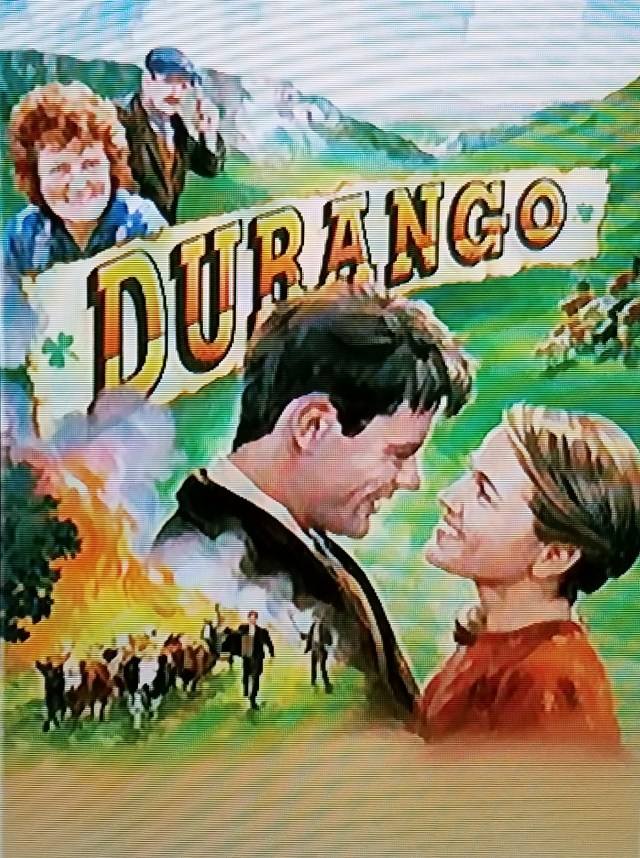
Since I’m talking about Durango again, I’m re-posting my screenshot of the film’s poster. Screenshot taken by me, Sally Silverscreen.

Have fun in 2022!

Sally Silverscreen

Take 3: Kingdom of Heaven Review

This is my second year participating in the Rule, Britannia Blogathon. In 2020, I reviewed the 2002 adaptation of Nicholas Nickleby, a movie I ended up liking so much, I now want to read the source material. For the 8th annual event, I chose to write about another film from the 2000s; 2005’s Kingdom of Heaven. This is a movie I have heard about, but never got around to seeing. Until this blogathon, it had sat on my DVR for three years. Since the movie stars Orlando Bloom, a British actor, the Rule, Britannia Blogathon seemed like the perfect opportunity to finally check the film out. One of the few things I knew about this movie was that it had something to do with the Crusades. This is a time period I know very little about. However, this didn’t stop me from giving the film a fair chance. What did I think of this 2005 title? Keep reading if you want to find out!

Kingdom of Heaven poster created by Scott Free Productions, Inside Track, Studio Babelsberg Motion Pictures GmbH, 20th Century Fox, and  Warner Bros. Pictures

Things I liked about the film:

The acting: As I said in the introduction, Orlando Bloom’s involvement in this project is one of the reasons why I chose to review Kingdom of Heaven. Prior to watching the film, I had seen the Pirates of the Caribbean trilogy, where Orlando consistently portrayed Will Turner. While the character of Balian is similar to Will, each role is distinct. To an extent, Orlando’s performance in Kingdom of Heaven reminded me of Vincent Perez’s portrayal of Yanko from Swept from the Sea. While Balian is a masculine character, he also displayed a gentle charm. A good example is when Balian arrives in Jerusalem. He gives his prize horse to the servant of his opponent. When the servant asks why Balian would make this decision, Balian replies how he doesn’t want the horse to suffer.

In Kingdom of Heaven, Eva Green portrayed a queen named Sibylla. Despite appearing in the movie for a limited amount of time, I did enjoy watching her performance! I noticed how fluid Eva’s emotions were. This allowed her to adapt to any situation her character faced. It also helps that she was able to excel, acting wise, alongside her co-stars. Another character I wish appeared in the film more was King Baldwin IV. Portrayed by Edward Norton, this character was a leper. Therefore, he was completely covered and wore a mask. Edward’s use of body movement and expressive eyes make up for the lack of facial expressions. His approach to his role made King Baldwin IV a compelling character to watch!

The scenery: “Sword and sandal” movies are known for featuring breath-taking scenery. Kingdom of Heaven also brings beautiful scenery to the table, showcasing desert, oceanic, and forest landscapes. Toward the beginning of the movie, Balian resided in the French countryside. This area was surrounded by deep green forestry, the ground and trees lightly covered in snow. As Balian travels to Messina, the city is met with a clear, blue ocean. The hue of the water beautifully complimented the warm sandstone of the nearby buildings. While Jerusalem is in the middle of a desert, palm trees brought a pop of color to the environment. These plants helped make Jerusalem appear as an oasis.

The historical accuracy: I’m not familiar with this particular period in history. But based on the limited information I do know, the movie appeared to be historically accurate. Throughout the film, knight’s armor could be seen. Helmets, swords, and other related gear adopted an older style. Some of the swords boasted jewels, with Balian’s sword displaying a giant ruby. Even the attack towers from one of the film’s battles looked as if it came directly from the time of the Crusades. As I’ve said about other period films, details like the ones I mentioned show how much the creative team cared about the presentation of their project!

The 8th Annual Rule, Britannia Blogathon banner created by Terence from A Shroud of Thoughts.

What I didn’t like about film:

Sibylla’s unclear motives: During Balian’s time in Jerusalem, Sibylla becomes romantically interested in him. But she’s already married, a fact that Balian himself is aware of. Balian’s reason for going to Jerusalem was to seek forgiveness for his and his deceased wife’s sins. After meeting Sibylla, he, more often than not, doesn’t object to Sibylla’s romantic interest for him. I was left confused on what her motives were for wanting to be with Balian. At times, I wondered if Sibylla’s situation was similar to Rose’s from Titanic, simply stuck in a loveless relationship and desperately looking for a way out. Other times, I thought Sibylla was attempting to seduce Balian toward sin. I wish these motives were clarified in the script.

A limited incorporation of religion/faith: Because Kingdom of Heaven takes place around the time of the Crusades, I was expecting religion/faith to be one of the cornerstones of this story. While the topic is included in the film, its incorporation is very limited. Before watching this movie, I thought the story was going to be similar to 1959’s Ben-Hur, with the protagonist trying to live his life as a man of the people and of faith. But we never get to see Balian’s internal struggle with these responsibilities. Instead, the audience sees Balian resolve smaller non-religious conflicts which lead to a much bigger conflict. Even though people can be seen praying, there is more to religion/faith than prayer. The script relied more on who would rule Jerusalem than how religion/faith played a role within that world.

A more episodic story: When it comes to “sword and sandal” movies, there is usually an overarching conflict the characters work to resolve over the course of the story. But in Kingdom of Heaven, most of the story is episodic. As I said earlier, Balian wants to go to Jerusalem to seek forgiveness for his and his deceased wife’s sins. Once he has achieved his goal, he moves on to another conflict that is resolved within a short amount of time. This is how the story plays out for about the first half of the movie. There is a major conflict that receives a lot of attention in the film’s second half. However, it feels more like a climax than an event the characters are working towards.

White horse image created by Gabor Palla at freeimages.com. “FreeImages.com/Gabor Palla.”

My overall impression:

Two years ago, I reviewed 1959’s Ben-Hur, a classic “sword and sandal” film. Despite seeing it for the first time, I was over the moon by the strength of the movie’s quality. With Kingdom of Heaven, I didn’t feel the same way. Yes, the 2005 title is a fine, well-made production. But there were times I was confused as I followed along with the story. Like I mentioned in my review, Sibylla’s motives for being romantically interested in Balian were not made clear. However, this is one example of my confusion. Even though this movie was released over ten years ago, I won’t spoil it for anyone who hasn’t seen it. But I will say that something happens toward the end of the film that left me wondering if everything the characters worked for was worth it. As someone who knows very little about the Crusades, I was hoping to use my movie viewing experience as a learning opportunity. While I did learn some information, I feel there’s far more I need to discover. I’ve heard there is a director’s cut of Kingdom of Heaven. If this information is true, maybe I’ll check it out and see which version I like more.

Overall score: 7.2 out of 10

Have you seen Kingdom of Heaven? What is your favorite “sword and sandal” film? Tell me in the comment section!

Have fun at the movies!

Sally Silverscreen