Hi, I'm Sally Silverscreen!
As long as I can remember, I have loved movies and the movie-going experience. Talking about movies, something dear to my heart, brings me so much joy. I am a fan of Hallmark and do enjoy watching their movies from time to time. When Calls the Heart is one of my favorite television shows and I am proud to call myself a Heartie! I look forward to sharing my thoughts about movies, When Calls the Heart, and Chesapeake Shores with you. To everyone who visits this blog, I hope you have a great experience when you come to 18 Cinema Lane!
-- Sally Silverscreen
Profile picture created by K from K at the Movies
https://katthemovies.wordpress.com/2019/03/30/graphic-design-is-my-passion/
When I first participated in the Buzzwordathon readathon last year, I experienced my first Buzzwordathon fail in May. At the time, I didn’t finish The Light Between Oceans within May because the book put me in a “reading slump”. For this year’s readathon, I encountered another fail. This time, however, I prioritized my involvement in the Eurovisionathon readathon, as well as preparing for next year’s Eurovisionathon. Despite this fail, I will still publish my review of The Grapes of Wrath, the book I chose for this month’s Buzzwordathon. I will also not let this fail deter me from my reading goals.
One of the criticisms of The Grapes of Wrath is the infamous “turtle chapter”. As the book’s third chapter, this part of the story has caused frustration and confusion among readers, from readers viewing the chapter as boring to readers questioning why the chapter exists. For me, though, the “turtle chapter” serves an even greater purpose. It not only provides foreshadowing for the next part of the story, it also showcases the book’s descriptive imagery. Throughout The Grapes of Wrath, John Steinbeck takes the time to describe almost every aspect of the story. In the aforementioned “turtle chapter”, John chooses words that will help readers picture the turtle in their minds. Some of these words are “high-domed shell”, “yellow-nailed feet”, and “fierce, humorous eyes”. John’s use of descriptive imagery allows scenes, characters, and environments to feel realistic. This element helped paint an almost complete picture surrounding the story.
The way I feel about The Grapes of Wrath is similar to how I feel about All the Light We Cannot See. That’s because John Steinbeck prioritizes providing explanations for characters, situations, and the world surrounding the characters over telling a story. Getting to the heart of the story, it is a drawn-out, “slice-of-life” tale. As I’ve said in the past on 18 Cinema Lane, I don’t seek out “slice-of-life” stories, as I find them too mundane for my liking. In my opinion, The Grapes of Wrath is just that: mundane. I recognize this story has its time and place, as the book captures a fictionalized account of The Great Depression/Dust Bowl. However, it’s not a book I plan on revisiting.
Overall score: 3 out of 5 stars
Have fun during Buzzwordathon!
Sally Silverscreen
Disclaimer: Because The Grapes of Wrath was written and published in the late 1930s, the language, situations, and perspectives are going to be reflective of that period in time. Reader discretion is encouraged.
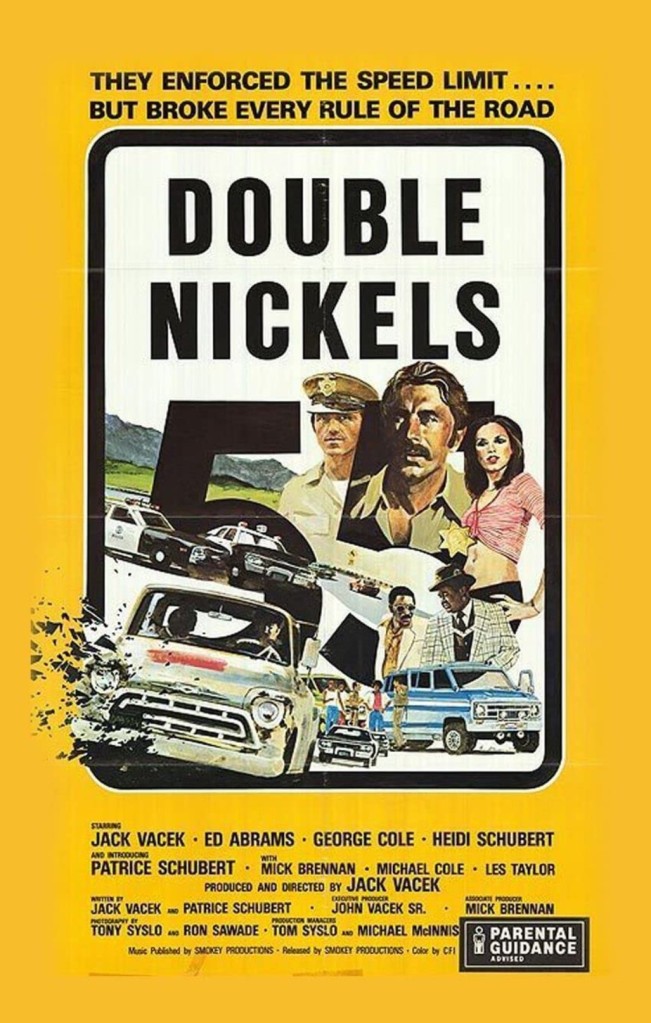
When I reviewed The Last Child, I wondered if I would find a made-for-tv movie from the 1970s I liked. So, with this month’s Genre Grandeur on the horizon, I decided to start my quest for a good made-for-tv movie from the ‘70s! As ‘Car Chase Movies’ are the theme of May’s event, I stumbled upon the 1977 title, Double Nickels. Though not a television film, it’s a project I found intriguing. Before this year, I had never heard of the 1977 production. But blogathons can be a time when participants discover films that are new to them. Looking back on my Genre Grandeur reviews from this year, most of the movies I’ve reviewed were just ok, with one film being just fine. Will Double Nickels break that track record? Drive through this review in order to find out!
The use of music: Music is an integral part of film-making, elevating a scene’s tone and attempting to make the audience feel a certain emotion. Even during a car chase, music can heighten the intensity of the moment itself. Double Nickels gives some of their car chases background music. But the music in this film emphasizes the different types of car chases within the story. Smokey, in his police car, chases a dune buggy. When the dune buggy gets away and drives up a nearby dune, a light-hearted banjo tune plays in the scene’s background. At the beginning of the movie, there is a chase involving a motorcycle. For this scene, rock music can be heard as the chase continues. These tunes are determined by the vehicles presented in the scene. Combining these two elements, it feels like the movie’s creative team made thoughtful musical choices for their car chases!
Different types of cars: The story of Double Nickels takes place in Southern California. This particular landscape provides a reason for different types of cars to be present in the movie. When Smokey meets Jordan for the first time, she appears to be driving a red Ferrari. Earlier in the film, Ed and Smokey stop two vans in order to give their drivers a ticket. These vans, a blue one and a green one, look like they’d be found at a beach or on a campsite. The variety of vehicles highlights the diverse preferences of drivers. This creative decision also makes sense with Smokey and Ed’s profession, as they would encounter different types of cars.
Ways of presenting a car chase: There are several car chases featured in Double Nickels. These chases were presented in different ways, providing new paths for cars to travel through. During one chase, two cars drive down a flight of stairs. Another chase shows three cars driving through giant puddles of water, with the water splashing around the cars. While watching Double Nickels, I had to remind myself how this movie was created during a time when CGI and special effects were not at a film-maker’s disposal like it is today. With that in mind, I appreciated the efforts and resources it took to make these car chases look good on screen!
What I didn’t like about the film:
A small sense of urgency: When a movie includes car chases, those car chases are there for a reason. It typically means a character’s life is in danger or a character needs to achieve a mission. No matter the specific situation, a strong sense of urgency would be present, making the audience care about the characters and their story. In Double Nickels, though, the sense of urgency was small. Smokey and Ed repossess cars in order to make extra money. Eventually, they learn their operation is not what it seems. But Smokey and Ed’s entire process is presented in a very nonchalant way, forgetting about the danger that could be lurking behind them. Even when a climactic car chase takes place, I didn’t feel scared for the characters and their well-being. The small sense of urgency also caused the film’s suspense to feel limited.
Weak acting performances: No matter the production, all I can expect out of any actor is for them to try their best with the material they are given. Sometimes, those efforts are strong. But in Double Nickels, I found the acting performances weak. Serving as one example, Smokey and Ed are discussing the idea of repossessing cars. Throughout this scene, Ed and Smokey display a limited number of facial expressions. Their voices carry the same singular tone, with their conversation seeming unusually rushed. Despite Jack Vacek and Edward Abrahms’ efforts with the script, the interaction feels robotic and unnatural. The weakness of the acting performances was, sometimes, distracting.
A drawn-out story: As I’ve already mentioned in this review, Smokey and Ed repossess cars, with their plan turning out differently than expected. The movie itself is an hour and twenty-eight minutes. But the story feels longer than its run-time. The aforementioned small sense of urgency played a role in the story being drawn out. Unnecessary inclusion of story points added to this as well. Tami is in a romantic relationship with Smokey. During the movie, it is revealed she is cheating on Smokey with another man. After this reveal, Tami and her new significant other are never seen or heard from again. Smokey didn’t bring them up either. This is just one example of a part of the story that could have been cut, which would have tightened the script.
Mountain Road Colorado – Colorado Adventure Trip.
My overall impression:
There are many reasons for the creation of a movie. Sometimes, it is because a film-maker has an interesting story to tell. Other times, a studio wants to capitalize on the nostalgia of a well-known title. In the case of Double Nickels, that reason, to me, feels like an excuse to film cool-looking car chases. I will admit the car chases themselves were the highlight of this project. A significant amount of effort and thought was put into their delivery, from the musical selections to the way they were presented on screen. All of the other aspects of this story, though, fall flat. Despite the car chases in the story, the sense of urgency was small. It also didn’t help how the story felt longer than necessary. Double Nickels is the third film from the 1970s I’ve reviewed this year. With this movie being so underwhelming, I haven’t had the best of luck finding a title I like.
Overall score: 5.7 out of 10
Have you seen Double Nickels? Is there a car chase movie you like? Please let me know in the comment section below!
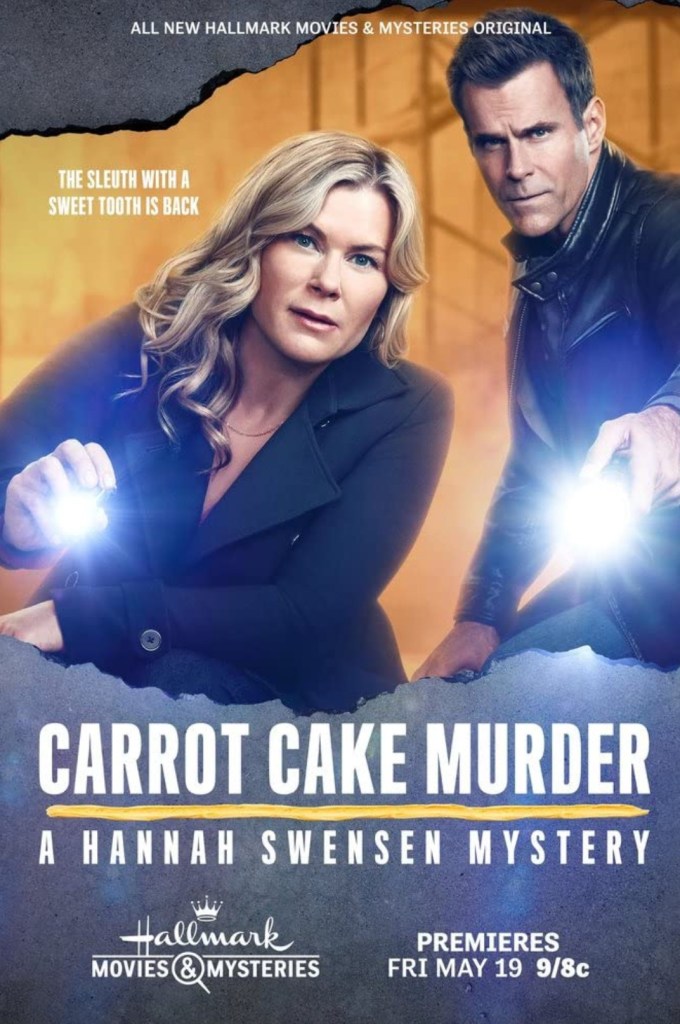
Here at 18 Cinema Lane, I try to review movies that have been recommended to me by my readers. Typically, I watch movies and write about them in the hopes they are good. But in the case of this review, I’m approaching this film a little differently. In the comment section of my article, ‘The Top 10 Worst Hallmark Movies of All Time’, one of my readers, Not a fan of Carrot Cake, shared their worst Hallmark movie they’ve watched. That film is the latest Hallmark Movies & Mysteries title, Carrot Cake Murder: A Hannah Swensen Mystery. Their thoughts on the movie intrigued me. It made me wonder if it was worse than Francesca Quinn, P. I., the worst Hallmark movie I’ve ever seen. So, without further delay, let’s solve this mystery by reviewing Carrot Cake Murder: A Hannah Swensen Mystery!
The camaraderie between the cast members: In a movie series, a group of actors will become familiar with one another’s talents and personalities. This familiarity creates a consistency that can be seen in the characters’ interactions. That consistency allows these interactions to come across as believable in the eyes of the audience. As Carrot Cake Murder: A Hannah Swensen Mystery is the seventh film in its series, the camaraderie between the cast members remained continuous not only throughout this story, but also throughout the series! When Hannah, portrayed by Alison Sweeney, and Norman, portrayed by Gabriel Hogan, interacted with each other, their friendship felt genuine. As Hannah’s mom, portrayed by Barbara Niven, discussed her concerns about her daughter’s safety, that discussion between mother and daughter was presented realistically. These interactions were not only the result of the camaraderie between the cast members, but also the cast members displaying an understanding for their characters and their stories!
The inside jokes: Hallmark has a history of incorporating humor into their mystery series. Typically, this humor can be heard within the dialogue between characters or shown through hilarious situations. In Carrot Cake Murder: A Hannah Swensen Mystery, Hallmark related inside jokes were woven into the script. Frustrated by Hannah’s involvement in the murder mystery case, Mike’s boss tells Mike Hannah is acting like a podcaster. This statement is a reference to Alison’s other mystery series, Chronicle Mysteries. Over lunch, Hannah’s mother, Delores, brings up how Hannah and Mike’s upcoming wedding is never discussed. That conversation references how Hannah and Mike have been engaged since Murder She Baked: Just Desserts, a movie that was released in 2017. These inside jokes provide “Easter eggs” for fans of the Murder She Baked/Hannah Swensen series, as well as fans of Hallmark’s mystery films!
Use of clues: Some mystery stories utilize clues in order for the mystery to be solved. This is the case for several of Hallmark’s titles, including Carrot Cake Murder: A Hannah Swensen Mystery. The movie’s mystery begins in 1995. Therefore, one of the clues is a pager, which was used to determine who the victim called before they passed away. Another clue was a set of keys. But these keys helped set up a timeline for the mystery’s events. The incorporation of the clues in Carrot Cake Murder: A Hannah Swensen Mystery combined the past and present in a nice way. It also showcased a variety of objects that could be used to solve a case!
The underutilization of Mike: Since the series’ inception, Mike has always played an integral role in the story of Murder She Baked/Hannah Swensen. Because he is a professional detective, he provides a unique perspective to a movie’s case, especially compared to Hannah’s perspective. But in Carrot Cake Murder: A Hannah Swensen Mystery, Mike wasn’t given much to do. Instead, Hannah solves the mystery single-handedly, relying on Mike less than in previous films. The “opposites attract” dynamic between Hannah and Mike was missing, which took away some of the series’ charm. It also does Cameron Mathison and his character a huge disservice.
Lack of “coziness”: The Murder She Baked/Hannah Swensen series has garnered a reputation for being a “cozy” mystery. Despite the stories containing murder mysteries, the stories themselves don’t feel too dark in tone. Instead, humor and pleasant character interactions break up the serious nature of the murder mystery. In Carrot Cake Murder: A Hannah Swensen Mystery, however, that “cozy” feeling was absent. While I did like the inside jokes woven into the script, the overall tone of the movie was serious. The lack of light-hearted subplots didn’t help either. In context with the series as a whole, this film causes a tonal shift that feels jarring.
Mike and Hannah’s relationship: For this part of my review, I will include spoilers for Carrot Cake Murder: A Hannah Swensen Mystery. If you have not seen this movie yet and are interested in watching it, please skip ahead to the part of my review titled “My overall impression”.
The majority of Hallmark’s mystery series contain a romantic relationship between the male and female protagonist. More often than not, these relationships grow as its series progresses. In the Murder She Baked/Hannah Swensen series, viewers have witnessed Hannah and Mike go from being neighborhood friends to a romantic couple. As I mentioned in this review, they became engaged in Murder She Baked: Just Desserts. But in Carrot Cake Murder: A Hannah Swensen Mystery, Mike and Hannah’s relationship was not prioritized as in previous movies. They didn’t spend much time together in this story. In fact, Hannah spent more time with Norman than with Mike. This creative choice caused Alison and Cameron’s on-screen chemistry to feel weaker compared to other films.
Like I said earlier in this review, Delores mentions how Hannah and Mike’s wedding hasn’t been discussed. I also mentioned how Mike and Hannah got engaged in a movie that was released over five years ago. During that time, fans of the series have been waiting for Hannah and Mike to finally walk down the aisle and say “I do”. But in the last twenty minutes of Carrot Cake Murder: A Hannah Swensen Mystery, Hannah ends her and Mike’s engagement. Why, you ask? Because she was upset Mike didn’t tell her he was filling his boss in on developments she and Mike found in relation to the story’s mystery. Hannah seems so justified in her choice, she, through a monologue, compares her ended relationship with baking bread, saying something along the lines of the ingredients needing to be respected. Personally, I feel Hannah’s decision to end her and Mike’s relationship was unnecessarily spontaneous. Looking back on this movie, it makes me wonder if Hannah and Mike breaking up was Hallmark’s excuse to discontinue this series?
I chose to review Carrot Cake Murder: A Hannah Swensen Mystery in an attempt to see if it was worse than Francesca Quinn, P. I. Like I said in the introduction, I also reviewed this movie in response to one of my readers. Now that I’ve seen the film, I can honestly say, in my opinion, it is nowhere near as bad as Francesca Quinn, P. I. However, it is one of the most disappointing movies I’ve seen this year, so far. In a recent article from The Wrap, Alison Sweeney confirmed another chapter in the Murder She Baked/Hannah Swensen series. Without spoiling Carrot Cake Murder: A Hannah Swensen Mystery, all I can say is I have no idea how this is possible. Other than solving a mystery, this movie put the series in a standstill. The film’s creative team didn’t provide a reason for the fans to get excited for the next story. From Mike being underutilized to the lack of “coziness” in the latest chapter, I’m wondering if this series will be another mystery series that will unceremoniously end? I said in my editorial about Francesca Quinn, P. I. how Hallmark’s priorities no longer lie with the mystery genre. Reflecting on that film and Carrot Cake Murder: A Hannah Swensen Mystery, it seems like I may be proven right.
Overall score: 5 out of 10
Have you seen Carrot Cake Murder: A Hannah Swensen Mystery? What do you think is in store for the Murder She Baked/Hannah Swensen series? Let me know in the comment section!
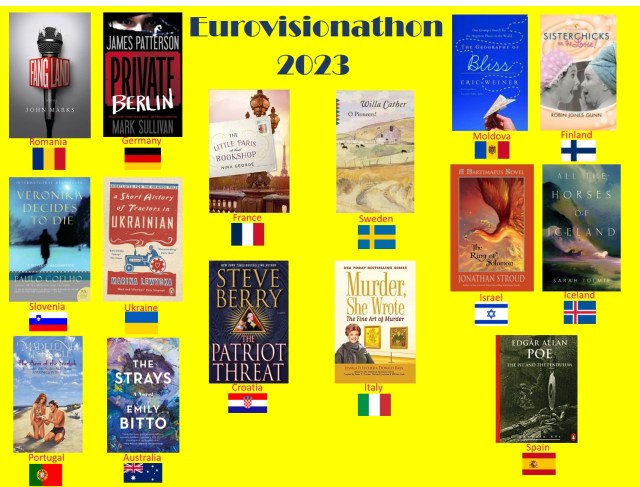
For the past four weeks, I’ve been participating in the Eurovisionathon readathon! Hosted by Helen, from the Youtube channel, Helen’s Book Haven, this event encourages participants to read books associated with Eurovision’s competing countries in a month-long time-frame. This was my first year taking part in the readathon and, like other readathons, I was curious to see how well I’d perform. In the months leading up to the event, I cultivated a TBR (to be read) list of diverse literary works, in an attempt to make my reading experience as enriching as possible. My goal was to read twenty-six books in a month, as there were twenty-six countries competing in Eurovision’s Grand Final. But was I able to obtain this goal or was this goal too lofty? Let’s find out in this break-down of my Eurovisionathon results!
Eurovisionathon 2023 book collection image created by Sally Silverscreen
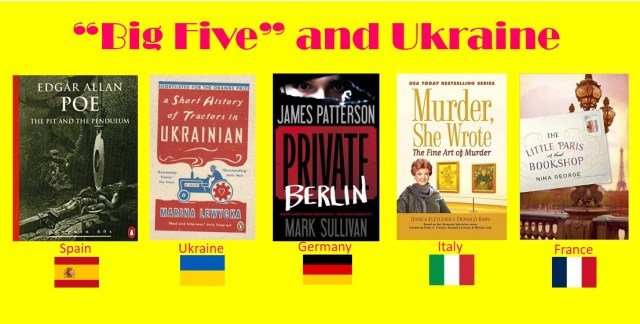
In this year’s Eurovision, thirty-seven countries competed in the contest. There were six countries that automatically qualified for the Grand Final. These countries were the “Big Five” (United Kingdom, Germany, France, Spain, and Italy) and Ukraine (the winner of the previous year’s song contest). Two Semi-Finals determined the rest of the countries partaking in the Grand Final alongside the six aforementioned countries, with fifteen countries competing in the first Semi-Final and sixteen countries competing in the second Semi-Final. Out of the six automatic qualifiers, I read five books, as I knew I would receive guaranteed points no matter how those countries performed.
Eurovisionathon 2023 “book collection “Big Five” and Ukraine image created by Sally Silverscreen
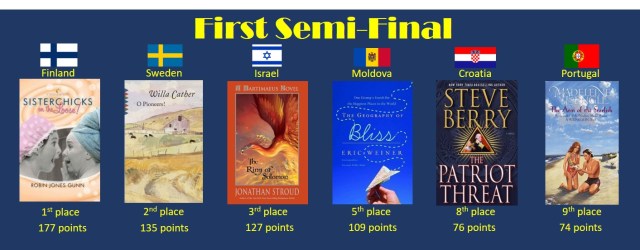
From the first Semi-Final, I read six books. These books represented Portugal, Croatia, Israel, Moldova, Sweden, and Finland. All six countries advanced to the Grand Final.
Eurovisionathon 2023 First Semi-Final image created by Sally Silverscreen
From the second Semi-Final, I read four books. These books represented Romania, Iceland, Australia, and Slovenia. Only Australia and Slovenia advanced to the Grand Final.
Eurovisionathon 2023 Second Semi-Final image created by Sally Silverscreen
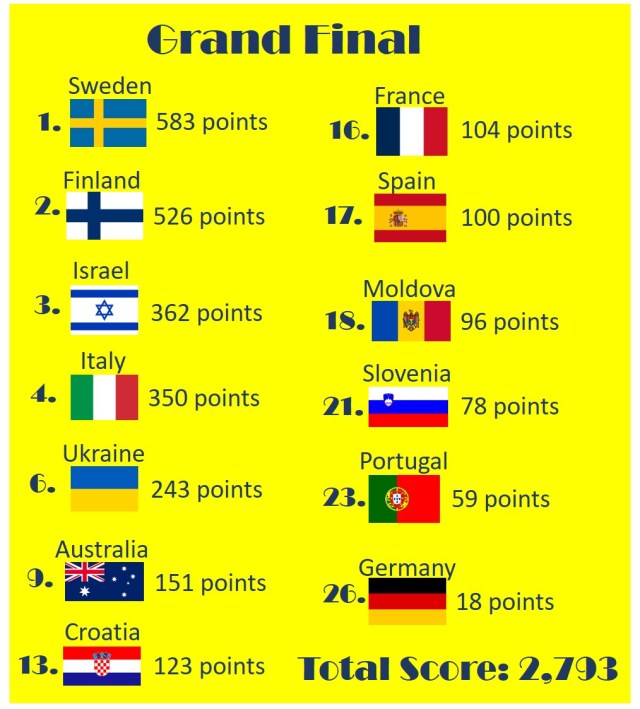
Eurovisionathon ended on the day of Eurovision’s Grand Final. A country’s combined jury and televote score determined how many points a readathon participant received. The more books a participant read, the more points they were given. Thirteen out of the fifteen books I read represented countries that competed in the Grand Final. Three of these books represented countries that missed the top twenty; Germany, Portugal, and Slovenia. Three books I read represented Moldova, Spain, and France, countries that made the top twenty. Croatia is the only country whose book I read that placed in the top fifteen. The rest of the books I read represented countries who were given top ten placements, with Israel, Finland, and Sweden among Eurovision’s top three countries.
Eurovisionathon 2023 Grand Final image created by Sally Silverscreen
With all of that said, my total score was two thousand, seven hundred, and ninety-three points! For my first time participating in Eurovisionathon, I’d say I did a pretty good job! With 2024’s contest on the horizon, I can’t wait to see what’s in store for next year’s readathon. Thank you, Helen, for hosting this event. The next Eurovision Song Contest can’t come soon enough!
Whenever I’ve been nominated for The Pick My Movie Tag, the theme has revolved around Hallmark movies. First, I wrote a list of the top five Hallmark films based on a true story. Then, I published an editorial why Francesca Quinn, PI is the worst Hallmark movie I’ve ever seen. Now, after being nominated for The Pick My Movie Tag for a third time, I’m creating another Hallmark related list! Tagged by Rebecca from Taking Up Room, I was given the option to either write about my first Hallmark film or a favorite Hallmark film from the 90s. While reflecting on all the Hallmark movies released during the 1990s, I realized I had seen enough presentations from the Hallmark Hall of Fame collection to curate a top ten list. So, with a gracious thank you to Rebecca, I will share my list of the top ten best Hallmark Hall of Fame films from the 1990s! Before I start this list, I’d like to remind my readers that this article is not only based on my opinion, it is also based on the Hallmark Hall of Fame projects I’ve seen. Each movie will be listed based on when they were released on television. Since this list was written for a tag, I need to include the official tag rules, which are featured below:
The Tag’s Rules
Nominate one or more people to review the film or films of your choice. Or you can request they review something from a certain year, genre, or star. Everyone can review the same thing, or you can request each person cover something different. As long as it’s something they haven’t written about yet, you’re good.
Nominees are allowed to request a different pick for whatever reason no more than five times. Stuff happens. We all know it.
Nominees must thank the person who nominated them and provide a link their blog.
Nominees may nominate others to keep the tag going. Picking the person who nominated them is allowed, or they can nominate someone else. Maybe both.
All participants need to include these rules in their post, whether they’re nominees or picking nominees.
All participants should use the “Pick My Movie” banner or something similar in their posts.
Have fun!
The Pick My Movie Tag banner created by Rebecca from Taking Up Room
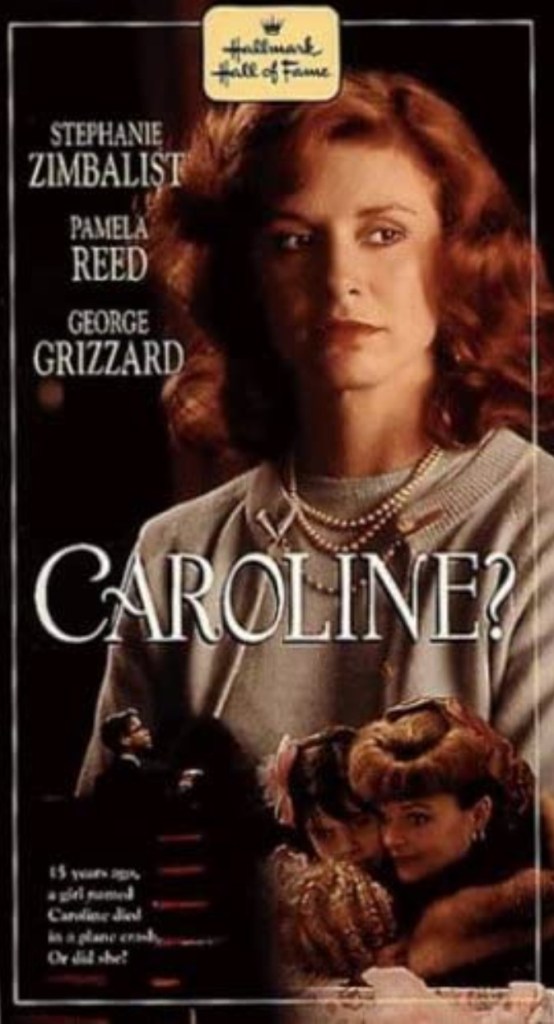
1. Caroline?
Released April 29th, 1990
Two months ago, I reviewed Caroline? for a Blog Follower Dedication Review. When I chose to write about this film, it was an opportunity to share another VHS exclusive Hallmark Hall of Fame title with my readers. But after I saw Caroline?, it quickly became one of my favorite movies from the Hallmark Hall of Fame collection! The combination of strong acting performances and a mysterious plot made the story intriguing to watch! The inclusion of messages and themes such as learning from the past and respecting the wishes of others gave the story more depth. Even the creative team’s attention to detail was reflective in the set design, showcasing the differentiation of time within the story. If I were introducing someone to the Hallmark Hall of Fame collection, I would tell them about Caroline?!
2. Sarah, Plain and Tall
Released February 3rd, 1991
Hallmark Hall of Fame has a history of adapting pre-existing, literary source material. Based on the works I have read, these films are typically respectful toward the source material or better than the source material.From what I remember, Sarah, Plain and Tall belongs in the first category. Like Caroline?, the creative team’s attention to detail could be seen in the set and costume design. The cast as a whole was strong as well. The success of Sarah, Plain and Tall not only led to the start of the only trilogy in Hallmark Hall of Fame history, it also led to the adaptation of other stories from the Western genre within the 1990s. This is one of those titles from the collection that earned a “classic” status!
3. An American Story/After the Glory
Released November 29th, 1992
My review of An American Story/After the Glory is one of my popular movie reviews, garnering over a thousand views and counting! Looking back on my thoughts on this movie, I have an idea why it’s so popular. As I said in that review, An American Story/After the Glory kind of feels ahead of its time. That is due to the inclusion of veteran’s mental health within the story. The way veteran’s mental health, as well as the transition period from soldier to civilian, was written was done with reverence and realism. The script also emphasizes how each veteran is their own unique individual. Out of Hallmark’s miliary related projects, An American Story/After the Glory is one of their better ones!
4. Redwood Curtain
Released April 23rd, 1995
When talking about Sarah, Plain and Tall, I said Hallmark Hall of Fame’s adaptations are typically respectful toward the source material or better than the source material. In the case of RedwoodCurtain, the 1995 film falls in the latter category. Hallmark Hall of Fame adapted this story from a pre-existing play. RedwoodCurtain’s transition to the screen allowed the world surrounding the characters to expand, exclusively providing the Riordan landscape to the movie. Other changes in the script include a different personality for Gerri, the story’s protagonist. In the film, Gerri is a more empathetic and understanding character, which gives the audience a reason to want to root for her. Music plays a bigger role in Gerri’s life as well, showing her dedication toward her dreams.
5. The Boys Next Door
Released February 4th, 1996
Besides adapting pre-existing, literary source material, Hallmark Hall of Fame has a history of adapting pre-existing plays. 1996’s TheBoys Next Door is one of those plays that made the transition to the screen. Similar to RedwoodCurtain, the world surrounding the characters expands beyond the limits of the stage. This emphasizes the idea the men in the group home (Barry, Lucien, Norman, and Arnold) are trying to find their place in the world. What also works in TheBoys Next Door’s favor is the strength of its cast. Through a blend of facial expressions, vocal inflections, and body language, each character is distinct from one another. These characters are also well written, which made them cherished individuals in the story!
Hallmark Hall of Fame’s Caroline? poster created by Hallmark Hall of Fame productions, CBS, and Republic Pictures Home Video
6. Whatthe Deaf Man Heard
Released November 23rd, 1997
It has been a while since I’ve seen Whatthe Deaf Man Heard. From what I remember, I was impressed with the 1997 presentation! This is another film with a strong cast. The interactions between the characters felt believable, making the performances interesting to watch. Whatthe Deaf Man Heard successfully presents the idea of appearances being deceiving, this idea given in a wholesome way. I would love to revisit this movie in the future!
7. EllenFoster
Released December 14th, 1997
EllenFoster is another Hallmark Hall of Fame production I haven’t seen in several years. However, this is a movie I highly regard! Like a lot of Hallmark Hall of Fame titles on this list, the cast in EllenFoster was very talented. But Jena Malone, the actress who portrayed the titular character, stole the show, as she provided a versatile performance! Because this story discusses the subjects of child abuse and neglect, the nature of the film is going to be sadder. Therefore, those who are interested in watching the movie should approach it with the right mind-set. While I won’t spoil the story, I will say the story’s resolution feels earned.
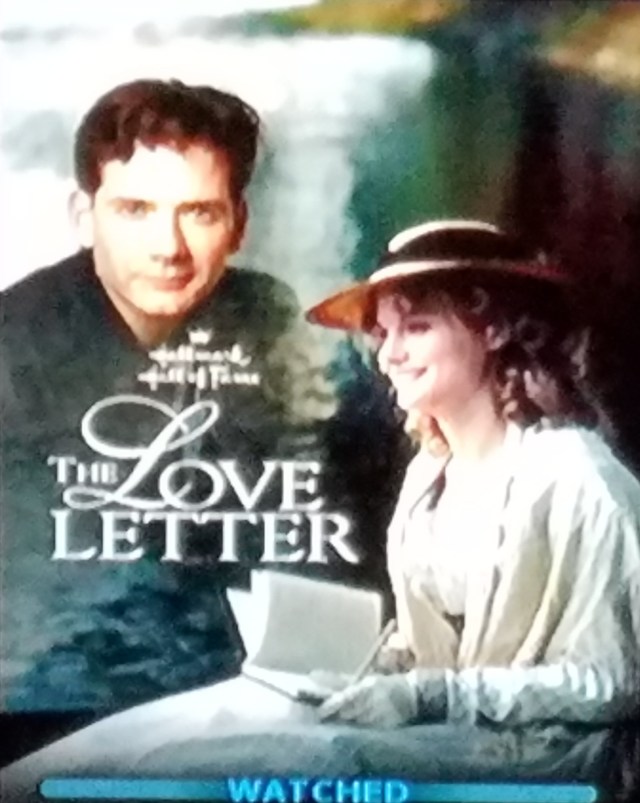
8. TheLove Letter
Released February 1st, 1998
Fantasy/Magical Realism is rarely incorporated into Hallmark’s films, let alone their Hallmark Hall of Fame projects. This makes 1998’s TheLove Letter stand out among the collection! The idea of time manipulation adds creativity to the movie’s identity. Historical accuracy within the story embellishes the aforementioned identity of the film. Campbell Scott and Jennifer Jason Leigh succeeded in carrying this movie, as they sold the illusion their characters were attracted to each other. With the consistent focus in the character of Scott and Elizabeth’s graceful maturity beautifully paired with her “romantic dreamer” persona, it was fascinating to watch these two characters communicate with one another!
9. Grace& Glorie
Released December 13th, 1998
As I said in the past, I am not a fan of the Hallmark movie cliché where a woman from a big city moves to a small town. Grace& Glorie contains this cliché, but doesn’t emphasize its presence in the story. Instead, the film focuses on the friendship between the titular characters. The quality of Diane Lane and Gena Rowlands’ performances made their characters’ friendship feel realistic. This made their interactions interesting to watch. Grace& Glorie contains a simpler plot that ends up working in the story’s favor. All these factors come together to create a Hallmark Hall of Fame movie that is an underrated gem!
10. Sarah, Plain and Tall: Winter’s End
Released November 21st, 1999
Between Sarah, Plain and Tall: Winter’s End and Skylark, I always thought the third movie in this trilogy was the more memorable sequel, even though I think this trilogy is one of the strongest ever made. Similar to Sarah, Plain and Tall, the 1999 film revolves around conflicts within the family, such as the arrival of Jacob’s father. However, there were moments of humor and joy that prevented the story from being too serious. The scene where Cassie says grace serves as a perfect example. It was nice to see the Witting family together again, as, from what I remember, the family was split up in Skylark. It almost feels like coming home after a long trip!
Now, the moment you’ve been waiting for, the announcing of the nominees! As I share which bloggers will receive The Pick My Movie Tag, they will be asked to write about a movie from the 1990s they don’t like. So, these five nominees are:
Screenshot of The Love Letter‘s poster taken by me, Sally Silverscreen.
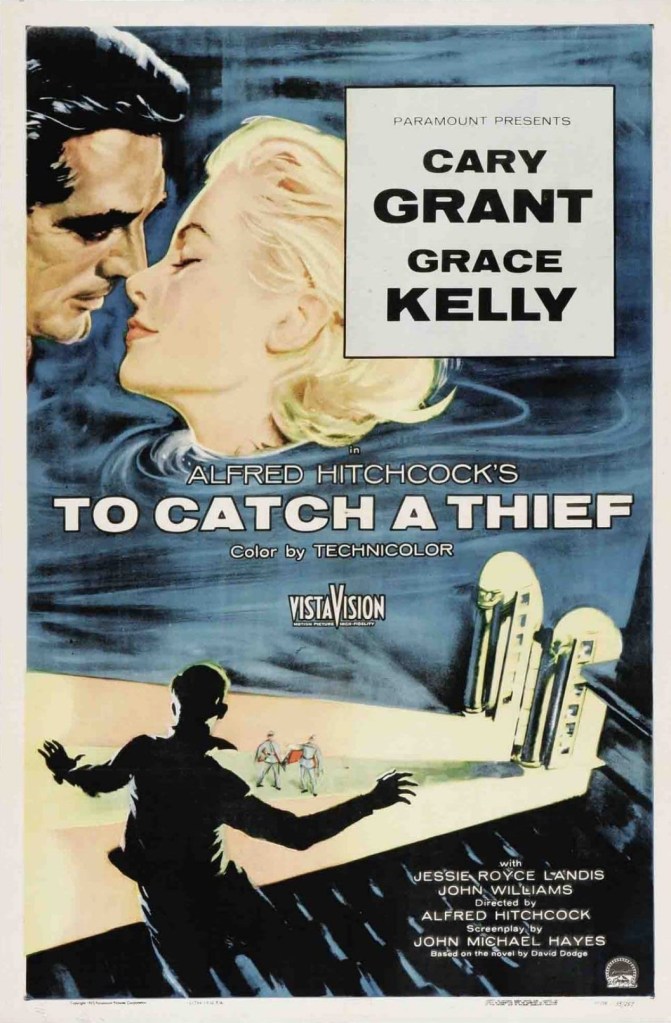
For The Master Of Suspense Blogathon, I was originally going to review the 1958 classic, Vertigo. I selected this film because it had been recommended by one of my readers. Unfortunately, my plans fell through at the last minute. So, I had to quickly choose an alternative. As I looked back at the blogathon’s participant list, I discovered the 1955 film, To Catch a Thief, hadn’t been selected. That is the film I am now reviewing for The Master of Suspense Blogathon. I have seen some of Alfred Hitchcock’s movies before this event. From what I know of To Catch a Thief, the 1955 production is different from other titles such as Psycho and Rear Window. But will this difference impact the quality of the film? Keep reading my review in order to solve this mystery!
The acting: In To Catch a Thief, Cary Grant portrayed John Robie, a former jewel thief looking to clear his name. A man of suave charisma, John was afraid of being accused of something he didn’t do. But he never lets this fear get to him. Instead, with the talents of Cary Grant, John was confident and intelligent. Grace Kelly was also cast in To Catch a Thief, portraying Frances Stevens. Frances carried herself with dignified confidence. However, this confidence did not come across as snobbish or arrogant. It added to Frances’ likability, along with her gentle demeanor and respectful elegance. Danielle Foussard is a friend of John’s. Portrayed by Brigitte Auber, Danielle had a spunky streak in her, adding liveliness to her and John’s interactions. A scene I really liked was when John, Frances, and Danielle are swimming in the ocean together. This scene perfectly showcased their personalities, as their banter bounced among each other like a soaring beach ball. What made that scene great to watch was the joining of the acting talents of Cary Grant, Grace Kelly, and Brigitte Auber!
The scenery: Most of the car chases in To Catch a Thief are captured in long, establishing shots. This is very different from car chases in other films, where the chases are shown in medium or close up shots. To Catch a Thief’s approach to car chases emphasizes the scenery surrounding these chases. Looking back on this film’s scenery, I can understand why To Catch a Thief’s creative team would make that decision. With the majority of the production filmed in France, the story shows pieces of the French countryside and seaside. Giant green mountains and deep blue waters present an isolated oasis. A smattering of orange roofed houses perched on these mountains add to the movie’s vibrant color palette. On the French seaside, bright yellow sands welcome the deep blue waters of the ocean. Most of the story’s exterior shots feature a blue sky with a handful of clouds. Even the flowers are appealing bursts of color, boasting shades of red, pink, and even purple. To Catch a Thief is a pretty looking movie and it knows it!
The dialogue: During discussions of Alfred Hitchcock’s movies, use of music, cinematography, and lighting are typically talked about by fans and film enthusiasts. But one area of film-making I feel is overlooked, specifically when it comes to Alfred’s work, is the dialogue. This element of story-telling was a pleasant surprise in To Catch a Thief! It not only suited the characters respectively, it also sounded like the screenwriters put a lot of thought into what the characters told each other. While driving through the French countryside, John and Frances are discussing Frances’ past. As the discussion carries on, John accuses Frances of looking for a husband on her trip. But Frances responds by saying, “The man I want doesn’t have a price”. This statement represented the respectful elegance Grace consistently carried throughout the film. It also hinted at foreshadowing.
Limited amount of urgency: At the beginning of To Catch a Thief, John learns he is accused of stealing valuable jewelry. He evens claims to have ten days in order to clear his name. You’d think with this tight timeline, there would be a strong sense of urgency in the story. But this urgency to find the truth is, unfortunately, inconsistent. Instead, more emphasis is placed on the scenery, the romance, and the “finer things in life”. While the mystery was resolved, the limited amount of urgency held the story’s suspense and intrigue back.
A small amount of suspense and intrigue: Alfred Hitchcock’s productions are known for incorporating suspense and intrigue. This reputation has earned Alfred the title of “Master of Suspense”. In To Catch a Thief, however, suspense and intrigue were only served in small amounts. Part of this problem results from the limited amount of urgency I previously talked about. Another reason for this problem is how suspense and intrigue were used sparingly instead of evenly spread out throughout the story. It got to the point where I almost forgot this story had a mystery.
Lack of suspects: A typical mystery will include a collection of suspects, individuals who may or may not have a reason to be the guilty party. These characters are presented as uniquely as possible, in order to help the audience remember them and their reasoning. To Catch a Thief lacked this ingredient. Because the mystery was not as prioritized as in other works from Alfred Hitchcock, no room was made to include suspects. There was a red herring in To Catch a Thief, but this reveal felt random. Even the reveal of the mystery’s guilty party wasn’t completely surprising.
As I said in this review, To Catch a Thief is a pretty looking movie and it knows it. While the scenery was the film’s crown jewel, there were other aesthetically pleasing components of this production, like the costume design and the set design. When it comes to the story, though, it wasn’t as suspenseful and intriguing as other Alfred Hitchcock movies. The visuals ended up overshadowing the script. I will give Alfred Hitchcock credit where it’s due, as it seems like he tried to take a different approach to cinematic story-telling. But out of his films I have seen, I prefer titles like Strangers on a Train.
Overall score: 6.3-6.4 out of 10
Have you seen To Catch a Thief? Which titles of Alfred Hitchcock’s do you prefer? Please tell me in the comment section!
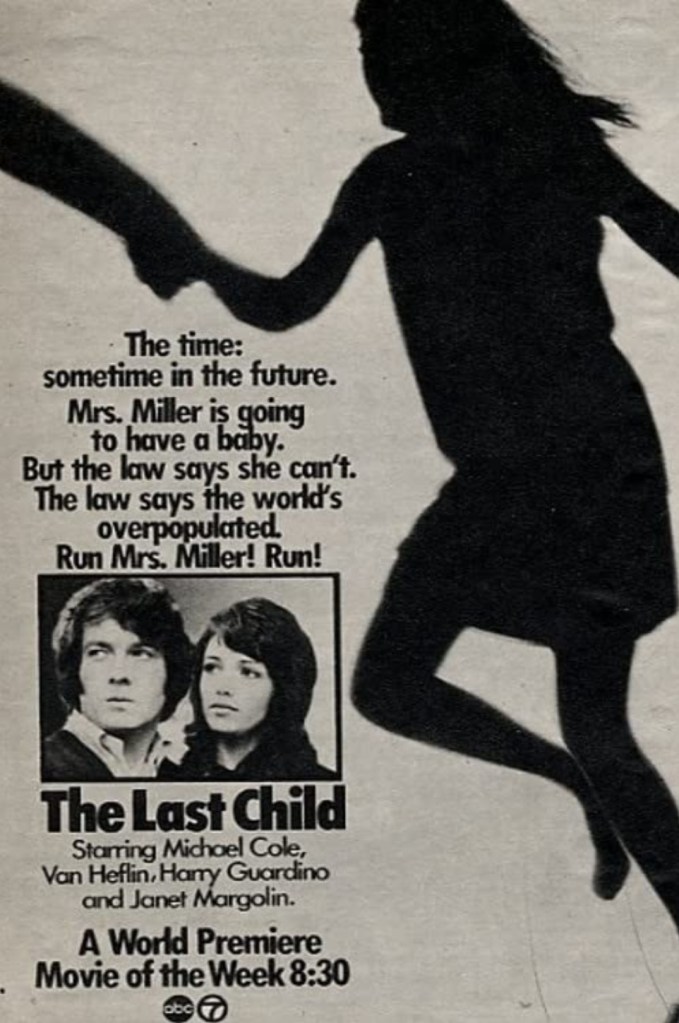
When the future is depicted in made-for-TV movies, that production is typically presented with a distinct, futuristic aesthetic. This creative choice makes that movie’s world look and feel different from the one the audience is living in. But when I came across the 1971 film, The Last Child, I took note of how the story adopted a “contemporary” appearance. That is the reason why I’m writing about this movie for the Futurethon event! Instead of putting on a futuristic appearance, The Last Child introduces their version of the future in more subtle ways. The dialogue among the characters is how the film’s creative team brings this idea to the screen. Sometimes, futuristic stories will feature a conflict that strikes fear into the story’s characters as well as the audience. The world in The Last Child discusses the subject of population control, which presents a dire circumstance for the protagonists.
The Last Child poster created by Aaron Spelling Productions and American Broadcasting Company (ABC)
Things I liked about the film:
Stand-out performances: When I watch a movie, sometimes an actor or actress will give a performance that stands out among the movie’s cast, leaving a memorable impression on me. In The Last Child, there were three actors who gave stand-out performances! I’ve seen some of Ed Asner’s films prior to watching The Last Child. In these films, Ed’s character has typically been presented as a friendly, kind-hearted individual. But in the 1971 made-for-tv movie, Ed’s role was different from those I saw in the past. Portraying a police officer named Barstow, Ed carried his character with a no-nonsense attitude. At the same time, he incorporated a sense of confidence into his portrayal, which allowed Ed to go toe-to-toe with other actors. One of these actors was Van Heflin, who portrayed Senator George. Van also incorporated confidence in his performance. However, this form of confidence was more dignified, reflective of George’s political background. Yet, there was a kindness within George, a kindness that felt genuine. The scene where the film’s protagonists, Allen and Karen, meet George for the first time perfectly showcases this kindness, as it can be heard in George’s voice and seen in his eyes.
The last stand-out performance came from Harry Guardino! Portraying Karen’s brother, Howard, Harry presents a man who is both concerned about his influential position and scared for his family. In a scene where Howard is trying to get Karen out of the Population Control Center, Howard’s voice sounds very professional over the phone. He even sounds professional when speaking to his brother-in-law. But throughout that scene, there is fear in Howard’s eyes. Because he is in the presence of family, Howard feels he can safely express this fear. The ability to present both the professional and emotional sides of Howard was made possible by Harry’s versatile acting talents!
The cinematography: Cinematography in made-for-tv movies can be hit or miss. It can either be surprisingly good or obviously bad. But in The Last Child, I was surprised by the cinematography, as some scenes were captured in ways I wasn’t expecting. In scenes where characters were moving in public crowds, the camera would use close-up shots. The camera would also be placed in front of or behind the characters. These techniques gave the audience the illusion they were moving alongside the characters, making those scenes feel immersive.
Senator George’s house: A location in a movie is meant to visually represent the environment the characters exist in. This holds true for a character’s house. As I mentioned in this review, George is a Senator. The interior and exterior spaces of George’s house are a reflection of his power and influence. Brick and stone make up the face of his house. Large, paned glass windows hint at rooms with high ceilings and expansive square feet. Inside George’s house, luxurious details can be seen in each room. One room features a floor to ceiling, cream colored fireplace, complete with carved detailing. Another room includes a dainty white, oval table that not only boasts drawers, it also appears to be utilized as a small dining table. These details show how the creative team cared about how George’s personal living space was presented in their movie!
Futurethon banner created by Gill from Realweegiemidget Reviews and Barry from Cinematic Catharsis
What I didn’t like about the film:
An unexplained future: In my review of Night of the Comet, I said a film’s science needed to be explained, in order for the audience to understand what’s happening in the story. The same can be said if creating a story set in the future. There has to be a reason for a film’s world being so different from the audience’s. These reasons can give the audience an understanding for these differences, allowing them to contemplate how they’d respond to that film’s world. In The Last Child, though, it was never explained why the movie’s world had strict population control laws. None of the characters mentioned how these laws came to be, what led to their existence. The audience was forced to accept the world of The Last Child at face value.
Little sense of urgency: The Last Child is about a couple expecting their second child, as their first child died shortly after birth. Because of their world’s strict population control laws, only allowing one child per family, the couple has a very difficult conflict on their hands. Despite this conflict, the sense of urgency in The Last Childwas far and few between. There were times when a sense of urgency was present, such as during the film’s climax. But this element of the story was not consistent. This prevented me from truly fearing for the couple’s safety and well-being. It also caused the story to feel like it had too many low-stakes.
Inconsistent technology: The use of technology is established in the world of The Last Child. In fact, the incorporation of technology was introduced toward the beginning of the film. When Allen and his friend are questioned by the police, a police officer puts their identification cards into a computer. This computer not only reveals a person’s identification number, it also records a person’s personal information. But when Allen’s wife, Karen, is taken to the Population Control Center and can’t remember her identification number, the Center’s nurse doesn’t entertain the idea of looking Karen’s number up on the computer. Perhaps this nurse didn’t have the authority to use one of these computers. However, her reason for not using it wasn’t explained in the dialogue.
The Last Child is the seventh made-for-tv movie from the 1970s I’ve reviewed. These seven films have ranged from decent to ok to underwhelming. The Last Child is, in my opinion, in the latter category. The idea of a futuristic story with a “comtemporary” aesthetic is one I haven’t often seen through the made-for-tv movie realm. But in The Last Child, this idea seemed better on paper than on screen. The small amount of urgency kept the story’s stakes low, preventing me from feeling scared for the protagonists’ safety and well-being. The reason for the population control laws in The Last Child was never explained, forcing the audience to accept the movie’s world at face value. Even when there were things about the film I did like, such as stand-out performances and Senator George’s house, it wasn’t enough to leave a lasting, memorable impression on me. I’m starting to wonder if I’ll ever find a made-for-tv movie from the 1970s I like?
Overall score: 5.1 out of 10
Have you seen The Last Child? Are there any futuristic movies with “comtemporary” aesthetics you like watching? Let me know in the comment section!
At the beginning of this year, I announced I was participating in the Eurovisionathon readathon. Created by Helen, from the Youtube channel, Helen’s Book Haven, the goal of this readathon is to read books associated with countries competing in Eurovision within a month-long time-frame. One of the books I planned to read was The Geography of Bliss: One Grump’s Search for the Happiest Places in the World, as one of the countries featured in the text is Moldova. When the themes for 2023’s Buzzwordathon were announced, I discovered April’s theme was ‘emotions’. This means at least one emotion related word had to be in a book’s title. The Geography of Bliss: One Grump’s Search for the Happiest Places in the World happens to contain three emotion related words: bliss, grump, and happiest. Therefore, I was able to read this book for both readathons!
In The Geography of Bliss: One Grump’s Search for the Happiest Places in the World, Eric Weiner, the book’s author, attempts to find the happiest countries in the world, based on data and research. Each chapter to devoted to this exploration, with Eric including study results, some of a country’s history, and even insight from a few of a country’s residents. Throughout the text, Eric brings up thought-provoking ideas that made me contemplate how Eric’s findings applied outside of the book. One common finding was Eric’s discovery of more ways to describe sadness than happiness. This discovery reminded me of my best and worst movies of the year lists. When I write these lists, I find it easier to talk about movies I don’t like. That’s because I feel compelled to explain why a movie is bad. But if I come across a movie I like, that movie, in my opinion, speaks for itself. This makes me put more thought into writing about good movies.
The Geography of Bliss: One Grump’s Search for the Happiest Places in the World contains ten chapters. Most of these chapters are longer in page length, ranging from about fifteen to twenty pages. If I were reading this book just for Buzzwordathon, the length of the chapters wouldn’t be an issue. Since I read the book for Buzzwordathon and Eurovisionathon, the chapters made the book feel longer than necessary. Despite its flaws, though, The Geography of Bliss: One Grump’s Search for the Happiest Places in the World is a fine and interesting book. While I don’t plan on revisiting it, the book did allow me to expand my literary horizons!
Overall score: 3.6 out of 5
Have fun during Buzzwordathon and Eurovisionathon!
Sally Silverscreen
Disclaimer: The Geography of Bliss: One Grump’s Search for the Happiest Places in the World contains content that may be offensive to some readers, as Eric’s approach to each country discussed is honest and realistic. Reader discretion is encouraged.
When it comes to this year’s Genre Grandeur reviews, I have chosen not to write about Hallmark films, even though I could have. This trend is the result of wanting to expand my cinematic horizons. But that is not the only trend among my Genre Grandeur reviews this year. Most of the movies I’ve talked about, so far, were recommended by my readers. With April’s Genre Grandeur theme being “Films About Food”, I selected a movie suggested by Jillian from The Classic Film Connection. That title is 1991’s Fried Green Tomatoes! At first, I had no idea how food was significant to this story. While I knew Fried Green Tomatoes was based on a pre-existing book, I had not read the book prior to watching the film. As I watched the movie, though, I began to see how the story prioritizes food. So, set the table and get the entrée ready, for I’m about to review Fried Green Tomatoes!
Fried Green Tomatosposter created by Universal Pictures, Act III Communications, Avnet/Kerner Productions, Electric Shadow Productions, and Fried Green Tomatoes Productions
Things I liked about the film:
The inclusion of food: As I mentioned in the introduction, I did not know the role food would play in Fried Green Tomatoes. But as the story progressed, the significance of food became clearer! This aspect of the film is included in two ways. The first is forming connections between the characters, building bridges of communication and even camaraderie. When Evelyn and Ninny first meet, Evelyn shares one of her candy bars with Ninny. This exchange served as the starting point for these characters’ friendship. Food also represented the world surrounding the characters. When Ninny is first telling Idgie and Ruth’s story to Evelyn, the story starts at a wedding. At the wedding reception, a table of decadent desserts is shown on screen, from a variety of pies to the wedding cake itself. The picture-perfect presentation of these desserts emphasized the affluent backdrop these characters existed in. Those two ways food was placed into the story allowed food to be the thread that kept the movie together!
The acting: I’ve seen some of Kathy Bates’ films prior to watching Fried Green Tomatoes. Out of those movies, I noticed Kathy has portrayed characters who were head-strong and confident. But with her portrayal of Evelyn in Fried Green Tomatoes, this performance was different. That’s because Evelyn slowly, but surely, became confident over time. Kathy’s approach to her character was very reminiscent of a chameleon. This was achieved through a combination of body language, emotions, and facial expressions. Another great aspect of Kathy’s performance was her on-screen camaraderie with Jessica Tandy! With Jessica’s effortless portrayal of Ninny, the interactions between Evelyn and Ninny appeared so natural, as if their friendship was always meant to be. I also felt this way about Idgie and Ruth’s friendship. Portrayed by Mary Stuart Masterson and Mary-Louise Parker, these characters presented a classic example of “opposites attract”! One of my favorite scenes in Fried Green Tomatoes was when Ruth and Idgie are giving non-perishable food items to members of a homeless camp. At first, Ruth is alarmed by Idgie’s actions, believing Idgie is stealing. But Idgie explains how people at church only say they do good work instead of practicing what they preach. This explanation shows Ruth how Idgie’s free-spirited nature could be directed toward helping others, as Idgie sees Ruth is in her corner and willing to support her.
The addition of a mystery: In Fried Green Tomatoes, there is a murder mystery woven into Ruth and Idgie’s story. In fact, the movie begins with the murder victim’s car being pulled out of a river. But this murder mystery is simply a part of the story, not the main focus. Because it is drawn out throughout the film, it gave the audience a reason to stay invested in what was happening on screen. The mystery unfolded as the story progressed, with pieces revealed as Ninny told Evelyn Idgie and Ruth’s story. Since the audience is learning information alongside Evelyn, a shared experience is created between viewers and the characters.
Confusing parts of the story: For this part of my review, I will share some spoilers for Fried Green Tomatoes. If you haven’t seen this movie or read the book and are interested in checking this story out, please skip this paragraph and resume at the paragraph titled ‘Ninny’s unknown involvement in Idgie and Ruth’s story’.
There were some parts of Fried Green Tomatoes I found confusing. One example is Ruth’s reaction to train tracks. At the beginning of Ruth and Idgie’s story, they witness their friend, Buddy, get run over by a train. His foot got caught in the train track, preventing him from escaping his demise. Years later, Ruth has a son named Buddy Jr., naming her son after her and Idgie’s deceased friend. But Buddy Jr. loses his arm after playing on a train track. This begs the question; why would Ruth allow her son anywhere near train tracks, especially after what her friend went through?
Ninny’s unknown involvement in Idgie and Ruth’s story: When Ninny first introduces herself to Evelyn, she claims she married into Idgie’s family. Yet throughout Idgie and Ruth’s story, a younger version of Ninny is nowhere to be seen. None of the characters in Ruth and Idgie’s story mention Ninny either. This left me confused as to what Ninny’s involvement in Idgie and Ruth’s story was. Even the movie’s ending made me question Ninny’s identity.
Some unsmooth scene transitions: Fried Green Tomatoes features two timelines: one for the past (Ruth and Idgie’s story) and one for the “present” (Ninny and Evelyn’s story). While it was interesting to see these timelines unfold, I did not like the scene transitions from the past to the present. They were too abrupt, with little to no indication of the change in time. No voiceovers brought the audience, as well as Evelyn, out of the past. These unsmooth scene transitions felt jarring.
In the 1990s, it seems like a popular cinematic trend was stories that primarily took place in the past. In these movies, a protagonist is either telling a story to other characters or a protagonist is reflecting on their life. Fried Green Tomatoes is one of these films, as there are two timelines in the story: one from the past and one from the “present”. But among these types of movies, there are titles I feel are stronger than Fried Green Tomatoes. With the inclusion of two timelines, it felt like they were competing for the audience’s attention. In fact, I thought Idgie and Ruth’s story was more interesting than Ninny and Evelyn’s story. There were also confusing parts of the movie, such as Ninny’s involvement in Ruth and Idgie’s story. Despite these flaws, though, I found Fried Green Tomatoes to be a fine, well-made film.
Overall score: 7.4 out of 10
Have you seen or read Fried Green Tomatoes? Are there any food related movies you’d like me to check out? Tell me in the comment section below!
Imagine: you’re re-watching your favorite season of a popular tv show. As you’re watching, one of your favorite characters appears on the screen. But upon this re-watch, you notice something different about this character. It’s a small detail that never crossed your mind before. Because the character in question is your favorite, you’re familiar with their story. This leads you to realize the aforementioned small detail doesn’t make sense with what you know about your favorite character. There are no clarifications included in the season you’re watching. You search the internet for answers, but walk away empty handed. You know this detail was given to your favorite character for a reason. And yet you don’t know what it is.
This is Sally Solves a Mystery, my new series where I will explore television-related topics. Through these editorials, my goal is to solve mysteries that may have been overlooked. I can’t promise I’ll always find the answers by the end of an editorial. But if my writing raises awareness on a given topic, that will be a step in the right direction! To start this series, I will cover a mystery I haven’t seen or heard fans of Lost bring up. Ana Lucia Cortez is a character who was officially introduced in the second season of Lost. Throughout her time on the show, she consistently wears a ring on her wedding ring finger. Yet she admits she isn’t married, and there’s no evidence she was ever engaged. Lost is a television program that is known for piling mysteries onto its plate. However, the mystery of Ana Lucia’s ring has been buried by the show’s other unsolved mysteries. With the help of quotes, screenshots, and examples from Lost, I will address the mystery surrounding this small detail, bringing up theories and questions along the way!
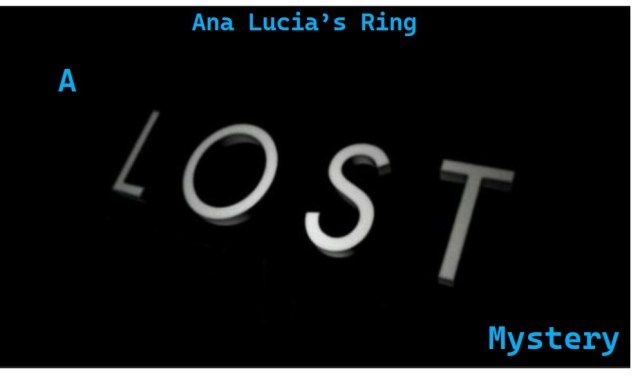
Lost title card image created by Bad Robot, Touchstone Television, and ABC Signature. ‘Ana Lucia’s Ring: A Lost Mystery’ image created by Sally Silverscreen
The Ring in Question
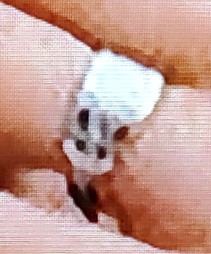
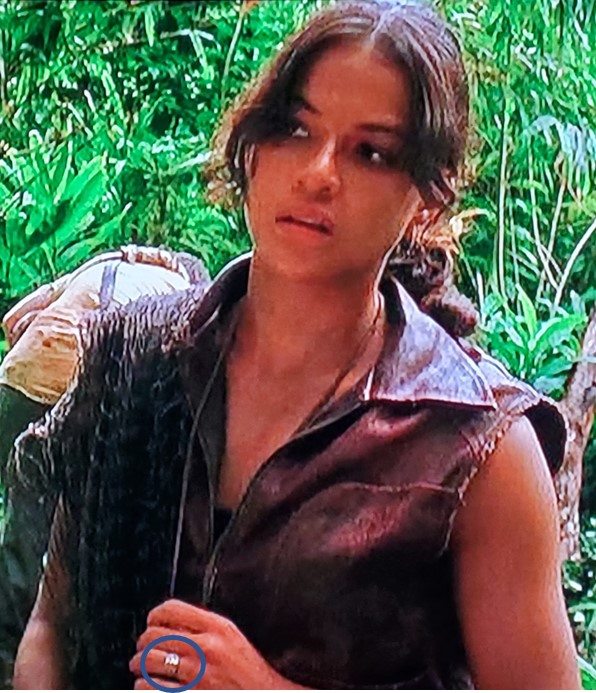
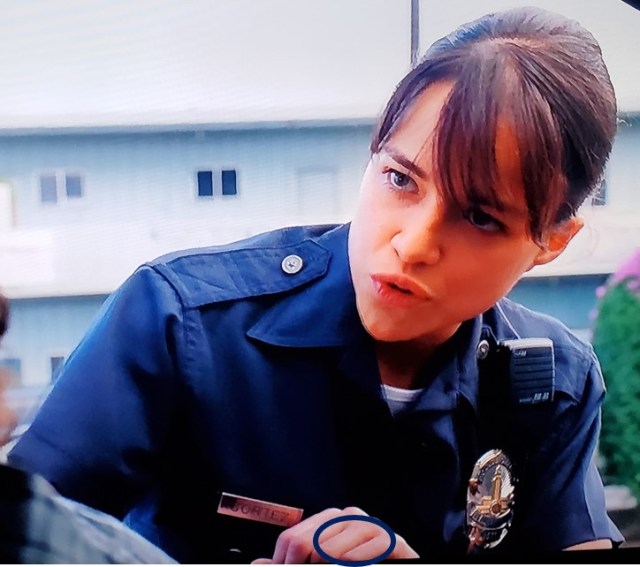
Before getting into any questions or theories related to this mystery, we need to discuss the ring itself. Ana’s ring is a thick, silver band that she consistently wears on her wedding ring finger. Despite its placement, the ring does not appear to be a typical engagement ring, as it doesn’t bear any stones. Upon closer inspection, though, the ring seems to boast different designs in different scenes. In the episode, “Two for the Road”, Ana’s ring is visible as she is cleaning a small cut on her head. The ring looks like it has a flat, clear surface, with an etched butterfly design on the side. In “The Other 48 Days”, as some of the dead Tailie passengers are being buried, Ana’s ring continues to present an etched design. But this time, it looks as if it could be a flower or gun’s revolver. The ring showcases a simpler design in “Collision”, while Ana is holding Sayid hostage in the jungle. This design is a curved line, almost looking like the letter V in cursive. Going back to the episode, “Two for the Road”, Ana’s ring can, once again, be seen as she is preparing fruit for Ben/Henry. In this scene, the ring bears a more complicated design, featuring an oval surrounded by deep grooves. Two deep lines are visible on the ring’s side, giving the impression raised triangles are included in the overall design. With this said, could the ring bearing different designs simply be a production error or could these differences be intentional?
Screenshot of Ana’s ring taken by Sally Silverscreen. Image from “Two for the Road”
Screenshot of Ana’s ring taken by Sally Silverscreen. Image from “The Other 48 Days”
Screenshot of Ana’s ring taken by Sally Silverscreen. Image from “Collision”
Screenshot of Ana’s ring taken by Sally Silverscreen. Image from “Two for the Road”
Theory #1: A Flipped Image
Creating a television show is not only a business, it’s a complicated equation involving many different avenues and possibilities. Because television is a visual medium, various film-making techniques need to be considered. One of these techniques is Reverse Motion, where, according to Beverly Boy Productions, “action of the film is shown backwards in a reverse motion scene”. This means a filmed image will be flipped and presented in the opposite direction. Reverse Motion is what led me to believe Ana’s ring was originally filmed on her right hand, with the images flipped to appear the ring was on Ana’s left hand. However, evidence reveals this theory is debunked. The Director of Photography for Lost, Larry Fong, admitted Reverse Motion was utilized on the show. But this technique was specifically used whenever characters were driving in Australia. In the book, Lost: Messages From The Island, Larry talks about filming Australian scenes in Hawaii, saying “That’s not such a big deal on the set but we couldn’t get any cars that had steering wheels on the wrong side for certain scenes so we shot everything and reversed the film”. When discussing filming the show’s pilot episode, specifically the scene where Kate, portrayed by Evangeline Lilly, drives a truck in Australia, Larry says “We had to put jewelry on the other side of her; for the guy who had a fake arm we had to put the fake arm on the other arm. Everybody was so confused but all I did on the video monitor, was flip a switch and it reverses it. It wasn’t that hard and it is funny how the simplest solutions come out”.
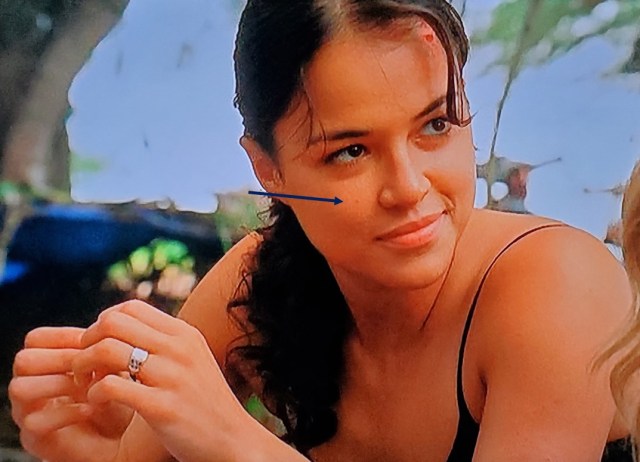
While Reverse Motion presented the illusion of characters driving in Australia, this illusion can be broken if an actor or actress has a visible facial marking, tattoo, or birthmark. Michelle Rodriguez, the actress who portrays Ana, broke this illusion in the episode “Two for the Road”. Michelle has what I will call a “freckle”, for the sake of this editorial. This “freckle” can consistently be seen on the left side of Michelle’s face. But in “Two for the Road”, as Ana is driving Christian Shephard to an Australian bar, the “freckle” is on the right side of Michelle’s face. The use of close-ups prevented Ana’s ring from being visible in that scene. Because of the “freckle” and because of Larry admitting to using Reverse Motion, this proves Ana’s ring was always meant to be on her wedding ring finger. Question is, why?
This screenshot serves as just one example of how Michelle’s “freckle” can be consistently seen on the left side of her face. Screenshot taken by Sally Silverscreen.
In this screenshot, Ana is in Australia, parked outside a bar. Because of Reverse Motion, Michelle’s “freckle” is on the right side of her face. Screenshot taken by Sally Silverscreen.
Theory #2: A Peek into the Past
One of the trademarks of Lost is the use of flashbacks. These flashbacks have explored the backstories of the main characters from the island. On a few occasions, an accessory has opened the door to a specific character’s backstory. Two examples are Jack’s tattoo in the episode, “Stranger in a Strange Land”, and Mr. Eko’s cross necklace in “The 23rd Psalm”. These facts lead me to believe Ana’s ring may have been intended to explore a part of her past. Unclarified quotes said by Ana herself fuel this theory as well. In the episode, “The Whole Truth”, Ana tells Sayid:
“People don’t like me. I tried to get them to most of my life. I guess I just gave up a while back. I mean, I am what I am.”
This quote leaves me with several questions. Who are these “people”, and why don’t they like Ana? What exactly caused her to give up? What does she mean when she says “I am what I am”? While in the Hatch with Ben/Henry in the episode, “Two for the Road”, Ana tells him:
“I’ve been around a lot of killers in my life. You know what surprises me the most about them? How much they love to talk”.
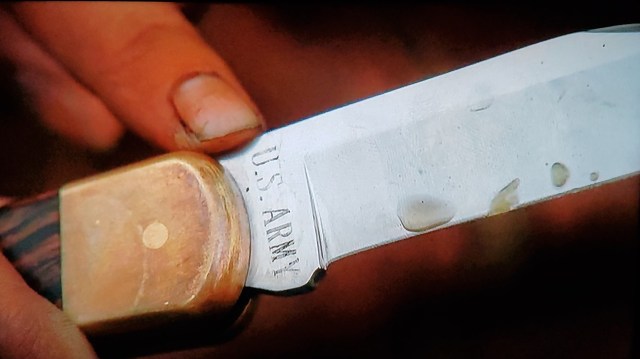
Upon first hearing Ana’s quote, one would assume she’s referring to the criminals she’s arrested in her police career. But notice how she says “I’ve been around a lot of killers”, not “I’ve arrested a lot of killers”. Could any of these “killers” be the reason why Ana knows so much information about the Army knife she and Goodwin encounter in the episode, “The Other 48 Days”? In that episode, Ana wonders how the Army knife in Goodwin’s possession got on the island. While she and Goodwin are examining the knife, Ana is able to correctly identify the knife’s connection to the U.S. Military. She is also able to locate the knife’s tank stamp, as well as estimate how old the knife is. One might automatically assume Ana came across one of these knives while being a police officer in Los Angeles. But if this were the case, why wouldn’t she have mentioned this during her assessment of the knife?
With Ana’s unclarified quotes, knowledge about the Army knife, and police career, I’m speculating Ana’s ring may have revealed she did some undercover police work she might be ashamed of. This would explain why she’s “been around a lot of killers” and why she feels people don’t like her. Her knowledge about the Army knife might be explained if this theory were true. If she did undercover police work, she would have effectively used her experiences to successfully trick characters like Sawyer into giving her what she wants.
This screenshot presents the Army knife Ana knew several important facts about, including where the knife’s tank stamp is located. Screenshot taken by Sally Silverscreen.
Theory #3: A Connection Between Ana and Sawyer
Sawyer is one of Lost’s main characters, consistently appearing in all six seasons of the show. One of his “quirks” is making pop cultural references, especially those from the Western genre. In season two, Sawyer made some pop cultural references to Ana. In fact, out of the six pop cultural references made to Ana throughout the second season, Sawyer gave her four of them. In the episode, “…And Found”, Sawyer asked Ana if she was married, which she responded by saying “No”. It needs to be noted that Sawyer is the only character to ever question Ana’s relationship status. What should also be noted is Sawyer is the first main character Ana crosses paths with before arriving on the island, crashing into Christian’s car door in “Two for the Road”.
As I previously stated, Sawyer makes pop cultural references, including those from the Western genre. Some of these references have related to programs such as Howdy Doody, Mister Ed, and Little House on the Prairie. But what if one of those references was meant to come from The Lone Ranger? In the 1981 movie, The Legend of The Lone Ranger, Tonto explains the importance of silver bullets to The Lone Ranger. During this explanation, Tonto says;
“Silver is pure. It’s been a symbol of justice and purity since The Year of the Sun”.
Now, you’re probably wondering, “What does The Lone Ranger have to do with Ana”? The answer lies in her ring. As already mentioned in this editorial, Ana is a police officer. Throughout her time on Lost’s second season, she has tried to seek out justice to varying degrees, such as when, in “The Other 48 Days”, Ana digs a pit and places Nathan in it, believing he kidnapped the children in their Tailie group. Plus, Ana’s ring just so happens to be silver. Could Sawyer have planned on calling Ana “Lone Ranger” or “Silver Bullet”? If “Lone Ranger” was Sawyer’s nickname for Ana, her statements about being alone in the episode, “Collision”, would make sense.
In the episode, “The Long Con”, a series of flashbacks reveal Sawyer sold fake jewelry in an attempt to pull off a con. During one of these flashbacks, he tries to sell chain necklaces to unsuspecting customers. But what if he sold rings at one point? If this were the case, perhaps someone gave Ana her silver ring, purchased from Sawyer. But if Ana knew the ring was fake, why would she keep it, let alone continue to wear it? And if Sawyer did sell that ring, why didn’t he notice it or comment on it? Maybe the ring was purchased from Sawyer as part of an undercover investigation, with Ana keeping the ring as a memento. Perhaps Sawyer didn’t mention the ring because he didn’t realize Ana may have played a role in the investigation.
In a screenshot from “The Long Con”, Sawyer creates prices for fake chain necklaces. Could he have sold rings at one point? Screenshot taken by Sally Silverscreen.
Ana and the Number Three
4 8 15 16 23 42. This set of numbers has become a staple on Lost. The show’s creative team has incorporated these numbers into the story, from Hurley’s winning lottery ticket to some of the characters’ plane seats. During my investigation, there is one number that kept frequently popping up; the number three. Not one of the aforementioned numbers, the number three has been associated with Ana throughout her time on the show. In fact, I’ve compiled a list of all the times the number three has appeared in Ana’s story.
“Exodus Part 1”
During Jack and Ana’s first interaction together, Jack asks Ana three questions: who Ana is, what her name is, and why she’s drinking Tequila and Tonics at ten to noon
Ana’s ring can be clearly seen three times
Ana’s full name is Ana Lucia Cortez, three names. Ana’s first name not only contains three letters, her first and middle name contains a total of three As
Ana’s first appearance on Lost was in the first season’s twenty third episode
Ana’s seat on Oceanic Flight 815 is 42F. The letter F is comprised of three lines
“Orientation”
Ana’s ring can be clearly seen three times
When Ana enters the pit, three guys from the main camp are stuck there: Sawyer, Michael, and Jin
Ana appears in three scenes total
Ana’s first appearance in season two is the third episode
“Orientation” and “Everybody Hates Hugo”
Ana hurts Sawyer three times: she punches Sawyer in the pit (“Orientation”), she throws a rock at his head (“Everybody Hates Hugo”), and Ana punched Sawyer again after he refused to put down a rock (“Everybody Hates Hugo”)
“Everybody Hates Hugo”
Ana tells Sawyer he has three seconds to drop the rock in his hand
Ana touches the DHARMA shelter door three times; two knocks, one scratch. This action was shown on screen three times
“…And Found”
When splitting into groups to find food, Ana caught fish with Bernard and Jin, a group of three
Ana asks Jin three questions: “You want to help us out over here”?, “You want to eat”?, “Does it look like I speak Korean”?
“Abandoned”
Ana tells Michael “The Others” first took three tail section passengers. This detail was also brought up in “The Other 48 Days”
“The Other 48 Days”
Ana is told three tail end passengers are missing
Ana asks Goodwin three questions as they’re walking up to higher ground: “Why do you think they’re doing this”?, “Don’t you ever wonder why they attack us”?, “Why do you think they take some of us and not the others”?
When answering Ana’s third aforementioned question, Goodwin explains the three qualities that caused the first three Tailie passengers to be kidnapped: athletic, tough, and poses a threat to “The Others”
While investigating the Army knife, Ana brings up three facts about the knife; its U.S. Military connection, its tank stamp location, and its likely age
“Collision”
On Ana’s police badge, the number three is in the six number digits
On the door of Ana’s mom’s office, the number 315 can be seen
While Ana and Mike are riding in the police car, Mike asks Ana three questions; “So that shrink give you any good drugs”?, “D’ya miss me”?, “You want me to go kick his ass for you”?
Ana said on the police dispatch she and Mike were three blocks away for the domestic disturbance call
On Ana and Mike’s domestic disturbance call, they encounter a family of three; a man, woman, and baby
While keeping an eye on Sayid, Ana pops the magazine into her gun three times
When Ana crosses paths with Jason in a parking lot, she told him three things; “Hey”, “Jason”, “I was pregnant”. The third statement consists of three words.
When Ana is holding Sayid hostage in the jungle, she tells Libby “I’m already alone”. During her conversation with Sayid, Ana tells him “I feel dead”. These statements contain three words
“What Kate Did”
Ana asks Jack three questions; “Where’s the tonic”?, “You sure you want to waste that on me”?, “You gonna try to convince me that everyone here doesn’t hate me”?
“The 23rd Psalm”
Ana makes only one appearance in this episode, where the number twenty-three is in the title
“Fire + Water”
Ana’s ring can be clearly seen three times
When Sawyer and Kate spot Ana and Jack leaving the jungle, Sawyer tells Kate “That’s the third time I’ve seen them walking out of the jungle”
“One of Them”
Ana speaks to Sayid three times: “Where’s Jack”?, “There. See”?, “What”?
“The Whole Truth”
Locke tells Ana the man in the Hatch (Ben/Henry) has been down in the Hatch for three days
Ana, Sayid, and Charlie (a group of three) go on a trip to locate Ben’s/Henry’s hot air balloon
“Lockdown”
Ana made three appearances in this episode
During their search for Ben’s/Henry’s hot air balloon, Sayid tells Ana they’ve been searching for the balloon for three hours
“Dave”
When Ana and Sayid are interrogating Ben/Henry, Sayid tells Ben/Henry he has three seconds to answer his question
“S.O.S.”
“Ana spoke to Locke three times; “Hey”, “I pressed your button”, “Where’d you go”? Ana’s question contains three words.
This episode name contains three letters and three periods
“Two for the Road”
Ana was told by her mom Jason’s body was found a little after three in the morning
In Ana’s Australian hotel room, her clock reads 3:51
While Jack is cleaning his medical tools in the Hatch, Ana speaks to him three times; “Hey”!, “You’re back”, “So, The Others. They didn’t show up”?
When Michael is sharing information about The Others, Ana asks him three questions; “What about everyone else they took”?, “Cindy”?, “Did you see any other kids”?
“Dave”, “S.O.S.”, and “Two for the Road”
Ana sits on the Hatch’s couch a total of three times; once in “Dave”, once in “S.O.S.”, and once in “Two for the Road”
As this very long and detailed list shows, Ana is often associated with the number three. In fact, this association doesn’t feel like a coincidence. In the special feature segment, “Mysteries, Theories, and Conspiracies” from the Lost season two DVD, Michelle Rodriguez said the following:
“You know, numbers are interesting. Alchemy could have something to do with it too. I think they use a lot of alchemy in this show too. They hint at it. They hint, you know, stars and signs and masonry. A lot of that symbolism is in there”.
If there truly is symbolism behind Ana’s ring and her connection to the number three, could the ring itself and the number three be linked in some way?
The number three is circled in this screenshot of Ana’s police badge is emphasize its existence. Screenshot taken by Sally Silverscreen.
The number three is circled in this screenshot of Ana’s mom’s office door to emphasize the number’s existence. Screenshot taken by Sally Silverscreen.
Each character in this screenshot is given a number to emphasize how they make up a group of three. Screenshot taken by Sally Silverscreen.
Different Versions of Ana
Time is an element experimented on in Lost. Not only were flashbacks used to explore characters’ backstories, “flashforwards” predicted how some characters’ futures would turn out and “flashsideways” broke different time barriers. Despite Ana only consistently appearing in the show’s second season, she did appear in an episode from seasons five and six. Based on where the ring is placed on her hand, it seems like there are different versions of Ana. In the episode, “Exodus Part 1”, and throughout the second season, the ring is on Ana’s wedding ring finger. But in the season five episode, “The Lie”, when Ana stops Hurley on the side of the road, she’s not wearing the ring at all. Ana also acknowledges the fact she’s deceased, telling Hurley “What if I were real” and “Oh yeah, Libby says hi”. The season six episode, “What They Died For”, shows the ring back on Ana’s left hand. But this time, it’s on her middle finger. The scene she appears in is part of an alternate universe, showing the characters as if the pilot episode’s plane crash had never happened. These versions of the same character make me wonder if the ring’s purpose evolved from its original intent, showing the differentiation between each version? The fact there seems to be three different versions of Ana highlights the possible connection between the ring and the number three I mentioned in the previous statement.
This is a screenshot from “Exodus Part 1”. Ana’s ring is circled to emphasize its presence. Screenshot taken by Sally Silverscreen.
Throughout season two, Ana consistently wore the ring on her wedding ring finger. This screenshot from “…And Found” serves as one example. Screenshot taken by Sally Silverscreen.
This screenshot from “The Lie” shows Ana not wearing the ring at all. Screenshot taken by Sally Silverscreen.
In this screenshot from “What They Died For”, Ana’s ring is now on her middle finger. The number three is also featured on her police badge. Screenshot taken by Sally Silverscreen.
Lost is one of the most ambitious shows of our time. In fact, some people might argue the show was too ambitious. The mysteries surrounding the island are what intrigued viewers to watch Lost. But limited answers left the audience frustrated and confused. Because the mystery of Ana Lucia’s ring has been overlooked, there hasn’t been a demand for an explanation. Before the publication of this editorial, there was no speculation around the ring itself. With everything said in this article, my current speculation is how Ana’s ring was originally intended to serve as a peek into a part of Ana’s past. In this part, Ana did some undercover police work involving stolen or fake jewelry, with Sawyer a part of the equation. Something happened during the investigation, causing Ana to feel ashamed of the experience. Since Ana died toward the end of the second season, the ring’s purpose evolved to showing the differentiation between different versions of Ana. However, as of this editorial’s publication, this mystery is currently unsolved.
To read the full description of Reverse Motion, you can visit Beverly Boy Productions’ website at this link: