Revisiting my Hallmark Hall of Fame Tier Rank List!

Three years ago, I created a tier rank list of every Hallmark Hall of Fame movie I’d seen. These films were categorized by my overall impression of each presentation. In honor of 18 Cinema Lane turning five, I promised my readers I would revisit one of my past articles. I’ve seen more Hallmark Hall of Fame movies since I published my original tier rank list, so that’s the article I’ve selected! Along with adding more Hallmark Hall of Fame productions, I changed the names of each tier category. This decision was made to better reflect whether a film is worth its retail price of twenty dollars a DVD compared to its quality. The new tier category names are the following:

Bottom of the Barrel – Not Even Worth a Dime

Ok – Catch it on TV/Youtube

Decent/Fine – Bought It at a Garage Sale for a Dollar

Good – Get It On Sale for Half Off

Great – Where Do I Pay Full Price?

For each movie I added or moved to a different tier, I will share my thoughts on them. If I wrote about a movie on my blog, I will add the link to this article.

Screenshot taken by me, Sally Silverscreen

Bottom of the Barrel – Not Even Worth a Dime

Durango

Reviewed for the Legends of Western Cinema Week Blogathon, I stated Durango should have been a David and Goliath story. That’s because a David and Goliath reference was placed within the last nineteen minutes of the movie, the creative team’s attempt to include a higher stake into the story. But this attempt didn’t work because the majority of the film had lower stakes. The protagonist and his plan to transport cattle worked out perfectly, too perfectly for the standards of the western genre. This takes away any room for concern the audience could have for the characters and their well-being.

Take 3: Hallmark Hall of Fame’s Durango Review

Journey

As I explained in my list of the top ten worst movies I saw in 2022, the audience was not given a reason to care about the characters and their story in Journey. This flaw was achieved because the film’s creative team didn’t provide explanations for the characters’ choices. It also did not help how annoying Grandpa Marcus was, his photography hobby becoming an obsession. A major theme of Journey is memories being irreplaceable. That theme was poorly delivered in Journey, as Marcus’ hobby creates a plot hole within the story. Also, I’ve seen Hallmark Hall of Fame movies express this theme better, such as The Lost Valentine.

A Place for Annie

When it comes to movies that are products of their time, they can fit into one of two categories: movies that serve as visual time capsules and those that are dated on arrival. A Place for Annie, sadly, falls into the latter category. The majority of the story focuses on the medical information of HIV/AIDS that was known during the late ‘80s to mid ‘90s. That focus causes the film to show its age more obviously. The way foster care/adoption is discussed in this story is so oversimplified, I couldn’t take that part of the movie seriously. Similar to what I said about Journey, the theme of adoption is expressed better in other Hallmark Hall of Fame stories, like Redwood Curtain.

The Corsican Brothers

Alexandre Dumas’ stories are, more often than not, filled with adventure, intrigue, and suspense. But in the case of The Corsican Brothers, these elements were lacking. Granted, I still haven’t read the book this movie is based on. Though I do wonder how similar the 1985 adaptation is to the source material? If the original story primarily revolves around Louis attending fancy events in Paris, that would explain why the adaptation is so underwhelming. However, the original story could explain some of the confusing parts of the movie, such as the woman giving some of the characters fates.

Take 3: Hallmark Hall of Fame’s The Corsican Brothers Review

Ok – Catch it on TV/Youtube

The Summer of Ben Tyler

The 1996 movie, The Summer of Ben Tyler, feels like Hallmark Hall of Fame wanted to create their own version of To Kill a Mockingbird. Upon reflection of this film, it doesn’t seem like the creative team displayed a strong understanding for what made Harper Lee’s story work. If anything, it feels like ideas are copied from Harper’s novel and pasted into the Hallmark Hall of Fame presentation, making The Summer of Ben Tyler a little too similar to To Kill a Mockingbird. This is a case of if you’ve seen one movie, you’ve basically seen the other. So, if you’ve seen the adaptation of To Kill a Mockingbird, you’ve already seen The Summer of Ben Tyler.

Decoration Day

The way I feel about Decoration Day is similar to Promise; the majority of the story is very “slice-of-life”. To me, this makes both films less memorable than other Hallmark Hall of Fame titles. However, I did find Gee Pennywell’s dilemma over receiving the Congressional Medal of Honor the most interesting part of the movie. In fact, I wish Decoration Day had solely revolved around that dilemma.

Foxfire

Hallmark Hall of Fame has a history of adapting plays into films. Sometimes, a movie’s creative team will take advantage of the expansive nature of cinema, allowing the story to move beyond the boundaries of the stage. For Foxfire, though, the story was confined to the four walls of Annie’s house. A smaller cast and a condensed story also caused the 1987 Hallmark Hall of Fame project will feel more like a televised play. If I choose to watch Hallmark Hall of Fame film, I expect to watch a film. Foxfire subverted my expectations, but in a disappointing way.

Take 3: Hallmark Hall of Fame’s Foxfire Review

Calm at Sunset

Calm at Sunset is one of those movies where better, more interesting ideas were woven into the fabric of this story. One example is when the protagonist spots a cruise ship and imagines the types of people aboard that ship. Honestly, I wish Calm at Sunset was about that cruise ship instead. Similar to what I said about The Corsican Brothers, I haven’t read the book this movie is based on, so I don’t know which parts of the production came straight from the source material. If the book is pretty close to the film, it would explain why the adaptation was lackluster.

Witness for the Prosecution

Based on the adaptations of Agatha Christie’s books I’ve seen, the protagonist will play an active role in solving the mystery. Witness for the Prosecution is the exception to this statement, as Wilfred focuses more on the legal case he’s working to resolve. In a story where the protagonist doesn’t actively solve the story’s mystery, it can be difficult to get the audience invested in the story itself. Because Wilfred’s case is the primary focus of the story, the film is more dialogue heavy, putting emphasis on telling instead of showing. Hallmark Hall of Fame’s Witness for the Prosecution is a mystery that is light on the mystery.

Take 3: Hallmark Hall of Fame’s Witness for the Prosecution (1982) Review

The Flamingo Rising

In my editorial about the adaptation of The Flamingo Rising, I explained how the story should have been adapted into a television show or a multi-part mini-series. This is because the story itself is drawn out over the course of the protagonist’s life. Reflecting on the adaption, it felt like Hallmark Hall of Fame tried to fit The Flamingo Rising into their brand of storytelling. In this attempt, several parts of the source material were omitted or changed due to them not being “Hallmark appropriate”. As I did in the aforementioned editorial, I questioned why Hallmark Hall of Fame would choose to adapt Larry Baker’s story over a story that was more “Hallmark appropriate”?

Four Reasons Why ‘The Flamingo Rising’s Adaptation is Different from its Book

O Pioneers!

Having read the source material and seen the adaptation of O Pioneers!, I can say the movie is respectful toward the book. With that said, if you’ve seen the film, you’ve already read the novel. Speaking of the adaptation, I said in my review how the story should have been adapted into a mini-series or a television show. With so many characters and so many parts of the story, maybe O Pioneers! would have benefitted from receiving more time. The 1992 Hallmark Hall of Fame presentation is a western that didn’t leave a memorable impression on me.

Take 3: Hallmark Hall of Fame’s O Pioneers! Review

Harvey

I’ve stated before on 18 Cinema Lane how the 1972 adaptation of Harvey is better than the original from 1950. While this statement is still true, the 1972 and 1950 versions of this story felt like a copy of one another. It makes me wonder why Hallmark Hall of Fame would choose to adapt Harvey if they knew they were going to make a lot of the same creative decisions as the original film? Despite the similarities, I did like the changes in the 1972 adaptation. One example is how the made-for-tv movie chose a dramatic tone for their version of the story instead of being both a drama and comedy.

Take 3: Hallmark Hall of Fame’s Harvey (1972) Review

Decent/Fine – Bought It at a Garage Sale for a Dollar

The Locket

For a movie titled The Locket, the locket itself is treated as an afterthought. What the story focuses on instead is the protagonist and his hardships. But from what I remember, the 2002 project addressed the importance of elder care. Since that topic is rarely brought up in Hallmark’s programming, I appreciate that creative decision. Marguerite Moreau is one of the reasons why I chose to watch The Locket. Her performance was so good, she ended up outshining the other actors in the movie! Unfortunately, Marguerite was kind of under-utilized in this film, as her on-screen appearances were not as consistent as I expected.

Take 3: Hallmark Hall of Fame’s The Locket Review + 225 & 230 Follower Thank You

Saint Maybe

I said in my review of Saint Maybe how the adaptation is faithful to the source material. However, there are changes the film made from the book. One notable example is how religion/faith is downplayed in the Hallmark Hall of Fame presentation. Meanwhile, religion/faith played a significant role in the novel. For years, Saint Maybe was included in Hallmark Movies & Mysteries’ ‘Miracles of Christmas’ marathon. Now that I have seen the adaptation, I understand why the network would make this decision. Personally, I wouldn’t call Saint Maybe a Christmas story/movie, as the story itself takes place over several years.

Take 3: Anne Tyler’s Saint Maybe Review (National Read a Book Day Double Feature Part 1)

The Lost Child

The Lost Child serves as a good introduction to Native American culture, specifically the Navajo culture. Through dialogue and character interactions, the audience receives a glimpse into life on a Navajo reservation. For the story itself, The Lost Child didn’t leave a strong impression on me. The most interesting part of the film, Rebecca’s search of her family, wasn’t emphasized as much as her adjustment to reservation life. Also, Rebecca’s search for her twin brother was abandoned after she meets her biological family.

Take 3: Hallmark Hall of Fame’s The Lost Child Review + 395 Follower Thank You

Loving Leah

I’ve finally seen Loving Leah in its entirety! The way I feel about the 2009 movie is similar to The Lost Child; it’s a good introduction to Jewish religion and culture. Throughout the story, the audience receives a glimpse into the many aspects of Jewish life. Like The Lost Child, Loving Leah didn’t leave as strong of an impression as other Hallmark Hall of Fame titles. From what I remember, the story was a little too drawn out. But from what I also remember, it was nice to see the protagonists’ relationship unfold. With all that said, the movie was pleasant!

Good – Get It On Sale for Half Off

An American Story/After the Glory

Since publishing my review of An American Story/After the Glory, it has become one of my most popular reviews, garnering 1,838 views and counting! The innovative and compelling nature of the project is likely the reason why this particular title is so well-received on 18 Cinema Lane! Like I said in my review, An American Story/After the Glory felt kind of ahead of its time. This feeling is achieved by incorporating the discussion of veterans’ mental health into the script. The way veteran related topics are included in the story is reverent and respectful. An American Story/After the Glory is definitely one of Hallmark’s better military themed productions!

Take 3: Hallmark Hall of Fame’s After the Glory Review + 195 Follower Thank You

The Love Letter

The Love Letter is one of Hallmark Hall of Fame’s more unique titles, as fantastical elements are rarely found in this collection of films. Yet this part of the story worked in the 1998 movie, helping to create a love story that was simple yet intriguing! The characters were not only well written, but also well-acted! Since the protagonists were multi-dimensional, their connection throughout the film was interesting to watch. I also liked the historical accuracy in The Love Letter, as the attention to detail was handled with care!

Take 3: Hallmark Hall of Fame’s The Love Letter Review

Redwood Curtain

In my five years of movie blogging, I have discovered very few films that were better than their respective source material. Hallmark Hall of Fame’s Redwood Curtain is one of those films, as I found myself liking it over the play! The movie’s creative team took advantage of the expansive nature of cinema, broadening the horizons in Geri’s life. More characters were added to the story, giving them characterization that the play didn’t provide. Geri’s personality was more likable in the movie, which made me like her as a character. Redwood Curtain is a Hallmark Hall of Fame presentation I wish was re-released on DVD.

‘Redwood Curtain’: From Stage to Screen

Great – Where Do I Pay Full Price?

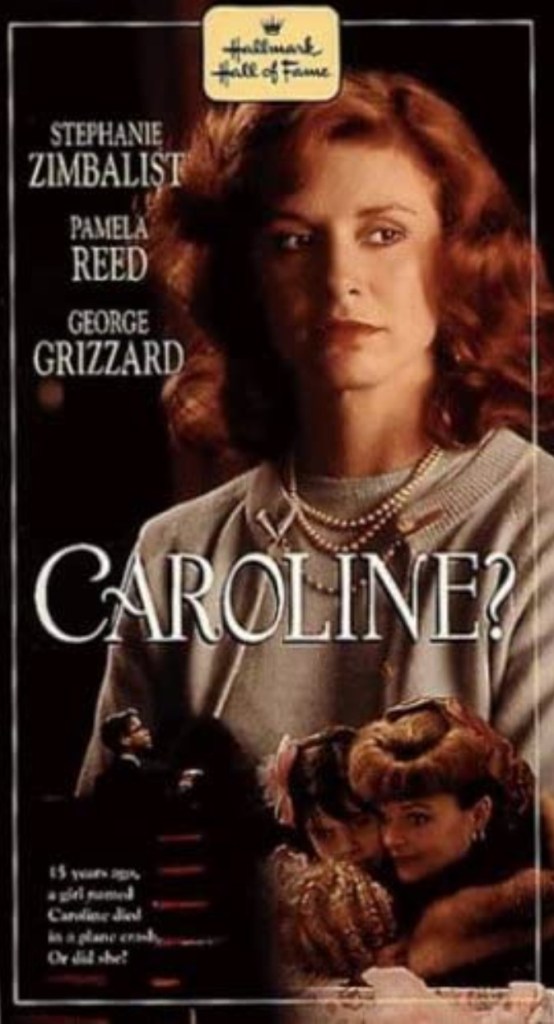
Caroline?

As of the publication of this list, Caroline? is, so far, the best movie I’ve all year! That’s because the 1990 production is a close to perfect example of what a Hallmark Hall of Fame presentation can and should be. From the younger actors’ performances to the differentiation of time, I could tell there was a lot of effort and care put into this project! Even though the story of a long-lost family member’s return is nothing new, the way Caroline? was written was creative, allowing this story to have its own identity. This movie is one I wish more Hallmark fans acknowledged!

Take 3: Hallmark Hall of Fame’s Caroline? Review + 460 Follower Thank You

A Tale of Two Cities

During my blogging years, I have seen Charles Dickens adaptations I have liked. The 1980 version of A Tale of Two Cities is definitely one of those films! Despite the movie being two hours and thirty-six minutes, the story never felt too long. The immersive nature of the story helped the pacing, as I was invested in what was happening on screen. This Hallmark Hall of Fame production was so good, it makes me want to read the source material! It’s also another film from this collection that deserves more recognition!

Take 3: Hallmark Hall of Fame’s A Tale of Two Cities Review

Have fun at the movies!

Sally Silverscreen

Sunset Over Hope Valley: Whom Do You Trust?

When the term, Hope Valley, is spoken, Hearties will typically think of the town itself and the people within it. They’ll also think about how, over these nine and a half seasons, Hope Valley has earned the reputation of being a safe and trustworthy place, filled with residents that can be trusted by others. But every so often, there is a character who seems suspicious. These types of characters fall into one of two categories. The first category is suspicious characters who learn the fault in their ways, seeking redemption and becoming trustworthy over time. The second category is characters who don’t have good intentions, eventually facing accountability for their actions. This season has, so far, only shown characters from the first category, with Harry becoming one of the newest faces in Hope Valley. Since season ten hasn’t aired every episode yet, it’s unknown which category characters like Madeleine and Montague are placed in.

Just a reminder: If you did not see this episode of When Calls the Heart, there will be spoilers within this re-cap.

When Calls the Heart season ten poster created by Crown Media Family Networks and Hallmark Channel

Season: 10

Episode: 8

Name: What Is and What Should Never Be

Major stories:

Montague has big plans for his and Madeleine’s property. But, so far, he’s been secretive about these plans. When Nathan visits the property, after receiving a noise complaint, he learns Montague and his employees are planning to drill a new well, despite the property already having a functional well. Later in the episode, while Elizabeth rides past the property, she learns Montague’s employees are using a horse and plow. Meanwhile, Bill is having regrets over selling his land to Madeleine. He also becomes suspicious of Montague. Lucas has doubts about Montague as well. But because he is a guest of the saloon, there’s not much Lucas can do about the situation. Even Rosemary becomes suspicious, as Lee receives a large lumber order that will used to build a bridge.

Rosaleen learns she’s been accepted into a nursing program! At the beginning of the episode, she shares her good news with Elizabeth. But this joy is short-lived when Rosaleen learns Henry created the Hope Valley Scholarship. When coming face-to-face with Henry in town, Rosaleen turns down the scholarship because she feels Henry is just trying to pay people off, an action Henry did in the past. She also strongly considers leaving Hope Valley again. In a heart-to-heart conversation with her daughter, Mollie encourages Rosaleen to forgive Henry, once again pointing out how Henry has come a long way since the mining tragedy. Later in the episode, at the stables, Rosaleen confronts Henry. She admits how she isn’t afraid of Henry anymore, as he is no longer the man she used to fear. Henry uses this conversation as a chance to apologize to Rosaleen. As a peace offering, Rosaleen invites Henry to church to listen to the choir. Henry accepts this invitation by sitting next to Rosaleen at church.

Heartbeat image created by Freepik at freepik.com. <a href=’https://www.freepik.com/free-vector/medical-logo_763775.htm’>Designed by Freepik</a>. <a href=”https://www.freepik.com/free-photos-vectors/logo”>Logo vector created by Freepik</a>. Image found at freepik.com.

Minor stories:

Rosemary learns the Governor is currently on a campaign tour. Unfortunately, one of the campaign stops isn’t Hope Valley. To try and get the attention of the Governor, Rosemary brings up the idea of a grand town-wide celebration. One of her suggestions that comes to fruition is a choir. Rosemary not only joins the choir, she also recruits Minnie as the choir leader, as she led her choir in Missouri. One day, after choir practice, Mei expresses her doubts about her singing abilities. Mike disagrees, as he thinks Mei’s singing sounds nice. Minnie and Rosemary agree with Mike, giving him and Mei a duet. As they practice together, Mei begins to gain confidence in her singing abilities. The choir as a whole gain confidence as well, as their talents improve. The choir’s first performance takes place during a church service.

After learning Robert can only babysit Jack Jr. in the evenings, due to his postal service job, Ally asks Nathan if she can babysit Jack Jr. Nathan agrees, as long as Elizabeth is ok with the idea. With approval from Elizabeth, Ally officially becomes Jack Jr.’s babysitter! On her first day on the job, she and Jack Jr. agree to play Hide and Seek. Shortly after the game starts, Ally panics because she can’t find Jack Jr. She asks Nathan for help, afraid she might never be able to babysit again. Fortunately, Jack Jr. is found, hiding under the sofa. When Elizabeth returns home, Nathan is still at her house, as Jack Jr. and Ally have fallen asleep. Elizabeth suggests Ally spend the night at her house, with Nathan agreeing with her idea. Nathan and Elizabeth also have a friendly conversation, discussing topics ranging from bringing up Jack with Jack Jr. to Nathan confessing how he and Faith are just friends.

Preschool classroom image created by Vectorpocket at freepik.com. <a href=”https://www.freepik.com/free-photos-vectors/background”>Background vector created by vectorpocket – http://www.freepik.com</a>. Image found at freepik.com.

Some thoughts to consider:

  • I recently created a list of the top ten characters I’d love to see return to When Calls the Heart. Two characters included on that list were Laura and Tom Thornton. While making the noise complaint to Nathan, Laura’s father mentioned how Laura is currently in teaching college, which explains why she has been absent this season. While visiting Jack’s grave, Elizabeth references how Charlotte told her a story involving Jack and Tom. Even though his name wasn’t mentioned, it is a pleasant surprise to hear Tom brought up on the show! It was also nice that Laura’s story received some closure!
  • I know season ten isn’t over yet. But I’m disappointed how few times Harry has been included in the overall story. Out of the eight episodes that have premiered so far, he has only appeared in three of them. Plus, Harry hasn’t interacted with many characters, only sharing screen-time with Faith, Nathan, Ned, and Florence. I’d like to think Harry’s story will receive more attention in these last four episodes, especially since we may learn more about the Union City Holdings company. Though I’m starting to wonder if the show’s creative team is waiting to tell more of Harry’s story in season eleven?
  • Despite Lucas and Elizabeth becoming engaged, it doesn’t feel like they’ve spent much time together this season. In fact, Elizabeth seems to be spending more time with Nathan than Lucas. Based on statements made by Nathan and the shared time between him and Elizabeth, I’m wondering if Elizabeth will change her mind about getting re-married? I’ve heard comments from Lucas and Elizabeth fans expressing their disappointment about the limited time between their favorite couple, as well as the lack of a wedding this season. Could the reason for a wedding free season be because Elizabeth might end up marrying Nathan instead?
Sunset image created by Photoangel at freepik.com. <a href=”https://www.freepik.com/free-photos-vectors/background”>Background image created by Photoangel – Freepik.com</a>.<a href=’https://www.freepik.com/free-photo/red-sunset-clouds-over-trees_1254327.htm’>Designed by Freepik</a>. Image found at freepik.com.

What are your thoughts on this episode? What do you think Montague’s building plans are? Please tell me in the comment section below!

Have fun in Hope Valley!

Sally Silverscreen

Buzzwordathon 2023: Review of ‘On Thin Ice’ by Alina Adams

July’s theme of the Buzzwordathon readathon is ‘weather related words’. Since some areas of the world experience weather related occurrences such as icy rain and icy roads, I chose to read the second book in the Figure Skating Mysteries series, On Thin Ice! Several years ago, I read the first book in this series, Murder on Ice. In fact, I brought it up in my 2019 edition of my Movie Blogger’s Christmas Wish List. In that book, the main mystery was a murder mystery. While there is a murder mystery in On Thin Ice, there was not one, but two missing persons cases that were given primary focus. This creative decision allowed Alina to tell a different type of story, instead of copying and pasting a similar story from the first book. There are nice connections between the first and second books, such as mentioning characters that were introduced in the predecessor. That connectivity helps the Figure Skating Mysteries series maintain a sense of continuity.

Book cover of On Thin Ice found on Goodreads

While the aforementioned connectivity assists the series in achieving a sense of consistency, the sense of urgency in On Thin Ice is not consistent. As I mentioned, there are two missing persons cases in this story. However, one of these cases occurred prior to the events of the book. Meanwhile, the text provides a logical explanation why another missing persons case isn’t more pressing to the characters. On Thin Ice doesn’t lack urgency. But when it is featured in the book, its presence is far and few between. This major flaw makes the sequel weaker than Murder on Ice. However, I think On Thin Ice is a fine, well-written continuation. The Figure Skating Mysteries series is still one of the most unique cozy mystery collections I’ve come across. Plus, I plan on reading the rest of the books in the series. I’m glad I decided to participate in this year Buzzwordathon, as it gave me an excuse to come back to the Figure Skating Mysteries series!

Overall score: 3.8 out of 5

Have fun during Buzzwordathon!

Sally Silverscreen

Disclaimer: As I mentioned in my review, there is a murder mystery in On Thin Ice. There are other aspects of the book that might not make On Thin Ice readers’ “cup of tea”, which is:

  • The discussion of abusive relationships, including the topics of physical and sexual abuse
  • Foul language, featuring a few slurs
  • Some psychological terms used out of context

Take 3: Carrot Cake Murder: A Hannah Swensen Mystery Review

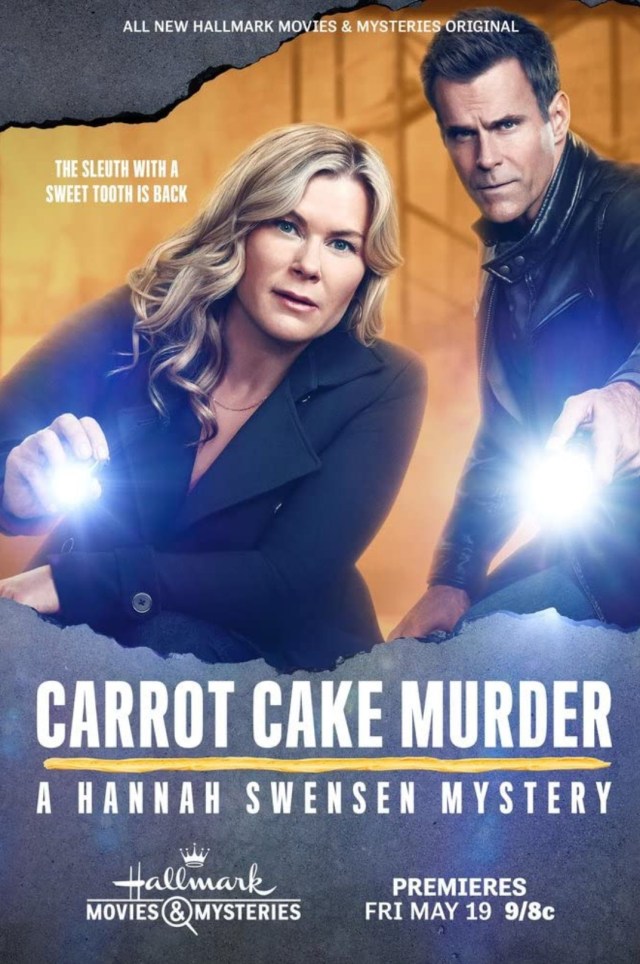
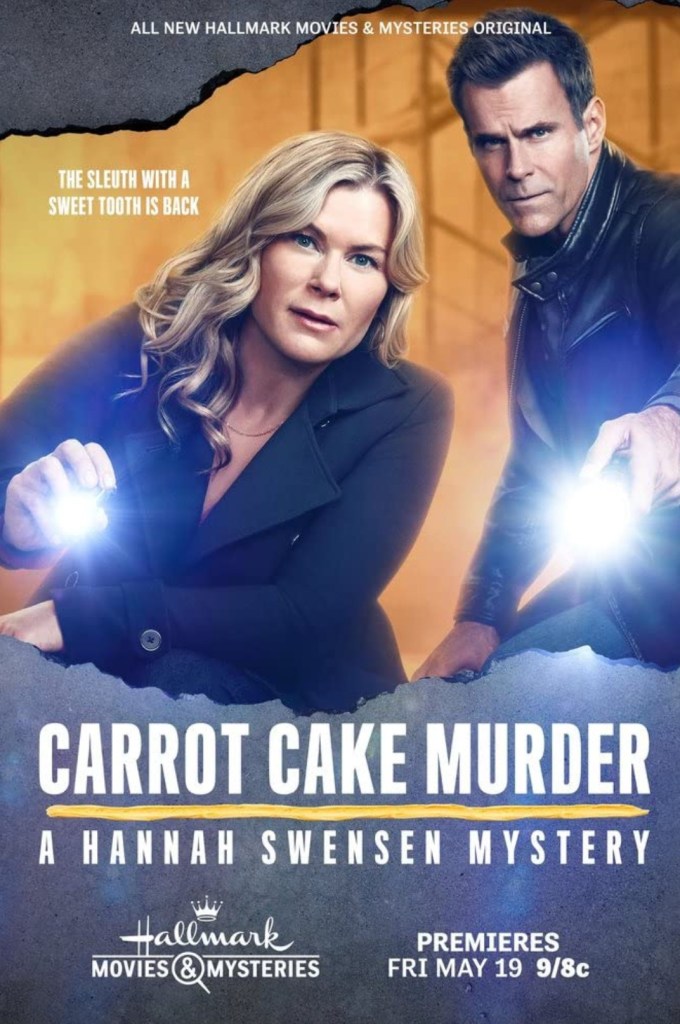
Here at 18 Cinema Lane, I try to review movies that have been recommended to me by my readers. Typically, I watch movies and write about them in the hopes they are good. But in the case of this review, I’m approaching this film a little differently. In the comment section of my article, ‘The Top 10 Worst Hallmark Movies of All Time’, one of my readers, Not a fan of Carrot Cake, shared their worst Hallmark movie they’ve watched. That film is the latest Hallmark Movies & Mysteries title, Carrot Cake Murder: A Hannah Swensen Mystery. Their thoughts on the movie intrigued me. It made me wonder if it was worse than Francesca Quinn, P. I., the worst Hallmark movie I’ve ever seen. So, without further delay, let’s solve this mystery by reviewing Carrot Cake Murder: A Hannah Swensen Mystery!

Carrot Cake Murder: A Hannah Swensen Mystery poster created by Lighthouse Pictures, Looking Glass Productions, and Hallmark Movies & Mysteries

Things I liked about the film:

The camaraderie between the cast members: In a movie series, a group of actors will become familiar with one another’s talents and personalities. This familiarity creates a consistency that can be seen in the characters’ interactions. That consistency allows these interactions to come across as believable in the eyes of the audience. As Carrot Cake Murder: A Hannah Swensen Mystery is the seventh film in its series, the camaraderie between the cast members remained continuous not only throughout this story, but also throughout the series! When Hannah, portrayed by Alison Sweeney, and Norman, portrayed by Gabriel Hogan, interacted with each other, their friendship felt genuine. As Hannah’s mom, portrayed by Barbara Niven, discussed her concerns about her daughter’s safety, that discussion between mother and daughter was presented realistically. These interactions were not only the result of the camaraderie between the cast members, but also the cast members displaying an understanding for their characters and their stories!

The inside jokes: Hallmark has a history of incorporating humor into their mystery series. Typically, this humor can be heard within the dialogue between characters or shown through hilarious situations. In Carrot Cake Murder: A Hannah Swensen Mystery, Hallmark related inside jokes were woven into the script. Frustrated by Hannah’s involvement in the murder mystery case, Mike’s boss tells Mike Hannah is acting like a podcaster. This statement is a reference to Alison’s other mystery series, Chronicle Mysteries. Over lunch, Hannah’s mother, Delores, brings up how Hannah and Mike’s upcoming wedding is never discussed. That conversation references how Hannah and Mike have been engaged since Murder She Baked: Just Desserts, a movie that was released in 2017. These inside jokes provide “Easter eggs” for fans of the Murder She Baked/Hannah Swensen series, as well as fans of Hallmark’s mystery films!

Use of clues: Some mystery stories utilize clues in order for the mystery to be solved. This is the case for several of Hallmark’s titles, including Carrot Cake Murder: A Hannah Swensen Mystery. The movie’s mystery begins in 1995. Therefore, one of the clues is a pager, which was used to determine who the victim called before they passed away. Another clue was a set of keys. But these keys helped set up a timeline for the mystery’s events. The incorporation of the clues in Carrot Cake Murder: A Hannah Swensen Mystery combined the past and present in a nice way. It also showcased a variety of objects that could be used to solve a case!

Baking essentials image created by Olga_spb at freepik.com. <a href=’https://www.freepik.com/free-vector/background-with-elements-of-the-bakery_903718.htm’>Designed by Olga_spb</a>. <a href=”https://www.freepik.com/free-photos-vectors/background”>Background vector created by Olga_spb – Freepik.com</a>. Image found at freepik.com.

What I didn’t like about the film:

The underutilization of Mike: Since the series’ inception, Mike has always played an integral role in the story of Murder She Baked/Hannah Swensen. Because he is a professional detective, he provides a unique perspective to a movie’s case, especially compared to Hannah’s perspective. But in Carrot Cake Murder: A Hannah Swensen Mystery, Mike wasn’t given much to do. Instead, Hannah solves the mystery single-handedly, relying on Mike less than in previous films. The “opposites attract” dynamic between Hannah and Mike was missing, which took away some of the series’ charm. It also does Cameron Mathison and his character a huge disservice.

Lack of “coziness”: The Murder She Baked/Hannah Swensen series has garnered a reputation for being a “cozy” mystery. Despite the stories containing murder mysteries, the stories themselves don’t feel too dark in tone. Instead, humor and pleasant character interactions break up the serious nature of the murder mystery. In Carrot Cake Murder: A Hannah Swensen Mystery, however, that “cozy” feeling was absent. While I did like the inside jokes woven into the script, the overall tone of the movie was serious. The lack of light-hearted subplots didn’t help either. In context with the series as a whole, this film causes a tonal shift that feels jarring.

Mike and Hannah’s relationship: For this part of my review, I will include spoilers for Carrot Cake Murder: A Hannah Swensen Mystery. If you have not seen this movie yet and are interested in watching it, please skip ahead to the part of my review titled “My overall impression”.

The majority of Hallmark’s mystery series contain a romantic relationship between the male and female protagonist. More often than not, these relationships grow as its series progresses. In the Murder She Baked/Hannah Swensen series, viewers have witnessed Hannah and Mike go from being neighborhood friends to a romantic couple. As I mentioned in this review, they became engaged in Murder She Baked: Just Desserts. But in Carrot Cake Murder: A Hannah Swensen Mystery, Mike and Hannah’s relationship was not prioritized as in previous movies. They didn’t spend much time together in this story. In fact, Hannah spent more time with Norman than with Mike. This creative choice caused Alison and Cameron’s on-screen chemistry to feel weaker compared to other films.

Like I said earlier in this review, Delores mentions how Hannah and Mike’s wedding hasn’t been discussed. I also mentioned how Mike and Hannah got engaged in a movie that was released over five years ago. During that time, fans of the series have been waiting for Hannah and Mike to finally walk down the aisle and say “I do”. But in the last twenty minutes of Carrot Cake Murder: A Hannah Swensen Mystery, Hannah ends her and Mike’s engagement. Why, you ask? Because she was upset Mike didn’t tell her he was filling his boss in on developments she and Mike found in relation to the story’s mystery. Hannah seems so justified in her choice, she, through a monologue, compares her ended relationship with baking bread, saying something along the lines of the ingredients needing to be respected. Personally, I feel Hannah’s decision to end her and Mike’s relationship was unnecessarily spontaneous. Looking back on this movie, it makes me wonder if Hannah and Mike breaking up was Hallmark’s excuse to discontinue this series?

Colorful image of key created by orchidart at freepik.com. Flower vector created by orchidart – www.freepik.com

My overall impression:

I chose to review Carrot Cake Murder: A Hannah Swensen Mystery in an attempt to see if it was worse than Francesca Quinn, P. I. Like I said in the introduction, I also reviewed this movie in response to one of my readers. Now that I’ve seen the film, I can honestly say, in my opinion, it is nowhere near as bad as Francesca Quinn, P. I. However, it is one of the most disappointing movies I’ve seen this year, so far. In a recent article from The Wrap, Alison Sweeney confirmed another chapter in the Murder She Baked/Hannah Swensen series. Without spoiling Carrot Cake Murder: A Hannah Swensen Mystery, all I can say is I have no idea how this is possible. Other than solving a mystery, this movie put the series in a standstill. The film’s creative team didn’t provide a reason for the fans to get excited for the next story. From Mike being underutilized to the lack of “coziness” in the latest chapter, I’m wondering if this series will be another mystery series that will unceremoniously end? I said in my editorial about Francesca Quinn, P. I. how Hallmark’s priorities no longer lie with the mystery genre. Reflecting on that film and Carrot Cake Murder: A Hannah Swensen Mystery, it seems like I may be proven right.

Overall score: 5 out of 10

Have you seen Carrot Cake Murder: A Hannah Swensen Mystery? What do you think is in store for the Murder She Baked/Hannah Swensen series? Let me know in the comment section!

Have fun at the movies!

Sally Silverscreen

Take 3: To Catch a Thief Review

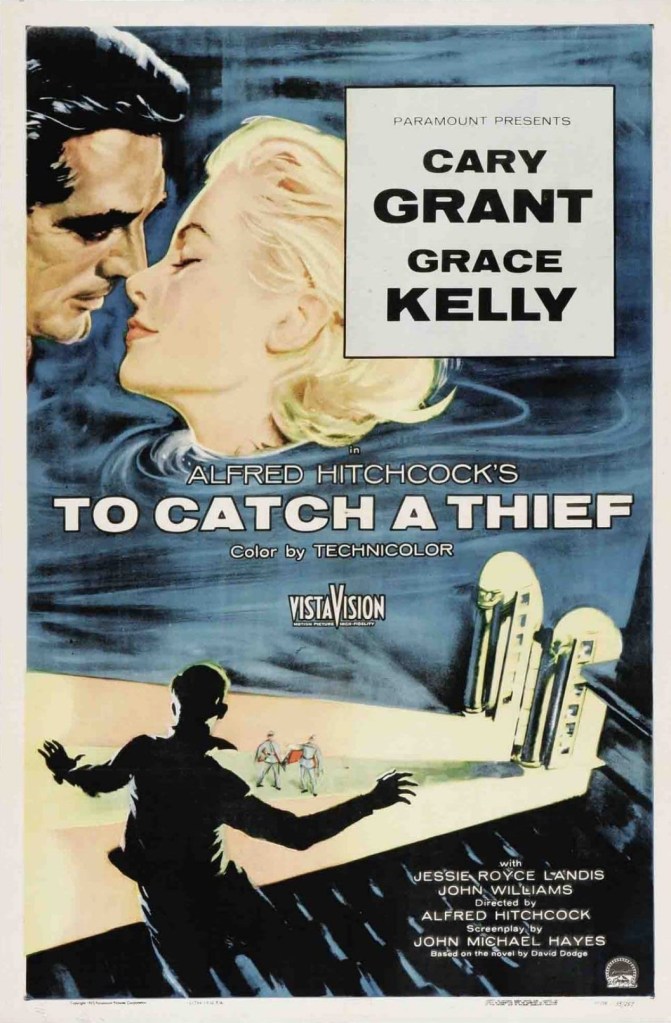
For The Master Of Suspense Blogathon, I was originally going to review the 1958 classic, Vertigo. I selected this film because it had been recommended by one of my readers. Unfortunately, my plans fell through at the last minute. So, I had to quickly choose an alternative. As I looked back at the blogathon’s participant list, I discovered the 1955 film, To Catch a Thief, hadn’t been selected. That is the film I am now reviewing for The Master of Suspense Blogathon. I have seen some of Alfred Hitchcock’s movies before this event. From what I know of To Catch a Thief, the 1955 production is different from other titles such as Psycho and Rear Window. But will this difference impact the quality of the film? Keep reading my review in order to solve this mystery!

To Catch a Thief poster created by Paramount Pictures

Things I liked about the film:

The acting: In To Catch a Thief, Cary Grant portrayed John Robie, a former jewel thief looking to clear his name. A man of suave charisma, John was afraid of being accused of something he didn’t do. But he never lets this fear get to him. Instead, with the talents of Cary Grant, John was confident and intelligent. Grace Kelly was also cast in To Catch a Thief, portraying Frances Stevens. Frances carried herself with dignified confidence. However, this confidence did not come across as snobbish or arrogant. It added to Frances’ likability, along with her gentle demeanor and respectful elegance. Danielle Foussard is a friend of John’s. Portrayed by Brigitte Auber, Danielle had a spunky streak in her, adding liveliness to her and John’s interactions. A scene I really liked was when John, Frances, and Danielle are swimming in the ocean together. This scene perfectly showcased their personalities, as their banter bounced among each other like a soaring beach ball. What made that scene great to watch was the joining of the acting talents of Cary Grant, Grace Kelly, and Brigitte Auber!

The scenery: Most of the car chases in To Catch a Thief are captured in long, establishing shots. This is very different from car chases in other films, where the chases are shown in medium or close up shots. To Catch a Thief’s approach to car chases emphasizes the scenery surrounding these chases. Looking back on this film’s scenery, I can understand why To Catch a Thief’s creative team would make that decision. With the majority of the production filmed in France, the story shows pieces of the French countryside and seaside. Giant green mountains and deep blue waters present an isolated oasis. A smattering of orange roofed houses perched on these mountains add to the movie’s vibrant color palette. On the French seaside, bright yellow sands welcome the deep blue waters of the ocean. Most of the story’s exterior shots feature a blue sky with a handful of clouds. Even the flowers are appealing bursts of color, boasting shades of red, pink, and even purple. To Catch a Thief is a pretty looking movie and it knows it!

The dialogue: During discussions of Alfred Hitchcock’s movies, use of music, cinematography, and lighting are typically talked about by fans and film enthusiasts. But one area of film-making I feel is overlooked, specifically when it comes to Alfred’s work, is the dialogue. This element of story-telling was a pleasant surprise in To Catch a Thief! It not only suited the characters respectively, it also sounded like the screenwriters put a lot of thought into what the characters told each other. While driving through the French countryside, John and Frances are discussing Frances’ past. As the discussion carries on, John accuses Frances of looking for a husband on her trip. But Frances responds by saying, “The man I want doesn’t have a price”. This statement represented the respectful elegance Grace consistently carried throughout the film. It also hinted at foreshadowing.

The Master Of Suspense Blogathon banner Maddy from Classic Film And TV Corner

What I didn’t like about the film:

Limited amount of urgency: At the beginning of To Catch a Thief, John learns he is accused of stealing valuable jewelry. He evens claims to have ten days in order to clear his name. You’d think with this tight timeline, there would be a strong sense of urgency in the story. But this urgency to find the truth is, unfortunately, inconsistent. Instead, more emphasis is placed on the scenery, the romance, and the “finer things in life”. While the mystery was resolved, the limited amount of urgency held the story’s suspense and intrigue back.

A small amount of suspense and intrigue: Alfred Hitchcock’s productions are known for incorporating suspense and intrigue. This reputation has earned Alfred the title of “Master of Suspense”. In To Catch a Thief, however, suspense and intrigue were only served in small amounts. Part of this problem results from the limited amount of urgency I previously talked about. Another reason for this problem is how suspense and intrigue were used sparingly instead of evenly spread out throughout the story. It got to the point where I almost forgot this story had a mystery.

Lack of suspects: A typical mystery will include a collection of suspects, individuals who may or may not have a reason to be the guilty party. These characters are presented as uniquely as possible, in order to help the audience remember them and their reasoning. To Catch a Thief lacked this ingredient. Because the mystery was not as prioritized as in other works from Alfred Hitchcock, no room was made to include suspects. There was a red herring in To Catch a Thief, but this reveal felt random. Even the reveal of the mystery’s guilty party wasn’t completely surprising.

Illustration of Paris, France created by Freepik at freepik.com. <a href=”https://www.freepik.com/free-photos-vectors/travel”>Travel vector created by freepik – http://www.freepik.com</a>. Image found at freepik.com.

My overall impression:

As I said in this review, To Catch a Thief is a pretty looking movie and it knows it. While the scenery was the film’s crown jewel, there were other aesthetically pleasing components of this production, like the costume design and the set design. When it comes to the story, though, it wasn’t as suspenseful and intriguing as other Alfred Hitchcock movies. The visuals ended up overshadowing the script. I will give Alfred Hitchcock credit where it’s due, as it seems like he tried to take a different approach to cinematic story-telling. But out of his films I have seen, I prefer titles like Strangers on a Train.

Overall score: 6.3-6.4 out of 10

Have you seen To Catch a Thief? Which titles of Alfred Hitchcock’s do you prefer? Please tell me in the comment section!

Have fun at the movies!

Sally Silverscreen

Sally Solves a Mystery: Ana Lucia’s Ring

Imagine: you’re re-watching your favorite season of a popular tv show. As you’re watching, one of your favorite characters appears on the screen. But upon this re-watch, you notice something different about this character. It’s a small detail that never crossed your mind before. Because the character in question is your favorite, you’re familiar with their story. This leads you to realize the aforementioned small detail doesn’t make sense with what you know about your favorite character. There are no clarifications included in the season you’re watching. You search the internet for answers, but walk away empty handed. You know this detail was given to your favorite character for a reason. And yet you don’t know what it is.

This is Sally Solves a Mystery, my new series where I will explore television-related topics. Through these editorials, my goal is to solve mysteries that may have been overlooked. I can’t promise I’ll always find the answers by the end of an editorial. But if my writing raises awareness on a given topic, that will be a step in the right direction! To start this series, I will cover a mystery I haven’t seen or heard fans of Lost bring up. Ana Lucia Cortez is a character who was officially introduced in the second season of Lost. Throughout her time on the show, she consistently wears a ring on her wedding ring finger. Yet she admits she isn’t married, and there’s no evidence she was ever engaged. Lost is a television program that is known for piling mysteries onto its plate. However, the mystery of Ana Lucia’s ring has been buried by the show’s other unsolved mysteries. With the help of quotes, screenshots, and examples from Lost, I will address the mystery surrounding this small detail, bringing up theories and questions along the way!

Lost title card image created by Bad Robot, Touchstone Television, and ABC Signature. ‘Ana Lucia’s Ring: A Lost Mystery’ image created by Sally Silverscreen

The Ring in Question

Before getting into any questions or theories related to this mystery, we need to discuss the ring itself. Ana’s ring is a thick, silver band that she consistently wears on her wedding ring finger. Despite its placement, the ring does not appear to be a typical engagement ring, as it doesn’t bear any stones. Upon closer inspection, though, the ring seems to boast different designs in different scenes. In the episode, “Two for the Road”, Ana’s ring is visible as she is cleaning a small cut on her head. The ring looks like it has a flat, clear surface, with an etched butterfly design on the side. In “The Other 48 Days”, as some of the dead Tailie passengers are being buried, Ana’s ring continues to present an etched design. But this time, it looks as if it could be a flower or gun’s revolver. The ring showcases a simpler design in “Collision”, while Ana is holding Sayid hostage in the jungle. This design is a curved line, almost looking like the letter V in cursive. Going back to the episode, “Two for the Road”, Ana’s ring can, once again, be seen as she is preparing fruit for Ben/Henry. In this scene, the ring bears a more complicated design, featuring an oval surrounded by deep grooves. Two deep lines are visible on the ring’s side, giving the impression raised triangles are included in the overall design. With this said, could the ring bearing different designs simply be a production error or could these differences be intentional?

Screenshot of Ana’s ring taken by Sally Silverscreen. Image from “Two for the Road”
Screenshot of Ana’s ring taken by Sally Silverscreen. Image from “The Other 48 Days”
Screenshot of Ana’s ring taken by Sally Silverscreen. Image from “Collision”
Screenshot of Ana’s ring taken by Sally Silverscreen. Image from “Two for the Road”

Theory #1: A Flipped Image

Creating a television show is not only a business, it’s a complicated equation involving many different avenues and possibilities. Because television is a visual medium, various film-making techniques need to be considered. One of these techniques is Reverse Motion, where, according to Beverly Boy Productions, “action of the film is shown backwards in a reverse motion scene”. This means a filmed image will be flipped and presented in the opposite direction. Reverse Motion is what led me to believe Ana’s ring was originally filmed on her right hand, with the images flipped to appear the ring was on Ana’s left hand. However, evidence reveals this theory is debunked. The Director of Photography for Lost, Larry Fong, admitted Reverse Motion was utilized on the show. But this technique was specifically used whenever characters were driving in Australia. In the book, Lost: Messages From The Island, Larry talks about filming Australian scenes in Hawaii, saying “That’s not such a big deal on the set but we couldn’t get any cars that had steering wheels on the wrong side for certain scenes so we shot everything and reversed the film”. When discussing filming the show’s pilot episode, specifically the scene where Kate, portrayed by Evangeline Lilly, drives a truck in Australia, Larry says “We had to put jewelry on the other side of her; for the guy who had a fake arm we had to put the fake arm on the other arm. Everybody was so confused but all I did on the video monitor, was flip a switch and it reverses it. It wasn’t that hard and it is funny how the simplest solutions come out”.

While Reverse Motion presented the illusion of characters driving in Australia, this illusion can be broken if an actor or actress has a visible facial marking, tattoo, or birthmark. Michelle Rodriguez, the actress who portrays Ana, broke this illusion in the episode “Two for the Road”. Michelle has what I will call a “freckle”, for the sake of this editorial. This “freckle” can consistently be seen on the left side of Michelle’s face. But in “Two for the Road”, as Ana is driving Christian Shephard to an Australian bar, the “freckle” is on the right side of Michelle’s face. The use of close-ups prevented Ana’s ring from being visible in that scene. Because of the “freckle” and because of Larry admitting to using Reverse Motion, this proves Ana’s ring was always meant to be on her wedding ring finger. Question is, why?

This screenshot serves as just one example of how Michelle’s “freckle” can be consistently seen on the left side of her face. Screenshot taken by Sally Silverscreen.
In this screenshot, Ana is in Australia, parked outside a bar. Because of Reverse Motion, Michelle’s “freckle” is on the right side of her face. Screenshot taken by Sally Silverscreen.

Theory #2: A Peek into the Past

One of the trademarks of Lost is the use of flashbacks. These flashbacks have explored the backstories of the main characters from the island. On a few occasions, an accessory has opened the door to a specific character’s backstory. Two examples are Jack’s tattoo in the episode, “Stranger in a Strange Land”, and Mr. Eko’s cross necklace in “The 23rd Psalm”. These facts lead me to believe Ana’s ring may have been intended to explore a part of her past. Unclarified quotes said by Ana herself fuel this theory as well. In the episode, “The Whole Truth”, Ana tells Sayid:

“People don’t like me. I tried to get them to most of my life. I guess I just gave up a while back. I mean, I am what I am.”

This quote leaves me with several questions. Who are these “people”, and why don’t they like Ana? What exactly caused her to give up? What does she mean when she says “I am what I am”? While in the Hatch with Ben/Henry in the episode, “Two for the Road”, Ana tells him:

“I’ve been around a lot of killers in my life. You know what surprises me the most about them? How much they love to talk”.

Upon first hearing Ana’s quote, one would assume she’s referring to the criminals she’s arrested in her police career. But notice how she says “I’ve been around a lot of killers”, not “I’ve arrested a lot of killers”. Could any of these “killers” be the reason why Ana knows so much information about the Army knife she and Goodwin encounter in the episode, “The Other 48 Days”? In that episode, Ana wonders how the Army knife in Goodwin’s possession got on the island. While she and Goodwin are examining the knife, Ana is able to correctly identify the knife’s connection to the U.S. Military. She is also able to locate the knife’s tank stamp, as well as estimate how old the knife is. One might automatically assume Ana came across one of these knives while being a police officer in Los Angeles. But if this were the case, why wouldn’t she have mentioned this during her assessment of the knife?

With Ana’s unclarified quotes, knowledge about the Army knife, and police career, I’m speculating Ana’s ring may have revealed she did some undercover police work she might be ashamed of. This would explain why she’s “been around a lot of killers” and why she feels people don’t like her. Her knowledge about the Army knife might be explained if this theory were true. If she did undercover police work, she would have effectively used her experiences to successfully trick characters like Sawyer into giving her what she wants.

This screenshot presents the Army knife Ana knew several important facts about, including where the knife’s tank stamp is located. Screenshot taken by Sally Silverscreen.

Theory #3: A Connection Between Ana and Sawyer

Sawyer is one of Lost’s main characters, consistently appearing in all six seasons of the show. One of his “quirks” is making pop cultural references, especially those from the Western genre. In season two, Sawyer made some pop cultural references to Ana. In fact, out of the six pop cultural references made to Ana throughout the second season, Sawyer gave her four of them. In the episode, “…And Found”, Sawyer asked Ana if she was married, which she responded by saying “No”. It needs to be noted that Sawyer is the only character to ever question Ana’s relationship status. What should also be noted is Sawyer is the first main character Ana crosses paths with before arriving on the island, crashing into Christian’s car door in “Two for the Road”.

As I previously stated, Sawyer makes pop cultural references, including those from the Western genre. Some of these references have related to programs such as Howdy Doody, Mister Ed, and Little House on the Prairie. But what if one of those references was meant to come from The Lone Ranger? In the 1981 movie, The Legend of The Lone Ranger, Tonto explains the importance of silver bullets to The Lone Ranger. During this explanation, Tonto says;

“Silver is pure. It’s been a symbol of justice and purity since The Year of the Sun”.

Now, you’re probably wondering, “What does The Lone Ranger have to do with Ana”? The answer lies in her ring. As already mentioned in this editorial, Ana is a police officer. Throughout her time on Lost’s second season, she has tried to seek out justice to varying degrees, such as when, in “The Other 48 Days”, Ana digs a pit and places Nathan in it, believing he kidnapped the children in their Tailie group. Plus, Ana’s ring just so happens to be silver. Could Sawyer have planned on calling Ana “Lone Ranger” or “Silver Bullet”? If “Lone Ranger” was Sawyer’s nickname for Ana, her statements about being alone in the episode, “Collision”, would make sense.

In the episode, “The Long Con”, a series of flashbacks reveal Sawyer sold fake jewelry in an attempt to pull off a con. During one of these flashbacks, he tries to sell chain necklaces to unsuspecting customers. But what if he sold rings at one point? If this were the case, perhaps someone gave Ana her silver ring, purchased from Sawyer. But if Ana knew the ring was fake, why would she keep it, let alone continue to wear it? And if Sawyer did sell that ring, why didn’t he notice it or comment on it? Maybe the ring was purchased from Sawyer as part of an undercover investigation, with Ana keeping the ring as a memento. Perhaps Sawyer didn’t mention the ring because he didn’t realize Ana may have played a role in the investigation.

In a screenshot from “The Long Con”, Sawyer creates prices for fake chain necklaces. Could he have sold rings at one point? Screenshot taken by Sally Silverscreen.

Ana and the Number Three

4 8 15 16 23 42. This set of numbers has become a staple on Lost. The show’s creative team has incorporated these numbers into the story, from Hurley’s winning lottery ticket to some of the characters’ plane seats. During my investigation, there is one number that kept frequently popping up; the number three. Not one of the aforementioned numbers, the number three has been associated with Ana throughout her time on the show. In fact, I’ve compiled a list of all the times the number three has appeared in Ana’s story.

“Exodus Part 1”

  • During Jack and Ana’s first interaction together, Jack asks Ana three questions: who Ana is, what her name is, and why she’s drinking Tequila and Tonics at ten to noon
  • Ana’s ring can be clearly seen three times
  • Ana’s full name is Ana Lucia Cortez, three names. Ana’s first name not only contains three letters, her first and middle name contains a total of three As
  • Ana’s first appearance on Lost was in the first season’s twenty third episode
  • Ana’s seat on Oceanic Flight 815 is 42F. The letter F is comprised of three lines

“Orientation”

  • Ana’s ring can be clearly seen three times
  • When Ana enters the pit, three guys from the main camp are stuck there: Sawyer, Michael, and Jin
  • Ana appears in three scenes total
  • Ana’s first appearance in season two is the third episode

“Orientation” and “Everybody Hates Hugo”

  • Ana hurts Sawyer three times: she punches Sawyer in the pit (“Orientation”), she throws a rock at his head (“Everybody Hates Hugo”), and Ana punched Sawyer again after he refused to put down a rock (“Everybody Hates Hugo”)

“Everybody Hates Hugo”

  • Ana tells Sawyer he has three seconds to drop the rock in his hand
  • Ana touches the DHARMA shelter door three times; two knocks, one scratch. This action was shown on screen three times

“…And Found”

  • When splitting into groups to find food, Ana caught fish with Bernard and Jin, a group of three
  • Ana asks Jin three questions: “You want to help us out over here”?, “You want to eat”?, “Does it look like I speak Korean”?

“Abandoned”

  • Ana tells Michael “The Others” first took three tail section passengers. This detail was also brought up in “The Other 48 Days”

“The Other 48 Days”

  • Ana is told three tail end passengers are missing
  • Ana asks Goodwin three questions as they’re walking up to higher ground: “Why do you think they’re doing this”?, “Don’t you ever wonder why they attack us”?, “Why do you think they take some of us and not the others”?
  • When answering Ana’s third aforementioned question, Goodwin explains the three qualities that caused the first three Tailie passengers to be kidnapped: athletic, tough, and poses a threat to “The Others”
  • While investigating the Army knife, Ana brings up three facts about the knife; its U.S. Military connection, its tank stamp location, and its likely age

“Collision”

  • On Ana’s police badge, the number three is in the six number digits
  • On the door of Ana’s mom’s office, the number 315 can be seen
  • While Ana and Mike are riding in the police car, Mike asks Ana three questions; “So that shrink give you any good drugs”?, “D’ya miss me”?, “You want me to go kick his ass for you”?
  • Ana said on the police dispatch she and Mike were three blocks away for the domestic disturbance call
  • On Ana and Mike’s domestic disturbance call, they encounter a family of three; a man, woman, and baby
  • While keeping an eye on Sayid, Ana pops the magazine into her gun three times
  • When Ana crosses paths with Jason in a parking lot, she told him three things; “Hey”, “Jason”, “I was pregnant”. The third statement consists of three words.
  • When Ana is holding Sayid hostage in the jungle, she tells Libby “I’m already alone”. During her conversation with Sayid, Ana tells him “I feel dead”. These statements contain three words

“What Kate Did”

  • Ana asks Jack three questions; “Where’s the tonic”?, “You sure you want to waste that on me”?, “You gonna try to convince me that everyone here doesn’t hate me”?

“The 23rd Psalm”

  • Ana makes only one appearance in this episode, where the number twenty-three is in the title

“Fire + Water”

  • Ana’s ring can be clearly seen three times
  • When Sawyer and Kate spot Ana and Jack leaving the jungle, Sawyer tells Kate “That’s the third time I’ve seen them walking out of the jungle”

“One of Them”

  • Ana speaks to Sayid three times: “Where’s Jack”?, “There. See”?, “What”?

“The Whole Truth”

  • Locke tells Ana the man in the Hatch (Ben/Henry) has been down in the Hatch for three days
  • Ana, Sayid, and Charlie (a group of three) go on a trip to locate Ben’s/Henry’s hot air balloon

“Lockdown”

  • Ana made three appearances in this episode
  • During their search for Ben’s/Henry’s hot air balloon, Sayid tells Ana they’ve been searching for the balloon for three hours

“Dave”

  • When Ana and Sayid are interrogating Ben/Henry, Sayid tells Ben/Henry he has three seconds to answer his question

“S.O.S.”

  • “Ana spoke to Locke three times; “Hey”, “I pressed your button”, “Where’d you go”? Ana’s question contains three words.
  • This episode name contains three letters and three periods

“Two for the Road”

  • Ana was told by her mom Jason’s body was found a little after three in the morning
  • In Ana’s Australian hotel room, her clock reads 3:51
  • While Jack is cleaning his medical tools in the Hatch, Ana speaks to him three times; “Hey”!, “You’re back”, “So, The Others. They didn’t show up”?
  • When Michael is sharing information about The Others, Ana asks him three questions; “What about everyone else they took”?, “Cindy”?, “Did you see any other kids”?

“Dave”, “S.O.S.”, and “Two for the Road”

  • Ana sits on the Hatch’s couch a total of three times; once in “Dave”, once in “S.O.S.”, and once in “Two for the Road”

As this very long and detailed list shows, Ana is often associated with the number three. In fact, this association doesn’t feel like a coincidence. In the special feature segment, “Mysteries, Theories, and Conspiracies” from the Lost season two DVD, Michelle Rodriguez said the following:

“You know, numbers are interesting. Alchemy could have something to do with it too. I think they use a lot of alchemy in this show too. They hint at it. They hint, you know, stars and signs and masonry. A lot of that symbolism is in there”.

If there truly is symbolism behind Ana’s ring and her connection to the number three, could the ring itself and the number three be linked in some way?

The number three is circled in this screenshot of Ana’s police badge is emphasize its existence. Screenshot taken by Sally Silverscreen.
The number three is circled in this screenshot of Ana’s mom’s office door to emphasize the number’s existence. Screenshot taken by Sally Silverscreen.
Each character in this screenshot is given a number to emphasize how they make up a group of three. Screenshot taken by Sally Silverscreen.

Different Versions of Ana

Time is an element experimented on in Lost. Not only were flashbacks used to explore characters’ backstories, “flashforwards” predicted how some characters’ futures would turn out and “flashsideways” broke different time barriers. Despite Ana only consistently appearing in the show’s second season, she did appear in an episode from seasons five and six. Based on where the ring is placed on her hand, it seems like there are different versions of Ana. In the episode, “Exodus Part 1”, and throughout the second season, the ring is on Ana’s wedding ring finger. But in the season five episode, “The Lie”, when Ana stops Hurley on the side of the road, she’s not wearing the ring at all. Ana also acknowledges the fact she’s deceased, telling Hurley “What if I were real” and “Oh yeah, Libby says hi”. The season six episode, “What They Died For”, shows the ring back on Ana’s left hand. But this time, it’s on her middle finger. The scene she appears in is part of an alternate universe, showing the characters as if the pilot episode’s plane crash had never happened. These versions of the same character make me wonder if the ring’s purpose evolved from its original intent, showing the differentiation between each version? The fact there seems to be three different versions of Ana highlights the possible connection between the ring and the number three I mentioned in the previous statement.

This is a screenshot from “Exodus Part 1”. Ana’s ring is circled to emphasize its presence. Screenshot taken by Sally Silverscreen.
Throughout season two, Ana consistently wore the ring on her wedding ring finger. This screenshot from “…And Found” serves as one example. Screenshot taken by Sally Silverscreen.
This screenshot from “The Lie” shows Ana not wearing the ring at all. Screenshot taken by Sally Silverscreen.
In this screenshot from “What They Died For”, Ana’s ring is now on her middle finger. The number three is also featured on her police badge. Screenshot taken by Sally Silverscreen.

Lost is one of the most ambitious shows of our time. In fact, some people might argue the show was too ambitious. The mysteries surrounding the island are what intrigued viewers to watch Lost. But limited answers left the audience frustrated and confused. Because the mystery of Ana Lucia’s ring has been overlooked, there hasn’t been a demand for an explanation. Before the publication of this editorial, there was no speculation around the ring itself. With everything said in this article, my current speculation is how Ana’s ring was originally intended to serve as a peek into a part of Ana’s past. In this part, Ana did some undercover police work involving stolen or fake jewelry, with Sawyer a part of the equation. Something happened during the investigation, causing Ana to feel ashamed of the experience. Since Ana died toward the end of the second season, the ring’s purpose evolved to showing the differentiation between different versions of Ana. However, as of this editorial’s publication, this mystery is currently unsolved.

To read the full description of Reverse Motion, you can visit Beverly Boy Productions’ website at this link:

Take 3: Charlie Chan at Treasure Island Review

‘Movies featuring beaches or waterfront scenes’ is March’s theme for Genre Grandeur. I could have selected a Hallmark title, but I chose a different film instead. This seems to be a recurring theme on 18 Cinema Lane this year. Back when I published my editorial, Oh, The Places She’ll Go: A Map of Esther Williams’ Travels, Paddy Lee suggested I check out Charlie Chan at Treasure Island. Since then, I’ve been trying to find the right time to watch the film. When I searched through my movie recommendation board on Pinterest, I knew it would be the perfect movie to write about for this month’s Genre Grandeur! Before Paddy Lee’s suggestion, I had never heard of the Charlie Chan series. From what I’ve gathered, this is a mystery series from the 1920s to the 1940s. A made for TV movie, The Return of Charlie Chan, was released in 1972 and the last movie in the series, Charlie Chan and the Curse of the Dragon Queen, premiered in 1981. Starting this journey in the middle of the series, it’s time to review Charlie Chan at Treasure Island!

Charlie Chan at Treasure Island poster created by Twentieth Century Fox

Things I liked about the film:

The acting: I’ve seen a handful of Cesar Romero’s projects from his filmography. Out of those projects, he has carried his character with charisma. In Charlie Chan at Treasure Island, Cesar portrayed a magician named Rhadini. Not only did Rhadini have the charisma I’ve come to expect from Cesar’s performances, he also contained a strong amount of showmanship you’d expect from a magician! Consistency worked in Cesar’s favor, with his performance appearing effortless. Another acting performance that came across as effortless was Victor Sen Yung’s! Portraying Charlie’s son, Jimmy, Victor gave his character a great on-screen personality. His expressions while interacting with other cast members wove together seamlessly. A great example is when Jimmy is helping Charlie get ready for a dinner party. As he is interacting with his father, Jimmy’s emotions transition from pride to confusion to determination without missing a beat! Despite appearing in the film for a limited amount of time, I liked Billie Seward’s portrayal of Bessie Sibley! She had great control over her character’s emotions, allowing her talents to go toe-to-toe with the talents of the other cast members.

The inclusion of magic: As I just mentioned in this review, Rhadini is a magician. He performs magic tricks on a few occasions within the story. These tricks range from a disappearing bird to a levitating table. There were even times when the secrets behind these tricks were revealed, showing the audience how the illusion was achieved. This was a pleasant surprise for me, as I didn’t expect any magic to be featured in the movie. Its inclusion in the story added a unique aspect to the film’s identity!

The humor: In past reviews, I’ve brought up how some mystery films have incorporated humor into their story, as humor gives the audience a break from the heaviness of the mystery itself. Honestly, I was surprised by the inclusion of humor in Charlie Chan at Treasure Island. This is because I was not expecting this aspect to be as strong as it was in the story. In Charlie Chan at Treasure Island, Jimmy was the comic relief. Some of the things he said were genuinely hilarious. During Rhadini’s magic show, Jimmy is recruited to participate in the levitating table trick. Horrified at the idea of being lifted off the ground, Jimmy tells his father, “Oh, but flying makes me seasick, Pop”.

Image of magic show essentials created by Macrovector at freepik.com. <a href=”https://www.freepik.com/free-photos-vectors/card”>Card vector created by macrovector – http://www.freepik.com</a>. Image found at freepik.com.

What I didn’t like about the film:

A misleading title: Charlie’s adventures in Treasure Island are the reason why I chose this movie for March’s Genre Grandeur. Because of the film’s title, I expected Charlie to primarily spend his time at the titular location. But when I watched the movie, I discovered that wasn’t the case. While there was an aerial shot of Treasure Island, not much time was spent there. In fact, the characters talked about Hawaii, specifically Honolulu, more than Treasure Island. With that said, it made me wonder why this movie didn’t take place in Hawaii?

Charlie’s outdated “quirk”: In my editorial, Why ‘Francesca Quinn, PI’ is the Worst Hallmark Movie I’ve Ever Seen, I talked about how fictional detectives have a “quirk”, something that sets a detective apart from other sleuths. Charlie Chan does have his own “quirk”. However, it seems very outdated. Throughout the story, Charlie speaks in proverbs. His speech also sounds like broken English. I know the 1930s was a different time compared to the 2020s. But these factors make Charlie’s “quirk” seem stereotypical.

A limited amount of urgency: The main mystery in Charlie Chan at Treasure Island is a murder mystery, as a guest on a plane mysteriously dies during the trip. Charlie and the San Francisco police department discover a series of deaths that took place around the time of the aforementioned murder. But most of the story focuses on the mystery of who “Dr. Zodiac” is, a physic who is ripping off his clients. This focus caused the overall story to have a limited amount of urgency.

Image of Hawaiian poster created by Freepik at freepik.com. <a href=”https://www.freepik.com/free-photos-vectors/poster”>Poster vector created by freepik – http://www.freepik.com</a>. Image found at freepik.com.

My overall impression:

As someone who actively seeks out programs from the mystery genre, I’m always looking for titles I can recommend to my readers. However, I am aware of how mystery films and shows are not created equally. Charlie Chan at Treasure Island was my introduction to the world of Charlie Chan. Unfortunately, this introduction was not as strong as it could have been. While there were aspects of the movie I liked, such as the acting and the humor, the story itself was weak. The misleading title made me wish the film had taken place in Hawaii. Charlie’s “quirk” also makes the story dated on arrival. I’m not sure if I’ll continue watching this series. Perhaps if a particular title fits a blogathon theme, then maybe I will check another film out.

Overall score: 6.7 out of 10

Have you seen any films from the Charlie Chan series? Are there mystery films you’d like to see reviewed on 18 Cinema Lane? Tell me in the comment section!

Have fun at the movies!

Sally Silverscreen
Take 3: Hallmark Hall of Fame’s Caroline? Review + 460 Follower Thank You

As I seek out Hallmark’s “older” content (“older” as in older than ten years old), I find myself gravitating toward Hallmark Hall of Fame’s VHS exclusive titles. For those who are not familiar with the history of Hallmark Hall of Fame, there are several movies from this collection that were only released on VHS. Caroline? from 1990 is one of those films. All I knew about this particular title was how the story revolved around a woman claiming to be a long-lost family member. Since I haven’t reviewed a Hallmark Hall of Fame movie in several months, I thought reviewing Caroline? for my latest Blog Follower Dedication Review would be perfect! Over my five years of movie blogging, I’ve noticed how my Hallmark related content has become some of my most popular content. In fact, one of my Hallmark Hall of Fame reviews, After the Glory, has garnered over a thousand views and counting! But will I like Caroline? as much as I liked 1992’s After the Glory? Keep reading my review in order to find out!

Hallmark Hall of Fame’s Caroline? poster created by Hallmark Hall of Fame productions, CBS, and Republic Pictures Home Video

Things I liked about the film:

The acting: When portraying a titular character, that movie’s actor or actress needs to use their talents to not only carry the production, but also shine on their own. While I’m not familiar with Stephanie Zimbalist’s filmography, she did succeed in this task! In Caroline?, Stephanie’s portrayal of the titular character was so naturally presented, her interactions with the other characters were fluid. One great example is when Caroline is being questioned about her past whereabouts. In a calm voice, she answers every question given to her. As she sits upright in her chair, Caroline recounts how she survived a plane crash, looking away from Grace and Paul Carmichael as she’s remembering what happened. When Paul confronts Caroline over her selfishness, her face effortlessly turns to sadness. Caroline’s mouth conforms into a frown and her eyes appear to be on the verge of tears.

While watching Caroline?, I was fascinated by the interactions among the characters. This was achieved because of the strength of the cast! But two performances that impressed me the most came from Shawn Phelan and Jenny Jacobs! When a younger character plays a significant role in a story, the likability of that character can depend on an actor or actress’ performance. With Heidi and Winston, their interactions felt so realistic! A perfect example is when Winston is looking through a family photo album. Curious about Caroline’s true identity, Winston sneaks into his father’s office in the middle of the night. Several minutes later, Heidi comes into the office, wanting to look at the photo album as well. Throughout this scene, there is tension between Winston and Heidi. Winston is frustrated by Heidi’s constant questions and comments about the photos. He also does not like the fact he can’t look at the photo album independently. Meanwhile, Heidi is frustrated at the idea of being left out of Winston’s activity. She even looks defeated after Winston doesn’t believe her claims that she can read. With a combination of vocal inflections, facial expressions, and emotions, both Shawn and Jenny were able to present a sibling relationship that felt believable!

The element of mystery: As I mentioned in the introduction, Caroline? is about a woman claiming to be a long-lost family member. Even though I wouldn’t consider this film as a part of the mystery genre, the mystery of Caroline’s identity is spread out throughout the story. This creative decision allowed the audience to witness the interactions between the characters. Through these character interactions, the audience is left guessing if Caroline is who she says she is. All I can about the mystery’s resolution is it ended on a plot twist I didn’t see coming. The combination of these creative decisions presented a movie that was captivating to watch!

The messages and themes: Hallmark films, especially Hallmark Hall of Fame productions, are known for featuring strong messages and themes that most people can support. Caroline? is no different, as this story contains a collection of great themes and messages! While in the Carmichael family’s attic, Winston and Caroline are talking about the past. During their interaction, Winston tells Caroline, “My history teacher tells me that the secret to the future is often found in the past”. This quote resonated with me, as I, more often than not, talk about films from the past on 18 Cinema Lane! Later in the movie, Winston is frustrated with Heidi because she won’t receive academic assistance from Caroline. When Winston comes to Caroline with his frustrations, Caroline tells him, “I can’t force her to. I can’t help her unless she wants me to”. That quote alone highlights the importance of respecting one’s wishes. At the same time, Winston’s desire to see his sister academically succeed shows how necessary it is to support those you care about.

The differentiation of time: The story of Caroline? features two time periods: the “present” (1990, when the film was released) and the past (late 1940s to early 1950s). Because of choices in styling and presentation, these time periods appeared distinct from one another. In one scene, Mr. and Mrs. Carmichael (Winston and Heidi’s parents) are debating the legitimacy of Caroline’s claims. This scene takes place in their bedroom, which contains two separate beds. That specific choice in the movie’s set design is a strong reflection of the ‘40s to ‘50s, as it was more common for married couples to have separate sleeping arrangements. It also boasts the historical accuracy between these aforementioned time periods.

Library image created by Freepik at freepik.com. <a href=’https://www.freepik.com/free-photo/stack-of-books-on-library-desk_2509490.htm’>Designed by Freepik</a>. <a href=”https://www.freepik.com/free-photos-vectors/school”>School image created by Freepik</a>. Image found at freepik.com.

What I didn’t like about the film:

Questions left unanswered: Any story containing a mystery will raise some questions within the script. Usually, these questions are answered as the film progresses. But in Caroline?, there were some questions I wish were addressed. While shopping at a bookstore, Winston purchases a book of poems for Caroline. Yet, at Caroline’s party, he gives the book to Heidi. Speaking of Heidi, she is called “Heidi” by her mother, despite her name being Hilary. These are two examples of questions that weren’t explained.

Fancy jewelry image created by Freepic.diller at freepik.com. <a href=”https://www.freepik.com/free-photos-vectors/wedding”>Wedding photo created by freepic.diller – http://www.freepik.com</a>. Image found at freepik.com.

My overall impression:

The story of a character claiming to be a long-lost family member is nothing new. The ‘90s, the decade when Caroline? was released, saw the premiere of 1997’s Anastasia, which revolves around this same type of story. But Hallmark Hall of Fame’s presentation makes several creative decisions that allow their story to travel down different avenues. It goes beyond simply figuring out if the protagonist is the claimed long-lost family member, as the film discusses reaching one’s full potential and helping those that need help. As I mentioned in my review, I was fascinated by the interactions among the characters because of the strength of the cast. That combined with the intriguing nature of the story is what kept me invested in the film! Caroline? is a movie I was Hallmark had re-released on DVD. In fact, I wish more people knew about this movie. With that, I’d like to thank all of my followers, as you are the reason why this review exists!

Overall score: 9 out of 10

Have you seen or heard of Caroline? Which Hallmark Hall of Fame movie would you like to see reviewed on 18 Cinema Lane? Please tell me in the comment section below!

Have fun at the movies!

Sally Silverscreen
Why ‘Francesca Quinn, PI’ is the Worst Hallmark Movie I’ve Ever Seen

Once upon a time, in 2018, I declared the Hallmark Hall of Fame title, Back When We Were Grownups, as the worst Hallmark movie I had ever seen. Since publishing that list, I honestly didn’t think any movie would dethrone the 2004 film. That all changed when I saw Francesca Quinn, PI. At the end of 2022, when I released my list of the worst movies I watched, the Hallmark Movies & Mysteries film was placed at number one. While I explained why the film earned the top spot on my list, I didn’t discuss why Francesca Quinn, PI is now the worst Hallmark movie I’ve ever seen. As a Christmas present, J-Dub, from Dubsism, nominated me for The Pick My Movie Tag. My mission was to write about a movie I couldn’t stand. This gave me the perfect opportunity to explain why I don’t like Francesca Quinn, PI. Since this editorial is solely based on my opinion, I need to make it clear that everything I say is not meant to be mean-spirited or disrespectful. Examples from the movie will be used to support my intended points. I’d also like to thank J-Dub for the nomination! Because of this tag, I’m now publishing my first editorial of 2023! This editorial is written for a tag, so all tag rules will be posted below.

The Tag’s Rules

  • Nominate one or more people to review the film or films of your choice. Or you can request they review something from a certain year, genre, or star. Everyone can review the same thing, or you can request each person cover something different. As long as it’s something they haven’t written about yet, you’re good.
  • Nominees are allowed to request a different pick for whatever reason no more than five times. Stuff happens. We all know it.
  • Nominees must thank the person who nominated them and provide a link their blog.
  • Nominees may nominate others to keep the tag going. Picking the person who nominated them is allowed, or they can nominate someone else. Maybe both.
  • All participants need to include these rules in their post, whether they’re nominees or picking nominees.
  • All participants should use the “Pick My Movie” banner or something similar in their posts.
  • Have fun!
The Pick My Movie Tag banner created by Rebecca from Taking Up Room

Exposition Dumping

Exposition is an important storytelling component in any story, whether it’s a stand-alone tale or a chapter in an established franchise. This component provides the audience with necessary information about the characters, setting, and overarching conflict. The best way for the audience to absorb this information is, in my opinion, to spread it out throughout the story. That’s not what happened in Francesca Quinn, PI. Within the first six minutes of the movie, the following characters are introduced:

Francesca (the protagonist)

Jim (Francesca’s dad)

Bill (Jim’s friend)

Wynton (Francesca’s childhood friend and detective partner)

Megan (Francesca’s ex-stepmom)

Carl (Francesca’s high school sweetheart and fiancé)

In just one scene, Francesca, Jim, Bill, and Wynton are rapidly introduced to the audience. Within those same first six minutes, Francesca, through a voice over, discusses the six murders Megan committed over the span of four years. Because the audience is receiving so much information in such a short amount of time, they aren’t given the opportunity to truly get to know the characters. They also aren’t given enough time to decide for themselves if they want to care about a particular character. The first movie in a potential series is intended to serve as a first impression for the audience, an indication of what they could expect from the story. With Francesca Quinn, PI’s creative team choosing to dump exposition onto their audience’s plates, that will cause viewers to feel overwhelmed.

Vintage detective desk photo created by Olivier Bourgeois at freeimages.com. Photo by <a href=”/photographer/ornicar69-54520″>Olivier Bourgeois</a> from <a href=”https://freeimages.com/”>FreeImages</a&gt; Image found at freeimages.com.

Francesca Herself

Since coming to fruition in 2001, Hallmark Channel has created several mystery series that would eventually lead to the rebranding of Hallmark’s second network. In these series, the audience follows a central protagonist who comes across as likable. This likability has worked in some series’ favor, expanding a story beyond three films. In the case of Francesca Quinn, PI, there are some factors working against the protagonist. Throughout the movie, Francesca speaks with a monotone voice, using very little emotional inflection. Most of the time, her face carries a blank, serious expression. With the material given, Mallory Jansen tries her best to give her character a wider range of emotion, smiling every once in a while. However, this attempt isn’t enough to make a good first impression on the audience.

Francesca’s limited expressions lead me to my next point; her weaker personality. When beginning a series, a protagonist’s personality could determine that story’s longevity. If the protagonist is presented as friendly, approachable, and even relatable, that could attract more viewers to follow the protagonist’s adventures. Showing a protagonist in various environments is a good way to showcase their personality. In the Aurora Teagarden series, the audience witnesses Aurora in both a professional and nonprofessional setting. Whether she’s trying to get along with her co-worker, Lillian, or interacting with the members of the Real Murders Club, viewers receive a more well-rounded glimpse into Aurora’s personality. Because Francesca’s story primarily revolves around her profession, the audience doesn’t get a strong idea of what her personality is really like. The fact Francesca does not have friends or hobbies outside of her occupation prevents her personality from shining. Another element Francesca’s personality is missing is charisma.

The most well-known detectives in pop culture have a “quirk”, something that sets them apart from other fictional detectives. A great example is Columbo, who is recognized for saying “and one more thing”. With Francesca Quinn, there are no “quirks” that help her stand out among Hallmark’s other detectives. As I previously mentioned, she doesn’t have any interests outside of her profession. She does not have a catchphrase that viewers could easily remember and quote. This missing ingredient is another reason why Francesca is not a likable and memorable protagonist.

Tools of a writer image created by Freepik at freepik.com. <a href=’https://www.freepik.com/free-photo/camera-and-coffee-near-notebook-and-accessories_2399437.htm’>Designed by Freepik</a>. <a href=”https://www.freepik.com/free-photos-vectors/vintage”>Vintage image created by Freepik</a>. Image found at freepik.com.

An Unprofessional Investigator

In Hallmark’s various mystery series, there is a mix of professional and amateur detectives. This provides mystery fans with diverse perspectives, showing how different characters approach a mystery. For protagonists who are professional detectives, their critical thinking and problem-solving skills should give the impression they know what they’re doing. Yet, in Francesca Quinn, PI, Francesca makes several mistakes an amateur detective would likely make. When visiting a potential suspect, Francesca spots the security guard who happens to work at the prison Megan resides in. She, as well as Ella (the lead detective of the Minneapolis police department), chase after the security guard. As the chase continues, the security guard throws a set of fish at Francesca, in an effort to slow her down. Her disgust distracts her from the pursuit, with the security guard getting away. After the security guard trips and falls to the ground, Francesca pulls her gun on him. When Ella tries to calm Francesca down, Francesca tells her, “He threw a fish at me”, justifying her reason for pulling her weapon on the security guard.

The scene I described is just one example of Francesca’s poor decision-making skills. Yet Francesca Quinn, PI’s creative team wants the audience to believe Francesca is a professional investigator with years of experience. The story also establishes how Francesca has her own private investigation firm. Detectives in mystery stories are human, capable of making mistakes and experiencing obstacles. But Francesca crosses the line between human error and appearing incompetent at her job. Toward the beginning of her investigation to figure out who killed Carl, Wynton and Beatrice (a detective who works alongside Wynton) pays Francesca a visit. As Beatrice shares the alibis of the case’s prime suspects, Francesca believes a hit man murdered her fiancé. She is so convinced in her belief, she becomes defensive and argumentative with Beatrice and Wynton. Instead of looking at every possible avenue for a resolution to the mystery, Francesca chooses to be close-minded in her approach to figuring out “whodunit”.

Interior image of detective’s office created by Vectorpocket at freepik.com. <a href=”https://www.freepik.com/free-photos-vectors/vintage”>Vintage vector created by vectorpocket – http://www.freepik.com</a>. Image found at freepik.com.

Unnecessary Explanations

Mystery stories will typically provide explanations when it comes to specific parts of the story. Whether it’s medical terminology or pieces of historical information, these explanations can help the audience better understand the story they are consuming. But Francesca Quinn, PI includes so many explanations, the protagonist ends up explaining things that don’t need to be explained. In the first minute of the movie, Francesca explains what a “murder board” is, saying “a murder board, we call it. Lots of pieces of evidence that hopefully bring you to a conclusion”. This explanation is presented as a voice over, with a “murder board” shown on screen. Speaking for myself, I’ve seen enough mystery programs, especially from Hallmark Movies & Mysteries, to know what the aforementioned board is and how it is used.

While voice overs were a way to provide unnecessary explanations, Francesca Quinn, PI’s creative team used other methods to keep this flaw consistent. When Francesca and Wynton visit Megan in prison, Wynton tells Megan the police “do things by the book”. The inclusion of this pun acknowledged Megan’s English teaching career and her request to receive books in prison. Shortly after Wynton made this pun, Francesca explains to Megan, as well as the audience, that not only is “by the book” a pun, she also explains the meaning behind the pun. In my list of the top ten worst movies I saw in 2022, I said Francesca Quinn, PI gave me the impression the film’s creative team didn’t want me to solve the mystery alongside the protagonist. I also said one of the worst things a film-maker can do is disrespect their audience’s intelligence. With all the unnecessary explanations the creative team gave, the opportunity for the viewers to interact with the story was unavailable.

Francesca Quinn, PI poster created by Cartel Pictures, Mystery Island Pictures, Rogers Media, and Hallmark Movies & Mysteries

As of the publication of this editorial, there are no announced plans to grow Francesca Quinn, PI into a series. If I’m being honest, though, I hope that doesn’t happen. This is because I truly believe there are mystery stories that are better than this one. A decade ago, Hallmark Movies & Mysteries housed several mystery series that achieved viewership success. Hallmark’s second network would never have boasted the name, Hallmark Movies & Mysteries, had it not been for the popularity of these mystery films. Now, in the 2020s, it seems like Hallmark’s priorities no longer lie with the mystery genre. In early March, 2023, only three of Hallmark Movies & Mysteries’ movies are mystery titles. Out of the ten newer mystery titles to premiere this decade so far, just two of them have received at least one sequel: Martha’s Vineyard Mysteries and Curious Caterer. Looking back on Francesca Quinn, PI, Hallmark’s lack of care and respect for the mystery genre shined brighter than a typical neon sign.

The Nominees

Flapper Dame from The Flapper Dame

Ari from The Classic Movie Muse

Maddy from Classic Film and TV Corner

Ruth from Silver Screenings

Hamlette from Hamlette’s Soliloquy

As I mentioned in the introduction, I wrote this editorial for The Pick My Movie Tag. Because I wrote about the worst Hallmark movie I’d ever seen, I will give my nominees the mission to write about a Hallmark movie featured in my worst movies of the year lists. To make it easier for the nominees, I will list those titles below:

One Winter Weekend

Frozen in Love

Love at Sea

Pride, Prejudice, and Mistletoe

Mingle All the Way

Marrying Mr. Darcy

Yes, I Do

Our Christmas Love Song

My One and Only

Over the Moon in Love

Last Vermont Christmas

A Feeling of Home

Christmas at Graceland: Home for the Holidays

Christmas Scavenger Hunt

Christmas Camp

A Cheerful Christmas

Working Miracles

The Cabin

Thicker Than Water

Jane Doe: Yes, I Remember It Well

JL Family Ranch: The Wedding Gift

Jane Doe: Vanishing Act

Out of the Woods

Mystery Woman: At First Sight

I’m Not Ready for Christmas

Country at Heart

Jane Doe: Ties That Bind

Hallmark Hall of Fame’s Durango

Chasing Leprechauns

Signed, Sealed, Delivered: The Vows We Have Made

Hallmark Hall of Fame’s A Place for Annie

Nikki & Nora: Sister Sleuths

Hallmark Hall of Fame’s The Corsican Brothers

Hallmark Hall of Fame’s Journey

Lake Effects

A Boyfriend for Christmas

Francesca Quinn, PI

Have fun at the movies!

Sally Silverscreen

Take 3: Curious Caterer: Grilling Season Review + 455 Follower Thank You

It’s been a little while since I last reviewed a Hallmark film. In fact, this is my first Hallmark movie review of 2023. Since 18 Cinema Lane recently received 455 followers, I thought this would the perfect opportunity to write about a Hallmark production. Besides, “absence makes the heart grow fonder”. Last year, I reviewed Curious Caterer: Dying for Chocolate (as a Blog Follower Dedication Review). Even though I thought it was just fine, the movie had potential to start a new series. Out of the newer mystery films to premiere on Hallmark Movies & Mysteries this decade, so far, Curious Caterer is one of only two to receive a sequel. I will admit when I first read the synopsis for Curious Caterer: Grilling Season, it sounded like a repeat of the first film. It also didn’t help how the trailer revealed very little information about the movie. However, as a thank you to every one of 18 Cinema Lane’s followers, I’m serving up this review of Hallmark Movies & Mysteries’ latest mystery title!

Curious Caterer: Grilling Season poster created by Crown Media Family Networks and Hallmark Movies & Mysteries

Things I liked about the film:

The acting: When I reviewed Curious Caterer: Dying for Chocolate last year, I complimented Nikki Deloach, Andrew W. Walker, and even Kendall Cross on their solid performances. Nikki and Andrew returned to this second chapter with equally strong portrayals of their respective characters! Throughout the film, I was impressed by the strength of the cast as a whole. Every interaction appeared so natural, I was immersed in the story! A great example is when Goldy and her friend, Marla, are unknowingly delivering evidence to Detective Tom’s office. In this scene, Goldy and Marla explain how they conveniently crossed paths with Mason, Tom’s detective partner, in the parking lot. Displaying genuine confusion on their faces, Marla and Goldy bring some of the murder victim’s paperwork, in an attempt to simply help in any way they can. Not wanting Goldy to be involved in official detective work, Tom tells both women how they are interfering with an investigation. During this interaction, Tom carries a stern tone in his voice and a frustrated look in his eyes, displeased with civilians interrupting his work. Meanwhile, Mason displays an easy-going, yet professional persona, trying his best to do his job right. This blend of personalities, emotions, and expressions created a scene that was not only well acted, but was hilarious as well!

The humor: Limited amount of humor was one of the flaws of Curious Caterer: Dying for Chocolate. This prevented the audience from receiving a break from the story’s heavy murder mystery plot. In Curious Caterer: Grilling Season, however, more humor was incorporated in the script. Like other mystery series on Hallmark’s second network, the humor felt like it belonged in the world of Curious Caterer. While Goldy and Marla are creating a mystery board, Detective Tom arrives at Goldy’s back door. Because this back door contains a see-through window, Tom can see exactly what Marla and Goldy are doing. When they see that Tom has arrived, Goldy and Marla try their best to cover the board up, as they know Tom would disapprove. With a irritated look on his face, he points to the door knob, demanding Goldy open the door. To me, this was one of the funniest scenes in the movie, as the intended ideas were expressed with very little dialogue!

Marla’s involvement in the mystery: In most mystery series from Hallmark Movies & Mysteries, the protagonist’s best friend either has a small role in the mystery or isn’t involved at all. Curious Caterer: Grilling Season gave Marla, Goldy’s friend and co-worker, a greater opportunity to participate in the mystery. During the creation of the mystery board, Marla was thinking up suspects and speculating on their motives. Meanwhile, Goldy was providing insight into other possible theories. Marla also shares information with Goldy about two possible suspects. Creative decisions like this one allow the Curious Caterer series to try new things and stand out from the network’s other mystery titles!

Detective work image created by Photoroyalty at freepik.com. <a href=’https://www.freepik.com/free-vector/investigation-background-design_1041877.htm’>Designed by Freepik</a>. <a href=”https://www.freepik.com/free-photos-vectors/background”>Background vector created by Photoroyalty – Freepik.com</a>. Image found at freepik.com.

What I didn’t like about the film:

Providing far-reaching or no explanations: At the beginning of the movie, Goldy is catering the birthday party of her friend, Susie. Tom is one of the party’s guests, who appears to personally know the hostess. Within the dialogue, though, Tom’s relationship with Susie was never explained. In some mystery stories, explanations for clue discoveries and motive reveals can be so far-reaching, most audience members would have never figured it out on their own. Without spoiling the story, far-reaching explanations were found on a few occasions in Curious Caterer: Grilling Season. For me, this made the mystery less interactive. I also think this could frustrate some viewers.

The under-utilization of Olive: Last year, when I reviewed Curious Caterer: Dying for Chocolate, I talked about how the audience didn’t receive the opportunity to get to know Goldy’s daughter, Olive. This is because she was featured in a handful of “don’t blink or you’ll miss her” moments. In Curious Caterer: Grilling Season, the audience learned a little more about Olive, such as her participation on a softball team. But similar to the first film, her appearances in the story were limited. This was disappointing, as I was hoping Olive would receive a greater role in the story. Perhaps she could have helped Goldy solve a mystery, with both mother and daughter looking for information related to a case.

No close-up shots of the food: As I talked about the cinematography in Curious Caterer: Dying for Chocolate, I shared my thoughts on the close-up shots of some appetizers Goldy served. Those shots gave the audience an idea of the kind of catering service Goldy provides. At Susie’s birthday party in Curious Caterer: Grilling Season, however, there were no close-up shots of the food. Even Susie’s birthday cake was not featured on screen. Catering plays such a vital role in Goldy’s story, as that is her business. So not featuring a few close-up shots of the food not only feels like a missed opportunity, it takes away some of this series’ identity.

Birthday cake image created by Freepik at freepik.com. <a href=’https://www.freepik.com/free-vector/chocolate-birthday-cakes-collection_765437.htm’>Designed by Freepik</a>. <a href=”https://www.freepik.com/free-photos-vectors/birthday”>Birthday vector created by Freepik</a>. Image found at freepik.com.

My overall impression:

As I stated in the introduction, Curious Caterer is one of only two newer mystery titles to receive a sequel on Hallmark Movies & Mysteries. Like I also stated, I had my concerns about the sequel feeling like a repeat of its predecessor. Even though both films share some similarities, I found Curious Caterer: Grilling Season to be a stronger movie than the first chapter! There were times when the sequel improved upon the flaws made in last year’s title, such as incorporating more humor. A sense of consistency was found in the second movie, as the acting was just as strong as it was in the first film. But Curious Caterer: Grilling Season proves this series still has room to grow. The series has so many ideas for future stories! Since Nikki and Andrew have starred in their fair share of Christmas movies, maybe a Christmas mystery is possible? Or a mystery relating to Olive’s softball team is on the horizon, either focusing on the theft of a trophy or a coach is framed for poor sportsmanship? As of the publication of this review, there have been no announcements for upcoming Curious Caterer films. But as the saying goes, “the sky’s the limit”.

Overall score: 7.4-7.5 out of 10

Have you seen Curious Caterer: Grilling Season? Would you like to see this series continue? Let me know in the comment section!

Have fun at the movies!

Sally Silverscreen