Take 3: A Matter of Time Review (A Month Without the Code #4)

Because I’m participating in Pure Entertainment Preservation Society’s A Month Without the Code and the 5th Wonderful Ingrid Bergman Blogathon, I wanted to review one of Ingrid’s films from outside the Breen Code era. On her IMDB filmography, the 1976 movie, A Matter of Time caught my eye. After reading the synopsis, I chose this film as my submission for the blogathon! I was able to watch the movie through a series of videos from the Youtube channel, BroadwaytoRio. The film was broken down into ten parts, each video about ten minutes long. Prior to these blogathons, the only movies of Ingrid Bergman’s I have seen are Casablanca and Gaslight. Both of these films were not only released in the ‘40s, they were also released in the Breen Code era. As this is the first time I’m reviewing a post-1954 movie of Ingrid’s, it’ll be interesting to see how A Matter of Time differs from her two previously mentioned films!

A Mater of Time poster created by American International Pictures. Image found at https://www.imdb.com/title/tt0074878/mediaviewer/rm3625653248.

Things I liked about the film:

The acting: Since I chose to review this movie for the Ingrid Bergman Blogathon, I’m going to talk about her performance first. Ingrid’s role in A Matter of Time is different from her other roles I’ve seen so far. In this film, she carried herself with a sense of power and authority, demanding the audience to focus their attention on her. At the same time, she held mystery and sorrow close to her character’s heart. In the scene where Ingrid’s character, the Contessa, is talking to her ex-husband, she brings so much emotion during the conversation, that the scene itself feels earth-shaking. Even toward the end of her acting career, Ingrid still had what it took, acting wise, to carry a film! Last October, I reviewed the 1991 film, Stepping Out. While watching A Matter of Time, I immediately noticed how Liza’s character was different from the one she portrayed in the aforementioned ‘90s film. Nina, the protagonist of this story, grew as a person over time. She transformed from a timid young woman to someone who knew what she wanted in life. One scene shows Nina having a disagreement about the Contessa with a screenwriter. During this scene, she breaks out of her timid shell to defend her friend. It causes a fire to break forth from Nina, something the audience hadn’t seen up until that point. Similar to Ingrid’s performance, Liza’s portrayal of Nina in that scene was so powerful, it made this character a force to be reckoned with. The emotionality was very strong in Liza’s performance!

The scenery: Even though most of this movie takes place indoors, it did feature some nice scenery! A scene where Nina travels to the city showcases some of the sights of Rome and Venice, where A Matter of Time was filmed. Through her bus window, monuments and mammoth sized buildings are set against a clear, blue sky. Earth tone limestone covered some of the facilities, contrasting the black concrete roads leading to them. More sights from Rome and Venice could be seen in a montage where Nina goes sightseeing. Shots of the city’s landscape emphasis the large scope of this particular location. Statues served as everlasting art that patrons could enjoy in any season. Even some foliage was included in this montage, with red-ish trees located near a ledge and around a town center. These shots highlighted some of the most photogenic parts of these cities, potentially encouraging some viewers to plan their next vacation!

The messages and themes: While I wasn’t expecting A Matter of Time to contain relatable messages and themes, I appreciate their inclusion in this story. They were timeless and felt just as relevant now as they did in the mid to late ‘70s. One message revolved around being yourself. Even though this particular message has been shared on numerous occasions, it was nice to hear it coming from the Contessa. It was given as wisdom to Nina, in an effort to help her create her own path in life. An unexpected theme in A Matter of Time was mortality. Throughout the movie, the Contessa refuses to share her life story, saying, “My life belongs to me alone. I tell it only to myself”. She also says, “No one is dead. No one dies unless we wish them to”. These quotes speak volumes about the importance of a life story and the effort of keeping a person’s memory alive. It also reminds viewers how long life can feel, even when time seems so short.

The 5th Wonderful Ingrid Bergman Blogathon banner created by Virginie from The Wonderful World of Cinema. Image found at https://thewonderfulworldofcinema.wordpress.com/2020/06/12/announcing-the-5th-wonderful-ingrid-bergman-blogathon/.

What I didn’t like about the film:

Lack of magic: There was a crawling text at the beginning of the film. In this text, it says “What you are about to see may appear like a fairy tale…as we all know some fairy tales come true”. The text also says that Nina experienced a “magic moment”. This gave me the impression that A Matter of Time would be a modern fairy tale, similar to a film like the Hallmark production, Midnight Masquerade. If that was the creative team’s intention for the 1976 movie, they forgot one important ingredient: magic. In a modern fairy tale story, there needs to be a sense of whimsy or magic included in the narrative. The Halloween party in Midnight Masquerade showcases how a feeling of magic can be incorporated into a modern setting. A Matter of Time does not contain that feeling. If anything, it feels more like a drama than a fantasy. The movie makes it seem like Nina was conveniently at the right place and time instead of stumbling across a bit of magic.

The dream sequences:  Dream sequences appeared at certain points in the movie. These sequences were elaborate in nature, showing Nina living a life of glamour and luxury. While the dream sequences looked nice, I found them confusing. There was no distinction if they were dreams or future events from Nina’s life. Smooth transitions were not given to these scenes, making it feel like they were plunked into the story. I understand the dream sequences were meant to add some pizzazz to the overall picture. But their randomness prevented them from making a significant impression.

Grainy film quality: I know the quality of film from the 1970s is going to be different by today’s standards. Since that time period, technology and film-making have progressed tremendously. The presentation of A Matter of Time was grainy, making the production look like it hasn’t aged as well as other movies from the ‘70s. Because of the overall film quality, there were times when I had difficulty seeing characters’ facial expressions. I’m not sure if the videos I watched were recorded from a VHS tape or if that was the movie’s original presentation. But it’s not a good sign if I have trouble seeing what’s on screen.
A Month Without the Code Blogathon banner created by Tiffany and Rebekah Brannan from Pure Entertainment Preservation Society. Image found at https://pureentertainmentpreservationsociety.wordpress.com/2020/07/27/announcing-amonthwithoutthecode2020/.

My overall impression:

To me, A Matter of Time is an ok film. It has components of value; which are strong acting performances, nice scenery, and relatable messages and themes. However, the story is one that audiences have heard before and after the film’s 1976 release. Stories are inevitably going to get repeated over the course of time. When this happens, it’s important for a film’s creative team to find something that sets their project apart. With A Matter of Time, nothing new or unique is offered to the table. It feels like the overall production is ignoring their own message of being yourself. Even though this was a theatrically released project, it came across like a made-for-TV movie with a slightly higher budget. This statement is not made to disrespect television films, as there have been some good ones created over the years. What I mean is the presentation of this movie didn’t justify a theater release. Even though A Matter of Time has a PG rating, there are some pieces that would not appear in a Breen Code era film. These pieces are the following:

  • Some of the language in this script would be objectionable by Breen Code standards. There were times when the characters either swore or used God’s name in vain.
  • Some sexual references were made throughout the story, from Nina referring to a specific body part to a screenwriter wanting to create a violent scene for his upcoming movie.
  • A screenwriter named Mario attacks Nina while she is cleaning his room. Though he is acting out a scene from his script, the act itself would never appear in a Breen Code era movie.
  • Nina wears three dresses that have a low neckline. Even though one of these dresses is paired with a sweater, the sweater is never buttoned up.
  • There are two scenes where it is implied that Nina is not wearing any clothes. One of these scenes is briefly shown during a montage, showing a profile of Nina from her shoulders upward. The second scene shows Nina changing from one outfit to another. Only her back and her shoulders are visible.

Overall score: 6 out of 10

Have you seen any movie from Ingrid Bergman’s filmography? Which actress would you like to see receive their own blogathon? Feel free to share your thoughts in the comment section!

Have fun at the movies!

Sally Silverscreen
Take 3: Perry Mason Returns Review + 235 & 240 Follower Thank You

Two weeks ago, 18 Cinema Lane received 235 followers! With The Legends of Western Cinema Week taking place last week, I decided to publish my blog follower dedication review this week. Shortly after the aforementioned blogathon, my blog received 240 followers! As I’ve done before, I combined both achievements into one review. It has been a while since I wrote about a mystery film for a blog follower dedication review. In fact, the last time a mystery movie was discussed in this type of review was Gaslight, when my blog received 155 followers last November. It has also been awhile since I reviewed a made-for-TV mystery film, as I wrote about Aurora Teagarden Mysteries: Heist and Seek in May. This provided a good excuse to choose Perry Mason Returns for this blog follower dedication review!

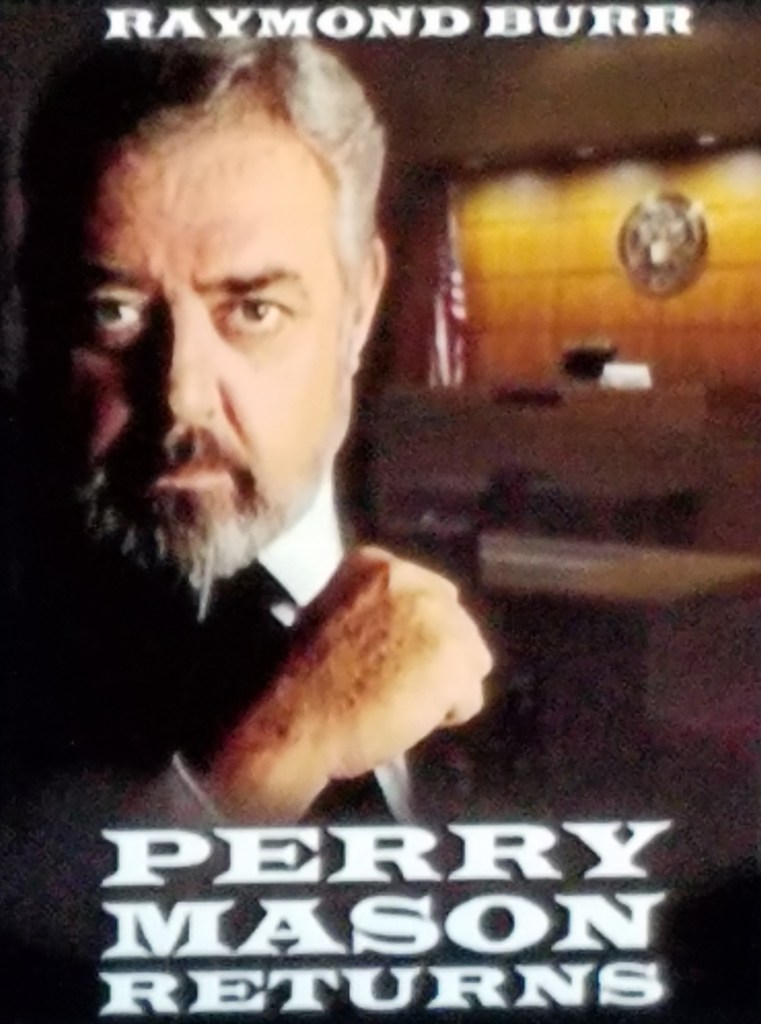
This is a screenshot of the poster I took from my television with my phone. Screenshot taken by me, Sally Silverscreen.

What I liked about the film:

The acting: Even though there were good performances from the actors, it’s the performances from the actresses that steal the show! Holland Taylor’s role in Perry Mason Returns was similar to her roles in George of the Jungle and Legally Blonde. What I liked about her performance in this 1985 film was how it seemed like she was given more material to work with! My favorite scene featuring Holland’s character, Paula Gordon, was when she demanded Perry Mason to leave her house. The anger she brings forth seems genuine, allowing Paula to grace the screen with a sense of authority. Another Gordon family member whose actress gave a solid performance was Roberta Weiss! Even though her character, Laura, appeared in the movie for a limited amount of time, Roberta brought emotionality to her role. When Laura meets with Della after her father’s death, Laura can be seen bursting into tears. Similar to Holland’s portrayal of Paula, Roberta’s performance felt genuine! Like I’ve said in the introduction, I have seen some Perry Mason films, with most of them coming from the TV film series. One thing I have noticed about Barbara Hale’s portrayal of Della Street is how consistent it is. Della has a charming personality, with enough emotion to carry her from scene to scene. This is especially the case in Perry Mason Returns, where she is accused of a crime she didn’t commit. These factors make Barbara’s performance enjoyable to watch! They also make Della a likeable character!

The set design: There was some impressive set design in Perry Mason Returns! The Gordon family’s house boasts interior designs that effectively reflect a wealthier background. Two rooms that were shown on screen were the living room and Arthur Gordon’s office. They were both spacious, with their own distinct styles being presented. Wood played a consistent role throughout the office, from the hardwood floor to the wall’s paneling. Crème with touches of brown was the signature color scheme of the living room. At one point in the film, a beach house appears in the story. This location had a chic, up-scale design, with the black-and-white checkerboard floor nicely complementing the white pillars separating the living room and kitchen. Della’s house also contained photogenic set design! The kitchen featured a wrap-around window that paired well with a breakfast nook area. This space was not only charming, but inviting as well!

References to the television show: While I’ve seen some Perry Mason movies, I have never seen the original television show. Despite this, I liked the references that were included in the script! They were subtle enough not to alienate viewers like me who are not familiar with the show, but not too subtle for viewers to miss. In one scene, an assistant is talking to a judge about Perry’s decision to defend Della. She calls him ‘rusty’ and assumes he’s making a mistake. This is a reference to Raymond Burr returning to the titular role 19 years after the show ended.

Detective work image created by Photoroyalty at freepik.com. <a href=’https://www.freepik.com/free-vector/investigation-background-design_1041877.htm’>Designed by Freepik</a>. <a href=”https://www.freepik.com/free-photos-vectors/background”>Background vector created by Photoroyalty – Freepik.com</a>. Image found at freepik.com.

What I didn’t like about the film:

Revealing the killer too early: Every murder mystery story sets aside time to reveal who killed the murder victim. However, this usually takes place toward the end of the story. In Perry Mason Returns, the murder victim’s killer was revealed within the movie’s first fifteen minutes. While this didn’t completely spoil the mystery, it would have been more surprising had this information been presented later in the film.

Perry Mason’s belated introduction: As the title of this movie suggests, the story of Perry Mason Returns revolves around Perry Mason. Even though the titular character appears in the majority of the film, Perry himself wasn’t introduced until about thirty minutes into the movie. The beginning of the story was reserved for exposition and the mystery’s set-up. But I still feel Perry should have been introduced sooner.

Paul’s missteps: I know that having Perry’s younger assistant make mistakes yet help save the day is an essential part of this particular character. Whenever Paul, Perry’s assistant in Perry Mason Returns, made a mistake, they seemed like choices most people could anticipate making. In one scene, Paul comes across a piece of evidence he can’t physically take with him. His decision to not take a picture of the evidence with a small, portable camera is one I found baffling. Samantha Kinsey, from the Mystery Woman series, brings a camera with her anytime she looks for clues and evidence. The time period Perry Mason Returns takes place in can’t be used as an excuse either, as smaller cameras existed in 1985.

Courtroom image created by Macrovector at freepik.com. <a href=”https://www.freepik.com/free-photos-vectors/isometric”>Isometric vector created by macrovector – http://www.freepik.com</a>. Image found at freepik.com.

My overall impression:

Prior to writing this review, I have seen some Perry Mason movies, with most of them coming from the made-for-TV film collection. Out of those movies, I feel Perry Mason Returns is one of the series’ stronger entries! The story did seem like a first chapter for this particular narrative. Despite this, I was invested in the overall project from start to finish! Even when the murder victim’s killer was revealed during the film’s first fifteen minutes, there was enough interest to keep the story going. The subtle references allowed the movie to connect with the pre-existing source material. Solid acting performances and appealing set design helped make the film engaging. Perry Mason Returns is a good introduction to the series, an enjoyable film whether or not you watched the original show. Before I end this review, I want to thank each of 18 Cinema Lane’s followers! I’m grateful for the success this blog has reached so far!

Overall score: 7.5 out of 10

Have you watched the original Perry Mason television show? Are there any mystery films from this series you’d like to see me write about? Please tell me in the comment section!

Have fun at the movies!

Sally Silverscreen

Take 3: Forsaken (2015) Review (A Month Without the Code #3)

When I reviewed The Crow back in May, I said in the comment section that I wanted to see Michael Wincott cast in a western, as I thought it would be a perfect casting choice. As the months have gone by, I discovered that Michael had starred in the 2015 western film, Forsaken! The Legends of Western Cinema Week is what reminded me of this wish. As a blogger of my word, I chose to review Forsaken as one of my two entries for this event! The western genre is one that isn’t often covered on my blog. While I do re-cap When Calls the Heart, this is an exception to the rule. The last western I reviewed was Little House: Bless All the Dear Children back in July, with the review before that being last year’s When Calls the Heart: Home for Christmas. I figured the Legends of Western Cinema Week served as a good excuse to revisit the western genre for the first time in about a month!

Forsaken (2015) poster created by Momentum Pictures, Mind’s Eye Entertainment, Panacea Entertainment, Rollercoaster Films, and Moving Pictures Media. Image found at en.wikipedia.org/wiki/File:Forsaken_Poster.jpg

Things I liked about the film:

The acting: When I reviewed Caesar and Cleopatra last September, I said in the comment section how Vivien Leigh’s portrayal of Cleopatra felt like Scarlett O’Hara was playing dress-up. This is because I thought the film’s creative team was attempting to take advantage of the popularity and success of Gone with the Wind. As Michael Wincott’s character, Gentleman Dave Turner, was first introduced with the film’s villains, I wondered if this portrayal was going to be a western genre version of Top Dollar from The Crow. Instead, Michael’s performance and the screenwriting presented a character that was his own person with his own story! A consistent aspect of Michael’s portrayal of Dave was the calmness he displayed. Even in the direst of situations, he always appeared to have control of his emotions. When I think of Kiefer Sutherland, I think of his portrayal of Jack Bauer from 24. Spending so much time on a show with a mix of drama and action seems to have paid off for Kiefer, as he was able to display a wide range of emotions! In one scene, Keifer’s character, John Henry, is recalling a fateful decision from his past. As he reflects over the lives of the people he hurt, his demeanor slowly transitions from remorse to sorrowfully sobbing. I’ve seen very few projects from Donald Sutherland’s filmography. However, I did think his portrayal of Reverend Samuel was strong! In a scene where his character is having an argument with John Henry about faith, Donald’s character quickly goes from calm and collected to yelling with anger. His emotionality definitely added to his overall performance!

The scenery: According to IMDB, Forsaken was filmed in Alberta, Canada. This particular landscape was captured very well throughout the film! Distant mountains paired with a blue sky were shown in establishing shots. These natural elements provided a great contrast to the lush, green fields also found in the movie. Forests were a part of the story as well, with sunlight giving this space a natural glow. The overall setting of Forsaken was picturesque and calming, which is different from the rough terrain that is a staple of westerns. This kind of scenery reminded me of shows like Little House of the Prairie and When Calls the Heart!

The on-screen chemistry:  In Forsaken, John Henry reconnects with his former love interest, Mary Alice, who was portrayed by Demi Moore. Keifer and Demi had good on-screen chemistry, as their characters appeared to truly care about each other! Through these performances, John Henry and Mary Alice’s interactions came across as bittersweet. This drove the point home that the romantic nature of their relationship was left in the past. There was also good on-screen chemistry among the other actors! During the film, the tension between John Henry and Reverend Samuel could be felt. It helps that Keifer and Donald had the emotional intensity to deliver performances that a story like this requires.

Legends of Western Cinema Week banner created by Hamlette from Hamlette’s Soliloquy and Heidi from Along the Brandywine. Image found at https://hamlette.blogspot.com/2020/07/announcing-legends-of-western-cinema.html.

What I didn’t like about the film:

The under-utilization of Michael Wincott: As I said in my introduction, the reason I chose to watch Forsaken is because I wanted to see Michael Wincott in a western. While I got what I wanted, I felt his talents were under-utilized. In this hour and thirty-minute film, Michael appeared in about five scenes. His character’s significance in the story was also not made clear. Gentleman Dave Turner can be seen spending his time with the movie’s villains. However, he claims to be John Henry’s friend and doesn’t condone the actions of his villainous cohorts. I found this part of the film frustrating because Michael and his character had a purpose for being in this movie, but I couldn’t figure out what that purpose was.

More emphasis on drama: When it comes to the western genre, a certain amount of action is to be expected. Not all westerns utilize action to its fullest extent, but enough action is incorporated into most westerns to keep the story interesting. In Forsaken, the majority of the plot focused on the drama between John Henry and Reverend Samuel’s strained relationship. This part of the story wasn’t bad, but it did overshadow the action. Throughout the film, there were moments where action could be seen. Most of the action took place in the climax, which happened during the last twenty minutes of the movie. This creative decision caused the action to be used sparingly.

An overshadowed conflict: The overarching conflict in Forsaken is how a group of villains are trying to take over a small town. To me, this was the most compelling part of the plot. Because the story placed more emphasis on the estranged relationship of John Henry and his father, the conflict wasn’t given as much attention as I expected. This conflict was addressed in the film from time to time. However, it didn’t feel like its placement was consistent. While the conflict does get revolved, it doesn’t happen until the film’s last twenty minutes.

A Month Without the Code Blogathon banner created by Tiffany and Rebekah Brannan from Pure Entertainment Preservation Society. Image found at https://pureentertainmentpreservationsociety.wordpress.com/2020/07/27/announcing-amonthwithoutthecode2020/.

My overall impression:

On 18 Cinema Lane, it seems like 2020 is the year when wishes come true. First, it was Words on Bathroom Walls receiving a distributor and a release date. Next, it was seeing and reviewing the film, The Wife of Monte Cristo. Now, it’s watching Michael Wincott in a western! As I said in my review, I got what I wanted. However, I feel there was more to be desired from Forsaken as a whole. The conflict involving the villains’ attempts to take over the town was the most compelling part of the movie. Unfortunately, it was overshadowed by the drama between John Henry and his father. Even though westerns do contain a certain amount of drama, the appeal of this genre is the action/adventure aspect of the world and its characters. This gives the audience the feeling of going on a journey with spirited men and women of the Wild West. Despite this movie being rated R, Forsaken could certainly be transformed into a Breen Code era film! The only two offenses I was able to find were the swearing and the amount of on-screen blood. While violence is expected for a western story, this aspect, along with the language, would need to meet Breen Code standards before production began.

Overall score: 6.1 out of 10

Have you see Forsaken? Are there any western films you’d like to see me review? Share your thoughts in the comment section!

Have fun at the movies!

Sally Silverscreen

Take 3: The House of God Review (A Month Without the Code #2)

The theme for August’s Genre Grandeur is “Medical Dramas”. I’m not going to lie, I had to do some research in order to find my entry. This is due to how specific the theme itself is. At first, I was going to review Article 99. But while reading some reviews on IMDB, I saw someone bring up the 1984 film, The House of God. Having never heard of this movie until this week, I read its synopsis on IMDB. After that, I was fortunate to find the movie on Youtube. According to IMDB’s description of The House of God, the film shares similarities with shows like M*A*S*H and St. Elsewhere. In fact, St. Elsewhere is referenced by a character named “The Fatman” in the 1984 title. While I’ve only seen pieces of M*A*S*H, I’ve never seen St. Elsewhere. However, I am familiar with each show’s premise.

The House of God poster created by United Artists. Image found at https://www.imdb.com/title/tt0087429/mediaviewer/rm2187241473.

Things I liked about the film:

The camaraderie between the characters: For a story like The House of God, the camaraderie between the characters is the heart and soul of that project. In the 1984 film, there was camaraderie to be found among the interns! The scene where they go to Dr. Watson’s Pub serves as a perfect example. Within this scene, the audience gets to learn about some of the characters. What the scene also does is showcase each of the characters’ distinct personalities. Because of the actors’ performances and their on-screen chemistry, it gave the impression that these characters got along well with each other. It also provided an interesting component to the movie!

A sense of honesty: In the synopsis for The House of God, it says “this film is closer to the truth than the public wants to know”. While watching the movie, I could tell the creative team wanted to present their story as truthful as possible. The character of “The Fatman” is one example of this honesty. He tells one of the interns that the reason why the doctors approve so many procedures is for the hospital to make money. Later in the film, Roy, one of the interns, questions the practices of Jo, one of the residents. He accuses her of caring more about autopsies than the needs of her patients. I know The House of God is based on a book written a real-life doctor. But I’m glad the film’s creative team chose not to sugar coat or glamorize their version of the medical world.

The informational inclusion of the medical world: Whenever a particular industry is showcased in a piece of media, there is sometimes an opportunity for the audience to learn something new. This is certainly the case for The House of God! One of the topics that “The Fatman” constantly brings up is “gomers”. He tells the interns this is an acronym standing for “get out of my emergency room”. “The Fatman” also explains that “gomers” are older patients who are dealing with a variety of medical situations, but are not high-risk. Dialogue like this is effectively used to educate the audience about the world of medicine. It helps them broaden their horizons and educate themselves in a cinematic way.

Heartbeat image created by Freepik at freepik.com. <a href=’https://www.freepik.com/free-vector/medical-logo_763775.htm’>Designed by Freepik</a>. <a href=”https://www.freepik.com/free-photos-vectors/logo”>Logo vector created by Freepik</a>. Image found at freepik.com.

What I didn’t like about the film:

The House of God’s limited scope: At the beginning of the film, the interns are shown a light-up map of the entire hospital. They are also instructed to follow colorful lines on the floor in order to reach a specific ward. Throughout the movie, however, the only areas of the hospital that are highlighted involve older patients and patients that are dealing with high-risk medical situations. I know there’s only so much story that can be told in an hour and forty-eight minutes. I’m also aware of how people in the medical field have to make rotations among different wards during their training period. But because the hospital’s scope was limited, it felt like a disservice was committed.

Limited amount of character development: While I liked the camaraderie among the characters, I never felt like I truly got to know them. That’s because the character development was limited. During the movie, the audience learns a little bit about some of the interns and the people working alongside them. But, in my opinion, more was desired in this department. In The House of God, there was a doctor named Dr. Alfred Pinkus. The only information about this character that the movie provides is he’s from New Zealand and he’s the resident heart consultant of the hospital. Because he is only in the film for a few scenes, the audience isn’t given the opportunity to learn more about him.

No overarching conflict: When I read the synopsis for The House of God, I thought the story was about a group of interns who oppose a lead doctor at the hospital they work at. This caused me to expect a narrative that features underdogs fighting against the leaders in their medical world. Instead, I got a story that didn’t have an overarching conflict. Sure, there were smaller scenarios within the movie that did get resolved. But this made the overall story feel more mundane than interesting. It also makes the synopsis on IMDB sound misleading.

A Month Without the Code Blogathon banner created by Tiffany and Rebekah Brannan from Pure Entertainment Preservation Society. Image found at https://pureentertainmentpreservationsociety.wordpress.com/2020/07/27/announcing-amonthwithoutthecode2020/.

My overall impression:

When I was searching the internet for medical dramas, suggestions for television shows were included as results. One of the most well-known is St. Elsewhere, which was referenced in The House of God. When I look back on this film, I honestly think the story would have benefited as a TV show rather than a movie. There was so much going on The House of God, but not enough time to explore it to the fullest extent. One of these areas is the character development, where some of the characters received a small amount. But the stronger components should not be ignored. The camaraderie among the interns was one of the most interesting parts of this story. It was brought to the audience through the acting performances and on-screen chemistry. This is not one of the worst films I’ve seen this year, but I can think of medical dramas that are better than this one. Despite The House of God being rated R, it could be “breenable”. However, these are the things that would need to be changed:

  • Throughout the film, there was language used that is not Breen Code friendly. This ranges from swearing to sexual references. More appropriate word choices would need to be chosen before production starts.
  • In one scene, Roy, one of the interns, and a nurse passionately kiss. This scene also heavily implies that they are about to have sex. During the screen-writing process, that particular scene would need to be rewritten to fit Breen Code standards.
  • Another scene in this film heavily implied a male and female intern was about to have sex during an autopsy check. These characters took their shirts/smocks off right before passionately kissing. This is another scene that would need to be rewritten to fit Breen Code standards.
  • One scene shows one of the interns using the bathroom. Because this scene doesn’t serve the plot and is not Breen code appropriate, this scene would be removed.
  • One of the interns ends up committing suicide. Instead of showing the act, it could be implied through Breen Code appropriate dialogue.
  • One of the patients at the hospital is shown bleeding. The amount of blood shown on screen would have to be reduced.

Overall score: 6 out of 10

Have you seen The House of God? Do you like watching medical dramas on television? Tell me your thoughts in the comment section!

Have fun at the movies!

Sally Silverscreen

Word on the Street: Story for Jen Lilley’s Hallmark Christmas Movie Revealed + News about Upcoming Christmas Hallmark Films

Yes, I know I haven’t written a Word on the Street story since June. This is because I either wasn’t able to find a movie news story that interested me or I didn’t get around to discussing movie news. However, I did find some Hallmark related news that I had to write about. The first story features Hallmark favorite, Jen Lilley. In an article from soaps.com, Amy Mistretta reports how Jen revealed the plot of her new movie, which will likely air during the Christmas season. The article states that the film will revolve around a reporter who goes on a Tiger Cruise with members of the United States Navy. Amy explains that “the Navy puts on the special event once a year where their families can come on the ship for Christmas”. From what I can recall, the only film about Tiger Cruises that is known is the 2004 Disney Channel movie, Tiger Cruise. However, that film revolved around the events of 9/11. This news about Jen’s movie is interesting because it fills a creative void that hasn’t been revisited in sixteen years. Also, Hallmark can make a good military related film when they put their mind to it.

Source for this movie news story: https://soaps.sheknows.com/days-of-our-lives/news/574825/days-of-our-lives-jen-lilley-hallmark-christmas-movie-2020/

Children holding American flags during a sunset image created by rawpixel.com at freepik.com. <a href=”https://www.freepik.com/free-photos-vectors/people”>People photo created by rawpixel.com – http://www.freepik.com</a>. Image found at freepik.com.

These next two stories come from the Twitter account, Hotline to Hallmark! In a tweet that was retweeted by Hotline to Hallmark, Rochelle S. Aytes, the star of the upcoming film, A Christmas Tree Grows in Brooklyn, announced that her movie has wrapped production! While the film’s synopsis is not known at this time, the movie will apparently feature horses, as Rochelle mentions petting a horse in her tweet. Another retweeted tweet from Hotline to Hallmark reveals that Will Kemp will co-star alongside Lacey Chabert in the Hallmark Christmas movie, Christmas Waltz! Denise Petski, from Deadline, shares that “Christmas Waltz reunites Kemp and Chabert, who starred in last year’s Valentine-themed Hallmark Channel movie Love, Romance & Chocolate.” As someone who liked the aforementioned Valentine’s film, it’s nice to see actors who had good on-screen chemistry work together again! I’m hoping Will and Lacey’s Christmas project is just as enjoyable to watch as their previous creative endeavor!

Sources for these movie news story: https://deadline.com/2020/08/will-kemp-lacey-chabert-christmas-waltz-hallmark-channel-movie-1203012813/, @HotlineHallmark on Twitter

Blue sparkly Christmas tree image created by Macrovector at freepik.com. <a href=”https://www.freepik.com/free-photos-vectors/frame”>Frame vector created by Macrovector – Freepik.com</a>. <a href=’https://www.freepik.com/free-vector/merry-christmas-card_2875396.htm’>Designed by Macrovector</a>. Image found at freepik.com.

What are your thoughts on these pieces of movie news? Is there a Hallmark Christmas film you’re looking forward to seeing? Please tell me in the comment section!

Have fun at the movies!

Sally Silverscreen
Take 3: Hallmark Hall of Fame’s The Locket Review + 225 & 230 Follower Thank You

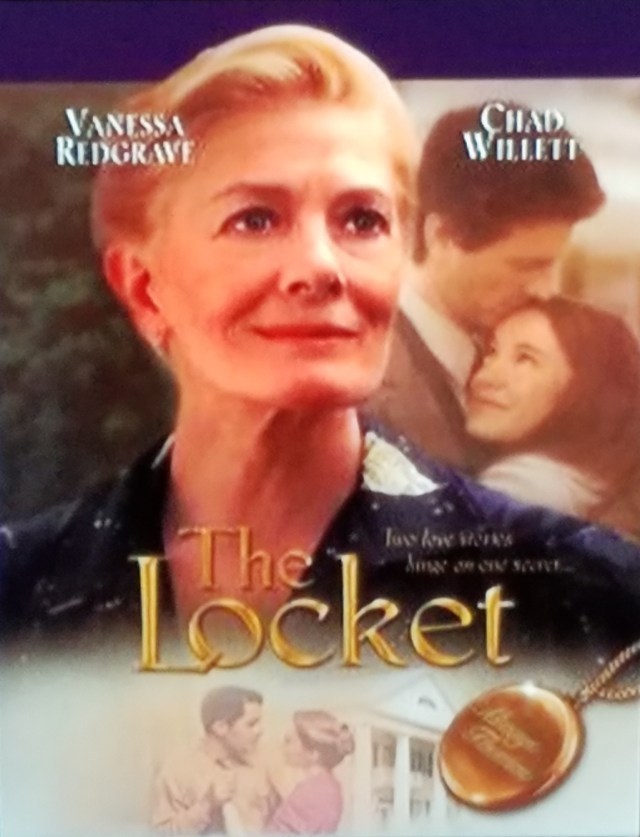
At the end of last month, 18 Cinema Lane received 225 followers! Because of my participation in the Esther Williams Blogathon and the 4th Alfred Hitchcock Blogathon, I postponed this blog follower dedication review to this week. In that time, my blog also received 230 followers! Originally, this review was going to serve as an entry for the A Month Without the Code Blogathon. But because of everything I just said, I decided this post was only going to be a blog follower dedication review. I haven’t talked about a Hallmark movie in two months, with Nature of Love being the latest one. So, I chose Hallmark Hall of Fame’s The Locket for this review. This is a movie I’ve wanted to watch for a few years. One of the reasons was Marguerite Moreau’s involvement in the film. After watching Queen of the Damned, I discovered she had starred in this Hallmark project from 2002. When Hallmark Drama aired it recently, I knew I had to record it on my DVR!

Because I watched this movie through a television recording, I took a screenshot of the poster with my phone. Screenshot taken by me, Sally Silverscreen.

Things I liked about the film:

The acting: Because Marguerite Moreau is one of the reasons why I watched this film, I’ll talk about her performance first. Even though I haven’t watched many of her movies, I’ve noticed how her portrayals feel believable with what her character is experiencing. This is certainly the case for her performance in The Locket! Faye, Marguerite’s character, always appeared natural in her responses to various situations. It allowed me to stay invested in her part of the story. Another aspect to Marguerite’s performance is how her transitions between emotions were flawless! One good example takes place after Faye and Michael deliver Christmas gifts. Toward the beginning of this interaction, Faye is happy to spend time with her boyfriend. As she notices his demeanor, Faye’s face changes to showing an expression of concern. Speaking of Michael, I need to talk about Chad Willett’s performance. Throughout The Locket, Chad used a wide range of emotions. In a scene where Michael visits someone from his past, he appears angry and can be seen crying. Another scene, when Michael is telling Faye about his scholarship, shows him displaying happiness on his face. This part of Chad’s performance made the overall portrayal seem dynamic! I can’t review this movie without discussing Vanessa Redgrave’s performance. What I liked about it was how honest it came across. This component added depth to Vanessa’s portrayal. A good example is her character’s, Esther’s, first encounter with Michael. When he’s changing her bedsheets, Esther compliments Michael for not telling her she’s still beautiful. This is because she thinks that statement is silly.

Whitewood Nursing Home: A significant part of this story takes place at a nursing home called Whitewood. Despite this location serving a medical purpose, it didn’t feel like a medical facility. In fact, it looked and felt like a bed and breakfast! The interior design consistently ran throughout the home. Furniture helped make the rooms seem cozy, with armchairs in the bedrooms and main living room adding to this aesthetic. Detailed and flowery wallpaper displayed soft, pastel colors. This caused the overall location to have a calming effect. Fireplaces made of brick and wood completed the interior design of the rooms, making the home feel inviting. The exterior design of Whitewood is a large white wood structure, hence the name of the facility. These factors gave the impression of the home carrying a sense of importance. Because it is important to take care of the older members of a community, this appearance of the nursing home is fitting.

The on-screen chemistry: As I mentioned earlier in this review, Michael and Faye are in a dating relationship. Anytime they interacted with each other, I could tell Chad and Marguerite had strong on-screen chemistry! This caused their characters to feel like they truly cared about one another. Faye’s first visit to Whitewood is a good example of this. When Faye meets up with Michael, I could see her investment in what is happening in Michael’s life. This investment can also be seen when Michael learns about Faye’s acceptance into medical school. Non-romantic relationships also had good on-screen chemistry! Michael’s friendship with Esther came across like they got along well. It also effectively showed how they tried to understand each other. The scene where Esther explains the locket’s importance to Michael serves as one example.

I couldn’t review this film without featuring a picture of a locket. Screenshot taken by me, Sally Silverscreen.

What I didn’t like about the film:

The under-utilization of Marguerite Moreau: Marguerite is not only the third billed actor in this movie, she is also the main supporting actress. Despite this, she was kind of under-utilized in The Locket. While she was given enough material to make her performance memorable, her on-screen presence was not as consistent as I expected. Most of her appearances can be found in the film’s first half, with her character barely appearing in the second half of the movie. This makes me wonder if Marguerite was working on Queen of the Damned around the same time she was working on The Locket?

The locket is an afterthought: Before watching this film, I had expected the locket itself to affect the lives of the people surrounding it. Because the movie is called The Locket, I thought this artifact would have a large influence over the story. Sadly, this piece of jewelry ends up being an afterthought. Most of the film revolves around Michael and his hardships. When an explanation of the locket’s importance is finally given, happening about forty-five minutes into the movie, it takes place during one dialogue and video heavy scene. What would have made this artifact emotionally affective is if flashbacks from Esther’s life or from around the time Esther received the locket would have been sprinkled throughout the story.

Scenes that feel rushed: There were some scenes in The Locket that, to me, felt rushed. In one scene, Michael is at the VA Hospital, picking up a prescription for a patient at Whitewood. The very next scene shows Michael sharing some good news to Esther. Scenes like the one at the VA Hospital made it seem like the film’s creative team wanted to get certain parts of the story done and over with just to get to the next point. What also doesn’t help is how these scenes didn’t have effective transitions. It caused scenes like the one with Michael and Esther to feel too sudden.

Hand-written letter image created by Veraholera at freepik.com. <a href=”https://www.freepik.com/free-photos-vectors/background”>Background vector created by Veraholera – Freepik.com</a>. <a href=’https://www.freepik.com/free-vector/love-letter-pattern_1292902.htm’>Designed by Freepik</a>. Image found at freepik.com.

My overall impression:

Before I talk about my overall impression, I’d like to thank all of my followers who helped my blog reach this milestone! Your investment in 18 Cinema Lane plays a role in its overall success! Now, time to discuss my final thoughts on The Locket! As glad as I am to have finally seen this movie, I recognize there are Hallmark Hall of Fame titles with similar ideas that are stronger than this one. Two examples are the 1998 film, Grace & Glorie,and 2011’s The Lost Valentine. One thing that The Locket was missing was an emphasis on the locket itself. Instead of having a story where this piece of jewelry impacts the lives surrounding it, the audience received a narrative where the locket is treated as an afterthought. I know there were three Hallmark Hall of Fame movies released in 2002. But, for whatever reason, there were times when The Locket felt rushed. Despite these flaws, the movie did have its strengths. The acting was definitely a high-light of this project, especially Marguerite Moreau’s performance! For me, she stole the show and even outshined the other actors involved! I just wish her on-screen presence would have been more consistent.

Overall score: 7.2 out of 10

Is there a Hallmark Hall of Fame movie that you enjoying? Would you like to recommend a Hallmark Hall of Fame film for me to review? Please let me know in the comment section!

Have fun at the movies!

Sally Silverscreen

Take 3: Marnie Review (A Month Without the Code — #1)

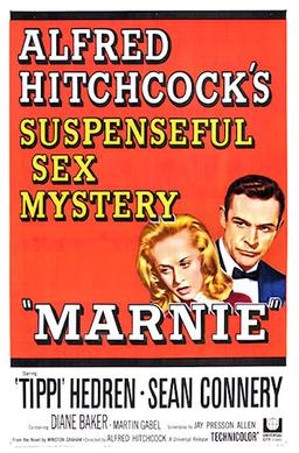
For the 4th Alfred Hitchcock Blogathon, I wanted to review a movie that was released after 1954 or before 1934. This is because I’m also participating in Pure Entertainment Preservation Society’s A Month Without the Code Blogathon. While searching through Alfred’s filmography, I came across the 1964 film Marnie. The idea of the female protagonist being the center of the film’s mystery was something I hadn’t seen in the other Alfred Hitchcock projects I saw. As of August 2020, I have seen five of his movies, including Marnie. Two years ago, I said The Birds was the worst film I saw in 2018. However, Strangers on a Train appeared in my Honorable Mentions for my 2018 best movies list. Will Marnie appear on my best or worst of 2020 list? That mystery will get solved by reading this review!

Marnie poster created by Universal Pictures and Geoffrey Stanley Productions. Image found at en.wikipedia.org/wiki/File:Marnie1.jpg

Things I liked about the film:

The acting: Tippi Hendren worked with Alfred Hitchcock when she starred in The Birds. In Marnie, she knew what to expect with the direction of her performance because of this pre-existing partnership. Tippi was given more acting material to work with in this film compared to the previous one from 1963. Her portrayal of the titular character was well-rounded, allowing her to express a variety of emotions. Marnie and Mark’s honeymoon serves as a good example of this. During a nice evening dinner, Tippi displays feelings of content. But when her character is having a heated argument, she provides a fierceness and strength to Marnie that projects off the screen. Before watching this movie, I had seen some of Sean Connery’s films. Even when the film surrounding him doesn’t hold up, he still gives his performance everything he has, talent wise. When I watched Marnie, Sean’s portrayal of Mark reminded me of Rhett Butler from Gone with the Wind. What I mean by this is Sean had a commanding presence that captured the attention of the audience. He also carried himself with confidence throughout the film. Despite appearing in the movie for about two scenes, I thought Louise Latham’s performance was strong! Without giving away any spoilers, I’ll say her portrayal of Marnie’s mother, Bernice, was powerful in the movie’s climax. It was captivating to watch and had a good amount of emotionality.

The cinematography: One of the staples of an Alfred Hitchcock film is the interesting uses of cinematography that can be seen. Marnie features camera work that was creative and appealing to the eye. My favorite example is when Marnie is stealing the money from the office. While she’s doing this, a custodian is mopping the floor in the same vicinity. The shot shows the custodian on the left side of the screen and Marnie on the right side. As this part of the story played out, it built suspense and left me on the edge on my seat. Another good use of cinematography happened at the beginning of the film. When Marnie is first introduced, her face is not shown on screen. This creates a sense of mystery that surrounds her presence. It’s not until she changes her hair color from black to blonde that we finally see Marnie’s face.

The use of the color red: Throughout the movie, the color red appears in various forms. When a red object crosses paths with Marnie, she reacts with panic and fear. One example is when Marnie and Mark go to a horse race. As soon as she notices the red dots on a jockey’s shirt, she immediately wants to leave. This aspect served as a consistent component of this character. It also allows the audience to engage in the mystery surrounding this visual choice.

The 4th Alfred Hitchcock Blogathon banner created by Maddy from Maddy Loves Her Classic Films. Image found at https://maddylovesherclassicfilms.wordpress.com/2020/06/18/announcing-the-4th-alfred-hitchcock-blogathon/.

What I didn’t like about the film:

The scene transitions: When a cinematic story moves from one scene to another, that transition can make or break the movie’s overall flow. In Marnie, some scenes ended abruptly, causing the transitions to feel clunky. A good example is when Marnie is leaving the office after she steals some money. As soon as she walks down the stairs, an employee shows up and greets a custodian. All of a sudden, the next scene begins. Had these transitions been smoother, the film wouldn’t feel like it was in stop-and-go traffic.

Light on thrills: Before watching this movie, I knew it was classified as a thriller. Because Marnie was directed by Alfred Hitchcock, I was expecting a mysterious and suspenseful tale that fits the brand he created. While it did have moments of suspense, the film as a whole was not thrilling. The majority of the story focused on the drama within the narrative. In fact, Marnie felt like it belonged in the drama genre. If Alfred wanted to try something new and go out of his comfort zone, that’s understandable. Unfortunately, this movie seemed out of character for him.

The run-time: Alfred Hitchcock once said “the length of a film should be directly related to the endurance of the human bladder”. However, it seems like Alfred forgot his quote when he directed this movie. Marnie is two hours and ten minutes. Because of this creative decision, some scenes were drawn out longer than necessary in order to satisfy the run-time. One example is a conversation between Mark and Lil after Marnie goes horse-riding. Personally, I thought this scene went on for too long. Had scenes like that one been trimmed down, it might have put the film’s run-time under two hours.

A Month Without the Code Blogathon banner created by Tiffany and Rebekah Brannan from Pure Entertainment Preservation Society. Image found at https://pureentertainmentpreservationsociety.wordpress.com/2020/07/27/announcing-amonthwithoutthecode2020/.

My overall impression:

Alfred Hitchcock is a director who has created a distinct brand for himself. Known as the “Master of Suspense”, Alfred’s work consists of mystery and thrills. This decision is the reason why Marnie sticks out like a sore thumb. I want to make it clear that this is not Alfred’s worst film. The mystery itself was intriguing and the creative choices involving visuals were interesting. But the drama in this story overshadows the thrills, making the overall project feel like it should have been classified as a drama. As I said in my review, this felt out of character for Alfred. It would be like if an author like Debbie Macomber, an author known for writing heart-warming stories, published a gruesome murder mystery novel out of the blue. This would feel out of the character for the brand she created. Because this is my first review for A Month Without the Code, it’s time for me to point out how Marnie could be “breened”! I believe this story could be made into a Breen Code era film. However, these are the things that need to be changed in order for this to happen:

  • Throughout the film, there is language used that does not belong in a Breen Code era film. This ranges from swearing to using God’s name in vain. These words would either be removed or switched to more appropriate choices.
  • There is one scene that heavily implies Mark and Marnie had sex. Even though this happens after they get married, the scene itself would need to be rewritten or omitted.
  • One scene shows Marnie attempting suicide. Because this is a sensitive subject, this scene would to be removed or rewritten.
  • The robe Lil wears has a low-cut neckline. Changes to the style of the robe would need to take place before filming begins.
  • A large amount of blood is featured in one scene. The use of blood would need to be reduced.
  • A horse gets injured and killed in two inter-connected scenes. This would have to get omitted or the scene would have to be rewritten.

Overall score: 6.4 out of 10

What are your thoughts on Alfred Hitchcock’s filmography? Do you have a favorite movie from the “Master of Suspense”? Share your thoughts in the comment section!

Have fun at the movies!

Sally Silverscreen

Take 3: Shock (1946) Review (Clean Movie Month #5)

It’s now the end of Pure Entertainment Preservation Society’s Clean Movie Month. For my second year participating, I’d say I did a pretty good job staying consistent with my content! Throughout July, I have reviewed five films; two from the ‘30s and three from the ‘40s. The film I will talk about in this review, Shock, is a part of those aforementioned five, boasting a release date from early 1946. This film was included in The Blog Complainer’s Random Movie Roulette series, which ended up being the best movie out of that collection. Because of Cameron’s review, I chose to include Shock in my Clean Movie Month line-up! While I usually watch movies from my DVR, cable, or through physical media, the only way I could watch this film is from Youtube, where it was posted on the Cult Cinema Classics channel. I’m glad I was able to watch it so I could bring you this review of Shock!

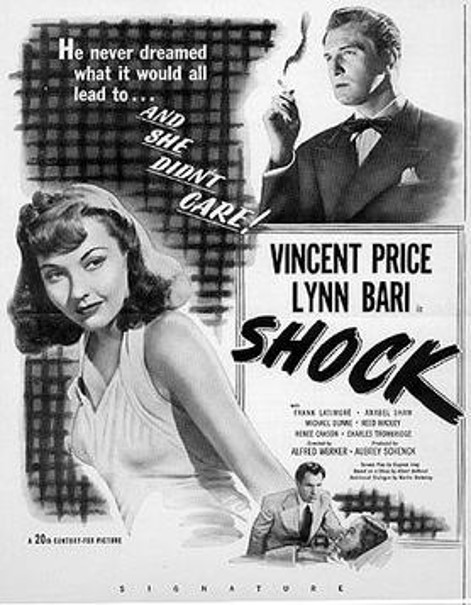
Shock poster created by 20th Century Fox. Image found at en.wikipedia.org/wiki/File:Shock_movie_poster.jpg

Things I liked about the film:

The acting: So far, I have seen The Whales of August and House of the Long Shadows. Despite seeing a small amount of films from Vincent Price’s filmography, I noticed something different about his performance in Shock. In this film, the character of Dr. Richard Cross was terrifying because of his influence and choices. Vincent also expressed emotions in subtle ways. Good examples came from when Richard expressed fear anytime someone brought up his wife’s murder. This cast was so strong, even secondary characters were memorable! Even though his character, Mr. Edwards, was in the movie for a short amount of time, John Davidson did a good job with the acting material he was given! His performance was emotionally driven, as he didn’t rely on dialogue. It added intensity to one of the film’s suspenseful scenes. The one actor who stole the show was Anabel Shaw, who portrayed Janet Stewart. Her emotionality was on point in this film! One beautiful example is when Janet witnesses the murder.

The music: The music in Shock did a good job setting the tone throughout the story! Whenever a suspenseful scene played out, ominous or dramatic music was heard. In a scene featuring Richard and Elaine, a sweeping tune that would usually be heard in romance films served as background music. Musicality also boosted these scenes, with the strong percussion of that scene’s tune landing right on an intense moment. This helped the musical element of the project maintain a sense of consistency.

Moments of suspense: In Shock, suspense was included in a few scenes. Within these parts of the story, the suspense’s execution was well done! One example is when Mr. Edwards has a fight with Elaine. The build-up toward the moment itself was steady, like someone walking to their destination. The surroundings of the characters were dark and mysterious, which worked in the favor of that scene. Mr. Edwards’ lack of speech makes the audience question his motives. All of these elements effectively came together to create one of the best scenes in this film!

Clean Movie Month banner created by Tiffany and Rebekah Brannan from Pure Entertainment Preservation Society. Image found at https://pureentertainmentpreservationsociety.wordpress.com/2020/07/01/cleanmoviemonth2020-is-here/.

What I didn’t like about the film:

Limited amount of suspense: As I previously mentioned, I liked the suspenseful scenes in this film. However, these scenes were very limited. When I read Cameron’s review of Shock, I believed the film would be similar to a story like Rear Window. In the Alfred Hitchcock picture, there was a consistent use of suspense, as the audience receives the mystery in pieces. Because the whodunit, howtheydunit, and whytheydunit of the mystery was revealed early on in Shock, it caused the story to not be as suspenseful as I thought it would be.

Under-utilized characters: A few under-utilized characters could be found in Shock. One of them was Mr. Edwards, who was featured in about three inter-connected scenes. Before these particular scenes appeared in the movie, Richard talks about Mr. Edwards’ mental regression, saying how the patient may need to be moved to a new facility. Because of these story-telling details, I was hoping Mr. Edwards would play a larger role in this story. Sadly, it just felt like he was in the film for the sake of being there.

A slower pace: Because Shock is classified as a film noir, the pace is going to be on the slower side. But most films in this specific genre have an under-lying suspense that consistently weaves through the overall narrative. Since the suspense in this film was limited, it caused the pace to be slower than it should have been, as the majority of the movie revolved around Janet’s prognosis. I’ve mentioned before that mysteries, more often than not, have faster paces. As I already said in this review, the mystery was revealed early in the story. This also prevented the pace from picking up speed.

Love of mental health image created by freepik at freepik.com. <a href=”https://www.freepik.com/free-photos-vectors/people”>People vector created by freepik – http://www.freepik.com</a>. Image found at freepik.com.

My overall impression:

All of the movies I chose for Clean Movie Month were enjoyable in their own respective ways. If I were to rank them, however, Shock and Goodbye, Mr. Chips would be tied toward the bottom of the list. Shock was a fine film, with memorable aspects that made me like the picture for what it was. Anabel Shaw’s performance was one of the best parts of this project, outshining bigger stars like Vincent Price. But some things in this movie held it back from being stronger. One of the movie’s biggest flaws was the limited amount of suspense. Because of this creative choice, the majority of the story felt like a drama than a film noir. Shock is a Breen Code friendly film. But I was surprised by the references of excessive alcohol use that were included in the script.  When Janet’s husband is asking about Richard’s medical credentials, one of the hotel’s employees says that Richard can cure a hangover. When an investigator working on Richard’s wife’s case is talking to Richard about a potential suspect, he tells Richard that the suspect is a “drunkard”. An excessive amount of alcohol use is never glorified or promoted in a typical Breen Code film. This is why I was shocked (yes, that word choice was intentional) to find these statements in a movie from 1946.

Overall score: 7 out of 10

What are your thoughts on this year’s Clean Movie Month? Are you excited for A Month Without the Code? Tell me in the comment section?

Have fun at the movies!

Sally Silverscreen

Take 3: Matinee Review + 220 Follower Thank You

If you’ve read my recent blog follower dedication reviews, you could tell that I’ve been trying to watch more films from my DVR. This has been a conscious decision, as there are several films that have been there for a year or more. One of those movies is Matinee, as it has been on my DVR since last February. What caused me to record it was how the movie revolved around a movie. Film is a topic that I am very passionate about. Because Matinee was about a subject I’m interested in, it gave me a reason to watch it. While looking back on the movies I’ve reviewed within the past month, I realized that the last film I talked about from the ‘90s was the 1990 adaptation of Cyrano de Bergerac. This is another reason why I chose Matinee for my 220-follower dedication review, as the movie was released in 1993. Before I start this review, I’d like to thank all of my followers! I’m incredibly grateful for the success this blog has achieved!

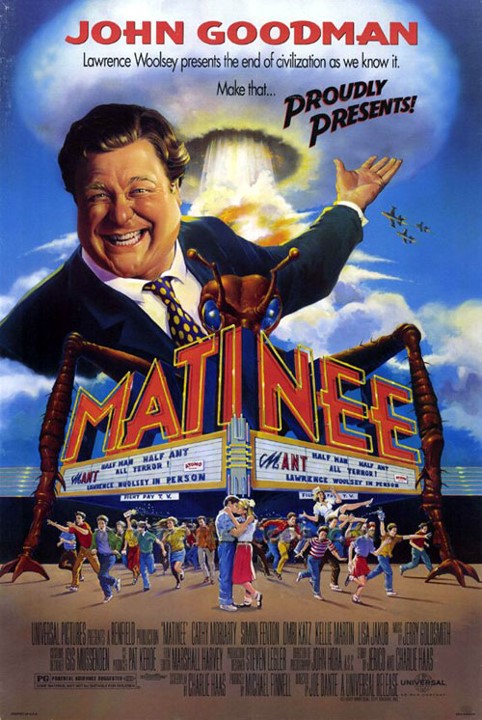
Matinee poster created by Universal Pictures. Image found at https://www.imdb.com/title/tt0107529/mediaviewer/rm2632269312.

Things I liked about this film:

The acting: Any time I have seen one of John Goodman’s movies, I have noticed how his character has a larger-than-life personality. Even when John was voice-acting as Sully from Monsters, Inc., that character’s personality was very jovial and memorable. When it comes to John’s performance in Matinee, Lawrence Woolsey also had a larger-than-life personality. The persona that John brought to his role was commanding, allowing the audience to focus on him whenever he came on screen. His performance was not only consistent in this film, but it also plays a consistent part in John’s acting career. It’s nice to see actors you recognize from one movie appear in another one. Omri Katz and Kellie Martin are two good examples of this. I’m familiar with Omri because of his performance in Hocus Pocus. Kellie Martin’s small-screen work is what I have seen from her filmography. Watching Omri and Kellie’s performance in Matinee was a joy to watch! They had good on-screen chemistry and both of their portrayals were convincing!

The historical accuracy: The story of Matinee takes places during the 1962 Cuban Missile Crisis. Because of this, the presentation of the film needs to reflects that moment in history. The historical accuracy in this movie was executed so well, I felt like I was transported to 1962. All of the costumes looked like the wardrobe you’d see on a typical episode of The Andy Griffith Show. Cars from that time period can be seen cruising down the street, sporting color palettes that are not often seen on today’s roads. Lawrence’s sea green convertible with matching interior is one example. Even the music set the tone for that environment. When Sherry’s ex-boyfriend, Harvey, returns to town, The Angels’ song, “My Boyfriend’s Back” is heard. Even though this song was released in 1963, the overall sound reflects the soundtrack of that period in time.

The special effects: I was not expecting the creative team behind Matinee to incorporate any special effects into their project. However, these special effects were impressive! They were mostly used during the presentation of Lawrence’s movie, Mant! At certain points in the fictional film, smoke and flashing lights could be seen. Matinee’s climax boasts even more eye-catching effects! In one scene, a section of the theater is being destroyed. During this moment, the theater rumbled as flames engulfed the background. The way these effects came together made this destruction look so real! They also looked very good for a movie released in 1993!

Relevant ideas: I was surprised to find ideas within this story that are just as relevant in 2020 as they were in the ‘90s or even the ‘60s. When Gene and Stan pass by their local grocery store, they see patrons shopping in panic. These patrons grab everything in sight, with one woman buying as much toilet paper as she can carry. While the Cuban Missile Crisis and the Coronavirus are two completely different events, both of them have caused a large group of people to panic. Toward the beginning of the Coronavirus, grocery stores were witnessing the fear their customers carried. The situation became so dire, there were reports about people fighting over toilet paper.

Theater seats image created by weatherbox at freeimages.com. “FreeImages.com/weatherbox.”

What I didn’t like about the film:

Under-utilized characters: I found some characters in Matinee to be under-utilized more than others. One of them was Gene’s brother, Dennis. From a historical fiction perspective, I understand that Dennis is meant to show how younger children might have responded to an event like the Cuban Missile Crisis. But from the perspective of Lawrence’s movie presentation, I asked myself why Dennis was in the story at all? This makes me wish this particular character had received his own subplot.

Weaker subplots: A few of Matinee’s subplots were either too straight-forward or didn’t lead anywhere. A perfect example involves two of Lawrence’s employees, who pose as a special interest group attempting to ban his movie. Like Dennis’ presence in Matinee, I understand that this part of the narrative contains historical context, showing how some people choose to publicly dislike something to the point of protest. But after they interact with Harvey, these employees disappeared from the film. They didn’t receive a satisfying resolution and were forgotten about as the movie progressed.

Coming soon movie image created by Macrovector at freepik.com. <a href=”https://www.freepik.com/free-photos-vectors/background”>Background vector created by macrovector – http://www.freepik.com</a>. Image found at freepik.com.

My overall impression:

Anyone who knows me knows that Phantom of the Megaplex is my favorite Disney Channel movie. It showed me how movies, as well as the movie-going experience, can be fun. Even though Matinee was released seven years prior, it reminded me a lot of the 2000 picture. They happen to share similar ideas, some of them beyond the subject of film. This is one of the reasons why I enjoyed Matinee so much! It was funny and, at times, clever, with relevant ideas woven into the story. The film also had solid components, like the acting and special effects. Most important is how Matinee was fun! In a year when so much has happened, movies can play a role in providing a form of escapism and making viewers feel like they can conquer something, even when events in their world are beyond their control. Before the presentation of Mant!, Lawrence explains to the theater employees why it’s important to release his movie at that given time. He tells them that, despite scary things appearing in his picture, he wants to remind his audience that everything is going to be ok. Lawrence also shares that he wants to remind his audience that his film’s villain can be defeated.

Overall score: 8.5 out of 10

Have you seen Matinee? What movies involving movies have you enjoyed watching? Let me know in the comment section!

Have fun at the movies!

Sally Silverscreen

Take 3: Alphaville Review

For July’s Genre Grandeur, the theme is “French Film Noir”. Originally, I was going to review a film released within the Breen Code Era, as I’ve been participating in Pure Entertainment Preservation Society’s Clean Movie Month. But anytime I searched for a French film noir title that premiered between 1934 and 1954, the movie was either too expensive to purchase or unavailable to rent. So instead, I chose to review the 1965 film, Alphaville, as I was able to rent it. In my review of Alice in the Cities, I said that out of all the movies I’ve seen and/or reviewed that were created outside of North America, most of them came from Europe. The majority of these films were released from France. While researching Alphaville, I learned that the movie is labeled as a science fiction story. As someone who has seen both film noir and sci-fi movies, I was curious to see what a story with this specific genre combination would look like.

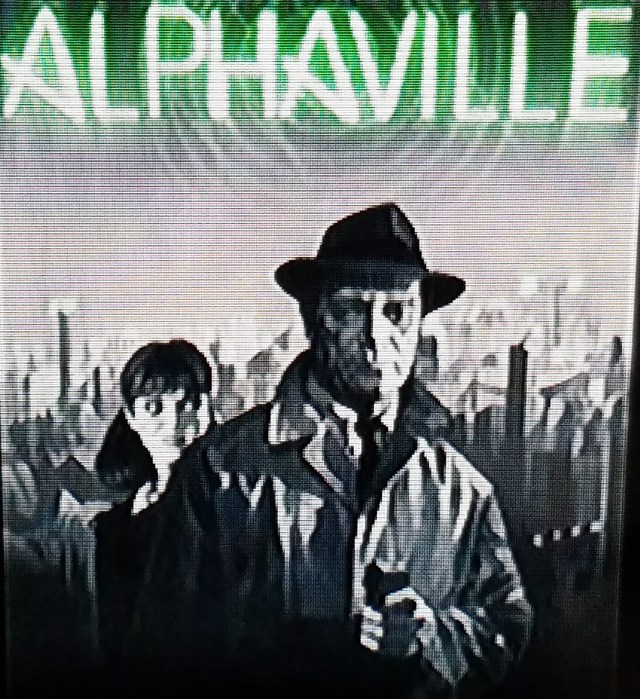
Since I saw a picture of the film’s poster on my television, I decided to take a screenshot of it. Screenshot taken by me, Sally Silverscreen.

Things I liked about the film:

The acting: Because I’ve seen a limited number of French films, I wasn’t familiar with these actors and actresses. However, I thought the acting performances in Alphaville were good! Eddie Constantine’s portrayal of Lemmy Caution reminded me of the performances I’ve seen from John Wayne. What I mean by this is Eddie presented his character with a tough and masculine exterior, but allowed emotion to break through that exterior. He also adopted a “no nonsense” attitude that worked for a story of this nature. Anna Karina also gave a performance that worked for this story! She incorporated a gentleness to her portrayal of Natacha von Braun. This can be heard through her soft-spoken voice and seen through her caring nature. Throughout her performance, Anna displayed emotions in a subtle way. In one scene, when Lemmy is being arrested, Natacha can be seen crying as silently as possible. Despite appearing in the film for less than five scenes, I liked watching Akim Tamiroff’s portrayal of Henri Dickson! The best part about it was how believable it was. A good example of this is any time Henri was experiencing a heart attack, as pain could be seen in his face.

The cinematography: There were some scenes in Alphaville that were shot in interesting ways! This was accomplished by applying various film-making techniques. When Lemmy was walking to a particular location, a continuous shot followed Lemmy to his destination. A perfect example can be found toward the beginning of the film, when Lemmy is being led toward his hotel room. For scene transitions, flashing lights were incorporated to signify a bridge between scenes. After Alphaville’s computer, Alpha 60, is finished explaining one of the city’s many beliefs, a neon sign of a math equation flashes until a scene involving Lemmy begins. Toward the end of the movie, some scenes were presented using an infrared light. This was to show a glitch in Alphaville’s technological system.

The film’s sci-fi world: When most people think of the science fiction genre, fantastical worlds with elaborate costumes, set designs, and makeup are usually what come to mind. For Alphaville, the creative team purposefully chose to film in real-life locations. This decision causes the titular city to appear grounded in reality. The science fiction elements of this story were woven into the behaviors of the citizens and the beliefs they hold. Using what they already had to create a science fiction narrative allowed the movie’s creative team to submit a film that goes against the genre’s norm.

Magnifying fingerprints image created by Balintseby at freepik.com. <a href=”https://www.freepik.com/free-photos-vectors/glass”>Glass vector created by Balintseby – Freepik.com</a>. <a href=’https://www.freepik.com/free-vector/fingerprint-investigation_789253.htm’>Designed by Freepik</a>. Image found at freepik.com.

What I didn’t like about the film:

The film’s science fiction ideas: In a typical science fiction film, the sci-fi ideas are presented as understandable enough for the audience to know what’s happening on screen. This was unfortunately not the case for Alphaville. The ideas associated with this story were so high-concept and complex, that I found myself not understanding what the characters were talking about most of the time. It also doesn’t help that the characters fail to provide clearer explanations for these ideas. This feels like the creative team expected the audience to know what was being discussed before they saw the movie.

Lack of context: In my review of The Crow, I talked about how questions emerged without an answer or an elaboration being provided. This is the exact same mistake that the creative team behind Alphaville made. The majority of female characters in the 1965 picture can be seen with number tattoos. No context is given for why they have this type of tattoo or the meaning behind the tattoo itself. In one scene, Lemmy and Natacha are attending a gathering where people who disobey Alphaville’s beliefs are being punished. Natacha explains how there are more men than women who get punished at these gatherings. She never gives further explanation for why this is the case. Because of the lack of context, it adds to the story’s overarching confusion.

No sense of urgency: Film noir movies usually have a slower pace. This is done on purpose to flesh out the overall story. However, there is an underlying sense of urgency. While watching Alphaville, I could not detect any amount of urgency in the story. For most of the film, Lemmy could be seen in his hotel room, roaming around the city, or visiting the Alpha 60 headquarters on rare occasions. Even though he resolves the film’s conflict, this doesn’t happen until about the last twenty minutes.

Colorful galaxy image created by Freepik at freepik.com. <a href=’https://www.freepik.com/free-vector/lovely-hand-drawn-galaxy-background_2943080.htm’>Designed by Freepik</a>. <a href=”https://www.freepik.com/free-photos-vectors/background”>Background vector created by Freepik</a>. Image found at freepik.com.

My overall impression:

I like participating in Movierob’s Genre Grandeur blogathon because it gives me an opportunity to see films that I may not have watched otherwise. This is certainly the case for this month’s selection, Alphaville. A combination of sci-fi and film noir was something I hadn’t seen before. But I found it to be an interesting contribution to both genres. The world presented in this story is not always found in sci-fi narratives. Bringing a newer idea to the table is what basing the world in a more realistic setting did. Cinematography was also a highlight of this project. It gave the film’s creative team a chance to experiment with different film-making techniques. However, the overall story was just ok. This was caused by confusing science fiction ideas and a lack of context. The majority of content from this story flew over my head, as I didn’t understand what the characters were talking about most of the time. I was frustrated by the overall project because I wasn’t able to grasp the concepts within Alphaville.

Overall score: 6.1 out of 10

Have you seen any French film noirs? Are there any movies from this specific genre you’d like to see me review? Please tell me in the comment section!

Have fun at the movies!

Sally Silverscreen