The Top Ten Best Stand-Alone Films

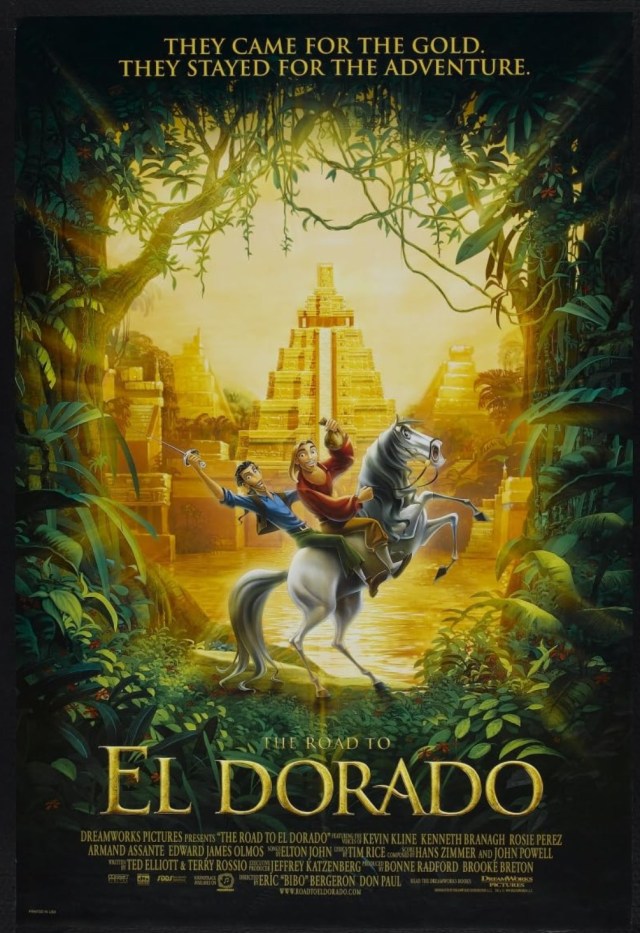
On this day in 2000, The Road to El Dorado made its official debut. While the movie didn’t meet or exceed DreamWorks’ expectations, it certainly found an audience, which stuck with the film for all these years. I once heard The Road to El Dorado was intended to be the first story in a trilogy. But fate decided it worked better as a stand-alone picture. This caused me to think about the other stand-alone movies I’ve come to love. So, in honor of The Road to El Dorado’s 25th anniversary, I have compiled a list of what I believe are the top ten best stand-alone films! For my list, the criteria for a stand-alone film is not only a title that didn’t receive a sequel, but also isn’t affiliated with a series/franchise. If I covered a film on 18 Cinema Lane, I will provide a link to that article or review in this list. Each title will be presented in order of release year and each choice is based on my opinion.

The Road to El Dorado poster created by Dreamworks Pictures, DreamWorks Animation, and DreamWorks Distribution

1. Singin in the Rain (1952)

    I start my list with a classic I was introduced to because of my blog. Now that I have finally seen Singin in the Rain, I have an understanding and appreciation for why the movie is so beloved. Gene Kelly’s iconic musical number, “Singin in the Rain”, should provide enough explanation for why you should check the film out! The number itself feels immersive, as it takes place within the story’s context. Gene adds uniqueness to the number by jumping and splashing in puddles. “Singin in the Rain” successfully represents the spirit of the film, while also delivering the message of seeing the good in a not-so-good situation. That number is just one reason why Singin in the Rain is a solid musical!

    Watching ‘Singin in the Rain’ for the First Time

    2. Ben-Hur (1959)

    If you’re going to watch any classics, you have to see 1959’s Ben-Hur! Though the three-hour run-time can seem intimidating, that time flew by for me, as I was so engrossed in the story. The emotional intensity of Charlton Heston’s, Stephen Boyd’s, and Haya Harareet’s performance complimented the scope of the overall film. Ben-Hur contains other likable qualities as well, from the magnificent sets/scenery to the interesting cinematography. How Christianity/faith was incorporated into the story sets the 1959 production apart from other “sword and sandal” pictures. Those who celebrate Easter may find Ben-Hur an appropriate seasonal title.

    Take 3: Ben-Hur (1959) Review + 60 Follower Thank You

    3. To Kill a Mockingbird (1963)

    While the book, To Kill a Mockingbird, received a sequel, the film adaptation did not. The 1963 movie presents one of the few times where, in my opinion, the film was better than its source material. Getting straight to the point a lot sooner was a main focus for the creative team. The film’s visual nature worked in the favor of certain elements from the book. Showing suspenseful moments from the source material makes those moments seem real, as well as intensifies uncertainty. Leaving out scenes that feel like padding helps the movie maintain a steadier pace.

    Take 3: To Kill a Mockingbird Review

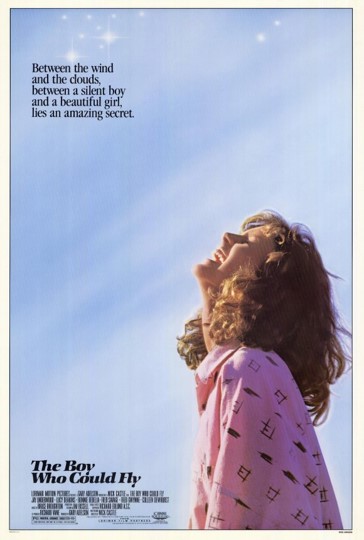
    4. The Boy Who Could Fly (1986)

    When I first saw The Boy Who Could Fly, it subverted my expectations. That’s because the 1986 picture aged surprisingly well! Through Milly and Eric’s friendship, the script shows how people with Autism can create and maintain meaningful relationships. Helping someone with Autism based on their personal preferences and accommodations may have seemed ahead of its time back in the mid to late ‘80s. Timeless messages and themes make up one of the reasons why I love the 1986 film. Showing compassion for others, dealing with grief, and understanding people’s differences take center stage.

    Take 3: The Boy Who Could Fly Review (PB & J Double Feature Part 2)

    5. The Bodyguard (1992)

    In 2022, I wrote an editorial explaining why The Bodyguard held up thirty years later. Because I love the 1992 film, finding explanations wasn’t difficult. “The kitchen scene” is, in my opinion, the best scene from any action movie. One reason why is how the kitchen’s smaller space is seen by the actors as a challenge instead of a hindrance. What also worked in The Bodyguard’s favor was Whitney Houston’s portrayal of Rachel Marron. Throughout the story, Whitney realistically showcases emotions and expressions. This helped Rachel become a multi-layered character.

    I Will Always Love You: ‘The Bodyguard’ at 30

    The Boy Who Could Fly poster created by Lorimar Motion Pictures and 20th Century Fox. Image found at https://www.imdb.com/title/tt0090768/?ref_=nv_sr_srsg_0.

    6. Swept from the Sea (1998)

    Swept from the Sea was one of the earliest hidden gems I discovered in 2019. It’s a movie that’s so great, I just had to include it on this list. There are so many things to like about Swept from the Sea. From Vincent Perez’s captivating performance to the beautiful scenery, the film’s components came together to create an endearing and emotional presentation! The 1998 film is a character-driven story, relying on on-screen chemistry in order to work. Because of Vincent Perez’s and Rachel Weisz’s differing acting styles, the on-screen chemistry between Yanko and Amy was very sweet and genuine.

    Take 3: Swept from the Sea Review (A Month Without the Code — #8)

    7. Phantom of the Megaplex (2000)

    This is another movie I just had to include on my list. But this time, it’s because Phantom of the Megaplex is also celebrating its 25th anniversary this year! The Disney Channel picture showed that the movie-going experience can be fun. As I explained in my editorial celebrating the film’s 20th anniversary, the made-for-TV movie also serves as a time capsule of how the cinema operated in the beginning of the millennium. Phantom of the Megaplex even shows how movies can influence our lives. Though I’m not sure if that aspect of the story was intentional, it makes the 2000 title, somewhat, thought-provoking.

    ‘Phantom of the Megaplex’ at 20: A Reflection on the Movie-Going Experience

    8. I Am David (2004)

    I Am David was the biggest pleasant surprise of 2024. It became the year’s best movie in March and stayed number one until the very end! What set I Am David apart was the film’s genuine emotion and sincerity. This was seen and felt through every aspect of the production. The 2004 movie emphasized visual depth. Achieved by exploring light and darkness, as well as showcasing Europe’s natural landscape, the creative team used the visual nature of film to their project’s advantage. Two effective plot twists are another reason why I liked I Am David. Their delivery in the story was well-written.

    Take 3: I Am David Review (Double Feature: 2004 Edition Part 1)

    9. From Up on Poppy Hill (2011)

    This 2011 presentation is one of Studio Ghibli’s stronger projects. A reason is one of the overarching themes; honoring the past. The film intelligently and creatively shows its audience how important history is in our lives and our world. Whether referencing the 1964 Olympics or focusing on the characters’ relationships, the theme of honoring the past acts as an umbrella sheltering Poppy Hill and its surrounding areas. Studio Ghibli’s signature colorful palette is consistently on display in the 2011 film. The strong understanding for how and when to use color makes scenes look like priceless pieces of art! Personally, I think movies like From Up on Poppy Hill present an argument why 2-D animation still has its time and place.

    Take 3: From Up on Poppy Hill Review + 200 Follower Thank You

    10. The Wild Robot (2024)

      I think it’s fitting to close this list with a DreamWorks movie, as a DreamWorks movie is the reason why I created this list in the first place. Though this was a recent watch for me, The Wild Robot is, so far, the best film I’ve seen this year! The animation itself is absolutely gorgeous! Sometimes, scenes look like paintings and other times, they look like priceless photographs. I was not expecting the story to contain as much emotional depth as it did. An abundance of good messages and themes add a sense of timelessness to the production. Though it’s unknown right now if The Wild Robot will gain an audience like The Road to El Dorado has, I can confidently say it was a really good movie!

      Phantom of the Megaplex poster created by the Walt Disney Company and Disney Channel. © Disney•Pixar. All rights reserved. Disney XD© Disney Enterprises, Inc.

      Have fun at the movies!

      Sally Silverscreen

      Take 3: The Phantom of the Opera (1925) Review (Silent Pioneers Double Feature Part 2)

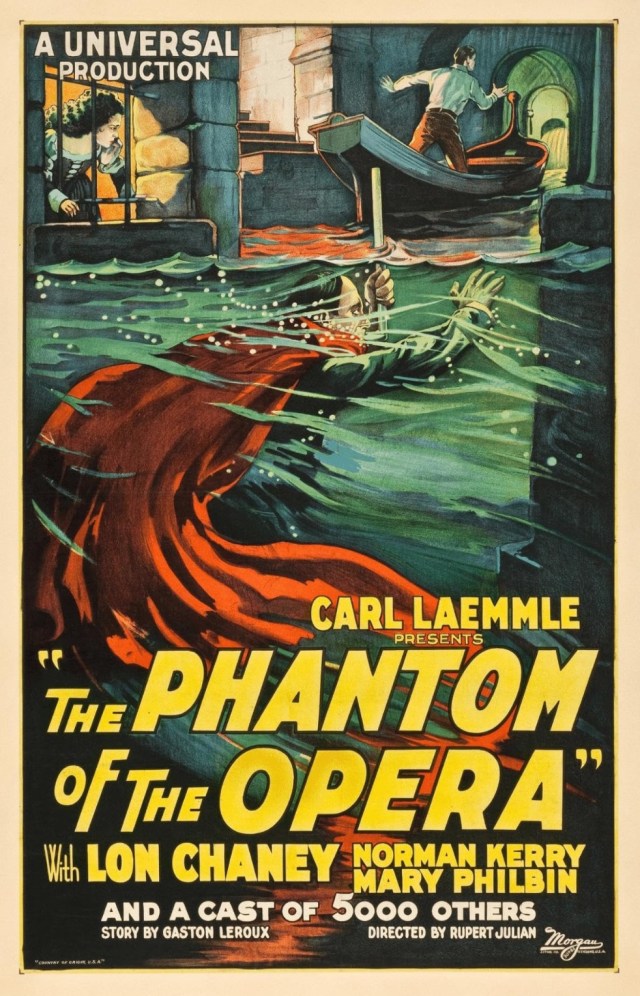
      In my review of 1920’s The Garage, I admitted silent films are rarely covered on 18 Cinema Lane. Acknowledging the one hundredth anniversary of a movie is even rarer. This is a reason why I selected 1925’s The Phantom of the Opera for the Silent Pioneers Blogathon! But reviewing this film also presents a full circle moment for me. Before 2025, I had seen pieces of The Phantom of the Opera from 1925. That’s because those pieces are featured at the beginning of Phantom of the Megaplex (which happens to be celebrating its 25th anniversary this year). As a fan of that movie, I felt I owed it to myself to finally check out the film that paved the way for countless cinematic projects. Though this is my first time seeing 1925’s The Phantom of the Opera in its entirety, I am familiar with its story. This is due to seeing parts of 2004’s adaptation of The Phantom of the Opera. So, without further delay, let’s start this review!

      The Phantom of the Opera (1925) poster created by Universal Pictures

      Things I liked about the film:

      Color coded film: Silent films have a reputation for appearing in black and white. But in The Phantom of the Opera, only the Phantom’s lair is presented in this hue. This is because the Paris Opera House is color coded based on where a scene takes place. Outdoor scenes appear in blue. Scenes taking place backstage, and even a ballet performance, are presented in pink. The only scenes fully in color are those during the Bal Masque de l’Opera. Color coding the movie’s scenery gives each part of the story its own distinct significance. It definitely gives The Phantom of the Opera a unique identity!

      The acting: When you think of 1925’s The Phantom of the Opera, you think of Lon Chaney. Though he spent the movie with his face covered by make-up or a mask, Lon utilized the use of his eyes and body language to give the Phantom emotion. During the Bal Masque de l’Opera, the Phantom discovers someone betrayed his trust. His eyes not only appear very wide, they even look pained. The Phantom falls back in his seat, emphasizing how shocked he is by the betrayal. Even though Lon stole the show, there are other performances I liked in The Phantom of the Opera! Mary Philbin portrays Christine Daae. Through a variety of acting techniques, Mary shows the audience what her character is thinking and feeling. A perfect example is when Christine meets the Phantom for the first time. Shocked by his appearance, she leans back against the wall, trying to move as far from him as possible. Christine’s eyes are wide and her jaw drops in horror, illustrating how unsettled she is by the Phantom.

      The on-screen chemistry: As I just said in this review, Mary Philbin portrays Christine Daae. Throughout The Phantom of the Opera, Christine shares romantic feelings with Raoul, portrayed by Norman Kerry. When these characters shared moments together, their interactions were romantically tender. The love between Christine and Raoul feels like it radiates off the screen. Mary and Norman’s on-screen chemistry was very sweet, making their characters’ scenes together feel genuine. Their performances, as well as the screenwriting, made Raoul and Christine’s relationship one of the best parts of The Phantom of the Opera! I wish Mary and Norman shared more scenes together.

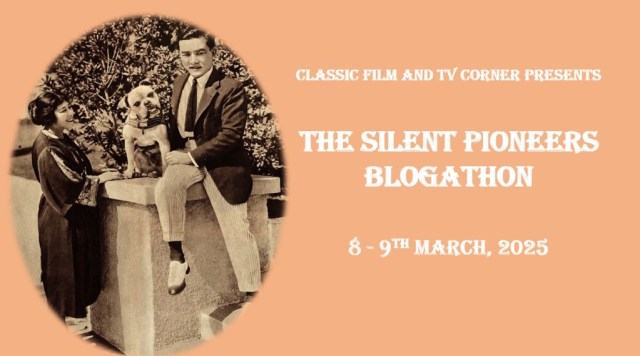
      The Silent Pioneers Blogathon banner created by Maddy from Classic Film And TV Corner

      What I didn’t like about the film:

      Underutilized characters: There were a few underutilized characters in The Phantom of the Opera. Two of them are the new owners of the Opera House. At the beginning of the movie, the ownership of the Opera House changed hands. Not only are the new owners informed of the Phantom’s existence, they are presented with evidence he actually exists. Yet, these owners don’t do anything to remove the Phantom from the Opera House or protect their business from the Phantom. A major reason for this is how the characters were underutilized, making limited appearances throughout the story.

      Little sense of urgency: Like I said in my review, the new owners of the Opera House don’t do anything to remove the Phantom from the Opera House or protect their business from the Phantom. Any time the Phantom makes threats to ruin the show or even when Christine disappeared, there was little sense of urgency to prevent the Phantom’s chaotic plans. The day after Christine went missing, there was a newspaper article written about her disappearance. But no search party was organized to look for her. Even Raoul’s suspicions don’t appear raised when he receives a mysterious note from Christine. When Christine returns at the Bal Masque de l’Opera, no one notices except for Raoul. With all this said, the Phantom doesn’t seem as big of a concern to the Opera House’s community as he should be.

      Unanswered questions: For this part of my review, I will spoil The Phantom of the Opera. If you haven’t seen this film and are planning on watching it, skip ahead to the part of my review titled ‘My overall impression’.

      The 1925 version of The Phantom of the Opera attempts to give the Phantom a backstory. But this attempt leaves the audience with more questions than answers. On a notecard addressing the Phantom’s history, it states he is a “master of Black Art”. This statement is never given an explanation, especially since the Phantom isn’t shown adopting magic or supernatural powers. The notecard also states the Phantom was “exiled to Devil’s Island for criminal insane” and that he “escaped”. No explanation is provided why he was taken to the island in the first place. Did the Phantom actually commit a crime or was he falsely accused, with taking over the Opera House and causing chaos his form of revenge? These are two examples of unanswered questions in The Phantom of the Opera.

      String of musical notes image created by Freepik at freepik.com. <a href=’https://www.freepik.com/free-vector/pentagram-vector_710290.htm’>Designed by Freepik</a> <a href=”https://www.freepik.com/free-photos-vectors/background”>Background vector created by Freepik</a>. Image found at freepik.com. 

      My overall impression:

      1925’s The Phantom of the Opera is considered a classic, not just from the Silent Film Era, but within film history. So, imagine my shock when I discovered the movie was never included on any of American Film Institute’s 100 movies lists. When this film was first released, it brought something new to cinema’s table. The Phantom of the Opera paved the way when it came to the power of make-up. The 1925 picture also showed the world the expansive nature of storytelling through a cinematic lens. This is why, in my opinion, the story of the Phantom and his opera house is better suited for film than the stage. Lon Chaney is one of the most celebrated actors of all time. His role as the titular character proves why that statement holds true. Lon’s ability to transform into the Phantom makes his performance captivating. Beyond the make-up, he effectively uses his eyes and body language to bring emotion to his character. Though the film has its flaws, The Phantom of the Opera still holds up, even a hundred years later. Color coding for each area of the Opera House gave the production a unique identity, as well as distinct significance to these spaces. In a world where silent films are not as common as they once were, I’m thankful for the restoration efforts made for The Phantom of the Opera.

      Overall score: 7.5-7.6 out of 10

      Have you seen 1925’s The Phantom of the Opera? Which story do you wish had been adapted into a silent film? Let me know in the comment section below!

      Have fun at the opera!

      Sally Silverscreen

      Oh Lil Christmas Tree: 2024’s Official Ornament

      2024 marks the 30th anniversary of Touched by An Angel. To honor this occasion, I reviewed three episodes of the show in September. These episodes were “The Southbound Bus”, “Psalm 151”, and “Mother’s Day”. Over the six years of 18 Cinema Lane’s existence, I’ve written about other Touched by An Angel episodes, including “The Spirit of Liberty Moon”. In that episode, Jean explains to Edward and Monica how fortune cookies are an American invention. So, with all that said, this year’s ornament is a golden fortune cookie!

      As I wrote this ‘Oh Lil Christmas Tree’ article, I came to the realization this is the first ornament based on food. Screenshot taken by me, Sally Silverscreen.

      Have fun on Christmas!

      Sally Silverscreen

      The Cabot Cove-thon Blogathon Has Been Brought to You by Our Sponsor; 18 Cinema Lane

      Hello everyone! Now that Cabot Cove-thon has come to an end, I’d like to thank those who participated in the event! While this year’s blogathon received a smaller turn-out, I was impressed by the diversity of the entries. It elaborated my point about how Murder, She Wrote is a multifaceted program. There will be a new blogathon held in 2025! But, as of early October 2024, the event’s theme and dates are pending. Blogathon news will be announced sometime between early to mid 2025. With all that said, 18 Cinema Lane will get back to its regularly scheduled programming!

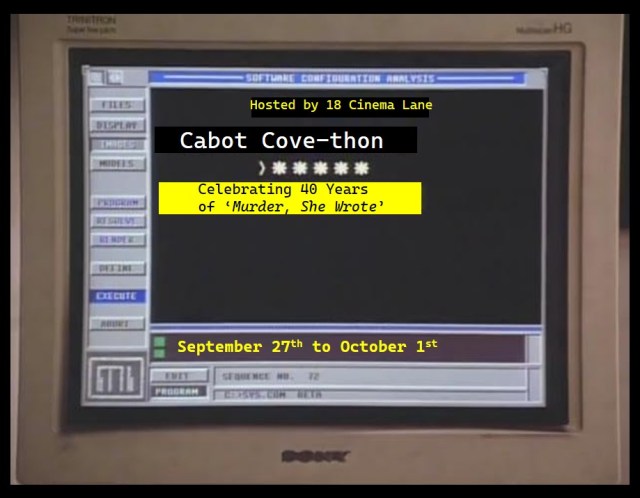
      Cabot Cove-thon banner created by me, Sally Silverscreen. Original picture found on IMDB.

      Have fun in Cabot Cove!

      Sally Silverscreen

      Sally Reads… ‘Murder, She Wrote: Dying to Retire’ by Jessica Fletcher and Donald Bain

      *This book review was written before Hurricane Helene*

      On this day in 1984, Murder, She Wrote made its television debut. What started as a simple story of a woman solving mysteries in her own backyard grew into a legacy standing strong in the test of time. I mentioned in my Cabot Cove-thon announcement post how Murder, She Wrote is a multifaceted program. One contributor is the Murder, She Wrote book series! Two of these books, Murder, She Wrote: The Highland Fling Murders and Murder, She Wrote: The Queen’s Jewels, have been reviewed on 18 Cinema Lane. This time, I’ll be writing about Murder, She Wrote: Dying to Retire! The reason why I selected this book for Cabot Cove-thon, let alone a review, is how the story takes place in Florida. On the first day of my blogathon, I published an editorial about why Universal Orlando Resort should host a fan event called Murder, She Wrote Weekend. Knowing ahead of time I would be discussing the show’s connection to Universal Studios Florida, I thought Murder, She Wrote: Dying to Retire was an appropriate selection!

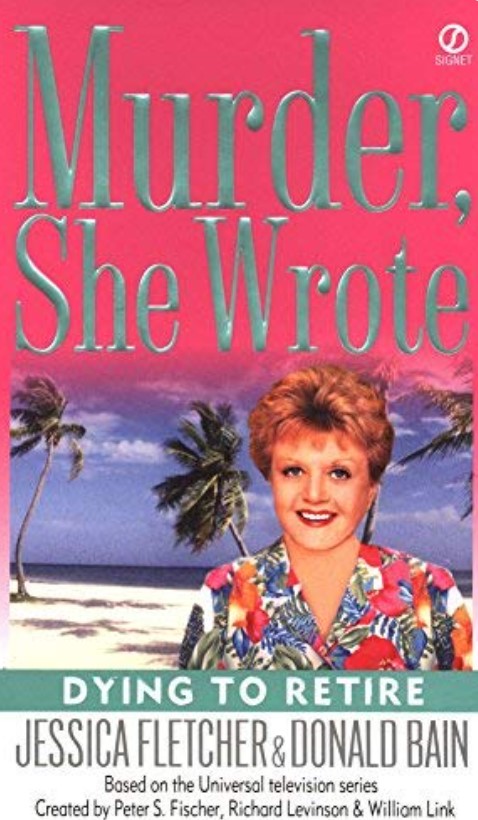
      Murder, She Wrote: Dying to Retire book cover found on Goodreads

      Murder, She Wrote: Dying to Retire is not only the third Murder, She Wrote book reviewed on 18 Cinema Lane, it’s also the third book where Jessica travels outside of Cabot Cove. In these stories, the destinations are exciting and inviting. What made South Florida such an appealing location in Murder, She Wrote: Dying to Retire was the combination of descriptive imagery, facts, and tidbits of information sprinkled throughout the story. While taking a road trip to Key West, Jessica searches for the perfect present for Seth’s friend; a key lime pie. During her search, Jessica (as well as readers) learn about the different ingredients used to make this beloved dessert. Other cultural elements are woven into Jessica’s travels, such as a “ceremony” where residents and visitors of Key West applaud the setting sun. These elements help introduce readers to South Florida, as well as educate them about this destination!

      Colorful travel suitcase image created by Pikisuperstar at freepik.com. <a href=’https://www.freepik.com/free-vector/beautiful-illustration-of-travel_2686674.htm’>Designed by Freepik</a>. <a href=”https://www.freepik.com/free-photos-vectors/watercolor”>Watercolor vector created by Pikisuperstar – Freepik.com</a>. Image found at freepik.com.

      The Murder, She Wrote book series creates original stories instead of rehashing already existing episodes. However, the spirit of the show exists in the books because of the inclusion of characters and locations from Murder, She Wrote. In Murder, She Wrote: Dying to Retire, the characters felt like they either came directly from the show or should have been on the show. This was achieved because of how the dialogue was written and how characters were described. Sam Lewis is a resident of Foreverglades, Florida. He not only volunteers with the local police department, Sam also drives a pink Cadillac and, at one point, even wears purple sneakers. While he is a quirky individual, he is endearing as he tries to make his neighborhood a better place. Sam was so well integrated into the story, he felt like he belonged in Jessica’s world! Sam also represents a consistent strength of the Murder, She Wrote books; the creation of unique, distinct characters.

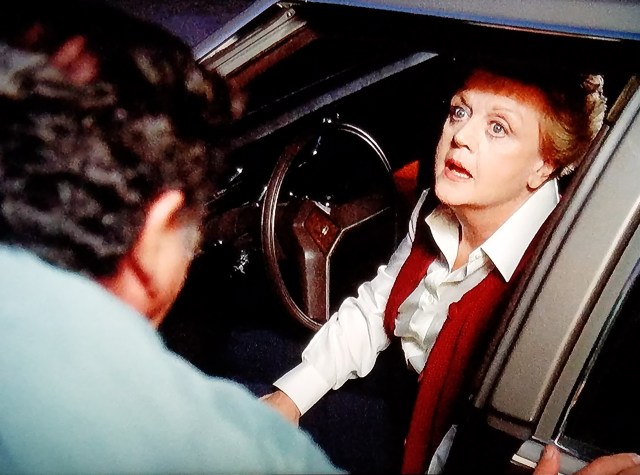
      Even though Jessica takes a road trip in Murder, She Wrote: Dying to Retire, fans of the show would know she wasn’t the one driving. Screenshot taken by me, Sally Silverscreen.

      Murder mystery stories typically contain a sense of urgency. Because the murder takes place within the story, there is an urgent race against time to stop the perpetrator from hurting anyone else. For the majority of Murder, She Wrote: Dying to Retire, however, urgency was lacking. The emphasis on the laid-back, easy-going atmosphere of Florida and the victim being murdered prior to the story are the reasons for this creative flaw. Dialogue is an important component of any story. But Murder, She Wrote: Dying to Retire was dialogue-heavy, with very few non-verbal clues provided. If readers aren’t actively paying attention to what they’re reading, they may miss key information. It also doesn’t help how some of Jessica’s conclusions seemed a bit far-fetched.

      Magnifying fingerprints image created by Balintseby at freepik.com. <a href=”https://www.freepik.com/free-photos-vectors/glass”>Glass vector created by Balintseby – Freepik.com</a>. <a href=’https://www.freepik.com/free-vector/fingerprint-investigation_789253.htm’>Designed by Freepik</a>. Image found at freepik.com.

      When I reviewed Murder, She Wrote: The Queen’s Jewels back in 2022, I claimed that book was my least favorite among the Murder, She Wrote books I read. Two years later, it looks like I found a new least favorite. Murder, She Wrote: Dying to Retire is not a bad book. But most of the story lacking a sense of urgency decreased the mystery’s intrigue and caused the book to, sometimes, feel meandering. A dialogue-heavy story may frustrate some readers, forcing them to actively pay attention or they’ll miss important information. However, there are strengths found in this book. New characters and even familiar faces were well integrated into the story. The South Florida setting was a delight to read about due to the incorporated creative elements. Similar to the show, the Murder, She Wrote book series boasts creative ideas and interesting topics, which always gives Jessica and company something to do. As far as I know, this book series is still in publication. That allows the stories of Cabot Cove to continue, even after the show itself concluded.

      Cabot Cove-thon banner created by me, Sally Silverscreen. Original picture found on IMDB.

      Overall score: 3.1 out of 5 stars

      Have fun in Cabot Cove!

      Sally Silverscreen

      Disclaimer: Murder, She Wrote: Dying to Retire is a murder mystery story, so the subject of murder will be brought up from time to time. Swearing does occur on a few occasions and there are mentions of violence. Other topics include chronic illness, grief, and the fair treatment of older people/the elderly.

      The Cabot Cove-thon Blogathon is Here to Commemorate 40 Years of ‘Murder, She Wrote’!

      Welcome to my blogathon, Cabot Cove-thon! With Murder, She Wrote‘s first episode premiering on September 30th, 1984, this event is commemorating the show’s 40th anniversary! In Murder, She Wrote‘s twelve season lifespan, viewers watched as Jessica successfully cracked each case, whether in her hometown, Cabot Cove, or beyond her own backyard. The show also proved to its audience how diverse the mystery genre can be; telling stories, expressing ideas, and showcasing talent that make each episode unique. The participants of Cabot Cove-thon created articles that highlight the multifaceted nature of Murder, She Wrote. From observing Angela Lansbury’s film career to discussing the show’s theme park presence, let the Cabot Cove-thon Blogathon begin!

      Cabot Cove-thon banner created by me, Sally Silverscreen. Original picture found on IMDB.

      18 Cinema Lane — Why Universal Orlando Resort Should Host ‘Murder, She Wrote’ Weekend, Sally Reads…’Murder, She Wrote: Dying to Retire’ by Jessica Fletcher and Donald Bain

      Taking Up Room — Miss Angela Cruises the Nile

      The Very Special Blog — Happy 40th Anniversary to Murder, She Wrote!

      Sally Watches… Touched by an Angel (30th Anniversary Edition)!

      2024 has hosted several anniversaries, from the 30th anniversary of the Disney animated film, The Lion King, to the 50th anniversary of Little House on the Prairie. But there is one anniversary that can’t be overlooked: the 30th anniversary of Touched by an Angel! With the show premiering on September 21st, 1994, I figured it would be appropriate to review some episodes this month in honor of the occasion. Since I reviewed three individual episodes of Touched by an Angel in the past, I will be writing about three episodes at once this time. Similar to past reviews of television episodes, I’m going to discuss what I liked about the episode, what I didn’t like about the episode, the story itself, the other factors from the episode, and my overall thoughts. Now, let’s talk about the three selected episodes: “The Southbound Bus”, “Psalm 151”, and “Mother’s Day”!

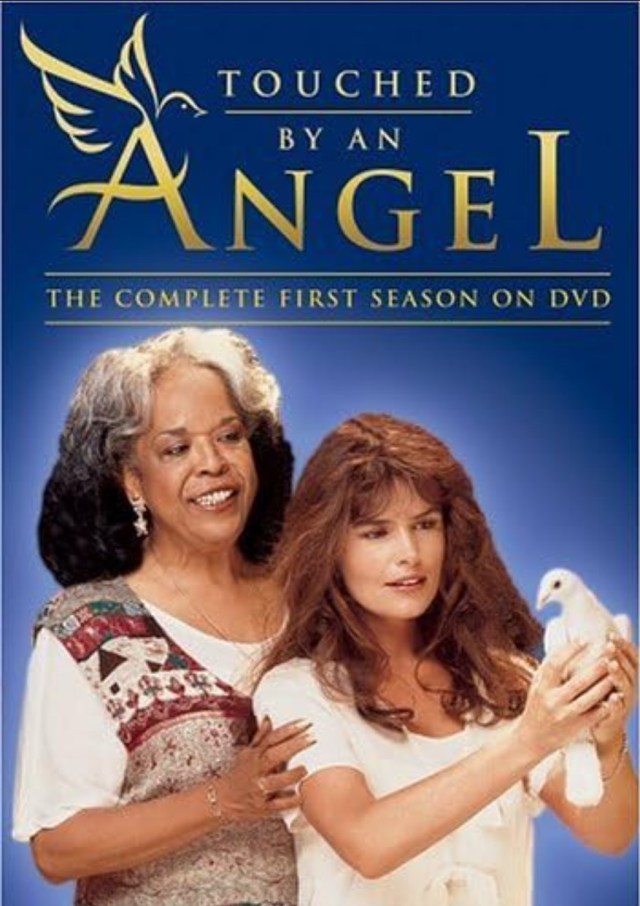
      Touched by an Angel season one DVD poster created by CBS Productions, Caroline Productions, and MoonWater Productions

      Episode Name: The Southbound Bus

      Season 1, Episode 1

      Premiere Date: September 21st, 1994

      What I liked about this episode:

      Touched by An Angel has incorporated serious, real-world topics into their stories; providing the show with dramatic, even sad, moments. But there are times when Touched by An Angel can become light-hearted. One perfect example is when David meets Tess for the first time. Tess arrives at David’s house as his new nanny. Because of hardships he experienced prior to the events of “The Southbound Bus”, David is skeptical of Tess and her new role. Tess, on the other hand, is ready to deal with David’s skepticism. Her no-nonsense attitude and motherly persona make it clear who’s in charge. She even calls David “dinosaur boy”, due to the dinosaur print on David’s shorts. The scene I described was genuinely hilarious because of how well written and acted it was. It also provided a balance between the episode’s light-hearted and serious tones!

      What I didn’t like about this episode:

      When she visits a rest stop known as Hewitt, Monica meets Ruth Ann and Christine. Later in the episode, a run-in with a local police officer forces Ruth Ann to confess to Christine how she’s attempting to flee the FBI due to her association with a criminal. During Ruth Ann’s attempt to flee, Monica pleads with Ruth Ann to confront her past. Monica’s pleading is fruitless, as not only Ruth Ann hitchhikes out of Hewitt, her part of the story is left unresolved. I know there’s only so much story you can tell in an hour-long episode. But if the show’s creative team knew Ruth Ann’s story wasn’t going to receive a resolution, why address it in the first place?

      The story itself:

      As I mentioned earlier in this review, Touched by An Angel has included dramatic, even sad, moments in their stories due to the show’s subject matter. However, as I’ve also mentioned, there are times when the show can become light-hearted. These tones were balanced very well in “The Southbound Bus” as viewers are introduced to Monica, Tess, and their roles as “case workers”! The story jumps right into the action as Monica not only receives an upgrade from “search and rescue”, she also receives her first assignment in her new role. This creative choice grabs viewers’ attention as Monica meets Tess at the bus stop. Touched by An Angel sometimes incorporates plot twists and surprises in their stories which can catch viewers off-guard. There is one plot twist in “The Southbound Bus” that I found really effective!

      The other factors from this episode:

      • For this part of my review, I will spoil “The Southbound Bus”. If you have not seen this episode and are planning on watching it, please skip to the next point in this section.

      When Monica confronts Christine on the loss of her daughter, Monica admits an angel was with Christine’s daughter, Katie, when she died. She also confesses how an angel is with Katie in Heaven. Monica’s statement confused me because I remembered how, prior to this episode, she was on “search and rescue”. Yet, when talking with her friend from “search and rescue”, Adam, Monica didn’t know the history of David’s family. Was Adam with Katie or was it perhaps Andrew, with this detail revealed in a later episode?

      • During her assignment to help David, Monica reconnects with a friend from “search and rescue” named Adam. Through their conversation, Monica receives key information about David’s mother and sister. From what I remember of Touched by An Angel, Adam doesn’t join the show’s main cast. This makes me believe Adam was the precursor of Andrew (who would make his debut in season two).
      • At the beginning of “The Southbound Bus”, Tess reminds Monica how she hasn’t appeared in human form for more than a few moments. This fact causes Tess to warn Monica not to eat everything in sight. Tess’s guidelines for the human world make me wonder what other rules angels have to follow? Were these rules expressed in other episodes?

      My overall thoughts:

      The Southbound Bus” is the very first episode of Touched by An Angel. It’s also the very first time viewers meet Monica, Tess, and the world they interact with. I’d say this was a strong start for not only Touched by An Angel’s first season, but also for the series as a whole! The overall quality of the production sets up what viewers can expect from this show. “The Southbound Bus” addresses serious subjects like grief and neglect. But the way this story was written allowed moments of humor and even hope, providing a balance between serious and light-hearted tones. The dialogue is thought provoking as well, such as when Monica marvels at how humans have the courage to wake up and start a new day. I said in the past how “Perfect Little Angel” would be a good starting point when introducing someone to Touched by An Angel. Another good choice would be “The Southbound Bus”, as that is where it all began!

      Rating: A solid 4 out of 5

      Colorful dinosaur image created by Rawpixel.com at freepik.com. <a href=’https://www.freepik.com/free-photo/various-animal-toy-figures-in-a-colorful-background_3011200.htm’>Designed by Rawpixel.com</a>. <a href=”https://www.freepik.com/free-photos-vectors/background”>Background image created by Rawpixel.com – Freepik.com</a>. Image found at freepik.com.
      Touched by an Angel season five poster created by CBS Productions, Caroline Productions, and MoonWater Productions

      Episode Name: Psalm 151

      Season 5, Episode 9

      Premiere Date: November 15th, 1998

      What I liked about this episode:

      If I could choose one phrase to describe “Psalm 151”, it would be “genuine sincerity”. The reason is how genuine sincerity was the glue that kept this story together! The interactions between the characters felt sincere, giving the impression they truly wanted to respect Petey’s wishes. Cornelia/Celine and Petey’s friendship came across as genuine due to the performances of Mika Boorem and Joseph Cross, as well as the screenwriting. Even Céline Dion’s inclusion in this story felt sincere as she tells Petey and Cornelia/Celine to always focus on the light. This genuine sincerity left me invested in the story and caring about the characters!

      What I didn’t like about this episode:

      Psalm 151”is a music-centric episode because music is one of the story’s main themes. As I mentioned in my review of the episode, “Perfect Little Angel”, Della Reese is a real-life singer. With that said, I think not incorporating Della’s singing talents in “Psalm 151” was a missed opportunity. Like I stated while talking about “The Southbound Bus”, there’s only so much story you can tell in an hour-long episode. This means there’s only so much time to include the singing talents of Céline Dion and Wynonna Judd. I still wish some amount of time had been given to Della so she could sing at least one song.

      The story itself:

      For Monica’s 100th case, the creative team behind “Psalm 151” could have turned this story into a “remember when” episode; where Monica, Tess, and Andrew reflect on flashbacks that occurred in previous episodes. Instead, Monica received a new case containing its own unique conflicts and resolutions. Even though the story of “Psalm 151” was different from preceding episodes, it shared a major similarity with “The Southbound Bus”: the story revolved around a mother and son dealing with a challenging situation. This similarity allowed Monica’s story to come full circle. When a television show chooses to create a musical episode, it can sometimes be met with skepticism due to the concern of the musical episode feeling out of character. But in the case of “Psalm 151”, a musical episode felt like an appropriate choice for Monica’s milestone, especially since Touched by An Angel is known for being a heart-warming, uplifting program.

      The other factors from this episode:

      • Monica celebrates her 100th case by throwing a party. Tess explains to Andrew how Monica wanted coffee-flavored treats at her celebration. When Monica travels to Hewitt in “The Southbound Bus”, she tells Christine and Ruth Ann how coffee was a treat for her, as she consumed coffee so infrequently while on “search and rescue”. This creative detail was a nice throwback to Monica’s very first case!
      • Petey’s friend, Cornelia/Celine, calls herself “Celine” because she adores Céline Dion. In fact, one of Petey’s wishes is for Cornelia/Celine to meet her favorite singer. Céline Dion’s appearance in this episode serves an interesting coincidence. “Psalm 151” premiered in 1998, ten years after Céline won Eurovision. Reviewing this episode now also serves a coincidence, as Switzerland (the country Céline represented) won this year’s Eurovision and Céline performed during this year’s Olympic opening ceremony.
      • While reflecting on the coincidences in “Psalm 151”, I realized there is one coincidence related to Wynonna Judd. 2024 marks the 30th anniversary of when Wynonna performed during the Super Bowl half time show. This is also a coincidence, as 1994 is when Touched by An Angel made its television debut.

      My overall thoughts:

      According to IMDB, “Psalm 151” is a top-rated episode with a score of 9.5 out of 10. Looking back on this episode, I can see why so many people like “Psalm 151”! Touched by An Angel pulled out every stop they could think of for Monica’s 100th case! The screenwriters created a script that allowed Monica’s story to come full circle. This same script also gave viewers characters, interactions, and resolutions that felt genuinely sincere; inviting viewers to care about the characters and stay invested in their story! Musical television episodes can sometimes receive a bad rap due to those episodes feeling out of place among their respective shows. For “Psalm 151”, its musical nature made the episode feel like a joyous celebration. Yet the serious subjects of chronic illness and grief were never overlooked or sugarcoated. If I came up with a list of the top ten best Touched by An Angel episodes, “Psalm 151” would find a place on that list!

      Rating: A strong 4.5 out of 5

      Coffee cup drawing image created by Valeria_aksakova at freepik.com. <a href=”https://www.freepik.com/free-photos-vectors/background”>Background image created by Valeria_aksakova – Freepik.com</a>. <a href=’https://www.freepik.com/free-photo/painted-cup-of-coffee-with-natural-coffee-beans-on-a-chalkboard_1013935.htm’>Designed by Freepik</a>. Image found at freepik.com.
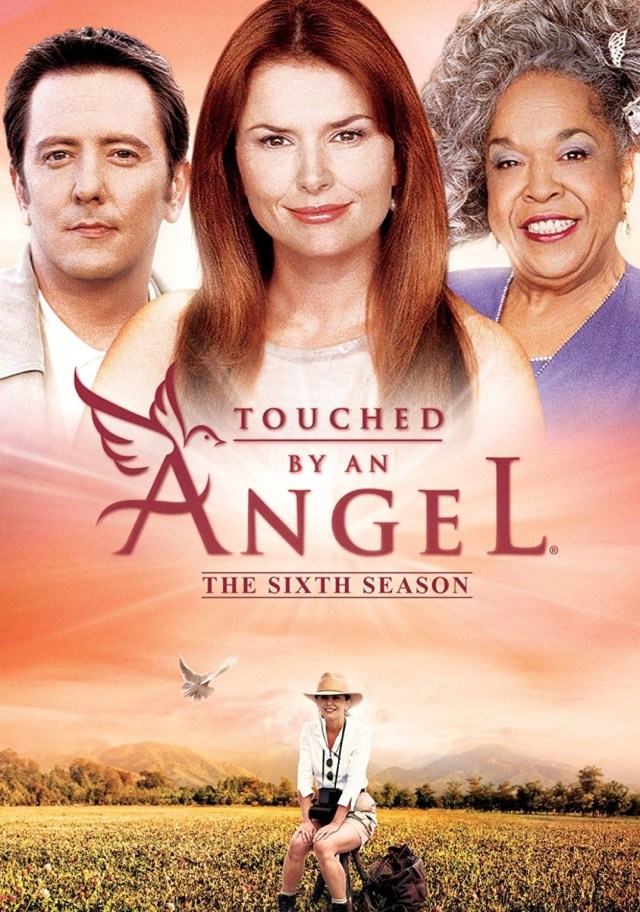
      Touched by an Angel season six poster created by CBS Productions, Caroline Productions, and MoonWater Productions

      Episode Name: Mother’s Day

      Season 6, Episode 25

      Premiere Date: May 14th, 2000

      What I liked about this episode:

      Wynonna Judd is, in my opinion, talented, yet underrated. Even though she guest-starred in “Psalm 151” and “Mother’s Day”, Wynonna’s strongest performance was found in “Mother’s Day”! The emotional intensity Wynonna brought to this episode made Audrey’s grief feel realistic. In a scene where Cornelia/Celine is confronting Audrey about her alcohol addiction, Audrey’s bitter tone, sharp look in her eyes, and anger show how she is not yet ready to handle the truth. Meanwhile, Cornelia/Celine is terrified of Audrey, even becoming sad and tearful by Audrey’s hurtfulness. Wynonna Judd should have, at least, been nominated for an award for her portrayal of Audrey in this episode!

      What I didn’t like about this episode:

      In order to help Audrey cope with Petey’s death, Monica is sent to “The Middle”; giving her the ability to enter Audrey’s dreams. The way these dreams were presented felt out of character for Touched by An Angel. The background and even certain objects were coated in bright, fluorescent colors. Monica would look at Audrey with a blank stare and speak to her in a cryptic manner. Even Petey’s iguana, Fluffy, talks to Audrey. The dreams Monica enters would be described as “trippy”, a word typically not used for a show known for being heart-warming and wholesome.

      The story Itself:

      Mother’s Day” is the follow-up to “Psalm 151”, picking up the story after Petey passed away. The death of Petey causes Audrey to turn further into her grief as well as give up music. While the story has its touching moments and a resolution is found, it undermines the message of “Psalm 151”; how music can help people heal and bring them closer together. Cornelia/Celine understandably misses Petey. Yet her grief is glossed over due to the story primarily focusing on Audrey’s struggles. The story of “Psalm 151” dealt with serious topics such as chronic illness and grief. Yet the genuine sincerity I mentioned earlier in this review is one of the reasons why that episode felt heart-warming, even hopeful. Because Audrey is consumed by grief in the majority of “Mother’s Day”, the story felt depressing.

      The other factors from this episode:

      • Jean Stapleton portrays Emma, an angel who poses as a housekeeper. Reflecting on Jean’s role on All in the Family made me realize how her appearance in this episode was an interesting coincidence. In All in the Family’s two-part episode, “Edith’s Crisis of Faith”, Edith struggles with grief and her faith after her friend is murdered around Christmastime. Touched by An Angel’s episode, “Mother’s Day”, shows Audrey struggling with grief and her faith after the loss of Petey.
      • Without spoiling this episode, I recognize why it is called “Mother’s Day”. Yet, in my opinion, this is a story that could have taken place any time of year presenting a similar outcome. When a television show episode is holiday themed, messages connected to that holiday serve as threads throughout the story. With all that said, it makes me wonder why, out of all the holidays on the calendar, was Mother’s Day selected for this episode? Why not Christmas or Petey’s birthday?
      • When I talked about “Psalm 151”, I mentioned how 2024 (the year I’m reviewing the episode) marks the 30th anniversary of when Wynonna performed during the Super Bowl half time show. It should also be noted that Naomi Judd also performed in 1994’s Super Bowl half time show, where she and Wynonna sang “Love Can Build a Bridge”. The reason why I’m bringing this fact up is because Naomi appears in “Mother’s Day”.

      My overall thoughts:

      When it comes to “Mother’s Day”, I’m honestly torn. Earlier in my review, I pointed out how “Psalm 151” is a top-rated episode on IMDB. Therefore, it makes sense for a popular episode to receive a follow-up. On the other hand, “Mother’s Day” isn’t as strong as “Psalm 151”. The message of music helping people heal and bringing them closer together is undermined as Audrey is consumed by grief for the majority of the episode. Even though there are touching moments in this story, as well as a resolution, the overall presentation didn’t feel as heartwarming or hopeful as “Psalm 151” or even “The Southbound Bus”. However, Wynonna’s portrayal of Audrey was a highlight of this episode, as her emotional intensity showed a more realistic depiction of grief. I also thought Mika Boorem gave a solid acting performance, showing how Cornelia/Celine tried to provide the thread that kept her world together. “Mother’s Day” is not a bad episode. But its weaker production kind of makes me wish a different episode had received a follow-up instead.

      Rating: A 3.5 out of 5

      Breakfast tray image created by Freepik at freepik.com. <a href=’https://www.freepik.com/free-photo/composed-healthy-fruit-and-coffee-on-tray_1441643.htm’>Designed by Freepik</a>. <a href=”https://www.freepik.com/free-photos-vectors/background”>Background image created by Freepik</a>. Image found at freepik.com.

      Have fun on television!

      Sally Silverscreen

      One Month Until the Cabot Cove-thon Blogathon Arrives!

      Are you a fan of Murder, She Wrote? Do you want to participate in a blogathon that is fun and creative? If you answered yes to these questions, then come join my blogathon, Cabot Cove-thon! The event starts on September 27th, so you still have time to sign up. Plus, there are plenty of topics to choose from! To learn more about Cabot Cove-thon, click on the link below.

      Celebrating 40 Years of ‘Murder, She Wrote’ with the Blogathon; Cabot Cove-thon!