Top 10 Movies I’d Love to Review

Last year, when I reviewed Let Him Go, it became my 275th movie review! But that wasn’t the only movie review that achieved a milestone. My recent review, Dr. Phibes Rises Again, was my 650th post! With these achievements, I decided to write a top ten list, as I haven’t published one yet. Whenever I wanted to review a particular title, I have, for the most part, been able to seek that title out. While most of them have been accessible, some of those films were harder to find. The idea of film accessibility caused me to reflect on which movies I would love to review someday. Therefore, my list of the Top 10 Movies I’d Love to Review was born! The films featured in this list are underrated/lesser known. They were also released over ten years ago. This was a conscious choice, as it keeps each entry on an equal playing field. The entries are listed based on how accessible they are. In this case, “accessibility” means whether I can legally and realistically rent, purchase, or view a film.

Wish list image created by Vectorjuice at freepik.com. Task list vector created by vectorjuice – www.freepik.com

10. A Little Romance

I first saw the trailer for A Little Romance years ago on Turner Classic Movies (TCM). The movie looked so sweet and charming based on what my television screen presented. Looking back on the trailer, the story seems like a light-hearted version of Rich Kids; where two young characters go off on an adventure. This is ironic, as both Rich Kids and A Little Romance were released in 1979. I have not only found several DVD copies of A Little Romance, but I am able to rent the film. So, a review of this movie will have to be in order in the foreseeable future!

9. The Lost Empire/The Monkey King

Some of Bai Ling’s projects have been reviewed on 18 Cinema Lane. In fact, one of my most recent movie reviews was of her 2002 HBO film, Point of Origin. So, when I discovered Bai starred in a Hallmark movie, I knew I had to, eventually, check it out. Based on what I know about the 2001 project, the story is based on Chinese folklore. This is a very different and unique film concept from the types of movies Hallmark creates today. Similar to A Little Romance, I have found several DVD copies of The Lost Empire/The Monkey King. The full movie is available on Youtube as well.

8. Alex: The Life of a Child

Long before 18 Cinema Lane came along, I had learned of Alexandra Deford’s story. After reading Alex: The Life of a Child, I wanted to see its respective adaptation. For the longest time, a twelve-dollar donation to the Cystic Fibrosis Foundation was the only way to receive a VHS copy of the movie. But if you visit the non-profit’s website, there is no mention of the film or how to acquire a copy of it. Fortunately, the full movie has been posted on Youtube. So, expect a review of Alex: The Life of a Child in the near future!

7. A Circle of Children and Lovey: A Circle of Children Part II

One of Judy Garland’s movies I like is A Child Is Waiting. For those who aren’t familiar with the 1963 title, Judy portrays a music teacher who works at a school for students with special needs. A decade after the release of A Child Is Waiting, two made-for-tv films, A Circle of Children and Lovey: A Circle of Children Part II, aired. Unlike Judy’s movie, the aforementioned productions are based on the true story of a teacher named Mary MacCracken. Her books were not only the source material for these movies, Mary was also one of the screenwriters for both films. While I haven’t found a physical copy of either movie, A Circle of Children and Lovey: A Circle of Children Part II have been uploaded on Youtube. With everything said, these titles could serve a future double feature!

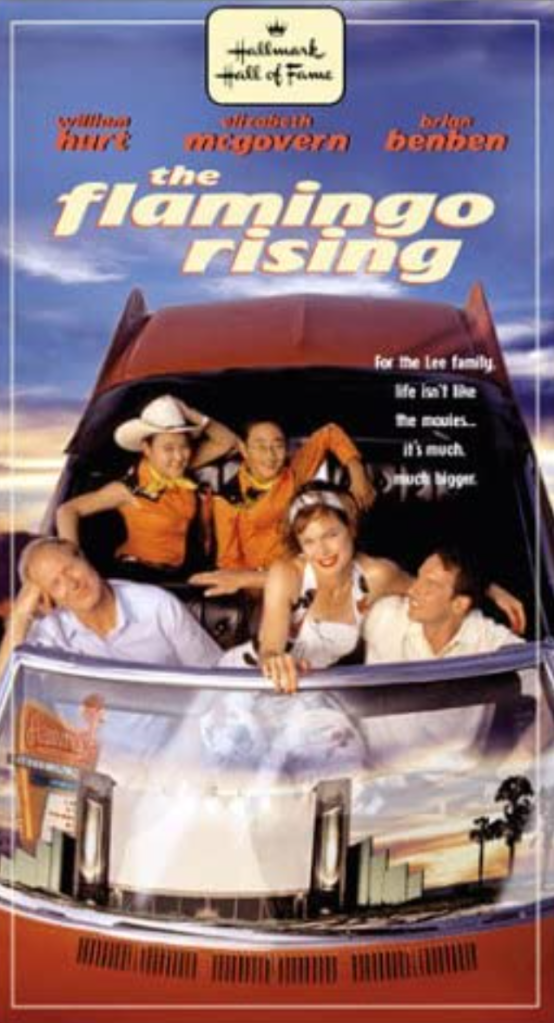
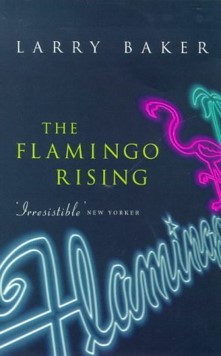
6. Hallmark Hall of Fame’s Redwood Curtain and The Flamingo Rising

I’ve said before on 18 Cinema Lane how some Hallmark Hall of Fame titles were only sold on VHS. This exclusivity has encouraged me to seek them out. Even though I’d like to see as many of those films as realistically possible, Redwood Curtain and The Flamingo Rising are at the top of my wish list! Each synopsis sounds interesting and Asian/Asian American stories are far and few between in the Hallmark Hall of Fame collection. As of late June 2022, both Redwood Curtain and The Flamingo Rising are available on Hallmark’s streaming service, Hallmark Movies Now. I have also found some copies on VHS.

On-line movie purchase image created by Makyzz at freepik.com. <a href=’https://www.freepik.com/free-vector/on-line-order-cinema-movie-tickets_1577652.htm’>Designed by Freepik</a>. <a href=”https://www.freepik.com/free-photos-vectors/technology”>Technology vector created by Makyzz – Freepik.com</a>. Image found at freepik.com.

5. An Old Fashioned Christmas

I have gone on record to state An Old Fashioned Thanksgiving as one of my favorite Hallmark films. Two years after that movie’s release, Hallmark aired a sequel titled An Old Fashioned Christmas. This is one of Hallmark’s unique Christmas offerings, as it is a period drama. The story also takes place in and was filmed in Ireland. I have come across a few DVD copies of An Old Fashioned Christmas. However, these copies were included in Christmas movie box sets, which have been, more often than not, expensive. The 2010 film has an official page on Hallmark Drama’s website. But the movie isn’t scheduled for any upcoming presentations. Hopefully, when Christmas time rolls around, An Old Fashioned Christmas will appear among the network’s selection of seasonal titles.

4. She Couldn’t Say No

This 1953 comedy starring Jean Simmons and Robert Mitchum was originally recommended to me by one of my readers. Since then, I have been trying to find a way to, legally and realistically, watch the movie. No VHS tapes or DVDs of this title have been attainable, as of late June 2022. She Couldn’t Say No has also not been posted on Youtube. Similar to An Old Fashioned Christmas, the 1953 movie does have an official page on Turner Classic Movies’ website. But it doesn’t look like the movie will air on the channel anytime soon. The only option I have left is to wait for the Youtube channel, Cult Cinema Classics, to upload the movie.

3. Oliver 2: Let’s Twist Again

While looking for a title to review for the upcoming Other Than A Bond Girl Blogathon, I came across this project on Diana Rigg’s IMDB filmography. As soon as I read the title, it gave off Breakin’ 2: Electric Boogaloo vibes. Because of that, I thought I had finally found my “so bad, it’s good” movie. But I discovered Oliver 2: Let’s Twist Again is a “Dickens spoof broadcast as part of the BBC’s 1995 “Comic Relief” telethon”. As someone who enjoyed the 1968 musical, Oliver!, I am curious to see what an Oliver Twist sequel would look like. But as of the publication of this list, there have been no uploads on Youtube of Oliver 2: Let’s Twist Again. For now, it would be considered “lost media”.

2. The Tim Pope Cut of The Crow: City of Angels

I won’t talk about this entry too much, as I’ve already talked about it in depth in my editorial, Why Now is the Perfect Time to Release the Tim Pope Cut of ‘The Crow: City of Angels’. Personally, I’d consider the Tim Pope Cut a “partial lost film”. The film itself isn’t lost, but this version of it is. Since publishing my aforementioned editorial, it has garnered over a thousand views and counting! This tells me there’s a desire to find and restore the Tim Pope Cut. But, as of late June 2022, this version of the movie hasn’t been restored. For now, all there is to do is wait and “trust the timing”.

1. Four Devils

For those not familiar with this title, Four Devils is a 1928 project that is considered one of the most infamous lost films. The movie revolves around four siblings who form a circus act called the “four devils”. I don’t always receive an opportunity to review films from the 1920s. Therefore, writing about Four Devils would provide unique and intriguing content for my readers. Like I said about the Tim Pope Cut of The Crow: City of Angels, there has been no recent development in the retrieval of Four Devils. In the meantime, I guess I’ll find the book this movie is based on and read that.

People working on films image created by Katemangostar at freepik.com. <a href=”https://www.freepik.com/free-photos-vectors/business”>Business vector created by katemangostar – http://www.freepik.com</a>. Image found at freepik.com.

Have fun at the movies!

Sally Silverscreen
Take 3: The Sundowners (1960) Review

Here at 18 Cinema Lane, I try to go out of my way to watch, and review, as many film recommendations as possible. In fact, I have a board on Pinterest dedicated to these recommendations. Two years ago, when I reviewed Marriage on the Rocks, Maddy, from Maddy Loves Her Classic Films, suggested I check out the 1960 picture, The Sundowners. Shortly after Debbie, from Moon in Gemini, invited me to her Foreign Western Blogathon, I finally found an opportunity to write about the movie! The Sundowners fits two of the four blogathon categories: ‘directed by foreign directors’ and ‘shot in a foreign country’. According to IMDB, the film’s director, Fred Zinnemann, is from Austria-Hungary. The movie was also filmed in Australia, where the story takes place. Foreign westerns are not a new concept on 18 Cinema Lane. Neither are Australian films. Within the four years of my movie blogging journey, I reviewed Another Man, Another Chance, Interrupted Melody, and Hallmark Hall of Fame’s Durango. If you’re interested, I’ll provide the links to these reviews toward the beginning of this article.

Take 3: Another Man, Another Chance Review

Take 3: Interrupted Melody Review

Take 3: Hallmark Hall of Fame’s Durango Review

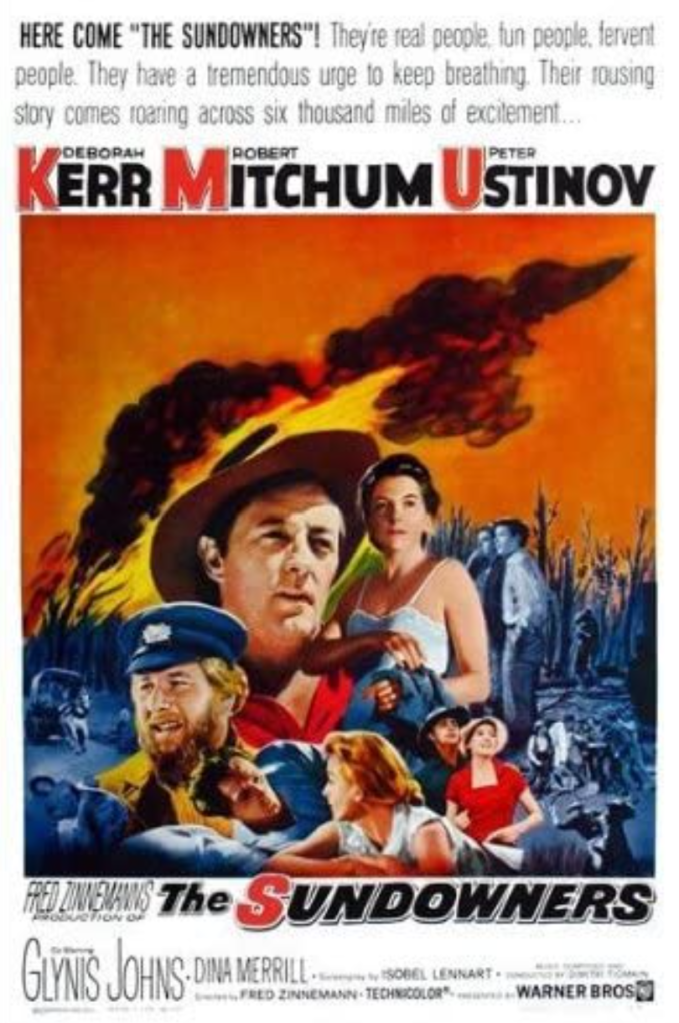
The Sundowners (1960) poster created by Warner Bros.

Things I liked about the film:

The cinematography: Like I said in the introduction, The Sundowners was filmed in Australia. The movie’s creative team took advantage of the country’s natural surroundings through cinematography! One long shot showcased Australia’s farmlands. What made this shot beautiful were the rays of sunlight showering over the green landscape, offering a light only nature could provide. The cinematography also did a good job putting things into perspective. During a forest fire, Ida is driving her family’s wagon away from the forest. While this maneuver is taking place, the camera is situated inside the back of the wagon. It looks out toward the road, giving the audience the illusion they are riding in the wagon with Ida.

Higher stakes: When I reviewed Hallmark Hall of Fame’s Durango last year, I talked about low stakes being one of the film’s biggest flaws. In The Sundowners, higher stakes were featured in a few scenes! A notable example is the forest fire I previously mentioned. While the Carmody family is herding sheep, a nearby forest fire breaks out. This leads all the characters to be in danger. The scene chronicled the entire process of the fire, starting from the detection of smoke and ending in the fire’s aftermath. Cut-away shots of scared wildlife are spliced into the story, emphasizing the other lives in harm’s way. Dramatic music can be heard in the background, elevating the sense of urgency. With all these elements combined, this scene was the perfect example of the higher stakes I expect from a western film!

The historical accuracy: With any “period film”, the historical accuracy can make or break that production. In the case of The Sundowners, the story takes place in the 1920s. From the looks of it, the 1960 project appears historical accurate! The forms of transportation are one indicator. While the Carmody family is working on the sheep farm, the employees sometimes rode in antique trucks with open beds. At least one motorcycle is featured in the story, revealing exposed gears and a model very different from the motorcycles of today. A covered wagon is the preferred vehicle of the Carmody family, with Paddy and Sean riding horses on a few occasions. This aspect of the film’s historical accuracy reminded me of a production like The Grapes of Wrath.

The Foreign Western Blogathon banner created by Debbie from Moon in Gemini

What I didn’t like about the film:

A “slice of life” story: Westerns, like any genre, contain a wide range of narratives. If given the choice, I’d rather watch a western with, at least, one conflict instead of a story that’s more “slice of life”. Unfortunately, the majority of The Sundowners is a “slice of life” story. The script primarily focuses on the daily operations of sheep farming. At first, this topic was interesting. But as the film carried on, the elements of sheep farming became repetitive. Had this movie contained one or two major conflicts, I might have found this story more intriguing.

Lack of Irish accents: According to Wikipedia, the Carmody family is Irish, a fact Sean tells Rupert early in the film. Michael Anderson Jr., Robert Mitchum, and Deborah Kerr must have missed that detail in the script, as none of them could successfully carry an Irish accent. Throughout The Sundowners, Deborah sounded like she was speaking in a British accent. Meanwhile, Robert and Michael sounded Australian. I don’t think Robert, Deborah, and Michael are bad actors. In fact, pulling off any accent can be a difficult skill to master. However, their lack of Irish accents was, for me, jarring.

The run-time: The Sundowners contains a straight-forward story about a family searching for employment in order to afford a place of their own. With that said, I found it unnecessary for the film’s run-time to be two hours and thirteen minutes. Some scenes felt drawn out in an attempt to satisfy this run-time, the shearing contest Paddy enters being one example. That scene lasts about five minutes, even though it could have only featured the most exciting parts of the contest. If scenes like that one had been cut shorter, the movie could have had a run-time of about an hour and thirty minutes.

A “bait and switch” ending: In my review of 1961’s The Pit and the Pendulum, I incorporated spoilers to explain my thoughts on a specific portion of the movie. Similarly, I will be including spoilers in this part of my review. If you haven’t seen The Sundowners, please skip this part and continue reading where it states “My overall impression”.

As I stated earlier in this review, The Sundowners contains a straight-forward story. I also stated how the movie is two hours and thirteen minutes. Within that run-time, the Carmody family receives the funds to afford a farm that was featured toward the beginning of the film. All seems to be going well until the last ten minutes in the story. While in a drunken state, Paddy makes several I-O-Us, losing the family’s finances in the process. In an attempt to earn back some of those funds, the family enters their race-horse, Sundowner, in an upcoming horse race. Not only does Sundowner and Sean win the race, Paddy also wins a bet. Even though they have enough money to make a down payment on the aforementioned farm, Ida changes her mind, saying Paddy can keep the race horse instead. This statement contradicts Ida’s goal throughout the movie; getting a place to put down roots. Moments later, an announcement declares Sundowner is disqualified from the race due to a pass interference. This means the Carmody family lost all the money they just won. The movie ends exactly how it begins; with the family on the road looking for employment and a place to stay. If I had known the story would end this way, I wouldn’t have become invested in the Carmody family’s ordeal.

Horse with saddle photo created by Topntp26 at freepik.com. <a href=’https://www.freepik.com/free-photo/stallion-black-equine-race-sky_1104246.htm’>Designed by Freepik</a>. <a href=”https://www.freepik.com/free-photos-vectors/background”>Background image created by Topntp26 – Freepik.com</a>. Image found at freepik.com.

My overall impression:

When it comes to film-making, one of the worst things you can do is waste the audience’s time. The way I feel about The Sundowners is similar to how I felt about The Birds; like I truly wasted two hours and thirteen minutes. I understand circumstances in western films aren’t always fair. Heck, life itself is sometimes unfair. But what is also not fair is giving your characters and audience hope for two hours, then taking that hope away in the film’s last ten minutes. With the way The Sundowners turned out for me, it almost seemed like history repeated itself. As I mentioned in this review, I wrote about Hallmark Hall of Fame’s Durango last year. That 1999 presentation was a foreign western I didn’t like. Both Durango and The Sundowners have one thing in common. Even though there were things about each film I liked, they contained a weak script. A script is the foundation of any cinematic production. If it isn’t strong, there’s only so much you can do to remedy the issue. Before I end this review, I want to make it clear that I have nothing against foreign westerns or Australian cinema. I’m confident there are stellar Australian and foreign western pictures I haven’t seen yet. Unfortunately, The Sundowners isn’t one of them.

Overall score: 4.7 out of 10

Have you watched any foreign westerns? If so, which ones would you recommend? Let me know in the comment section!

Have fun at the movies!

Sally Silverscreen

Take 3: The Pit and the Pendulum (1961) Review

For The Corman-Verse Blogathon, I was originally going to review the 1996 film Kyoko/Because of You. The only way I could watch the movie is if I purchased a DVD copy. Unfortunately, the copy I bought would not arrive in time for the blogathon. Even though I do plan to review Kyoko/Because of You in the near future, I needed to select a back-up film to write about for the event. While scrolling through Roger Corman’s filmography, I discovered he directed the 1961 adaptation, The Pit and the Pendulum. Since no other participant had selected the film, I chose to review this movie instead. Vincent Price is no stranger to 18 Cinema Lane. As of the publication of this review, The Pit and the Pendulum is the ninth movie of Vincent’s I’ve seen. The majority of his films have been enjoyable to varying degrees. So, where does the 1961 title lie? You won’t know that answer unless you read this review!

The Pit and the Pendulum (1961) poster created by Alta Vista Productions and
American International Pictures

Things I liked about the film:

The acting: As I said in the introduction, The Pit and the Pendulum is the ninth movie of Vincent’s I’ve seen. Among most of these films, Vincent’s acting talents have been on full display, allowing the audience to witness just how versatile of an actor he is. In the 1961 adaptation, Vincent portrays Nicholas Medina. Throughout the story, Nicholas is overcome not only by the loss of his wife, but also by trauma he experienced as a child. When Francis Barnard, the film’s protagonist, questions the cause of his sister’s death, Nicholas’ eyes appear both concerned and wounded. This is because he wants to protect Francis from the truth and himself from the grief. During Francis’ stay in the Medina Castle, Nicholas shows Francis Elizabeth’s (his wife and Francis’ sister) room. While reminiscing over his time with Elizabeth, Nicholas is suddenly overcome with sorrow. With a quivering lip and tear-filled eyes, he bursts out crying, longing for his dearly beloved.

 Like I previously mentioned, Francis Barnard is the film’s protagonist. Portrayed by John Kerr, this character was a good representative of the audience. What I mean by this is he and the audience were in the same boat, figuring things out as they go along. That element of the story gave viewers an opportunity to connect with the character. What also worked in John’s favor is how consistent his performance was. Throughout The Pit and the Pendulum, Francis was suspicious of the Medina Castle and the people who lived there. His face was set in a serious expression; mouth displaying a tight, straight line and eyes in a scowling manner.

Nicholas’ sister, Catherine, is one of the people Francis meets. Catherine, portrayed by Luana Anders, reminded me of Snow White from the 1937 animated classic, Snow White and the Seven Dwarfs. This is because she showcased a gentle concern toward the characters around her. But unlike the cartoon princess, Catherine contributed more to the story, instead of being a more passive participant. When she and her brother are first confronted by Francis about Elizabeth’s death, Catherine shows worry on her face. However, the reason for her facial expression was different from Nicholas’, as she wonders how she will reveal the truth to Francis. Later in the film, Catherine explains Nicholas’ past trauma to Francis, in an effort to show him her brother is being honest. This time, her expressions show more understanding, appearing calmer and sure of herself.

The set design: The Pit and the Pendulum takes place inside the Medina Castle, during the year 1547. While I’m not a historian when it comes to this particular era, I will say the set design appeared historically accurate! Each room of the castle was spacious, presented in long to medium shots to showcase their size and scope. Though the walls were a mix of white and caramel marble, they were covered with exquisite artwork. In Francis’ room, there was a wall-sized piece of tapestry. Elizabeth’s room boasted her portrait, which captured her in blue and purple hues. The rooms in Medina Castle also included elaborate pieces of furniture. A gold canopy bed in Elizabeth’s room displayed small, detailed carvings on the footboard.

The mystery: When I talked about John Kerr’s performance, I said his character, Francis, was in the same boat as the audience. That’s because this is the type of mystery story where the audience figures things out alongside the protagonist. Out of the mystery movies I’ve seen in my life, I find these types of stories to be some of the more engaging ones in the genre. They give viewers the illusion they are experiencing a journey with the main character. The mystery in The Pit and the Pendulum started right away and was carried until the movie’s end. As the story moved forward, the reveal of certain secrets was evenly paced throughout the script. This allowed the film’s momentum to remain consistent and keep the story intriguing!

The flash-back scenes: In a few moments of the movie, flash-back scenes were used to explain things that happened in Nicholas’ past. One example is when Nicholas himself is telling Francis how Elizabeth passed away. Those flash-back scenes were narrated by Vincent Price and were coated in a single-color hue. For instance, in the days of Nicholas and Elizabeth’s happier times, the scenes were displayed in either green or blue. The way the flash-backs were presented made them feel distinct from the “current” events. They also brought Nicholas past to life.

The Corman-Verse Blogathon banner created by Gill from Realweegiemidget Reviews and Barry from Cinematic Catharsis

What I didn’t like about the film:

The prolonged appearance of The Pit and The Pendulum: I’ve gone on record to say a movie’s title, sometimes, serves as a promise to the audience. There is a pit and pendulum in this film. But they appeared in the movie’s last eleven minutes. It’s been years since I’ve read anything by Edgar Allan Poe, so I’m not sure which parts of the story are straight from the source material. However, I kind of wish the pit and pendulum would have appeared in the movie sooner.

A somewhat confusing climax: For this part of the review, I will be bringing up spoilers. While I typically try to leave spoilers out of my reviews, I feel I can’t fully explain my points without including them. If you haven’t seen 1961’s The Pit and the Pendulum, please skip this part and continue reading where it states “The underutilization of Maximillian”.

In The Pit and the Pendulum, Francis, and the audience, learn Elizabeth died of shock. But throughout the film, Nicholas is convinced he killed his wife. To prove Nicholas didn’t kill Elizabeth, Francis and Doctor Leon open Elizabeth’s grave, revealing a skeleton. But toward the end of the movie, Nicholas discovers Elizabeth had been alive that whole time. Even though he is overcome by shock, Nicholas pulls out of it, believing he is his father, Sebastian. Looking back on the film, I wonder if Nicholas assumed his father’s identity because the grief and trauma made him take a psychological turn for the worse? Or did Nicholas know about Elizabeth and Leon’s affair that entire time, using the “shock” as the perfect opportunity for revenge? Also, where did Leon and Elizabeth find a skeleton for their plan?

The underutilization of Maximillian: In a handful of moments, a servant named Maximillian appeared in the movie. At one point, I honestly thought he would play a bigger role in the mystery. Unfortunately, Maximillian was underutilized throughout the story. It felt like this character was included in the movie just for the sake of it.

Castle photo created by Photoangel at freepik.com. <a href=’https://www.freepik.com/free-photo/old-castle-in-the-mountians_1286237.htm’>Designed by Freepik</a>. <a href=”https://www.freepik.com/free-photos-vectors/tree”>Tree image created by Photoangel – Freepik.com</a>. Image found at freepik.com.

My overall impression:

When it comes to movie blogging, things don’t always go according to plan. That was the case when I chose to review The Pit and the Pendulum. Looking back on the film, I realize this change of plans ended up being a good thing. For starters, I had the opportunity to review one of Vincent’s films on his birthday, which happens to be today. The film in question was also a pleasant surprise because of how good it was! The Pit and the Pendulum is an engaging and intriguing mystery from start to finish. This is one of the more effective horror movies, similar to titles like 1962’s Cape Fear. Vincent Price is one of those actors I’ve come to appreciate the more of his films I watch. After watching The Song of Bernadette, I thought it would be so cool to hear Vincent read some of Edgar Allan Poe’s work. Because of his involvement in The Pit and the Pendulum, my wish kind of came true. I also discovered, in 1970, Vincent was the narrator of An Evening of Edgar Allan Poe. Since I enjoyed the 1961 adaptation so much, I’ll have to seek that production out!

Overall score: 8.1-8.2 out of 10

Have you seen any adaptation of The Pit and the Pendulum? Did you read Edgar Allan Poe’s literary work? Let me know in the comment section!

Have fun at the movies!

Sally Silverscreen

Take 3: The Song of Bernadette Review

Shock and sadness. That’s how I felt when I discovered the passing of Patricia, from Caftan Woman, on Twitter. Upon hearing the announcement of the Caftan Woman Blogathon, I wanted to participate as a way to pay my respects to a fellow blogger. Over the years, Patricia has recommended several films for future reviews. So, it was only fitting for me to choose one of her suggestions for the event. Since the blogathon is commemorating a loss, I felt The Song of Bernadette was the most appropriate choice out of the recommendations on my Pinterest board. This also compliments other religious/faith-based films I’ve reviewed in the past, such as Ben-Hur and The Carpenter’s Miracle. With all that said, let’s start this review of The Song of Bernadette.

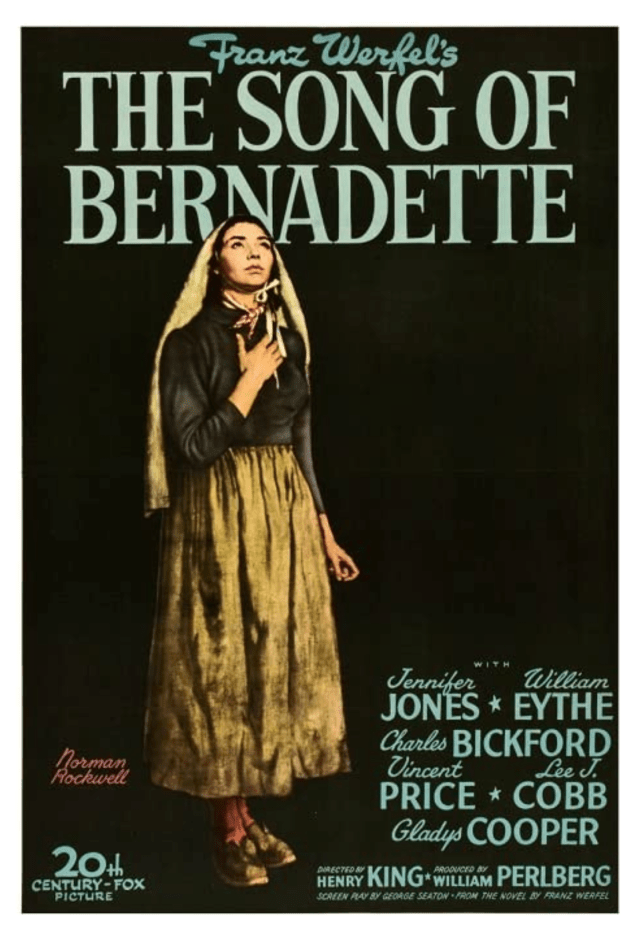
The Song of Bernadette poster created by 20th Century Fox

Things I liked about the film:

The acting: One of my favorite movies is Portrait of Jennie. Jennifer Jones’ consistent and captivating performance is one of the reasons why I love that film so much. In The Song of Bernadette, Jennifer’s portrayal of the titular character reminded me of her portrayal of Jennie. This is because she has a talent for pulling off an innocent demeanor without coming across as childish or immature. Throughout the film, Bernadette claims she is dumb. Yet, when asked what a sinner is, she tells the local reverend a sinner “is someone who loves sin”. The reverend even comments how Bernadette chose to say “loves sin” instead of “commits sin”. Personality wise, Jennifer brought a gentleness to her character. When speaking with one of Lourdes’ members of police, the policeman gets details of Bernadette’s story wrong. In a polite manner, Bernadette corrects him, pointing out the policeman’s errors in a soft-spoken voice. This innocence and gentleness allowed Bernadette to be taken seriously by the audience.

On 18 Cinema Lane, I have reviewed several of Vincent Price’s films. In most of these movies, Vincent portrays a character that can exude a sense of fear for the audience. But in The Song of Bernadette, his role of Vital Dutour was very different from his other roles. One reason is how Vincent is a part of an ensemble instead of a main focus in the story. Another reason is how Vital’s actions and choices were not chosen to cause fear. Despite all of this, Vincent carries his character with elegance and arrogance. In an effort to get to the bottom of Bernadette’s “visions”, Vital questions her story in his office. He speaks to Bernadette with a stern voice and presents a no-nonsense attitude. By interacting with her in this way, Vital is attempting in enforce his authority, thinking he will get his way. But because of Bernadette’s strength in her faith and her innocent demeanor, she is able to stand up to Vital. With that, both Jennifer Jones and Vincent Price are able to, acting-wise, go toe-to-toe with each other!

The set design: The Song of Bernadette takes place in the French countryside of 1858. But according to IMDB, the movie was filmed in California. Despite this, the set didn’t look like a set. Instead, it looked like a small French town from the 1850s! The architecture of Lourdes’ buildings was simple. Materials such as stone cover these structures. A traditional roof shingle design is displayed on top of these buildings. Like any well-researched production, the attention to detail was not overlooked! Vital’s office boasts two impressive things: a large desk and fireplace. The desk is a big piece of furniture that is coated in darker wood. Small, gold detailing can be found on the side of the desk. The fireplace is a massive marble structure, with etched detailing just below the mantle. Attention to detail and thorough research made this on-screen world an immersive environment!

Correlations with Biblical stories: When I reviewed the 1959 film, Ben-Hur, I talked about how certain Biblical events were incorporated into the overall story. With The Song of Bernadette, I could pick out moments that felt like unintentional correlations with some stories from the Bible. Toward the beginning of the film, Bernadette’s father is hired to dispose dirty rags from hospital patients. Shortly after being hired, Bernadette’s father can be seen pulling the wagon filled with dirty rags up a hill. This scene reminded me of the Crucifixion story, when Jesus is carrying the cross. The scene can also serve as a reminder how everyone has their own cross to bear, literally or figuratively. After Bernadette sees her first “vison”, Bernadette’s neighbors offer Bernadette’s family extra food they had acquired. The neighbors’ multiplying of food is reminiscent of the story where Jesus multiplied two fish and five loaves. Because this scene takes place after the first “vision”, I saw it as a miracle similar to the aforementioned Biblical story.

Using little to no dialogue: In two scenes, the movie’s creative team did a great job using little to no dialogue! One of them was the aforementioned scene where Bernadette’s father climbed up the hill. Orchestral music replaces any dialogue, which captures the emotions of Bernadette’s father. A long shot showcases the journey, elaborating how small Bernadette’s father is compared to the hill. This scene visually explained how difficult his life is. Another scene that used no dialogue is when Bernadette experiences her first “vision”. Not only is orchestral and choir music incorporated, the creative team uses a spotlight to accentuate Jennifer’s facial expressions. At one point in this scene, wind blew unexpectedly, signaling something was about to happen. Both scenes were able to say so much while saying so little!

The Caftan Woman Blogathon banner created by Lady Eve from Lady Eve’s Reel Life and Jacqueline from Another Old Movie Blog

What I didn’t like about the film:

The under-utilization of Antoine and his mother: In The Song of Bernadette, the titular character appears to be friends with a man named Antoine. Antoine also appears to be close with his mother. These two characters were only shown in a handful of scenes. Even when they were included in the story, their significance in the overall plot was weaker. The under-utilization of Antoine and his mother was disappointing, as I felt they could have offered more to the story. But since this movie was based on a book I haven’t read, I’m not sure if the limited presence of these characters is close to the source material.

A few ignored details: Toward the beginning of the movie, a friend of Bernadette’s explains to their teacher how Bernadette has asthma. This diagnosis is brought up on a few occasions by Bernadette’s family throughout the movie. But, for the most part, this detail was ignored and had little significance in the story. There were times when Vital Dutour was seen wiping his nose with a handkerchief. At one point in the story, he claims it’s “influenza”. However, it isn’t clearly explained what he’s medically dealing with. As I already said, The Song of Bernadette is based on a book I haven’t read. But if the creative team knew they weren’t going to utilize these details, it makes me wonder why they would include them in the movie?

Rose illustration image created by Freepik at freepik.com. <a href=”https://www.freepik.com/free-photos-vectors/background”>Background vector created by freepik – http://www.freepik.com</a>. Image found at freepik.com.

My overall impression:

Incorporating faith into film can be a tricky task. On the one hand, you don’t want to run the risk of alienating those who aren’t religious. At the same time, you want to acknowledge the beliefs of those who choose to include religion in their lives. The Song of Bernadette finds a way to achieve “the best of both worlds”! Bernadette’s story is shown as a procession, a good exploration of how religious phenomena can affect a small town. The film doesn’t seem to take sides when it comes to the actual topic. Yes, some people make fun of Bernadette because of her “visions”. But there’s no antagonist or villain in the movie. Lourdes’ mayor and his friends don’t believe Bernadette. However, none of the men are religious, approaching the situation from a legal and literal perspective. Even the town’s reverend isn’t quick to assume the “visions” are religious. Out of all the movies I’ve seen this year, so far, I’d say The Song of Bernadette is the strongest one! If you are interested in checking this film out, I think Easter would be an appropriate time to see it. Personally, I wish I had seen it sooner, especially since I can no longer thank Patricia for the recommendation.

Overall score: 8.2-8.3 out of 10

Rest in Peace Patricia

Sally Silverscreen

Take 3: Death on the Nile (2022) Review + 415 Follower Thank You

When I reviewed Curious Caterer: Dying for Chocolate for my last Blog Follower Dedication Review, I figured by writing about a mystery film, I would be giving the readers what they wanted. Well, for my 415 Blog Follower Dedication Review, I decided to give my readers yet another mystery, as both reviews for Curious Caterer: Dying for Chocolate and Cut, Color, Murder have been quite successful. This time, though, the movie in question is a more current mystery production from the big screen. Recently, my family rented the 2022 adaptation, Death on the Nile. This is the follow-up title to the 2017 adaptation, Murder on the Orient Express. On 18 Cinema Lane, I have gone on record to state I was not a fan of Murder on the Orient Express’ ending. I would say why, but then I’d have to spoil that movie for my readers. With that said, I watched the 2022 film with an open mind, hoping the ending would be better. But was that enough to be stronger than the 2017 title? Join me as I review Death on the Nile!

Death on the Nile (2022) poster created by Kinberg Genre, Mark Gordon Pictures, Scott Free Productions, TSG Entertainment, and 20th Century Studios

Things I liked about the film:

The acting: Sometimes, in ensemble films, there is at least one performance that steals the show. In the case of Death on the Nile, I can’t say that happened, as everyone’s performance was equally strong. So instead, I’m going to talk about how all of the actors and actresses appeared at ease in their roles. Every interaction among the characters seemed natural. Despite the talent being on different journeys in their career, there was a shared chemistry to be found. Gal Gadot did not star in Murder on the Orient Express alongside Kenneth Branagh. However, when they interacted together, it felt like their characters, Linnet and Hercule, had known each other longer than their total screen time. Even actors and actresses whose characters developed their own relationships created a believable on-screen connection. Bouc is a close friend of Hercule’s, but wasn’t brought up or featured in Murder on the Orient Express. Rosalie is a character who made her debut in Death on the Nile. Despite never meeting prior to this film, Rosalie and Bouc formed a romantic relationship that felt genuine. Their bright smiles and warm embraces present the impression they were always meant to be together. It’s interactions like Bouc and Rosalie’s that allowed the overall acting performances to be enjoyable to watch!

An atmospheric setting: The majority of Death on the Nile takes place in Egypt, specifically on the Nile River. Despite a cruise ship being the primary setting for the story, the characters make an excursion to an ancient Egyptian tomb. I’m not sure if Death on the Nile was filmed on-location, on a set, or if everything was green-screened. No matter where the movie was filmed, this particular location was very atmospheric! The structure was covered in a warm sandstone, reflecting the nearby natural landscape. The interior walls were covered in hieroglyphics, only seen through torch light or a flashlight. Before the characters entered the tombs, a long, overhead shot showcased their entry. Even though a structure like this one would likely never be done justice through filmography, it emphasized the scope of a location of that scale!

The Egyptian tombs were not the only atmospheric location in this film. When it comes to the S.S. Karnak, the creative team knew what style they wanted to execute. Boy, did they stick the landing! This ship was posh, bearing the word “elegant” like a badge of honor. The floor was a dark wood, which nicely contrasted the white shiplap walls. Polished glass windows surrounded a grand sitting area, separating patrons into an isolated, beautiful world. Even this aforementioned sitting area was a sight to behold! A detailed oriental rug hosted an island to a set of plush armchairs and a sofa. An elegant bar overlooked both the seating arrangements and the windowed walls, which showcased a perfect view of the river. When I first saw this ship on screen, it looked, to me, like a miniature version of the Titanic.

The use of black and white imagery: Within the mystery genre, black and white imagery has been, in my experience, used rarely in more recently released titles. Even in Death on the Nile, this kind of imagery had a limited incorporation in the movie. But the use of black and white imagery is what stood out to me. This film’s very first scene is captured in black and white. However, it took place during World War I, with the rest of the story taking place in 1937. The distinction of past and present through imagery was clever and visually interesting. This creative tactic was used again later in the story. But this time, color was included to force the audience to focus on that scene’s particular aspects. Like I said about the previous scene, it was an interesting and clever way to use black and white imagery!

Magnifying fingerprints image created by Balintseby at freepik.com. <a href=”https://www.freepik.com/free-photos-vectors/glass”>Glass vector created by Balintseby – Freepik.com</a>. <a href=’https://www.freepik.com/free-vector/fingerprint-investigation_789253.htm’>Designed by Freepik</a>. Image found at freepik.com.

What I didn’t like about the film:

The mystery’s delayed start time: One of my least favorite aspects of the mystery genre is when the mystery starts at a later time in the story. This is because I prefer mysteries to be more interactive and get to the heart of the matter sooner. Unfortunately, Death on the Nile did not ask me what I wanted, as the mystery in this movie started at the halfway point. That means the audience was given half a movie to attempt to solve the mystery alongside Hercule. To me, this felt reminiscent of episodes of Murder, She Wrote, where the first half of the story is devoted to the mystery’s build-up. This creative decision caused a much slower start to the movie, as well as a delay in suspense.

A mystery overshadowed by relationship drama: Drama among the characters can work in a mystery’s favor, as it provides possible motives and suspects. Various types of relationships can also create tension within the overall story. But in Death on the Nile, the relationship drama ended up overshadowing the mystery. In fact, it dominated the film’s first half. While characters fell in and out of love, or simply reflected on love, one of my family members asked, “Isn’t someone supposed to get murdered in this story”? I could easily sense this family member’s impatience, as I too felt my good will toward the movie slipping away with each of the characters’ romantic embrace. I have never read any of Agatha Christie’s books, so I’m not sure if these relationships are straight from the source material. However, this part of the story was over-emphasized.

A past detail that doesn’t lead anywhere: Death on the Nile starts with showing Hercule during World War I. In that time, it is revealed he developed romantic feelings for a woman named Katherine. For the rest of the movie, though, this part of the story was never revisited. If Katherine was brought up, Hercule only talked about her in passing. Hercule’s past relationship and his time during World War I getting ignored was confusing to me. Why include these details if there was no plan to follow through on them? It felt like they were added to the story simply for the sake of being there.

Egyptian hieroglyphic image created by wirestock at freepik.com. Luxor photo created by wirestock – www.freepik.com

My overall impression:

Before I share my overall impression of Death on the Nile, I would like to thank my followers for helping make this review a reality! In four years, my blog has achieved far more success than I ever imagined. All of that is thanks to you. Now, back to sharing my overall impression. While the ending/resolution in Death on the Nile was stronger than Murder on the Orient Express’ was, the overall execution was weaker than the 2017 adaptation. The 2022 film contained a similar flaw to Knives Out: the drama among the characters overshadowed the mystery. Having the mystery start at the movie’s halfway point didn’t help Death on the Nile’s case either. Like Murder on the Orient Express, though, the cast was strong in Death on the Nile. In fact, it was difficult for me to choose a favorite performance. The locations in the 2022 production were atmospheric as well. At the publication of this review, I’m not sure if Kenneth Branagh has plans to adapt more of Agatha Christie’s books. It depends, at this point, if the potential is there.

Overall score: 6.1 out of 10

Have you seen any adaptations of Agatha Christie’s work? Have you read any of Agatha’s books? Don’t hesitate to comment in the comment section below!

Have fun at the movies!

Sally Silverscreen
Take 3: Cyrano de Bergerac (1950) Review

Two years ago, when I reviewed the 1990 adaptation of Cyrano de Bergerac, I was given a movie recommendation by Le from Crítica Retrô. That recommendation was Cyrano de Bergerac’s 1950 adaptation! Like any film suggestion I’m given, I wanted to make the time to watch and/or review this title. The opportunity finally came this month! March’s film for Genre Grandeur is Oscar Nominated /Winning Films. From what I’ve gathered, 1950’s Cyrano de Bergerac was nominated for and won an Oscar for Best Actor. Then I discovered The Bonnets and Bustles: Costume Blogathon. While thinking about what to write for the event, I realized Cyrano de Bergerac would be an eligible topic. Therefore, I’ve decided to review this movie for both blogathons!

Cyrano de Bergerac (1950) poster created by Stanley Kramer Productions and United Artists

Things I liked about the film:

The acting: I am not familiar with José Ferrer’s filmography. Despite this, the one word I would use to describe his performance in Cyrano de Bergerac is confident! The confidence within José’s portrayal helped him stand out against Gérard Depardieu’s portrayal in the 1990 adaptation. This confidence was also a consistent component that made Cyrano a force to be reckoned with! Toward the beginning of the film, Cyrano engages in a duel at the local theater. Throughout this scene, the protagonist speaks eloquently and with sophistication. He holds his own in the duel, with his posture and skills showing the audience that he knows what he’s doing. But this aforementioned confidence never comes across as cocky. Instead, Cyrano is presented as being sure of himself, despite his flaws and imperfections.

Christian de Neuvillette is portrayed by William Prince. What makes his portrayal stand out from Vincent Perez’s performance is how Christian came across as a hopeless romantic. This can be seen when he visits Roxane one evening. During their conversation, Christian becomes tongue-tied. He struggles to find the right words without Cyrano’s help. But the passion he feels for Roxane is displayed on his face. William’s body language also proved how much his character wanted to be with Roxane. Speaking of Roxane, let’s talk about Mala Powers’ performance. In this adaptation of Cyrano de Bergerac, Roxane was mesmerized by the romantic words of Cyrano and passionate gestures of Christian. The balcony scene is a perfect example. As Christian quotes Cyrano’s poetry, Roxane is overcome by her feelings. Her voice contains emotion, expressing through words what is in her heart. Roxane’s body language longs for a romantic embrace, as she searches in the night for the one she loves. Mala’s performance is one of the reasons why that scene packed such a punch!

The sword fights: In this adaptation of Cyrano de Bergerac, there were some exciting sword fights! Part of that excitement comes from the quality of the choreography! As I said earlier in this review, I talked about Cyrano’s involvement in a duel at a theater. While that fight was captivating to watch, that wasn’t the only fight to feature good choreography. One evening, Cyrano guards a local baker on his way home. Along the way, they become surrounded by the baker’s enemies. Throughout this scene, the fight choreography is sharp, fast-paced, and precise. These elements allow the fights to appear professional, like the actors involved are taking this part of their performance seriously. What also made these fights exciting was the different camera angles used to capture the shots. The various angles let the audience witness the fights from different perspectives.

Cyrano and Roxane’s interactions: Because Cyrano and Roxane have known each other prior to the events of the film, they have a pre-existing friendship. The on-screen camaraderie between José Ferrer and Mala Powers made my experience watching Cyrano and Roxane’s interactions enjoyable! During these interactions, Roxane and Cyrano share a genuine tenderness that comes across as sweet and good-natured. At the bakery one day, Cyrano learns Roxane has developed feelings for Christian. Even though he is not pleased to learn this news, Cyrano seems to place Roxane’s happiness before his own. Later in the film, when Roxane is sharing Christian’s “poetry” with Cyrano, Cyrano adopts a protectiveness toward Roxane. Meanwhile, Roxane doesn’t miss a beat. She recites Cyrano’s words in a heart-felt way, her vocal inflections indicating how much she enjoys the words. Interactions like this one make me wish Roxane appeared more in the film.

Bustles and Bonnets: Costume Blogathon banner created by Pale Writer from Pale Writer and Paul from Silver Screen Classics

What I didn’t like about the film:

An orange tint: Throughout the film, the picture was coated in an orange tint. Though this tint was not consistently present, it was somewhat distracting. The colors of the costumes and set design appeared faded because of this tint. However, I’m not sure if the tint was caused by the use of lighting or the cinematic technology of the ‘50s.

Few interactions with Christian and Roxane: A major plot-point in Cyrano de Bergerac is the growing relationship between Roxane and Christian de Neuvillette. What makes this plot-point so memorable is how Roxane is smitten by Christian’s words, which were composed by Cyrano. In this adaptation of the story, Christian and Roxane don’t spend much time together. Looking back on the film, I can think of only three scenes featuring their interactions. Because of Roxane and Christian’s limited time together, Mala and William’s on-screen chemistry wasn’t as strong as it could have been.

No build-up to the war storyline: When I reviewed the 1990 adaptation of Cyrano de Bergerac, I wrote about the war storyline that dominated the movie’s second half. In my review, I said this storyline pulled a “bait and switch” with the film’s overall tone. I also said the build-up toward the war and the reasoning behind it felt too “inside baseball”. While there is a war in the 1950 adaptation, there is no build-up or reason for this event. It feels like the war was placed in the middle of the movie for the sake of providing more action in the story. I still have not read this story’s source material, so I don’t know the historical context of this text. However, some build-up and/or a reason for the war would have been appreciated in the 1950 adaptation.

Movie award essentials image created by Freepik at freepik.com. <a href=”https://www.freepik.com/free-photos-vectors/background”>Background psd created by freepik – http://www.freepik.com</a>. Image found at freepik.com. 

My overall impression:

A singular adaptation of any story is not the “end all, be all”. Part of that is due to film itself being so subjective. Cyrano de Bergerac from 1950 is the second adaptation of this narrative I’ve seen. But I ended up liking it about as much as the 1990 version. 1950’s Cyrano de Bergerac follows similar beats to 1990’s adaptation. But the movie itself is distinct enough to stand out on its own. The differences in the 1950 version added enjoyment to the overall project, such as the sword fights. But, like the 1990 film, the 1950 project had its flaws. I will say Cyrano de Bergerac from 1950 is the more accessible movie of the two. But no matter which version you choose, the romance, wit, and ways with words are still the same.

Overall score: 7.5 out of 10

Have you seen any adaptation of Cyrano de Bergerac? If so, which one is your favorite? Let me know in the comment section!

Have fun at the movies!

Sally Silverscreen
Take 3: The New Adventures of Heidi Review

First, it was All Dogs Go to Heaven 2. Then, it was The Cabin, followed by Scarlett. Now, for the fourth So Bad It’s Good Blogathon, I am continuing my saga to find the one movie that can rightfully claim this coveted title! As you can see by the aforementioned films, my track record has been two ‘90s projects that were just ok and one 2011 Hallmark movie that was so bad, it was unenjoyable. This time around, I traveled further back in time to choose my fourth attempt at finding my “so bad it’s good” movie. In my review of The Lion, I mentioned Leonard Maltin’s TV Movies & Video Guide 1989 Edition. This is because that book introduced me to the 1962 title. Through this publication, Leonard introduced me to another movie. That film is 1978’s The New Adventures of Heidi! According to Leonard’s review of this picture, the movie contains the following:

A) A “modern” retelling of a well-known story

B) Musical numbers

C) New York City

D) Christmas

To me, these facts sounded like the ingredients of a “so bad it’s good” project. But has The New Adventures of Heidi finally claimed this sought-after title? Keep reading to see what’s on the other side of the mountain!

The New Adventures of Heidi poster created by Pierre Cossette Enterprises and NBC.

Things I liked about the film:

The acting: When it comes to acting performances in made-for-tv movies, it can be hit or miss. But in The New Adventures of Heidi, the acting was stronger than initially expected!  Portraying the titular character, Katy Kurtzman gave a performance that appeared genuine, like the character’s goodness was true all along. Whenever Heidi is with her friend, Elizabeth, you can see they truly enjoy spending time together. Elizabeth meets Heidi after running away from school. Despite knowing each other for a short amount of time, they display a strong camaraderie. This camaraderie was displayed through a down-to-earth personality, pleasant facial expressions, and a kind demeanor from Katy. Executed with consistency, Katy also displayed authentic emotion. When Heidi first learns about her grandfather’s plans to send her away, her emotions effortlessly change over the course of the scene. Happiness turns to thoughtful concern, her eyes intently set on her grandfather. As the conversation continues, Heidi’s eyes grow sadder, eventually leading to shed tears. Because of Katy’s acting strength, her overall performance was enjoyable to watch!

Since I mentioned Elizabeth, I’ll talk about Sherrie Wills’ performance! On the surface, Elizabeth seems like a spoiled child who is rough around the edges. But beyond the surface, she doesn’t seem like a stereotype. Because of Sherrie’s acting abilities, Elizabeth is a character that gives the audience a reason to be sympathetic toward her. A great example is when she and Heidi go Christmas shopping. When they arrive to a toy store, they are overcome with happiness and wonder at the sights of the season. But as soon as Elizabeth sees a carousel music box, she immediately bursts into tears. This is because Elizabeth’s mother, who passed away before the film’s events, used to give her father a music box every Christmas. It is scenes like this one that show how there is more than meets the eye.

Back in 2019, I reviewed Summer Magic, a Disney production from 1963. One of the reasons why I wanted to see that particular film was Burl Ives’ involvement in the project. When I discovered he was cast in The New Adventures of Heidi, I was curious to see how his performance differed from Osh Popham of Summer Magic. Like his previous performance, I liked his portrayal of Heidi’s grandfather! While his acting abilities were expressive, there was a lot of heart in his performance. This heart can be seen during the musical number, “Heidi”. In that number, Heidi’s grandfather is singing about how thankful he is to have Heidi in his life. Throughout this scene, he appears genuinely happy, reminiscing over all the joy Heidi brought so far. A warm smile appears on his face and a pleasant demeanor is heard in his voice. Heidi’s grandfather seems approachable, showing him as a friendly man and lovable parental figure. Even though he was in a handful of scenes, Burl Ives did a good job with his role!

The messages and themes: The original Heidi is known for containing messages and themes of family, friendship, and finding a silver lining. Like the original, The New Adventures of Heidi also features themes and messages that are timeless and relatable! Before Christmas, Elizabeth’s father, Dan, tells his secretary how he’ll be too busy to celebrate the holiday with his daughter. His secretary, Mady, tells him “But no two are the same. And you’ll never have this one back again”. This simple statement reminds the audience how unpredictable time is. Therefore, it is wise to spend that time with those you love. When Heidi comes home, she is upset because her grandfather hasn’t returned. Dan shares with Heidi how even though it’s important to hold on to the memory of lost loved ones, time needs to be made to open hearts for those still living. This message is just as meaningful today as it was in 1978. That could also be said about all the messages and themes in The New Adventures of Heidi!

The scenery: This movie was filmed in California and Colorado, according to IMDB. For the scenes taking place in the Alps, my guess is they were filmed in Snowmass, Colorado. Despite this, the setting looked like a pretty convincing Switzerland! In some establishing shots, large mountains and dark green hills are captured in long to medium shots. A color palette of greens, browns, and white illustrated a natural landscape whose justice likely can’t be done through filmography. Red poppies are sprinkled around Heidi and her grandfather’s home. They can also be seen in expansive green fields. The vibrant hue of the flowers provide a striking component to this landscape. When all this is added together and paired with a bright blue sky, a welcoming and picturesque environment is presented to the audience!

The Fourth So Bad It’s Good Blogathon banner created by Rebecca from Taking Up Room

What I didn’t like about the film:

Glaring cases of discontinuity: What makes or breaks any story is its continuity. This component is like a thread, tightly holding each piece of the story together, if strong enough. But when it comes to The New Adventures of Heidi, there were a few aspects that caused this thread to be looser. In the introduction, I mentioned the movie was a “modern” retelling of Heidi. While this statement is true, it looks like Heidi, her grandfather, and Peter didn’t get the memo. That’s because their attire reflects the time period of the original story, which is set in the 1880s. Even Heidi and her grandfather’s home is reflective of an era gone by. During the movie, Heidi’s grandfather begins to lose his eyesight. Because of this, he decides to send Heidi to live with her cousins. But while singing the song, “Let Me Stay/Let Her Stay”, Heidi’s grandfather prays to God to have Heidi stay in the Alps, even going so far as to sacrifice his eyesight just to make his prayer a reality. It seems like he has forgotten that this decision was in his control since the very beginning. This example shows how discontinuity can muddy the waters of character development.

The musical numbers: As I mentioned in the introduction, there are musical numbers in The New Adventures of Heidi. I can tell the film’s creative team wanted to include musical numbers in an effort to give their project its own unique identity. In all honesty, though, I don’t think this movie needed musical numbers. My reason is how weak these numbers were. Some of these musical numbers were performed by Katy and Sherrie. I’m not going to give these actresses too much criticism, as they were children at the time of the movie’s production. But I will say they are better actresses than singers. Sherrie’s voice was flat, unable to reach higher notes. Meanwhile, Katy’s voice was stronger, but she couldn’t reach some higher notes either. This highlighted the actresses’ weaknesses, giving the audience the impression of how Katy and Sherrie were likely not professionally trained singers. Even professional singers couldn’t catch a break either. Burl Ives is a talent who can do no wrong, singing wise. But he was caught up in one major weakness in these numbers: talking throughout the song instead of singing. This happened during the song, “Let Me Stay/Let Her Stay”, where Heidi’s grandfather is speaking his prayer when he’s meant to be singing it. Marlyn Mason also fell into this trap with the song, “That Man”. Because she tried to sing and talk through her lyrics at the same time, she performed the song faster than the music. To me, this felt so jarring, as the music and execution of the lyrics seemed like they belonged to two separate pieces.

A regurgitated story: This film is titled The New Adventures of Heidi. If you take the time to watch it, you’d see how the movie rehashes most of the story points from Johanna Spyri’s original. Take for instance, the character of Elizabeth. In The New Adventures of Heidi, she’s meant to be a Clara representative; a wealthy young girl dealing with her own conflict that Heidi helps to resolve. But instead of dealing with a serious medical situation, Elizabeth wants to spend more time with her workaholic father, especially after the death of her mother. Similar to the original story, there is a medical situation present in The New Adventures of Heidi. But this time, Heidi’s grandfather is losing his eyesight, as I explained in my paragraph about the film’s discontinuity. The longer I watched this movie, the more I questioned what it’s intended point was.

A screenshot of my copy of Leonard Maltin’s TV Movies & Video Guide 1989 Edition. Screenshot taken by me, Sally Silverscreen.

My overall impression:

And now, the moment you’ve been waiting for! The answer to whether The New Adventures of Heidi will claim the title of “so bad it’s good” is…an unfortunate no. The longer I think about this film, the more I see how spectacularly average it is. As I mentioned throughout my review, there were musical numbers included in this production. I also noted how Christmas makes an appearance in the story. But when you look past all the silver and gold decorations (that Burl Ives reference was definitely intentional), the movie is the same story as the original wrapped in pretty Christmas paper. Despite the title boasting “new adventures” with the world’s favorite Swiss mountain girl, the script spends more time repeating history. At the same time, parts of the movie are treated as if the project were a sequel, the creative team expecting the audience to know exactly what is happening on screen. Reflecting on my fourth attempt at finding my “so bad it’s good” movie, I realize a script’s strength can determine a film’s overall quality. In the case of The New Adventures of Heidi, the acting was strong and the film itself did have other merits. But not even Burl Ives himself could save this picture. Bottom line is if a cinematic project chooses to use bells and whistles, that may mean the creative team is trying to make up for a loss in another department.

Overall score: 5.1 out of 10

Do you have a “so bad it’s good” film in your life? If so, what is it? Please share your thoughts in the comment section!

Have fun at the movies!

Sally Silverscreen
Take 3: The Man with the Golden Arm Review

On my Movie Recommendations board on Pinterest, I have 107 films listed. The Man with the Golden Arm is one of those films. Maddy, from Maddy Loves Her Classic Films, recommended the 1955 movie to me years ago. With all my movie recommendations, I try to find the perfect opportunity to review them, as a way to show respect to the people who suggested those movies. When the Kim Novak Blogathon was announced, I immediately went to my aforementioned Pinterest board, to see if any of Kim’s films were on there. Sure enough, I came across the poster for The Man with the Golden Arm! This is not the first time I’ve reviewed one of Kim’s films. Back in 2019, I wrote about the 1954 title, Phffft, a movie I thought was just ok. How will the 1955 film compare to Phffft? The only way to find out to keep reading my review!

The Man with the Golden Arm poster created by Carlyle Productions and United Artists

Things I liked about the film:

The acting: Because Kim Novak is one of the reasons why I’m reviewing this movie, I’ll talk about her performance first. Portraying Frankie’s lover, Molly, Kim adopted a different persona from her role in Phffft. In The Man with the Golden Arm, she traded flirty for headstrong! Molly is a woman who knows what she wants and finds a way to get it. One of these things is for Frankie to get clean. She says it likes it is by telling Frankie what he needs to hear instead of what he wants to hear. Whenever this happens, Kim uses a tone of voice that is stern enough to be taken seriously. Her approach to emotions in The Man with the Golden Arm is more subtle. However, Kim’s facial expressions and body language perfectly showed the audience what was on her character’s mind. While working at a nightclub, Molly is disappointed by Frankie’s lateness. Her eyes are more downcast, like she doesn’t want Frankie to see her disappointment. Also, her face carries a serious expression, as if she’s tired of being let down.

Most of Kim’s scenes show Molly interacting with Frankie. These scenes presented an on-screen chemistry between Kim Novak and Frank Sinatra I liked seeing! This on-screen chemistry was a strong friendship where both parties seemed to have a deep understanding for one another. It kind of reminded me of the on-screen chemistry between Mercedes Ruehl and Jamey Sheridan in the Hallmark Hall of Fame movie, The Lost Child. While we’re on the subject of Frank Sinatra, let me talk about his performance next! The Man with the Golden Arm is the seventh movie of Frank’s I’m reviewing. In the previous six, he carries this suave charisma that presents an illusion of his character having an effortless existence. While his character, Frankie, does have charisma, it is toned down. What overshadows it is a persona that is more downtrodden and beaten. This makes sense for this particular story, as Frankie is attempting to overcome a drug addiction. Despite the change in acting material, Frank effortlessly pulls it off! His performance was versatile, allowing Frank to adapt to whatever his character faced. His performance was also consistent.

Another consistent performance came from Eleanor Parker! Prior to watching this movie, I had seen and reviewed Interrupted Melody. In that review, I said Eleanor’s portrayal of Marjorie Lawrence was emotional. I can also say that about her portrayal of Zosh, but for different reasons. Zosh is a woman who became paralyzed due to a car accident. While she also wants to see Frankie get clean, she has her own reasons why. Because of the emotionality Eleanor possesses, her portrayal of Zosh caused a ripple affect among the characters. The best example of Eleanor’s emotionality can be seen when Frankie returns from rehab. As their interaction carries on, Eleanor’s demeanor changes over time. It starts with Zosh being excited about Frankie’s return, then leads to concern and frustration over his and her future. Zosh’s reactions ripple through Frankie, presenting some obstacles on his journey to recovery.

Showing the negative effects of drug use: The subject of drug use/drug addictions is one that requires a certain amount of seriousness. Not only is that seriousness found within the story of The Man with the Golden Arm, but it can also be seen in Frank’s performance. When Frankie experiences a relapse, his right hand shakes. Shortly before he relapses, his pupils change in size. Frankie’s attitude changes to agitation, as he attempts to get the “monkey” of his back. He even becomes desperate to appease this “monkey”, putting himself, Zosh, and Molly in danger. Besides being referred to as a “monkey”, Frankie’s addiction is also compared to sugar by a member of the card dealing world. He tells Frankie giving up the addiction is like giving up sugar for the rest of his life, giving Frankie the illusion he can quit whenever he wants. However, these words cause more harm than good. It was interesting to hear the characters in this film talk about drug addictions in a more open sense. The Man with the Golden Arm was released in 1955, a time when drug addictions/drug use wasn’t talked about as openly as today. Therefore, this subject’s inclusion in the script felt ahead of its time.

The use of music: Throughout The Man with the Golden Arm, I noticed how music was used to elaborate on a scene’s particular tone. The music also built up to a tense filled moment. A great example is when Frankie relapses. While on his way to consume drugs, an orchestral tune can be quietly heard in the background. When he gets closer to his destination, the background music gets louder, stopping once Frankie gets what he wants. This specific tune plays every time Frankie relapses, serving as an indicator to the audience what’s to come. A big band tune could be heard when Frankie is looking for Molly later in the film. This tune highlighted Frankie’s urgency to find Molly. It also reflected Frankie’s musical desires and Molly’s place of employment. The use of music I described in this paragraph shows the cleverness incorporated into the movie!

The Kim Novak Blogathon banner created by Classic Movie Muse from The Classic Movie Muse

What I didn’t like about the film:

The underutilization of Kim Novak: Earlier in this review, I talked about how I enjoyed watching Kim’s performance. While I still stand by this statement, I feel her talents were underutilized. Kim appeared in a handful of scenes. Even though she was cast as a main supporting actress and she was one of the few actresses in the film, I was disappointed by how limited Kim’s on-screen appearances were. The Man with the Golden Arm is Frankie’s story, as he is the titular character. Therefore, I knew Frank Sinatra’s character would be focused on the most in this movie. But Eleanor Parker had much more screen time than Kim did. If you’re planning on watching this film specifically for Kim’s performance, like I did, you may be a bit let down.

Too many plots: The Man with the Golden Arm contained five plots, each having something important to say. Because there was no distinction of focus between these plots, they ended up spending the movie’s run-time competing against one another. The competition among the five plots caused them to be resolved in an unsatisfactory way or too conveniently. One example involves a secret Zosh carries throughout the story. This secret will not be shared in this review, in an effort to prevent the film from being spoiled. But when the secret is revealed to the rest of the characters, the timing of this reveal feels presented simply to tie up loose ends. Had some of these plots either been written out or relegated to subplot status, maybe Zosh’s secret would have been revealed sooner.

Limited inclusion of musical talents: I don’t believe there is an unspoken rule that Frank Sinatra has to sing and/or have a musical number whenever he stars in a film. But I do feel there was a missed musical opportunity in The Man with the Golden Arm. At the beginning of the movie, Frankie shares how, while in rehab, he learned how to play the drums. He even plans on joining a band. After these words were spoken, I was so excited to see Frank step out of his comfort zone and try his hand at playing an instrument that may have been new to him. But as the story progressed, Frank was shown playing the drums for a handful of seconds. In one of these scenes, it seemed like Frank was playing the drums alongside the radio, which made it difficult to discern what sounds truly came from the radio. The other two scenes presented a force that prevented me from seeing Frank perform a full drum solo.  That excitement I felt toward the beginning of the movie slowing but surely fizzled.

Poker neon sign image created by Freepik at freepik.com. <a href=’https://www.freepik.com/free-vector/poker-neon-lights-background_1137542.htm’>Designed by Freepik</a>. <a href=”https://www.freepik.com/free-photos-vectors/background”>Background vector created by Freepik</a>. Image found at freepik.com.

My overall impression:

Throughout my years of movie blogging, I have seen films that tried to say so much, but ended up saying so little. The Man with the Golden Arm is one of those films. I recognize the important messages the creative team wanted to share with the audience. But because the movie had five plots, these messages did not have a strong delivery. I can, however, commend the production for addressing a serious issue in a time when that issue was not openly talked about. The strong acting performances and use of music can be acknowledged as well. Kim Novak’s performance was one of the strongest in this film. So, it was disappointing to see Kim receive a limited amount of screen-time, especially since she was one of the reasons why I chose to watch this movie. In the future, I want to seek out Kim’s other film work. I’d also like to watch Frank’s and Eleanor’s other work too.

Overall score: 6.1 out of 10

Have you seen any of Kim Novak’s films? If so, which one would you recommend I review next? Tell me in the comment section below!

Have fun at the movies!

Sally Silverscreen

The 4th Annual Gold Sally Awards Has Arrived!

18 Cinema Lane recently celebrated its fourth anniversary! To commemorate such an important milestone, I am, once again, hosting the Gold Sally Awards! As I said last month, each award post will feature two polls at a time. This decision was made to help the voting process move at a faster pace. With that said, this year’s Gold Sally Awards will begin with the Best Movie and Story polls! Because I didn’t post any announcements for the Gold Sally Awards, the first two polls will be available for two weeks; from February 16th to March 2nd. Like years past, you are allowed to vote for more than one nominee. But you can only vote once per person. The link to the polls will be located under each poll. Just click on the word ‘PollMaker’.

Similar to last year, I thought featuring this anniversary image was appropriate for the start of the Gold Sally Awards! Anniversary image created by WordPress.
What was the Best Movie of 2021?
1. The Karate Kid (1984)
2. The Three Musketeers (1948)
3. The Love Letter
4. Perry Mason: The Case of the Telltale Talk Show Host
5. Sincerely, Yours, Truly
6. Rigoletto
7. Holly and Ivy
8. The King and I (1956)
9. A Star Is Born (1937)
10. Poisoned in Paradise: A Martha’s Vineyard Mystery
 
Created with PollMaker
What was the Best Story of 2021?
1. The Karate Kid (1984)
2. The Three Musketeers (1948)
3. The Love Letter
4. Perry Mason: The Case of the Telltale Talk Show Host
5. Sincerely, Yours, Truly
6. Rigoletto
7. Holly and Ivy
8. The King and I (1956)
9. A Star Is Born (1937)
10. Poisoned in Paradise: A Martha’s Vineyard Mystery
 
Created with PollMaker

Have fun voting!

Sally Silverscreen

Take 3: Hallmark Hall of Fame’s The Lost Child Review + 395 Follower Thank You

To all 395 followers, thank you for helping make 18 Cinema Lane the success it is today! With a new blog follower milestone comes a new blog follower dedication review! I recently read Black Star, Bright Dawn by Scott O’Dell. After reading that book, I realized how rarely I review films revolving around Native American stories. The last one I reviewed was Luna: Spirit of the Whale, with that review published two years ago. To make up for that, I decided to select Hallmark Hall of Fame’s The Lost Child to write about and discuss! It also has been several months since I reviewed a Hallmark Hall of Fame production, with my review of Saint Maybe published last September. Within Hallmark’s library of films, those containing Native American stories are far and few between. These handful of movies have ranged in quality, with Dear Prudence being the best one, in my opinion. So, where does The Lost Child rank? The only way to find out is to keep reading!

Since I had The Lost Child recorded on my DVR, I took a screenshot of the film’s poster with my phone. Screenshot taken by me, Sally Silverscreen

Things I liked about the film:

The acting: Mercedes Ruehl and Jamey Sheridan are no strangers to the world of Hallmark entertainment, as both actors have appeared in at least one Hallmark film besides The Lost Child. Back in 2013, Mercedes starred in Banner 4th of July, a film I haven’t seen. A movie I have seen is 2008’s Dear Prudence, which starred Jamey Sheridan. I don’t believe Mercedes and Jamey appeared in a movie together prior to The Lost Child. Despite this, they had really nice on-screen chemistry! Their characters, Rebecca and Jack, seemed like kindred spirits. The acting abilities of Jamey and Mercedes are part of the reason why this is the case! When Rebecca first meets Jack at a bar, the audience can tell how in sync these two characters are. Jack and Rebecca appear to enjoy each other’s company, with the body language and facial expressions of each actor showing how their characters feel. Mercedes and Jamey not only had good chemistry with each other, they had good chemistry with the other cast members as well! Even though they weren’t on screen together, the scene where Grace, portrayed by Irene Bedard, calls Rebecca is one of the strongest scenes in The Lost Child. Throughout their phone conversation, genuine emotions were shared between both women. The strength of Mercedes’ and Irene’s acting abilities elevated the scene itself, as their conversation revolves around a very emotional subject. A combination of facial expressions, tone of voice, and use of emotionality worked in the favor of each actress, as the scene felt believable!

The scenery: The Lost Child was filmed in Superior, Arizona, according to IMDB. This is because the majority of the story takes place on a Navajo reservation. At several moments in the movie, the film’s creative team took advantage of The Grand Canyon State’s beauty by incorporating the natural landscape within establishing shots or weaving them into the story. A woman named Aunt Mary gives Rebecca a tour of the reservation. During this tour, Aunt Mary takes Rebecca to the spot where Rebecca’s biological parents got married. It’s easy to see why they chose to get married in that spot, as a piece of canyon rock dominates the space. Set against a clear, blue sky, this rock contrasts beautifully with the sky’s hue, as well as the green of nearby cactus. Before Rebecca meets Aunt Mary, she watches the sun rise. The sky gives off hues of orange and yellow, which help the audience focus on this part of natural majesty. Scenes like the two I mentioned are examples of the creative team taking initiative to show how beautiful Arizona can be!

An introduction to Native American culture: As I previously stated, the majority of The Lost Child takes place on a Navajo reservation. Because of this, Rebecca and her family spend time interacting with other members of the Navajo community. Through these interactions, Rebecca’s family, as well as the audience, learn about some aspects of the Navajo culture. When she’s trying to learn how to weave, Aunt Mary tells Rebecca to make a break in her blanket design, in order to prevent losing her spirit in her work. This simple piece of advice teaches Rebecca and the viewers how blankets created by Navajo members carry a special meaning with each design. One evening, Rebecca’s biological family gather around a fire and dance around that fire together. When Rebecca arrives, she asks what her family is celebrating. Her cousin shares how there doesn’t need to be a celebration to have a good time. The Lost Child is not the “end all, be all” when it comes to Navajo culture. However, if one is interested in learning more, this movie provides a good starting point!

Illustrated image of Arizona desert created by pikisuperstar at freepik.com. Background vector created by pikisuperstar – www.freepik.com

What I didn’t like about the film:

A not so compelling conflict: In The Lost Child, Rebecca not only learns she is a Navajo woman, her biological family having been looking for her as well. However, this conflict is resolved within the first thirty minutes of the movie. To make up for the short resolution, the rest of the story focuses on Rebecca and her family acclimating to reservation life. Without spoiling the movie, I can see why Rebecca would make the choices she did. But I didn’t find this overarching conflict to be as compelling as Rebecca’s search for her family. Part of this has to do with how I’m not a fan of “slice of life” stories. The Lost Child is based on a book I haven’t read. Therefore, I’m not sure which parts are straight from the source material and which are creative liberties.

A missing twin brother: When Rebecca is around the age of thirteen, she accidently finds out she has a twin brother. Years later, she posts notices on the internet, in an attempt to find him. These posts are what lead Rebecca to Grace, one of her sisters. But when Rebecca meets her biological family, she abandons the search for her brother. Throughout the story, this twin is brought up in passing. His whereabouts or his name are never mentioned. Like I previously stated, this movie is based on a pre-existing book. Despite that fact, I was frustrated by this huge loose end.

Too many story ideas: I know there is only so much story you can tell in two hours, the run-time for The Lost Child. Therefore, you need enough story material to not only satisfy that run-time, but also hold the audience’s attention. In the case of this movie, there are too many ideas found within the story. Some of these ideas could have warranted its own film. One of them revolves around Rebecca’s daughter, Caroline, being bullied at her new school. Because of how many story ideas were in this film, some of those ideas get lost in the shuffle. A good example is Rebecca’s youngest daughter being diagnosed with a food sensitivity. Looking back on The Lost Child, it felt like the creative team tried to tackle so much in a short amount of time.

White horse image created by Gabor Palla at freeimages.com. “FreeImages.com/Gabor Palla.”

My overall impression:

The Lost Child is the forty-seventh Hallmark Hall of Fame movie I’ve seen in my life. At this point, I know what I like and expect to see in a film of this nature. Personally, I thought the 2000 production was just fine. But it didn’t leave a strong impression on me like other Hall of Fame titles have. I wish the story had focused more on Rebecca’s search for her family, as I found that more interesting than her reservation life. However, I recognize that the film is based on pre-existing material. As I said in the introduction, Hallmark movies revolving around Native American stories are far and few between. This can also be said for the coverage of these films on 18 Cinema Lane. When I do chance upon a movie containing Native American stories, I approach them in the hope they are good. For The Lost Child, it was about as enjoyable as Luna: Spirit of the Whale was, a movie I reviewed back in 2020. A good thing I can say about the Hallmark Hall of Fame project is how it does introduce the audience to the Navajo culture. Having beautiful scenery and containing strong acting performances also help its case. I happen to have other Hall of Fame titles on my DVR. The question is, which one will I review next?

Overall score: 7 out of 10

Do you watch Hallmark Hall of Fame movies? Are there any you’d like to see me review? Let me know in the comment section!

Have fun at the movies!

Sally Silverscreen