Take 3: Alex: The Life of a Child Review

‘Films About Doctors, Nurses and Hospitals’. That’s the theme of this month’s Genre Grandeur. There were several titles I could have selected to write about. But after re-reading my list of the top ten films I’d love to review, I decided to take a different approach for November’s event. When I published the aforementioned list in June, I talked about the 1986 made-for-TV movie, Alex: The Life of a Child. The film is based on Frank Deford’s book of the same name, which recounts the life of his daughter, Alex. Because of her Cystic Fibrosis diagnosis, Alex spent a significant amount of time interacting with doctors and nurses, as well as spending time in the hospital. Therefore, I thought Alex: The Life of a Child was an appropriate title to review for November’s Genre Grandeur!

Alex: The Life of a Child title card created by Mandy Films and American Broadcasting Company (ABC). Image found on the Youtube channel, JPG Highlands Vlog.

Things I liked about the film:

The acting: When you have a story that primarily focuses on a younger character/person, you need to recruit a younger actor or actress who has the talent to carry that film on their shoulders. In the case of Gennie James’ portrayal of Alex Deford, her performance highlights the idea of children being smarter than they sometimes receive credit for. Toward the end of the film, Alex asks her doctor whether she’s going to die. Her tone of voice is matter-of-fact, containing a sense of understanding for what’s going on. Alex’s doctor, Dr. Tom Dolan, tries his best to be as honest as possible, while also sugar-coating the news just enough to keep it bearable. Alex then tells Tom, “Ok, I think you better go now”, empathy felt in her voice. However, this empathy was for Tom, as Alex knew how difficult her passing would be for him.

Danny Corkill portrays Alex’s brother, Christian Deford. Even though he appeared in only a handful of scenes, Danny’s performance was a strong one! After receiving the news his family will be adopting a child, Christian goes to his room. In there, he listens to a series of recordings Frank created while Alex was still alive. Throughout this scene, Danny consistently carries a long look on his face. His eyes stare off into the distance, searching for the one person who won’t come back home. Those eyes are paired with a frown and a sad tone in his voice. This scene alone showcases how difficult a family member’s passing can be on a child, especially if that family member is their younger sibling.

Alex and Christian’s mother is portrayed by Bonnie Bedelia. What I liked about her performance was how expressive it was. Shortly after receiving the news about Alex’s diagnosis, Frank and Carole are worried about their daughter’s outcome. During her conversation with Frank, Carole’s eyes are filled with sadness and fear. A deep sense of concern is in Carole’s voice, as she and Frank wonder how much longer Alex will live. That scene displays a portrayal that feels believable, thanks in part to Bonnie’s strong acting abilities!

Respect toward the source material: As I mentioned in the introduction, Alex: The Life of a Child is based on a book written by Alex’s father, Frank. In my list of the top ten movies I’d love to review, I said I had read this book. Even though it’s been years since I read Frank’s novel, there were parts of the story I recognized from the text. One of them was the Deford family’s recording for their answering machine. In both the book and movie, the Deford family creates a funny recording for their answering machine, where they pretend to be in the shower while the phone is ringing. They record the message in the bathroom, leaving the faucet running and singing songs. This moment served as a hilarious moment in Alex’s life, stressing how Alex attempted to seek out the bright spots in her world, despite the severity of her illness.

Addressing the subject of patient advocacy: During one of her hospital stays, Alex’s lung collapses. She not only is in pain, she recognizes where the pain is coming from. When she tells a doctor what is happening, the doctor doesn’t believe her. But when Alex told a nurse she couldn’t breathe, Alex’s concerns were addressed. The subject of patient advocacy, especially for younger patients, is one that has received more acknowledgment in recent years. Alex’s story took place in the 1970s, with the film released in 1986. Therefore, this scene’s inclusion feels ahead of its time. It can also show viewers, including younger viewers, that you should stand up for yourself, even in a medical setting.

A screenshot of my copy of Alex: The Life of a Child. Screenshot taken by me, Sally Silverscreen.

What I didn’t like about the film:

The adoption subplot: Throughout the film, Frank and Carole Deford plan on adopting a child. This decision comes after the death of their daughter, Alex. In real life, the Deford family did adopt their youngest daughter, Scarlet. But this information was not included in the film’s source material, which was published in 1983. Scarlet’s adoption was addressed when Frank’s book was re-released in 1997, a decade after the film premiered. Because a good amount of the movie focused on this subplot, it took away focus from Alex’s part of the story, even though the film is titled Alex: The Life of a Child.

No acknowledgment for the Deford family’s involvement with the Cystic Fibrosis Foundation: According to Frank Deford’s bio on Goodreads, “he became involved in cystic fibrosis education and advocacy after his daughter, Alexandra (“Alex”) was diagnosed with the illness in the early 1970s”. Frank even became a chairman of the Cystic Fibrosis Foundation. Unfortunately, none of this information is included in the film. In fact, the aforementioned foundation is never brought up. I know there’s only so much story you can tell in an hour and thirty-three minutes. However, I wish this part of the story was included in a subplot instead of the adoption subplot.

Unclear time period: Similar to the book, the movie is told from Frank’s perspective, as he recalls Alex’s short life. Because of the visual nature of film, the audience witnesses some of these moments brought to life. But since the presentation of the “past” scenes doesn’t look much different from the “present” scenes, it was sometimes difficult to determine what part of the story was being told. For the sake of the film, I think the story should have been told in chronological order.

Heartbeat image created by Freepik at freepik.com. <a href=’https://www.freepik.com/free-vector/medical-logo_763775.htm’>Designed by Freepik</a>. <a href=”https://www.freepik.com/free-photos-vectors/logo”>Logo vector created by Freepik</a>. Image found at freepik.com.

My overall impression:

Back in April, I reviewed Brian’s Song. In that review, I said I wasn’t as emotionally affected by the movie as I thought I would be. This is because I was familiar with Brian and Gale’s story before watching the film, which prevented me from becoming caught off-guard by the emotional, sadder moments in the story. I ended up having a similar experience while watching Alex: The Life of a Child. As I mentioned in this review, I have read the source material prior to seeing its adaptation. Therefore, I already knew how Alex’s story would play out. From what I remember of the book, I do feel the film was respectful to Frank’s text. I also think the strong acting performances worked in the movie’s favor. Alex: The Life of a Child is a fine, competently made television film. But if you’ve read the book, you’ve already seen the movie.

Overall score: 7.1-7.2 out of 10

Have you seen or read Alex: The Life of a Child? Is there a “based on a true story” movie you’re a fan of? Let me know in the comment section!

Have fun at the movies!

Sally Silverscreen
Top Ten Characters Who Didn’t Reach Their Full Potential

For my World Television Day Blogathon, I was originally going to review one of the books in the Murder, She Wrote series. But with the recent passing of Angela Lansbury, I thought it would be a bit too soon. Therefore, I decided to write about the top ten characters who didn’t reach their full potential instead. What does it mean for a character to reach their “full potential”? In my opinion, it means a character is given the opportunity to reach their goals, make their dreams come true, and allow their stories to be told to a satisfying extent. Unfortunately, some characters are denied these opportunities for various reasons. This list will address the characters I wish had received their full potential. For the sake of this discussion, I will focus on characters who appeared in television shows or made-for-tv movies. While there are some characters I have talked about before, I tried to include those I never talked about on 18 Cinema Lane. There will also be spoilers for the television shows and movies discussed in this list.

Created by Sally Silverscreen at Adobe Creative Cloud Express

1. Matthew Rogers from Little House on the Prairie

Yes, I’m starting this list with a character I’ve written part of an editorial about. However, I feel there’s an argument to be made for Matthew not reaching his full potential. On Little House on the Prairie, he was introduced in the show’s last season. Within that season, Matthew only appeared in a total of three episodes, departing in the series finale. This left him with little to no time to reach his full potential. Meanwhile, characters such as Albert Ingalls, Willie Oleson, and even Nancy Oleson had their potential recognized because they were introduced in earlier seasons. Had Matthew made his debut in, say, season seven, his chances to reach his full potential may have been stronger.

2. Jamey Farrell from 24

24 was released during a very interesting time. It was almost ten years after the premiere of Jurassic Park, a film that showed Dr. Ian Malcolm breaking the mold of a “geek/nerd”. But 24 was also released almost ten years prior to Iron Man, when the idea of the “cool geek/nerd” would be fully embraced by the media. Before Robert Downey Jr. accepted the role of Tony Stark/Iron Man, Karina Arroyave portrayed Jamey on 24. A beautiful, intelligent, and charismatic woman, Jamey had the potential to be the Dr. Ian Malcolm of the show. In fact, I think if the show’s writers had allowed her to reach her full potential, Jamey could have been the reason why the media embraced the “cool geek/nerd” idea a lot sooner than they did. As the events of 24’s first season unfolded, though, Jamey’s sparkling personality became watered down and her unique attire morphed into looking just like every other employee. Becoming a villain and dying after appearing in ten episodes ended all chances of Jamey reaching her full potential.

3. Jiggy Nye from Felicity: An American Girl Adventure

Another character I’ve written an editorial about joins this list. In the 2005 made-for-tv film, Jiggy was presented more as a victim than a villain. This is because he didn’t come across as a big enough threat to the protagonist. It also doesn’t help how Jiggy’s backstory was poorly incorporated into the script. Felicity: An American Girl Adventure is based on a six-book series. Like any adaptation, changes were made between books and film. When it comes to Jiggy’s part of the story, though, it seems like he received the short end of the stick. From a writing perspective, he deserved so much better.

4. Libby from Lost

Out of all the characters from Lost to not receive their full potential, especially those from season two, Libby is the one you can make the strongest argument for. Introduced as one of the “Tailies”, there was so much mystery and intrigue surrounding her and her story. When Libby and Hurley started a romantic relationship, things seemed to be going well with her character development. Sadly, Libby’s story was short-lived, as she died toward the end of the second season. Because of her departure, none of the mysteries surrounding her were ever addressed. Libby never even received any flashbacks.

5. Amédée Chevalier from Hallmark Hall of Fame’s O Pioneers!

I first mentioned Amédée in my review of the 1992 Hallmark Hall of Fame presentation. In his limited appearance in the movie, he had so much potential. From his athleticism to his charisma, Amédée could go anywhere and be anyone he wanted. Sadly, his story was cut short due to dying off-screen of appendicitis. From the information I’ve found about Amédée, he only made three appearances in the book. This makes me wonder if his full potential was always meant to be denied?

Happy reading place image created by Freepik at freepik.com. <a href=”https://www.freepik.com/free-photos-vectors/background”>Background vector created by freepik – http://www.freepik.com</a>. Image found at freepik.com.

6. Captain Lynch and Judy from Crusoe

Long before 18 Cinema Lane existed, there was a television adaptation called Crusoe. In the season premiere, Captain Lynch and Judy arrived on Robinson’s island. Similar to Libby from Lost, Judy and Captain Lynch were surrounded in mystery and intrigue. But toward the end of the season premiere, these characters departed from the show. While Captain Lynch died, Judy was taken away by the Royal Naval Police, never to be seen again. It also didn’t help how Crusoe survived for only one season.

7. Barry Klemper from Hallmark Hall of Fame’s The Boys Next Door

I always thought there was an argument to be made for Barry Klemper’s full potential in the 1996 Hallmark Hall of Fame presentation. A photogenic and articulate man, Barry had a passion for golf, which he kept alive at his job at a driving range. Had he received a more one-on-one, individualized approach to his care, I honestly think Barry could have lived a, somewhat, independent life. But all that momentum Barry had was destroyed when his father showed up and intimidated him. This interaction caused Barry to spend the remainder of the story in a psychiatric hospital. The Boys Next Door is based on a play that I have not read or seen in its entirety, so I’m not sure how respectful the adaptation is to its source material. All I know is Barry Klemper not reaching his full potential is, in my opinion, heart-breaking.

8. Moon from Cedar Cove

The proprietor of Moon’s Café, Moon is one of the most important characters of the 2013 Hallmark Channel show. Along with coffee and baked goods, Moon serves up wisdom to those who will provide a listening ear. I even recall one episode where he claimed he was adopted. This tidbit could have opened the doors to a compelling story for Moon. But during Cedar Cove’s three season run, Moon, more often than not, was overshadowed by the other characters and their stories. Since the show ended in 2015, there have been no announced plans to release a Cedar Cove movie or reunion special. Hallmark’s lack of interest in revisiting their first scripted show leaves Moon with no more chances to reach his full potential.

9. Harris Trinsky from Freaks and Geeks

After watching some episodes of Freaks and Geeks, Harris has become my favorite character from the show. His “wise beyond his years” perspective makes him a character the “geeks” can trust and others can respect. Harris also had a lot going for him, from his intelligence to his interest in Dungeons & Dragons. Unfortunately, Freaks and Geeks lasted for only one season. The fact Harris was a recurring character didn’t help his case either, as he appeared in ten of the show’s eighteen episodes.

10. Jesse and Clara from When Calls the Heart

When I was creating this list, I, at first, didn’t think there were any characters from When Calls the Heart who didn’t reach their full potential. But the more I thought about it, the more I realized Jesse and Clara fit my list’s criteria. Clara came to Hope Valley in season two, still healing from a broken heart. Season three saw the arrival of Jesse, seeking a second chance after living a life of crime. When Clara and Jesse became a couple, they had their whole lives and relationship ahead of them. But the longer they stayed on the show, the more overshadowed they became. Jesse and Clara were given few good stories during their time on When Calls the Heart. They were also denied the outdoor wedding of their dreams. Clara and Jesse were written out of the show after season seven.

Image of Colorado road created by welcomia at freepik.com. <a href=”https://www.freepik.com/free-photos-vectors/mountain”>Mountain photo created by welcomia – http://www.freepik.com</a>. Image found at freepik.com.

Have fun on television!

Sally Silverscreen

Take 3: Words on Bathroom Walls Review

Rebecca from Taking Up Room has great blogathon ideas, hence why these events are so fun to participate in! The latest event, The Fake Teenager Festivus Blogathon, is no exception. For this blogathon, participants are asked to pick a movie or show featuring young adults, older teenagers, or older adults who have portrayed teenagers. As soon as I read the blogathon rules, I immediately thought of Charlie Plummer’s portrayal of Adam in Words on Bathroom Walls. Charlie was born in 1999, which means by the time of the film’s release in 2020, he was 21 years old. Words on Bathroom Walls is about a high school senior with Schizophrenia. I first started talking about this film in 2019, when I mentioned it in my Book Adaptation Tag post. In my Movie Blogger’s Christmas Wish List that year, I wished the film would receive a distributor, a studio that would release the movie. When the film received a distributor and release date the following year, I meant to get around to watching the movie. With Rebecca’s blogathon, I have an excuse to finally review Words on Bathroom Walls!

Words on Bathroom Walls poster created by LD Entertainment, Kick the Habit Productions, and Roadside Attractions

Things I liked about the film:

Interactions between characters: When it comes to interactions among characters, they are only as good as the actors and actresses portraying those characters. In the Words on Bathroom Walls adaptation, the cast was strong, which allowed their characters’ interactions to appear believable! The interactions between Adam and Maya serve as one example. Adam’s friend, Maya, comes over to his house to tutor him. When she enters Adam’s room, Maya discovers his collection of cookbooks. This leads to a verbal match, both Adam and Maya sharing their greatest achievements in good fun. Throughout the film, Charlie Plummer portrays Adam with a laid-back personality. Taylor Russell brings to life Maya’s studiousness, direct, and confident demeanor. Their interactions showcase how Adam’s and Maya’s personality are compatible, despite the fact they are the opposite of one another.

Seeing what’s in Adam’s mind: In the Words on Bathroom Walls book, Adam goes into detail how his Schizophrenia diagnosis impacts him and his world. His honesty about his diagnosis gives the story a sense of realism. But with Words on Bathroom Walls being adapted into a movie, the story gained the opportunity to visually present what goes on in Adam’s mind. At various moments of the story, Adam sees three people, who are his hallucinations. When he starts a new medication, these hallucinations begin to disappear. But the way their disappearance happens on screen looks like a technological glitch, a slow and steady process instead of instantaneous. This not only gave the audience something interesting to look at, it allowed them to gain some understanding into Adam’s experiences.

Breaking the fourth wall: Adam’s story in the Words on Bathroom Walls book is presented through the notes of a therapist. This literary approach made the story feel like Adam was speaking directly with the reader, as if he was having a private conversation with them. Adam’s therapy sessions are included in the adaptation. Because these sessions are only shown in certain parts of the film, they give Adam the opportunity to break the fourth wall. These moments still contain the honesty, emotion, and even humor I came to like about the book. The fourth wall being broken felt reminiscent of the book’s direct storytelling. This translation between adaptation and source material worked in the story’s favor!

The Fake Teenager Festivus Blogathon banner created by Rebecca from Taking Up Room

What I didn’t like about the film:

Father Patrick’s inconsistent presence: Father Patrick is a movie exclusive character in Words on Bathroom Walls. He serves as a mentor figure to Adam, giving him advice and words of wisdom. I liked this dynamic between these characters, as there were no mentor figures at St. Agatha’s Catholic School in the book. However, Father Patrick only appeared in about four scenes total. I wish he had appeared in some more scenes, especially since the character himself was so well written and acted.

Adam’s limited perspective on Catholicism: One of the best parts of the Words on Bathroom Walls book was Adam’s perspective on Catholicism. In the story, Adam attends St. Agatha’s Catholic School, despite his decision to not adopt the religion. Reading Adam’s thoughts on Catholicism provided an insight that isn’t often included in stories featuring religious affiliated schools. In the adaptation, Adam’s perspective on Catholicism was featured. But its inclusion was so limited, it was watered down, compared to the book.

Toned down humor: What makes Adam such a likable character in Words on Bathroom Walls is his sense of humor. Julia Walton, the author of the book, gives the protagonist a drier sense of humor that contains a hint of sarcasm. However, Adam’s sense of humor was never depicted as mean-spirited or disrespectful. What Julia also does is provide a good balance between a humorous and serious tone. The adaptation prioritizes the story’s serious tone instead of trying to achieve the aforementioned balance. I know that mental illness/Schizophrenia is a topic that shouldn’t be taken lightly. But I think that balance between seriousness and humor was better executed in the book.

Since I’m finally reviewing Words on Bathroom Walls, featuring a screenshot of the book cover is in order! Screenshot taken by me, Sally Silverscreen.

My overall impression:

No matter how good or bad an adaptation is, there are bound to be changes between text and visual piece of entertainment. Words on Bathroom Walls is no exception to this, as I noticed several changes among both media. But despite these changes, the Words on Bathroom Walls adaptation was, more often than not, respectful to its source material. This is one of the reasons why I liked this film! The strength of the cast’s acting abilities worked in the movie’s favor. It allowed believable interactions between the characters. Interesting film-making techniques were incorporated into the project, such as the special effects. This enhanced the visual presentation of what goes on in Adam’s mind. Looking back on this movie, it seems like it is one of the more underrated adaptations. Why that is, I have no idea.

Overall score: 8.3 out of 10

Have you seen or read Words on Bathroom Walls? Are there any adaptations you’d like me to see and/or read? Let me know in the comment section!

Have fun at the movies!

Sally Silverscreen

Welcome to the World Television Day Blogathon!

The day you’ve been waiting for is finally here; the World Television Day Blogathon! Since the dawn of television, this particular medium has become a staple in popular culture. Through this lens, history has been recorded and memories have been made, giving people a way to look back on the past. Television’s broad landscape has provided something for everyone, from cozy mystery shows to beloved musical competitions. In this blogathon, various television related topics will be showcased. Each entry highlights different decades, made-for-tv movies, and shows, illustrating the importance of World Television Day!

Created by Sally Silverscreen at Adobe Creative Cloud Express

18 Cinema Lane — Four Reasons Why ‘The Flamingo Rising’s Adaptation is Different from its Book, Top Ten Characters Who Didn’t Reach Their Full Potential

The Stop Button — THE JERICHO MILE (1979, MICHAEL MANN)

Taking Up Room — My Top Twelve “Gilmore Girls” Episodes

Four Reasons Why ‘The Flamingo Rising’s Adaptation is Different from its Book

When we talk about book-to-film adaptations, we are quick to point out how both pieces of media are different. Some of these differences can lead to insightful conversations between the fans and the casual audience. Other differences can cause a negative reaction, from readers walking out of the theater mid-film to Youtube videos showcasing fans’ rants and complaints. But one topic I haven’t heard addressed is why these changes between book and film likely happened. This topic can be applied to any adaptation. For the sake of my editorial, though, I’m writing about Hallmark Hall of Fame’s The Flamingo Rising. Back in June, I published a list of the top ten movies I’d love to, one day, review. The 2001 Hallmark Hall of Fame movie was on that list. Because I own a copy of Larry Baker’s novel, I thought it would be interesting to read the book after I saw the movie. Now that I’ve consumed both pieces of media, I have gained an understanding for why Hallmark likely made the changes they did. There are four main reasons why The Flamingo Rising’s book is different from its adaptation, which will be explored in this editorial. This article contains spoilers for the story of The Flamingo Rising.

Created by Sally Silverscreen at Adobe Creative Cloud Express

The Run-Time

Abraham Isaac Lee is the protagonist of The Flamingo Rising. In Larry Baker’s novel, Abraham takes a biographical approach to telling the story, reflecting on various moments that occurred in his life. He even goes into detail about the history of his parents and Grace’s parents. According to IMDB, Hallmark Hall of Fame’s The Flamingo Rising has an hour and thirty-four-minute run-time. As I’ve said before on 18 Cinema Lane, that run-time gives a film’s creative team only so much time to tell a story. Hallmark Hall of Fame’s adaptation of The Flamingo Rising condensed the events in Abraham’s and his family’s life. The book explains how Hubert, Abraham’s father, purchased the land for The Flamingo Drive-In before Abraham and his sister, Louise, were adopted. While Hubert was a soldier in the Korean War, he sent building plans and business ideas to his wife, Edna, who was put in charge of putting those plans into fruition. The purchase of the land and creation of The Flamingo Drive-In, in the movie, took place long after Hubert left the military and in a shorter amount of time. Both Abraham and Louise are teenagers for the majority of the movie, with only one flashback showing the siblings as babies.

There are many characters in The Flamingo Rising. While reflecting on his life, Abraham takes the time to explain who each person in his life is, as well as giving these people a significant presence in the story. Most of these characters were present in The Flamingo Rising movie. But because the film’s run-time is an hour and thirty-four-minutes, their parts of the story were reduced. Abraham’s sister, Louise, is one of these characters. The book reveals Louise grew up to become an actress, as Abraham claims she had the talent for it. In one scene, Louise expresses interest in flying in Harry “Judge” Lester’s plane. This interest was sparked by a promise Hubert made to his children. The movie’s script, however, never addresses why Louise wants to fly with “Judge”. In fact, the audience never sees her flying in “Judge’s” plane. When it comes to Louise’s acting, it was only mentioned once throughout the movie. During a conversation between Abraham and his friend, Gary, Abraham mentions how his sister wants to be an actress someday.

Hallmark Hall of Fame’s The Flamingo Rising VHS cover created by Hallmark Entertainment, Hallmark Hall of Fame Productions, McGee Street Productions, CBS, and Artisan Entertainment 

The Budget

From what I’ve heard over the years, a typical made-for-TV movie costs somewhere between one to three million dollars. While that sounds like a lot of money to the average movie blogger, that amount is actually on the lower end of the financial spectrum, when it comes to making movies. If the aforementioned millions were the budget for Hallmark Hall of Fame’s The Flamingo Rising, it would explain why some parts of the source material were cut from the movie. In the book, Abraham shares his family had a temperamental dog named Frank. This dog was so unstable, he not only bit Louise, he was forced to live in an empty room above Abraham’s room, due to the dog’s behavior. In the film, however, Frank the dog is nowhere to be seen and is never acknowledged by any of the characters. If a movie’s creative team chooses to include an animal in their production, the training, veterinary care, and other related expenses will need to be factored into the overall budget. Working with an animal trainer also requires time, something the creative team behind The Flamingo Rising only had so much to spend. Therefore, the inclusion of Frank the dog was an expense the adaptation’s creative team likely thought was unnecessary.

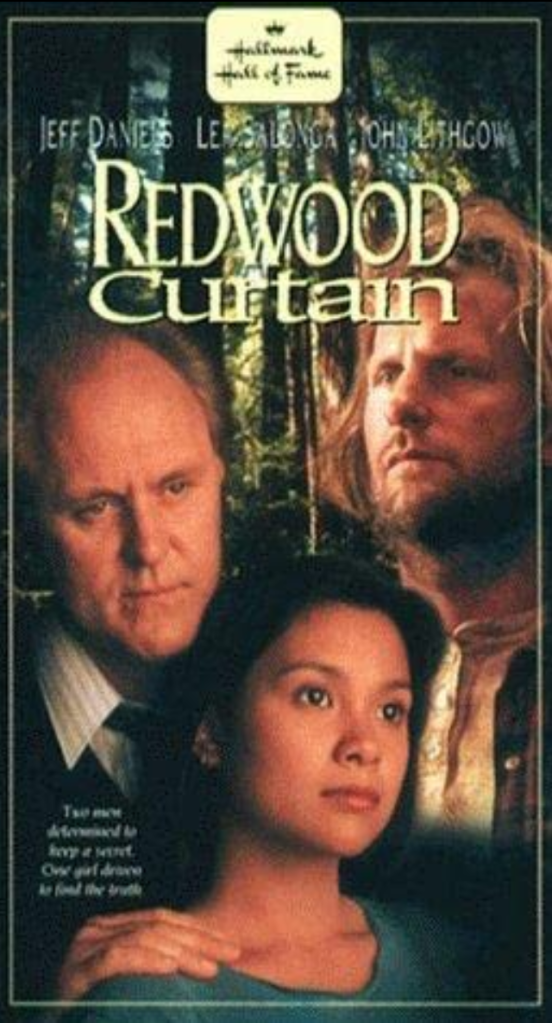
Location scouting is a film-making component also affected by a creative team’s budget. Like I said in my editorial, ‘Redwood Curtain’: From Stage to Screen, a location scout might not be able to secure a location similar to one described in the source material. Even if they succeeded, there’s a process in order to film at a residential building, especially if it’s someone’s real-life home. This process, along with the budget, is the probable reason why the funeral home has a different appearance in the movie than described in the book. Larry Baker’s novel gives the West Funeral Home the look of a “Southern plantation style house”, complete with white columns and Jeffersonian arches. The Home also contains a garage full of hearses and limousines. The Flamingo Rising’s adaptation gives the funeral home a different exterior. Referred to as the Knight Funeral Home in the movie, the facility boasts a bungalow style in a dark green hue. The Home’s garage is not shown on-screen. However, the Home itself does feature a full-sized porch. The funeral home’s interior has more appearances in the book than in the movie. In fact, the only time the Lee family enter the Knight Funeral Home is shortly after Edna dies. For those two scenes, the creative team may have filmed them on a set, away from the building that portrayed the funeral home.

Image of The Flamingo Rising by Larry Baker found on Goodreads

Appropriateness of Content

For many years, Hallmark garnered a reputation for presenting themselves as a “family-friendly” company. This has been reflected in their programming, including their Hallmark Hall of Fame productions. As someone who’s read The Flamingo Rising book, I’ll be the first person to say there are some parts of the story that are not “Hallmark appropriate”. One of these parts is Louise’s social life. Abraham, in the novel, recalls how, one night at The Flamingo Drive-In, Louise snuck out with some male college students. During this interaction, these males attempt to take advantage of her. Even though Louise is saved just in time by some of the drive-in’s employees, the ordeal is a frightening one. This event is not included in the movie. The only older characters Louise is friends with are Polly and Alice, who all happen to work at the drive-in. It should also be noted that Abraham and Gary are the only male characters Louise hangs out with in the film.

Louise’s story was not the only one to change in Hallmark’s efforts to keep the adaptation “Hallmark appropriate”. Polly, an employee of The Flamingo Drive-In, is a very problematic character in the book. A reason for this is due to her racism. Polly expresses how she didn’t like her high school becoming integrated. She also thinks Abraham is “too brown”, causing Abraham to have self-image related issues. Even though Polly’s role in the movie is smaller, she never comes across as racist. In fact, racism is never addressed in the film. Polly, along with Alice, appear to get along with both Abraham and Louise. Alice, throughout her time at the drive-in, gives Abraham advice and looks out for him, like an older sibling would look out for their younger brother or sister.

Antique car image created by Freepik at freepik.com. <a href=’https://www.freepik.com/free-vector/red-classic-car_803652.htm’>Designed by Freepik</a>. <a href=”https://www.freepik.com/free-photos-vectors/vintage”>Vintage vector created by Freepik</a>. Image found at freepik.com.

The Casting

When an author creates a story, they sometimes don’t consider how that work could be translated to film or television. If that author’s work does receive an adaptation, the casting can dictate how the story changes. Abraham describes Alice Kite, in the book, as being “as tall as my mother”. Edna is six feet tall in the novel. Because of her height, Alice wore baggy jeans and shirts, never shorts. Elizabeth McGovern and Angela Bettis were cast as Edna and Alice in the Hallmark Hall of Fame adaptation. According to IMDB, Elizabeth is 5’7, while Angela is 5’3. Alice wardrobe’s, in the movie, included tank tops and shorts. This creative decision was likely made to compliment Angela’s height.

In both the book and movie, Grace looks like her mother. Turner, Grace’s father, tells Edna, in the film, “she looks just like her”, referring to his daughter’s resemblance of his late wife. But Grace’s mother never makes an on-screen appearance, as she dies before the movie’s events. Therefore, The Flamingo Rising’s creative team cast an actress that resembled the actor portraying Turner. William Hurt portrayed the owner of Knight Funeral Home. He appears blonde in the film, despite his character having “coal-black hair” in the book. Erin Broderick was cast as Grace, though it isn’t known if Erin or William was recruited to the movie first.

Since The Flamingo Rising takes place in Florida, I figured featuring this screenshot was appropriate. Screenshot taken by me, Sally Silverscreen. Image originally found at https://www.youtube.com/watch?v=tiBkULOrf7Y.

When I reviewed the Hallmark Hall of Fame movie, O Pioneers!, back in July, I said that story should have been adapted into a multi-part mini-series or a television show. That’s because I felt an hour and thirty-seven minutes was not enough time to tell a story with that many moving parts. I feel similarly about The Flamingo Rising. Because Abraham, in the book, is reflecting on his life, there are a lot of characters and plot points included in the text. With the Hallmark Hall of Fame adaptation being an hour and thirty-four-minutes, Larry Baker’s story was forced to be condensed.

There are several parts of The Flamingo Rising book that were either omitted or changed in the adaptation, due to these parts not being “Hallmark appropriate”. With that said, it makes wonder why Hallmark Hall of Fame chose to adapt Larry Baker’s novel over a story that was more “Hallmark appropriate”? This situation kind of reminds me of when Hallmark Channel adapted At Home in Mitford. Last September, I reviewed the 2017 film for one of my double features. After reading the book and watching its adaptation, I came to the conclusion the network was attempting to fit a round peg into a square hole, trying so hard to fit At Home in Mitford into their brand of film-making. Perhaps something similar happened to The Flamingo Rising, causing history to repeat itself sixteen years later?

Have fun at the movies!

Sally Silverscreen

Word on the Street: Is Hallmark Already Planning a Christmas Movie for 2023?

Even though Hallmark’s Christmas line-ups just started about two weeks ago, the network may be planning ahead for next year’s seasonal programming. While on IMDB recently, I stumbled upon a movie listing for what could be an upcoming Hallmark production. According to this listing, which I included a screenshot of in my article, there appears to be a third Gift to Remember film in the pre-production stage. As of the publication of this Word on the Street story, Hallmark has not made any official announcements about their film related projects for 2023. However, if ‘Gift to Remember 3’ (the project’s current working title) is going to be created, then this would fit a trend Hallmark has been practicing this decade. Since last year, Hallmark has been creating sequels for films that premiered several years ago. Some examples are the following:

  • The Nine Kittens of Christmas – Sequel to 2014’s The Nine Lives of Christmas
  • Debbie Macomber’s A Mrs. Miracle Christmas – Continuation of the Mrs. Miracle series, last film aired was 2014’s Debbie Macomber’s Mr. Miracle
  • A Cozy Christmas Inn — Sequel to 2014’s Christmas Under Wraps 
Even though this IMDB listing says “announced”, Hallmark has not made any official announcements about film related projects for 2023. Screenshot taken by me, Sally Silverscreen.

The first film in the Gift to Remember story, A Gift to Remember, was released in 2017. Its sequel, Cherished Memories: A Gift to Remember 2, premiered in 2019. In place of ‘Gift to Remember 3’s poster, the cover for Melissa Hill’s stand-alone novel, The Gift of a Lifetime, is featured on IMDB. Since two of Melissa’s books, A Gift to Remember and The Charm Bracelet, have been adapted into Hallmark films, it would make sense if the network adapted The Gift of a Lifetime into a movie. But it does make me wonder if ‘Gift to Remember 3’ will incorporate elements from The Gift of a Lifetime’s story or if The Gift of a Lifetime will be its own film? While looking back on the aforementioned sequels, I realized they were continuations of movies that first aired in 2014. As of the publication of this Word on the Street story, nine Hallmark Channel Christmas movies from that year have not received sequels. I not only question why the network would choose 2014 specifically on focus their sequel efforts on, but also which 2014 film, if any, will be the next to receive a second chapter?

What are your thoughts on this potential piece of movie news? What book of Melissa Hill’s would you like to see adapted into a film? Please tell me in the comment section!

Have fun at the movies!

Sally Silverscreen

Here is the link to ‘Gift to Remember 3’s page on IMDB:

https://www.imdb.com/title/tt8099114/?ref_=adv_li_tt

Take 3: Hallmark Hall of Fame’s The Corsican Brothers Review

When I reviewed the 1982 Hallmark Hall of Fame movie, Witness for the Prosecution, back in July, I stated how I didn’t think I’d ever see the film. This was due to the movie’s lack of DVD or VHS release. But this is not the only Hallmark Hall of Fame production I didn’t think I would ever receive the opportunity to watch. One of these titles is the 1985 film adaptation, The Corsican Brothers. Similar to Witness for the Prosecution, the 1985 title didn’t receive a VHS or DVD release, as far as I know. Also similar to Witness for the Prosecution, I was able to locate the full movie on Youtube! Besides these similarities, both films star Donald Pleasence. In fact, Donald’s involvement in The Corsican Brothers is one of the reasons why I chose to review this film, as I’m participating in The Devilishly Delightful Donald Pleasence Blogathon!

The Corsican Brothers poster created by Hallmark Hall of Fame Productions, Norman Rosemont Productions, and CBS

Things I liked about the film:

The scenery: Within the movie’s introduction, there is a shot of the ocean surrounding Corsica. As the introduction continues, rocky terrains, rolling hills, and a city on a mountain are also showcased. The natural beauty of this island was captured well on film, making outdoor scenes visually appealing. When scenes took place in the town, quaint looking buildings met cobble stoned streets. A fountain was located in the town’s square. From a visual perspective, the town looked peaceful. It resembled Wanda’s hometown in the Hallmark Hall of Fame movie, In Love and War!

The historical accuracy: According to the film’s introduction, the story begins in 1820. Though the majority of the story revolves around Louis and Lucien’s life as adults, the film still takes place in the 19th century. While watching The Corsican Brothers, I was impressed by the historical accuracy shown on screen! Furniture is one example of this. In a scene where the camera pans over a section of a study room, a green embroidered chair with bolted upholstery was featured. An oil lamp was also included in the room. The windows boasted a lattice design, which highlighted an old-world charm to the titular characters’ home. These details provided a nice blend of the characters’ past and present!

The Devilishly Delightful Donald Pleasence Blogathon banner created by Gill from Realweegiemidget Reviews and Barry from Cinematic Catharsis

What I didn’t like about the film:

The underutilization of Donald Pleasence: As I stated in the introduction, Donald Pleasence is one of the reasons why I chose to review this adaptation of The Corsican Brothers. As this is his second Hallmark Hall of Fame production I’ve seen and reviewed, I was eager to witness more of his acting talents. But, to my disappointment, Donald only appeared in about three and a half scenes. He did a good job with the acting material he was given. However, it made me wonder why he was cast in this movie in the first place, especially if the role didn’t allow his talents to be fully showcased?

Unexplained parts of the story:  I have never read this film’s source material. Despite this, I expected The Corsican Brothers to be like other adaptations of Alexandre Dumas’ stories; exciting tales full of adventure and intrigue. With the 1985 Hallmark Hall of Fame project, however, I was, more often than not, confused by what was happening on screen. At the beginning of the movie, a voice-over talks about how the region of Corsica is overruled by a multi-generational long vendetta. What this voice-over forgets to mention is how and why this vendetta started. From time to time, a mysterious woman appeared in Corsica, giving some of the characters fates. No explanations are provided for who this woman is or why she wants to get involved in the story’s events.

Little to no sense of urgency: In the adaptations of Alexandre Dumas’ stories I’ve seen, a common ingredient is a sense of urgency. Since there is a sense of adventure found in these stories, an added element of urgency gives the audience a reason to stay invested in the characters and their journey. With The Corsican Brothers, though, this sense of urgency was almost non-existent. I’d say about fifty percent of this movie showed Louis attending fancy events in Paris. Even when parts of the story were meant to be exciting, they either came across as anti-climactic or were not shown on screen. A good example is the trial in Paris that Louis is a part of.

Limited use of lighting: In a few scenes, events took place at night. But because of the limited use of lighting, it was difficult to see what was happening on screen. It got to the point where I couldn’t see characters’ faces. I am aware cinematic technology in the mid-80s was not as advanced as it is today, especially when it comes to made-for-tv films. Had the creative team of The Corsican Brothers incorporated a little more light to the nighttime scenes, it would have remedied the issue.

Hand-written letter image created by Veraholera at freepik.com. <a href=”https://www.freepik.com/free-photos-vectors/background”>Background vector created by Veraholera – Freepik.com</a>. <a href=’https://www.freepik.com/free-vector/love-letter-pattern_1292902.htm’>Designed by Freepik</a>. Image found at freepik.com.

My overall impression:

When creating a book-to-film adaption, you should strive to create a movie that satisfies both the casual viewer and readers of the source material. As I stated in this review, I have never read The Corsican Brothers. Instead of being invested in the characters and their stories, I was, more often than not, confused by the events on screen. It felt like the creative team behind the movie expected the audience to have read the book prior to watching their presentation. Story related flaws are not the only flaws that stood out to me. Limited use of lighting made nighttime scenes difficult to see. The underutilization of Donald Pleasence also didn’t help. Not all Hallmark Hall of Fame movies are created equal, as some are bound to be better than others. Sadly, The Corsican Brothers isn’t one of the better ones.

Overall score: 5.5 out of 10

Have you seen The Corsican Brothers? What’s your favorite adaptation of Alexandre Dumas’ literary work? Let me know in the comment section!

Have fun at the movies!

Sally Silverscreen

Take 3: Hallmark Hall of Fame’s Harvey (1972) Review

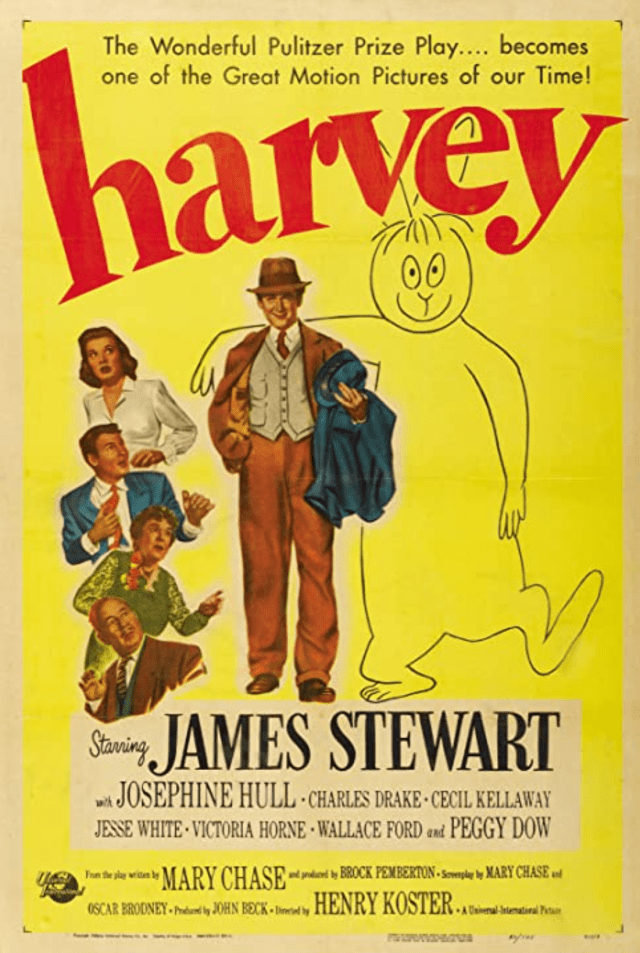
One of the first movies I reviewed this year was the 1950 film, Harvey. Since publishing my review back in January, that movie has become the most disappointing one I’ve seen this year, so far. Jillian, from The Classic Film Connection, recommended I give this story a second chance by checking out the 1972 Hallmark Hall of Fame production. Since this title is a remake and since I’m participating in The “Take Two!” Blogathon (which focuses on remakes), I found the perfect opportunity to watch this movie! When I reviewed 1950’s Harvey, I questioned what the point of the story was. This is because I was confused by what the movie’s creative team was trying to say through their project. Will I be less confused by the 1972 adaptation? Keep reading if you want to find out!

Harvey (1972) poster created by Foote, Cone and Belding Productions, Hallmark Hall of Fame Productions, Talent Associates-Norton Simon, and National Broadcasting Company (NBC)

Things I liked about the film:

Changes from the original film: As I said in my review of the 1950 film, there were things about Harvey I didn’t like. One of them was the medical negligence Veta experiences at Chumley’s Rest. In the 1972 version, that specific scene plays out differently. When Veta is being interviewed by Dr. Lyman Sanderson, he notices how distressed Veta appears. Her body language, tone of voice, and tears are noted by the doctor as he listens to what Veta has to say. This leads Dr. Lyman to admit Veta into the hospital for her well-being. The mix-up is presented as an example of good intentions leading to bad results. The film’s dramatic tone also helps elaborate how terrifying Veta’s experience would be.

A sense of magical realism: An element I thought was lacking in the 1950 version of Harvey was a sense of ‘magical realism’. Because the story featured a 6 foot 3 ½ inch, invisible white rabbit, I thought that aforementioned element would be automatically included in the film. In the 1972 adaptation, there was a stronger sense of ‘magical realism’ within the overall story. At the hospital, a hat with two holes on top is found in Dr. Lyman Sanderson’s office. The staff question who this hat could possibly belong to. Since the holes on the hat would allow rabbit ears to stick out, the hat itself implies Harvey does exist. This along with other strange occurrences in the story show how the film’s creative team put more effort into including ‘magical realism’.

The acting: When I reviewed the 1950 version of Harvey, I talked about James Stewart’s portrayal of Elwood P. Dowd, saying it was “laid-back” and “somewhat philosophical”. Reprising this role in the 1972 version of the story, James brought these same elements to his performance. But this time, his portrayal of Elwood reminded me of Mister Rogers from Mister Rogers Neighborhood. What I mean by this is Elwood came across as the type of man you’d want to spend hours having a conversation with. Elwood’s approachable and pleasant persona make him such a fascinating individual. If Elwood P. Dowd existed in the real world, I’d like to think he’d come up with an interesting TED Talk!

Despite appearing in the film for a limited period of time, I liked Madeline Kahn’s portrayal of Nurse Ruth Kelly! Her pleasant on-screen personality allowed her to stand out and give a memorable performance! Her interactions with the other characters also came across as realistic. After Veta was admitted to the hospital, Dr. Lyman has difficulty finding her. In a state of panic, he thinks Veta escaped. Sensing Dr. Lyman’s panic, Ruth becomes concerned. Her face has fallen from the smile she usually carries and her tone of voice contains a sense of dread. There’s even an ounce of timidness to her overall demeanor. Scenes like this one make me wish Madeline was given more on-screen appearances.

The “Take Two!” Blogathon banner created by Annette from Hometowns to Hollywood

What I didn’t like about the film:

Most of the story being rehashed: When creating a remake of a pre-established story, it’s important to do two things: respect the source material that came before your project and bring your own voice to the table. In the case of Hallmark Hall of Fame’s version of Harvey, more emphasis was placed on respecting the original film. While this idea isn’t a bad one, the 1972 movie’s creative team didn’t allow themselves to create a unique identity for their project. The sets in this film looked almost exactly like they did in the 1950 film. The story, more often than not, followed the 1950 movie’s narrative, making very few deviations. While watching the 1972 version of Harvey, I wondered, at times, why this remake exists?

A televised version of a play: In my review of Hallmark Hall of Fame’s Foxfire, I talked about how that title felt more like a televised play. This is because the 1987 film contained a smaller cast and a condensed story. The 1972 adaptation of Harvey also felt like a televised version of a play. Fewer locations are a reason why. In the 1950 version, Elwood is shown taking Harvey to Charlie’s Pub. Elwood simply recalls this experience in the 1972 version. What’s also important to note is how the 1972 story takes place in either the hospital or the Dowd family home.

The underutilization of Betty Chumley: At one point in the 1972 story, Elwood makes plans with Dr. Chumley’s wife, Betty, to meet at Charlie’s Pub and share drinks. But because this trip was never shown on-screen, Betty received one less on-screen appearance. Within the story, she only appeared in two scenes. Personally, I think Betty should have had a stronger significance in the film.

Collection of white rabbit images created by freepik at freepik.com Hand drawn vector created by freepik – www.freepik.com

My overall impression:

After publishing my review of the 1950 version of Harvey, Jillian, from The Classic Film Connection, explained how the story’s point was “about the right to be uniquely yourself and live life on your own terms”. Now that I’ve seen the 1972 version of this story, I think the Hallmark Hall of Fame film did a better job at executing this idea. What worked in the movie’s favor was how the story was just a drama instead of trying to be both a drama and comedy. Scenes like Veta’s hospital admittance elaborated how terrifying her situation would be. There was also a sense of ‘magical realism’, something I thought was lacking in the 1950 film. However, the majority of the 1972 movie was a copy of the 1950 movie. In 1993, Hallmark Hall of Fame released the film, To Dance With the White Dog. Based on what I know about the story, it sounds like a version of Harvey. But this time, a man sees a white dog only he can see. Maybe I’ll write about that movie in a future review.

Overall score: 6.1 out of 10

Have you seen any version of Harvey? Are there any Hallmark Hall of Fame movies you’d like to see me review? Let me know in the comment section below!

Have fun at the movies!

Sally Silverscreen

Take 3: Hallmark Hall of Fame’s O Pioneers! Review

When I participated in the Legends of Western Cinema Week last year, I reviewed the Hallmark Hall of Fame film, Durango. Unfortunately, the movie was weaker than I hoped. While thinking about what to write about for 2022’s event, I remembered how I had never seen O Pioneers! Therefore, I thought the Legends of Western Cinema Week was the perfect time to finally see the film! In the 1990s, Hallmark Hall of Fame had a history of adapting stories from the western genre. After the premiere of Sarah, Plain and Tall, the story’s sequels were released; Skylark in 1993 and Sarah, Plain and Tall: Winter’s End in 1999. Outside of this trilogy, Hallmark Hall of Fame created O Pioneers! (in 1992), Rose Hill (in 1997), and Durango (in 1999). While looking back on this history, one has to wonder if this was done in an effort to capitalize on Sarah, Plain and Tall’s success? Whatever the reason, these films provide more than one perspective of westerns. Now, with that introduction out of the way, let’s review O Pioneers!

O Pioneers! poster created by Craig Anderson Productions, Hallmark Hall of Fame Productions, Lorimar Television, and Prairie Films

Things I liked about the film:

The acting: I’ve seen a small handful of Heather Graham’s projects from her filmography. Based on what I’ve seen, she seems to receive one of two types of roles: a “damsel in distress” or the “ditzy” girl next door. But in O Pioneers!, Heather’s role was different. Portraying Alexandra Bergson in her younger years, she not only displayed a motherly persona, she also showcased a quieter strength. After trying to find more fertile farm land, Alexandra comes up with a plan to purchase the surrounding farm land near her family’s home. When she discusses this plan with her brothers, Alexandra explains it in a sure, yet calm way. Even when her brothers doubted her enthusiasm, she consistently maintained her composure, never letting uncertainty get in her way. Through her performance, Heather does a good job at foreshadowing who her character would become!

The majority of O Pioneers! revolves around Alexandra after her family’s farm is established and successful. Because this part of the story takes place fifteen years later, Alexandra is portrayed by Jessica Lange. Throughout the film, Alexandra experiences a variety of situations. This allowed Jessica to utilize different facial expressions, body languages, and emotions. As she reads a letter from her brother, Emil, a warm smile lights up Alexandra’s face. She appears to be sitting in a comfortable position, a friendly demeanor plain to see. Two scenes later, as Alexandra is sharing bad news with Emil, a sullen look is seen on her face. Her tone of voice is serious, as she’s trying to break this news as honestly, but gently as possible. The strength of Jessica’s acting abilities helped her performance appear believable!

One of the most important people in Alexandra’s life is Emil. Portrayed by Reed Diamond, Emil had a personality that was pleasant. Reed adapts to each situation in Emil’s life as well, similar to Jessica’s performance. In the aforementioned scene where Emil receives bad news, a concerned look is shown on his face. He also listens intently to what Alexandra had to say. Emil’s bottom lip quivers, as shock quickly morphs into sadness. The scene ends with Alexandra consoling her brother as he crumbles into tears.

Historical accuracy: O Pioneers! takes place between the late 1880s and early 1900s. Keeping this in mind, it’s important to note how the production looked and felt like the viewer was transported back to that time! In one scene, a man named Frank is walking around the interior of his house. On the wall in the kitchen, a telephone can be seen. The style of this phone is similar to those featured in programs like When Calls the Heart. Another timely piece of technology was the kerosene lamp hanging from the ceiling. This lamp was found in the dining room of Alexandra’s house. Three more kerosene lamps are located in Alexandra’s posh sitting room. Even though these props are smaller components of the movie, it shows how detail oriented this film’s creative team was!

Reed Diamond and Anne Heche’s on-screen chemistry: Anne Heche portrays Marie, a friend of Emil’s since childhood. Most of Emil and Marie’s interactions take place after they grew up, when they are able to live their own lives. During these encounters, I found their on-screen chemistry very sweet! Marie carried herself with a sense of whimsy, almost like she’s a “child at heart”. Meanwhile, Emil is more headstrong, choosing to ground himself in reality. Instead of clashing, these differences worked in Anne and Reed’s favor. The opposites attracting created a balance between their characters. During Marie and Emil’s interactions, they seemed to share an understanding with each other. Their shared history provided that layer of understanding, as well as Anne’s and Reed’s performance.

Legends of Western Cinema Week banner created by Heidi from Along the Brandywine, Olivia from Meanwhile, in Rivendell, and Hamlette from Hamlette’s Soliloquy.

What I didn’t like about the film:

An episodic story: The story of O Pioneers! revolves around Alexandra’s attempts at creating a successful farm with the land she inherited. But instead of those attempts providing an overarching conflict, the movie is filled with smaller conflicts that are resolved in a shorter amount of time. Ivar is a man Alexandra and her family have known for many years. He claims to have powers from God, which causes him to receive some negative attention. At one point, Ivar is threatened of being sent to an asylum. But in the very next scene, Alexandra simply talks to her brothers about what she’ll do if something happens. After that, the issue is unceremoniously resolved.

Too many characters: O Pioneers! is based on a book I haven’t read yet. Despite this, I could clearly see how large of a cast this production contained. Stories with a larger number of characters can be hit or miss. In the case of O Pioneers!, it didn’t work. Because of how many characters were in this story, some of them didn’t receive the amount of attention I feel they deserved. One of these characters was Amedee, a friend of Emil. A European baseball player, Amedee was such a charismatic character I wanted to learn more about. But with all the other characters trying to compete for attention, he only appeared in two scenes.

Some loose ends: Despite the movie having an hour and thirty-seven-minute run-time, there didn’t seem to be enough time to tie up some loose ends in the story. A good example is when one of the characters gets in trouble with the law. Alexandra visits this character in jail and claims she will help them. However, this issue is never resolved. That’s because this conflict takes place within the last eighteen minutes of the movie. It made me wonder why the creative team would include this part of the script when there was no intention to find a resolution to that conflict?

I know this is a screenshot of Wilma’s house from the Walker, Texas Ranger episode ‘The Lynching’. But Alexandra’s house in O Pioneers! reminded me of Wilma’s house, especially that wrap-around porch! Screenshot taken by me, Sally Silverscreen.

My overall impression:

There are some movies where the style is executed better than its substance. O Pioneers! is one of those films. As I said in my review, the project looked and felt like the story’s respective time period. The acting as a whole was good as well. But when it comes to the script, it could have been stronger. A major flaw is the movie’s run-time, which was an hour and thirty-seven minutes. This was not enough time to address the story points and characters within the narrative. Personally, I think O Pioneers! should have been adapted into a multi-part mini-series or a television show. With more time, the creative team would have been able to explore more stories and give some underrated characters more attention. Having an episodic narrative for a mini-series or television show would also make sense, as each story would be more condensed than a film’s plot. Like I mentioned in my review, I haven’t read this movie’s source material. Therefore, I don’t know if it’s better or worse than the 1992 Hallmark Hall of Fame production.

Overall score: 6 out of 10

Have you seen or read O Pioneers!? Is there a book-to-film adaptation you like? Please tell me in the comment section!

Have fun at the movies!

Sally Silverscreen

Take 3: Hallmark Hall of Fame’s Witness for the Prosecution (1982) Review

In my list of the Top 10 Movies I’d Love to Review, I mentioned finding Oliver 2: Let’s Twist Again on Diana Rigg’s IMDB filmography. During that trip on IMDB, I found another film I could review for the Other Than A Bond Girl Blogathon. As the title of this review says, that movie is the 1982 Hallmark Hall of Fame presentation, Witness for the Prosecution! I’ve gone on record to state how I’d like to watch as many Hallmark Hall of Fame titles as realistically possible. If I’m going to be honest, I didn’t think I would ever see Witness for the Prosecution. That’s because the film not only didn’t receive a DVD release, but it doesn’t seem to have received a VHS release either. So, imagine my shock when I found the full movie on Youtube! Mysteries are, arguably, the most popular genre on my blog. This is also not the first time I’ve reviewed an Agatha Christie adaptation. Back in April, I wrote about the 2022 film, Death on the Nile. In that review, I said the movie had a weaker execution than its 2017 predecessor, Murder on the Orient Express. How will Witness for the Prosecution fare against these aforementioned adaptations? All rise, as this review is now in session!

Hallmark Hall of Fame’s Witness for the Prosecution poster created by CBS Entertainment Production, Hallmark Hall of Fame Productions, Rosemont Productions, and United Artists Television

Things I liked about the film:

The acting: Diana Rigg is one of the eligible Bond Girls for the Other Than A Bond Girl Blogathon. Therefore, I will talk about her performance first. In Witness for the Prosecution, Diana portrayed Christine Vole, the wife of the accused party. Throughout the film, she carried her character as a woman from stories in the 1920s. What I mean by this is Christine held her own with confidence, never shaken by the probing of those involved in the legal side of the case. Even when she took the stand, Christine adopted a serious demeanor, as if putting on a “poker face” and refusing to show her deck of cards too early. These acting choices and the consistency of her performance allowed Diana to pull off a captivating and memorable portrayal!

Deborah Kerr is an actress I’ve talked about before on 18 Cinema Lane. While I have seen and reviewed five of her films, none of them were from the mystery genre. Despite this, Deborah held her own, acting wise, among the cast! She portrays Nurse Plimsoll in Witness for the Prosecution. While watching the 1982 production, her performance reminded me a bit of Donna Reed’s portrayal of Mary from It’s a Wonderful Life. Nurse Plimsoll cares about the health and well-being of the film’s protagonist, Sir Wilfred Robarts. Though Wilfred finds her overall nursing approach annoying, Nurse Plimsoll doesn’t give up on her mission. Even though she is stricter than other on-screen nurses, her heart is always in the right place. This can be seen through Deborah’s facial expressions, body language, and emotions.

Even though the cast as a whole was strong, there was one performance that stole the show. This came from Beau Bridges! Witness for the Prosecution shows Beau portraying an American named Leonard. Because his case is presented in a British/U.K. court system, he is a “fish out of water”. The situation itself provides an interesting dynamic for the cast, including Beau, to work with. It also gave Beau an opportunity to utilize a variety of emotions. During the case, one of the witnesses causes Leonard to have an emotional reaction. At the start of the witness’ questioning, Leonard presents a calm “resting face”. But as the questioning continues, he slowly becomes sadder, adopting a growing frown and his eyes filling with tears. This transformation was gradual, allowing Beau to adapt to the on-screen situation.

The set design: The majority of Witness for the Prosecution takes place within a British/U.K. court room. Despite the limited locations, there were some examples of set design that I liked! Inside the court room, the ceiling was domed, with clear glass exposing a view of the sky. Surrounding the dome are etched, white arches. With a green light shown on these arches, they gave the appearance of boasting an antique limestone material, which complimented the dark wood of the court room’s walls and furniture. In the lobby of the court room, painted murals are shown near the ceiling. The lobby’s walls appear to be covered in a two-tone marble material, with the floor revealing a black-and-white tile design. My favorite set in Witness for the Prosecution was Wilfred’s office! The room’s color scheme was brown, beige, and red. When this set was first introduced, a large, dark wood bookcase proudly stood. It was guarded by a dark wood table and two dark brown armchairs. While the walls were beige, the curtains on the window were red, giving the room a pop of color. The more time Wilfred spent in this space, the more the sophisticated, professional, and intelligent appearance of the office complimented his personality.

An in-depth look at the British/U.K. court system: As I mentioned in my point about the film’s set design, the majority of this story takes place in a British/U.K. court room. That part of the movie exposed the audience to the British/U.K. court system. Even though Witness for the Prosecution is not the “end all, be all” when it comes to this specific court system’s portrayal in entertainment media, it gives viewers a chance to compare and contrast it to other court systems in other productions. The layout of the court room itself provides one example. Toward the front of the court room, the witness stand is located at the judge’s right-hand side. This part of the court room is separate from the judge’s stand. Meanwhile, in court room productions taking place in the United States, the witness stand can either be located at the judge’s left or right-hand side. It is also connected to the judge’s stand.  

The Other Than A Bond Girl Blogathon banner created by Gabriela from Pale Writer and Gill from Realweegiemidget Reviews

What I didn’t like about the film:

The magical monocle: While working on the case, Wilfred wore a monocle when he was questioning the accused party and his wife. As he questioned them, a light shone through the monocle and directly landed on Leonard and Christine. But these were the only two times Wilfred used the magical monocle. The purpose of the monocle or Wilfred’s reason for using it was never explained. Was this monocle truly magical or was the monocle used as foreshadowing? I wish this part of Wilfred’s character was more consistent.

A dialogue heavy story: With any movie or tv show episode featuring a court case, there’s going to be a certain amount of dialogue within the story. But because Witness for the Prosecution mostly revolved around a court case, the 1982 production feels more dialogue heavy compared to Death on the Nile and Murder on the Orient Express. Before watching Witness for the Prosecution, I had expected more showing than telling when it came to the mystery. Instead of watching the characters making discoveries related to the mystery, I heard about it through the questioning in court. Because of this creative decision, I didn’t find the movie’s mystery as engaging as it could have been.

An inactive detective: In a story where a detective, amateur or professional, is the protagonist, the audience expects to see this character actively solve their respective film’s mystery. Sadly, the viewers won’t witness that in Witness for the Prosecution. Wilfred is a lawyer defending Leonard in his case. However, Wilfred places more emphasis in resolving the case than playing detective. Even though this movie’s mystery was solved, it felt like Wilfred was served the answer on a silver platter instead of discovering it himself. Similar to what I said about the dialogue-heavy story, I didn’t find the mystery engaging because of Wilfred’s inactive detective role.

Sketch of London image created by Archjoe at freepik.com. <a href=’https://www.freepik.com/free-vector/hand-drawn-houses-of-parliament_1133950.htm’>Designed by Archjoe</a>. <a href=”https://www.freepik.com/free-photos-vectors/background”>Background vector created by Archjoe – Freepik.com</a>. Image found at freepik.com.

My overall impression:

Hallmark Hall of Fame’s Witness for the Prosecution shares a similar plot with 1997’s Red Corner: an American man is accused of murder, with his case in a court system outside of the United States. But where Red Corner succeeded and Witness for the Prosecution didn’t is how Shen, Jack’s lawyer in Red Corner, not only played a role in the court case, but also went above and beyond in attempting to solve the mystery surrounding the case. This allowed Red Corner’s story to be intriguing and engaging for the audience. With the 1982 production, Wilfred spends more time on the court case than the mystery wrapped around it. This decreases the audience’s engagement. The dialogue heavy nature of Witness for the Prosecution’s story also affected the mystery’s intrigue. Hallmark Hall of Fame’s presentation is the third Agatha Christie adaptation I’ve seen, which I wasn’t overly thrilled with. I still want to, one day, read her literary work. But based on my reactions to the three adaptations I have watched so far, I’m starting to wonder if I’ll find an Agatha Christie story I like?

Overall score: 6.1-6.2 out of 10

Have you seen any of Agatha Christie’s adaptations? Do you have a favorite Agatha Christie story? Let me know in the comment section!

Have fun at the movies!

Sally Silverscreen