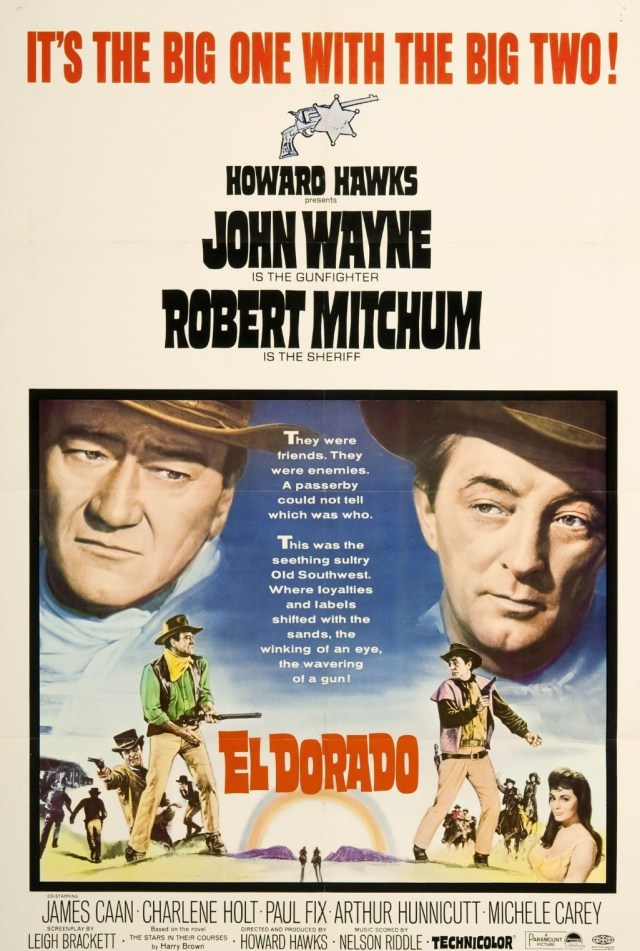
Take 3: El Dorado (1966) Review

Whenever I’ve participated in the Legends of Western Cinema Week Blogathon, I, more often than not, review a movie from the Western genre. Since I review Western genre films so infrequently, this blogathon serves as a good opportunity to expand my cinematic horizons. For the 2024 edition, I decided to select a title that has been recommended to me. Suggested by J-Dub from Dubsism, I am reviewing the 1966 film, El Dorado! Years ago, I saw pieces of this movie. At the time, I thought it was boring. But I was willing to give El Dorado a second chance, wondering if my perspective had changed. I also have seen very few films from John Wayne’s filmography. So, reviewing this film gave me a chance to check out more of his movies!

El Dorado (1966) poster created by Paramount Pictures, Laurel Productions, and Polyphony Digital

Things I liked about the film:

The on-screen chemistry: Relationships in movies, whether romantic or platonic, can come across believably on screen if there is a strong sense of chemistry between the actors. This is what happened in El Dorado! Toward the beginning of the movie, J.P., portrayed by Robert Mitchum, meets up with Cole, portrayed by John Wayne, to talk about a potential job opportunity. Cole and J.P. carry no-nonsense demeanors, but their cordialness to each other shows the respect between them. The scene’s mood becomes lighter when Maudie, portrayed by Charlene Holt, shows up. Her friendly, playfulness emphasizes the friendship these characters share. When Maudie talks about her late husband and Cole with J.P., the empathetic reflection indicates how much she cares about both Cole and J.P.. Not only was there strong on-screen chemistry among the actors, this strong on-screen chemistry was consistent throughout the film. The on-screen relationships were interesting to watch because of these factors!

The dialogue: One of the most important components of a movie’s script is the dialogue. Through dialogue, characters can memorably stand-out, important information can be shared, and characters’ problems can be solved. The quality of a script’s dialogue depends on how well written it is. While watching El Dorado, I took note of the cleverness of the dialogue. After a son from the MacDonald family dies, Cole visits the family to share the sad news. The patriarch of the family, Kevin, asks what happened, with Cole telling him how he got “a boy to do a man’s work”. Later, when Cole returns to El Dorado, he reconnects with J.P.. When J.P. asks Cole what he’s doing back in El Dorado, Cole tells his friend, “I’m lookin’ at a tin star with a…drunk pinned on it”. Dialogue like the two examples I provided show how cleverly words were used as well as the eloquent ways intended points were phrased.

Breen Code Era moments: As I’ve explained before on 18 Cinema Lane, the Breen Code was a series of guidelines studios had to follow between 1934 and 1954. El Dorado was released in 1966, a decade after the Breen Code Era ended. However, there were moments sprinkled throughout the movie that felt reminiscent of the Breen Code Era. Before Cole leaves El Dorado, he kisses Maudie. The kiss itself isn’t shown on-screen because Cole’s hat is blocking their faces. When Mississippi, portrayed by James Caan, is first introduced to the audience, he uses a knife in self-defense against a man he claims killed his friend. As Mississippi retrieves his knife, the aforementioned man is hidden behind a table to prevent some of the violence from being shown on screen. The way these moments were written and presented were thoughtful presentations of an era gone by.

Legends of Western Cinema Week Blogathon banner created by Hamlette from Hamlette’s Soliloquy, Heidi from Along the Brandywine, and Olivia from Meanwhile, in Rivendell

What I didn’t like about the film:

A prolonged conflict: Before watching El Dorado, I had seen two of John Wayne’s films: Stagecoach and Allegheny Uprising. In those movies, the story revolves around an overarching conflict some of the characters are consistently trying to resolve. While there was an overarching conflict in El Dorado, it primarily resided in the film’s second half. The first half of the movie consisted of a series of loosely connected vignettes. These vignettes, more often than not, contained low stakes. El Dorado’s first and second halves felt like they belonged in their own separate movies.

Inconsistent sense of urgency: Like I just said when talking about El Dorado’s prolonged conflict, the first half of the movie was a series of loosely connected vignettes, while the film’s overarching conflict resided in the story’s second half. Within the second half of the movie, scenes containing low stakes were woven into the production. One example is Cole addressing a back injury he received earlier in the story. El Dorado’s two halves and the low stakes scenes from the film’s second half are two reasons why this movie’s sense of urgency was inconsistent.

Enabling the Sheriff: J.P., the Sheriff of El Dorado, develops an alcohol addiction due to a romantic relationship gone wrong. When Cole and Mississippi go to El Dorado, they, as well as Bull, try to help J.P. overcome his addiction. Mississippi even creates a liquid concoction to sober J.P. up. But hours after receiving Mississippi’s concoction, J.P. is looking for alcohol. Bull tells J.P. exactly where a bottle of alcohol is located, in the upper left-hand drawer of his desk. Later that evening, Cole allows J.P. to go to the local saloon by himself, where he not only purchases a whole bottle of alcohol, he’s also laughed at by the film’s antagonists. J.P. does eventually become sober in order to help his friends. But toward the end of the movie, J.P. shares a shot of alcohol with Bull. If a screenwriter is going to incorporate a serious topic like addiction into their script, they need to be mindful about how that topic is included in the film. In my opinion, the way addiction was addressed in El Dorado could have been more thoughtful.

Sheriff badge image created by Freepik at freepik.com. <a href=’https://www.freepik.com/free-vector/brown-cowboy-label-set_1543252.htm’>Designed by Freepik</a>. <a href=”https://www.freepik.com/free-photos-vectors/vintage”>Vintage vector created by Freepik</a>. Image found at freepik.com.

My overall impression:

El Dorado is not only the third film of John Wayne’s I’ve seen, it’s the second film of John’s I’ve reviewed. Out of these three films, Stagecoach, Allegheny Uprising, and El Dorado, I haven’t found a title that’s left a strong impression on me. Looking back on Stagecoach, I think the movie is just fine. Allegheny Uprising was ok. Now that I’ve seen El Dorado in its entirety, I feel the 1966 project is also ok. The two halves of this movie and the low stakes scenes woven into the movie’s second half are likely the reason for El Dorado’s inconsistent sense of urgency. The topic of addiction could have been handled in a more thoughtful way. However, the movie does have its strengths. Some of these strengths are the on-screen chemistry among the cast and how well the dialogue was written. Personally, I found El Dorado to be a mixed bag. Hopefully, the next film of John’s I watch and review will be stronger than this one.

Overall score: 6 out of 10

Have you seen El Dorado? Which film from John Wayne’s filmography would you like me to review? Let me know in the comment section!

Have fun at the movies!

Sally Silverscreen
Sally Watches…The Twilight Zone

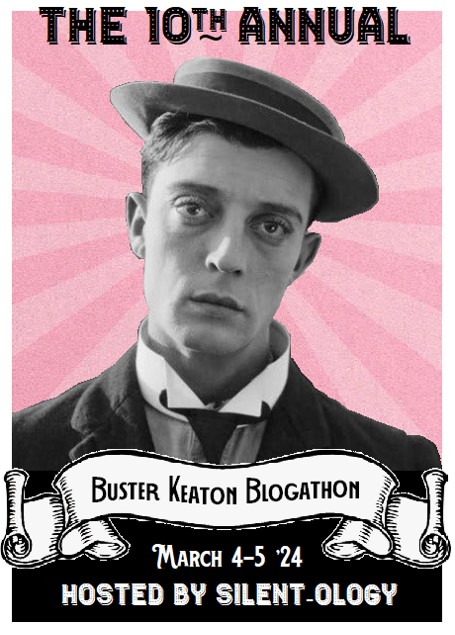
When the curtains rose and the golden gates of Hollywood opened for him, Buster Keaton likely had one goal: to make people laugh. After conquering Vaudeville and starring in over a hundred film and television credits, Buster not only made people laugh, he left behind a legacy of humor, joy, and timeless entertainment! So, you probably saw the title of this article and wondered, “What does The Twilight Zone have to do with Buster Keaton”? One of Buster’s many film and television credits was an episode of The Twilight Zone. This is a show I am familiar with, having seen several episodes prior to The 10th Annual Buster Keaton Blogathon (hosted by Lea from Silent-Ology). However, on paper, The Twilight Zone and Buster Keaton seem like a random combination. Buster’s forte was comedy, while The Twilight Zone incorporates elements of science-fiction and horror. But is this episode, “Once Upon a Time”, an example of “opposites attract”? Let’s step into another dimension to find that answer through this review!

The 10th Annual Buster Keaton Blogathon banner created by Lea from Silent-Ology

Episode Name: Once Upon a Time

Season 3, Episode 13

Premiere Date: December 15th, 1961

What I liked about this episode:

As I stated in this review’s introduction, Buster’s forte was comedy. His specific acting forte was physical, “slapstick” performances. The creative team behind this episode paid attention to Buster’s comedic work, as Buster was given plenty of opportunities to showcase his comedy skills! One scene shows Buster’s character, Woodrow Mulligan, trying to hide from a police officer. At first, he walks behind Rollo, a character Woodrow meets in the “future”. When both men turn a corner, Rollo moves behind Woodrow, allowing Woodrow to walk in front of him. As they pass a rack of suit pants, Woodrow not only grabs a pair, Rollo picks Woodrow up so he can put the pants on. No beats were missed during this scene. The writing and delivery of this performance was simple, yet effective when it comes to the comedy!

What I didn’t like about this episode:

The run-time for “Once Upon a Time” is twenty-five minutes. Even though the script told a story that could be wrapped up in a short amount of time, there were parts of the episode that were drawn out. Chase scenes serve one example of moments lasting longer than necessary. When Woodrow first travels to 1962, the Time Helmet becomes misplaced. He spends several minutes trying to get the Helmet back, with the Helmet itself getting destroyed in the chase. Another drawn out scene is when Rollo argues with a man who owns a repair shop. While this argument takes place, Woodrow marvels at the “modern” inventions surrounding him. He also discovers a clothing store near the repair shop. In this part of the story, I found Woodrow’s observations hilarious. But I didn’t find the argument interesting.

Masks of comedy and tragedy images created by freepik at freepik.com. <a href=”https://www.freepik.com/free-photos-vectors/background”>Background vector created by freepik – http://www.freepik.com</a>. Image found at freepik.com.

The story itself:

Throughout this review, you’ve read references to a Time Helmet and Woodrow traveling to the “future”. That’s because “Once Upon a Time” is a story revolving around time travel! When the episode begins in 1890, Woodrow is disgruntled about the world around him. One of his major issues is how noisy his world is. However, this part of the story is presented as a silent film. After he seeks a quieter time period to travel to, he discovers the “future” (1962) is much noisier than he expected. Through this visual and auditory juxtaposition, the creative team behind this episode addressed how sounds can constitute our lives. If you know anything about The Twilight Zone, not everything is what it seems. Each episode shares a lesson or message with its audience, with the story leading up to that message or lesson. Without spoiling “Once Upon a Time”, the way the events play out provide a lesson that members of the audience can relate to.

The other factors from this episode:

For this part of my review, I will be spoiling “Once Upon a Time”. If you have not seen this episode and are interested in watching it, skip ahead to the second point in this section.

  • When the Time Helmet is first introduced in the story, Woodrow overhears how the Helmet can allow someone to travel in time for only thirty minutes. This is the conflict Woodrow experiences after he travels to 1962. Because Rollo finds 1890 an appealing time period, he is taken back to 1890 through the Time Helmet when Woodrow is on his way home. Toward the end of the episode, a title card states the story is now taking place one week later. Rollo is still in 1890, adjusting poorly to his new surroundings. If the Time Helmet can allow someone to explore different time periods for only thirty minutes, how has Rollo been able to stay in 1890 for a week?
  • Like I have mentioned in this review, the parts of the episode taking place in 1890 are presented as a silent film, complete with title cards and an overarching tune. Viewers familiar with Buster Keaton’s filmography will know he is one of the most celebrated actors from the silent film era. This creative choice in presentation was such a nice nod to Buster’s career! It also gave this episode its own distinct identity!
  • During Woodrow’s time in 1962, Rollo admits he is not only a scientist, he is also an expert on 1890. Yet, Rollo and Woodrow take the Time Helmet to a repair shop to get it fixed. Why didn’t Rollo fix the Helmet himself, especially since he seemed capable of knowing how to repair it? Had Rollo repaired the Helmet himself, there wouldn’t be the need for his argument with the man from the repair shop.
Image of vintage movie camera created by Macrovector at freepik.com. <a href=”https://www.freepik.com/free-photos-vectors/background”>Background vector created by macrovector – http://www.freepik.com</a>. Image found at freepik.com.

My overall thoughts:

 I said in this review’s introduction how I have seen several episodes of The Twilight Zone before. But this was the first time I saw “Once Upon a Time”. What surprised me was how light-hearted the story was compared to other episodes I’ve watched. The Twilight Zone is a show known for dabbling in the strange and even the sad. The best parts of “Once Upon a Time” were Buster’s comedic performances! Every comedy scene was written and delivered well, effectively making me laugh! What didn’t work in this episode were the drawn-out scenes. Even though the story was short, some scenes were just too long. When I reviewed television show episodes, I have stated if that episode would serve as a good introduction to its respective show. In my opinion, “Once Upon a Time” is a good place to start for those who either have never seen The Twilight Zone or who are just getting into the show. The story is strange, but not in an unsettling way. It even contains a happy ending. But if you want to know what that happy ending is, you’ll have to enter The Twilight Zone!

Rating: A 3.5 out of 5

Have fun on television!

Sally Silverscreen

The Top 10 Worst Movies I Saw in 2023

I’m going to be honest with my readers; in 2023, I saw more movies I disliked than liked. Luckily, I saw enough films to create a top ten best movies of the year list! When it comes to the movies I disliked, the majority of these titles were disappointing or average. This is different to my list of the worst movies of 2022. What’s also different about this year’s list is how my top three worst films are not all Hallmark projects. Like I have said in past lists, my top ten worst movies I saw in 2023 list is not intended to be mean-spirited, negative, or disrespectful. It’s just a list of my own, honest opinion. Since I reviewed some of the movies on my list, I will provide the links to those reviews in this article.

Dishonorable Mentions

Family History Mysteries: Buried Past, Sea Change, Murder 101: College Can Be Murder, Murder 101: The Locked Room Mystery, She Inherited Danger, My Diary of Lies, Double Nickels, A Zest for Death: A Hannah Swensen Mystery, Blackbeard, the Pirate, Christmas at Castle Hart, Shadow Island Mysteries: Wedding for One, and A Hidden Life (I turned this movie off after 42 minutes)

Image by starline on Freepik

10. The Curse of Frankenstein

After I watched and reviewed Frankenweenie, I was hoping the creative team of The Curse of Frankenstein would follow Mary Shelley’s source material closer than the Disney animated film did. Instead of doing that, they relied more on creative liberties. As I said in my review of The Curse of Frankenstein, I found this distracting, especially since I read the book prior to watching the film. Some of these creative liberties were adopted just for the sake of it. One of them was presenting Victor Frankenstein’s creature as a bumbling, destructive machine. This creative decision was a disservice not only to Mary Shelley’s work, but also to Christopher Lee, the actor who portrayed Frankenstein’s creature.

Take 3: The Curse of Frankenstein Review

9. The Last Child

I selected The Last Child for the Futurethon blogathon because of the film’s creative presentation; a futuristic story surrounded in a “contemporary” aesthetic. Unfortunately, the creativity of the 1971 made-for-TV movie didn’t reach beyond the surface. Despite the concern of population control within the story, there was little sense of urgency. That caused the movie to have too many low-stakes. It also didn’t help how the future in The Last Child wasn’t explained. This is another television film from the ‘70s that failed to impress.

Take 3: The Last Child Review

8. A Walk in the Spring Rain

Out of all the movies I saw and reviewed this year, A Walk in the Spring Rain is the most flavorless film. Even though this is a movie where the audience waits for the inevitable to happen, the meandering nature of the script forces viewers to focus on drawn-out subplots, such as the protagonists’ daughter, Ellen, thinking about law school. What adds to the film’s meandering nature are stretched out scenes, making A Walk in the Spring Rain feel longer than necessary. Like I said in my review of the 1970 production, every beloved film star has at least one project on their IMDB filmography that is lesser known. For Ingrid Bergman, A Walk in the Spring Rain is one of her more forgettable films.

Take 3: A Walk in the Spring Rain Review

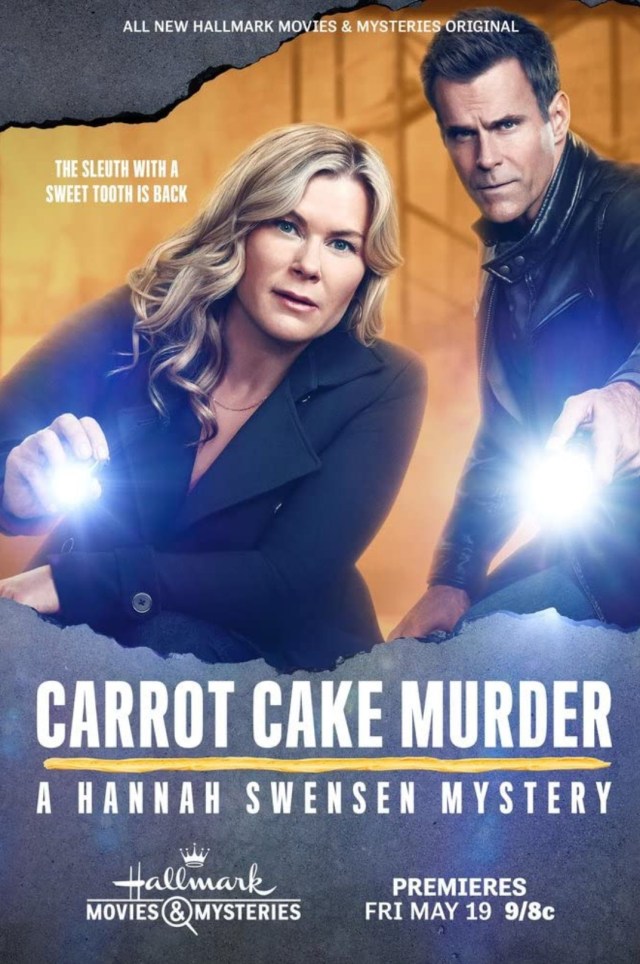
7. Carrot Cake Murder: A Hannah Swensen Mystery

In 2023, Hallmark Movies & Mysteries released two new chapters in the Murder She Baked/Hannah Swensen series: Carrot Cake Murder: A Hannah Swensen Mystery and A Zest for Death: A Hannah Swensen Mystery. While I found both entries disappointing, Carrot Cake Murder: A Hannah Swensen Mystery was the most disappointing movie out of the two. Other than solving a mystery, this story didn’t progress the series forward. Something happens in Mike and Hannah’s relationship that is resolved in A Zest for Death: A Hannah Swensen Mystery. This made Carrot Cake Murder: A Hannah Swensen Mystery an even more pointless chapter in the series. If you’ve never watched the Murder She Baked/Hannah Swensen series, skip this film, as you wouldn’t be missing much.

Take 3: Carrot Cake Murder: A Hannah Swensen Mystery Review

6. Silent Night, Fatal Night

Silent Night, Fatal Night is a Lifetime movie that is basically a gender-swapped, Christmas version of Misery, with a bit of a twist. Unlike the 1990 film, almost every character in Silent Night, Fatal Night makes one dumb decision after another. While the antagonist in the Lifetime film was unsettling, he was more annoying. Plus, I found it difficult to believe the protagonist, a mystery author, wouldn’t have more intuition to save herself. This isn’t the first time Lifetime has told a story similar to Misery. However, I wish the network would create stories that are less reminiscent of other, better movies from the 1990s.

Carrot Cake Murder: A Hannah Swensen Mystery poster created by Lighthouse Pictures, Looking Glass Productions, and Hallmark Movies & Mysteries

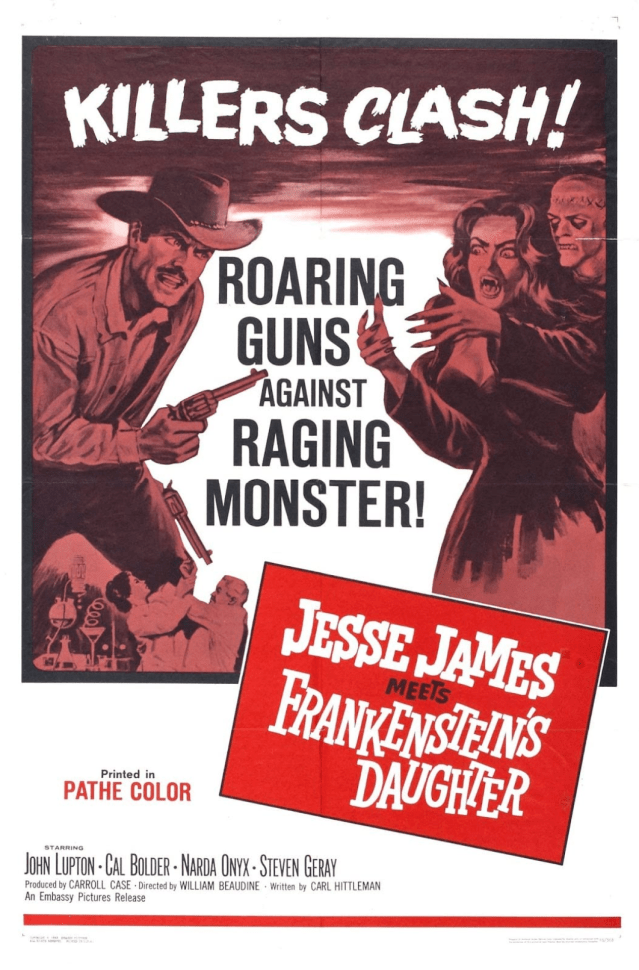
5. Jesse James Meets Frankenstein’s Daughter

Chosen for the Fifth So Bad It’s Good Blogathon, Jesse James Meets Frankenstein’s Daughter was built on a gimmick. Instead of embracing the silliness of that gimmick, the movie’s creative team took their project a little too seriously. Their project was misleading as well, no friendship or romance forming between Jesse and Frankenstein’s granddaughter. Though Jesse James Meets Frankenstein’s Daughter is classified under the western and horror genre, the western genre is emphasized more, preventing a balance between the two genres. The 1966 film is not my “so bad it’s good” movie. Since I did giggle a few times while watching it, I took a step in the right direction to find my “so bad it’s good” film!

Take 3: Jesse James Meets Frankenstein’s Daughter Review

4. Jesse Stone: Night Passage

For me, 2023 was not the year for mysteries, as the top four worst movies on my list are mystery films. The main issue with Jesse Stone: Night Passage is how none of the detectives do any detective work. What they do instead is pull assumptions out of their pockets, with those assumptions being conveniently correct. Subplots were prioritized over the mystery itself. This creative decision caused the story to lack any sense of urgency. It was nice to see familiar faces like Saul Rubinek (who portrayed Artie on Warehouse 13) and Liisa Repo-Martell (who portrayed Maida Flynn on Emily of New Moon). Sadly, there wasn’t much the cast could do to save Jesse Stone: Night Passage.

3. Mount Hideaway Mysteries: Heartache and Homecoming

This movie is so bad, it was, at times, unintentionally funny. Parts of the script reminded me of The Cookie Mobster, with the screenwriters not displaying an understanding for how some things worked. One such example is how Game Boy Color video game consoles were incorporated into the story. The film was riddled with other flaws, such as the color of a character’s earrings changing from scene to scene. Another, more consistent, flaw was telling instead of showing, like other characters mentioning how good looking the male protagonist is every time he appears in a scene. Also, just because the protagonist is a veterinarian does not mean she has to hold an animal every time a scene takes place at the veterinary clinic.

2. The Abigail Mysteries

I have never reviewed or talked about a movie from Great American Family on 18 Cinema Lane. So, it’s a shame that when I do talk about one of their movies, it’s because the project is bad. It is possible to create a good mystery story with elements of faith. But because The Abigail Mysteries heavily prioritized the elements of faith, the mystery was overshadowed, causing the overall story to lack a sense of urgency. From no on-screen chemistry to inconsistent audio quality, The Abigail Mysteries was filled with flaws. There were even times when actors would deliver their lines too quickly, making it difficult to understand what they were saying. I know this is the network’s first attempt at making a mystery movie. But if Great American Family is serious about creating more mystery projects, their efforts need to be better than The Abigail Mysteries.

1. Mystery Island

This is the second year in a row where a newly released Hallmark Movies & Mysteries movie is the worst film I saw. With Hallmark no longer prioritizing the mystery genre, I can’t say I’m that surprised. The poor writing is the biggest problem of Mystery Island. The mystery’s reveal is so ridiculously written, it makes the entire story feel pointless. Emilia Priestly, the film’s protagonist, has a legitimate reason to get involved in the movie’s mystery, as she is a psychiatrist for Scotland Yard. Instead of using her skills to solve the case, Emilia a) flips through books, b) eavesdrops on other characters’ conversations, and c) follows people into the jungle and runs out of that same jungle in wedge sandals. I’d like to think Hallmark will find the motivation to create better mystery productions. But as of late 2023/early 2024, I’m not getting my hopes up.

Jesse James Meets Frankenstein’s Daughter poster created by Circle Productions, Embassy Pictures, and Embassy Home Entertainment

Have fun in 2024.

Sally Silverscreen

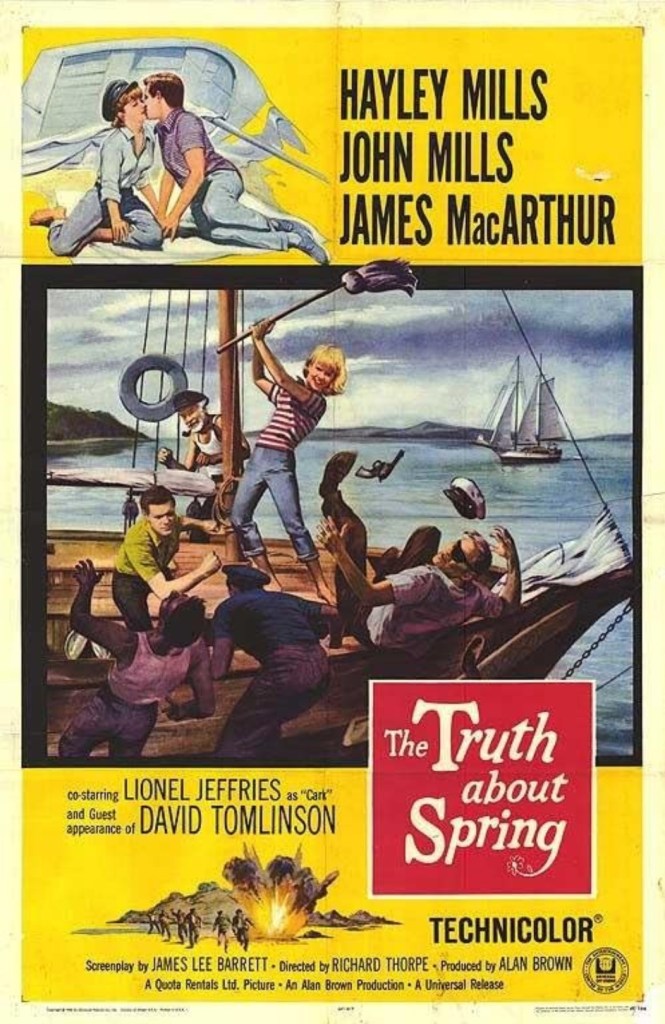
Take 3: The Truth About Spring Review

It’s been a while since I last wrote a movie review. As I just wrote about a Hallmark Hall of Fame film, I wanted to talk about something beyond the realm of Hallmark. I recently remembered a movie I had heard good things about for years. That movie is 1965’s The Truth About Spring! I have covered some of Hayley Mills’ films in past reviews on my blog. These titles are Summer Magic, The Moonspinners, and The Trouble with Angels. While I found Summer Magic to be just ok, I did like The Trouble with Angels and The Moonspinners. Since The Truth About Spring revolves around Hayley’s character traveling, I wondered if I’d like this film as much as The Moonspinners. That answer will be discovered as we sail through this review of The Truth About Spring!

The Truth About Spring poster created by Quota Rentals Limited and Universal Pictures

Things I liked about the film:

The acting: In The Truth About Spring, Hayley portrays the protagonist, Spring Tyler. One of the few characters she interacts with is William Ashton, portrayed by James MacArthur. When William prepares for his voyage on Tommy’s ship, Spring is curious about an outfit William packed. After she asks about the outfit in question, William explains it is a set of pajamas, which he wears for sleep. Spring’s face goes from inquisitiveness to sad realization, as she confesses how she doesn’t own pajamas. This subtle change in facial expressions shows how Spring is being exposed to a different way of living life. Because of Hayley’s acting abilities, the aforementioned realization appeared realistic!

Spring is not the only character William interacts with. Another key character in The Truth About Spring is Spring’s father, Tommy, portrayed by John Mills. During their voyage, Tommy witnesses William in his pajamas for the first time. Because Tommy is also not used to the idea of pajamas, he gives William a confused look. Meanwhile, William displays an embarrassed facial expression, as he wasn’t expecting Tommy to walk into the room. The interaction between these characters creates a moment that is awkward for both of them. John’s and William’s acting talents allow this awkwardness to radiate off the screen, making the scene feel believable!

The interior design: The majority of The Truth About Spring takes place outdoors, as the characters sail to various locations. However, there are a few scenes featuring the interior design of the characters’ ships. The sitting room in the yacht of William’s uncle is surrounded in bleached wood. Paired with beige chairs and a large painting of flowers, this room is reflective of the affluent lifestyle of the Ashton family. On Tommy’s ship, the cabin has dark wood walls. Tommy, Spring, and William sit around a table covered in a red and white checkered pattern. The small windows are gifted with green curtains. These combined design details showcase the humbleness of Tommy and Spring’s surroundings.

The discussion of educational experiences: A consistent topic between Spring and William is education. During one of their discussions, Spring learns there are different types of lawyers. This lesson came after William told her and Tommy he had graduated from law school and passed his bar exam. On a trip to the beach, Spring explains to William how it is the seagulls’ nesting season. She knows this information because of her experiences at sea. These conversations highlight how these characters’ life experiences shaped their educational foundations. I hadn’t thought about this concept until I saw The Truth About Spring!

Sailing on the sea image created by Michele L at freeimages.com. “FreeImages.com/Michele L.”

What I didn’t like about the film:

A missed opportunity: Throughout The Truth About Spring, the characters engage in a treasure hunt. This treasure hunt was, unfortunately, not emphasized in the story. Instead, the movie splits its time between the interactions of Spring and William, as well as Tommy’s conning schemes. For me, this was disappointing because a treasure hunt can give a story intrigue, suspense, and a sense of adventure. Not emphasizing the treasure hunt is, in my opinion, a missed opportunity.

A limited amount of urgency: As I mentioned in my previous point, the film’s treasure hunt wasn’t emphasized. That creative decision caused The Truth About Spring to contain a limited amount of urgency. Within the movie’s hour and forty-two-minute run-time, a strong sense of urgency was featured in only three scenes. Most of the movie ended up feeling like an unexciting journey.

A drawn-out story: Like I said in this review, The Truth About Spring is an hour and forty-two-minutes. But the story itself was straight-forward, primarily focusing on three key characters. Therefore, this combination made the film feel drawn-out. Personally, I feel the movie should have been given a run-time of an hour and ten to fifteen minutes. That way, the script would been tighter.

Tropical island image created by Brgfx at freepik.com. <a href=’https://www.freepik.com/free-vector/island-background-design_1020626.htm’>Designed by Freepik</a>. <a href=”https://www.freepik.com/free-photos-vectors/background”>Background vector created by Brgfx – Freepik.com</a>. Image found at freepik.com.

My overall impression:

As I stated in the introduction, I have reviewed some of Hayley Mills’ films. These films range from ok to enjoyable. When it comes to The Truth About Spring, I thought it was just ok. There are aspects of the 1965 movie I like, such as the discussion of educational experiences between Spring and William. However, I didn’t find the story itself very interesting. Instead of emphasizing the treasure hunt, more focus is given to Tommy’s conning schemes. Giving this simplistic story a run-time of almost two hours didn’t help either. If you’re looking for a movie where Hayley’s character falls in love and goes on an adventure, I’d recommend The Moonspinners over The Truth About Spring. The Moonspinners contains suspense and intrigue, as well as a tighter script.

Overall score: 6 out of 10

Have you seen The Truth About Spring? What is your favorite movie starring Hayley Mills? Please tell me in the comment section!

Have fun at the movies!

Sally Silverscreen
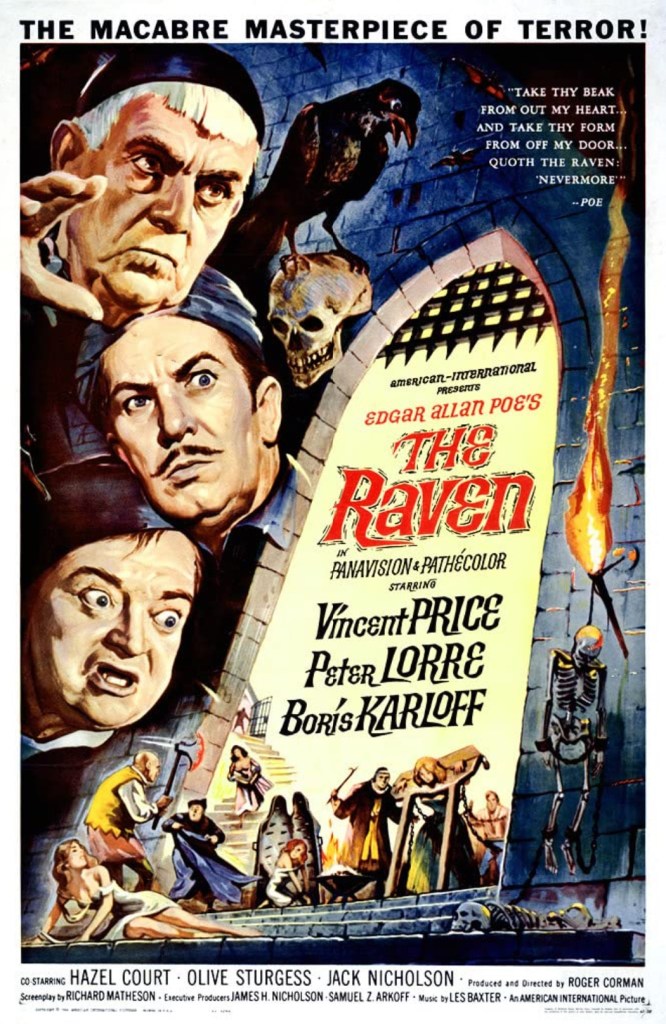
Take 3: The Raven (1963) Review

April Fool’s Day; a time for jokes, pranks, and laughter. On such a day, a comedic film would be most appropriate. Therefore, it’s time to introduce my selection for The ‘Favorite Stars in B movies’ Blogathon: 1963’s The Raven! Recommended by the late Patricia from Caftan Woman, I discovered this particular title was considered a “B movie” while searching for the perfect movie to write about. It just so happens to star an actor that is no stranger to 18 Cinema Lane; Vincent Price! The Raven is the tenth film of Vincent’s I have seen and reviewed. Most of his projects I have enjoyed to various degrees. But how will the 1963 title turn out? Don’t fly away from this review, as the review is about to begin!

The Raven (1963) poster created by Alta Vista Productions and American International Pictures

Things I liked about the film:

Interactions between characters: When creating a movie, it’s important to cast actors and actresses who not only perform well individually, but also within a group. If the quality among the cast is strong, the interactions between their characters will appear realistic to the audience. This is the impression I received as I watched The Raven. Scenes shared by Vincent Price and Peter Lorre serve as one great example. In one scene, Vincent’s character, Dr. Erasmus Craven, has attempted to reverse the spell placed on Dr. Adolphus Bedlo, Peter Lorre’s character. Unfortunately, Craven’s attempt doesn’t go according to plan. Bedlo is distraught at having wings for arms. His face bears a frown, eyes filled with a sad look. With disdain and concern is his voice, Bedlo is afraid the spell’s effects will be permanent. Meanwhile, Craven bears a look of concern on his face. But with a worried look in his eyes, Craven appears to care about the well-being of his friend. Through interactions like the one I described, Craven and Bedlo’s friendship felt believable. That was made possible with a combination of screen-writing and the performances of Vincent and Peter!

The humor: I knew The Raven was classified as a “horror-comedy” before I watched it. However, I was surprised by how the comedy was incorporated into the story! The humor in The Raven was mostly found within the dialogue. But the movie’s climax is where the humor really shines! In this scene, Craven and Dr. Scarabus, portrayed by Boris Karloff, participate in a magical duel. When it was Craven’s turn to use his magic, his responses to Scarabus became sillier as the duel continued. I won’t spoil this part of the story, for readers who haven’t seen this movie yet. All I will say is the humor was so well executed, I burst out laughing on numerous occasions.

Following the characters’ journey: The Raven is about Craven and his friend, Bedlo, traveling to Scarabus’ castle to reclaim Bedlo’s magic and save the spirit of Craven’s late wife, Lenore. As the story unfolds, the audience witnesses the steps Bedlo and Craven take in order to make the trip a reality. Seeing this step-by-step process allows viewers to feel like they are traveling alongside the characters. That creative decision adds interactivity to the story!

The ‘Favorite Stars in B movies’ Blogathon banner created by Brian from The Films from Beyond the Time Barrier

What I didn’t like about the film:

Inconsistent parts of the story: Within the The Raven, there were times when parts of the story were inconsistent. In one example, Craven and Bedlo need hair from a dead man. So, they take some hair from Craven’s deceased father. In order to open the casket of Craven’s father, Craven uses a knife to pry open the casket’s lid. A few scenes later, when Bedlo and Craven want to open Lenore’s casket, they are easily able to lift the lid. While these inconsistencies were not a common flaw, I believe this issue could have been avoided.

A drawn-out first half: As I already mentioned in this review, I liked how the characters’ journey allowed the audience to feel like they were traveling alongside the characters. But because of the movie’s hour and twenty-six-minute run-time, this journey was drawn out. Within the story’s first half, the sense of urgency was limited. There was also a small conflict that prolonged the journey. With those flaws addressed, it makes me wonder if this story would have worked better as a short film?

A random plot twist: For this part of my review, I will spoil a plot twist in The Raven. If you are interested in watching this movie, but have not seen it yet, please skip ahead to the section titled ‘My overall impression’.

While spending the night at Scarabus’ castle, Bedlo helps Scarabus trap Craven, his daughter, Estelle, and Bedlo’s son, Rexford. After Scarabus and Bedlo succeed, Bedlo confesses he tricked Craven into coming to Scarabus’ castle, in order to gain more magic from Scarabus. While this plot twist was unexpected, it felt random. There was no indication Bedlo would be that under-handed. Plus, this plot twist came right after another plot twist had been revealed. In my opinion, the plot twist involving Bedlo felt like it was included in the story just for the sake of it.

Image of crow at sunset created by Rayudu NVS at freeimages.com. Photo by <a href=”/photographer/rayudu238-57835″>rayudu NVS</a> from <a href=”https://freeimages.com/”>FreeImages</a&gt;. Image found at freeimages.com.

My overall impression:

As of early April, 2023, I have seen two Corman productions based on the works of Edgar Allan Poe; The Pit and the Pendulum and The Raven. A sense of wonder exudes from these two movies. What I mean by this is, I am amazed by how these creative teams were able to take simple stories and turn them into feature films! While I liked The Raven, I still prefer The Pit and the Pendulum. This is because of the movie’s flaws, such as the drawn-out first half and the random plot twist. However, there were strengths in The Raven, like the interactions between characters and the humor. I’m aware of Vincent Price’s other movies based on Edgar’s work. I’ll have to check those out another day!

Overall score: 7.3 out of 10

Have you seen or read The Raven? Are there any adaptations of Edgar Allan Poe’s work you’d like me to review? Let me know in the comment section below!

Have fun on April Fool’s Day!

Sally Silverscreen

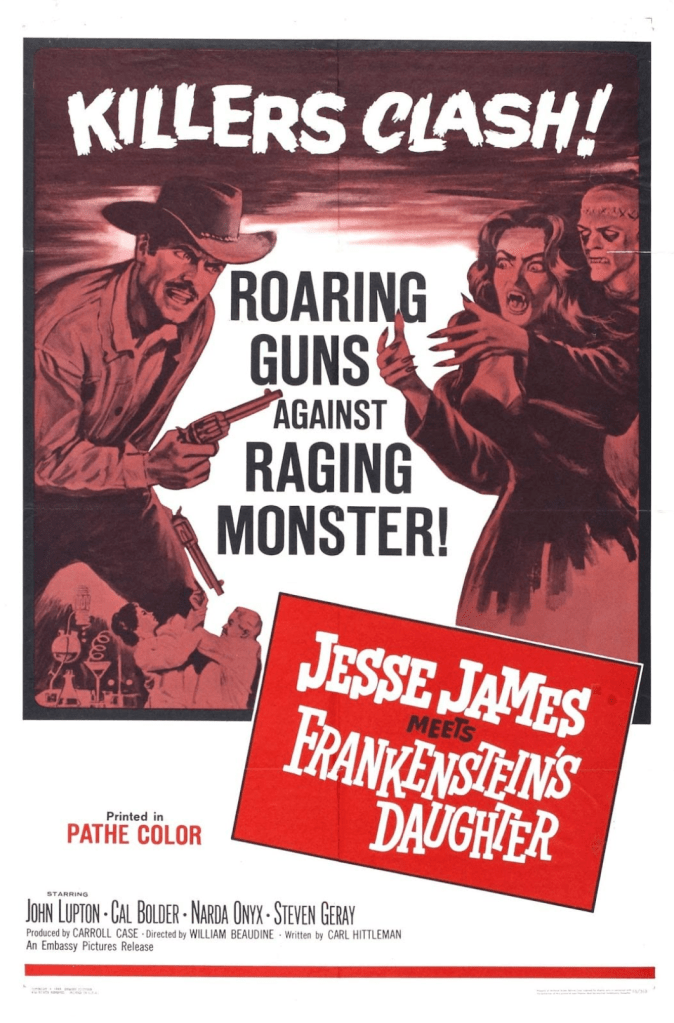
Take 3: Jesse James Meets Frankenstein’s Daughter Review

My quest to find my “so bad it’s good” movie has, at this point, turned into a saga. During my time participating in the So Bad It’s Good Blogathon from Taking Up Room, I have selected a film I thought would earn the coveted title, only to have that film fall short of my expectations. But I haven’t given up, as I still believe my “so bad it’s good” film is out there somewhere. When I reviewed Sea Change, I said the movie sounded so “bonkers”, I had to check it out for myself. I had a similar experience when I discovered the 1966 film, Jesse James Meets Frankenstein’s Daughter. Based on that title alone, the movie sounded “bonkers”, a well-known criminal from the “wild, wild west” crossing paths with someone from the story of Frankenstein. I hadn’t seen a film where the western and horror genres combined, so I was curious to see how this story would turn out. I was also curious to see if Jesse James Meets Frankenstein’s Daughter would finally be my “so bad it’s good” movie.

Jesse James Meets Frankenstein’s Daughter poster created by Circle Productions, Embassy Pictures, and Embassy Home Entertainment

Things I liked about the film:

Maria’s house: Within this movie’s dialogue, Maria explains how her house formerly belonged to a missionary. Though the space is more reflective of Maria’s taste in design, I was impressed with the set! Despite only three rooms being shown on screen, my favorite room was the sitting room! The walls and massive fireplace were covered in a light-colored sandstone. A large medallion with carved images sits over the fireplace, boasting a darker metal hue. Red armchairs and curtains nicely complimented the sandstone. These details added elements of elegance and European flair to the desert!

The inclusion of science: In stories from the western genre, science isn’t often found in the script. In fact, the only times I’ve seen science included in western stories are during school lessons or whenever a medical situation takes place. Maria is a scientist from Austria, who just so happens to be related to the same Frankenstein from Mary Shelley’s novel. She is driven to make her experiment work, using an artificial brain that was passed down through her family. Despite the film’s science being poorly written, I appreciate this story adopting a more unique identity. I also appreciate the creativity this movie’s creative team attempted.

The Fifth So Bad It’s Good Blogathon banner created by Rebecca from Taking Up Room

What I didn’t like about the film:

Poorly written science: As I previously stated in this review, the science in Jesse James Meets Frankenstein’s Daughter is poorly written. It honestly made the characters sound like they didn’t know what they were talking about. While performing one of her experiments, Maria explains to her brother why they moved to the United States. She says there are more “electrical storms” in the United States than there are in Austria. What Maria failed to remember is how thunderstorms can take place anywhere, as clouds can congregate to create the effects of a typical storm, such as lightening. This made Maria’s trip seem kind of pointless.

A misleading title: I mentioned in this review’s introduction how the title of Jesse James Meets Frankenstein’s Daughter sparked my curiosity, as it made the movie sound “bonkers”. Personally, I thought the film would feature Jesse James in his younger years interacting with the daughter of Frankenstein’s monster. However, the title turned out to be a lie. Maria is Victor Frankenstein’s granddaughter. When Jesse meets Maria, forty minutes into the movie, nothing happens after their initial meeting. They don’t fall in love or form some sort of alliance. If given an honest title, this film would be called “Jesse James Meets Juanita”.

Delayed reactions: Though not a common flaw, there were a few times where actors presented delayed reactions. When Juanita’s family first meets Jesse and his friend, Hank, both men are running from the law. Hank has a very noticeable injury, which is getting worse by the minute. But it takes Juanita about five to ten seconds to acknowledge Hank’s injury. I’m not faulting the actors, as they tried their best with the material given. I will fault the screenwriting, as there could have been a stronger sense of urgency written into the script.

Lack of horror: In this review’s introduction, I said I was curious to see a movie combine the western and horror genres. But when I watched the film, the western genre was emphasized. To me, it felt like the movie’s creative team wanted to take their western story seriously, instead of finding a balance between the horror and western genres. When the horror elements were utilized, it seemed like they were used to tell a rehashed version of Mary Shelley’s story. Even though I appreciate the creativity attempted, I wish the delivery was stronger.

Small, western town image created by Freepik at freepik.com. <a href=”https://www.freepik.com/free-photos-vectors/background”>Background vector created by freepik – http://www.freepik.com</a>. Image found at freepik.com.

My overall impression:

For five years, I have been searching for my “so bad it’s good” movie. Throughout this search, I have found films that were either ok or disappointing. With Jesse James Meets Frankenstein’s Daughter, there were a few times I found myself giggling. But I wouldn’t say this movie is “so bad it’s good”. To be honest, this film was built on a gimmick. Though that could work with the right creative talent, Jesse James Meets Frankenstein’s Daughter didn’t have a strong delivery. It felt like the movie’s creative team wanted to take their project seriously. This made the film feel more like a generic western. The inclusion of the horror genre added some creativity to the movie. Unfortunately, the horror elements were not utilized well. With this review for the So Bad It’s Good Blogathon, it feels like I took a step in the right direction! Hopefully, those steps will lead me to my “so bad it’s good” movie!

Overall score: 4.9-5 out of 10

Have you seen or heard of Jesse James Meets Frankenstein’s Daughter? Would you like to see more westerns combine other genres? Please let me know in the comment section!

Have fun at the movies!

Sally Silverscreen

The Top 10 Worst Movies I Saw in 2022

My worst movies list of 2022 is different from that of the previous year. This time, I’ll be talking about more films that were “so bad they were bad”, as only three of these movies were disappointments. The Dishonorable Mentions portion of the list has also returned! Though I did see more good movies than bad, I couldn’t avoid coming across a “stinker” every now and then. I like to think I’ll, one day, see less than ten films for my annual worst list. But someday has not come this year, as the title of this article suggests. As I’ve stated in past lists, I did not write my list to be mean-spirited or negative. It’s just a way to express my own, honest opinion. Since some of these films have been reviewed on my blog, I will provide links to those reviews.

Dishonorable Mentions

Signed, Sealed, Delivered: The Vows We Have Made, A Place for Annie, Swim Instructor Nightmare, Nikki & Nora: Sister Sleuths, The Corsican Brothers (1985), and Donnie Brasco (I only watched forty minutes of the film before turning it off)

<a href=”http://<a href=’https://www.freepik.com/vectors/new-year’>New year vector created by freepik – http://www.freepik.com</a>&quot; data-type=”URL” data-id=”<a href=’https://www.freepik.com/vectors/new-year’>New year vector created by freepik – http://www.freepik.com2022 Changing numbers image created by Freepik at freepik.com

10. The New Adventures of Heidi

In 2022, I was hoping to finally find my coveted “so bad, it’s good” movie. Sadly, The New Adventures of Heidi was not it. As I said in my review, this film is “spectacularly average”. The more I think about the 1978 made-for-tv movie, the less justifiable reasons I can think of for the project’s existence. Yes, The New Adventures of Heidi was intended as a “modern” re-telling of Johanna Spyri’s story. But the movie didn’t feel unique enough, despite all the changes. Every year I’ve participated in the So Bad It’s Good Blogathon, there has been a pattern between movies that turned out ok and movies that were just disappointing. Hopefully, in 2023, I can break this pattern.

Take 3: The New Adventures of Heidi Review

9. Love in Wolf Creek

When I first read the synopsis for Love in Wolf Creek, I was excited at the idea of a “cozier” story filled with adventure and excitement. The 2022 television film seemed better on paper than in practice. For a movie titled Love in Wolf Creek, there was very little romance in the story. The writing was weaker than I hoped, filled with scenarios that were too unrealistic for my liking. This project was too ambitious for INSP, the network who created the film. It was so disappointing, I didn’t bother watching its sequel, Christmas in Wolf Creek.

8. Harvey (1950)

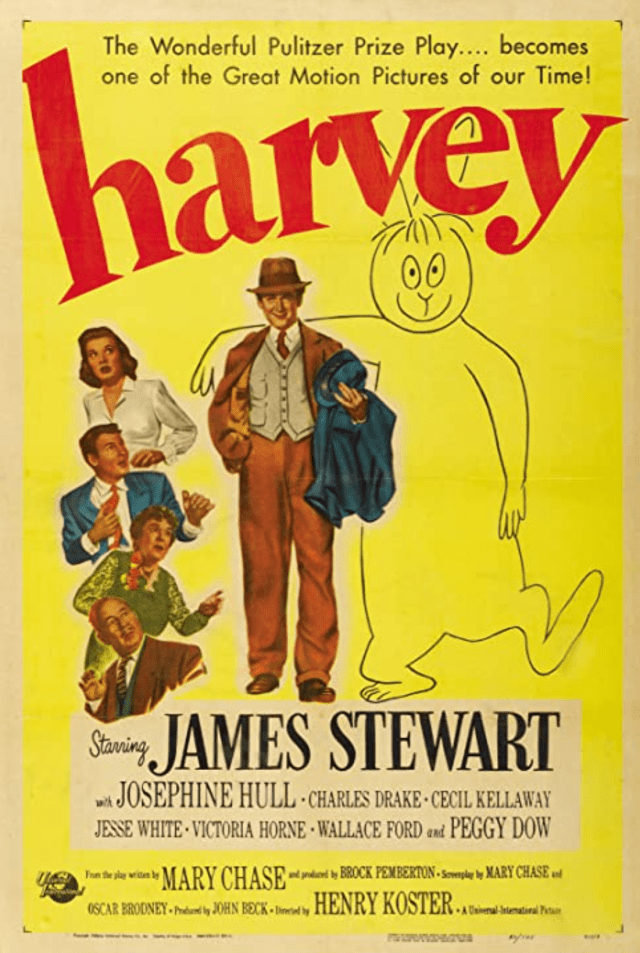
I think the 1972 Hallmark Hall of Fame adaptation of Harvey is better than its 1950 predecessor. While I’m aware how controversial my opinion is, the 1972 film had more success executing its intended points. A mistake the 1950 movie makes is trying to be a comedy and a drama. This decision led the comedy to not only be underutilized, but also showcased medical negligence in a way that didn’t sit well with me. “Magical realism” was lacking in the 1950 film. This took away any opportunity for the story to be charming and whimsical. When I reviewed Harvey back in January, it was the most disappointing movie I saw in 2022. Now, eleven months later, the 1950 picture still holds that title.

Take 3: Harvey (1950) Review

7. Journey

The 1995 Hallmark Hall of Fame presentation made the same mistake Durango did: not giving the audience a reason to care about the characters and their story. In the case of Journey, the creative team failed to provide explanations for the characters’ choices. At the beginning of the film, the protagonist’s mother, Min, abandons her family, claiming she hates her parents. But the script never explains why she made this decision. Even when there are cut-away scenes featuring Min, she isn’t doing anything significant. How am I expected to care about Min’s choice affecting her family when I don’t even know why she left in the first place?

6. My Mom Made Me Do It

According to a synopsis I read for this 2022 Lifetime film, the protagonist, Jade, turns to stealing in order to help her mom pay the bills. Both the title and synopsis turned out to be a lie because 1) Jade’s decisions were made on her own and 2) Jade never steals anything. What she does instead is crash wealthy people’s parties and photographs their belongings. Other issues contained in this movie are weak lead performances and characters who make one dumb choice after another. I will admit there was at least one effective plot twist. But I wish it had taken place in a better film.

Harvey (1950) poster created by Universal Pictures

5. The Sundowners (1960)

For a little while, I thought The Sundowners was going to be the worst movie I saw this year. Even though I was proven wrong, the 1960 film has still remained in my top five. Like I said in my review, one of the worst things you can do as a film-maker is waste your audience’s time. The story felt longer than necessary, which made the movie two hours and thirteen minutes not well spent. One of my biggest issues with The Sundowners was its “bait and switch” ending. While I won’t go into detail about the ending, as I don’t want to spoil the film, I will say it was cruel for both the characters and the audience.

Take 3: The Sundowners (1960) Review

4. The North Avenue Irregulars

This movie attempts to answer the question; “Wouldn’t it be funny if a group of women came together to solve a mystery”? By the time The North Avenue Irregulars was released in 1979, that question made the film dated on arrival, as there were several television programs from the ‘70s featuring at least one female character solving mysteries or fighting crime. The movie’s creative team told too many types of stories, yet failed at all of them. One minute, the film felt like a precursor to the Mitford series, revolving around a preacher trying to live his best life. The next minute, the film turns into a gangster heist picture, paired with car chases that were longer than necessary. Honestly, I wish this movie was a Scooby Doo-esque story about the film’s fictional band, Strawberry Shortcake. Maybe then the movie would seem more timeless.

3. Lake Effects

For the first time in 18 Cinema Lane history, all the movies in my worst list’s top three are Hallmark productions. Accepting the bronze is the 2012 film, Lake Effects. This movie has so many Hallmark movie clichés, you could create a bingo game around them. You could also create a bingo game around the many storylines found in this script. Lake Effects is a production that relies on style over substance. While Smith Mountain Lake, Virginia was captured well on film, there’s only so much the movie’s creative team could do with the weak script at their disposal. In my review from August, I stated how the movie seemed forgotten over the years. Its poor quality makes it not worth remembering.

Take 3: Lake Effects Review

2. A Boyfriend for Christmas

In 2019 and 2020, a Hallmark Christmas movie ended up in the top three of my annual worst movies list. History is kind of repeating itself with A Boyfriend for Christmas in second place. Like Lake Effects, the 2004 film contained a weak script. But in A Boyfriend for Christmas, I only liked two minor parts of the story. The lack of Christmas magic made my movie viewing experience unenjoyable. It was one of those stories that became worse the longer I watched it. I know this movie is one of the most beloved titles in Hallmark’s cinematic library. Honestly, though, I found it over-rated.

Take 3: A Boyfriend for Christmas Review

1. Francesca Quinn, PI

Remember when I said one of the worst things a film-maker can do is waste their audience’s time? Well, another worst thing a film-maker can do is disrespect their audience’s intelligence. As I watched Francesca Quinn, PI, I was given the impression the film’s creative team didn’t want me to solve the mystery alongside the protagonist. That’s because Francesca explained things that didn’t need explaining. Despite Francesca being a professional private investigator, she constantly made decisions an amateur detective would likely make. Her lack of personality didn’t help either. According to IMDB, Francesca Quinn, PI could replace the Mystery 101 series. The reason is “the main characters’ relationship and the crime at the end of Deadly History are the same as the main characters’ relationship and crime in Francesca Quinn, PI”. If this is the case, the Mystery 101 fans, including myself, deserve so much better.

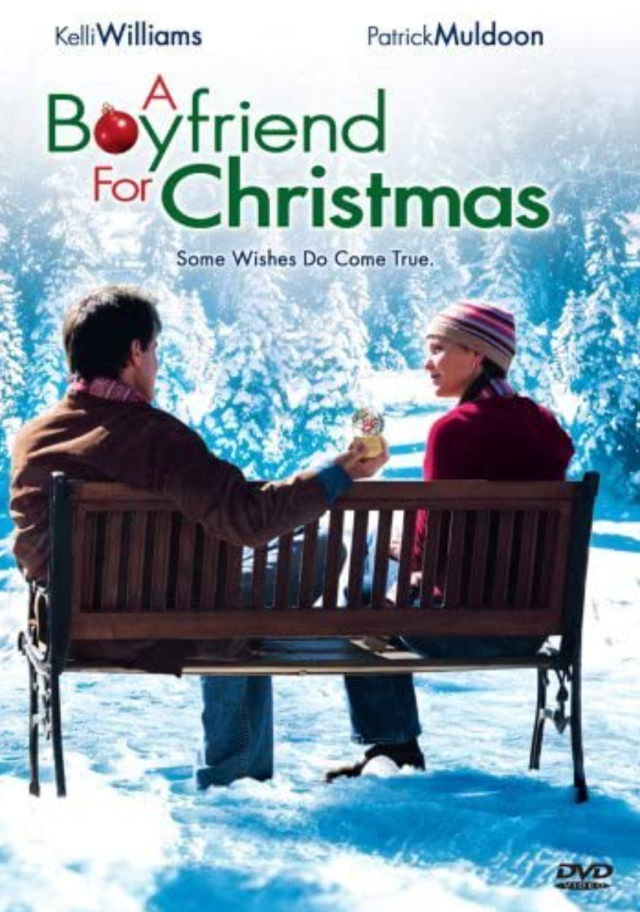
A Boyfriend for Christmas poster created by Hallmark Entertainment,  MAT IV,  Alpine Medien Productions, Larry Levinson Productions, Gaiam Entertainment, and Hallmark Channel 

Have fun in 2023.

Sally Silverscreen

Ten Classic Movies I Watched Because of My Blog

18 Cinema Lane is almost five years old. In that time, I have reviewed many films; from the blockbuster to the underrated and everything in between. Sometimes, I had the opportunity to talk about “classic” films. These opportunities were formal introductions to these titles. This list highlights some of the “classic” movies I watched because of my blog. Whether it was a blogathon entry or a Blog Follower Dedication Review, I’m thankful I was able to see these films. That way, I can now have an honest opinion about them. Since I have reviewed all the films on my list, I will provide links in this article. I will also be sharing my thoughts on these films, so anything I say is not meant to be mean-spirited or negative.

The Discovering Classic Cinema Blogathon banner created by Maddy from Classic Film and TV Corner

The Bridge on the River Kwai

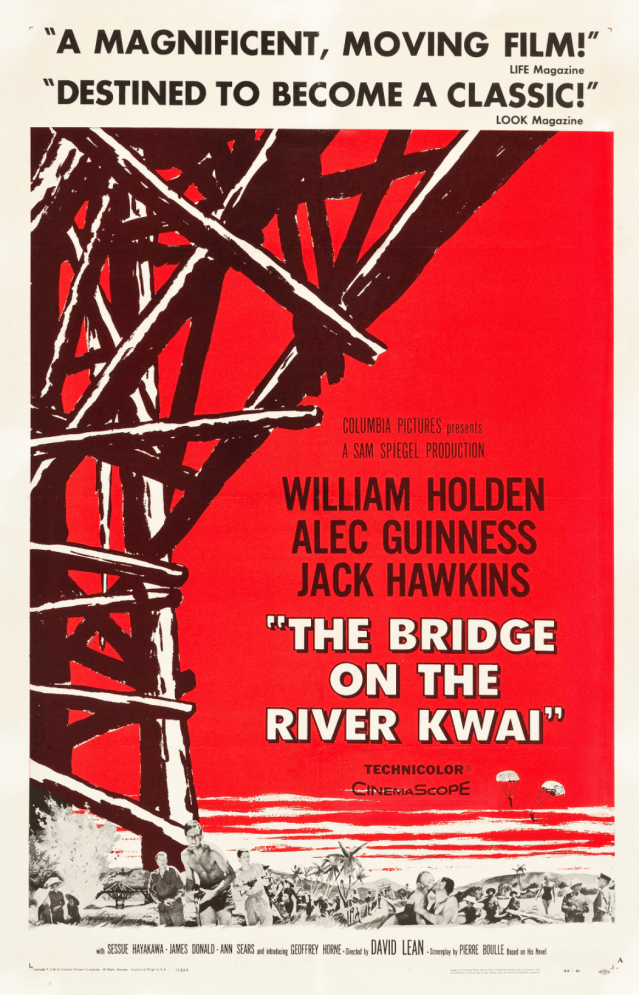
The Bridge on the River Kwai poster created by Horizon Pictures and Columbia Pictures

Starting this list is the most recent “classic” I reviewed. I chose to write about The Bridge on the River Kwai for The 5th Golden Boy Blogathon, where I was the only participant to select it. This movie made me question why some movies do or don’t end up on AFI’s list of The 100 Greatest American Movies Of All Time. Until I watched The Bridge on the River Kwai, I believed these titles met one of two criteria: those that represent the time they were released and those that brought something new to the cinematic table. With the 1957 film, I still haven’t figured out why it’s on the list. I am not saying this is a bad movie. But, at best, I thought it was just fine.

Take 3: The Bridge on the River Kwai Review

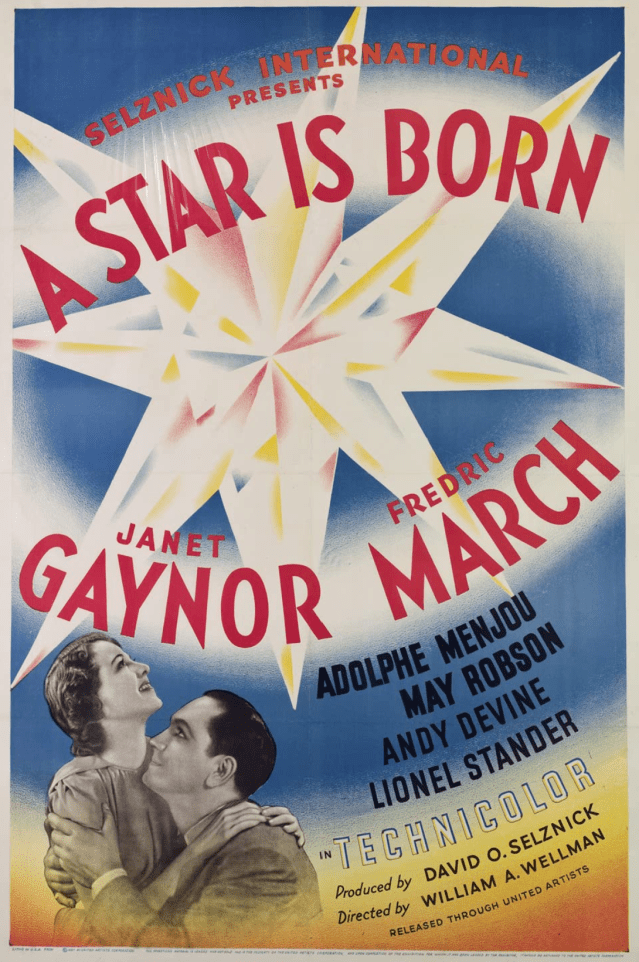
A Star Is Born (1937)

A Star Is Born (1937) poster created by Selznick International Pictures and United Artists

Before participating in the Fredric March Blogathon, I didn’t have an interest in watching any version of A Star Is Born. Because this story has been remade on more than one occasion, I thought each version was going to share a recycled plot, with little variation among them. As of this list’s publication, I’ve only seen the 1937 original. However, I was surprised by how impressive the movie was! Fredric March’s performance was so strong, not just among the Breen Code era films I’ve seen, but among any movie I have seen. He worked well alongside Janet Gaynor, sharing really good banter between each other. A Star Is Born made me want to actively seek out more films from Fredric’s filmography!

Take 3: A Star Is Born (1937) Review

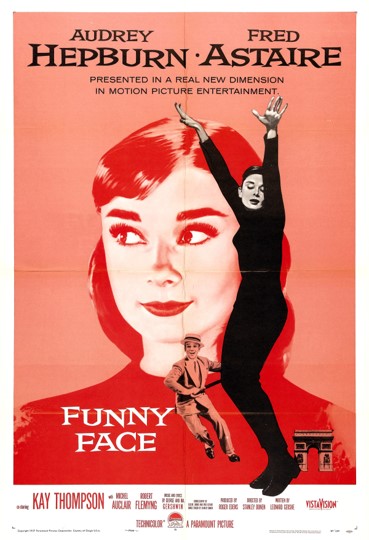
Funny Face

Funny Face poster created by Paramount Pictures.

As Fred Astaire famously said, “Do it big, do it right, and do it with style”. When it comes to his movie, Funny Face, that’s exactly what happened. This is a pleasant looking production! I remember loving the use of color, as pops of color were placed in scenes with a primarily plain color palette. The musical numbers were also entertaining to watch, with creative ideas woven through them. Though I haven’t seen many of Audrey Hepburn’s films, Funny Face is one of her projects I like. She appeared to be enjoying whatever she was doing, whether it was dancing in the “Basal Metabolism” number or portraying Jo traveling to Paris. Then again, Audrey did famously say “I believe that happy girls are the prettiest girls”.

Take 3: Funny Face Review (Fred Astaire and Gene Kelly Blogathon Part 2)

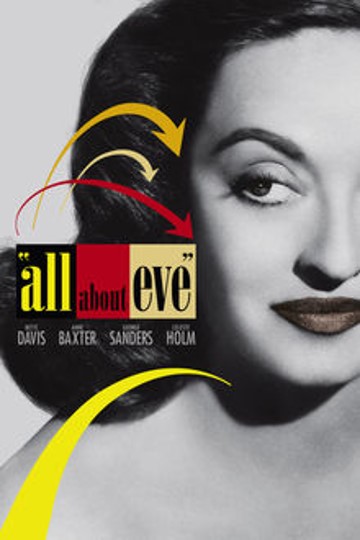
All About Eve

All About Eve poster created by 20th Century Fox. Image found at https://www.foxmovies.com/movies/all-about-eve.

As the last movie I reviewed for 2019’s Clean Movie Month, All About Eve is a film I thought was just fine. A peek behind the theater world’s curtain was refreshing, providing the story with interesting perspectives. The use of voice-overs not only allowed the audience to witness Eve develop as an individual, but connect with the other characters as well. However, I found the title to be misleading, as the story was led by Margo. As I said in my review, the film would be called “Mostly About Margo” or “Sometimes About Eve” if given an honest title.

Take 3: All About Eve Review (Clean Movie Month — #5)

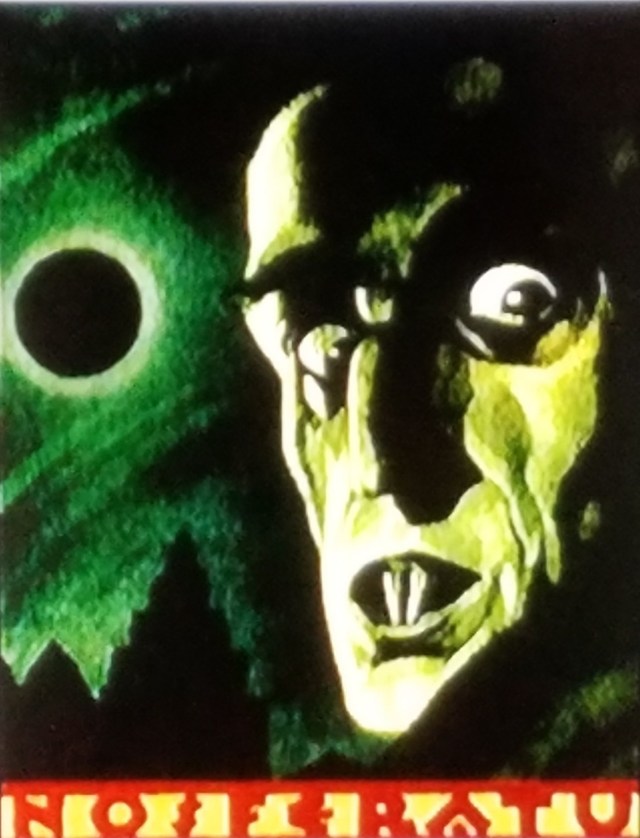
Nosferatu

Screenshot taken by me, Sally Silverscreen.

The same year I reviewed All About Eve, I also wrote about Nosferatu. My review of the 1922 “classic” was for 2019’s A Month Without the Code. I’m thankful for the opportunity I had to see Nosferatu, as the film was not only created under strict copyright rules, but has also been preserved over time. This film serves as a stone in cinema’s foundation, showcasing elements still found in today’s movies, such as using music to elevate the story’s tone. I don’t often talk about horror films on 18 Cinema Lane. But out of the ones I have reviewed, Nosferatu is definitely one of the better titles!

Take 3: Nosferatu Review (A Month Without the Code — #1)

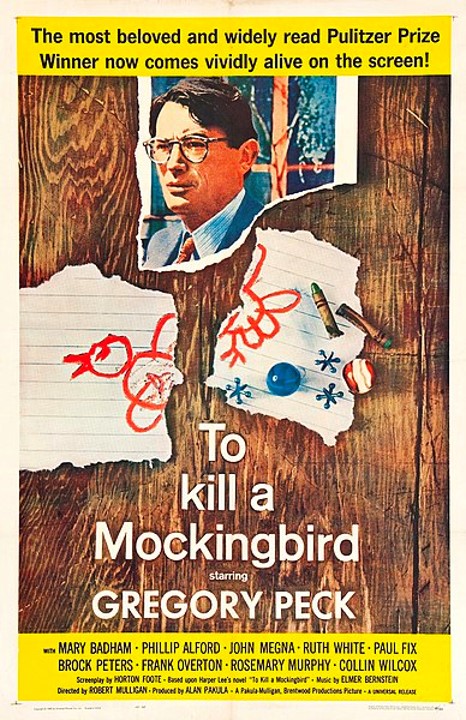
To Kill a Mockingbird

To Kill a Mockingbird poster created by Brentwood Productions, Pakula-Mulligan, and Universal Pictures. Image found at commons.wikimedia.org/wiki/File:To_Kill_a_Mockingbird_(1963_US_theatrical_poster).jpg

Like I recently said in my list, ‘The Top 10 Best Movies I Saw in 2022’, there are few movies I found better than their source material. To Kill a Mockingbird is one of those films! I like this adaptation because the script gets straight to the point sooner than the book did. It also places more emphasis on the trial, the part of the book I found the most interesting. The visual nature of film elevated the suspenseful moments from the original story, presenting realistic situations with an intensified level of uncertainty. This is one of those times where I would suggest skipping the book and going straight to the film.

Take 3: To Kill a Mockingbird Review

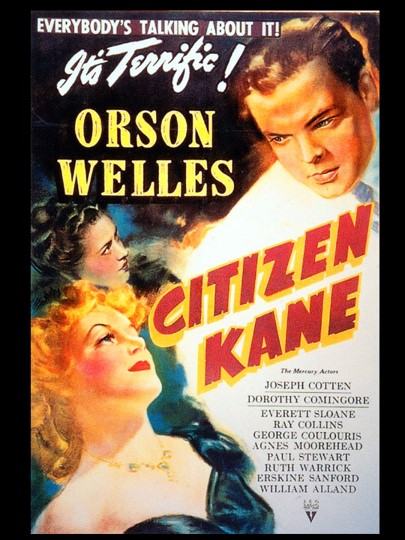
Citizen Kane

Citizen Kane poster created by Mercury Productions and RKO Radio Pictures. Image found at http://www.tcm.com/tcmdb/title/89/Citizen-Kane/#.

In my opinion, Citizen Kane is an over-hyped movie. I know that’s a controversial opinion. But when I reviewed the movie in 2019, I didn’t find it the flawless masterpiece others have made it out to be. For starters, I don’t think the film needed an hour and fifty-nine-minute run-time. I also found it difficult to connect with the characters. Despite my view on Citizen Kane, I don’t think it’s a bad movie. If anything, I thought it was decent. But like I said with The Bridge on the River Kwai, I wonder why Citizen Kane is number one on AFI’s list of The 100 Greatest American Movies Of All Time?

Take 3: Citizen Kane Review (Clean Movie Month — #2)

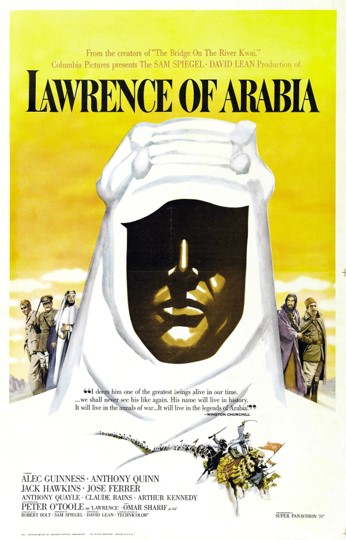
Lawrence of Arabia

Lawrence of Arabia poster created by Columbia Pictures. Image found at http://www.tcm.com/tcmdb/title/4455/Lawrence-of-Arabia/#

This is another “classic” I feel is over-hyped. However, the over-hyped status of Lawrence of Arabia is not to the same degree as Citizen Kane, in my opinion. The 1962 film is one of the most iconic “sword and sandal” titles. But beyond this simplified distinction is a World War I story from a unique perspective. Reviewing Lawrence of Arabia for The World War One On Film Blogathon was not my first choice. I had actually planned to review a different movie, which ended up being released on DVD after the blogathon took place. This last-minute decision was a blessing in disguise, as it gave me an excuse to check out Lawrence of Arabia!

Take 3: Lawrence of Arabia Review

Ben-Hur (1959)

Ben-Hur (1959) poster created by Metro-Goldwyn-Mayer and Loew’s, Inc. Image found at https://commons.wikimedia.org/wiki/File:Ben_hur_1959_poster.jpg

When I chose to watch this movie for a Blog Follower Dedication Review, I had no idea how much I would love it! I remember being so invested in Judah’s journey, I wasn’t too bothered by the film’s three-hour run-time. This is another iconic “sword and sandal” picture. But only referring to this film by that simplified title does it such a disservice. That’s because the movie is, in my opinion, one of the better faith-based films! I’ve heard 1959’s Ben-Hur is a remake of a film from the ’20s. Maybe that version will be covered in a future review!

Take 3: Ben-Hur (1959) Review + 60 Follower Thank You

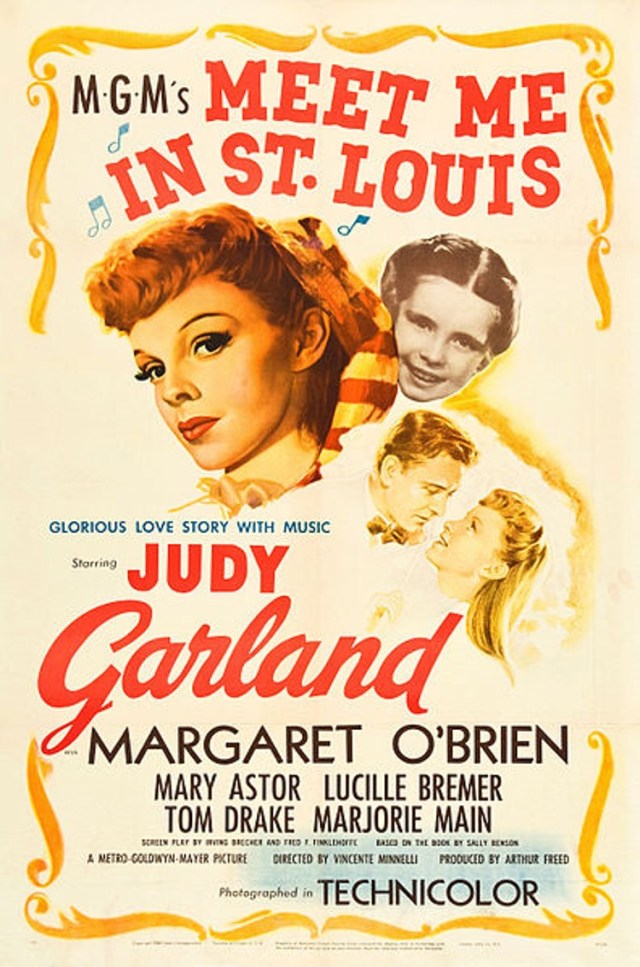
Meet Me in St. Louis

Meet Me in St. Louis poster created by Metro-Goldwyn-Mayer and Loew’s, Inc. Image found at https://commons.wikimedia.org/wiki/File:Meet_Me_in_St._Louis_poster.jpg

The Breen Code era gave us some good musicals. Meet Me in St. Louis is no exception! A musical is only as strong as its musical numbers. In the 1944 film, there was an assortment of enjoyable songs. From Judy’s iconic rendition of “Have Yourself a Merry Little Christmas” to my favorite, “Under the Bamboo Tree”, this part of the story added to my movie viewing experience. While the film does have its flaws, it is a pleasant production. If I were introducing someone to the Breen Code era, Meet Me in St. Louis is a film I would recommend!

Take 3: Meet Me in St. Louis Review + 75 Follower Thank You

Have fun at the movies!

Sally Silverscreen
The Top 10 Best Movies I Saw in 2022

As the sun begins to set on 2022, it’s time to publish my best and worst movies of the year lists! Last year, every film on my best list had been reviewed on 18 Cinema Lane. But that’s not the case this time around. For this list, only two movies were not reviewed, while another movie served as an editorial subject. Any film I covered on my blog will have a link included in this post. I’m thankful another year was filled with more good movies than bad. I’ll even have more titles in my Honorable Mentions! While these lists have become great traditions on their own, the variety of this collection of films has become another tradition. So, without any delay, let’s begin the list of the best movies I saw in 2022!

Honorable Mentions

Cut, Color, Murder, Sailor Moon S: The Movie, Cyrano de Bergerac (1950), Children of a Lesser God, Sweet Revenge: A Hannah Swensen Mystery, Aurora Teagarden Mysteries: Honeymoon, Honeymurder, The Princess and the Pirate, Dirty Little Secret, Singin in the Rain, McBride: Tune in for Murder, McBride: Dogged, McBride: Requiem, Hugo, Akeelah and the Bee, The Shoplifting Pact, and Secrets at the Inn

<a href=”http://<a href=’https://www.freepik.com/vectors/background’>Background vector created by malikadesign – http://www.freepik.com</a>&quot; data-type=”URL” data-id=”<a href=’https://www.freepik.com/vectors/background’>Background vector created by malikadesign – http://www.freepik.com2022 Sparkler image created by malikadesign at freepik.com

10. Fiddler on the Roof

When I reviewed the 1971 musical back in February, I said it was too early to say whether it would be one of the best movies I saw this year. But Fiddler on the Roof captivated me so much, the film ended up on my annual top ten list! I described the movie as a well-made quilt, with each of the film’s strengths representing a different quilt piece. The inclusion of Jewish faith/culture also gave the project a unique identity by asking questions and discussing topics that aren’t often found in musicals. Looking back on this movie, Fiddler on the Roof was three hours well spent. It’s a special project in both the world of musicals and cinema. I hope to check out more Jewish cinematic stories in 2023!

Take 3: Fiddler on the Roof Review

9. The Lost Empire/The Monkey King

Out of all the movies on my best list for 2022, The Lost Empire/The Monkey King is the most unique one! A fantasy film based on Chinese folklore, this was an imaginative production I enjoyed watching. The story was sometimes thought-provoking and even somewhat educational, as it included literature related discussions. Strong acting performances brought to life characters who seemed believable. The set designs boasted a realistic and fantastical setting, which effectively presented the illusion of an immersive world. I wish Hallmark created more movies like The Lost Empire/The Monkey King, where the stories and ideas are more creative. With the network prioritizing rom-coms and dramas, though, I don’t know what their decisions will be in the new year.

Take 3: The Lost Empire/The Monkey King Review

8. Aurora Teagarden Mysteries: Haunted by Murder

Talking about this movie is bittersweet, as it is the last film in the Aurora Teagarden series. I’ve thought about all the moments the fans will never get to see, such as Aurora and Nick’s first Christmas, Phillip’s college graduation, and Sally falling in love. But if this is where the story must end, at least it ended on a strong note. The realistic and supernatural elements of the story complimented each other nicely. Supernatural elements being incorporated at all gave this chapter a more creative approach to the series. It was nice to spend time with Lawrenceton’s favorite residents; the acting performances and on-screen camaraderie remaining consistent. Even though I would have loved to see the Aurora Teagarden series continue for many more years, I know nothing lasts forever. But as the saying goes “Don’t cry because it’s over. Smile because it happened”.

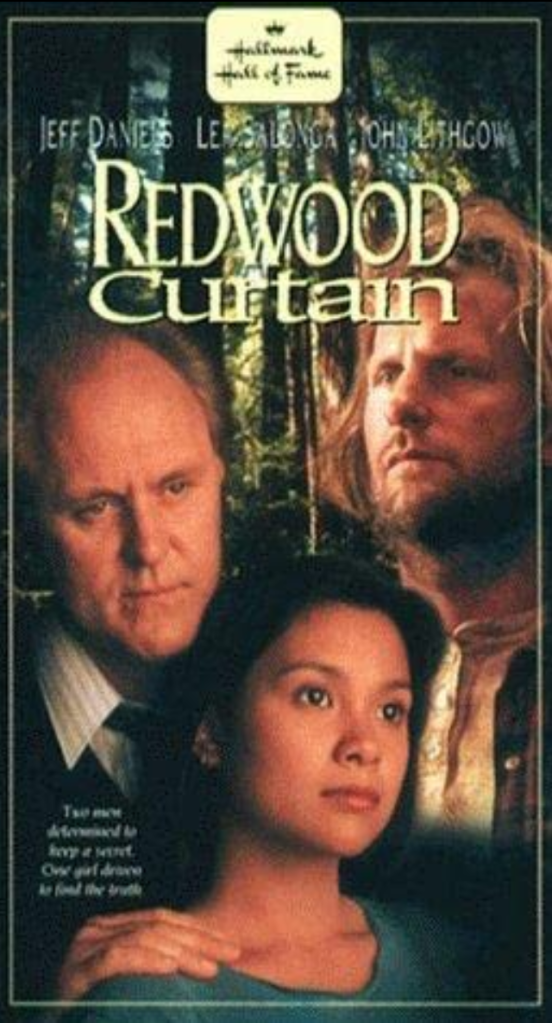
7. Redwood Curtain

There are very few movies I found better than their source material. Redwood Curtain just so happens to be one of them! The creative team behind the Hallmark Hall of Fame adaptation took advantage of the expansive nature of film by providing the story with more locations. Allowing characters like Julia and Laird to appear in the movie showcase the Riordan family dynamic not present in the play. I found Geri more likable as a character in the movie. Lea’s performance paired with the screenwriting gave Geri an empathetic and understanding personality. Redwood Curtain is a Hallmark Hall of Fame presentation I wish was re-released on DVD.

‘Redwood Curtain’: From Stage to Screen

6. The Pit and the Pendulum

The Pit and the Pendulum was one of the biggest pleasant surprises of 2022! Despite the film not being my first choice for its respective blogathon, I thought it was engaging and entertaining. Vincent’s performance didn’t disappoint, as his portrayal of Nicholas was versatile and fueled on emotion. The mystery not only started right away, but it also allowed the audience to experience the journey alongside Francis, the main character. The Pit and the Pendulum is, to me, one of the more effective horror movies, like 1962’s Cape Fear. While this film would be a perfect choice to watch on Halloween, I’m glad I had the opportunity to see it around Vincent’s birthday!

Take 3: The Pit and the Pendulum (1961) Review

Redwood Curtain poster created by Chris/Rose Productions, Hallmark Hall of Fame Productions, American Broadcasting Company (ABC), and Republic Pictures (II)

5. The Song of Bernadette

And another film of Vincent’s joins my list! Faith based films come in two forms; those that emphasize a message and those that emphasize a story. The Song of Bernadette falls into the latter category, as it revolves around religious phenomena affecting a small town. What I like about the 1943 film is how different perspectives relating to the phenomena are explored, highlighting how various members of the town view the events unfolding. The story doesn’t choose sides on the main topic, allowing the audience to come to their own conclusions about what is taking place in the movie. Even though The Song of Bernadette was released during the Breen Code era, the film is a good representation of the quality from that period in cinema. As I said in my review, Easter would be an appropriate time to watch the movie!

Take 3: The Song of Bernadette Review

4. Heaven Is for Real

Heaven Is for Real shares a major similarity with The Song of Bernadette. The 2014 film also revolves around religious phenomena affecting a small town. But what Heaven Is for Real does differently is encourage the audience to have a conversation about their beliefs on Heaven. Like I previously stated, faith based films come in two forms; those that emphasize a message and those that emphasize a story. However, I’ve rarely seen a movie of this nature start a discussion about one of their themes. This creative decision brings something new to the table and gives Heaven Is for Real a unique identity.

3. Words on Bathroom Walls

It seems like I’ve been talking about this title for as long as my blog has been around. But I’m glad I finally got the chance to see Words on Bathroom Walls this year, as it was such a good adaptation! There were changes between text and film. Despite that, the adaptation was, for the most part, respectful to its source material. The visual presentation of the story gave the audience a glimpse inside Adam’s mind. Interactions between the characters were believable, thanks to the actors’ performances and screenwriting. As I mentioned in my review a month ago, the adaptation for Words on Bathroom Walls seems more underrated. Based on the response my review received, my statement may be wrong.

Take 3: Words on Bathroom Walls Review

2. Top Gun: Maverick

I’m going to be honest; I had low expectations for Top Gun: Maverick. That’s because sequels released over ten years after their predecessor can be hit or miss. Top Gun: Maverick ended up surpassing my expectations, making it in the top three of my best of the year list! From what I know about Top Gun, the sequel respected what came before it. At the same time, new elements were added to the story, like focusing on an overarching mission. In a cinematic landscape where a film receiving over a billion dollars has become a rarity, Top Gun: Maverick achieved what some studios only dream of. As the 2020s move forward, maybe more filmmakers will turn to this film as an example of what can be cinematically possible.

Take 3: Top Gun: Maverick Review + 450 Follower Thank You

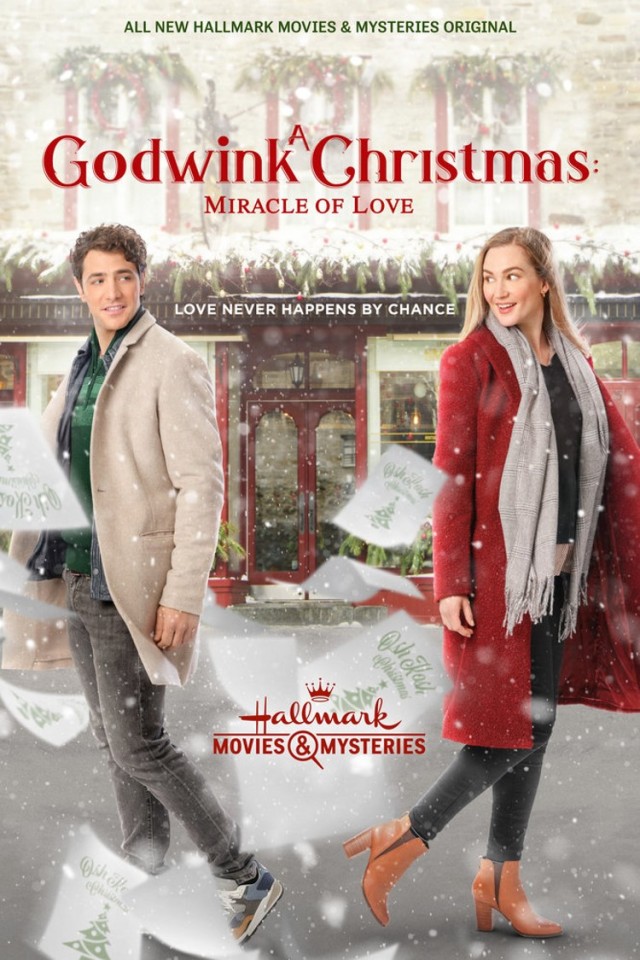
1. A Godwink Christmas: Miracle of Love

When it comes to “Godwink” stories, I prefer those that focus on a conflict. While that is the case for A Godwink Christmas: Miracle of Love, I found the overall production impressive! The interactions among the characters, as well as each volunteer’s talent being showcased, provided a nice amount of character development. Christmas activities were incorporated in more unique ways, such as the Romero family’s gift exchange. The inclusion of Advent was a newer approach to the Christmas movie genre. I don’t know what’s in store for the Godwink series. But I’d love to see more adaptations of these stories!

Take 3: A Godwink Christmas: Miracle of Love Review

A Godwink Christmas: Miracle of Love poster created by Crown Media Productions and Hallmark Movies & Mysteries

Have fun in 2023!

Sally Silverscreen
Take 3: The Sundowners (1960) Review

Here at 18 Cinema Lane, I try to go out of my way to watch, and review, as many film recommendations as possible. In fact, I have a board on Pinterest dedicated to these recommendations. Two years ago, when I reviewed Marriage on the Rocks, Maddy, from Maddy Loves Her Classic Films, suggested I check out the 1960 picture, The Sundowners. Shortly after Debbie, from Moon in Gemini, invited me to her Foreign Western Blogathon, I finally found an opportunity to write about the movie! The Sundowners fits two of the four blogathon categories: ‘directed by foreign directors’ and ‘shot in a foreign country’. According to IMDB, the film’s director, Fred Zinnemann, is from Austria-Hungary. The movie was also filmed in Australia, where the story takes place. Foreign westerns are not a new concept on 18 Cinema Lane. Neither are Australian films. Within the four years of my movie blogging journey, I reviewed Another Man, Another Chance, Interrupted Melody, and Hallmark Hall of Fame’s Durango. If you’re interested, I’ll provide the links to these reviews toward the beginning of this article.

Take 3: Another Man, Another Chance Review

Take 3: Interrupted Melody Review

Take 3: Hallmark Hall of Fame’s Durango Review

The Sundowners (1960) poster created by Warner Bros.

Things I liked about the film:

The cinematography: Like I said in the introduction, The Sundowners was filmed in Australia. The movie’s creative team took advantage of the country’s natural surroundings through cinematography! One long shot showcased Australia’s farmlands. What made this shot beautiful were the rays of sunlight showering over the green landscape, offering a light only nature could provide. The cinematography also did a good job putting things into perspective. During a forest fire, Ida is driving her family’s wagon away from the forest. While this maneuver is taking place, the camera is situated inside the back of the wagon. It looks out toward the road, giving the audience the illusion they are riding in the wagon with Ida.

Higher stakes: When I reviewed Hallmark Hall of Fame’s Durango last year, I talked about low stakes being one of the film’s biggest flaws. In The Sundowners, higher stakes were featured in a few scenes! A notable example is the forest fire I previously mentioned. While the Carmody family is herding sheep, a nearby forest fire breaks out. This leads all the characters to be in danger. The scene chronicled the entire process of the fire, starting from the detection of smoke and ending in the fire’s aftermath. Cut-away shots of scared wildlife are spliced into the story, emphasizing the other lives in harm’s way. Dramatic music can be heard in the background, elevating the sense of urgency. With all these elements combined, this scene was the perfect example of the higher stakes I expect from a western film!

The historical accuracy: With any “period film”, the historical accuracy can make or break that production. In the case of The Sundowners, the story takes place in the 1920s. From the looks of it, the 1960 project appears historical accurate! The forms of transportation are one indicator. While the Carmody family is working on the sheep farm, the employees sometimes rode in antique trucks with open beds. At least one motorcycle is featured in the story, revealing exposed gears and a model very different from the motorcycles of today. A covered wagon is the preferred vehicle of the Carmody family, with Paddy and Sean riding horses on a few occasions. This aspect of the film’s historical accuracy reminded me of a production like The Grapes of Wrath.

The Foreign Western Blogathon banner created by Debbie from Moon in Gemini

What I didn’t like about the film:

A “slice of life” story: Westerns, like any genre, contain a wide range of narratives. If given the choice, I’d rather watch a western with, at least, one conflict instead of a story that’s more “slice of life”. Unfortunately, the majority of The Sundowners is a “slice of life” story. The script primarily focuses on the daily operations of sheep farming. At first, this topic was interesting. But as the film carried on, the elements of sheep farming became repetitive. Had this movie contained one or two major conflicts, I might have found this story more intriguing.

Lack of Irish accents: According to Wikipedia, the Carmody family is Irish, a fact Sean tells Rupert early in the film. Michael Anderson Jr., Robert Mitchum, and Deborah Kerr must have missed that detail in the script, as none of them could successfully carry an Irish accent. Throughout The Sundowners, Deborah sounded like she was speaking in a British accent. Meanwhile, Robert and Michael sounded Australian. I don’t think Robert, Deborah, and Michael are bad actors. In fact, pulling off any accent can be a difficult skill to master. However, their lack of Irish accents was, for me, jarring.

The run-time: The Sundowners contains a straight-forward story about a family searching for employment in order to afford a place of their own. With that said, I found it unnecessary for the film’s run-time to be two hours and thirteen minutes. Some scenes felt drawn out in an attempt to satisfy this run-time, the shearing contest Paddy enters being one example. That scene lasts about five minutes, even though it could have only featured the most exciting parts of the contest. If scenes like that one had been cut shorter, the movie could have had a run-time of about an hour and thirty minutes.

A “bait and switch” ending: In my review of 1961’s The Pit and the Pendulum, I incorporated spoilers to explain my thoughts on a specific portion of the movie. Similarly, I will be including spoilers in this part of my review. If you haven’t seen The Sundowners, please skip this part and continue reading where it states “My overall impression”.

As I stated earlier in this review, The Sundowners contains a straight-forward story. I also stated how the movie is two hours and thirteen minutes. Within that run-time, the Carmody family receives the funds to afford a farm that was featured toward the beginning of the film. All seems to be going well until the last ten minutes in the story. While in a drunken state, Paddy makes several I-O-Us, losing the family’s finances in the process. In an attempt to earn back some of those funds, the family enters their race-horse, Sundowner, in an upcoming horse race. Not only does Sundowner and Sean win the race, Paddy also wins a bet. Even though they have enough money to make a down payment on the aforementioned farm, Ida changes her mind, saying Paddy can keep the race horse instead. This statement contradicts Ida’s goal throughout the movie; getting a place to put down roots. Moments later, an announcement declares Sundowner is disqualified from the race due to a pass interference. This means the Carmody family lost all the money they just won. The movie ends exactly how it begins; with the family on the road looking for employment and a place to stay. If I had known the story would end this way, I wouldn’t have become invested in the Carmody family’s ordeal.

Horse with saddle photo created by Topntp26 at freepik.com. <a href=’https://www.freepik.com/free-photo/stallion-black-equine-race-sky_1104246.htm’>Designed by Freepik</a>. <a href=”https://www.freepik.com/free-photos-vectors/background”>Background image created by Topntp26 – Freepik.com</a>. Image found at freepik.com.

My overall impression:

When it comes to film-making, one of the worst things you can do is waste the audience’s time. The way I feel about The Sundowners is similar to how I felt about The Birds; like I truly wasted two hours and thirteen minutes. I understand circumstances in western films aren’t always fair. Heck, life itself is sometimes unfair. But what is also not fair is giving your characters and audience hope for two hours, then taking that hope away in the film’s last ten minutes. With the way The Sundowners turned out for me, it almost seemed like history repeated itself. As I mentioned in this review, I wrote about Hallmark Hall of Fame’s Durango last year. That 1999 presentation was a foreign western I didn’t like. Both Durango and The Sundowners have one thing in common. Even though there were things about each film I liked, they contained a weak script. A script is the foundation of any cinematic production. If it isn’t strong, there’s only so much you can do to remedy the issue. Before I end this review, I want to make it clear that I have nothing against foreign westerns or Australian cinema. I’m confident there are stellar Australian and foreign western pictures I haven’t seen yet. Unfortunately, The Sundowners isn’t one of them.

Overall score: 4.7 out of 10

Have you watched any foreign westerns? If so, which ones would you recommend? Let me know in the comment section!

Have fun at the movies!

Sally Silverscreen