Take 3: Dr. Terror’s House of Horrors (1965) Review

I’d like to thank Gill (from Realweegiemidget Reviews) and Barry (from Cinematic Catharsis). If it wasn’t for the hosts of The Hammer-Amicus Blogathon V, I wouldn’t have been introduced to the cinematic world of Hammer-Amicus. Since my introduction in 2021 (when I participated in my first Hammer-Amicus Blogathon), I’ve covered three Hammer-Amicus movies on 18 Cinema Lane; Vampire Circus, The Curse of Frankenstein, and Let Me In. While Vampire Circus was ok and Let Me In was just fine, I found The Curse of Frankenstein underwhelming. Now, with a recommendation from Barry (from Cinematic Catharsis), I’ve selected 1965’s Dr. Terror’s House of Horrors as the next Hammer-Amicus presentation to review! I knew almost nothing about this movie prior to choosing it for the blogathon. But I was willing to watch the film with an open mind. Since I finally checked out Dr. Terror’s House of Horrors, it’s time to start my review and share my honest opinion!

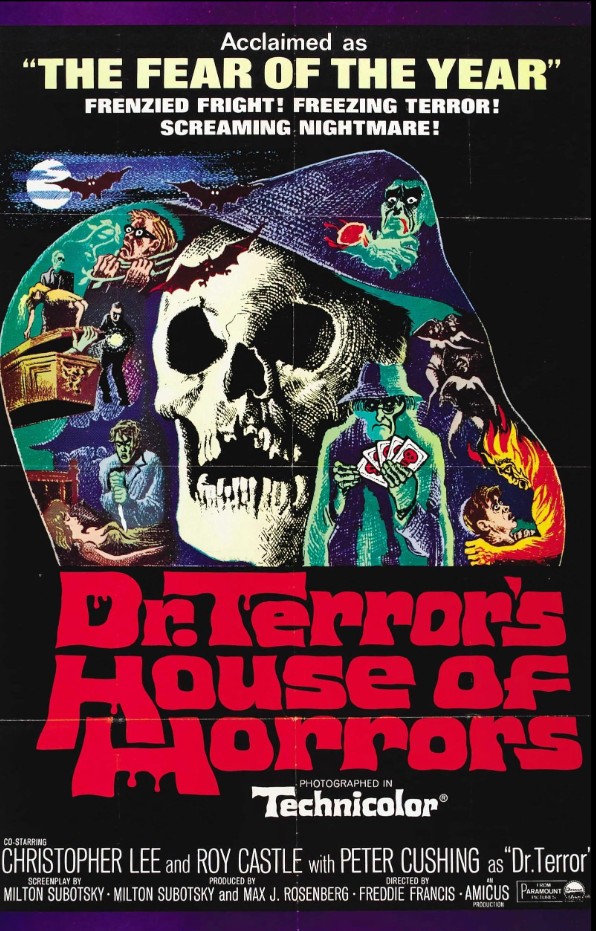
Dr. Terror’s House of Horrors (1965) poster created by Amicus Productions, Hollywood Classics International, Regal Films International, and Paramount Pictures

Things I liked about the film:

The interior design: Dr. Terror’s House of Horrors is presented like an anthology; five passengers learn their fate from Dr. Terror himself. Throughout the film, the audience takes a peek into each character’s life as well as their living/working space. These spaces featured interesting design choices that gave them their own distinctness. In the segments titled “Werewolf” and “Disembodied Hand”, a fireplace was the focal point in one room. The fireplace in “Werewolf” was covered in a glossy black paint, while the fireplace in “Disembodied Hand” shone in a glossy blue paint. Biff Bailey’s apartment in the segment titled “Voodoo” featured a zebra patterned couch, which actually complimented the black-and-white checkered floor and black-and-white striped walls. The design choices I described stood out due to the film’s creative team utilizing materials, patterns, and colors that were more unique. I can honestly say I’ve never seen a blue fireplace until I saw Dr. Terror’s House of Horrors!

Incorporation of music: In the segment titled “Werewolf”, Jim Dawson learns about a legendary werewolf buried in the basement of the home he’s remodeling. Any time this werewolf is brought up or poses a threat to the characters living and working in the home, drumbeats, the pattering of a xylophone, and other suspenseful musical sounds can be heard. This segment utilized music to emphasis the fear factor the werewolf contributed to the story. Because Biff Bailey is a musician, music plays a large role in the “Voodoo” segment. One of the songs featured in this specific segment is ‘Give Me Love’. Performed by Sammy Coin (portrayed by Kenny Lynch), the instrumentals provided a cheery jazz tune that can put any listener in a good mood. Kenny’s smooth vocals not only complimented the song itself, but also made me wonder what his vocals would sound like in a song with a more serious tone. ‘Give Me Love’ is one of those songs that is so memorable, I’ll listen to it long after the end of the movie!

The creativity of each story: As I mentioned earlier in this review, Dr. Terror’s House of Horrors is presented like an anthology. With the segments chronicling each of the five passengers, the creativity woven into the script highlighted the uniqueness every passenger brought to the train car! The segment, “Disembodied Hand”, revolves around Franklyn Marsh. An art critic who took his job a little too seriously, Franklyn carries guilt for how he mistreated a popular artist, with his guilt represented by the disembodied hand of that artist. Meanwhile, in the segment titled “Vampire”, Dr. Bob Carroll is confronted with the possibility his wife may be a vampire. This concept gave Bob an internal conflict between loving his wife and protecting his patients. In my review of 2010’s Let Me In, I said vampire stories can be as creative as film-makers want it to be. A similar statement can be said about the horror genre, with Dr. Terror’s House of Horrors presenting strong evidence.

The Hammer-Amicus Blogathon V banner created by Gill from Realweegiemidget Reviews and Barry from Cinematic Catharsis

What I didn’t like about the film:

No clear explanation for tarot cards: Throughout Dr. Terror’s House of Horrors, Dr. Terror (portrayed by Peter Cushing), predicts each passenger’s fate by selecting tarot cards. While the tarot cards themselves are shown on screen, no clear explanation for how exactly the cards correlate with the fates was given. Before the start of the “Werewolf” segment, Dr. Terror selects two cards called “Enchantress” and “Priestess”. But after watching that segment, I was confused by what werewolves had to do with those aforementioned cards? It seemed as if the creative team behind the movie assumed their audience would already know the meaning of the cards shown in the film.

Limited sense of urgency: Each segment in Dr. Terror’s House of Horrors incorporates a horror element that poses a threat to the passengers in Dr. Terror’s train car. These segments also contain a limited sense of urgency. Most of the time, the “slice of life” parts of the story were emphasized. When a suspenseful or horrifying moment was about to happen, the segment would end and move on to the next one. This flaw was the result of squeezing five separate stories into an hour and thirty-eight-minute film. I honestly think this script would have worked better as an anthology television series.

A frustrating ending: For this part of my review, I will be spoiling Dr. Terror’s House of Horrors. If you have not seen this film and are planning on watching it, skip ahead to the part of my review titled “My overall impression”.

Like I mentioned earlier in my review, Dr. Terror uses tarot cards to predict the fates of the five passengers. After these fates are revealed, he removes the death card from the deck. This implies all the passengers will eventually die. When the passengers get off the train, they learn through a newspaper article five passengers died in a train crash. That detail clarifies the passengers from Dr. Terror’s train car did, indeed, die, with Dr. Terror himself becoming a skeleton. Personally, I found this ending frustrating because it made the previous stories amount to nothing. While I recognize the movie’s creative team was trying to create the ultimate plot twist, with the death tarot card used as foreshadowing, this creative decision almost made me feel like I wasted my time watching Dr. Terror’s House of Horrors.

Scared audience image created by Katemangostar at freepik.com. <a href=’https://www.freepik.com/free-photo/terrified-friends-watching-horror-movie-in-cinema_1027311.htm’>Designed by Freepik</a>. <a href=”https://www.freepik.com/free-photos-vectors/people”>People image created by Katemangostar – Freepik.com</a>. Image found at freepik.com.

My overall impression:

Whenever I review a movie on 18 Cinema Lane, I present my opinion as honestly as possible. In my most honest opinion, Dr. Terror’s House of Horrors was such a mixed bag. On the one hand, I appreciate the creativity woven into each of the five segments. This creativity brought distinctness to the stories, interesting interior design choices, and good incorporation of music. But, on the other hand, the ending was too frustrating for my liking. I wish the script provided clear explanations for how the tarot cards correlated with each character’s fate. I also wish there was a stronger sense of urgency throughout the film. At best, Dr. Terror’s House of Horrors was just ok. But, at worst, it left me confused and frustrated. Though I’ve only seen (and reviewed) a few Hammer-Amicus films, I’m starting to wonder if I’ll find a title that is my cup of tea?

Overall score: 6 out of 10

Have you seen Dr. Terror’s House of Horrors? Which Hammer-Amicus film would you like to check out? Please tell me in the comment section!

Have fun at the movies!

Sally Silverscreen

Take 3: The Innocents (1961) Review

Film recommendations from my readers are welcomed here at 18 Cinema Lane. These suggestions are then placed on a Pinterest board, which I use as a reference for upcoming reviews. Some movies have been on the board for so long, they’re at the very bottom. One of these titles is 1961’s The Innocents. Recommended by Maddy (from Maddy Loves Her Classic Films), this is a Deborah Kerr starring production that is quite different from the other projects of hers I’ve reviewed on my blog. That’s because The Innocents is classified as a horror film. Because of this distinct, I’ve been trying to find the right opportunity to talk about the movie. Hoofers and Honeys’ 4th Annual Spooky Classic Movie Blogathon became that opportunity! Deborah’s films covered on 18 Cinema Lane have fluctuated in quality. While I liked titles like The Chalk Garden and The King and I, I wasn’t a fan of Marriage on the Rocks. What will my opinion be of The Innocents? Keep reading my review to find out!

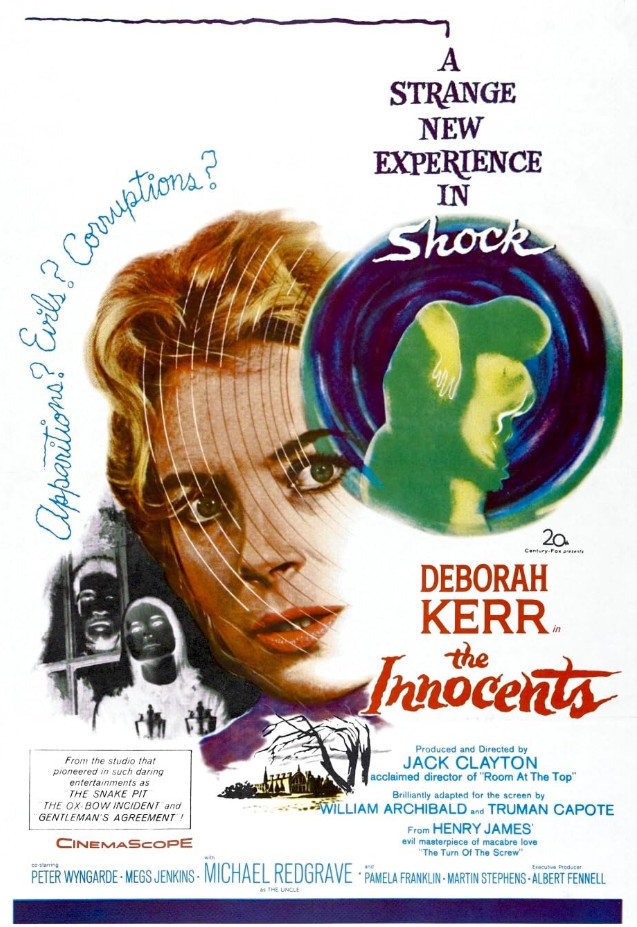
The Innocents (1961) poster created by Achilles, Flair Communications, Twentieth Century Fox, and Twentieth Century Fox Film Company

Things I liked about the film:

The acting: A large portion of The Innocents prominently features two young characters: Miles and Flora, as Deborah’s character, Miss Giddens, believes they are in danger. In stories like this, where younger characters play a significant role, it’s important to cast actors and actresses that can, acting wise, carry some of the film. Flora reminded me somewhat of Eloise (from the 2003 adaptations, Eloise at the Plaza and Eloise at Christmastime), marching to the beat of her own drum with a bit of a mischievous spirit. Meanwhile, Miles possessed the precociousness of Cedric from Little Lord Fauntleroy and the sweetness of Tiny Tim from A Christmas Carol. These concepts were displayed well through Pamela Franklin’s and Martin Stephens’ performance! Vocal inflections, facial expressions, and even body language worked in their favor, making Miles and Flora captivating characters. Because of Martin’s and Pamela’s acting talents, their convincing portrayals kept me invested in their characters’ story!

As I mentioned before, Deborah Kerr portrays Miss Giddens, who becomes Flora and Miles’ new governess. Looking back on her films, including The Innocents, I’ve noticed how expressive Deborah’s performances have been. Specifically speaking about the 1961 film, Deborah uses her eyes to display thoughts and feelings instead of just relying on dialogue. In one scene, Miss Giddens learns the truth about Miss Jessel and Peter Quint, the governess and valet who worked at the estate before Miss Giddens’ arrival. While she discovers this information from a housekeeper named Mrs. Grose, Miss Giddens’ eyes show concern, sadness, and even fear. She also raises her eyebrows from time to time, emphasizing how shocking the information about Peter Quint and Miss Jessel is. This example of Deborah’s expressiveness elaborates Miss Giddens adapting to the strange things she’s been seeing and hearing during her time at the estate. Similar to Martin’s and Pamela’s performance, Deborah’s portrayal of Miss Giddens was convincing!

The set design: The Innocents mostly takes place at the Bly estate, which belongs to Flora and Miles’ uncle. Though this story was character-driven, the set design was an underrated yet impressive component of the movie. The fireplace in the main sitting room appeared marble with a carved design. Each room features tall windows, implying the large scope of the rooms themselves. Though shown during brief moments, a detailed tapestry hung on a wall near the main stairway. Elaborate tapestry even covered a long seat in one of the rooms. Details like the ones I described emphasized how financially well-off Miles and Flora’s family is. They also helped make Bly estate visually appealing!

Mise-en-scène: In my recent review of 2010’s Let Me In, I talked about how the movie’s mise-en- scène (the way a film’s scene is presented to the audience) was one of the strengths of the movie. This was also a strength in The Innocents, as some scenes’ presentation added intrigue to the story! One evening, Miles confesses to Miss Giddens how his uncle doesn’t have time for him and his sister. At first, the conversation is shown in a medium shot. The very next shot is a close-up of Miles’ face, with light shining on his cheek to reveal a tear rolling down. Through this visual presentation, the audience is told how his uncle’s lack of acknowledgement deeply troubles Miles. It also provides possible motivation for Miles’ actions later in the film.

The 4th Annual Spooky Classic Movie Blogathon banner created by Kristen from Hoofers and Honeys

What I didn’t like about the film:

Limited horror elements: I mentioned in my review’s introduction how The Innocents is classified as a horror film. Because of this classification, I expected the script to emphasize the horror elements within the story. But these elements, like potential ghost sightings and unexplained noises, had such a limited presence in the film, they were featured in “don’t blink or you’ll miss it” moments. In fact, the script placed more emphasis on the “slice-of-life” parts of the story. As a movie blogger who doesn’t review horror movies often, I found this creative decision disappointing. Some of my interest in The Innocents waned because I don’t really find “slice-of-life” stories compelling.

Scenes that feel like padding: One evening at Bly estate, Miss Giddens stays up in the middle of the night in order to discover the cause of the strange happenings throughout the home. The majority of the scene takes place in the upstairs hallway. But the overall scene lasts over five minutes. Moments when Miss Giddens attempts to open doors and walks through the hall seem repetitive due the how long the scene is. With The Innocents having a run-time of an hour and thirty-nine minutes, some of those five minutes could have been trimmed to make the movie about an hour and thirty-four minutes. This is just one example of scenes feeling like padding.

Conclusion with little to no evidence: For this part of my review, I will spoil The Innocents. If you haven’t seen this movie and are planning on watching it, skip ahead to the part of my review titled “My overall impression”.

After witnessing what she believes is the ghost of Miss Jessel, Miss Giddens comes to the conclusion Flora and Miles are possessed by the spirits of Miss Jessel and Peter Quint. She even comes up with a plan to make the children admit this is true. But up until that point, the film doesn’t show how Miss Giddens reaches her conclusion. Little to no evidence is presented, denying the audience an opportunity to see Miss Giddens putting the pieces together. I, personally, couldn’t take her conclusion too seriously because of the lack of evidence. Miss Giddens’ weaker conclusion also added confusion to the overall story, leaving me wondering what I had just watched.

Image of ghost reading created by Freepik at freepik.com. <a href=”https://www.freepik.com/free-photos-vectors/book”>Book photo created by freepik – http://www.freepik.com</a>. Image found at freepik.com.

My overall impression:

I’m going to be brutally honest, The Innocents is one of the most confusing movies I’ve ever covered on 18 Cinema Lane. When the film ended, I audibly said, “What the heck did I just watch”? Without spoiling The Innocents, all I’ll say is I recognize how the movie’s creative team tried to give their project an ambiguous ending. But when the 1961 picture is also classified as a mystery film, that type of ending doesn’t work due to the genre being known for reaching definitive resolutions. Another flaw that contributes to The Innocents’ confusion is a conclusion with little to no evidence. That lack of evidence prevented me from taking the conclusion too seriously. Despite this confusion, the movie was intriguing enough to keep me invested in the story. The strength of the acting performances and the mise-en-scène are two factors that worked in the film’s favor. Out of Deborah’s films reviewed on 18 Cinema Lane, The Innocents was just ok. While there are things about the movie I liked, the overall execution could have (and should have) been stronger.

Overall score: 6.5 out of 10

Have you seen 1961’s The Innocents? What “classic” horror movies do you like watching? Let me know in the comment section!

Have fun at the movies!

Sally Silverscreen
The Top Ten Best Stand-Alone Films

On this day in 2000, The Road to El Dorado made its official debut. While the movie didn’t meet or exceed DreamWorks’ expectations, it certainly found an audience, which stuck with the film for all these years. I once heard The Road to El Dorado was intended to be the first story in a trilogy. But fate decided it worked better as a stand-alone picture. This caused me to think about the other stand-alone movies I’ve come to love. So, in honor of The Road to El Dorado’s 25th anniversary, I have compiled a list of what I believe are the top ten best stand-alone films! For my list, the criteria for a stand-alone film is not only a title that didn’t receive a sequel, but also isn’t affiliated with a series/franchise. If I covered a film on 18 Cinema Lane, I will provide a link to that article or review in this list. Each title will be presented in order of release year and each choice is based on my opinion.

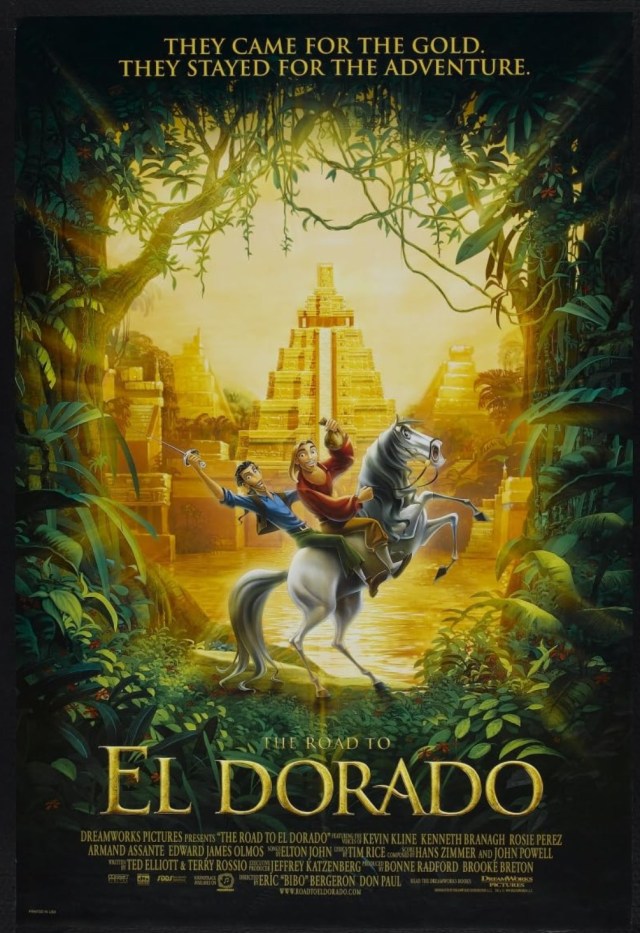
The Road to El Dorado poster created by Dreamworks Pictures, DreamWorks Animation, and DreamWorks Distribution

1. Singin in the Rain (1952)

    I start my list with a classic I was introduced to because of my blog. Now that I have finally seen Singin in the Rain, I have an understanding and appreciation for why the movie is so beloved. Gene Kelly’s iconic musical number, “Singin in the Rain”, should provide enough explanation for why you should check the film out! The number itself feels immersive, as it takes place within the story’s context. Gene adds uniqueness to the number by jumping and splashing in puddles. “Singin in the Rain” successfully represents the spirit of the film, while also delivering the message of seeing the good in a not-so-good situation. That number is just one reason why Singin in the Rain is a solid musical!

    Watching ‘Singin in the Rain’ for the First Time

    2. Ben-Hur (1959)

    If you’re going to watch any classics, you have to see 1959’s Ben-Hur! Though the three-hour run-time can seem intimidating, that time flew by for me, as I was so engrossed in the story. The emotional intensity of Charlton Heston’s, Stephen Boyd’s, and Haya Harareet’s performance complimented the scope of the overall film. Ben-Hur contains other likable qualities as well, from the magnificent sets/scenery to the interesting cinematography. How Christianity/faith was incorporated into the story sets the 1959 production apart from other “sword and sandal” pictures. Those who celebrate Easter may find Ben-Hur an appropriate seasonal title.

    Take 3: Ben-Hur (1959) Review + 60 Follower Thank You

    3. To Kill a Mockingbird (1963)

    While the book, To Kill a Mockingbird, received a sequel, the film adaptation did not. The 1963 movie presents one of the few times where, in my opinion, the film was better than its source material. Getting straight to the point a lot sooner was a main focus for the creative team. The film’s visual nature worked in the favor of certain elements from the book. Showing suspenseful moments from the source material makes those moments seem real, as well as intensifies uncertainty. Leaving out scenes that feel like padding helps the movie maintain a steadier pace.

    Take 3: To Kill a Mockingbird Review

    4. The Boy Who Could Fly (1986)

    When I first saw The Boy Who Could Fly, it subverted my expectations. That’s because the 1986 picture aged surprisingly well! Through Milly and Eric’s friendship, the script shows how people with Autism can create and maintain meaningful relationships. Helping someone with Autism based on their personal preferences and accommodations may have seemed ahead of its time back in the mid to late ‘80s. Timeless messages and themes make up one of the reasons why I love the 1986 film. Showing compassion for others, dealing with grief, and understanding people’s differences take center stage.

    Take 3: The Boy Who Could Fly Review (PB & J Double Feature Part 2)

    5. The Bodyguard (1992)

    In 2022, I wrote an editorial explaining why The Bodyguard held up thirty years later. Because I love the 1992 film, finding explanations wasn’t difficult. “The kitchen scene” is, in my opinion, the best scene from any action movie. One reason why is how the kitchen’s smaller space is seen by the actors as a challenge instead of a hindrance. What also worked in The Bodyguard’s favor was Whitney Houston’s portrayal of Rachel Marron. Throughout the story, Whitney realistically showcases emotions and expressions. This helped Rachel become a multi-layered character.

    I Will Always Love You: ‘The Bodyguard’ at 30

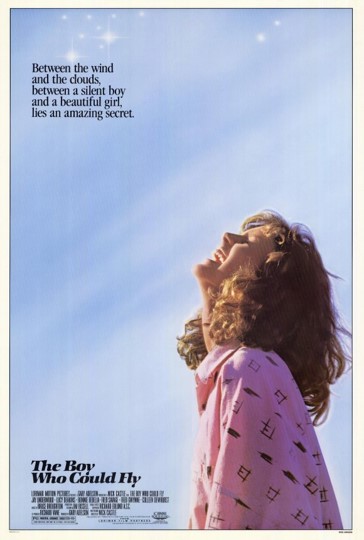
    The Boy Who Could Fly poster created by Lorimar Motion Pictures and 20th Century Fox. Image found at https://www.imdb.com/title/tt0090768/?ref_=nv_sr_srsg_0.

    6. Swept from the Sea (1998)

    Swept from the Sea was one of the earliest hidden gems I discovered in 2019. It’s a movie that’s so great, I just had to include it on this list. There are so many things to like about Swept from the Sea. From Vincent Perez’s captivating performance to the beautiful scenery, the film’s components came together to create an endearing and emotional presentation! The 1998 film is a character-driven story, relying on on-screen chemistry in order to work. Because of Vincent Perez’s and Rachel Weisz’s differing acting styles, the on-screen chemistry between Yanko and Amy was very sweet and genuine.

    Take 3: Swept from the Sea Review (A Month Without the Code — #8)

    7. Phantom of the Megaplex (2000)

    This is another movie I just had to include on my list. But this time, it’s because Phantom of the Megaplex is also celebrating its 25th anniversary this year! The Disney Channel picture showed that the movie-going experience can be fun. As I explained in my editorial celebrating the film’s 20th anniversary, the made-for-TV movie also serves as a time capsule of how the cinema operated in the beginning of the millennium. Phantom of the Megaplex even shows how movies can influence our lives. Though I’m not sure if that aspect of the story was intentional, it makes the 2000 title, somewhat, thought-provoking.

    ‘Phantom of the Megaplex’ at 20: A Reflection on the Movie-Going Experience

    8. I Am David (2004)

    I Am David was the biggest pleasant surprise of 2024. It became the year’s best movie in March and stayed number one until the very end! What set I Am David apart was the film’s genuine emotion and sincerity. This was seen and felt through every aspect of the production. The 2004 movie emphasized visual depth. Achieved by exploring light and darkness, as well as showcasing Europe’s natural landscape, the creative team used the visual nature of film to their project’s advantage. Two effective plot twists are another reason why I liked I Am David. Their delivery in the story was well-written.

    Take 3: I Am David Review (Double Feature: 2004 Edition Part 1)

    9. From Up on Poppy Hill (2011)

    This 2011 presentation is one of Studio Ghibli’s stronger projects. A reason is one of the overarching themes; honoring the past. The film intelligently and creatively shows its audience how important history is in our lives and our world. Whether referencing the 1964 Olympics or focusing on the characters’ relationships, the theme of honoring the past acts as an umbrella sheltering Poppy Hill and its surrounding areas. Studio Ghibli’s signature colorful palette is consistently on display in the 2011 film. The strong understanding for how and when to use color makes scenes look like priceless pieces of art! Personally, I think movies like From Up on Poppy Hill present an argument why 2-D animation still has its time and place.

    Take 3: From Up on Poppy Hill Review + 200 Follower Thank You

    10. The Wild Robot (2024)

      I think it’s fitting to close this list with a DreamWorks movie, as a DreamWorks movie is the reason why I created this list in the first place. Though this was a recent watch for me, The Wild Robot is, so far, the best film I’ve seen this year! The animation itself is absolutely gorgeous! Sometimes, scenes look like paintings and other times, they look like priceless photographs. I was not expecting the story to contain as much emotional depth as it did. An abundance of good messages and themes add a sense of timelessness to the production. Though it’s unknown right now if The Wild Robot will gain an audience like The Road to El Dorado has, I can confidently say it was a really good movie!

      Phantom of the Megaplex poster created by the Walt Disney Company and Disney Channel. © Disney•Pixar. All rights reserved. Disney XD© Disney Enterprises, Inc.

      Have fun at the movies!

      Sally Silverscreen
      Take 3: The Chalk Garden Review + 505 Follower Thank You

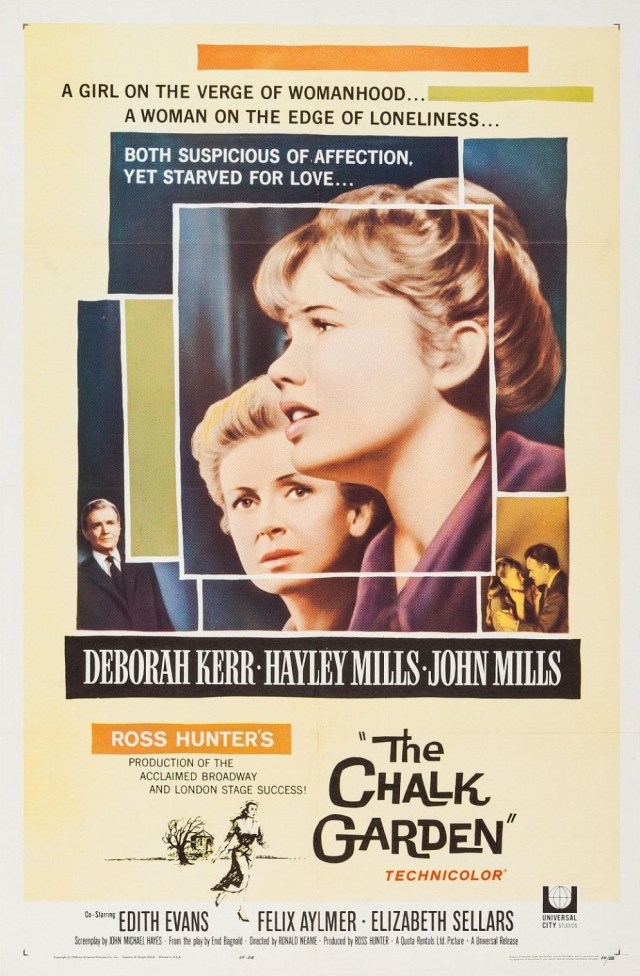
      For last year’s We Are Family Blogathon, my original plan was to write about both the Diagnosis Murder episode, “Guardian Angel” and 1964’s The Chalk Garden. But as I explained in my review of hoops&yoyo’s Haunted Halloween, my plan to discuss the movie fell through. Despite this setback, I had always wanted to feature The Chalk Garden on my blog. Recently, I received a second chance to review the film! So for the first Blog Follower Dedication Review of 2025, I thought the 1964 production was the perfect title for this occasion! The Chalk Garden was recommended by Maddy (from Maddy Loves Her Classic Films) when I reviewed Marriage on the Rocks five years ago. In total, I have written about seven of Deborah Kerr’s films, with her best picture being The King and I. How will this eighth movie compare to those seven? Keep reading to find out!

      The Chalk Garden poster created by Quota Rentals Limited, Ross Hunter Productions, and Universal Pictures

      Things I liked about the film:

      The acting: The Chalk Garden is a character-driven story where part of the script serves as a character study. For these types of movies, it’s important to recruit a cast whose talents are strong enough to help make the characters interesting. While watching the 1964 film, I was invested in the story from beginning to end. One reason why is the quality of the acting performances! This is a movie where it’s difficult to choose a favorite performance, as each one was good for different reasons. Hayley Mills’ portrayal of Laurel incorporates a variety of emotions and animated expressions. These aspects of her performance showcase just how complex Laurel is. Meanwhile, Deborah Kerr’s character, Miss Madrigal, was a no-nonsense woman who subtly expressed emotion. Through her acting talents, Deborah found a way to present her character as nurturing and a promoter of “tough love”. As for John Mills’ portrayal of Maitland, his character’s consistently welcoming persona put the other characters at ease. Maitland’s laid-back personality and calm way of approaching situations reminded me of Mr. Rogers from Mister Rogers’ Neighborhood.

      Mrs. St. Maugham’s residence: The story of The Chalk Garden takes place at Mrs. St. Maugham’s house. Since Mrs. St. Maugham was a woman with a financially comfortable life, her house perfectly reflected this. The sunroom was introduced in the movie’s first five minutes. Wrap-around windows looked out to a view of a large grassy hill. Plants filled the inside of the sunroom. In the center of the area, four white metal chairs were set around a smaller table. The furniture looked like it came straight out of an old-fashioned ice-cream parlor. On Mrs. St. Maugham’s property was her backyard shed. Though this space was not frequently shown in The Chalk Garden, I really liked its interior design! Underneath a window was a white wicker desk housing some potted plants. A wicker table was surrounded by wicker chairs of varying sizes. The white stone walls and differently shaped windows helped make the backyard shed a quaint and classy space! These finer details successfully captured Mrs. St. Maugham’s sophisticated taste!

      The dialogue: Toward the beginning of The Chalk Garden, Miss Madrigal arrives at Mrs. St. Maugham’s house to be interviewed for the available governess job. When Maitland greets her at the door, he asks Miss Madrigal if she’s worked as a governess before. She cleverly replies with a question of her own, asking “do you usually interview applicants in the doorway”? This was the funniest moment in The Chalk Garden because of how well-written and delivered this exchange was! After Miss Madrigal accepts the governess job, she moves in to Mrs. St. Maugham’s house. While Miss Madrigal unpacks her belongings, Laurel explains how she doesn’t like to be told “good morning”. Her reasoning is “what is a good morning to someone else is rarely a good morning to me”. When people tell each other “good morning”, they are typically saying that in the hopes the other person has a good morning. But unless we consider things from the other person’s point of view (yes, that To Kill a Mockingbird reference was intentional), we don’t know if that person has, indeed, had a good morning. So, I found Laurel’s quote to be thought-provoking. The examples of dialogue I provided display the quality screenwriting within The Chalk Garden! How memorable the dialogue was is a result of that quality!

      Good sailing day image created by Freepik at freepik.com. <a href=’https://www.freepik.com/free-vector/summer-landscape-with-a-houselight-and-a-boat_866882.htm’>Designed by Freepik</a>. <a href=”https://www.freepik.com/free-photos-vectors/design”>Design vector created by Freepik</a>. Image found at freepik.com.

      What I didn’t like about the film:

      A quickly resolved conflict: Throughout The Chalk Garden, Mrs. St. Maugham is at odds with her daughter, Olivia. Their relationship is so strained, Mrs. St. Maugham wants to obtain sole custody of her granddaughter, Laurel. This conflict lasts the entire movie. While I will not spoil The Chalk Garden, I will say the conflict was resolved within the film’s last ten minutes. The way it was resolved was too abrupt. As a result of this abrupt resolution, Laurel’s change in attitude and behavior happened too quickly. The reason for these flaws is how the second half of the story focuses on unearthing secrets.

      Unanswered questions: There were times in The Chalk Garden when characters would make a claim, only for that claim to not be met with confirmation or denial. One example shows Laurel telling Miss Madrigal about the aftermath of when she was attacked in the park. Laurel says even though the police never got involved, it was an “open and shut case”. Before this conversation, however, Maitland warns Miss Madrigal how Laurel has a penchant for lying and fabricating the truth. Did the incident in the park actually take place or was Laurel bending the truth to get a reaction? This is one of the claims in The Chalk Garden that should have been clarified.

      An unresolved metaphor: Along with being Laurel’s governess, Miss Madrigal is the resident gardener. This is because Mrs. St. Maugham lacks a “green thumb”. Miss Madrigal uses Mrs. St. Maugham’s garden as a metaphor for Laurel, even referring to it as “a chalk garden”. In order for the metaphor to work, the garden’s growth should have paralleled Laurel’s personal journey. Unfortunately, the garden itself makes infrequent appearances in the film. It also doesn’t help how Mrs. St. Maugham never puts Miss Madrigal’s words into practice, making the metaphor seem unresolved.

      Paint palette image created by Freepik at freepik.com <a href=’https://www.freepik.com/free-vector/hand-drawn-artsy-tools_836777.htm’>Designed by Freepik</a> <a href=”https://www.freepik.com/free-photos-vectors/hand”>Hand vector created by Freepik</a> Image found at freepik.com

      My overall impression:

      Before I share my overall impression on The Chalk Garden, I want to take the time to thank the followers of 18 Cinema Lane. The support my blog receives still amazes me, even seven years after 18 Cinema Lane began! While I appreciate 18 Cinema Lane’s followers, I also appreciate when my blog’s readers provide film recommendations. This is why I try to write about these recommendations whenever possible. As I mentioned in this review’s introduction, The Chalk Garden was suggested by Maddy (from Maddy Loves Her Classic Films). I’m thankful to have not only been recommended the movie, but to also have finally checked it out! The 1964 production is part character study, part mystery. Because of the strength of the acting performances and screenwriting, this story worked! Liked I said in my review, I was invested in the story from beginning to end. The characters were interesting and the mysterious elements were intriguing. Though I wish some questions had been answered and a major conflict hadn’t been resolved so quickly, The Chalk Garden did more things right when it came to film-making. I can, honestly, say I would recommend this movie for those looking for a good cinematic story!

      Overall score: 7.8 out of 10

      Have you seen The Chalk Garden? What is the best movie you’ve been recommended? Let me know in the comment section!

      Have fun at the movies!

      Sally Silverscreen

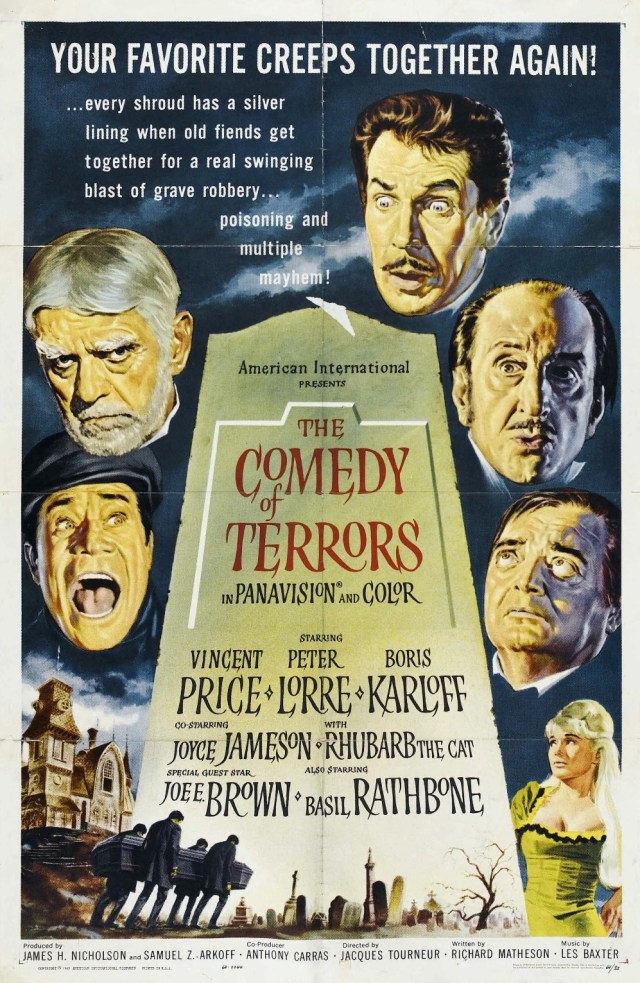
      Take 3: The Comedy of Terrors (1963) Review

      In my review of the Diagnosis Murder episode, “Guardian Angel”, I mentioned how I’ve accepted movie recommendations from my readers. These recommendations have, sometimes, made great selections for blogathons. Four years ago, when I reviewed House of the Long Shadows, Patricia (from Caftan Woman) suggested several films starring Vincent Price. One of those titles was 1963’s The Comedy of Terrors. Since then, I have been waiting for the right time to create a review for this movie. With The Comedy of Terrors fitting the criteria for the 3rd Annual Spooky Classic Movie Blogathon, I knew I had found a perfect entry for the event!It’s become an unofficial tradition on 18 Cinema Lane to review at least one of Vincent’s movies every year. Since 2019, when I wrote about The Whales of August, eleven of Vincent’s films have received a review on my blog. While some of his movies have been more enjoyable than others, I can honestly say I haven’t seen a movie of his that I would consider “bad”. So, how does Comedy of Terrors compare to Vincent’s other films? Find out by reading my review!

      The Comedy of Terrors (1963) poster created by Alta Vista Productions and American International Pictures (AIP)

      Things I liked about the film:

      The acting: When you see Vincent Price’s name attached to a given film, there’s a chance you’re going to see Vincent give a solid acting performance. That was certainly the case in The Comedy of Terrors! What makes Vincent such a strong actor is his adaptability. Portraying an undertaker named Trumbull, Vincent successfully transformed his expressions and emotions based on his character’s situation. One evening, Trumbull was counting a large collection of coins. He displays a big smile on his face and also appears in a relaxed sitting position. When his wife, Amaryllis, comes into the room and asks him a question, Trumbull’s demeanor quickly changes. His sharp tone suggests deep irritation, with a disapproving frown to match. This change in attitude is consistent with Trumbull’s dislike for Amaryllis.

      Prior to reviewing The Comedy of Terrors, I had seen two of Basil Rathbone’s movies; The Great Mouse Detective and Bathing Beauty. Because only one of these movies was a live-action production, I didn’t know what to expect from his portrayal of Mr. Black. However, I was impressed with Basil’s performance in The Comedy of Terrors! Some scenes show Mr. Black reciting one of Shakespeare’s plays. The first time the audience sees Mr. Black reciting Shakespeare’s work is when Felix (portrayed by Peter Lorre) breaks into Mr. Black’s home. In this particular scene, Mr. Black displays an animated demeanor throughout his reenactment. The way he confidently recited Shakespeare’s words gave this reenactment a sense of grandeur. Reflecting on Basil’s performance in The Comedy of Terrors and looking at his IMDB filmography, I wish he has starred in an adaptation of Shakespeare’s work.

      An immersive world: A make-or-break factor of any movie is how that picture is presented. For period/historical fiction films, the accuracy and attention to detail can help that movie’s world feel immersive. Because The Comedy of Terrors takes place during the Victorian era, everything in the film has to appear accordingly. This was achieved in the 1963 film, as the aforementioned elements of attention to detail and accuracy were applied! When I talked about Vincent’s performance, I mentioned Trumbull was an undertaker. An ornate coffin was presented any time Trumbull hosted a funeral. The shiny, black coffin was constructed by sharp angles and was decorated with gold designs. This prop was a simple, yet visually appealing way of addressing the wealth of Trumbull’s clientele. One scene shows Trumbull and Felix breaking into someone’s home. Without meeting the homeowner, the audience can tell how this character lives a comfortable life. Decorative lamps and wall sconces are included in characters’ bedrooms. A series of statues make a strong appearance when Felix and Trumbull first walk into the house. There is even gold trim on one of the doors. From the set design to the costume design, the world within The Comedy of Terrors was immersive!

      Peter Lorre and Joyce Jameson’s on-screen chemistry: Earlier in my review, I said Felix was portrayed by Peter Lorre. I also stated how Trumbull doesn’t like Amaryllis (portrayed by Joyce Jameson). Amaryllis is hurt by Trumbull’s negativity toward her. Meanwhile, Felix is upset by how Amaryllis is treated by Trumbull. The shared dislike Felix and Amaryllis have toward Trumbull create an affection for one another. Though they shared only a few scenes together, I was pleasantly surprised by Joyce and Peter’s on-screen chemistry! The warm, caring demeanor between Felix and Amaryllis came across as believable. This was made possible by the strength of Joyce’s and Peter’s performance. With that said, I think Peter and Joyce not receiving more scenes together was a missed opportunity.

      The 3rd Annual Spooky Classic Movie Blogathon banner created by Kristen from Hoofers and Honeys

      What I didn’t like about the film:

      Jokes that are too long: Comedy, like film, is subjective. One aspect to this subjectivity is the length of the jokes. In my opinion, the jokes in The Comedy of Terrors were too long. It seems like the screenwriters had difficulty finding their intended punchline or realizing they reached their punchline long ago. A running joke in The Comedy of Terrors is how Amaryllis is a terrible singer, despite her claims of a possible opera career. Had she sung a portion of a song once or twice, it would have been enough to get the intended point across. But the fact Amaryllis almost sang whole songs three or four times caused the joke to last too long and quickly become old.

      Parts of the story that don’t make sense: I mentioned earlier in this review how Felix broke into Mr. Black’s home. To get into Mr. Black’s house, Felix had to climb onto the roof and into an upstairs window. But during this excursion, a cat named Cleopatra joins Felix and Trumbull, watching Felix trespass into Mr. Black’s property. It’s explained in the film why Felix needed to find an alternative entrance. What isn’t explained is why Cleopatra didn’t enter the house. I’m not sure how Cleopatra could have assisted Trumbull and Felix. However, it would have been easier for a cat to climb on a roof and enter through a window. This is just one part of the story that, to me, didn’t make sense.

      An underutilized cat: In past reviews, I have been critical when an actor or actress was underutilized. But in the case of The Comedy of Terrors, the creative team underutilized a cat. As I mentioned in my point about parts of the story that don’t make sense, a cat named Cleopatra joined Trumbull and Felix on their excursion. Even though Cleopatra was adorable, the cat was not a significant part of the overall story. There were even times when I wondered why a cat was included in the movie at all. Had Cleopatra been written out of The Comedy of Terrors, the story itself would not change much.

      Orange cat image created by Freestockcenter at freepik.com. <a href=’https://www.freepik.com/free-photo/ginger-cat_883376.htm’>Designed by Freestockcenter</a>. <a href=”https://www.freepik.com/free-photos-vectors/gold”>Gold image created by Freestockcenter – Freepik.com</a>. Image found at freepik.com.

      My overall impression:

      In this review’s introduction, I said I haven’t seen a movie of Vincent Price’s that I would consider “bad”. While this statement is still true, The Comedy of Terrors is one of his weaker pictures. The flaws of the 1963 production include jokes that are too long and parts of the story that don’t make sense. But there are aspects of the movie I liked. The Comedy of Terrors is an immersive film, making viewers feel transported to the Victorian era. Attention to detail and historical accuracy helped the creative team achieve that illusion. Vincent’s performance was one of the strongest parts of this film! His adaptability made his portrayal of Trumbull captivating to watch. Now that I’ve finally seen The Comedy of Terrors, I can, honestly, say this picture emphasizes style more than substance. Out of Vincent’s eleven movies I’ve seen, this one is just ok.

      Overall score: 6.1 out of 10

      Have you seen The Comedy of Terrors? Which film of Vincent Price’s should I review next? Please tell me in the comment section below!

      Have fun at the movies!

      Sally Silverscreen
      Take 3: Cricket on the Hearth (1967) Review

      You probably think it’s strange how, after a week and a half long hiatus, my first review back on my blog would be for a Christmas film (in the middle of August). However, I have a very good explanation for this choice. The first reason is how the 1967 animated movie, Cricket on the Hearth, is what I selected for Realweegiemidget Reviews’ (Aaron) Spellingverse Blogathon, as Aaron Spelling was one of the film’s executive producers. The second reason is how animated movies are reviewed so infrequently on my blog. In fact, Cricket on the Hearth is the first animated film to be reviewed on 18 Cinema Lane in 2024. When I chose to participate in the (Aaron) Spellingverse Blogathon, I knew I wanted to write about a made-for-tv movie. So, when I discovered the 1967 film on Aaron’s IMDB filmography, I felt I found the perfect movie for the blogathon, especially for the previously mentioned reasons! But did Cricket on the Hearth end up being the perfect choice to write about? Keep reading my review to find out!

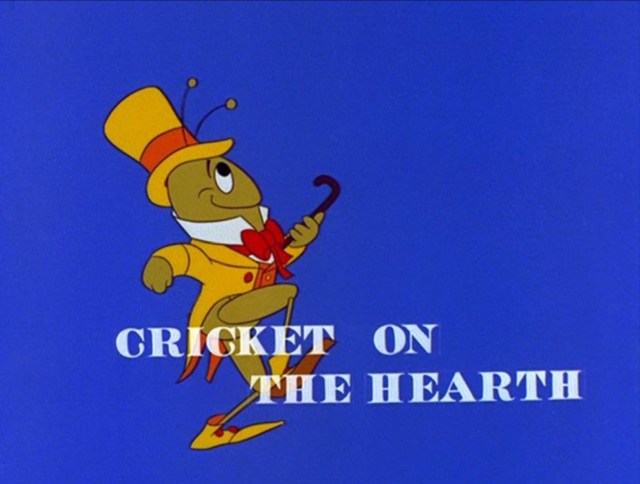
      Cricket on the Hearth (1967) title card created by Rankin/Bass Productions, Thomas/Spelling Productions, and National Broadcasting Company (NBC)

      Things I liked about the film:

      The animation: Some of the best animated movies boast bright, colorful hues. These hues can be utilized in various ways, from creating imaginative worlds to providing interesting visual contrasts. Cricket on the Hearth was a very kaleidoscopic production! Scenes either burst with a bundle of color or at least one bold color sparkled against a darker background. Presenting Cricket Crocket in a mustard yellow suit jacket and shoes, paired with an orange vest and a red bowtie, was a smart creative decision. It forces the audience to focus on Cricket Crocket, especially when he’s standing on a dark wood table or a deep green top hat. The toys in Caleb’s toy shop come to life during the song, ‘Smiles Go With Tears’. Despite the title’s contraction, the song’s tone is joyful because the song is about someone shedding tears due to being happy. The joyful nature of ‘Smiles Go With Tears’ is wonderfully depicted in the presentation of the toys. From a doll’s bubble-gum pink dress and bonnet to a pair of bright yellow and blue elephants, this scene was great to look at!

      While looking for a place to live, Caleb considers moving into a poor house. Because Cricket Crocket is perched on Caleb’s top hat, Cricket Crocket hangs upside down in order to face Caleb. While looking upside down, Cricket Crocket sees a nearby toy factory. As he is readjusting himself, the image of the toy factory flips from appearing upside down to becoming right-side up. Animated films from the 1960s, especially those that were made-for-tv productions, were created with limited resources compared to animated pictures from the twenty-first century. Therefore, scenes like the one I just described seem ahead of its time.

      The songs: Before reviewing Cricket on the Hearth, I had never seen the 1967 movie. So, I was pleasantly surprised when I discovered the movie was a musical! The songs featured in this film sounded like relics of the late ‘60s, the time when Cricket on the Hearth was released. But these sounds, from emotional ballads to cheery tunes, felt nostalgic. Danny Thomas, who voices Caleb, sings a ballad titled ‘Through My Eyes’. Throughout this song, Caleb expresses his desire for his daughter, Bertha, to see the world how he wishes he could present it to her. The combination of Danny’s vocals and the orchestral music felt reminiscent of Judy Garland’s ‘Somewhere Over the Rainbow’ and Louis Armstrong’s ‘What a Wonderful World’, songs that exude a sense of hope and contain timeless elements. Another song of Danny’s I liked was ‘The First Christmas’! Before this song, Caleb wonders how he will provide the kind of Christmas Bertha hopes for. He learns how to resolve his conflict as the song carries on. The lyrics of ‘The First Christmas’ illustrate how Christmas doesn’t have to look the same for those who celebrate the holiday. The inclusion of the Norman Luboff Chorus added gravitas to this song!

      The religious aspects of Christmas: Based on what I know about Charles Dickens and his stories, A Christmas Carol, one of his most well-known pieces of literature, is typically not known for addressing the religious aspects of Christmas. Though it was briefly incorporated in Cricket on the Hearth, I was pleasantly surprised by the recognition of Christmas’ religious aspects! As I previously said while talking about ‘The First Christmas’, the lyrics of the song illustrate how Christmas doesn’t have to look the same for those who celebrate the holiday. This point is emphasized by reminding the audience how Jesus had very little in terms of decorations and presents during the First Christmas. By the end of the song, the message is made clear; it’s not about what you have, but who you spend Christmas with that’s important. Before closing out the movie, Danny quotes a poem by Edmund Cooke. The quote itself goes “Tis not the weight of jewel or plate, or the fondle of silk or fur, ‘tis the spirit in which the gift is rich, as the gifts of the Wise Men were. And we are not told whose gift was gold or whose was the gift of myrrh”. Edmund’s poem brings up an excellent point, as the Nativity story does not specify which gift came from which Wise Man. This quote also highlights the point made earlier about Christmas being about who you spend the holiday with.

      The (Aaron) Spellingverse Blogathon banner created by Gill from Realweegiemidget Reviews

      What I didn’t like about the film:

      Scenes that serve as padding: In order to satisfy a film’s run-time, a film’s creative team will, sometimes, choose to pad the story out by incorporating additional scenes or establishing shots. This creative decision was utilized in Cricket on the Hearth, mostly in between songs. During the song, ‘Through My Eyes’, a scene of Bertha dancing in a ballgown lasts for almost thirty seconds. The song itself takes up two minutes and twenty-three seconds of the movie’s run-time. I don’t think Cricket on the Hearth needed padding, especially since it lasted a little over forty-nine minutes.

      The randomness of the ‘Fish and Chips’ song: I liked the featured songs in Cricket on the Hearth. However, there is one song that, in the context of the story, felt random. A cat named Moll, voiced by Abbe Lane, sings a song about the finer things in life called ‘Fish and Chips’. This song is sung to a jazzy, ragtime tune. During the performance, Moll dances in a red, low-cut, sleeveless dress and even attempts to flirt with the male characters in her audience. The animation in this scene didn’t look bad. Abbe Lane also did a good job with the material given to her. But the story appearing to take place somewhere in the 1800s and with the movie’s tone being mostly heartwarmingly gentle, Moll’s ‘Fish and Chips’ song feels out of place in Cricket on the Hearth.

      Parts of the story that don’t make sense: For this part of my review, I will spoil Cricket on the Hearth. If you have not seen the 1967 film and are interested in watching it, please skip ahead to the part of my review titled ‘My overall impression’.

      Cricket on the Hearth’s antagonist, Tackleton, has a pet bird named Uriah. More often than not, Tackleton and Uriah are inseparable. After Tackleton orders Uriah to get rid of Cricket Crocket, Uriah and two of his friends kidnap Cricket Crocket and try to sell him to a sea captain. During the scene of Uriah’s attempted business transaction, it is heavily implied Uriah and his friends died. Fast forward toward the end of the movie, Tackleton is upset by Bertha’s rejection of his marriage proposal. In fact, he’s more upset about Bertha’s rejection than the absence of his bird. If Tackleton and Uriah were as inseparable as they appeared to be earlier in the movie, wouldn’t Tackleton wonder what happened to Uriah? Wouldn’t Tackleton ask the other characters if they know where Uriah is? This is just one part of Cricket on the Hearth that, to me, didn’t make sense.

      Three Wise Men themed wish list paper image created by Freepik at freepik.com. <a href=”https://www.freepik.com/free-photos-vectors/christmas”>Christmas vector created by freepik – http://www.freepik.com</a>. Image found at freepik.com.

      My overall impression:

      As I watched Cricket on the Hearth, I was reminded of The Best Christmas Pageant Ever, the 1983 Christmas movie I reviewed last December. Both films are not only made-for-tv productions, they both feel more like television specials than movies. It’s expected to suspend some disbelief in stories from animated films. But Cricket on the Hearth tried to suspend disbelief to the point parts of the story didn’t make sense. Despite the movie being under an hour long, some scenes, including those in between songs, served as unnecessary padding. Throughout Cricket on the Hearth, however, I could tell the movie’s creative team tried their best to make their project as special as possible. The songs were not only well performed, the music and visuals provided a good combination for the song itself. Though briefly incorporated, I also liked the recognition of Christmas’ religious aspects. I have not read Cricket on the Hearth’s source material. But based on what I know about Charles Dickens’ work, this story seems different from his other adaptations, as Cricket on the Hearth relies more on elements of fantasy and magical realism.

      Overall score: 6.5 out of 10

      Have you seen or read Cricket on the Hearth? Which adaptation of Charles Dickens’ stories would you like to see me review? Please tell me in the comment section!

      Have fun at the movies!

      Sally Silverscreen
      Take 3: El Dorado (1966) Review

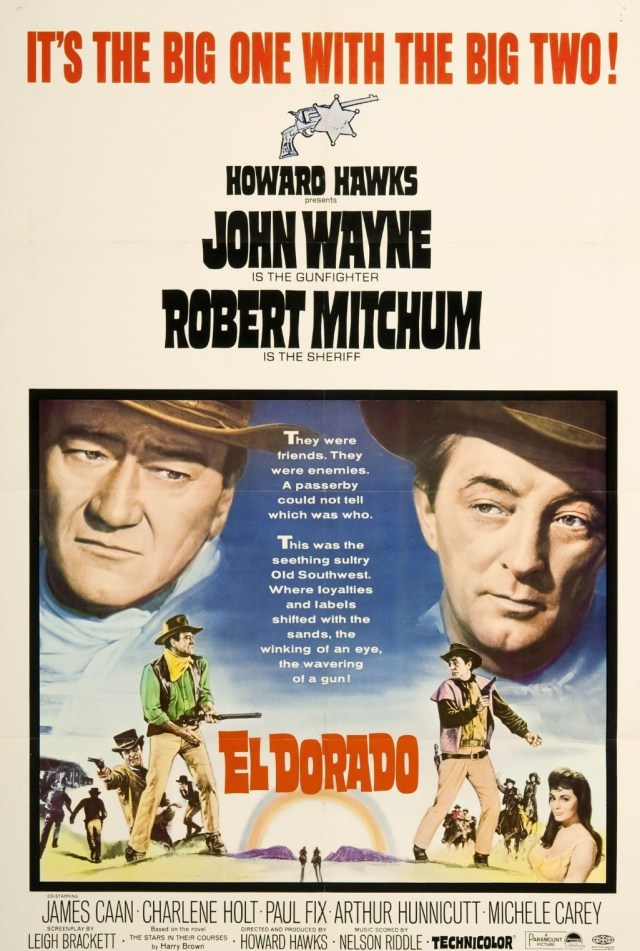
      Whenever I’ve participated in the Legends of Western Cinema Week Blogathon, I, more often than not, review a movie from the Western genre. Since I review Western genre films so infrequently, this blogathon serves as a good opportunity to expand my cinematic horizons. For the 2024 edition, I decided to select a title that has been recommended to me. Suggested by J-Dub from Dubsism, I am reviewing the 1966 film, El Dorado! Years ago, I saw pieces of this movie. At the time, I thought it was boring. But I was willing to give El Dorado a second chance, wondering if my perspective had changed. I also have seen very few films from John Wayne’s filmography. So, reviewing this film gave me a chance to check out more of his movies!

      El Dorado (1966) poster created by Paramount Pictures, Laurel Productions, and Polyphony Digital

      Things I liked about the film:

      The on-screen chemistry: Relationships in movies, whether romantic or platonic, can come across believably on screen if there is a strong sense of chemistry between the actors. This is what happened in El Dorado! Toward the beginning of the movie, J.P., portrayed by Robert Mitchum, meets up with Cole, portrayed by John Wayne, to talk about a potential job opportunity. Cole and J.P. carry no-nonsense demeanors, but their cordialness to each other shows the respect between them. The scene’s mood becomes lighter when Maudie, portrayed by Charlene Holt, shows up. Her friendly, playfulness emphasizes the friendship these characters share. When Maudie talks about her late husband and Cole with J.P., the empathetic reflection indicates how much she cares about both Cole and J.P.. Not only was there strong on-screen chemistry among the actors, this strong on-screen chemistry was consistent throughout the film. The on-screen relationships were interesting to watch because of these factors!

      The dialogue: One of the most important components of a movie’s script is the dialogue. Through dialogue, characters can memorably stand-out, important information can be shared, and characters’ problems can be solved. The quality of a script’s dialogue depends on how well written it is. While watching El Dorado, I took note of the cleverness of the dialogue. After a son from the MacDonald family dies, Cole visits the family to share the sad news. The patriarch of the family, Kevin, asks what happened, with Cole telling him how he got “a boy to do a man’s work”. Later, when Cole returns to El Dorado, he reconnects with J.P.. When J.P. asks Cole what he’s doing back in El Dorado, Cole tells his friend, “I’m lookin’ at a tin star with a…drunk pinned on it”. Dialogue like the two examples I provided show how cleverly words were used as well as the eloquent ways intended points were phrased.

      Breen Code Era moments: As I’ve explained before on 18 Cinema Lane, the Breen Code was a series of guidelines studios had to follow between 1934 and 1954. El Dorado was released in 1966, a decade after the Breen Code Era ended. However, there were moments sprinkled throughout the movie that felt reminiscent of the Breen Code Era. Before Cole leaves El Dorado, he kisses Maudie. The kiss itself isn’t shown on-screen because Cole’s hat is blocking their faces. When Mississippi, portrayed by James Caan, is first introduced to the audience, he uses a knife in self-defense against a man he claims killed his friend. As Mississippi retrieves his knife, the aforementioned man is hidden behind a table to prevent some of the violence from being shown on screen. The way these moments were written and presented were thoughtful presentations of an era gone by.

      Legends of Western Cinema Week Blogathon banner created by Hamlette from Hamlette’s Soliloquy, Heidi from Along the Brandywine, and Olivia from Meanwhile, in Rivendell

      What I didn’t like about the film:

      A prolonged conflict: Before watching El Dorado, I had seen two of John Wayne’s films: Stagecoach and Allegheny Uprising. In those movies, the story revolves around an overarching conflict some of the characters are consistently trying to resolve. While there was an overarching conflict in El Dorado, it primarily resided in the film’s second half. The first half of the movie consisted of a series of loosely connected vignettes. These vignettes, more often than not, contained low stakes. El Dorado’s first and second halves felt like they belonged in their own separate movies.

      Inconsistent sense of urgency: Like I just said when talking about El Dorado’s prolonged conflict, the first half of the movie was a series of loosely connected vignettes, while the film’s overarching conflict resided in the story’s second half. Within the second half of the movie, scenes containing low stakes were woven into the production. One example is Cole addressing a back injury he received earlier in the story. El Dorado’s two halves and the low stakes scenes from the film’s second half are two reasons why this movie’s sense of urgency was inconsistent.

      Enabling the Sheriff: J.P., the Sheriff of El Dorado, develops an alcohol addiction due to a romantic relationship gone wrong. When Cole and Mississippi go to El Dorado, they, as well as Bull, try to help J.P. overcome his addiction. Mississippi even creates a liquid concoction to sober J.P. up. But hours after receiving Mississippi’s concoction, J.P. is looking for alcohol. Bull tells J.P. exactly where a bottle of alcohol is located, in the upper left-hand drawer of his desk. Later that evening, Cole allows J.P. to go to the local saloon by himself, where he not only purchases a whole bottle of alcohol, he’s also laughed at by the film’s antagonists. J.P. does eventually become sober in order to help his friends. But toward the end of the movie, J.P. shares a shot of alcohol with Bull. If a screenwriter is going to incorporate a serious topic like addiction into their script, they need to be mindful about how that topic is included in the film. In my opinion, the way addiction was addressed in El Dorado could have been more thoughtful.

      Sheriff badge image created by Freepik at freepik.com. <a href=’https://www.freepik.com/free-vector/brown-cowboy-label-set_1543252.htm’>Designed by Freepik</a>. <a href=”https://www.freepik.com/free-photos-vectors/vintage”>Vintage vector created by Freepik</a>. Image found at freepik.com.

      My overall impression:

      El Dorado is not only the third film of John Wayne’s I’ve seen, it’s the second film of John’s I’ve reviewed. Out of these three films, Stagecoach, Allegheny Uprising, and El Dorado, I haven’t found a title that’s left a strong impression on me. Looking back on Stagecoach, I think the movie is just fine. Allegheny Uprising was ok. Now that I’ve seen El Dorado in its entirety, I feel the 1966 project is also ok. The two halves of this movie and the low stakes scenes woven into the movie’s second half are likely the reason for El Dorado’s inconsistent sense of urgency. The topic of addiction could have been handled in a more thoughtful way. However, the movie does have its strengths. Some of these strengths are the on-screen chemistry among the cast and how well the dialogue was written. Personally, I found El Dorado to be a mixed bag. Hopefully, the next film of John’s I watch and review will be stronger than this one.

      Overall score: 6 out of 10

      Have you seen El Dorado? Which film from John Wayne’s filmography would you like me to review? Let me know in the comment section!

      Have fun at the movies!

      Sally Silverscreen

      Sally Watches…The Twilight Zone

      When the curtains rose and the golden gates of Hollywood opened for him, Buster Keaton likely had one goal: to make people laugh. After conquering Vaudeville and starring in over a hundred film and television credits, Buster not only made people laugh, he left behind a legacy of humor, joy, and timeless entertainment! So, you probably saw the title of this article and wondered, “What does The Twilight Zone have to do with Buster Keaton”? One of Buster’s many film and television credits was an episode of The Twilight Zone. This is a show I am familiar with, having seen several episodes prior to The 10th Annual Buster Keaton Blogathon (hosted by Lea from Silent-Ology). However, on paper, The Twilight Zone and Buster Keaton seem like a random combination. Buster’s forte was comedy, while The Twilight Zone incorporates elements of science-fiction and horror. But is this episode, “Once Upon a Time”, an example of “opposites attract”? Let’s step into another dimension to find that answer through this review!

      The 10th Annual Buster Keaton Blogathon banner created by Lea from Silent-Ology

      Episode Name: Once Upon a Time

      Season 3, Episode 13

      Premiere Date: December 15th, 1961

      What I liked about this episode:

      As I stated in this review’s introduction, Buster’s forte was comedy. His specific acting forte was physical, “slapstick” performances. The creative team behind this episode paid attention to Buster’s comedic work, as Buster was given plenty of opportunities to showcase his comedy skills! One scene shows Buster’s character, Woodrow Mulligan, trying to hide from a police officer. At first, he walks behind Rollo, a character Woodrow meets in the “future”. When both men turn a corner, Rollo moves behind Woodrow, allowing Woodrow to walk in front of him. As they pass a rack of suit pants, Woodrow not only grabs a pair, Rollo picks Woodrow up so he can put the pants on. No beats were missed during this scene. The writing and delivery of this performance was simple, yet effective when it comes to the comedy!

      What I didn’t like about this episode:

      The run-time for “Once Upon a Time” is twenty-five minutes. Even though the script told a story that could be wrapped up in a short amount of time, there were parts of the episode that were drawn out. Chase scenes serve one example of moments lasting longer than necessary. When Woodrow first travels to 1962, the Time Helmet becomes misplaced. He spends several minutes trying to get the Helmet back, with the Helmet itself getting destroyed in the chase. Another drawn out scene is when Rollo argues with a man who owns a repair shop. While this argument takes place, Woodrow marvels at the “modern” inventions surrounding him. He also discovers a clothing store near the repair shop. In this part of the story, I found Woodrow’s observations hilarious. But I didn’t find the argument interesting.

      Masks of comedy and tragedy images created by freepik at freepik.com. <a href=”https://www.freepik.com/free-photos-vectors/background”>Background vector created by freepik – http://www.freepik.com</a>. Image found at freepik.com.

      The story itself:

      Throughout this review, you’ve read references to a Time Helmet and Woodrow traveling to the “future”. That’s because “Once Upon a Time” is a story revolving around time travel! When the episode begins in 1890, Woodrow is disgruntled about the world around him. One of his major issues is how noisy his world is. However, this part of the story is presented as a silent film. After he seeks a quieter time period to travel to, he discovers the “future” (1962) is much noisier than he expected. Through this visual and auditory juxtaposition, the creative team behind this episode addressed how sounds can constitute our lives. If you know anything about The Twilight Zone, not everything is what it seems. Each episode shares a lesson or message with its audience, with the story leading up to that message or lesson. Without spoiling “Once Upon a Time”, the way the events play out provide a lesson that members of the audience can relate to.

      The other factors from this episode:

      For this part of my review, I will be spoiling “Once Upon a Time”. If you have not seen this episode and are interested in watching it, skip ahead to the second point in this section.

      • When the Time Helmet is first introduced in the story, Woodrow overhears how the Helmet can allow someone to travel in time for only thirty minutes. This is the conflict Woodrow experiences after he travels to 1962. Because Rollo finds 1890 an appealing time period, he is taken back to 1890 through the Time Helmet when Woodrow is on his way home. Toward the end of the episode, a title card states the story is now taking place one week later. Rollo is still in 1890, adjusting poorly to his new surroundings. If the Time Helmet can allow someone to explore different time periods for only thirty minutes, how has Rollo been able to stay in 1890 for a week?
      • Like I have mentioned in this review, the parts of the episode taking place in 1890 are presented as a silent film, complete with title cards and an overarching tune. Viewers familiar with Buster Keaton’s filmography will know he is one of the most celebrated actors from the silent film era. This creative choice in presentation was such a nice nod to Buster’s career! It also gave this episode its own distinct identity!
      • During Woodrow’s time in 1962, Rollo admits he is not only a scientist, he is also an expert on 1890. Yet, Rollo and Woodrow take the Time Helmet to a repair shop to get it fixed. Why didn’t Rollo fix the Helmet himself, especially since he seemed capable of knowing how to repair it? Had Rollo repaired the Helmet himself, there wouldn’t be the need for his argument with the man from the repair shop.
      Image of vintage movie camera created by Macrovector at freepik.com. <a href=”https://www.freepik.com/free-photos-vectors/background”>Background vector created by macrovector – http://www.freepik.com</a>. Image found at freepik.com.

      My overall thoughts:

       I said in this review’s introduction how I have seen several episodes of The Twilight Zone before. But this was the first time I saw “Once Upon a Time”. What surprised me was how light-hearted the story was compared to other episodes I’ve watched. The Twilight Zone is a show known for dabbling in the strange and even the sad. The best parts of “Once Upon a Time” were Buster’s comedic performances! Every comedy scene was written and delivered well, effectively making me laugh! What didn’t work in this episode were the drawn-out scenes. Even though the story was short, some scenes were just too long. When I reviewed television show episodes, I have stated if that episode would serve as a good introduction to its respective show. In my opinion, “Once Upon a Time” is a good place to start for those who either have never seen The Twilight Zone or who are just getting into the show. The story is strange, but not in an unsettling way. It even contains a happy ending. But if you want to know what that happy ending is, you’ll have to enter The Twilight Zone!

      Rating: A 3.5 out of 5

      Have fun on television!

      Sally Silverscreen
      The Top 10 Worst Movies I Saw in 2023

      I’m going to be honest with my readers; in 2023, I saw more movies I disliked than liked. Luckily, I saw enough films to create a top ten best movies of the year list! When it comes to the movies I disliked, the majority of these titles were disappointing or average. This is different to my list of the worst movies of 2022. What’s also different about this year’s list is how my top three worst films are not all Hallmark projects. Like I have said in past lists, my top ten worst movies I saw in 2023 list is not intended to be mean-spirited, negative, or disrespectful. It’s just a list of my own, honest opinion. Since I reviewed some of the movies on my list, I will provide the links to those reviews in this article.

      Dishonorable Mentions

      Family History Mysteries: Buried Past, Sea Change, Murder 101: College Can Be Murder, Murder 101: The Locked Room Mystery, She Inherited Danger, My Diary of Lies, Double Nickels, A Zest for Death: A Hannah Swensen Mystery, Blackbeard, the Pirate, Christmas at Castle Hart, Shadow Island Mysteries: Wedding for One, and A Hidden Life (I turned this movie off after 42 minutes)

      Image by starline on Freepik

      10. The Curse of Frankenstein

      After I watched and reviewed Frankenweenie, I was hoping the creative team of The Curse of Frankenstein would follow Mary Shelley’s source material closer than the Disney animated film did. Instead of doing that, they relied more on creative liberties. As I said in my review of The Curse of Frankenstein, I found this distracting, especially since I read the book prior to watching the film. Some of these creative liberties were adopted just for the sake of it. One of them was presenting Victor Frankenstein’s creature as a bumbling, destructive machine. This creative decision was a disservice not only to Mary Shelley’s work, but also to Christopher Lee, the actor who portrayed Frankenstein’s creature.

      Take 3: The Curse of Frankenstein Review

      9. The Last Child

      I selected The Last Child for the Futurethon blogathon because of the film’s creative presentation; a futuristic story surrounded in a “contemporary” aesthetic. Unfortunately, the creativity of the 1971 made-for-TV movie didn’t reach beyond the surface. Despite the concern of population control within the story, there was little sense of urgency. That caused the movie to have too many low-stakes. It also didn’t help how the future in The Last Child wasn’t explained. This is another television film from the ‘70s that failed to impress.

      Take 3: The Last Child Review

      8. A Walk in the Spring Rain

      Out of all the movies I saw and reviewed this year, A Walk in the Spring Rain is the most flavorless film. Even though this is a movie where the audience waits for the inevitable to happen, the meandering nature of the script forces viewers to focus on drawn-out subplots, such as the protagonists’ daughter, Ellen, thinking about law school. What adds to the film’s meandering nature are stretched out scenes, making A Walk in the Spring Rain feel longer than necessary. Like I said in my review of the 1970 production, every beloved film star has at least one project on their IMDB filmography that is lesser known. For Ingrid Bergman, A Walk in the Spring Rain is one of her more forgettable films.

      Take 3: A Walk in the Spring Rain Review

      7. Carrot Cake Murder: A Hannah Swensen Mystery

      In 2023, Hallmark Movies & Mysteries released two new chapters in the Murder She Baked/Hannah Swensen series: Carrot Cake Murder: A Hannah Swensen Mystery and A Zest for Death: A Hannah Swensen Mystery. While I found both entries disappointing, Carrot Cake Murder: A Hannah Swensen Mystery was the most disappointing movie out of the two. Other than solving a mystery, this story didn’t progress the series forward. Something happens in Mike and Hannah’s relationship that is resolved in A Zest for Death: A Hannah Swensen Mystery. This made Carrot Cake Murder: A Hannah Swensen Mystery an even more pointless chapter in the series. If you’ve never watched the Murder She Baked/Hannah Swensen series, skip this film, as you wouldn’t be missing much.

      Take 3: Carrot Cake Murder: A Hannah Swensen Mystery Review

      6. Silent Night, Fatal Night

      Silent Night, Fatal Night is a Lifetime movie that is basically a gender-swapped, Christmas version of Misery, with a bit of a twist. Unlike the 1990 film, almost every character in Silent Night, Fatal Night makes one dumb decision after another. While the antagonist in the Lifetime film was unsettling, he was more annoying. Plus, I found it difficult to believe the protagonist, a mystery author, wouldn’t have more intuition to save herself. This isn’t the first time Lifetime has told a story similar to Misery. However, I wish the network would create stories that are less reminiscent of other, better movies from the 1990s.

      Carrot Cake Murder: A Hannah Swensen Mystery poster created by Lighthouse Pictures, Looking Glass Productions, and Hallmark Movies & Mysteries

      5. Jesse James Meets Frankenstein’s Daughter

      Chosen for the Fifth So Bad It’s Good Blogathon, Jesse James Meets Frankenstein’s Daughter was built on a gimmick. Instead of embracing the silliness of that gimmick, the movie’s creative team took their project a little too seriously. Their project was misleading as well, no friendship or romance forming between Jesse and Frankenstein’s granddaughter. Though Jesse James Meets Frankenstein’s Daughter is classified under the western and horror genre, the western genre is emphasized more, preventing a balance between the two genres. The 1966 film is not my “so bad it’s good” movie. Since I did giggle a few times while watching it, I took a step in the right direction to find my “so bad it’s good” film!

      Take 3: Jesse James Meets Frankenstein’s Daughter Review

      4. Jesse Stone: Night Passage

      For me, 2023 was not the year for mysteries, as the top four worst movies on my list are mystery films. The main issue with Jesse Stone: Night Passage is how none of the detectives do any detective work. What they do instead is pull assumptions out of their pockets, with those assumptions being conveniently correct. Subplots were prioritized over the mystery itself. This creative decision caused the story to lack any sense of urgency. It was nice to see familiar faces like Saul Rubinek (who portrayed Artie on Warehouse 13) and Liisa Repo-Martell (who portrayed Maida Flynn on Emily of New Moon). Sadly, there wasn’t much the cast could do to save Jesse Stone: Night Passage.

      3. Mount Hideaway Mysteries: Heartache and Homecoming

      This movie is so bad, it was, at times, unintentionally funny. Parts of the script reminded me of The Cookie Mobster, with the screenwriters not displaying an understanding for how some things worked. One such example is how Game Boy Color video game consoles were incorporated into the story. The film was riddled with other flaws, such as the color of a character’s earrings changing from scene to scene. Another, more consistent, flaw was telling instead of showing, like other characters mentioning how good looking the male protagonist is every time he appears in a scene. Also, just because the protagonist is a veterinarian does not mean she has to hold an animal every time a scene takes place at the veterinary clinic.

      2. The Abigail Mysteries

      I have never reviewed or talked about a movie from Great American Family on 18 Cinema Lane. So, it’s a shame that when I do talk about one of their movies, it’s because the project is bad. It is possible to create a good mystery story with elements of faith. But because The Abigail Mysteries heavily prioritized the elements of faith, the mystery was overshadowed, causing the overall story to lack a sense of urgency. From no on-screen chemistry to inconsistent audio quality, The Abigail Mysteries was filled with flaws. There were even times when actors would deliver their lines too quickly, making it difficult to understand what they were saying. I know this is the network’s first attempt at making a mystery movie. But if Great American Family is serious about creating more mystery projects, their efforts need to be better than The Abigail Mysteries.

      1. Mystery Island

      This is the second year in a row where a newly released Hallmark Movies & Mysteries movie is the worst film I saw. With Hallmark no longer prioritizing the mystery genre, I can’t say I’m that surprised. The poor writing is the biggest problem of Mystery Island. The mystery’s reveal is so ridiculously written, it makes the entire story feel pointless. Emilia Priestly, the film’s protagonist, has a legitimate reason to get involved in the movie’s mystery, as she is a psychiatrist for Scotland Yard. Instead of using her skills to solve the case, Emilia a) flips through books, b) eavesdrops on other characters’ conversations, and c) follows people into the jungle and runs out of that same jungle in wedge sandals. I’d like to think Hallmark will find the motivation to create better mystery productions. But as of late 2023/early 2024, I’m not getting my hopes up.

      Jesse James Meets Frankenstein’s Daughter poster created by Circle Productions, Embassy Pictures, and Embassy Home Entertainment

      Have fun in 2024.

      Sally Silverscreen

      Take 3: The Truth About Spring Review

      It’s been a while since I last wrote a movie review. As I just wrote about a Hallmark Hall of Fame film, I wanted to talk about something beyond the realm of Hallmark. I recently remembered a movie I had heard good things about for years. That movie is 1965’s The Truth About Spring! I have covered some of Hayley Mills’ films in past reviews on my blog. These titles are Summer Magic, The Moonspinners, and The Trouble with Angels. While I found Summer Magic to be just ok, I did like The Trouble with Angels and The Moonspinners. Since The Truth About Spring revolves around Hayley’s character traveling, I wondered if I’d like this film as much as The Moonspinners. That answer will be discovered as we sail through this review of The Truth About Spring!

      The Truth About Spring poster created by Quota Rentals Limited and Universal Pictures

      Things I liked about the film:

      The acting: In The Truth About Spring, Hayley portrays the protagonist, Spring Tyler. One of the few characters she interacts with is William Ashton, portrayed by James MacArthur. When William prepares for his voyage on Tommy’s ship, Spring is curious about an outfit William packed. After she asks about the outfit in question, William explains it is a set of pajamas, which he wears for sleep. Spring’s face goes from inquisitiveness to sad realization, as she confesses how she doesn’t own pajamas. This subtle change in facial expressions shows how Spring is being exposed to a different way of living life. Because of Hayley’s acting abilities, the aforementioned realization appeared realistic!

      Spring is not the only character William interacts with. Another key character in The Truth About Spring is Spring’s father, Tommy, portrayed by John Mills. During their voyage, Tommy witnesses William in his pajamas for the first time. Because Tommy is also not used to the idea of pajamas, he gives William a confused look. Meanwhile, William displays an embarrassed facial expression, as he wasn’t expecting Tommy to walk into the room. The interaction between these characters creates a moment that is awkward for both of them. John’s and William’s acting talents allow this awkwardness to radiate off the screen, making the scene feel believable!

      The interior design: The majority of The Truth About Spring takes place outdoors, as the characters sail to various locations. However, there are a few scenes featuring the interior design of the characters’ ships. The sitting room in the yacht of William’s uncle is surrounded in bleached wood. Paired with beige chairs and a large painting of flowers, this room is reflective of the affluent lifestyle of the Ashton family. On Tommy’s ship, the cabin has dark wood walls. Tommy, Spring, and William sit around a table covered in a red and white checkered pattern. The small windows are gifted with green curtains. These combined design details showcase the humbleness of Tommy and Spring’s surroundings.

      The discussion of educational experiences: A consistent topic between Spring and William is education. During one of their discussions, Spring learns there are different types of lawyers. This lesson came after William told her and Tommy he had graduated from law school and passed his bar exam. On a trip to the beach, Spring explains to William how it is the seagulls’ nesting season. She knows this information because of her experiences at sea. These conversations highlight how these characters’ life experiences shaped their educational foundations. I hadn’t thought about this concept until I saw The Truth About Spring!

      Sailing on the sea image created by Michele L at freeimages.com. “FreeImages.com/Michele L.”

      What I didn’t like about the film:

      A missed opportunity: Throughout The Truth About Spring, the characters engage in a treasure hunt. This treasure hunt was, unfortunately, not emphasized in the story. Instead, the movie splits its time between the interactions of Spring and William, as well as Tommy’s conning schemes. For me, this was disappointing because a treasure hunt can give a story intrigue, suspense, and a sense of adventure. Not emphasizing the treasure hunt is, in my opinion, a missed opportunity.

      A limited amount of urgency: As I mentioned in my previous point, the film’s treasure hunt wasn’t emphasized. That creative decision caused The Truth About Spring to contain a limited amount of urgency. Within the movie’s hour and forty-two-minute run-time, a strong sense of urgency was featured in only three scenes. Most of the movie ended up feeling like an unexciting journey.

      A drawn-out story: Like I said in this review, The Truth About Spring is an hour and forty-two-minutes. But the story itself was straight-forward, primarily focusing on three key characters. Therefore, this combination made the film feel drawn-out. Personally, I feel the movie should have been given a run-time of an hour and ten to fifteen minutes. That way, the script would been tighter.

      Tropical island image created by Brgfx at freepik.com. <a href=’https://www.freepik.com/free-vector/island-background-design_1020626.htm’>Designed by Freepik</a>. <a href=”https://www.freepik.com/free-photos-vectors/background”>Background vector created by Brgfx – Freepik.com</a>. Image found at freepik.com.

      My overall impression:

      As I stated in the introduction, I have reviewed some of Hayley Mills’ films. These films range from ok to enjoyable. When it comes to The Truth About Spring, I thought it was just ok. There are aspects of the 1965 movie I like, such as the discussion of educational experiences between Spring and William. However, I didn’t find the story itself very interesting. Instead of emphasizing the treasure hunt, more focus is given to Tommy’s conning schemes. Giving this simplistic story a run-time of almost two hours didn’t help either. If you’re looking for a movie where Hayley’s character falls in love and goes on an adventure, I’d recommend The Moonspinners over The Truth About Spring. The Moonspinners contains suspense and intrigue, as well as a tighter script.

      Overall score: 6 out of 10

      Have you seen The Truth About Spring? What is your favorite movie starring Hayley Mills? Please tell me in the comment section!

      Have fun at the movies!

      Sally Silverscreen