Happy Halloween to all my followers and readers! Like last year, I am participating in the Spooky Classic Movie Blogathon! For the first event, I reviewed 1953’s House of Wax, a movie I enjoyed. This time around, I’m reviewing the 1962 film, Cape Fear! When it comes to choosing which movie to watch around Halloween-time, the usual selections with fictious monsters, ghost stories, and haunted tales are preferred. But in my opinion, the most effective “scary movies” are the ones that involve real-life situations. In Cape Fear, a former prisoner seeks revenge against the lawyer who testified against him. This synopsis alone sounds more realistic and terrifying than even those scary movies that are considered “classic”. But is this movie as terrifying as it sounds? The only way to find out is if you keep reading!
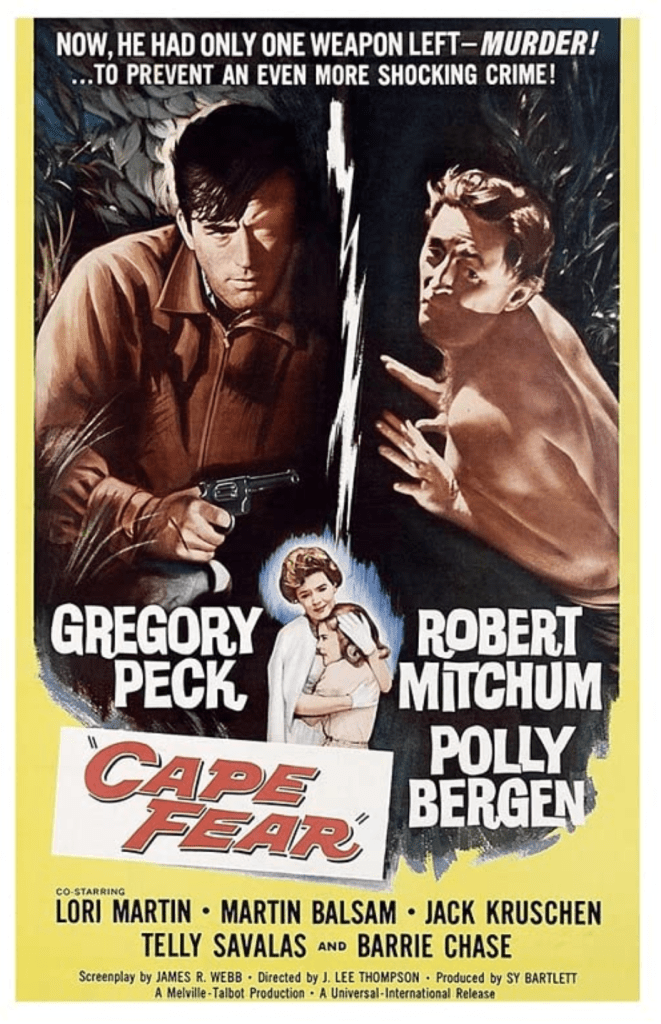
Cape Fear (1962) poster created by Melville Productions, Talbot Productions, and Universal Pictures
Things I liked about the film:
The acting: Before watching Cape Fear, I had seen and reviewed Heaven Knows, Mr. Allison. One of the best aspects of that film was Robert Mitchum’s performance. In the 1962 movie, Robert’s portrayal of Max Cady stole the show! As a character, Max was a creepy and gross fellow. This was made possible through Robert’s facial expressions, body language, and dialogue. In Max’s first scene with Sam, there is a twinge of anger in Max’s voice. But his demeanor was controlled by a sense of calm. The combination ofanger and calm within Max Cady added to the character’s unsettling nature. Another actor that effectively balanced two emotions was Lori Martin! In a scene that takes place after a family emergency, Lori’s character, Nancy, appears calm. Yet, she can be seen crying as she talks to her mother in an angry tone. Without spoiling anything, Nancy did have a legitimate reason to be both sad and angry. But I found this performance impressive, especially for an actress so young!
I’ve seen and reviewed To Kill a Mockingbird and Amazing Grace and Chuck. Based on these two movies, it seems like GregoryPeck gets type-casted as either a lawyer or a politician. While he portrays a lawyer in Cape Fear, the script emphasized how his character is a family man. Like the aforementioned movies, Gregory carried his character, Sam, with professionalism and classiness. At the same time, he was given plenty of opportunity to express emotion. A great example is when Sam meets Max at a nearby restaurant. As Max is telling his story, Sam grows increasingly angry. This scene highlights the fierce protectiveness of a husband and a father. It also gave a sense of realism to Gregory’s character!
The music: Legendary composer Bernard Herrmann provided the music for Cape Fear. Throughout the film, his signature musical style could be consistently heard. Bernard’s strength is using music to elevate the suspense within a given scene. At the very beginning of the movie, Max is walking through the town as an ominous tune can be heard in the background. This effectively clued the audience in of what would come later in the story. It also let the audience know to pay attention to Max. With all that said, the music definitely added something special to the overall project!
The cinematography: I was not expecting the cinematography in Cape Fear to be as memorable as it was! It, honestly, reminded me of pictures directed by Alfred Hitchcock! One of my favorite scenes is when Peggy, Sam’s wife, has a dream about her and Sam. While Peggy is sleeping, ghostly images of her and Sam are presented over the main image. These images reveal their concerns over the movie’s events, as well as emphasize their desire for action. This way of presenting dialogue and character interactions was very interesting. It added a sense of spookiness to an already suspenseful story!
An exposition heavy beginning: Within the first twelve minutes of Cape Fear, the audience learns about Sam Bowden, his family, Max Cady, his arrest, and why he was arrested. Personally, I felt this was too much information to present in the film’s beginning. In fact, I was disappointed Max’s secrets were revealed so soon. What the screenwriter should have done was sprinkle this information throughout the story. That way, the audience would have a greater reason to stay invested in the mystery.
Dumb decisions from the characters: After a family emergency involving a dog, Sam warns his wife and daughter of Max’s dangerous nature. He instructs his daughter, Nancy, to only leave school and home with either him or his wife, Peggy. But more often than not, Nancy is left by herself, with Sam and Peggy putting her in a vulnerable position. One example is when Nancy gets out of school to find her mother’s car empty. While waiting in the car, Nancy sees Max and attempts to get away from him. Even though she succeeds in this plan, she ends up getting hit by an oncoming car in the process. I know her parents are human and humans make mistakes. However, these mistakes felt unbelievable after some time.
An unrelated court case: Featured in a few scenes, a court case involving an arthritic patient receiving surgery was addressed in Cape Fear. But the only connection this case had with the rest of the story was Sam as one of the associated lawyers. I wish the case had a more significant reason to be in the film. Maybe it could have something to do with Max’s past crime, with two separate mysteries becoming one. I, honestly, wanted to learn more about that case, but was sadly not given the chance.
As I said in my introduction, the most effective “scary movies” are the ones that involve real-life situations. Even though this is a fictional story, it is effective at being a scarier film! Max Cady is one of the most unsettling characters in film, with Robert Mitchum’s acting abilities highlighting the reason why. Come to think of it, this performance showed a different side to Robert’s talents. Bernard Herrmann’s music added to the scary nature of the story, emphasizing the suspense within the script. But the multiple dumb decisions of the characters took away some from the film’s believability. The beginning of the film was also exposition heavy. However, the overall production felt like an Alfred Hitchcock picture without actually being affiliated with Alfred Hitchcock. With this said, I’d recommend Cape Fear as your next pick for Halloween!
Overall score: 7.5 out of 10
Have you seen Cape Fear? Which movie would you watch on Halloween? Tell me in the comment section!
Two years ago, I wrote an editorial on why I felt Lestat and Akasha’s relationship from Queen of the Damned was very problematic. When I published that editorial, I had no idea how popular it would become. As of late October 2021, my editorial has garnered 1,301 views and counting! So, that success is a reason for this new editorial. I’ve read many articles and seen many videos about The Crow. But no one has talked about how toxic Top Dollar and Myca’s relationship is. In fact, I’d go so far as to say their relationship is worse than Lestat and Akasha’s. Like my previous editorial, I will present five key reasons why Top Dollar and Myca’s relationship is unhealthy. But before I start my explanations, let me bring up some disclaimers:
In this editorial, I will be addressing the subjects of inappropriate sibling relationships, violence, drug use, and crime. That is because the movie itself addresses these subjects. If you are sensitive to any of the aforementioned subjects, take this disclaimer as a fair warning.
This editorial was not written to be mean-spirited or negative. Its intent is to showcase my honest opinion about this topic.
This editorial was not written to disrespect any persons who worked on The Crow. This includes Michael Wincott and Bai Ling, who portrayed Top Dollar and Myca.
Like most of my editorials, this article is going to be long in length. If you are interested in reading this post, please allow yourself enough time to consume the content.
Unless I say otherwise, the screenshots in this editorial are screenshots I took with my cellphone.
A typical sibling relationship is meant to teach empathy, show how to get along with others, and help maintain a family unit. But with Top Dollar and Myca’s relationship, nothing about it is typical. In fact, it is downright inappropriate. In The Crow, it is revealed these characters are half-siblings. But instead of treating each other like siblings, they interact with each other like a romantic couple. In the very first scene Top Dollar and Myca appear in, it is heavily implied they engage in intercourse. Their physical interactions also appear more sensual in nature. The existence of Top Dollar and Myca’s relationship is illegal, especially in Michigan, the state The Crow takes place in. According to Michigan Legislature, they would be guilty of Criminal Sexual Conduct in the First Degree. This is because Top Dollar and Myca meet these two circumstances: “The actor is a member of the same household as the victim” and “The actor is related to the victim by blood or affinity to the fourth degree”. When the true nature of their relationship is revealed, Top Dollar says Myca is “my father’s daughter, that’s right”. This means both Top Dollar and Myca were fully aware of their involvement in an inappropriate sibling relationship.
While Top Dollar and Myca are aware of their relationship’s nature, they go out of their way to keep their relationship private. Any time Top Dollar and Myca engage in displays of affection, it is done when few people or no one is around. In the first scene these characters appear in, there is another woman in the room. However, this woman is dead. In their next scene, Top Dollar and Myca partake in consuming drugs or creating mystical concoctions. When T-Bird and Grange arrive at Club Trash’s lair, Top Dollar and Myca are careful when displaying their affection for one another. Myca sits beside Top Dollar, with his arm draped across her lap. But when T-Bird and Grange leave, Top Dollar places his hand on Myca’s thigh, a gesture that is typically known for being sensual. It should also be noted how this gesture was performed under the table. Out of all the characters in The Crow, only two of them know about Top Dollar and Myca’s relationship. These characters are Grange and Gideon. It’s safe to assume Grange was already aware of Top Dollar and Myca’s relationship prior to the film’s events. But Gideon finds out about this relationship when he visits Top Dollar at Club Trash’s lair.
Because it can be difficult to see, I put a yellow line next to Top Dollar’s arm. This shows how his arm is draped across Myca’s lap when T-Bird and Grange are around.
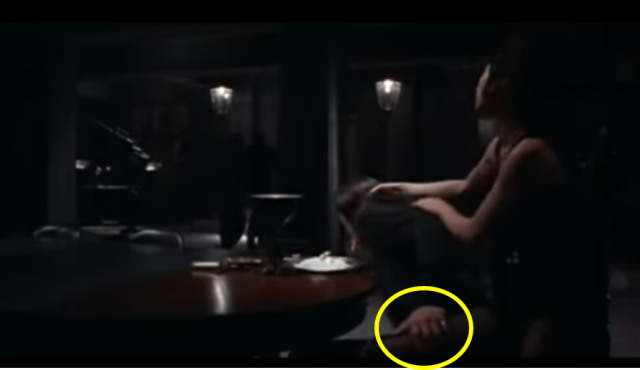
This time, I put a circle around Top Dollar’s hand, showing how it is now on Myca’s thigh. You can also see how Myca is holding back Top Dollar’s hair, a gesture I will talk about later in this editorial.
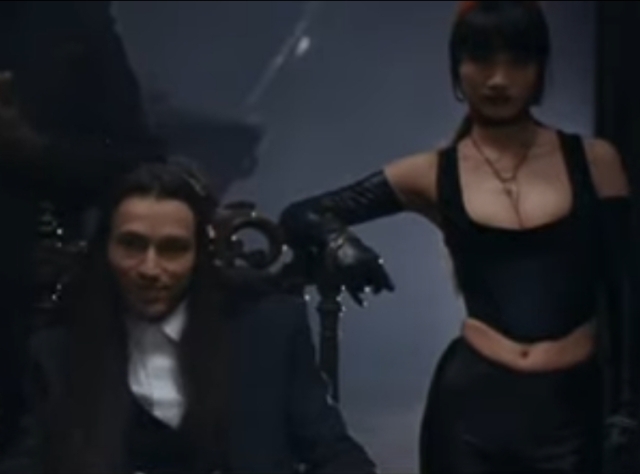
In this picture, it is clear to see how Top Dollar and Myca appear “professional” to keep up appearances.
One of my criticisms of The Crow is how some parts of the story don’t receive context. Top Dollar and Myca’s story is one of them. But based on what was said and not said by these characters, it is assumed their relationship is the result of an absent/dysfunctional family unit. In Top Dollar and Myca’s first scene, Top Dollar reveals the origin of a snow globe. This snow globe, displaying a miniature grave yard, was a birthday gift from their father when Top Dollar turned five. He tells Myca “Dad gave me this. Fifth birthday. He said ‘Childhood is over the moment you know you’re gonna die’.” Top Dollar brings up their father on two other occasions: when he tells Gideon Myca is his father’s daughter and when he tells Eric “Ya know, my daddy always used to say ‘Every man has a devil, and you can’t rest till you find him’.” Meanwile, Myca never brings their father up. In fact, when Top Dollar is talking about the snow globe, she doesn’t express any emotion toward her parent. According to David J. Schow, one of The Crow’s screenwriters, Top Dollar and Myca’s “father was in Vietnam”. In the book, The Crow: The story behind the film, “Top Dollar’s motivation would be to punish the world for Myca’s tragic life”. Taking all of this into account, it seems like Top Dollar and Myca’s father had no qualms about exposing his children to dark and harmful things, especially at a young age.
For this picture, an arrow points out the tear near Top Dollar’s eye, emphasizing how emotional the snow globe is making him.
Meanwhile, as Top Dollar is sharing the snow globe’s origin, Myca expresses no emotion.
They Enable Each Other
If you knew someone who was causing harm to themselves or other people, would you intervene and help them turn toward better choices? Most people would say “yes” if asked this question. But, in The Crow, Top Dollar and Myca do the complete opposite. During their introduction in the movie, Myca asks if the woman in the room is dead. Top Dollar responds by saying, “I think we broke her”, heavily implying they had something to do with the woman’s death. Myca then proceeds to remove the woman’s eyes, with Top Dollar silently watching her perform this act. Top Dollar was fully aware of how much damage he and Myca made in one evening. Despite this, he never tried to stop Myca from obtaining the eyes or question her reason for committing the act. In fact, Top Dollar never intervened during the process. While Myca’s desire to snatch someone’s eyes is explained, Top Dollar continues to enable Myca.
As you can see in this picture, Top Dollar expresses no concern for Myca’s harmful behavior.
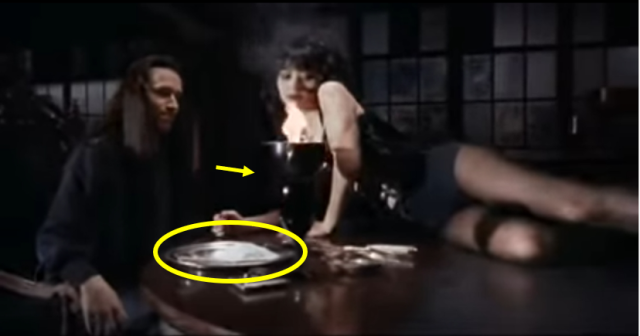
In the next scene Top Dollar and Myca appear in, they engage in activities only they would leisurely choose to do. While Myca uses the aforementioned eyes to create a concoction involving smoke, Top Dollar is consuming drugs. During Myca’s “activity of leisure”, Top Dollar silently watches the entire time. He only gets involved when Myca creates smoke, as he ends up breathing it in. While this scene is taking place, Top Dollar’s plate of drugs are located right next to Myca’s goblet. Myca is fully aware of their presence, yet chooses to do nothing about it. What she does do is ignore Top Dollar’s drug use. When Grange and T-Bird arrive at Club Trash’s lair, Myca can be seen turning her body away from Top Dollar, facing her guests. Before Top Dollar consumes the drugs for the second time in this scene, Myca gets up from the table she is laying on and walks away from the situation. Even though she does return to sit beside Top Dollar, she ends up holding his hair back as he consumes the drugs for the third and final time in this scene.
An arrow pointing to Myca’s goblet and a circle around Top Dollar’s plate of drugs highlight how close they are to each other.
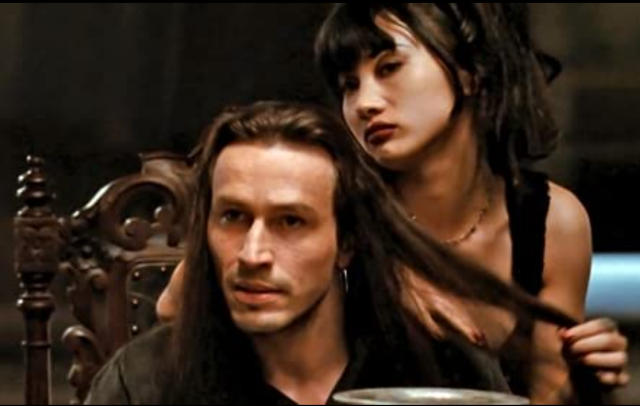
Before T-Bird and Grange show up, Myca is facing Top Dollar.
After T-Bird and Grange arrive, Myca turns away from Top Dollar and faces her guests.
The arrow is pointing to Myca’s shoulder, as she is rolling off the table and moving away from Top Dollar.
The previous scene I talked about isn’t the only time Myca turns a blind eye to Top Dollar’s harmful choices. When Gideon pays a visit to Club Trash’s lair, the intent of his visit is to call Top Dollar out for his lack of involvement. This is in relation to Gideon’s Pawn Shop being burned down in an earlier scene. It is in this current scene where Top Dollar reveals he and Myca are half-siblings. After this secret is revealed, Myca places her foot on Gideon’s chest as Top Dollar points his sword at Gideon, both actions attempting to intimidate their guest. Shortly after Gideon tells Top Dollar and Myca “I ain’t twisted like you two fucks”, Top Dollar proceeds to stab Gideon with his sword. Before Top Dollar receives a gun from Grange, Myca can be seen turning her head away from the situation. She turns her head back after Top Dollar kills Gideon.
This picture illustrates how Myca is enabling Top Dollar’s behavior by helping him intimidate Gideon.
This is the same picture/scene as above, but from a different angle.
This is a photo of Myca as she is turning her head away from Top Dollar’s crime, before he shoots Gideon.
This photo shows Top Dollar and Myca after he shoots Gideon, with Myca turning her head back.
When I first watched The Crow, I was really confused by Top Dollar and Myca’s decision to enable each other. Judging by their body language, their love for one another seems obvious. So, seeing them enable the other to hurt themselves or other people told a conflicting story. After talking with some fans of this film, I came up with three likely reasons why Top Dollar and Myca choose to enable one another. The first reason relates to the possible upbringing I talked about in my first point. Because Top Dollar and Myca were likely exposed to dark and harmful things for so long and often, these things have become their “normal”. The second reason is the precedent Top Dollar places on his environment. Since he is the leader of his villainous group, he is the one who sets that precedent, which is a “I don’t care because it’s none of my business” attitude/mindset. With that said, why should Myca be expected to care about Top Dollar’s drug use or violence when he doesn’t seem to care how or where she acquires eyeballs? The third and final reason is how the final product benefits them. As I already mentioned, Top Dollar only gets involved in Myca’s “activity of leisure” after she makes the smoke. This allows him to enjoy the fruits of her labor without worrying about how the smoke is created. In a meeting at Club Trash’s lair, Myca says “I like the pretty lights”, referencing the fires taking place throughout Detroit. This statement alone shows that Myca doesn’t seem to care how those fires came to fruition, but instead how these “pretty lights” make her feel.
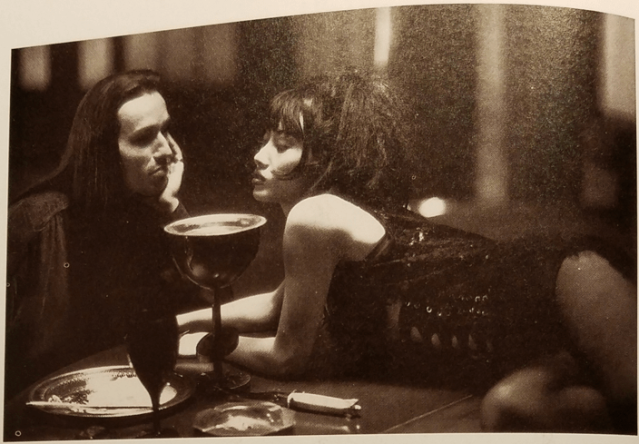
This picture from The Crow: The Movie clearly shows Top Dollar and Myca looking disinterested in each other’s concerns and needs.
No Meaningful Conversations
As I said in my editorial, ‘Toxic Valentine: Why Lestat and Akasha’s relationship is very problematic in Queen of the Damned (2002)’, words are needed to build/strengthen a bond. In The Crow, the audience can hear Top Dollar and Myca talking to each other instead of at each other. But when one truly listens to what these characters are saying, it is evident how Top Dollar and Myca are not having meaningful conversations with one another. There are two scenes showing them carrying on a conversation. In the first scene, Myca sees Top Dollar becoming emotional over a snow globe. She acknowledges this by telling him “You are thinking about the past”. However, after Top Dollar tells her the story behind the snow globe, she changes the subject to the dead woman in the room. While Myca does give Top Dollar physical affection by hugging him and kissing him on the head, she doesn’t use words to get to the root of the unidentified problem. No questions about why this snow globe causes Top Dollar to get so emotional are asked. Similar personal moments or comforting sentiments are not shared either. Because of Myca’s decision to not verbally help Top Dollar through his emotions, those feelings and personal turmoil are bottled up and unaddressed instead of being resolved.
A picture of Top Dollar and Myca hugging before she learns the origins of the snow globe.
Instead of verbally comforting Top Dollar, Myca kisses his head.
In the second scene, Top Dollar wishes he were hungrier. He reveals this to Myca after she tells him “You are very restless”. But instead of trying to help Top Dollar find a solution to his problem, Myca says “Be careful what you ask for”. Hunger is a basic need, with eating being an important part of human life. The fact Myca is ignoring this basic need, especially after Top Dollar addressed it to her is concerning. In this same scene, Myca tells Top Dollar “There are energies aligning against you”. His response to her concern is “Seeing is believing, isn’t it?”. Like Myca’s response to Top Dollar’s hunger, Top Dollar’s reaction is also concerning. He doesn’t question what these “energies” are or try to verbally put Myca’s worries at ease. These examples in this point highlight what I talked about earlier: the precedent in Top Dollar and Myca’s environment carrying a “I don’t care because it’s none of my business” attitude/mindset.
In this picture, Top Dollar clearly looks like he doesn’t care about Myca’s concerns.
They Treat Others Horribly
Similar to Akasha from Queen of the Damned, Top Dollar and Myca treat other people horribly. This horrible treatment is experienced by most of the members of their community as well. Like I mentioned earlier, Top Dollar intimidates and kills Gideon, with Myca helping Top Dollar intimidate their guest. I also mentioned the dead woman whose eyes were removed by Myca. However, these are just two examples of their hurtful ways toward others. Whenever something bad happens to someone with a lower social ranking, Top Dollar does not show any amount of sympathy for them. Instead, he treats their misfortune as a joke. When T-Bird visits Club Trash’s lair, he informs Top Dollar of Tin Tin’s death. Top Dollar says he’ll provide a moment of silence for Tin Tin, but uses that time to consume more drugs. Later in the movie, at a meeting in Club Trash’s lair, Top Dollar tells the attendees how T-Bird will not come to their gathering. He says T-Bird has “a kind of a slight case of death” as if passing away is simply an inconvenience. This causes some of the meeting attendees to chuckle, like Top Dollar told a funny joke.
This photo highlights how annoyed Top Dollar looks by T-Bird’s death.
It should also be noted how complete strangers are not safe from Top Dollar and Myca’s harmful choices. As the story progresses, Eric Draven learns his and Shelly’s murders were caused by Top Dollar, as he ordered some of his members to remove Eric and Shelly from their apartment. When Eric crashes the meeting at Club Trash’s lair, Top Dollar orders the meeting’s attendees to kill Eric. While these attendees shoot Eric, Myca stands beside Top Dollar and watches the violence upfold. After the meeting ends earlier than expected, Top Dollar and Myca kidnap Sarah. They do this in an attempt to lure Eric and The Crow toward them, planning to kill both of them in the process. Based on the examples I provided, it is obvious that Top Dollar is the one who causes most of this harm, with Myca as his bystander.
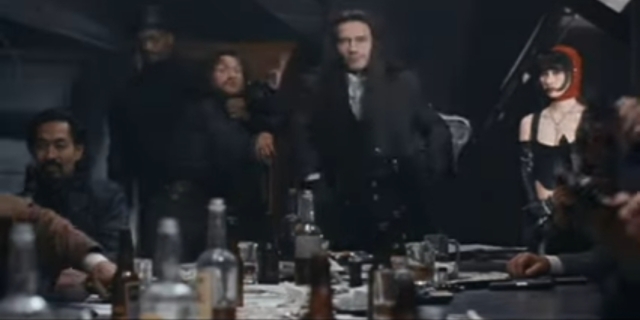
As Top Dollar orders the meeting’s attendees to shoot Eric, Myca simply watches the violence unfold.
This is the same picture/scene as above, but from a closer angle.
No Sense of Shame
The most blatant aspect of Top Dollar and Myca’s part of the story is how they have no sense of shame for what they say and do. This is because they are never given a reason to feel a sense of shame. In Top Dollar and Myca’s environment, there are no “voices of reason” to hold them accountable for their actions and choices. Even when someone, like Gideon, tries to become a “voice of reason”, they end up facing consequences instead of Top Dollar and Myca. Two reasons are likely why “voices of reason” don’t exist in Top Dollar and Myca’s world. Like I’ve been saying in this editorial, the precedent in this environment carries a “I don’t care because it’s none of my business” attitude/mindset. Since Top Dollar and Myca don’t express any concern for others, the people in their environment have no incentive to care what Top Dollar and Myca do. Fear can also be a contributing factor. Top Dollar and Myca have the two highest social ranks in their environment. So, this fact can be a motivator to keep others in line. Out of all the people who work for Top Dollar and Myca, Skank is the only one who openly expresses this fear. After being forced to attend the meeting at Club Trash’s lair, Skank cowers in his seat when Top Dollar calls him out. Skank’s demeanor clearly displays unease, like he is afraid of upsetting Top Dollar. In a community where people are too afraid to speak up, it is no wonder Top Dollar and Myca’s behavior is allowed to run rampant.
This picture illustrates how Skank is cowering in his seat.
This other picture shows the fear in Skank’s face, emphasizing how uncomfortable he is near Top Dollar.
The one person who should have been a “voice of reason” is Grange. As Top Dollar and Myca’s bodyguard and the closest person to them, his job is to look out for their best interests. What he does instead is enable Top Dollar and Myca, as well as encourage them, to carry on their harmful ways. When T-Bird goes to Club Trash, he tells Grange he’d like to meet with Top Dollar. Grange says that won’t be possible because Top Dollar is in a meeting. The next scene reveals Grange’s lie, as Top Dollar is in a bedroom with Myca and a dead woman. This scene shows how Grange is enabling Top Dollar and Myca’s inappropriate sibling relationship while also turning a blind eye to it. When Top Dollar stabs Gideon during his visit to Club Trash’s lair, Grange gives Top Dollar the gun that would ultimately kill Gideon. He also tells Top Dollar and Myca he’ll get someone to remove the dead body. Later in the movie, when Myca discovers a connection between Eric and The Crow, Grange says “So kill the crow, then destroy the man”. He tells Top Dollar and Myca this as a way to enable them to hurt Eric and The Crow. Grange’s reaction to Top Dollar and Myca’s other harmful decisions, like kidnapping Sarah and enabling one another, is either silently playing along or ignoring the problem altogether. With all things considered, Grange shows how he isn’t doing his job well.
When Grange visits Top Dollar and Myca in Club Trash’s lair, he never points out their “activities of leisure” or calls them out for hurting themselves or others.
After I published my editorial about Lestat and Akasha’s relationship, I naively thought I would never come across or even talk about a relationship worse than theirs. But when I watched The Crow for the first time, Top Dollar and Myca proved that idea wrong. I can say with all honesty their relationship is one of the worst I’ve ever seen in cinema. It is so toxic, red flags pop up every time they appear on screen. At first glance, it seems like Top Dollar and Myca love each other. But when one looks beyond the surface, it is plain to see how weak their relationship is. They don’t have a strong sense of care for one another. When something important is addressed, whether it’s a concern, need, or feelings, Top Dollar and Myca ignore them. They also allow each other to hurt themselves or other people with no attempts at intervention. With the way they care so little about the other, it makes me wonder why Top Dollar and Myca are even together at all? But because their backstory would probably be as dark and harmful as the choices they make, maybe it’s better to leave that question unanswered.
Have fun at the movies!
Sally Silverscreen
References:
The Crow 1994
The Crow: The story behind the film by Bridget Baiss
The results of The 3rd Annual Gold Sally Awards were many months in the making! Like last year’s awards, I continued the tradition of nominating films and talent not exclusive to Hallmark. I also started presenting two voting polls at a time. In 2022, I will publish two polls in each post, as a way to move the polls along at a smoother pace. But, for now, let’s start the moment you’ve been waiting for: the results of my annual awards!
A collage of this year’s winners I created on PowerPoint. Screenshot taken by me, Sally Silverscreen.
Best Movie and Story: From Up on Poppy Hill
Best Ensemble: If You Believe
Best On-Screen Couple: Ally Walker and Tom Amandes — If You Believe
Best Actress: Margaret O’Brien – The Unfinished Dance
Best Actor: Neal McDonough – Grace & Glorie
Best Supporting Actress: Collin Wilcox Paxton – To Kill a Mockingbird
Best Supporting Actor:Fred Savage – The Boy Who Could Fly
For the remaining days of October, I will try my best to “clean house”. This means I will be publishing articles that I’ve been meaning to post for some time. One of these posts is my conclusion to last month’s National Read a Book Day Double Feature! In September, I sought to answer the question, Would these adaptations [of Saint Maybe and At Home in Mitford] encourage the viewers to read their source material or any other book? Now that I’ve seen and reviewed both films, I’ve come to therealization how difficult it is to answer this question.
While reading some of Saint Maybe’s reviews on IMDB, one of them stood out to me. Its title read “Made me want to readthe book”. Written by someone named bkgmoonstar, they claim the movie was missing too much detail. After they read thenovel, they said “the movie was actually quite faithful to the book”. This review represents the opinion of just one reader. There are many readers who choose to read a given book for various reasons. They also have their own preferences and literary interests.
Like readers, there are many movie-goers with their own tastes in cinema. Some of the films of their choosing may be an adaptation. But even if they enjoy an adaptation, it doesn’t mean they’ll reach for the source material. This decision couldbe made for a variety of reasons. When I asked my aforementioned question in my reviews of Saint Maybe and At Home inMitford, I wasn’t really able to give a definitive answer. That’s because the only reader I can speak for is myself. Therefore, if I had to answer the question, I think it all depends who you ask.
Have fun at the movies!
Sally Silverscreen
If you want to read the other articles associated with this double feature, I’ll provide the links here:
Blogathons are a great opportunity to be introduced to new genres, films, and talents. For me, that has certainly been the case for The Third Hammer-Amicus Blogathon. Because this was my first time watching any Hammer-Amicus production, I had to research which title I would write about for the event. On Wikipedia, I stumbled across the 1972 film, Vampire Circus. The film’s title immediately caught my attention, as I’ve never seen a vampire led circus before. Movies revolving around vampires are no stranger to 18 Cinema Lane. As of October 2021, I have reviewed five vampire films, with Vampire Circus now being the sixth title. These projects have received favorable reviews, with each one being enjoyable to varying degrees. How will Vampire Circus fare among the other vampire films I’ve seen? Keep reading, as the show is about to begin!
Vampire Circusposter created by Rank Film Distributors and 20th Century Fox.
Things I liked about the film:
The acting: As I said in the introduction, this was my first time watching any Hammer-Amicus production. But during my experience viewing Vampire Circus, I could tell the actors and actresses involved were invested in their roles! Whenever a circus is incorporated into a story, the ringleader is usually a man. So, it was interesting to see a woman leading a circus in Vampire Circus. Confidence and a no-nonsense attitude are the traits I associate with a circus ringleader. While portraying the Gypsy Woman, Adrienne Corri effectively brought those traits to her character! Adrienne also had the ability to command attention from the audience. This is due to the strong on-screen personality she presented.
While watching Vampire Circus, I was impressed by the performances of the younger actors and actresses. Two of these stand-out performances came from John Moulder-Brown and Lynne Frederick! Portraying Anton Kersh and Dora Müller, these actors had surprisingly good on-screen chemistry. They also performed well together and individually. John and Lynne’s interactions felt believable, like their characters truly cared about each other. It made me wish they had starred in a production of Romeo and Juliet!
The historical accuracy: Vampire Circus takes place in the 19th century, which contains the years 1801 to 1900. As soon as the movie started, I noticed the creative team’s focus on making their production look historically accurate! Two of the characters, Anna Müller and Jenny Schilt, wear dresses that appear like they came directly from that time period, reminding me of stories like Pride and Prejudice and American Girl’s Caroline series. The costumes for the male characters are also reminiscent of these stories. The props and set designs were historically accurate as well! A good example were the circus wagons. Their structural build reflected the classic circus images seen on antique posters and art work. The signs for “Circus of Night” and the “Hall of Mirrors” presented an art style that was present during that time. With all these elements coming together, I felt transported to the 19th century!
Introducing the “photogenic vampire”: I have heard people give Anne Rice’s Vampire Chronicles series credit to creating the concept of “photogenic vampires”. But personally, I think Vampire Circus deserves that credit, as the movie was released before Interview with the Vampire was published. The vampires in Vampire Circus appeared beautiful, looking like potential supermodels. A perfect example is Emil, who was also a circus performer. One of the young women in the town of Stetl, Rosa, develops a crush on Emil after the circus’ first performance. When you take one look at Emil, it is easy to see why Rosa would be interested in him. This simple creative decision allowed Vampire Circus to make a significant contribution to the world of vampire stories!
Confusing parts of the story: The Bürgermeister’s daughter, Rosa, is attracted to Emil, one of the circus performers. In one scene, she is telling her mother how Emil is not like other guys, as he has traveled the world and is more cultured because of it. But in earlier scenes, we don’t get to see these characters converse with one another. All that is provided to the audience is Emil and Rosa meeting at the circus for the first time and seeing them have intercourse shortly after they met. How would Rosa know all that information about Emil if she barely spoke with him? Did she and Emil talk with each other off-screen? This is just one part of the story that I feel needed context.
The underutilization of animals: When the circus comes to the town of Stetl, they bring three animals: a panther, a tiger, and a chimpanzee. Throughout the film, the chimpanzee and tiger stayed in their cages. Meanwhile, the panther was seen out of its cage about two or three times. In the world of film, animals are a part of a production to either be showcased as naturally as possible or to be shown doing something cool. In Vampire Circus, when there was an opportunity to prominently feature the tiger, a dancing woman painted as a tiger took its place. With all that said, it makes me wonder why there were animals in the movie at all?
Inconsistent traits among the vampires: In fiction, there are many different vampires who carry a variety of skills and traits. Within Vampire Circus, however, the traits of the vampires felt inconsistent. Two of the vampires in the story, Heinrich and Helga, are sensitive toward crucifixes. But when a crucifix is presented to the Strongman, he ends up crushing it with no sensitivities. Does this mean the Strongman wasn’t a vampire or was he simply not bothered by crucifixes? Over the course of the story, Emil is revealed to be a shapeshifter. At various moments in the film, he transforms into a panther, the same panther the circus brings to town. Meanwhile, as I mentioned before, the tiger and chimpanzee stayed in their cages. Was Emil the only shapeshifter in the circus? Were the animals simply animals?
Vampire Circus introduced the concept of “photogenic vampires”. For this, I will give the film credit where it is due. But when I think about this 1972 production, I’m confused of what its intention was. On the one hand, all the actors and actresses seemed invested in the roles they were given. But, on the other hand, a stuffed animal could be plainly seen during a scene where a group of characters were attacked in a forest. Was this movie supposed to be “so bad it’s good” or a horror movie with a pinch of humor? There were also parts of the story that I found confusing. However, the film was interesting enough to keep me invested in what was happening on screen. Therefore, I found Vampire Circus to be just ok.
Overall score: 6 out of 10
Have you seen any Hammer-Amicus films? Are there any vampire films you enjoy watching? Please tell me in the comment section!
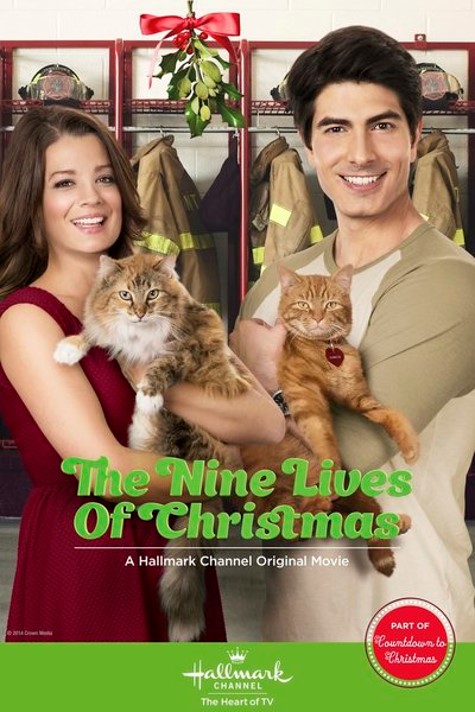
Last year, I announced a new project called Oh Lil Cristmas Tree, where I add a new ornament that somehow relates to my blog. When I first introduced this project, I showed my readers a small colonial style hat that was reminiscent of Jiggy Nye’s hat from Felicity: An American Girl Adventure. This year, after searching for the perfect addition, a Christmas cat ornament will be joining the tree! Two years ago, I reviewed the Hallmark Channel movie, The Nine Lives of Christmas. It was a film I really liked and was one of the best I saw that year! So, it made sense for a festive kitty to be the next choice.
Isn’t this cat just the cutest? Screenshot taken by me, Sally Silverscreen.
Now we are coming to the end of another season of Chesapeake Shores. With this story complete, I can now give my honest opinion on the season as a whole. This has been one of the strongest seasons in the show’s history! That balance between character and plot driven stories has returned! One of the strengths was the addition of new cast members. Because Robert Buckley was promoted the most, I’ll talk about his character, Evan Kincaid. With new characters, it can be hit or miss. But with Evan, he fit in just fine. In fact, it felt like he was meant to be on Chesapeake Shores all along. Evan was a well written character, with each layer being pulled back as the story went on. Robert also presented a personality that hadn’t been seen on the show before. Despite joining Chesapeake Shores this season, I can’t imagine this story without him. As this chapter of the show comes to a close, let’s re-cap the season finale!
Just a reminder: If you did not see the season finale of Chesapeake Shores, there are spoilers within this re-cap.
Chesapeake ShoresSeason 5 poster created by Crown Media Family Networks and Hallmark Channel.
Season: 5
Episode: 10
Name: As Time Goes By
Abby’s story: Abby comes back home from her business trip in Cleveland. She is surprised to discover Evan waiting for her at the airport. Afterwards, they agree to have lunch at Sally’s Café. During their meal, Evan confesses how he might have romantic feelings for Abby. She turns down this possibility at first, as she and Evan are business partners. But Evan convinces her to, at least, think about the idea of them together. The next day, Evan visits the O’Brien family home to deliver some homemade brownies. Abby is not only amazed by how good the sweet treats are, but how Evan created the brownies so that Caitlyn, who is lactose intolerant, could eat them too. In the middle of this exchange, Evan shares with Abby how he learned to bake from a man who used to date Evan’s mother. When Abby asks Evan if she can meet this man, Evan says he’ll try to locate him, as he is a truck driver. Later in the episode, Jay reveals how every year, he takes a picture for his “Best Moment of the Year” collection. For the previous year, he shows Abby a picture of her, indicating how she was his “Best Moment of the Year”. Jay also confesses how he has romantic feelings for Abby. But he says he has romantic feelings for a female guidance counselor named Cam as well. The information Abby received from Evan and Jay puts her at a fork in the road. After consulting with Bree, Abby calls someone and tells them how she has feelings for them too. But the identity of the receiver is not known.
Mick and Megan’s story: One morning, Mick and Megan share the news that not only are they taking a trip around the world, but Mick is also taking a year off work in order to make this trip happen. While the family is shocked by this news, there are happy to see Megan and Mick move forward with their relationship. While she’s at the location where the art show took place, Carter tells Megan how she has received multiple job offers due to the art show’s success. Megan says she has given up that life, indicating her disinterest in these offers. Then, Carter reveals how a prestigious art gallery in Los Angeles wants Megan to join their team. Because she has always dreamed of working with that particular gallery, she thinks twice about her future. Mick ends up finding out about this job offer from Carter, as Carter is on his way home to New York. When Mick addresses this piece of news with Megan, she says she hasn’t made a decision yet. But, by the end of the episode, she questions if she can have both the job and the trip. This makes Mick wonder if she’ll leave the family again.
Connor’s story: While Luke’s court hearing has received a different judge, the date is scheduled for the very next day. Even though this concerns Connor, he continues to look for a way to help Luke. Meanwhile, Margaret has her concerns about Connor’s well-being. Remembering what Connor said in the previous episode, Margaret brings s’more ingredients to the firm, in an attempt to help Connor relax. Connor likes Margaret’s gesture, which ends up with both of them kissing. But, the following day, Luke and Bree discover Connor slept at the firm. Because of this discovery, Luke reveals how he takes sleep medication. This information gives Connor an idea. He recruits his doctor as an expert witness, in an attempt to show how Luke’s sleep medication could be mistaken for amphetamines. The plan works and Luke doesn’t have to go back to prison. Toward the end of the episode, Margaret visits Connor at the O’Brien family home. While they are kissing, Connor collapses. The cause of his ailments is unknown.
Kevin and Sarah’s story: At the beginning of the episode, it is revealed Sarah had a miscarriage. Devastated by this latest heartbreak, Sarah tells Kevin to keep it between themselves. But, later in the episode, Kevin shares this information with Mick and Megan. They tell their son how they suffered a miscarriage years ago. Through the interaction, they show their support for Kevin and Sarah. When Kevin tells his wife what he told his parents, Sarah is upset. However, she comes to appreciate Mick and Megan’s support when Megan pays her a visit. Megan tells Sarah how her miscarriage happened after Jess was born. She also tells Sarah how, in time, she will get through this tragedy.
Jess and David’s story: Jess has a lot of thoughts about Mick and Megan getting back together. So, at three in the morning, she decides to write Megan an email, which contains her real thoughts. Later that day, Jess freaks out because she actually sent the email. When David reads it, he thinks it is brutally honest. So, Jess goes to the O’Brien family home to talk to Megan. She apologizes for the email, telling Megan how she’s actually happy for her and Mick. But Megan responds by saying she hadn’t checked her email yet, but appreciated Jess’s honesty. Meanwhile, David discovers his trust fund has been cleaned out. Only his father has access to this fund, but he is nowhere to be found. David goes to Boston to find out more information on his father’s whereabouts. When he returns, David tells Jess his father flew out of the country, with the FBI looking for him.
Looking back on the show as a whole, it seems like Kevin and Sarah can’t win. First, they don’t have the wedding of their dreams because season four only contained six episodes. Now, they are dealing with a miscarriage. I understand things do not always go according to plan, in real life and in fictional stories. However, I was hoping the writers would try to make it up to the fans after the omission of a wedding in the previous season. If Chesapeake Shores receives a sixth season, I hope Kevin and Sarah meet happier circumstances.
While talking to a family member about this season, I realized injuries and falls seemed to be a common theme. Sarah fell twice, Thomas fell while hiking, and Evan fell in Tae Kwon Do class. There was also Mick’s plane accident, Thomas’ sprained ankle, Evan’s hurt back, and Connor’s medical issues. I’m guessing this was all a coincidence. But, as a fan, I found it concerning how five of the show’s characters were in harm’s way, sometimes on more than one occasion.
While I know cliffhangers and season finales can sometimes go hand-in-hand, I thought it was risky for the season to end with four cliffhangers. As of October 2021, there has been no announcements about a sixth season. This means if the show were to be cancelled, several stories would receive no resolution. Personally, I think one or two cliffhangers would have been just fine. Some of these cliffhangers could have been introduced earlier in the season, such as the whereabouts of David’s dad. Had this been the case, David and Jess’s story could have contained more depth.
After watching this episode of Chesapeake Shores, one of my family members brought up how Mick has suddenly been playing a father figure to Evan. I then mentioned that Mick was the first character to receive the details of Evan’s accident, the same one that Mandrake brought up two episodes ago. He was also the first character to learn about Luke’s past. With all this said, it seems like Mick is, sometimes, the first to know if a character has something important to say. He not only provides a listening ear, but also a strong shoulder to lean on. Even though Nell seems like the glue that keeps the O’Brien family together, Mick is the heart of that family. So, let’s get to the heart of this episode by starting this re-cap of Chesapeake Shores!
Just a reminder: If you did not see this episode of Chesapeake Shores, there are spoilers in this re-cap.
Chesapeake ShoresSeason 5 poster created by Crown Media Family Networks and Hallmark Channel.
Season: 5
Episode: 9
Name: What a Difference a Day Makes
Mick’s story: Hours after he crashed his plane due to a storm, Mick is found on a nearby island by the Coast Guard. He is taken to the hospital because he obtained injuries, including a broken arm. When he arrives home, his family is happy he is alive. But Megan is upset that Mick would leave without letting anyone know where he was going, as she feels he would have left behind a loving family if something had happened to him. The next day, Evan comes to visit Mick at the O’Brien family’s home to discuss details about the hotel project. Mick uses this time to tell Evan how he didn’t like Evan’s business offer to Abby, the one where Evan offered Abby a job at his business firm. This is because Abby is Mick’s business partner. But, as the episode goes on, Mick forgives Evan for Abby’s offer. While going through the hotel project details, Mick tells Evan he can visit the O’Brien family home for non-business-related reasons. He also invites Evan to check out the plane’s damages at the hangar. This is the start of Mick’s discoveries about Evan. While making omelets for Mick, Evan reveals how he never knew his father. So, his mother was the only parent in Evan’s life. At the hangar, Mick and Evan see the plane’s damages, which are worse than Mick realized. Evan offers to purchase a new plane for Mick, but Mick refuses the offer. Realizing how rude this could come across, Evan goes to Mick at his business firm and apologizes to him. When Mick shares his feelings about his injuries, this causes Evan to reveal how he injured his back. When he was 18, he was riding in the car with his mother. Evan wasn’t wearing a seatbelt and he isn’t sure whether his mother was drunk or tired. Evan survived the accident, but his mother passed away.
Megan’s story: Megan is making last minute preparations for the art show. She receives a lot of support, including from her family. When Kevin visits her at the art show venue, he says he wants to tell her something. But instead of telling her his and Sarah’s news, Kevin gives her encouraging words. The art show ends up being a success. During the event, Mick approaches Megan as he contemplates his future. He plans on traveling the world someday and would like Megan to join him. Megan agrees with Mick’s plan.
Connor’s story: Connor is looking for an assistant for his law firm. When Nell volunteers to be his assistant, Connor accepts her offer. But this arrangement is not as successful as Connor hoped. Because of Nell’s advice for clients to solve their problems on their own, Connor isn’t receiving any work. So, Connor searches for a new assistant. After multiple interviews, Margaret comes to the law firm. She tells Connor she quit her job shortly after Connor quit his, stating how he is a lawyer of integrity. Connor then gives her the assistant job. Shortly after this happens, Bree and Luke come to Connor. Luke explains how he failed a drug test, with him swearing he didn’t consume any drugs. The test in question claims Luke took amphetamines. Remembering Luke took allergy medication at The Bridge, Connor suggests how the allergy medication could have caused the drug test results. Unfortunately, the allergy medication contains a different set of ingredients. Connor also suggests Luke take another drug test, which he later passes. Three days later, Luke’s hearing is about to begin. But, all of a sudden, Connor passes out. This incident, as told by Connor, was triggered by stress. It also causes the hearing to be pushed back a week. Margaret encourages Connor to take the doctor’s advice, starting with a trip to a local yoga class. After the class, Margaret asks Connor what helps him relax. He tells her he feels relaxed when he spends time with his family around their outdoor firepit.
Jess and David’s story: After leaving with his groceries, David receives a phone call from his father. Mr. Peck tells his son how he didn’t make smart choices when it comes to investments. He not only tells David he loves him, but to not listen to everything he hears. This phone call concerns David and makes him worried by his father. At the art show, David tells Jess about the phone call. Jess asks if he told his mother about what his father said to him. David says he doesn’t know if his mother knows about his father’s financial troubles. Jess then thanks David for keeping her in the loop.
Kevin and Sarah’s story: Sarah develops pregnancy related food cravings. First, she craves peanut butter and avocados. Then, she wants barbeque potato chips and cream soda. Despite these cravings, Kevin is more than willing to make Sarah happy. Before they leave the station for the art show, Sarah tells Kevin she doesn’t feel well. She then collapses onto the floor with no known reason why.
Nell and Arthur’s story: Arthur is amazed by how many people showed up to the art show. But he also doesn’t like being in large crowds. So, he and Nell go to a nearby outdoor patio where there are less people present. On the outdoor patio, Arthur tells Nell how he only cared about creating art. When it comes to fame, he claims his wife took care of that part of his career. Nell asks him what he would really like to do. He responds by saying dancing. Their story ends with the two of them dancing together on the patio.
I found the scene where Nell was Connor’s secretary hilarious! But I also liked how she tried to give the clients legitimate and meaningful advice. After watching that scene, I now want to see Nell become a radio host whose job is giving listeners advice. This would not only allow more appearances for Nell, but it would also create an interesting story for her.
While I’m glad the art show was a success, I’m surprised how well Arthur took it. As I’ve said in previous re-cap posts from this season, Megan did not tell him about her plans for the art show. Because of this, I was expecting Arthur to get upset at Megan. But, once again, I was proven wrong about this outcome.
I understand Megan was upset about Mick’s recent situation. But when she, basically, accused him of being selfish, I thought that was very hypocritical of her. In this re-cap, I said Megan was upset that Mick would leave without letting anyone know where he was going, as she felt he would have left behind a loving family if something had happened to him. But that’s exactly what she did when she left her family prior to the show’s events. I kind of wish one of the characters would have pointed this out to Megan.
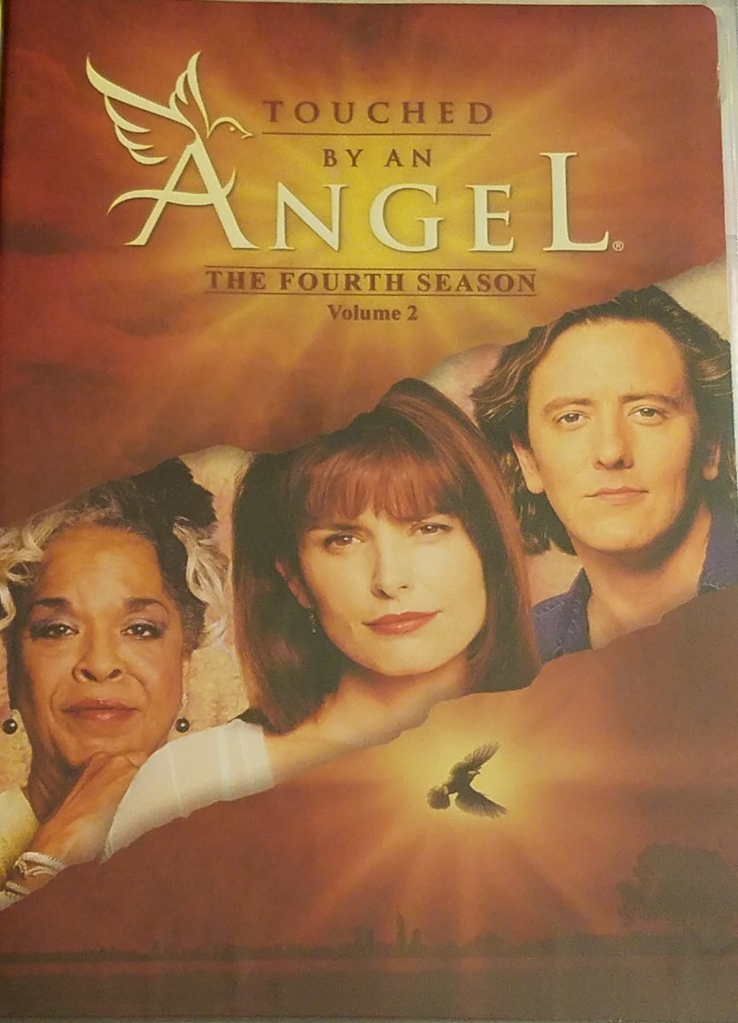
As I mentioned in my recent Word On The Street story, the newest Signed, Sealed, Delivered movie is on itsway. Premiering on October 17th, this movie will bring their audience a new chapter to a story that startedall the way back in 2013. The series is executive produced byMartha Williamson, who also executiveproduced Touched by an Angel. Similar to Signed, Sealed, Delivered, Touched by an Angel has seen manyguest stars appear over the course of the show’s nine season life-span. One of them was Bai Ling, who gueststarred on Touched by an Angel in 1998.
Even though I have seen many episodes of Touched by an Angel before, I don’t recall ever seeing the two-part episode, “The Spirit of Liberty Moon”, the episode I’ll be reviewing for this post. Prior to writing this article, I had heard it was “one of the most moving episodes from the television drama”. With curiosity getting the better of me and because Bai’s birthday is on October 10th, I decided to revisit this show and review this particular episode. Two years ago, I wrote about another Touched by an Angel episode, “The Sky Is Falling”. Like that post, what will be discussed is what I liked about this episode, what I didn’t like about this episode, the story itself, the other factors from this episode, and my overall thoughts.
This is a screenshot of one of the Touched by an Angel DVDs I own. Screenshot taken by me, Sally Silverscreen.
What I liked about this episode:
Last November, I reviewed an episode of Homicide: Life on the Street titled “And The Rockets Dead Glare”. In that post, I talked about how, while portraying Teri Chow, Bai was forced to rely on emotion instead of actions. This was compared to her characters in The Crow and Lost; Myca and Achara. Because of how effectively she used emotion, Bai was the stand-out actor in “And The Rockets Dead Glare”! I’ve seen only a handful of projects from Bai’s filmography. Despite this, I have noticed that she has a strong sense of emotionality. She not only knows how to control that emotionality, but also how to use that control to her advantage. Portraying a character named Jean Chang, the emotions Bai brought to her role in “The Spirit of Liberty Moon” felt realistic and genuine. Earlier in the episode, Jean crosses paths with Monica and Edward, a toy company CEO, at a local Chinese restaurant. In an attempt to recruit her for an upcoming business trip, they ask Jean why she doesn’t want to go to China. This is where Jean explains her very heart-breaking life story. Throughout this explanation, Bai’s emotions flawlessly adapted with each part of Jean’s story, ranging from blissful reminiscing to tear-inducing sadness. This strength in Bai’s acting abilities allows her performance to contain depth. It also gave the audience a reason to feel empathy/sympathy for Jean.
What I didn’t like about this episode:
One of Edward’s co-workers is his friend, Alex Stella. Throughout “The Spirit of Liberty Moon”, Alex wasrude and self-centered, especially toward Jean. It got to the point where his attitude became so annoying, it was tiresome to watch him in a static state. I understand Alex was meant to show the viewer that, sometimes, people won’t change, no matter how hard you try. I’ll also admit this is not a bad lesson to teach. But because of this episode’s story and because of the nature of Touched by an Angel, I wish the angels had paid Alex a visit and opened his eyes to selflessness.
The story itself:
Touched by an Angel is a show that was not afraid to take creative risks. “The Spirit of Liberty Moon” is aperfect example of that statement. I haven’t seen the movie, Red Corner, but I am familiar with its basicpremise. The story of “The Spirit of Liberty Moon” is very reminiscent of the film due to topics discussed within the script. Criticism of China’s government and the 1989Tiananmen Square protests are the two major subjects revolving around this episode. Because of the serious nature of these subjects, “The Spirit of Liberty Moon” was heart-breaking and gut-wrenching. Similar to the Touched by an Angel episode, “TheSky Is Falling”, the story of “The Spirit of Liberty Moon” is a fictional narrative wrapped up in a real-life historical event. During Jean’s recollection of her past, black-and-white flashbacks and video footage of the1989 Tiananmen Square protests were shown on screen. The use of these visual techniques presented an interesting and creative way to discuss a piece of world history.
The other factors from this episode:
As I mentioned earlier, Alex is rude and self-centered, especially toward Jean. To further explain my point, I will bring up two examples from this episode. When Monica suggests a translator should join their business trip to China, Alex suggests speaking to Jean about the idea. While Edward assumes Jean’s ethnicity based on her appearance, Alex carries that assumption into his and Monica’s meeting with Jean. Even though Jean calls Alex out on his assumptions during this meeting about the aforementioned idea, Alex’s promotion of the idea itself should have been more professional. When Alex, Edward, and Monica have lunch at a local Chinese restaurant, Jean soon arrives. The three then discover Jean had lied about her ethnicity. Upset by this discovery, Alex approaches Jean and yells at her in public, accusing her of lying about other things. I understand Alex was disappointed by Jean’s decision. Even Jean admitted that her decision was wrong. But, like I said about the previous example, Alex could have handled this situation more professionally and in private.
Throughout the episode, Edward and Jean develop “romantic” feelings for one another. I’m using the word “romantic” loosely, as the only romantic gestures they perform are holding hands and Edward kissing Jean’s head. When a romantic relationship is introduced in a movie or television show, it is usually done with an endgame in mind. Without giving anything away, there wasn’t an endgame for Jean and Edward’s relationship. Their relationship also felt “insta-love”, as it progressed at a quick pace. With all that said, I don’t think a romantic relationship was necessary for this particular story.
Touched by an Angel shows the angels going undercover in different professions based on an episode’s mission. In “The Spirit of Liberty Moon”, Monica goes undercover as the Chinese consultant of Edward’s toy company. As Monica interacts with Edward and Alex, I was confused why Monica was the Chinese consultant instead of Jean. When Alex was explaining what Monica would do on their businesstrip, it made me wonder why Jean wasn’t originally recruited for the consultant position, especially since she knows more about China than Monica. But, without giving anything away, it makes sensewhy this choice was not made.
My overall thoughts:
“The Spirit of Liberty Moon” is a tough episode to write about. On the one hand, I wouldn’t dissuade anyone from watching it. It contains one of the strongest stories in the show’s history and features strong acting performances, especially from Bai Ling. On the other hand, “The Spirit of Liberty Moon” is not for the faint ofheart. This episode is so emotionally intense, I was left mentally drained after watching it. Because of that,the episode doesn’t have a high re-watchability rate. What I will say is this story is an important one. In fact,I would say this episode’s story is one of the most important Touched by an Angel has ever told. So, if you’re interested in watching “The Spirit of Liberty Moon”, my advice would be to watch it in the right headspace.Speaking of Bai Ling, I realized something while watching this episode. As I said earlier,I’ve seen only a handful of projects from Bai’s filmography. Based on her roles I have seen, I noticed how her characters are, more often than not, surrounded by unfortunate circumstances. Myca is one of the villains of The Crow, so her unfortunate circumstances don’t cause the audience to feel any empathy/sympathy for her. But for Teri, Achara, and now Jean, their unfortunate circumstances can, to varying degrees, cause feelings of empathy/sympathy from the audience. During my movie blogging journey, I hope to see Bai portraying a character whose circumstances are more fortunate and happier.
Earlier this week, it was announced that Daniel Lissing, When Calls the Heart alumni, will appear in the GAC Family Christmas special, When Hope Calls: A Country Christmas. The Christmas special will mark the start of a second season for When Calls the Heart’s spin-off, When Hope Calls. At the time of the initial announcement, Daniel’s role wasn’t revealed. But according on an article from CinemaBlend, it looks like the beans may have been spilled. CinemaBlend’s Jessica Rawden recently wrote about Daniel’s return to the When Calls the Heart universe. In the article, Jessica wrote how “his character Jack will be appearing along with Abigail on the small screen”. As of October 2021, we don’t know how accurate this statement is. Even if Daniel is portraying Jack again, we don’t know what the character’s significance will be in the story. Jessica also writes how “fans of the two Hallmark shows will learn more about Daniel Lissing’s When Hope Calls gig sometime on October 11”. If there is any truth to this statement, we could be hearing news about this particular development very soon.
A trailer for the new Signed, Sealed, Delivered film, Signed, Sealed, Delivered: The Vows We Have, has been posted on Hallmark Movies & Mysteries’ home page. The trailer emphasized Shane and Oliver’s wedding, with the second half of the trailer briefly explaining the mystery surrounding a missing letter. This piece of marketing highlights an issue I’ve had with this particular series. In my review of the previous entry, Signed, Sealed, Delivered: To the Altar, I said there was an imbalance between the story of the POstables and the film’s main mystery. Based on this trailer, it looks like the Signed, Sealed, Delivered series is approachingthe new story in the same way as before. I hope this new movie is better than Signed, Sealed, Delivered: To the Altar. For now, I’m going to keep my expectations low.
In an article from Heavy, Stephanie Dube Dwilson wrote about the possibility of a Chesapeake Shores movie. The Executive Producer of the show, Daniel Paulson, expressed interest in creating a movie surroundingthe series. Daniel said, “I’d be happy to do holiday or specials for them” and “maybe if the fans speak up and let that be known, we could do one”. According to the article, the show’s Facebookpage stated back in August “as soon as we have more information, we will be sure to share it”, referring tothe fruition of a movie. Personally, I think the show’s creative team is waiting until news of a sixth season isannounced. As of October 2021, a sixth season for Chesapeake Shores has not been greenlit or denied. Wealso don’t know how the eighth season will end.




























 18 Cinema Lane