Take 3: The King and I (1956) Review

For the Fourth Broadway Bound Blogathon, I chose to review the 1956 version of The King and I! Years ago, I had seen the 1999 animated adaptation of the musical. Since I vaguely remember it, I can’t provide an honest opinion of that movie. Because I had only seen pieces of the 1956 film and because it was recommended to me by Maddy from Maddy Loves Her Classic Films, I now found a good excuse to finally check the film out! While I knew the play itself was successful, I was surprised to discover it had won a Tony award. As this year’s blogathon focuses on Tony winners, it gave me an opportunity to learn something new. This is one of the reasons why I love participating in blogathons! Now, let’s start this review of 1956’s The King and I!
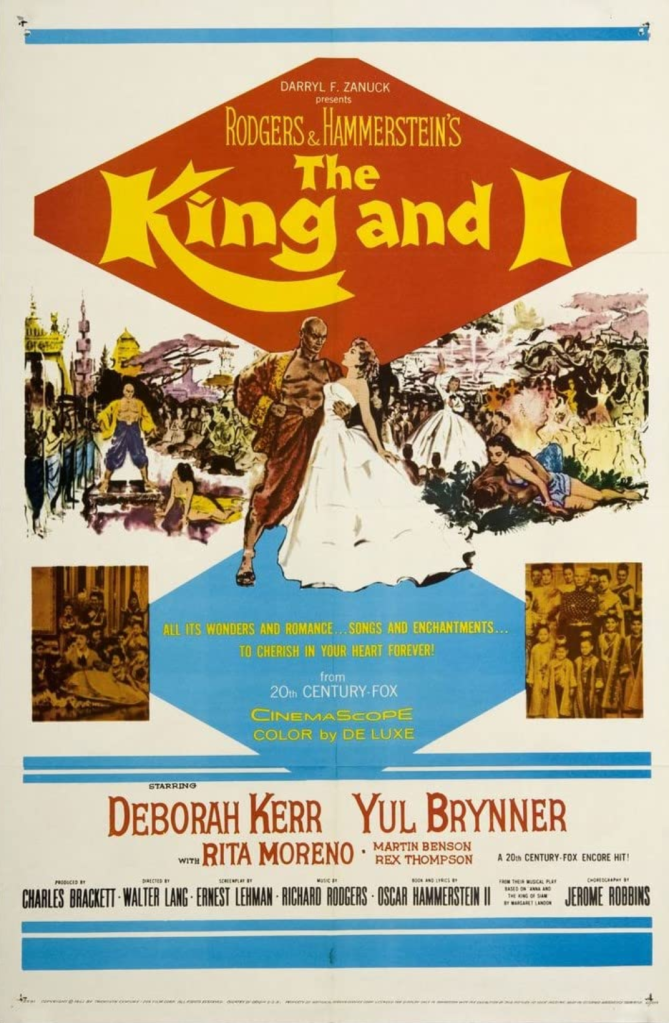
The King and I (1956) poster created by 20th Century-Fox.

Things I liked about the film:

The acting: Deborah Kerr is a dramatic actress, as her strengths can be seen in drama films. Because there were plenty of dramatic moments in The King and I, this allowed the best of Deborah’s acting abilities to be placed on display! In scenes that allowed Anna to stand up to King Mongkut, Deborah adopts a serious persona without any sarcasm. Her tone of voice is stern, while also standing up straight and looking directly at King Mongkut. Because there were light-hearted moments as well, it gave Deborah an opportunity to incorporate humor into her performance. This balance made the role suit Deborah well! This is the first time I had ever seen any of Yul Brynner’s performances. However, I was quite impressed by his portrayal of King Mongkut of Siam! Similar to Deborah Kerr’s role, there was a good balance of drama and comedy. In a scene where King Mongkut is talking to his son about what he learned in school, Yul speaks with a serious tone of voice. He also moved around the set with a posture that reflects his character’s royal power. However, when he introduced Anna to his children, King Mongkut would make silly faces in order to get them to smile. Before watching The King and I, the only film of Rita Moreno’s I had seen is West Side Story. Because of this, it was interesting to see Rita work with different material. While Anita, Rita’s character in West Side Story, is sassy and confident, Tuptim is more reserved and sensitive. When Rita didn’t have speaking lines, facial expressions and body language helped convey what Tuptim was thinking. As I liked her portrayal of Tuptim, it makes me wish Rita had appeared in more scenes.

The musical numbers: A musical is only as good as its musical numbers. With The King and I, I found the musical numbers to be entertaining! The most interesting one is the Siamese interpretation of Uncle Tom’s Cabin. Because Tuptim is reading a copy Anna gave her, she decides to write a play based on her own version of the novel. This particular number features traditional dancing, stylized face masks, and practical effects, such as a white sheet representing ice. It served as a good example of how everyone can view a text differently. The rest of the musical numbers in The King and I ranged from dramatic to comedic. One of them is ‘Getting to Know You’. In this scene, Anna dances with one of King Mongkut’s wives. Some of the children circled around their mother in order to mimic Anna’s skirt. This was a simple way humor was incorporated into some of the musical numbers.

The costume design: The King and I is known for being an elaborate musical, with elegance being found within the costume design. Bright colors were worn by almost all the characters. In a scene where Anna is introduced to King Mongkut’s children, the children’s outfits featured hues of pink, red, and green. The members of the royal family sometimes wore plaid, which complimented the rich color palette of the movie. Metals like gold could also be seen in the royal family’s attire. Some of King Mongkut’s jackets featured gold embroidery, a reminder of his wealth and affluence. Bronze coated the children’s headpieces as well. With the costume design being so exquisite, I wonder how much of this movie’s budget was devoted to it?

The Fourth Broadway Bound Blogathon banner created by Rebecca from Taking Up Room.

What I didn’t like about the film:

The under-utilization of Rita Moreno: As I mentioned earlier, the only film of Rita’s I had seen is West Side Story. Therefore, I was looking forward to seeing her performance in The King and I. I was disappointed to see Rita’s talents under-utilized. In this two hour and thirteen-minute movie, Rita appeared in a handful of scenes. While she did participate in the story’s musical components, she was only given one duet and the narration during the Uncle Tom’s Cabin play. I understand The King and I was released five years before West Side Story. But if the 1961 film has taught me anything, it’s how Rita is, talent wise, capable of so much more.

Drawn out storylines: The storylines in The King and I were drawn out because of the film’s two hour and thirteen-minute run-time. King Mongkut’s story, where he attempts to save his reputation, is one example. For about half the movie, King Mongkut wants to prevent other world leaders from thinking he is “barbaric”. Since this particular storyline lasted for so long, the resolution/payoff was fine, but somewhat anti-climactic. Lun Tha and Tuptim’s storyline took place throughout the whole movie. However, by the end of the film, it was left unresolved. It makes me wonder if it would have been resolved if The King and I’s run-time had been shorter?

Songs interrupting the story: In a typical musical, the musical numbers help progress the story forward. But in The King and I, the musical numbers interrupt the over-arching story, causing the transition between story and song to feel less seamless. After an elegant party at the palace, King Mongkut discovers Tuptim is missing. King Mongkut’s search is disrupted by Anna singing ‘Shall We Dance?’. This then turns into a private dance between Anna and King Mongkut, which is interrupted by a guard. The guard informs King Mongkut that Tuptim has been found. Moments like this one cause the story to pause for the sake of a musical number.

String of musical notes image created by Freepik at freepik.com. <a href=’https://www.freepik.com/free-vector/pentagram-vector_710290.htm’>Designed by Freepik</a> <a href=”https://www.freepik.com/free-photos-vectors/background”>Backgroundvector created by Freepik</a>. Image found at freepik.com.

My overall impression:

So far, I have seen four of Deborah Kerr’s movies. Out of those titles, I’d say The King and I is her best one! As I said in my review, the material complimented her acting abilities. There was enough drama to show off her strengths, while also having enough comedy to let Deborah have fun with the role. The film gave me a chance to see interesting performances and musical numbers, from Rita’s portrayal of Tuptim to a Siamese interpretation of Uncle Tom’s Cabin. The exquisite costume design and sets are definitely photogenic, highlighting the wealth and power within the royal family. Even though the movie as a whole is good, there are musicals I would choose over it. The songs interrupting the story instead of progressing it forward is one reason why I feel this way. I’ve heard Anna and the King is a non-musical version of this particular story, so I’d be interested in seeing how lack of musical numbers affects the overall story-telling. I’d also be interested in watching Deborah Kerr and Yul Brynner’s other film, The Journey.

Overall score: 7.7 out of 10

What are your thoughts on The King and I? Which version is your favorite? Let me know in the comment section!

Have fun on Broadway!

Sally Silverscreen

Take 3: Born Free Review + 340 and 345 Follower Thank You

Earlier this month, 18 Cinema Lane received 340 and 345 followers! Before I continue, I’d just like to say thank you to each and every person who has chosen to follow my blog. I appreciate you taking the time to read my articles and listen to what I have to say. Speaking of articles, let’s back to the review! For April’s Genre Grandeur, the theme is “travel films”. Because this topic is so broad, it took me a while to figure out which film I would write about. Then I remembered I had the 1966 movie, Born Free, on my DVR. While Joy and George Adamson, the story’s protagonists, do travel within the movie, it is not the central component of the story. I also have participated in Thoughts From The Music(al) Man’s Star/Genre Of The Month Blogathon, with my review of China Seas being my first contribution. April doesn’t have a theme, so I thought Born Free would be the perfect choice for the blogathon! Prior to writing this review, I had heard of, but not seen, the 1966 picture. This is because I was familiar with the movie’s theme when it was featured on the soundtrack for the film, Madagascar. Now, the moment you’ve been waiting for; the start of this review!

Because I recorded this movie on my DVR, I took a screenshot of the movie’s poster from my phone. Screenshot taken by me, Sally Silverscreen.

Things I liked about the film:

How the animals were showcased: While I liked the acting in Born Free, it’s the animals that steal the show! Animals were showcased in a natural way, allowing them to be shown in situations that are more realistic. None of the animals were given voice-overs, giving the audience a chance to witness their authentic expressions. A great example is when Elsa, the lion Joy and George take care of, interacts with a male lion. Throughout the scene, Elsa and the male lion take turns roaring. They also can be seen fighting over food. The way these lions were presented made it look like they were having a conversation. The human characters’ conversations about these animals also gave them a humanistic quality. After Joy and George leave Elsa alone with the aforementioned lion, Joy compares the experience to waiting for a daughter to come home from a date. The cinematography and script gave the animals just as much importance as the human characters!

The scenery: The majority of Born Free takes place outdoors, as the African landscapes serve as the principal scenery for the story. Toward the beginning of the movie, Joy is painting in her front yard. A clear blue sky enveloped a large space of plains. This specific location appeared peaceful as long shots were used to capture it on film. Another impressive location was the beach that Elsa, Joy, and George visit. Once again, a blue sky is visible, soaring over the blue of the ocean and bright beige of the sand. The beach was very photogenic, with long and medium shots helping to showcase that location!

The music: I liked the use of music in Born Free! The pieces of instrumental tunes provided the tone for each scene it was included in. When a suspenseful and tense moment took place, the sound of beating drums could be heard. This sound elaborated on the seriousness of what was happening in that particular scene. One example is when, toward the end of the film, Elsa is fighting with another female lion. For more light-hearted, joyful moments, the movie’s theme played in the background. Some scenes that featured this piece of music revolved around Elsa and her sisters as lion cubs.

Mother lion and her baby cubs image created by wirestock at freepik.com. Animals photo created by wirestock – www.freepik.com

What I didn’t like about the film:

An inconsistent narrative: When a close friend named John suggests Elsa should be placed in a zoo, Joy is completely against the idea. This decision has even resulted in a heated argument between Joy and George. Joy’s decision for wanting Elsa to remain wild is understandable. However, earlier in the film, she doesn’t object to sending Elsa’s two sisters to a zoo. Joy also takes in a baby elephant that Elsa happened to be chasing one day. This specific narrative was inconsistent, which prevented me from getting fully invested in Joy’s side of the story.

The run-time: According to IMDB, Born Free is an hour and thirty-five minutes. But because the story is a simpler one, I don’t think this movie needed that run-time. While watching the film, I noticed how some scenes contained montages. For example, when Joy, George, and Elsa go to the beach, a montage lasting several minutes featured these characters playing on the beach and in the ocean. I feel these montages were placed in the film to satisfy its run-time. Had these montages been shortened, the movie could have had a run-time of an hour or less.

Unnecessary voice-overs: Throughout the film, Joy provides voice-overs to explain what is happening in the story. These voice-overs were beneficial in understanding Elsa’s journey. But there were some scenes where Joy’s voice-overs were not necessary. At the beginning of a scene where Joy, George, and Elsa are at a camp, Joy explains how, one night, she heard the roar of a lion who was eating the livestock of a nearby African village. If the voice-over had not been included in this scene, the on-screen event could have spoken for itself. Having the voice-over only reminded the audience of what they already knew.

Colorful travel suitcase image created by Pikisuperstar at freepik.com. <a href=’https://www.freepik.com/free-vector/beautiful-illustration-of-travel_2686674.htm’>Designed by Freepik</a>. <a href=”https://www.freepik.com/free-photos-vectors/watercolor”>Watercolor vector created by Pikisuperstar – Freepik.com</a>. Image found at freepik.com.

My overall impression:

When you think of “travel films”, a movie where the protagonist takes an extravagant and adventurous trip will likely come to mind. However, traveling can mean different things for various people. In the case of Born Free, Joy and George Adamson travel from England to Africa. Throughout the film, they also travel to town and several African villages. As I mentioned in the introduction, Born Free does not focus on the travels of Joy and George. Instead, it prioritizes the relationship these characters share with Elsa. While I liked the natural portrayals of the animals, these depictions are more suited for an older audience. This is also a simpler story, calling for a shorter run-time than the one it received. Not only were some of Joy’s voice-overs unnecessary, but her stance on keeping Elsa out of a zoo was inconsistent. Despite these flaws, I thought Born Free was a fine film! If you are interested in the subject of animals, I feel this is the movie for you!

Overall score: 7.1-7.2 out of 10

Have you seen any “travel films” lately? Do you have any films to recommend for the next blog follower dedication review? Let me know in the comment section!

Have fun at the movies!

Sally Silverscreen

Take 3: Chasing Leprechauns Review

Happy Patrick’s Day to all my readers and followers! For Pure Entertainment Preservation Society’s Luck O the Irish Blogathon, I wanted to choose a Hallmark movie that was either filmed in Ireland or that takes place in Ireland. Since I have seen most of the network’s films that fit this criteria, I selected the 2012 presentation, Chasing Leprechauns. Despite this being my first time seeing the movie, I am familiar with its basic premise. The inclusion of leprechauns helps the film stand out from the tried-and-true rom-coms that frequent Hallmark Channel. I also liked how a relationship wasn’t the central focus of the story. Instead, Chasing Leprechauns revolves around finding a resolution to a conflict. But will these factors equal an enjoyable movie viewing experience? Keep reading to find out if a pot of gold is waiting at the end of this review!

Chasing Leprechauns poster created by Crown Media Family Networks.

Things I liked the film:

The forestry: There are two scenes in Chasing Leprechauns where Ireland’s forestry was beautifully filmed! When Michael and Sarah, two of the story’s lead characters, go to the leprechaun’s forest for the first time, the grass and moss poke out through the snow. It presents an image of spring forcing itself past the wintery barrier. On the beaten path, green trees can be seen in the background, with an afternoon sunlight being cast over the forest. This particular location appears peaceful and serene. Several scenes later, Sarah and Michael spend some time at an abandoned building. While sitting around a fire, the taupe structure of the building is behind them. Green from a nearby tree peeks out of a window, with a foggy view of a field visible from these windows. The space looks haunting and secluded, which is a pleasant change in scenery for a Hallmark project!

The characters of Evelyn and Sheamus: When Michael goes to Ireland, he stays at a Bed and Breakfast run by a woman named Evelyn. Throughout the film, Evelyn has a cheerful personality. She also dreams of traveling to New York City. Hearing Evelyn share which places she’d like to visit was such a joy. I also liked seeing her positive persona! Sheamus is a frequent patron of the local pub. At first, it can be easy to write him off as a man who just likes his glass of alcohol. But when the audience learns more about him, they see Sheamus carries a lot of wisdom and helpful advice. Evelyn and Sheamus were my favorite characters in Chasing Leprechauns! Not only were they well written, but they were also well acted by their respective actor and actress, Marion O’Dwyer and Terry Byrne. I honestly wish this story had focused more on them!

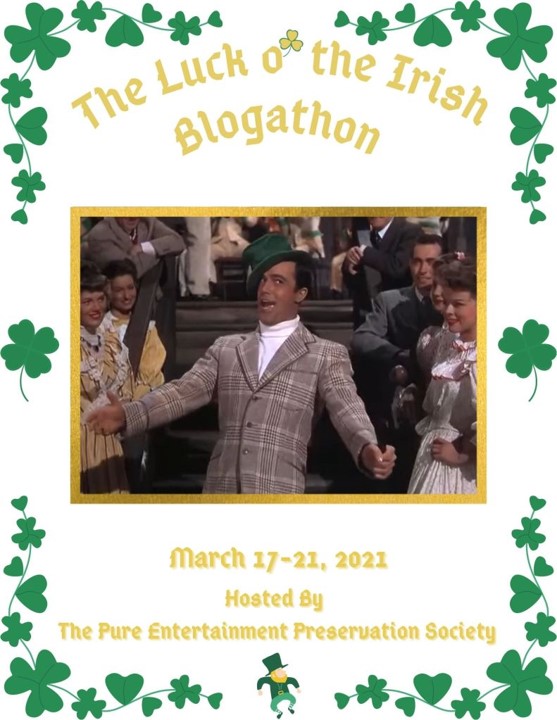
The Luck O The Irish Blogathon banner created by the Brannan sisters from Pure Entertainment Preservation Society.

What I didn’t like about the film:

No leprechauns: As I’ve said before on 18 Cinema Lane, a movie’s title partially serves as a promise to the audience. In the case of Chasing Leprechauns, that promise is featuring at least one leprechaun on screen. Despite what the title claims, there are no leprechauns in this film. Everyone in the small Irish town says there are leprechauns, even dedicating a museum to them. At various moments in the movie, squeaking noises can be heard, implying leprechauns are nearby. But never does a leprechaun show themselves to any of the characters in the story. How am I expected to care about the town’s “leprechaun problem” if the script doesn’t give me a reason to care? How am I to believe the town contains leprechauns when no evidence is provided? Chasing Leprechauns is a textbook example of why you shouldn’t just tell and not show when creating a story.

A drab looking film: Ireland is known for having beautiful landscapes that contain lush greenery and picturesque forestry. Too bad the creative team behind Chasing Leprechauns chose to film their movie in the middle of winter, when all that greenery is buried in snow. I know that snowy landscapes can be beautifully captured on film. However, the movie’s creative team appeared to not take any initiative to do so. This presents one reason why Chasing Leprechauns is such a drab looking film. The movie consistently carried dull shades of black, white, brown, and beige. Even when pops of colors did appear, such as on a scarf, those colors appeared muted. Even though I’ve never been to Ireland, I can honestly say this movie did not make the country look visually appealing.

No sense of urgency: Chasing Leprechauns is a movie where the protagonist says they are going to do something, but spends the majority of the film not doing what they said they were going to do. Though Hallmark doesn’t tell stories like this often, it is one I have grown to dislike. In this movie, Michael, our protagonist, is sent to Ireland in order to get approval for a future building project. Due to the town’s “leprechaun problem”, Michael faces an unexpected dilemma. Throughout the story, Michael spends more time experiencing Ireland than actually doing his job. It gets so bad that Michael’s boss shows up in Ireland to remind him how the trip was supposed to last two days, not two weeks.

A not so bright protagonist: Like I just mentioned, Michael spends two weeks in Ireland instead of the required two days. What is even worse is how it took Michael two weeks to solve his problems. I am aware of how some problems take longer to solve than others. But when Michael has a reputation of being his company’s “fixer”, then that should be embarrassing for him. Even though his job requires him to travel all over the world, he doesn’t take the time to learn about the countries he is visiting. As Michael and Sarah, the inspector, go to the forest where the leprechauns supposedly live, Michael suggests to call a priest and have him perform an exorcism. While Sarah calls him out for his lack of education, Michael reveals how foolish of a protagonist he is.

St. Patrick’s Day image created by Freepik at freepik.com. <a href=’https://www.freepik.com/free-vector/st-patrick-s-day-background_1640464.htm’>Designed by Freepik</a>. <a href=”https://www.freepik.com/free-photos-vectors/background”>Background vector created by Freepik</a>. Image found at freepik.com. 

My overall impression:

Chasing Leprechauns wants to have its cake and eat it too. What I mean by this is the film takes itself so seriously, yet they expect their audience to suspend almost all their disbelief. When you have a story where leprechauns are involved, a sense of magic or whimsy is usually found. But Chasing Leprechauns is devoid of those things. One of the film’s biggest mistakes was not showing at least one leprechaun on screen. I haven’t seen Fairy Tale: A True Story in years. But from what I remember, there was enough whimsy and charm to make up for the lack of fairies. If the creative team behind Chasing Leprechauns knew they weren’t going to put any leprechauns in their project, this is the direction they should have chosen. The magic within that world should feel believable, helping to create a whimsical and delightful place. It could be similar to the Good Witch series, where the magic is more figurative than literal. If you’re looking for a Hallmark film set in Ireland, I’d recommend Forever in My Heart from 2019. The story is much stronger than Chasing Leprechauns’ and the film is more grounded in reality, which gives the audience a reason to take it seriously.

Overall score: 4.7 out of 10

Have you seen any Hallmark movies set in or filmed in Ireland? If so, which one did you like? Please tell me in the comment section!

Have fun on St. Patrick’s Day!

Sally Silverscreen

Take 3: China Seas Review

Last month, I had planned on participating in the Star/Genre Of The Month Blogathon, with January’s star being Doris Day. However, multiple projects throughout the month had filled up my schedule, preventing me from joining the event. To make up for it, I decided to participate in the blogathon this month, where the featured star is Clark Gable! As the only film of Clark’s I’ve seen up until this point has been Gone with the Wind, I was excited to explore his filmography! When I was choosing which film to write about, I also signed up for the We Heart Pirates Week Blogathon. To meet the requirements for both events, I have selected the 1935 film China Seas! Since Gone with the Wind is considered a romantic drama, it will be interesting to see Clark in a movie from a different genre!

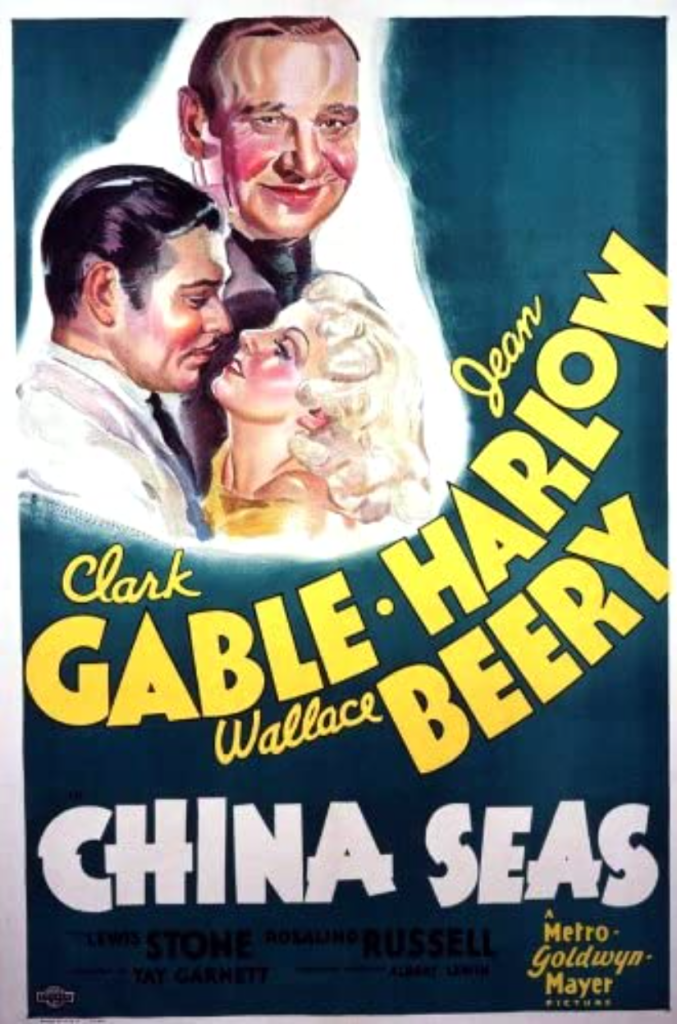
China Seas poster created by Metro-Goldwyn-Mayer.

Things I liked about the film:

The acting: Like I said in the introduction, the only film of Clark Gable’s I’ve seen is Gone with the Wind. Therefore, I didn’t know what to expect from his performance in China Seas. Even though this film was released four years before Gone with the Wind, Clark’s portrayal of Captain Alan Gaskell didn’t feel like a copy of Rhett Butler. For this particular role, Clark adopted the qualities of a natural born leader. Two of them were the strength and perseverance during times of conflict. When Alan is being tortured by the pirates, he never succumbed to the pain or surrendered to the enemy. He stood his ground instead, protecting his ship, as well as the guests and crew aboard it. I was pleasantly surprised to see Jean Harlow and Rosalind Russell in this film! Since I’ve seen very few projects from both of their filmographies, I was excited to see what they had to offer, talent-wise, in China Seas. What I liked about Jean’s performance was how versatile it was. Throughout the film, she used many different expressions as her character, Dolly, is boarding Alan’s ship. A fancy dinner in the ship’s dining room is a good example. At the beginning of that dinner, Dolly is in a pleasant mood, smiling and laughing at a friend’s joke. As the event goes on, she becomes bitter by Sybil’s presence. Speaking of Sybil, Rosalind’s performance was much different from her portrayal of Mother Superior from The Trouble with Angels and Where Angels Go, Trouble Follows. In China Seas, Sybil was more reserved than the other female characters. However, she had a gentler persona, which also helped her stand out. It was nice to see one of Rosalind’s earlier films, as this movie was released three decades before The Trouble with Angels.

The costume design: Some of the costumes in this movie were simply gorgeous! The dresses from the female characters definitely stole the show! At the dinner I mentioned earlier in my review, Jean wore a simple white dress that was slightly off the shoulder. The only applique was a metal paisley brooch, which added an element of pop to the dress. Later in the movie, Jean wears a satin gown. Similar to the aforementioned white dress, the satin gown was also given an element of pop. This time, the straps on the dress were covered with jewels. My favorite costume in China Seas was the pirate captain’s, as his was one of the most beautiful costumes I’ve ever seen in a pirate film! While it is simple, like Jean’s fancy dresses, it is the fine details that help it stand out! Paired with a silk blouse, the jacket is coated with an intricate design. The sleeves and boarders of the jacket are covered in fancy ribbon.

The pirate subplot: When I found out there would be pirates in China Seas, I was excited to see Clark Gable fight against them. The subplot involving the pirates was the best part of the overall story! It contained a mystery that unfolded as the movie progressed, featuring surprises and twists I didn’t see coming. There was also exciting action, which keep me invested. I was actually surprised by the amount of violence in China Seas because it was released in the Breen Code Era, where violence in films were kept at a minimum. However, it wasn’t graphic and over the top. This particular subplot also brought out each character’s true colors. I won’t reveal the movie for anyone, but I will say it was an interesting approach to providing character development!

Star of the Month (Clark Gable) blogathon banner created by Neil from Thoughts From The Music(al) Man

What I didn’t like about the film:

A limited presence of the pirates: While I did like the conflict involving the pirates, they weren’t in the story for a long period of time. This part of the film was introduced fifty-eight minutes into this hour and twenty-seven-minute movie, with it lasting for about thirty minutes. I was honestly disappointed by this because I expected the pirates’ conflict to be the main story of China Seas. The captain of the pirate crew was one of the more interesting characters the movie had to offer, as he chose to become a pirate despite coming from a wealthy, noble family. However, the limited presence of the pirates prevented this character from receiving a lot of character development or screen time. Everything I said makes China Seas light on “action” and “adventure”.

A dull first half: As I just mentioned, China Seas is light on “action” and “adventure”. Even though those two things can be found in this movie, the story as a whole leans more into the drama genre. In the first half of the film, the script focuses on Dolly’s jealously toward Sybil. While this encouraged Jean to use a variety of emotions in her performance, I wasn’t interested in this part of the story. Other conflicts taking place in the movie’s first half includes whether Sybil’s pearls are real and Dolly trying to win back Alan’s love. These kinds of conflicts made China Seas feel like it was “Rich People Problems: The Movie”, revolving around problems that seemed stereotypical of wealthier individuals. Throughout the film’s first half, I kept asking myself, “When are the pirates going to get here”?

Confusing areas of the story: There were some areas of China Seas’ story that I found confusing. I’ll provide two examples for this part of the review. When Sybil is outside on the ship’s deck one evening, she is joined by one of Alan’s colleagues. Shortly after, the two can be seen kissing one another. Several scenes later, Sybil is spending time with Alan and expressing romantic interest in him. If she was romantically interested in Alan, why was she kissing another man? My second example is about the ending. While I won’t spoil it for any of my readers, I felt it didn’t fit within the overall story. The ending tried to wrap everything up in a nice little package. But with the events that led up to that ending, that part of the story became more confusing than it should have been. I know this film was released during the Breen Code Era, where happy endings were usually favored. However, the ending of China Seas was, in my opinion, not earned.

We Heart Pirates Week blogathon banner created by Hamlette from Hamlette’s Soliloquy

My overall impression:

While it was interesting to see Clark Gable in a different role and genre from what I’ve seen before, I found China Seas to be just ok. Were there aspects of the film I liked? Sure. The pirate captain’s costume was beautiful and I did like the acting performances. But I was disappointed by the limited amount of screen-time the pirates received. Before watching China Seas, I had expected the main plot to revolve around Clark Gable’s character dealing with the pirates. However, the most exciting parts of the story took place toward the end of the film, making the movie’s second half stronger than the first. Having a major part of the story focus on Dolly’s jealousy toward Sybil and obsession with Alan didn’t work for me. It came across as petty and immature. I do plan on seeing more of Rosalind’s, Clark’s, and Jean’s films in the future. But I hope the next movie is stronger than this one.

Overall score: 6 out of 10

Have you seen any of Clark Gable’s films? What is your favorite pirate movie? Please tell me in the comment section!

Have fun at the movies!

Sally Silverscreen

Take 3: The World of Suzie Wong Review

Sunset Blvd. is a “classic” that a majority of film fans have seen at least once in their lives. It is so iconic that the Brannan sisters, from Pure Entertainment Preservation Society, have decided to dedicate a blogathon to it! Because I’ve already seen Sunset Blvd., I choose a film that was new to me. As it is a brand-new year, I wanted the first movie of 2021 to be a fresh step forward. After looking through William Holden’s filmography, I selected the 1960 picture, The World of Suzie Wong! Whenever I think of William, I always think of Joe Gillis from Sunset Blvd. But, as a movie fan, I know that William, acting wise, is more than this iconic role. Therefore, I am grateful to be given this opportunity to explore more of his film work!

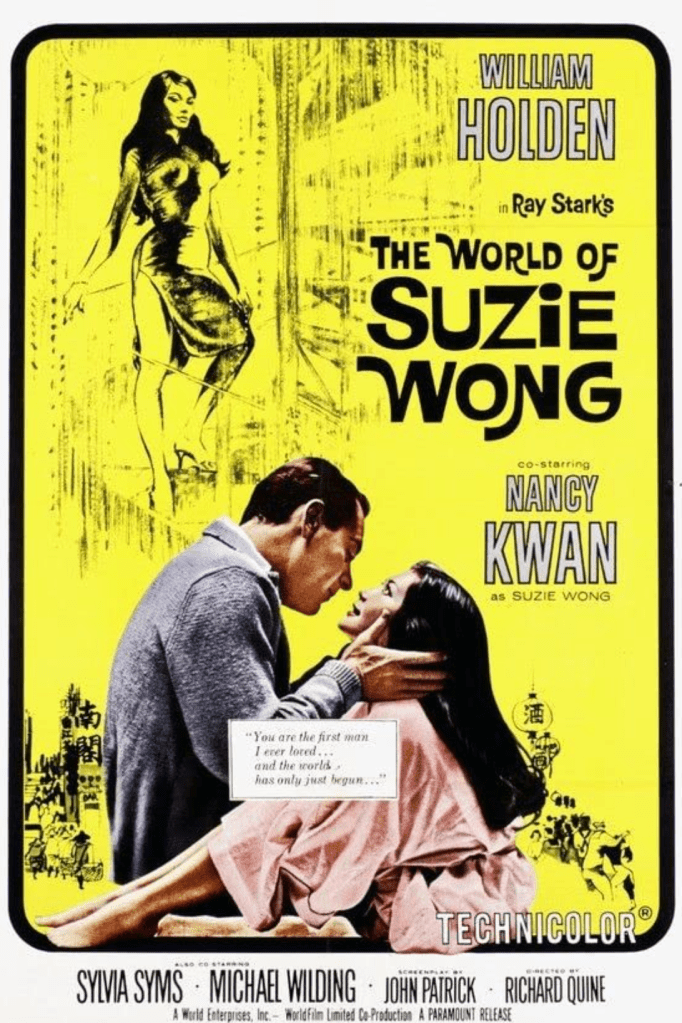
The World of Suzie Wong poster created by World Enterprises, Inc.
Worldfilm, Ltd, Paramount British Pictures, Ltd, and Paramount Pictures.

Things I liked about the film:

The acting: Since I’ve only seen Sunset Blvd. and Stalag 17, there’s only so much I can say about William Holden’s acting abilities. What I will say is how William’s performance in The World of Suzie Wong was consistent! From what I remember, William’s characters in Stalag 17 and Sunset Blvd. were serious and had their guard up due to being suspicious of those around them. In The World of Suzie Wong, his character was similar to those from the two previously mentioned movies. However, a major difference was how those characteristics were softened a bit. This was because William’s character, Robert, had a love interest, which is different from his characters in Stalag 17 and Sunset Blvd. I am not familiar with Nancy Kwan as an actress. Despite this, I really liked seeing her performance in this film! It reminded me of the portrayals from actresses in the “Golden Age” of film, where leading ladies not only worked well with other cast members, but were able to, talent wise, stand on their own. While starring as Suzie, Nancy was able to pull off a performance that was captivating, emotional, and memorable! Another performance I enjoyed seeing was Jacqueline Chan’s! As Gwennie Lee, she was able to use her on-screen personality to her advantage. The other female characters in The World of Suzie Wong carried themselves with a sense of sophistication, making themselves seem more mature than they really were. With Gwennie, her personality was joyful, carrying a youthful heart wherever she went. This creative decision helped Jacqueline stand out among the cast!

An educated and aware protagonist: In a story where a protagonist travels to a different country or new place, it can be easy for the screenwriter(s) to create a character that romanticizes a location to the point of being arrogant or clueless about that specific place. With Robert from The World of Suzie Wong, that was certainly not the case! While in Hong Kong, Robert tries to educate himself about his surroundings. When trying to find a hotel, he speaks Chinese to a police officer. Even though he didn’t memorize the question, it shows Robert was willing to go out of his way to learn the language of his temporary home. Robert also seems aware of the people and the customs of Hong Kong. When talking to a business associate, Ben, Robert senses that Ben is attempting to pursue a romantic relationship with Suzie for the wrong reasons. He stands up to Ben and reminds him how Suzie is a person with feelings. Everything I just mentioned effectively drives home a point Suzie made about “a boy cloud with a good heart”.

The use of color: A film’s color palette can help make a scene visually appealing as well as present creative ways to showcase various hues. With that said, I found the use of color in The World of Suzie Wong to be very interesting! At the bar next to Robert’s hotel, all of the female characters wore bright colors. This nicely contrasted the location of the bar itself, a place that didn’t feature a lot of color within the interior design. Color was also used in other ways throughout the movie. One example was the O’Neill family’s home, where a set of red seat cushions provide the only splash of color in their primarily white dining room. Another example is present when Robert tries to find Suzie in the city. Though this scene is brief, the colorful neon lights within this space nicely stand out against the city’s darkness.

Traditional Chinese dragon image created by Freepik at freepik.com. <a href=”https://www.freepik.com/free-photos-vectors/design”>Design vector created by freepik – http://www.freepik.com</a>. Image found at freepik.com.

What I didn’t like about the film:

The concept of “keeping face”: Throughout the film, Suzie and her friends talk about “keeping face”. One night, Gwennie asks Robert if he will enter the bar with her. She tells Robert that if she were to enter the bar by herself, she wouldn’t be able to “keep face”. Later in the film, after Suzie is physically injured by a drunken sailor, she tells Robert to say that he hurt her so she can “keep face”. Because there were no explanations for what “keeping face” was or why it was important, this concept ended up confusing me.

The run-time: The World of Suzie Wong is a little over two hours long. Personally, I don’t think this specific story needed its run-time. In fact, the film could have easily been set at an hour and thirty minutes. This might be achieved by shortening some of the movie’s longer scenes. One of them is when Suzie journeys to an undisclosed location for reasons unknown to Robert. In an attempt to find answers, Robert follows Suzie all the way to this undisclosed location in a scene that lasts about two minutes. When there are multiple scenes that are longer than necessary, they add up to a run-time that doesn’t feel justified.

An inconsistent relationship: While William Holden and Nancy Kwan had good on-screen chemistry, the on-screen relationship of their characters was inconsistent. Throughout the film, Robert and Suzie’s relationship was “on again/off again”. It also doesn’t help that Robert and Suzie don’t officially become a couple until about forty minutes into the movie. I understand that relationships take time to develop and that they contain good and bad moments. However, when a story includes a couple trying to pursue a romantic relationship, the relationship itself needs to be consistent enough for the audience to stay invested in.

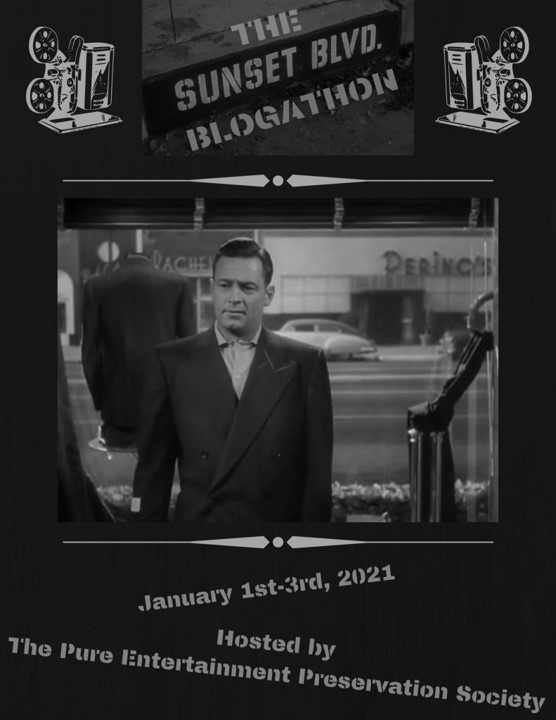
The Sunset Blvd. Blogathon banner created by the Brannan sisters from Pure Entertainment Preservation Society.

My overall impression:

The World of Suzie Wong is a film that gets hurt by its run-time. This two-hour story could have been an hour and thirty minutes, with longer scenes cut shorter to move the story along faster. This also would help Robert and Suzie’s relationship officially start a lot sooner. Without spoiling the movie for anyone who hasn’t seen it yet, I will say The World of Suzie Wong is much sadder than I expected. I am aware of everyone experiencing different situations in their lives. However, the sadness in this movie made the story feel like there was a gray cloud hanging over the characters’ heads. There are aspects of this film that I appreciate. One of them is the protagonists sharing an interracial relationship in a time when that idea wasn’t commonly shown in cinema. I also appreciate some of the film’s artistic merit, such as the acting performances and the use of color within various scenes. In the end, though, I found The World of Suzie Wong to be a just ok start to 2021.

Overall score: 6.4 out of 10

Have you seen The World of Suzie Wong? Has a movie ever enticed you to travel to its featured location? Tell me in the comment section!

Have fun at the movies!

Sally Silverscreen

Take 3: A Matter of Time Review (A Month Without the Code #4)

Because I’m participating in Pure Entertainment Preservation Society’s A Month Without the Code and the 5th Wonderful Ingrid Bergman Blogathon, I wanted to review one of Ingrid’s films from outside the Breen Code era. On her IMDB filmography, the 1976 movie, A Matter of Time caught my eye. After reading the synopsis, I chose this film as my submission for the blogathon! I was able to watch the movie through a series of videos from the Youtube channel, BroadwaytoRio. The film was broken down into ten parts, each video about ten minutes long. Prior to these blogathons, the only movies of Ingrid Bergman’s I have seen are Casablanca and Gaslight. Both of these films were not only released in the ‘40s, they were also released in the Breen Code era. As this is the first time I’m reviewing a post-1954 movie of Ingrid’s, it’ll be interesting to see how A Matter of Time differs from her two previously mentioned films!

A Mater of Time poster created by American International Pictures. Image found at https://www.imdb.com/title/tt0074878/mediaviewer/rm3625653248.

Things I liked about the film:

The acting: Since I chose to review this movie for the Ingrid Bergman Blogathon, I’m going to talk about her performance first. Ingrid’s role in A Matter of Time is different from her other roles I’ve seen so far. In this film, she carried herself with a sense of power and authority, demanding the audience to focus their attention on her. At the same time, she held mystery and sorrow close to her character’s heart. In the scene where Ingrid’s character, the Contessa, is talking to her ex-husband, she brings so much emotion during the conversation, that the scene itself feels earth-shaking. Even toward the end of her acting career, Ingrid still had what it took, acting wise, to carry a film! Last October, I reviewed the 1991 film, Stepping Out. While watching A Matter of Time, I immediately noticed how Liza’s character was different from the one she portrayed in the aforementioned ‘90s film. Nina, the protagonist of this story, grew as a person over time. She transformed from a timid young woman to someone who knew what she wanted in life. One scene shows Nina having a disagreement about the Contessa with a screenwriter. During this scene, she breaks out of her timid shell to defend her friend. It causes a fire to break forth from Nina, something the audience hadn’t seen up until that point. Similar to Ingrid’s performance, Liza’s portrayal of Nina in that scene was so powerful, it made this character a force to be reckoned with. The emotionality was very strong in Liza’s performance!

The scenery: Even though most of this movie takes place indoors, it did feature some nice scenery! A scene where Nina travels to the city showcases some of the sights of Rome and Venice, where A Matter of Time was filmed. Through her bus window, monuments and mammoth sized buildings are set against a clear, blue sky. Earth tone limestone covered some of the facilities, contrasting the black concrete roads leading to them. More sights from Rome and Venice could be seen in a montage where Nina goes sightseeing. Shots of the city’s landscape emphasis the large scope of this particular location. Statues served as everlasting art that patrons could enjoy in any season. Even some foliage was included in this montage, with red-ish trees located near a ledge and around a town center. These shots highlighted some of the most photogenic parts of these cities, potentially encouraging some viewers to plan their next vacation!

The messages and themes: While I wasn’t expecting A Matter of Time to contain relatable messages and themes, I appreciate their inclusion in this story. They were timeless and felt just as relevant now as they did in the mid to late ‘70s. One message revolved around being yourself. Even though this particular message has been shared on numerous occasions, it was nice to hear it coming from the Contessa. It was given as wisdom to Nina, in an effort to help her create her own path in life. An unexpected theme in A Matter of Time was mortality. Throughout the movie, the Contessa refuses to share her life story, saying, “My life belongs to me alone. I tell it only to myself”. She also says, “No one is dead. No one dies unless we wish them to”. These quotes speak volumes about the importance of a life story and the effort of keeping a person’s memory alive. It also reminds viewers how long life can feel, even when time seems so short.

The 5th Wonderful Ingrid Bergman Blogathon banner created by Virginie from The Wonderful World of Cinema. Image found at https://thewonderfulworldofcinema.wordpress.com/2020/06/12/announcing-the-5th-wonderful-ingrid-bergman-blogathon/.

What I didn’t like about the film:

Lack of magic: There was a crawling text at the beginning of the film. In this text, it says “What you are about to see may appear like a fairy tale…as we all know some fairy tales come true”. The text also says that Nina experienced a “magic moment”. This gave me the impression that A Matter of Time would be a modern fairy tale, similar to a film like the Hallmark production, Midnight Masquerade. If that was the creative team’s intention for the 1976 movie, they forgot one important ingredient: magic. In a modern fairy tale story, there needs to be a sense of whimsy or magic included in the narrative. The Halloween party in Midnight Masquerade showcases how a feeling of magic can be incorporated into a modern setting. A Matter of Time does not contain that feeling. If anything, it feels more like a drama than a fantasy. The movie makes it seem like Nina was conveniently at the right place and time instead of stumbling across a bit of magic.

The dream sequences:  Dream sequences appeared at certain points in the movie. These sequences were elaborate in nature, showing Nina living a life of glamour and luxury. While the dream sequences looked nice, I found them confusing. There was no distinction if they were dreams or future events from Nina’s life. Smooth transitions were not given to these scenes, making it feel like they were plunked into the story. I understand the dream sequences were meant to add some pizzazz to the overall picture. But their randomness prevented them from making a significant impression.

Grainy film quality: I know the quality of film from the 1970s is going to be different by today’s standards. Since that time period, technology and film-making have progressed tremendously. The presentation of A Matter of Time was grainy, making the production look like it hasn’t aged as well as other movies from the ‘70s. Because of the overall film quality, there were times when I had difficulty seeing characters’ facial expressions. I’m not sure if the videos I watched were recorded from a VHS tape or if that was the movie’s original presentation. But it’s not a good sign if I have trouble seeing what’s on screen.

A Month Without the Code Blogathon banner created by Tiffany and Rebekah Brannan from Pure Entertainment Preservation Society. Image found at https://pureentertainmentpreservationsociety.wordpress.com/2020/07/27/announcing-amonthwithoutthecode2020/.

My overall impression:

To me, A Matter of Time is an ok film. It has components of value; which are strong acting performances, nice scenery, and relatable messages and themes. However, the story is one that audiences have heard before and after the film’s 1976 release. Stories are inevitably going to get repeated over the course of time. When this happens, it’s important for a film’s creative team to find something that sets their project apart. With A Matter of Time, nothing new or unique is offered to the table. It feels like the overall production is ignoring their own message of being yourself. Even though this was a theatrically released project, it came across like a made-for-TV movie with a slightly higher budget. This statement is not made to disrespect television films, as there have been some good ones created over the years. What I mean is the presentation of this movie didn’t justify a theater release. Even though A Matter of Time has a PG rating, there are some pieces that would not appear in a Breen Code era film. These pieces are the following:

  • Some of the language in this script would be objectionable by Breen Code standards. There were times when the characters either swore or used God’s name in vain.
  • Some sexual references were made throughout the story, from Nina referring to a specific body part to a screenwriter wanting to create a violent scene for his upcoming movie.
  • A screenwriter named Mario attacks Nina while she is cleaning his room. Though he is acting out a scene from his script, the act itself would never appear in a Breen Code era movie.
  • Nina wears three dresses that have a low neckline. Even though one of these dresses is paired with a sweater, the sweater is never buttoned up.
  • There are two scenes where it is implied that Nina is not wearing any clothes. One of these scenes is briefly shown during a montage, showing a profile of Nina from her shoulders upward. The second scene shows Nina changing from one outfit to another. Only her back and her shoulders are visible.

Overall score: 6 out of 10

Have you seen any movie from Ingrid Bergman’s filmography? Which actress would you like to see receive their own blogathon? Feel free to share your thoughts in the comment section!

Have fun at the movies!

Sally Silverscreen

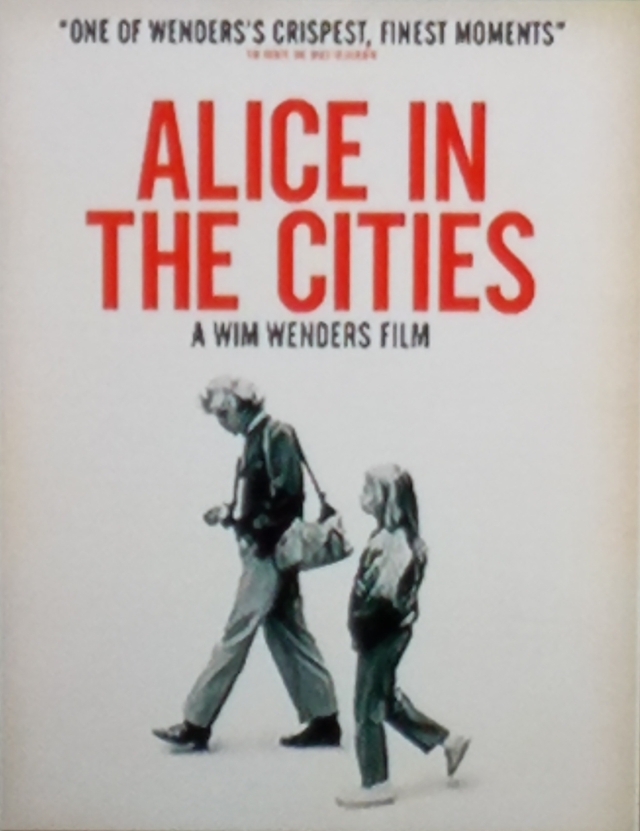
Take 3: Alice in the Cities Review + 210 & 215 Follower Thank You

Three weeks ago, 18 Cinema Lane received 210 followers! Because I was in the middle of coordinating my PB & J Double Feature and reviewing films for Pure Entertainment Preservation Society’s Clean Movie Month, I postponed my 210-follower dedication review. During that time, my blog also received 215 followers! This caused me to combine my 210 and 215 follower dedications into one review. Since last March, I’ve had a recording of Alice in the Cities on my DVR. As you can tell by the title of this post, this is the film I have chosen to write about. Every so often, I try to watch and/or review a movie that was created outside of North America. Most of these films have come from Europe. Prior to watching Alice in the Cities, the only German film I’ve written about on 18 Cinema Lane was Nosferatu. What’s interesting is how, like the 1922 movie, Alice in the Cities was restored as a result of two different versions of the project. According to a message at the beginning of the film, the movie was filmed in two separate millimeters.

This is a screenshot of the poster I took with my phone that happened to be featured on my television. Screenshot taken by me, Sally Silverscreen.

Things I liked about the film:

The acting: According to an article from Turner Classic Movies’ (TCM’s) website, Wim Wenders, the director of Alice in the Cities, was inspired to create this film after watching Rüdiger Vogler and Yella Rottländer perform together in a previous project. Having these two actors reunite for Alice in the Cities was a smart decision! I liked Rüdiger’s portrayal of Philip because it was consistent. Not only that, but he had a coolness about him as his character moved from one scene to the next. No matter what scenario was thrown in his path, Philip was calm and collected. This made Rüdiger’s performance appear effortless! Something that I noticed while watching Yella’s performance was how believable it was. Whether she was questioning Philip’s “scribbles” or asking for food, Yella’s body language, facial expressions, and overall demeanor appeared as one would expect from a child in Alice’s particular situation. It also helps that Yella worked with Wim and Rüdiger prior to this movie. Because of this, Yella appeared comfortable in the role she was given!

The cinematography: Alice in the Cities is filmed in black-and-white. This was done not only because of a personal decision by the director, but also to avoid having Alice in the Cities be compared to Paper Moon, a movie that was released a year before Wim’s project. When film fans think about black-and-white movies, productions that were released before 1965 will likely come to mind. However, it’s important to remember those titles were presented in black-and-white because filming in color was rarely an option. With Alice in the Cities, its presentation was purposefully chosen, which proved to be more interesting than I would have expected. It caused the story to be frozen in time, allowing the narrative to serve as a time-capsule. Having a few characters appear on screen at a given moment makes each interaction feel intimate, like the audience is directly a part of these verbal exchanges. I also liked how some scenes looked like the view came straight from Philip’s perspective. One great example is when Philip is boarding a train in Amsterdam.

Philip and Alice’s interactions: The majority of this story revolves around Philip’s search for Alice’s grandmother, which results in Philip and Alice spending a significant amount of time together. As I mentioned before, Rüdiger and Yella had worked together in a previous film. This helped their interactions come across as realistic. In the aforementioned TCM article, one of Wim’s inspirations for Alice in the Cities was his friend, who happened to be a single parent. This explains why Philip and Alice’s interactions feel like they are between father and daughter. Because of the quality of their acting abilities, Rüdiger and Yella were able to bring this idea to life in their performance! They were also able to equally carry the film.

Map of Germany image created by Macrovector at freepik.com. Background vector created by macrovector – www.freepik.com. Image found at freepik.com.

What I didn’t like the film:

Scenes feeling like padding: There were some scenes in Alice in the Cities that ended up feeling like padding. One example is when Philip and Alice go to an ice cream shop. Within this scene, a shorter scene of a child eating their ice cream next to a juke box is included. This scene didn’t serve the overall story and felt like it was there just to be there. Personally, I think scenes like the shorter one I mentioned should have been cut from the film.

The run-time: IMDB lists Alice in the Cities with a run-time of one hour and fifty minutes. To me, this caused the movie to feel a bit too long. Like I previously stated, there were scenes in this film that felt like padding. Their purpose seemed to be that of satisfying this run-time. The story itself was also straight-forward. These two factors made me believe that, at least, ten minutes of this movie could have been shaved off.

An inconsistent exploration of Philip’s beliefs: At certain points in Alice in the Cities, Philip expresses his beliefs about topics like his dislike toward television and why he takes photos. Philip presents an interesting way of looking at things that most people wouldn’t think twice about. Unfortunately, these beliefs were not explored to a satisfying extent. As the story places a primary emphasis on Philip’s search for Alice’s grandmother, this exploration gets lost in the shuffle. It also creates an inconsistent inclusion of this part of the story.

New York City skyline with letters image created by Freepik at freepik.com. <a href=’https://www.freepik.com/free-vector/new-york-skyline-typographic-silhouette_719554.htm’>Designed by Freepik</a>. <a href=”https://www.freepik.com/free-photos-vectors/background”>Background vector created by Freepik</a>. Image found at freepik.com.

My overall impression:

Turner Classic Movies (TCM) features an interesting article about Wim Wenders and the creation of Alice in the Cities. After reading about Wim’s personal struggles as a filmmaker and after learning about this film’s restoration efforts, it makes me glad that Alice in the Cities was able to see the light of day! Movies involving road trips usually don’t interest me. But because of Rüdiger Vogler and Yella Rottländer’s performance, I found myself invested in the journey of their characters! Creative cinematography and addressing Philip’s beliefs also help make this film likable and well-made. Even though Alice in the Cities is a fine film, there were things about it that prevented the overall project from being better. The main plot didn’t allow Philip’s beliefs to be explored to their fullest extent. It also doesn’t help that some scenes felt like padding. However, I’m thankful to have been given the opportunity to share this film with my followers! Thank you for helping 18 Cinema Lane reach these milestones! This blog would not be the same without you!

Overall score: 7.4 out of 10

Have you seen any movies created outside your home country? If so, what was your movie-viewing experience? Share your thoughts in the comment section below!

Have fun at the movies!

Sally Silverscreen

Here’s a link to the article from Turner Classic Movies that I mentioned in my review:

http://www.tcm.com/this-month/article/719889%7C0/Alice-in-the-Cities.html

Take 3: Nature of Love Review

I know it has been awhile since I reviewed a Hallmark Channel movie. The last one I wrote about was the 2011 picture, Honeymoon for One, which was my submission for the Out to Sea Blogathon back in March. Since I just watched Nature of Love, I decided to discuss one of Hallmark’s more recent releases. A reason why I’ve watched less new Hallmark Channel movies this year is how most of them reuse the same plot ideas. What set Nature of Love apart is the inclusion of glamping, or “glamourous camping”. This is Hallmark history in the making, as this specific concept has never been featured in a Hallmark film until now. Anytime the network introduces a new idea like this into one of their stories, I’m always curious to see how it will be executed within the movie. As someone who supports Hallmark taking creative risks, I appreciate when they choose to leave their comfort zone.

Nature of Love poster created by Crown Media Family Networks and Hallmark Channel. Image found at https://www.crownmediapress.com/Shows/PRShowDetail?SiteID=142&FeedBoxID=845&NodeID=302&ShowType=&ShowTitle=Nature+of+Love.

Things I liked about the film:

The acting: Emilie Ullerup is an actress with strong acting abilities! I’ve seen her performances on Chesapeake Shores and in most of her Hallmark movies. What I liked about Emilie’s portrayal of Katie is how expressive it was. One of her best scenes in Nature of Love was when she went on the rope course/zip-lane. The emotions Emilie adopted for her character made the performance appear believable. One of my favorite Hallmark films is Midnight Masquerade. Christopher Russell’s endearing performance is one of the reasons why I love that film. Christopher’s portrayal of Will in Nature of Love was not only endearing, but also charming! I liked how the character of Will was used to instill wisdom to Katie and the audience. It brought a “wise beyond their years” element to Christopher’s character that is not often incorporated in Hallmark productions. A stand-out performance in Nature of Love came from Donna Benedicto! I enjoyed watching her portrayal of Penny, Katie’s new friend from camp. She was expressive and, at times, hilarious. One example is when Penny is telling Katie to reveal the real reason why she’s at the camp.

The scenery: Whenever Hallmark creates a film that revolves around travel, the creative team behind that project usually does a good job at capturing the natural beauty of that location. For Nature of Love, the landscape consisted of forestry, mountains, and lakes. Filmed in British Columbia, these locations were photogenic and appealing to the eye! In two scenes, Will and Katie watch the sun rising over a mountain. The bright colors of orange, purple, and yellow complimented the mountain’s light gray. Two other scenes boasted a field of lavender. The flowers’ shade of purple dominated the screen, with the appearance and abundance of the plants highlighting those scenes. While watching this film, I could tell this film’s creative team loved this location, as they provided multiple opportunities to show this location off! I enjoyed seeing these spaces as much as the creative team liked sharing them!

The glamping experience: As I said in the introduction, I was excited to see glamping featured in a Hallmark movie! Even though the idea of camping has appeared in Hallmark projects before, this is the first time this particular form of camping has been incorporated in Hallmark’s films. Nature of Love successfully promotes the idea of glamping by providing a balance between the “glamour” and “rustic”. The activities shown in this film included canoeing, horse riding, and making s’mores, things that would typically be associated with the camping experience. Representing the glamourous side were gourmet meals, up-scale tents, and resort style amenities. If the purpose of this movie was to entice viewers to desire a glamping vacation, I think it accomplished that mission.

Glamping tent image created by Freepik at freepik.com. Business vector created by freepik – www.freepik.com. Image found at freepik.com.

What I didn’t like about the film:

The CGI animals: Hallmark is not known for incorporating CGI into their films. But there have been rare occasions where CGI was found. In Nature of Love, a few CGI animals are included in the movie. While the CGI itself looked fine, it was obvious the animals were added to the scenes in post-production. Fortunately, there was more stock footage of real animals than animals created with CGI.

Weak conflicts: Nature of Love had three conflicts within the script. One of them revolved around the expansion of the glamping resort. This conflict turned into a “save the establishment” story. The other two conflicts were interconnected. They were about Katie going out of her comfort zone and dealing with an ethical dilemma related to journalism. I found all three conflicts to be on the weaker side because they’ve been seen before in other Hallmark films. The creative team behind this movie played it safe with their story.

Things that didn’t make sense: At several moments, there was dialogue spoken by the characters that didn’t make sense within the story. When Katie is talking with her boss, Sabrina, about her article, Sabrina tells her she should write about Will. Katie’s boss acts as if she has no idea who he is. This doesn’t make sense because Sabrina gave Katie the assignment to go to the glamping resort. Because of this, you’d think she would have done research about the resort and the people who work there.

Travel suitcase image created by Freepik at freepik.com. <a href=’https://www.freepik.com/free-vector/water-color-travel-bag-background_1177013.htm’>Designed by Freepik</a>. <a href=”https://www.freepik.com/free-photos-vectors/background”>Background vector created by Freepik</a>. Image found at freepik.com.

My overall impression:

When Hallmark incorporates a new idea into one of their movies, it shows how the network can expand their creative horizons. If the new idea involves travel, it can inspire viewers to take a similar trip like the characters in the story. In the case of Nature of Love, this movie effectively promoted the idea of glamping. With the help of beautiful scenery and a balance between “glamour” and camping, this concept was positively presented to the viewers. But movies are not just meant to promote ideas, they are also created to tell stories. The story of Nature of Love could have stronger. The conflicts were rehashed from previous Hallmark entries and some of the dialogue didn’t make sense in the story. This movie is a fine, harmless production from the network. But when you look beyond the glamping promotion, you will see that Nature of Love is more typical than it appears.

Overall score: 7 out of 10

Have you seen Nature of Love? Which vacation destination would you like to see in a Hallmark movie? Let me know in the comment section!

Have fun at the movies!

Sally Silverscreen

Take 3: Honeymoon for One Review

I’m not going to lie, my submission for the Out to Sea Blogathon required a good amount of thought. I consulted with the blogathon’s creator, Debbie from Moon in Gemini, to find an appropriate film to talk about. After searching my DVR, I ended up choosing a Hallmark film from 2011 called Honeymoon for One. While the ocean doesn’t play a role in this story, other bodies of water can be found. In this movie, there are several scenes that take place in a river, one where a waterfall is featured, and another where the protagonists sit next to what looks like a lake. As the days of the blogathon came closer, I realized that St. Patrick’s Day was two weeks after the event. Because Honeymoon for One takes place in Ireland, this film became a better choice for the blogathon than I expected! I’ve seen pieces of this movie before, but never in its entirety. This blogathon has given me the chance to finally see all of Honeymoon for One!

20200305_204322[1]
What a funny coincidence that the second Hallmark film from 2011 I’ve reviewed has a poster that is a screenshot. Screenshot taken by me, Sally Silverscreen.
Things I liked about the film:

The acting: Back in 2016, I saw the Hallmark Channel film, All Yours. One of the reasons why I enjoyed that picture is because of the acting, including Nicollette Sheridan’s performance. Like that movie, I liked seeing her portrayal of the protagonist, Eve, in Honeymoon for One! The well-roundedness of her performance is what made it work, giving her an opportunity to express a variety of emotions for different situations. The scene where Eve spends her first night in Ireland is a perfect example of everything I just said. I also liked seeing Greg Wise’s portrayal of Sean! He did a fine job carrying an Irish accent and he was expressive in subtle ways. Greg’s interactions with the film’s other characters showcases these ideas well. Speaking of accents, Katie Bannon also did a fine job carrying an Irish accent! Her portrayal of Sean’s daughter, Kathleen, was so endearing. It also helps that her on-screen relationships felt genuine. One great example is when Kathleen is interacting with Sean and Eve at a local art fair.


The scenery: Filmed in Ireland, the scenery in Honeymoon for One definitely stole the show! The country’s natural beauty shined through in every scene that took place there. Eve visits the Irish countryside, which was gorgeous to look at. Various shades of green and even hues of brown and red could be seen in the foliage throughout the characters’ surroundings. The aforementioned locations featuring water were breathtaking, its video footage likely not doing them justice. Even the hotel and Sean and Kathleen’s house were impressive! The interior and exterior of these locations were visually appealing. Just one example is the hotel’s honeymoon suite, where its spacious layout and white décor looked fit for royalty. The country town that was occasionally shown in the film appeared quaint and inviting. The landscape alone provided one good argument why one should take a trip to Ireland!


Similarities between American and Irish culture: In movies like The Cabin, the incorporation of another country’s culture is meant to show how it is different or unique from that of the American protagonist(s). Honeymoon for One chooses to focus on the similarities between American and Irish culture instead. At various moments, Eve tries different outdoor activities, like horse-riding and fishing. These activities can be found in both countries, highlighting how they have a respective place in both cultures. While taking a day trip through the countryside, Sean explains to Eve why he doesn’t want a new golf course to be built, stating that he’d like to protect the landscape and its wildlife for Kathleen. Standing up for what you believe in and looking out for your family are values that both Americans and the Irish share. Even cuisine has its similarities! Burgers are brought up by some of the characters, with Eve and her Irish friends enjoying the treat. Honeymoon for One does a good job at showing how people from all over the world can, more often than not, find common ground!

2045916
Irish heart image created by Freepik at freepik.com. <a href=”https://www.freepik.com/free-photos-vectors/label”>Label vector created by freepik – http://www.freepik.com</a>. Image found at freepik.com.

What I didn’t like about the film:

A weak conflict: The main plot of Honeymoon for One revolves around the protagonist and the aftermath of her break-up. There’s nothing inherently wrong with this kind of story. However, because this is a Hallmark “rom-com”, you already have an idea of what’s going to happen. Smaller conflicts were sprinkled in the story, such as Sean’s efforts to preserve the Irish countryside. But these conflicts weren’t explored enough to infuse intrigue into the overall plot. In the end, this story was too predictable for my liking.


The “protagonist’s ex showing up unannounced” cliché: In Honeymoon for One, Eve’s ex, Greg, shows up in Ireland unannounced. This part of the film ended up being drawn out for so long, that it felt like Greg overstayed his welcome. I understand Greg’s presence on Eve’s trip was meant to serve as the main plot’s conflict. But, as I already mentioned, this is a Hallmark “rom-com”. Sean appears as a better candidate to receive the protagonist’s love and Eve expresses little to no interest in getting back with Greg. These factors make this cliché’s inclusion in the story pointless.


The “it’s not what you think” cliché: At one point in the movie, Eve assumes that Sean is dating another woman after meeting her at his house. Kathleen’s persuasion is what causes Eve to hear the real story from Sean’s perspective. Like the aforementioned “protagonist’s ex showing up unannounced” cliché, this cliché also felt pointlessly included in the story. Because of the nature of this film, we know that things are going to work out for the better. Also, an intelligent and hard-working businesswoman like Eve making assumptions that quickly and easily seems petty for her character. I know this was supposed to be a conflict for Eve and Sean’s relationship. I also understand that Eve went through a terrible break-up. But for protagonists who appear over the age of thirty-five, it would have more respectful toward their integrity show them dealing with this issue in a mature and civil way.

Out to Sea Blogathon banner
The Out of Sea Blogathon banner created by Debbie from Moon in Gemini. Image found at https://debravega.wordpress.com/2020/01/12/announcing-the-out-to-sea-blogathon/.

My overall impression:

It’s always exciting when Hallmark creates a movie that involves traveling to a new location! This gives the audience an excuse to see a part of the world that may be different from their own. But, at the end of the day, the most important part of any film is the story it visually tells. Personally, I think this story could have been stronger. The film’s main conflict was weak, which made the movie more predictable than it needed to be. There were other conflicts in the movie, but they didn’t receive enough attention. I also feel the uses of the “protagonist’s ex showing up unannounced” cliché and the “it’s not what you think” cliché were unnecessary. However, the movie does have its merits. Like I said in this review, the scenery was the showstopper of this project! It brought visual interest to the film and it was great to look at. Even though I’m glad I picked this movie for the Out to Sea Blogathon, I think there are Hallmark films featuring the Irish backdrop that are better than this one.


Overall score: 6-6.1 out of 10


Have you ever been to Ireland? What movie featuring an ocean is your favorite? Tell me in the comment section!


Have fun at the movies!

Sally Silverscreen

Take 3: The Cabin Review

Before I start the introduction of this review, I want to remind everyone that you have until Thursday, February 20th, to cast your vote for the Gold Sally Awards’ Best On-Screen! Here is the link to the poll:


The Second Poll of the 2020 Gold Sally Awards is here!


As the 2nd So Bad It’s Good Blogathon rolls around, my quest to find a “so bad it’s good” movie continues. Last year, I reviewed All Dogs Go to Heaven 2 in the hopes of finding a film that deserved the aforementioned title. However, the film itself was just ok. This year, I decided to pick a less-than-stellar movie from Hallmark. There have been some good Hallmark projects made over the years. But not all of them are created equal. In fact, some of them are downright polarizing. Originally, I was going to review Three Wise Women, a Hallmark production from 2010. Due to technical difficulties, the movie disappeared from my DVR. So, I chose a back-up option instead. The Cabin is a Hallmark movie from 2011 that is equally as polarizing as Three Wise Women. People who have seen this movie either genuinely enjoy it or they genuinely don’t. Because I had never seen the film prior to 2020, I figured the So Bad It’s Good Blogathon would be an appropriate time to see where my opinions fell on this particular spectrum.

20200212_203558[1]
If you’re wondering why the faces on the poster look washed out, it’s because the photo is a screenshot from my television. Screenshot taken by me, Sally Silverscreen.
Things I liked about the film:

The scenery: According to IMDB, The Cabin was filmed in Ireland, even though the movie takes place in Scotland. Despite this, I absolutely loved the scenery! Everything was captured so well on film, accentuating the natural features of each location. When both families spend time in a local town, all of the buildings looked so quaint and inviting. A church and castle are also featured in this film, with picturesque grounds to match their stunning nature. The castle was a massive gray structure paired with a small garden of hedges. The greens of this garden nicely complimented the color of the castle. The foyer of the castle was shown, boasting an impressive interior with interesting features, such as a large fireplace and colorful floor tiles. Similar to the castle, a gray stoned church was complimented by the greens of the grass in the cemetery. The foliage surrounding the cabins and in the forest definitely stole the show! Their rich greens and browns were attention-grabbing and appealing to the eye. The creative team behind this movie made the most of their surroundings!


The inclusion of Scottish culture: As I already mentioned, The Cabin takes place in Scotland. Because of this, pieces of Scottish culture are incorporated in the story. Elements like attire, food, and activities are showcased on screen. The reason why both families go to Scotland is to participate in an event called the “Meeting of the Macs”, a series of games that are inspired by traditional Scottish sports. Throughout the movie, each family takes the time to experience what Scotland has to offer, from trying the local cuisine to attending a dance party. Toward the end of the film, all of the male characters from each family are seen wearing a traditional kilt. The way these components of the Scottish culture were woven into the film not only served as an introduction for the audience, but was also executed in a respectful and appreciative way.

Scotland Travel Background
Essentials of Scotland image created by macrovector_official at freepik.com. <a href=”https://www.freepik.com/free-photos-vectors/background”>Background vector created by macrovector_official – http://www.freepik.com</a>. Image found at freepik.com.

What I didn’t like about the film:

Lack of consistency: In romantic comedies, the consistency of the lead characters and their relationship can help gain fans within the audience. The Cabin, however, lacked that important ingredient. During the duration of the film, Lea Thompson and Steven Brand’s characters, Lily and Conor, are constantly arguing and making up. This is exhausting to watch and it makes it difficult to determine if Lea and Steven have any on-screen chemistry. This part of the movie was more distracting than it needed to be.


Weak acting: Half of the cast in The Cabin gave a performance that ranged from fine to good. The other half ended up giving weak performances. One of them came from Lea Thompson, whose portrayal of Lily consisted of smiling, arguing, and looking confused. This is not the kind of well-rounded performance I’ve usually come to expect from the leading actresses in Hallmark projects. Most of the young actors in this cast also gave weak performances, as they often appeared flat and unexpressive. I understand that casting younger actors in films can be hit or miss. But, in this case, it just didn’t work.


Two plot ideas that should have been separate: The Cabin contained two good plot ideas; a family going to Scotland for vacation and a family competing in a series of games. Both of these ideas had the ability to stand on their own, providing conflicts and series of events to compliment the story itself. Because of this, these plot ideas should have been placed in their own respective movies. During the first half of the film, the narrative was so dedicated to showing the families sightseeing in Scotland, that little attention was given to the “Meeting of the Macs” event. In the second half of the film, the story revolved around the exercise/training montages of the families to the point where the sights of Scotland were practically ignored. Since these ideas ended up clashing for attention, both of them were given a disadvantage.


The audio: Background noise and music can bring a sense of realism or emotion to a scene through various sounds. However, it’s called “background” noise or music for a reason, as it is loud enough to be heard, but quiet enough to not overpower the character’s speech. In The Cabin, the audio was so loud that I found it difficult to understand what some of the characters were saying. Because of this, I had to rewind the movie a few times just to hear or try to guess what was being said. The more I rewound the film, the tiresome it became.


Limited presence of the games: Throughout this review, I’ve mentioned the “Meeting of the Macs” event, the athletic competition that provides the reason for the families’ presence in Scotland. Before watching this film, I had expected the event to have a consistent presence in the story. Sadly, that was not the case. The first segment of the games, the preliminaries, didn’t appear until forty minutes into the movie. The final event doesn’t show up until the last twenty minutes of the film. For the rest of the project, the narrative focuses on other things, from one of Lily and Conor’s many arguments to one of the children dealing with a personal issue. While the games themselves were interesting, it wasn’t enough to make up for the script’s other flaws.

2nd Annual So Bad It's Good Blogathon banner
The Second So Bad It’s Good Blogathon banner created by Rebecca from Taking Up Room. Image found at https://takinguproom.wordpress.com/2019/11/10/announcing-the-second-so-bad-its-good-blogathon/.

My overall impression:

The Cabin is one of the most polarizing films in Hallmark history. Some people truly enjoy it, while other people don’t. Now that I have finally seen it, I can honestly say that I belong in the latter camp. This is not a well-constructed film. It has far more negatives than positives, with those negatives being painfully obvious. But in this movie’s defense, I have seen Hallmark productions that are worse than The Cabin. If anything, I would place it in Dishonorable Mentions. It’s not a good movie, but there were two things about it that I liked. Truthfully, I can’t say this film is worthy of the “so bad it’s good” title. This is because I didn’t enjoy the movie, for better or worse. So, it looks like I’ll have to go back to square one in my quest to find a project that I would personally consider “so bad it’s good”.


Overall score: 5.5 out of 10


Have you any Hallmark films that were less-than-stellar? What is the most polarizing film you’ve seen? Please share your thoughts in the comment section!


Have fun at the movies!

Sally Silverscreen