When an actor or actress is celebrating a birthday, I will sometimes write about a project from their filmography and publish that article on their birthday. This has given me an excuse to check out a movie or television show I haven’t seen before. Because July 11th is Stephen Lang’s birthday, I found a perfect opportunity to finally see the 1993 western, Tombstone! This is a movie I not only have heard of before, I have heard the movie receive consistent praise over the years. It’s even earned the coveted title of “classic” within the western genre. Though I have covered some movies from this particular genre on 18 Cinema Lane, I had no idea how Tombstone was going to stand out among those other titles. Now that I’ve seen the 1993 picture, I found an answer to that question. But you have to read my review to discover what that answer is!
Tombstone poster created by Hollywood Pictures, Cinergi Pictures Entertainment, Alphaville Films, and Buena Vista Pictures Distribution
Things I liked about the film:
Historical accuracy: In my recent review of Young Washington, I praised the film’s creative team for effectively executing their project’s historical accuracy. Because of how well-done that storytelling element was, the creative team behind Young Washington successfully created an illusion of immersion. Tombstone also possessed the illusion of immersion due to the efforts of that movie’s creative team. From the construction of the town itself to the artwork on a wall at the Bird Cage Theatre, the appearance of the film and its finer details effectively reflect Tombstone’s respective time period of the late 1800s. An example of how this particular time period was brought back to life was through the characters’ wardrobe. In a scene where Wyatt Earp goes for a horse ride with Josephine, Josephine wears elegant yet practical riding attire. Sporting a black tailored jacket and a long black skirt, she adds a black and white polka dot scarf as well as a black top hat adorned with black and white ribbons. Finishing the ensemble is a pair of simple black gloves. Josephine even rode side-saddle, what would have been the appropriate way for a woman to ride a horse at that time. The example I presented in this review visually represents the research and attention to detail that went into Tombstone’s presentation!
Interconnected stories: Tombstone is a movie known for its large cast of characters. At the beginning of the film, the characters are shown engaging in their own separate part of the story. Whether it’s the Cowboys rudely interrupting a wedding or Doc Holliday winning a poker game, the first minutes of Tombstone let the audience know everyone who is featured in the movie has an important role to play. As the film progresses, each separate story becomes interconnected. Characters who may seem like strangers are actually revealed to be friends. The actions caused by one character greatly impact another character. And crossed paths develop consequences. These interconnections between characters allowed on-screen interactions to contain a strong sense of intrigue. That intrigue kept me invested in what was happening in Tombstone!
The acting: Because Stephen Lang is the reason why I’m reviewing Tombstone, I have to talk about his performance first. Though he appeared in the film for a limited period of time as Ike Clanton, Stephen’s portrayal was very memorable! This memorability was due to his expressiveness and animated reactions. Yet, Stephen’s animation never came across as over-the-top or too “cartoony”. Instead, he effectively utilized a variety of emotions which helped him stand out among the ensemble cast. One of Stephen’s best moments in Tombstone is when Ike is watching a play involving Faust, the confused look on Ike’s face appearing completely genuine. I also liked Sam Elliott’s portrayal of Virgil Earp, Wyatt’s brother. In a scene where Virgil receives bad medical related news, a combination of fear, anger, and sadness are present in his eyes, through the frown on his mouth, and even within the muscle control throughout his face. Virgil’s wife, Allie (portrayed by Paula Malcomson), is also upset by the news Virgil receives. Her tear-streaked face says so much without saying anything at all. Even as she yells at Wyatt, the anger in her voice holds an intensity that forces Wyatt (and the audience) to take her seriously. But besides these three performances I brought up, the cast as a whole gave solid portrayals throughout Tombstone!
Since I’m reviewing Tombstone on Stephen Lang’s birthday, I thought including a picture of his character, Ike Clanton, in this review made sense. Screenshot taken by me, Sally Silverscreen.
What I didn’t like about the film:
Glossed over parts of the story: There were a few parts of Tombstone’s story that became glossed over as the movie progressed. One of those glossed over parts involved Wyatt’s wife, Mattie. Toward the beginning of the film, Mattie seeks to receive laudanum in order to cure a headache. Yet, she refuses to visit a doctor when Wyatt suggests it. Later in the movie, Mattie is seen drinking a bottle of opium. These displayed behaviors imply she is battling an addiction. But none of the other characters, including Wyatt, address Mattie’s concerning issue. In historical/period stories like Tombstone, a storyline involving addiction will sometimes be woven into the script. Usually, these storylines will not only be addressed in that respective story, they will also be treated with a sense of respect, as addiction is a serious, real-world topic. With everything said, I wish Mattie’s part of the story had received some more attention within Tombstone’s overarching story.
The underutilization of Billy Zane: In movies containing ensemble casts, an actor or actress may sometimes become underutilized due to how much screen-time the cast needs to share. The case of Tombstone shows Billy Zane as an underrated performer within the film. Portraying a stage actor named Mr. Fabian, Mr. Fabian represents something beautiful that came to the ugliness of Tombstone, according to Josephine. Billy’s appearances in Tombstone were so limited, he was present in only three scenes within the first half of the movie. He doesn’t show up in the film again until toward the end of the story, when the actions of the Cowboys and Wyatt’s group have taken their toll on Mr. Fabian. Taking Josephine’s words into consideration, I was disappointed Mr. Fabian wasn’t utilized more in the story, as a way to achieve peace within Tombstone. But I guess as a stage actor, there was only so much he could have done to find a solution to the town’s conflict.
Half of the story feeling “slice of life”: The overarching conflict of Tombstone involves the Cowboys and Wyatt alongside his brothers and Doc fighting over control of Tombstone. But this conflict doesn’t really become the story’s central focus until the second half of the movie. In the film’s first half, the emphasis is placed on the “slice of life” aspect of the characters residing in Tombstone. While it was interesting to catch a glimpse of life within the late 1800s, the intrigue wasn’t as consistent in the movie’s first half as it was in the second half. In fact, as I watching the first half of Tombstone, I honestly wondered why this story wasn’t a television show instead of a movie?
As I said in the introduction of this review, I chose to write about Tombstone in honor of Stephen Lang’s birthday. Therefore, I was looking forward to seeing his performance in this movie. While I did witness a very memorable portrayal of Ike Clanton, there is so much more this film gave me. The cast as a whole was strong, which made each performance enjoyable to watch. The research and attention to detail put into Tombstone’s historical accuracy allowed the movie’s creative team to achieve an illusion of immersion. Interconnections between characters’ stories added intrigue to characters’ on-screen interactions. Though the film gave me an enjoyable movie-viewing experience, there were flaws that held it back from being stronger. I wish the overarching story had consistently focused on the conflict for control over Tombstone. I also wish Mattie’s part of the story had received some more attention in the script. Seeing Billy Zane’s talents become underutilized was disappointing as well. But despite these flaws, I can recognize why Tombstone is highly regarded by fans of the western genre!
Overall score 7.3-7.4 out of 10
Have you seen Tombstone? Are there any films from the western genre you’d like to see me review? Let me know in the comment section!
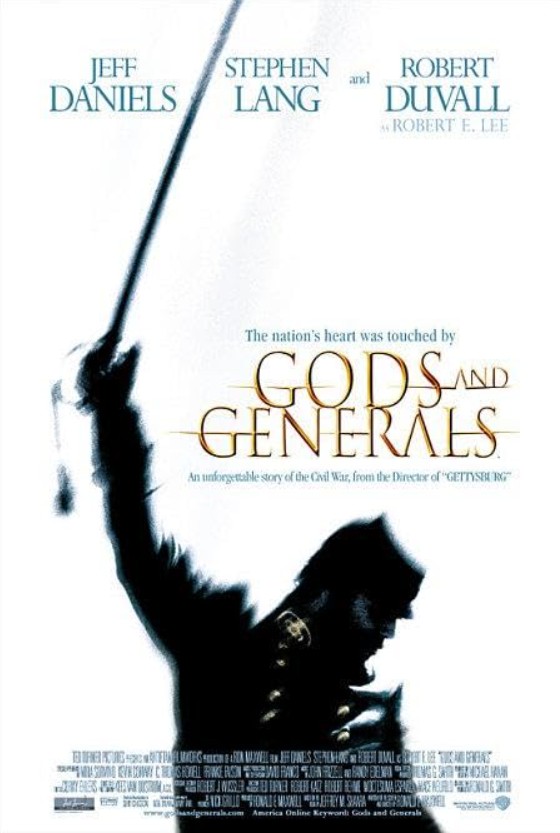
Out of the movies from Robert Duvall’s filmography, I’ve written about To Kill a Mockingbird (which I liked), The Terry Fox Story (which I also liked), and Network (which I wasn’t a fan of). While looking through his filmography for Taking Up Room’s Robert Duvall Tribute Blogathon, I discovered he starred in the 2003 movie, Gods and Generals. I hadn’t seen this film prior to the event. But because of its association with the Movieguide Awards, I had heard of it before. At the 2004 Movieguide Awards, Stephen Lang won an acting award called the ‘Grace Award for Movies’ for his portrayal of General Stonewall Jackson. Gods and Generals also won the ‘Faith & Freedom Award for Movies’ at the 2004 Movieguide Awards. I wasn’t able to find any information about the other nominees for those aforementioned categories. Therefore, I cannot comment on who should or should not have won. But, through my review, I want to determine if, in my opinion, Gods and Generals deserved to be nominated. Selecting the 2003 film also gave me an excuse to review another title of Robert’s.
Gods and Generals poster created by Ted Turner Pictures, Antietam Filmworks, Esparza / Katz Productions, Rehme Productions, Mace Neufeld Productions, and Warner Bros.
Things I liked about the film:
The acting: Since Robert Duvall is the reason why I’m reviewing Gods and Generals, I’ll talk about his acting performance first. In the 2003 movie, Robert portrays General Robert E. Lee. Throughout the movie, I noticed the consistent calmness he brought to his performance. At the beginning of Gods and Generals, General Robert E. Lee turns down an invitation. The tone of voice he adopts is very articulate and matter of fact. There’s a gentleness in his eyes that shows he holds no ill-feelings or disrespect toward receiving the invitation in the first place. Robert’s approach to portraying General Robert E. Lee appeared to have genuine thought and effort put into it. Meanwhile, I liked Jeff Daniels’ portrayal of Lieutenant Colonel Joshua Lawrence Chamberlain! Jeff brought a tenderness that made Lieutenant Colonel Joshua Lawrence Chamberlain interesting to watch. One of the most captivating scenes in Gods and Generals is when Lieutenant Colonel Joshua Lawrence Chamberlain and his wife, Fanny, discuss his upcoming departure to the United States Army. Their interaction is very bittersweet, yet tender. Their gentle tone of voice holds the love they share for each other. Both Fanny (portrayed by Mira Sorvino) and Lieutenant Colonel Joshua Lawrence Chamberlain carry sadness on their faces, especially in their eyes, unsure what their future will hold. Jeff’s and Mira’s acting abilities effectively sold the believability of Lieutenant Colonel Joshua Lawrence Chamberlain and Fanny’s relationship!
I brought up in this review’s introduction how, at the 2004 Movieguide Awards, Stephen Lang won an acting award called the ‘Grace Award for Movies’ for his portrayal of General Stonewall Jackson. Now that I’ve seen his performance for myself, I can, honestly, say his nomination was well deserved! Stephen brought versatility to his portrayal of General Stonewall Jackson, allowing his performance to be well-rounded. Because of Stephen’s acting talents, scenes he (as General Stonewall Jackson) appeared in were emotionally effective. A great example is when General Stonewall Jackson and his wife, Anna, read the Bible together before he leaves for the Battle of Manassas. The gentle, yet loving tone of voice from both General Stonewall Jackson and Anna (portrayed by Kali Rocha) showed how seriously they took their relationship. The look in their eyes was that of longing, longing for more time together as well as longing to be loved by each other. Anna and General Stonewall Jackson’s interaction in that scene showcased a moment of tenderness, reflection, and true love. This was achieved because of the strength of Stephen’s and Kali’s acting abilities!
Historical accuracy: What can ultimately make or break a historical movie is its historical accuracy. If the creative team behind a historical film effectively executes that production’s historical accuracy, the film in question can present the illusion of immersion. This illusion was achieved in Gods and Generals! From the set design to the costume design and even the finest of details, everything looked and felt like the Civil War era. I was impressed how simple items, like a doll or a piano, appeared to have come straight out of that time-period. Other elements, like the dialect, helped bring authenticity to the production. Looking back on Gods and Generals, the creative team’s research into the Civil War era is very evident!
How long shots were utilized: Long shots can be incorporated into a film for a variety of reasons. In “sword & sandal” films, long shots capture the scope of larger set designs. Films featuring armies, teams, or crowds will showcase the size of those groups through long shots. In Gods and Generals, however, long shots were utilized to present establishing shots (shots that establish a story’s location). One example is when Fredericksburg, Virginia is introduced in the story. The long shot used captured an aerial view of the town. Through this perspective, hues of black, white, green, blue, brown, and even purple appeared to nicely blend together. How the town was shown on screen looked like a watercolor painting! Presenting places like Fredericksburg, Virginia with a long shot helped add visually appealing images to Gods and Generals.
The run-time: IMDB lists Gods and Generals’s run-time as a little over three-and-a-half-hours. After seeing the movie, however, I felt like I spent three and a half years watching it. I recognize depicting a historical event through film takes time, whether it be battles or certain individuals interacting with one another. For a historical story like Gods and Generals, there are a lot of moving parts involved. But some scenes in the 2003 film were either drawn out too long or seemed unnecessary. One example is a scene where a soldier (who also happened to be a background character) explained to his fellow soldiers what they should do with his belongings if he dies on the battlefield. Personally, I think Gods and Generals should have been presented as a mini-series. Therefore, the story’s key individuals and events would have received their due diligence.
A dialogue-heavy film: In any movie, including historical pictures, dialogue plays an important role in storytelling. Through dialogue, ideas are expressed, emotions are shared, and characters give pieces of their heart to each other and the audience. But if a movie is dialogue-heavy, it forces the audience to actively pay attention to what they’re watching or else they’ll miss important context. Gods and Generals is a dialogue-heavy film, featuring long stretches of time where characters engage in conversations with one another. What also works against Gods and Generals is its little over three-and-a-half-hour run-time I already brought up in this review. While there were battles and action-heavy scenes throughout the movie, they were far and few between compared to the dialogue-heavy scenes. Having an ebb and flow of action and dialogue-heavy scenes would have maintained a steadier pace.
Underutilizing Robert Duvall and Jeff Daniels: Robert Duvall’s involvement in Gods and Generals is the reason why I wanted to review the film. As I mentioned earlier in this review, I liked Jeff Daniels’ portrayal of Lieutenant Colonel Joshua Lawrence Chamberlain. But compared to Stephen Lang and his portrayal of General Stonewall Jackson, it seemed like the acting talents of Jeff and Robert were utilized sparingly. In fact, it got to the point where the movie became ‘The General Stonewall Jackson Show’, with everyone else simply participating in it. Listing Robert, Stephen, and Jeff as Gods and Generals’s top-billed actors feels a bit misleading because of Jeff’s and Robert’s underutilization. This decision also does Robert’s and Jeff’s acting talents a disservice.
The way I feel about Gods and Generals is similar to how I feel about the 1994 film, Scarlett. Both projects were competently made, each respective creative team clearly knowing what they were doing. The acting and historical accuracy were the strengths of each movie. But the screenwriting causes Scarlett and Gods and Generals to be a mixed bag. The 2003 film having a run-time of a little over three-and-a-half-hours is, in my opinion, excessive. Not only is Gods and Generals a dialogue-heavy movie, I also felt Robert Duvall’s and Jeff Daniels’ acting talents were underutilized. But what I will say is, for me, Stephen Lang stole the show! His performance was so solid, his Movieguide Awards nomination was well deserved. I’d honestly recommend just watching his scenes because the versatility Stephen brought to his portrayal of General Stonewall Jackson made his performance worth watching the film.
Overall score: 6 out of 10
Have you seen Gods and Generals? Which movie from Robert Duvall’s filmography would you like to see me review next? Let me know in the comment section below!
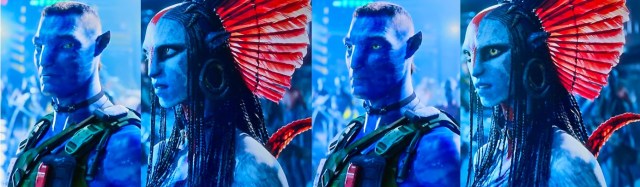
I try to learn more about “popular” characters to understand why they are well-liked. But in order for me to dedicate an editorial to those characters, they need to capture my undivided attention. Colonel Miles Quaritch and Varang did just that as I listened to commentary discourse on Avatar: Fire and Ash. Those discussions about the 2025 film yielded constant praise about Varang and Quaritch’s relationship. Some people claim Quaritch and Varang were the best part of the third film, let alone the Avatar franchise. In fact, they’ve become so popular that Varang received her own unofficial theme song (MONTAGEM BUDA by DYGO). The choir of Varang and Quaritch’s admirers singing their praises genuinely confused me. However, because Quaritch and Varang are the villains of Avatar: Fire and Ash, I decided to write an editorial about their relationship similar to when I wrote about Lestat and Akasha’s relationship (from Queen of the Damned) and Top Dollar and Myca’s relationship (from The Crow). I assumed Quaritch and Varang’s relationship was equally or more toxic than those relationships. Even though they make villainous choices throughout Avatar: Fire and Ash, their relationship is, surprisingly, healthier than some of the problematic relationships from movies I’ve reviewed in the past or I’ve written about on 18 Cinema Lane. In this editorial, I will contrast Varang and Quaritch’s relationship with a handful of other film (and even television) relationships to prove my point. To support my argument, I will utilize examples, screenshots, and quotes from or related to Avatar: Fire and Ash, as well as referencing the other media in question.
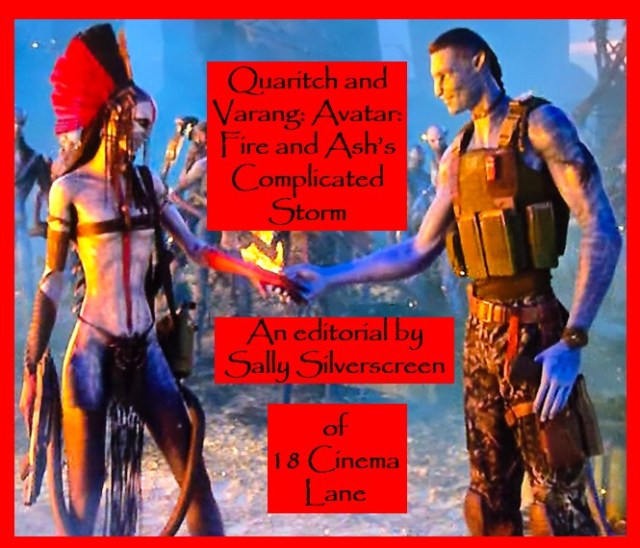
My editorial introduction image created by me, Sally Silverscreen. Original image created by 20th Century Studios, Lightstorm Entertainment, TSG Entertainment, Canadian Film or Video Production Tax Credit (CPTC), and Walt Disney Studios Motion Pictures
Who are Quaritch and Varang?
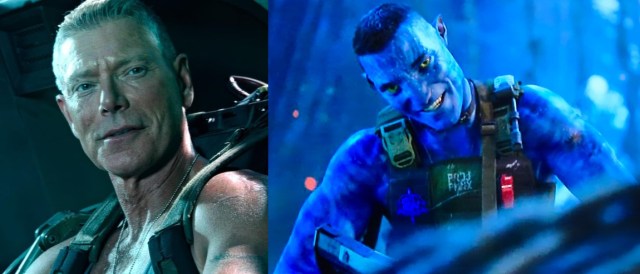
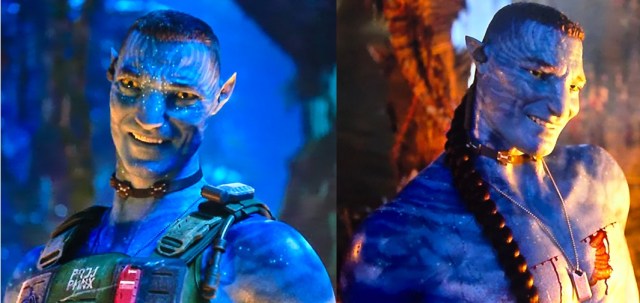
Quaritch and Varang are the villains of Avatar: Fire and Ash, as well as the Avatar franchise. For readers who haven’t seen these films, I will introduce them to Varang and Quaritch. Colonel Miles Quaritch (portrayed by Stephen Lang) has remained an important character through all three Avatar films. In the first movie from 2009, Quaritch was the commander of the RDA’s (Resources Development Administration) security division. He also led the charge in Pandora’s war, attempting to remove the Omatikaya Na’vis from their home in order to provide more space for humans on Pandora. But in Avatar’s final battle, Quaritch was shot and killed by Neytiri, one of the Na’vi from the Omatikaya clan. He returned in the franchise’s second film, Avatar: The Way of Water, which takes place fifteen years after the events of the first movie. This time, however, Quaritch appears as a Na’vi Recombinant with the neurological information from his human self, such as his memories. In both the second and third film in the Avatar franchise, Quaritch maintains his objectives of providing space for humans on Pandora and holding Jake Sully (his former Corporal) accountable for abandoning the RDA in the first film. Quaritch’s second objective becomes disruptive for Jake and his family as the film series progresses.
Left picture: Portrait of Quaritch as a human in 2009’s Avatar. Image created by 20th Century Fox, Dune Entertainment, Ingenious Film Partners, Lightstorm Entertainment, and Walt Disney Studios. Right picture: Portrait of Quaritch as a Na’vi Recombinant in Avatar: Fire and Ash. Image created by 20th Century Studios, Lightstorm Entertainment, TSG Entertainment, Canadian Film or Video Production Tax Credit (CPTC), and Walt Disney Studios Motion Pictures
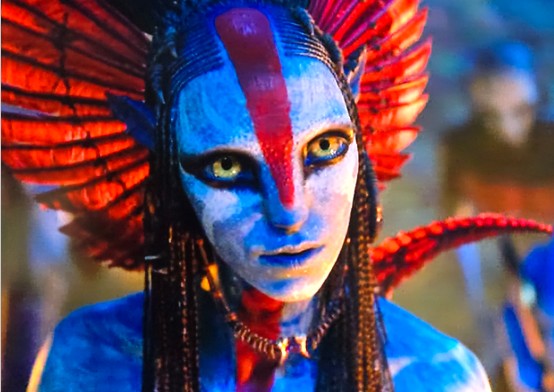
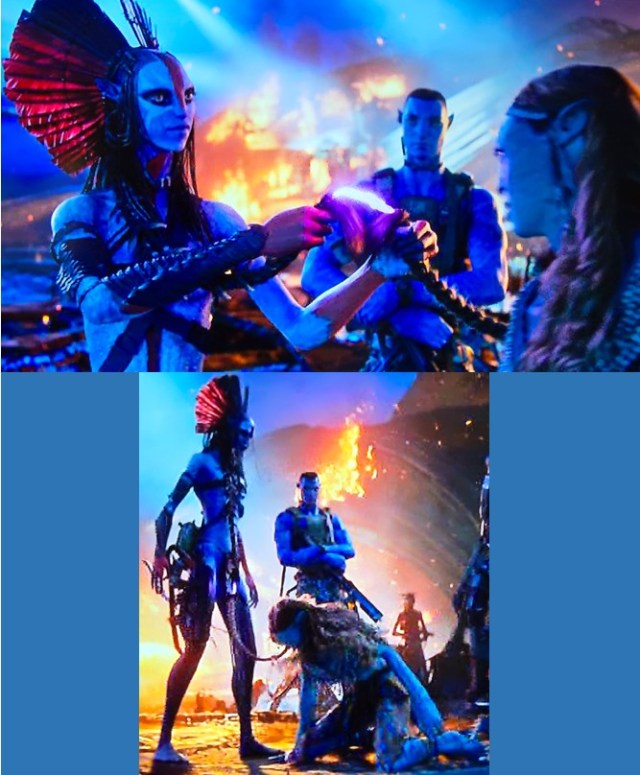
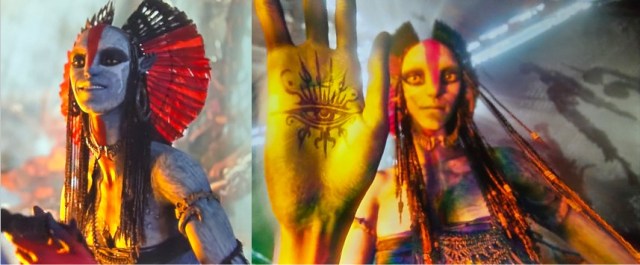
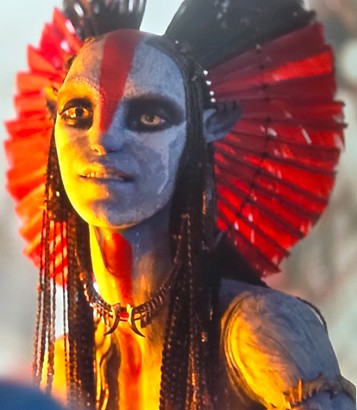
Quaritch and Varang (portrayed by Oona Chaplin) meet in Avatar: Fire and Ash. She is the Na’vi olo’eykte (clan leader) and the tsahìk (spiritual leader) of the Mangkwan clan, known for having their home destroyed by a volcanic eruption prior to the events of the third movie. Believing Eywa (the Na’vis’ goddess representative of their belief system) abandoned the Mangkwan clan after the aforementioned volcanic eruption, Varang leads her clan through trauma, anger, and survival. While the Mangkwan Na’vis see her as the glue that’s kept their clan together, other Na’vis see Varang (and the Mangkwan clan) as a threat to Pandora’s society.
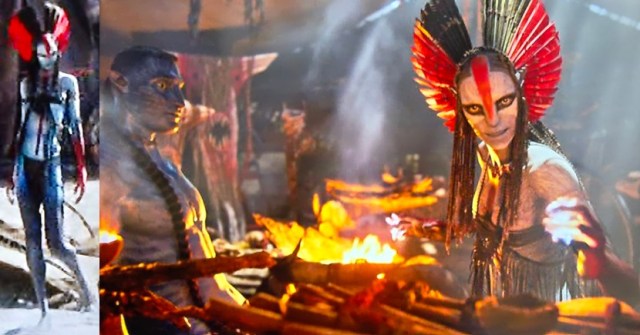
Portrait of Varang from Avatar: Fire and Ash. Image created by 20th Century Studios, Lightstorm Entertainment, TSG Entertainment, Canadian Film or Video Production Tax Credit (CPTC), and Walt Disney Studios Motion Pictures
Varang and Quaritch vs. Achara and Jack
Achara and Jack (from the Lost episode ‘Stranger in a Strange Land’) is the only relationship from a television show included in this discussion. Jack becomes frustrated that Achara won’t share what her “gift” is with him. He becomes so hyper-fixated on learning what Achara’s “gift” is that Jack not only doesn’t take the time to learn more about Achara and the world around her (besides trying Thai food and meeting Achara’s brother in one scene), but he also defines Achara by that one aspect of her life. Throughout her month-long relationship with Jack, Achara remains hesitant to share her “gift” with him. This decision implies she doesn’t fully trust Jack. When Achara eventually reveals what her “gift” is, which is being “able to see who people are” and creating definitive (not decorative) tattoos, Jack forces her to give him this desired explanation. He also forces her to give him a tattoo by forcibly pulling her toward and placing her in a chair by her tattooing station. While Jack is in his drunken fueled aggression and frustration, Achara refuses his request. She cites Jack’s status as an “outsider”, saying that she isn’t allowed to give him a tattoo and giving Jack a tattoo would go against her people. But when Achara’s brother eventually discovers Jack received a tattoo from Achara, he and his friends beat Jack up. Achara’s brother then orders Jack to leave Thailand. Meanwhile, Achara tearfully looks on while this confrontation takes place.
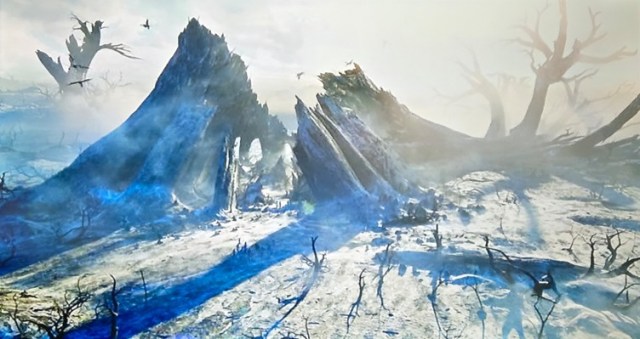
The ash and burnt trees hold proof of the trauma Varang (and the Mangkwan clan) endured. Image created by 20th Century Studios, Lightstorm Entertainment, TSG Entertainment, Canadian Film or Video Production Tax Credit (CPTC), and Walt Disney Studios Motion Pictures
Varang leads the Mangkwan clan through trauma, anger, and survival after her people’s home was destroyed by a volcanic eruption. This information isn’t revealed in Avatar: Fire and Ash until Varang willingly brings it up when she invites Quaritch in her yurt (tent) during their second interaction together. While recounting her traumatic past, Varang tells Quaritch the following:
“The fire came from the mountain when I was little; burnt our forest. It took everything. My people were starving. They cried for help, but Eywa did not come. So I went to the fire, and I learned its way”.
She also shares with Quaritch how she, along with the rest of the Mangkwan clan, responded to Eywa’s abandonment of them, saying:
“I am the fire! By my hand, my people grow strong! We do not lie down and die just because Eywa turns her back on us! We turn our back on Eywa! A weak mother for weak children. We do not suck on the breast of weakness”.
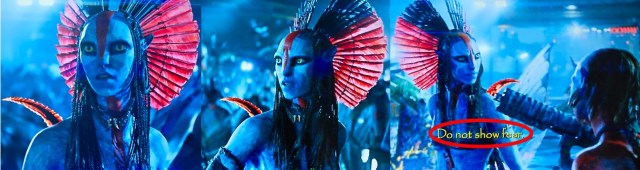
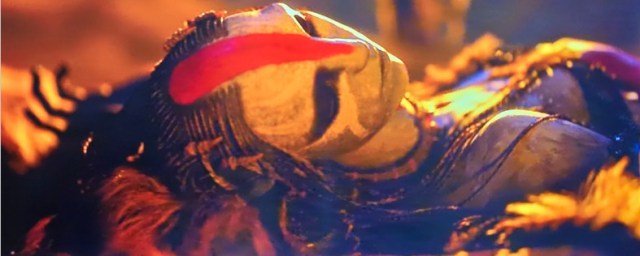
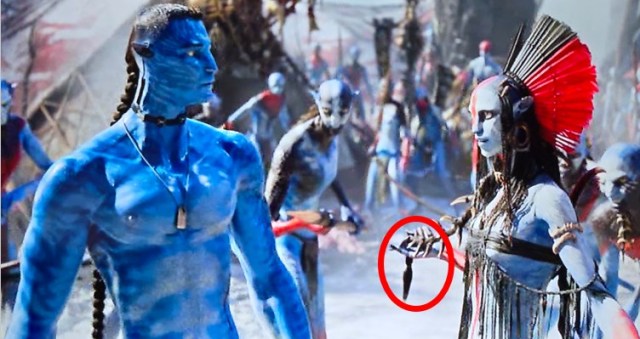
The fact all this information isn’t brought up in the movie until Varang herself shares it implies she doesn’t freely offer this information, especially to those outside of the Mangkwan clan. During this same interaction, Varang chose to tell him, “I see you” (which has been established in the Avatar franchise as the equivalent of saying “I love you”) and “You have a strong heart. No fear” (which seems to be a term of endearment). For Varang to openly share all this information with Quaritch on her own terms (and within her personal space) shows that she has developed full trust in him. Another example of Varang’s trust in Quaritch takes place in Bridgehead City. When Quaritch arrests Jake and takes him to Bridgehead City, Varang travels there with them. She immediately recognizes how being in an unfamiliar environment and surrounded by more humans than she’s ever interacted with before can be overwhelming. She even tells one of the attending Mangkwan warriors, “Do not show fear”. Yet, while in Bridgehead City, Varang is shown peacefully sleeping in her tent within the Mangkwan camp. Meanwhile, Quaritch is right outside the tent the whole time. People are likely to sleep more soundly if they feel safe. Varang sleeping peacefully inside her tent shows how she trusts Quaritch to keep her safe.
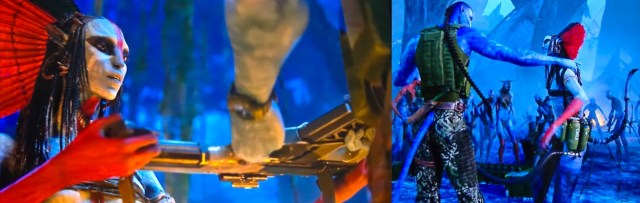
The two photos on the left show Varang’s awareness of how overwhelming coming to Bridgehead City can be. The photo on the right shows Varang telling one of the Mangkwan warriors, “Do not show fear”. Her quote is circled for emphasis. Images created by 20th Century Studios, Lightstorm Entertainment, TSG Entertainment, Canadian Film or Video Production Tax Credit (CPTC), and Walt Disney Studios Motion Pictures
Varang sleeping peacefully shows the trust she’s placed in Quaritch to keep her safe in an unfamiliar place. Image created by 20th Century Studios, Lightstorm Entertainment, TSG Entertainment, Canadian Film or Video Production Tax Credit (CPTC), and Walt Disney Studios Motion Pictures
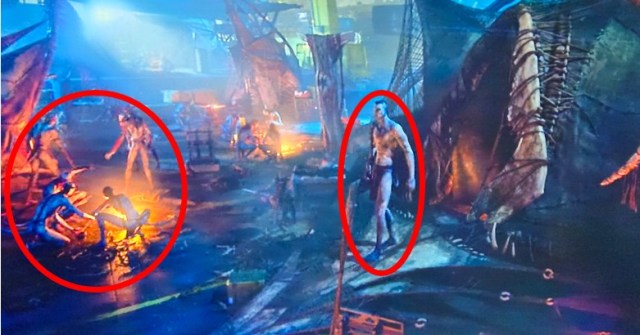
Quaritch and the group of Mangkwan Na’vis are circled in this picture to emphasize how close Quaritch was to Varang. Image created by 20th Century Studios, Lightstorm Entertainment, TSG Entertainment, Canadian Film or Video Production Tax Credit (CPTC), and Walt Disney Studios Motion Pictures
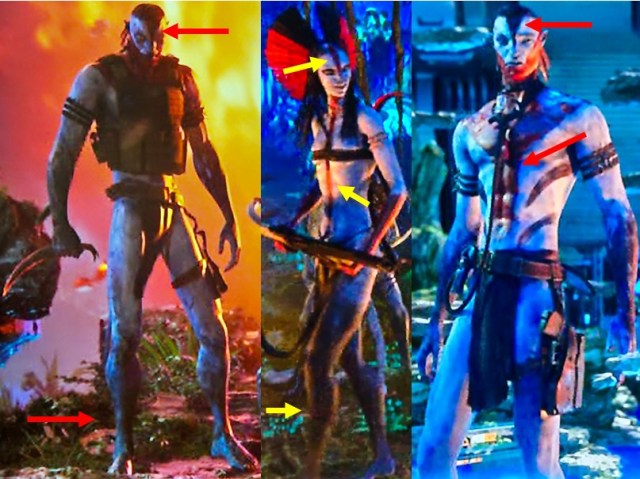
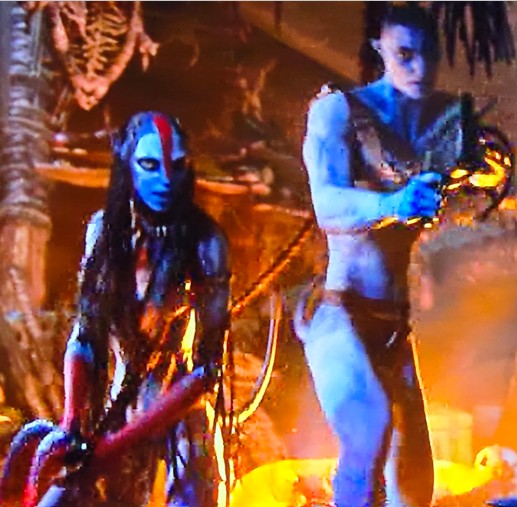
Throughout Avatar: Fire and Ash, Quaritch is shown trying to understand Varang and the world around her. He teaches her how to use a gun and a flamethrower, providing resources and skills the Mangkwan clan are interested in receiving. While in Bridgehead City, Quaritch speaks with Varang in the Na’vi language. He interacts with other members of the Mangkwan clan besides Varang during his time in Bridgehead City. Quaritch adopts the appearance of a Mangkwan Na’vi, even sporting the clan’s war paint toward the end of the film. Unlike Jack’s confrontation with Achara’s brother and his friends in ‘Stranger in a Strange Land’, Quaritch never faces animosity from the Mangkwan clan whenever he attempts to learn more about Varang and her world. It should be noted that some of Quaritch’s war paint appears to mirror Varang’s, implying her direct influence over their design. With all that said, Quaritch is not disrespecting the cultural boundaries of the Mangkwan clan, a mistake Jack made in the aforementioned Lost episode. Even when Quaritch introduces Varang to a human named General Ardmore in Bridgehead City, he refers to Varang as “Tsahìk of the Mangkwan”. This simple decision highlights three things:
Quaritch is honoring and respecting Varang’s culture, as well as her role within it
He refuses to define Varang by his perception of her (such as referring to her as “my girlfriend” or “my soulmate”), especially after General Ardmore calls Varang Quaritch’s “little missy”
Quaritch believes he doesn’t have to prove his and Varang’s relationship to anyone, as his actions and choices should speak for themselves
The arrows in these photos are pointing out the similarities in Varang’s and Quaritch’s Mangkwan war paint designs. Images created by 20th Century Studios, Lightstorm Entertainment, TSG Entertainment, Canadian Film or Video Production Tax Credit (CPTC), and Walt Disney Studios Motion Pictures
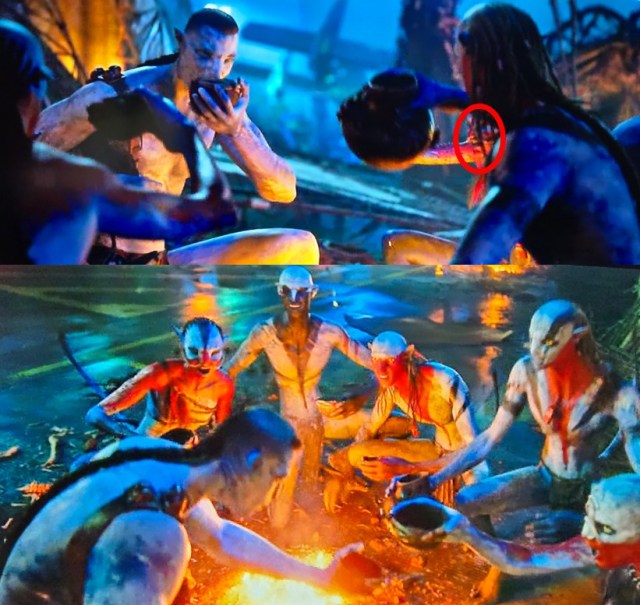
These pictures show Quaritch interacting with some of the Mangkwan Na’vis in Bridgehead City. The Mangkwan Na’vis shown in these pictures, including the one with their face circled, do not present animosity. Images created by 20th Century Studios, Lightstorm Entertainment, TSG Entertainment, Canadian Film or Video Production Tax Credit (CPTC), and Walt Disney Studios Motion Pictures
Quaritch and Varang vs. Top Dollar and Myca
In 2021, I wrote an editorial analyzing the toxic relationship of Top Dollar and Myca from The Crow. One of the takeaways from that editorial was that Myca and Top Dollar’s incestuous relationship is likely the result of an absent/dysfunctional family unit, as well as likely being exposed to dark and harmful things from a young age by their father. Another major takeaway was how Top Dollar and Myca’s enablement of each other was contributed by their likely long-term exposure to dark and harmful things being their “normal”. But when I wrote and published that editorial five years ago, I didn’t realize how Myca and Top Dollar lacked awareness for who they are and what they do, which kept them in a constant cycle of toxicity. When Varang shares her traumatic past with Quaritch in Avatar: Fire and Ash, she recollects what caused her to become the leader she is and how the Mangkwan clan responded to the tragedy. Varang expressing self-awareness doesn’t excuse or condone her aggressive and violent behavior toward others. However, it shows that change, as well as healing, seems realistically possible for her. Varang’s steps toward healing consist of a) she willingly opened up to Quaritch about her traumatic past and b) she willingly opened up her heart to Quaritch after closing her heart off for so long, to the point where it dictated how she walked. Oona even commented on how Varang’s walk was developed, saying, “Varang’s trust is broken and so what happens when you close the heart”. Only time will tell if Varang wants to heal from her trauma, let alone change her villainous ways.
This awareness of Varang’s trauma is also acknowledged by the creative team behind Avatar: Fire and Ash. During an interview with Youtuber Bryce Edward Brown, James Cameron (the director of all three Avatar films) said, “I think that as a little girl the powerlessness and the loss and that she felt and and is playing out through PTSD and trying to recapture power and control the things that that she couldn’t control as a child”. When Oona was interviewed by Bryce Edward Brown, she explained, “The reason that she [Varang] is the way that she is is because she has been hurt in a really really deep place. And it’s, like, the classic, you know, architype of ‘hurt people hurt people’”. In an interview with ABC News, Oona addressed how “She’s [Varang’s] gone through a lot of trauma”, elaborating on that statement by saying, “But she’s gone though a lot of grief, you know, she lost her land, her whole way of life, her family, and, and, her great mother, the, the source of all of her faith, so she has suffered a lot of loss”.
The picture on the left shows how Varang walks, influenced by her broken trust. The picture on the right shows Varang demonstrating to Quaritch how she is “the fire”. During this demonstration, anger toward Eywa can be heard in Varang’s voice. Images created by 20th Century Studios, Lightstorm Entertainment, TSG Entertainment, Canadian Film or Video Production Tax Credit (CPTC), and Walt Disney Studios Motion Pictures
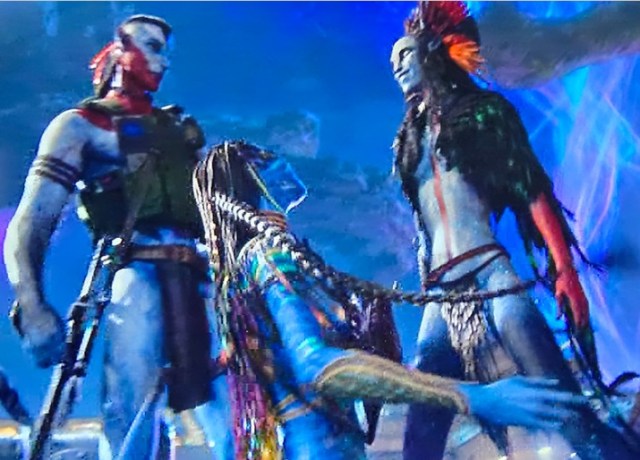
One of the reasons why Varang is considered a villain in Avatar: Fire and Ash is because she uses her kuru (neural queue/braid) to forcefully connect to other Na’vis’ kurus, using that connection to mentally manipulate her victims. Based on the context within the film, she does this as a form of interrogation as well as to gain an upper hand. After Varang and Quaritch become a couple, however, Quaritch has stood back and watched Varang continue to mentally manipulate others with her kuru. Initially, I was confused why Quaritch would do this, especially considering a) Varang mentally manipulated him when they first met and b) Varang willingly opened up to him about her traumatic past, as well as expressing self-awareness for why she is the way that she is. I wondered, “shouldn’t Quaritch be trying to help Varang heal from her trauma”? This confusion led me, at first, to speculate if Quaritch had adopted Top Dollar and Myca’s “I don’t care because it’s none of my business” attitude/mindset, the same attitude/mindset they used to enable each other to hurt themselves or other people. But Quaritch is the same man who has gone out of his way to try to understand Varang and the world around her. In Bridgehead City, when General Ardmore called the Mangkwan clan “savages” and Varang Quaritch’s “little missy”, Quaritch (and Varang) appeared uncomfortable by what General Ardmore said. Quaritch even tells General Ardmore, “Don’t be a jackass, General”. What I said shows how Quaritch does care about Varang and her world because he’s made that his business. Though there are better ways Quaritch could have shown he cares about Varang, like preventing her from using her kuru for harmful purposes.
This collection of pictures show Quaritch and Varang’s reaction to what General Ardmore said about Varang and the Mangkwan clan. It’s obvious how they do not look pleased. Images created by 20th Century Studios, Lightstorm Entertainment, TSG Entertainment, Canadian Film or Video Production Tax Credit (CPTC), and Walt Disney Studios Motion Pictures
In an interview from the Youtube channel, Film Stories, Stephen responds to a question about where Quaritch fits in within the conflict of humanity versus Na’vi. He says, “What he [Quaritch] recognizes is that he can no longer, the idea of making the planet come to him, the moon come to him doesn’t work. He’s got to go to it. He’s got to adapt to it”. Stephen’s quote can be applied to Quaritch’s relationship with Varang. Varang willingly opened up to Quaritch about her traumatic past, as well as willingly opened up her heart to him. During his interaction with Varang in her yurt, Quaritch reminds her how she wants an “equal” (something she’s never had). With that said, he recognizes how Varang has not only carried her unresolved trauma for a long time, but has also lived her life a certain way for a long time. Quaritch recognizes as well how Varang’s new chapter in her life (developing a relationship with her “equal”) will take some adjusting to. So, as Varang’s “equal”, Quaritch’s decision to stand by and watch her continue to mentally manipulate others with her kuru is not about intentional enablement like Myca and Top Dollar not caring about what the other does. Quaritch acknowledges and respects where Varang is in her life, as well as her healing journey, and meeting her there instead of forcing her to do something she either doesn’t want to do or isn’t ready to do. However, I do wish Quaritch had intervened and encouraged Varang to make better choices that don’t involve hurting other Na’vis.
In these two photos, Varang continues to mentally manipulate Na’vis with her kuru. Meanwhile, Quaritch just stands by and watches the events unfold instead of intervening. Images created by 20th Century Studios, Lightstorm Entertainment, TSG Entertainment, Canadian Film or Video Production Tax Credit (CPTC), and Walt Disney Studios Motion Pictures
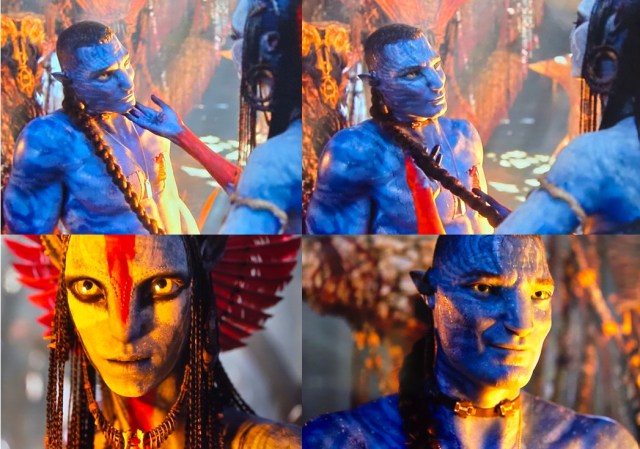
When I wrote and published my editorial about Top Dollar and Myca’s relationship, I discussed how both their conversations in The Crow were not meaningful. As I explained in that editorial, words aren’t utilized to address emotions, leaving feelings and personal turmoil bottled up and unresolved. Concerns and basic needs are ignored as well. In Avatar: Fire and Ash, Varang and Quaritch share only one conversation, which takes place during their interaction in Varang’s yurt. Despite this, their conversation is meaningful because of how much it accomplishes. Like I’ve already said, Varang willingly opened up to Quaritch about her traumatic past, showing how she not only trusts Quaritch, but also how change and healing seem realistically possible for her. Varang sharing her backstory allows Quaritch (and the audience) to learn more about her as well. Meanwhile, Varang learns more about Quaritch by asking him questions, such as why he came to see her in the first place. Even when Quaritch tells Varang, “You want to take on Eywa? You need me”, he confirms how he’s actively paying attention/listening to what Varang is saying. Though he was under the influence of a hallucinogenic powder she gave him earlier in their interaction, potentially affecting his judgement. The most important thing Quaritch and Varang’s conversation accomplishes is establishing their relationship. They no longer see each other as a threat like they did when they first met. As their conversation goes on, their tone of voice becomes friendlier. Varang even gently strokes Quaritch’s chin and kuru, though she did cut his chest prior to that, which could have given Quaritch mixed messages on her feelings for him. But when Varang tells Quaritch, “I see you”, he responds by telling her, “Damn right you do”, while appearing relaxed and speaking with a confident and matter-of-fact tone of voice. This response, and the fact Quaritch doesn’t appear surprised or caught off guard by what Varang told him, emphasizes his acceptance of her love, as well as doubling and tripling down on that idea.
The top two pictures show Varang gently stroking Quaritch’s chin and kuru. Though she did cut his chest before that, which could have given Quaritch mixed messages. The bottom left picture shows Varang right after she told Quaritch, “I see you”. Meanwhile, the bottom right picture shows Quaritch right after he tells Varang, “Damn right you do”. Images created by 20th Century Studios, Lightstorm Entertainment, TSG Entertainment, Canadian Film or Video Production Tax Credit (CPTC), and Walt Disney Studios Motion Pictures
Varang and Quaritch vs. Akasha and Lestat
I wrote an editorial in 2019 about Lestat and Akasha’s relationship (from Queen of the Damned), discussing why it was problematic for Akasha to possess more control in the relationship. One of her missteps was not making an effort to get to know Lestat. Akasha assumes she knows Lestat based on his image as a musical performer, even though being a musical performer only plays a small role in his life. This assumption leads her to give him a royal title he did not desire. Had Akasha taken the time to ask Lestat what he wanted, she would have known all he wanted was to walk in the light and not hide in the shadows. In Avatar: Fire and Ash, Varang doesn’t make Akasha’s mistakes. I brought up earlier how she learns more about Quaritch by asking him questions, such as why he came to see her in the first place. Varang even asks him, “What do I want”, when Quaritch claims she doesn’t want to keep him as a slave. Her asking this question shows how she’s interested in hearing his answer instead of assuming what he’ll say is incorrect. It also shows how she’s willing to change her mind about how she sees Quaritch, though her entertaining the idea of keeping him as a slave is concerning. Before giving Quaritch the hallucinogenic powder I referenced earlier in this editorial, Varang tells him, “First, I must see your soul”. Then, before telling Quaritch, “You have a strong heart. No fear”, Varang says, “Only true words will come from your tongue”. These examples illustrate Varang making a strong effort in getting to know Quaritch instead of falling for a fabricated image of him. Sadly, this is the only time Varang is shown learning more about Quaritch, which could give the impression her efforts aren’t strong.
The left picture shows Varang as she’s asking Quaritch, “What do I want”. The picture on the right shows Varang asking Quaritch questions. That picture is from Quaritch’s perspective while under the influence of the hallucinogenic powder she gave him. Images created by 20th Century Studios, Lightstorm Entertainment, TSG Entertainment, Canadian Film or Video Production Tax Credit (CPTC), and Walt Disney Studios Motion Pictures
Akasha doesn’t seem to see Lestat as an equal, but instead as something she can control. Akasha refers to Lestat by his name on less than three occasions. She also talks at him, not to him, as well as purposefully leaving Lestat out of the process of building their “kingdom”. Because Akasha forced Lestat into their relationship and possesses more control within it, he doesn’t feel their relationship is worth investing in. Once again, Varang refuses to repeat Akasha’s mistakes. In Avatar: Fire and Ash, when Quaritch brought up how she wanted an “equal”, Varang never objects or claims Quaritch is wrong. In fact, she tells him “I see you” after he reveals how an “equal” is what she really wanted. Any time she communicates with Quaritch (talking to him, not at him), Varang refers to him by his name. The only times she didn’t do that is when she didn’t know his name, hence the reason why she called Quaritch “Sky Man”. Since forming their relationship, Varang and Quaritch are rarely seen apart, as they recognize how valuable their time and company is. This is just one example of how their relationship contains equal investment. Meanwhile, Quaritch shows how he is an active participant in his relationship with Varang. In Avatar: Fire and Ash, during his interaction with Varang in her yurt, Quaritch explains what he can give her, such as “guns”, “comms”, and “RPGs”. But Varang recognizes the nontangible things he can give her as well, like security and peace of mind. This portion of their conversation highlights how Quaritch is willing to share and be a provider in his and Varang’s relationship. As I’ve said, Quaritch tries to learn more about Varang and her world. Because Varang has willingly provided these learning opportunities to Quaritch, he has received chances to grow closer to her.
Varang’s response to Quartich’s reminder of how she wants an “equal” doesn’t show her disagreeing with him. Image created by 20th Century Studios, Lightstorm Entertainment, TSG Entertainment, Canadian Film or Video Production Tax Credit (CPTC), and Walt Disney Studios Motion Pictures
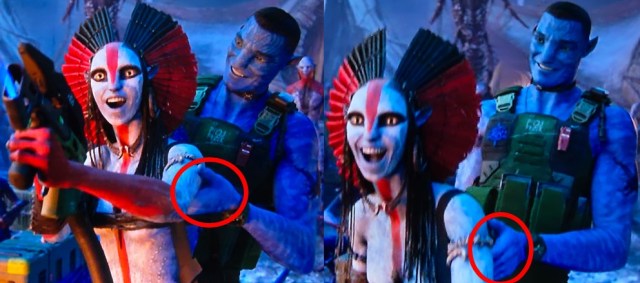
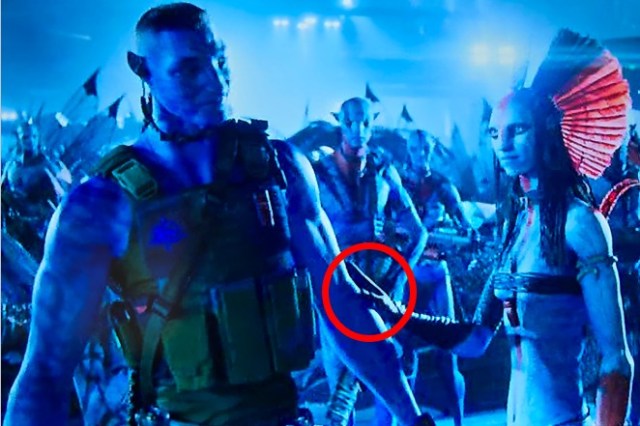
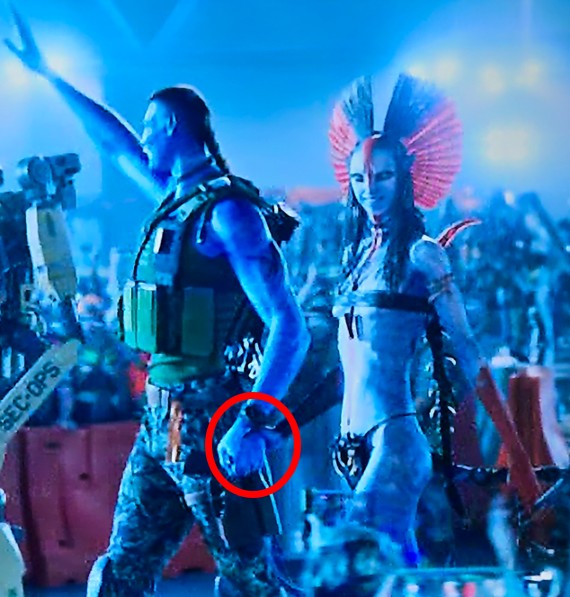
While reflecting on Lestat and Akasha’s relationship, as well as the other relationships discussed in this editorial, I noticed how their displays of affection are not consistent, whether these displays have been publicly or privately. It seems like those couples’ problematic behavior was the primary focus. Though Quaritch and Varang display villianous behavior in Avatar: Fire and Ash, their displays of affection are shown consistently throughout the film as well. Varang and Quaritch hold hands on two separate occasions; in Bridgehead City (after Quaritch introduces Varang to General Ardmore) and after Quaritch teaches Varang how to use a flamethrower. Quaritch has referred to Varang by endearing names like “baby”, “sugar”, and “darling”. Any time he touches her, Quaritch has continually been gentle with Varang. Meanwhile, Varang gently touched Quaritch’s arm in Bridgehead City. As I mentioned in this editorial already, Varang gently strokes Quaritch’s chin and kuru, which she does before Quaritch brought up how Varang wants an “equal”. But what I’ve noticed is how Varang only blinks whenever Quaritch is around or when something connected to Quaritch is around. Because this behavior is so patterned around Quaritch, I believe blinking is Varang’s way of showing affection for him. These times are the following:
While examining the deceased body of one of the Mangkwan Na’vi, Varang becomes interested in a bullet lodged within it. After digging out the bullet, Varang blinks as she bites into the bullet. Bullets typically come from the RDA, which Quaritch is associated with.
After Quaritch teaches Varang how to use a gun, she blinks as she tells him, “I do not need you now, Sky Man”.
Varang blinks as she notices the guns Quaritch brought to her Mangkwan village
Varang blinks immediately after Quaritch reminds her how she wants an “equal”
When Jake surrenders to Quaritch, Varang blinks three times during that situation: when Quaritch suggests Neytiri be arrested too, right before Jake refers to Varang as Quaritch’s “new girlfriend” and as Varang is looking up at Quaritch
Varang blinks twice when Quaritch introduces her to General Ardmore: when General Ardmore refers to Varang as Quaritch’s “little missy” and as Quaritch is introducing Varang as “Tsahìk of the Mangkwan”
When Neytiri infiltrates Varang’s tent in the Mangkwan clan’s camp in Bridgehead City, Varang blinks when Neytiri threatens to cut off Varang’s kuru. This incident takes place after Varang and Quaritch formed a tsaheylu (an intimate bond that lasts for life formed by mates connecting kurus). When Quaritch and Varang first met, she forcefully connected his kuru with hers in order to mentally manipulate him. However, an argument can be made that, in this particular situation, Varang did this in self-defense, as Quaritch had a gun pointed at her head when he was helping Jake rescue his children from the Mangkwan clan.
In these photos, Quaritch teaches Varang how to use a flamethrower. Quaritch’s hand is circled to emphasize how gently he touches Varang. Images created by 20th Century Studios, Lightstorm Entertainment, TSG Entertainment, Canadian Film or Video Production Tax Credit (CPTC), and Walt Disney Studios Motion Pictures
In this picture, Varang’s hand is circled to emphasize how gently she’s touching Quaritch’s arm. Image created by 20th Century Studios, Lightstorm Entertainment, TSG Entertainment, Canadian Film or Video Production Tax Credit (CPTC), and Walt Disney Studios Motion Pictures
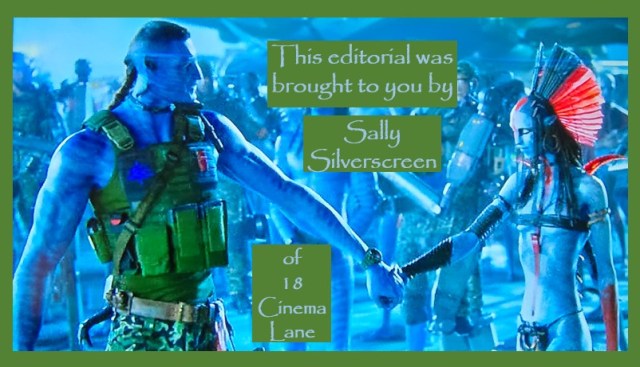
Varang and Quartich’s hands are circled to highlight that Quaritch and Varang are holding hands. Image created by 20th Century Studios, Lightstorm Entertainment, TSG Entertainment, Canadian Film or Video Production Tax Credit (CPTC), and Walt Disney Studios Motion Pictures
Quaritch and Varang vs. Oscar and Lily
One of the worst movies I ever reviewed on 18 Cinema Lane is Twentieth Century. A reason why I don’t like this movie is how abusive Oscar and Lily’s relationship is. Oscar grows jealous and obsessive of Lily over the course of the film. The worst thing he does is use his mortality as a manipulation tactic. Not only does Oscar threaten suicide if Lily doesn’t stay with him, he also fakes his death to trick Lily into signing his contract. Quaritch and Varang, on the other hand, never do that in Avatar: Fire and Ash. The only time Quaritch uses language to manipulate a situation is when he tells Varang, “You touch me with that thing again, I’ll kill you”. Before he said that, Varang was attempting to mentally manipulate Quaritch with her kuru for a second time, even though he came to her village delivering guns for her people. Therefore, Quaritch’s threat was a self-defense tactic, as he still saw Varang as a threat. It should be noted how Varang also still saw Quaritch as a threat during this interaction, as Varang continues to hold her kuru. This is a response to Quaritch holding a gun to her head when they first met, as he was trying to help Jake rescue his children from the Mangkwan clan. Meanwhile, during Quaritch and Varang’s interaction in her yurt, Varang’s mortality is never a topic of discussion. Even though she could have used her mortality to manipulate Quaritch, she instead chooses to share her traumatic past with him, as well as asking him why he came to see her in the first place.
In this picture, Varang’s kuru in her hand is circled to emphasize how, in this moment, she still sees Quaritch as a threat after their first meeting. Image created by 20th Century Studios, Lightstorm Entertainment, TSG Entertainment, Canadian Film or Video Production Tax Credit (CPTC), and Walt Disney Studios Motion Pictures
Despite being treated horribly by Oscar, Oscar’s friends try to help him fix his relationship with Lily. They even go as far as blaming Lily for Oscar’s failures. Varang and Quaritch never do that either in Avatar: Fire and Ash. When Neytiri infiltrated the Mangkwan clan’s camp in Bridgehead City, Varang is more preoccupied with obtaining Neytiri’s heart than blaming Quaritch for the camp’s breach in security. Later in the movie, when General Ardmore permanently grounds Quaritch after Jake and another character named Spider escape Bridgehead City, Quaritch doesn’t blame Varang. Instead, he stays focused on recapturing Spider and Jake. Quaritch is even pleased he can utilize Varang mentally manipulating Neytiri to lure Jake and Spider, with Quaritch telling Varang, “Thanks, baby”. These examples I brought up show how Varang and Quaritch don’t take their frustrations out on each other because they possess the maturity and emotional understanding to recognize which battles are worth choosing, as well as what is within that other person’s control. At the same time, however, Quaritch and Varang don’t hold each other accountable if they do something wrong.
Even when Quaritch shows up to help Varang capture Neytiri, Varang remains focused on obtaining Neytiri’s heart. Image created by 20th Century Studios, Lightstorm Entertainment, TSG Entertainment, Canadian Film or Video Production Tax Credit (CPTC), and Walt Disney Studios Motion Pictures
After Quaritch uses Varang’s mental manipulation toward Neytiri to lure Jake and Spider, he tells Varang, “Thanks, baby”. But he doesn’t hold her accountable for her treatment toward Neytiri. Image created by 20th Century Studios, Lightstorm Entertainment, TSG Entertainment, Canadian Film or Video Production Tax Credit (CPTC), and Walt Disney Studios Motion Pictures
Varang and Quaritch vs. Nancy and Bill Sikes
Though I have reviewed 1968’s Oliver!, I never talked about how awful Nancy and Bill Sikes’ relationship is. Similar to Lestat and Akasha’s relationship, Nancy is more invested in her relationship with Bill. But, unlike Akasha and Lestat’s relationship, Bill is someone Nancy actually cares about. Unfortunately for her, Bill sees Nancy more as a nuisance than a girlfriend. When she asks Bill if he loves her, he angrily tells Nancy, “Course I do. I live with you, don’t I”? Bill also takes Nancy for granted, never showing gratitude whenever Nancy does something nice for him, like serving him food. He even becomes violent toward Nancy. Bill tries to physically intimidate Nancy by threatening to choke her when she refuses to bring Oliver back into a life of thieving. Bill also slaps Nancy so hard, she falls to the floor. After Nancy is beaten to death by Bill, Bill blames her for the predicament he put himself in. He expresses more concern for being caught by the police than remorse for the way he treated Nancy.
As he makes his way back to his and Varang’s tent, Quaritch says, “Hey sugar, join the party”. This highlights how he wants to spend more time with Varang. Image created by 20th Century Studios, Lightstorm Entertainment, TSG Entertainment, Canadian Film or Video Production Tax Credit (CPTC), and Walt Disney Studios Motion Pictures
Quaritch is never shown becoming angry at Varang. Even when Varang mentally manipulated him with her kuru or cut his chest, Quaritch doesn’t express anger or resentment toward her. However, Quaritch ignoring Varang’s aggression toward him could give her a mixed message on how to treat him. Quaritch has continually been gentle with Varang any time he touches her. In fact, the closest to aggressive Quaritch has ever been toward Varang is when he pointed a gun at her head. In that moment, however, Quaritch saw her as a threat, as Quaritch was trying to help Jake rescue his children from the Mangkwan clan. Throughout his relationship with Varang, Quaritch never takes her for granted, proving this by taking the time to learn more about Varang and her world. Out of all the ways he could have chosen to spend his time in Bridgehead City, Quaritch chose to spend it with Varang and the Mangkwan clan. What I said about Quaritch can also be applied to Varang. She stops being aggressive toward Quaritch when their relationship is established, as Varang saw Quaritch as a threat before that. Varang doesn’t take Quaritch for granted either, with her proof being how interested she appears in learning how to use a gun and flamethrower. Quaritch and Varang are rarely seen apart when their relationship is formed. They recognize how valuable their time and company is.
These two pictures show Quaritch’s response to Varang’s aggression toward him. Though he holds no anger or resentment towards Varang, Quartich choosing to ignore her aggression could give Varang mixed messages. Images created by 20th Century Studios, Lightstorm Entertainment, TSG Entertainment, Canadian Film or Video Production Tax Credit (CPTC), and Walt Disney Studios Motion Pictures
These two photos show how interested and eager Varang is to learn from Quaritch. Image created by 20th Century Studios, Lightstorm Entertainment, TSG Entertainment, Canadian Film or Video Production Tax Credit (CPTC), and Walt Disney Studios Motion Pictures
Conclusion
What led to the creation of this editorial was trying to figure out why Quaritch and Varang were so popular. Through my research, I think I found an answer. In the Avatar franchise, Varang and Quaritch seem to be the only two characters who subvert expectations. In entertainment media, when expectations are subverted, that can spark curiosity and intrigue from the audience. If you had told me back in 2009 that Colonel Miles Quaritch would eventually adopt the appearance of a Na’vi and fall in love with a Na’vi woman, I definitely would not have believed you. Then, in 2025, if you had told me the first Na’vi villain in the Avatar franchise would fall in love at all, let alone fall in love with Quaritch, I also would not have believed you. But, before publishing this editorial, if you had told me Quaritch and Varang’s relationship was healthier than some of the problematic relationships from movies and tv I’m familiar with (like Lestat and Akasha and Top Dollar and Myca), I certainly would have thought you were joking.
My editorial outro image created by me, Sally Silverscreen. Original image created by 20th Century Studios, Lighstorm Entertainment, TSG Entertainment, Canadian Film or Video Production Tax Credit (CPTC), and Walt Disney Studios Motion Pictures
Though this editorial highlights how Quaritch and Varang’s relationship is healthier than some problematic relationships from entertainment media, their relationship isn’t truly healthy. Because they are the villains in Avatar: Fire and Ash, their villainous behavior is on full display. They treat other people terribly, from Quaritch destroying Na’vis’ homes in his search for Jake Sully to Varang and the Mangkwan clan sparking unprovoked violence toward other Na’vis. There are also a lot of aspects of their relationship that are up for interpretation. I mentioned earlier how Varang and Quaritch formed a life-long bond called tsaheylu. Even though Varang is more educated about Na’vi culture than Quaritch, it’s unknown if she explained the significance of tsaheylu before they formed this bond, which would have allowed Quaritch to make an informed decision about whether he wants to spend the rest of his life with her. Despite the flaws in their relationship, however, Quaritch and Varang treat each other better than I expected. As of the publication of my editorial, the fourth film in the Avatar franchise has not officially been greenlit, though the release date has already been chosen. If that film does come to fruition, I hope Varang and Quaritch acknowledge how good they have it when it comes to their relationship. Because if my editorial stresses anything, it’s how some people aren’t so lucky.
References:
From 18 Cinema Lane –
Travel Lessons I Learned from Movies and TV
Toxic Valentine: Why Lestat and Akasha’s relationship is very problematic in Queen of the Damned (2002)
We Need to Talk About the Toxic Relationship of Top Dollar and Myca from ‘The Crow’
Take 3: Twentieth Century Review
Youtube Videos and Shorts –
‘Why Varang Is Working With Quaritch and the Humans of the RDA in James Cameron’s Avatar’ (short from Youtube channel, Bryce Edward Brown)
‘I Interviewed Stephen Lang and Oona Chaplin About Quaritch and Varang’s Future in Avatar’ (video from Youtube channel, Bryce Edward Brown)
‘Candid interview with James Cameron and cast of ‘Avatar: Fire and Ash’’ (video from Youtube channel, ABC News)
‘Stephen Lang on AVATAR: FIRE AND ASH!’ (video from Youtube channel, Film Stories)
‘Avatar Fire and Ash Cast Talk About Their Band & Na’avi Phrases & Fan Edits’ (video from the Youtube channel, Hits Radio)
‘The Cast of ‘Avatar: The Way of Water’ on Reuniting, Diving Underwater, and Date Nights’ (video from the Youtube channel, Fandango)
‘Avatar: Fire and Ash’s Oona Chaplin on Crafting Her MENACING Strut (Exclusive)’ (video from the Youtube channel, Entertainment Tonight)
I haven’t talked about anything Hallmark Hall of Fame related since last August, when I reviewed the 1990 presentation, Face to Face. To make up for lost time, I decided to write a list article about a topic associated with this collection of Hallmark’s movies. With Hallmark Hall of Fame lasting from 1951 to 2019, numerous actors and actresses have graced television screens in one or several projects from this branch of Hallmark programming. But there are some actors and actresses who never received that opportunity. So, in this list, I will be selecting five actors and five actresses who, in my opinion, should have starred in a Hallmark Hall of Fame movie. While the chosen actresses and actors are categorized in no particular order, they were selected based on two criteria: 1) the trajectory of their career in correlation with the existence of Hallmark Hall of Fame and 2) if their acting talents would have been well utilized within the types of stories Hallmark Hall of Fame told.
Hallmark Hall of Fame logo created by Hallmark Entertainment and Hallmark Hall of Fame Productions
1.Stephen Lang
I will admit I’ve seen only three projects from Stephen Lang’s filmography; Don’t Breathe, Death of a Salesman, and 2009’s Avatar. But from what I remember, Stephen put a great amount of effort and care into his roles. Even based on some of his interviews I have seen and heard, it seems like Stephen takes the roles given to him very seriously. With all this said, I truly believe he would have brought that same amount of care and effort into a Hallmark Hall of Fame title. Plus, according to IMDB, Death of a Salesman is labeled a “tv movie”. Therefore, Stephen has some experience working in the realm of made-for-tv cinema. Had the opportunity to star in a Hallmark Hall of Fame movie presented itself, I wonder what type of role Stephen would have received, let alone what type of movie he would have been cast in?
2. Jane Seymour
Throughout her career, Jane Seymour has starred in several Hallmark films; Lake Effects, Dear Prudence, PerfectlyPrudence, and A Royal Christmas. You’d think with Jane’s connection to Hallmark, as well as her star power, she would have starred in, at least, one Hallmark Hall of Fame presentation. But surprisingly, this opportunity never came to be. Besides her appearance in Hallmark’s movies, Jane has starred in projects that were related to the historical fiction genre, such as Somewhere in Time and Dr. Quinn, Medicine Woman. In fact, I’m surprised Hallmark Hall of Fame and the creative team behind Dr. Quinn, Medicine Woman didn’t work together to create a television event related to the show. This idea actually would have made sense, especially since Hallmark Hall of Fame was broadcast on the same network as Dr. Quinn, Medicine Woman during the show’s lifespan.
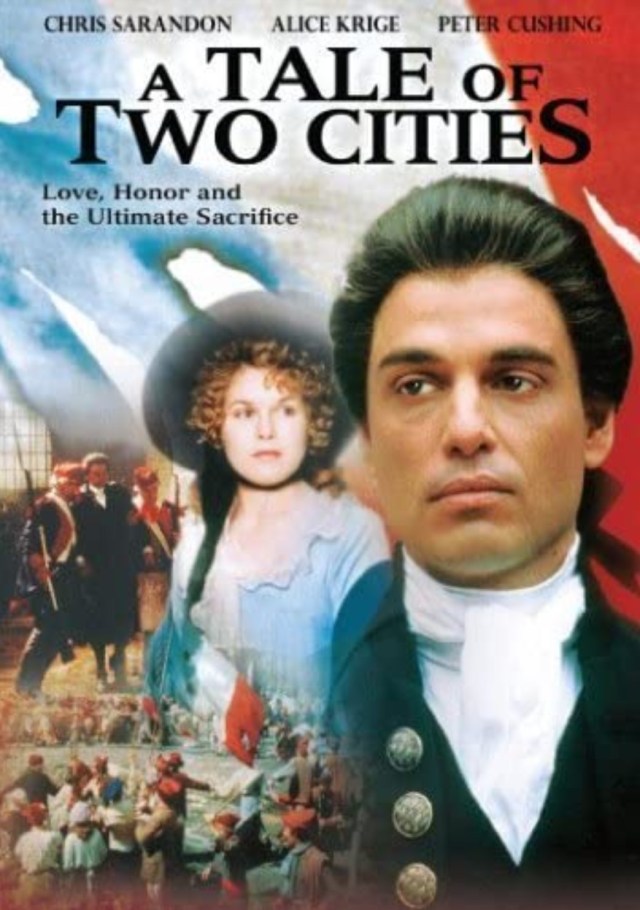
Hallmark Hall of Fame’s A Tale of Two Cities poster created by Hallmark Hall of Fame Productions, Marble Arch Productions, Norman Rosemont Productions, and Columbia Broadcasting System (CBS)
3. Michael Wincott
I recently talked about Michael Wincott in my review of an episode from Miami Vice. Based on his performances I’ve seen, Michael has consistently displayed an understanding, as well as control, over his character’s emotions. His adaptability has also been very chameleon-like. If given the opportunity to star in a Hallmark Hall of Fame film, I believe Michael could have helped create a character with a captivating presence. Even though the movies in the Hallmark Hall of Fame collection were primarily dramatic in tone, various genres were covered within this series. Therefore, I think Michael’s acting talents could have been best utilized in a film from either the historical fiction, western, or mystery genre.
4. Bai Ling
I’ve seen several projects from Bai Ling’s filmography, including the 2001 Hallmark movie, The Lost Empire/The Monkey King. The one consistent strength I have noticed within these projects is Bai’s strong sense of emotionality. Whether in a made-for-tv movie or a theatrically released title, Bai’s understanding and utilization of her character’s emotions have added depth to her performances. I could have seen this acting strength incorporated into a Hallmark Hall of Fame movie, especially since, like I mentioned earlier, movies in the Hallmark Hall of Fame collection were primarily dramatic in tone. Since I have seen Bai star in at least one film from the mystery and fantasy genre, it would have been interesting to see what a fantasy or mystery Hallmark Hall of Fame movie starring Bai would have looked like. Or perhaps the Hallmark Hall of Fame collection could have given her a chance to tackle a genre I haven’t seen her appear in before.
5. Vincent Perez
If you have followed 18 Cinema Lane long enough, you would know one of the best movies ever reviewed on the blog was Swept from the Sea. Vincent Perez’s portrayal of Yanko is one of the reasons why. There were times in Swept from the Sea where, by utilizing emotion, he was able to say so much without saying anything at all. Vincent’s acting versatility not only made his performance captivating, it was also both heart-warming and heart-breaking. I’ve liked his performance from his other movies I have seen, from his emotional intensity in The Crow: City of Angels to his sincerity in Cyrano de Bergerac. Even in 2004’s Frankenstein (a movie I didn’t like), Vincent’s performance is one of the few good aspects of that film. I guess the 1998 HBO movie, Shot Through the Heart, is the closest thing to seeing Vincent in a Hallmark Hall of Fame presentation I’ll ever get.
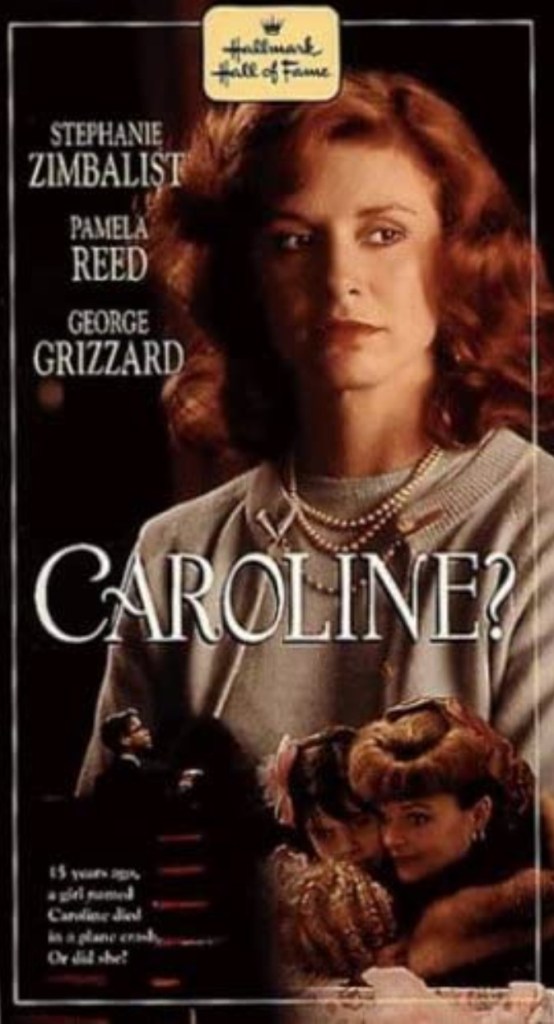
Hallmark Hall of Fame’s Caroline? poster created by Hallmark Hall of Fame productions, CBS, and Republic Pictures Home Video
6. Jasmine Guy
Whenever I think of Jasmine Guy, I think of her portrayal of Kathleen on Touched by An Angel. I also think about how strong Jasmine’s performance was on that show. Kathleen became a character I looked forward to seeing appear on screen. This was the result of the expressiveness, sassiness, and charisma Jasmine brought to her role. She even had good on-screen chemistry will Bill Nunn in the Touched by An Angel episode, “Lost and Found”, as it sold the concept of Kathleen and Bill’s character, Frank, being compatible, under different circumstances. Since Touched by An Angel was more dramatic in tone, like the Hallmark Hall of Fame collection, Jasmine’s portrayal of Kathleen gave me an idea how Jasmine’s acting talents could have been utilized within a Hallmark Hall of Fame presentation.
7. Adewale Akinnuoye-Agbaje
Fans of the television show, Lost, will recognize Adewale Akinnuoye-Agbaje as the actor who portrayed Mr. Eko. Adewale’s performance on that show is one of the reasons why I liked Mr. Eko as a character. His captivating presence commanded attention from the audience, which sometimes made Mr. Eko intimidating. Yet, the kind-hearted and thoughtful persona Adewale gave to Mr. Eko also allowed his character to be approachable, making the audience want to get to know Mr. Eko and see where the story took him next. Adewale’s acting versatility would have been such a valuable asset in a Hallmark Hall of Fame project. What also worked in Adewale’s favor is his chemistry with the other cast members on Lost. This acting element would have been beneficial to any Hallmark Hall of Fame movie, especially since some films from Hallmark Hall of Fame featured ensemble casts.
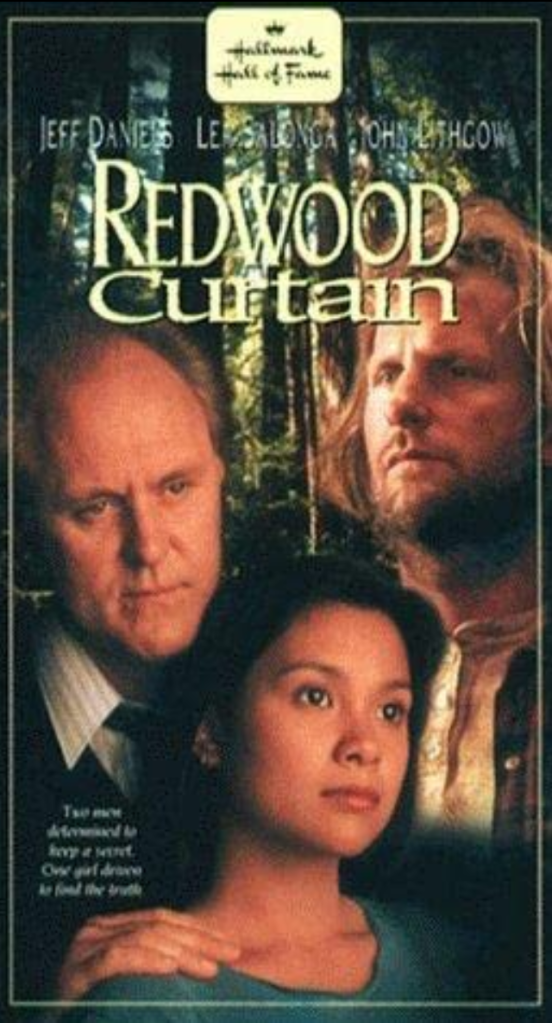
Redwood Curtain poster created by Chris/Rose Productions, Hallmark Hall of Fame Productions, American Broadcasting Company (ABC), and Republic Pictures (II)
8. Hayley Mills
Hayley Mills was at the height of her popularity in the 1960s. Plus, based on her performances I have seen, Hayley has been able to utilize her expressions and emotions to make her characters seem as believable as possible. With these facts in mind, I’m surprised Hallmark Hall of Fame didn’t try to capitalize on Hayley’s popularity and talent by offering her a role in one of their films. When it comes to Hallmark Hall of Fame’s movies from the 1960s, I haven’t seen any of them. But based on my research, it appears these projects were either adaptations of plays, literature, or historical events. Because Hayley has starred in dramatic films like The Chalk Garden, I believe Hayley’s acting talents could have been incorporated well into one of these genres.
9. Dulé Hill
Dulé Hill is best known for his role as Burton “Gus” Guster from the television show, Psych. However, I’m more familiar with his performance on Suits as Alex Williams. Though it’s been a while since I’ve seen Suits, I remember Alex was introduced later in the show’s lifespan. Despite this, Dulé’s adaptability allowed his character to share chemistry with the other characters, making me as a viewer feel like Alex was always meant to be on the show. Dulé’s television experience, as well as his experience alongside an ensemble cast, worked in his favor. These acting qualities and Dulé’s name recognition from Psych could have given a Hallmark Hall of Fame film a built-in audience. Plus, I have heard Dulé is a tap dancer, so maybe Hallmark Hall of Fame could have incorporated his dancing talents into a musical.
10. Joanne Whalley
Back in 1994, Joanne Whalley starred in the movie/mini-series, Scarlett. When I reviewed it back in 2021, I said the mini-series/movie was a competently made project where the creative team behind it clearly knew what they were doing. This statement holds true for Joanne’s performance, as she did a fine job with the acting material provided. Since Hallmark was one of Scarlett’s distributors and since the movie/mini-series premiered on the same network Hallmark Hall of Fame’s movies aired on, it would have made sense if Joanne had been chosen to star in a Hallmark Hall of Fame movie. I’ve also seen Joanne star in at least one historical fiction and one fantasy film, which are two genres that have been explored within the Hallmark Hall of Fame collection. But, for whatever reason, the opportunity to work on a Hallmark Hall of Fame project never came to fruition for Joanne.