The Top Ten Best Stand-Alone Films

On this day in 2000, The Road to El Dorado made its official debut. While the movie didn’t meet or exceed DreamWorks’ expectations, it certainly found an audience, which stuck with the film for all these years. I once heard The Road to El Dorado was intended to be the first story in a trilogy. But fate decided it worked better as a stand-alone picture. This caused me to think about the other stand-alone movies I’ve come to love. So, in honor of The Road to El Dorado’s 25th anniversary, I have compiled a list of what I believe are the top ten best stand-alone films! For my list, the criteria for a stand-alone film is not only a title that didn’t receive a sequel, but also isn’t affiliated with a series/franchise. If I covered a film on 18 Cinema Lane, I will provide a link to that article or review in this list. Each title will be presented in order of release year and each choice is based on my opinion.
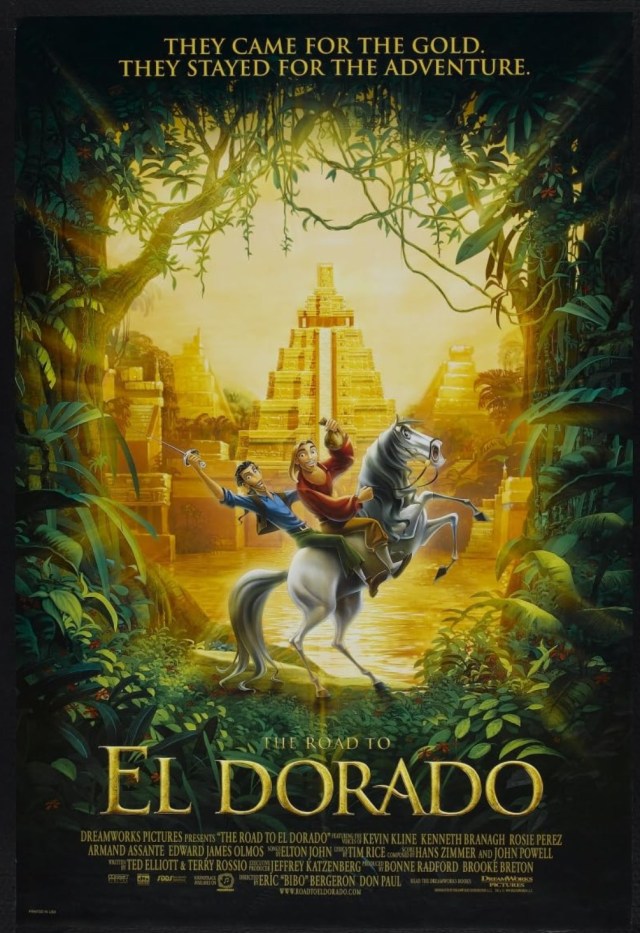
The Road to El Dorado poster created by Dreamworks Pictures, DreamWorks Animation, and DreamWorks Distribution

1. Singin in the Rain (1952)

    I start my list with a classic I was introduced to because of my blog. Now that I have finally seen Singin in the Rain, I have an understanding and appreciation for why the movie is so beloved. Gene Kelly’s iconic musical number, “Singin in the Rain”, should provide enough explanation for why you should check the film out! The number itself feels immersive, as it takes place within the story’s context. Gene adds uniqueness to the number by jumping and splashing in puddles. “Singin in the Rain” successfully represents the spirit of the film, while also delivering the message of seeing the good in a not-so-good situation. That number is just one reason why Singin in the Rain is a solid musical!

    Watching ‘Singin in the Rain’ for the First Time

    2. Ben-Hur (1959)

    If you’re going to watch any classics, you have to see 1959’s Ben-Hur! Though the three-hour run-time can seem intimidating, that time flew by for me, as I was so engrossed in the story. The emotional intensity of Charlton Heston’s, Stephen Boyd’s, and Haya Harareet’s performance complimented the scope of the overall film. Ben-Hur contains other likable qualities as well, from the magnificent sets/scenery to the interesting cinematography. How Christianity/faith was incorporated into the story sets the 1959 production apart from other “sword and sandal” pictures. Those who celebrate Easter may find Ben-Hur an appropriate seasonal title.

    Take 3: Ben-Hur (1959) Review + 60 Follower Thank You

    3. To Kill a Mockingbird (1963)

    While the book, To Kill a Mockingbird, received a sequel, the film adaptation did not. The 1963 movie presents one of the few times where, in my opinion, the film was better than its source material. Getting straight to the point a lot sooner was a main focus for the creative team. The film’s visual nature worked in the favor of certain elements from the book. Showing suspenseful moments from the source material makes those moments seem real, as well as intensifies uncertainty. Leaving out scenes that feel like padding helps the movie maintain a steadier pace.

    Take 3: To Kill a Mockingbird Review

    4. The Boy Who Could Fly (1986)

    When I first saw The Boy Who Could Fly, it subverted my expectations. That’s because the 1986 picture aged surprisingly well! Through Milly and Eric’s friendship, the script shows how people with Autism can create and maintain meaningful relationships. Helping someone with Autism based on their personal preferences and accommodations may have seemed ahead of its time back in the mid to late ‘80s. Timeless messages and themes make up one of the reasons why I love the 1986 film. Showing compassion for others, dealing with grief, and understanding people’s differences take center stage.

    Take 3: The Boy Who Could Fly Review (PB & J Double Feature Part 2)

    5. The Bodyguard (1992)

    In 2022, I wrote an editorial explaining why The Bodyguard held up thirty years later. Because I love the 1992 film, finding explanations wasn’t difficult. “The kitchen scene” is, in my opinion, the best scene from any action movie. One reason why is how the kitchen’s smaller space is seen by the actors as a challenge instead of a hindrance. What also worked in The Bodyguard’s favor was Whitney Houston’s portrayal of Rachel Marron. Throughout the story, Whitney realistically showcases emotions and expressions. This helped Rachel become a multi-layered character.

    I Will Always Love You: ‘The Bodyguard’ at 30
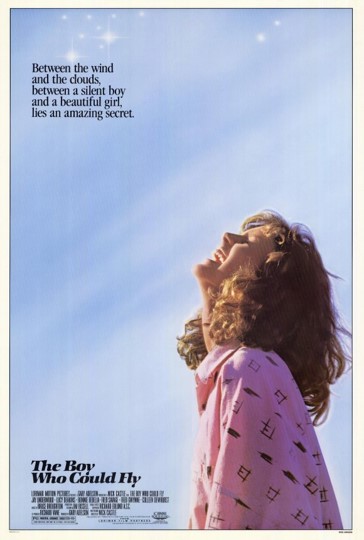
    The Boy Who Could Fly poster created by Lorimar Motion Pictures and 20th Century Fox. Image found at https://www.imdb.com/title/tt0090768/?ref_=nv_sr_srsg_0.

    6. Swept from the Sea (1998)

    Swept from the Sea was one of the earliest hidden gems I discovered in 2019. It’s a movie that’s so great, I just had to include it on this list. There are so many things to like about Swept from the Sea. From Vincent Perez’s captivating performance to the beautiful scenery, the film’s components came together to create an endearing and emotional presentation! The 1998 film is a character-driven story, relying on on-screen chemistry in order to work. Because of Vincent Perez’s and Rachel Weisz’s differing acting styles, the on-screen chemistry between Yanko and Amy was very sweet and genuine.

    Take 3: Swept from the Sea Review (A Month Without the Code — #8)

    7. Phantom of the Megaplex (2000)

    This is another movie I just had to include on my list. But this time, it’s because Phantom of the Megaplex is also celebrating its 25th anniversary this year! The Disney Channel picture showed that the movie-going experience can be fun. As I explained in my editorial celebrating the film’s 20th anniversary, the made-for-TV movie also serves as a time capsule of how the cinema operated in the beginning of the millennium. Phantom of the Megaplex even shows how movies can influence our lives. Though I’m not sure if that aspect of the story was intentional, it makes the 2000 title, somewhat, thought-provoking.

    ‘Phantom of the Megaplex’ at 20: A Reflection on the Movie-Going Experience

    8. I Am David (2004)

    I Am David was the biggest pleasant surprise of 2024. It became the year’s best movie in March and stayed number one until the very end! What set I Am David apart was the film’s genuine emotion and sincerity. This was seen and felt through every aspect of the production. The 2004 movie emphasized visual depth. Achieved by exploring light and darkness, as well as showcasing Europe’s natural landscape, the creative team used the visual nature of film to their project’s advantage. Two effective plot twists are another reason why I liked I Am David. Their delivery in the story was well-written.

    Take 3: I Am David Review (Double Feature: 2004 Edition Part 1)

    9. From Up on Poppy Hill (2011)

    This 2011 presentation is one of Studio Ghibli’s stronger projects. A reason is one of the overarching themes; honoring the past. The film intelligently and creatively shows its audience how important history is in our lives and our world. Whether referencing the 1964 Olympics or focusing on the characters’ relationships, the theme of honoring the past acts as an umbrella sheltering Poppy Hill and its surrounding areas. Studio Ghibli’s signature colorful palette is consistently on display in the 2011 film. The strong understanding for how and when to use color makes scenes look like priceless pieces of art! Personally, I think movies like From Up on Poppy Hill present an argument why 2-D animation still has its time and place.

    Take 3: From Up on Poppy Hill Review + 200 Follower Thank You

    10. The Wild Robot (2024)

      I think it’s fitting to close this list with a DreamWorks movie, as a DreamWorks movie is the reason why I created this list in the first place. Though this was a recent watch for me, The Wild Robot is, so far, the best film I’ve seen this year! The animation itself is absolutely gorgeous! Sometimes, scenes look like paintings and other times, they look like priceless photographs. I was not expecting the story to contain as much emotional depth as it did. An abundance of good messages and themes add a sense of timelessness to the production. Though it’s unknown right now if The Wild Robot will gain an audience like The Road to El Dorado has, I can confidently say it was a really good movie!

      Phantom of the Megaplex poster created by the Walt Disney Company and Disney Channel. © Disney•Pixar. All rights reserved. Disney XD© Disney Enterprises, Inc.

      Have fun at the movies!

      Sally Silverscreen

      Watching ‘Singin in the Rain’ for the First Time

      Throughout my years of movie viewing (and blogging), I have received the opportunity to check out films boasting a “classic” status. This status has, in my opinion, been earned on some occasions, as I gained an understanding for why a particular movie was granted its praise. However, there were certain titles I found myself unable to figure out why it is considered a “classic”. Out of all these “classic” films, I have been meaning to see one specific picture. That title is Singin in the Rain. The 1952 production needs no introduction. From the song, “Good Morning”, being featured in an orange juice commercial to a replica of Gene Kelly’s umbrella in Disney MGM/Hollywood Studios, Singin in the Rain has carved out a slice in America’s pop culture pie. But for someone, like me, who hasn’t seen this iconic film before, these references are going to seem like a company, individual, or creative team is, simply, taking advantage of the movie’s 50+ year popularity. That replica is just used for tourists to have their photo taken. That song was just an appropriate selection to promote a beverage primarily found at breakfast-time. With the arrival and fruition of the Singin in the Rain Blogathon, I finally have a wonderful excuse to watch Singin in the Rain. It also gives me an opportunity to gain more context of the film’s respective songs, images, and quotes.

      Singin in the Rain poster created by
      Metro-Goldwyn-Mayer and Loew’s Inc.

      Creative Musical Numbers

      Singin in the Rain is not just one of the most iconic movies of all time, it’s one of the most iconic musicals of all time! A musical with a “classic” status will bring something unique and creative to the table. The Wizard of Oz took on the power of Technicolor, in a time when that specific technology was more of a luxury. Xanadu showed the world roller skating can be magical. When it comes to Singin in the Rain, the creativity lies in the musical numbers themselves, presenting performances that hadn’t really been seen before 1952. Toward the beginning of the film, Gene and Donald perform a duet, “Fit as a Fiddle (And Ready for Love)”, at a vaudeville show. Throughout this musical number, Donald and Gene not only tap danced, but played the fiddle as well. For the 21st century viewer, dancing and playing an instrument at the same time doesn’t seem like a new concept, as Lindsey Stirling has capitalized on those talents. Within the realm of cinematic musicals, however, a routine like Gene and Donald’s isn’t often included.

      Gene Kelly’s famous solo isn’t the first musical number featuring rain. Two decades prior, in Just Around the Corner, Shirley Temple performed “I Love to Walk in the Rain”, her film’s big musical number that represented the spirit of the movie. Looking back on “Singin in the Rain”, I, personally, feel Shirley’s number walked (no pun intended) so Gene’s solo could soar! The solo from the 1952 production takes place after Gene’s character, Don, takes Kathy home. Despite it raining outdoors, Don is head-over-heels in love with Kathy. Gene tap danced in his solo. But unlike “I Love to Walk in the Rain”, “Singin in the Rain” felt more immersive, as it wasn’t just a performative routine. Because the number takes place within the story’s context, it feels grounded in reality, a downtown street replacing a glamourized stage. Watching Gene jumping and splashing in puddles added uniqueness to the routine. Even though “Singin in the Rain” wasn’t the big musical number for its respective movie, it represents the film’s spirit, reminding the audience to see the good in a not-so-good situation.

      String of musical notes image created by Freepik at freepik.com. <a href=’https://www.freepik.com/free-vector/pentagram-vector_710290.htm’>Designed by Freepik</a> <a href=”https://www.freepik.com/free-photos-vectors/background”>Background vector created by Freepik</a>. Image found at freepik.com. 

      Strong Camaraderie

      In most of my reviews, I talk about the acting. I will choose a few performances to discuss and write about what I liked about them. For this review, I want to talk about a different acting component. While the overall acting in Singin in the Rain was strong, what stood out to me more was the on-screen camaraderie between Gene Kelly, Debbie Reynolds, and Donald O’Connor! One of my favorite scenes is when Don, Kathy, and Cosmo are concocting a plan to save Don’s film. Each character’s personality shines through during this brainstorming session. Cosmo encourages Don to turn the film into a musical, as he spontaneously breaks out into song. Meanwhile, Kathy attempts to keep the group’s good spirits lifted, her kind demeanor certainly helping the situation. After hearing Cosmo’s idea, Don is open-minded about it, joyously realizing he can use his talents to his advantage. This scene, as well as the “Good Morning” musical number, is just one example of Gene, Debbie, and Donald’s on-screen camaraderie. Through their interactions, it felt like Don, Kathy, and Cosmo had been friends all along. This on-screen bond was so pleasant, I looked forward to each time these characters crossed paths!

      Couple performing the waltz image created by Macrovector at freepik.com. <a href=”https://www.freepik.com/free-photos-vectors/background”>Background vector created by macrovector – http://www.freepik.com</a>. Image found at freepik.com.

      Learning about Cinema’s Early Years

      Singin in the Rain takes place in the 1920s, during the transitional period between silent films and “talkies” (movies with sound). Even though the 1952 film is a musical that takes time to focus on its numbers, it lifts the figurative curtain enough to educate the audience on how film-making was executed in that time period. Don’s respective studio, Monumental Pictures, adopted sound after Warner Bros. took a chance with their film, The Jazz Singer, a high risk that was met with high rewards. Because of that one creative decision, it forever changed the cinematic landscape. As emphasized in the musical number, “Moses Supposes”, actors had to not only memorize their lines, they also had to remember to annunciate those lines. Singin in the Rain also shows the audience how dialogue is incorporated into a movie. As someone who appreciates the film-making process, it was nice to see this part of movie-making shown in steps. This step-to-step process was a good introduction to some of the work that goes on behind the camera.

      Image of vintage movie camera created by Macrovector at freepik.com. <a href=”https://www.freepik.com/free-photos-vectors/background”>Background vector created by macrovector – http://www.freepik.com</a>. Image found at freepik.com.

      The Context of “Broadway Melody” in Don’s Film

      While working to adapt his film, The Dancing Cavalier, into a musical, Don proposes the movie’s new opening scene. This scene is presented as the musical number “Broadway Melody”. As a musical number in Singin in the Rain, I liked this performance! It had colorful set and costume design, as well as strong choreography. But as an opening scene in The Dancing Cavalier, the musical number, in my opinion, doesn’t work. “Broadway Melody” is too long, my guess is ten minutes. The number itself kind of feels like an extension of Don’s past, as his journey to Hollywood came from simpler beginnings. Based on what the characters said about The Dancing Cavalier, Don’s proposed opening scene seems to have little connection to that film’s story. If Don’s movie were a real picture, some audience members might become bored with the film before the story began.

      New York City skyline with letters image created by Freepik at freepik.com. <a href=’https://www.freepik.com/free-vector/new-york-skyline-typographic-silhouette_719554.htm’>Designed by Freepik</a>. <a href=”https://www.freepik.com/free-photos-vectors/background”>Background vector created by Freepik</a>. Image found at freepik.com.

      No Subplot for Cosmo

      As I mentioned earlier in this review, I liked the on-screen camaraderie of Gene, Debbie, and Donald. In fact, I liked Donald’s character, Cosmo! Not only was he hilarious and charming, but he was talented as well! The story of Singin in the Rain primarily revolved around the main plot; Monumental Pictures attempting to save their latest film. There is a subplot in the movie, but it mostly focuses on Lina, Don’s co-star. I would have loved to see Cosmo receive his own subplot. Since his contribution to the studio is musical, Cosmo’s part of the story would have pulled back that figurative curtain a little further to show the audience cinematic work behind the camera. I’ve said in previous reviews how important music is in film. Without it, there isn’t an opportunity for viewers to become emotionally affected by a given scene. Because Cosmo is a musician, that aspect of film-making could have been explored.

      Masks of comedy and tragedy images created by freepik at freepik.com. <a href=”https://www.freepik.com/free-photos-vectors/background”>Background vector created by freepik – http://www.freepik.com</a>. Image found at freepik.com.

      A Love Interest That Wasn’t Meant to be

      In my point about Cosmo not receiving a subplot, I mentioned how Singin in the Rain’s subplot mostly focused on Don’s co-star, Lina. Personally, I think more of that time should have been given to Cosmo. I know Lina is meant to be the film’s antagonist. I also know her actions and choices are intended to fuel the movie’s conflict. But why would Lina receive so much time when she and Don were never meant to be? Before and after the premiere of The Royal Rascal, people speculate about Lina and Don’s relationship. Even Lina carries the assumption she and Don are romantically involved with one another. But Don makes it pretty clear he is not romantically interested in Lina. This part of the story reminded me of a Hallmark movie cliché I’ve talked about in the past: the “protagonist’s ex showing up unannounced” cliché.

      The Singin in the Rain Blogathon banner created by Ari from The Classic Movie Muse

      In Conclusion

      Before the Singin in the Rain Blogathon, I had never seen the event’s namesake. That means if someone were to tell me one of the movie’s quotes or if I heard one of the film’s songs, I wouldn’t have thought much of it. Now that I have finally seen Singin in the Rain, I have gained an understanding and appreciation for it! When Kathy first meets Don, she claims, when referring to films, that “when you’ve seen one, you’ve seen them all”. However, I’d argue the 1952 musical built a solid identity that affords it a distinction from other musical movies. Even though Singin in the Rain was released within the Breen Code era, I was pleasantly surprised by the good messages and themes in the story. When I talked about the movie’s on-screen camaraderie, I shared one of my favorite scenes; where Kathy, Don, and Cosmo were figuring out how to save Don’s film. Through this interaction, the message of being one’s self is stressed. This message also allowed Don to use his talents in his favor. When I reviewed The Bridge on the River Kwai, I wondered what the criteria was for lists such as AFI’s 100 Greatest  American  Movies of All Time. One of my speculations was titles that brought something new to the cinematic table. It should be noted that Singin in the Rain is on AFI’s list. While I don’t know for certain how it got there, I think I have a pretty good idea why it’s there.

      Have fun at the movies!

      Sally Silverscreen