I Finally Completed 2022’s Buzzwordathon!

When I recalled my participation in last year’s edition of Buzzwordathon, I said I didn’t finish reading December’s book before the end of the year. However, I promised my readers I would write a review for each book I read during this event. As a blogger of my word, I will be providing a short review of what I chose to read for December!

December

Two Little Girls in Blue book cover found on Goodreads

Title: Two Little Girls in Blue by Mary Higgins Clark

Theme: Numbers

Back in 2020, when I published my TBR Tag post, I mentioned Two Little Girls in Blue being on my TBR the longest. Two to three years later, I finally got around to reading it! While I am glad to have taken advantage of this opportunity, the book itself fell short of my expectations. At best, Two Little Girls in Blue was a fine, interesting enough mystery that held my attention. But it wasn’t the “can’t put it down” page-turner I expected. The subject of twin telepathy is a fascinating one. Yet Mary just scratched at the surface, leaving little to no room for thought-provoking commentary or opportunities to keep the conversation going. Sometimes, when the twin telepathy took place in the story, it felt like it was there for plot convenience.

According to the acknowledgements section in my copy of Two Little Girls in Blue, it seems like Mary attempted to portray the story’s case as realistically as possible. While I appreciate these efforts, each aspect of the case was delved into. This caused the story to be a bit drawn out. I like how the book’s chapters were shorter, as it allowed me to finish the book in a shorter amount of time. On the other hand, I don’t think Two Little Girls in Blue needed to contain over a hundred chapters. Though I thought this book was just fine, I would be interested in reading more of Mary’s work!

Overall score: 3.6-3.7 out of 5 stars

Have fun during 2023’s Buzzwordathon!

Sally Silverscreen

Disclaimer: Two Little Girls in Blue contains subject matter that may not be suitable for some readers. Reader discretion is encouraged.

What Readers Can Look Forward To on 18 Cinema Lane in 2023!

With the sun rising on 2023, it’s time to prepare my readers for what’s to come on 18 Cinema Lane! For those who are unaware, I publish these start of the year posts out of courtesy for those who have taken the time to read and hear what I have to say. In 2023, I have four major announcements I’d like to share! But before that happens, I’ll list my blog’s stats from 2022.

Image by Freepik

2022

Total Blog Posts: 113

Total followers: 61

Total Comments: 351

Total Likes: 535

Awards: 0

Participated Blogathons: 39

Total Movie Reviews: 326

Total Word on the Street stories: 3

Gold Sally Awards’ New Format

When I announced the winners of the 4th Annual Gold Sally Awards last August, I stated the awards would return the following year with a new format. This format will be separate, individual awards that are more unique/creative/fun. The new version of the Gold Sally Awards will be fully implemented in February. Due to this change, the awards will now take place one day a year instead of over a multi-month time period.

Sally Solves a Mystery

In 2022, Chesapeake Shores came to an end. This means I will now be re-capping only one show; When Calls the Heart. You’re probably wondering what I’m going to do with all this free time on my hands. That leads me to introduce my new series; Sally Solves a Mystery! As I’ve said before on 18 Cinema Lane, the mystery genre is the most popular one on my blog. I also talk about television shows from time to time. So, I decided to combine the best of both worlds with this series, where I will write about tv related mysteries I find interesting. Sally Solves a Mystery is going to replace the ‘Evenings At The Shore’ folder. However, the re-cap articles for Chesapeake Shores will still remain on 18 Cinema Lane.

Buzzwordathon and Eurovisionathon

For the first time last year, I participated in the Buzzwordathon readathon. Out of twelve months, I had four fails and I didn’t finish reading December’s book before the end of the year. While this result is not too bad, I would like to participate in Buzzwordathon again this year. Hopefully, my readathon results will be better. In 2023, I will also be taking part in the Eurovisionathon readathon! Hosted by the Youtube channel, Helen’s Book Haven, this month-long event places emphasis on reading books related to the countries participating in the song contest.

5th Birthday Celebration

18 Cinema Lane is turning five in 2023. To commemorate the celebration, I will revisit one of my past articles. But this article won’t be revealed until the publication of the new post. That decision was made to maintain the element of surprise for my readers.

Image by starline on Freepik

Have fun in 2023!

Sally Silverscreen

The Top 10 Worst Movies I Saw in 2022

My worst movies list of 2022 is different from that of the previous year. This time, I’ll be talking about more films that were “so bad they were bad”, as only three of these movies were disappointments. The Dishonorable Mentions portion of the list has also returned! Though I did see more good movies than bad, I couldn’t avoid coming across a “stinker” every now and then. I like to think I’ll, one day, see less than ten films for my annual worst list. But someday has not come this year, as the title of this article suggests. As I’ve stated in past lists, I did not write my list to be mean-spirited or negative. It’s just a way to express my own, honest opinion. Since some of these films have been reviewed on my blog, I will provide links to those reviews.

Dishonorable Mentions

Signed, Sealed, Delivered: The Vows We Have Made, A Place for Annie, Swim Instructor Nightmare, Nikki & Nora: Sister Sleuths, The Corsican Brothers (1985), and Donnie Brasco (I only watched forty minutes of the film before turning it off)

<a href=”http://<a href=’https://www.freepik.com/vectors/new-year’>New year vector created by freepik – http://www.freepik.com</a>&quot; data-type=”URL” data-id=”<a href=’https://www.freepik.com/vectors/new-year’>New year vector created by freepik – http://www.freepik.com2022 Changing numbers image created by Freepik at freepik.com

10. The New Adventures of Heidi

In 2022, I was hoping to finally find my coveted “so bad, it’s good” movie. Sadly, The New Adventures of Heidi was not it. As I said in my review, this film is “spectacularly average”. The more I think about the 1978 made-for-tv movie, the less justifiable reasons I can think of for the project’s existence. Yes, The New Adventures of Heidi was intended as a “modern” re-telling of Johanna Spyri’s story. But the movie didn’t feel unique enough, despite all the changes. Every year I’ve participated in the So Bad It’s Good Blogathon, there has been a pattern between movies that turned out ok and movies that were just disappointing. Hopefully, in 2023, I can break this pattern.

Take 3: The New Adventures of Heidi Review

9. Love in Wolf Creek

When I first read the synopsis for Love in Wolf Creek, I was excited at the idea of a “cozier” story filled with adventure and excitement. The 2022 television film seemed better on paper than in practice. For a movie titled Love in Wolf Creek, there was very little romance in the story. The writing was weaker than I hoped, filled with scenarios that were too unrealistic for my liking. This project was too ambitious for INSP, the network who created the film. It was so disappointing, I didn’t bother watching its sequel, Christmas in Wolf Creek.

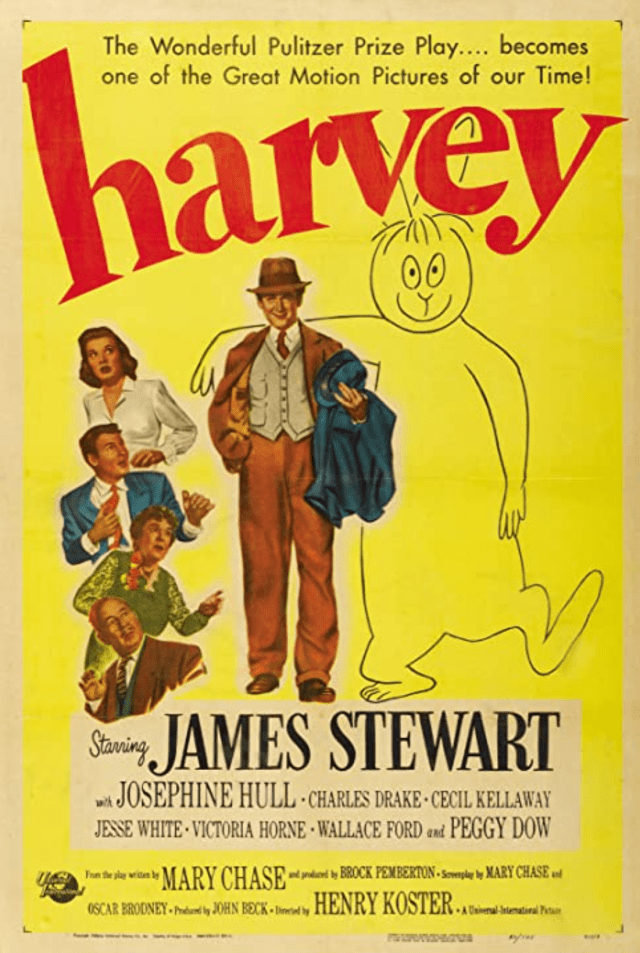
8. Harvey (1950)

I think the 1972 Hallmark Hall of Fame adaptation of Harvey is better than its 1950 predecessor. While I’m aware how controversial my opinion is, the 1972 film had more success executing its intended points. A mistake the 1950 movie makes is trying to be a comedy and a drama. This decision led the comedy to not only be underutilized, but also showcased medical negligence in a way that didn’t sit well with me. “Magical realism” was lacking in the 1950 film. This took away any opportunity for the story to be charming and whimsical. When I reviewed Harvey back in January, it was the most disappointing movie I saw in 2022. Now, eleven months later, the 1950 picture still holds that title.

Take 3: Harvey (1950) Review

7. Journey

The 1995 Hallmark Hall of Fame presentation made the same mistake Durango did: not giving the audience a reason to care about the characters and their story. In the case of Journey, the creative team failed to provide explanations for the characters’ choices. At the beginning of the film, the protagonist’s mother, Min, abandons her family, claiming she hates her parents. But the script never explains why she made this decision. Even when there are cut-away scenes featuring Min, she isn’t doing anything significant. How am I expected to care about Min’s choice affecting her family when I don’t even know why she left in the first place?

6. My Mom Made Me Do It

According to a synopsis I read for this 2022 Lifetime film, the protagonist, Jade, turns to stealing in order to help her mom pay the bills. Both the title and synopsis turned out to be a lie because 1) Jade’s decisions were made on her own and 2) Jade never steals anything. What she does instead is crash wealthy people’s parties and photographs their belongings. Other issues contained in this movie are weak lead performances and characters who make one dumb choice after another. I will admit there was at least one effective plot twist. But I wish it had taken place in a better film.

Harvey (1950) poster created by Universal Pictures

5. The Sundowners (1960)

For a little while, I thought The Sundowners was going to be the worst movie I saw this year. Even though I was proven wrong, the 1960 film has still remained in my top five. Like I said in my review, one of the worst things you can do as a film-maker is waste your audience’s time. The story felt longer than necessary, which made the movie two hours and thirteen minutes not well spent. One of my biggest issues with The Sundowners was its “bait and switch” ending. While I won’t go into detail about the ending, as I don’t want to spoil the film, I will say it was cruel for both the characters and the audience.

Take 3: The Sundowners (1960) Review

4. The North Avenue Irregulars

This movie attempts to answer the question; “Wouldn’t it be funny if a group of women came together to solve a mystery”? By the time The North Avenue Irregulars was released in 1979, that question made the film dated on arrival, as there were several television programs from the ‘70s featuring at least one female character solving mysteries or fighting crime. The movie’s creative team told too many types of stories, yet failed at all of them. One minute, the film felt like a precursor to the Mitford series, revolving around a preacher trying to live his best life. The next minute, the film turns into a gangster heist picture, paired with car chases that were longer than necessary. Honestly, I wish this movie was a Scooby Doo-esque story about the film’s fictional band, Strawberry Shortcake. Maybe then the movie would seem more timeless.

3. Lake Effects

For the first time in 18 Cinema Lane history, all the movies in my worst list’s top three are Hallmark productions. Accepting the bronze is the 2012 film, Lake Effects. This movie has so many Hallmark movie clichés, you could create a bingo game around them. You could also create a bingo game around the many storylines found in this script. Lake Effects is a production that relies on style over substance. While Smith Mountain Lake, Virginia was captured well on film, there’s only so much the movie’s creative team could do with the weak script at their disposal. In my review from August, I stated how the movie seemed forgotten over the years. Its poor quality makes it not worth remembering.

Take 3: Lake Effects Review

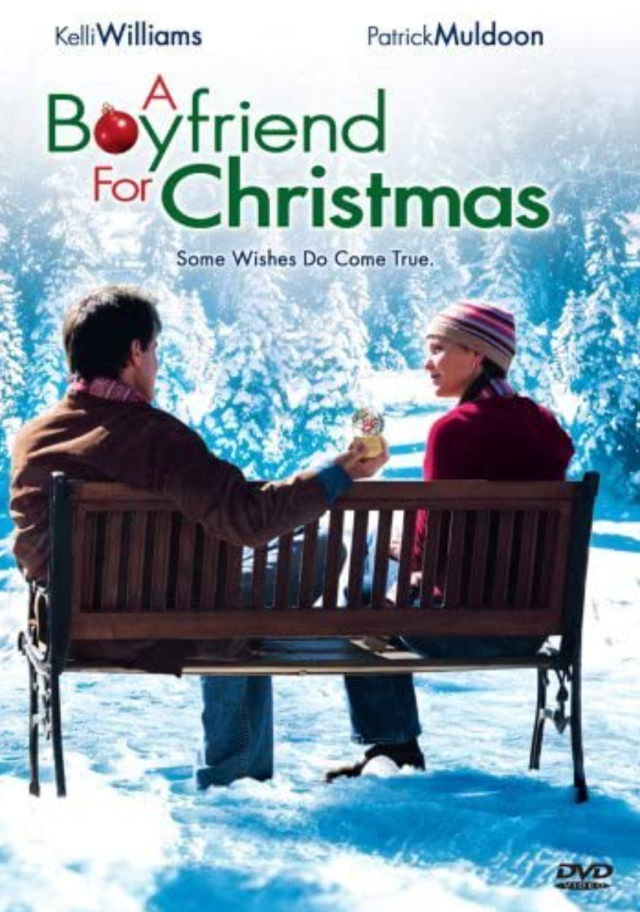
2. A Boyfriend for Christmas

In 2019 and 2020, a Hallmark Christmas movie ended up in the top three of my annual worst movies list. History is kind of repeating itself with A Boyfriend for Christmas in second place. Like Lake Effects, the 2004 film contained a weak script. But in A Boyfriend for Christmas, I only liked two minor parts of the story. The lack of Christmas magic made my movie viewing experience unenjoyable. It was one of those stories that became worse the longer I watched it. I know this movie is one of the most beloved titles in Hallmark’s cinematic library. Honestly, though, I found it over-rated.

Take 3: A Boyfriend for Christmas Review

1. Francesca Quinn, PI

Remember when I said one of the worst things a film-maker can do is waste their audience’s time? Well, another worst thing a film-maker can do is disrespect their audience’s intelligence. As I watched Francesca Quinn, PI, I was given the impression the film’s creative team didn’t want me to solve the mystery alongside the protagonist. That’s because Francesca explained things that didn’t need explaining. Despite Francesca being a professional private investigator, she constantly made decisions an amateur detective would likely make. Her lack of personality didn’t help either. According to IMDB, Francesca Quinn, PI could replace the Mystery 101 series. The reason is “the main characters’ relationship and the crime at the end of Deadly History are the same as the main characters’ relationship and crime in Francesca Quinn, PI”. If this is the case, the Mystery 101 fans, including myself, deserve so much better.

A Boyfriend for Christmas poster created by Hallmark Entertainment,  MAT IV,  Alpine Medien Productions, Larry Levinson Productions, Gaiam Entertainment, and Hallmark Channel 

Have fun in 2023.

Sally Silverscreen

Take 3: The Christmas Thief Review

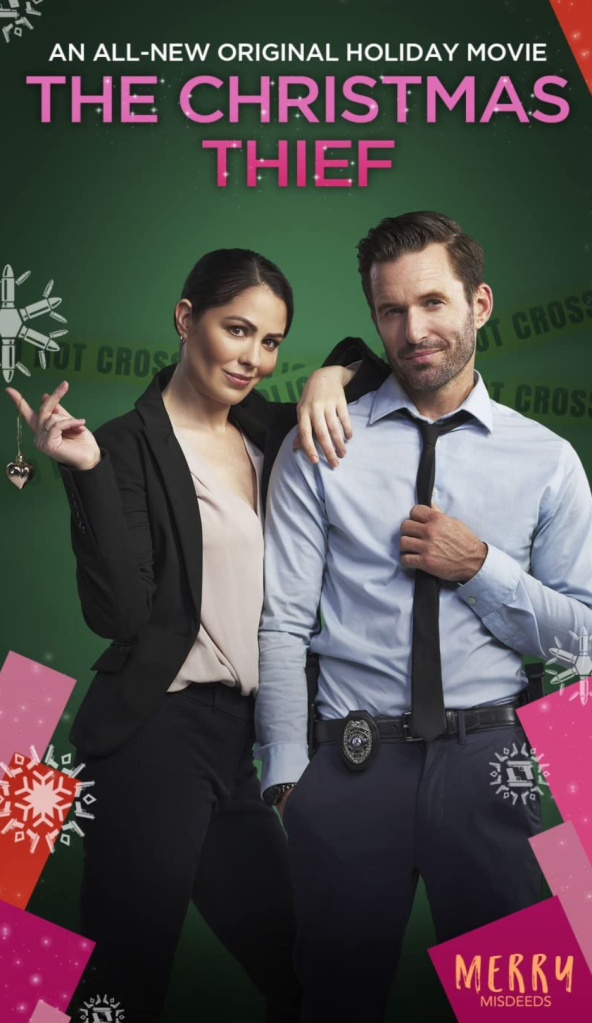
Merry Christmas to all my readers and followers! For the last movie of the season, I wanted to review something different. That’s because the Christmas movies I reviewed this year have been Hallmark productions. So, I chose to write about the Ion Television film, The Christmas Thief! This review marks two firsts for 18 Cinema Lane. The Christmas Thief is the first Ion movie I’ve ever written about, as I don’t often watch Christmas films from that network. Up until Christmas 2022, I have never reviewed a Christmas themed mystery movie. However, I know how popular the mystery genre is on my blog. With all that said, here is my gift to you; a sweet treat called The Christmas Thief!

The Christmas Thief poster created by Thriller Films, Scripps Networks, GPS, and Organic Media Group

Things I liked about the film:

Stand-out performances: While watching The Christmas Thief, there were some acting performances that stood out for the right reasons! One of them came from Jarrid Masse! Portraying a detective named Nick, Jarrid carried his character with a strong sense of charm. At the same time, Jarrid maintained the professionalism you’d expect from a detective. Even though I’ve only seen pieces of Top Gun, Jarrid’s performance reminded me of Val Kilmer’s portrayal of Iceman. I really liked seeing Nick’s interactions with his detective partner, Marie. Portrayed by Rachel Cerda, Marie had an easy-going personality. This not only complimented Nick’s personality, it helped create good on-screen camaraderie between Marie and Nick. I wish Rachel and Jarrid shared more scenes, as these two actors appeared to work well together! Bryson JonSteele portrayed Lana’s nephew, Henry. I enjoyed watching his performance, as it came across as believable! When he interacted with Lana, the film’s protagonist, Henry would sometimes adopt an accent that would be heard in a noir film. Because he looks up to his aunt as a role model, Henry has a child’s belief that he has to behave this way in order to be a good private investigator.

Henry’s subplot: As I just mentioned, Henry looks up to his aunt as a role model. He finds her private investigator dreams appealing, which inspires him to solve a mystery of his own. Shortly after Lana arrives home for Christmas, Henry asks for her help. He’s attempting to figure out if the neighborhood Santa is the real one or just a volunteer in a costume. When younger characters are incorporated in a Christmas movie, they are either there for the sake of being there or they have a minor role in the story. Henry’s subplot allowed him to have a bigger role than some younger characters in Christmas films. Having Henry’s subplot connected to the main plot also helps. With everything considered, I found this part of the story adorable!

The mystery: More often than not, I have enjoyed watching Hallmark’s mystery films. But I’ll be one of the first movie bloggers to admit the murder mystery storyline can sometimes feel repetitive. With The Christmas Thief, the mystery was a theft, which prevented the movie’s tone from becoming too dark. I also think the mystery itself was executed well! With clues sprinkled throughout the story, the audience could participate in solving the mystery alongside Lana and Nick. The creative team’s decision to make the mystery a top priority kept viewers invested in the movie. Lana’s interest in private investigation gave her a strong reason for getting involved in the case. All these pieces came together to deliver a more creative Christmas story!

Group of Christmas figures image created by Pikisuperstar at freepik.com. <a href=”https://www.freepik.com/free-photos-vectors/christmas”>Christmas vector created by Pikisuperstar – Freepik.com</a>. <a href=’https://www.freepik.com/free-vector/hand-drawn-cute-christmas-character_3188970.htm’>Designed by Pikisuperstar</a>. Image found at freepik.com.

What I didn’t like about the film:

Poor audio: In some outdoor scenes, the audio’s quality was poor. When characters spoke to one another, it sounded like they were trying to communicate underwater. While watching The Christmas Thief, I, at first, thought there was something wrong with my television’s sound system. But the more this occurred, I realized it was an issue with the movie itself. It seems like the film’s creative team forgot to add ADR (automated dialog replacement) in post-production.

Inconsistent parts of the story: When it came to The Christmas Thief’s script, there were inconsistencies. It didn’t happen frequently, like in A Boyfriend for Christmas, but it was still a story-related issue. One example involves Lana. Through a voice-over at the beginning of the movie, Lana reveals how she has never believed in Santa, even when she was a child. Yet, during a stakeout with Nick, she claims the neighborhood Santa is real. There’s nothing wrong with showing a character change their perspective over time. In Lana’s case, however, that journey from point A to B was never shown. So, Lana’s change in belief came across as sudden.

A message’s weak delivery: Lana has always dreamed of becoming a private investigator. But her career prospects don’t seem as bright as she originally thought. Through a heart-to-heart conversation with her mother, Lana and the audience receive one of the film’s important messages: Sometimes, a dream not coming true can be a good thing, as your skills and talents can lead you in a better direction. I have rarely seen this message incorporated in entertainment media, so I was glad to see it addressed in The Christmas Thief. However, without spoiling the movie, Lana’s career decision backtracked on this message. I was disappointed by this, as the message could have had a better execution.

Magnifying glass image created by Freepik at freepik.com. <a href=’https://www.freepik.com/free-vector/magnifying-glass-with-fingerprint-in-flat-style_2034684.htm’>Designed by Freepik</a>. <a href=”https://www.freepik.com/free-photos-vectors/flat”>Flat vector created by Freepik</a>. Image found at freepik.com.

My overall impression:

Christmas mystery films are, in my opinion, far and few between. Sure, there have been Christmas projects containing elements of mystery. But the only Christmas mystery movie I can think of is Murder, She Baked: A Plum Pudding Mystery. This is why I appreciate the story of The Christmas Thief, as Ion seems eager to think outside the box. Though the film does contain its strengths, it’s not without its flaws. The poor audio was noticeable to the point where I, honestly, thought my television’s sound system was experiencing technical issues. There were even inconsistencies in the script, but not as bad as A Boyfriend for Christmas. At the end of the day, Ion’s efforts to try something different should be recognized. With the network’s recent desire to create more Christmas mystery films, it makes me wonder if Ion will eventually become a mystery exclusive channel?

Overall score: 6 out of 10

Have you seen The Christmas Thief? Are there any Christmas mystery films you can think of? Let me know in the comment section!

Have fun during Christmas!

Sally Silverscreen

Take 3: Hallmark Hall of Fame’s Witness for the Prosecution (1982) Review

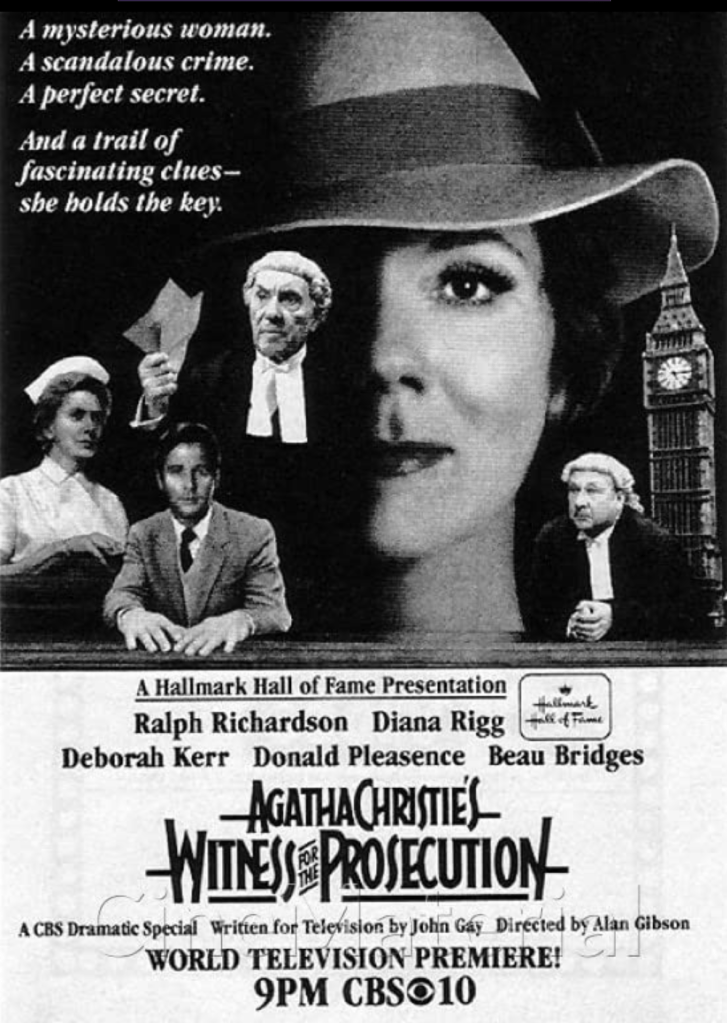
In my list of the Top 10 Movies I’d Love to Review, I mentioned finding Oliver 2: Let’s Twist Again on Diana Rigg’s IMDB filmography. During that trip on IMDB, I found another film I could review for the Other Than A Bond Girl Blogathon. As the title of this review says, that movie is the 1982 Hallmark Hall of Fame presentation, Witness for the Prosecution! I’ve gone on record to state how I’d like to watch as many Hallmark Hall of Fame titles as realistically possible. If I’m going to be honest, I didn’t think I would ever see Witness for the Prosecution. That’s because the film not only didn’t receive a DVD release, but it doesn’t seem to have received a VHS release either. So, imagine my shock when I found the full movie on Youtube! Mysteries are, arguably, the most popular genre on my blog. This is also not the first time I’ve reviewed an Agatha Christie adaptation. Back in April, I wrote about the 2022 film, Death on the Nile. In that review, I said the movie had a weaker execution than its 2017 predecessor, Murder on the Orient Express. How will Witness for the Prosecution fare against these aforementioned adaptations? All rise, as this review is now in session!

Hallmark Hall of Fame’s Witness for the Prosecution poster created by CBS Entertainment Production, Hallmark Hall of Fame Productions, Rosemont Productions, and United Artists Television

Things I liked about the film:

The acting: Diana Rigg is one of the eligible Bond Girls for the Other Than A Bond Girl Blogathon. Therefore, I will talk about her performance first. In Witness for the Prosecution, Diana portrayed Christine Vole, the wife of the accused party. Throughout the film, she carried her character as a woman from stories in the 1920s. What I mean by this is Christine held her own with confidence, never shaken by the probing of those involved in the legal side of the case. Even when she took the stand, Christine adopted a serious demeanor, as if putting on a “poker face” and refusing to show her deck of cards too early. These acting choices and the consistency of her performance allowed Diana to pull off a captivating and memorable portrayal!

Deborah Kerr is an actress I’ve talked about before on 18 Cinema Lane. While I have seen and reviewed five of her films, none of them were from the mystery genre. Despite this, Deborah held her own, acting wise, among the cast! She portrays Nurse Plimsoll in Witness for the Prosecution. While watching the 1982 production, her performance reminded me a bit of Donna Reed’s portrayal of Mary from It’s a Wonderful Life. Nurse Plimsoll cares about the health and well-being of the film’s protagonist, Sir Wilfred Robarts. Though Wilfred finds her overall nursing approach annoying, Nurse Plimsoll doesn’t give up on her mission. Even though she is stricter than other on-screen nurses, her heart is always in the right place. This can be seen through Deborah’s facial expressions, body language, and emotions.

Even though the cast as a whole was strong, there was one performance that stole the show. This came from Beau Bridges! Witness for the Prosecution shows Beau portraying an American named Leonard. Because his case is presented in a British/U.K. court system, he is a “fish out of water”. The situation itself provides an interesting dynamic for the cast, including Beau, to work with. It also gave Beau an opportunity to utilize a variety of emotions. During the case, one of the witnesses causes Leonard to have an emotional reaction. At the start of the witness’ questioning, Leonard presents a calm “resting face”. But as the questioning continues, he slowly becomes sadder, adopting a growing frown and his eyes filling with tears. This transformation was gradual, allowing Beau to adapt to the on-screen situation.

The set design: The majority of Witness for the Prosecution takes place within a British/U.K. court room. Despite the limited locations, there were some examples of set design that I liked! Inside the court room, the ceiling was domed, with clear glass exposing a view of the sky. Surrounding the dome are etched, white arches. With a green light shown on these arches, they gave the appearance of boasting an antique limestone material, which complimented the dark wood of the court room’s walls and furniture. In the lobby of the court room, painted murals are shown near the ceiling. The lobby’s walls appear to be covered in a two-tone marble material, with the floor revealing a black-and-white tile design. My favorite set in Witness for the Prosecution was Wilfred’s office! The room’s color scheme was brown, beige, and red. When this set was first introduced, a large, dark wood bookcase proudly stood. It was guarded by a dark wood table and two dark brown armchairs. While the walls were beige, the curtains on the window were red, giving the room a pop of color. The more time Wilfred spent in this space, the more the sophisticated, professional, and intelligent appearance of the office complimented his personality.

An in-depth look at the British/U.K. court system: As I mentioned in my point about the film’s set design, the majority of this story takes place in a British/U.K. court room. That part of the movie exposed the audience to the British/U.K. court system. Even though Witness for the Prosecution is not the “end all, be all” when it comes to this specific court system’s portrayal in entertainment media, it gives viewers a chance to compare and contrast it to other court systems in other productions. The layout of the court room itself provides one example. Toward the front of the court room, the witness stand is located at the judge’s right-hand side. This part of the court room is separate from the judge’s stand. Meanwhile, in court room productions taking place in the United States, the witness stand can either be located at the judge’s left or right-hand side. It is also connected to the judge’s stand.  

The Other Than A Bond Girl Blogathon banner created by Gabriela from Pale Writer and Gill from Realweegiemidget Reviews

What I didn’t like about the film:

The magical monocle: While working on the case, Wilfred wore a monocle when he was questioning the accused party and his wife. As he questioned them, a light shone through the monocle and directly landed on Leonard and Christine. But these were the only two times Wilfred used the magical monocle. The purpose of the monocle or Wilfred’s reason for using it was never explained. Was this monocle truly magical or was the monocle used as foreshadowing? I wish this part of Wilfred’s character was more consistent.

A dialogue heavy story: With any movie or tv show episode featuring a court case, there’s going to be a certain amount of dialogue within the story. But because Witness for the Prosecution mostly revolved around a court case, the 1982 production feels more dialogue heavy compared to Death on the Nile and Murder on the Orient Express. Before watching Witness for the Prosecution, I had expected more showing than telling when it came to the mystery. Instead of watching the characters making discoveries related to the mystery, I heard about it through the questioning in court. Because of this creative decision, I didn’t find the movie’s mystery as engaging as it could have been.

An inactive detective: In a story where a detective, amateur or professional, is the protagonist, the audience expects to see this character actively solve their respective film’s mystery. Sadly, the viewers won’t witness that in Witness for the Prosecution. Wilfred is a lawyer defending Leonard in his case. However, Wilfred places more emphasis in resolving the case than playing detective. Even though this movie’s mystery was solved, it felt like Wilfred was served the answer on a silver platter instead of discovering it himself. Similar to what I said about the dialogue-heavy story, I didn’t find the mystery engaging because of Wilfred’s inactive detective role.

Sketch of London image created by Archjoe at freepik.com. <a href=’https://www.freepik.com/free-vector/hand-drawn-houses-of-parliament_1133950.htm’>Designed by Archjoe</a>. <a href=”https://www.freepik.com/free-photos-vectors/background”>Background vector created by Archjoe – Freepik.com</a>. Image found at freepik.com.

My overall impression:

Hallmark Hall of Fame’s Witness for the Prosecution shares a similar plot with 1997’s Red Corner: an American man is accused of murder, with his case in a court system outside of the United States. But where Red Corner succeeded and Witness for the Prosecution didn’t is how Shen, Jack’s lawyer in Red Corner, not only played a role in the court case, but also went above and beyond in attempting to solve the mystery surrounding the case. This allowed Red Corner’s story to be intriguing and engaging for the audience. With the 1982 production, Wilfred spends more time on the court case than the mystery wrapped around it. This decreases the audience’s engagement. The dialogue heavy nature of Witness for the Prosecution’s story also affected the mystery’s intrigue. Hallmark Hall of Fame’s presentation is the third Agatha Christie adaptation I’ve seen, which I wasn’t overly thrilled with. I still want to, one day, read her literary work. But based on my reactions to the three adaptations I have watched so far, I’m starting to wonder if I’ll find an Agatha Christie story I like?

Overall score: 6.1-6.2 out of 10

Have you seen any of Agatha Christie’s adaptations? Do you have a favorite Agatha Christie story? Let me know in the comment section!

Have fun at the movies!

Sally Silverscreen

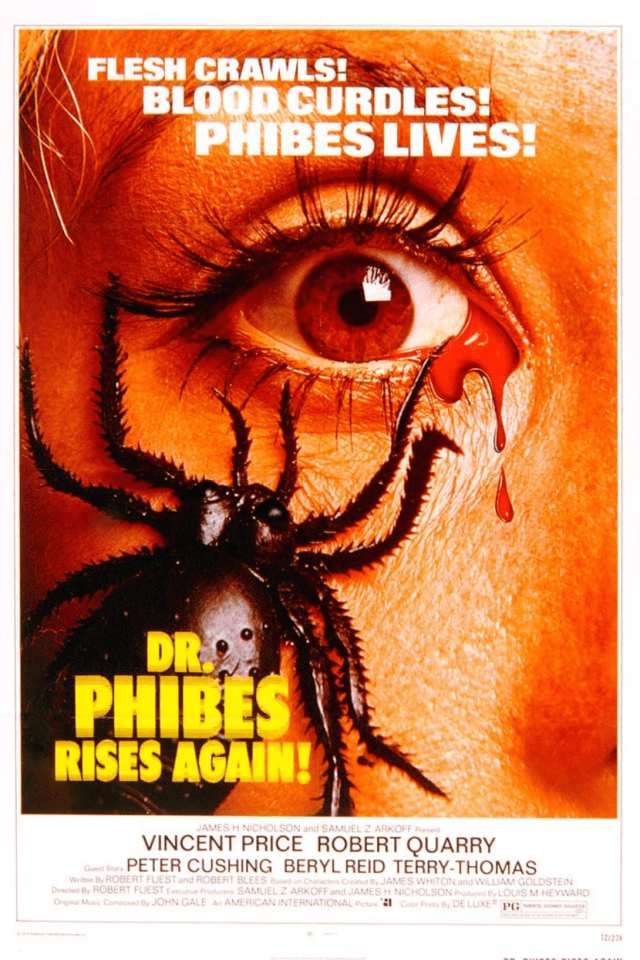
Take 3: Dr. Phibes Rises Again Review + 420, 425, and 430 Follower Thank You

While looking for a movie to review for my next Blog Follower Dedication Review, I realized it’s been a month since I wrote about a “spooky” title. It’s also been two months since I reviewed a sequel. Because of those factors, I choose to review the 1972 movie, Dr. Phibes Rises Again! Last year, I saw the predecessor, The Abominable Dr. Phibes, after one of my readers recommended it to me. In my opinion, the film was just fine, as I found the horror in the horror-comedy classification heavily emphasized. The fact The Abominable Dr. Phibes received a sequel was surprising to me. That’s because I had no idea the 1971 title received a second chapter until I recently stumbled across it. What other surprises are in store? Let’s take a trip through this review of Dr. Phibes Rises Again in order to find out!

Dr. Phibes Rises Again poster created by
American International Pictures and Anglo-EMI Film Distributors Ltd./MGM-EMI

Things I liked about the film:

A mystery-adventure: In my review of The Abominable Dr. Phibes, I stated how the story was more of a horror-mystery due to the limited incorporation of comedy. Like its predecessor, the sequel also features a mystery. But this time, an adventure story is included in the script, as the characters travel to Egypt. The change in scenery allowed something new to be brought to the overall story. It also added an exciting component, with the audience receiving an opportunity to witness new sights and join the ride with the characters. A new setting made the film’s twists and turns interesting, as Dr. Phibes came up with different ways to attempt to reach his goal. A distinct identity was given to Dr. Phibes Rises Again because of these creative decisions!

Toned down character demises: One of The Abominable Dr. Phibes’ flaws was how over-the-top demises of characters were, as they came across more gross than scary. These demises also overshadowed Vincent Price’s performance, which led to his talents being underutilized. While Dr. Phibes continued to go after anyone who stood in his way in Dr. Phibes Rises Again, the execution of his plan was toned down. Not only were there less demises, but there was also less on-screen gore compared to the first film. Vincent’s acting abilities received more emphasis because of this creative decision. That creative decision also allowed me, as a viewer, to focus on Vincent’s body language, facial expressions, and vocal inflections. Vincent’s role in Dr. Phibes Rises Again felt more like lead actor material compared to The Abominable Dr. Phibes.

Robert Quarry’s portrayal of Darius Biederbeck: When I talked about Queen of the Damned in my article, Twentieth Century vs. Queen of the Damned at the Against the Crowd Blogathon, I said the movie presented Lestat as a more likable protagonist. Stuart Townsend’s portrayal of Lestat helps make this statement accurate, as his consistent suave, confidence added to Lestat’s likability. Robert Quarry’s portrayal of Darius Biederbeck in Dr. Phibes Rises Again reminded me of Stuart Townsend’s portrayal of Lestat. This is because Darius’ suave, confidence was similar to Lestat’s. Darius was a goal-driven man, believing in himself and his mission. Even when those around him had their doubts, his confidence was unwavering, presented consistently by Robert. What also helped was how strong Robert’s acting abilities were, giving him an opportunity to present a stand-out performance. These aspects of Robert’s portrayal of Darius made it enjoyable for me to watch!

Egyptian hieroglyphic image created by wirestock at freepik.com. Luxor photo created by wirestock – www.freepik.com

What I didn’t like about the film:

A somewhat rehashed story: Dr. Phibes’ story in The Abominable Dr. Phibes revolved around trying to find a solution for his deceased wife, Victoria. This quest for a solution drove Dr. Phibes to go after those he felt wronged him and his wife. In Dr. Phibes Rises Again, Dr. Phibe travels to Egypt. But his mission is similar to the first film: find a solution for Victoria. I won’t claim this story is a carbon copy of The Abominable Dr. Phibes. However, I wish it had less similarities to the predecessor.

Confusing parts of the story: A confusing part of Dr. Phibes Rises Again is the return of Vulnavia. Dr. Phibes’ assistant, Vulnavia, was one of the key characters in The Abominable Dr. Phibes. Without spoiling the first movie, I will say something happens that prevents Vulnavia from appearing in the sequel. Yet, she does appear in Dr. Phibes Rises Again, with no clear explanation provided. This is just one example of confusing parts of the story that should have received more context.

An unresolved mystery: While in Egypt, Dr. Phibes discovers a sarcophagus. When he opens the sarcophagus, it appears a mummy had been removed. Dr. Phibes even questions what happened to the aforementioned mummy. But after this scene took place, the mystery is never resolved. In fact, it was never brought up after Dr. Phibes’ initial discovery. This made me wonder why the film’s creative team would include that mystery in their script if they had no intentions to solve it on screen?

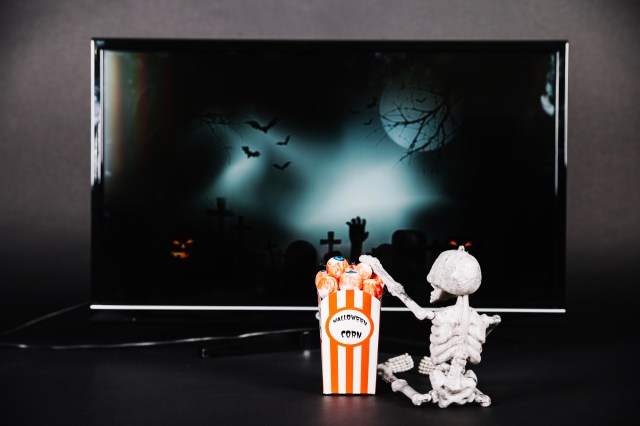
Scary movie screening image created by Freepik at freepik.com. <a href=’https://www.freepik.com/free-photo/small-skeleton-with-popcorn-and-tv_1323292.htm’>Designed by Freepik</a>. <a href=”https://www.freepik.com/free-photos-vectors/background”>Background image created by Freepik</a>. Image found at freepik.com.

My overall impression:

Before I share my overall impression of Dr. Phibes Rises Again, I’d like to thank all my followers! I appreciate your support of 18 Cinema Lane! Now, on to my thoughts on Dr. Phibes Rises Again. On the one hand, the sequel tries to go in a different direction from the first movie. It even fixes some of the predecessor’s flaws. On the other hand, though, Dr. Phibes’ story was similar to his story in The Abominable Dr. Phibes. It also doesn’t help how parts of the story were confusing and a mystery was unresolved. Therefore, I will say this: as a movie, Dr. Phibes Rises Again is fine. As a sequel, it is slightly better than the first film.

Overall score: 7.2 out of 10

Have you seen The Abominable Dr. Phibes or its sequel? Are there any sequels you think are better than their predecessor? Please tell me in the comment section!

Have fun at the movies!

Sally Silverscreen

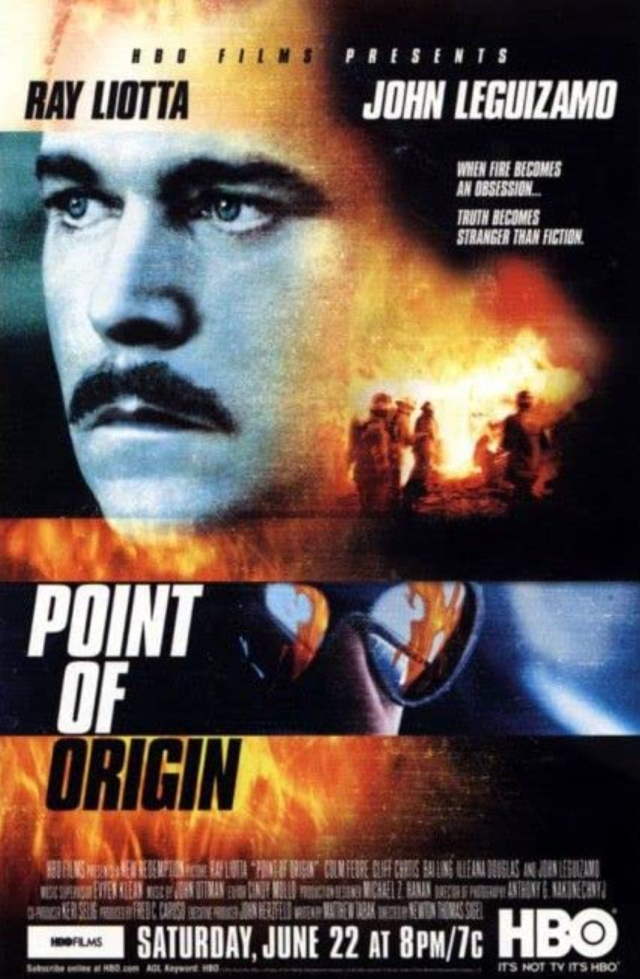
Take 3: Point of Origin Review

When the subject of “disaster films” is brought up, one will usually think of films revolving around over-exaggerated, fictionalized disasters. Whether it’s Sharknado or The Day After Tomorrow, these types of titles have become the faces of the “disaster film” category. But what if a movie depicts a real-life disaster that could be experienced by anyone? This is the case of my Disaster Blog-a-Thon entry, Point of Origin. Last month, I searched on Wikipedia for a title to review for May’s Genre Grandeur. During that search, I stumbled across the aforementioned 2002 HBO production. After reading the film was a “fact-based drama about an arson investigator searching for the perpetrator of a string of deadly fires in 1980s California”, I knew it was the perfect choice for J-Dub and Pale Writer’s event! Before I start this review, I would like to point out how this marks two firsts for 18 Cinema Lane. Not only is this my first time participating in the Disaster Blog-a-Thon, this is also the first HBO film reviewed on my blog!

Point of Origin poster created by HBO Films and New Redemption Pictures

Things I liked about the film:

The mystery: For the most part, the mystery in Point of Origin allowed the audience to experience it alongside the characters. What also helps is how the mystery started right at the beginning of the film. This immediately hooked the audience into the story, while also giving them a shared journey with the key players on screen. There was room for viewers to speculate what would happen in the story. That gave them the opportunity to interact with the film’s mystery. Three separate components played a role in the overarching narrative. While I won’t give anything away, it was interesting to see these components come together.

The special effects: When John was investigating a crime scene, he would attempt to figure out how the fire started. Toward the beginning of the film, this thought process was visualized through special effects. As John is recounting the information, the actual fire is played out in reverse on screen. This is very different from other mystery movies, as flashbacks might be utilized to speculate the cause of a crime. When it came to the fires themselves, it appeared as if they actually took place in a given scene. It may have been possible for the movie’s creative team to insert footage of fires through editing or CGI, as Point of Origin was released in 2002. However, practical effects were an interesting choice. This creative decision reminded me of productions like The Crow.

Showcasing the dangers of fire: While investigating a local fire, John and his co-worker, Keith, examine a young boy who died on the crime scene. Despite only the victim’s face being shown, it is blackened due to smoke and flame exposure. Later in the film, John visits a surviving burn victim in the hospital. The victim’s face and part of his hand are covered in burns. He even claims that it hurts to open his eyes. Due to the nature of Point of Origin, the story is heavier in tone. However, the incorporation of the dangers of fire never felt like they were there for “shock value” or as a tactic to scare the audience. If anything, it was shown just enough to get the point across.

The Second Disaster Blog-A-Thon banner created by J-Dub from Dubsism and Pale Writer from Pale Writer

What I didn’t like about the film:

Bai Ling’s limited presence: Bai Ling was cast as John’s wife, Wanda Orr, in the 2002 HBO film. Her involvement in Point of Origin is one of the reasons why I sought out this movie, as she is the top billed actress. When I watched the film, however, I discovered Bai appeared in only a handful of scenes. Compared to some of Bai’s other projects, her talents were under-utilized in Point of Origin. It also seems like the main supporting actress, Illeana Douglas, received more screen-time than Bai. Bai did a good job with the acting material she was given. But this situation is very reminiscent of Katharine Hepburn’s involvement in 1994’s One Christmas, where Katharine appeared in about five scenes despite being that film’s top billed actor.

A confusing time period: As I mentioned in the introduction, Point of Origin takes place in the 1980s. Elements from that decade were incorporated into the film, such as vehicles and a typewriter used by John at various moments in the story. Meanwhile, Bai’s wardrobe looked like it came straight from the early 2000s. There was also a scene where a store patron tells another patron not to smoke in the store. This attitude was more prevalent in the 2000s, as smoking in public places was more accepted in the 1980s. The inconsistency with the film’s historical accuracy was so confusing, it was, on a few occasions, distracting.

An unidentified red-haired man: Throughout the movie, a red-haired man made multiple appearances. I won’t spoil the movie for anyone who hasn’t seen it. But I will say when everything was said and done, I don’t feel like I received a satisfying explanation of who that character is. Yes, I can assume the red-haired man’s identity. However, when it comes to that character, the movie was building up to something without providing a pay-off.

Magnifying glass and fingerprint image created by Alvaro_Cabrera at freepik.com. <a href=’https://www.freepik.com/free-vector/loupe-over-a-fingerprint_853908.htm’>Designed by alvaro_cabrera</a>. <a href=”https://www.freepik.com/free-photos-vectors/glass”>Glass vector created by Alvaro_cabrera – Freepik.com</a>. Image found at freepik.com.

My overall impression:

For the Disaster Blog-a-Thon, I chose to talk about a film that revolved around a real-life disaster. This is because, in my opinion, these types of titles aren’t talked about as much within the realm of “disaster films”. When it comes to Point of Origin specifically, it was a fine, competently made, intriguing movie. But the 2002 HBO project made me feel similarly to Red Corner. This is ironic, as Bai Ling was cast as the lead actress in both films. What I mean by my aforementioned statement is I held higher expectations for each film, only to be somewhat let down by them. As I’ve said before on 18 Cinema Lane, the historical accuracy works when the creative team places emphasis on the details. In Point of Origin, however, it seems like the film’s creative team forgot, at times, their project took place in the 1980s. This is because some aspects of the film reflected the time of the film’s release; the early 2000s. I haven’t seen a lot of HBO films, so I can’t make any comparisons with Point of Origin. But I will say, based on other made-for-TV mystery productions, this one felt closer to the middle of the road.

Overall score: 7.2 out of 10

Have you seen Point of Origin? Are there any HBO films you’d like to see reviewed on 18 Cinema Lane? Please let me know in the comment section!

Have fun at the movies!

Sally Silverscreen

Take 3: The Pit and the Pendulum (1961) Review

For The Corman-Verse Blogathon, I was originally going to review the 1996 film Kyoko/Because of You. The only way I could watch the movie is if I purchased a DVD copy. Unfortunately, the copy I bought would not arrive in time for the blogathon. Even though I do plan to review Kyoko/Because of You in the near future, I needed to select a back-up film to write about for the event. While scrolling through Roger Corman’s filmography, I discovered he directed the 1961 adaptation, The Pit and the Pendulum. Since no other participant had selected the film, I chose to review this movie instead. Vincent Price is no stranger to 18 Cinema Lane. As of the publication of this review, The Pit and the Pendulum is the ninth movie of Vincent’s I’ve seen. The majority of his films have been enjoyable to varying degrees. So, where does the 1961 title lie? You won’t know that answer unless you read this review!

The Pit and the Pendulum (1961) poster created by Alta Vista Productions and
American International Pictures

Things I liked about the film:

The acting: As I said in the introduction, The Pit and the Pendulum is the ninth movie of Vincent’s I’ve seen. Among most of these films, Vincent’s acting talents have been on full display, allowing the audience to witness just how versatile of an actor he is. In the 1961 adaptation, Vincent portrays Nicholas Medina. Throughout the story, Nicholas is overcome not only by the loss of his wife, but also by trauma he experienced as a child. When Francis Barnard, the film’s protagonist, questions the cause of his sister’s death, Nicholas’ eyes appear both concerned and wounded. This is because he wants to protect Francis from the truth and himself from the grief. During Francis’ stay in the Medina Castle, Nicholas shows Francis Elizabeth’s (his wife and Francis’ sister) room. While reminiscing over his time with Elizabeth, Nicholas is suddenly overcome with sorrow. With a quivering lip and tear-filled eyes, he bursts out crying, longing for his dearly beloved.

 Like I previously mentioned, Francis Barnard is the film’s protagonist. Portrayed by John Kerr, this character was a good representative of the audience. What I mean by this is he and the audience were in the same boat, figuring things out as they go along. That element of the story gave viewers an opportunity to connect with the character. What also worked in John’s favor is how consistent his performance was. Throughout The Pit and the Pendulum, Francis was suspicious of the Medina Castle and the people who lived there. His face was set in a serious expression; mouth displaying a tight, straight line and eyes in a scowling manner.

Nicholas’ sister, Catherine, is one of the people Francis meets. Catherine, portrayed by Luana Anders, reminded me of Snow White from the 1937 animated classic, Snow White and the Seven Dwarfs. This is because she showcased a gentle concern toward the characters around her. But unlike the cartoon princess, Catherine contributed more to the story, instead of being a more passive participant. When she and her brother are first confronted by Francis about Elizabeth’s death, Catherine shows worry on her face. However, the reason for her facial expression was different from Nicholas’, as she wonders how she will reveal the truth to Francis. Later in the film, Catherine explains Nicholas’ past trauma to Francis, in an effort to show him her brother is being honest. This time, her expressions show more understanding, appearing calmer and sure of herself.

The set design: The Pit and the Pendulum takes place inside the Medina Castle, during the year 1547. While I’m not a historian when it comes to this particular era, I will say the set design appeared historically accurate! Each room of the castle was spacious, presented in long to medium shots to showcase their size and scope. Though the walls were a mix of white and caramel marble, they were covered with exquisite artwork. In Francis’ room, there was a wall-sized piece of tapestry. Elizabeth’s room boasted her portrait, which captured her in blue and purple hues. The rooms in Medina Castle also included elaborate pieces of furniture. A gold canopy bed in Elizabeth’s room displayed small, detailed carvings on the footboard.

The mystery: When I talked about John Kerr’s performance, I said his character, Francis, was in the same boat as the audience. That’s because this is the type of mystery story where the audience figures things out alongside the protagonist. Out of the mystery movies I’ve seen in my life, I find these types of stories to be some of the more engaging ones in the genre. They give viewers the illusion they are experiencing a journey with the main character. The mystery in The Pit and the Pendulum started right away and was carried until the movie’s end. As the story moved forward, the reveal of certain secrets was evenly paced throughout the script. This allowed the film’s momentum to remain consistent and keep the story intriguing!

The flash-back scenes: In a few moments of the movie, flash-back scenes were used to explain things that happened in Nicholas’ past. One example is when Nicholas himself is telling Francis how Elizabeth passed away. Those flash-back scenes were narrated by Vincent Price and were coated in a single-color hue. For instance, in the days of Nicholas and Elizabeth’s happier times, the scenes were displayed in either green or blue. The way the flash-backs were presented made them feel distinct from the “current” events. They also brought Nicholas past to life.

The Corman-Verse Blogathon banner created by Gill from Realweegiemidget Reviews and Barry from Cinematic Catharsis

What I didn’t like about the film:

The prolonged appearance of The Pit and The Pendulum: I’ve gone on record to say a movie’s title, sometimes, serves as a promise to the audience. There is a pit and pendulum in this film. But they appeared in the movie’s last eleven minutes. It’s been years since I’ve read anything by Edgar Allan Poe, so I’m not sure which parts of the story are straight from the source material. However, I kind of wish the pit and pendulum would have appeared in the movie sooner.

A somewhat confusing climax: For this part of the review, I will be bringing up spoilers. While I typically try to leave spoilers out of my reviews, I feel I can’t fully explain my points without including them. If you haven’t seen 1961’s The Pit and the Pendulum, please skip this part and continue reading where it states “The underutilization of Maximillian”.

In The Pit and the Pendulum, Francis, and the audience, learn Elizabeth died of shock. But throughout the film, Nicholas is convinced he killed his wife. To prove Nicholas didn’t kill Elizabeth, Francis and Doctor Leon open Elizabeth’s grave, revealing a skeleton. But toward the end of the movie, Nicholas discovers Elizabeth had been alive that whole time. Even though he is overcome by shock, Nicholas pulls out of it, believing he is his father, Sebastian. Looking back on the film, I wonder if Nicholas assumed his father’s identity because the grief and trauma made him take a psychological turn for the worse? Or did Nicholas know about Elizabeth and Leon’s affair that entire time, using the “shock” as the perfect opportunity for revenge? Also, where did Leon and Elizabeth find a skeleton for their plan?

The underutilization of Maximillian: In a handful of moments, a servant named Maximillian appeared in the movie. At one point, I honestly thought he would play a bigger role in the mystery. Unfortunately, Maximillian was underutilized throughout the story. It felt like this character was included in the movie just for the sake of it.

Castle photo created by Photoangel at freepik.com. <a href=’https://www.freepik.com/free-photo/old-castle-in-the-mountians_1286237.htm’>Designed by Freepik</a>. <a href=”https://www.freepik.com/free-photos-vectors/tree”>Tree image created by Photoangel – Freepik.com</a>. Image found at freepik.com.

My overall impression:

When it comes to movie blogging, things don’t always go according to plan. That was the case when I chose to review The Pit and the Pendulum. Looking back on the film, I realize this change of plans ended up being a good thing. For starters, I had the opportunity to review one of Vincent’s films on his birthday, which happens to be today. The film in question was also a pleasant surprise because of how good it was! The Pit and the Pendulum is an engaging and intriguing mystery from start to finish. This is one of the more effective horror movies, similar to titles like 1962’s Cape Fear. Vincent Price is one of those actors I’ve come to appreciate the more of his films I watch. After watching The Song of Bernadette, I thought it would be so cool to hear Vincent read some of Edgar Allan Poe’s work. Because of his involvement in The Pit and the Pendulum, my wish kind of came true. I also discovered, in 1970, Vincent was the narrator of An Evening of Edgar Allan Poe. Since I enjoyed the 1961 adaptation so much, I’ll have to seek that production out!

Overall score: 8.1-8.2 out of 10

Have you seen any adaptation of The Pit and the Pendulum? Did you read Edgar Allan Poe’s literary work? Let me know in the comment section!

Have fun at the movies!

Sally Silverscreen

Take 3: The Disappearance of Flight 412 Review

Aviation is one of the broadest topics when it comes to the world of cinema. However, I was determined to find a movie to review for Taking Up Room’s Aviation In Film Blogathon. While visiting the Youtube channel, Cult Cinema Classics, I came across a film titled The Disappearance of Flight 412. As this title suggests, there is a plane within the story. But the story itself is what led me to ultimately select the movie for this review! The idea of the military possibly crossing paths with a UFO is fascinating, especially in film. I also don’t receive many opportunities to review tv movies from the 1970s. So, fasten your seatbelts and get ready for takeoff, as we’re about to start this review of The Disappearance of Flight 412!

The Disappearance of Flight 412 poster created by Cine Films Inc., Cinemobile Productions, and NBC

Things I liked about the film:

The use of time-stamps and a voice-over: Throughout the movie, a male voice-over can be heard explaining what was happening on screen. His tone is serious, which complemented the film’s tone. The inclusion of this technique reminded me of The Twilight Zone, where the narrator is presenting the film as a case study. Another technique used in this film was time-stamps. These showed how much time had passed since the mystery started. The time-stamps also shared locations, informing the audience when a scene transition took place. This technique added to the film’s intended delivery; a classified file the audience is given exclusive access to.

A different side of the military: When one thinks of the military’s presence in a film, movies involving war/combat typically come to mind. However, there are films that depict the military in less combative environments. The Disappearance of Flight 412 is one of those films, as members of the Air Force are performing daily operations or testing a plane. The 1974 tv movie also focuses on the leadership within the military. As the story revolves around the military’s approach to unexplained phenomena, various military leaders handle the situation in a way they feel is best. With all that said, The Disappearance of Flight 412 presents a different side of the military, allowing the film to have its own unique identity!

The mystery’s start time: I’ve stated before how I prefer mysteries start sooner rather than later. This is so the audience can get, and stay, invested in the mystery. In The Disappearance of Flight 412, the mystery started six minutes into the movie. Because of this, it allowed the audience to get hooked into the story. It also allowed the story to get straight to the point sooner.

Military plane image created by Brgfx at freepik.com. <a href=”https://www.freepik.com/free-photos-vectors/background”>Background vector created by brgfx – http://www.freepik.com</a>. Image found at freepik.com.

What I didn’t like about the film:

A misleading title: This movie is titled The Disappearance of Flight 412. But throughout the story, the audience follows the members of the titular flight. Therefore, they know exactly where this plane ended up. There were two fighter jets, named Tango 1 and Tango 2, that did disappear. However, the title does not acknowledge those jets. With that said, I found this movie’s title misleading.

Few opportunities to know the characters: According to both IMDB and the title of the Youtube video, The Disappearance of Flight 412 is classified as a mystery. But because the story primarily revolves around this mystery, there aren’t many opportunities to get to know the characters. Sure, the audience learns a little bit of information about them, such as some of their military history. However, this information isn’t enough to truly get to know the characters. If anything, the audience simply becomes familiar with them.

The prolonged mention of UFOs: At the beginning of the movie, the aforementioned voice-over provides explanations and details about possible UFO sightings. This sets the stage for what’s to come in the story. After this introduction, though, the subject of UFOs isn’t brought up until about thirty-seven minutes into the movie. If that introduction hadn’t been included in the film, the first mention of UFOs would have been an unexpected surprise for the audience. But because of the introduction’s inclusion and because the introduction felt more like a news reel, it, in a way, presented false expectations of more serious UFO discussion.

Detective work image created by Photoroyalty at freepik.com. <a href=’https://www.freepik.com/free-vector/investigation-background-design_1041877.htm’>Designed by Freepik</a>. <a href=”https://www.freepik.com/free-photos-vectors/background”>Background vector created by Photoroyalty – Freepik.com</a>. Image found at freepik.com.

My overall impression:

There are movies where the subject itself is more interesting than the film. Some examples are Over the Edge and The Last Full Measure. In my opinion, The Disappearance of Flight 412 fits in this category. As I mentioned in my review, the story primarily revolves around the mystery of the disappearing fighter jets. Since the movie also covers the subject of the military dealing with unexplained phenomena, I think this topic would serve as an interesting documentary. That way, more time could be given to the subject, while also exploring the debates and perspectives surrounding it. At the end of the movie, a series of text states how the film’s characters and events are fictional. Maybe if The Disappearance of Flight 412 had been based on a real-life story, the project would be more memorable than it was.

Overall score: 6.2 out of 10

Have you seen The Disappearance of Flight 412? Are there any films involving aviation you like? Let me know in the comment section!

Have fun at the movies!

Sally Silverscreen

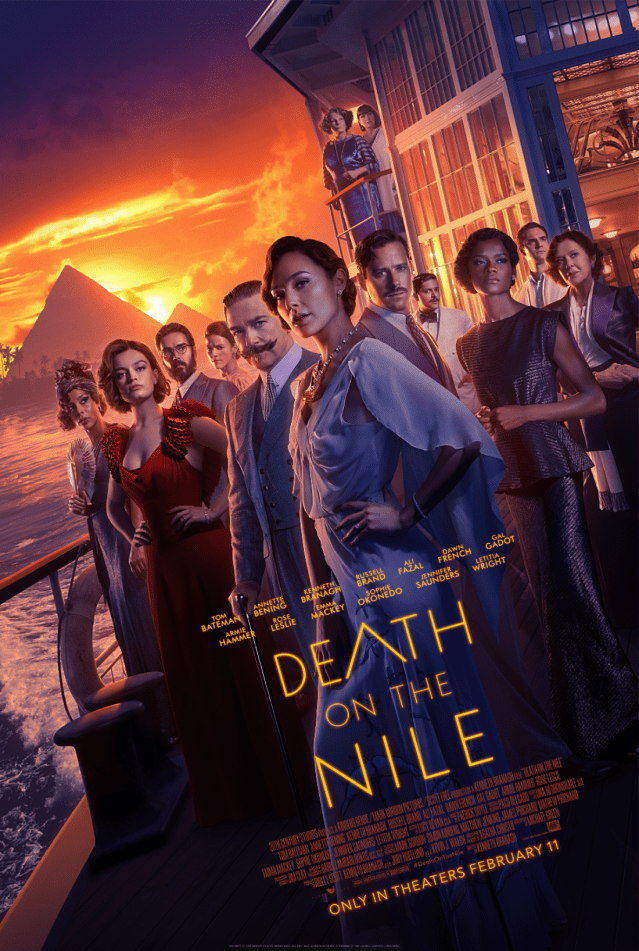
Take 3: Death on the Nile (2022) Review + 415 Follower Thank You

When I reviewed Curious Caterer: Dying for Chocolate for my last Blog Follower Dedication Review, I figured by writing about a mystery film, I would be giving the readers what they wanted. Well, for my 415 Blog Follower Dedication Review, I decided to give my readers yet another mystery, as both reviews for Curious Caterer: Dying for Chocolate and Cut, Color, Murder have been quite successful. This time, though, the movie in question is a more current mystery production from the big screen. Recently, my family rented the 2022 adaptation, Death on the Nile. This is the follow-up title to the 2017 adaptation, Murder on the Orient Express. On 18 Cinema Lane, I have gone on record to state I was not a fan of Murder on the Orient Express’ ending. I would say why, but then I’d have to spoil that movie for my readers. With that said, I watched the 2022 film with an open mind, hoping the ending would be better. But was that enough to be stronger than the 2017 title? Join me as I review Death on the Nile!

Death on the Nile (2022) poster created by Kinberg Genre, Mark Gordon Pictures, Scott Free Productions, TSG Entertainment, and 20th Century Studios

Things I liked about the film:

The acting: Sometimes, in ensemble films, there is at least one performance that steals the show. In the case of Death on the Nile, I can’t say that happened, as everyone’s performance was equally strong. So instead, I’m going to talk about how all of the actors and actresses appeared at ease in their roles. Every interaction among the characters seemed natural. Despite the talent being on different journeys in their career, there was a shared chemistry to be found. Gal Gadot did not star in Murder on the Orient Express alongside Kenneth Branagh. However, when they interacted together, it felt like their characters, Linnet and Hercule, had known each other longer than their total screen time. Even actors and actresses whose characters developed their own relationships created a believable on-screen connection. Bouc is a close friend of Hercule’s, but wasn’t brought up or featured in Murder on the Orient Express. Rosalie is a character who made her debut in Death on the Nile. Despite never meeting prior to this film, Rosalie and Bouc formed a romantic relationship that felt genuine. Their bright smiles and warm embraces present the impression they were always meant to be together. It’s interactions like Bouc and Rosalie’s that allowed the overall acting performances to be enjoyable to watch!

An atmospheric setting: The majority of Death on the Nile takes place in Egypt, specifically on the Nile River. Despite a cruise ship being the primary setting for the story, the characters make an excursion to an ancient Egyptian tomb. I’m not sure if Death on the Nile was filmed on-location, on a set, or if everything was green-screened. No matter where the movie was filmed, this particular location was very atmospheric! The structure was covered in a warm sandstone, reflecting the nearby natural landscape. The interior walls were covered in hieroglyphics, only seen through torch light or a flashlight. Before the characters entered the tombs, a long, overhead shot showcased their entry. Even though a structure like this one would likely never be done justice through filmography, it emphasized the scope of a location of that scale!

The Egyptian tombs were not the only atmospheric location in this film. When it comes to the S.S. Karnak, the creative team knew what style they wanted to execute. Boy, did they stick the landing! This ship was posh, bearing the word “elegant” like a badge of honor. The floor was a dark wood, which nicely contrasted the white shiplap walls. Polished glass windows surrounded a grand sitting area, separating patrons into an isolated, beautiful world. Even this aforementioned sitting area was a sight to behold! A detailed oriental rug hosted an island to a set of plush armchairs and a sofa. An elegant bar overlooked both the seating arrangements and the windowed walls, which showcased a perfect view of the river. When I first saw this ship on screen, it looked, to me, like a miniature version of the Titanic.

The use of black and white imagery: Within the mystery genre, black and white imagery has been, in my experience, used rarely in more recently released titles. Even in Death on the Nile, this kind of imagery had a limited incorporation in the movie. But the use of black and white imagery is what stood out to me. This film’s very first scene is captured in black and white. However, it took place during World War I, with the rest of the story taking place in 1937. The distinction of past and present through imagery was clever and visually interesting. This creative tactic was used again later in the story. But this time, color was included to force the audience to focus on that scene’s particular aspects. Like I said about the previous scene, it was an interesting and clever way to use black and white imagery!

Magnifying fingerprints image created by Balintseby at freepik.com. <a href=”https://www.freepik.com/free-photos-vectors/glass”>Glass vector created by Balintseby – Freepik.com</a>. <a href=’https://www.freepik.com/free-vector/fingerprint-investigation_789253.htm’>Designed by Freepik</a>. Image found at freepik.com.

What I didn’t like about the film:

The mystery’s delayed start time: One of my least favorite aspects of the mystery genre is when the mystery starts at a later time in the story. This is because I prefer mysteries to be more interactive and get to the heart of the matter sooner. Unfortunately, Death on the Nile did not ask me what I wanted, as the mystery in this movie started at the halfway point. That means the audience was given half a movie to attempt to solve the mystery alongside Hercule. To me, this felt reminiscent of episodes of Murder, She Wrote, where the first half of the story is devoted to the mystery’s build-up. This creative decision caused a much slower start to the movie, as well as a delay in suspense.

A mystery overshadowed by relationship drama: Drama among the characters can work in a mystery’s favor, as it provides possible motives and suspects. Various types of relationships can also create tension within the overall story. But in Death on the Nile, the relationship drama ended up overshadowing the mystery. In fact, it dominated the film’s first half. While characters fell in and out of love, or simply reflected on love, one of my family members asked, “Isn’t someone supposed to get murdered in this story”? I could easily sense this family member’s impatience, as I too felt my good will toward the movie slipping away with each of the characters’ romantic embrace. I have never read any of Agatha Christie’s books, so I’m not sure if these relationships are straight from the source material. However, this part of the story was over-emphasized.

A past detail that doesn’t lead anywhere: Death on the Nile starts with showing Hercule during World War I. In that time, it is revealed he developed romantic feelings for a woman named Katherine. For the rest of the movie, though, this part of the story was never revisited. If Katherine was brought up, Hercule only talked about her in passing. Hercule’s past relationship and his time during World War I getting ignored was confusing to me. Why include these details if there was no plan to follow through on them? It felt like they were added to the story simply for the sake of being there.

Egyptian hieroglyphic image created by wirestock at freepik.com. Luxor photo created by wirestock – www.freepik.com

My overall impression:

Before I share my overall impression of Death on the Nile, I would like to thank my followers for helping make this review a reality! In four years, my blog has achieved far more success than I ever imagined. All of that is thanks to you. Now, back to sharing my overall impression. While the ending/resolution in Death on the Nile was stronger than Murder on the Orient Express’ was, the overall execution was weaker than the 2017 adaptation. The 2022 film contained a similar flaw to Knives Out: the drama among the characters overshadowed the mystery. Having the mystery start at the movie’s halfway point didn’t help Death on the Nile’s case either. Like Murder on the Orient Express, though, the cast was strong in Death on the Nile. In fact, it was difficult for me to choose a favorite performance. The locations in the 2022 production were atmospheric as well. At the publication of this review, I’m not sure if Kenneth Branagh has plans to adapt more of Agatha Christie’s books. It depends, at this point, if the potential is there.

Overall score: 6.1 out of 10

Have you seen any adaptations of Agatha Christie’s work? Have you read any of Agatha’s books? Don’t hesitate to comment in the comment section below!

Have fun at the movies!

Sally Silverscreen