For the first time ever, I am participating in Pure Entertainment Preservation Society’s Clean Movie Month! Every July, participants are encouraged to watch and write about films that were released within the Breen Code era. This era started in 1934 and ended in 1954. On 18 Cinema Lane, I will be reviewing a Breen Code era film every week during this month! These reviews will be released in the chronological order of the film’s premiere. For my first Clean Movie Month review, I have chosen the Shirley Temple film, Stowaway! Earlier this year, I wrote an editorial about my thoughts on all three of Shirley’s films from 1938. As I said in that editorial, my goal is to watch every single Shirley Temple film ever made. So, if I have a chance to watch a Shirley Temple movie that I haven’t seen before, I will definitely make an effort to do that. So, let’s sail away in Clean Movie Month with 1936’s Stowaway!
The acting: One of the great things about this movie was Shirley’s performance! Like I said about Shirley’s role, Betsy, in Little Miss Broadway, her role in Stowaway felt like it was created just for her. Not only did this role compliment Shirley’s acting abilities, but it challenged her as an actress. At certain moments in the film, Shirley’s character, Barbara/Ching-Ching speaks Chinese. This means that Shirley had to learn her lines in English and learn a new language that she was probably not familiar with before. Shirley was surrounded by a cast of actors and actresses that were just as talented as her! Everyone’s acting talents were equally showcased in this film, helping each performer receive their moment to shine!
The humor: A pleasant aspect of Stowaway was the humor within the story! One of the funniest scenes in this film was when Ching-Ching is trying to find Tommy Randall while wearing a dragon head. What made moments like this so hilarious was the screen-writing. The way that the dialogue and actions were written was not only innocent, but clever as well. An example of this is when Tommy and Ching-Ching are at a restaurant. While ordering food off of a menu that’s written in Chinese, Tommy tells Ching-Ching, “It’s all Greek to me”. She then replies, “But it’s in Chinese”. This type of humor is what made Stowaway an enjoyable story!
A unique location: I am not an expert on Shirley Temple’s filmography. But, out of the films that I’m aware of, it seems like most of her movies take place in the United States. Stowaway, however, mostly takes place in China and on a cruise ship. These locations provided a unique look and feel to the overall production. It was interesting to see the Chinese culture playing an influential role within the narrative. The language, music, and even some proverbs could be found in Stowaway. Seeing the various areas of the cruise ship was interesting as well. This backdrop worked really well for the story!
A limited amount of musical numbers: Earlier this year, when I talked about Just Around the Corner, I said that there was a limited amount of musical numbers in the movie. This made the story feel drawn out and a little bit longer than intended. Similarly, there was a limited amount of musical numbers in Stowaway. Throughout the whole film, there were four musical numbers. However, the first musical number doesn’t appear in the film until after the first thirty-seven minutes. Personally, I think that the first musical number should have, at least, started at the fifteen-minute mark. That way, the audience could get quickly invested into the musical aspect of the movie.
No Chinese influences in the music: I liked how the Chinese locations, as well as the culture, were incorporated into the film! But I was surprised that there were no Chinese influences in Stowaway’s music. Every song that Shirley sang sounded like the typical musical melody, the usual sounds that are found in Shirley’s films. Even though Shirley spoke Chinese in the movie, none of the lyrics were in Chinese. I feel that the creative team behind Stowaway missed a special opportunity to expand the musical horizons of both the studio and the audience. Who knows? Maybe this could have encouraged someone to learn another language.
Shirley’s limited involvement in the film: Most of Shirley’s films involve a subplot that allows Shirley’s character to play an important role in the film. While Ching-Ching was a significant character in Stowaway, she didn’t play as big of a role as Shirley’s other characters. It felt like most of the story was about the characters who were adults. In fact, it seemed like Shirley had the least amount of screen-time out of all the performers in the starring cast. While it’s understandable that Shirley was the youngest cast member in this film, it kind of felt like Stowaway wasn’t Shirley’s movie compared to her other titles.
For my first Clean Movie Month review, we’re off to a decent start! Stowaway, in my opinion, is better than something like Just Around the Corner. But there are films in Shirley’s filmography that I think are stronger than Stowaway. The most memorable part of this film was the Chinese locations as well as the cruise ship backdrop. They were very unique for a film starring Shirley Temple, especially since most of her films take place in the same continent. The setting of Stowaway provided an interesting component to the story, influencing how the characters interacted with each other and how they accomplished their goals. I can’t say much about the content of the film, since it was approved by the Production Code Administration (as the logo was featured in the bottom left hand corner of the opening credits) and it was released two years after the start of the Breen Code era. It’ll be fascinating to see how this movie compares with the other movies I’ll review during Clean Move Month!
Overall score: 7.2 out of 10
What are your thoughts on Clean Movie Month? Are you looking forward to my next review? Please tell me in the comment section!
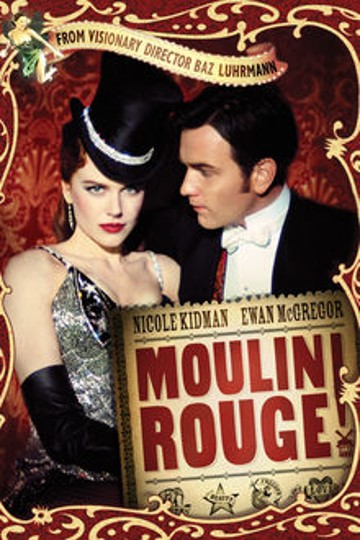
In my review of Sister of the Bride, I mentioned that I would be reviewing Moulin Rouge! for my 110 follower dedication review. Since I did promise that this review would come soon, I made this post one of my top priorities for this week. As I said in my Jurassic World review, I have a new system for choosing movies for these specific reviews. If you want to learn more about this system, you can read the introduction of my Jurassic World review. Because I received 110 followers on 18 Cinema Lane last month, I chose a movie that was released in the month of June. But the year of its release was 2001. My last movie review about a musical was Little Nellie Kelly back in June. So, I decided to pick Moulin Rouge! for this particular review! This is a movie that I’d heard of, but had never seen. Now that I’ve seen this film, it’s time to share my thoughts on it with the help of this review!
The acting: I was very impressed with the cast in Moulin Rouge! Every actor and actress in this film surpassed my expectations when it came to their performance! Ewan McGregor and Nicole Kidman did a great job bringing their characters to life, providing a sense of depth and authentic emotion to their roles. The on-screen chemistry between Ewan and Nicole felt real, helping me to stay invested in Christian and Satine’s relationship. Richard Roxburgh also gave a good performance as The Duke of Monroth! The emotions and reactions that were brought to this character were truly unsettling. However, this made The Duke of Monroth be the unlikable character that he was meant to be. What helped was Richard giving everything he had, talent wise, into his portrayal of this character. His dedication to his performance is what made The Duke of Monroth so memorable!
The set-pieces: For musicals featured on film, one of the most important aspects of the production are the set-pieces. This part can make or break a musical. The set-pieces in Moulin Rouge! were exquisite, especially those within the Moulin Rouge nightclub! The colors were very vibrant and paired really well with the metals of silver and gold. A key ingredient to set-pieces is how immersive they make the world within the musical/movie feel. Set-pieces found in Moulin Rouge! made the world in the movie look and feel like it actually exists. The level of detail in these set-pieces added to the magnificent nature of them. It shows that the creative team behind this film put a lot of effort into making the set-pieces the best that they can be!
The transitioning animation: When scenes were transitioning from one part of the story to the next, the animation that was used in these transitions was unique. The best examples I can give to what this animation looked like are the television show, Angela Anaconda, and the “moving newspapers” in the Harry Potter film series. What I mean by this is most of the animation was in a black-and-white/gray tone, with a few hints of color to keep the images looking interesting. This type of animation is rarely seen in entertainment, so I like that the creative team behind Moulin Rouge! was thinking outside the box.
The editing: One of the most distracting aspects about this film was the editing. Quick-cuts were commonly used in the movie, especially within the first half. As I mentioned, Moulin Rouge! had gorgeous set-pieces. But because of these quick-cuts, it was sometimes difficult to see these set-pieces on screen. In at least two scenes, there was “shaky cam” that didn’t need to be there. This aspect of the editing felt very out of place.
Some of the songs: I wasn’t a fan of some of the songs that were featured in Moulin Rouge! It’s not that the songs themselves were bad, they just didn’t fit within the world that the film created. For example, toward the beginning of the film, Christian sings “The Sound of Music”. If you know musicals, you would know that this song is from the movie and stage play, The Sound of Music. Because of this and the story of the aforementioned production, the context of this song feels out of place in Moulin Rouge! Another thing I noticed was that a large portion of the songs came from other movies or artists, music that was created prior to the film’s release. If this musical was advertised as or had a reputation of being a “jukebox musical”, having pre-existing songs incorporated into the narrative would make sense. But since Moulin Rouge! is not known for being this kind of musical, it just felt like the characters took a break from the story to sing karaoke.
Some of the humor: There was some humor in this movie that I did not like. That is because it was too crude and over-the-top for my liking. I understand that this humor was meant to represent the values and beliefs of the patrons associated with the Moulin Rouge nightclub. But that doesn’t mean I found this type of humor to be entertaining. In fact, some scenes that featured this kind of humor made me feel uncomfortable. One example is when Christian and Satine meet for the first time.
I’m glad I gave myself a chance to expand my horizons when it comes to movie musicals! On 18 Cinema Lane, this genre doesn’t get talked about often. So, choosing Moulin Rouge! for this review was worth it! As for the movie itself, I thought it was just ok. There are things about it that I can appreciate, such as the quality of the acting performances. What held this movie back from making it greater than it was are the editing and some of the songs. Because some of these songs came from other movies and artists, they kind of took me out of the film. As for the editing, this part could have been better executed. Moulin Rouge! is definitely not one of the worst musicals I’ve ever seen, but I’ve also seen better. Before I finish this review, I want to thank all of my 110 followers! Also, thank you for your patience when it came to the release of this review. It means a lot to me that I have followers that are supportive and understanding.
Overall score: 6.1 out of 10
What did you think of my review? Which movie musical is your favorite? Tell me in the comment section!
I know that it’s been two weeks since I last wrote a movie review. Because I was out of town around that time, I chose to reschedule several of my planned blog posts to later dates. But, when it comes to posts relating to blogathons, I always try my best to be a blogger of my word and publish my lists, reviews, or editorials within the blogathon time-frame. When I signed up for the 2nd Annual Broadway Bound Blogathon, I knew, right away, that I would be reviewing the film, Little Nellie Kelly. Before this review, I had never seen or heard of this movie. Plus, the synopsis on Turner Classic Movies’ (TCM’s) website said that this film is about “the daughter of Irish immigrants patches up differences between her father and grandfather and rises to the top on Broadway”. Because I knew that Judy Garland was the star of this production, I figured that I would, at least, find some enjoyment in this movie. Was my prediction correct? Was there enjoyment to be found in Little Nellie Kelly? Please keep reading if you want to find the answer!
The acting: Something I’ve noticed about Judy’s films (specifically the ones that I’ve seen) is that she surrounds herself with a talented cast. This is no different for Little Nellie Kelly. Charles Winninger’s portrayal of Michael Noonan was such a pleasant surprise! He brought so much emotion to his performance that it ended up being effective. Judy’s performance was also great to watch! Her emotions and musicality helped her portrayal of Nellie Kelly be as strong as it was. I also liked George Murphy’s performance as Jerry Kelly! His acting talents helped carry this film alongside his co-stars.
The comedy: In Little Nellie Kelly, there were comedic moments that I truly found to be hilarious. One scene has Nellie telling her father that she’s going to get married to Jerry. As soon as her father hears this, he unexpectedly spits out his coffee and makes a big mess. This moment made me laugh out loud! As I watched the film, I noticed that the majority of these comedic moments were caused by Charles’ character, Michael. Because of this particular actor’s quality of talent, it made the film’s comedy stick the landing.
Some of the montages: There were two montages in Little Nellie Kelly that I really liked. The first one was when Jerry, Nellie, and Michael go through the process of becoming citizens of the United States. When it comes to cinematic stories about people immigrating to the United States, this aspect of the narrative is rarely explored. The second montage I liked showed the process of Jerry becoming a police officer. In film, when a character chooses to be a police officer, they are usually shown either before or after they accept the job. Like the first montage, this process is not always featured in cinematic narratives. Even though these montages didn’t last very long, I’m glad they were included in this story.
An inability to hold an accent: Because some of the characters are from Ireland, hearing accents from them is to be expected. While Charles Winninger did a good job when it came to carrying the accent, I felt that Judy and George’s ability to carry an Irish accent wasn’t as strong. When I watched Little Nellie Kelly, I never heard Jerry talk with an Irish accent. Meanwhile, the only time Nellie spoke with an Irish accent was when she sang “A Pretty Girl Milking Her Cow”. Because of Judy and George’s inability to carry an accent, this prevented a sense of continuity to exist amongst the characters.
A limited amount of musical numbers and comedy: Even though I liked the comedy in this film, there were very few comedic moments to be found. Throughout this one hour and thirty-eight minute picture, there were more dramatic moments than comedic ones. In this movie, there were a total of about four to five musical numbers. That’s a lot less than I was expecting. The film’s opening credits said that Little Nellie Kelly was based on a “musical comedy”. But, if anything, this project felt more like a “dramedy” (a combination of comedy and drama), with an emphasis on drama.
Judy Garland portraying Nellie Kelly Sr. and Jr.: In the movie, Judy portrays two characters; Nellie Kelly and her daughter. While different hairstyles helped, a little bit, to differentiate between the two characters, this creative decision still baffled me. I understand that MGM wanted to utilize Judy’s talent as much as possible. However, I still think that Judy should have portrayed only one character. Because this movie is called Little Nellie Kelly, Judy could have portrayed the daughter, while another, slightly older actress could have portrayed Nellie Kelly Sr. That way, Judy could have still been the leading star of the movie, while the other actress could also receive a significant amount of recognition.
I like Little Nellie Kelly for what it is. There are elements to the film that make it enjoyable, such as the musical numbers and the acting. However, I found this movie to be somewhat misleading. As I said in the introduction, this synopsis said that the protagonist “rises to the top on Broadway”. Not only was this location never mentioned in the film, but Nellie never aspired to be an entertainer. What makes this even more frustrating is how few musical numbers there were and how little comedy there was in the film despite it being called a “musical comedy” in the opening credits. From what I’ve heard, this movie is based on a pre-existing Broadway musical. Because I have never seen the stage version of this story, it’s difficult for me to say if the movie was anything like the play. This kind of reminds me of how I felt about Edward, My Son. Both of these films were based on plays and made me felt like I was misled. I can’t fault the creative teams behind these movies too much, since their job was to adapt their respective plays to the screen. However, a good amount of honesty should have been included into each film’s synopsis.
Overall score: 7.2 out of 10
Have you seen any of Judy Garland’s movies? If so, which one is your favorite? Let me know in the comment section!
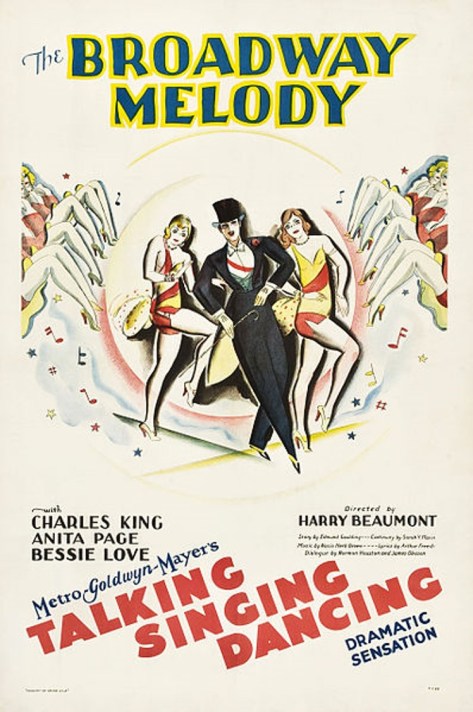
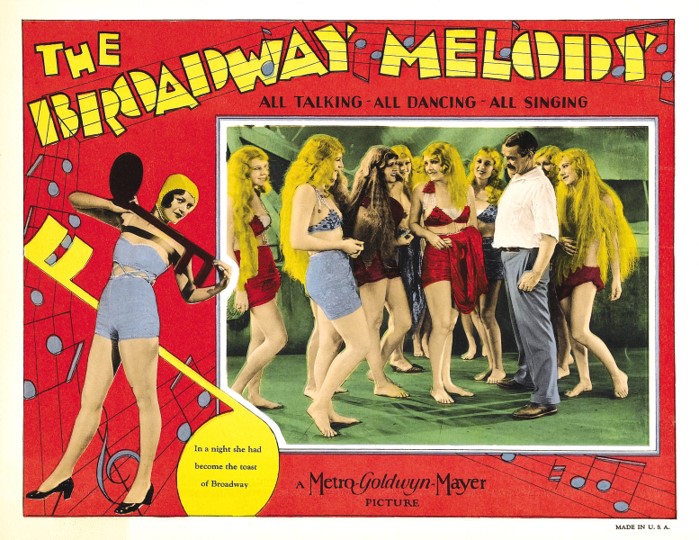
This week, I received 90 followers on 18 Cinema Lane! To all my followers, thank you for helping me reach this accomplish! In honor of this achievement, I’m going to review a film that was released 90 years ago (in 1929). While looking through Turner Classic Movie’s (TCM’s) schedule one day, I found a film titled The Broadway Melody. Because this film turned 90 years old this year, I chose to review this movie for this special post. Before this review, I had never heard of The Broadway Melody. So, I was looking forward to expanding my cinematic horizons. Was this film a show-stopper or stumble over its own dancing shoes? Keep reading my review of The Broadway Melody if you want to find out!
The acting: As a whole, the cast of The Broadway Melody was good! Anita Page and Bessie Love both gave a memorable performance as the singing and dancing duo, Hank and Queenie! What was so great about these characters is how they displayed their own distinct personalities. While Hank was out-spoken and spunky, Queenie was a quieter individual with a sweet personality. I also liked Jed Prouty’s performance as Uncle Jed! His portrayal of this character came across very believably, making Uncle Jed feel like a real person. Having him stutter was an interesting choice, as this is not common amongst characters in cinema. However, I thought that this component was incorporated well from both an acting and writing perspective.
Use of title cards: At some points in the film, title cards were used as scene transitions and location indicators. This choice was not only creative, but also interesting. Since The Broadway Melody was the first movie musical to be “all-talking”, I felt this was a good transition from silent films to talking pictures. These title cards also added a unique stamp to the overall project.
The musical numbers: One of the strongest aspects of The Broadway Melody is, definitely, the musical numbers! My favorite group routine was “Wedding of the Painted Doll”, as it was really well choreographed and performed! There was so much going on in that number, but it was all great to look at. Throughout this film, the best solo performance came from a ballerina who performed a tap dance on ballet pointe. Her routine was incredible and I had never seen anything like it before! This was absolutely the best dance solo in any movie musical I’ve ever seen!
Large spaces between musical numbers: While I enjoyed seeing the musical numbers in The Broadway Melody, it seemed like this movie had far more dialogue-focused scenes. In my opinion, a good musical finds a way to balance the dialogue and music-focused scenes, creating a film that tells an interesting story and provides entertaining content. Throughout The Broadway Melody, however, there were only seven musical numbers. The ratio between the musical numbers and dialogue-focused scenes was weaker than I had expected.
The run-time: Before I watched this movie, I was surprised to find that it was almost two hours long. Looking back on this specific production, I don’t think this story needed to be an hour and forty minutes. Because of this run-time, it caused the movie to feel longer than intended and some scenes to feel too drawn out. There was also the inclusion of scenes for the sake of satisfying the run-time. This movie would have worked better with a run-time of an hour and twenty or thirty minutes.
A “slice of life” story: It seems like the more movies I watch, the more I don’t like “slice of life” stories (unless they have intriguing plots). The premise in The Broadway Melody felt like it was following a year in the life of the Mahoney sisters. I did not find this type of story-telling very interesting. This story also contained petty drama that I really didn’t care about. Because this drama lasted for a good portion of the film, it caused the plot to feel drawn-out.
The Broadway Melody was an ok film. I can see why this movie received the honors that it did in its time. However, I think there are movie musicals that are stronger than this one. While, the story wasn’t as interesting as I had hoped, the musical numbers were the highlight of this film. They were very enjoyable and fun to watch. I found myself rewinding my recording of The Broadway Melody in order to re-watch some of the musical scenes. “Wedding of the Painted Doll” was such a great ensemble routine and the tap dance on ballet pointe solo was fantastic! With its merits and flaws, I’m still glad I chose to review this film.
Overall score: 6.3 out of 10
What did you think of my review? Which movie musical is your favorite? Let me know in the comment section!
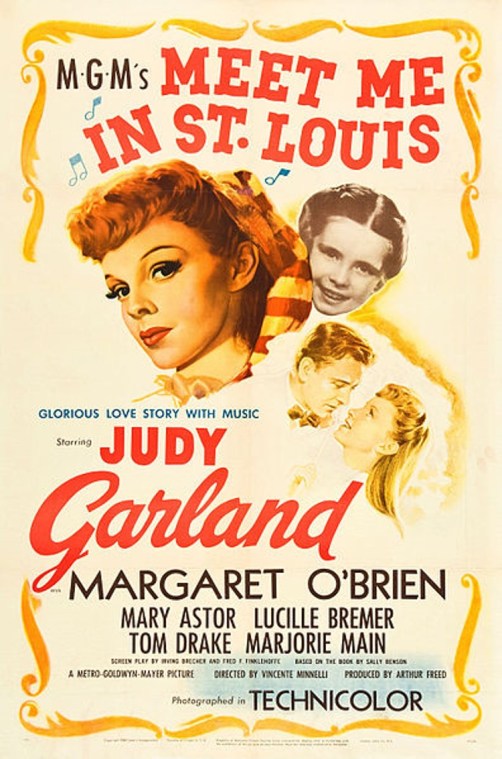
Last week, 18 Cinema Lane received 75 followers! Before I start this review, I’d like to take a moment to thank all of my followers for making this achievement possible. Without you, my blog would never have received this milestone (especially in this short amount of time). So, like I’ve done in the past, I will now review a film that was released 75 years ago (in 1944). Because I’ve only seen bits and pieces of Meet Me in St. Louis, I’ve chosen this movie to celebrate this accomplishment! When I picked this movie to review, I realized that the only films of Judy Garland’s that I had ever seen were The Wizard of Oz and A Child is Waiting. This gave me a good excuse to not only watch a movie that I had never seen in its entirety, but to also explore Judy’s filmography! Now, let’s finally start this review for Meet Me in St. Louis!
The acting: The cast was very talented in Meet Me in St. Louis! To me, the two strongest performers in this film were Judy Garland and Margaret O’Brien! Like in The Wizard of Oz and A Child is Waiting, Judy has both the musical and acting talents to carry a significant weight of the film. Judy also has good on-screen chemistry with Tom Drake, who portrays John Truett in the film. Margaret O’Brien’s portrayal of “Tootie” Smith was one of the strongest elements of this film! During the scene where “Tootie” is so upset about moving to New York that she destroys the snowpeople outside, Margaret’s performance was so emotionally powerful. In fact, her performance was so emotionally powerful, that it was an affective way to make the audience feel sorry for the character. Both Judy’s and Margaret’s performance complimented the performances of the other actors as well.
The music: I really liked the music in this film! The collection of songs was a good balance of light-hearted and emotional material. Judy’s musical performances were a treat to see, as they were all delightful and enjoyable! My favorite musical number in this movie was when Judy and Margaret performed “Under the Bamboo Tree”. This performance was so joyful and added to the light-hearted nature of the film. When it comes to more emotional performances, I really liked Judy’s rendition of “Have Yourself a Merry Little Christmas”. Her version of the song was emotional enough to affectively reflect the mood of what’s going on in the film. It’s sad, as it addresses reflecting on times gone by, and it’s hopeful, as it talks about appreciating the things you have in your life. This assortment of songs made seeing this movie an enjoyable experience!
The sets: All of the sets in Meet Me in St. Louis were impressive! I’m not sure if the Smith family home is a real-life house or a house built on a studio lot. However, the facility itself was absolutely gorgeous! Everything in this house looked and felt like a home from the early 1900s. I also liked how the ballroom looked in the scene where Esther, Rose, Lon, and Grandpa attend the annual Christmas ball. The way the Christmas tree was placed in the greenroom was so pretty. The Christmas tree’s placement was also a good way to effectively pull off a surprise within the story!
A weak first segment: From a story-telling perspective, I thought the story during the “Summer 1903” segment was the weakest element of the movie. Within the first twenty minutes, the primary story focused on whether Rose would become engaged via a long-distance telephone call. Because the first few minutes of a film is, usually, reserved for providing exposition, I don’t think Rose’s story was an effective way to start this movie. It is as if the screenwriters expected their audience to automatically care about a character whom they just met. For me, the overall narrative wasn’t interesting until the “Fall 1903” segment began.
Too many characters: Even though Meet Me in St. Louis had a talented cast, I feel there were too many characters associated with this story. In this movie, the overall narrative seemed to serve only a few of the characters. The individuals that benefited the most from this narrative were Esther, Rose, “Tootie”, John Truett, and Mr. & Mrs. Smith. The rest of the characters either feel like they’re there for the sake of being there or like they weren’t given enough screen-time.
The limited presence of the World’s Fair: Throughout this movie, the World’s Fair is referenced by several characters on several different occasions. It’s even mentioned in the opening song, “Meet Me in St. Louis, Louis”. However, the World’s Fair itself was only featured within the last twenty minutes. Even in those few moments, the World’s Fair isn’t incorporated into the story enough to make me, as an audience member, feel satisfied. If anything, the World’s Fair in Meet Me in St. Louis was just a glorified extra.
Meet Me in St. Louis is a good film! The music is entertaining and the story is interesting enough to keep the audience invested. As I mentioned in my review, the acting is what helped keep this movie going. While Judy and Margaret were the two strongest performers in this movie, the rest of the cast was also talented. Yes, this film did have its flaws. However, there was a good amount of content that made the experience of watching this movie enjoyable. I’m glad I chose this movie to review for my 75 follower dedication post because it allows me to explore the filmography of both Judy Garland and Margaret O’Brien! It also gave me a good excuse to watch a film that I had never seen in its entirety.
Overall score: 7.5-7.6 out of 10
What are your thoughts on my review? Are you looking forward to seeing which movies I review in future blog follower dedication posts? Leave your thoughts in the comment section!
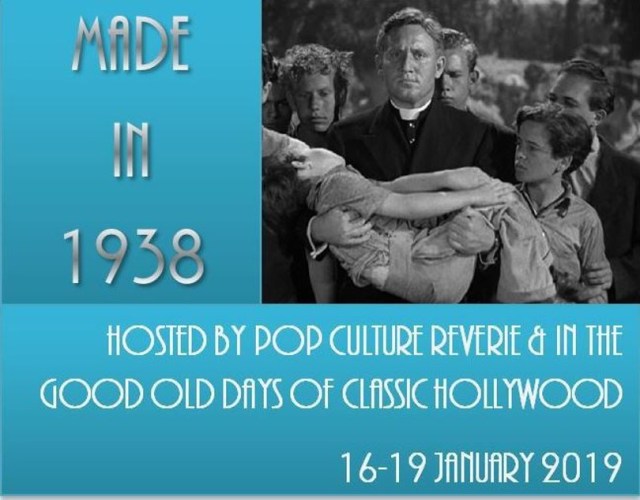
When I came across the Made in 1938 blogathon last November, it sounded like something I would want to participate in. As I was searching the internet for films with 1938 release dates, I discovered that Shirley Temple starred in three movies within that year: Rebecca of Sunnybrook Farm, Little Miss Broadway,and Just Around the Corner. Because a goal of mine is to watch every single Shirley Temple film ever made, I figured that talking about these three films for this blogathon would be a good way to take one step closer to my goal. Prior to seeing Rebecca of Sunnybrook Farm, Little Miss Broadway,and Just Around the Corner, I had seen some of Shirley’s other films. This means that I had an idea of the components that would make up these three films. So, in this post, I will be exploring and analyzing these six components that are usually found in a “Shirley Temple movie”. Now, when I say “Shirley Temple movie”, I mean the films where Shirley starred in the movie as a child actress. However, when it comes to Shirley’s movies, I will only be discussing the three films that were released in 1938. So, now that I’ve finished these necessary introductions, let’s answer this question of what makes these films a “Shirley Temple movie”.
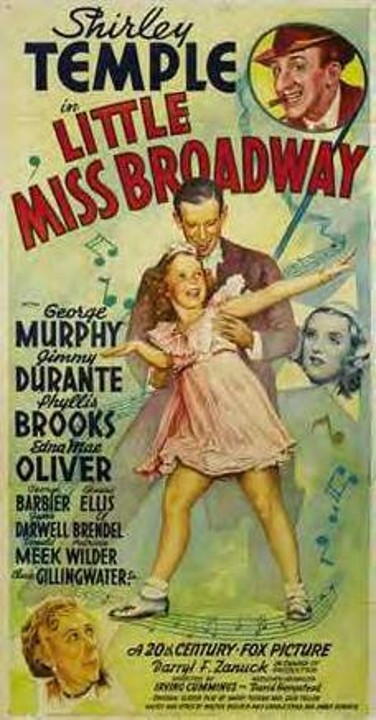
When I watched Rebecca of Sunnybrook Farm, Little Miss Broadway,and Just Around the Corner, I wanted to see whether Shirley was given legitimate roles to portray or if the film was treated as a way to, simply, include Shirley in the movie just for the sake of having Shirley star in the film. In these three films, Shirley’s roles seemed like they were well-written characters, each given their own characteristics. There are some similarities that these characters had, such as being, to a certain extent, independent. Each character; Rebecca, Penny, and Betsy, were either an orphan or had at least one parental figure in her life. Because of the specific conflict each of these characters face, they all find a way to solve their particular problem. One example of this is in Little Miss Broadway. When her family’s hotel is in danger of closing for good, Betsy becomes friends with the nephew of the hotel’s landlord and helps him put on a show in order to save the hotel and help the residents keep their home. These characters also have their differences as well, such as how they solve their problems. In Rebecca of Sunnybrook Farm, Rebecca is forced to perform in a radio commercial for her greedy and selfish step-father. In order to get out of her living and working situation, Rebecca pretends to lose her voice, tricking her step-father into thinking that she is no longer employable for radio entertainment. Rebecca came up with this plan all by herself compared to how Betsy from Little Miss Broadway and Penny from Just Around the Corner resolve their conflicts.
After watching these films, I think the best role that Shirley portrayed was Betsy in Little Miss Broadway. Because the film centered around performers living in a hotel, this role highlighted both the acting and performing talents that Shirley had to offer within the movie. It made it feel like this role was created just for Shirley, while also complimenting the talents of the other actors and performers in the film. While I liked Shirley’s portrayal of Rebecca in Rebecca of Sunnybrook Farm, I felt like the creative team behind this movie put a little too much emphasis that Shirley was cast in their film. At one point in the film, Shirley says that she used to have curls all over her head, possibly referencing her earlier roles, such as her role in Curly Top. Shirley also mentions the songs “Animals Crackers in My Soup” and “On the Good Ship Lollipop”, not only referencing Shirley’s previous movies, but making it feel like the movie’s creative team assumed that the audience had seen Shirley’s other movies prior to watching Rebecca of Sunnybrook Farm. I also liked Shirley’s portrayal of Penny from Just Around the Corner. But, as I’ll explain later in this post, she wasn’t given many opportunities to perform as a singer and dancer within the context of the film.
The Cast Surrounding Shirley
For this component, I wanted to see if the cast surrounding Shirley were also given legitimate roles to portray or if these actors’ involvement in the film were just seen as everyone being Shirley Temple’s extras. When I reflect on Rebecca of Sunnybrook Farm, Little Miss Broadway,and Just Around the Corner, I can honestly say that the cast surrounding Shirley were also given characters that were well-written. What I liked about these three movies is that the characters seemed so unique and interesting from one another. One of these characters is Samuel Henshaw from Just Around the Corner. While Samuel, at times, comes across as a grumpy individual, it seems like he has a sense of goodness to him, caring equally about his career and his family. This character is very different from Pop Shea from Little Miss Broadway, for example. While both characters appear to be around the same age, their personalities are very different, helping to give a sense of variety among the characters within these three films. Another thing I liked seeing was the variety of talents that was shown within each film. Bill Robinson’s involvement in Rebecca of Sunnybrook Farm and Just Around the Corner is a good example of this. Not only is Bill a good actor, but he’s also a good dancer. When it comes to the acting within each film, I think that everyone did a good job with the acting material they were given.
While looking at each story from each film, I wanted to find out how much they relied on Shirley’s involvement in the film. Before I reveal my assessment, let me share a brief synopsis for each film. Rebecca of Sunnybrook Farm is about a radio executive and his assistant searching for the perfect candidate to perform in their radio commercial. Just Around the Corner is about a young girl who tries to help her father find employment and Little Miss Broadway is about a hotel owner trying to save his hotel as well as the home of several performers. While all of these stories do, to a certain extent, depend on Shirley’s involvement, these stories can stand on their own. If you take away the fact that this is a “Shirley Temple movie”, these stories could work with other actors and different characters. An example of this is Just Around the Corner. If this movie were not a musical, I could see almost any child actor being cast in the role of Penny. Other than the musical numbers, it doesn’t really seem like Shirley’s involvement is essential to the story overall. This is the same for Rebecca of Sunnybrook Farm. You could either have almost any child actor or any singer in the lead role and it really wouldn’t make much of a difference.
Out of these three stories, I liked the plot from Rebecca of Sunnybrook Farm the most. Not only was the conflict within the plot interesting, but the “behind-the-scenes” aspect of radio entertainment was, to me, fascinating. This part of the film reminded me of two Hallmark movies that I really like: This Magic Moment and Cooking with Love. Because of this, it made me enjoy Rebecca of Sunnybrook Farm even more. I liked the story from Little Miss Broadway. But, after the primary conflict is resolved, it feels like other conflicts were invented in the story just to keep the movie going. This made the movie feel a little bit tedious. The story for Just Around the Corner was fine. But, because of the limited amount of musical numbers, it made the story feel drawn out and a little bit longer than intended. Despite the flaws that these stories may have, all of these stories were well-written.
The Messages and Themes
Like most family-friendly films, Shirley Temple’s movies have no shortage of messages and themes that can be found within the film’s narrative. For the most part, these messages and themes are relatable and can be shared with audiences of all ages. Rebecca of Sunnybrook Farm, Little Miss Broadway,and Just Around the Corner contain more than one message/theme. In Just Around the Corner, the story is very reflective of the time period that the film was released in. Because the movie premiered in 1938, messages and themes relating to The Great Depression can be found within the film’s plot. Financial prejudice, social class, and maintaining a positive attitude no matter what the circumstance is are themes that I found within the movie. Even though Rebecca of Sunnybrook Farm and Little Miss Broadway were also released in 1938, the messages and themes in these movies are relevant for both the late ‘30s and the late 2010s, focusing less on direct references to The Great Depression. In Rebecca of Sunnybrook Farm, the two biggest messages that I could find was how success can be found almost anywhere and how important it is to surround yourself with people that truly have your best interests in mind. As a movie blogger, I can relate to the first aforementioned message. Movie bloggers come from all over the world, with several movie bloggers finding huge success. This particular message has definitely stood the test of time. Little Miss Broadway’s two biggest themes in its story were how far kindness can go and getting to know someone before you judge them.
When I watched Rebecca of Sunnybrook Farm, Little Miss Broadway,and Just Around the Corner, I also noticed that some of the songs within these movies contained important messages and themes. The song, “I Love to Walk in the Rain” from Just Around the Corner re-emphasizes the theme of having a positive attitude in almost any situation. Other examples include “How Can I Thank You?” from Little Miss Broadway promoting the idea of taking time to express gratitude to those around you and “Come and Get Your Happiness” from Rebecca of Sunnybrook Farm stressing the idea of trying to find happiness wherever you are. Sometimes, these songs were sung more than once, as if the creative team behind these movies wanted to remind their audience of the importance of these messages and themes. For example, in Little Miss Broadway, the song “How Can I Thank You” is sung by Shirley more than once. As I’ve already mentioned, this song focused on promoting sharing gratitude with the people around you. Overall, the messages and themes that are found within these three films add a layer of depth to each story and make the movies feel like time was well spent.
No Shirley Temple movie would be complete without at least one musical number. All three of these movies had their fair share of singing and dancing. However, it’s important to compare the big musical number from each film to see if they effectively represent their respective film. Rebecca of Sunnybrook Farm, Little Miss Broadway, and Just Around the Corner each had a large musical number that was featured toward the end of their film. These musical numbers equally incorporated singing and dancing into the production. Since I’ve already talked about the song “I Love to Walk in the Rain”, I’ll talk about the musical number from Just Around the Corner first. Toward the end of Just Around the Corner, Penny performs a musical number that reminds the movie’s audience about keeping a positive attitude in almost any situation. The way this theme is presented in this musical number is by showing how happy Penny is to be outside while it is raining. Out of these three films, “I Love to Walk in the Rain” is my favorite musical number. Not only does it stress a major theme from the movie in a creative and memorable way, but the actual musical number itself is very entertaining. All of the dancing is choreographed in such a way that it gives the audience the illusion that Shirley and Bill are actually talking a walk. The special effects that are showcased within this musical number are also very impressive. From the rain effect through the number to the props of moving birds, all of it came together to create a musical number that, I think, represents the film as a whole.
The other two musical numbers I will be talking about are “Little Miss Broadway” from Little Miss Broadway and “The Toy Trumpet” from Rebecca of Sunnybrook Farm. In Little Miss Broadway, Betsy and Roger, the nephew of the hotel’s landlord, perform “Little Miss Broadway” in an attempt to prove to the judge that all of the performers residing in the hotel are worthy of hosting their own show on a regular basis. I liked this musical number quite of bit. The choreography was really good and the special effects of the New York City skyline made this musical number such a spectacle to watch. However, I felt that this musical number was only representative of its respective film to a certain extent. Yes, the musical number is reflective of how far optimism and kindness can go, as well as how happy and exciting Betsy’s new environment is to her. But, Broadway itself is never mentioned in the movie until that very musical number. Plus, the majority of the story takes place either in the hotel or in the landlord’s apartment. I also liked “The Toy Trumpet” from Rebecca of Sunnybrook Farm. The choreography and the number itself reminded me of the toy soldier dance that the Rockettes perform during Christmas-time. But, when it comes to representing the movie as a whole, this musical number doesn’t really do that. If anything, “The Toy Trumpet” feels random when it’s placed within the context of the story. Toy soldiers are never mentioned in Rebecca of Sunnybrook Farm and the musical number does not incorporate any of the film’s themes or messages into the performance. Because Rebecca of Sunnybrook Farm focuses a lot on radio entertainment, there is a greater number of performances that only involve singing. However, I just think that the big musical number within this film should have either been farm themed or showcased at least one of the film’s themes or messages.
The Overall Film
For this final category, I was curious as to how well these films held up 81 years later. Did any of these movies stand the test of time or are they just products of their time? I can only speak for myself, but I think Just Around the Corner, Rebecca of Sunnybrook Farm, and Little Miss Broadway stood the test of time just fine. Because each film has a certain amount of simplicity to them and are relatable to a certain extent, these three movies can be enjoyed by many people. Rebecca of Sunnybrook Farm is the film that I liked the most because of its interesting plot and creativity. Like I mentioned earlier in this post, the “behind-the-scenes” look at radio entertainment was something that added interest to the story for me. Also, I was glad to see the creativity that can be found within this film. A perfect example of this was the scene where Rebecca sings “An Old Straw Hat” on the farm. During this scene, Rebecca and Aloysius, the family’s farm hand, not only perform a short dance on the pathway, but they also pick berries to the tune of the song. I thought Little Miss Broadway was a decent film. However, as I’ve also mentioned, the story felt, at times, tedious because the conflict was resolved a little too early. To me, Just Around the Corner was just ok. The biggest issue that I had with this film was that it wasn’t as much of a musical as I had expected. Just Around the Corner only had three musical scenes, one toward the beginning of the film and two toward the end of the film. For the rest of the movie, this limited number of musical scenes/numbers causes the story to feel drawn out and longer than intended. If these movies had received a traditional review on my blog, the scores they would receive are a 7.7 (for Rebecca of Sunnybrook Farm), a 7.1 (for Little Miss Broadway), and a 6.2 (for Just Around the Corner).
As the sun sets for December, as well as 2018, lots of movie bloggers have participated in creating the lists of movies that they have liked and disliked. What I’ve noticed about these lists is that they’re filled with movies that are newly released films. While I have also decided to partake in making end-of-year movie lists, my lists will be slightly different from the rest. This difference is any movie that I saw within the year of 2018 is fair game. Like I said in my Top 10 Worst Hallmark Movies of All Time post, both of my end-of-year movie lists are not only based on my opinion, but also based on movies that I have personally seen. Before I talk about the list itself, I just wanted to mention that both of my movie lists were not created to be mean-spirited or negative toward anyone’s opinions/cinematic preferences. These lists are simply a way for me to be honest about the films that I liked and disliked within 2018. Now, as the title suggests, this is the list where I will share the Top 10 Best Movies I saw in 2018. I’ve been very grateful to have had a really good year in terms of movie-viewing. I’m not going to lie, this list was not easy to create. There were a good amount of films I saw, and sometimes reviewed, this year that I really liked. However, with the nature of any Top 10 list, there are bound to be movies that don’t make the cut. Speaking of which, let’s begin with this short list of 2018’s Honorable Mentions:
Hallmark Hall of Fame’s Christmas Everlasting, The Dark Knight, Love, Of Course, Christmas at Pemberley Manor, Darrow & Darrow: In the Key of Murder, Escape to Witch Mountain, Return from Witch Mountain, Shoelaces for Christmas, Flicka: Country Pride, Strangers on a Train, Hailey Dean Mysteries: A Will to Kill, Pearl in Paradise, The Bad Seed (2018), Christmas on the Coast, Love, Once and Always, and Runaway Romance
Now, the moment has come to start the official list! Let’s start with number 10:
10. Wedding of Dreams
Like I mentioned in my review for Wedding of Dreams, I said that, in 2016, I would have debated about why For Love and Honor was more deserving of a sequel than Summer of Dreams. However, Wedding of Dreams was not only a good movie individually, but also a great continuation to this particular story! One of my least favorite clichés that Hallmark has ever incorporated into their films is the “planning-a-wedding-in-an-unrealistic-time-period” cliché. While this cliché does appear in Wedding of Dreams, it was written in a way that actually makes sense for that specific story. What also helped this movie is not having this cliché be the primary focus. Instead, it serves as an interconnecting subplot that works together with another subplot. To me, this was the best wedding themed movie that Hallmark released in 2018!
9. Avengers: Infinity War
Despite the fact that I wasn’t a fan of this film’s ending and end-credit scene, I still found it to be an enjoyable film. All of the key components of Avengers: Infinity War looked and felt like they are handled with great care. Every detail, from the acting to Thanos himself, were put at the right place and time in order to create an entertaining cinematic experience! Besides the ending and end-credit scene, I was disappointed by the movie being more of a “set-up” film than I had expected. But, as I said in my spoiler-zone review of Avengers: Infinity War, I will take Dale Travers’ advice to “trust the timing” as I patiently wait for the arrival of Avengers: Endgame.
8. Oliver!
Yes, I know I just reviewed this movie recently. But, when I look back on all the movies that I’ve seen, and reviewed, in 2018, Oliver! just makes me smile. Honestly, this has quickly become one of my favorite movie musicals, with an engaging story and memorable songs. Even as I list these movies one by one, I still think of the song “Consider Yourself”. A great thing about movies is they can have the ability to find a special place in your heart. For me, this is exactly what Oliver! did, finding a special place in my heart in order to be carried and remembered as time goes on. As I mentioned in my review, this movie is one of the reasons why I’m thinking about reading Oliver Twist in 2019!
7. Christmas in Evergreen: Letters to Santa
Out of all the Christmas movies that were released from Hallmark in 2017, Christmas in Evergreen was one of the last movies I would have expected to receive a sequel. However, this sequel pleasantly surprised me by how good of a film it was! What’s so great about Christmas in Evergreen: Letters to Santa is that it adds something new to the story, as well as expand the world of Evergreen. It was nice to see two interesting, on-going mysteries in this film, with one of them leading to one of the best plot-twists in Hallmark movie history! Hallmark has proven that Evergreen is a truly special place, creating a likable environment filled with likable characters. I really hope Hallmark considers continuing the series, as I’m sure more stories can be found within this precious town.
6. Cowgirls ‘N Angels
This year, I was pleasantly surprised to find two horse themed movies that I really liked! One of these films was Cowgirls ‘N Angels, a movie that I had heard about, but never seen until 2018. The story within this movie was very sweet and emotional, keeping me invested throughout this cinematic journey. Bailee Madison’s performance was so great, it was actually one of her best acting performances that I’ve ever seen! Even though she was the youngest cast member in Cowgirls ‘N Angels, she still found a way to bring so much versatility and emotion to her character. It makes wish to see Bailee receive a dramatic role in a Hallmark movie. Yes, I know Bailee is an important member of the Good Witch television show. But, it’s been two or three years since we’ve seen Bailee star in a Hallmark movie that wasn’t Good Witch affiliated.
I think it’s safe to say that my friends, Bucky and Bucky, had a pretty good 2018! Screenshot taken by me, Sally Silverscreen.
5. L. M. Montgomery’s Anne of Green Gables: Fire & Dew
I have seen all of PBS’s Anne of Green Gables films starring Ella Ballentine, with the first movie being good and the second movie being just decent. However, I thought this third movie was the best one in this trilogy! Something that really impressed me about this story was the messages and themes that were found within the film’s narrative. These messages and themes, such as the importance of education, were not only worth promoting, but were also presented in a way that seemed very realistic. This made me feel good about what I was watching, like that time was well spent. I hope that PBS considers creating more movies for this series, as I would definitely like to see Anne’s story continue. For the most part, this particular Anne of Green Gables series has had a pretty good track record when it comes to quality. PBS has proven that they have what it takes to make entertaining and meaningful films.
4. Jurassic Park
I had such a great movie-going experience when I saw Jurassic Park at a Fathom Events screening. One of the reasons why is how great of a movie this was! For me, Jurassic Park has almost everything I could want in a movie, making the movie itself such a memorable masterpiece. I mentioned in my review that I saw Jurassic Park for the first time in 2018. Looking back on this film, I’m glad I chose to review this movie when I received 25 followers on my blog. Otherwise, I might have missed out on a truly spectacular film! I have not yet seen the other films within this series, so I might have to make time to see them in 2019.
3. Saving Mr. Banks
This is a film that I’m so glad to have finally seen! I said in my review of Saving Mr. Banks that I have wanted to see this film for a while. When I received five followers on 18 Cinema Lane, I decided to make the time to see this movie. I can only speak for myself, but I think I made a wise choice. There were several great things about this film that helped make it the gem that it is. Similar to what I said about Avengers: Infinity War, everything about Saving Mr. Banks seems like it has handled with such great care. Because of this, my experience with watching this film ended up being a great one!
2. Cooking with Love
This was the first movie to receive a perfect score (10 out of 10) out of all the movies I reviewed in 2018! Even after all these months later, I can still remember how excited I was to share my thoughts about Cooking with Love with all my readers and followers. This movie took something that I love (the Hallmark movie, This Magic Moment) and added even more creativity to it. There were so many great elements in this film, that it truly makes me smile just thinking about the film as a whole. While there were a few things that I didn’t like about the movie, these things were minor and didn’t affect my overall enjoyment of the movie. I would definitely love to see Cooking with Love receive a sequel, especially since there are enough story elements within this narrative to naturally lend itself well to a second chapter.
1. Royally Ever After
While Cooking with Love was the first movie to receive a perfect score on 18 Cinema Lane, it was definitely not the last. Royally Ever After also received a score of 10 out of 10! There is no such thing as a “perfect” Hallmark movie. But, to me, this film was the first Hallmark movie I’ve seen in quite a while to be as close to “perfect” as possible. The best part of Royally Ever After is how the creative team behind this project went out of their way to use as few “Hallmark royal movie” clichés as possible. It felt like Hallmark had taken a concept that had been told so many times and give it a much welcomed “breath of fresh air”. Like Cooking with Love, Royally Ever After has enough story elements to naturally lend itself towards a sequel. Besides, as far as I know, Hallmark has never made a movie that featured a royal wedding. This would be a great way for this movie to, potentially, be the start of a new series!
Royally Ever After poster created by Crown Media Family Networks and Hallmark Channel. Image found at https://www.crownmediapress.com/Shows/PRShowDetail?SiteID=142&FeedBoxID=845&NodeID=302&ShowType=&ShowTitle=Royally%20Ever%20After&IsSeries=False.
What did you think of my list? What was the best movie you saw in 2018? Please let me know in the comment section!
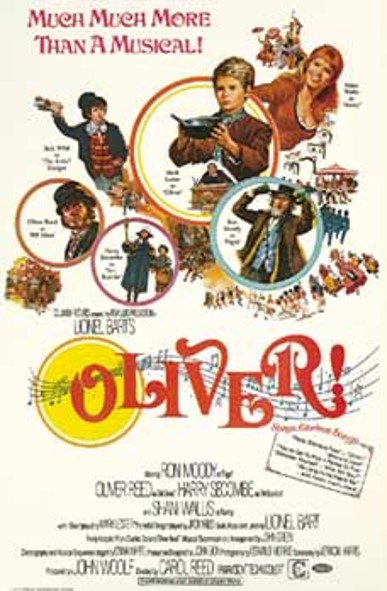
On 18 Cinema Lane, I received a Christmas present early! I finally achieved 50 followers! This means that I now have to review a movie that was released fifty years ago (in 1968). While looking at my options for what movie to talk about, I realized that I haven’t reviewed a musical yet. So, I chose Oliver! for this special blog post. While I have never read Oliver Twist, I did see Oliver & Company in September. In fact, I reviewed that film back when I received 30 followers on 18 Cinema Lane. Because of this, I had a basic idea of what the story was about. How different was Oliver! from Oliver & Company? Check out my review in order to find out!
The acting: This was a very strong cast! Everyone pulled off a performance that appeared so believable, it made the actors seem like they disappeared into their roles. One of the most versatile actors in this movie was Ron Moody. His portrayal of Fagin was very memorable, bringing those elements of sneakiness and desperation that were essential to that character. I also thought that the child actors were talented as well. While Mark Lester’s portrayal of Oliver was definitely a highlight in this film, I also liked seeing Jack Wild’s performance! Dodger, Jack’s character, was portrayed so well. This is because Jack’s acting performance appeared so natural, making it feel like a child in that particular situation would truly react in that specific way. All of these acting performances added to my level of enjoyment for this movie!
The set design: I was really impressed with all of the set designs in this movie! Because this story takes place in 1800s England, the environment within this film is reflective of that time and place. What makes these set designs so great is how immersive they make the audience feel when they see the film. While watching Oliver!, I felt like I was transported to that world, experiencing situations and events alongside Oliver. The authentic look and feel of the film’s environment also helps add a sense of realism to the story.
The musical sequences: The musical sequences within this film were, for the most part, really enjoyable! I was pleasantly surprised to find a lot of up-beat and catchy songs that were not only entertaining, but also complimented the context of the story. The musical sequence that I enjoyed the most was “Consider Yourself” because the song itself was so great! Some of the visuals in that scene were very creative, such as when, as Dodger and Oliver are walking past a butcher shop, they walk through a doorway which was created by a split piece of meat. It was also interesting to see how the different components of 1800s London came together to showcase the importance that they represented at that time.
The heavy dialect: As I have mentioned, the story of Oliver! takes place in 1800s England. This means that all of the characters have a dialect that reflects that time and place. However, because of how heavy the dialect was, I found myself having difficulty, at times, understanding what these characters were saying. While this didn’t make me enjoy the movie any less, I did have to pay extra attention to all of the dialogue in the film.
Very few emotional songs: Like I’ve also mentioned, most of the music in Oliver! was up-beat. But, when it comes to emotional songs, there are only two within this movie: “Where Is Love?” and “As Long as He Needs Me”. Because of the limited amount of emotional songs, it kind of undermines some of the seriousness that can be found in the story. While the up-beat nature of the songs is meant to make the movie less dark and dreary, a balance of up-beat and emotional songs would have worked better for the story.
I can’t believe this is my last movie review of 2018. Where has the time gone? Anyways, back to the review itself. I really enjoyed this film! As a musical and movie, Oliver! was such a delight to watch. Because I had seen Oliver & Company before I saw Oliver!, it made me appreciate the story as well as the original source material. Like I mentioned in my introduction, I have never read Oliver Twist. But, both of these films have encouraged me to want to read the book! Maybe I will read it in 2019. Speaking of the New Year, I’ve had a pretty good year when it comes to movie blogging. You, my readers and followers, are one of the reasons why 2018 has been great for 18 Cinema Lane. Thank you all so much for making this year such a memorable one for my blog. Here’s hoping 2019 brings more greatness for movie blogging!
Overall score: 8.6 out of 10
What are you looking forward to in 2019? Which movie review from 18 Cinema Lane has been your favorite? Share your thoughts in the comment section!















 18 Cinema Lane


.jpg)