To celebrate the anniversary of 18 Cinema Lane’s beginning, I host a movie awards to highlight the best films I saw in the previous year. As I had several projects on my plate in February, the Gold Sally Awards were pushed back. However, the Gold Sally Awards are still happening, starting with the Best Movie category! In this division, all of the films that were featured on my Top 10 Best Movies I Saw in 2020 list will compete for the title of Gold Sally Awards’ Best Movie. Like in years past, you are allowed to vote for more than one nominee. But you can only vote once per person. This poll starts today and ends on March 14th. On the bottom of the poll, there is a link where you can submit your vote. If you’re having technical difficulties, please don’t hesitate to speak up in the comment section.
I usually don’t show this anniversary image on my blog. However, I thought it would make sense for the start of this year’s Gold Sally Awards! WordPress Anniversary image created by WordPress.
2020 was a year that threw a huge wrench into a lot of movie-goers’ plans. As theaters shut their doors and new releases continuously changed dates, there were movie related content creators that had to either adapt as best they could or completely change their formula. Fortunately for 18 Cinema Lane, the impact of this year’s Coronavirus didn’t change the type of content published on the site. As with the previous two years, I saw more good movies than bad. This is honestly the first year where I had difficulty creating my top ten best movies list because of the quantity of enjoyable films that left a memorable impression on me. Since I published my worst movies of the year list first last year, I’ll post my best movies of the year list first this time around. As usual, I will begin the list with my honorable mentions and then move on to the official top ten list. Now let’s get this list started!
Crossword Mysteries: Abracadaver, Where There’s a Will, Generation Gap, A Beautiful Place to Die: A Martha’s Vineyard Mystery, Sweet Surrender, Picture Perfect Mysteries: Dead Over Diamonds, Riddled with Deceit: A Martha’s Vineyard Mystery, Mystery 101: An Education in Murder, To Kill a Mockingbird, Ruby Herring Mysteries: Prediction Murder, House of the Long Shadows, Up in the Air, The Crow, Mystery Woman: Game Time, Fashionably Yours, Finding Forrester, Cyrano de Bergerac (1990), Expecting a Miracle, Time Share, Little Lord Fauntleroy (1936), The Wife of Monte Cristo, Cry Wolf, Mystery Woman: Mystery Weekend, Perry Mason Returns, Perry Mason and the Notorious Nun, Perry Mason: The Case of the Shooting Star, The Terry Fox Story, Follow Your Heart, House of Wax, Funny Face, and The Christmas Bow
10. Nicholas Nickleby (2002)
Looking back on the four film adaptations of Charles Dickens’ work I’ve reviewed, I realize how lucky I am to come across those I enjoyed. Despite having never read Nicholas Nickleby, this production was both understandable and engaging! With the 2002 version of this story, its balance of joy and despair is a staple of the world-famous author’s I recognize from his other stories like Oliver Twist. As I said in my review of Nicholas Nickleby, it can be easy to forget the beauty this world can offer, especially during a year like 2020. I don’t often come across a movie that is so good, it makes me want to seek out its original source material. For this film, however, I just found an exception!
This is an interesting entry from the Breen Code era. It’s a darker musical that is dark in nature for the sake of providing thought-provoking commentary. Like I said in my review, The Unfinished Dance does a good job exploring what happens when truth disappears from the world. All of the musical numbers in this film have a strong reason for being in the story, as opposed to typical musicals where the numbers feel more spontaneous than planned. Even though dance is emphasized more than the story, the quality of the routines themselves make this film worth a watch! The movie is a hidden gem that I wish more people knew about.
I’m glad I was given an opportunity to re-watch this film, as it was just as enjoyable as when I first saw it! The story moves away from the aesthetic that most Christmas movies adopt. Instead, it relies on the messages and themes associated with the Christmas holiday. This creative decision is a breath of fresh air, bringing a different kind of narrative that isn’t often found during that time of year. If You Believe is a film that does what it sets out to do. It also helps that it has stood the test of time.
This is the kind of Hallmark Hall of Fame movie I wish was made more often, one where unique concepts are explored and celebrated. Instead of following a plot, the story revolves around a debate. The subject matter was not only handled with reverence, but each perspective was shown in a respectful light. I’m not a fan of this film’s ending, but I respect Hallmark’s decision to include it in the script, as it respects the audience’s intelligence. Sweet Nothing in My Ear is a title from this collection that can be used as an introduction to Hallmark Hall of Fame!
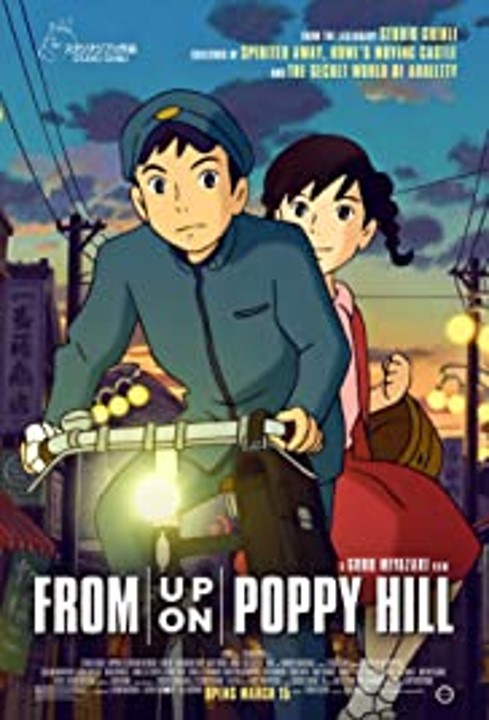
6. From Up on Poppy Hill
Studio Ghibli has a reputation for giving it their all when it comes to making movies. Besides their signature animation style, they also take the time to create fantastic worlds and memorable characters. While From Up on Poppy Hill doesn’t contain any of the magical elements that can sometimes be found in Studio Ghibli’s stories, the project doesn’t feel out of place in their collection. The plot is a simple one, but the inclusion of interesting characters and world-building is what makes it work. It also contains a great message about history that fits into the script very well.
Batman: Mask of the Phantasm is more than just a story about Batman. It’s a chance for audience members to see a side of this superhero that doesn’t often get presented in the world of film. The movie is a good example of how impressive 2-D animation can be. Even though the world has moved on to the wonders of 3-D and computer graphics, there will always be a place for older styles of animation. Despite having seen only a handful of Batman films, I can honestly say Batman: Mask of the Phantasm is one of the better options! The story itself is just as interesting as the world of Gotham City.
Grace & Glorie contains Hallmark’s favorite cliché of featuring a woman from a big city moving to a small town. But what sets this story apart is how that cliché is not the main focus of the film. Instead, the plot revolves around the friendship of Grace and Gloria. Because the titular characters were portrayed by two strong actresses, it made the dynamic between Grace and Gloria interesting to watch. Similar to From Up on Poppy Hill, this Hallmark Hall of Fame title has a simpler plot that works in its favor. Grace & Glorie is a type of story that is rarely seen on Hallmark Channel or Hallmark Movies & Mysteries. The movie is also an underrated gem that I wish more Hallmark fans were aware of.
3. Matinee
With the way the theatrical landscape was affected in 2020, it kind of feels weird that a film like Matinee would appear on a best movies of the year list for 2020. But instead of making me miss the cinema or feel jealous of the characters as they get to see a movie in a theater, this particular 1993 title reminded me of what I love about film. Because I have a special place in my heart for Phantom of the Megaplex, Matinee showed me that there is more than one story that could show people how movies can be fun. One of the messages of this narrative is that film can provide a much-needed break from the troubles of the real world. With the way 2020 turned out, Matinee seemed to come at the right place and time.
Every year, there is that one movie that catches me by surprise because of how good it is. The Boy Who Could Fly was definitely that film in 2020! I was pleasantly surprised by how well the overall story has aged. Given the subject material and the time it was released in, I can certainly say that my expectations were subverted. While The Boy Who Could Fly would be considered a “teen movie”, it doesn’t follow a lot of the patterns that most of these types of stories would contain. The themes of showing compassion for others, dealing with grief, and understanding people’s differences are given center stage.
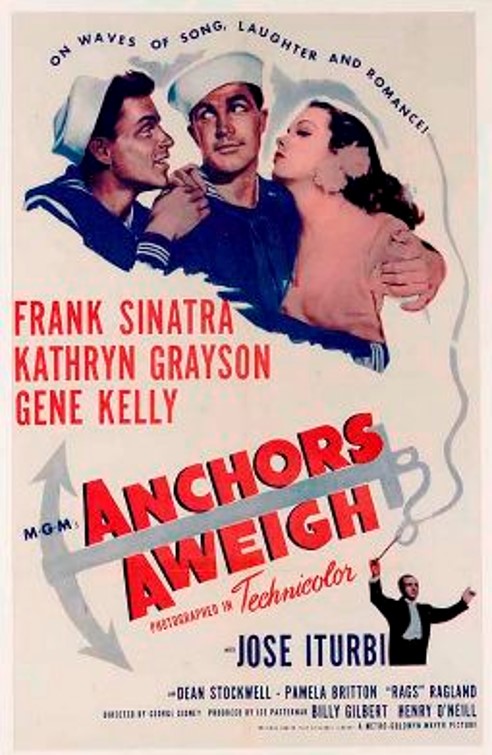
Who knew a Frank Sinatra movie would become the best one I saw in 2020? When I look back on this film, I remember how much fun I had watching it! As I said in my review, I spent most of my time smiling and laughing, which shows how the film’s joyful nature can certainly help anyone improve their mood. Anchors Aweigh is a strong movie on so many different levels. The acting, story, and musical numbers alone showcase how much thought and effort went into the overall production. If I were to introduce someone to the Breen Code era or musicals in general, this is the film I’d show them. Anchors Aweigh was certainly a bright spot in a year like 2020.
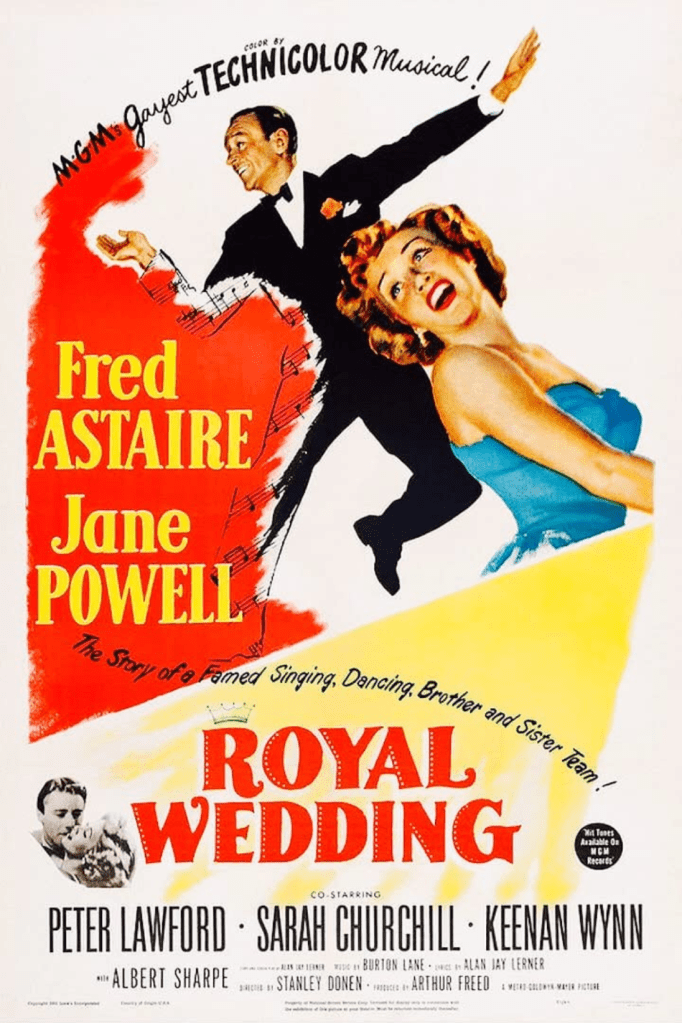
As I said in my review of Teenage Rebel, I haven’t seen many films from Fred Astaire’s filmography. In fact, the only two movies of Fred’s I’ve seen so far are The Sky’s the Limit and Funny Face. When I joined Crystal and Michaela’s blogathon, I knew which Fred Astaire picture I wanted to write about. Last month, I was recommended the 1951 film, Royal Wedding, by Heidi from Along the Brandywine. She suggested this film because of its use of split screens. Since I don’t have many Fred Astaire titles on my movie recommendation board on Pinterest, this was my first choice for this double feature! It is interesting that Royal Wedding is the last movie I’m reviewing in 2020. Musicals from the Breen Code era are usually seen as happy, up-beat productions. This is a contrast to the type of year 2020 ended up becoming.
Royal Wedding poster created by Metro-Goldwyn-Mayer.
Things I liked about the film:
The acting: A similarity I’ve noticed among Fred Astaire’s roles in The Sky’s the Limit, Funny Face, and Royal Wedding is how confident he comes across in each film! Speaking specifically about Royal Wedding, his character, Tom Bowen, had the showmanship you’d expect from a stage performer. Even though he was performing a duet in the movie’s opening number, “Ev’ry Night At Seven”, he had a stage presence that demanded the audience’s attention. This is because he had complete control over his part of the performance as well as experience leading other musicals. Fred also appeared comfortable as one of the leads in this film. Jane Powell’s on-screen personality in Royal Wedding was very sweet! Her character, Ellen Bowen, was also flirty without overdoing it. What worked in Jane’s favor was how she was able to keep up with Fred in their musical duets as well as hold her own in her solos. It definitely showed how strong of a performer she is! Because I’m not familiar with Sarah Churchill as an actress, I wasn’t sure how a Fred Astaire and Sarah Churchill on-screen pairing would work when I first saw them together. But as the film went on, I realized they had better on-screen chemistry than I expected! As an individual performer, Sarah gave her character, Anne, a sophisticated independence that never made her seem snobby or self-centered. In one scene, as she’s recalling to Tom how she came to be a dancer, Anne is so sure of herself when she talks about it. In scenes like this, you can tell that Anne has a healthy amount of self-confidence, partly because of Sarah’s captivating performance!
The musical numbers: When I watch musicals from the Breen Code era, I can’t help but notice the creativity that comes from some of the musical numbers! One example is Fred’s solo, “Sunday Jumps”. On paper, the idea of Fred dancing with a hatrack and exercise equipment might sound silly to some audience members. But because of the choreography and Fred’s dancing talents, that idea becomes a thoroughly entertaining one! Another solo of Fred’s, “You’re All the World to Me”, also showcases creativity well. In this musical number, Tom Bowen can be seen literally dancing on the walls and ceiling, as to visually represent what his heart is feeling for Anne. The number itself is also ahead of its time, as this particular idea wasn’t common in films from this era. I loved how a bright color palette was used in “I Left My Hat in Haiti”! It provided the musical number with an energy and personality that nicely contrasted the toned-down atmosphere of London. The musical number also did a good job at utilizing its ensemble.
The dialogue: Because of the Breen Code, screenwriters had to think and write cleverly when it came to expressing ideas that wouldn’t be allowed on film. That mentality can certainly be found in Royal Wedding’s script! After their performance, “Ev’ry Night At Seven”, Ellen complains about the theater’s lack of air conditioning due to the theater manager wanting to save money. Frustrated by that decision, Tom tells his sister how the theater manager will need a fan for one specific place. Subtle references like this one respect the audience’s intelligence and gave the screenwriters a chance to think outside the box when it comes to language. There were also memorable quotes within the script. During Anne and Tom’s conversation, Anne told him that dancing made her happy. She also said that she wanted to dance when she was happy.
No major conflicts: In Anchors Aweigh, Clarence “Brooklyn” Doolittle and Joseph “Joe” Brady help their new friend, Susan, get an audition with a well-known composer at a movie studio. This served as the main conflict for the film. With Royal Wedding, there was no main conflict to be found. Instead, the story focuses on the two relationships between Ellen and John and Tom and Anne. Even when sub-conflicts were introduced in the movie, they are resolved rather quickly. Having one overarching conflict would have added some intrigue to this story.
Too many boyfriends: At the beginning of the movie, Ellen is shown having multiple boyfriends. This was to highlight the point of Ellen having difficulty ending these relationships. When Ellen’s boyfriends are interacting with one another, I had trouble keeping track of who was who. I understand this creative decision was made on purpose, to emphasize the aforementioned point. But this gave the audience unnecessary confusion.
The titular royal wedding as an afterthought: When a film is titled Royal Wedding, most audience members would expect the wedding itself to play a significant role within the plot. Because the story focuses on the relationships of Tom and Anne and Ellen and John, the royal wedding is treated as an afterthought. Sure, the characters casually bring it up from time to time. But there is little to no excitement in London just days before such a historic event. When a pre-wedding parade is passing by Tom and Ellen’s hotel suite, the scene places more emphasis on John and Ellen’s conversation, preventing the parade from being shown on-screen. The day of the wedding appears in the last twenty minutes of the film, but even that part of the story is overshadowed by the previously mentioned relationships.
Royal Wedding is the type of movie where the acting performances and musical numbers make up for the weaker story. While the plot isn’t bad, it could have benefited from having a major conflict. If the creative team behind this movie wanted their story to be more interesting, it would have contained a mistaken identity. Ellen Bowen would switch places with the princess and fall in love with the prince, while the princess is mistaken for Ellen and eventually forms a romantic relationship with Tom. With this conflict, the wedding itself would have a greater presence in the whole story. It would also create a series of hilarious hijinks. Personally, I’d recommend Anchors Aweigh over Royal Wedding. The former has a stronger story and, in my opinion, is a more enjoyable film overall.
Overall score: 6.2 out of 10
What are your thoughts on Royal Wedding? Which movie is your favorite out of the ones I’ve reviewed this year? Please tell me in the comment section!
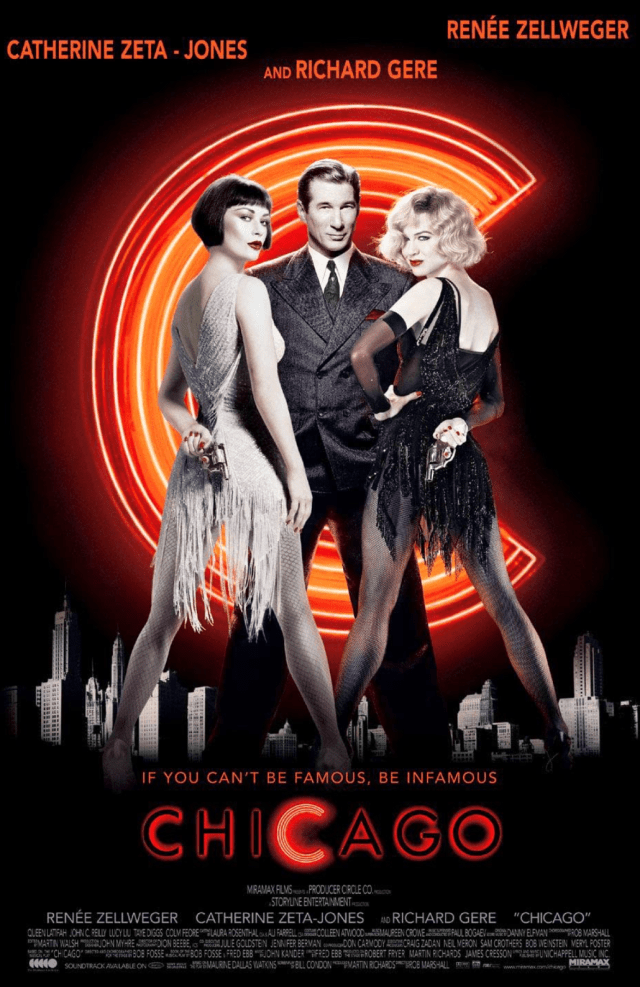
Hometowns to Hollywood’s Celluloid Road Trip Blogathon is about discussing films that revolve around a particular U.S. city. For my entry, I’ve chosen the 2002 film, Chicago. This movie has been on my DVR for three years, the longest a film has ever sat on the device. In fact, Chicago has spent the most time on my DVR, staying there since May of 2017. So, this was the perfect opportunity to finally see it! Even though it was my first time seeing the movie, it was a title I had heard of before. Whenever cinematic musicals of the 21st century are discussed, Chicago is usually brought up in the conversation. However, I never made time to check the film out. Now, in 2020, I am ready to review Chicago!
Chicago poster created by Miramax Films Producer Circle Co., Zadan/Meron Production, and Buena Vista Pictures.
Things I liked about the film:
The acting: Chicago is an ensemble film. Therefore, multiple actors pulled off a performance that was enjoyable to watch! Whenever I think about Queen Latifah’s portrayal of Matron “Mama” Morton, I think about how she carried her character with confidence! Even in the musical number, “When You’re Good to Mama”, she appeared comfortable performing in front of an audience. Through the use of music and theatrics, Queen Latifah was able to garner attention from the audience and create an effective on-screen presence! I have seen some of Richard Gere’s films prior to watching Chicago. However, most of those projects have leaned more toward the drama genre. His role, Billy Flynn, allowed him to step out of his comfort zone. Similar to what I said about Queen Latifah’s performance, Richard looked comfortable in his role! He even did a good job when it came to the musical numbers! What I liked about Renée Zellweger and Catherine Zeta-Jones’ performances is how their on-screen personalities were so different from one another, yet complemented each other so well! It created such an interesting dynamic between these characters. Like I said about Richard Gere, Renée and Catherine did a good job pulling off the musical performances, as well as the portrayals of their characters!
The musical numbers: If you’re going to create a musical, you need to create musical numbers that are worth watching. When it comes to Chicago, the musical numbers were the highlight of this project! They are all presented as dream sequences, to show how Roxie views her world. I found this is to be an interesting creative choice, as most musicals include their musical numbers within the events of the plot. Chicago’s musical numbers were stylized, serving as visual spectacles. Bright colors and lights provide a consistent component, adding to their photogenic appeal. I also liked the creativity that could be found in these musical numbers. An example is “We Both Reached for the Gun”, where all the characters except for Billy are showcased as a puppet.
The historical accuracy: When I was watching Chicago, I noticed how the entire production appeared historically accurate! This film takes place in 1924, which is reflected in various ways. One of them is the hairstyles of the female characters. Both Roxie and Velma sport shorter hair-dos, showing women’s style choices of that time. The costumes, in Roxie’s world and the dream sequences, seemed to belong in that decade. Longer coats were worn by some of the female characters, with a millionaire named Kitty wearing a white one with embroidered flowers in a scene. Set designs and even vehicles showcased the historical accuracy I found in this film! It tells the audience that the creative team behind the project cared about their film’s presentation.
Too much burlesque: While there are plenty of musical numbers in Chicago, the majority of them featured burlesque. Personally, I am not a fan of this particular performance style. Therefore, I didn’t care for burlesque’s abundance. Aside from my personal opinion, the number of burlesque routines felt like they were rehashing the same idea. There was only so many times the movie could present a scantily clad dancer performing mature dance moves before the concept got old. Chicago is a film that, in my opinion, would have benefitted from having less burlesque.
Mixed messages: As I’ve said before, I watch movies to be entertained. However, I can appreciate a film that contains a good message. In Chicago’s case, there were mixed messages throughout the story. One good example revolves around Roxie’s quest for stardom. On more than one occasion, other women have gained more attention than her. This led me to believe the movie’s overarching message would be about how there will always be someone who has more than you no matter how much you strive for what you want. I won’t spoil the film for those who haven’t seen it. But what I will say is the film’s final outcome contradicts the message that seemed to be delivered.
Characters that are terrible people: When I reviewed Twentieth Century last month, I talked about how all the characters were awful individuals. This caused me to lose investment in them and their stories. Chicago has a similar flaw, with most of the characters being terrible people for different reasons. Toward the beginning of the film, Roxie is shown murdering a man, even though he was walking away when the crime was committed. The song, “Funny Honey”, highlights how Roxie is glad her husband, Amos, comes across as ignorant because she thinks that will help her cover up her crime. Out of all the characters in this film, the only one I cared about was Roxie’s husband, Amos. While he was a simple man, he was the only character who was a genuinely good person. I couldn’t help feeling sorry for him during the musical number, “Mister Cellophane”.
The way I feel about Chicago is the same way I feel about Moulin Rouge!: it was ok. The 2002 movie does have merit, which can be found in the acting performances and the musical numbers. But, similar to Moulin Rouge!, Chicago relies more on style than substance. Because the audience knows the protagonist committed a crime, there is no sense of intrigue. It also doesn’t help that the majority of the characters are terrible people. The mixed messages within the story are confusing, with the script saying one thing, but then being contradicted later on. If you’re not a fan of burlesque, then you probably won’t enjoy most of the film’s musical numbers, as they abundantly feature burlesque routines. However, the musical numbers in general were well-crafted, especially on a technical level. Therefore, I would recommend these parts of the film. As for the movie itself, this is one I don’t see myself revisiting.
Overall score: 6 out of 10
Have you checked out the other entries from the Celluloid Road Trip Blogathon? If so, which city that was addressed do you think is interesting? Share your thoughts in the comment section!
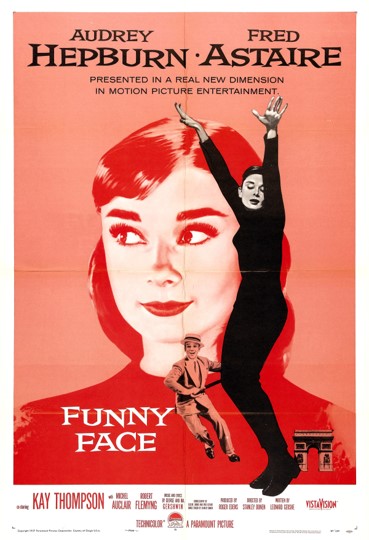
For the second part of my Fred Astaire and Gene Kelly double feature, I’ve chosen to review the 1957 film, Funny Face! Last September, when 18 Cinema Lane received 135 followers, I reviewed my first Fred Astaire movie. That was The Sky’s the Limit, which I thought was just ok. Speaking of firsts, reviewing Funny Face is a first for 18 Cinema Lane, as it is the first musical film starring Aubrey Hepburn I’ve seen! Even though I have seen Breakfast at Tiffany’s and The Nun’s Story, those films would be classified as dramas. Since this was my first time seeing Audrey perform in a different genre, I was curious to see if she would be able to hold her own. When I read the synopsis for Funny Face, it sounded similar to another musical starring Audrey: My Fair Lady. Because I haven’t seen that movie, I can’t make a comparison between it and Funny Face.
The acting: The one word I’d use to describe the cast in Funny Face is comfortable. I chose this word because every actor and actress appeared comfortable in their role! This presented the characters as if they were real-life people dealing with real-life situations. Watching Audrey’s performance in this movie reminded me of her performance in The Nun’s Story for this reason: her character grows over the course of the movie. In Funny Face, Jo opens her heart and mind to a new chapter in her life that she never thought she’d embark on. She steps out of her comfort zone to not only follow her dream of meeting her favorite philosopher, but she also creates new dreams for herself. Audrey’s ability to adapt to any scenario helped her make Jo’s journey seem believable! As I mentioned in the introduction, I saw The Sky’s the Limit last September. Personally, I liked Fred’s character in Funny Face more than his character in the 1943 film. This is because Dick Avery had a better personality. He came across as easy-going and approachable, someone who you would want to tour Paris with. This made Dick Avery worth rooting for! Kay Thompson stood out to me as Maggie Prescott! While her character was no-nonsense and straight-forward in what she wanted, she was never cold-hearted or mean for the sake of it. This is different from other characters of this specific type. What’s also different is how Maggie was allowed to be silly, as could be seen when she and Dick are attempting to find Jo at the home of Jo’s favorite philosopher. This gave Kay an opportunity to apply her acting abilities to various situations!
The use of color: I love how color was used in Funny Face! Whenever scenes had a primarily plain color palette, like white or beige, objects or pieces of clothing were added to bring a pop of color to the space. The opening scene is such a great example! Each door of Quality magazine’s office was painted a bright shade of various colors, providing visual appeal to a mostly white lobby and hallway. Maggie’s office adopted a beige hue for about 85% of that location. However, certain pieces of fabric and even an assistant’s green coat add bold colors to a place that would have remained dull without them. This decision to use color was very detail oriented and showed how the film’s creative team really paid attention to how their project would be presented!
The musical numbers: Funny Face’s musical numbers were not only entertaining to watch, they also incorporated creative ideas that made them memorable. The very first musical number, “Think Pink!”, showed a montage of the different ways the color pink could be worn. Through the use of colorful visuals, it helped illustrate the point Maggie was trying to stress to her assistants as well as the audience. “Bonjour, Paris!” showed Maggie, Dick, and Jo simultaneously in a split screen shot. I have never seen a musical use a split screen before, so this detail is the one I remember the most! Each performer in these musical numbers looked like they truly enjoyed what they were doing! “Basal Metabolism” showed Audrey Hepburn having fun performing her dance trio. She appeared in her element and joy radiated from her routine. This definitely added to the overall enjoyment of Funny Face’s musical numbers!
No major conflict: While watching Funny Face, I noticed something was missing from this movie. That would be a major conflict, which I think would have made the story a little more interesting. Smaller conflicts, like finding a new face for Quality magazine, kept the film moving forward. But, because a major conflict was absent, it made situations feel like they worked out too easily in the characters’ favor. One idea could have shown Dick struggling to decide if he should continue to be a fashion photographer or become a stage performer. If this would have been a conflict in the story, it would have presented a mystery as to which career path Dick will choose.
A prolonged transformation: Like I said in the introduction, I haven’t seen My Fair Lady. Therefore, I can’t compare the two movies. What I will say about Funny Faceis how Jo’s transformation doesn’t happen until the film’s halfway point. In the first half of the story, Jo’s perspective starts to change, allowing her to expand her intellectual horizons. But the physical transformation, from bookworm to fashion model, happens a lot later than most movies of this nature. When a character makes a dramatic change to their appearance, that moment may be the audience’s most anticipated moment. If they are forced to wait too long, they may start to lose interest.
An attraction that happened too quickly: In my review of The Crow: City of Angels, I pointed out how, to me, Ashe and Sarah’s attraction for one another was a flaw of that movie because it came about so quickly. The attraction between Jo and Dick in Funny Face makes the same error, as it also happens too quickly. Minutes after meeting for the first time, Jo and Dick share a kiss. Shortly after this encounter, Jo sings “How Long Has This Been Going On?”, a song about falling in love. If this song had been sung later in the film, after she had spent more time with Dick, the song itself would have been more impactful. Even though it is somewhat predictable for Jo and Dick to form a relationship, it should have taken its time to come to fruition.
Funny Face is a film I had heard of for years, but had never seen. Whenever I heard about classic films or even movies starring Aubrey Hepburn, this film has, more often than not, been brought up. Now that I have seen Funny Face, I have developed an understanding for why this is the case. This is not just a good musical or a good Audrey Hepburn title. It is a good movie in general! Creative ideas within this project help it stand out. Some examples include using a split screen and incorporating objects with color into scenes with plain color palettes. Musical numbers were well-choreographed, featuring performers that appeared to enjoy the material they were given. Every actor and actress seemed comfortable in their roles, giving their characters a life of their own. While Funny Face does have its strengths, it has its weaknesses as well. Just one example is how Jo’s transformation happens much later in the film. Despite having seen only two of Fred Astaire’s movies, I’d pick Funny Face over The Sky’s the Limit. I would even choose Funny Face over Take Me Out to the Ball Game!
Overall score: 7.8 out of 10
Have you seen Funny Face? Which Fred Astaire musical is your favorite? Please share your thoughts in the comment section!
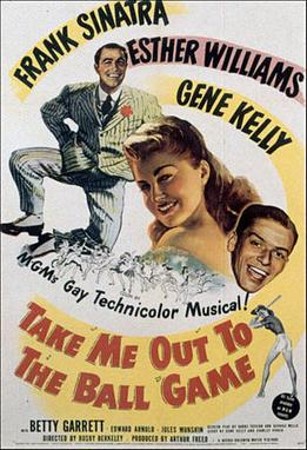
Because Heidi’s new blogathon celebrates two classic film stars, Fred Astaire and Gene Kelly, I decided to write a double feature in their honor. I’m starting with one of Gene Kelly’s movies first, as my movie selection had a shorter run-time. On 18 Cinema Lane’s Pinterest account, there is a recommendation board where people who visit the blog can make a suggestion for future reviews. That board hosts some Gene Kelly titles, so I had plenty of options to choose from. In the end, I picked the 1949 film, Take Me Out to the Ball Game, which was recommended by Kristen from KN Winiarski Writes! The idea of a musical surrounding an athletic sport was a fascinating concept. It also gave me an excuse to finally watch one of Esther Williams’ films, as I had not seen one up until this point. 2020 has become the year of Frank Sinatra films on this blog, as Take Me Out to the Ball Game is now the fifth film from Frank’s filmography I’ve reviewed. An interesting coincidence I just noticed is how most of these movies have had a musical element included.
The acting: As I said in the introduction, I reviewed Anchors Aweigh back in September. In that review, I said that Frank Sinatra and Gene Kelly were one of the best on-screen duos I’ve ever seen because of how different their characters were from each other. Because of Frank and Gene’s experience working together, it allowed them to be familiar with the other performer and know what to expect from them in Take Me Out to the Ball Game! Like Anchors Aweigh, their characters in the 1949 film, Dennis and Eddie, were opposites of one another. This time, however, it was for different reasons. While Eddie was interested in the night life of his world, Dennis has a quieter soul that seems to notice the finer details within his surroundings. While I wrote a list article about the travels of Esther Williams, this was my first time watching one of her films. Even though Esther spent more time on land than in the water, she appeared at ease in her role as K.C. Higgins! When people tried to stand in her way, K.C. always stood her ground. At the same time, she tried to instill fairness into the situation. One great example is when she insists on a curfew penalty for every member of the Chicago Wolves. On the surface, it seems like K.C. is being unfair toward the team. In reality, she is looking out for their best interests by making sure they get a good night’s sleep so the team can perform better on in their baseball games.
The set design: Because a significant amount of time in Take Me Out to the Ball Game takes place in Florida, the sets surrounding the characters are going to reflect the Sunshine State. This is done through a variety of design choices. What made me like these sets so much was how appealing they were! When Dennis and Eddie arrive in Florida for Spring Training, the audience is introduced to the stadium, located right on the beach. With fair weather in the scene and the sandy shore taking center stage, the beach looked inviting! At night, when K.C. is interacting with both Dennis and Eddie near the pool area, lights illuminated this location to show off its exterior design. The white balcony of K.C.’s hotel room complimented the dark sky shown in the background. Light colored outdoor furniture consistently carried the color scheme this set was striving for! In an outdoor sitting area occupied by K.C. and Eddie, tan wicker chairs were paired well with green plants placed in various spots. This design choice showcased a good color combination!
The majority of the musical numbers: For the most part, I liked seeing the musical numbers in Take Me Out to the Ball Game! They were well choreographed and each performer looked like they truly enjoyed what they were doing. Like I said earlier, Frank and Gene’s experience working together helped them become familiar with the acting/performance style of the other actor. This certainly worked in their favor when it came to the musical numbers! In the opening number, “Take Me Out to the Ball Game”, both actors wonderfully pull off a tap-dance duet! Even though tap was out of Frank’s creative comfort zone, he was able to hold his own throughout the routine. Like I also said in this review, Esther spends more time on land than water. However, she was given one scene where she swam and sang the song from the movie’s opening number. Because of Esther’s experience with musicals, she was able play her own unique role in the film’s musical department that allowed her to stand out. Esther also appeared comfortable with the performance material given.
Two songs that didn’t age well: In Take Me Out to the Ball Game, there are two songs that have aged poorly. The first song, “Yes, Indeedy”, is performed by Frank and Gene when their characters are telling the Chicago Wolves about the females they met during their traveling talent tour. The lyrics reveal how one woman committed suicide and another female was 11 years old. Because the song itself is faster paced and upbeat, it almost sounds like Dennis and Eddie make light of the woman’s passing. Even though they say they didn’t interact with the 11-year-old for long, it makes me wonder why this child would have anything to do with Dennis and Eddie in the first place? The second song, “It’s Fate Baby, It’s Fate”, is performed by Frank Sinatra and Betty Garrett. The purpose of this song is for Betty’s character, Shirley, to share her feelings for Dennis. How she does it is very forceful, with the musical number showing Shirley blocking Dennis’ path, chasing him through the stadium, and picking him up against his will. Because of her aggression in the situation and her lack of accepting rejection, it feels like a unhealthy relationship in the works.
The character of Shirley: While Betty Garrett did a good job with the acting material she was given, I was not a fan of her character. Personally, I found Shirley to be a selfish individual who didn’t seem to care about the feelings of others. As I just mentioned, Shirley is very forceful when it comes to expressing her feelings for Dennis. If her musical number, “It’s Fate Baby, It’s Fate”, wasn’t bad enough, she wants to treat Dennis like she’s his mother. The way she talks to him in a scene where she blocks Dennis’ path with her horse and buggy shows Shirley talking to Dennis like she has more authority than him. More often than not, Dennis expresses how he doesn’t like Shirley in a romantic sense. He goes out of his way to avoid her and shows displeasure when she’s nearby. However, everyone surrounding him overlooks Shirley’s actions and encourages Dennis to spend more time with her.
An unclear time period: According to Wikipedia, Take Me Out to the Ball Game takes place in 1908. Certain aspects of the movie reflect this, with the various modes of transportation being one example. But there were some outfit choices that appeared to belong in a different decade. Whenever the Chicago Wolves are spending time in the hotel, all the team members wear team sweaters featuring their team logo. This style of sweater looked like it came from somewhere between the ‘30s and ‘50s. Like previously said, Esther has a swimming scene in this film. Her swimsuit resembles the style she wore in her “aqua musicals” of the ‘40s and ‘50s. These costume choices prevented me from getting fully immersed in the movie’s world.
Even though Take Me Out to the Ball Game is the second Frank Sinatra and Gene Kelly collaboration I’ve seen, I’d still prefer Anchors Aweigh over the aforementioned film. While Take Me Out to the Ball Game is a fine movie, I feel the 1945 film was a stronger picture overall. However, I’m not going to dismiss the movie completely. One of the strengths of the 1949 project is the acting performances! Musical experience from Frank, Esther, and Gene definitely worked in this movie’s favor, with each actor appearing comfortable in their roles! I also enjoyed most of the musical numbers! They were certainly entertaining and fun to watch! Even though I didn’t mention it in my review, I feel the film’s conflict was underutilized. Within the last thirty minutes, Eddie tries to juggle baseball and performing in a café. Eventually, he learns that he can’t have everything he wants. Story wise, I think the film’s main conflict should have been Eddie’s struggle to fit his love of performing and baseball into his life. I actually found this part of the story more interesting than the Chicago Wolves dealing with a new team owner.
Overall score: 7.2 out of 10
Have you seen Take Me Out to the Ball Game? Which Frank Sinatra and Gene Kelly collaboration is your favorite? Tell me in the comment section!
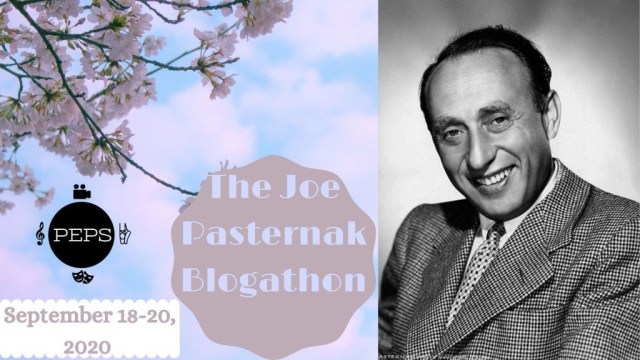
This is it, my 200th movie review! It’s hard to believe I’ve reached this accomplishment in only two years! The recent occurrence and my participation in Pure Entertainment Preservation Society’s Joe Pasternak Blogathon caused me to choose Anchors Aweigh as the next movie to review! This film was recommended to me by The Classic Movie Muse from the blog, The Classic Movie Muse. Anchors Aweigh is also the fourth Frank Sinatra picture I’ve written about in 2020. When reading about Joe Pasternak in the announcement post for the blogathon, I learned that Joe put a lot of thought into the films he produced. Prior to joining the event, the only movie of his I’ve seen is The Unfinished Dance. Back in April, when I reviewed the project, I said it was a good, solid picture! I also mentioned how the movie did a good job at exploring thought-provoking ideas, such as the disappearance of truth. I’m looking forward to talking about Anchors Aweigh, as it is very different from The Unfinished Dance!
Anchors Aweigh poster created by Metro-Goldwyn-Mayer, M-G-M Cartoons, and Loew’s Inc. Image found at en.wikipedia.org/wiki/File:Anchors_aweigh.jpg
Things I liked about the film:
The acting: Anchors Aweighis the fourth movie of Frank Sinatra’s I’ve seen, as I said in the introduction. His performance as Clarence “Brooklyn” Doolittle was different from his roles in Marriage on the Rocks, High Society, and Ocean’s Eleven. This is because his on-screen personality was sweet-natured. It was a good contrast to Gene Kelly’s character, Joseph “Joe” Brady. In Anchors Aweigh, Gene displayed a confident and headstrong personality. This set of opposites is what helped Gene and Frank become one of the best on-screen duos I’ve ever seen in film! Despite watching only one of Joe Pasternak’s films, I have noticed how the female characters are intelligent women who always hold their head up high. Kathryn Grayson’s character, Susan Abbott, is a great example! Even though she is a single parent, she never gives up on her dreams of being a singer. Because of a believable performance, Kathryn made Susan someone worth rooting for! While Pamela Britton appears in Anchors Aweigh for a limited time, I really liked her character! She not only had a good on-screen personality, but she also had good-screen chemistry with Frank Sinatra. Watching Pamela in Anchors Aweigh was a joy to watch, as her presence brought a bright light to any of her scenes!
The comedy: I found Anchors Aweigh to be a genuinely funny movie. That’s because the humor in this film was well-written and delivered! When Susan and Clarence are on their way to dinner, Clarence suggests that Joe join them. When Joe asks Clarence why he should go, Clarence tells him he won’t know what was said in Joe’s phone conversation. Not only was this conversation clever, but it was also executed well by Frank and Gene. Another funny scene involving Gene and Frank is when Joe is chasing Clarence around the service lodge. This moment was caused by Joe sleeping in, making him miss his meeting with Lola.
The musical numbers: In Anchors Aweigh, the musical numbers were definitely a highlight! There were so many good scenes, it is difficult to choose a favorite. Gene’s dancing talents were utilized to their fullest extent, from his duet with Jerry (the animated mouse) to his Latin inspired solo. These dance numbers were very colorful. The costumes and set design were bright and cheery, allowing the overall mood to be light-hearted and joyful. Frank’s singing abilities were also well incorporated into the story. His solos were slower, ballad pieces. This choice complimented the more romantic moments of the narrative. Having Frank and Gene perform together was a great decision! They were able to keep up with each other’s fortes as well as work well with one another. “I Begged Her” and “If You Knew Susie” showcases this creative partnership wonderfully!
The joining of animation and live-action: In one scene, Joe finds himself in a magical make-believe land where he interacts with animated animals. This is because he is telling a story to the children of Hollywood Day School how he earned his Silver Star. This part of the movie looked really good, especially for a film released in the mid-‘40s! It felt like Gene was actually in that world, as the technology of the time appeared top-notch. I also liked the quality of the animation! It contained bright colors and clear lines, reminding me of the older films from Disney. Seeing Gene and Jerry dance together was impressive, as it seemed like they were in the same room. Before the actual dance routine, Gene led Jerry onto the ballroom floor by holding his hand. Because of how good the technology looked, this interaction between these two characters was convincing!
A drawn-out conflict: The main conflict of Anchors Aweigh shows Joe and Clarence trying to set up an audition for Susan. While conflicts take time to be resolved, I wasn’t expecting the conflict in this film to last the entire story. Quality script-writing made the conflict itself interesting. But I honestly feel it could have been resolved sooner.
Less Tom, More Jerry: Tom and Jerry, the famous animated cat and mouse, are listed in the opening credits of Anchors Aweigh. I was not expecting this special guest appearance, so seeing these characters in the film was a pleasant surprise. Even though I liked Jerry’s duet with Gene, Tom showed up for only a few seconds. I found their cast listing misleading, as an equal amount of screen time is expected when Tom and Jerry are included in a program.
I had this patch lying around my house and thought it would be perfect to include in this review! Screenshot taken by me, Sally Silverscreen.
My overall impression:
For someone who had never seen any of Frank Sinatra’s films, I have really made up for lost time in 2020. By selecting Anchors Aweigh for the Joe Pasternak Blogathon, I gave myself an opportunity to watch one of Frank’s earlier works. It also gave me an excuse to see more of Joe’s films. I can honestly say Anchors Aweigh is, so far, the best movie I’ve watched this year! There is so much to like about this project and it was pleasantly joyful! I spent most of my time smiling and laughing, as the humor was one of the strengths of this story. The entire movie was well thought out, showcasing an engaging film that was also entertaining. Thank you, Classic Movie Muse, for suggesting this film to me. If not for your recommendation, I might have never seen this delightful movie!
Overall score: 8.9 out of 10
Have you seen any of Joe Pasternak’s films? If so, which one is your favorite? Share your thoughts in the comment section!
For this blog follower dedication review, I was originally going to pick a movie to recognize Earth Day. However, after watching the true crime video titled ‘Holly Maddux and the Unicorn Killer | #TrueCrime’, I’ve gained a new perspective of the April 22nd date. Instead, I will use this review to not only thank my 190 followers, but to also commemorate the memory of Holly Maddux. This is the reason why I have chosen a 1947 release for this post, as that was the year Holly was born. In the aforementioned video, Alanda, the creator of that video as well as her Youtube channel, The Recovering Hunbot, indicated Holly was a dancer. So, I thought a musical would be an appropriate choice. While searching through titles, I discovered one called The Unfinished Dance. I had never heard of this film prior to this review. But I have seen the 1949 version of The Secret Garden and Meet Me in St. Louis, so I figured I’d see another good performance from Margaret O’Brien.
The Unfinished Dance poster created by Metro-Goldwyn-Mayer and Loew’s, Inc. Image found at en.wikipedia.org/wiki/File:The_Unfinished_Dance.jpg
Things I liked about the film:
The acting: As I said in my review, I’ve seen Margaret’s performances in the 1949 version of The Secret Garden and Meet Me in St. Louis. Her portrayal of Meg in The Unfinished Dance was different from her other aforementioned roles. This is because there was more dancing involved and it was much darker. However, Margaret executed her performance very well! Before watching The Unfinished Dance, I was familiar with who Cyd Charisse is as a person. But this was the first time I had ever seen one of her film performances. This movie highlights how wonderful of an actress and dancer she is! Whether she was dancing onstage or performing in a scene without dancing, she was so captivating to watch! Another first performance I saw came from Danny Thomas. To me, Danny will always be known for his philanthropic work, especially when it comes to the creation of St. Jude Children’s Hospital. I enjoyed watching his portrayal of Mr. Paneros, as it showed how great of an actor and singer Danny is!
The dance scenes: All of the scenes involving dance were one of the best parts of this movie! The dancing itself was well-choreographed, allowing dancers of all ages to showcase their talents. The set design surrounding the dance numbers was also great to look at, as the space was effectively used. On-stage sets that are sometimes shown during performances were colorful and appealing to the eye. Music also helped elevate the dance numbers, as they added emotion to the performances. These dance scenes were mesmerizing and there was always something interesting to watch!
The use of mirrors: In two scenes from The Unfinished Dance, mirrors were used in creative ways. The first scene revolves around Karin Booth’s character, La Darina, practicing for her upcoming performance. At certain moments in this scene, Karin’s performance was captured through the view of nearby mirrors. The second scene shows mirrors covering the floor of the stage. These mirrors were used to create a “lake” and give the audience the impression swans are gliding across it. I have never seen some of these techniques before, so, for me, it brought visual interest to the film.
Dance emphasized more than story: Like I previously mentioned, I really liked the dance scenes in this movie. However, there were times when it felt like these scenes were emphasized more than the story. This is the case in the first half of the movie, where the build-up to Meg’s act is kind of glossed over. While I did think the story itself was interesting, it seems like the dance numbers sometimes overshadowed the narrative.
Karin’s limited appearance: In The Unfinished Dance, Karin Booth’s character, La Darina, is in select scenes due to a particular circumstance. Because of this, Karin was given few opportunities to perform. She is a very talented actress and dancer! But, compared to Cyd, Karin only received three dance numbers. She, unfortunately, did not have much material to work with.
A mysterious red tint: There were some scenes in The Unfinished Dance where it looks like the camera captured them using red film. This causes the characters to look red-ish pink. It also causes locations to give off a red hue. In my opinion, these scenes appeared very strange because of how unnatural they looked. It was jarring, as this wasn’t a consistent occurrence.
The Unfinished Dance does a good job exploring what happens when truth disappears from the world. It also shows how the ideas of ambition and dreams can easily get in the way of what’s really important. While this film had flaws that prevented it from being great, I still think it is a good, solid picture! Besides the intriguing story, the movie offers several dance scenes that are captivating and entertaining! The acting performances also help maintain the audience’s attention, as a wide range of emotions were used in a variety of situations. Once again, I found a hidden gem that I want to share with my followers. The same followers that helped me achieve this recent milestone. Thank you to everyone who continue to support my blog! Your interest in 18 Cinema Lane really means a lot to me!
Overall score: 8.2 out of 10
Have you seen any of Margaret O’Brien’s films? Which movie featuring dance is your favorite? Please tell me in the comment section!
Have fun at the movies!
Sally Silverscreen
If you would like to learn more about the Holly Maddux case, you can visit Alanda’s Youtube channel, The Recovering Hunbot. If you watch it, there are sensitive topics that are brought up in the videos.
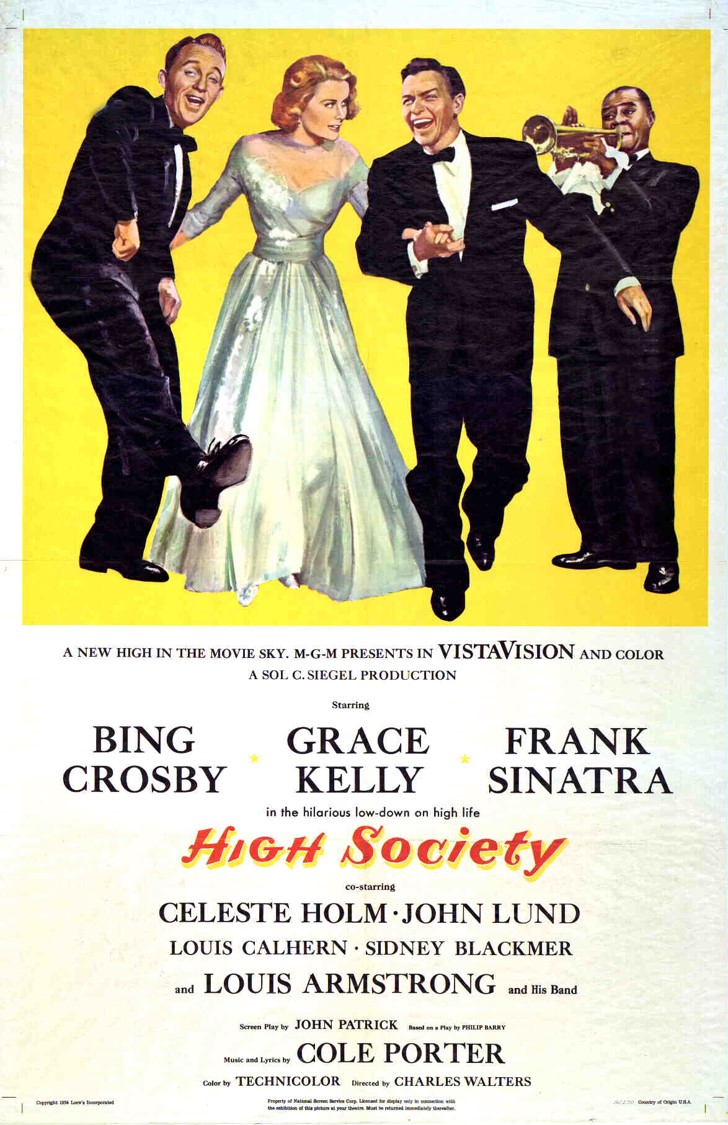
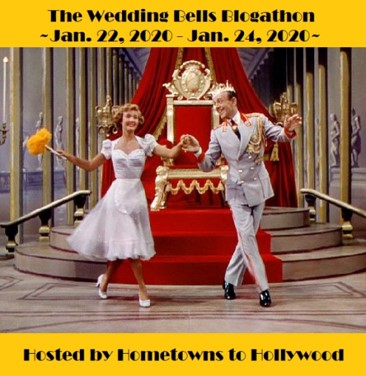
I interrupt my Youth-Led Film Double Feature to bring you my review for The Wedding Bells Blogathon! One day, as I was searching Turner Classic Movies’ (TCM’s) schedule, I came across a film called High Society. Through its description, I learned it was a musical remake of The Philadelphia Story. Since I have enjoyed that movie, I figured there was a good chance I might like this picture from 1956. In my review of Marriage on the Rocks, I mentioned I would be reviewing the movie later this month. I also said in that review that I did not like Marriage on the Rocks. High Society is now the second film of Frank Sinatra’s and Grace Kelly’s that I’ve seen! While I knew that Frank and Bing Crosby had musical talents, it would be interesting to see what Grace had to offer to a movie musical. Now, as you’re waiting for the wedding to start, please take a moment to read this review of High Society.
The acting: It’s no secret that Grace Kelly is one of the most versatile actresses to ever exist! Her performance in High Society helps her maintain that reputation. Grace has the ability to adapt her emotions to any scene. When Grace’s character, Tracy, is talking with her father by the pool, she can go from angry to crying with sadness within a matter of minutes. Because of her experience working with various actors and actresses, Grace never had difficulty keeping up with her co-stars. Speaking of co-stars, I have seen Frank Sinatra and Bing Crosby in at least one film prior to watching High Society (Frank in Marriage on the Rocks and Bing in scenes from White Christmas). Similar to what I said in my Marriage on the Rocks review, both Frank and Bing appeared at ease in their respective roles. This allowed them to bring a natural charm to their characters, C. K. Dexter-Haven and Mike Connor. What also helped was how their singing talents complimented their acting talents. Even though he portrayed himself in the film, Louis Armstrong did a good job with the material he was given. He had a delightful on-screen personality and great musicality. These things made me enjoy Louis’s presence in the movie!
The sets: In High Society, the sets were absolutely gorgeous! Not only did they fit the environment the film’s creative team wanted to create, but these sets also looked magnificent on film! The great part about them are the textures, colors, and materials that were used in each space. In one of the Lord family’s sitting rooms, the sea green walls worked really well with the white wood paneling and crown molding. Another great set was Tracy’s uncle’s library. While the dark wood walls and bookshelves were beautifully crafted, it’s the hidden bar within the bookshelves that steals the show. The sets in High Society certainly made the movie visually appealing!
The musical numbers: For the most part, I enjoyed the musical numbers in High Society. They sounded pleasant and were, more often than not, lively. My favorite musical number is “Who Wants to Be a Millionaire?”, as it was one of the funniest scenes in the movie. In this number, Frank and Celeste Holm, the actress who portrayed Liz Imbrie, had really good on-screen chemistry and comedic timing. Frank and Celeste’s singing voices also sounded great together. I was pleasantly surprised by Grace’s singing abilities in the duet, “True Love”. She sounded excellent alongside Bing Crosby and the song itself sounded nice. I’m not sure how much singing experience Grace had prior to being cast in this movie. But it’s nice to see her trying different things and going out of her comfort zone.
Unacknowledged commentary: In my Rich Kids review, I shared that one of the film’s messages was how wealth didn’t equal invincibility. This message can also be found in High Society, as Tracy shows Mike various houses in her neighborhood that are either boarded up or for sale due to homeowners no longer affording them. While this commentary added something interesting to the story, there was no room in the script for it to be explored or discussed. I understand there’s only so much you can do in an hour and fifty-one minutes. However, it was disappointing to see this commentary get ignored.
Few dance numbers: When I learned that High Society was a musical remake of The Philadelphia Story, I was excited for the song-and-dance fest that would take place. But, as I was watching the movie, I discovered it only contained two dance numbers. These numbers were a short solo performed by Frank and a short duet performed by Frank and Grace. Since White Christmas premiered two years prior, I’m surprised Bing wasn’t given at least a waltz with Grace, especially since that film featured both singing and dancing. Personally, I had expected more dance sequences in High Society. But I’m guessing there was no room in the budget to recruit a choreographer.
Dialogue-heavy scenes that felt a little drawn out: Within musicals, dialogue-heavy scenes are meant to give the audience a break from the high energy that can sometimes come from the musical numbers. However, in the case of High Society, these scenes felt a little drawn out. The scene where Mike and Liz meet the Lord family is one example. The pace of the scenes feel slower than I hoped. It also caused the film’s overall pace to seem uneven. Issues with pace and length of scenes are some reasons why I think this script was weaker than it could have been.
High Society is a fine, enjoyable film! While it’s not one of my favorite musicals, I certainly liked it for what it was. It was also far more entertaining than Marriage on the Rocks! Because High Society is a remake of The Philadelphia Story, there are bound to be similarities between the two. However, there are also differences that give each movie their own identity. For the 1956 picture, this was the incorporation of the message that even wealthy people can experience hardship. Combined with the song, “Who Wants to Be a Millionaire?”, the film tells its audience to count their blessings and to focus less on what they don’t have. This shows that the film’s creative team not only wanted to bring something new to the story, but also respect the source material that came before it. As I end this review, I’d like to quote Louis Armstrong by saying “end of story”.
Overall score: 7.2 out of 10
Which movie musical is your favorite? Are there any you’d like me to review? Let me know in the comment section!
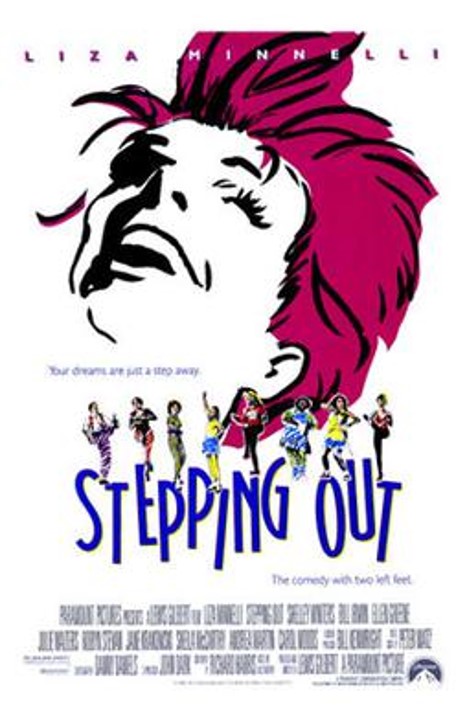
Shelley Winters is an actress that I was familiar with before joining The Shelley Winters Blogathon. I’ve seen The Diary of Anne Frank, What’s the Matter with Helen?, and Lolita. But out of those three movies, her most memorable role is Helen from What’s the Matter with Helen?. Shelley was able to bring a very haunting element to that character, giving the audience a reason to feel uneasy toward her. As I searched through her IMDB filmography, I came across a film called Stepping Out. When I read the synopsis, it sounded like a very sweet story. Because of this, I choose the 1991 picture for my entry in the blogathon. When it comes to blogathons, I rarely have an opportunity to review musical films. In fact, the last movie musical I reviewed was Summer Magic for A Month Without the Code back in August. I also learned that Stepping Out was based on a pre-existing play. If I hadn’t watched a Youtube video where Gene Siskel and Robert Ebert talk about their least favorite films of 1991, I wouldn’t have discovered this valuable piece of information.
Stepping Out poster created by Paramount Pictures. Image found at en.wikipedia.org/wiki/File:SteppingOutFilmPoster.jpg
Things I liked about the film:
The acting: As I said in my I Remember Mama review, every actor and actress is expected to bring the best of their acting talents in an ensemble cast. With confidence, I can say that all of the actors and actresses in Stepping Out did a fantastic job in their roles! The chemistry between all of the characters was strong, making their relationships feel believable. Andi, portrayed by Sheila McCarthy, and Geoffrey, portrayed by Bill Irwin, are a perfect example of this. During the duration of the film, Andi and Bill develop a friendship that survives outside of the studio setting. Their interactions give the audience the impression that they truly care about one another. Though her role in this movie was smaller than in other movies, Shelley Winters had a memorable on-screen appearance! Her performance was consistent and her sense of humor was subtle yet effective. I also liked hearing her singing performance when she shared, in one scene, that it was Irving Berlin’s birthday. Despite her limited amount of screen-time, Shelley still found a way to make a big impact in this story!
The film’s sweeter moments: Throughout the film, there were sweet, light-hearted moments that I enjoyed seeing. Anytime Mavis encouraged her students and tried to help them become the best dancers they could be, it was very refreshing to see a teacher figure with realistic goals. Even when there were obstacles within the dancing lessons, the students were able to find moments of positivity and humor. One example is when there was a mix-up with their costume hats. It was also nice to see the students trying to help each other outside of the studio environment. When Maxine offers Rose’s son a job, it shows the team dynamic that Mavis strives for during the movie. It also displays how the characters are able to put the needs of others before their own.
The dance numbers: Seeing the dance numbers in Stepping Out was a highlight! Since the story revolves around Mavis and her students, all of the dance numbers are performed by them. Despite this, they are all entertaining! Whether it was Mavis’ solo or the group numbers that appeared toward the end of the film, these dance numbers were well choregraphed. It also helps that a good percentage of this cast had Broadway experience prior to appearing in Stepping Out. Their experience and performance related knowledge worked in their favor, as it brought a sense of realism to the dance numbers.
Some characters receiving more character development than others: In Stepping Out, I found that some characters received more character development than others. Two examples are Andi and Mrs. Fraser. This story gave Andi a fully developed back-story. Meanwhile, Mrs. Fraser’s back-story resides in only two sentences. There are even some characters that don’t receive any character development. Dorothy, portrayed by Andrea Martin, is one of them. I understand that in an ensemble cast, it’s not easy providing a story and character development to every character. But, for me, it left more to be desired.
Some under-utilized actors: I noticed within this cast that some of the actors were under-utilized. One of these actors is Geza Kovacs, who I talked about in my editorial, “Why Jiggy Nye is Not an Effective Villian in Felicity: An American Girl Adventure”. In his role as a club manager named Jerry, he did a good job with the material he was given. However, he was only in the film for two scenes. I know that this particular character didn’t provide as much to the story as other characters did. But I find it frustrating when talented actors and actresses aren’t given an opportunity to fully utilize their talents.
A weaker second half: While watching this movie, I felt the second half was weaker than the first half. This is because some parts of the story were drawn out more than others. A good example is Andi’s story. As I stated before, Andi is a character that received a well-developed back-story. However, it was drawn-out longer than it should have been. To me, this issue is the result of the run-time and a script that wasn’t as tightly written. Even though the film’s second half contained two very entertaining dance numbers, the story itself could have been stronger from start to finish.
Stepping Out made me feel the exact same way that Moulin Rouge! did. The film had sweet moments and other factors that I liked. But the story as a whole could have been stronger. Some of the downfalls include select characters receiving well-written backstories, some under-utilized actors, and a script that’s not as tightly written as it could have been. However, these elements did not make this movie one of the worst I’ve seen this year. Even though this project had its flaws, the cast, as a whole, shines in the spotlight! This is especially true for Shelley Winters! When we think about actresses who’ve graced the silver screen, Shelley, to me, seems like one of the underrated ones. I don’t hear her name being added to the conversation as I do for other starlets, such as Audrey Hepburn and Bette Davis. But during my year of blogging, I learned that this is the reason why blogathons exist. These events provide a platform to talk about almost anything and everything, so it’s great to see blogathons take the time to give lesser known stars and other movie related topics their “standing ovation”.
Overall score: 6.5 out of 10
Have you seen any of Shelley’s films? If so, which one is your favorite? Share your thoughts in the comment section!
Have fun at the movies!
Sally Silverscreen
If you want to check out the video that I referenced in this review, type “SISKEL & EBERT: The Worst Movies of 1991” into Youtube’s search bar. Just to let you know, there is some language and suggestive topics discussed in this video. The segment about Stepping Out starts at 6:55 and ends at 8:33.














.jpg)