Take 3: Speak Easily Review

When I participated in the 10th Annual Buster Keaton Blogathon last year, I reviewed Buster’s episode of The Twilight Zone; “Once Upon a Time”. In that review, I stated how his episode would be a good place to start if one were introduced to the show, partly due to the story’s light-hearted nature. For this year’s event, hosted by Lea from Silent-ology, I wanted to check out one of Buster’s films. After taking a trip to his IMDB filmography, I selected the 1932 picture, Speak Easily! One of the reasons why I chose this movie for the blogathon was the story itself. According to the Internet Movie Data Base, “a timid professor inherits a large sum of money and decides to fund a terrible musical”. Another reason for choosing Speak Easily is how Buster starred in a “talking picture” (movies with sound). Because he’s known as a silent screen legend, I was curious to see how he’d perform in a film with audible dialogue. So, with all that said, let’s begin this review of the 1932 presentation!

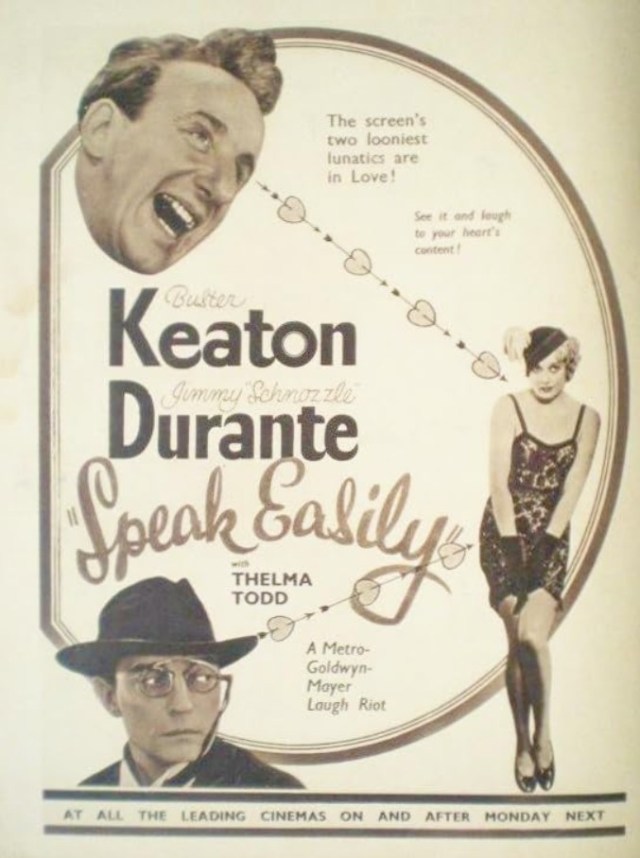
Speak Easily poster created by Metro-Goldwyn-Mayer

Things I liked about the film:

The acting: As I mentioned in the introduction, Buster Keaton is known as a silent screen legend. His forte was “slapstick” comedy, which worked in the format of silent films. With Speak Easily, Buster had to incorporate both physical movement and dialogue in order to help tell the story. Honestly, I think he did a good job with the provided material! In the 1932 production, Buster portrays Professor Post, an intelligent yet isolated man. This allowed Buster to adopt eloquent words, a sense of awkwardness, and responses that are too literal. Add his signature “slapstick” comedy for good measure and you have a character that was charming in his own right! Along the way, Professor Post becomes friends with a theater performer named James Dodge. Portrayed by Jimmy Durante, James had a big personality, brighter than all the lights of Broadway. This vibrancy was consistent throughout the movie, a strength of Jimmy’s performance! Ruth Selwyn and Thelma Todd join the cast as Pansy Peets and Eleanor Espere. Both actresses did a good job making their characters feel distinct from each other. During Speak Easily, Ruth displayed a gentle persona and was more soft spoken. Meanwhile, Eleanor adopted a flirtatious personality.

The dialogue: Prior to reviewing Speak Easily, I have seen a few of Buster’s “talking pictures”. However, his roles in these movies were smaller, meaning he was given fewer lines to work with. Though Buster received more opportunities to incorporate dialogue in Speak Easily, I was more impressed with the dialogue itself. Throughout the film, I caught on to how well-written the dialogue was. One good example can be heard toward the beginning of the film. Professor Post doesn’t go to a local event at his college because he claims he wasn’t invited. His colleague, Jenkins, thinks this is an excuse for Professor Post to stay in his comfort zone. During a visit to Professor Post’s office, Jenkins tells Professor Post, “if you only go out and find life, you’ll enjoy living it”. This line serves as a friendly yet firm reminder how life is too short to miss out on.

The messages and themes: Like I said earlier in this review, Professor Post is an intelligent yet isolated man. After he receives a large sum of money, Professor Post chooses to travel to New York and, eventually, funds a musical. As the story progresses, he tries to form connections with his peers. Eventually, Professor Post successfully finds friends by staying true to himself. The trials and triumphs of forming relationships, whether romantic or platonic, is a relatable subject. What’s also relatable is having a genuine persona/personality and doing the right thing. The incorporation of these messages and themes was one of the things I liked about Speak Easily!

The 11th Buster Keaton Blogathon banner created by Lea from Silent-ology

What I didn’t like about the film:

A drawn-out film: Speak Easily has a run-time of an hour and twenty-one minutes. However, the movie’s run-time felt longer. This is because parts of the story were drawn-out. As Professor Post boards a train, there’s a running joke about how he forgot his trunk. The joke then transforms into a couple forgetting their baby. That entire joke lasts for about four minutes. Had the joke just focused on Professor Post forgetting his trunk, maybe some of Speak Easily’s run-time could have trimmed.

An overshadowed musical: I’ve mentioned twice in this review how Professor Post funds a musical after receiving a large sum of money. This concept made me curious how Professor Post’s involvement would influence the musical. While the musical was featured in the movie, you have to wait over fifty minutes into an hour and twenty-one minute story just to see the musical come to life. Preparations for the musical were shown, but only in two scenes. The majority of the story focuses on Professor Post’s relationships with the other characters. That focus causes the musical to be over-shadowed.

Limited amount of “slapstick” comedy: I said earlier in my review how “slapstick” comedy was Buster’s forte. This part of his career has been incorporated into his “talking picture” projects, such as The Twilight Zone episode; “Once Upon a Time” and Speak Easily. But in the 1932 production, Buster’s “slapstick” comedy was used sparingly. That creative decision was the result of the film’s run-time, as Buster’s silent films were, more often than not, shorter. The limited amount of “slapstick” comedy felt like the movie was missing something. I wish Speak Easily’s creative team had capitalized on Buster’s forte a bit more.

String of musical notes image created by Freepik at freepik.com. <a href=’https://www.freepik.com/free-vector/pentagram-vector_710290.htm’>Designed by Freepik</a> <a href=”https://www.freepik.com/free-photos-vectors/background”>Background vector created by Freepik</a>. Image found at freepik.com. 

My overall impression:

In Speak Easily, Professor Post sees working on a musical as trying something new. By moving out of his comfort zone, he was able to make new friends, find success, and travel beyond the walls of his office. By starring in this film, Buster Keaton was, in a way, trying new things. This time, he had to rely on more than just physical movement and “slapstick” comedy to carry the story. Even though I liked Buster’s performance in the 1932 presentation, the project itself was, in my opinion, just ok. I was pleasantly surprised by how well-written the dialogue was! The acting, as well as the messages and themes, were Speak Easily’s other strengths. But there were aspects of the movie I didn’t like, from the drawn-out nature of the film to the musical becoming overshadowed. By reviewing this project, I found an excuse to write about a pre-Breen Code era title. Since the only pre-Breen Code era movies I’ve reviewed this year, so far, were The Garage and 1925’s Phantom of the Opera, Speak Easily will easily fill that void!

Overall score: 6-6.1 out of 10

Have you seen Speak Easily? Which “talking picture” from Buster Keaton’s filmography would you like to see me review? Let me know in the comment section!

Have fun at the movies!

Sally Silverscreen
That’s a Wrap for my Second Chance Christmas Double Feature

Now we’ve come to the end of another double feature, as both chosen titles, Young at Heart and An Old Fashioned Christmas, have been watched and reviewed! In the introduction, I brought up the following question:

Did these two movies deserve a second chance?

For my answer, I’ll say Young at Heart was more deserving of a second chance than An Old Fashioned Christmas. With Young at Heart, I not only received an opportunity to check out more projects from Frank Sinatra’s and Alan Hale Jr.’s filmography, I was also given an official introduction to Doris Day’s movies. I found a good excuse to see more musicals, as well as films from the 1950s. Overall, I enjoyed Young at Heart more than Hallmark’s 2010 presentation. As someone who loves An Old Fashioned Thanksgiving, the sequel left a lot to be desired. Despite being titled An Old Fashioned Christmas, the film didn’t feel like a Christmas film. Instead of prioritizing the messages and themes of the holiday, the script primarily focused on stories that could have taken place any time of year. It also doesn’t help how so much of the story revolves around a love triangle. Looking back on An Old Fashioned Christmas, it makes me wonder if the sequel’s poorer quality, as well as becoming forgotten by time and Hallmark themselves, is the reason why I’ve, more often than not, seen DVD copies of the movie included in Christmas movie box sets?

Christmas themed movie tickets image created by Kraphix at freepik.com. <a href=’https://www.freepik.com/free-vector/movie-tickets-christmas_971544.htm’>Designed by Kraphix</a>. <a href=”https://www.freepik.com/free-photos-vectors/christmas”>Christmas vector created by Kraphix – Freepik.com</a>. Image found at freepik.com.

Have fun at the movies!

Sally Silverscreen
The Top Ten Best Stand-Alone Films

On this day in 2000, The Road to El Dorado made its official debut. While the movie didn’t meet or exceed DreamWorks’ expectations, it certainly found an audience, which stuck with the film for all these years. I once heard The Road to El Dorado was intended to be the first story in a trilogy. But fate decided it worked better as a stand-alone picture. This caused me to think about the other stand-alone movies I’ve come to love. So, in honor of The Road to El Dorado’s 25th anniversary, I have compiled a list of what I believe are the top ten best stand-alone films! For my list, the criteria for a stand-alone film is not only a title that didn’t receive a sequel, but also isn’t affiliated with a series/franchise. If I covered a film on 18 Cinema Lane, I will provide a link to that article or review in this list. Each title will be presented in order of release year and each choice is based on my opinion.

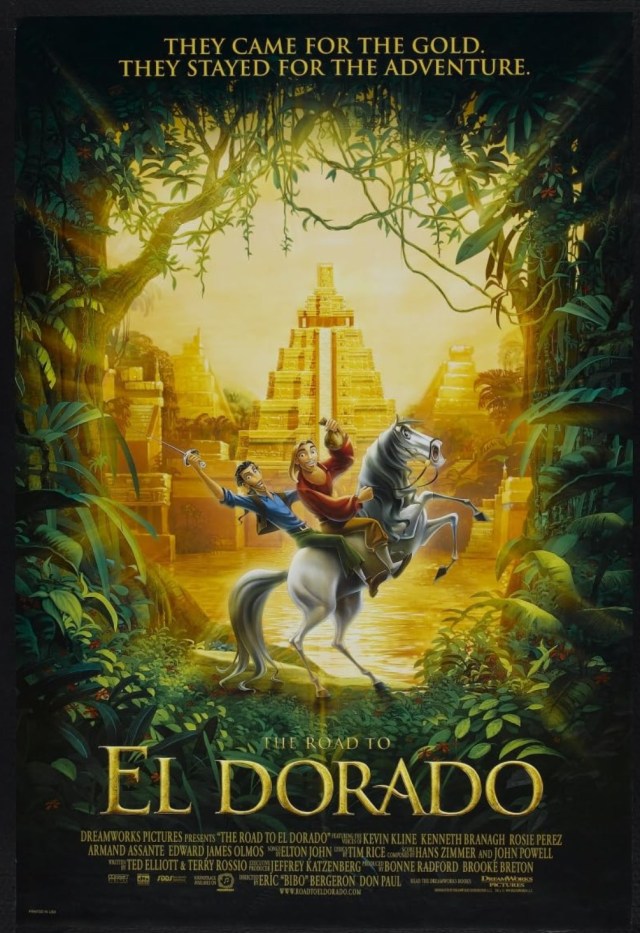
The Road to El Dorado poster created by Dreamworks Pictures, DreamWorks Animation, and DreamWorks Distribution

1. Singin in the Rain (1952)

    I start my list with a classic I was introduced to because of my blog. Now that I have finally seen Singin in the Rain, I have an understanding and appreciation for why the movie is so beloved. Gene Kelly’s iconic musical number, “Singin in the Rain”, should provide enough explanation for why you should check the film out! The number itself feels immersive, as it takes place within the story’s context. Gene adds uniqueness to the number by jumping and splashing in puddles. “Singin in the Rain” successfully represents the spirit of the film, while also delivering the message of seeing the good in a not-so-good situation. That number is just one reason why Singin in the Rain is a solid musical!

    Watching ‘Singin in the Rain’ for the First Time

    2. Ben-Hur (1959)

    If you’re going to watch any classics, you have to see 1959’s Ben-Hur! Though the three-hour run-time can seem intimidating, that time flew by for me, as I was so engrossed in the story. The emotional intensity of Charlton Heston’s, Stephen Boyd’s, and Haya Harareet’s performance complimented the scope of the overall film. Ben-Hur contains other likable qualities as well, from the magnificent sets/scenery to the interesting cinematography. How Christianity/faith was incorporated into the story sets the 1959 production apart from other “sword and sandal” pictures. Those who celebrate Easter may find Ben-Hur an appropriate seasonal title.

    Take 3: Ben-Hur (1959) Review + 60 Follower Thank You

    3. To Kill a Mockingbird (1963)

    While the book, To Kill a Mockingbird, received a sequel, the film adaptation did not. The 1963 movie presents one of the few times where, in my opinion, the film was better than its source material. Getting straight to the point a lot sooner was a main focus for the creative team. The film’s visual nature worked in the favor of certain elements from the book. Showing suspenseful moments from the source material makes those moments seem real, as well as intensifies uncertainty. Leaving out scenes that feel like padding helps the movie maintain a steadier pace.

    Take 3: To Kill a Mockingbird Review

    4. The Boy Who Could Fly (1986)

    When I first saw The Boy Who Could Fly, it subverted my expectations. That’s because the 1986 picture aged surprisingly well! Through Milly and Eric’s friendship, the script shows how people with Autism can create and maintain meaningful relationships. Helping someone with Autism based on their personal preferences and accommodations may have seemed ahead of its time back in the mid to late ‘80s. Timeless messages and themes make up one of the reasons why I love the 1986 film. Showing compassion for others, dealing with grief, and understanding people’s differences take center stage.

    Take 3: The Boy Who Could Fly Review (PB & J Double Feature Part 2)

    5. The Bodyguard (1992)

    In 2022, I wrote an editorial explaining why The Bodyguard held up thirty years later. Because I love the 1992 film, finding explanations wasn’t difficult. “The kitchen scene” is, in my opinion, the best scene from any action movie. One reason why is how the kitchen’s smaller space is seen by the actors as a challenge instead of a hindrance. What also worked in The Bodyguard’s favor was Whitney Houston’s portrayal of Rachel Marron. Throughout the story, Whitney realistically showcases emotions and expressions. This helped Rachel become a multi-layered character.

    I Will Always Love You: ‘The Bodyguard’ at 30

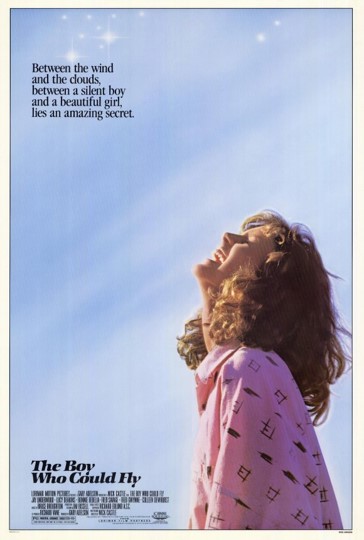
    The Boy Who Could Fly poster created by Lorimar Motion Pictures and 20th Century Fox. Image found at https://www.imdb.com/title/tt0090768/?ref_=nv_sr_srsg_0.

    6. Swept from the Sea (1998)

    Swept from the Sea was one of the earliest hidden gems I discovered in 2019. It’s a movie that’s so great, I just had to include it on this list. There are so many things to like about Swept from the Sea. From Vincent Perez’s captivating performance to the beautiful scenery, the film’s components came together to create an endearing and emotional presentation! The 1998 film is a character-driven story, relying on on-screen chemistry in order to work. Because of Vincent Perez’s and Rachel Weisz’s differing acting styles, the on-screen chemistry between Yanko and Amy was very sweet and genuine.

    Take 3: Swept from the Sea Review (A Month Without the Code — #8)

    7. Phantom of the Megaplex (2000)

    This is another movie I just had to include on my list. But this time, it’s because Phantom of the Megaplex is also celebrating its 25th anniversary this year! The Disney Channel picture showed that the movie-going experience can be fun. As I explained in my editorial celebrating the film’s 20th anniversary, the made-for-TV movie also serves as a time capsule of how the cinema operated in the beginning of the millennium. Phantom of the Megaplex even shows how movies can influence our lives. Though I’m not sure if that aspect of the story was intentional, it makes the 2000 title, somewhat, thought-provoking.

    ‘Phantom of the Megaplex’ at 20: A Reflection on the Movie-Going Experience

    8. I Am David (2004)

    I Am David was the biggest pleasant surprise of 2024. It became the year’s best movie in March and stayed number one until the very end! What set I Am David apart was the film’s genuine emotion and sincerity. This was seen and felt through every aspect of the production. The 2004 movie emphasized visual depth. Achieved by exploring light and darkness, as well as showcasing Europe’s natural landscape, the creative team used the visual nature of film to their project’s advantage. Two effective plot twists are another reason why I liked I Am David. Their delivery in the story was well-written.

    Take 3: I Am David Review (Double Feature: 2004 Edition Part 1)

    9. From Up on Poppy Hill (2011)

    This 2011 presentation is one of Studio Ghibli’s stronger projects. A reason is one of the overarching themes; honoring the past. The film intelligently and creatively shows its audience how important history is in our lives and our world. Whether referencing the 1964 Olympics or focusing on the characters’ relationships, the theme of honoring the past acts as an umbrella sheltering Poppy Hill and its surrounding areas. Studio Ghibli’s signature colorful palette is consistently on display in the 2011 film. The strong understanding for how and when to use color makes scenes look like priceless pieces of art! Personally, I think movies like From Up on Poppy Hill present an argument why 2-D animation still has its time and place.

    Take 3: From Up on Poppy Hill Review + 200 Follower Thank You

    10. The Wild Robot (2024)

      I think it’s fitting to close this list with a DreamWorks movie, as a DreamWorks movie is the reason why I created this list in the first place. Though this was a recent watch for me, The Wild Robot is, so far, the best film I’ve seen this year! The animation itself is absolutely gorgeous! Sometimes, scenes look like paintings and other times, they look like priceless photographs. I was not expecting the story to contain as much emotional depth as it did. An abundance of good messages and themes add a sense of timelessness to the production. Though it’s unknown right now if The Wild Robot will gain an audience like The Road to El Dorado has, I can confidently say it was a really good movie!

      Phantom of the Megaplex poster created by the Walt Disney Company and Disney Channel. © Disney•Pixar. All rights reserved. Disney XD© Disney Enterprises, Inc.

      Have fun at the movies!

      Sally Silverscreen
      Take 3: Young at Heart Review (Second Chance Christmas Double Feature Part 1)

      Thank you for joining me for the first part of my Second Chance Christmas Double Feature! Similar to last year’s review of I Am David, my review of Young at Heart is spoiler-free. If you’re curious about why I chose Young at Heart for this double feature, you can check out the introduction in the link below.

      Coming Soon to a Blog Near You; The Second Chance Christmas Double Feature!

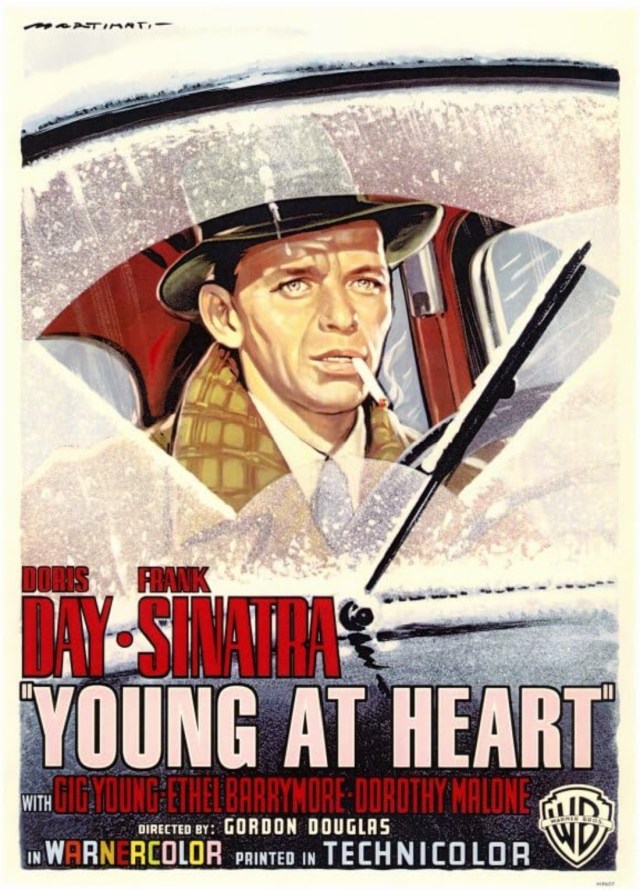
      Young at Heart poster created by Arwin Productions and Warner Bros.

      1. How were you introduced to Young at Heart and why was it selected for this double feature?

      I was introduced to Young at Heart back in January of 2020, through a recommendation from Maddy (of the blog, Maddy Loves Her Classic Films). Several months later, I received another recommendation for Young at Heart. This time, the suggestion came from Moviecriticqueen (of the blog, Movies Meet Their Match). For five years, this movie has stayed on my movie recommendation board on Pinterest. But I have tried to find the right opportunity to write about the film. When I participated in the Sixth Annual Barrymore Trilogy Blogathon, I was originally going to review two movies; Young at Heart and Twentieth Century. Due to technical difficulties, I only had time to write about one film, which I selected the 1934 title. In 2021, I wanted to participate in the Star/Genre Of The Month Blogathon, as January’s featured star was Doris Day. But a busy schedule prevented me from joining the event.

      2. You discovered Young at Heart was a Christmas movie after you learned more about the film on IMDB. What else have you discovered about the 1954 picture?

      While watching Young at Heart, I discovered Alan Hale Jr. portrayed a character named Bob. Those familiar with their television history would recognize Alan from his starring role (‘Skipper’) on Gilligan’s Island. I will admit the only projects from his filmography I’ve seen are Gilligan’s Island and The North Avenue Irregulars. Even though I’m more familiar with Alan’s appearances on Gilligan’s Island, it was a pleasant surprise to see him star in a different medium!

      3. Is the theme of “second chances” incorporated in Young at Heart’s story? If so, how?

      Yes, specifically in Barney’s part of the story! When he’s introduced in Young at Heart, Barney (portrayed by Frank Sinatra) is a very pessimistic man. He feels no matter what he does, he will never find success. Throughout the film, one of the few people who believes in Barney is Doris Day’s character, Laurie. During their initial meeting, Laurie tells Barney how anyone can control their own fate. She also encourages him to complete one of his songs. By befriending Barney, Laurie gave him a second chance to prove how valuable he is. Without spoiling the movie, Laurie and Barney’s friendship pays off!

      4. Was there anything about Young at Heart you liked or didn’t like?

      One of the best aspects of Young at Heart was the dialogue! The writing and delivery were so sharp and witty, it made interactions between the characters interesting! When Barney first arrives at the Tuttle family’s house, he meets Aunt Jessie. During their conversation, Barney nonchalantly asks Aunt Jessie what kind of aunt she is. With a stern tone in her voice, Aunt Jessie promptly tells him her name came first and the curtains came later. This simple exchange between Aunt Jessie and Barney shows some of their character development, as well as the dynamic these characters share.

      As I answered for question number three, Barney is a very pessimistic man who believes he can’t find success. I recognize how overcoming insecurities and doubts takes time. But, in Young at Heart, Barney spends most of the movie being pessimistic. He doesn’t change his perspective until the end of the film. This creative choice made Barney a static character. I wish his transformation had gradually taken place over the course of the story.

      Adorable Christmas card image created by Rawpixel.com at freepik.com. <a href=’https://www.freepik.com/free-vector/christmas-greeting-card-vector_2824854.htm’>Designed by Rawpixel.com</a>. <a href=”https://www.freepik.com/free-photos-vectors/christmas”>Christmas vector created by Rawpixel.com – Freepik.com</a>. Image found at freepik.com.

      5. On 18 Cinema Lane, you’ve covered plenty of Christmas films. How is Young at Heart similar to or different from other Christmas pictures written about on your blog?

      It is true that Christmas has a place in Young at Heart. However, the story spans over the course of several months. This means only a portion of the movie is set during Christmas. So, if I had to compare Young at Heart to any of the Christmas films I’ve reviewed, it would be Meet Me in St. Louis. The 1944 movie not only takes place over a year, there is one scene set during Christmas.

      6. Did you develop any thoughts and/or questions while watching this film?

      As I was watching Young at Heart, I found moments of irony when it came to Barney. When Barney first meets Laurie, he talks about serving in the military during World War II. This reminded me of how Frank’s character, Clarence “Brooklyn” Doolittle, was in the Navy in Anchors Aweigh. During his conversation with Laurie, Barney says he’s never created a hit song. Throughout Frank’s career, he had several hit songs to his name. One notable example is “New York, New York”, which has become the unofficial theme song for New Year’s in Times Square. Any time Barney performed at a restaurant, the patrons didn’t pay him any attention. I’d like to think if Frank had shown up at any restaurant, most of the patrons would have stopped what they were doing to focus on Frank.

      7. How would the story of Young at Heart change if it revolved around another holiday?

      Like I answered for question number five, Young at Heart spans over the course of several months, with Christmas playing a role in only a portion of the movie. Therefore, I don’t think the story would change much had another holiday served as the primary focus.

      8. Did Young at Heart deserve a second chance? If so, why?

      I do believe Young at Heart deserved a second chance! By finally checking this movie out, it gave me an opportunity to see more projects from Frank Sinatra’s and Alan Hale Jr.’s filmography. Young at Heart also became my introduction to Doris Day’s films, as I had never seen any of her movies before 2025.

      9. After watching Young at Heart, is there anything you can take away from your movie viewing experience?

      Young at Heart and The Chalk Garden share one thing in common; a character-driven story that works because of the strength of the cast. But a major difference between these films is how Young at Heart’s script is more “slice of life”. There were conflicts woven into the story. However, these conflicts were either abandoned or resolved at the very end of the movie. I wish Young at Heart had put a little more emphasis on problem-solving among the characters. Another thing The Chalk Garden and Young at Heart have in common is the dialogue, as it was well-written and delivered in both films. There was, clearly, thought and effort put into this film-making component, which made interactions between characters interesting. While I found The Chalk Garden good, Young at Heart was, in my opinion, just fine. The 1954 production could be used as an introduction to Doris Day’s filmography.

      Group of puppies image created by Rawpixel.com at freepik.com. <a href=”https://www.freepik.com/free-photos-vectors/background”>Background photo created by rawpixel.com – http://www.freepik.com</a>. Image found at freepik.com.

      Have fun at the movies!

      Sally Silverscreen
      Take 3: Million Dollar Mermaid Review

      From Esther Williams’ filmography, I’ve only seen (and reviewed) three of her pictures; Take Me Out to the Ball Game, Bathing Beauty, and Easy to Wed. When it comes to the aqua musical, one of Esther’s claims to fame, that component was far and few between in those movies. Wanting to see an Esther Williams production where the aqua musical was more center stage (no pun intended), I selected Million Dollar Mermaid to review for the We Love Musicals Week Blogathon! The 1952 presentation was recommended by The Classic Movie Muse. Before researching titles to write about for Hamlette’s (from Hamlette’s Soliloquy) event, I had no idea the movie was a biopic. As I made this discovery, I was reminded how much luck I had finding good biopics last year. On my list of the best movies I saw in 2024, three biopics earned a spot on my list, with two of those films ending up in my top five. Could Million Dollar Mermaid find a place on 2025’s best movies list? Read my review to find out!

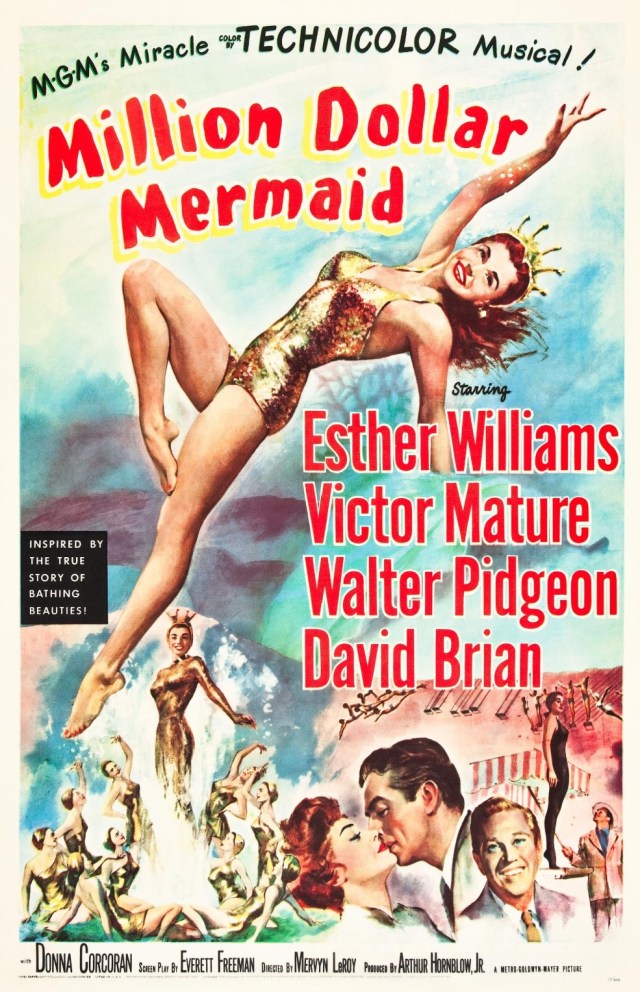
      Million Dollar Mermaid poster created by Metro-Goldwyn-Mayer (MGM)

      Things I liked about the film:

      The acting: As I said in this review’s introduction, I’ve seen (and reviewed) three of Esther Williams’ films; Easy to Wed, Take Me Out to the Ball Game, and Bathing Beauty. What these titles have in common is how Esther’s on-screen personality has been consistently friendly and warm. Her performance in Million Dollar Mermaid maintains that consistency in personality! Esther portrays Annette Kellerman, an Australian swimmer who defied the odds and created a successful career. Through the ups and downs of Annette’s life, Esther’s on-screen personality highlighted how Annette saw the glass half full. However, there were times when Annette became frustrated. In one scene, she is understandably upset because she was falsely accused of indecent exposure (due to the style of her swimsuit). At first, Annette tearfully refuses to speak with any newspaper reporter. But after receiving advice from her father and James Sullivan, courage rises in Annette’s voice as she not only agrees to be interviewed, she decides to be interviewed while wearing her swimsuit. With Esther adopting a variety of emotions and expressions throughout her performance, she brought humanity back to Annette’s name!

      Speaking of Annette’s father, let’s talk about Walter Pidgeon’s character, Frederick Kellerman! Frederick was one of Annette’s biggest cheerleaders. Though he had his reasons for wanting to protect his daughter, Frederick led by example when it came to following dreams. But Annette’s father had his fair share of struggles. While waiting for Annette and James’ meeting to end, Frederick becomes exhausted. His eyelids continuously rise and fall as he sometimes slumps toward the ground. Visibly concerned, James’ associate, Doc (portrayed by Jesse White) suggests they return home. Scenes like this one showed how Walter brought believability to his role! Similar to Esther’s on-screen personality, Walter made the likability of his character consistent. This was achieved through a strong acting performance!

      Victor Mature portrays James Sullivan in Million Dollar Mermaid. When he is first introduced on a boat ride to London, James’ showmanship is on full display. Quick witted and having a way with words, James knew an opportunity when he saw one. Though he had the charisma of a circus ring leader, James also had a caring side to him. In order to promote a new show, Annette agrees to swim through the Thames River. During the swim, James and Doc row alongside Annette. Toward the end of the swim, James notices how tired Annette appears. He’s also aware of an incoming current, which could push Annette back. A sharp tone in his voice, furrowed eyebrows, and an intense look in his eyes perfectly show how concerned James is for Annette’s wellbeing. These emotional elements emphasize James’ sense of urgency for protecting Annette as well. This scene is just one example of how Victor’s acting talents helped create a memorable portrayal of James Sullivan!

      The dialogue: One of the challenges Annette had to overcome was polio. As a child, Annette wished she could dance with her peers inside of staying at home practicing the piano. To cheer his daughter up, Frederick says how music should be a source of joy. The way this line was written and spoken seemed so profound, it made me wonder if Frederick’s belief is the reason why some musicals are joyful in nature? Years later, Frederick accepts a job at a music conservatory. But once he and Annette move to London, they discover the conservatory is actually closed. Looking at the glass half full, Annette reminds her father how the conservatory’s gate is only one closed gate. While she was talking about the literal gate, she was also speaking figuratively, seeing it as yet another puzzle to solve. These are just two examples of how well-written the dialogue was in Million Dollar Mermaid!

      The aqua musical numbers: I stated in the introduction of my Million Dollar Mermaid review how one of Esther’s claims to fame is the aqua musical. This type of unique musical presentation is another reason why I chose this film for the We Love Musicals Week Blogathon, as I wanted to bring something different to the event’s table. The aqua musical numbers in Million Dollar Mermaid were captivating! The blend of pyrotechnics, color, and aquatic choreography created musical spectacles that were close to perfection. In one number, Esther emerges from the water on a giant pillar covered with sparks. Another number shows Esther performing a ballet routine under water. My favorite number boasted a color scheme of red and yellow. A memorable part of that number was when swimmers jumped into the water from various swings. The aqua musical numbers were certainly one of the strengths of Million Dollar Mermaid!

      We Love Musicals Week Blogathon banner created by Hamlette from Hamlette’s Soliloquy

      What I didn’t like about the film:

      Limited presence of aqua musicals: Like I mentioned in my review’s introduction, I wanted to watch an Esther Williams movie where the aqua musical was more center stage (again, no pun intended). This component received more inclusion in Million Dollar Mermaid than in Esther’s other three movies I’ve seen (and reviewed). However, the overall presence of aqua musicals seemed limited. In the 1952 film, there were three aqua musical numbers. Only one of them was shown in its entirety. It also doesn’t help how the first aqua musical number appears a little over an hour into an hour and fifty-five-minute movie. I recognize the film’s creative team tried their best to find a balance between providing musical spectacle and telling Annette’s story. But as someone who came to Million Dollar Mermaid for the aqua musical, I was, kind of, disappointed.

      An open-ended finish: The intended purpose of a biopic is to tell the story of a historical or public figure. In the case of Million Dollar Mermaid, that figure is Annette Kellerman. Toward the end of a typical biopic, that story will either reach the conclusion of that figure’s life or explain what happened to the people involved in the story, through a voice-over or on-screen text. But Million Dollar Mermaid didn’t adopt any of these examples. Within the last ten minutes of the movie, a major conflict takes place. Because there’s not enough time to reach a resolution to this conflict, a resolution is not provided on screen. An explanation if a resolution was reached at all is not provided as well. These creative choices left some questions unanswered.

      A confusing interaction: For this part of my review, I will spoil Million Dollar Mermaid. If you have not seen this movie and are planning on watching it, please skip ahead to the part of this review titled “my overall impression”.

      James Sullivan becomes Annette’s manager in Million Dollar Mermaid. Over time, Annette and James develop romantic feelings for each other. But their relationship doesn’t last, as Annette ends up marrying a man named Alfred. Toward the end of the film, James visits Annette in the hospital after she experiences an accident on a movie set. He gives her the engagement ring he intended to give her years prior. Annette not only accepts the ring, she and James share a kiss. I was confused by this romantic exchange because Annette and Alfred already got married. I was also surprised Million Dollar Mermaid would include this romantic interaction, as it was released during the Breen Code era, where the reverence toward martial vows is upheld. But, like I said when talking about the film’s open-ended finish, some questions were left unanswered.

      Sketch of London image created by Archjoe at freepik.com. <a href=’https://www.freepik.com/free-vector/hand-drawn-houses-of-parliament_1133950.htm’>Designed by Archjoe</a>. <a href=”https://www.freepik.com/free-photos-vectors/background”>Background vector created by Archjoe – Freepik.com</a>. Image found at freepik.com.

      My overall impression:

      Biopics are not created equally. Some of them are solid productions, like 1984’s Amadeus. But there have been biopics that left me underwhelmed, such as I Dream of Jeanie from 1952. With Million Dollar Mermaid, I thought it was just fine. The aqua musical numbers were a highlight of this presentation! As I said in my review, the blend of pyrotechnics, color, and aquatic choreography created musical spectacles that were close to perfection. However, I didn’t like how these aqua musical numbers had such a limited presence in the movie. I will admit I had no idea who Annette Kellerman was before watching Million Dollar Mermaid. Through the acting performances, screenwriting, and the story itself, I was introduced to this incredible woman and the world according to her. I do wish the ending hadn’t been so open-ended. Though I guess that’s what Wikipedia is for, finding answers that weren’t provided in the film. Prior to participating in the We Love Musicals Week Blogathon, the last time I reviewed one of Esther Williams’ films was back in 2022. So, re-visiting her filmography was long overdue.

      Overall score: 7.1-7.2 out of 10

      Have you seen Million Dollar Mermaid? What are your thoughts on aqua musicals? Let me know in the comment section!

      Have fun at the movies!

      Sally Silverscreen

      The Top Ten Best Movies I Saw in 2024

      For me, 2024 was a better year for movies. That’s because I saw more movies I liked, compared to 2023! Another difference from 2023 is how, on 2024’s list, more movies are theatrical pictures. However, there are still some made-for-TV productions that found a spot on my list. With more likable movies comes the return of the honorable mentions section! In that part of my list, most of the films are television projects. Since I reviewed almost all the movies on this year’s list, I will provide links to those reviews in this post. So, with 2025 on the horizon, let’s begin my list of the top ten best movies I saw in 2024!

      Honorable Mentions

      Legend of the Lost Locket, My Baby Is Missing, My Mother’s Split Personalities, Christmas on Division Street, and Interstellar

      Image by starline on Freepik

      10. I Heard the Bells

      I Heard the Bells achieved so much in a short amount of time. The 2022 movie was chosen for my 500 Blog Follower Dedication Review. Then, I Heard the Bells became my 400th published movie review, as I recently revealed in my list of the ten movie trends I don’t understand. Now, the film is the only Christmas picture to earn a place on 2024’s best movies of the year list! When I wrote about I Heard the Bells, I compared it to It’s a Wonderful Life. Both titles are not only about more than just the Christmas holiday, they also cared about their overall presentation. I Heard the Bells was a visually immersive movie because of the attention to detail placed on historical accuracy. The strength of the acting performances allowed the story to be engaging. While it’s too early to say right now, I think I Heard the Bells could be a Christmas classic!

      Take 3: I Heard the Bells Review + 500 Follower Thank You

      9. Easter Parade

      If I could choose one word to describe Easter Parade, it would be “colorful”. With the movie’s creative team taking advantage of Technicolor, costumes and décor boasted vibrant hues that complimented the story’s spring season! The musical numbers provide another strength in Easter Parade. From Fred’s festive and creative solo, “Drum Crazy”, to Ann’s energetic and fast-paced solo, “Shakin’ the Blues Away”, the movie’s musical numbers were enjoyable because of their choreography and delivery. The reason the 1948 film is placed lower on my list is due to the premise-driven story and the limited inclusion of Easter. However, Easter Parade’s positives outweigh the negatives!

      Take 3: Easter Parade Review

      8. For Me and My Gal

      In my review of For Me and My Gal, I mentioned how Breen Code era movie musicals contain simpler stories. These simpler stories will typically feature lower stakes. But in For Me and My Gal, the story of Harry and Jo included stakes that were higher. The story wasn’t afraid to show Jo and Harry making difficult decisions when it came to their dreams. Along their journey, the duo even deals with regret and heartbreak. The way World War I was incorporated into For Me and My Gal gave the script a sense of realism. Creative decisions like that one gave the 1942 picture emotional depth!

      Take 3: For Me and My Gal Review

      7. Willow

      When I started my Comparing with the Critics series, I knew there were some movies I would disagree with the critics on. What I didn’t know was how much I would like Willow. Now that I’ve seen the 1988 film, I can understand why some people have given it the coveted title of “classic”. Likable elements, such as humor and unique perspectives on familiar story ideas, provide arguments for the aforementioned claim. The simplistic and straight-forward nature of the story made it easier to follow what was happening on screen. For me, Madmartigan stole the show! Movies like Willow make me thankful for my Comparing with the Critics series.

      Comparing with the Critics – Worst of 1988 – Willow

      6. Curious Caterer: Forbidden Fruit

      2024 saw the premiere of two Curious Caterer films; Curious Caterer: Foiled Plans and Curious Caterer: Forbidden Fruit. Though I liked Curious Caterer: Foiled Plans more than Curious Caterer: Forbidden Fruit, Curious Caterer: Forbidden Fruit was still a good movie. The fifth chapter in the series consistently carried the strong components of the Curious Caterer story, like the acting, humor, and prioritizing the mystery. A peek behind the music industry’s curtain and the incorporation of serious, real-world topics helped make the identity of Curious Caterer: Forbidden Fruit unique. As of the publication of this list, Hallmark has not provided any 2025 dates to the Curious Caterer series. If there are going to be more Curious Caterer films, I hope at least one of them is a seasonal picture.

      Take 3: Curious Caterer: Forbidden Fruit Review

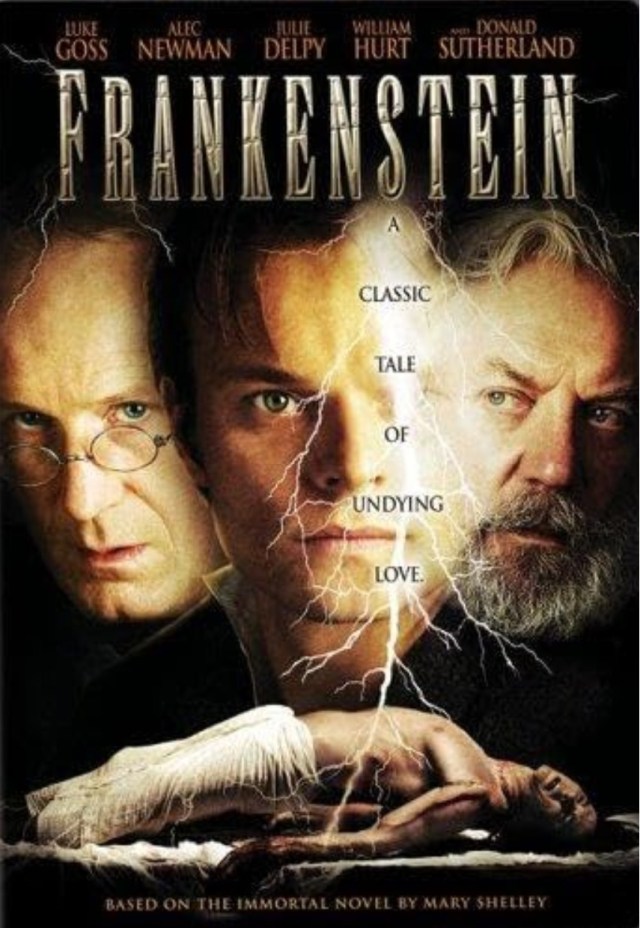
      Hallmark’s Frankenstein poster created by Hallmark Entertainment, Hallmark Channel, Silverstar Ltd., Larry Levinson Productions, and RTL

      5. Hallmark’s Frankenstein (2004)

      Back in March, I called Hallmark’s adaptation of Frankenstein a “hidden gem”. This claim was based on my observation of how a good movie was not only forgotten by time, but also overshadowed by other titles released in 2004. What makes this version of Frankenstein a good movie, in my opinion, is how respectful it was toward Mary Shelley’s novel. One great example is Luke Goss’ portrayal of The Creature, as the way emotion was utilized throughout Luke’s performance highlighted how complicated The Creature is. Hallmark’s adaptation of Frankenstein is another movie where the visual presentation created an immersive experience. Combining set design, costume design, and attention to historical accuracy, the movie made me feel like I was transported to another time and place.

      Take 3: Hallmark’s Frankenstein (2004) Review (Double Feature: 2004 Edition Part 2)

      4. The Boys in the Boat

      If you’re going to create a sports movie involving a team sport, it’s important to make the camaraderie among the team believable. An on-screen team with believable camaraderie helps the audience stay invested in the story, as well as the team’s journey. Because the acting performances were strong in The Boys in the Boat, the camaraderie within the team dynamic felt genuine. The 2023 film also makes rowing look exciting! This was accomplished through cinematography, editing, and music selection. The Boys in the Boat is a “based on a true story” film that, in my opinion, is worth the time! This is yet another production where historical accuracy was a top priority.

      3. Amadeus

      Out of all the movies I reviewed for my Comparing with the Critics series, Amadeus is, so far, the only movie I agreed with the critics on. While the biopic is a glamourous spectacle, it also contains substance. Thought-provoking material can be found in the script, such as how fame can negatively impact the human soul. The story is an immersive, detail-oriented character study that explores the good and bad sides of the music industry. The creative team’s focus on detail made Amadeus look and feel historically accurate, as can be seen in the costume and set design. F. Murray Abraham and Tom Hulce each gave a strong performance. I can, honestly, say the 1984 movie is one of the best biopics I’ve ever seen!

      Comparing with the Critics – Best of 1984 – Amadeus

      2. Curious Caterer: Foiled Plans

      Remember when I said I liked Curious Caterer: Foiled Plans more than Curious Caterer: Forbidden Fruit? One reason why I said this is Goldy’s consistent involvement in Curious Caterer: Foiled Plans’ case. Other reasons why I liked the fourth chapter in the series are the creativity of the mystery, the quality of the acting performances, and how humor was written into the story. Looking back on Hallmark’s mystery films I saw in 2024, this Curious Caterer movie is pretty unique. That’s because, as I mentioned in my review, it’s a locked room mystery revolving around a costume party. In 2023’s best movies of the year list, I claimed Curious Caterer: Grilling Season was the best film in the series. I certainly changed my mind after I saw Curious Caterer: Foiled Plans!

      Take 3: Curious Caterer: Foiled Plans Review

      1. I Am David

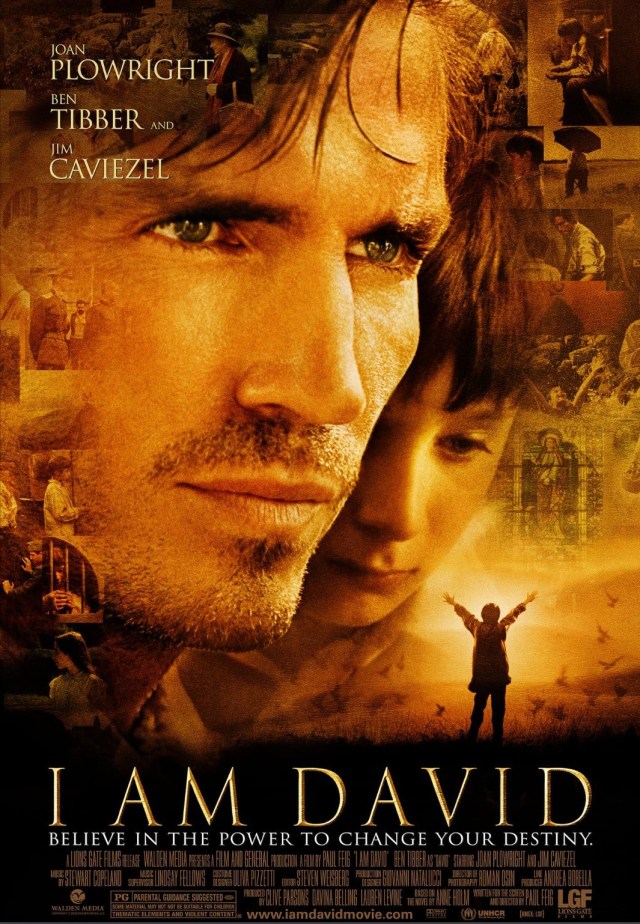
      It’s amazing how I Am David became 2024’s best movie in March and clung on to the number one spot all these months later! This impressive film allowed the story of David and his journey to be told with genuine emotion and sincerity. This was achieved through every aspect of the production, like the acting performances and the screenwriting. Exploring light and darkness, as well as showcasing Europe’s natural landscape, gave the production visual depth. Timeless, universal messages were also woven into the script. As I said in my review, I wish more people knew about this movie. Hopefully, my review or maybe this list can encourage someone to check out I Am David!

      Take 3: I Am David Review (Double Feature: 2004 Edition Part 1)

      I Am David poster created by Walden Media, Film and General Productions, Lionsgate Films, Artisan Entertainment, and David Productions Ltd.

      Have fun in 2025!

      Sally Silverscreen

      The Christmas Movies Tag!

      Two weeks ago, Hamlette (from Hamlette’s Soliloquy) tagged me in the Christmas Movies Tag! The timing of this tag was perfect because in 2024, I 1) wrote only four list articles and 2) participated in only one tag. With Christmas just around the corner, I found another reason to accept Hamlette’s invitation. Over 18 Cinema Lane’s six-year history, several Christmas movies have been reviewed. This helped when choosing titles for the Christmas Movies Tag. For films covered on my blog, I will provide the links in this tag if anyone is interested in reading my full thoughts on the featured movies. Before I begin the Christmas Movies Tag, I need to list the tag’s official rules, which are the following:

      • Fill out the prompts (expound as much or as little as you like)
      • Tag some friends (however many or few you feel like)
      • Have fun (this is mandatory)
      The Christmas Movies Tag banner found on Hamlette’s Soliloquy

      1. A favorite funny Christmas movie

      Back in 2019, I discovered why The Nine Lives of Christmas is so beloved in the Hallmark fan community. One appealing aspect of the movie was definitely the humor! In my review of the 2014 film, I pointed out how the dialogue among the characters helped make the story’s very first scene hilarious. The genuineness of the dialogue was well-written and good-natured. I also mentioned how Ambrose the cat served as some of the film’s comic relief. Memorable moments, such as when the cat sits on Zachary’s chair, made my viewing experience enjoyable. At the time, most of Hallmark’s Christmas movies seemed light on humor. So, watching a humorous picture like The Nine Lives of Christmas was refreshing!

      Take 3: The Nine Lives of Christmas Review

      2. A favorite poignant Christmas movie

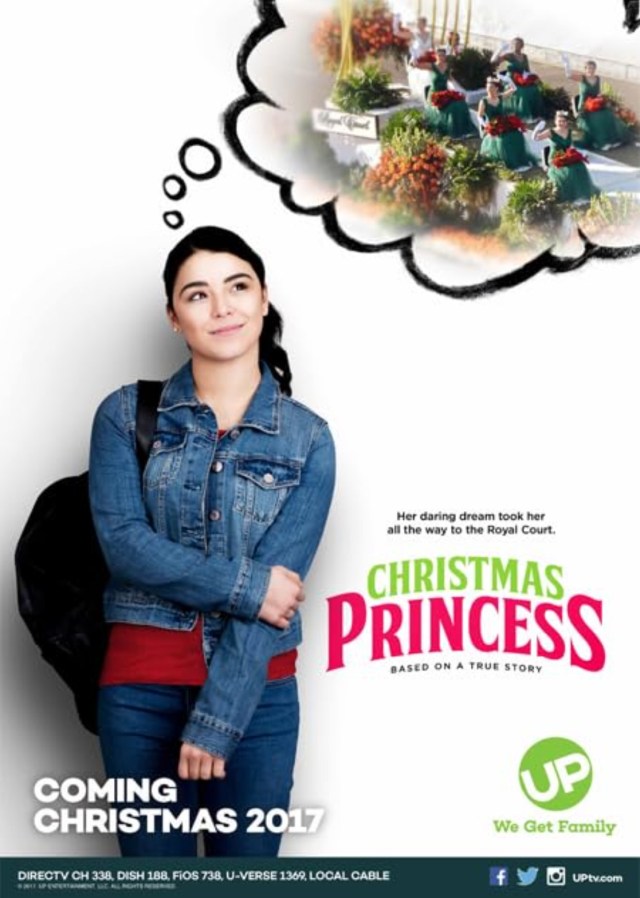
      For this prompt, I chose two movies. The first is 2016’s Winter Thaw. From what I remember, the religious messages and themes associated with Christmas are prioritized over the holiday itself. In fact, there are so few references to the Christmas holiday, it’s easy to forget Winter Thaw is a Christmas movie at all. The second movie is one I reviewed last year; Christmas Princess from 2017! As I stated in my review, this film avoided several Christmas related tropes and clichés because Donaly’s journey to the Rose Court was the story’s main focus. Similar to Winter Thaw, the secular elements of Christmas don’t take center stage in Christmas Princess. But, like It’s a Wonderful Life, the 2017 presentation presents a story about a person trying to do “something big, something important”.

      Take 3: Christmas Princess (2017) Review

      3. A favorite romantic Christmas movie

      Before I was a movie blogger, I saw the 2015 made-for-TV production, The Spirit of Christmas. Though it’s been almost ten years since I’ve seen the film, I remember how strong Thomas Beaudoin and Jen Lilley’s on-screen chemistry was! Because of this on-screen chemistry, I was invested in the story. I also rooted for Daniel and Kate to find a way to be together. The Spirit of Christmas is a film I’d love to revisit on 18 Cinema Lane!

      4. A favorite feel-good Christmas movie

      In 2022’s edition of my top ten best movies of the year list, A Godwink Christmas: Miracle of Love made history by becoming the first and, so far, only Christmas movie to be the best movie I saw in any given year! How the 2021 title earned this honor was having their story revolve around a group of people using their skills and talents to help a family in need. Including Advent gave this film a more unique identity and provided a newer approach to the Christmas movie genre. Showcasing Christmas activities, such as gift exchanging, in creative ways crafted A Godwink Christmas: Miracle of Love’s identity as well. Movies like this one make me wish Hallmark continued the Godwink series.

      Take 3: A Godwink Christmas: Miracle of Love Review

      5. A favorite movie adaptation of A Christmas Carol

      Years ago, I saw the Hallmark Channel production, It’s Christmas, Carol! What I remember the most was how good Emmanuelle Vaugier’s and Carrie Fisher’s performance was! They were not only strong actresses individually, they also worked well together. The acting became one of the reasons why I liked this film. However, it’s been over ten years since I last saw it. Hopefully, I’ll receive a chance to revisit It’s Christmas, Carol!

      Christmas Princess (2017) poster created by Entertainment One and Really Real Films

      6. A Christmas movie you watch any time of year

      Similar to prompt number two, I’m selecting two films. I have reviewed both of these titles recently. My first choice is the 1991 television movie, Christmas on Division Street. One of the reasons why I liked this film is how the story’s messages and themes apply to the Christmas season as well as outside of Christmastime. But the appearance of Christmas is inconsistent in Christmas on Division Street, as the holiday isn’t recognized until forty minutes into an hour and thirty-three-minute story. My second choice is I Heard the Bells. In my review of the 2022 title, I compared I Heard the Bells to It’s a Wonderful Life. This is because both of these films are about more than just the Christmas holiday. They focus on a man and his story, also exploring how that man’s relationships affect his existence.

      Take 3: Christmas on Division Street Review

      Take 3: I Heard the Bells Review + 500 Follower Thank You

      7. A Christmas movie that surprised you

      My best movies of the year list of 2023 saw A Biltmore Christmas earning a spot in the list’s top three! When I wrote about the film, I explained how I had developed low expectations for the movie due to how much hype and publicity it received. I’m glad I gave A Biltmore Christmas a chance, as I was pleasantly surprised by how good it was! There were so many likable elements to this story, with the attention given to historical accuracy being just one of them. The script gave Hallmark Channel a different type of narrative for their Christmas pictures, utilizing historical fiction and aspects of time travel. A Biltmore Christmas even won the Gold Sally Award’s inaugural Top Gun: Maverick Award!

      8. A favorite “but is it really a Christmas movie?” movie

      One of the movies I reviewed in my Halloween Double Feature was 2002’s The Case of the Whitechapel Vampire. The most surprising part of that movie was the story taking place during the Christmas season. Even though Christmas played a minimal role in the film, it was interesting to see the holiday associated with vampires. It was also fascinating to watch an alternative Christmas mystery from Hallmark. The Case of the Whitechapel Vampire shows how the concept of vampires can be incorporated into almost any type of movie in almost any time of year. The 2002 picture is also proof how, when they put their mind to it, Hallmark can think outside-the-box when it comes to their Christmas movies.

      Take 3: The Case of the Whitechapel Vampire Review (Halloween Double Feature Part 1)

      9. The oldest Christmas movie you’ve seen

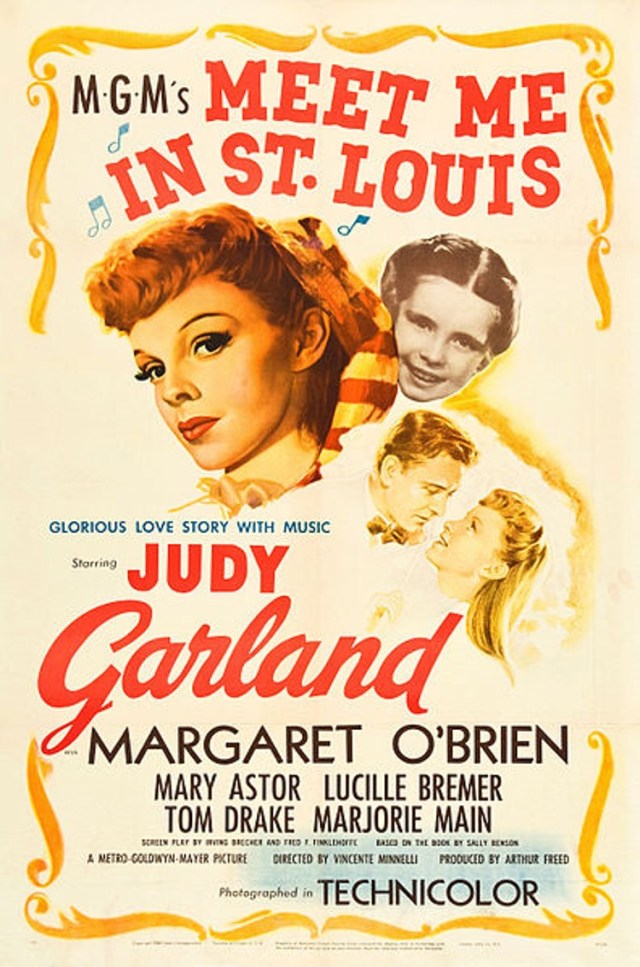
      When I reviewed Meet Me in St. Louis in 2019, it became the oldest Christmas movie I saw and wrote about on my blog! Released in 1944, this film represents the best the Breen Code era had to offer, especially when it came to the musical genre. The acting keeps this movie going and the songs provide a good tonal balance throughout the production. Judy’s rendition of “Have Yourself a Merry Little Christmas” is so iconic! While there have been many versions of that song, Meet Me in St. Louis’ version is my favorite.

      Take 3: Meet Me in St. Louis Review + 75 Follower Thank You

      10. The newest Christmas movie you’ve seen

      Due to Ainsley McGregor Mysteries: A Case for the Winemaker’s popularity, I reviewed the 2024 Great American Family presentation, A Little Women’s Christmas. To me, this was a fine, wholesome, and pleasant picture. I liked how the creative team showed respect for the source material. But I wasn’t a fan of how confusing the ending was. I also didn’t like the inclusion of the “it’s not what you think” cliché, as it added predictability to the story. However, A Little Women’s Christmas is still a movie I would recommend.

      Take 3: A Little Women’s Christmas Review

      Meet Me in St. Louis poster created by Metro-Goldwyn-Mayer and Loew’s, Inc. Image found at https://commons.wikimedia.org/wiki/File:Meet_Me_in_St._Louis_poster.jpg

      Since the month of December is usually the busiest time of year, not only because of the Christmas/holiday season, but also because of the days leading up to New Year’s, it can be challenging to set aside time to participate in a tag. I also want to express my gratitude for 18 Cinema Lane having another successful year. So, I’m giving my readers an open invitation to the Christmas Movies Tag! If you like what you’ve read, you’re welcome to create your own tag post any time you wish!

      Have fun on Christmas!

      Sally Silverscreen

      Take 3: Cricket on the Hearth (1967) Review

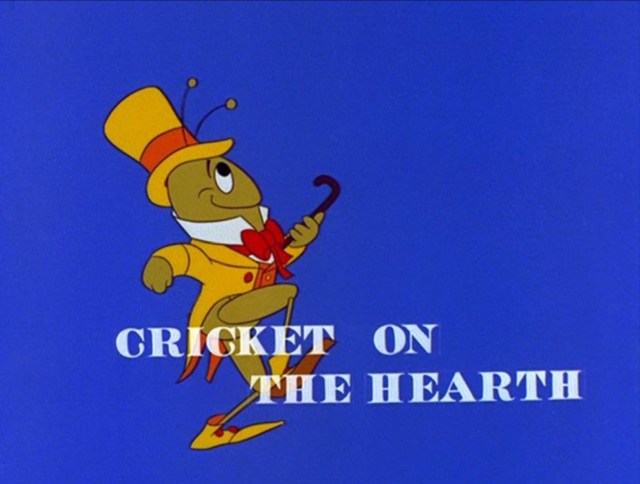
      You probably think it’s strange how, after a week and a half long hiatus, my first review back on my blog would be for a Christmas film (in the middle of August). However, I have a very good explanation for this choice. The first reason is how the 1967 animated movie, Cricket on the Hearth, is what I selected for Realweegiemidget Reviews’ (Aaron) Spellingverse Blogathon, as Aaron Spelling was one of the film’s executive producers. The second reason is how animated movies are reviewed so infrequently on my blog. In fact, Cricket on the Hearth is the first animated film to be reviewed on 18 Cinema Lane in 2024. When I chose to participate in the (Aaron) Spellingverse Blogathon, I knew I wanted to write about a made-for-tv movie. So, when I discovered the 1967 film on Aaron’s IMDB filmography, I felt I found the perfect movie for the blogathon, especially for the previously mentioned reasons! But did Cricket on the Hearth end up being the perfect choice to write about? Keep reading my review to find out!

      Cricket on the Hearth (1967) title card created by Rankin/Bass Productions, Thomas/Spelling Productions, and National Broadcasting Company (NBC)

      Things I liked about the film:

      The animation: Some of the best animated movies boast bright, colorful hues. These hues can be utilized in various ways, from creating imaginative worlds to providing interesting visual contrasts. Cricket on the Hearth was a very kaleidoscopic production! Scenes either burst with a bundle of color or at least one bold color sparkled against a darker background. Presenting Cricket Crocket in a mustard yellow suit jacket and shoes, paired with an orange vest and a red bowtie, was a smart creative decision. It forces the audience to focus on Cricket Crocket, especially when he’s standing on a dark wood table or a deep green top hat. The toys in Caleb’s toy shop come to life during the song, ‘Smiles Go With Tears’. Despite the title’s contraction, the song’s tone is joyful because the song is about someone shedding tears due to being happy. The joyful nature of ‘Smiles Go With Tears’ is wonderfully depicted in the presentation of the toys. From a doll’s bubble-gum pink dress and bonnet to a pair of bright yellow and blue elephants, this scene was great to look at!

      While looking for a place to live, Caleb considers moving into a poor house. Because Cricket Crocket is perched on Caleb’s top hat, Cricket Crocket hangs upside down in order to face Caleb. While looking upside down, Cricket Crocket sees a nearby toy factory. As he is readjusting himself, the image of the toy factory flips from appearing upside down to becoming right-side up. Animated films from the 1960s, especially those that were made-for-tv productions, were created with limited resources compared to animated pictures from the twenty-first century. Therefore, scenes like the one I just described seem ahead of its time.

      The songs: Before reviewing Cricket on the Hearth, I had never seen the 1967 movie. So, I was pleasantly surprised when I discovered the movie was a musical! The songs featured in this film sounded like relics of the late ‘60s, the time when Cricket on the Hearth was released. But these sounds, from emotional ballads to cheery tunes, felt nostalgic. Danny Thomas, who voices Caleb, sings a ballad titled ‘Through My Eyes’. Throughout this song, Caleb expresses his desire for his daughter, Bertha, to see the world how he wishes he could present it to her. The combination of Danny’s vocals and the orchestral music felt reminiscent of Judy Garland’s ‘Somewhere Over the Rainbow’ and Louis Armstrong’s ‘What a Wonderful World’, songs that exude a sense of hope and contain timeless elements. Another song of Danny’s I liked was ‘The First Christmas’! Before this song, Caleb wonders how he will provide the kind of Christmas Bertha hopes for. He learns how to resolve his conflict as the song carries on. The lyrics of ‘The First Christmas’ illustrate how Christmas doesn’t have to look the same for those who celebrate the holiday. The inclusion of the Norman Luboff Chorus added gravitas to this song!

      The religious aspects of Christmas: Based on what I know about Charles Dickens and his stories, A Christmas Carol, one of his most well-known pieces of literature, is typically not known for addressing the religious aspects of Christmas. Though it was briefly incorporated in Cricket on the Hearth, I was pleasantly surprised by the recognition of Christmas’ religious aspects! As I previously said while talking about ‘The First Christmas’, the lyrics of the song illustrate how Christmas doesn’t have to look the same for those who celebrate the holiday. This point is emphasized by reminding the audience how Jesus had very little in terms of decorations and presents during the First Christmas. By the end of the song, the message is made clear; it’s not about what you have, but who you spend Christmas with that’s important. Before closing out the movie, Danny quotes a poem by Edmund Cooke. The quote itself goes “Tis not the weight of jewel or plate, or the fondle of silk or fur, ‘tis the spirit in which the gift is rich, as the gifts of the Wise Men were. And we are not told whose gift was gold or whose was the gift of myrrh”. Edmund’s poem brings up an excellent point, as the Nativity story does not specify which gift came from which Wise Man. This quote also highlights the point made earlier about Christmas being about who you spend the holiday with.

      The (Aaron) Spellingverse Blogathon banner created by Gill from Realweegiemidget Reviews

      What I didn’t like about the film:

      Scenes that serve as padding: In order to satisfy a film’s run-time, a film’s creative team will, sometimes, choose to pad the story out by incorporating additional scenes or establishing shots. This creative decision was utilized in Cricket on the Hearth, mostly in between songs. During the song, ‘Through My Eyes’, a scene of Bertha dancing in a ballgown lasts for almost thirty seconds. The song itself takes up two minutes and twenty-three seconds of the movie’s run-time. I don’t think Cricket on the Hearth needed padding, especially since it lasted a little over forty-nine minutes.

      The randomness of the ‘Fish and Chips’ song: I liked the featured songs in Cricket on the Hearth. However, there is one song that, in the context of the story, felt random. A cat named Moll, voiced by Abbe Lane, sings a song about the finer things in life called ‘Fish and Chips’. This song is sung to a jazzy, ragtime tune. During the performance, Moll dances in a red, low-cut, sleeveless dress and even attempts to flirt with the male characters in her audience. The animation in this scene didn’t look bad. Abbe Lane also did a good job with the material given to her. But the story appearing to take place somewhere in the 1800s and with the movie’s tone being mostly heartwarmingly gentle, Moll’s ‘Fish and Chips’ song feels out of place in Cricket on the Hearth.

      Parts of the story that don’t make sense: For this part of my review, I will spoil Cricket on the Hearth. If you have not seen the 1967 film and are interested in watching it, please skip ahead to the part of my review titled ‘My overall impression’.

      Cricket on the Hearth’s antagonist, Tackleton, has a pet bird named Uriah. More often than not, Tackleton and Uriah are inseparable. After Tackleton orders Uriah to get rid of Cricket Crocket, Uriah and two of his friends kidnap Cricket Crocket and try to sell him to a sea captain. During the scene of Uriah’s attempted business transaction, it is heavily implied Uriah and his friends died. Fast forward toward the end of the movie, Tackleton is upset by Bertha’s rejection of his marriage proposal. In fact, he’s more upset about Bertha’s rejection than the absence of his bird. If Tackleton and Uriah were as inseparable as they appeared to be earlier in the movie, wouldn’t Tackleton wonder what happened to Uriah? Wouldn’t Tackleton ask the other characters if they know where Uriah is? This is just one part of Cricket on the Hearth that, to me, didn’t make sense.

      Three Wise Men themed wish list paper image created by Freepik at freepik.com. <a href=”https://www.freepik.com/free-photos-vectors/christmas”>Christmas vector created by freepik – http://www.freepik.com</a>. Image found at freepik.com.

      My overall impression:

      As I watched Cricket on the Hearth, I was reminded of The Best Christmas Pageant Ever, the 1983 Christmas movie I reviewed last December. Both films are not only made-for-tv productions, they both feel more like television specials than movies. It’s expected to suspend some disbelief in stories from animated films. But Cricket on the Hearth tried to suspend disbelief to the point parts of the story didn’t make sense. Despite the movie being under an hour long, some scenes, including those in between songs, served as unnecessary padding. Throughout Cricket on the Hearth, however, I could tell the movie’s creative team tried their best to make their project as special as possible. The songs were not only well performed, the music and visuals provided a good combination for the song itself. Though briefly incorporated, I also liked the recognition of Christmas’ religious aspects. I have not read Cricket on the Hearth’s source material. But based on what I know about Charles Dickens’ work, this story seems different from his other adaptations, as Cricket on the Hearth relies more on elements of fantasy and magical realism.

      Overall score: 6.5 out of 10

      Have you seen or read Cricket on the Hearth? Which adaptation of Charles Dickens’ stories would you like to see me review? Please tell me in the comment section!

      Have fun at the movies!

      Sally Silverscreen

      Take 3: For Me and My Gal Review

      Looking back on Judy Garland’s movies I’ve seen, I can
      honestly say I haven’t seen a movie I didn’t like. Even though some pictures were
      better than others, I can’t say any of Judy’s films were “bad”. Hoping this
      streak will continue, I joined the Third Judy Garland Blogathon by reviewing For
      Me and My Gal
      ! This film was recommended by the Brannan sisters from Pure
      Entertainment Preservation Society. They not only introduced me to this film,
      they introduced me to the Breen Code era! Between 1934 to 1954, the Breen Code
      served as a set of guidelines for film-makers. These guidelines addressed the
      dos and don’ts of movie-making based on a series of morals. Within that period
      of time, Hollywood gave their audience films that have stood the test of time
      and even become “classics”. But will this statement hold true for For Me and
      My Gal
      ? Keeping reading my review to find out!

      For Me and My Gal poster created by Metro-Goldwyn-Mayer (MGM)

      Things I liked about the film:

      The on-screen chemistry: Since I chose to review this movie
      for the Third Judy Garland Blogathon, I want to discuss Judy’s performance in For
      Me and My Gal
      . However, I want to talk about her performance in relation to
      her on-screen chemistry with Gene Kelly. When a movie musical features a
      romantic relationship, the on-screen chemistry of the lead actor and actress
      can sell the idea their characters truly love one another. This is what Gene
      and Judy achieved through their portrayals of Harry Palmer and Jo Hayden! One
      perfect example is presented during the musical number, “For Me and My Gal”.
      Through facial expressions, the choreography, and their singing abilities, Jo
      and Harry realize they share the same dream, despite being complete strangers
      only hours ago. This musical number emphasizes how these characters were always
      meant to be together.


      How World War I was incorporated: For Me and My Gal takes place in the middle of the 1900s, the time when World War I took place. The story revolves around civilian perspectives; vaudeville
      performers trying to make their dreams come true. At the beginning of the
      movie, newspaper headlines broadcast events related to World War I. But the
      newspaper’s front page is turned away from the characters, as they are more
      concerned with how their performances were reviewed by the critics. As the
      story progresses, World War I starts to take center stage in their lives,
      affecting each character differently. This progression is steady and the
      changes happen more subtly. The way World War I was incorporated into For Me
      and My Gal
      felt realistic. Though fictional musical movies require a
      certain amount of disbelief to be suspended, it was refreshing for realism to
      be woven into the film.


      A story with stakes: Movie musicals, especially those from
      the Breen Code era, contain simpler stories. These stories range from looking
      for another member of a talent group or characters expressing their love for
      each other. In For Me and My Gal, the overarching
      story focuses on characters working toward their dreams. Throughout the movie,
      Jo and Harry experience obstacles and attempt to overcome them. At one point in
      the film, Harry receives an offer to perform at The Palace, a theatre in New
      York every vaudeville performer aspires to go. While the offer itself sounds
      amazing, the problem is Harry would no longer be able to perform with Jo. This
      is one example of For Me and My Gal containing a story with stakes. In
      the case of the aforementioned conflict, there were stakes not only for Harry’s
      career, but also for his relationship with Jo.

      The Third Judy Garland Blogathon banner created by Crystal from In The Good Old Days Of Classic Hollywood and Kristen from Hoofers and Honeys

      What I didn’t like about the film:

      The “insta-love” trope: In stories where a romantic
      relationship in included, part of the story is devoted to showcasing the
      progression of that relationship. If a story’s relationship moves too quickly,
      it may be difficult for the audience to become invested in that relationship or
      determine if the actors have on-screen chemistry. While Judy Garland and Gene
      Kelly had good on-screen chemistry, I found their characters’ initial attraction
      to happen too quickly. In fact, this attraction happened so quickly, it almost
      felt unbelievable. I recognize there’s only so much story to tell in an hour
      and forty-four minutes. However, I wish Harry and Jo’s attraction for one
      another had taken its time.


      An unresolved debt: Toward the beginning of For Me and My
      Gal
      , Jo’s brother, Danny, pays Jo a visit after one of her shows. During
      their conversation, Jo tells Danny she will pay him back after she becomes a
      big vaudeville star. But this is the only time throughout the movie where this
      debt is mentioned. The debt is not revisited or resolved as the story progresses.
      That part of the story ended up becoming a loose end that was left behind by
      the end of the movie.


      A confusing conflict: For this part of my review, I will
      spoil For Me and My Gal. If you have not seen this movie and are
      interested in watching it, skip this part of my review and continue reading where
      it says “My overall impression”.


      After Jo and Harry discover their love for each other, they
      receive a telegram congratulating them on their upcoming performance at The
      Palace, a theatre in New York they have dreamed about for so long. When they
      arrive at The Palace, Harry and Jo learn there was a misunderstanding. They
      received a gig at The Palace theatre in Newark, New Jersey. In the telegram, its
      sender stated The Palace was in New York. But any performer on the vaudeville
      scene would know there’s only one Palace theatre, the one in New York City.
      That quote in the telegram references how Eve Minard, a singer Jo and Harry met
      on a train trip, brought up the idea of more than one Palace theatre. For Me
      and My Gal
      was released during the Breen Code era. When a character makes a
      poor choice within a film from this time period, they either face accountability
      for that choice or learn from their mistake. However, Eve is never confronted
      about the telegram. This leaves me confused, wondering if Eve was intentionally
      ruining Harry and Jo’s plans or if she was genuinely trying to help, but her
      message became lost in translation?

      Children holding American flags during a sunset image created by rawpixel.com at freepik.com. <a href=”https://www.freepik.com/free-photos-vectors/people”>People photo created by rawpixel.com – http://www.freepik.com</a>. Image found at freepik.com.

      My overall impression:

      The term, “The Golden Age of Hollywood”, gets thrown around
      from time to time in conversations about the film industry. This term’s
      definition depends on who you ask, as film itself can be subjective. In my
      opinion, one of Hollywood’s “golden ages” was the Breen Code era. For Me and My Gal serves as one example to prove my point. The 1942 picture sets itself apart from other musical films by
      presenting a story with stakes. It also incorporates World War I in a realistic
      way. As I’ve stated in past reviews, the strength of a musical movie lies in
      its musical numbers. For the most part, For Me and My Gal features
      musical numbers that are pleasant to watch! This is the second Judy Garland
      production I reviewed this year I was not only recommended, but ended up liking
      as well. The streak of enjoyable Judy Garland movies I mentioned in this review’s
      introduction is still going strong!


      Overall score: 7.6 out of 10


      Have you seen For Me and My Gal? What is your
      favorite movie of Judy Garland’s? Please let me know in the comment section!


      Have fun at the movies!

      Sally Silverscreen


      Take 3: Easter Parade Review

      With today being Easter, I’m reviewing the 1948 musical, Easter Parade! But this is not the only reason why I’m writing about this movie. Since the protagonists would be considered a “mismatched couple”, the film was eligible for Realweegiemidget Reviews’ and Cinematic Catharsis’ Mismatched Couples Blogathon. Easter Parade was also recommended by Michaela from Love Letters to Old Hollywood. Prior to this year, the only Easter themed movie I wrote about was the Hallmark production, Easter Under Wraps. While I have reviewed faith-based films, those pictures were not about the Easter holiday. Because this was my first time watching Easter Parade, I was curious how Easter would play a role in this story. I was also curious how the film would compare to other musicals from the Breen Code era. So, without delay, let’s begin this review of Easter Parade!

      Easter Parade poster created by Metro-Goldwyn-Mayer and Loew’s, Inc.

      Things I liked about the film:

      The acting: Fred Astaire portrays Don Hewes in Easter Parade, a veteran dancer who is looking for a new dance partner. In this same movie, Judy Garland portrays Hannah Brown, a singer who is trying to make a name for herself in the entertainment industry. Together, Judy and Fred are an on-screen pair that not only works well together, but also dances well together! One of my favorite scenes is when Don mentions to Hannah how she doesn’t capture men’s attention. In an effort to prove Don wrong, Hannah walks in front of him, at first looking discouraged by her fruitless efforts. A few minutes later, Don sees men are taking notice of Hannah. He looks confused and even baffled at how Hannah could prove him wrong. When Don catches up with Hannah, he discovers she is making funny faces, explaining why men were noticing Hannah. This scene was hilarious because of Fred’s and Judy’s expressions and interactions!

      Even though Judy and Fred worked well together, I think Judy and Peter Lawford had strong on-screen chemistry! Despite Hannah being from a small-town farm and Johnny being from the city, their interactions make it seem like they have a deep understanding for one another. While on a dinner date, Hannah confesses she dreams her true love will give her flowers and sweep her off her feet. When she reflects on her time with Don, she realizes Don only gives her flowers and sweeps her off her feet when it relates to dancing. During this reflection, Hannah looks defeated and sad by how she didn’t receive what she wanted the way she wanted it. Meanwhile, Johnny looks genuinely sympathetic toward Hannah. As I watched this scene, I wanted Johnny and Hannah to fall in love with each other!

      The use of color: In Easter Parade’s opening credits, Technicolor was revealed to be incorporated into the production. I’m thankful Technicolor was used in this movie because capturing scenes in black-and-white would not have done this picture justice! Because parts of Easter Parade’s story take place around Easter, creative decisions such as costume designs and décor are very colorful. Toward the end of the film, Fred and a large group of dancers perform a number to “Steppin Out with My Baby”. Every performer’s costume boasted bright hues, from one dancer’s yellow shoes to another dancer’s blue gloves. At the beginning of the movie, during the musical number, “Happy Easter”, flowers in vibrant shades are present as Don makes his trip to the store. Though it’s a small detail, these flowers play a role in complimenting the colorful landscape of the story’s spring season!

      The musical numbers: Musical numbers can make or break a given film. But in Easter Parade, the musical numbers are a major strength because of the choreography and delivery of the numbers themselves. One of the most creative numbers I’ve ever seen was Fred’s solo, “Drum Crazy”. This solo shows his character, Don, tap dancing and playing drums in an attempt to trick a child into giving him a stuffed bunny toy. The combination of dancing and instrument playing provides a captivating performance that not only highlights Fred’s signature talent, but also pairs dancing with other artistic mediums. Another strong solo was Ann Miller’s solo, “Shakin’ the Blues Away”. While portraying Don’s former dance partner, Nadine, Ann’s solo was a tap number that involved a lot of turning. What makes this musical number so memorable is how the cinematography closely follows Ann during her performance. This focus forces the audience to give their undivided attention to Ann and her number. The number itself is fast-paced and energetic, with Ann consistently delivering the choreography in precise and fluid movements!

      Cute Easter image created by Freepik at freepik.com. <a href=”https://www.freepik.com/free-photos-vectors/background”>Background vector created by freepik – http://www.freepik.com</a>. Image found at freepik.com.

      What I didn’t like about the film:

      A premise-driven story: When I reviewed The National Tree last year, I explained the difference between a premise-driven story and a plot-driven story. After watching Easter Parade, I can confirm the movie has a premise-driven story. The premise of Don transforming Hannah into a star entices viewers to watch Fred and Judy acting and dancing together. But the film doesn’t really make the audience ask “and then what happened”? Even though the story is simpler and easier to follow, the story itself lacked a compelling hook, making it feel less intriguing. I wish the characters were given a conflict to resolve, similar to musicals like Singin’ in the Rain and Anchors Aweigh.

      The “insta-love” trope: The romantic-comedy genre carries a collection of tropes and cliches. One of them is the “insta-love” trope, which features characters falling in love in a very short period of time. I understand there’s only so much story you can tell in an hour and forty-three minutes. But I thought Hannah and Don’s relationship progressed too quickly. I even thought the attraction between Hannah and Johnny happened too fast. The fast pace of these relationships made it seem like situations weren’t really resolved. Serious conversations and heart-felt discussions were either conveniently ignored or never brought up. The “insta-love” trope also affected how characters changed over the course of the story. Progressions in character development took place so quickly, it almost seemed too convenient.

      Easter’s limited inclusion: With a movie called Easter Parade, I expected Easter to play a significant role in the story. While Easter is included enough to get the point across, I was disappointed by how limited its presence was. There were even scenes I could picture taking place within other holidays. Though the purpose of “Drum Crazy” was for Don to purchase a stuffed bunny toy, I found myself imagining this same musical number set during Christmas. Easter Parade is a story that could take place in almost any time of year and it wouldn’t make much difference.

      The Mismatched Couples Blogathon banner created by Gill from Realweegiemidget Reviews and Barry from Cinematic Catharsis

      My overall impression:

      Some of the best, most iconic musicals were released during the Breen Code era. Their strong musical numbers and their overall timelessness have captured the hearts of viewers for decades. Easter Parade is one of these timeless musicals, showcasing its strengths through various creative departments! The colorful palette sprinkled throughout the story perfectly compliments the springtime atmosphere the film’s creative team was striving to present. Every musical number was well choreographed and performed, which definitely made the movie worth watching. Compared to other Breen Code era musicals, though, Easter Parade’s story was weaker. This flaw was due to the story being more premise-driven. Despite this and its other weaknesses, the 1948 film is an entertaining, mostly joyful production that is an appropriate selection for the Easter holiday!

      Overall score: 7.6 out of 10

      Have you seen Easter Parade? Is there an Easter themed movie you like to watch? Let me know in the comment section!

      Have fun on Easter!

      Sally Silverscreen