For this week, I contemplated on what my next blog post should be about. Realizing I haven’t published a Word on the Street story since last month, I decided to write November’s first Word on the Street post. To my surprise, there were a lot of news worthy material relating to upcoming Hallmark movies! So, I thought it would a good idea to share these pieces of movie news with my readers and followers. Within this post, I will talk about almost all of the Hallmark movie news I could find. As the title states, there will be several movie production updates that will be discussed, plus speculation about a potential Hallmark movie and a new trailer for one of Hallmark’s “Countdown to Christmas” films!
On the website, Creative BC, there were several titles listed on their “In Production” page. What caught my attention is how many of them were Hallmark related. Three of these listings were for movies that are a part of an established Hallmark Movies & Mysteries series. According to Creative BC, the first movie on this list is “A Clue To Kill”/ “Aurora Teagarden 10”, which started production on November 3rd and will wrap up on November 23rd. The next title is “Hailey Dean Mysteries 7” and the production for this movie will start on November 28th. The third title is “Morning Show Mysteries: Murder Most Fair”, where production started on October 29th and will end on November 16th. One title that caught my eye was “Ruby Herring Mysteries: Silent Witness”. Because of the way the title sounds, I’m guessing this could be the start of a brand-new Hallmark Movies & Mysteries series. However, Hallmark has not made any official announcements about this project. Another title that was listed on the website was “Wedding In The Vineyard”. This project will not only be in production from November 19th to December 7th, but is highly likely a continuation of the “In the Vineyard” series starring Rachael Leigh Cook and Brendan Penny. As of November 2018, Hallmark has not made any confirmations about this project.
There were two titles on Creative BC’s “In Production” page that allude to what could be in store for next year’s “Winterfest” line-up. The first title is “Snowcoming”, which has already been confirmed to be a Hallmark movie! According to International Business Times, the movie will star Trevor Donovan and Lindy Booth. “Snowcoming” will be production from November 19th to December 7th. The second title is “Snow Princess”, which, as of November 2018, has not been officially announced by Hallmark. All that is known about the project is the title, the filming location, and the production dates (which are from November 13th to December 1st). Because “Snow Princess” also has the word snow in its title (like “Snowcoming”), I’m guessing that this movie will also be a part of Hallmark’s “Winterfest” line-up. The story could either be another “royal” movie or it could involve a pageant.
This week, Hallmark released their official trailer for the Hallmark Hall of Fame film, Christmas Everlasting. As I’ve said before on my blog, I have been anticipating this movie since it was first announced back in April. After seeing Truly, Madly, Sweetly, it increased my level of excitement for Hallmark’s newest Hallmark Hall of Fame entry. Now that I have finally watched this trailer, I can honestly say that I couldn’t be more excited! This movie looks like it has a lot of potential; from the mystery surrounding the quilt to the potential balance of humor and dramatic emotions. To me, the marketing campaign for Christmas Everlasting is much better than The Beach House’s marketing. November 24th cannot come soon enough!
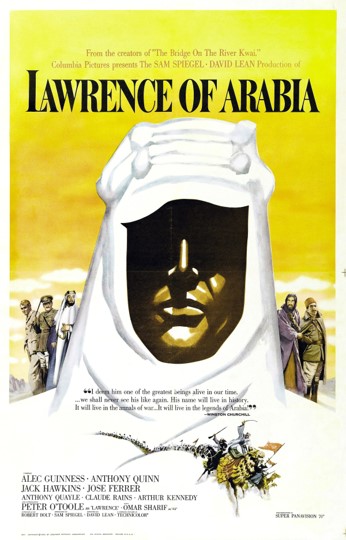
For Maddy Loves Her Classic Films’ blogathon, The World War One On Film Blogathon, I had originally planned on reviewing the movie, Sgt. Stubby: An American Hero. However, because the film changed its DVD release date several times, with December 11th being the latest date, I had to come up with a different movie to review. Remembering MovieBabble’s list of the Top 10 Best World War I Movies, I visited this post to see what options were available at such short notice. I decided to pick Lawrence of Arabia because a) I’ve never seen it before and b) I’ve heard a lot of good things about the movie throughout the years. In fact, until I read MovieBabble’s aforementioned list, I had no idea that Lawrence of Arabia had anything to do with World War I. Despite the change of plans, I was looking forward to finally seeing this movie. Was it truly as good as almost everyone says it is? Let’s find out in my review for Lawrence of Arabia!
The acting: The cast of Lawrence of Arabia was really good! Everyone on-screen brought a significant amount of believability to their roles. Peter O’Toole gave such a great performance, bringing the emotional depth that made his performance so memorable. Two of the stand-out performers in this movie were Omar Sharif and Anthony Quinn! Both of their performances were so good, it felt like their characters were truly coming to life as the events played out on-screen. The acting overall was definitely a highlight to this film!
The scenery: The scenery in this film is great to look at! Any scene that took place in the desert was filmed very well, making that environment appear beautiful. I also liked the architecture that was featured in the film. My favorite building in Lawrence of Arabia was the British offices in Cairo because that facility looked majestic and breath-taking.
Seeing World War I from a unique perspective: Whenever events from World War I or World War II are depicted in film, either characters are shown fighting on the European front or the conflicts of World War I or II are shown affecting various European countries. In Lawrence of Arabia, however, the effects of World War I are shown through the eyes of those stationed in Arabia. Like a lot of war movies or movies discussing the subject of war, there were several shared ideas in Lawrence of Arabia, such as looking out for fellow comrades, questioning the ethics of war, and individuals from various backgrounds coming together to reach a common goal. There were also ideas in Lawrence of Arabia that added uniqueness to this perspective, such as religion and the characters’ views on the two Arab tribes that were amongst Lawrence’s troop. These shared ideas and unique views of World War I make Lawrence of Arabia an interesting and compelling war movie!
An interesting four minutes: During the first four minutes of this movie, the screen was blank while the film’s score played. I was so caught off-guard by this, that I thought something was wrong with my television.
Some scenes feeling more drawn out than others: While watching Lawrence of Arabia, I noticed that some scenes were drawn out more than others. The scenes that were drawn out were any of them that involved the characters traveling in the desert. Because these scenes didn’t involve a lot of action or intrigue, this affected the continuity of my interest in the film.
A limited amount of battles: When one thinks of a war movie, the idea of the characters fighting in at least one battle is almost always expected. Before I saw Lawrence of Arabia, I thought it would contain two smaller battles and one big, climatic battle. However, this movie contained several military confrontations and political negotiations. While these things made the film interesting, I was expecting a little more action.
One three-hour movie and a film review later, I can honestly say that Lawrence of Arabia was a good movie! However, I, personally, feel that it’s not as great as some people have made it out to be. Over the years, I think it has become a bit over-hyped. But, I can definitely see why people like it as much as they claim to. This film does have its merits and has stood the “test of time” for good reason. Lawrence of Arabia is a film that is worth checking out, whether it’s your first time seeing it or if you’re re-watching it for the billionth time. Looking back on it, Lawrence of Arabia does make a good war movie. Its unique perspective and cinematic qualities set this movie apart from all the rest.
Overall score: 7.7-7.8 out of 10
Have you seen Lawrence of Arabia? What’s your favorite war movie? Leave your thoughts below in the comment section!
Have fun at the movies!
Sally Silverscreen
If you want to check out MovieBabble’s post that I mentioned in this review, you can visit this link:
I’m so excited to be winning my very first blogging award! Image found at https://pointlessoverthinking.wordpress.com/2018/11/04/versatile-blogger-award-nomination/
Four days ago, I was nominated for the Versatile Blogger Award by DM from Pointless Overthinking! This is my very first time winning a blogging award, so it’s really exciting for me! Thank you, DM, for the nomination! If you want to visit their blog, here’s the link:
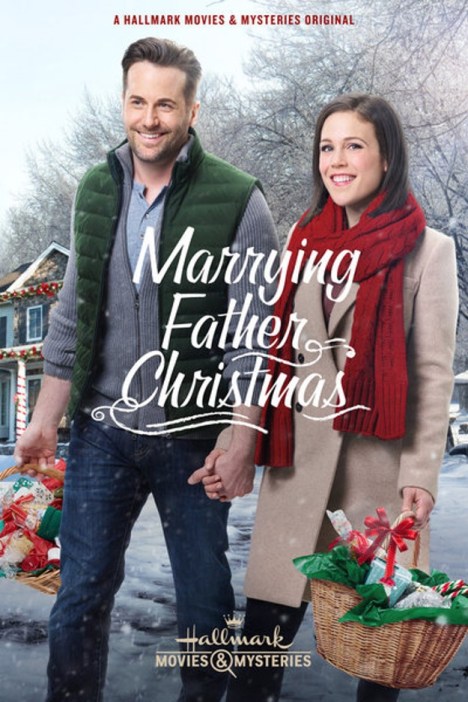
Back in February, when I published my Word on the Street story about Marrying Father Christmas going into production, I never thought it would be as successful as it ended up being. As of November 2018, this Word on the Street post has received 2 likes and 303 views! Since my readers are, apparently, interested in this film, I have decided to write a review for Marrying Father Christmas! Before this movie premiered on Hallmark Movies & Mysteries, I had seen Finding Father Christmas and Engaging Father Christmas. I found both of these movies to be really enjoyable! When Hallmark announced that this series would receive a third film, I was definitely excited to see it. Did this movie live up to my expectations? Take a sleigh ride through my Marrying Father Christmas review in order to find out!
Marrying Father Christmas poster created by Crown Media Family Networks and Hallmark Movies & Mysteries. Image found at https://www.crownmediapress.com/Shows/PRShowDetail?SiteID=143&FeedBoxID=986&NodeID=307&ShowType=&ShowTitle=Marrying%20Father%20Christmas&IsSeries=False.
Things I liked about the film:
The acting: I thought the cast was solid in Marrying Father Christmas! From the child actors to the leading stars, everyone put all the talent they had into their respective roles! All of the performances in this movie appeared so natural, that it made the characters and their situations seem realistic. Because of the believability of the performances, every time characters interacted with one another made it seem like there were real-life conversations going on in the film. These performances helped elevate the emotion during dramatic scenes and bring in joy and humor when it was needed for light-hearted scenes.
The on-screen chemistry: One of the best parts of the Father Christmas series has been watching Miranda and Ian’s relationship grow over time. What makes this part of the series great is the on-screen chemistry between Erin Krakow and Niall Matter. Their performances appeared so natural and believable, that it looked and felt like Miranda and Ian truly got along with and cared about each other. Erin’s and Niall’s performance helped make the scene of Miranda and Ian’s wedding special, as the moment where Miranda and Ian exchanged their wedding vows was emotional and heart-felt.
The reveal of Miranda’s wedding dress: In wedding themed Hallmark movies, the audience is, usually, given the opportunity to see the bride wearing her wedding dress before the groom. In Marrying Father Christmas, however, Miranda’s wedding dress wasn’t revealed until the day of her wedding. I thought this creative choice was very clever, as I can’t recall Hallmark ever having a bride not reveal her wedding dress until the wedding itself. In terms of the dress, I thought it was simple yet classy. I also thought that Erin looked beautiful wearing that particular wedding dress!
A slower pace: In Marrying Father Christmas, the pace was on the slower side. It didn’t make the movie boring or dull. However, it did make the movie as a whole feel more drawn out.
The omission of the plot from Kissing Father Christmas: In my Word on the Street post where I talked about Marrying Father Christmas going into production, I wondered if the story from Kissing Father Christmas, the third book in the Father Christmas series, would be omitted from Marrying Father Christmas or if it would be included as a subplot. Sadly, this story was omitted from the movie. This made me feel bad for the fans of this book series, as this movie didn’t seem to follow the continuity of that specific series.
Some characters getting stronger subplots than others: While watching Marrying Father Christmas, I noticed that some plots were stronger than others. For instance, the subplot of Thomas and Margaret’s relationship was good. However, it wasn’t as strong as the subplot of Miranda trying to refuse Margaret’s plans for the wedding, for example. This caused the movie to not have the same amount of consistency as the other two movies.
While Marrying Father Christmas was a good movie, I don’t think it was as strong as Finding and Engaging Father Christmas. Despite this, I would still like to see this story continue. As a whole, I enjoy this series. The quality has been, for the most part, consistent and they have been a joy to watch. Father Christmas is a special series that has brought some great acting, good stories, and wonderful memories. Just like Christmas at Pemberley Manor, Marrying Father Christmas was a good start to Hallmark Movies & Mysteries’ “Miracles of Christmas” line-up! It’ll be interesting to see which movie from this particular line-up ends up being my favorite.
Overall score: 7.9 out of 10
Have you seen the Father Christmas series? Do you want to see this series continue? Share your thoughts in the comment section!
Now that Halloween is over and the Christmas decorations are starting to get set up, it’s time for me to look back on this double feature to see what I’ve learned and whether my goal was accomplished. If you remember from my double feature’s introduction, my goal was to answer the following question:
When one watches a film purely as a film, not as an adaptation, can that film contain its own merit and entertainment value?
As I reflect on The Case of the Whitechapel Vampire and Queen of the Damned, I can honestly say that I did get my question answered. Even though I have never read any of the source material associated with these films, I ended up liking both movies. What I noticed is these films received a score in the 7 out of 10 range: The Case of the Whitechapel Vampire got a 7.6 and Queen of the Damned got a 7. This is really interesting because I hadn’t expected to score these films within the same range. While both films did have their flaws, they did have a good amount of merit while also being entertaining. I was really impressed by the creativity I saw in both films. It was so memorable that it stayed in my memory long after I saw these movies. Now that the mystery behind this question is solved (see what I did there? I think Sherlock Holmes would be proud), I’ll wrap up this post with one final thought and a lesson learned from each film.
The Case of the Whitechapel Vampire
Lesson learned: What I can take away from this film is the many different elements that can be featured in a Christmas movie. I know this double feature is Halloween themed, but The Case of the Whitechapel Vampire, surprisingly, took place during Christmas-time. I learned that Christmas, especially when depicted in a Hallmark movie, can look and feel different to the voice of that particular story.
One final thought: As glad as I am that Hallmark puts a good amount of emphasis on their Christmas movies, I would really like to see both networks make more creatively interesting choices and think outside-the-box more when it comes to their movies. When I heard the synopsis for Hallmark’s 2018 Christmas movies, most of them sounded the same to me. There were very few movies within this year’s line-up that seemed creative or unique from the others.
Queen of the Damned
Lesson learned: What’s so great about the movie blogging community is being given the opportunity to help people find movies that may bring them joy or movies that they may want to avoid. However, when I watched Queen of the Damned, I realized that it’s important to give yourself a chance to form your own opinions when it comes to movies. If it hadn’t have been for the positive responses I heard about this film, I probably wouldn’t have seen this movie. But I’m glad I did because now I can have an honest opinion about it.
One final thought: In my review for Queen of the Damned, I mentioned that I thought the acting was really good. This is especially the case for Stuart Townsend’s and Marguerite Moreau’s performances. Because of this movie, I would like to see Stuart and Marguerite star in a Hallmark Hall of Fame (HHoF) movie together. I don’t know if there’s anything preventing them from working on a Hallmark project or if they’ve gotten along well enough where they would want to work together again, but I would be interested in seeing if they have what it takes, talent-wise, to help carry a project like a HHoF movie. Since the Hallmark Hall of Fame branch moved to the Hallmark Channel in 2014, the network has made a conscious effort to try to cast at least one actor who’s a HHoF alumni and one actor who’s never appeared in a HHoF movie into their films (a good example of this is The Beach House). Since Marguerite starred in The Locket, a Hallmark Hall of Fame movie from 2002, and since Stuart, as far as I know, has never appeared in a Hallmark affiliated project, this would be a good balance for Hallmark; of recruiting new talent and welcoming back familiar faces.
Queen of the Damned poster created by Warner Bros. Pictures. Image found at https://www.warnerbros.com/queen-damned
In your introduction for this double feature, you mentioned that both Queen of the Damned and The Case of the Whitechapel Vampire were released in 2002. Can you think of anything from around that time period that could have influenced the creation of this film?
I think there are three things that influenced the creation of Queen of the Damned. The first is the character of Malcolm from Jurassic Park. As I mentioned in my Jurassic Park review, Malcolm is a rock-star-esque mathematician. However, Malcolm appeared to be a likable character. In Queen of the Damned, Lestat was a rock-star-esque vampire. Despite these characteristics, Lestat, for the most part, comes across as a likable character. The second thing is the 1998 film, Blade. I’ve never seen this movie, but I know that it’s a darker and more violent comic book film that, to a certain extent, discusses the subject of vampires. Because this film was successful enough to receive a sequel (that was, ironically, released exactly a month after Queen of the Damned), I’m speculating that Blade inspired the creative team behind Queen of the Damned to make their movie darker and more violent than their predecessor, Interview with the Vampire. The third and final thing is, interestingly, Interview with the Vampire. I’ve never seen this film either, but based on this film’s trailer, it appears to be a gothic film in the old-school sense. Queen of the Damned focuses on the new-school/modern gothic style, which is very different from the first film. Most movie series try to do something different with each new film, so I think this film’s approach was rather creative.
2. Were you able to follow along with the story and understand what was going on in the film despite not having read the source material?
For the most part, yes. I did some research about this film before I saw it, so I was aware of certain aspects of the film that some casual movie-viewers might not understand. For instance, in the film’s climax, there are various characters that are introduced. One of these characters is Pandora. If I didn’t know that she is a character from a spin-off book series that Anne Rice wrote, I would have no idea who Pandora was in this film.
3. Were your pre-movie questions answered?
Well, two out of my three pre-movie questions were answered. The only question that wasn’t answered was how Lestat survived being burned in the previous film. Honestly, I wasn’t as bothered by this as I thought I would be. Because this movie focused more on Lestat’s present and origin story, re-capping the first film would have felt like Queen of the Damned had too much content.
As for the two questions that did get answered, the reason why Lestat appeared like he was trying to pursue a romantic relationship with Akasha is because, in the movie, Akasha kidnapped Lestat and forced him to in be in relationship with her. Speaking of Akasha, she did reveal that the reason why she loved Lestat was because he reminded her of her deceased husband. As for Jesse, it appeared, in the movie, like she truly loved Lestat. Because she’s a vampire scholar, Jesse wasn’t as fazed by the vampire aspects of Lestat’s world. Also, because her aunt is a vampire, it seemed like Jesse truly appreciated the subject of vampires and the world surrounding them.
4. Were you right or wrong in your pre-movie prediction?
I guess I was kind of right in my pre-movie prediction {shrugs with a confused look on my face}. While Lestat was forced into a relationship with Akasha and Jesse wasn’t aware of this until the climax of the film, there is a moment during the film’s climax where Lestat pretends to drink more of Akasha’s blood then he should have. This allowed the other vampires present in that scene to defeat Akasha.
5. In this double feature’s introduction, when you talked about your reason for choosing to review Queen of the Damned, you said that the movie clips featured in the MsMojo video, ‘Top 10 Movies Based on Books That Need a Do-Over’, appeared bonkers to you. Was this movie bonkers or do you think these movie clips were taken out of context?
I definitely think these movie clips were taken out of context. To me, Queen of the Damned was not as bonkers as the clips within this video made it seem. The only thing I found bonkers in this movie was Lestat and Akasha’s “relationship” because of how problematic it was.
6. In a post from The Blog Complainer titled “How To Make A Good Movie Sequel”, there were several steps listed as if the article were a how-to for making sequels that are good. When a sequel successfully followed these steps, it means they passed the “Good Movie Sequel School for Dummies”. Because Queen of the Damned is a sequel, do you think it passed this school?
Well, yes and no. On the one hand, Queen of the Damned is based on two books from The Vampire Chronicles series. On the other hand, some stories were explored more than others because of this choice. Also, there were no references to Interview with the Vampire besides Lestat being a protagonist in the sequel. Lestat also had different characteristics than he did in the first movie, such as being less self-centered. However, the creative team behind this movie tried to do something different from the first movie. Lestat’s backstory was further explored and there were new characters that were introduced. If Queen of the Damned were enrolled in the “Good Movie Sequel School for Dummies”, it would probably receive a grade of somewhere between a B to C+.
7. Did you acquire any new thoughts and/or questions while watching this film?
Yes, lots! Because this post is already long, I will only list a few of these questions and thoughts.
What is Lestat’s net worth?
Why is there a small amount of security at Lestat’s concert? Since his band was aware of Lestat encouraging other vampires to show up at his concert to try and hurt him, wouldn’t they want to have more security at the concert?
Why would Jesse and Lestat return Lestat’s journal to David? It’s Lestat’s journal, so why wouldn’t he want to keep it?
How did Akasha know about Marius and Lestat’s conversation about Lestat needing a companion? Shortly after she kidnaps Lestat, Akasha tells him that she wants to grant his wish of a companion. However, Akasha was not a part of that conversation nor did anyone tell her about that conversation.
As I’ve already mentioned, I think that Lestat and Akasha’s “relationship” was problematic. The reason why I put the word relationship in quotations is because Lestat and Akasha were not together for a long period of time and their relationship didn’t develop over a significant amount of time. The way I would describe this “relationship” is with an analogy: the “relationship” is a car and Akasha is driving it. All Lestat is able to do sit in the passenger seat and take orders from Akasha. Honestly, I think this “relationship” is one of the most problematic relationships I’ve ever seen in a movie.
I really liked the sets and scenery in this film! For the most part, it made the environments in the movie feel inviting and appealing. I also thought the acting was really good! Everyone portrayed their characters so well and all of the performances were memorable. Something that I didn’t like in this film was most of the music. While I liked the violin music and the music that played during Akasha’s demise, I was not a fan of the goth rock music. When Lestat sang at his concert, he sounded unnecessarily angry. I would rather hear him play the violin than sing.
8. In Queen of the Damned, did anything stand out to you, whether for better or worse?
I liked the techniques in story-telling that were used in Queen of the Damned. There were several times when voice-overs from Jesse and Lestat were included to show the film’s story from their specific point-of-view. I think these voice-overs added depth to the story that we wouldn’t have gotten if they weren’t there. Most movies have one main plot and a few subplots. Queen of the Damned was told through several subplots that were all connected to Lestat in some way. I thought this was a very interesting approach to cinematic storytelling that I haven’t really seen before.
To me, the biggest flaw of Queen of the Damned is the run-time. This movie combines elements from two novels into one movie. However, the movie itself is one hour and forty-one minutes. Since the creative team knew they were going to incorporate so many story elements into their film, I think this movie either should have been a two-part over-arcing story (like Harry Potter and the Deathly Hallows) or the run-time should have been longer. Because of this, some plots were explored more than others. For example, Lestat’s relationship with Akasha and Jesse seemed to move at a very quick pace, not giving these relationships enough time to develop and grow. I believe that any of my aforementioned solutions could have solved this issue.
9. According to the BMeTric charts in the Queen of the Damned Preview from Bad Movie Twins, it appears that interest in this film is rising. Why do you think that is?
Well, I think there’s two reasons for that. The first is negative reviews that the film has received. After hearing these reviews and seeing the 17% it has on Rotten Tomatoes, some people might choose to watch this movie out of curiosity, like I did. The second reason is Aaliyah’s involvement in the film. Some people might choose to watch this film as a way to respect her memory. Others may choose to watch this film because they want to learn more about who she was as a person and entertainer.
10. After watching Queen of the Damned, what is the one thing you can take away from this movie viewing experience?
While I think Queen of the Damned could have been a stronger film, I don’t think it’s as bad as some people have made it out to be. To me, this film is decent and I do think it has its merits. After watching this film, I started to notice a very sad pattern. I’ve only seen six vampire movies in my life, including Queen of the Damned. Out of those six, most of them feature at least one problematic relationship that is meant to be romantic. I can’t say if this is a norm in vampires movies or if this is just a pattern in the vampire movies I’ve seen. However, I was happy to see Lestat and Jesse pursue a romantic relationship with each other because, to me, they seemed like they truly loved and cared about each other. Their relationship also appeared to be a healthy one, where Lestat and Jesse loved one another for who they were and appreciated each other’s worlds.
A DVD of The Case of the Whitechapel Vampire. Screenshot taken by me, Sally Silverscreen.
In your introduction for this double feature, you mentioned that both Queen of the Damned and The Case of the Whitechapel Vampire were released in 2002. Can you think of anything from around that time period that could have influenced the creation of this film?
When Hallmark Channel began in 2001, the network didn’t have a strong identity like they do today. Because The Case of the Whitechapel Vampire was released the year after Hallmark Channel’s start, the creative team behind this film seemed to have more creative freedom on this project than they would have if it were made in recent years. With this creative freedom, the film was able to explore themes that are normally not found in Hallmark movies, such as various belief systems and raising awareness for endangered species.
2. Were you able to follow along with the story and understand what was going on in the film despite not having read the source material?
Absolutely! The thing about The Case of the Whitechapel Vampire is it’s written in a way that made me feel like prior knowledge of the source material wasn’t necessary to enjoy this film. From what I know about the Sherlock Holmes character and series, the stories seem pretty straight-forward. The Case of the Whitechapel Vampire was, for the most part, isolated from the other movies in this particular series. This makes it a good movie to introduce someone to Sherlock Holmes, as the film doesn’t make you feel like you have to watch them in a certain order.
3. Was your pre-movie thought addressed?
Because there were no legitimate vampires in this movie, my pre-movie thought was not addressed. The closest thing to vampires in The Case of the Whitechapel Vampire were vampire bats.
4. Were you right or wrong in your pre-movie prediction?
I was so wrong in my pre-movie prediction {face palms embarrassedly}. As I mentioned in answer #3, there were no vampires in this movie.
5. Within your pre-movie thought for The Case of the Whitechapel Vampire, you talked about how a film’s title can act as a promise to a film’s audience. Do you think the title of this movie was deceiving or honest?
It’s actually a little bit of both. On the one hand, most of the characters truly believed there was a vampire on the loose. On the other hand, as I’ve been saying, there were no vampires in The Case of the Whitechapel Vampire. If anything, this film’s title bent the truth.
6. Because The Case of the Whitechapel Vampire was released before the Hallmark Movies & Mysteries channel (formerly known as Hallmark Movie Channel) began, do you think there was anything within this film that could have influenced future films from Hallmark Movies & Mysteries?
I believe The Case of the Whitechapel Vampire was one of the movies that helped create the foundation that today’s Hallmark Movies & Mysteries films use in their stories. The Case of the Whitechapel Vampire is a murder mystery, which is the same type of mystery story that a lot of Hallmark Movies & Mysteries films choose to adopt. In terms of specifics, Watson and Holmes use autopsy reports to solve their respective mystery. This reminded me of how Jennifer Shannon, in the Garage Sale Mystery series, relies on Tramell’s autopsy reports to help her solve the case. What surprised me the most was that The Case of the Whitechapel Vampire takes place during the Christmas season. The only Hallmark Movies & Mysteries film that is set during Christmas is Murder She Baked: A Plum Pudding Mystery. I’m hoping Hallmark can have more of their mystery movies take place during Christmas, so that fans of the mystery series can solve mysteries year-round.
7. Did you acquire any new thoughts and/or questions while watching this film?
Yes I did! Here are a few of them:
As I mentioned in answer #1, the theme of various belief systems was explored. In The Case of the Whitechapel Vampire, every character believed in something. For instance, Sherlock Holmes believed in logic. It was interesting to see how these different belief systems correlated with each other to propel the story forward and help the characters solve the case. An example of this is how Holmes’ belief in logic and Dr. Chagas’ belief in knowledge and awareness of vampire bats were used together to not only prove Dr. Chagas’ innocence, but also to find the culprit.
As I also mentioned in answer #6, The Case of the Whitechapel Vampire took place during the Christmas season. While the Christmas theme, in this movie, did not have anywhere near as strong of a presence as in Hallmark’s Christmas movies today, I found this choice to be very interesting. When one thinks of what could be found in Christmas movies, the subject of vampires doesn’t normally come to mind. This shows that the concept of vampires can be incorporated into almost any type of movie in almost any time of year. This also shows how Hallmark thought outside-the-box when it comes to their Christmas movies.
There are very few Hallmark movies that feature characters with disabilities. Even fewer Hallmark movies feature protagonists or significant secondary characters who not only have a disability, but who also contribute to the film’s plot. In The Case of the Whitechapel Vampire, Sister Helen, one of the sisters who lived and worked at the church, is blind. However, she didn’t let her disability stop her from helping Sherlock Holmes find the guilty individual and continuing to carry out her congregation’s mission of sharing their faith with the community.
8. In The Case of the Whitechapel Vampire, did anything stand out to you, whether for better or worse?
For the better, I really think the camaraderie between Holmes and Watson was a highlight of this film. Matt Frewer’s and Kenneth Welsh’s performance was very natural and convincing, making their characters appear like they truly got along with each other. As I was watching this movie, I realized that this camaraderie is the foundation for all of Holmes’ interactions and relationships. If it was not for the believability of the camaraderie between Watson and Holmes, the other times where Holmes interacts with various characters would probably not feel believable either.
Now, for the worse, something that I felt was missing from this movie was humor. I’ve mentioned before on my blog that Hallmark incorporates humor into their mystery stories to give their audience a break from the darkness and sadness of the murder mystery. Since, in this movie, there were seldom moments of light-heartedness or humor, the audience isn’t able to take a break from the darkness of the murder mystery and the spookiness of the vampire theme. I don’t know if there is humor within Sherlock Holmes stories, but I’m pretty sure Hallmark could have added some light-hearted moments that would have be more in line with the tone and time period of a particular story like this.
9. When people talk about their favorite Hallmark movies or Hallmark movies that they like, no one mentions The Case of the Whitechapel Vampire. Why do you think the majority of Hallmark’s audience isn’t aware of this movie’s existence?
This movie is not available on Hallmark Movies Now and, as far as I know, it has never appeared on any of Hallmark’s networks. Because of this, Hallmark hasn’t given their audience an opportunity to see this film.
10. After watching The Case of the Whitechapel Vampire, what is the one thing you can take away from this movie viewing experience?
Well, for one thing, The Case of the Whitechapel Vampire is a different film from what is usually found on Hallmark Movies & Mysteries. This is because the movie is dialogue heavy, with few moments of suspense and action. However, I do this is a good movie. As I mentioned within this review, I think this movie is a good introduction to Sherlock Holmes. I also think this is a good introduction to mystery stories from Hallmark. In a time when Hallmark Movies & Mysteries is thriving with their mystery series, I believe it’s important for Hallmark fans to be given the chance to watch the films that helped these stories be what they are today. After I watched The Case of the Whitechapel Vampire, I gained an appreciation not only for Hallmark’s mystery movies, but also for the foundation that was set in place so these movies could be as entertaining and intriguing as possible.
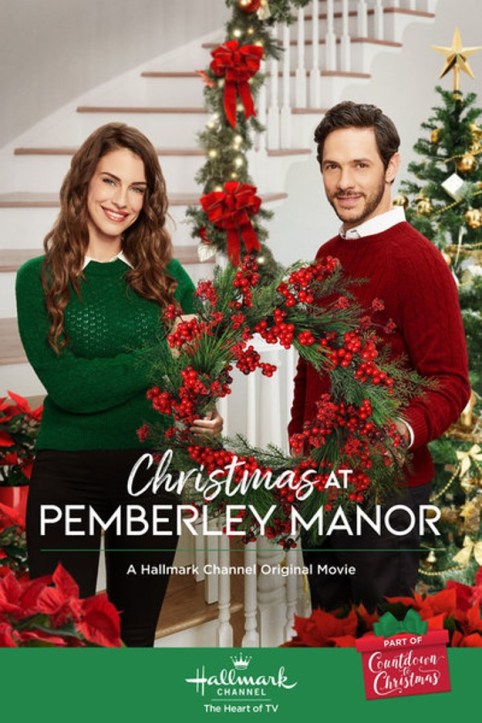
Because I’ve been busy preparing my editorial for the 2nd Disability In Film Blogathon and getting my reviews ready for my Halloween Double Feature, I haven’t been as active on my blog as I usually am. But, I wasn’t going to miss a beautiful opportunity to start reviewing movies within either of Hallmark’s Christmas line-ups! Both networks made no delays as they began airing Christmas movies last Friday. To start this Christmas movie season off on a well-intentioned note, the very first movie to premiere this year was Christmas at Pemberley Manor. When I first read the synopsis for this film, it sounded, to me, like a lot of other Hallmark movies I’ve seen or heard of before. Because this movie seemed to contain some of the same tropes that are usually found in Hallmark movies (businesswoman visits a small town and just so happens to find true love there, for example), I didn’t think I was going to enjoy this film. When I found out this movie was a modern adaptation of Pride and Prejudice, I was curious to see how this particular story would play out in the 21st century. Did this creative approach work in this movie’s favor? Did the tropes win in the battle of Originality vs. Formulaic? Let’s turn the page on my Christmas at Pemberley Manor review in order to find out!
Christmas at Pemberley Manor poster created by Crown Media Family Networks and Hallmark Channel. Image found at https://www.hallmarkchannelpress.com/Shows/PRShowDetail?SiteID=142&FeedBoxID=845&NodeID=302&ShowType=&ShowTitle=Christmas+at+Pemberley+Manor
Things I liked about the film:
The acting: The cast of Christmas at Pemberley Manor was great! Everyone was cast so well in their roles, with the portrayals of all the characters being memorably enjoyable. This is the second Hallmark Christmas movie of Jessica Lowndes’ that I’ve seen and I think her performance in this movie was much stronger than in A December Bride. This is also the second Hallmark Christmas movie of Michael Rady’s that I’ve seen and, just like in A Joyous Christmas, Michael’s performance was fantastic! I also think that Steve Larkin portrayed one of the best Santa-esque characters in Hallmark Christmas movie history!
The on-screen chemistry: I thought that Jessica and Michael performed very well together! The on-screen chemistry was one of the things that added to their performances, with this on-screen chemistry appearing very believable. As I watched Christmas at Pemberley Manor, I could see that Elizabeth and William’s relationship developed as the film went on. These characters looked like they truly cared about one another and their interactions were well-acted. I hope Jessica and Michael star in another Hallmark movie together again!
The writing: Even though there were some of the usual Hallmark movie tropes in Christmas at Pemberley Manor, there were times when it felt like the screenwriter was trying something new in terms of storytelling. For instance, in some Hallmark movies, there are two guys that, romantically speaking, like the same female protagonist. Out of these two guys, one of them almost always is portrayed as either a “workaholic” or not a nice person. In Christmas at Pemberley Manor, however, both of the guys that liked Elizabeth were genuinely good people. At one point, I honestly had no idea which love interest Elizabeth would end up with.
Very little resemblance to Pride and Prejudice: When I heard that Christmas at Pemberley Manor was meant to be a modern re-telling of Pride and Prejudice, I was interested in seeing how this story could be adapted for the 21st century, especially since the only re-telling of Pride and Prejudice I’ve seen is the “Mr. Darcy” series on Hallmark Channel. However, this movie didn’t feel like any form of the Pride and Prejudice story. The only connections I could find between the original story and this film were Elizabeth’s, William’s, and Jane’s name being the same as either a character from the book or its respective author and the “don’t-judge-a-book-by-it’s-cover” trope.
Manor with white colored porch image created by Arkadiusz Frankowicz at freeimages.com. “FreeImages.com/Arkadiusz Frankowicz .”
My overall impression:
Christmas at Pemberley Manor was such a strong start to not only Hallmark’s Christmas movie line-ups, but also to the overall Christmas movie season! This movie was such a pleasant surprise that I ended up liking more than I thought I would! Looking back on it, this scenario reminds me of Hallmark Channel’s Christmas movie line-up from last year. The very first movie in that line-up was Marry Me at Christmas and before I watched this film, my expectations for it were low. This is because, just like how I originally felt about Christmas at Pemberley Manor, the movie sounded like a lot of other Hallmark movies I’ve seen and heard of before. When I did get the chance to watch Marry Me at Christmas, it became one of my favorite Hallmark Christmas movies from last year! I hope that Hallmark’s Christmas movies continue to surprise me the way Christmas at Pemberley Manor did, with more movies being better than expected.
Overall score: 8.2 out of 10
Have you seen Christmas at Pemberley Manor? What Hallmark movie are you looking forward to this Christmas season? Share your thoughts in the comment section!
As I was trying to come up with ideas for what to write about for the 2nd Disability In Film Blogathon, I came across the book and movie, Wonderstruck. While reading the story’s synopsis, I discovered that it was about two children who go on an adventure in two very different time periods. Even though these characters lead very different lives from one another and are unique individuals from each other, they both have something in common: both of these children are deaf. The idea of these characters having similar life experiences and stories of disability, despite existing in separate time periods, is what inspired me to create this editorial. My favorite superhero from the Marvel Cinematic Universe is Bucky Barnes and Matthew Rogers is my favorite character from Little House on the Prairie. After watching Captain America: The Winter Soldier for the first time, I started to notice that Bucky and Matthew shared more in common than one would think. Like the protagonists in Wonderstruck, Bucky’s and Matthew’s story takes place in two very different time periods: the late 1800s and the present day. Also like the protagonists in Wonderstruck, Bucky and Matthew have a disability: Bucky is an amputee and Matthew is non-verbal. In my post, “My Top 5 Dream Double Features at the Cinema”, I talked about how I would want to discuss the similarities in Bucky’s and Matthew’s story if I paired both episodes of “The Wild Boy” with Captain America: The Winter Soldier. Now, I finally get the chance to explore these similarities in honor of the 2nd Disability In Film Blogathon!
The 2nd Disability In Film Blogathon banner created by Crystal from In the Good Old Days of Classic Hollywood and Robin from Pop Culture Reverie. Image found at https://crystalkalyana.wordpress.com/2018/08/19/announcing-the-2nd-disability-in-film-blogathon/ and https://popculturereverie.wordpress.com/2018/08/19/announcing-the-2nd-disability-in-film-blogathon/.
The Introduction of Bucky and Matthew
Bucky Barnes and Matthew Rogers are introduced into a series that already had an established story prior to their appearance (the Captain America trilogy/MCU and Little House on the Prairie). When they make their official appearances in these series, Bucky’s movie and Matthew’s episodes were centered around them, even though they are not one of the main characters. Though this movie is a part of the Captain America trilogy, the title of this film is Captain America: The Winter Soldier because the movie explores Bucky’s story. On Little House on the Prairie, the episode where Matthew makes his debut is titled “The Wild Boy” because, like Captain America: The Winter Soldier, Matthew’s story is the primary focus. Because this episode is told in two parts, it allows for Matthew and his story to have a meaningful impact on the residents of Walnut Grove.
When Bucky and Matthew first appear on screen, the audience sees them carrying dangerous and violent identities. At the beginning of “The Wild Boy” Part 1, Matthew is introduced as The Wild Boy, a young, unkempt boy who reacts violently when Dr. McQueen, a traveling medicine man, tries to get his attention. In Captain America: The Winter Soldier, Bucky is known as The Winter Soldier, a dangerous antagonist from Hydra, a criminal organization, who causes chaos and destruction. At first, the protagonists in each story see the personas of The Wild Boy and The Winter Soldier for face value, believing that these individuals are truly as violent and dangerous as they appear. This also allows the audience to share similar thoughts and beliefs with the protagonists, with the delivery of the truth about The Wild Boy and The Winter Soldier being executed as a surprise for the audience.
The unmasking of The Winter Soldier: a moment that shocked the Marvel fandom. Screenshot taken by me, Sally Silverscreen.
The Truth about Bucky and Matthew
As their stories go on, the truth about The Winter Soldier and The Wild Boy are revealed. When Steve Rogers removes The Winter Soldier’s mask during a confrontation in Captain America: The Winter Soldier, he discovers that The Winter Soldier is really his friend, Bucky Barnes. After that scene, the audience is given the opportunity to learn about how Bucky ended up with Hydra. While Bucky has his prosthetic arm repaired by Hydra members, a flash-back montage is shown. This montage shows the audience that after he fell off the train in Captain America: The First Avenger, Bucky lost his left arm while he was falling. He was then kidnapped by Hydra and kept against his will. During this montage, the audience discovers how Bucky receives his prosthetic arm, but also sees Bucky getting mistreated by members of Hydra. The audience also learns that Bucky had The Winter Soldier persona forced upon him and was brainwashed by Hydra to hurt other people. When the story returns to present day, Bucky is still getting mistreated and abused by Hydra. Alexander Pierce, the head of Hydra, feels that the mistreatment toward Bucky, such as unexpectedly slapping him in the face and having Bucky involuntarily go through electroshock treatments, is justifiable. Brock Rumlow, a fellow Hydra member, witnesses the abuse toward Bucky, but chooses not to do anything about it. Steve Rogers finds out about Bucky’s traumatic situation after Captain America: The Winter Soldier but before Captain America: Civil War.
Like Bucky, the audience gets to learn more about The Wild Boy in “The Wild Boy” Part 1. Toward the beginning of this episode, The Wild Boy is shown getting physically abused by Dr. McQueen (he hits his hand with his cane) and being neglected (Dr. McQueen refuses to feed him). Dr. McQueen is also verbally abusive toward The Wild Boy, referring to him as “creature” and “animal” as well as saying he “acquired” him. Luther Abbott, the assistant of Dr. McQueen, recognizes that The Wild Boy is being mistreated, but doesn’t really do anything about the situation. He even assumes that The Wild Boy has a small amount of intelligence and doesn’t understand what’s going on around him. When Dr. McQueen visits Walnut Gove, Jenny Wilder, Laura Ingalls Wilder’s niece, suspects there’s more to The Wild Boy than meets the eye after she and her friends sneak into the tent where The Wild Boy is kept. The next day, when Jenny finds The Wild Boy hiding in her family’s barn, she discovers the truth about The Wild Boy. She not only learns that The Wild Boy is really Matthew Rogers, but also that he is non-verbal. The audience learns in the Little House on the Prairie episode “Hello and Goodbye” that Matthew became non-verbal due to having Lye forced down his throat by a farming couple who only wanted to adopt Matthew as a work-hand, not as their son. The audience also learns, later on in “The Wild Boy” Part 1, that Matthew developed Morphinism due to Dr. McQueen using the morphine laced elixir he was selling to control Matthew’s behavior, causing him to act “wild”.
Why the heck would Dr. McQueen think this “Wild Boy” idea is ok? Screenshot taken by me, Sally Silverscreen.
Bucky and Matthew Break Free
Fortunately, Bucky and Matthew find a way to escape their abusive situations. Despite Luther assuming that Matthew has a lack of intelligence, Matthew figures out how to dismantle his cage, giving him a chance to run away from Dr. McQueen’s capture. While Steve and Bucky fight each other during the Triskelion Battle in Captain America: The Winter Soldier, Steve rescues Bucky from Hydra’s capture by reminding Bucky of who he is and of the friendship they have. These reminders help Bucky break through Hydra’s brainwashing and escape their clutches. It’s also important to point out that after their initial escape, Bucky and Matthew never return to their captors’ control. Dr. McQueen comes back to Walnut Grove in an attempt to reclaim Matthew in “The Wild Boy” Part 2. This causes a judge to be called in and a hearing to take place in order to determine who should be the guardian of Matthew. Because of Luther confessing the truth about Dr. McQueen’s abuse toward Matthew and that he was bribed by Dr. McQueen to lie about Matthew’s situation, the judge decides to revoke Dr. McQueen’s guardianship but also decides to have Matthew sent to an asylum. After some convincing from Matthew and Mr. Edwards, the judge decides to grant guardianship to Mr. Edwards. Because a large portion of Hydra’s members were killed during the Triskelion Battle or went into hiding after that battle, Bucky has been able to live a life free of anything Hydra related.
Why is Bucky, sometimes, still referred to as “The Winter Soldier” when he’s no longer the Winter Soldier? Screenshot taken by me, Sally Silverscreen.
Bucky’s and Matthew’s Support System
Because their families are mostly absent from their stories, Bucky and Matthew have to build their support system from scratch. In each support system, there’s at least three key individuals that are present throughout Bucky’s and Matthew’s journey. For Matthew, these people are Mr. Edwards, Laura Ingalls Wilder, and Jenny Wilder. In Bucky’s story, these individuals are Steve Rogers, T’Challa, and Shuri. The people in these support systems approach their roles in their own ways, but their goal is the same: helping their friend or loved one and keeping their best interests in mind.
The biggest role in both of these support systems is the advocate, the person who spends the most time with their friend or loved one and makes sure their best interests are met. These roles are given to Mr. Edwards and Steve Rogers. After Matthew escapes from Dr. McQueen’s capture, he ends up having no place to go. Mr. Edwards volunteers to be his temporary guardian and takes care of Matthew. When Matthew faces the threat of being sent to an asylum, Mr. Edwards makes a speech before Sunday Service, with all the residents of Walnut Grove present, about how Matthew is no different from the other members of Walnut Gove. During this speech, Mr. Edwards was advocating for Matthew to stay in Walnut Grove so he could live in a stable, loving, and supportive environment. This speech convinced the judge to allow Matthew to live in Walnut Grove with Mr. Edwards. In Bucky’s case, Steve has been his friend prior to the events that caused Bucky to become disabled. During Bucky’s time in the MCU, Steve Rogers not only rescued Bucky from Hydra’s capture, but he also defends Bucky throughout Captain America: Civil War. When Bucky is wrongly accused of committing murder, Steve tries to explain to the members of “Team Iron Man” that not only is Bucky innocent, but that he also experienced a very traumatic and violent past. During the final battle between Captain America, Bucky, and Iron Man, Steve puts Bucky’s needs before his own by giving up his shield and choosing to help his friend.
The other two roles in this support system are the resource gatherer (the one who finds the resources for their loved one or friend) and the understanding soul (the one who, through understanding, comes to accept and appreciate the person they are going to help). The role of resource gatherer is given to Shuri and Laura Ingalls Wilder. Shortly after the events of Captain America: Civil War, Bucky comes to Wakanda to receive the medical care that he needs, wants, and deserves. Not only does Shuri help Bucky overcome his trauma, she also creates a new prosthetic arm, using Wakanda’s vibranium, for Bucky at the beginning of Avengers: Infinity War. In Matthew’s situation, Laura teaches him sign language so he can communicate with the people around him. For Jenny and T’Challa, they have taken on the role of the understanding soul. In Captain America: Civil War, T’Challa assumes that Bucky killed his father because Helmut Zemo, the film’s villain, was dressed up as Bucky when he murdered several people in Vienna. After T’Challa learns the truth about how his father died, he accepts Bucky into his social circle and helps him receive the resources he needs and wants. T’Challa also discovers Bucky’s past and realizes that he has been a victim of abuse and trauma. After she stops Nancy Oleson from tormenting Matthew and, later, finds Matthew hiding in her family’s barn, Jenny discovers that Matthew’s “wild boy” persona was forced upon him by his captors. She also learns about Matthew’s disability and agrees to become his friend.
Laura teaching Matthew, Jenny, and Mr. Edwards how to say “coffee pot” in sign language. Screenshot taken by me, Sally Silverscreen.
An Assistive Tool for Bucky and Matthew
After breaking free from their traumatic and abusive life, Bucky and Matthew are able to surround themselves with people who truly care about them and strive to meet their best interests. One way that their best interests are met is when they each receive an assistive tool that will help them live as independent and productive of a life as possible. As mentioned earlier, Laura teaches Matthew sign language in order to help him communicate with the people in his life. She also teaches Mr. Edwards and Jenny sign language so they can understand what Matthew is trying to say. This assistive tool of language helps Matthew to form friendships and make his wishes and thoughts known to others. Without it, Matthew would probably feel excluded from the community, feeling like he had limited opportunities to contribute to any conversations.
Even though Bucky received his prosthetic arm during his time under Hydra’s capture, that arm was created and controlled by Hydra, meaning that Bucky couldn’t use his assistive tool in his favor. After he was rescued from Hydra’s capture, Bucky was able to have more control over his prosthetic arm, being able to use his assistive tool the way he wants to, such as picking up plums from the market and fighting alongside “Team Cap” in Captain America: Civil War. During the battle between Captain America, Bucky, and Iron Man, Bucky’s prosthetic arm was destroyed after a failed attempt to remove Iron Man’s arc reactor. He not only receives a new prosthetic arm at the beginning of Avengers: Infinity War, but this prosthetic arm has no connection to Hydra, meaning that Bucky can have total control over his assistive tool. It’s also important to point out that throughout Avengers: Infinity War, Bucky seems comfortable with his new prosthetic arm, that he was given enough time to get used to his assistive tool and operate it the way he wants to.
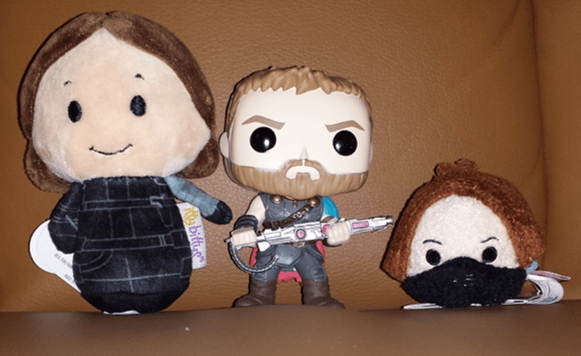
Bucky and Bucky being invited by Thor to a screening of Avengers: Infinity War! Screenshot taken by me, Sally Silverscreen.
The language used toward/about Bucky and Matthew
When Bucky and Matthew start their new lives, the audience gets to see how others interact with them. During Bucky’s time in the MCU and in both parts of “The Wild Boy”, Bucky and Matthew are welcomed into their communities. There are never bullied, made fun of, treated differently, or judged because of their disability. While looking at Bucky’s and Matthew’s stories, however, there was language used either toward or about them that could be seen as problematic. In both parts of “The Wild Boy”, some of the characters refer to Matthew as a “mute”. This is the only example of problematic language I could find within Matthew’s story. Because Little House on the Prairie takes place sometime between the 1870s to 1890s, I found this language to be more reflective of that time-period. Throughout Bucky’s time in the MCU, I found three instances where language was used either toward or about Bucky as a person with a disability that one could find as problematic. Below are the list of these instances and how they could be perceived as problematic.
“You have a metal arm?! That is awesome, dude!” – This is what Spider-Man tells Bucky during their fight in Captain America: Civil War. What Spider-Man said could be seen as problematic for two reasons. The first is by Spider-Man pointing out Bucky’s prosthetic arm, it seems like Bucky’s disability is being acknowledged before Bucky as a person. The second is if Spider-Man knew how Bucky acquired his prosthetic arm, he probably wouldn’t sound as enthusiastic as he did. Personally, I don’t have a problem with what Spider-Man said because his compliment truly sounded genuine and he appeared excited to meet and interact with people that were different from those he interacted with on a daily basis.
“Great! Another broken white boy for us to fix.” – Though Shuri doesn’t explicitly say who she’s referring to in Black Panther, it is assumed that the first “broken white boy” is Bucky. Implying that Bucky, a person with a disability, is broken and needs to be fixed is very problematic because this would suggest that, by having a disability, something is wrong with him and he should feel ashamed or embarrassed about being disabled. Because Shuri volunteers to help Bucky overcome his trauma and joins Bucky’s Support System, I don’t believe Shuri meant to be hurtful toward him. However, I do think that any screenwriter of any Marvel movie should be a bit more mindful when referring to any character with any type of disability and how their audience might perceive what is being said about a character with a disability.
“Okay, how much for the arm? (Bucky walks away) Oh, I’ll get that arm” – During Avengers: Infinity War, Bucky and Rocket teamed up in an attempt to stop the threat against Wakanda. The aforementioned quote is what Rocket said toward the end of his interaction with Bucky. Even though I think this moment was meant to be hilarious and what Rocket said is more in line with his sense of humor, I can see why someone would think that what Rocket said was problematic. By Rocket implying that he wants to take Bucky’s arm away from him, it would make Rocket appear is if he wants Bucky’s independence to be taken away from him. As I mentioned earlier, Bucky’s prosthetic arm is an assistive tool, which helps him live as independent and productive of a life as possible. Suggesting that Bucky, an individual with a disability, shouldn’t be able to use his assistive tool is very demeaning.
Jenny and Matthew teaching their friend, Jeb, how to say “friend” in sign language. Screenshot taken by me, Sally Silverscreen.
The Future of Bucky and Matthew
Though Bucky and Matthew experience positivity throughout their stories, their journeys are far from over. They may never be able to fully escape their traumatic pasts, but the audience can see that Bucky and Matthew have the strength and resilience to continue to move forward to a better and brighter day. Even though they had horrible identities forced upon them by horrible people, Bucky and Matthew never became the person that their captors tried desperately to turn them into. When Mr. Edwards suggests that he and Matthew run away in order to prevent Matthew from getting sent to an asylum, Matthew refuses and tells him that following the law and respecting the judge are more important than keeping their temporary family together. Because Matthew truly cared about Mr. Edwards, he sought out the best interests of Mr. Edwards and stopped him from making one of the biggest mistakes of his life. Shortly after Bucky was rescued from Hydra’s capture, one of the first things Bucky does is save Steve from potentially drowning. Because of what Steve did for Bucky, he realizes that Steve still cares about his friend and wants the best for him. Bucky’s act of kindness shows the audience that he is expressing his gratitude toward his friend by helping him out in a dire situation. Both of these situations are an example of, when given the choice, Bucky and Matthew consciously choose to be good people despite the terrible hands they had been dealt in the past.
Because of where Bucky’s and Matthew’s story leaves off in their respective series, it makes it unclear of what exactly will happen to them. In the Little House on the Prairie episode “Hello and Goodbye”, Matthew reunites with his biological father, Philip Rogers. Since this episode was not only Matthew’s last appearance on the show, but also the final episode in the series, it is assumed that Matthew received a happy ending when he chose to live with his father. At the end of Avengers: Infinity War, Bucky disappeared as a result of Thanos’ plan being successful. Because ‘Avengers 4’ is listed on Sebastian Stan’s filmography on IMDB, it is assumed that Bucky will return in the next film. Some people even speculate that he could become the next Captain America if Steve Rogers were to step away from the title. No matter what happens to Bucky and Matthew, the most important thing to remember is that their disability is a part of their story. They do not let the past define them, but instead use it as a source of strength and perseverance. Bucky and Matthew are, more often than not, given opportunities to show others what they are capable of, especially when they set their minds to it. They never let their struggles or their hardships get in the way of achieving their goals and following their dreams. Within their respective series and even in the world of pop culture, Bucky Barnes and Matthew Rogers are just as significant and meaningful as the other characters surrounding them.
Bucky’s ready to make his return in ‘Avengers 4″! Screenshot taken by me, Sally Silverscreen. Matthew gives Mr. Edwards a hug as the credits are rolling. Screenshot taken by me, Sally Silverscreen.Have fun at the movies!
Since both of my reviews from this year’s “Fall Harvest” line-up have been pretty well-liked and since I don’t know if I’ll review any movies before my Halloween double feature, I decided to review Love, of Course. Like a lot of the movies I talk about on 18 Cinema Lane, I had low expectations for this film. While I’d seen Cameron Mathison and Mackenzie Vega perform in at least one Hallmark movie before, I had never seen any of Kelly Rutherford or Gabby Douglas’ acting performances. Also, the story of a parent spending time with their children at college is not new for Hallmark, as A Lesson in Romance was released four years prior to Love, of Course. However, I wanted to watch this film with an open mind, hoping that, at least, some creativity was incorporated into this story. Was Love, of Course the surprise waiting at the end of the corn maze? Let’s take the trip through this review to find out!
Love, of Course poster created by Crown Media Family Networks and Hallmark Channel. Image found at https://www.crownmediapress.com/Shows/PRShowDetail?SiteID=142&FeedBoxID=845&NodeID=302&ShowType=&ShowTitle=Love%2c+of+Course.
Things I liked about the film:
The acting: The entire cast of this movie was great! Everyone brought their A game to their specific roles, with all of the performances appearing natural and believable. The talents of the actors complimented each other, making the film even more enjoyable. Before watching Love, of Course, I was impressed by Mackenzie Vega’s performance in Hallmark Hall of Fame’s The Beach House. Mackenzie’s portrayal of Cara was great in this film as well! I hope Mackenzie can appear in more Hallmark movies in the future.
The on-screen chemistry: Kelly Rutherford and Cameron Mathison gave a great performance individually and as a pair. One thing that added to the portrayal of their characters was their on-screen chemistry. Amy and Noah’s relationship came across very convincingly. It also looked and felt like their relationship was developing over the course of the film. Watching Amy and Noah’s interactions was definitely one of the highlights of this film!
The fall and harvest themes: I thought the fall theme was incorporated really well in Love, of Course! There was a lot of fall related things in the movie; from the idea of someone going back to school to the desserts that Amy makes for the people around her. I also liked how this story focused on the theme of harvest. Farmer’s markets have been featured in Hallmark movies before. However, Love, of Course showed the process of how a farmer’s market participant prepares to sell their product at a farmer’s market. I found this aspect of the film very informative and interesting!
Corn field image created by Rene Cerney at freeimages.com. “FreeImages.com/Rene Cerney.”
What I didn’t like about the film:
The under-utilization of Gabby Douglas: Even though Gabby doesn’t have as much acting experience as some of the other cast members in this film, I was disappointed by how little screen time she was given. Gabby is not only one of the top billed actresses in the film, she is also featured on the film’s poster. While watching this film, I noticed that Gabby was present in the movie for about five minutes or less.
I’ve seen the majority of Hallmark’s 2018 “Fall Harvest” movies. Out of all those films, Love, of Course is the best one from this line-up! Outside of the Christmas season, the “Fall Harvest” line-up has been the strongest on Hallmark Channel! In fact, I think this year’s “Fall Harvest” line-up was better than last year’s. Even though Love, of Course had some elements that are usually found in Hallmark movies, there were also aspects within the film that were creative and interesting. It was also nice to see that the cast was made up of familiar faces (Mackenzie Vega from The Beach House) and new members of the Hallmark community (Kelly Rutherford). I’m hoping that these familiar faces can continue to work and thrive in the Hallmark community and that today’s new members can be the familiar faces of tomorrow.
Overall score: 8.3 out of 10
What are your thoughts on this year’s “Fall Harvest” line-up? Which movie has been your favorite? Let me know in the comment section!











![20181031_233641[1]](https://18cinemalane.com/wp-content/uploads/2018/10/20181031_2336411-e1541043680798.jpg?w=549&h=666)





![20181025_214145[1]](https://18cinemalane.com/wp-content/uploads/2018/10/20181025_2141451-e1540518282979.jpg?w=583)
![20180726_200105[1]](https://18cinemalane.com/wp-content/uploads/2018/07/20180726_2001051-e1532651351591.jpg?w=656&h=348)
![20181025_204037[1]](https://18cinemalane.com/wp-content/uploads/2018/10/20181025_2040371-e1540518405748.jpg?w=479&h=609)
![20181025_205258[1]](https://18cinemalane.com/wp-content/uploads/2018/10/20181025_2052581-e1540518476918.jpg?w=725)
![20181025_205720[1]](https://18cinemalane.com/wp-content/uploads/2018/10/20181025_2057201-e1540518534512.jpg?w=640)
![20181025_203412[1]](https://18cinemalane.com/wp-content/uploads/2018/10/20181025_2034121-e1540518626696.jpg?w=435)
![20181025_210239[1]](https://18cinemalane.com/wp-content/uploads/2018/10/20181025_2102391-e1540518687301.jpg?w=640)



 18 Cinema Lane