Comparing with the Critics – Worst of 1976 – Gable and Lombard

This review is from my series, Comparing with the Critics. If you’d like to learn more about the series, click on the link below.

Introducing my new series, Comparing with the Critics!

In the ‘Best Films of 1976’ episode of Opening Soon…at a Theater Near You, Gene Siskel stated “1976 was a pretty lousy year for movies”. He emphasized that statement by saying “the year was littered with dogs”. Since I haven’t seen a lot of movies from 1976, I can’t agree or disagree with Siskel’s claim. But what I can do is talk about one of Siskel’s choices for worst movies of 1976. As I said in my 1976 introduction of Comparing with the Critics, one episode was primarily focused on discussing the best movies from a given year. This left Siskel and Ebert with only a few minutes to talk about some of the year’s worst films. Despite the 1976 episode’s limited selection of “bad” movies, I chose Gable and Lombard for this edition of Comparing with the Critics Worst of review. What made Gable and Lombard the most interesting title from the episode’s collection of “bad” movies was the story’s emphasis on Clark Gable and Carole Lombard’s relationship. I am somewhat familiar with Clark and Carole, as I have reviewed at least one of their movies on 18 Cinema Lane. Because I hadn’t heard of Gable and Lombard until I saw the ‘Best Films of 1976’ episode of Opening Soon…at a Theater Near You, I viewed the film as a way to expand my cinematic horizons and learn more about Carole and Clark. Now that I have seen the movie for myself, I believe Siskel’s, and even Roger Ebert’s, thoughts on the film were a tad harsh.

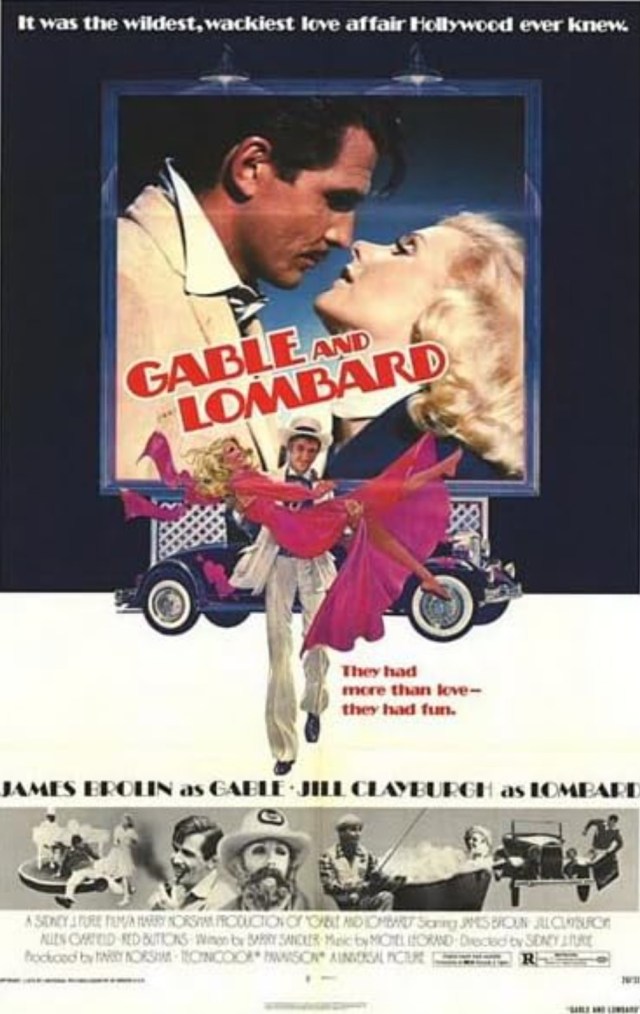
Gable and Lombard poster created by Universal Pictures

Before revealing his choices for the worst movies of 1976, Siskel says the year featured “two kinds of cinematic canines: cheap, lousy pictures and expensive, lousy pictures”. Based on what films he chose, Gable and Lombard was placed in the latter category. According to Wikipedia, the film’s budget was $4.5 million. It appears most of the budget was spent on Gable and Lombard’s set design. One scene took place outside, with the guests at a ball wearing white. Small candles surrounded the pool’s perimeter. In the pool were small islands of white flowers and candles, along with swans peacefully gliding through the water. Overall, this part of the set was absolutely gorgeous! Throughout Gable and Lombard, some scenes took place in Clark or Carole’s dressing room. These dressing rooms looked more like condominiums; distinct spaces that appear livable. Carole’s dressing room boasted a color combination of yellow and white. Featuring design choices like a white dining room set gave the dressing room a feminine style. Meanwhile, dark wood surrounded the fireplace in Clark’s dressing room. There was even a pool table located near the fireplace. These design choices created a more masculine space. Carole and Clark’s dressing rooms provided a good visual representation of how different they were despite having a similar career path.

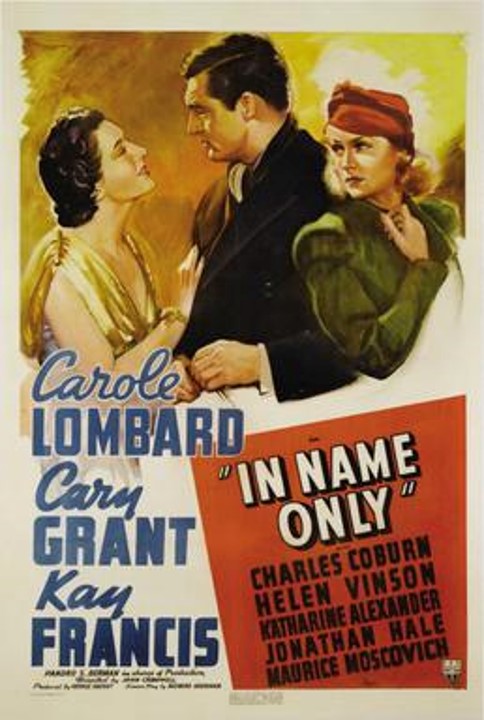
In Name Only poster created by RKO Radio Pictures. Image found at en.wikipedia.org/wiki/File:In_Name_Only.jpg

While Roger Ebert never shared his thoughts on Gable and Lombard in the ‘Best Films of 1976’ episode, he did write a review for the movie, which can be found on rogerebert.com. In his review, Ebert states “Brolin does, indeed, look a lot like Gable – but imitation here has nothing to do with flattery”. While I agree with Ebert’s opinion on James Brolin’s appearance in the movie, I disagree with the rest of Ebert’s statement. Not only did James look like Clark, he even sounded like him too! It almost felt like James transformed into another person. During Gable and Lombard, James consistently carried an easy-going attitude. This choice in acting and directing showcased Clark’s down-to-earth personality. Meanwhile, Carole was a comedic, life of the party. Portrayed by Jill Clayburgh, Carole’s up-beat personality made her one of the most popular actresses of her time. But behind closed doors, Carole had her doubts and insecurities. In one scene, Carole is sharing with Clark how she feels undeserving of a recent achievement. Her eyes reveal a sense of worry. Concern, even sadness, can be heard in her voice. During her conversation with Clark, Carole looks and sounds truly discouraged. Clark, with a warm smile and calming tone of voice, reassures Carole what’s most important is surrounding herself with people who support her. Jill’s and James’ performance is one of the reasons why this scene is one of my favorites in Gable and Lombard!

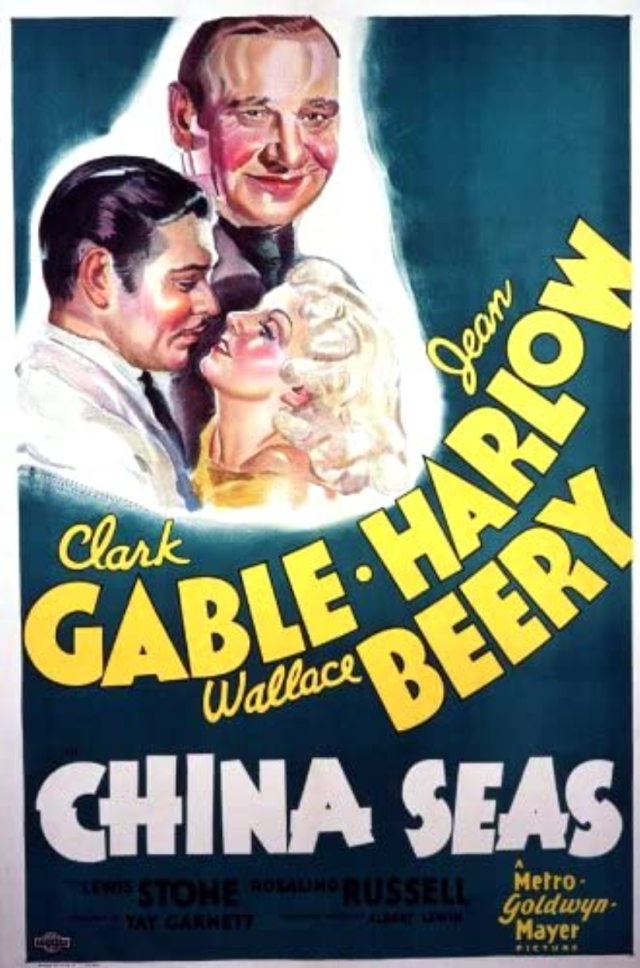
China Seas poster created by Metro-Goldwyn-Mayer.

Sidney J. Furie, the director of Gable and Lombard, chose to make “a movie about just folks”, primarily focusing on the personal lives of Clark Gable and Carole Lombard. While Ebert says this decision gave “the movie a certain originality”, he also criticizes Sidney’s choice, claiming that “by limiting itself to this aspect of their lives the movie never deals with the reasons we find them interesting in the first place”. As I said in this review’s introduction, I am somewhat familiar with Clark and Carole. Because I don’t know which parts of Gable and Lombard are factual or creative liberty, I took the story of Carole and Clark’s relationship with a grain of salt. From the way Louis B. Mayer (portrayed by Allen Garfield) talked to Clark about groups of people demanding certain elements of films be changed due to “indecency”, I knew he was talking about the Breen Code, a series of morality related guidelines enforced in Hollywood from 1934 to 1954. Therefore, I saw Gable and Lombard as a character study of how a portion of the Breen Code era affected the professional and personal lives of the Hollywood landscape, with Carole and Clark serving as just two examples. When Clark is accused of having an affair with a waitress, Carole volunteers to testify in court. Everyone from her inner circle knows if she testifies, she will expose her and Clark’s relationship as well as end her career. While explaining why he doesn’t want Carole to testify, Louis B. Mayer shares with Clark the ugly truth about what happened to some actresses after their careers ended. This scene is honest about the consequences if the Breen Code was broken. By viewing the film from the lens of the Breen Code, Gable and Lombard’s narrative is not only compelling, it is given higher stakes.

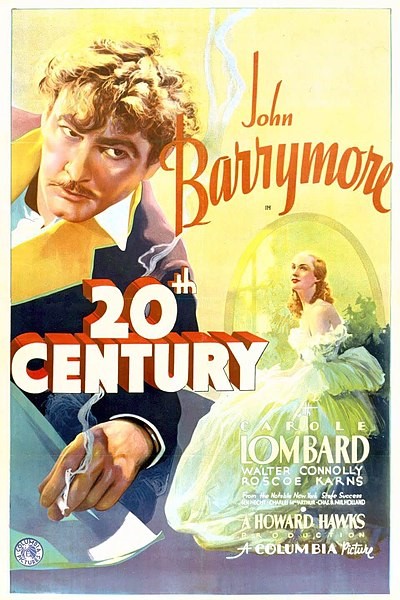
Twentieth Century poster created by Columbia Pictures.

I said earlier in this review how Ebert and Siskel were only given a few minutes to talk about the year’s worst films. This made Siskel’s discussion of Gable and Lombard sound vague, as he states “in real life, you can get arrested for playing around with dead bodies. The same should be true for movie-makers who desecrate the memory of great, dead actors”. Because this review affords me more time to elaborate on my opinion, I will now discuss what I didn’t like about Gable and Lombard. At the beginning of the movie, Clark is told Carole was in a plane crash, but her whereabouts are unknown. The very next scene shows Carole riding in an ambulance, alive and appearing uninjured. That scene took place years before the plane crash happened. With no on-screen text acknowledging the story’s time and place, it was sometimes difficult to figure out the story’s timeline. I liked James’ and Jill’s portrayal of Clark and Carole. However, I found their on-screen chemistry inconsistent. When their story began, Carole and Clark went from enemies to lovers. For the rest of the story, they continuously broke up then got back together. I recognize Gable and Lombard is based on a real-life relationship. But because of the back-and-forth nature of that relationship, I couldn’t stay fully invested in the relationship of Clark and Carole.

Comparing with the Critics banner created by me, Sally Silverscreen. TV show title cards created by WTTW National Productions, WTTW, Public Broadcasting Service (PBS), Lifetime Television, Tribune Entertainment, Buena Vista Television, and Disney-ABC Domestic Television

Looking back on Gable and Lombard, I believe Siskel’s, and even Roger Ebert’s, thoughts on the film were a tad harsh. I wouldn’t call it a “dog” or “lousy”, as the movie does have its merits. But I do believe the marketing is a bit misleading. The quotes on Gable and Lombard’s poster are “It was the wildest, wackiest love affair Hollywood ever knew” and “They had more than love – they had fun”. In the ‘Best Films of 1976’ episode of Opening Soon…at a Theater Near You, Carole dumped salad on Clark’s head, one of the more humorous scenes from the film. While there were comedic moments sprinkled throughout the story, the movie’s marketing presents the false idea it is solely a comedy. Seen from the lens of the Breen Code, Gable and Lombard presents a character study of how a portion of the Breen Code era affected the professional and personal lives of the Hollywood landscape. With the story emphasizing Carole and Clark’s relationship, they navigate complicated decisions, as well as honesty about feelings and emotions. The balance of comedy and tragedy adds a sense of maturity to the overall story. At worst, the movie prioritizes style over substance. as most of the budget seems to be put toward the set design. But, at best, Gable and Lombard is just ok.

This review was brought to you by

Sally Silverscreen

Coming Soon to a Blog Near You; The Second Chance Christmas Double Feature!

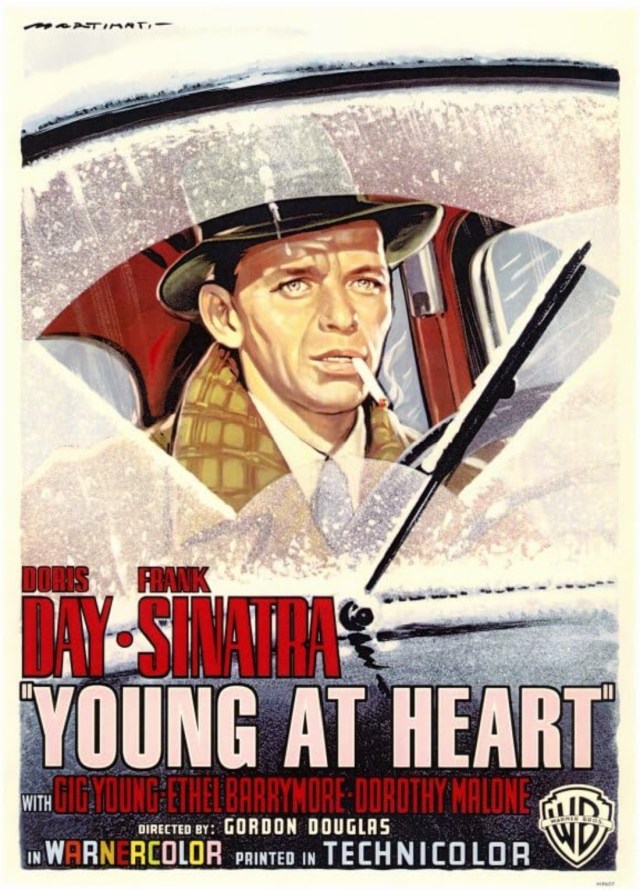
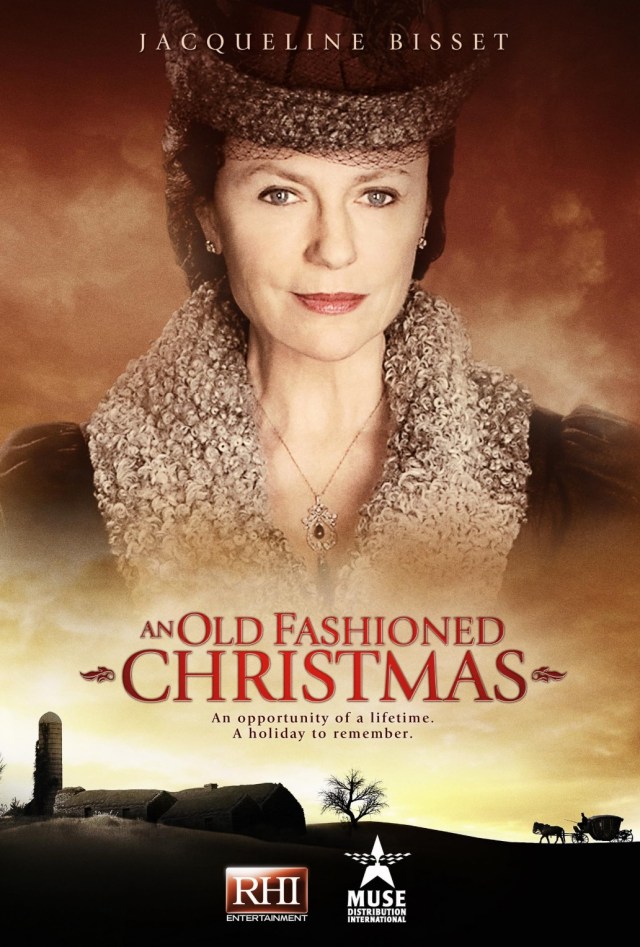
Whenever I publish one hundred posts, I commemorate the achievement by creating a double feature! The two movies are chosen based on a shared theme. My 900th post was a Comparing with the Critics introduction to 1976. But my review of The Chalk Garden is what inspired this edition’s double feature. When I reviewed the 1964 film earlier this month, I talked about receiving a second chance to write about the movie. This opportunity caused me to think about other titles I’ve been meaning to check out. Looking back on all the blogathons I participated in, I realized I still haven’t seen 1954’s Young at Heart. Upon discovering it was a Christmas movie, I immediately found the perfect excuse to finally see An Old Fashioned Christmas. After selecting and watching these films, I will try to answer the following question:

Did these two movies deserve a second chance?

Christmas Tree with boxes image created by Freepik at freepik.com. <a href=’https://www.freepik.com/free-vector/christmas-tree-out-of-gift-boxes_1448089.htm’>Designed by Freepik</a>. <a href=”https://www.freepik.com/free-photos-vectors/background”>Background vector created by Freepik</a>. Image found at freepik.com

Have fun at the movies!

Sally Silverscreen

Take 3: Tarzan in Manhattan Review

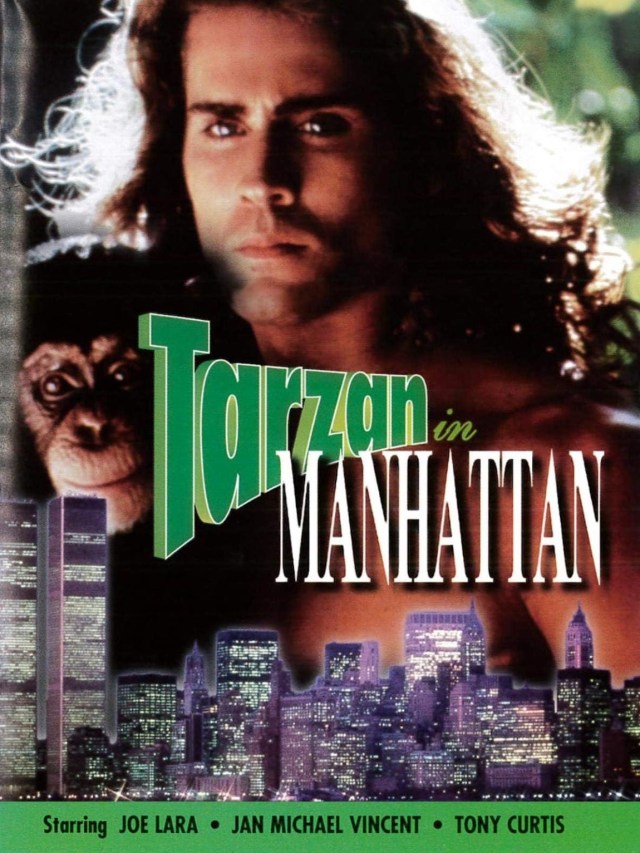
During my search for my “so bad, it’s good” movie, I’ve learned to find two things: a film that is built on a gimmick and a film that is unintentionally funny. Though these things have helped me get one step closer to finding my “so bad, it’s good” movie, a film has yet to earn that coveted title. For the annual So Bad It’s Good Blogathon, I had several selected movies to choose from. But, in the end, I picked the 1989 film, Tarzan in Manhattan! That title alone gives away the project’s gimmick; an iconic character existing in a more contemporary setting. Based on the movie’s synopsis, there seems to be elements that could be unintentionally funny, such as Jane becoming more street-smart when she’s usually known for being book-smart. But what made me ultimately select Tarzan in Manhattan for the So Bad It’s Good Blogathon were the reviews on IMDB. According to what I read, it seemed like the movie’s creative team didn’t take their project seriously because they acknowledged the film’s gimmick. With all of that said, let’s see if this movie could become my “so bad, it’s good” film!

Tarzan in Manhattan poster created by American First Run Studios and CBS

Things I liked about the film:

The acting: When I reviewed The Chalk Garden earlier this month, I said I was invested in the story because of the acting performances’ quality. I also said each acting performance was good for different reasons. In Tarzan in Manhattan, the cast made a strong effort to make their performances as entertaining as possible. In my opinion, these efforts worked, as their performances kept me invested in the story! Joe Lara used emotion well while portraying the titular character. A great example comes from the first ten minutes of the movie. Tarzan experiences a tragedy, as he discovers someone close to him passed away. Upon making this discovery, Tarzan is understandably upset. His eyes are brimming with tears and his mouth presents a frown. Quickly realizing what possibly happened, Tarzan’s sadness turns into anger within seconds. He then grits his teeth and the rest of his facial features become tense.

Kim Crosby portrays Jane in Tarzan in Manhattan. In my review’s introduction, I pointed out how Jane became more street-smart. Because of this creative decision, Kim adopts a down-to-earth, laid-back personality she consistently carried throughout the movie. When Jane meets Tarzan, she’s unfazed by the situation. Her whole persona presented the idea she, as a cab driver, has seen it all. Portraying Jane’s father, Archimedes, is Tony Curtis. Similar to Kim’s performance, Tony’s on-screen no-nonsense attitude was consistent. What also worked in Tony’s favor was how believable his on-screen interactions were. Anytime Archimedes and Jane shared a conversation, it felt like a realistic discussion between father and daughter. The strength of Kim’s and Tony’s acting talents helped make that possible!

Respect toward the source material: While I haven’t read the book Tarzan in Manhattan is based on, I have seen another adaptation of the Tarzan story. Based on that experience, it appears the creative team of the 1989 film made efforts to respect the source material their project is based on. Remember when I said in this review’s introduction how Jane became more street-smart when she’s usually known for being book-smart? It is true she is street-smart in Tarzan in Manhattan. However, the book-smart aspect of her character actually worked in harmony with the street-smarts. Around the time she and Tarzan first meet, Jane shares how she has a Bachelor’s degree in Computer Science from NYU. Her book-smarts, along with problem-solving skills, help Tarzan find an important clue in figuring out Cheetah’s whereabouts. Throughout his New York City trip, Tarzan carries a bag of expensive jewelry as a form of currency. It is revealed the collection of jewelry belonged to Tarzan’s parents, the Lord and Lady of Greystone, before they passed away.

How humor was incorporated: I mentioned in my review’s introduction how Tarzan in Manhattan’s IMDB reviews were the reason I chose the film for the So Bad It’s Good Blogathon. Based on those reviews, it seemed the movie’s creative team didn’t take their project seriously because they acknowledged the film’s gimmick. As I watched the 1989 picture, I could detect a sense of self-awareness. From the dialogue to the “Easter Eggs”, it felt like the movie’s creative team recognized how much of a gimmick their project was built on. During the plane ride to New York City, Tarzan is reading a book about surviving in New York on five dollars a day. This “Easter Egg” calls out how expensive the Big Apple can be. After somersaulting his way into a locked room, Tarzan leaves that same room by escaping through an open window. This situation causes Archimedes to ask Jane why Tarzan can’t leave through the door like other people. The aforementioned self-awareness in Tarzan in Manhattan made comedic moments genuinely hilarious!

The Seventh So Bad It’s Good Blogathon banner created by Rebecca from Taking Up Room

What I didn’t like about the film:

Things that don’t make sense: There were some parts of Tarzan in Manhattan that didn’t make sense. One example takes place toward the beginning of the film. Within the first five minutes of the story, Tarzan is shown living a secluded life from civilization, how Tarzan is usually portrayed in other adaptations. Then, all of a sudden, a man named Joseph shows up to give Tarzan and Cheetah a pair of books. Based on their interaction, it seems like Joseph and Tarzan’s friendship has lasted even before the events of the movie. If Tarzan lives close enough to civilization where walking to Joseph’s store is possible, why does he still live isolated in the jungle?

Inconsistent sense of urgency: A reason why Tarzan travels to New York City is to rescue Cheetah. This part of the film’s synopsis would warrant a sense of urgency throughout the story. But Tarzan, along with Jane and Archimedes, don’t figure out what likely happened to Cheetah until more than twenty minutes into an hour and thirty-four-minute film. While there is a sense of urgency in Tarzan in Manhattan, it appears at certain moments in the movie. These creative choices made the story’s sense of urgency inconsistent.

Part of the story that doesn’t lead anywhere: On more than one occasion, the audience is reminded how Tarzan is the son of the Lord and Lady of Greystone. Jane even purchases a book featuring his family’s portrait. I appreciate the creative team’s efforts to respect the source material their project is based on. However, the part of the film about Tarzan’s family history didn’t lead anywhere. The story’s main conflict had nothing to do with the Greystone estate. Tarzan’s family weren’t even featured in a subplot. I wish that part of Tarzan in Manhattan had a stronger connection to the overall story.

New York City skyline with letters image created by Freepik at freepik.com. <a href=’https://www.freepik.com/free-vector/new-york-skyline-typographic-silhouette_719554.htm’>Designed by Freepik</a>. <a href=”https://www.freepik.com/free-photos-vectors/background”>Background vector created by Freepik</a>. Image found at freepik.com.

My overall impression:

When I started this review, I said I learned to find two things when looking for my “so bad, it’s good” movie; a film that is built on a gimmick and a film that is unintentionally funny. Tarzan in Manhattan is definitely built a gimmick, with enough self-awareness in the movie to acknowledge this. But what the film isn’t is unintentionally funny. The way the story’s humor was written and delivered gave the audience a reason to laugh with the creative team, not at them. Humorous moments felt like they were intended to be comedic. This is one of the reasons why Tarzan in Manhattan was as entertaining as it was! Though there were flaws in the 1989 picture, there were aspects of the project I liked. A few examples are the acting performances and the on-screen chemistry between Joe Lara and Kim Crosby. Even though moments with high-stakes and a sense of urgency are sprinkled throughout the story, Tarzan in Manhattan is, for the most part, silly and goofy fun. Out of all the movies I reviewed for the So Bad It’s Good Blogathon, I’d say Tarzan in Manhattan is the best one. So, when it comes to finding my “so bad, it’s good” movie, I ended up taking a detour this time.

Overall score: 7 out of 10

Have you seen Tarzan in Manhattan? Which adaptation of the Tarzan story is your favorite? Please tell me in the comment section!

Have fun at the movies!

Sally Silverscreen

Comparing with the Critics – 1976 – Introduction

In the 1970s, when Gene Siskel and Roger Ebert’s show was called Opening Soon…at a Theater Near You and then Sneak Previews, there were no separate episodes for the year’s best and worst movies. Instead, one episode would show Ebert and Siskel devoting most of their time to talking about the best films of a given year. In the last few minutes of that episode, Siskel and Ebert would briefly mention some of their choices for the year’s worst titles. The first episode of any iteration of Ebert and Siskel’s show premiered in late November, 1975. That made 1976 the first year to receive a year-end episode of the best and worst movies. This is an interesting coincidence, as Network became the first movie I reviewed for my Comparing with the Critics series. For worst of 1976, I didn’t have many films to choose from due to the episode’s limited selection. But after seeing which pictures Siskel and Ebert selected, I chose Gable and Lombard as the Worst of 1976. As I already said in this introduction, I reviewed Network. That movie was picked as the Best of 1976.

Comparing with the Critics banner created by me, Sally Silverscreen. TV show title cards created by WTTW National Productions, WTTW, Public Broadcasting Service (PBS), Lifetime Television, Tribune Entertainment, Buena Vista Television, and Disney-ABC Domestic Television

Take 3: Million Dollar Mermaid Review

From Esther Williams’ filmography, I’ve only seen (and reviewed) three of her pictures; Take Me Out to the Ball Game, Bathing Beauty, and Easy to Wed. When it comes to the aqua musical, one of Esther’s claims to fame, that component was far and few between in those movies. Wanting to see an Esther Williams production where the aqua musical was more center stage (no pun intended), I selected Million Dollar Mermaid to review for the We Love Musicals Week Blogathon! The 1952 presentation was recommended by The Classic Movie Muse. Before researching titles to write about for Hamlette’s (from Hamlette’s Soliloquy) event, I had no idea the movie was a biopic. As I made this discovery, I was reminded how much luck I had finding good biopics last year. On my list of the best movies I saw in 2024, three biopics earned a spot on my list, with two of those films ending up in my top five. Could Million Dollar Mermaid find a place on 2025’s best movies list? Read my review to find out!

Million Dollar Mermaid poster created by Metro-Goldwyn-Mayer (MGM)

Things I liked about the film:

The acting: As I said in this review’s introduction, I’ve seen (and reviewed) three of Esther Williams’ films; Easy to Wed, Take Me Out to the Ball Game, and Bathing Beauty. What these titles have in common is how Esther’s on-screen personality has been consistently friendly and warm. Her performance in Million Dollar Mermaid maintains that consistency in personality! Esther portrays Annette Kellerman, an Australian swimmer who defied the odds and created a successful career. Through the ups and downs of Annette’s life, Esther’s on-screen personality highlighted how Annette saw the glass half full. However, there were times when Annette became frustrated. In one scene, she is understandably upset because she was falsely accused of indecent exposure (due to the style of her swimsuit). At first, Annette tearfully refuses to speak with any newspaper reporter. But after receiving advice from her father and James Sullivan, courage rises in Annette’s voice as she not only agrees to be interviewed, she decides to be interviewed while wearing her swimsuit. With Esther adopting a variety of emotions and expressions throughout her performance, she brought humanity back to Annette’s name!

Speaking of Annette’s father, let’s talk about Walter Pidgeon’s character, Frederick Kellerman! Frederick was one of Annette’s biggest cheerleaders. Though he had his reasons for wanting to protect his daughter, Frederick led by example when it came to following dreams. But Annette’s father had his fair share of struggles. While waiting for Annette and James’ meeting to end, Frederick becomes exhausted. His eyelids continuously rise and fall as he sometimes slumps toward the ground. Visibly concerned, James’ associate, Doc (portrayed by Jesse White) suggests they return home. Scenes like this one showed how Walter brought believability to his role! Similar to Esther’s on-screen personality, Walter made the likability of his character consistent. This was achieved through a strong acting performance!

Victor Mature portrays James Sullivan in Million Dollar Mermaid. When he is first introduced on a boat ride to London, James’ showmanship is on full display. Quick witted and having a way with words, James knew an opportunity when he saw one. Though he had the charisma of a circus ring leader, James also had a caring side to him. In order to promote a new show, Annette agrees to swim through the Thames River. During the swim, James and Doc row alongside Annette. Toward the end of the swim, James notices how tired Annette appears. He’s also aware of an incoming current, which could push Annette back. A sharp tone in his voice, furrowed eyebrows, and an intense look in his eyes perfectly show how concerned James is for Annette’s wellbeing. These emotional elements emphasize James’ sense of urgency for protecting Annette as well. This scene is just one example of how Victor’s acting talents helped create a memorable portrayal of James Sullivan!

The dialogue: One of the challenges Annette had to overcome was polio. As a child, Annette wished she could dance with her peers inside of staying at home practicing the piano. To cheer his daughter up, Frederick says how music should be a source of joy. The way this line was written and spoken seemed so profound, it made me wonder if Frederick’s belief is the reason why some musicals are joyful in nature? Years later, Frederick accepts a job at a music conservatory. But once he and Annette move to London, they discover the conservatory is actually closed. Looking at the glass half full, Annette reminds her father how the conservatory’s gate is only one closed gate. While she was talking about the literal gate, she was also speaking figuratively, seeing it as yet another puzzle to solve. These are just two examples of how well-written the dialogue was in Million Dollar Mermaid!

The aqua musical numbers: I stated in the introduction of my Million Dollar Mermaid review how one of Esther’s claims to fame is the aqua musical. This type of unique musical presentation is another reason why I chose this film for the We Love Musicals Week Blogathon, as I wanted to bring something different to the event’s table. The aqua musical numbers in Million Dollar Mermaid were captivating! The blend of pyrotechnics, color, and aquatic choreography created musical spectacles that were close to perfection. In one number, Esther emerges from the water on a giant pillar covered with sparks. Another number shows Esther performing a ballet routine under water. My favorite number boasted a color scheme of red and yellow. A memorable part of that number was when swimmers jumped into the water from various swings. The aqua musical numbers were certainly one of the strengths of Million Dollar Mermaid!

We Love Musicals Week Blogathon banner created by Hamlette from Hamlette’s Soliloquy

What I didn’t like about the film:

Limited presence of aqua musicals: Like I mentioned in my review’s introduction, I wanted to watch an Esther Williams movie where the aqua musical was more center stage (again, no pun intended). This component received more inclusion in Million Dollar Mermaid than in Esther’s other three movies I’ve seen (and reviewed). However, the overall presence of aqua musicals seemed limited. In the 1952 film, there were three aqua musical numbers. Only one of them was shown in its entirety. It also doesn’t help how the first aqua musical number appears a little over an hour into an hour and fifty-five-minute movie. I recognize the film’s creative team tried their best to find a balance between providing musical spectacle and telling Annette’s story. But as someone who came to Million Dollar Mermaid for the aqua musical, I was, kind of, disappointed.

An open-ended finish: The intended purpose of a biopic is to tell the story of a historical or public figure. In the case of Million Dollar Mermaid, that figure is Annette Kellerman. Toward the end of a typical biopic, that story will either reach the conclusion of that figure’s life or explain what happened to the people involved in the story, through a voice-over or on-screen text. But Million Dollar Mermaid didn’t adopt any of these examples. Within the last ten minutes of the movie, a major conflict takes place. Because there’s not enough time to reach a resolution to this conflict, a resolution is not provided on screen. An explanation if a resolution was reached at all is not provided as well. These creative choices left some questions unanswered.

A confusing interaction: For this part of my review, I will spoil Million Dollar Mermaid. If you have not seen this movie and are planning on watching it, please skip ahead to the part of this review titled “my overall impression”.

James Sullivan becomes Annette’s manager in Million Dollar Mermaid. Over time, Annette and James develop romantic feelings for each other. But their relationship doesn’t last, as Annette ends up marrying a man named Alfred. Toward the end of the film, James visits Annette in the hospital after she experiences an accident on a movie set. He gives her the engagement ring he intended to give her years prior. Annette not only accepts the ring, she and James share a kiss. I was confused by this romantic exchange because Annette and Alfred already got married. I was also surprised Million Dollar Mermaid would include this romantic interaction, as it was released during the Breen Code era, where the reverence toward martial vows is upheld. But, like I said when talking about the film’s open-ended finish, some questions were left unanswered.

Sketch of London image created by Archjoe at freepik.com. <a href=’https://www.freepik.com/free-vector/hand-drawn-houses-of-parliament_1133950.htm’>Designed by Archjoe</a>. <a href=”https://www.freepik.com/free-photos-vectors/background”>Background vector created by Archjoe – Freepik.com</a>. Image found at freepik.com.

My overall impression:

Biopics are not created equally. Some of them are solid productions, like 1984’s Amadeus. But there have been biopics that left me underwhelmed, such as I Dream of Jeanie from 1952. With Million Dollar Mermaid, I thought it was just fine. The aqua musical numbers were a highlight of this presentation! As I said in my review, the blend of pyrotechnics, color, and aquatic choreography created musical spectacles that were close to perfection. However, I didn’t like how these aqua musical numbers had such a limited presence in the movie. I will admit I had no idea who Annette Kellerman was before watching Million Dollar Mermaid. Through the acting performances, screenwriting, and the story itself, I was introduced to this incredible woman and the world according to her. I do wish the ending hadn’t been so open-ended. Though I guess that’s what Wikipedia is for, finding answers that weren’t provided in the film. Prior to participating in the We Love Musicals Week Blogathon, the last time I reviewed one of Esther Williams’ films was back in 2022. So, re-visiting her filmography was long overdue.

Overall score: 7.1-7.2 out of 10

Have you seen Million Dollar Mermaid? What are your thoughts on aqua musicals? Let me know in the comment section!

Have fun at the movies!

Sally Silverscreen

Take 3: Reality Bites: A Hannah Swensen Mystery Review

Last month, I wrote a Word on the Street story about the Hallmark Mystery film, Reality Bites: A Hannah Swensen Mystery. While I figured there would be interest in this new installment, I was pleasantly surprised by the article’s response. As of the publication of this review, my Word on the Street story received over a thousand views! With that positive reception, I thought it would make sense to write about Hallmark Mystery’s latest presentation! I have been watching the Murder, She Baked/Hannah Swensen series since the very beginning. But I’ve only reviewed one movie from this series; Carrot Cake Murder: A Hannah Swensen Mystery. Since I found that film disappointing, I was discouraged from reviewing the other Murder, She Baked/Hannah Swensen chapters. However, I did find A Sprinkle of Deceit: A Hannah Swensen Mystery an ok movie. Has this series turned things around by giving their fans a stronger film? The only way to solve this mystery is by reading my review!

Reality Bites: A Hannah Swensen Mystery poster created by Hallmark Movies & Mysteries

Things I liked about the film:

Stand-out performances: As I watched Reality Bites: A Hannah Swensen Mystery, there were a few performances that were so impressive, they stood out to me. One of those performances came from Gavin Langelo! In this movie, Gavin portrayed Hunt Bantry, a member of a cooking show’s crew. During his performance, Gavin showcased strong camaraderie and was consistently charismatic. A perfect example of this is when Hunt and Hannah are having a conversation at a local restaurant. Throughout this conversation, Gavin appeared at ease and comfortable in his role as well. The exchange between Hannah and Hunt felt realistic partly due to Gavin’s performance. It’s a shame Gavin received such limited screen time because I genuinely believe he has what it takes, talent-wise, to, one day, lead a Hallmark movie.

A behind-the-scenes look at television: The main plot of Reality Bites: A Hannah Swensen Mystery involves a cooking show filming an episode in Hannah’s bakery. Toward the beginning of the story, viewers get to witness how the show’s episode comes to life! Various camera angles of either the host or the food itself are captured by a near-by film crew. Giant cue cards help the host know exactly what to say to their audience. Even when the cameras weren’t rolling, Hannah was observant enough to point out missing ingredients or incorrect baking procedures. I’d also like to point out how the production of the episode looked realistic! Even the show’s introduction appeared to have come straight from a real-life program!

Characters working together: I mentioned in my list of the top ten worst movies I saw in 2024 how I was disappointed by One Bad Apple: A Hannah Swensen Mystery. One reason why was the characters working separately when it came to solving the movie’s case. In Reality Bites: A Hannah Swensen Mystery, the characters worked together to solve the film’s mystery! This was achieved by Hannah, along with her family and friends, collaborating on the case and discussing various theories and motives. Even though Chad was trying to solve his own mystery, Hannah helped him from time to time. A way she helped Chad was providing information whenever necessary. Characters working together to find a case’s resolution felt reminiscent of Hallmark Mystery’s presentations from yesteryear!

Cupcake with hearts image created by Freepik at freepik.com. <a href=’https://www.freepik.com/free-vector/delicious-cupcakes-illustrations_779154.htm’>Designed by Freepik</a>. <a href=”https://www.freepik.com/free-photos-vectors/food”>Food vector created by Freepik</a>. Image found at freepik.com.

What I didn’t like about the film:

Humor that feels forced: Adding comedic elements to a mystery film is not a new contempt for Hallmark Mystery. Several of their productions, including the Murder, She Baked/Hannah Swensen series, have incorporated humor into a given story in order to prevent the overall tone from becoming too dark. When the Murder, She Baked/Hannah Swensen series changed its name from Murder, She Baked to Hannah Swensen, the overall comedic quality regressed. It, honestly, feels like the series’ creative team is trying too hard to be funny. This was the case in Reality Bites: A Hannah Swensen Mystery. Any time Delores was involved in the story, her antics and gimmicks came across as too over-the-top and silly. Delores’ interactions with other characters felt like they belonged in a sit-com, such as when she makes her grand entrance before the cooking show episode began filming. Moments like that one made me wonder why a laugh track was missing?

Lack of urgency: There were two mysteries in Reality Bites: A Hannah Swensen Mystery: the murder of a cooking show’s producer and the mystery behind a series of burglaries. The mystery of the burglaries was written into the film as a court case, where Chad has to prove the guilty party is, indeed, guilty. However, the case itself is taken to court in only one scene. Meanwhile, Hannah occupies herself with solving the murder mystery. But so much emphasis was placed on conversations among characters instead of gathering clues and making connections on a mystery board. Both mysteries lack a sense of urgency. This flaw not only gave the mysteries a slow pace, the movie’s run-time felt a bit drawn-out. The story’s overall intrigue was also weaker.

An underutilized subplot: Delores spends her time rehearsing for an upcoming theatre production. At various moments in Reality Bites: A Hannah Swensen Mystery, Delores, as well as other actors, are either reading through their lines or dressing the stage for a given scene. Hannah even delivers baked goods to the theatre production’s cast and crew. In the overall story, however, this subplot was underutilized. The theatre production’s opening night didn’t take place in the movie. Plus, the subplot didn’t have a strong connection to the story’s mysteries. While Delores participating in a theatre production makes more sense, story-wise, than becoming a private investigator, this subplot did not receive a conclusion.

Masks of comedy and tragedy images created by freepik at freepik.com. <a href=”https://www.freepik.com/free-photos-vectors/background”>Background vector created by freepik – http://www.freepik.com</a>. Image found at freepik.com.

My overall impression:

I mentioned earlier in my review how I was so disappointed by Carrot Cake Murder: A Hannah Swensen Mystery, I was discouraged from reviewing the other Murder, She Baked/Hannah Swensen movies. As I also stated in this review, One Bad Apple: A Hannah Swensen Mystery disappointed me. Sadly, Reality Bites: A Hannah Swensen Mystery is continuing that pattern. Since the Murder, She Baked/Hannah Swensen series changed its name from Murder, She Baked to Hannah Swensen, the overall quality of the series has decreased. In this newest film, the humor felt forced, making some moments feel like they were straight from a sit-com. Both mysteries lacked a sense of urgency and a subplot was underutilized. There were aspects of Reality Bites: A Hannah Swensen Mystery I liked, such as the behind-the-scenes look at television. However, I can think of better films with this same concept, like Cooking with Love. It’s gotten to the point where the Murder, She Baked/Hannah Swensen series has become less enjoyable to watch. This latest chapter doesn’t make me excited for future installments.

Overall score: 5 out of 10

Have you seen Reality Bites: A Hannah Swensen Mystery? What are your thoughts on the Murder, She Baked/Hannah Swensen series? Tell me in the comment section!

Have fun at the movies!

Sally Silverscreen

It’s Time for the 7th Annual Gold Sally Awards!

Here at 18 Cinema Lane, I maintain several annual traditions to give my readers something to look forward to. One of those traditions is the Gold Sally Awards, which commemorates my blog’s anniversary! The award categories are created by me and based on topics I’ve brought up on my blog. With two new awards in 2025, I’ll explain the significance of those categories. Like in 2024, I will discuss why I chose each recipient. Now, let the 7th Annual Gold Sally Awards begin!

7th Annual Gold Sally Awards Winners created by me, Sally Silverscreen.

The Kay’s Costume Party Dress Award

(Best Outfit from a Movie)

Helen’s Christmastime Outfit from Hallmark Hall of Fame’s Pack of Lies

When I thought about the various categories of the Gold Sally Awards, I realized there was no category recognizing the wardrobe department of the movie industry. To fix that, I created the Kay’s Costume Party Dress Award! The name of this award references the dress Kay (Joan Collins’ character) wore at a costume party in the 1983 tv movie, Making of a Male Model. I loved this dress so much, it was featured in 2021’s Movie Blogger’s Christmas Wish-List! From the films I saw in 2024, there were several outfits I really liked. The one that was the most memorable, however, came from the Hallmark Hall of Fame presentation, Pack of Lies! The outfit in question was featured in my Movie Blogger’s Christmas Wish-List from last year; the black and blue ensemble Helen (portrayed by Teri Garr) wore during Christmastime. This timeless outfit was worn in only one scene. That fact is why Helen’s outfit earned the inaugural Kay’s Costume Party Dress Award!

The Edward Boult Award

(Missed Opportunity in Cinema)

Not making Signed, Sealed, Delivered: A Tale of Three Letters a Christmas movie

Last June, I speculated how Signed, Sealed, Delivered: A Tale of Three Letters could be a Christmas film. In my editorial about my speculation, I explained how the movie’s title could be a reference to either the Nativity story or A Christmas Carol. I also wondered if Signed, Sealed, Delivered: A Tale of Three Letters and “Signed, Sealed, Delivered: To the Moon and Back” could be a two-part adaptation of A Christmas Carol, with the rock star character intended to be a Marley-like character. The official marketing for Signed, Sealed, Delivered: A Tale of Three Letters proved my speculation wrong. But the more I think about how this movie could have been a Christmas picture, the more I wish it had been a Christmas production. As of early February, 2025, the Signed, Sealed, Delivered series has received only one Christmas movie. Plus, my aforementioned editorial provided ideas for a potential Christmas script. With Hallmark Mystery’s ‘Miracles of Christmas’ viewership numbers lower in 2024 than 2023, maybe the network will consider creating another Signed, Sealed, Delivered Christmas film.

The They Deserve an Award Award

(An Actor or Actress Who Deserves Recognition)

Luke Goss (for his performance in Hallmark’s Frankenstein) and Badja Djola (for his performance in Christmas on Division Street)

There were several good acting performances I saw in 2024. So, it was difficult to choose just one recipient for this year’s Gold Sally Awards. Both Luke Goss’ and Badja Djola’s performance was so impressive! In Hallmark’s Frankenstein, Luke’s use of emotion allowed The Creature to speak without actually speaking. An example I used in my review of the 2004 television film was when The Creature bursts into tears while seeking refuge in a barn. Luke’s acting skills made his character as complicated as he was in Mary Shelley’s source material. Badja made his character, Scorpio, so memorable, despite having limited appearances in Christmas on Division Street. With a consistently commanding presence, Scorpio was a character I looked forward to seeing on screen. That’s because Badja used his acting talents to give Scorpio captivating interactions with other characters. The scene where Scorpio shares some of his backstory with Cleveland is the example I used in my Christmas on Division Street review.

The Cowboy Award

(Character Who Makes an Unnecessary, Drastic Change)

Sorsha from Willow

You’re probably wondering why I gave Sorsha the Cowboy Award, even though I grew to like her as a character. While I found her transformation from villain to hero necessary, it was drastic. In my Comparing with the Critics review of Willow, I shared how Sorsha’s aforementioned evolution was too abrupt. The transformation gave Sorsha some character development, but it left some questions unanswered. For this flaw, blame lies in the screenwriting.

Sally’s MVP Award

(Character Who Left a Memorable, Showstopping Impression)

Madmartigan from Willow

When I watch a movie, there is, sometimes, a character who leaves such a memorable impression on me, they end up stealing the show. I have called these types of characters “MVP”. To acknowledge the “MVPs” of 18 Cinema Lane, I created the new Sally’s MVP Award! One of these “MVPs” was Madmartigan from Willow. In my Comparing with the Critics review of the 1988 film, I talked about how Madmartigan was the story’s comic relief. His personality and comedic timing captivated my attention and kept me invested in his story. What helped Madmartigan become the “MVP” of Willow was the screenwriting and Val’s performance.

The “She Won’t Give Me My Chocolate” Award

(Best Quote from a Movie)

“Christmas is already a poem. It doesn’t need my help” – Henry Wadsworth Longfellow, I Heard the Bells (2022)

In the 2022 movie, I Heard the Bells, Fanny (portrayed by Rachel Day Hughes) encourages her husband, Henry, to create a Christmas themed poem. Henry (portrayed by Stephen Atherholt) told his wife, “Christmas is already a poem. It doesn’t need my help”. When Henry said this, I started to think about what his quote meant. Poems require planning and putting the right pieces together, in order for that poem to have good flow and writing structure. Christmas festivities require a certain amount of planning, whether it’s a local church’s Nativity play or a family’s Christmas party. Using these two examples, finding the right pieces is important, such as who will portray the Three Wise Men or what will be the entrée of Christmas dinner. Poems can also tell stories. One classic example is ‘‘Twas the Night Before Christmas’. Christmastime is filled with stories, from the Nativity story to A Christmas Carol. Henry’s aforementioned quote made me see Christmas in a completely different way! Plus, a quote from a Christmas movie has never won the “She Won’t Give Me My Chocolate” Award before.

The Honorable and Dishonorable Mention Award

(Best and Worst Movie from the Honorable and Dishonorable Mention Category)

Best – Interstellar

Worst — The Reluctant Debutante

For last year’s Gold Sally Awards, there was only the Dishonorable Mention Award. That’s because I didn’t see enough movies to include an honorable mention category. With the honorable mention category returning in 2024, the Honorable Mention Award is also coming back! Science fiction stories about space exploration will typically emphasize the thrills and wonder of the galaxy. This can make it easy for a movie’s audience to get caught up in how adventurous and exciting outer space can seem. In Interstellar, a major focus is space travel’s effect on human beings. So, themes of family, sacrifice, and the price of scientific achievement are woven into the script. That, along with quality acting performances and impressive special effects, is why I liked Interstellar!

Out of all the movies that ended up in the dishonorable mention category, I had the highest expectations for The Reluctant Debutante. This is because I not only reviewed the film for The John Saxon Blogathon, there was some well-known talent involved with the project. Unfortunately, the 1958 movie fell short of those expectations. The Reluctant Debutante was a premise driven story that felt longer than one hour and thirty-four minutes, due to the jokes being drawn-out. It also didn’t help how some story ideas were overlooked. When I reviewed the 1958 film, I shared how movies from the 1950s are covered so infrequently on 18 Cinema Lane. So, it’s disappointing when a production from the ‘50s is weaker than expected.

The Hallmark Hall of Fame Award

(Movie That Feels Like It Belongs in the Hallmark Hall of Fame Collection)

Hallmark’s Frankenstein

There are different kinds of stories in the Hallmark Hall of Fame collection. One kind of story is adaptations of pre-existing literature. Sometimes, “classic” literature became Hallmark Hall of Fame presentations, like The Secret Garden and A Tale of Two Cities. When these adaptations are good, they can be an immersive experience. This is how I would describe Hallmark’s Frankenstein! Due to the combination of screenwriting, acting performances, set design, and costume design, the movie made me feel like I was transported to another time and place. I also appreciate how close to the source material the 2004 television film is. Looking back on Hallmark’s Frankenstein and the Hallmark Hall of Fame collection, I’m actually surprised Mary Shelley’s novel wasn’t adapted into a Hallmark Hall of Fame project. Everything I said is why I chose Hallmark’s Frankenstein for the Hallmark Hall of Fame Award!

The “Based on a Book I Haven’t Read Yet” Award

(Movie Based on Source Material I Have Not Yet Read)

I Am David

Movies that won the “Based on a Book I Haven’t Read Yet” Award were first placed on a best films of the year list. I Am David is continuing that tradition! The 2004 film earned the top spot on my best movies list of 2024. This is the second time a number one movie of the year received the “Based on a Book I Haven’t Read Yet” Award! After I reviewed I Am David, I learned the movie was based on a book. I’m not sure how affective the story’s plot twists will be, as I already know what they are because I saw the film. However, I’d still be interested in reading I Am David someday!

The Standing Ovation Award

(Character Most Deserving of Receiving Their Full Potential)

Scorpio from Christmas on Division Street

When the Gold Sally Awards presented the Standing Ovation Award, the recipients were characters who should have received their “standing ovation”, but were denied that for various reasons. Scorpio (from Christmas on Division Street) actively worked toward getting where he wanted to go. As I said during the They Deserve an Award Award, Scorpio had limited appearances in the 1991 made-for-TV movie. Despite that, the audience learned enough about him to know what he had gone through. During this limited period of time, Scorpio attempts to overcome his obstacles. While I won’t spoil Christmas on Division Street, I will say those attempts earned Scorpio the Standing Ovation Award!

Have fun at the movies!

Sally Silverscreen
Take 3: The Chalk Garden Review + 505 Follower Thank You

For last year’s We Are Family Blogathon, my original plan was to write about both the Diagnosis Murder episode, “Guardian Angel” and 1964’s The Chalk Garden. But as I explained in my review of hoops&yoyo’s Haunted Halloween, my plan to discuss the movie fell through. Despite this setback, I had always wanted to feature The Chalk Garden on my blog. Recently, I received a second chance to review the film! So for the first Blog Follower Dedication Review of 2025, I thought the 1964 production was the perfect title for this occasion! The Chalk Garden was recommended by Maddy (from Maddy Loves Her Classic Films) when I reviewed Marriage on the Rocks five years ago. In total, I have written about seven of Deborah Kerr’s films, with her best picture being The King and I. How will this eighth movie compare to those seven? Keep reading to find out!

The Chalk Garden poster created by Quota Rentals Limited, Ross Hunter Productions, and Universal Pictures

Things I liked about the film:

The acting: The Chalk Garden is a character-driven story where part of the script serves as a character study. For these types of movies, it’s important to recruit a cast whose talents are strong enough to help make the characters interesting. While watching the 1964 film, I was invested in the story from beginning to end. One reason why is the quality of the acting performances! This is a movie where it’s difficult to choose a favorite performance, as each one was good for different reasons. Hayley Mills’ portrayal of Laurel incorporates a variety of emotions and animated expressions. These aspects of her performance showcase just how complex Laurel is. Meanwhile, Deborah Kerr’s character, Miss Madrigal, was a no-nonsense woman who subtly expressed emotion. Through her acting talents, Deborah found a way to present her character as nurturing and a promoter of “tough love”. As for John Mills’ portrayal of Maitland, his character’s consistently welcoming persona put the other characters at ease. Maitland’s laid-back personality and calm way of approaching situations reminded me of Mr. Rogers from Mister Rogers’ Neighborhood.

Mrs. St. Maugham’s residence: The story of The Chalk Garden takes place at Mrs. St. Maugham’s house. Since Mrs. St. Maugham was a woman with a financially comfortable life, her house perfectly reflected this. The sunroom was introduced in the movie’s first five minutes. Wrap-around windows looked out to a view of a large grassy hill. Plants filled the inside of the sunroom. In the center of the area, four white metal chairs were set around a smaller table. The furniture looked like it came straight out of an old-fashioned ice-cream parlor. On Mrs. St. Maugham’s property was her backyard shed. Though this space was not frequently shown in The Chalk Garden, I really liked its interior design! Underneath a window was a white wicker desk housing some potted plants. A wicker table was surrounded by wicker chairs of varying sizes. The white stone walls and differently shaped windows helped make the backyard shed a quaint and classy space! These finer details successfully captured Mrs. St. Maugham’s sophisticated taste!

The dialogue: Toward the beginning of The Chalk Garden, Miss Madrigal arrives at Mrs. St. Maugham’s house to be interviewed for the available governess job. When Maitland greets her at the door, he asks Miss Madrigal if she’s worked as a governess before. She cleverly replies with a question of her own, asking “do you usually interview applicants in the doorway”? This was the funniest moment in The Chalk Garden because of how well-written and delivered this exchange was! After Miss Madrigal accepts the governess job, she moves in to Mrs. St. Maugham’s house. While Miss Madrigal unpacks her belongings, Laurel explains how she doesn’t like to be told “good morning”. Her reasoning is “what is a good morning to someone else is rarely a good morning to me”. When people tell each other “good morning”, they are typically saying that in the hopes the other person has a good morning. But unless we consider things from the other person’s point of view (yes, that To Kill a Mockingbird reference was intentional), we don’t know if that person has, indeed, had a good morning. So, I found Laurel’s quote to be thought-provoking. The examples of dialogue I provided display the quality screenwriting within The Chalk Garden! How memorable the dialogue was is a result of that quality!

Good sailing day image created by Freepik at freepik.com. <a href=’https://www.freepik.com/free-vector/summer-landscape-with-a-houselight-and-a-boat_866882.htm’>Designed by Freepik</a>. <a href=”https://www.freepik.com/free-photos-vectors/design”>Design vector created by Freepik</a>. Image found at freepik.com.

What I didn’t like about the film:

A quickly resolved conflict: Throughout The Chalk Garden, Mrs. St. Maugham is at odds with her daughter, Olivia. Their relationship is so strained, Mrs. St. Maugham wants to obtain sole custody of her granddaughter, Laurel. This conflict lasts the entire movie. While I will not spoil The Chalk Garden, I will say the conflict was resolved within the film’s last ten minutes. The way it was resolved was too abrupt. As a result of this abrupt resolution, Laurel’s change in attitude and behavior happened too quickly. The reason for these flaws is how the second half of the story focuses on unearthing secrets.

Unanswered questions: There were times in The Chalk Garden when characters would make a claim, only for that claim to not be met with confirmation or denial. One example shows Laurel telling Miss Madrigal about the aftermath of when she was attacked in the park. Laurel says even though the police never got involved, it was an “open and shut case”. Before this conversation, however, Maitland warns Miss Madrigal how Laurel has a penchant for lying and fabricating the truth. Did the incident in the park actually take place or was Laurel bending the truth to get a reaction? This is one of the claims in The Chalk Garden that should have been clarified.

An unresolved metaphor: Along with being Laurel’s governess, Miss Madrigal is the resident gardener. This is because Mrs. St. Maugham lacks a “green thumb”. Miss Madrigal uses Mrs. St. Maugham’s garden as a metaphor for Laurel, even referring to it as “a chalk garden”. In order for the metaphor to work, the garden’s growth should have paralleled Laurel’s personal journey. Unfortunately, the garden itself makes infrequent appearances in the film. It also doesn’t help how Mrs. St. Maugham never puts Miss Madrigal’s words into practice, making the metaphor seem unresolved.

Paint palette image created by Freepik at freepik.com <a href=’https://www.freepik.com/free-vector/hand-drawn-artsy-tools_836777.htm’>Designed by Freepik</a> <a href=”https://www.freepik.com/free-photos-vectors/hand”>Hand vector created by Freepik</a> Image found at freepik.com

My overall impression:

Before I share my overall impression on The Chalk Garden, I want to take the time to thank the followers of 18 Cinema Lane. The support my blog receives still amazes me, even seven years after 18 Cinema Lane began! While I appreciate 18 Cinema Lane’s followers, I also appreciate when my blog’s readers provide film recommendations. This is why I try to write about these recommendations whenever possible. As I mentioned in this review’s introduction, The Chalk Garden was suggested by Maddy (from Maddy Loves Her Classic Films). I’m thankful to have not only been recommended the movie, but to also have finally checked it out! The 1964 production is part character study, part mystery. Because of the strength of the acting performances and screenwriting, this story worked! Liked I said in my review, I was invested in the story from beginning to end. The characters were interesting and the mysterious elements were intriguing. Though I wish some questions had been answered and a major conflict hadn’t been resolved so quickly, The Chalk Garden did more things right when it came to film-making. I can, honestly, say I would recommend this movie for those looking for a good cinematic story!

Overall score: 7.8 out of 10

Have you seen The Chalk Garden? What is the best movie you’ve been recommended? Let me know in the comment section!

Have fun at the movies!

Sally Silverscreen

Take 3: Roman Holiday Review

Reviewing Roman Holiday is a full circle moment for me. Back in 2019, the Hallmark Channel movie, Rome in Love became one of the top three best films I saw that year. That movie was about a woman starring in a remake of Roman Holiday. I also read the book Rome in Love was based on. When I signed up for the Journey to Italy Blogathon, I was surprised no one had chosen the 1953 production. Because Roman Holiday is considered a “classic”, I would have expected the movie to be one of the first to be selected. So, I was grateful for the opportunity to check out the film! Audrey Hepburn and Gregory Peck are no strangers to 18 Cinema Lane. Some of their films have been covered on my blog. In fact, there’s been a few pictures I’ve liked; such as Funny Face, The Nun’s Story, and To Kill a Mockingbird. How does Roman Holiday compare to those movies? Find out in this review!

Roman Holiday poster created by Paramount Pictures

Things I liked about the film:

The acting: Roman Holiday introduced cinema’s audience to Audrey Hepburn as a lead actress. Not only that, the 1953 presentation earned Audrey an Oscar. Thinking about her portrayal of Princess Ann, I can understand why Audrey was, at least, nominated for an Academy Award! Even though this was her first starring role, Audrey proved her talents were strong enough to appear convincing. A great example happened when Princess Ann was sleepily wandering around Rome. Through her wanderings, Princess Ann meets Joe Bradley (portrayed by Gregory Peck). The stumbling and mumbling of Princess Ann make her look drunk. Even Joe thinks Princess Ann had too much to drink, due to her speech sounding slurred and her eyelids consistently rising and falling. In Audrey’s performance, Princess Ann proves looks can, indeed, be deceiving.

One of my favorite scenes in Roman Holiday takes place toward the beginning of the story. During a ball, Princess Ann’s shoe is visible on the floor. The shoe was noticed by Countess Vereberg (portrayed by Margaret Rawlings) and General Provno (portrayed by Tullio Carminati). But the way these characters looked at each other and the shoe communicated the shock and embarrassment they were feeling. With the use of eye movements and facial expressions, this exchange was such a hilarious moment! Another performance I liked was Gregory Peck’s portrayal of Joe Bradley! A newspaper reporter from the United States, Joe had a consistent confidence that made him sure of himself. His reactions appeared believable; from a surprised look at seeing Princess Ann’s portrait in the paper to the joy on his face while dancing on a boat. Gregory used a variety of emotions throughout the film. This is one of the reasons Joe became a likable character!

The Italian setting: During the opening credits of Roman Holiday, it’s revealed the production was filmed in Rome, Italy. Through the cinematography and screenwriting, Princess Ann’s time in Italy served as an introduction to the film’s audience. Several iconic landmarks were featured; including the Colosseum, the Trevi Fountain, and the Mouth of Truth. There were even some lesser-known areas from The Eternal City included in the story. During Princess Ann’s day in Rome, she and Joe visit a wall of granted wishes. As explained through dialogue, if someone’s wish came true, they must place a commemorative plaque on the wall. Unfortunately, I couldn’t find any confirmation this wall actually exists. But if it is real, I loved this tradition!

Avoiding the “it’s not what you think” cliché: In Roman Holiday, Joe Bradley makes a bet with his boss to conduct an interview with Princess Ann, including photos to prove the interview took place. This, along with Joe keeping his identity a secret, provided the perfect excuse to include the “it’s not what you think” cliché. However, the film’s creative team didn’t utilize this predictable piece of story-telling. Instead, Joe changes his mind about the bet, which gave him some character development. Even Joe’s friend, Irving Radovich, reconsiders submitting his photographs of Princess Ann’s adventure. After watching my fair share of rom-coms where the same tropes and clichés are incorporated, I appreciate Roman Holiday thinking outside the box!

The Journey to Italy Blogathon banner created by Gill from Realweegiemidget Reviews and Kristina from Speakeasy.

What I didn’t like about the film:

A drawn-out story: Roman Holiday has a run-time of one hour and fifty-eight minutes. While watching the movie, that run-time was felt. The story of Princess Ann running away to go on an adventure was drawn-out. One reason is how some moments are longer than necessary. A perfect example is when Princess Ann meets a group of reporters. Each introduction was a slow procession that seemed to last about a minute and a half. Another example is when Princess Ann’s governess reads an itinerary. She slowly reads each event listed on Princess Ann’s schedule, making that part of that scene feel like almost a minute had crawled. To avoid this flaw, the script needed to be tighter.

Little sense of urgency: As I already brought up in this review, Princess Ann runs away to go on an adventure. While Princess Ann was having the time of her life, those in her life were frantically trying to find her. But very few scenes stressed this point. In fact, only three scenes addressed the urgency of bringing Princess Ann home. By providing the story with little sense of urgency, the seriousness of Princess Ann going missing was downplayed. Though I recognize how Roman Holiday is primarily Princess Ann’s story, her actions having consequences were mostly ignored.

Almost no one recognizing Princess Ann: The reason Princess Ann spends time in Italy is because the country was included in her “goodwill tour”. Shortly after running away, Princess Ann’s portrait is printed in every Italian newspaper, according to Joe Bradley’s boss. However, throughout Princess Ann’s adventure, only two people recognize her; Joe and his friend, Irving Radovich. Even before Princess Ann receives a hair-cut, no one acknowledges her true identity. I know fictional stories like Roman Holiday require a suspension of disbelief. But I couldn’t take that part of the movie seriously.

Princess tiara image created by Freepik at freepik.com. <a href=’https://www.freepik.com/free-vector/ornamental-princess-crowns_1109199.htm’>Designed by Freepik</a>. <a href=”https://www.freepik.com/free-photos-vectors/gold”>Gold vector created by Freepik</a>. Image found at freepik.com.

My overall impression:

Before reviewing Roman Holiday, I had heard so many good things about the movie. As I said in the introduction, the film is considered a “classic”. This is definitely not a bad picture. But I wanted to like it more than I did. Roman Holiday’s run-time feels as long as it is. At almost two hours, the story is drawn-out, partly due to moments that last longer than necessary. Having little sense of urgency not only downplays the seriousness of Princess Ann running away, it also mostly ignored Princess Ann’s actions having consequences. However, I believe the 1953 production has merit. The acting was one of the strongest aspects of this movie. Like I said in my review, I can understand why Audrey was, at least, nominated for an Academy Award! I actually think Roman Holiday should have been included in American Film Institute’s 100 Movies list. According to IMDB, it was “the first American film to be made in its entirety in Italy”. While I’m thankful for the chance to have finally seen Roman Holiday, I prefer Audrey’s pictures like The Nun’s Story and Funny Face. For Gregory Peck, I still believe To Kill a Mockingbird is the stronger movie.

Overall score: 6.1 out of 10

Have you seen Roman Holiday? Which films from Audrey Hepburn’s or Gregory Peck’s filmography do you like? Please tell me in the comment section!

Have fun in Italy!

Sally Silverscreen

Word on the Street: New ‘Hannah Swensen Mystery’ Movie on the Way!

When I talked about One Bad Apple: A Hannah Swensen Mystery in my list of the top ten worst movies I saw in 2024, I said I hope Delores receives better story ideas if there are more Hannah Swensen films in the works. Days after that list was published, Hallmark revealed another movie in the Hannah Swensen series! On Hallmark Mystery’s website, an official page has been created for Reality Bites: A Hannah Swensen Mystery. The film will premiere on February 6th and the story is about the following:

“Hannah’s favorite reality show takes over The Cookie Jar. When the producer is found dead, Hannah and Norman team up to track down the killer. Chad invites Hannah to court”.

According to the film’s official page, Alison Sweeney, Victor Webster, and Barbara Niven will return to reprise their roles. Even though Norman was mentioned in the synopsis, it’s unknown, at this time, if Gabriel Hogan will also return to reprise his role.

Magnifying glass image created by Freepik at freepik.com. <a href=’https://www.freepik.com/free-vector/magnifying-glass-with-fingerprint-in-flat-style_2034684.htm’>Designed by Freepik</a>. <a href=”https://www.freepik.com/free-photos-vectors/flat”>Flat vector created by Freepik</a>. Image found at freepik.com.

There are some noticeable observations coming from the official page of Reality Bites: A Hannah Swensen Mystery. Looking at the release dates for this movie and The Jane Mysteries: A Deadly Prescription, Hallmark’s new mystery titles will premiere on Thursdays instead of Fridays like last year. Norman’s involvement was limited in One Bad Apple: A Hannah Swensen Mystery, not only when it came to solving the case, but also within the overall story. The synopsis of Reality Bites: A Hannah Swensen Mystery states, “Hannah and Norman team up to track down the killer”. This statement assumes Norman will play a larger role in the 2025 movie. Ever since Chad was written into this series, he and Hannah don’t work together as consistently as Hannah and Mike did. However, Chad still finds a way to have a presence in Hannah’s life. A perfect example is brought up in Reality Bites: A Hannah Swensen Mystery’s synopsis, which states “Chad invites Hannah to court”. Everything I just said makes me wonder if the creative team of the Hannah Swensen series wants to create a love triangle between Norman, Hannah, and Chad?

What are your thoughts on this piece of movie news? Are you looking forward to the premiere of Reality Bites: A Hannah Swensen Mystery? Please let me know in the comment section!

Have fun at the movies!

Sally Silverscreen

Referenced official page of Reality Bites: A Hannah Swensen Mystery: https://www.hallmarkmystery.com/reality-bites-a-hannah-swensen-mystery