As Christmas is almost here, it’s time for my yearly Movie Blogger’s Christmas Wish-List! If you’re new to 18 Cinema Lane, this is an annual tradition where I share the movie related things I’d like to receive for Christmas. The list’s format follows the quote; “Something you want, something you need, something to wear, and something to read”. The items on this list, like in past years, are a combination of realistic requests and wishful thinking. So, let’s start 2025’s Christmas wish-list!
Puppies and hearts Christmas wish-list image created by Freepik at freepik.com.
Something You Want
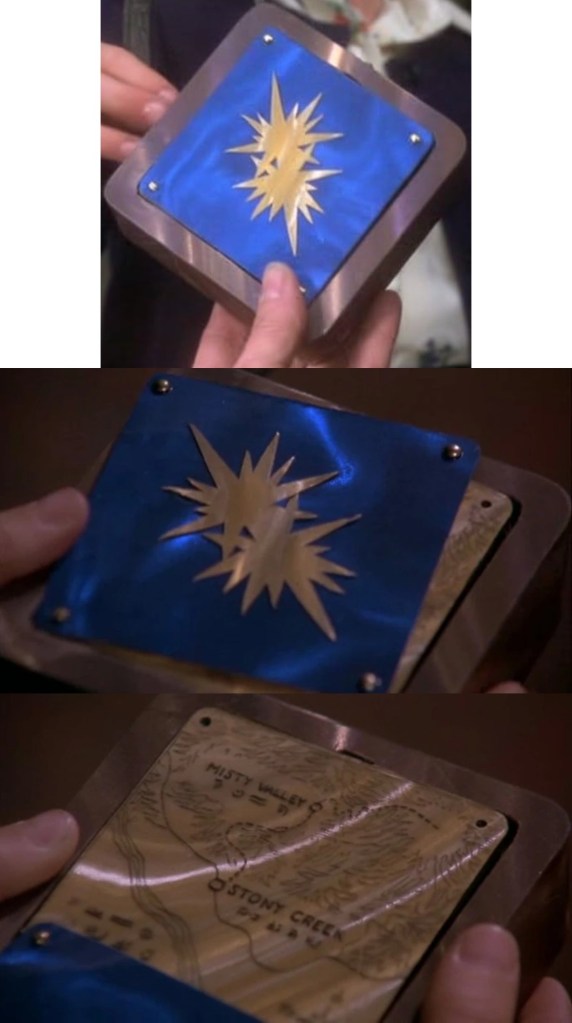
Back in 2018, I saw the 1975 movie, Escape to Witch Mountain. One of the most memorable aspects of that film was an object belonging to Tia, one of the story’s protagonists. Throughout Escape to Witch Mountain, Tia carries a Starcase. This box contains a map that helps her and her brother, Tony, find their way home. But ever since I saw the film, I’ve always felt the term “starcase” was misleading. That’s because I don’t recall seeing Tia putting anything into the case itself, like small toys or trinkets. Despite this, the Starcase is one of the most unique movie props I’ve seen. So, for this portion of my Christmas wish-list, I would like to receive a replica of Tia’s Starcase. But I want a replica that is truly a case where items can be placed inside. Plus, I would like the Starcase replica to feature a purse strap, so the Starcase can be carried either as a purse or a clutch.
Tia’s Starcase images created by Walt Disney Productions and Buena Vista Distribution Company
Something You Need to See
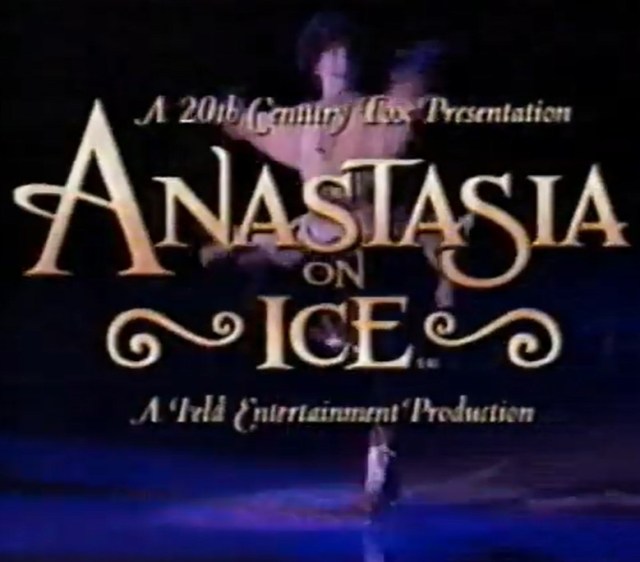
Two years ago, I started my series, Sally Solves a Mystery. In this annual series, I talk about television related mysteries in an attempt to solve them. For my upcoming Sally Solves a Mystery article, I will write about two mysteries related to the same movie. On the forum for Lost Media Wiki, I came across a post about a lost teaser trailer for the 1997 film, Anastasia. While I do love that movie, I personally don’t remember seeing the teaser trailer in question. Another piece of Anastasia media I don’t remember is Anastasia On Ice, an ice skating show based on the film. The only footage of the show I’ve seen are a few television commercials and a behind-the-scenes news segment about the show. Why these lost media mysteries are featured in this part of my Christmas wish-list is how much I’d love to see them solved by November 21st, 2027, which is Anastasia’s 30th anniversary.
Promotional image for Anastasia On Ice found on the Youtube channel, Commerical Collections.
A movie related piece of clothing or accessory I’d want to wear
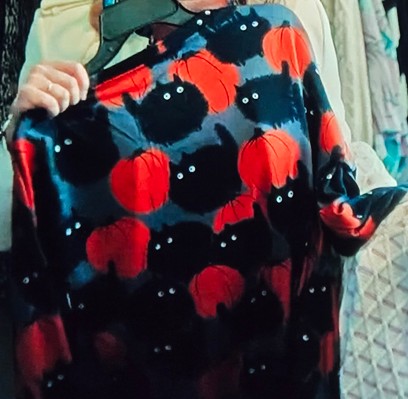
Looking back on past Christmas wish-lists, I haven’t selected a movie related piece of clothing or accessory that is holiday themed. But that is about to change with the Halloween themed sweater I will now discuss. In the Lifetime movie, Killing the Competition, my eye caught a gray sweater with pumpkins and black cats on it. Even though the sweater was featured very briefly in the film, it stuck in my memory, especially when it came time to create My Movie Blogger’s Christmas Wish-List. As I’m writing this article, I realized this is the second year in a row a sweater was chosen for this portion of my wish-list! With the Halloween sweater boasting a variety of colors, multiple outfits could be created around that sweater.
I apologize if this photo of the Halloween themed sweater isn’t the best. But as I explained in my Christmas wish-list, the sweater was featured very briefly in Killing the Competition. Screenshot taken by me, Sally Silverscreen.
A book I’ve read that I’d like to see adapted into a film
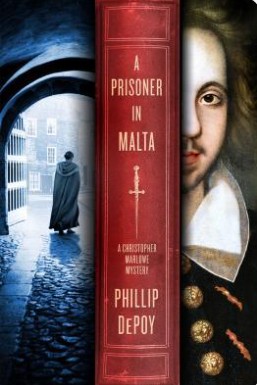
When I participated in the Eurovisionathon readathon, one of the books I read was A Prisoner in Malta by Phillip DePoy. It was, honestly, one of the better books I read for the event! A Prisoner in Malta is what would be considered a “page-turner”, as there was never a dull moment. The book contained other strengths like well-written banter between the characters, strong character development, and a mystery that was intriguing as well as complex. With all this said, I would be interested in seeing a film adaptation of A Prisoner in Malta! Based on what I’ve observed of the cinematic side of the mystery genre, historical mysteries seem far and few between. I also can’t think of many movies off the top of my head that are set in the 1580s. So, in my opinion, an adaptation of A Prisoner in Malta would offer something unique to the film-making table!
What are your thoughts on my Christmas wish list? Are there any movie related things you’d like to receive during the Christmas/holiday season? Tell me in the comment section!
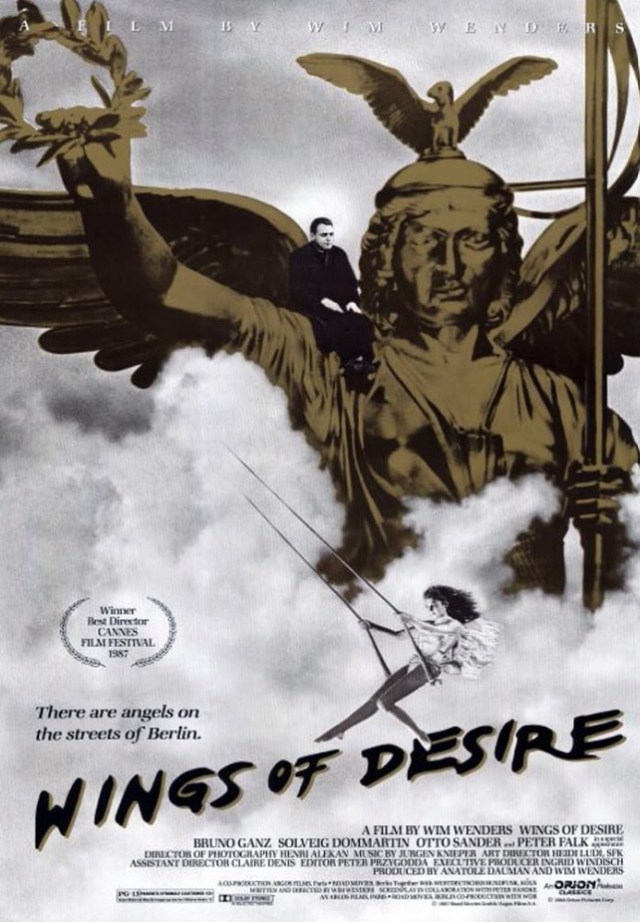
Five years ago, I advocated for the release of The Crow: City of Angels’ Tim Pope cut. This version of the movie was not only supposed to be 160-minutes, it was also supposed to tell a different story from its predecessor. The Crow: City of Angels’ intended conflict showed the protagonist, Ashe, choosing between reuniting with his son, Danny, in the afterlife or staying on Earth to form a romantic relationship with Sarah, who appeared in The Crow. When Roger Ebert brought up Wings of Desire in Siskel & Ebert’s Best of 1988 episode, he said the film was “about an angel who wants to be a human because he would rather have real, physical feelings than live forever”. His explanation of Wings of Desire reminded me of The Crow: City of Angels’ intended conflict I described. Since I don’t know if and/or when the Tim Pope cut of The Crow: City of Angels will be released, Wings of Desire will be my unofficial placeholder in terms of storytelling. The other reason why I chose Wings of Desire for my Comparing with the Critics series’ Best of 1988 review is because it was on Roger’s list of the ten best films of 1988, even though both he and Gene Siskel liked it. I approached this film with an open mind because I had never seen or heard of it prior to my series. Now that I have seen Wings of Desire, I think calling it one of the best movies of the year is giving the film a little too much credit.
Wings of Desireposter created by Road Movies Filmproduktion, Argos Films, Westdeutscher Rundfunk (WDR), Wim Wenders Stiftung, Orion Classics, Basis-Film Verleih, and Filmverlag der Autoren
As I said in the introduction of this review, both Roger and Gene liked Wings of Desire. In an episode of Siskel & Ebert, they gave the film a thumbs-up. Roger commented on how the movie “has a mood to it. It takes the time to establish that mood”. Meanwhile, Gene points out that Wings of Desire “gives more than equal time to the angels’ thoughts”. What Roger and Gene said was achieved through mise-en-scène and music. A great example is when Damiel (portrayed by Bruno Ganz) is at a crossroads over whether he truly wants to become human or remain an angel. The majority of the scene is presented through “shaky cam”, giving the illusion Damiel is quickly turning his head and moving in circles. Sharp, quick violin sounds play over the scene, heightening Damiel’s panic and confusion. Shots of humans crying or looking frightened are interspersed throughout the scene. This creative choice reflects Damiel’s thoughts and feelings. Whenever “shaky cam” is incorporated into a movie, it is usually met with criticism due to how the film-making technique distorts a scene to the point of becoming unwatchable. However, the use of “shaky cam” in Wings of Desire is one of the few times where it works. This is because that creative decision was utilized purposefully to enhance the emotional aspect of the story.
Since there are angels in Wings of Desire, I thought adding this angel picture to my review made sense. Screenshot taken by me, Sally Silverscreen.
Wings of Desire is mostly presented in black-and-white imagery. But there are a handful of scenes shown in color. This creative choice differentiates the perspective between the angels and the humans. Damiel and Cassiel, two angels from the film’s main cast of characters, see the human world in black-and-white, as they are outsiders looking in. The humans’ environment is visually represented in color, showcasing life in 1980s West Berlin. Black-and-white and color imagery’s incorporation into Wings of Desire is purposeful as it addresses concepts like a sense of belonging, unique points of view, and what it means to be a part of a community. Wings of Desire’s creative decision reminded me of Schindler’s List, a black-and-white movie that occasionally utilized color to emphasize certain ideas.
Another visual aspect of the movie I liked was Marion’s wardrobe. In Wings of Desire, Marion (portrayed by Solveig Dommartin) is a trapeze artist who is afraid her dream may be coming to an end due to the circus’ struggling finances. Her performances give her an excuse to wear gorgeous costumes! When she is first introduced in the story, Marion wears a long-sleeved leotard with an attached skirt. This costume is made up of a beige velour-like material and covered in diamond-esque gems. The shoulders of the costume feature a shiny applique. To give circus attendants the impression Marion is a flying angel, she wears large, white wings while performing in the air. The exquisiteness of Marion’s costumes makes me wish they were shown in color more consistently. I also wish Wings of Desire’s costume designer, Monika Jacobs, was nominated for, at least, one award.
Group of clowns image created by Freepik at freepik.com. Image by Freepik
After a clip of Wings of Desire was presented on Siskel & Ebert, Gene declares “the juiciest part of this picture is how close we get to everyday people, their joys, their heartbreaks”. He also says, “director, Wim Wenders, does a real remarkable thing here; he praises life as it is lived, yet making sense out of life’s confusions to the point where we enjoy being alive in a fresh way”. While I agree with Gene about the realistic portrayal of the humans’ lives, I wish the dialogue had sounded more realistic. Every time a character speaks, they deliver philosophical speeches instead of conversations. This made the characters sound like they were spending more time expressing ideas than putting ideas into action. Though looking back on Wings of Desire, I wonder if that was intended commentary on how people spend less time solving problems and more time talking about them?
Like I mentioned earlier in my review, Damiel and Cassiel are outsiders looking in on the human world. Despite this, both angels observe, listen, and occasionally intervene in the humans’ lives. That means Wings of Desire’s audience can hear the thoughts of the humans Cassiel and Damiel cross paths with. But because the angels are disconnected from the human world, story ideas are either loosely connected or not connected at all. A man’s parents concerned over his musical ambitions serve as one example, with the concerns themselves brought up but never resolved. There are four main plots within Wings of Desire. However, only three of them were related to each other. Plus, these three plots didn’t connect until toward the end of the movie. Waiting for the bridges of the plots to form felt tedious, in my opinion.
Comparing with the Critics banner created by me, Sally Silverscreen. TV show title cards created by WTTW National Productions, WTTW, Public Broadcasting Service (PBS), Lifetime Television, Tribune Entertainment, Buena Vista Television, and Disney-ABC Domestic Television
In the introduction of this review, I said calling Wings of Desire one of the best movies of the year is giving the film a little too much credit. It’s not a bad movie, I just didn’t like or love it as much as Roger and Gene did. Wings of Desire is a fine, interesting film that kept me invested in what was happening on screen. The movie also has artistic merit due to creative decisions purposefully incorporated into the project. But major flaws lie in the script. I wish dialogue between characters sounded more conversational, as it would have complimented the realistic depiction of life in 1980s West Berlin. Story ideas should have developed stronger connections to one another, especially among the four main plots. Waiting for three of those main plots to connect was, in my opinion, tedious. During their discussion of Wings of Desire on their show, Siskel & Ebert, Gene tells Roger how Wim Wenders “doesn’t sweeten life to the point that it’s false”. Looking back on my experience watching the movie, I can see, and even appreciate, Gene’s point. Wings of Desire captures Germany before the Berlin Wall would eventually fall. The Wall itself is even featured in a few scenes. Through visuals, text, and even musical selection, the edge of change I addressed in my 1988 introduction of Comparing with the Critics was brought to life on the big screen. The creative team behind Wings of Desire played a small role in history, even if they didn’t know it at that time.
1988 is known as a year on the edge of change. In the United States, a Presidential election let Americans decide how they wanted their country to be led. The foundations of the “Disney Renaissance” were laid into place before Disney made a splash heard around the world. And one year later, President Ronald Reagan’s words to “tear down this wall” were finally put into practice. Reflecting on 1988’s box office, especially the highest-grossing films of that year, this edge of change could be seen and felt. Who Framed Roger Rabbit proved it was, indeed, possible for live action and animation to join forces. Tim Burton helped Beetlejuice walk so Batman could soar. In May of 1988, two films made contributions that would cause ripple effects throughout cinema. Though Gene Siskel and Roger Ebert appreciated one of these efforts more than the other. These movies are Wings of Desire and Willow. The Best of 1988 episode of Siskel & Ebert showed Wings of Desire earning a spot on Roger’s list of the year’s best movies, even though both he and Gene liked it. Meanwhile, in the show’s Worst of 1988 episode, Gene and Roger believed Willow was just a retread of Star Wars. However, the film only ended up on Gene’s list of 1988’s worst pictures. If you read my review of Willow from last year, you would know I selected it for Comparing with the Critics’ Worst of 1988. As for Wings of Desire, that is my choice for Best of 1988 in my Comparing with the Critics series.
Comparing with the Critics banner created by me, Sally Silverscreen. TV show title cards created by WTTW National Productions, WTTW, Public Broadcasting Service (PBS), Lifetime Television, Tribune Entertainment, Buena Vista Television, and Disney-ABC Domestic Television
Back in August, I published my review of the Hallmark Hall of Fame movie, Face to Face. That article became my 425th published movie review. Then, when I published my review of Kind Hearts and Coronets, it became my 950th published post. To honor these milestones, I’m creating a type of list I have never written before. Over the seven years 18 Cinema Lane has existed, I have shared some of my “hot takes” on film. However, I haven’t created a list exclusively about movie “hot takes”. That is why, for this list, I will address my film related “hot takes” I didn’t previously discuss on my blog. This decision was made to keep the list itself fresh and interesting. I will also organize each “hot take” based on how “hot” each take could be perceived. Before I begin this list, I’d like to state how my list is not intended to be mean-spirited or negative. It’s just simply a way to express my opinion.
Campfire with marshmellows and shooting stars image created by macrovector at freepik.com.
10. Sister Act 2: Back in the Habit Should Have Been a Christmas Movie
I’m not saying Sister Act 2: Back in the Habit is a bad movie. I’m not even saying it’s a bad sequel, as I respect how the script tries to tell a new story instead of attempting to recapture the magic of the first film. However, I do believe it was a huge missed opportunity not to have Sister Act 2: Back in the Habit set during Christmas. I can picture Saint Katherine’s Parish, the church featured in the first movie, beautifully decked out in Christmas adornments. And can you imagine what Christmas songs like ‘O Holy Night’, ‘Away in a Manger’, and ‘Joy to the World’ would have sounded like under Deloris’/Sister Mary Clarence’s leadership? If those versions were even half as good as the songs were in Sister Act, the audience would have been in for a musical treat! Though there’s no guarantee making Sister Act 2: Back in the Habit a Christmas movie would have made it better or just as good as its predecessor. Therefore, this is the mildest “hot take” on my list.
9. Calypso/Tia Dalma and Davy Jones Should Have Shared More Screen-Time Together in Pirates of the Caribbean: At World’s End
One of my favorite movie scenes of all time is Calypso/Tia Dalma and Davy Jones’ interaction in Pirates of the Caribbean: At World’s End. Not only does this scene recontextualize everything the audience knew about Calypso/Tia Dalma up until that point, Naomie Harris and Bill Nighy’s on-screen chemistry made the attraction between Calypso/Tia Dalma and Davy Jones believable. This attraction makes me wish they shared more screen-time together. Throughout Calypso/Tia Dalma and Davy Jones’ interaction, issues are left unresolved and words are left unspoken. Yet their love for each other is still evident. Calypso/Tia Dalma and Davy Jones should have received an opportunity to resolve their issues and honestly communicate with one another. But in a movie like Pirates of the Caribbean: At World’s End with so many moving parts to it, aspects of the story like Calypso/Tia Dalma and Davy Jones’ relationship were overlooked.
8. Wanda Maximoff/Scarlet Witch’s Story in the Marvel Cinematic Universe (MCU) Should Have Been an Adaptation of Scarlet Witch, Vol. 3: The Final Hex
For this year’s Eurovisionathon readathon, I read Scarlet Witch, Vol. 3: The Final Hex. As I read the graphic novel, I couldn’t help but feel the Marvel Cinematic Universe (MCU) missed a great opportunity to adapt this story. Based on what I know about the MCU, mentor figures aren’t common. Agatha Harkness could have provided mentorship to Wanda Maximoff/Scarlet Witch like she did in the graphic novel, helping guide her throughout Phase 2 and beyond. Adapting Scarlet Witch, Vol. 3: The Final Hex would have given the MCU a reason to weave Serbian and Roma culture into Wanda Maximoff/Scarlet Witch’s, as well as Pietro Maximoff/Quicksilver’s, narrative. Themes of family, identity, and what it truly means to be a superhero could have also been explored. While I haven’t seen any of the MCU’s projects after Avengers:Endgame, I have heard of the directions Wanda Maximoff/Scarlet Witch’s story have taken. Had Scarlet Witch, Vol. 3: The Final Hex been adapted, maybe her story would have been better than what the audience received.
7. Cheryl Frasier from Miss Congeniality is More Intelligent Than Most People Give Her Credit For
The “April 25th” scene from Miss Congeniality is one of the most quotable and meme-able moments in film history. This scene is how most people know Cheryl Frasier (a.k.a. Miss Rhode Island), one of the story’s key characters. The moment where Cheryl chooses “April 25th” as her answer for her idea of a perfect date is presented as giving the wrong answer. Though whenever I think of this scene, I see it very differently. In an interview/question segment of a pageant, contestants must utilize their time wisely to earn enough points to progress to the next segment. With that said, Cheryl utilized critical thinking skills, logic, and looking outside the box to not only select her iconic answer, but to also come up with an explanation for that answer all within a limited period of time. Plus, I can understand how she would describe a date on the calendar, as the question is vague enough to be interpreted in different ways. This is one of the best examples from Miss Congeniality of Cheryl being more intelligent than most people give her credit for.
6. Pennywise from Stephen King’s IT (1990) is More Annoying Than Scary
Years ago, I saw Stephen King’s IT for the first time. But I found the experience underwhelming. One contributor was how Pennywise was more annoying than scary. While there were horrifying moments involving Pennywise, these moments were far and few between. One scene that always comes to mind is when Pennywise is in a library. In this scene, he was so over-the-top, loud, and obnoxious, his act got old really fast. I couldn’t take Pennywise seriously as a horror movie villain, as his silliness made him less threatening. Even in the film’s climax, his role was such a let-down, sucking all the suspense out of that scene. Tim Curry, the actor who portrayed Pennywise, is not at fault because he tried his best with the acting material provided. The fault lies with the director and screenwriters of Stephen King’s IT.
5. Gabby Gabby from Toy Story 4 is a Poorly Written Character
When I saw Toy Story 4 in 2019, I thought Gabby Gabby was a poorly written character. Six years later, I still feel this way about her. It seemed like the creative team behind Toy Story 4 couldn’t decide if Gabby Gabby should be the story’s villain, anti-hero, or simply misunderstood. So, instead of giving her one role and sticking to that creative decision, the creative team gave her all three roles. When Gabby Gabby received a redemption arc, I didn’t feel that was earned. How am I supposed to root for her when I don’t even know what her true role in this story is supposed to be? Last year, when I published my list of ten movie trends I don’t understand, I explained how adopting the ‘villains receiving the spotlight’ trend gives the audience mixed messages and makes villainous characters less straight-forward. Reflecting on that list and Toy Story 4, I wonder if how Gabby Gabby was written is the result of that trend?
4. ‘Elizabeth’ is the Most Overused Name in Historical Fiction/Period Drama Movies and TV Shows
In 2019, I created a list of the top ten worst clichés from Hallmark movies. The clichés featured in that list were those that were poorly or overly used. If I created a similar list about the worst clichés from historical fiction/period drama movies, characters named ‘Elizabeth’ would be near the top of the list. Personally, I find it hard to believe directors, producers, and screenwriters would keep selecting ‘Elizabeth’ despite having thousands of names at their disposal. The name, ‘Elizabeth’, keeps finding its way into scripts no matter the story’s time period. Some examples include Felicity: An American Girl Adventure, the Pirates of the Caribbean series, any version of Pride and Prejudice, and When Calls the Heart’s Christmas/seasonal films. This specific cliché is also present among historical fiction/period drama tv shows, ranging from Emily of New Moon to The Waltons. I don’t know when the cliché started being utilized or if it will ever stop. But if someone is considering creating a historical fiction/period drama movie or tv show, I hope they think outside the box when it’s time to name their characters.
3. I Don’t Find National Lampoon’s Christmas Vacation Funny
I’ve only seen National Lampoon’s Christmas Vacation once. Though it’s been years since I’ve seen it, I didn’t find it funny. I don’t remember laughing at any joke. Even when I see clips of the movie in other pieces of media, it doesn’t get a reaction out of me. I’m aware how comedy, as well as film itself, is subjective. But I just don’t understand the hype around National Lampoon’s Christmas Vacation. If I revisited the movie, maybe I’d change my mind on it. For now, though, National Lampoon’s Christmas Vacation is not a must-watch title for me this Christmas season.
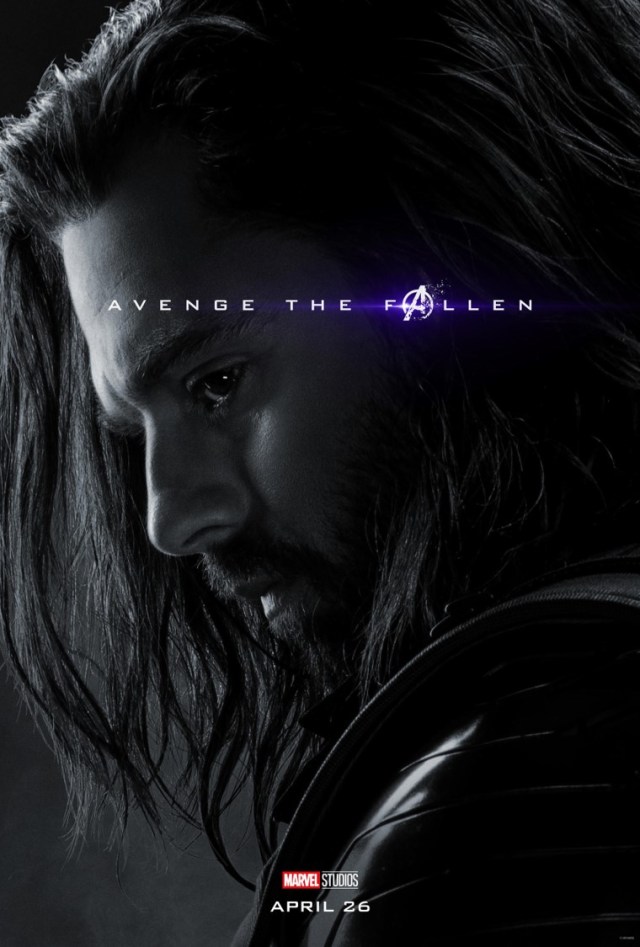
2. Bucky Barnes Should Have Received His Own Superhero Title Instead of Becoming the Next Captain America
Around the time Avengers: Infinity War was released, I was one of those fans who wanted to see Bucky Barnes become the next Captain America. I even expressed this wish in my very first movie blogger’s Christmas wish-list. But looking back almost ten years since Avengers: Infinity War and Avengers: Endgame premiered, I believe instead of becoming the next Captain America, Bucky should have received his own superhero title. As he grew into it over time, Bucky could have shaped this brand-new title to become truly his. So, when people think of that specific title, they’ll think of Bucky and vice versa. There would be no preconceived ideas or expectations due to the lack of comparisons to measure Bucky to. With his own superhero title, he could have received official Avenger status as well, which is why I wanted Bucky to become the next Captain America in the first place. I know he took up Captain America’s shield in Marvel’s comics. However, Bucky adopting his own, unique superhero identity would have added a fascinating chapter to Phases 4 and 5.
1. The Breakfast Club and Clue are Two of the Most Overrated Movies of the 1980s
It’s been years since I’ve seen The Breakfast Club or Clue. But from what I remember, I wasn’t a fan of either title. The Breakfast Club contained way too much swearing for my liking and I found its story too simplistic. When it came to Allison Reynolds’ reason for being in detention, the script was building up to what ended up being an underwhelming revelation. Meanwhile, in Clue, I laughed at only one joke throughout the entire film. The movie prioritized showing the characters running around and yelling/screaming at each other, which I find less hilarious and more headache-inducing. Having multiple endings based on when and where someone saw the film might work at the movie theater. Including all three endings in Clue, however, not only felt overwhelming, it also felt like the movie’s creative team couldn’t decide which ending best fit their script, leaving that ultimate decision to the audience. Perhaps if I revisited The Breakfast Club or Clue, my opinion on these titles might change. As of the publication of this list, though, I find Clue and The Breakfast Club overrated.
What are your thoughts on my movie “hot takes”? Do you have a film related “hot take” you’d like to share? Please tell me in the comment section below!
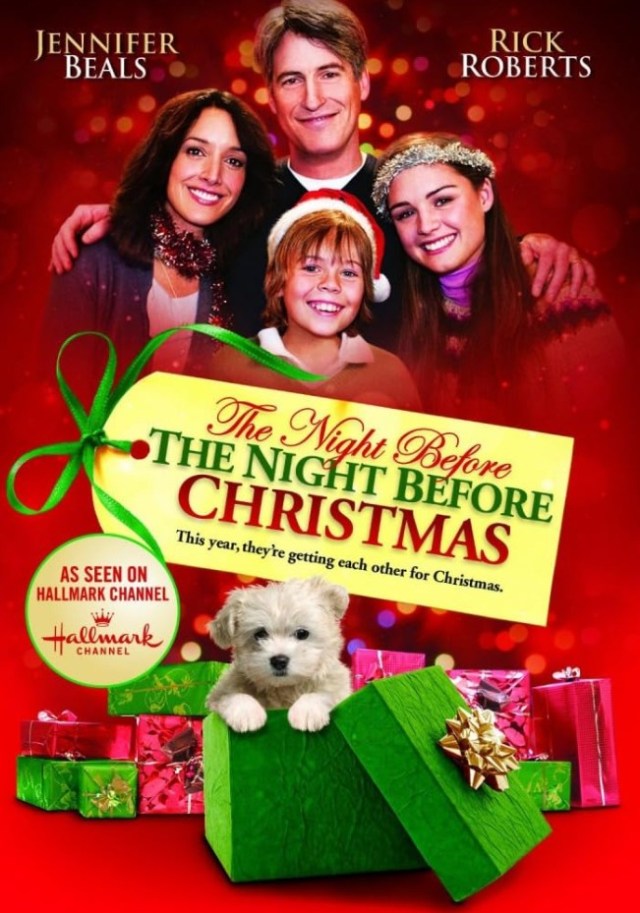
With today being Thanksgiving, I wanted to share my thanks to all the followers of 18 Cinema Lane. I am grateful for having a reason to keep writing and sharing my thoughts on film! For this Blog Follower Dedication Review, I decided to select a movie from one of my recommendations. In fact, the film I chose has been on my Pinterest Film Recommendation board for so long, it has been on the very bottom. That movie in question is 2010’s The Night Before the Night Before Christmas! Suggested by a reader named T. Ann, this is a film I actually recall watching before. Though the only clear memory I had of the movie was the teenage daughter being upset over receiving a hamburger phone for Christmas. This isn’t the first time (nor will it be the last time) I revisited a film from Christmas past. One of my more recent movie reviews was The Christmas Choir, a title I had expressed interest in watching again. But in that review, I shared how I didn’t find the film as strong as I had initially believed. What will my thoughts be on The Night Before the Night Before Christmas? Keep reading my review to find out!
The acting: The Night Before the Night Before Christmas is one of those movies where I found it difficult to choose a favorite acting performance. That’s because the cast as a whole was strong! Expressions and emotions appeared genuine. Whether it was Hannah (portrayed by Rebecca Williams) looking forlorn when her younger brother, Toby, runs away or a volunteer named Yolanda (portrayed by Kim Roberts) being surprised when she receives an unexpected donation, the acting performances made watching the story unfold more enjoyable. There were even times when the strength of the acting talents helped characters become more likable. Two great examples are Toby and Nigel. The youngest member of the Fox family, Toby has such a sweet personality. Gage Munroe, the actor who portrayed Toby, does an excellent job showing what’s in his character’s heart through his face. In a scene where Toby and his mom are having a heart-to-heart conversation, Toby’s tear-streaked face and tear-filled eyes present how troubled he’s been over his parents’ decision to prioritize their jobs over their family. Meanwhile, Jordan Prentice’s portrayal of Santa’s head elf, Nigel, was very animated. His liveliness and comedic timing made Nigel one of the most memorable characters I’ve seen in a Hallmark, let alone Christmas, presentation! Out of the films I’ve seen (and reviewed) this year, so far, Jordan’s performance was one of the best.
Emphasis on giving: One of the interconnected conflicts in The Night Before the Night Before Christmas is the disappearance of Santa’s sack of presents. This particular conflict could have produced one of two types of stories; a villain stealing Santa’s sack in order to ruin Christmas or a selfish character taking the sack of presents for themselves. Instead, Santa’s sack of presents is mistaken for donations to those less fortunate. The recipients of the gifts and the volunteers of various non-profits are surprised and even grateful for the “donations” received. This decision in story-telling helps emphasize the movie’s major theme of giving. Toward the beginning of the film, Toby tells Hannah if they want Santa to give them presents, they should consider giving presents to others. What Toby said, as well as the movie itself, frames Santa in a way I hadn’t really thought of before; someone who has a reputation for giving. These two examples show the clever and thoughtful ways the creative team behind The Night Before the Night Before Christmas remind their viewers of an important component of the Christmas season!
How Christmas activities were incorporated: In Hallmark’s more recent Christmas offerings, activities related to the holiday feel like they’re incorporated into the story just for the sake of completing an unspoken checklist. This creative decision contributes to the network’s Christmas projects feeling repetitive. But in The Night Before the Night Before Christmas, whenever a Christmas activity was featured in the movie, it was there to compliment the story itself as well as the themes of the film. Santa losing his memory is the movie’s major conflict. In order to help Santa reclaim his memory, the other characters partake in activities like decorating a Christmas tree and baking cookies. Before the tree is decorated, Hannah and her mom talk about choosing a very tall tree because it looked similar to a tree the family had years prior. The activity of picking out a Christmas tree expresses one of the story’s main themes of sharing and keeping memories. What I selected as the examples for this review show how the creative team behind The Night Before the Night Before Christmas put effort and thought into how the aforementioned activities were included in the script.
A drawn-out sense of urgency: As I mentioned earlier in my review, the major conflict in The Night Before the Night Before Christmas is Santa losing his memory. What gives the film a sense of urgency is how Santa must reclaim his memory before Christmas Eve so he can successfully deliver presents. While this conflict was eventually resolved, it ended up being drawn-out. The drawn-out nature of the conflict was caused by the story trying to divide its time between Santa searching for his memory, the whereabouts of his missing sack of presents, and the Fox family learning to reconnect. At one point in the movie, Nigel, as well as the other characters, frantically search for Santa’s sack of presents. The search then becomes interrupted by the characters’ attempts to help Santa get his memory back. These attempts last for about fifteen to twenty minutes, with the characters going back to looking for the sack of presents. This balancing act between the main conflict and subplots stretched out the story’s sense of urgency as well.
Things that don’t make sense: Christmas movies, like any fictional story, require the audience to suspend a certain amount of disbelief. But in The Night Before the Night Before Christmas, a few things didn’t make sense, sometimes requiring more than enough disbelief to be suspended. Like I said earlier in this review, Toby runs away. Santa and Toby’s mom find him riding on a carousel. As Toby’s mom and Santa are about to share a heart-to-heart conversation with Toby, the carousel is still moving. This raises the question of how Santa and Toby’s mom got on the carousel while it was still in motion?
Mrs. Claus’ minimal involvement: At the beginning of The Night Before the Night Before Christmas, Santa shares a heartfelt moment with Mrs. Claus. The on-screen chemistry between R.D. Reid and Marcia Bennett was so sweet and adorable, they effectually sold the idea of the loving relationship between Mrs. Claus and Santa. This aforementioned moment with Santa and Mrs. Claus is one of the few times she appears in the movie, as she is only featured in two scenes within the hour and twenty-eight-minute film. Personally, I found Mrs. Claus’ minimal involvement in the story disappointing. She could have played a larger role in helping Santa regain his memory sooner or locating his sack of presents faster.
In the introduction of this review, I said The Night Before the Night Before Christmas was suggested by one of my readers. Looking back on the 2010 picture, I can honestly say I’m glad it was recommended to me! The Night Before the Night Before Christmas is, in my opinion, one of Hallmark’s better films, especially among their collection of “older” titles! The acting alone helped make my movie-viewing experience enjoyable, as every actor and actress gave a solid performance. How Christmas activities were incorporated into the story was a breath of fresh air. They ended up complimenting the story itself and the film’s themes instead of trying to complete an unspoken checklist. The story’s emphasis on giving was woven into the script in clever and thoughtful ways as well. Even though The Night Before the Night Before Christmas has its flaws, it felt like the movie’s creative team got more right than wrong. A film like this one makes me wish Hallmark went back to creating titles that didn’t rely too much on a formula, tropes, and/or cliches.
Overall score: 8 out of 10
Have you seen The Night Before the Night Before Christmas? What “older” Hallmark Christmas movie would you like to check out this Christmas/holiday season? Share your thoughts in the comment section!
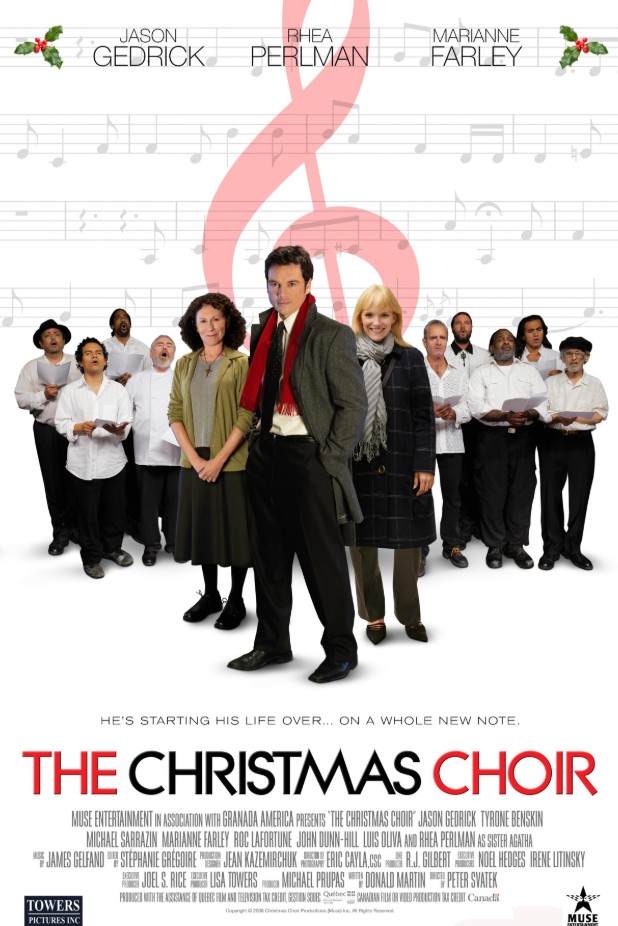
November’s theme for Genre Grandeur is “Movies about Music or Musicians”. As I was looking for a potential title to review, I remembered how this is the time of year when I write about Christmas movies. This then led me to recall my list of the top five Hallmark films based on a true story, where I brought up the 2008 movie, The Christmas Choir. Since I expressed interest in revisiting the film, I selected it for this month’s Genre Grandeur! In that aforementioned list, I stated my surprise over how The Christmas Choir isn’t a Hallmark Hall of Fame production. That’s because the story of a choir forming in a homeless shelter seems like perfect material for the Hallmark Hall of Fame collection. Though when it comes to Hallmark Hall of Fame presentations, I have wondered what the criteria is for a story or script to be chosen. While that topic would make a great editorial or list article, that will have to wait for another day. For now, let’s begin this review for 2008’s The Christmas Choir!
The Christmas Choirposter created by Muse Entertainment Enterprises, Towers Pictures, and Hallmark Channel
Things I liked about the film:
The cast’s on-screen chemistry: In my list of the top five Hallmark films based on a true story, I mentioned how the quality of the acting talents in The Christmas Choir allowed the characters to come across as realistic and endearing. To further articulate my point, the on-screen chemistry among the cast helped create interactions that felt believable. One of my favorite examples is when Juan (portrayed by Luis Oliva) sang for the first time. A rule for staying in the choir is to come to practices and performances sober. Hector (portrayed by Roc Lafortune) is not happy about this rule, angrily throwing the sheet music and storming toward the door in a huff. The other members, like Bob and Fred, and even the choir’s director, Peter, plead with Hector to stay. Worry, concern, and even disappointment are reflected on the men’s faces and in their voices. When Juan begins to sing, however, the look of surprise on everyone’s faces appears genuine. This is because, at the homeless shelter, Juan had a reputation for remaining silent. As Juan finds a nearby can and turns it into a makeshift drum, that surprise turns into joy, lifting the men’s spirits and boosting choir morale. Juan’s voice ended up becoming the glue that held The Christmas Choir together!
Incorporating Christmas’ religious elements: I said in my list of the top five Hallmark films based on a true story how it’s been years since I saw The Christmas Choir. Because of that, I had forgotten about Christmas’ religious elements woven into the film. Most of the songs performed by The Christmas Choir are religious. In fact, the only secular Christmas song the choir sings is ‘Deck the Halls’. Sister Agatha will occasionally quote the Bible and bring up Biblical examples when the situation calls for it. Even one of the movie’s overarching themes is serving as Jesus would have. Personally, I liked The Christmas Choir’s incorporation of Christmas’ religious elements because they’re not often found in Hallmark’s Christmas movies. This creative decision also allows The Christmas Choir to form its own unique identity!
The messages and themes: As I just mentioned in this review, one of the overarching themes in The Christmas Choir is serving as Jesus would have. Other themes and messages sprinkled throughout the story perfectly fit the Christmas season as well. When Peter gives a monetary donation to the homeless shelter, Sister Agatha tells him that while money is appreciated, what the homeless shelter really needs is for people to give their time. Sister Agatha’s words inspire Peter to utilize his time (and talents) to form The Christmas Choir. The conversation between Peter and Sister Agatha alone is such a perfect example of how money doesn’t always solve a problem, especially when it comes to being charitable. This overarching theme actually encourages the film’s audience to think outside the box in the season of giving.
Too many conflicts: Within my review’s introduction, I brought up how The Christmas Choir is about a choir forming in a homeless shelter. While this is the movie’s main conflict, other conflicts like Peter’s issues with his father and The Christmas Choir competing for a permit are included in the script. As I watched the film, however, it felt like the creative team behind The Christmas Choir tried to squeeze as many conflicts as they could in an hour and thirty-minute timeframe. This choice made the movie overwhelming and the runtime feel longer. Though the 2008 movie is based on a true story, I’m not sure which parts of the script are based on fact or creative liberty. Therefore, the script should have focused on one main conflict with at least two subplots.
Sister Agatha’s inconsistent personality: When Sister Agatha was introduced in The Christmas Choir, she had a friendly personality with a bit of spunkiness. As I mentioned earlier in this review, Sister Agatha occasionally quotes the Bible and brings up Biblical examples when the situation calls for it. But as the story progressed, she became pessimistic and discouraging toward Peter and The Christmas Choir. Sister Agatha eventually returns to her spunky, friendly personality by the end of the film. However, the inconsistency of her personality is a flaw I couldn’t unsee. Rhea Perlman, who portrayed Sister Agatha, did a good job with the acting material provided. This mistake, though, lies with the screenwriter.
Things that don’t make sense: Sometimes, there were things in The Christmas Choir that didn’t make sense. One example happened at Peter’s office building. While at work, Peter’s colleague, Rita, tells Peter there are a group of homeless men singing in the office building’s lobby. Those “homeless men” were The Christmas Choir. Several scenes prior to this impromptu performance, however, Rita saw The Christmas Choir singing on television while at work in the aforementioned office building. Wouldn’t she have recognized The Christmas Choir when they spontaneously showed up in the office building’s lobby?
By revisiting The Christmas Choir, I was reminded of the film’s aspects I had forgotten about, like the inclusion of Christmas’ religious elements. This is one aspect of the movie I liked, as religious elements associated with Christmas are not often found in Hallmark’s seasonal presentations. I was also made aware of the flaws I overlooked. This is not a bad movie, but it wasn’t as strong of a picture as I initially believed. The abundance of conflicts in The Christmas Choir’s script made the film overwhelming and the runtime feel longer than an hour and thirty-minutes. There were not only some things in the story that didn’t make sense, Sister Agatha’s personality was also inconsistently written. But as I said in my list of the top five Hallmark films based on a true story, the 2008 picture is one of Hallmark’s more unique Christmas titles. This is due to the movie not following a formula or containing a certain set of Christmas movie tropes and cliches. What works in The Christmas Choir’s favor as well is the on-screen chemistry among the cast and the messages and themes stitched throughout the story. If you’re looking for a Christmas film from Hallmark that stands out within their festive collection, I’d recommend checking out The Christmas Choir.
Overall score: 7 out of 10
Have you seen The Christmas Choir? Are there any “older” Hallmark Christmas movies you’d love to see reviewed on 18 Cinema Lane? Please tell me in the comment section!
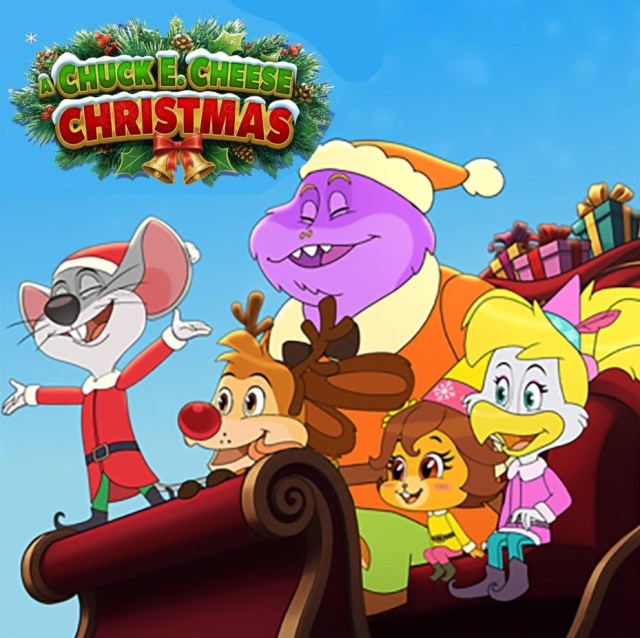
Every Christmas season, viewers receive a smorgasbord of festive films. The most wonderful time of the year turns into a battle between television networks and streaming services to obtain the most viewership numbers and even increase revenue. Though one company has joined the competition in 2025. Earlier this month, the international entertainment center, Chuck E. Cheese, released a trailer for their new Christmas movie. Titled A Chuck E. Cheese Christmas, the film will premiere on Thanksgiving (November 27th). Viewers can watch the film either on Chuck E. Cheese’s official Youtube channel or Amazon Prime Video. According to the movie’s IMDB page, A Chuck E. Cheese Christmas is about the following:
“Chuck E. Cheese and his friends has plan a surprise Christmas party for Santa Claus, who is always exhausted from working on Christmas Eve. Their celebration also serves to save their town from a holiday-hating villain”.
A Chuck E. Cheese Christmasposter created by CEC Entertainment, HappyNest Entertainment, Pixel Zoo Animation Studios, Stampede Ventures, United Talent Agency (UTA), Youtube, and Amazon Prime Video
I’ve said before on 18 Cinema Lane how I don’t receive many opportunities to cover animated films on my blog. Based on what I’ve been hearing about the animation side of the movie industry, it seems like there’s a lot of uncertainty. So, when I discovered the trailer for A Chuck E. Cheese Christmas, I was pleasantly surprised by this piece of movie news, especially since the project is presented in what looks like 2-D animation! It also seems like, within the past five years, Chuck E. Cheese (as a company) has made decisions to help maintain their relevancy. This summer, Chuck’s Arcade (a version of Chuck E. Cheese’s that only feature arcade games) opened in ten malls in the United States. While conducting research for this Word on the Street story, I discovered A Chuck E. Cheese Christmas is not the first time the company has created a movie, let alone a Christmas film. Chuck E. Cheese in the Galaxy 5000 is a straight-to-video presentation that was released in 1999. A decade prior, in 1983, The Christmas That Almost Wasn’t premiered as a television film back when the company was known as Chuck E. Cheese’s Pizza Time Theatre.
What are your thoughts on this piece of movie news? Will you consider checking out A Chuck E. Cheese Christmas? Let me know in the comment section!
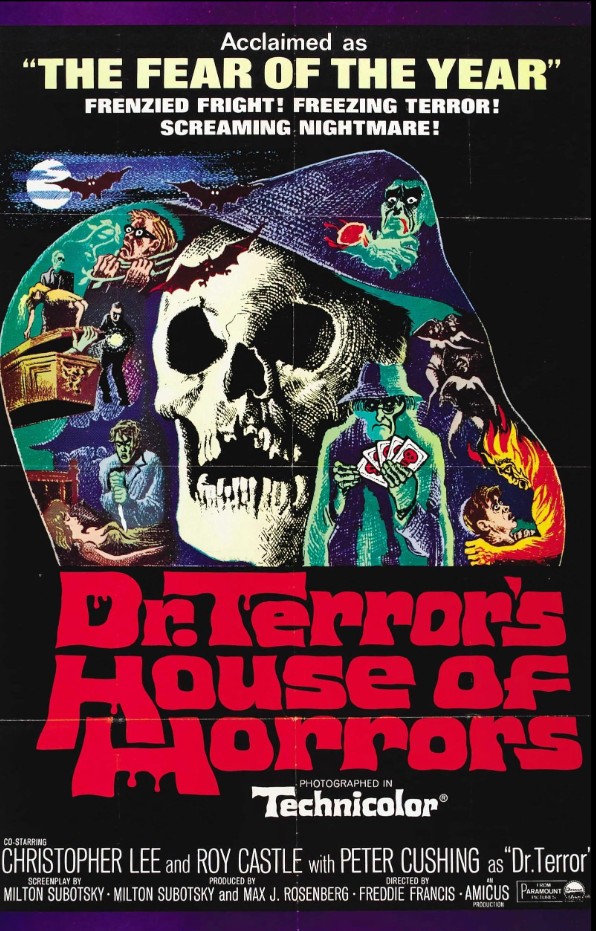
I’d like to thank Gill (from Realweegiemidget Reviews) and Barry (from Cinematic Catharsis). If it wasn’t for the hosts of The Hammer-Amicus Blogathon V, I wouldn’t have been introduced to the cinematic world of Hammer-Amicus. Since my introduction in 2021 (when I participated in my first Hammer-Amicus Blogathon), I’ve covered three Hammer-Amicus movies on 18 Cinema Lane; Vampire Circus, The Curse of Frankenstein, and Let Me In. While Vampire Circus was ok and Let Me In was just fine, I found The Curse of Frankenstein underwhelming. Now, with a recommendation from Barry (from Cinematic Catharsis), I’ve selected 1965’s Dr. Terror’s House of Horrors as the next Hammer-Amicus presentation to review! I knew almost nothing about this movie prior to choosing it for the blogathon. But I was willing to watch the film with an open mind. Since I finally checked out Dr. Terror’s House of Horrors, it’s time to start my review and share my honest opinion!
Dr. Terror’s House of Horrors(1965) poster created by Amicus Productions, Hollywood Classics International, Regal Films International, and Paramount Pictures
Things I liked about the film:
The interior design: Dr. Terror’s House of Horrors is presented like an anthology; five passengers learn their fate from Dr. Terror himself. Throughout the film, the audience takes a peek into each character’s life as well as their living/working space. These spaces featured interesting design choices that gave them their own distinctness. In the segments titled “Werewolf” and “Disembodied Hand”, a fireplace was the focal point in one room. The fireplace in “Werewolf” was covered in a glossy black paint, while the fireplace in “Disembodied Hand” shone in a glossy blue paint. Biff Bailey’s apartment in the segment titled “Voodoo” featured a zebra patterned couch, which actually complimented the black-and-white checkered floor and black-and-white striped walls. The design choices I described stood out due to the film’s creative team utilizing materials, patterns, and colors that were more unique. I can honestly say I’ve never seen a blue fireplace until I saw Dr. Terror’s House of Horrors!
Incorporation of music: In the segment titled “Werewolf”, Jim Dawson learns about a legendary werewolf buried in the basement of the home he’s remodeling. Any time this werewolf is brought up or poses a threat to the characters living and working in the home, drumbeats, the pattering of a xylophone, and other suspenseful musical sounds can be heard. This segment utilized music to emphasis the fear factor the werewolf contributed to the story. Because Biff Bailey is a musician, music plays a large role in the “Voodoo” segment. One of the songs featured in this specific segment is ‘Give Me Love’. Performed by Sammy Coin (portrayed by Kenny Lynch), the instrumentals provided a cheery jazz tune that can put any listener in a good mood. Kenny’s smooth vocals not only complimented the song itself, but also made me wonder what his vocals would sound like in a song with a more serious tone. ‘Give Me Love’ is one of those songs that is so memorable, I’ll listen to it long after the end of the movie!
The creativity of each story: As I mentioned earlier in this review, Dr. Terror’s House of Horrors is presented like an anthology. With the segments chronicling each of the five passengers, the creativity woven into the script highlighted the uniqueness every passenger brought to the train car! The segment, “Disembodied Hand”, revolves around Franklyn Marsh. An art critic who took his job a little too seriously, Franklyn carries guilt for how he mistreated a popular artist, with his guilt represented by the disembodied hand of that artist. Meanwhile, in the segment titled “Vampire”, Dr. Bob Carroll is confronted with the possibility his wife may be a vampire. This concept gave Bob an internal conflict between loving his wife and protecting his patients. In my review of 2010’s Let Me In, I said vampire stories can be as creative as film-makers want it to be. A similar statement can be said about the horror genre, with Dr. Terror’s House of Horrors presenting strong evidence.
The Hammer-Amicus Blogathon V banner created by Gill from Realweegiemidget Reviews and Barry from Cinematic Catharsis
What I didn’t like about the film:
No clear explanation for tarot cards: Throughout Dr. Terror’s House of Horrors, Dr. Terror (portrayed by Peter Cushing), predicts each passenger’s fate by selecting tarot cards. While the tarot cards themselves are shown on screen, no clear explanation for how exactly the cards correlate with the fates was given. Before the start of the “Werewolf” segment, Dr. Terror selects two cards called “Enchantress” and “Priestess”. But after watching that segment, I was confused by what werewolves had to do with those aforementioned cards? It seemed as if the creative team behind the movie assumed their audience would already know the meaning of the cards shown in the film.
Limited sense of urgency: Each segment in Dr. Terror’s House of Horrors incorporates a horror element that poses a threat to the passengers in Dr. Terror’s train car. These segments also contain a limited sense of urgency. Most of the time, the “slice of life” parts of the story were emphasized. When a suspenseful or horrifying moment was about to happen, the segment would end and move on to the next one. This flaw was the result of squeezing five separate stories into an hour and thirty-eight-minute film. I honestly think this script would have worked better as an anthology television series.
A frustrating ending: For this part of my review, I will be spoiling Dr. Terror’s House of Horrors. If you have not seen this film and are planning on watching it, skip ahead to the part of my review titled “My overall impression”.
Like I mentioned earlier in my review, Dr. Terror uses tarot cards to predict the fates of the five passengers. After these fates are revealed, he removes the death card from the deck. This implies all the passengers will eventually die. When the passengers get off the train, they learn through a newspaper article five passengers died in a train crash. That detail clarifies the passengers from Dr. Terror’s train car did, indeed, die, with Dr. Terror himself becoming a skeleton. Personally, I found this ending frustrating because it made the previous stories amount to nothing. While I recognize the movie’s creative team was trying to create the ultimate plot twist, with the death tarot card used as foreshadowing, this creative decision almost made me feel like I wasted my time watching Dr. Terror’s House of Horrors.
Whenever I review a movie on 18 Cinema Lane, I present my opinion as honestly as possible. In my most honest opinion, Dr. Terror’s House of Horrors was such a mixed bag. On the one hand, I appreciate the creativity woven into each of the five segments. This creativity brought distinctness to the stories, interesting interior design choices, and good incorporation of music. But, on the other hand, the ending was too frustrating for my liking. I wish the script provided clear explanations for how the tarot cards correlated with each character’s fate. I also wish there was a stronger sense of urgency throughout the film. At best, Dr. Terror’s House of Horrors was just ok. But, at worst, it left me confused and frustrated. Though I’ve only seen (and reviewed) a few Hammer-Amicus films, I’m starting to wonder if I’ll find a title that is my cup of tea?
Overall score: 6 out of 10
Have you seen Dr. Terror’s House of Horrors? Which Hammer-Amicus film would you like to check out? Please tell me in the comment section!
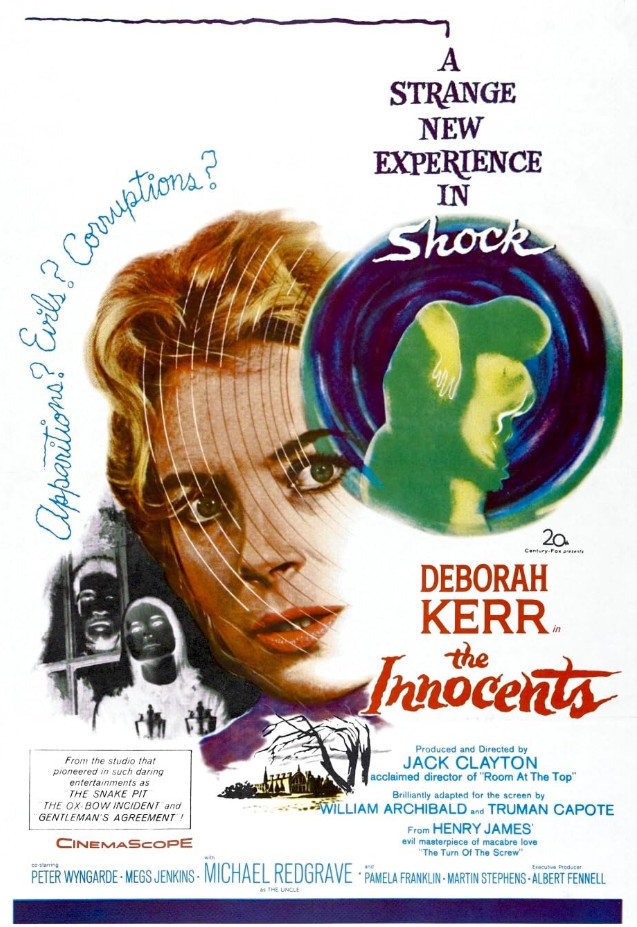
Film recommendations from my readers are welcomed here at 18 Cinema Lane. These suggestions are then placed on a Pinterest board, which I use as a reference for upcoming reviews. Some movies have been on the board for so long, they’re at the very bottom. One of these titles is 1961’s The Innocents. Recommended by Maddy (from Maddy Loves Her Classic Films), this is a Deborah Kerr starring production that is quite different from the other projects of hers I’ve reviewed on my blog. That’s because The Innocents is classified as a horror film. Because of this distinct, I’ve been trying to find the right opportunity to talk about the movie. Hoofers and Honeys’ 4th Annual Spooky Classic Movie Blogathon became that opportunity! Deborah’s films covered on 18 Cinema Lane have fluctuated in quality. While I liked titles like The Chalk Garden and The King and I, I wasn’t a fan of Marriage on the Rocks. What will my opinion be of The Innocents? Keep reading my review to find out!
The Innocents(1961) poster created by Achilles, Flair Communications, Twentieth Century Fox, and Twentieth Century Fox Film Company
Things I liked about the film:
The acting: A large portion of The Innocents prominently features two young characters: Miles and Flora, as Deborah’s character, Miss Giddens, believes they are in danger. In stories like this, where younger characters play a significant role, it’s important to cast actors and actresses that can, acting wise, carry some of the film. Flora reminded me somewhat of Eloise (from the 2003 adaptations, Eloise at the Plaza and Eloise at Christmastime), marching to the beat of her own drum with a bit of a mischievous spirit. Meanwhile, Miles possessed the precociousness of Cedric from Little Lord Fauntleroy and the sweetness of Tiny Tim from A Christmas Carol. These concepts were displayed well through Pamela Franklin’s and Martin Stephens’ performance! Vocal inflections, facial expressions, and even body language worked in their favor, making Miles and Flora captivating characters. Because of Martin’s and Pamela’s acting talents, their convincing portrayals kept me invested in their characters’ story!
As I mentioned before, Deborah Kerr portrays Miss Giddens, who becomes Flora and Miles’ new governess. Looking back on her films, including The Innocents, I’ve noticed how expressive Deborah’s performances have been. Specifically speaking about the 1961 film, Deborah uses her eyes to display thoughts and feelings instead of just relying on dialogue. In one scene, Miss Giddens learns the truth about Miss Jessel and Peter Quint, the governess and valet who worked at the estate before Miss Giddens’ arrival. While she discovers this information from a housekeeper named Mrs. Grose, Miss Giddens’ eyes show concern, sadness, and even fear. She also raises her eyebrows from time to time, emphasizing how shocking the information about Peter Quint and Miss Jessel is. This example of Deborah’s expressiveness elaborates Miss Giddens adapting to the strange things she’s been seeing and hearing during her time at the estate. Similar to Martin’s and Pamela’s performance, Deborah’s portrayal of Miss Giddens was convincing!
The set design: The Innocents mostly takes place at the Bly estate, which belongs to Flora and Miles’ uncle. Though this story was character-driven, the set design was an underrated yet impressive component of the movie. The fireplace in the main sitting room appeared marble with a carved design. Each room features tall windows, implying the large scope of the rooms themselves. Though shown during brief moments, a detailed tapestry hung on a wall near the main stairway. Elaborate tapestry even covered a long seat in one of the rooms. Details like the ones I described emphasized how financially well-off Miles and Flora’s family is. They also helped make Bly estate visually appealing!
Mise-en-scène: In my recent review of 2010’s Let Me In, I talked about how the movie’s mise-en- scène (the way a film’s scene is presented to the audience) was one of the strengths of the movie. This was also a strength in The Innocents, as some scenes’ presentation added intrigue to the story! One evening, Miles confesses to Miss Giddens how his uncle doesn’t have time for him and his sister. At first, the conversation is shown in a medium shot. The very next shot is a close-up of Miles’ face, with light shining on his cheek to reveal a tear rolling down. Through this visual presentation, the audience is told how his uncle’s lack of acknowledgement deeply troubles Miles. It also provides possible motivation for Miles’ actions later in the film.
Limited horror elements: I mentioned in my review’s introduction how The Innocents is classified as a horror film. Because of this classification, I expected the script to emphasize the horror elements within the story. But these elements, like potential ghost sightings and unexplained noises, had such a limited presence in the film, they were featured in “don’t blink or you’ll miss it” moments. In fact, the script placed more emphasis on the “slice-of-life” parts of the story. As a movie blogger who doesn’t review horror movies often, I found this creative decision disappointing. Some of my interest in The Innocents waned because I don’t really find “slice-of-life” stories compelling.
Scenes that feel like padding: One evening at Bly estate, Miss Giddens stays up in the middle of the night in order to discover the cause of the strange happenings throughout the home. The majority of the scene takes place in the upstairs hallway. But the overall scene lasts over five minutes. Moments when Miss Giddens attempts to open doors and walks through the hall seem repetitive due the how long the scene is. With The Innocents having a run-time of an hour and thirty-nine minutes, some of those five minutes could have been trimmed to make the movie about an hour and thirty-four minutes. This is just one example of scenes feeling like padding.
Conclusion with little to no evidence: For this part of my review, I will spoil The Innocents. If you haven’t seen this movie and are planning on watching it, skip ahead to the part of my review titled “My overall impression”.
After witnessing what she believes is the ghost of Miss Jessel, Miss Giddens comes to the conclusion Flora and Miles are possessed by the spirits of Miss Jessel and Peter Quint. She even comes up with a plan to make the children admit this is true. But up until that point, the film doesn’t show how Miss Giddens reaches her conclusion. Little to no evidence is presented, denying the audience an opportunity to see Miss Giddens putting the pieces together. I, personally, couldn’t take her conclusion too seriously because of the lack of evidence. Miss Giddens’ weaker conclusion also added confusion to the overall story, leaving me wondering what I had just watched.
I’m going to be brutally honest, The Innocents is one of the most confusing movies I’ve ever covered on 18 Cinema Lane. When the film ended, I audibly said, “What the heck did I just watch”? Without spoiling The Innocents, all I’ll say is I recognize how the movie’s creative team tried to give their project an ambiguous ending. But when the 1961 picture is also classified as a mystery film, that type of ending doesn’t work due to the genre being known for reaching definitive resolutions. Another flaw that contributes to The Innocents’ confusion is a conclusion with little to no evidence. That lack of evidence prevented me from taking the conclusion too seriously. Despite this confusion, the movie was intriguing enough to keep me invested in the story. The strength of the acting performances and the mise-en-scène are two factors that worked in the film’s favor. Out of Deborah’s films reviewed on 18 Cinema Lane, The Innocents was just ok. While there are things about the movie I liked, the overall execution could have (and should have) been stronger.
Overall score: 6.5 out of 10
Have you seen 1961’s The Innocents? What “classic” horror movies do you like watching? Let me know in the comment section!
I apologize to my readers for my lack of blog posts these past two weeks. I’ve been working on an editorial I’m publishing on Halloween. Researching, writing, and curating that editorial has taken up a lot of time. But I wasn’t going to miss out on participating in Taking Up Room’s Secret Places and Trippy Houses Blogathon, especially since my selected film is a perfect choice for Halloween! When I learned one of the eligible subjects was “strange neighbors”, I was reminded how I was recommended the 2010 movie, Let Me In. Suggested by John L. Harmon, I had heard it was one of the better vampire films in the world of cinema. Since I had heard of the movie, but never saw it, I couldn’t agree or disagree with that statement. But now that I’ve finally seen Let Me In, I can now give my honest opinion about the film!
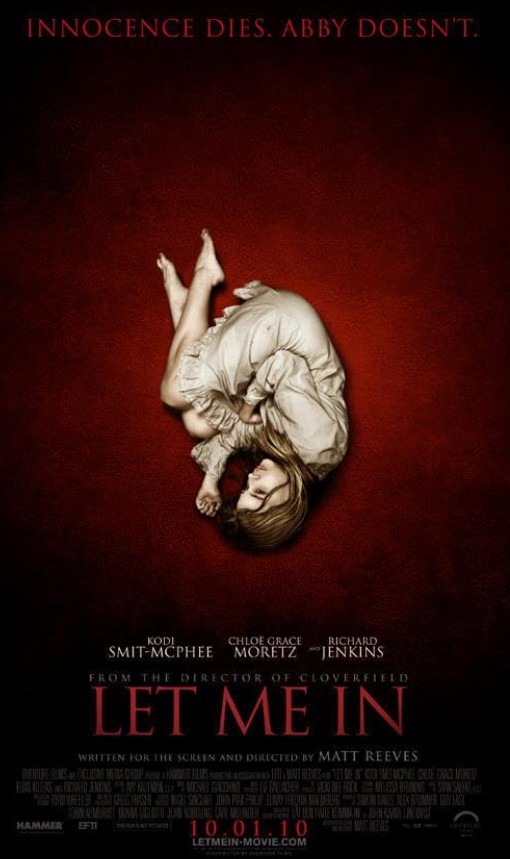
Let Me In(2010) poster created by Overture Films, Exclusive Media Group, Hammer Films, EFTI, and Relativity Media
Things I liked about the film:
The mise-en-scène: As I explained in my review of 1955’s The End of the Affair, mise-en- scène is how a film’s scene is presented to the audience. Throughout Let Me In, the way mise-en- scène was utilized presented scenes in visually creative ways. At the very beginning of the movie, a snowy forest was shown during the night. The only source of light comes from two police cars and an ambulance. A long shot slowly becomes a close-up shot, giving the audience a reason to focus on the bright vehicles. Anytime Owen and Abby look through the peephole of their apartment door, the shot is shown in a fish-eye lens. This film-making technique puts the audience in Abby and Owen’s perspective, allowing them to see what the children are seeing. It also emphasizes how, despite their differences, Owen and Abby have shared experiences like seeing who is at their door.
How music was incorporated: Music can be an effective component of film-making. It can elevate a scene’s emotions or set a scene’s tone. In Let Me In’s opening scene I just referenced in this review, a rhythmic drumbeat is one of the first sounds the audience can hear. That specific sound creates a sense of urgency, signifying danger is on the horizon. When Abby moves into Owen’s apartment building, gentle angelic-sounding singing can be heard. This is symbolic of how Owen sees Abby; an angel who will provide a light in his darkness. The two examples from Let Me In I discussed add additional context to the scenes themselves. How the film’s creative team incorporated music into the 2010 picture shows the understanding they had for how music can work in their project’s favor.
Disguising Abby’s vampire identity: Before watching Let Me In, I knew it was a vampire movie. But I was pleasantly surprised by how Abby’s vampire identity was disguised. Most of Abby and Owen’s interactions take place at night, at first seeming like just a coincidence. When Owen notices Abby isn’t wearing shoes, she states how she doesn’t feel cold. Abby even tells Owen she’s stronger than he thinks. These verbal and visual clues creatively signified how Abby was a vampire. But because of the clues’ subtlety, it leaves the audience guessing why, on the surface, Abby seems so strange. New twists on vampire cliches, like vampires avoiding sunlight, made Let Me In more unique from other vampire films.
The audio: When I reviewed Fist of Fury, I talked about the film’s audio being one of the major flaws. I had to turn up my television’s volume in order to hear what the characters were saying. Let Me In shares this same issue. Once again, I had to raise my television’s volume just to hear the dialogue, as the characters’ speech was quiet. As I suggested in my review of the Hallmark Hall of Fame movie, Face to Face, Let Me In’s creative team should have used ADR (automated dialog replacement).
The bullying subplot: One of the subplots in Let Me In involves Owen dealing with bullies. This subplot gave Owen a conflict to resolve, with the conflict eventually reaching a resolution. But because the script prioritized Abby and Owen’s friendship, the bullying subplot wasn’t consistently focused on. In fact, Owen stands up to his bullies about an hour into this hour and fifty-six minute movie. The inconsistency of the bullying subplot also drew that story out longer than necessary.
Underutilized religious undertones: In a scene taking place at a hospital, President Ronald Reagan is delivering a speech on television. During the speech, he talks about evil being present in the world and how people are joined together by Scripture. Owen’s mother says prayers during mealtime and features religious relics in her apartment. These are some examples of the religious undertones in Let Me In. With the movie set in early 1983, I thought the “Satanic Panic” was going to play a large role in this story, especially with Abby being a vampire. However, the religious undertones present in the script were underutilized, not providing any commentary or interesting perspective. In fact, it felt like this part of the film was there just for the sake of being there.
Vampires are no stranger to 18 Cinema Lane. Out of the vampire movies I’ve seen (and reviewed), these projects have shown that this type of story can be as creative as film-makers want it to be. 2010’s Let Me In is an interesting and creative vampire film! Abby’s vampire identity was disguised in very clever ways, even putting new twists on vampire cliches. How mise-en-scène and music were incorporated into the movie showcases the creative team’s more unique approach to a familiar type of story. While Let Me In has its merits, it also has its flaws. Religious undertones that could have provided commentary or an interesting perspective to the script were underutilized instead. Poor audio and an overshadowed subplot also didn’t help. But the 2010 project does stand out from other vampire titles. If you don’t mind a slow-burn story that primarily focuses on the power of friendship, then I’d say give Let Me In a chance.
Overall score: 7 out of 10
Have you seen Let Me In? What kinds of movies do you like to watch around Halloween? Let me know in the comment section!