When I published my review of Never a Dull Moment, it became my 400th post! As I’ve stated before, I create a special double feature any time I publish 100 posts. Because this accomplishment was recently achieved, I thought July would be the best time to host this double feature. Over the next two weeks, I will post these reviews as well as the conclusion. Keep reading if you want to learn more about the films I’ll write about and the double feature’s overarching theme!
Image of peanut butter and jelly sandwiches created by Katinka Kober at freeimages.com. Photo by Katinka Kober from FreeImages
You’re probably wondering what a PB & J (Peanut Butter and Jelly) sandwich has to with film? It’s more about how the idea behind the sandwich relates to cinema. I love browsing through pictures of scout related patches and learning about their meanings. One day, I stumbled across this website called Mad About Fun Patches. While visiting the site, there was one patch that caught my eye. This patch is named “Spread the Love, PB & J 2020”. Based on the description, the patch was created to promote the idea of making sandwiches for those in need. The more I thought about this, the more I realized how many ideas can be associated with a PB & J sandwich, which are:
Putting the needs of others before one’s self
Feeding the hungry
Helping one’s community
Sharing
Building connections
Teamwork
Brightening someone’s day
One person, object, or event affecting the lives of others
When I reflected on these ideas, I discovered two movies that share the concept of one person affecting multiple lives. These films are The Last Full Measure and The Boy Who Could Fly! I’ve heard of both movies, but they seem to be underrated. Within each review, I will be answering the following question:
Can the ideas associated with a PB & J sandwich be found in a given film?
Like my Youth-Led Double Feature from January, I will not be including pre-movie thought and/or questions.
Here is a screenshot I took of the patch from Mad About Fun Patches. I also provided credit to the people who created the patch. Screenshot taken by me, Sally Silverscreen.
Have fun at the movies!
Sally Silverscreen
Here is the link to the website I mentioned in this post if you want to check out their other patches:
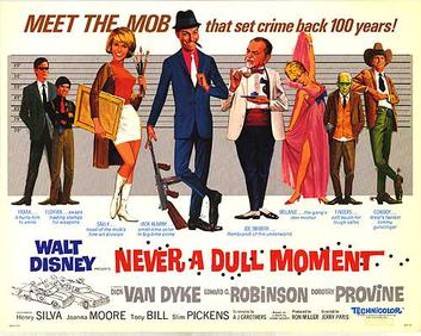
Like I said in my Follow Me, Boys! review, I have several movies on my DVR.Most of these films were recorded last year or over a year ago. Last night, I chose to watch one of these films, which I added to my DVR last June. This film is Never a Dull Moment! Sometime, Turner Classic Movies (TCM) will host a marathon called “Treasures from the Disney Vault”. When this event takes place, the network will show a collection of smaller titles and lesser known films from Disney. In one of these marathons, Never a Dull Moment was included in the line-up. While I had never heard of this film prior to the marathon, I have seen two of Dick Van Dyke’s movies. Because one of those films was Mary Poppins, which I have enjoyed, I had a good indication that I might like Never a Dull Moment. Was this the case? Keep reading my review if you want to find out!
The acting: Before watching Never a Dull Moment, I had seen Chitty Chitty Bang Bang and Mary Poppins. A consistent component of Dick Van Dyke’s acting abilities I have noticed is the strong adaptability. In one scene, his character, Jack, is acting drunk in an attempt to impersonate a gangster. Moments later, Jack is crying over the loss of a fictional Aunt Gladys. This is a great example of how Dick could effortlessly take on any situation through his performance! At limited moments in the film, a gangster named Florian would appear. This character was portrayed by Tony Bill. What I liked about his performance is how calm and collected his persona came across. Even though Florian was Leo Smooth’s henchman, he presented an idea of a gangster that people have come to recognize in film. While I liked Dorothy Provine’s portrayal of Sally, I want to talk about Joanna Cook Moore’s portrayal of Melanie, as her on-screen presence was shorter. Joanna’s personality was bubbly, which appeared natural for her character. During a scene where Melanie is showing Jack some of her figure skating photos, Joanna seemed to use her performance to light up the room. Her on-screen presence was memorable, despite being featured in only three scenes.
The set design: I was really impressed by the set design in Never a Dull Moment! Since the movie takes place in New York, tall skyscrapers and even the Brooklyn Bridge can be seen. This specific set looked impressive, making the location feel larger than life! Another great example of set design was Leo Smooth’s mansion. My favorite feature of this set was the consistency and fine detailing of the woodwork, especially on the staircase! A local art museum is where the film’s heist is featured. During the climax, various art exhibits are showcased. The Pop Art exhibit was the best one, as the art itself was colorful. It was also large in scale, creating a space that felt grand.
The music: If used well, music can help set a tone for either the whole movie or a particular scene. The music certainly did that for Never a Dull Moment! Whenever Jack was sneaking around Leo’s mansion, smooth jazz music could be heard. This fits the tone of those scenes because it emulates a feeling of curiosity that usually comes from film-noir and mysteries. In a scene involving a spinning piece of art, music from a merry-go-round was playing in the background. Since the art itself is colorful and the scene is meant to be humorous, this musical selection makes sense.
A drawn-out story: One overarching narrative of Never a Dull Moment revolves around a group of gangsters planning to steal a valuable painting. While an important component of any heist is the preparation stage, this part of the process lasted longer than it should have. Only one scene is dedicated to highlighting the plans for the heist. But the rest of that time was spent focusing on things not related to the heist. One example is Melanie Smooth attempting to relive her glory days as a famous figure skater. Moments like this had nothing to do with the heist and caused the overall story to feel drawn out.
Little sense of urgency: Heist films are usually fast paced, as there is a sense of urgency to carry out the heist. But, in Never a Dull Moment, the amount of urgency within the story was small. For most of the film, Jack hangs out at Leo Smooth’s mansion. This part of the movie was mundane, as little to no excitement was taking place. Even the gangsters’ activities didn’t feel out of the ordinary. A good example is when Leo is painting in his office. While the overall level of excitement picked up when the heist started, the build-up itself was not exciting.
A dull first half: With a title like Never a Dull Moment, you’d think the movie as a whole would be intriguing and action-packed. However, that is not the case for this film. I found the first half of the movie to be dull. This is the result of the story being drawn out and a small amount of urgency. Even though a part of the overall narrative focuses on a heist, this aspect of the story seemed to be an afterthought within the film’s first half. The heist itself took place in the second half of the movie. But this doesn’t make up for the weak nature of the previous segment.
As of late June to early July 2020, I have reviewed four live-action Disney films from the ‘60s. Three out of four of these movies have been ok or “middle of the road”. Never a Dull Moment was one of them. I will say this is a better heist movie than Logan Lucky. However, it wasn’t as exciting as I had expected it to be. The film is titled Never a Dull Moment, but the first half of the story is just that: dull. It also doesn’t help that there was a small amount of urgency. But the movie did contain elements that I did like. Some of them includes the acting and the set design. As weird as it sounds, Never a Dull Moment doesn’t feel like a Disney movie. It’s understandable for a studio to try new things and think outside the box. Never a Dull Moment, however, seems like belongs to a different studio. Like my Follow Me, Boys! review, I can’t fully recommend this movie, but I’m not going to dissuade anyone from watching it either.
Overall score: 6.2 out of 10
Have you seen any of Dick Van Dyke’s films? Which live-action Disney film from the ‘60s do you like or dislike? Tell me in the comment section!
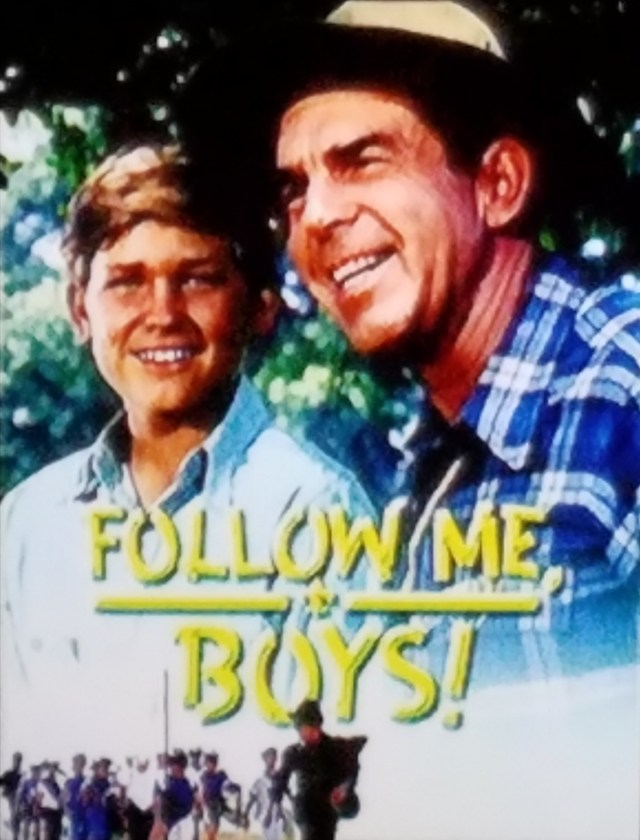
Two days ago, 18 Cinema Lane received 205 followers! I want to thank all of my followers for making this accomplishment a reality! Currently, there are several movies on my DVR. In fact, some of these films were recorded over a year ago. So, I decided to choose one of these movies for this review. As the title reads, this movie is Follow Me, Boys!, which had sat on my DVR since early 2018. Every film studio has their hidden gems. While it’s impossible to watch every one of these projects, I try my best to talk about them on this blog. Follow Me, Boys! is a movie I had never heard of prior to recording it. However, there have been some enjoyable live-action Disney films from around the release of Follow Me, Boys!, such as The Moon-Spinners and Mary Poppins. Did I enjoy this film as much as the two aforementioned pictures? Follow me through this review as we’re about to find out!
In case you’re wondering, this is a screenshot of the film’s poster I took from my television. Screenshot taken by me, Sally Silverscreen.
Things I liked about the film:
The acting: While watching this film, there were some performances that I was pleasantly surprised to see. One of them came from Lillian Gish. Last year, I reviewed one of her movies, which was The Whales of August. A similarity between Lillian’s role in that movie and Follow Me, Boys! is how pleasant it was to watch! Even though she was only in the film for a limited amount of time, I liked the moments when her character, Hetty Seibert, showed up on screen! What helped Lillian’s performance was her on-screen personality and the on-screen chemistry she had with her co-stars. I was also surprised to see Kurt Russell’s performance in this film, even though, prior to watching Follow Me, Boys!, I was aware that Kurt had starred in several Disney productions. The one aspect that stood out to me was the emotional strength Kurt carried through his portrayal of Whitey. This especially helped during the more dramatic moments of the story, such as when Whitey was dealing with his father. Kurt’s performance worked in his favor for not only this film, but also for his career long time.
The historical accuracy: The story of Follow Me, Boys! spans a total of twenty years, from 1930 to 1950. During the movie, I noted how good the historical accuracy looked! One aspect of this that serves as proof is the vehicles that are used. Toward to the beginning of the film, Hetty can be seen driving a car that looks like a Ford Model T. Because it’s 1930 at this point in the story, it would make sense for this kind of vehicle to be shown. At the end of the movie, when the story takes place in 1950, Lem and Vida are riding in a Plymouth automobile. These vehicles also helped show the transition between these time periods. It’s details like this one that show how much the creative team cared about the delivery of their project.
The camaraderie among the Boy Scout troop: Because this story spans a long period of time, the members of the film’s Boy Scout troop come and go. However, a consistent element was the troop’s camaraderie. While watching the troop’s evolution, the boys appeared to get along with one another and enjoy each other’s company. More often than not, the troop’s members work together during activities. They also promote the ideas of friendship, teamwork, and respect. The actors delivered the believability through their performances, which helped increase this group’s likeability.
The run-time: A film’s run-time can make or break that production. If a movie feels too long or short, it could affect the movie-viewing experience. This element definitely impacted my perspective of this film. I watched Follow Me, Boys! on television and the run-time was listed at 2 hours and 33 minutes. On IMDB, the movie has a run-time of 2 hours and 11 minutes. This story did not warrant a run-time this long, with situations being placed in the film for the sake of satisfying this run-time. The movie would have been more enjoyable if it was an hour and thirty or forty minutes long. That way, the overall story wouldn’t feel drawn out.
Little to no adversity: One of the over-arching narratives of Follow Me, Boys! is the formation and existence of a local Boy Scout troop. Despite how much of the story revolves around this group, they don’t experience many obstacles. When the troop does experience a conflict, it becomes quickly and easily resolved. This is different from a story like Troop Beverly Hills, where the troop faced several obstacles that last longer than a few minutes. Because of this choice, it seemed like situations in Follow Me, Boys! happened way too conveniently in the Boy Scout troop’s favor.
Situations happening too quickly: Despite the film being over two hours, some situations in this movie happened too quickly. A perfect example is Lem and Vida’s relationship, with no smooth transitions during each stage. In one scene, Lem and Vida are having their first major argument. A few minutes later, they are seen getting married. I know the film was supposed to show time progressing. However, the poor transitions caused some parts of the story to feel rushed.
Law school textbooks image created by Peter Skadberg at freeimages.com. “FreeImages.com/Peter Skadberg.”
My overall impression:
The way I feel about Follow Me, Boys! is the same way I feel about Summer Magic: it’s just ok. This film did have its merits and it felt like the creative team had their hearts in the right place. But the project does have a big flaw that I cannot overlook. The run-time of Follow Me, Boys!is too long, making the movie feel like it’s dragging its feet through the mud. This was the root of other flaws within the movie, like situations happening too quickly and scenario placements that only serve to satisfy the run-time. I had to, occasionally, pause the film just to check how much time was left. While I can’t fully recommend this movie, I’m not going to dissuade anyone from watching it either.
Overall score: 6.3 out of 10
Have you seen Follow Me, Boys! Are there any Disney films from the ‘60s you’d like me to review? Tell me in the comment section!
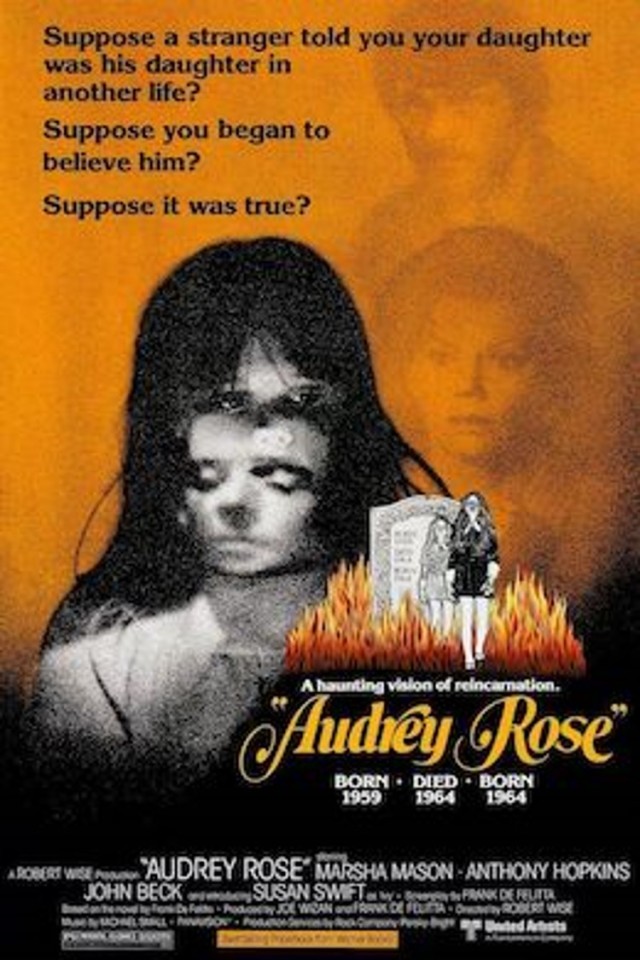
For June’s Genre Grandeur, the chosen theme is “New York Films of the70’s”. After searching through a list on Wikipedia, I selectedAudrey Rose as my submission! This is a film I have heard about in passing, but have never seen. What caught my attention is how the movie was classified as a horror film. I don’t always review movies in this genre, as a portion of them are too dark for my liking. However, I do try to go out of my comfort zone every so often. The synopsis also intrigued me, as I wondered where the story would go. Mysteries are a staple on this blog, so I was looking forward to helping the characters solve the case. Is Audrey Rose worthy of being included in Genre Grandeur? Keep reading my review so you can solve the mystery too!
Audrey Rose poster created by Sterobcar Productions and United Artists. Image found at en.wikipedia.org/wiki/File:Audrey_Rose_movie_poster.jpg
Things I liked about the film:
The acting: One of Anthony Hopkins’ most iconic roles is Hannibal Lector in Silence of the Lambs. Through his performance, he brought to life a character that was eerie and unsettling. In Audrey Rose, Anthony’s portrayal of Elliot Hoover was also unsettling, but for different reasons. During the events of the film, Elliot seemed to have power over the situation. This is because he had the answers Ivy’s parents were desperately looking for. Unlike Hannibal, Elliot was never meant to come across as scary. Anthony’s facial expressions, body language, and the way his character interacted with others supports this claim. When it comes to stories focusing on young characters, it’s important for a creative team to cast a young actor or actress who can carry a character’s emotional weight. Despite appearing in the film for a limited amount of time, Susan Swift impressed me with her portrayal of Ivy Templeton! It was heartbreaking to watch Ivy experience one of her nightmarish episodes, as Susan’s performance was that believable. However, that level of emotionality added to the captivation of this character.
The Templeton family’s apartment: I’ve seen a variety of apartments in television and film. But the Templeton family’s apartment in Audrey Rose is one of the best! An aspect that immediately caught my eye was the grand, wood staircase. This design feature is usually found in on-screen homes from the suburbs or wealthier neighborhoods. So, seeing this staircase in an apartment was unique. Speaking of woodwork, the fireplace in the living room was adorned with fine detailing. It shows how the apartment’s woodwork can compliment the space’s interior design. The showstopper of this living environment was the paintings on the ceiling! Exquisite is the word I would use to describe the art itself. I would be willing to guess that pictures and videos would not do it justice. Whoever created the apartment’s interior design should be commended for their work!
Elemental consistency: Throughout this movie, there were two elements that had a consistent presence. When Elliot first enters the Templeton family’s lives, the weather is very rainy. This is also the case when Ivy is experiencing nightmarish episodes. The incorporation of rain reminded me of The Crow, as this element served as symbolism in Audrey Rose. Not only did rain highlight sadness, it also showed how some situations should run their course. Fire is the other element that was consistently featured in the story. This was present during a tragic event and it emphasized how ignoring some situations only allows them to manifest. These elements created visual interest as well provide depth to the narrative.
Not a horror film: On Wikipedia and IMDB, Audrey Rose is classified as a “horror” film. Even the film’s poster gives the impression that someone is coming back from the dead, which is a classic horror movie concept. However, this couldn’t be farther from the truth. Two traits that have defined the horror genre are stories where characters get away from or get rid of something bad. None of these traits are found in Audrey Rose. The primary focus of this movie surrounded the idea of reincarnation. This idea is presented in a positive way, as a course that needs to run on its own term. While horrifying things happen to Ivy, in the form of nightmarish episodes, it was caused by fearing the unknown. Even though this aspect can be found in horror films, it can also be found in other genres. Audrey Rose is a film that I, personally, did not find scary.
A drawn-out story: Like I already said, the story of Audrey Rose revolves around the idea of reincarnation. While this provides the overall narrative with an interesting debate, the majority of the story focuses on whether reincarnation is legitimate. A solution to the Templeton family’s problem wasn’t found until the last thirty minutes of the film. This drawn-out story was the result of an almost two-hour run-time. Had about twenty or thirty minutes been shaved off of this production, the story would have gotten straight to the point sooner.
Scenes that felt like padding: Because Audrey Rose has a run-time of an hour and fifty-three minutes, there were a few scenes that felt like padding. One example is when Ivy is trying to talk to Audrey Rose through a mirror. This scene didn’t have a strong need to exist within the story. It also didn’t fit the overall flow of the film. If anything, this particular scene felt like a weak attempt at making the movie feel like it belonged in the horror genre.
Horror movies are not often found on 18 Cinema Lane. This is the reason why I chose Audrey Rose for June’s Genre Grandeur, as I try to explore various genres. Unfortunately, this was not the horror film I expected it to be. The project itself was interesting, exploring a topic in the form of a debate. But classifying it in a genre where it doesn’t belong is misleading. I can describe Audrey Rose in two ways. The first is a medical/spiritual mystery, similar to Lorenzo’s Oil. The second is a debate presented in the form of a movie, like Hallmark Hall of Fame’s Sweet Nothing in My Ear. The idea behind this film makes it worth watching. However, don’t go into this movie expecting a story with spooky atmospheres and sinister tones.
Overall score: 7 out of 10
Have you seen any ’70s films set in New York? Which movies do you think are incorrectly classified? Please tell me in the comment section!
When I submitted my review of The Great Mouse Detective last week, it became the 175th movie review I’ve ever published! In honor of this accomplishment, I decided to write a Top 10 list, especially since I haven’t written one in quite some time! Back in February, in a Word on the Street story, I reported how Chesapeake Shoreswas renewed for a fifth season. However, because of the Coronavirus, the show hasn’t gone into production. On 18 Cinema Lane, I recap two of Hallmark’s shows, with Chesapeake Shores being one of them. While some areas of the world are slowly going back to creating movies and television shows, the O’Brien family may not appear on screen this year. This means that my Top 10 list will probably be the only Chesapeake Shores related content I create in 2020. As “Chessies” (the show’s fandom) waits for any news of the show’s return, here are the top 10 things I’d like to see in the fifth season! Before I begin, I want to say that this list is solely based on my opinion. There will also be spoilers for the previous season.
As I’ve said before in my Evenings At The Shore series, the first and second seasons of Chesapeake Shorescontained a healthy balance between their character and plot driven narratives. But since season three, the show’s overall quality has plateaued. That’s because the overall narrative has placed its primary focus on the relationship drama between the characters. This decision has caused the plots to be put on the back-burner. One example is the fourth season’s fifth episode, where the plot surrounding Jess’s story didn’t make any sense. In Chesapeake Shores’ next season, I hope the screenwriters bring the show back to that balance from the first two seasons. This show has come up with some interesting plot ideas, but haven’t utilized them to their fullest extent.
2. A wedding for Jess and David
Before Kevin and Sarah got engaged in the fourth season, fans had never seen a wedding within the O’Brien family. This next step in Kevin and Sarah’s relationship was history in the making for the show. Because of the fourth season’s six episode run, wedding plans were replaced with an elopement and a reception dinner. This decision was a “bait and switch”, leaving fans cheated out of a historical moment they were promised. Kevin and Sarah were not the only couple to get engaged, however, as Jess and David became engaged at the end of the season. I’d like to see Jess and David’s wedding in the fifth season. Because the filming locations of Chesapeake Shores are photogenic, maybe they could receive an outdoor ceremony.
3. Get rid of the love triangle
It’s bad enough When Calls the Heart features a love triangle that seems to have no end in sight. Like I said in one of my Sunset Over Hope Valley posts, love triangles are a waste of time and creative energy. In Chesapeake Shores’ fourth season, the narrative introduced a love triangle between Abby, Trace, and Jay. This not only enables the screenwriters to continue emphasizing the relationship drama, but it also takes screen-time away from more intriguing plots. Hopefully, this love triangle will get resolved sometime in the fifth season.
4. A subplot for Carrie and Caitlyn
Speaking of When Calls the Heart, what this show does well is provide subplots for the younger characters. It gives the audience a chance to get to know them and view the story from their perspective. When it comes to Chesapeake Shores, Carrie and Caitlyn, the youngest characters on the show, have never received a story of their own. In fact, it feels like they’ve become an afterthought within the overall narrative. I’ve been waiting for Carrie and Caitlyn to receive their own subplot for a while, so I hope this happens in season five. It would be interesting to see what the screenwriters come up with.
5. More episodes
Earlier in this list, when I talked about Kevin and Sarah’s lack of wedding plans, I stated how the fourth season of Chesapeake Shores was only given six episodes. While Hallmark shows have received seasons with less than ten episodes before, a fourth season receiving six episodes is a bit concerning. This creative decision prevented certain subplots from being fully explored and made the story feel like more was desired. Personally, I think the fifth season should be given at least nine to ten episodes. That way, Chesapeake Shores will have enough time to flesh stories out and focus on telling well-thought out narratives.
Chesapeake Shores excels at featuring locations that have been brought up in the story. One example is The Bridge, a musical restaurant that Trace had been dreaming about for several years. At the end of the fourth season, Trace had expressed interest in creating a recording studio. While recording studios have been presented in the story before, this particular business was never shown in Chesapeake Shores. Because this show has a good track record when it comes to locations, I’d like to think Trace’s recording studio will become a reality. However, I still want to see this location brought to life.
7. For Bree and Simon’s paths to cross again
When Simon was introduced on Chesapeake Shores, he met Bree in her home country. At the end of the fourth season, Bree’s literary agent, Brian, wanted to bring her play to London. If this happens, Bree would be in Simon’s home country. This dynamic would be very interesting to watch, especially if Bree and Simon plan on revisiting their relationship. Should Bree decide to find a different significant other, I’d be curious to see which new British actor joins the show.
8. More appearances for Nell
Over the course of the fourth season, I noticed that Nell had such a limited on-screen presence compared to previous seasons. I was told Diane Ladd, the actress who portrays Nell, was experiencing pneumonia when this particular season was in production. As I indicated in the introduction, we don’t know when Chesapeake Shores’ fifth season will be filmed. Whenever that happens, I hope Diane is in better health. Nell is the one who keeps the glue of the O’Brien family together. Without her, things just wouldn’t be the same.
9. A Chesapeake Shores Movie
I know a Chesapeake Shores movie is on the way. However, it never went into production, partly due to the Coronavirus. Even though the film was originally about Abby, Bree, and Jess, I still want to see a St. Patrick’s Day themed movie in Ireland. Another possible film idea is a Chesapeake Shores Thanksgiving themed movie! Hallmark hasn’t created a Thanksgiving movie in several years. Also, Good Witch has capitalized on Halloween, while When Calls the Heart creates annual Christmas films.
10. Megan becoming a successful businesswoman
You’re probably thinking, “Megan’s not a businesswoman, it isn’t her forte”. However, when we look at Abby, Bree, and Jess, there is one thing they have in common: they are all successful businesswomen. While each sister has forged their own path in the world of business, they have let their passions guide them through this specific journey. For at least one season, Megan has expressed her passion for art. Toward the end of the fourth season, she had shown an interest in creating her own studio. If the screenwriters wanted, they could allow Megan to use her art as the basis for a small business. This could make Megan an independent businesswoman like her three daughters.
Last week, I made an announcement about the upcoming updates on 18 Cinema Lane. In that post, I said I’d be creating three social media accounts for the blog. Well, I’m ready to introduce the first of these three! 18 Cinema Lane now has an official Pinterest account! There, you can find boards that represent several major categories from this site. Also, I’ve added a board for movie recommendations. If you request a film to me, I’ll try to add it to that board. You can visit this Pinterest account when you click on the ‘P’ icon in the “Follow Me At” section on the right-hand side of the blog.
This is what you can expect when you visit 18 Cinema Lane’s official Pinterest account. Screenshot taken by me, Sally Silverscreen.
I will admit that before I signed up for the Suave Swordsman: Basil Rathbone Blogathon, I wasn’t familiar with Basil as an actor. However, I didn’t let this stop me from participating! While looking through his filmography, I discovered Basil had a role in the 1986 film, The Great Mouse Detective. Because I hadn’t seen this movie before and because I knew I’d likely be one of the few people to discuss an animated film, I selected The Great Mouse Detective as my submission! If you’ve visited my blog before, you’d see that mysteries have a consistent presence on the site. I have set aside time to talk about the films from Hallmark Movies & Mysteries. Some episodes of Murder, She Wrote has been reviewed. I even participated in the Murder, She Wrote Cookalong! Despite the abundance of mystery related content on 18 Cinema Lane, The Great Mouse Detective is only the second animated mystery movie to be featured on my blog. However, at least this review will bring something new to the table!
The animation: Animated films from Disney’s library usually contain quality visuals and art styles. The Great Mouse Detectivecontinues this pattern of animation excellence! Throughout the film, the backgrounds were presented in softer frames with lighter colors, while close-up images were given sharper lines and brighter colors. One example is when Basil, Olivia, and Dr. David are exploring a toy store. The contrasts within the animation made it easier to focus on the characters and their involvement in the story. This art design reminded me of films such as The Aristocats, 101 Dalmatians, and Lady and the Tramp. Similar to what I said in my From Up on Poppy Hill review, all of the characters were expressive! Their facial expressions and body language were fluid when reacting to different scenarios. A perfect example is when Olivia and Dr. David meet Basil. The Great Mouse Detective’s claim to fame is how it was the first project from Disney to feature computer-generated animation. This creative choice is seen in the climax, when Basil and Ratigan fight in the Big Ben Tower. While it might not seem like a big deal now, this scene was ahead of its time in the mid to late ‘80s. The scene itself has aged well, while also containing gravitas and depth. It reminded me of the bells from The Hunchback of Notre Dame.
The use of shadows: The Great Mouse Detective has a primarily darker tone. To emphasize this aspect of the story, shadows were used in various scenes. Toward the beginning of the film, Hiram Flaversham, Olivia’s father, and Fidget, Ratigan’s henchman, are fighting at Hiram’s toy store. In this scene, shadows of the fight are projected over Olivia’s hiding place. Because Hiram and Fidget are not shown on screen, their shadows helped bring an element of suspense and mystery. The shadows also left me wondering what would happen next.
The humor: Despite the film’s darker tone, there were some light-hearted moments that prevented the movie from being too dark. Some of these moments even contained humor. One scene involved Basil ruining a group of pillows in an attempt to solve a mystery. What made this scene funny was the reaction of Basil’s maid over the mess. Another funny moment was when Ratigan called his cat “honey bunny”. What I like about these hilarious scenes is how well written they were. It also helps that there weren’t too many of them, as it would have made the overall picture seem too silly.
The musical numbers: A large number of Disney’s animated films are musicals, with their musical numbers feeling like they belong in that production. Because musicals have become a staple in Disney’s animated filmography, it allows their audience to know what to expect. But The Great Mouse Detective was not a musical movie, especially compared to pictures like Oliver & Company or any of the Disney Renaissance films. The Great Mouse Detective also had a primarily darker tone, with some light-hearted moments. These aspects made the musical numbers seem out of place. The two most notable musical scenes were “Let Me Be Good to You” and “The World’s Greatest Criminal Mind”, which had entertainment value. While “Let Me Be Good to You” had some reason for its existence, “The World’s Greatest Criminal Mind” was randomly placed in the film. It was a light-hearted and upbeat song that came right after a darker scene, featuring Basil explaining the wrong-doings of Professor Ratigan. “The World’s Greatest Criminal Mind” was a combination of “Gaston” from Beauty and the Beast and “Mine, Mine, Mine” from Pocahontas. However, what makes “Gaston” and “Mine, Mine, Mine” work is how they fit within their respective productions.
The oversharing of the mystery: When I talked about The Mystery Cruise in my list of the Top 10 Worst Hallmark Movies of All Time, I shared how I didn’t like the film’s mystery being revealed after the mystery was introduced. The Great Mouse Detectivemakes a similar mistake with their mystery narrative. Within the first half of the movie, the details of Hiram Flaversham’skidnapping are shown in a series of scenes that share a timeline with the events surrounding Basil. These scenes show the whodunit, howtheydunit, and whytheydunit of the mystery. Because these pieces of information are revealed early in the movie, the audience knows more than the characters in the story. This prevents them from solving or experiencing the mystery alongside the characters.
The subplot of the Queen’s Diamond Jubilee: One of the subplots in The Great Mouse Detective revolved around the Queen’s Diamond Jubilee. This wasn’t a bad idea, but it was very under-utilized. In fact, I forgot this event was taking place within the story until the film’s climax arrived. Because the premise of this movie was basic and straight-forward, this subplot felt like it was there for the sake of being there. If the Queen’s Diamond Jubilee had been removed from the film, it wouldn’t make a huge difference.
Two years ago, I reviewed Oliver & Company. In that review, I said the movie was the pioneer for what a Disney animated film could and should be at the time of its release. The Great Mouse Detective gave me a similar feeling. Within this film, there were elements that laid the foundation for animated Disney films that came after it. The climax at the Big Ben Tower is one example, with the scenes utilizing computers to bring them to life. Also, in my Oliver & Company review, I said the movie was fine and that there wereanimated Disney films that are stronger than it. The Great Mouse Detective made me feel this way as well. While watching this film, there were scenes that reminded me of scenes from other Disney projects that were executed better. Some scenes in The Great Mouse Detective felt rushed, making me wonder if Disney was trying to meet a deadline or wanted to take advantage of a busy box office year. Even with everything I just said, this film is worth bringing up in the conversation of animated films. It may get overshadowed, but I think it serves as an important part of animation history.
Overall score: 7 out of 10
Have you seen The Great Mouse Detective? What are some of your favorite mystery films? Tell me in the comment section!
Yesterday, on June 9th, Orion Pictures/MGM Studios released an official trailer of the upcoming film, Bill & Ted Face The Music! The studio also released an official poster for the movie! I haven’t seen any of the films in the Bill & Ted series, but I really like what I’ve seen and heard about this third film so far. The poster itself adopts elements that were found in film posters from the past; artistic visuals that come together to create a singular image conveying mystery and intrigue. As for the trailer, I found it hilarious, as it had the kind of random humor that I resonate towards. This marketing campaign makes me want to watch the previous two Bill & Ted films! As of June 2020, the film has an August 21st premiere date. Bill & Ted is not the only Hollywood IP that has received sequel related news. Two weeks ago, Chris Murphy from Vulture reports how Sonic the Hedgehog will get a sequel! According to the article, “Paramount Pictures and Sega Sammy have begun development on a sequel to Sonic the Hedgehog”, which means the project is in the pre-production stage. The producers who have signed on to the film are Neal H. Moritz, Toby Ascher, Toru Nakahara, Hajime Satomi, Haruki Satomi, and Tim Miller. The first film’s director, Jeff Fowler, and screenwriters, Pat Casey and Josh Miller, are coming back for the second movie. While I haven’t seen Sonic the Hedgehog, I think this is great news for Sonic fans and for people who support studios that put their customers first. Even Chris, from Vulture, says “listening to feedback can be incredibly fruitful for everyone involved”. Hopefully, the sequel can be just as successful as its predecessor.
Bill & Ted Face The Music poster created by Orion Pictures, Hammerstone Studios, Dial 9, Dugan Entertainment, TinRes Entertainment, and United Artists Releasing. Image found at en.wikipedia.org/wiki/File:Bill_and_ted_face_the_music_poster.jpg
Months after Coronavirus forced businesses all over the world to pause their operations, steps are now being taken to reach a state of normalcy. In an article from The Hollywood Reporter, Etan Vlessing discusses how “the Quebec provincial government and health officials have given the green light for film and TV production to resume on June 8 amid the coronavirus pandemic”. Before this decision was made, Manitoba had resumed film and television production in their province of Canada. Toward the end of May, Vancouver Island said “the industry can resume shooting by June”. Robert Buffam, from CTV News, writes about the precautionary steps film and television teams will take to work as safely as possible. Ric Nesh, a television show producer, shares “We may reduce, revise, rewrite scenes without the larger crowds. No we may, we will revise scenes.” In the United States, film studios and movie theaters are making attempts to go back to work. A Hollywood Reporter article from June 8th states “anxious theater owners — and Hollywood studios — are being given the go ahead to flip on the lights later this week by California Gov. Gavin Newsom’s office and the Department of Public Health.” June 12th is the selected date when California’s cinemas may start their operations again. Similar to the film and television industry in Canada, safety precautions will be put in place. One example is adopting a 25% capacity limit “or no more than 100 people per auditorium”.
I know this piece of news relates to television. But because it’s about Hallmark going out of their comfort zone, the story became an exception. Earlier last month, Emre Kaya from The Cinema Spot reported how Hallmark Channel is creating a new television show! The article shares that this is the network’s “first high-budget drama series”, which “is a science fiction soap drama series set on a space colony.” Emre’s post doesn’t reveal much information about the project. As of June 2020, Hallmark has not made an official statement about the show. When I first read this story, I was excited at the idea of Hallmark creating a project that is very different from their norm. On several occasions at 18 Cinema Lane, I have talked about how Hallmark should take creative risks and think outside the box. It looks like they’re starting to pay attention to these ideas. Maybe this show could be the beginning of a new era where creativity and originality reign.
Are you looking forward to any of these upcoming projects? What will be the first movie you see when theaters are open again? Please share your thoughts in the comment section below!
When I published my Hallmark Hall of Fame Reading Challenge last March, one of the literary works I listed was Cyrano de Bergerac by Edmond Rostand. While I’ve never read the play, I was interested in seeing how Hallmark Hall of Fame would adapt this particular story. Sadly, I couldn’t find this specific version on DVD, VHS, or digital, as a lot of the collection’s movies from the ‘50s to about the early ‘80s appear to be lost. When I discovered Vincent Perez starred in the 1990 adaptation of Cyrano de Bergerac, I thought seeing this version would be the next best thing. It was also a perfect choice for The Third Broadway Bound Blogathon, as it was listed under the “Movies Made From Broadway Shows” section in the veryfirst announcement for the event.This blogathon also happens to takeplace days before Vincent’s birthday, sothis became another reason to review Cyrano de Bergerac! I was able to obtain a copy of this film, but I had to purchase two DVDs and a Blu-Ray just to find one that worked with my home entertainment system. Read my review to find out if this film wasworth the search!
After weeks of searching, I finally found a DVD copy of Cyrano de Bergerac I could watch! Screenshot taken by me, Sally Silverscren.
Things I liked about the film:
The acting: Since I chose this film because of Vincent’s involvement, I’ll talk about his performance first. One aspect that stood out to me was how his voice was always soft-spoken. This fit his character, Christian de Neuvillette, well because he wasn’t as confident with his words, like Cyrano. I also noticed how sincere Vincent’s performance came across. No matter what situation Christian is in, he always has his heart in the right place. The goodness of this character showed through in Vincent’s portrayal, which helped Christian be as likable as possible! Since I just mentioned Cyrano, I will now talk about Gérard Depardieu’s performance. The word I’d use to describe his portrayal of the titular character is expressive. Every feeling Cyrano was experiencing felt genuine, emotions appearing in his facial expressions, body language, and poetry. Toward the beginning of the film, Cyrano performs at a local theater and participates in a dual shortly after. Gérard was able to adapt to every situation given to his character. Besides Vincent and Gérard, the cast is filled with talented actors and actresses. Anne Brochet is one of those cast members, bringing a gentle nature to her character, Roxane. Through emotionality, Anne brings her character to life in a way that feels believable. One example is when Christian and Cyrano visit her at her balcony.
The historical accuracy: As I’ve said before on this blog, the quality of a film’s historical accuracy can show how much a creative team cares about their project. The historical accuracy of Cyrano de Bergerac is proof of this statement! The world in this movie felt immersive, presenting the locations with a sense of realism. The set designs reflected the financial situation/social status of the characters, with the local bakery and Roxane’s room being perfect examples. While the bakery featured a simpler interior design, Roxane’s room appeared elegant. Costumes looked appropriate for that specific time period, with the color palette for the cast’s wardrobe ranging from lighter shades of beige and blue to darker tones of gray and black. Tools and utensils from yesteryear were used by the characters, such as Cyrano and Christian applying a wax seal on letters to Roxane. This movie shows that no detail was ignored.
The humor: One of the strongest elements of this film was the humor! Not only was it well-written, but the humor itself seemed to fit that world. The funny moments within Cyrano de Bergerac were also given good executions by the actors. My favorite scene is when Christian continuously interrupts Cyrano’s story by making references to Cyrano’s nose. During this exchange, Christian would sometimes only say “nose” to get a reaction from Cyrano. While Christian appears unfazed by Cyrano’s reactions, Cyrano becomes more irritated as the scene continues. This scene made me repeatedly laugh, as I found it hilarious!
The under-utilization of Vincent Perez: Vincent Perez is one of the reasons why I sought out the 1990 adaptation of Cyrano de Bergerac, as I’ve enjoyed his acting performances so far. Before watching this movie, I knew his involvement in the project was a break-out role and likely the biggest role he received at that time. However, because Vincent is billed as the main supporting actor, I was disappointed to find out he was in the film for a limited amount of time. The majority of the story revolves around Cyrano, which means that Vincent was only given a reduced amount of material to work with. There were even large intervals when Vincent was not featured on screen. Usually, main supporting actors receive about half the screen-time the film’s protagonist does. In the case of Cyrano de Bergerac, however, the antagonist, Comte Antoine de Guiche, is given more prominence in the production than Vincent’s character.
The war storyline: Prior to seeing Cyrano de Bergerac, I had a general knowledge of what the story was about. The movie is even classified as a “comedy-drama”, with the assumption that the romantic aspects of the story would fall under the “drama” part. While the comedy and romance within Cyrano de Bergerac dominated the first half of the film, a storyline involving a war took over the film’s second half. The build-up toward the event and the reasoning behind it felt too “inside baseball”. It also caused the entire story to pull a “bait and switch” with its overall tone. Based on the knowledge I had about this film and even based on the DVD cover, I expected the light-hearted tone within the first half to have a consistent presence throughout the film. Even though there were romantic and light-hearted moments within the second half, some of them didn’t feel like they fit in the context of the war.
The poetic monologues: I’m aware that Cyrano is known for being “a man of many words”. I also know the original play was written only in verse. The poems themselves weren’t the issue, as the poetic monologues within this film were performed and written well. However, some of them lasted too long. Toward the end of the movie, Cyrano recited one of his signature monologues. Because it was long in time length, the monologue made the scene drawn out. I realize that the reason for the long monologues was to satisfy the film’s run-time. Personally, I think, at least, a few of the them should have been a bit shorter in length.
I’ve heard that the 1990 adaptation of Cyrano de Bergerac is “the definitive film version of the Edmond Rostand play from 1897.” This is the only film version of the story I have seen. As I also said in the introduction, I have never read the play. So, I can only judge this film simply as a film. Cyrano de Bergerac is a good, solid movie! I found myself invested as the story was unfolding and I can definitely see how this could be presented on Broadway. The poetic dialogue was an interesting choice that helped this project achieve a unique identity. However, there were aspects that prevented the production from being better than it was. Some of the poetic monologues were too long, causing scenes to feel drawn out. Despite flaws like that one, I’m glad I was given an opportunity to see this film! If you do choose to watch this version of Cyrano de Bergerac, keep in mind it is a rarer title to find on physical media. While this movie did receive a Blu-Ray release, prices can get expensive.
Overall score: 7.6 out of 10
Do you enjoy movies based on Broadway shows? Are there any literary adaptations that you like? Tell me in the comment section!
Well, the day has finally come. 18 Cinema Lane just received 200 followers! Before I continue this post, I’d like to take a moment to thank everyone who helped my blog reach this milestone! I still can’t believe that, within these two years, I’ve made it this far as a blogger. For this review, I thought it would be a good idea to select a film that was requested by one of my readers. Last year, Ospreyshire, from the blog Iridium Eye Reviews, recommended the Studio Ghibli film, From Up on Poppy Hill. I chose this film to write about because I haven’t reviewed an animated movie since February. This is actually the second Studio Ghibli production I’ve discussed on 18 Cinema Lane. Last January, I reviewed Howl’s Moving Castle for the 90 Years of Jean Simmons Blogathon. While I enjoyed the movie, I found it to be weaker than the previous Studio Ghibli projects I’ve seen. Now that From Up on Poppy Hill is the fifth film from the studio I have watched, it’s time to determine how this movie holds up to other films from Studio Ghibli!
The animation: Over the years, Studio Ghibli has gained a reputation with their signature animation style. The 2-D presentation of each story has stood apart from the 3-D computerized technique most film studios adopted in the 21st century. One of the hallmarks of a Studio Ghibli film is the colorful palettes that are used in each production. From Up on Poppy Hill boasts bright colors throughout the story, creating spaces that appear inviting. The scenes were bright enough to be visually appealing, but not too much to the point of over-saturation. Even when a scene used darker colors, there was still a pop of color included. One example is on a rainy day, when the protagonist, Umi, is carrying a red umbrella. The movements of the characters, vehicles, and boats were smooth, which made them easy to visually follow. Characters were also expressive when it came to dealing with a variety of situations. Similar to Howl’s Moving Castle, From Up on Poppy Hill looked like priceless art!
The humor: An element I’ve noticed within Studio Ghibli’s films is their use of humor. Though From Up on Poppy Hill is a more contemporary story from other Studio Ghibli productions, the humor still fit within the world of that particular film. In one scene, one of the members of the Archeology Club tells another club member that they need to find a way to show how cool their club can be. The fellow club member simply replies with “we can’t”. Toward the beginning of the film, Shun, one of the main characters, falls into a pool of water after performing a stunt while attempting to encourage his classmates to save a local clubhouse. When Umi tries to help Shun out of the pool, their fellow classmates cheer them on as soon as she touches his hand. A great aspect of this movie’s humor is how there was enough to maintain the film’s lighted-hearted tone. At the same time, it didn’t diminish the dramatic moments that momentarily appeared in the story.
The music: While watching this film, the musical selections in From Up on Poppy Hill stood out to me. This is because they fit the tone of their given scene so perfectly! Throughout the story, Umi rises signal flags in order to help her father return home. During these scenes, dramatic piano music would play in the background. For more lighted-hearted scenes, up-beat music could be heard. One example is the movie’s very first scene, which shows Umi preparing for a typical day. Because this film took place in the early to mid-‘60s, the music sounded like it came directly from that time period. When Umi and Shun are in a hurry to reach an important destination, the instrumental tune sounded like it belonged in a program like Hawaii Five-O. All of the music in From Up on Poppy Hill effectively brought a sense of emotion to every moment within the story!
Sailing on the sea image created by Michele L at freeimages.com. “FreeImages.com/Michele L.”
What I didn’t like about the film:
Lack of backstory for the Latin Society’s clubhouse: One of the overarching themes of From Up on Poppy Hill is honoring the past. This is one of the arguments Shun provides in his efforts to save the Latin Society’s clubhouse. There are times when this theme was incorporated into the story well. But, when it comes to the clubhouse, the history of the facility is never revealed. The only thing closest to a backstory that is given was when one of the club members says the previous residents were as messy as the current club members. This creative choice makes the club’s arguments appear weaker than necessary.
Minimal character development for some of the characters: In any film, character development is an important component. This can help the audience connect with a movie’s characters and get invested in their journey. From Up on Poppy Hill gives the majority of character development to Umi and Shun. Parental figures in Umi and Shun’s life, such as Umi’s grandmother, receive some character development. The rest of the characters receive minimal character development, making it difficult to truly get to know them. One example is Sora, Umi’s sister. While watching this film, I became familiar with her as the story progressed. However, when it comes to learning more about Sora, there was more to be desired.
Drawn out scenes: There were a few scenes in From Up on Poppy Hill that were drawn out longer than they needed to be. A perfect example is when Shun’s father is sharing information about his son’s past. I liked learning more about Shun’s backstory. But it was paired with moments of silent pauses that were a little too long. Had these pauses been shorter, this scene might have helped the film shave off some of the run-time.
When I saw From Up on Poppy Hill, there were mentions of the Summer Olympics in Tokyo. The 1964 Olympics was included in the discussion, not the now postponed 2020 Olympics like I originally thought. The fact this event would be mentioned at all was very interesting. The Olympics are steeped in history, spanning many decades and involving many international parties. As I mentioned in my review, one of the overarching themes of this movie is honoring the past. In the story, history is presented in many forms. Some are embodied as large-scale events, like the Olympics. Others are formed in the relationships we share. From Up on Poppy Hill intelligently and creatively shows its audience how important history is in our lives and our world. As a movie blogger, I recognize how history has made or broken the world of film. But this entry from Studio Ghibli’s collection handles the idea of history with relatability and respect. People from any part of the world can understand the messages presented and maybe take away a small piece of the story and apply it to their own lives. From Up on Poppy Hill is one of the studio’s stronger projects that I am grateful to have seen. A huge thanks goes to Ospreyshire for bringing this film to my attention.
Overall score: 8.3 out of 10
Have you seen Studio Ghibli’s films? Which movie would you like to see me review next? Share your thoughts in the comment section!