Top 10 Christmas Movies I’d Love to Review

Last June, I published a list of the top ten movies I’d love to review someday. Since publishing that list, I have written about some of the films I talked about! Now that it is “Christmas in July”, it seemed like the perfect time to write about the top ten Christmas movies I’d love to review in the future! The films on my list were distributed through various studios and movie companies, varying in accessibility. But this time, I’ll be listing the movies based on the year they were released. While there are plenty of Hallmark productions I either have never seen or haven’t seen in years, I tried not to include too many Hallmark titles on this list. That’s because I could create a top ten list entirely comprised of Hallmark films. So, while Santa is checking which films are worthy of his nice list, let’s look at the top ten Christmas movies I’d love to review!

Santa stationary image created by Freepik at freepik.com. <a href=’https://www.freepik.com/free-vector/creative-christmas-letter-and-envelope-template_3281562.htm’>Designed by Freepik</a>. <a href=”https://www.freepik.com/free-photos-vectors/christmas”>Christmas vector created by Freepik</a>. Image found at freepik.com. 

10. Holiday Inn (1942)

There are few very Christmas movies I’ve been recommended by my readers. 1942’s Holiday Inn is one of those films. I will admit I have heard of this movie over the years, but never checked it out. Now that I think of it, I’ve reviewed only a handful of Christmas movie musicals. Holiday Inn would definitely make up for that. Plus, it would give me an excuse to seek out more of Fred Astaire’s projects from his filmography. There is a part of the story that takes place during Thanksgiving, from what I’ve heard. So, I might review Holiday Inn around Thanksgiving!

9. Emmet Otter’s Jug-Band Christmas (1977)

I brought up Emmet Otter’s Jug-Band Christmas in a past Word on the Street story. But while creating this list, I realized how I still haven’t seen this movie. I have written about some animated films on my blog. However, few of those films were animated through puppetry. This would make the 1977 film a more unique picture to write about. Back in January, I saw and reviewed The Great Muppet Caper, a film I genuinely enjoyed. Since Emmet Otter’s Jug-Band Christmas is a Jim Henson production, it makes me wonder if I’ll like this movie as much as The Great Muppet Caper?

8. Bush Christmas (1983) and Miracle Down Under (1987)

I stumbled upon Miracle Down Under (also known as Bushfire Moon or The Christmas Visitor) while searching for movies to review. When looking for more information on the 1987 film, I discovered the 1983 movie, Bush Christmas. Thinking about the Christmas productions I’ve seen, I tend to think of these stories taking place somewhere in the United States. If a Christmas film is set outside the United States, the location is typically Canada or Europe. Australia is a country rarely included in the Christmas movie landscape. Therefore, Miracle Down Under and Bush Christmas offers a yuletide perspective that is unique from other Christmas titles! This shared connection makes these movies perfect choices for a double feature!

7. Mrs. Santa Claus (1996)

As I was writing this list, I remembered how I’ve seen few of Angela Lansbury’s live-action projects from her filmography. Yes, I’ve seen my fair share of Murder, She Wrote episodes. But I’m talking about Angela’s live-action films. I have come across the poster for Mrs. Santa Claus on multiple occasions. Yet, I have never seen this movie. Because of this, I didn’t know that a) the 1996 film is a musical and b) it is a historical fiction story. When I talked about Holiday Inn, I mentioned reviewing only a handful of Christmas movie musicals on my blog. Not only would Mrs. Santa Claus make up for that, but it would also give me an opportunity to talk about a movie that seems underrated in the world of Christmas cinema.

6. Little Men (1998)

For years, I knew there was a continuation to Louisa May Alcott’s classic story, Little Women. I also knew this continuation was given a film adaptation. But the aforementioned continuation, Little Men, is one I haven’t seen or read. With that said, I was unaware the 1998 movie was a Christmas production. While creating my list, I noticed how a lot of the movies were made-for-TV or straight-to-video/streaming presentations. As Little Men was theatrically released, I thought it would add some variety to my list. Maybe I’ll write a double feature review for Little Men and Little Women. Question is, which version of Louisa’s story would pair well with the 1998 movie?

Holly berry Christmas wish-list image created by Freepik from freepik.com. Christmas vector created by freepik – www.freepik.com

5. Three Days (2001)

Three Days is similar to the 1999 film, If You Believe; these are Christmas movies that don’t rely on the tropes and cliches found in typical Christmas projects. In the 2001 story, a workaholic man is taking his life and wife for granted. After his wife dies, the man is given a second chance to re-live the previous three days of his life, in order to save his wife and turn his life around. I haven’t seen this movie in years, but I do remember liking it. As of the publication of this list, though, the only place Three Days is available is through the streaming service, Disney+. I hope Freeform (formerly known as ABC Family) airs this film again during their annual ‘25 Days of Christmas’ line-up. That way, I could talk about a film that is, in my opinion, one of the most underrated in Christmas movie history.

4. The Night Before The Night Before Christmas (2010)

The Night Before The Night Before Christmas is one of the first movies I was ever recommended by one of my readers. Since then, I have been trying to find the perfect opportunity to review the film. But as far as I know, the 2010 presentation isn’t airing on any of Hallmark’s networks during their ‘Christmas in July’ line-ups. So, I hope the film airs sometime during the Christmas season. I have found DVD copies of The Night Before The Night Before Christmas. Therefore, if Hallmark doesn’t air the movie again, I still have a chance to write about this production.

3. An Old Fashioned Christmas (2010)

I included this movie in my list of the top ten movies I’d love to review. In that list, I mentioned how I have come across a few DVD copies of An Old Fashioned Christmas. But these DVDs were included in Christmas movie box sets, which tend to be expensive. While this statement is still true, the movie has been uploaded on Youtube, as of mid-July, 2023. Now I might be able to review the film sooner than I expected! Similar to The Night Before The Night Before Christmas, An Old Fashioned Christmas isn’t airing during Hallmark’s ‘Christmas in July’ line-ups. So, I hope the 2010 movie makes an appearance during this year’s Christmas season.

2. Christmas with Tucker (2013)

Christmas with Tucker is a prequel to the 2009 Hallmark Hall of Fame movie, A Dog Named Christmas. I have seen the latter film, which I remember liking. However, it’s been several years since I’ve seen the Hallmark Hall of Fame presentation. Since I also haven’t seen Christmas with Tucker, I don’t know how the 2013 movie and the 2009 movie connect with each other. I might review these films in a future double feature in order to solve that mystery.

1. An American Girl Story: Maryellen 1955 – Extraordinary Christmas (2016)

Years ago, I wrote an editorial about how Jiggy Nye was not an effective villain in Felicity: An American Girl Adventure. Since publishing that editorial, I have not reviewed any of American Girl’s films. I did see some of their films, but An American Girl Story: Maryellen 1955 – Extraordinary Christmas was not one of them. When this film was released, it was only available on Amazon Prime. But American Girl’s Amazon Prime exclusive movies, including An American Girl Story: Maryellen 1955 – Extraordinary Christmas, were recently removed from the streaming service for reasons unknown. For the time being, this film is considered “lost media”. But I hope it either is re-released on DVD or available on another streaming service.

Group of Christmas figures image created by Pikisuperstar at freepik.com. <a href=”https://www.freepik.com/free-photos-vectors/christmas”>Christmas vector created by Pikisuperstar – Freepik.com</a>. <a href=’https://www.freepik.com/free-vector/hand-drawn-cute-christmas-character_3188970.htm’>Designed by Pikisuperstar</a>. Image found at freepik.com.

Have fun at the movies!

Sally Silverscreen
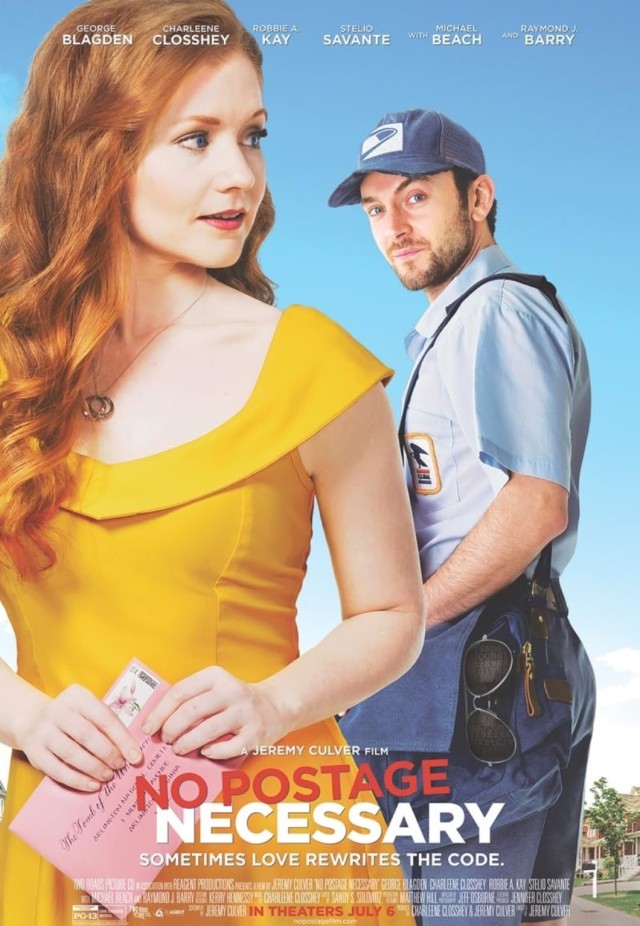
Take 3: Susannah of the Mounties Review + 465 Follower Thank You

When it comes time for movie reviews, I try to select titles that will either encourage my readers to check them out for the first time or give my readers a reason to re-visit them. I also select titles in the hopes they are good films. While looking for a movie for this Blog Follower Dedication Review, I realized I hadn’t written about a Shirley Temple film since 2019. Because of that and with When Calls the Heart’s tenth season on the horizon, I felt Susannah of the Mounties was a suitable choice for this review! Anytime I think of Shirley’s movies, her musicals typically come to mind. Susannah of the Mounties is a different production from her filmography, as the 1939 film is a western. On 18 Cinema Lane, the western genre is underappreciated. Though I do try to review a western movie every now and then, I haven’t written about a western film since February, when I reviewed The White Buffalo. As I write this Blog Follower Dedication Review, I want to thank every follower of 18 Cinema Lane! Your enthusiasm for these movie reviews is always appreciated!

Susannah of the Mounties poster created by Twentieth Century Fox

Things I like about the film:

The acting: Out of Shirley’s movies I’ve seen, including Susannah of the Mounties, I recall her performances containing a certain amount of genuine sincerity. This aspect makes Shirley’s characters worthy of support from the audience. At the beginning of the movie, the Mounties discover Susannah is the only survivor of an attack on a wagon camp. She is understandably terrified, shrinking away from the Mounties in order to get away from them. Susannah is tearfully telling the Mounties to leave her alone, as her grandfather died during the attack. Through this portrayal, the heartbreak and fear Susannah experiences can be seen and heard. Her reaction to the Mounties’ encounter visually represents how a child might respond to a traumatic situation. With everything said, the audience is given a reason to feel sympathetic toward the film’s protagonist.

Randolph Scott portrays Inspector Angus “Monty” Montague, one of the Mounties who rescues Susannah. Throughout the story, he serves as Susannah’s father figure, teaching her good values and trying to protect her from danger. In one of the film’s funniest scenes, Monty and Susannah are eating breakfast. During breakfast, Susannah doesn’t hesitate to ask if he’ll marry Vicky, a woman who is temporarily staying at Monty’s Mountie camp. Snapping to attention, Monty gives Susannah a startled expression, his reaction to Susannah’s question on point for the situation. This scene serves as a good example of how Randolph’s performance never missed a beat!

Another performance that didn’t miss a beat was Martin Good Rider’s! Portraying Little Chief, son of Chief Big Eagle, Martin’s performance was consistent throughout the movie. During his time in the Mountie camp, Little Chief carries himself with a serious demeanor. Any time he explained an aspect of his culture to Susannah, his tone of voice and facial expression are stern. However, Little Chief does express happiness from time to time. When he is calling Susannah a baby in his language, he is smiling and even giggling at Susannah’s frustrations over not knowing how to ride a pony. One of the reasons why I liked seeing Little Chief and Susannah’s friendship progress in this story is because of Martin’s and Shirley’s performance!

The cinematography: In Susannah of the Mounties, there were three shots I thought were captured very well through a cinematic lens. One morning, as the British flag is raised over the Mountie camp, a Mountie is shown, through a medium shot, standing on the balcony of a nearby log cabin. As the flag rises in the air, its shadow is reflected off the cabin and even the Mountie himself. Another scene shows Susannah smoking a pipe for the first time. When she is looking out on the Mountie camp, the shot of the camp is captured through a fuzzy, uneven lens. This creative decision was made to show this location from Susannah’s perspective, as she is light-headed after smoking the pipe. Later in the movie, some members of the Blackfoot tribe are horseback riding near a body of water. While riding during dusk, a blue-purple sky and a large, white-gray mountain are in the scene’s background. In a sweeping long shot, the riders are reflected against the mirror stillness of the water. These details allowed this scene to be the most beautiful one in the movie!

Messages of fairness and learning from one another: After meeting Little Chief for the first time, Susannah becomes frustrated by the way he treats her. She doesn’t think she and Little Chief could be friends. But during a heart-to-heart conversation, Monty explains to Susannah how the Mounties try to learn from Little Chief’s Blackfoot tribe in order to work with them. Before Little Chief stays at the Mountie camp, the Mounties and his Blackfoot tribe attempt to find a solution to the film’s overarching conflict. During this meeting, the Mountie’s Superintendent, Andrew Standing, makes it clear that the Mounties are not blaming Chief Big Eagle’s tribe for the crimes committed near the Mountie camp. Andrew explains how the Mounties are turning to Chief Big Eagle’s tribe for help catching the perpetrator. Susannah of the Mounties was released in the late 1930’s, with a story taking place in the 1880s. Therefore, I was not expecting the inclusion of timeless messages such as fairness and learning from one another.

Mountie face image created by Bakar015 at freepik.com. <a href=’https://www.freepik.com/free-vector/a-set-of-canada-icons_1050671.htm’>Designed by Freepik</a>. <a href=”https://www.freepik.com/free-photos-vectors/food”>Food vector created by Bakar015 – Freepik.com</a>. Image found at freepik.com.

What I didn’t like about the film:

Susannah’s dislike for Vicky: Vicky Standing is a woman who visits her father at his Mountie camp. Portrayed by Margaret Lockwood, she ends up capturing Monty’s heart. Susannah does not like the idea of Monty and Vicky falling in love. In fact, Susannah dislikes Vicky so much, she wants Vicky to go back home to Toronto. Susannah’s negativity toward Vicky felt out of character for a Shirley Temple film. When a male and female parental figure are romantically interested in each other, Shirley’s character will typically find a way for those characters to fall in love. Her character does this in an attempt to gain a family for her to belong to. Because Susannah is an orphan, it would have made more sense for her to want Monty and Vicky to become a couple, in the hopes they will get married and adopt Susannah.

A disjointed story: An overarching story in Susannah of the Mounties is the Mounties figuring out who is murdering and looting near their camp. They work with a local Blackfoot tribe in their efforts to catch the perpetrator. This part of the story is serious, complicated, and even violent. With Susannah being one of the few children in the story, the film’s protagonist isn’t able to provide much assistance to the Mounties. Instead, Susannah spends her time befriending Little Chief, Chief Big Eagle’s son. Susannah’s story and the Mountie’s story felt like two separate stories that belonged in their own movies. The contrasting tones of these stories kind of made the film feel tonally inconsistent.

A misleading title: As I just mentioned in this review, Susannah isn’t able to provide much assistance to the Mounties as they attempt to stop crime. This is because a) Susannah is a child and b) the Mountie’s story is serious and even violent at times. Yet this movie is titled Susannah of the Mounties, implying the protagonist and the Mounties would work together to save the day. I know the film is based on a novel of the same name by Muriel Denison. However, I still feel the title is misleading.

Canada postage stamp image created by Ibrandify at freepik.com <a href=’https://www.freepik.com/free-vector/canadian-flag-stamp-template_836872.htm’>Designed by Freepik</a> <a href=”https://www.freepik.com/free-photos-vectors/template”>Template vector created by Ibrandify – Freepik.com</a> Image found at freepik.com

My overall impression:

In the western genre, a component that is typically present is higher stakes. This is when a conflict is large enough in scope to affect the well-being of the characters. Susannah of the Mounties is a story with higher stakes, as the lives and careers of the characters are in danger. Because of this, it doesn’t give the movie’s protagonist, Susannah, much to do. In fact, Susannah’s story and the Mountie’s story feel like separate tales from their own films. When I look back on Shirley’s movies I liked, such as Rebecca of Sunnybrook Farm and Heidi, I think about what made those titles work. Then I remember how those stories had lower stakes, which allowed Shirley’s character to play a larger role in the story. I also reflect on other aspects of Susannah of the Mounties I didn’t like, such as the misleading title and Susannah’s dislike for Vicky. With everything I said in this review, I think this is one of Shirley’s weakest movies I’ve seen.

Overall score: 6.6 out of 10

Have you seen Susannah of the Mounties? Are there any western films you’d like to see me review? Let me know in the comment section!

Have fun at the movies!

Sally Silverscreen

Take 3: Space Jam (1996) Review

Some of my readers will know Michael Jordan as the reason why they cared about the Chicago Bulls. Other readers are familiar with Michael because of the infamous meme where Michael says in a calm and friendly way, “Stop it. Get some help”. Then there are my readers who are fans of Michael because of his appearance in the 1996 movie, Space Jam. Michael’s involvement in this film is one of the reasons why I’m reviewing it, as “movies where a star is playing themselves” is June’s theme for Genre Grandeur. Another reason why I chose to write about Space Jam is how I don’t often receive the opportunity to talk about animated films on 18 Cinema Lane. While I am familiar with this movie and what it’s about, I had never seen it in its entirety before. Now that I have checked out Space Jam, I can now give an honest opinion about it. So, sit back in your courtside seats, as this review is about to begin!

Space Jam (1996) poster created by Warner Bros. Family Entertainment, Northern Lights Entertainment, Courtside Seats Productions, and Warner Bros.

Things I like about the film:

The animation: In the 1990s, a trend in animation was the adoption of bright colors. Whether it was the Disney Renaissance or the first creatures in the world of Pokémon, bold hues and color schemes dominated both big and small screens. Space Jam follows this trend in various ways. One great example is the locations in the film’s animated world. There is a shot in the movie of the gym where Michael and the Looney Tunes train for their upcoming basketball game. The gym itself boasts a bright coral exterior, with the building set against a blue sky and a green, grassy lawn. The film’s colors emphasize the fun and energetic nature of it’s animated landscape. They also provide pops of color that make animated characters and their world interesting to look at.

Before the release of Space Jam, the Looney Tunes were an animated collection with their distinct histories, stories, and even voice acting performances. When bringing these characters into one overarching story, it could have been difficult to adapt them from one medium to another. Yet, every Looney Tunes character featured in the movie looked, sounded, and acted consistently with their pre-established shows. This crucial creative decision allowed the story to maintain a strong sense of continuity. It also gave audience members of all ages an opportunity to enjoy watching the Looney Tunes and their antics.

The messages and themes: At the beginning of Space Jam, Michael Jordan decides to take a break from the world of basketball to pursue a baseball career. According to the movie’s introduction, baseball is a sport Michael cared about. Yet, joining Major League Baseball (MLB) was a new direction in Michael’s career. His baseball endeavors aren’t as fruitful as his basketball endeavors. Yet, there are people surrounding Michael who are supportive of his decision. What this part of the story showed me was how one shouldn’t be afraid to try new things. Even when someone has a forte and has achieved their full potential, it could be beneficial to expand their horizons. That message can be a valuable lesson for younger viewers and a message older viewers can appreciate!

The humor: Animation and humor typically go hand in hand. Space Jam is no exception, as there were moments within this story I found genuinely funny. One way humor was incorporated into the film was through the dialogue. After Bugs Bunny and Daffy Duck retrieve Michael’s basketball attire, Daffy said they should name their team ‘The Ducks’. Bugs then responds by asking “Why would a Mickey Mouse corporation name their team ‘The Ducks’”? This question was meant to poke fun at Disney’s program, The Mighty Ducks. What added to the humor of this conversation was how the dialogue fit the personality of these characters.

What I didn’t like about the film:

Parts of the story that don’t make sense: In Space Jam, several basketball athletes have mysteriously lost their athletic abilities. This causes concern amongst the league’s other basketball teams. It gets to the point where the basketball season ends early. Here’s where the story doesn’t make sense: the film shows the National Basketball Association’s (NBA’s) season taking place at the same time as the Major League Baseball’s (MLB’s) season. A typical MLB season will take place between April to October, while the NBA runs their season from about fall to early summer. The only time these leagues’ schedules overlap is when the NBA Finals happen. With all that said, the basketball season in Space Jam would almost be over, with the Finals on the horizon. Yet, none of the characters bring up the Finals. This is just one example where the story doesn’t make sense.

A disjointed story: As I just mentioned, some basketball athletes have mysteriously lost their athletic abilities in Space Jam. Meanwhile, the Looney Tunes recruit Michael Jordan to compete in a basketball game in space. Because Michael spends most of the movie in the animated world, his story and the story of the basketball athletes feel like two separate stories, with a very loose connection to one another. When the film goes back and forth between the stories, the transitions are abrupt, with little segue provided. These creative decisions led Space Jam to feel disjointed.

The underutilization of Lola Bunny: Lola Bunny has found a place for herself in the world of Looney Tunes. From what I remember, she was prominently featured in Space Jam’s marketing. Yet in the movie, prior to the basketball game itself, Lola appears in only two scenes. Her first appearance took place forty minutes into an hour and twenty-seven-minute film. I’m unsure when Lola made her debut in the Looney Tunes universe. But if Space Jam was meant to be her introduction, I was disappointed by how unceremonious it was.

Collection of white rabbit images created by freepik at freepik.com Hand drawn vector created by freepik – www.freepik.com

My overall impression:

There are two categories for films that are products of their time; those that are dated on arrival and those that serve as a visual time capsule for when the movie was released. Space Jam belongs in the latter category, presenting a slice of the ‘90s through a combination of animation, athletics, and intergalactic silliness. Speaking of the animation, I was surprised by how the character designs, background designs, and blend with live-action mostly aged well. Though innovative at the time, this blend serves as an example of the creativity ‘90s animation has to offer. It was also interesting to see Michael Jordan’s career incorporated into the story, showing the audience how anyone, even the most celebrated of athletes, can try new things. Space Jam is, in my opinion, a fine film. Even though I won’t reflect on this movie as fondly as other films, I am glad I finally saw it in its entirety.

Overall score: 7.1 out of 10

Have you watched Space Jam? Which animated film from the 1990s do you like? Tell me in the comment section below!

Have fun at the movies!

Sally Silverscreen
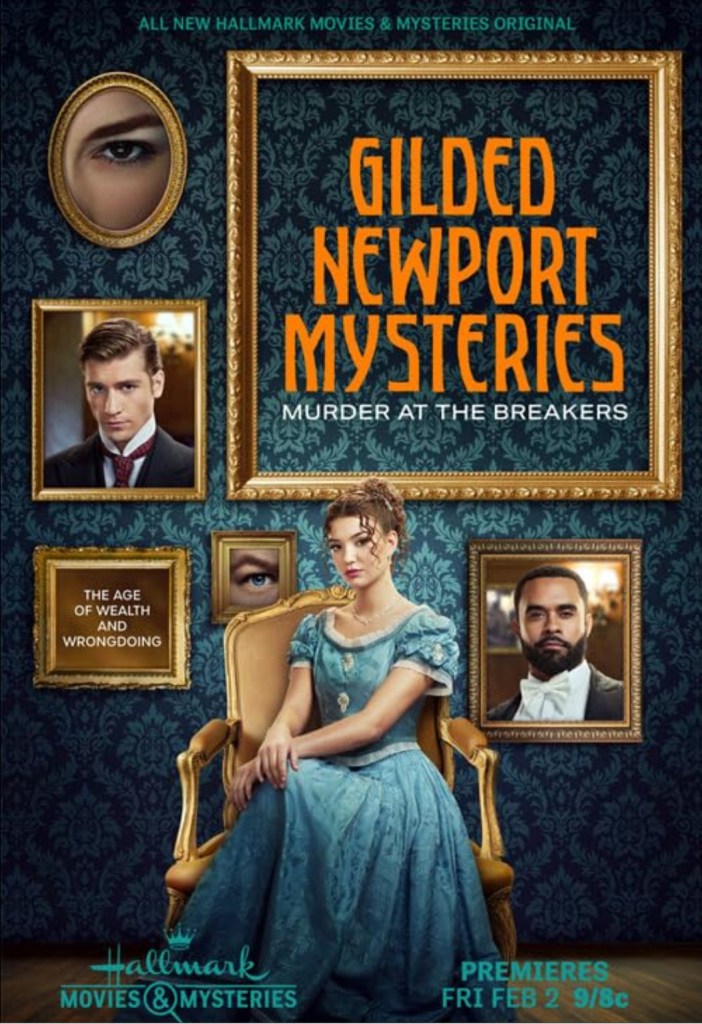
Take 3: The Truth About Spring Review

It’s been a while since I last wrote a movie review. As I just wrote about a Hallmark Hall of Fame film, I wanted to talk about something beyond the realm of Hallmark. I recently remembered a movie I had heard good things about for years. That movie is 1965’s The Truth About Spring! I have covered some of Hayley Mills’ films in past reviews on my blog. These titles are Summer Magic, The Moonspinners, and The Trouble with Angels. While I found Summer Magic to be just ok, I did like The Trouble with Angels and The Moonspinners. Since The Truth About Spring revolves around Hayley’s character traveling, I wondered if I’d like this film as much as The Moonspinners. That answer will be discovered as we sail through this review of The Truth About Spring!

The Truth About Spring poster created by Quota Rentals Limited and Universal Pictures

Things I liked about the film:

The acting: In The Truth About Spring, Hayley portrays the protagonist, Spring Tyler. One of the few characters she interacts with is William Ashton, portrayed by James MacArthur. When William prepares for his voyage on Tommy’s ship, Spring is curious about an outfit William packed. After she asks about the outfit in question, William explains it is a set of pajamas, which he wears for sleep. Spring’s face goes from inquisitiveness to sad realization, as she confesses how she doesn’t own pajamas. This subtle change in facial expressions shows how Spring is being exposed to a different way of living life. Because of Hayley’s acting abilities, the aforementioned realization appeared realistic!

Spring is not the only character William interacts with. Another key character in The Truth About Spring is Spring’s father, Tommy, portrayed by John Mills. During their voyage, Tommy witnesses William in his pajamas for the first time. Because Tommy is also not used to the idea of pajamas, he gives William a confused look. Meanwhile, William displays an embarrassed facial expression, as he wasn’t expecting Tommy to walk into the room. The interaction between these characters creates a moment that is awkward for both of them. John’s and William’s acting talents allow this awkwardness to radiate off the screen, making the scene feel believable!

The interior design: The majority of The Truth About Spring takes place outdoors, as the characters sail to various locations. However, there are a few scenes featuring the interior design of the characters’ ships. The sitting room in the yacht of William’s uncle is surrounded in bleached wood. Paired with beige chairs and a large painting of flowers, this room is reflective of the affluent lifestyle of the Ashton family. On Tommy’s ship, the cabin has dark wood walls. Tommy, Spring, and William sit around a table covered in a red and white checkered pattern. The small windows are gifted with green curtains. These combined design details showcase the humbleness of Tommy and Spring’s surroundings.

The discussion of educational experiences: A consistent topic between Spring and William is education. During one of their discussions, Spring learns there are different types of lawyers. This lesson came after William told her and Tommy he had graduated from law school and passed his bar exam. On a trip to the beach, Spring explains to William how it is the seagulls’ nesting season. She knows this information because of her experiences at sea. These conversations highlight how these characters’ life experiences shaped their educational foundations. I hadn’t thought about this concept until I saw The Truth About Spring!

Sailing on the sea image created by Michele L at freeimages.com. “FreeImages.com/Michele L.”

What I didn’t like about the film:

A missed opportunity: Throughout The Truth About Spring, the characters engage in a treasure hunt. This treasure hunt was, unfortunately, not emphasized in the story. Instead, the movie splits its time between the interactions of Spring and William, as well as Tommy’s conning schemes. For me, this was disappointing because a treasure hunt can give a story intrigue, suspense, and a sense of adventure. Not emphasizing the treasure hunt is, in my opinion, a missed opportunity.

A limited amount of urgency: As I mentioned in my previous point, the film’s treasure hunt wasn’t emphasized. That creative decision caused The Truth About Spring to contain a limited amount of urgency. Within the movie’s hour and forty-two-minute run-time, a strong sense of urgency was featured in only three scenes. Most of the movie ended up feeling like an unexciting journey.

A drawn-out story: Like I said in this review, The Truth About Spring is an hour and forty-two-minutes. But the story itself was straight-forward, primarily focusing on three key characters. Therefore, this combination made the film feel drawn-out. Personally, I feel the movie should have been given a run-time of an hour and ten to fifteen minutes. That way, the script would been tighter.

Tropical island image created by Brgfx at freepik.com. <a href=’https://www.freepik.com/free-vector/island-background-design_1020626.htm’>Designed by Freepik</a>. <a href=”https://www.freepik.com/free-photos-vectors/background”>Background vector created by Brgfx – Freepik.com</a>. Image found at freepik.com.

My overall impression:

As I stated in the introduction, I have reviewed some of Hayley Mills’ films. These films range from ok to enjoyable. When it comes to The Truth About Spring, I thought it was just ok. There are aspects of the 1965 movie I like, such as the discussion of educational experiences between Spring and William. However, I didn’t find the story itself very interesting. Instead of emphasizing the treasure hunt, more focus is given to Tommy’s conning schemes. Giving this simplistic story a run-time of almost two hours didn’t help either. If you’re looking for a movie where Hayley’s character falls in love and goes on an adventure, I’d recommend The Moonspinners over The Truth About Spring. The Moonspinners contains suspense and intrigue, as well as a tighter script.

Overall score: 6 out of 10

Have you seen The Truth About Spring? What is your favorite movie starring Hayley Mills? Please tell me in the comment section!

Have fun at the movies!

Sally Silverscreen
Take 3: Hallmark Hall of Fame’s A Tale of Two Cities Review

For this year’s edition of the Broadway Bound Blogathon, I wanted to write about a Hallmark film based on a pre-existing Broadway play. My original plan was to read a play and then watch its adaptation, creating an editorial on how these works are similar or different. But, to my surprise, the films I wanted to talk about were based on plays that premiered off-Broadway. During my search for another option, I learned the Charles Dickens story, A Tale of Two Cities, was adapted into a Broadway musical in 2008. For this review, I’ve decided to write about the 1980 Hallmark Hall of Fame version of the aforementioned story. Though I haven’t read A Tale of Two Cities, I have enjoyed seeing the adaptations of Charles Dickens’ literary work. In fact, I liked 1968’s Oliver! so much, I ended up reading Oliver Twist after seeing the movie! So, where does this Hallmark Hall of Fame production stand among other stories by Charles Dickens? Turn the page on this review to find out!

Hallmark Hall of Fame’s A Tale of Two Cities poster created by Hallmark Hall of Fame Productions, Marble Arch Productions, Norman Rosemont Productions, and Columbia Broadcasting System (CBS)

Things I liked about the film:

The acting: One of the strongest scenes in A Tale of Two Cities is when Lucie (portrayed by Alice Krige) reunites with her father, Dr. Alexander Manette (portrayed by Peter Cushing), for the first time in over ten years. After mistaking Lucie as the jailer’s daughter, Alexander goes to his bed, in an attempt to avoid Lucie. As Lucie slowly approaches her father, Alexander’s voice is shaky and he is flinching, unsure of what to make of this visitor. But as soon as he discovers Lucie’s hair matches a lock of hair he kept for many years, Alexander realizes Lucie is, indeed, his daughter. Alexander’s expression changes from fear to shock, as he is in awe about seeing Lucie again. He even gives his daughter a hug. Meanwhile, Lucie is overcome with emotion, tears falling down her face and her voice quivering. Both Alice and Peter were able to effectively sell this on-screen relationship as believable and genuine. The emotions expressed felt realistic as well, which allowed this scene to be so strong!

In A Tale of Two Cities, Chris Sarandon portrays both Sydney Carton and Charles Darnay. Out of these two characters, my favorite was Sydney Carton! Throughout the story, Sydney carried himself with a laid-back confidence that made his personality appealing. Yet, more often than not, he displayed a sad look on his face. Even his eyes looked sad, giving the audience an idea of what he wasn’t saying. This made Sydney brooding and mysterious, making me want to know more about him and curious to see where his story would go. The likability of Sydney Carton can be attributed to Chris’ strong acting talents!

Attention to detail: What can make or break a historical drama is a creative team’s attention to detail. This element in the film-making process can make that story’s world feel immersive, transporting the audience to a specific period in time. The Hallmark Hall of Fame adaptation of A Tale of Two Cities takes place in the late 1700s. Jarvis Lorry’s office provides a great example of this film’s attention to detail when it comes to historical accuracy. On a nearby table, there is a large book, boasting a weathered brown cover. Rolled up paper documents and more brown covered books are scattered in the office’s foreground. In the background, Jarvis can be seen working at a desk similar to that of Ebenezer Scrooge. Though the room invites natural light through a dome shaped window, a small candle chandelier and a multi-candle candle stick provide the office with additional light.

The pacing: The Hallmark Hall of Fame adaptation of A Tale of Two Cities is two hours and thirty-six minutes. This is longer than a typical Hallmark production, which is about an hour and thirty to forty minutes. But A Tale of Two Cities never felt like a long movie to me. That’s because I was so invested in what the characters were doing, as well as the story itself. Though this is a character driven film, there was a satisfying amount of suspense, intrigue, even action. Where these elements were placed in the story made the movie feel evenly paced. The way scenes were filmed, written, and edited also contributed to the overall pace, never making parts of the story feel drawn out or wrapped up too quickly. I was so engaged watching A Tale of Two Cities, the run-time was the last thing on my mind!

The Sixth Broadway Bound Blogathon banner created by Rebecca from Taking Up Room

What I didn’t like about the film:

Inconsistent inclusion of the French Revolution: An overarching conflict in A Tale of Two Cities is the rise of the French Revolution. In the first half of the movie, this conflict seemed like an afterthought, as the primary focus was placed on events happening in England, such as Charles’ court hearing. When a certain situation causes Charles to return to France, the French Revolution played a larger role in the film’s second half. The movie’s creative team built up to the event itself, visually presenting the harsh reality of the French public versus the upper-crust of French society. However, I wish this conflict had a more consistent presence within the story.

Lack of French accents: Because the French Revolution plays a role in A Tale of Two Cities, some of the story’s key characters are French. But the 1980 Hallmark Hall of Fame presentation is one of those films where every character speaks in a British accent, despite the cultural differences. After a while, I became used to the similarity in accents. I don’t blame the actors, as all I can expect from any actor or actress is for them to try their best with the material given. In my opinion, though, I fault the movie’s casting director for not encouraging the use of French accents.

Unexplained parts of the story: On a few occasions, there were parts of A Tale of Two Cities that confused me, due to their lack of explanations. One perfect example involves Monsieur Ernest Defarge’s wife, Therese. While a man is being guillotined, Therese tells her friend she has recorded the Evrémonde family in her stitching. After this scene takes place, Therese’s statement is never clarified. In fact, that particular stitching isn’t brought up again. Parts of the story like this one should have included explanations within the dialogue.

Hand-written letter image created by Veraholera at freepik.com. <a href=”https://www.freepik.com/free-photos-vectors/background”>Background vector created by Veraholera – Freepik.com</a>. <a href=’https://www.freepik.com/free-vector/love-letter-pattern_1292902.htm’>Designed by Freepik</a>. Image found at freepik.com.

My overall impression:

Most of Charles Dickens’ adaptations I’ve reviewed on 18 Cinema Lane have garnered favorable results. Both Oliver! and Nicholas Nickelby left such a good impression on me, they respectively found a place in my year-end best movies lists! Now that I have seen A Tale of Two Cities, I can honestly say that tradition will continue! The 1980 Hallmark Hall of Fame production tells an immersive story, taking the audience on a journey through time. What also adds to the experience is the strength of the characters, as the acting and the screenwriting worked well together. From the featured props to the costume design, the creative team’s attention to detail was on full display in this film, showing the care and effort that went into this project. Looking back on A Tale of Two Cities, I can see how the story could be adapted into a Broadway musical. As a matter of fact, I think a musical movie adaptation of A Tale of Two Cities would be very interesting to watch!

Overall score: 8.9 out of 10

Have you seen any adaptations of A Tale of Two Cities? Which story Charles Dickens’ is your favorite? Let me know in the comment section below!

Have fun on Broadway!

Sally Silverscreen

Take 3: Double Nickels (1977) Review

When I reviewed The Last Child, I wondered if I would find a made-for-tv movie from the 1970s I liked. So, with this month’s Genre Grandeur on the horizon, I decided to start my quest for a good made-for-tv movie from the ‘70s! As ‘Car Chase Movies’ are the theme of May’s event, I stumbled upon the 1977 title, Double Nickels. Though not a television film, it’s a project I found intriguing. Before this year, I had never heard of the 1977 production. But blogathons can be a time when participants discover films that are new to them. Looking back on my Genre Grandeur reviews from this year, most of the movies I’ve reviewed were just ok, with one film being just fine. Will Double Nickels break that track record? Drive through this review in order to find out!

Double Nickels poster created by Smokey Productions

Things I liked about the film:

The use of music: Music is an integral part of film-making, elevating a scene’s tone and attempting to make the audience feel a certain emotion. Even during a car chase, music can heighten the intensity of the moment itself. Double Nickels gives some of their car chases background music. But the music in this film emphasizes the different types of car chases within the story. Smokey, in his police car, chases a dune buggy. When the dune buggy gets away and drives up a nearby dune, a light-hearted banjo tune plays in the scene’s background. At the beginning of the movie, there is a chase involving a motorcycle. For this scene, rock music can be heard as the chase continues. These tunes are determined by the vehicles presented in the scene. Combining these two elements, it feels like the movie’s creative team made thoughtful musical choices for their car chases!

Different types of cars: The story of Double Nickels takes place in Southern California. This particular landscape provides a reason for different types of cars to be present in the movie. When Smokey meets Jordan for the first time, she appears to be driving a red Ferrari. Earlier in the film, Ed and Smokey stop two vans in order to give their drivers a ticket. These vans, a blue one and a green one, look like they’d be found at a beach or on a campsite. The variety of vehicles highlights the diverse preferences of drivers. This creative decision also makes sense with Smokey and Ed’s profession, as they would encounter different types of cars.

Ways of presenting a car chase: There are several car chases featured in Double Nickels. These chases were presented in different ways, providing new paths for cars to travel through. During one chase, two cars drive down a flight of stairs. Another chase shows three cars driving through giant puddles of water, with the water splashing around the cars. While watching Double Nickels, I had to remind myself how this movie was created during a time when CGI and special effects were not at a film-maker’s disposal like it is today. With that in mind, I appreciated the efforts and resources it took to make these car chases look good on screen!

What I didn’t like about the film:

A small sense of urgency: When a movie includes car chases, those car chases are there for a reason. It typically means a character’s life is in danger or a character needs to achieve a mission. No matter the specific situation, a strong sense of urgency would be present, making the audience care about the characters and their story. In Double Nickels, though, the sense of urgency was small. Smokey and Ed repossess cars in order to make extra money. Eventually, they learn their operation is not what it seems. But Smokey and Ed’s entire process is presented in a very nonchalant way, forgetting about the danger that could be lurking behind them. Even when a climactic car chase takes place, I didn’t feel scared for the characters and their well-being. The small sense of urgency also caused the film’s suspense to feel limited.

Weak acting performances: No matter the production, all I can expect out of any actor is for them to try their best with the material they are given. Sometimes, those efforts are strong. But in Double Nickels, I found the acting performances weak. Serving as one example, Smokey and Ed are discussing the idea of repossessing cars. Throughout this scene, Ed and Smokey display a limited number of facial expressions. Their voices carry the same singular tone, with their conversation seeming unusually rushed. Despite Jack Vacek and Edward Abrahms’ efforts with the script, the interaction feels robotic and unnatural. The weakness of the acting performances was, sometimes, distracting.

A drawn-out story: As I’ve already mentioned in this review, Smokey and Ed repossess cars, with their plan turning out differently than expected. The movie itself is an hour and twenty-eight minutes. But the story feels longer than its run-time. The aforementioned small sense of urgency played a role in the story being drawn out. Unnecessary inclusion of story points added to this as well. Tami is in a romantic relationship with Smokey. During the movie, it is revealed she is cheating on Smokey with another man. After this reveal, Tami and her new significant other are never seen or heard from again. Smokey didn’t bring them up either. This is just one example of a part of the story that could have been cut, which would have tightened the script.

Mountain Road Colorado – Colorado Adventure Trip.

My overall impression:

There are many reasons for the creation of a movie. Sometimes, it is because a film-maker has an interesting story to tell. Other times, a studio wants to capitalize on the nostalgia of a well-known title. In the case of Double Nickels, that reason, to me, feels like an excuse to film cool-looking car chases. I will admit the car chases themselves were the highlight of this project. A significant amount of effort and thought was put into their delivery, from the musical selections to the way they were presented on screen. All of the other aspects of this story, though, fall flat. Despite the car chases in the story, the sense of urgency was small. It also didn’t help how the story felt longer than necessary. Double Nickels is the third film from the 1970s I’ve reviewed this year. With this movie being so underwhelming, I haven’t had the best of luck finding a title I like.

Overall score: 5.7 out of 10

Have you seen Double Nickels? Is there a car chase movie you like? Please let me know in the comment section below!

Have fun at the movies!

Sally Silverscreen

Take 3: Carrot Cake Murder: A Hannah Swensen Mystery Review

Here at 18 Cinema Lane, I try to review movies that have been recommended to me by my readers. Typically, I watch movies and write about them in the hopes they are good. But in the case of this review, I’m approaching this film a little differently. In the comment section of my article, ‘The Top 10 Worst Hallmark Movies of All Time’, one of my readers, Not a fan of Carrot Cake, shared their worst Hallmark movie they’ve watched. That film is the latest Hallmark Movies & Mysteries title, Carrot Cake Murder: A Hannah Swensen Mystery. Their thoughts on the movie intrigued me. It made me wonder if it was worse than Francesca Quinn, P. I., the worst Hallmark movie I’ve ever seen. So, without further delay, let’s solve this mystery by reviewing Carrot Cake Murder: A Hannah Swensen Mystery!

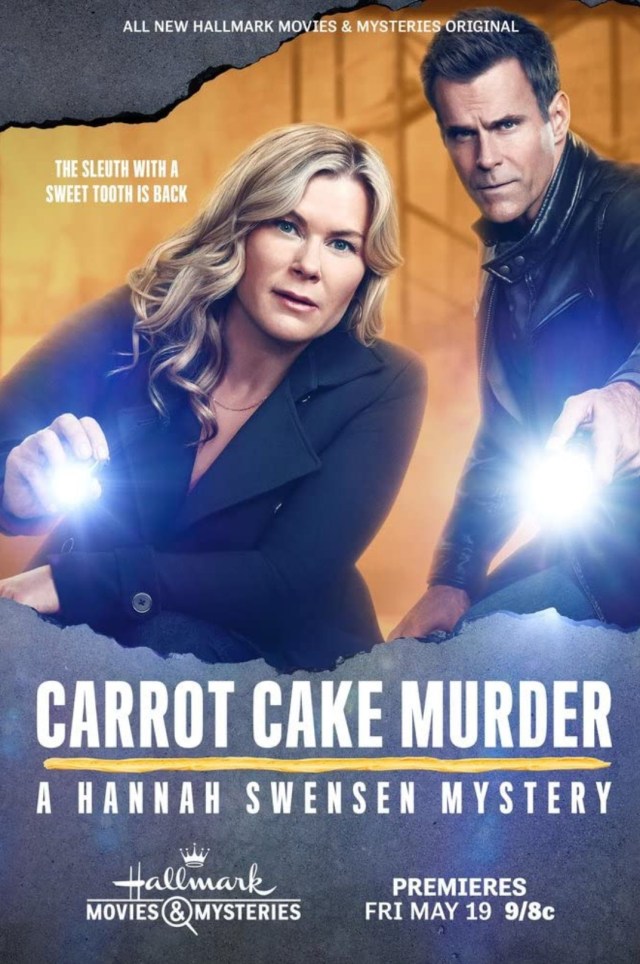
Carrot Cake Murder: A Hannah Swensen Mystery poster created by Lighthouse Pictures, Looking Glass Productions, and Hallmark Movies & Mysteries

Things I liked about the film:

The camaraderie between the cast members: In a movie series, a group of actors will become familiar with one another’s talents and personalities. This familiarity creates a consistency that can be seen in the characters’ interactions. That consistency allows these interactions to come across as believable in the eyes of the audience. As Carrot Cake Murder: A Hannah Swensen Mystery is the seventh film in its series, the camaraderie between the cast members remained continuous not only throughout this story, but also throughout the series! When Hannah, portrayed by Alison Sweeney, and Norman, portrayed by Gabriel Hogan, interacted with each other, their friendship felt genuine. As Hannah’s mom, portrayed by Barbara Niven, discussed her concerns about her daughter’s safety, that discussion between mother and daughter was presented realistically. These interactions were not only the result of the camaraderie between the cast members, but also the cast members displaying an understanding for their characters and their stories!

The inside jokes: Hallmark has a history of incorporating humor into their mystery series. Typically, this humor can be heard within the dialogue between characters or shown through hilarious situations. In Carrot Cake Murder: A Hannah Swensen Mystery, Hallmark related inside jokes were woven into the script. Frustrated by Hannah’s involvement in the murder mystery case, Mike’s boss tells Mike Hannah is acting like a podcaster. This statement is a reference to Alison’s other mystery series, Chronicle Mysteries. Over lunch, Hannah’s mother, Delores, brings up how Hannah and Mike’s upcoming wedding is never discussed. That conversation references how Hannah and Mike have been engaged since Murder She Baked: Just Desserts, a movie that was released in 2017. These inside jokes provide “Easter eggs” for fans of the Murder She Baked/Hannah Swensen series, as well as fans of Hallmark’s mystery films!

Use of clues: Some mystery stories utilize clues in order for the mystery to be solved. This is the case for several of Hallmark’s titles, including Carrot Cake Murder: A Hannah Swensen Mystery. The movie’s mystery begins in 1995. Therefore, one of the clues is a pager, which was used to determine who the victim called before they passed away. Another clue was a set of keys. But these keys helped set up a timeline for the mystery’s events. The incorporation of the clues in Carrot Cake Murder: A Hannah Swensen Mystery combined the past and present in a nice way. It also showcased a variety of objects that could be used to solve a case!

Baking essentials image created by Olga_spb at freepik.com. <a href=’https://www.freepik.com/free-vector/background-with-elements-of-the-bakery_903718.htm’>Designed by Olga_spb</a>. <a href=”https://www.freepik.com/free-photos-vectors/background”>Background vector created by Olga_spb – Freepik.com</a>. Image found at freepik.com.

What I didn’t like about the film:

The underutilization of Mike: Since the series’ inception, Mike has always played an integral role in the story of Murder She Baked/Hannah Swensen. Because he is a professional detective, he provides a unique perspective to a movie’s case, especially compared to Hannah’s perspective. But in Carrot Cake Murder: A Hannah Swensen Mystery, Mike wasn’t given much to do. Instead, Hannah solves the mystery single-handedly, relying on Mike less than in previous films. The “opposites attract” dynamic between Hannah and Mike was missing, which took away some of the series’ charm. It also does Cameron Mathison and his character a huge disservice.

Lack of “coziness”: The Murder She Baked/Hannah Swensen series has garnered a reputation for being a “cozy” mystery. Despite the stories containing murder mysteries, the stories themselves don’t feel too dark in tone. Instead, humor and pleasant character interactions break up the serious nature of the murder mystery. In Carrot Cake Murder: A Hannah Swensen Mystery, however, that “cozy” feeling was absent. While I did like the inside jokes woven into the script, the overall tone of the movie was serious. The lack of light-hearted subplots didn’t help either. In context with the series as a whole, this film causes a tonal shift that feels jarring.

Mike and Hannah’s relationship: For this part of my review, I will include spoilers for Carrot Cake Murder: A Hannah Swensen Mystery. If you have not seen this movie yet and are interested in watching it, please skip ahead to the part of my review titled “My overall impression”.

The majority of Hallmark’s mystery series contain a romantic relationship between the male and female protagonist. More often than not, these relationships grow as its series progresses. In the Murder She Baked/Hannah Swensen series, viewers have witnessed Hannah and Mike go from being neighborhood friends to a romantic couple. As I mentioned in this review, they became engaged in Murder She Baked: Just Desserts. But in Carrot Cake Murder: A Hannah Swensen Mystery, Mike and Hannah’s relationship was not prioritized as in previous movies. They didn’t spend much time together in this story. In fact, Hannah spent more time with Norman than with Mike. This creative choice caused Alison and Cameron’s on-screen chemistry to feel weaker compared to other films.

Like I said earlier in this review, Delores mentions how Hannah and Mike’s wedding hasn’t been discussed. I also mentioned how Mike and Hannah got engaged in a movie that was released over five years ago. During that time, fans of the series have been waiting for Hannah and Mike to finally walk down the aisle and say “I do”. But in the last twenty minutes of Carrot Cake Murder: A Hannah Swensen Mystery, Hannah ends her and Mike’s engagement. Why, you ask? Because she was upset Mike didn’t tell her he was filling his boss in on developments she and Mike found in relation to the story’s mystery. Hannah seems so justified in her choice, she, through a monologue, compares her ended relationship with baking bread, saying something along the lines of the ingredients needing to be respected. Personally, I feel Hannah’s decision to end her and Mike’s relationship was unnecessarily spontaneous. Looking back on this movie, it makes me wonder if Hannah and Mike breaking up was Hallmark’s excuse to discontinue this series?

Colorful image of key created by orchidart at freepik.com. Flower vector created by orchidart – www.freepik.com

My overall impression:

I chose to review Carrot Cake Murder: A Hannah Swensen Mystery in an attempt to see if it was worse than Francesca Quinn, P. I. Like I said in the introduction, I also reviewed this movie in response to one of my readers. Now that I’ve seen the film, I can honestly say, in my opinion, it is nowhere near as bad as Francesca Quinn, P. I. However, it is one of the most disappointing movies I’ve seen this year, so far. In a recent article from The Wrap, Alison Sweeney confirmed another chapter in the Murder She Baked/Hannah Swensen series. Without spoiling Carrot Cake Murder: A Hannah Swensen Mystery, all I can say is I have no idea how this is possible. Other than solving a mystery, this movie put the series in a standstill. The film’s creative team didn’t provide a reason for the fans to get excited for the next story. From Mike being underutilized to the lack of “coziness” in the latest chapter, I’m wondering if this series will be another mystery series that will unceremoniously end? I said in my editorial about Francesca Quinn, P. I. how Hallmark’s priorities no longer lie with the mystery genre. Reflecting on that film and Carrot Cake Murder: A Hannah Swensen Mystery, it seems like I may be proven right.

Overall score: 5 out of 10

Have you seen Carrot Cake Murder: A Hannah Swensen Mystery? What do you think is in store for the Murder She Baked/Hannah Swensen series? Let me know in the comment section!

Have fun at the movies!

Sally Silverscreen
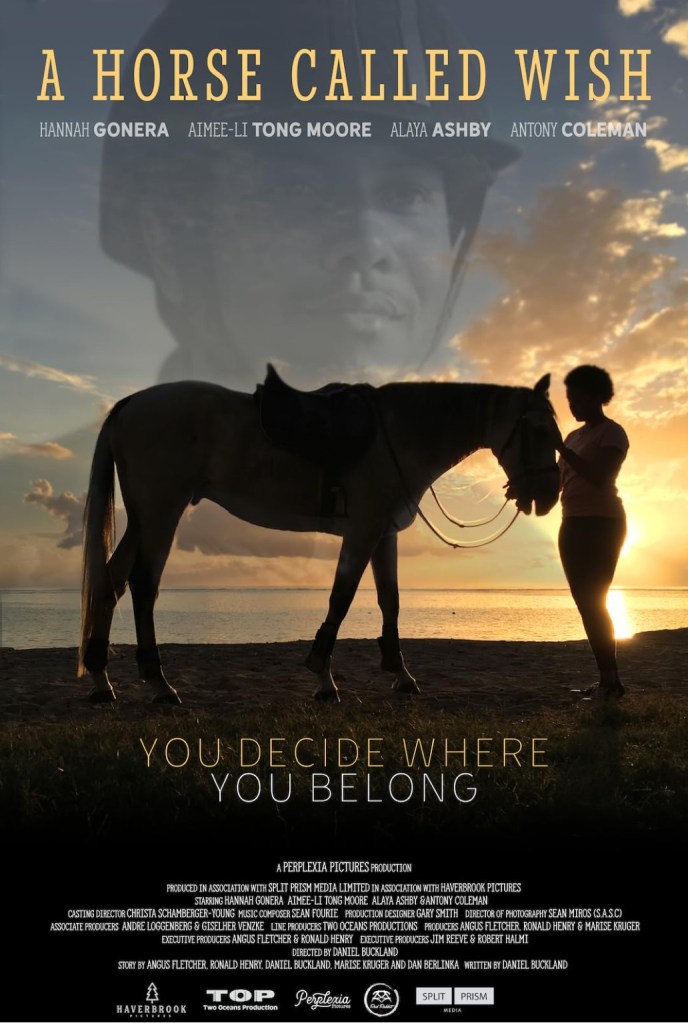
The Top Ten Best Hallmark Hall of Fame Movies from the 1990s

Whenever I’ve been nominated for The Pick My Movie Tag, the theme has revolved around Hallmark movies. First, I wrote a list of the top five Hallmark films based on a true story. Then, I published an editorial why Francesca Quinn, PI is the worst Hallmark movie I’ve ever seen. Now, after being nominated for The Pick My Movie Tag for a third time, I’m creating another Hallmark related list! Tagged by Rebecca from Taking Up Room, I was given the option to either write about my first Hallmark film or a favorite Hallmark film from the 90s. While reflecting on all the Hallmark movies released during the 1990s, I realized I had seen enough presentations from the Hallmark Hall of Fame collection to curate a top ten list. So, with a gracious thank you to Rebecca, I will share my list of the top ten best Hallmark Hall of Fame films from the 1990s! Before I start this list, I’d like to remind my readers that this article is not only based on my opinion, it is also based on the Hallmark Hall of Fame projects I’ve seen. Each movie will be listed based on when they were released on television. Since this list was written for a tag, I need to include the official tag rules, which are featured below:

The Tag’s Rules

  • Nominate one or more people to review the film or films of your choice. Or you can request they review something from a certain year, genre, or star. Everyone can review the same thing, or you can request each person cover something different. As long as it’s something they haven’t written about yet, you’re good.
  • Nominees are allowed to request a different pick for whatever reason no more than five times. Stuff happens. We all know it.
  • Nominees must thank the person who nominated them and provide a link their blog.
  • Nominees may nominate others to keep the tag going. Picking the person who nominated them is allowed, or they can nominate someone else. Maybe both.
  • All participants need to include these rules in their post, whether they’re nominees or picking nominees.
  • All participants should use the “Pick My Movie” banner or something similar in their posts.
  • Have fun!
The Pick My Movie Tag banner created by Rebecca from Taking Up Room

1. Caroline?

Released April 29th, 1990

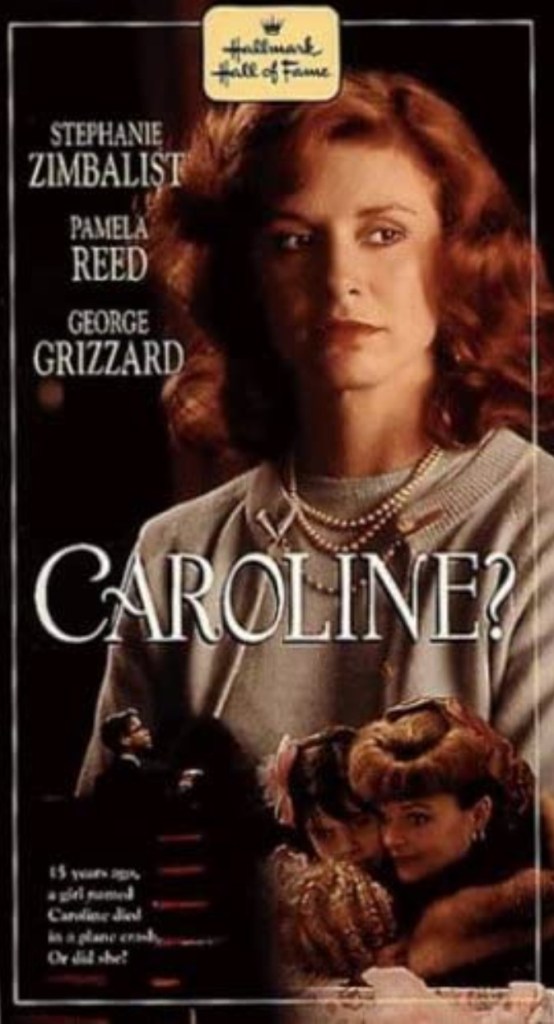
Two months ago, I reviewed Caroline? for a Blog Follower Dedication Review. When I chose to write about this film, it was an opportunity to share another VHS exclusive Hallmark Hall of Fame title with my readers. But after I saw Caroline?, it quickly became one of my favorite movies from the Hallmark Hall of Fame collection! The combination of strong acting performances and a mysterious plot made the story intriguing to watch! The inclusion of messages and themes such as learning from the past and respecting the wishes of others gave the story more depth. Even the creative team’s attention to detail was reflective in the set design, showcasing the differentiation of time within the story. If I were introducing someone to the Hallmark Hall of Fame collection, I would tell them about Caroline?!

2. Sarah, Plain and Tall

Released February 3rd, 1991

Hallmark Hall of Fame has a history of adapting pre-existing, literary source material. Based on the works I have read, these films are typically respectful toward the source material or better than the source material. From what I remember, Sarah, Plain and Tall belongs in the first category. Like Caroline?, the creative team’s attention to detail could be seen in the set and costume design. The cast as a whole was strong as well. The success of Sarah, Plain and Tall not only led to the start of the only trilogy in Hallmark Hall of Fame history, it also led to the adaptation of other stories from the Western genre within the 1990s. This is one of those titles from the collection that earned a “classic” status!

3. An American Story/After the Glory

Released November 29th, 1992

My review of An American Story/After the Glory is one of my popular movie reviews, garnering over a thousand views and counting! Looking back on my thoughts on this movie, I have an idea why it’s so popular. As I said in that review, An American Story/After the Glory kind of feels ahead of its time. That is due to the inclusion of veteran’s mental health within the story. The way veteran’s mental health, as well as the transition period from soldier to civilian, was written was done with reverence and realism. The script also emphasizes how each veteran is their own unique individual. Out of Hallmark’s miliary related projects, An American Story/After the Glory is one of their better ones!

4. Redwood Curtain

Released April 23rd, 1995

When talking about Sarah, Plain and Tall, I said Hallmark Hall of Fame’s adaptations are typically respectful toward the source material or better than the source material. In the case of Redwood Curtain, the 1995 film falls in the latter category. Hallmark Hall of Fame adapted this story from a pre-existing play. Redwood Curtain’s transition to the screen allowed the world surrounding the characters to expand, exclusively providing the Riordan landscape to the movie. Other changes in the script include a different personality for Gerri, the story’s protagonist. In the film, Gerri is a more empathetic and understanding character, which gives the audience a reason to want to root for her. Music plays a bigger role in Gerri’s life as well, showing her dedication toward her dreams.

5. The Boys Next Door

Released February 4th, 1996

Besides adapting pre-existing, literary source material, Hallmark Hall of Fame has a history of adapting pre-existing plays. 1996’s The Boys Next Door is one of those plays that made the transition to the screen. Similar to Redwood Curtain, the world surrounding the characters expands beyond the limits of the stage. This emphasizes the idea the men in the group home (Barry, Lucien, Norman, and Arnold) are trying to find their place in the world. What also works in The Boys Next Door’s favor is the strength of its cast. Through a blend of facial expressions, vocal inflections, and body language, each character is distinct from one another. These characters are also well written, which made them cherished individuals in the story!

Hallmark Hall of Fame’s Caroline? poster created by Hallmark Hall of Fame productions, CBS, and Republic Pictures Home Video

6. What the Deaf Man Heard

Released November 23rd, 1997

It has been a while since I’ve seen What the Deaf Man Heard. From what I remember, I was impressed with the 1997 presentation! This is another film with a strong cast. The interactions between the characters felt believable, making the performances interesting to watch. What the Deaf Man Heard successfully presents the idea of appearances being deceiving, this idea given in a wholesome way. I would love to revisit this movie in the future!

7. Ellen Foster

Released December 14th, 1997

Ellen Foster is another Hallmark Hall of Fame production I haven’t seen in several years. However, this is a movie I highly regard! Like a lot of Hallmark Hall of Fame titles on this list, the cast in Ellen Foster was very talented. But Jena Malone, the actress who portrayed the titular character, stole the show, as she provided a versatile performance! Because this story discusses the subjects of child abuse and neglect, the nature of the film is going to be sadder. Therefore, those who are interested in watching the movie should approach it with the right mind-set. While I won’t spoil the story, I will say the story’s resolution feels earned.

8. The Love Letter

Released February 1st, 1998

Fantasy/Magical Realism is rarely incorporated into Hallmark’s films, let alone their Hallmark Hall of Fame projects. This makes 1998’s The Love Letter stand out among the collection! The idea of time manipulation adds creativity to the movie’s identity. Historical accuracy within the story embellishes the aforementioned identity of the film. Campbell Scott and Jennifer Jason Leigh succeeded in carrying this movie, as they sold the illusion their characters were attracted to each other. With the consistent focus in the character of Scott and Elizabeth’s graceful maturity beautifully paired with her “romantic dreamer” persona, it was fascinating to watch these two characters communicate with one another!

9. Grace & Glorie

Released December 13th, 1998

As I said in the past, I am not a fan of the Hallmark movie cliché where a woman from a big city moves to a small town. Grace & Glorie contains this cliché, but doesn’t emphasize its presence in the story. Instead, the film focuses on the friendship between the titular characters. The quality of Diane Lane and Gena Rowlands’ performances made their characters’ friendship feel realistic. This made their interactions interesting to watch. Grace & Glorie contains a simpler plot that ends up working in the story’s favor. All these factors come together to create a Hallmark Hall of Fame movie that is an underrated gem!

10. Sarah, Plain and Tall: Winter’s End

Released November 21st, 1999

Between Sarah, Plain and Tall: Winter’s End and Skylark, I always thought the third movie in this trilogy was the more memorable sequel, even though I think this trilogy is one of the strongest ever made. Similar to Sarah, Plain and Tall, the 1999 film revolves around conflicts within the family, such as the arrival of Jacob’s father. However, there were moments of humor and joy that prevented the story from being too serious. The scene where Cassie says grace serves as a perfect example. It was nice to see the Witting family together again, as, from what I remember, the family was split up in Skylark. It almost feels like coming home after a long trip!

Now, the moment you’ve been waiting for, the announcing of the nominees! As I share which bloggers will receive The Pick My Movie Tag, they will be asked to write about a movie from the 1990s they don’t like. So, these five nominees are:

Screenshot of The Love Letter‘s poster taken by me, Sally Silverscreen.

Rebecca from Taking Up Room

Hamlette from The Edge of the Precipice

MovieRob from MovieRob

Cameron from The Blog Complainer

Kim from Tranquil Dreams

Have fun at the movies!

Sally Silverscreen

Take 3: To Catch a Thief Review

For The Master Of Suspense Blogathon, I was originally going to review the 1958 classic, Vertigo. I selected this film because it had been recommended by one of my readers. Unfortunately, my plans fell through at the last minute. So, I had to quickly choose an alternative. As I looked back at the blogathon’s participant list, I discovered the 1955 film, To Catch a Thief, hadn’t been selected. That is the film I am now reviewing for The Master of Suspense Blogathon. I have seen some of Alfred Hitchcock’s movies before this event. From what I know of To Catch a Thief, the 1955 production is different from other titles such as Psycho and Rear Window. But will this difference impact the quality of the film? Keep reading my review in order to solve this mystery!

To Catch a Thief poster created by Paramount Pictures

Things I liked about the film:

The acting: In To Catch a Thief, Cary Grant portrayed John Robie, a former jewel thief looking to clear his name. A man of suave charisma, John was afraid of being accused of something he didn’t do. But he never lets this fear get to him. Instead, with the talents of Cary Grant, John was confident and intelligent. Grace Kelly was also cast in To Catch a Thief, portraying Frances Stevens. Frances carried herself with dignified confidence. However, this confidence did not come across as snobbish or arrogant. It added to Frances’ likability, along with her gentle demeanor and respectful elegance. Danielle Foussard is a friend of John’s. Portrayed by Brigitte Auber, Danielle had a spunky streak in her, adding liveliness to her and John’s interactions. A scene I really liked was when John, Frances, and Danielle are swimming in the ocean together. This scene perfectly showcased their personalities, as their banter bounced among each other like a soaring beach ball. What made that scene great to watch was the joining of the acting talents of Cary Grant, Grace Kelly, and Brigitte Auber!

The scenery: Most of the car chases in To Catch a Thief are captured in long, establishing shots. This is very different from car chases in other films, where the chases are shown in medium or close up shots. To Catch a Thief’s approach to car chases emphasizes the scenery surrounding these chases. Looking back on this film’s scenery, I can understand why To Catch a Thief’s creative team would make that decision. With the majority of the production filmed in France, the story shows pieces of the French countryside and seaside. Giant green mountains and deep blue waters present an isolated oasis. A smattering of orange roofed houses perched on these mountains add to the movie’s vibrant color palette. On the French seaside, bright yellow sands welcome the deep blue waters of the ocean. Most of the story’s exterior shots feature a blue sky with a handful of clouds. Even the flowers are appealing bursts of color, boasting shades of red, pink, and even purple. To Catch a Thief is a pretty looking movie and it knows it!

The dialogue: During discussions of Alfred Hitchcock’s movies, use of music, cinematography, and lighting are typically talked about by fans and film enthusiasts. But one area of film-making I feel is overlooked, specifically when it comes to Alfred’s work, is the dialogue. This element of story-telling was a pleasant surprise in To Catch a Thief! It not only suited the characters respectively, it also sounded like the screenwriters put a lot of thought into what the characters told each other. While driving through the French countryside, John and Frances are discussing Frances’ past. As the discussion carries on, John accuses Frances of looking for a husband on her trip. But Frances responds by saying, “The man I want doesn’t have a price”. This statement represented the respectful elegance Grace consistently carried throughout the film. It also hinted at foreshadowing.

The Master Of Suspense Blogathon banner Maddy from Classic Film And TV Corner

What I didn’t like about the film:

Limited amount of urgency: At the beginning of To Catch a Thief, John learns he is accused of stealing valuable jewelry. He evens claims to have ten days in order to clear his name. You’d think with this tight timeline, there would be a strong sense of urgency in the story. But this urgency to find the truth is, unfortunately, inconsistent. Instead, more emphasis is placed on the scenery, the romance, and the “finer things in life”. While the mystery was resolved, the limited amount of urgency held the story’s suspense and intrigue back.

A small amount of suspense and intrigue: Alfred Hitchcock’s productions are known for incorporating suspense and intrigue. This reputation has earned Alfred the title of “Master of Suspense”. In To Catch a Thief, however, suspense and intrigue were only served in small amounts. Part of this problem results from the limited amount of urgency I previously talked about. Another reason for this problem is how suspense and intrigue were used sparingly instead of evenly spread out throughout the story. It got to the point where I almost forgot this story had a mystery.

Lack of suspects: A typical mystery will include a collection of suspects, individuals who may or may not have a reason to be the guilty party. These characters are presented as uniquely as possible, in order to help the audience remember them and their reasoning. To Catch a Thief lacked this ingredient. Because the mystery was not as prioritized as in other works from Alfred Hitchcock, no room was made to include suspects. There was a red herring in To Catch a Thief, but this reveal felt random. Even the reveal of the mystery’s guilty party wasn’t completely surprising.

Illustration of Paris, France created by Freepik at freepik.com. <a href=”https://www.freepik.com/free-photos-vectors/travel”>Travel vector created by freepik – http://www.freepik.com</a>. Image found at freepik.com.

My overall impression:

As I said in this review, To Catch a Thief is a pretty looking movie and it knows it. While the scenery was the film’s crown jewel, there were other aesthetically pleasing components of this production, like the costume design and the set design. When it comes to the story, though, it wasn’t as suspenseful and intriguing as other Alfred Hitchcock movies. The visuals ended up overshadowing the script. I will give Alfred Hitchcock credit where it’s due, as it seems like he tried to take a different approach to cinematic story-telling. But out of his films I have seen, I prefer titles like Strangers on a Train.

Overall score: 6.3-6.4 out of 10

Have you seen To Catch a Thief? Which titles of Alfred Hitchcock’s do you prefer? Please tell me in the comment section!

Have fun at the movies!

Sally Silverscreen

Take 3: The Last Child Review

When the future is depicted in made-for-TV movies, that production is typically presented with a distinct, futuristic aesthetic. This creative choice makes that movie’s world look and feel different from the one the audience is living in. But when I came across the 1971 film, The Last Child, I took note of how the story adopted a “contemporary” appearance. That is the reason why I’m writing about this movie for the Futurethon event! Instead of putting on a futuristic appearance, The Last Child introduces their version of the future in more subtle ways. The dialogue among the characters is how the film’s creative team brings this idea to the screen. Sometimes, futuristic stories will feature a conflict that strikes fear into the story’s characters as well as the audience. The world in The Last Child discusses the subject of population control, which presents a dire circumstance for the protagonists.

The Last Child poster created by Aaron Spelling Productions and American Broadcasting Company (ABC)

Things I liked about the film:

Stand-out performances: When I watch a movie, sometimes an actor or actress will give a performance that stands out among the movie’s cast, leaving a memorable impression on me. In The Last Child, there were three actors who gave stand-out performances! I’ve seen some of Ed Asner’s films prior to watching The Last Child. In these films, Ed’s character has typically been presented as a friendly, kind-hearted individual. But in the 1971 made-for-tv movie, Ed’s role was different from those I saw in the past. Portraying a police officer named Barstow, Ed carried his character with a no-nonsense attitude. At the same time, he incorporated a sense of confidence into his portrayal, which allowed Ed to go toe-to-toe with other actors. One of these actors was Van Heflin, who portrayed Senator George. Van also incorporated confidence in his performance. However, this form of confidence was more dignified, reflective of George’s political background. Yet, there was a kindness within George, a kindness that felt genuine. The scene where the film’s protagonists, Allen and Karen, meet George for the first time perfectly showcases this kindness, as it can be heard in George’s voice and seen in his eyes.

The last stand-out performance came from Harry Guardino! Portraying Karen’s brother, Howard, Harry presents a man who is both concerned about his influential position and scared for his family. In a scene where Howard is trying to get Karen out of the Population Control Center, Howard’s voice sounds very professional over the phone. He even sounds professional when speaking to his brother-in-law. But throughout that scene, there is fear in Howard’s eyes. Because he is in the presence of family, Howard feels he can safely express this fear. The ability to present both the professional and emotional sides of Howard was made possible by Harry’s versatile acting talents!

The cinematography: Cinematography in made-for-tv movies can be hit or miss. It can either be surprisingly good or obviously bad. But in The Last Child, I was surprised by the cinematography, as some scenes were captured in ways I wasn’t expecting. In scenes where characters were moving in public crowds, the camera would use close-up shots. The camera would also be placed in front of or behind the characters. These techniques gave the audience the illusion they were moving alongside the characters, making those scenes feel immersive.

Senator George’s house: A location in a movie is meant to visually represent the environment the characters exist in. This holds true for a character’s house. As I mentioned in this review, George is a Senator. The interior and exterior spaces of George’s house are a reflection of his power and influence. Brick and stone make up the face of his house. Large, paned glass windows hint at rooms with high ceilings and expansive square feet. Inside George’s house, luxurious details can be seen in each room. One room features a floor to ceiling, cream colored fireplace, complete with carved detailing. Another room includes a dainty white, oval table that not only boasts drawers, it also appears to be utilized as a small dining table. These details show how the creative team cared about how George’s personal living space was presented in their movie!

Futurethon banner created by Gill from Realweegiemidget Reviews and Barry from Cinematic Catharsis

What I didn’t like about the film:

An unexplained future: In my review of Night of the Comet, I said a film’s science needed to be explained, in order for the audience to understand what’s happening in the story. The same can be said if creating a story set in the future. There has to be a reason for a film’s world being so different from the audience’s. These reasons can give the audience an understanding for these differences, allowing them to contemplate how they’d respond to that film’s world. In The Last Child, though, it was never explained why the movie’s world had strict population control laws. None of the characters mentioned how these laws came to be, what led to their existence. The audience was forced to accept the world of The Last Child at face value.

Little sense of urgency: The Last Child is about a couple expecting their second child, as their first child died shortly after birth. Because of their world’s strict population control laws, only allowing one child per family, the couple has a very difficult conflict on their hands. Despite this conflict, the sense of urgency in The Last Child was far and few between. There were times when a sense of urgency was present, such as during the film’s climax. But this element of the story was not consistent. This prevented me from truly fearing for the couple’s safety and well-being. It also caused the story to feel like it had too many low-stakes.

Inconsistent technology: The use of technology is established in the world of The Last Child. In fact, the incorporation of technology was introduced toward the beginning of the film. When Allen and his friend are questioned by the police, a police officer puts their identification cards into a computer. This computer not only reveals a person’s identification number, it also records a person’s personal information. But when Allen’s wife, Karen, is taken to the Population Control Center and can’t remember her identification number, the Center’s nurse doesn’t entertain the idea of looking Karen’s number up on the computer. Perhaps this nurse didn’t have the authority to use one of these computers. However, her reason for not using it wasn’t explained in the dialogue.

New York City skyline with letters image created by Freepik at freepik.com. <a href=’https://www.freepik.com/free-vector/new-york-skyline-typographic-silhouette_719554.htm’>Designed by Freepik</a>. <a href=”https://www.freepik.com/free-photos-vectors/background”>Background vector created by Freepik</a>. Image found at freepik.com.

My overall impression:

The Last Child is the seventh made-for-tv movie from the 1970s I’ve reviewed. These seven films have ranged from decent to ok to underwhelming. The Last Child is, in my opinion, in the latter category. The idea of a futuristic story with a “comtemporary” aesthetic is one I haven’t often seen through the made-for-tv movie realm. But in The Last Child, this idea seemed better on paper than on screen. The small amount of urgency kept the story’s stakes low, preventing me from feeling scared for the protagonists’ safety and well-being. The reason for the population control laws in The Last Child was never explained, forcing the audience to accept the movie’s world at face value. Even when there were things about the film I did like, such as stand-out performances and Senator George’s house, it wasn’t enough to leave a lasting, memorable impression on me. I’m starting to wonder if I’ll ever find a made-for-tv movie from the 1970s I like?

Overall score: 5.1 out of 10

Have you seen The Last Child? Are there any futuristic movies with “comtemporary” aesthetics you like watching? Let me know in the comment section!

Have fun in the future!

Sally Silverscreen