Comparing with the Critics – Best of 1988 – Wings of Desire

This review is from my series, Comparing with the Critics. If you’d like to learn more about the series, click on the link below.

Introducing my new series, Comparing with the Critics!

Five years ago, I advocated for the release of The Crow: City of Angels’ Tim Pope cut. This version of the movie was not only supposed to be 160-minutes, it was also supposed to tell a different story from its predecessor. The Crow: City of Angels’ intended conflict showed the protagonist, Ashe, choosing between reuniting with his son, Danny, in the afterlife or staying on Earth to form a romantic relationship with Sarah, who appeared in The Crow. When Roger Ebert brought up Wings of Desire in Siskel & Ebert’s Best of 1988 episode, he said the film was “about an angel who wants to be a human because he would rather have real, physical feelings than live forever”. His explanation of Wings of Desire reminded me of The Crow: City of Angels’ intended conflict I described. Since I don’t know if and/or when the Tim Pope cut of The Crow: City of Angels will be released, Wings of Desire will be my unofficial placeholder in terms of storytelling. The other reason why I chose Wings of Desire for my Comparing with the Critics series’ Best of 1988 review is because it was on Roger’s list of the ten best films of 1988, even though both he and Gene Siskel liked it. I approached this film with an open mind because I had never seen or heard of it prior to my series. Now that I have seen Wings of Desire, I think calling it one of the best movies of the year is giving the film a little too much credit.

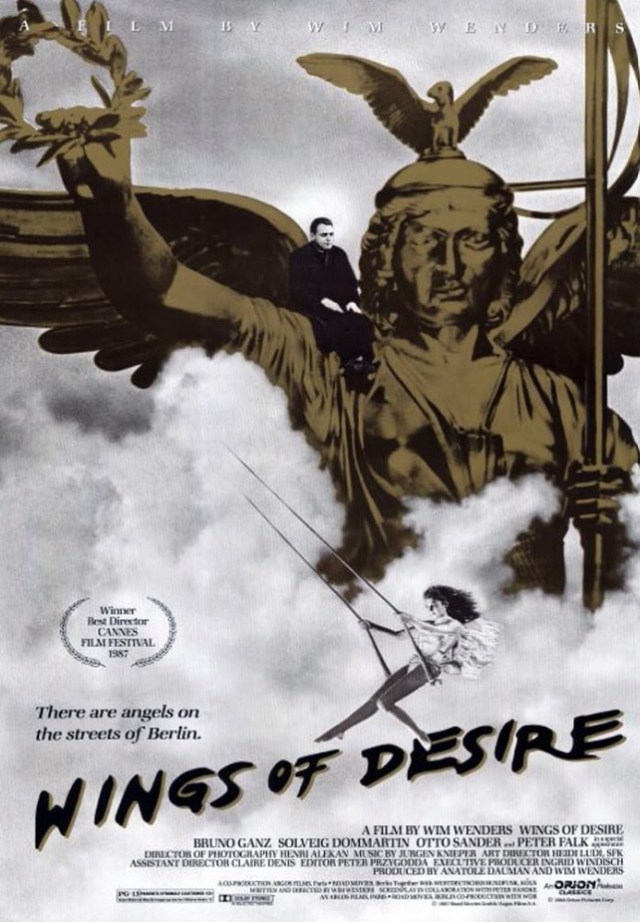
Wings of Desire poster created by Road Movies Filmproduktion, Argos Films, Westdeutscher Rundfunk (WDR), Wim Wenders Stiftung, Orion Classics, Basis-Film Verleih, and Filmverlag der Autoren

As I said in the introduction of this review, both Roger and Gene liked Wings of Desire. In an episode of Siskel & Ebert, they gave the film a thumbs-up. Roger commented on how the movie “has a mood to it. It takes the time to establish that mood”. Meanwhile, Gene points out that Wings of Desire “gives more than equal time to the angels’ thoughts”. What Roger and Gene said was achieved through mise-en-scène and music. A great example is when Damiel (portrayed by Bruno Ganz) is at a crossroads over whether he truly wants to become human or remain an angel. The majority of the scene is presented through “shaky cam”, giving the illusion Damiel is quickly turning his head and moving in circles. Sharp, quick violin sounds play over the scene, heightening Damiel’s panic and confusion. Shots of humans crying or looking frightened are interspersed throughout the scene. This creative choice reflects Damiel’s thoughts and feelings. Whenever “shaky cam” is incorporated into a movie, it is usually met with criticism due to how the film-making technique distorts a scene to the point of becoming unwatchable. However, the use of “shaky cam” in Wings of Desire is one of the few times where it works. This is because that creative decision was utilized purposefully to enhance the emotional aspect of the story.

Since there are angels in Wings of Desire, I thought adding this angel picture to my review made sense. Screenshot taken by me, Sally Silverscreen.

Wings of Desire is mostly presented in black-and-white imagery. But there are a handful of scenes shown in color. This creative choice differentiates the perspective between the angels and the humans. Damiel and Cassiel, two angels from the film’s main cast of characters, see the human world in black-and-white, as they are outsiders looking in. The humans’ environment is visually represented in color, showcasing life in 1980s West Berlin. Black-and-white and color imagery’s incorporation into Wings of Desire is purposeful as it addresses concepts like a sense of belonging, unique points of view, and what it means to be a part of a community. Wings of Desire’s creative decision reminded me of Schindler’s List, a black-and-white movie that occasionally utilized color to emphasize certain ideas.

Map of Germany image created by Macrovector at freepik.com. Background vector created by macrovector – www.freepik.com. Image found at freepik.com.

Another visual aspect of the movie I liked was Marion’s wardrobe. In Wings of Desire, Marion (portrayed by Solveig Dommartin) is a trapeze artist who is afraid her dream may be coming to an end due to the circus’ struggling finances. Her performances give her an excuse to wear gorgeous costumes! When she is first introduced in the story, Marion wears a long-sleeved leotard with an attached skirt. This costume is made up of a beige velour-like material and covered in diamond-esque gems. The shoulders of the costume feature a shiny applique. To give circus attendants the impression Marion is a flying angel, she wears large, white wings while performing in the air. The exquisiteness of Marion’s costumes makes me wish they were shown in color more consistently. I also wish Wings of Desire’s costume designer, Monika Jacobs, was nominated for, at least, one award.

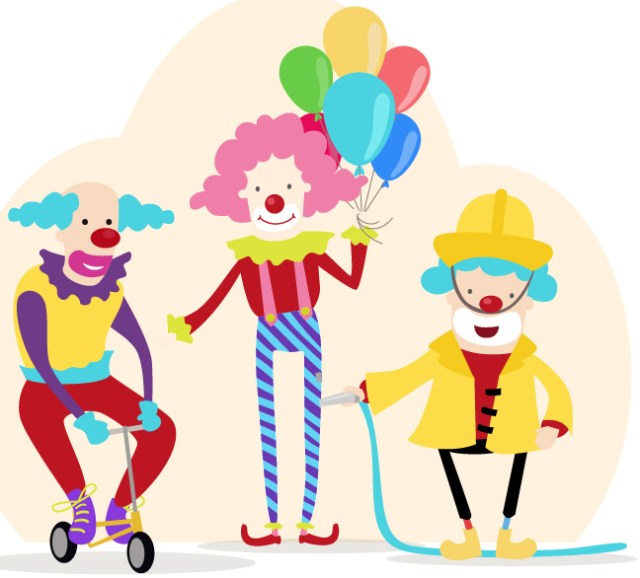
Group of clowns image created by Freepik at freepik.com. Image by Freepik

After a clip of Wings of Desire was presented on Siskel & Ebert, Gene declares “the juiciest part of this picture is how close we get to everyday people, their joys, their heartbreaks”. He also says, “director, Wim Wenders, does a real remarkable thing here; he praises life as it is lived, yet making sense out of life’s confusions to the point where we enjoy being alive in a fresh way”. While I agree with Gene about the realistic portrayal of the humans’ lives, I wish the dialogue had sounded more realistic. Every time a character speaks, they deliver philosophical speeches instead of conversations. This made the characters sound like they were spending more time expressing ideas than putting ideas into action. Though looking back on Wings of Desire, I wonder if that was intended commentary on how people spend less time solving problems and more time talking about them?

Breaking heart image created by Kjpargeter at freepik.com. <a href=’https://www.freepik.com/free-vector/broken-heart-valentine-background_1041991.htm’>Designed by Freepik</a>. <a href=”https://www.freepik.com/free-photos-vectors/background”>Background vector created by Kjpargeter – Freepik.com</a>. Image found at freepik.com.

Like I mentioned earlier in my review, Damiel and Cassiel are outsiders looking in on the human world. Despite this, both angels observe, listen, and occasionally intervene in the humans’ lives. That means Wings of Desire’s audience can hear the thoughts of the humans Cassiel and Damiel cross paths with. But because the angels are disconnected from the human world, story ideas are either loosely connected or not connected at all. A man’s parents concerned over his musical ambitions serve as one example, with the concerns themselves brought up but never resolved. There are four main plots within Wings of Desire. However, only three of them were related to each other. Plus, these three plots didn’t connect until toward the end of the movie. Waiting for the bridges of the plots to form felt tedious, in my opinion.

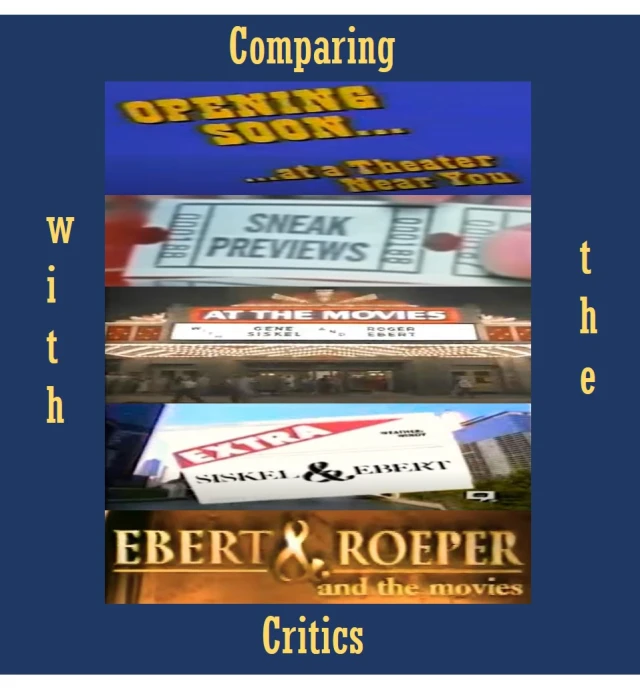
Comparing with the Critics banner created by me, Sally Silverscreen. TV show title cards created by WTTW National Productions, WTTW, Public Broadcasting Service (PBS), Lifetime Television, Tribune Entertainment, Buena Vista Television, and Disney-ABC Domestic Television

In the introduction of this review, I said calling Wings of Desire one of the best movies of the year is giving the film a little too much credit. It’s not a bad movie, I just didn’t like or love it as much as Roger and Gene did. Wings of Desire is a fine, interesting film that kept me invested in what was happening on screen. The movie also has artistic merit due to creative decisions purposefully incorporated into the project. But major flaws lie in the script. I wish dialogue between characters sounded more conversational, as it would have complimented the realistic depiction of life in 1980s West Berlin. Story ideas should have developed stronger connections to one another, especially among the four main plots. Waiting for three of those main plots to connect was, in my opinion, tedious. During their discussion of Wings of Desire on their show, Siskel & Ebert, Gene tells Roger how Wim Wenders “doesn’t sweeten life to the point that it’s false”. Looking back on my experience watching the movie, I can see, and even appreciate, Gene’s point. Wings of Desire captures Germany before the Berlin Wall would eventually fall.  The Wall itself is even featured in a few scenes. Through visuals, text, and even musical selection, the edge of change I addressed in my 1988 introduction of Comparing with the Critics was brought to life on the big screen. The creative team behind Wings of Desire played a small role in history, even if they didn’t know it at that time.

This review was brought to you by

Sally Silverscreen

Take 3: The Night Before the Night Before Christmas Review + 515 Follower Thank You

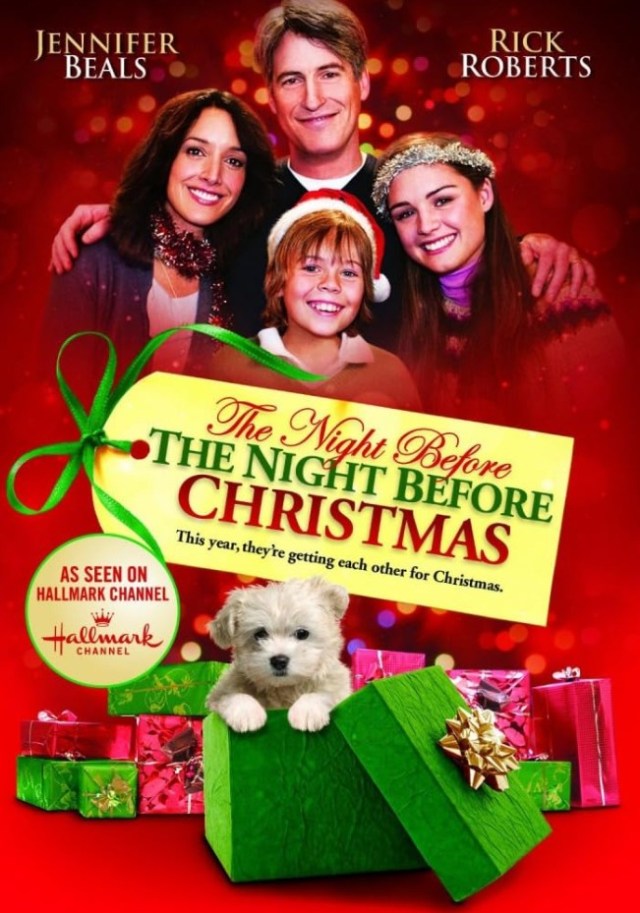
With today being Thanksgiving, I wanted to share my thanks to all the followers of 18 Cinema Lane. I am grateful for having a reason to keep writing and sharing my thoughts on film! For this Blog Follower Dedication Review, I decided to select a movie from one of my recommendations. In fact, the film I chose has been on my Pinterest Film Recommendation board for so long, it has been on the very bottom. That movie in question is 2010’s The Night Before the Night Before Christmas! Suggested by a reader named T. Ann, this is a film I actually recall watching before. Though the only clear memory I had of the movie was the teenage daughter being upset over receiving a hamburger phone for Christmas. This isn’t the first time (nor will it be the last time) I revisited a film from Christmas past. One of my more recent movie reviews was The Christmas Choir, a title I had expressed interest in watching again. But in that review, I shared how I didn’t find the film as strong as I had initially believed. What will my thoughts be on The Night Before the Night Before Christmas? Keep reading my review to find out!

The Night Before the Night Before Christmas poster created by Muse Entertainment Enterprises and Hallmark Channel

Things I liked about the film:

The acting: The Night Before the Night Before Christmas is one of those movies where I found it difficult to choose a favorite acting performance. That’s because the cast as a whole was strong! Expressions and emotions appeared genuine. Whether it was Hannah (portrayed by Rebecca Williams) looking forlorn when her younger brother, Toby, runs away or a volunteer named Yolanda (portrayed by Kim Roberts) being surprised when she receives an unexpected donation, the acting performances made watching the story unfold more enjoyable. There were even times when the strength of the acting talents helped characters become more likable. Two great examples are Toby and Nigel. The youngest member of the Fox family, Toby has such a sweet personality. Gage Munroe, the actor who portrayed Toby, does an excellent job showing what’s in his character’s heart through his face. In a scene where Toby and his mom are having a heart-to-heart conversation, Toby’s tear-streaked face and tear-filled eyes present how troubled he’s been over his parents’ decision to prioritize their jobs over their family. Meanwhile, Jordan Prentice’s portrayal of Santa’s head elf, Nigel, was very animated. His liveliness and comedic timing made Nigel one of the most memorable characters I’ve seen in a Hallmark, let alone Christmas, presentation! Out of the films I’ve seen (and reviewed) this year, so far, Jordan’s performance was one of the best.

Emphasis on giving: One of the interconnected conflicts in The Night Before the Night Before Christmas is the disappearance of Santa’s sack of presents. This particular conflict could have produced one of two types of stories; a villain stealing Santa’s sack in order to ruin Christmas or a selfish character taking the sack of presents for themselves. Instead, Santa’s sack of presents is mistaken for donations to those less fortunate. The recipients of the gifts and the volunteers of various non-profits are surprised and even grateful for the “donations” received. This decision in story-telling helps emphasize the movie’s major theme of giving. Toward the beginning of the film, Toby tells Hannah if they want Santa to give them presents, they should consider giving presents to others. What Toby said, as well as the movie itself, frames Santa in a way I hadn’t really thought of before; someone who has a reputation for giving. These two examples show the clever and thoughtful ways the creative team behind The Night Before the Night Before Christmas remind their viewers of an important component of the Christmas season!

How Christmas activities were incorporated: In Hallmark’s more recent Christmas offerings, activities related to the holiday feel like they’re incorporated into the story just for the sake of completing an unspoken checklist. This creative decision contributes to the network’s Christmas projects feeling repetitive. But in The Night Before the Night Before Christmas, whenever a Christmas activity was featured in the movie, it was there to compliment the story itself as well as the themes of the film. Santa losing his memory is the movie’s major conflict. In order to help Santa reclaim his memory, the other characters partake in activities like decorating a Christmas tree and baking cookies. Before the tree is decorated, Hannah and her mom talk about choosing a very tall tree because it looked similar to a tree the family had years prior. The activity of picking out a Christmas tree expresses one of the story’s main themes of sharing and keeping memories. What I selected as the examples for this review show how the creative team behind The Night Before the Night Before Christmas put effort and thought into how the aforementioned activities were included in the script.

Adorable Santa image created by Freepik at freepik.com. <a href=’https://www.freepik.com/free-vector/christmas-background-with-funny-santa_1324597.htm’>Designed by Freepik</a>. <a href=”https://www.freepik.com/free-photos-vectors/background”>Background vector created by Freepik</a>. Image found at freepik.com.

What I didn’t like about the film:

A drawn-out sense of urgency: As I mentioned earlier in my review, the major conflict in The Night Before the Night Before Christmas is Santa losing his memory. What gives the film a sense of urgency is how Santa must reclaim his memory before Christmas Eve so he can successfully deliver presents. While this conflict was eventually resolved, it ended up being drawn-out. The drawn-out nature of the conflict was caused by the story trying to divide its time between Santa searching for his memory, the whereabouts of his missing sack of presents, and the Fox family learning to reconnect. At one point in the movie, Nigel, as well as the other characters, frantically search for Santa’s sack of presents. The search then becomes interrupted by the characters’ attempts to help Santa get his memory back. These attempts last for about fifteen to twenty minutes, with the characters going back to looking for the sack of presents. This balancing act between the main conflict and subplots stretched out the story’s sense of urgency as well.

Things that don’t make sense: Christmas movies, like any fictional story, require the audience to suspend a certain amount of disbelief. But in The Night Before the Night Before Christmas, a few things didn’t make sense, sometimes requiring more than enough disbelief to be suspended. Like I said earlier in this review, Toby runs away. Santa and Toby’s mom find him riding on a carousel. As Toby’s mom and Santa are about to share a heart-to-heart conversation with Toby, the carousel is still moving. This raises the question of how Santa and Toby’s mom got on the carousel while it was still in motion?

Mrs. Claus’ minimal involvement: At the beginning of The Night Before the Night Before Christmas, Santa shares a heartfelt moment with Mrs. Claus. The on-screen chemistry between R.D. Reid and Marcia Bennett was so sweet and adorable, they effectually sold the idea of the loving relationship between Mrs. Claus and Santa. This aforementioned moment with Santa and Mrs. Claus is one of the few times she appears in the movie, as she is only featured in two scenes within the hour and twenty-eight-minute film. Personally, I found Mrs. Claus’ minimal involvement in the story disappointing. She could have played a larger role in helping Santa regain his memory sooner or locating his sack of presents faster.

Image of Thanksgiving dinner created by Freepik at freepik.com. <a href=”https://www.freepik.com/free-photos-vectors/background”>Background vector created by freepik – http://www.freepik.com</a>. Image found at freepik.com.

My overall impression:

In the introduction of this review, I said The Night Before the Night Before Christmas was suggested by one of my readers. Looking back on the 2010 picture, I can honestly say I’m glad it was recommended to me! The Night Before the Night Before Christmas is, in my opinion, one of Hallmark’s better films, especially among their collection of “older” titles! The acting alone helped make my movie-viewing experience enjoyable, as every actor and actress gave a solid performance. How Christmas activities were incorporated into the story was a breath of fresh air. They ended up complimenting the story itself and the film’s themes instead of trying to complete an unspoken checklist. The story’s emphasis on giving was woven into the script in clever and thoughtful ways as well. Even though The Night Before the Night Before Christmas has its flaws, it felt like the movie’s creative team got more right than wrong. A film like this one makes me wish Hallmark went back to creating titles that didn’t rely too much on a formula, tropes, and/or cliches.

Overall score: 8 out of 10

Have you seen The Night Before the Night Before Christmas? What “older” Hallmark Christmas movie would you like to check out this Christmas/holiday season? Share your thoughts in the comment section!

Have fun on Thanksgiving!

Sally Silverscreen

Take 3: The Christmas Choir Review

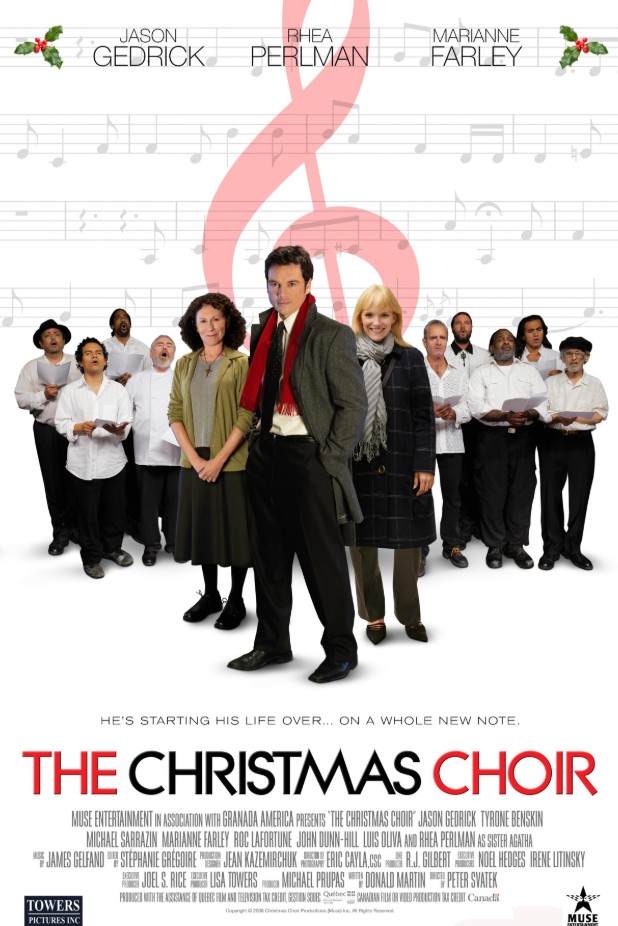
November’s theme for Genre Grandeur is “Movies about Music or Musicians”. As I was looking for a potential title to review, I remembered how this is the time of year when I write about Christmas movies. This then led me to recall my list of the top five Hallmark films based on a true story, where I brought up the 2008 movie, The Christmas Choir. Since I expressed interest in revisiting the film, I selected it for this month’s Genre Grandeur! In that aforementioned list, I stated my surprise over how The Christmas Choir isn’t a Hallmark Hall of Fame production. That’s because the story of a choir forming in a homeless shelter seems like perfect material for the Hallmark Hall of Fame collection. Though when it comes to Hallmark Hall of Fame presentations, I have wondered what the criteria is for a story or script to be chosen. While that topic would make a great editorial or list article, that will have to wait for another day. For now, let’s begin this review for 2008’s The Christmas Choir!

The Christmas Choir poster created by Muse Entertainment Enterprises, Towers Pictures, and Hallmark Channel

Things I liked about the film:

The cast’s on-screen chemistry: In my list of the top five Hallmark films based on a true story, I mentioned how the quality of the acting talents in The Christmas Choir allowed the characters to come across as realistic and endearing. To further articulate my point, the on-screen chemistry among the cast helped create interactions that felt believable. One of my favorite examples is when Juan (portrayed by Luis Oliva) sang for the first time. A rule for staying in the choir is to come to practices and performances sober. Hector (portrayed by Roc Lafortune) is not happy about this rule, angrily throwing the sheet music and storming toward the door in a huff. The other members, like Bob and Fred, and even the choir’s director, Peter, plead with Hector to stay. Worry, concern, and even disappointment are reflected on the men’s faces and in their voices. When Juan begins to sing, however, the look of surprise on everyone’s faces appears genuine. This is because, at the homeless shelter, Juan had a reputation for remaining silent. As Juan finds a nearby can and turns it into a makeshift drum, that surprise turns into joy, lifting the men’s spirits and boosting choir morale. Juan’s voice ended up becoming the glue that held The Christmas Choir together!

Incorporating Christmas’ religious elements: I said in my list of the top five Hallmark films based on a true story how it’s been years since I saw The Christmas Choir. Because of that, I had forgotten about Christmas’ religious elements woven into the film. Most of the songs performed by The Christmas Choir are religious. In fact, the only secular Christmas song the choir sings is ‘Deck the Halls’. Sister Agatha will occasionally quote the Bible and bring up Biblical examples when the situation calls for it. Even one of the movie’s overarching themes is serving as Jesus would have. Personally, I liked The Christmas Choir’s incorporation of Christmas’ religious elements because they’re not often found in Hallmark’s Christmas movies. This creative decision also allows The Christmas Choir to form its own unique identity!

The messages and themes: As I just mentioned in this review, one of the overarching themes in The Christmas Choir is serving as Jesus would have. Other themes and messages sprinkled throughout the story perfectly fit the Christmas season as well. When Peter gives a monetary donation to the homeless shelter, Sister Agatha tells him that while money is appreciated, what the homeless shelter really needs is for people to give their time. Sister Agatha’s words inspire Peter to utilize his time (and talents) to form The Christmas Choir. The conversation between Peter and Sister Agatha alone is such a perfect example of how money doesn’t always solve a problem, especially when it comes to being charitable. This overarching theme actually encourages the film’s audience to think outside the box in the season of giving.

Three Wise Men themed wish list paper image created by Freepik at freepik.com. <a href=”https://www.freepik.com/free-photos-vectors/christmas”>Christmas vector created by freepik – http://www.freepik.com</a>. Image found at freepik.com.

What I didn’t like about the film:

Too many conflicts: Within my review’s introduction, I brought up how The Christmas Choir is about a choir forming in a homeless shelter. While this is the movie’s main conflict, other conflicts like Peter’s issues with his father and The Christmas Choir competing for a permit are included in the script. As I watched the film, however, it felt like the creative team behind The Christmas Choir tried to squeeze as many conflicts as they could in an hour and thirty-minute timeframe. This choice made the movie overwhelming and the runtime feel longer. Though the 2008 movie is based on a true story, I’m not sure which parts of the script are based on fact or creative liberty. Therefore, the script should have focused on one main conflict with at least two subplots.

Sister Agatha’s inconsistent personality: When Sister Agatha was introduced in The Christmas Choir, she had a friendly personality with a bit of spunkiness. As I mentioned earlier in this review, Sister Agatha occasionally quotes the Bible and brings up Biblical examples when the situation calls for it. But as the story progressed, she became pessimistic and discouraging toward Peter and The Christmas Choir. Sister Agatha eventually returns to her spunky, friendly personality by the end of the film. However, the inconsistency of her personality is a flaw I couldn’t unsee. Rhea Perlman, who portrayed Sister Agatha, did a good job with the acting material provided. This mistake, though, lies with the screenwriter.

Things that don’t make sense: Sometimes, there were things in The Christmas Choir that didn’t make sense. One example happened at Peter’s office building. While at work, Peter’s colleague, Rita, tells Peter there are a group of homeless men singing in the office building’s lobby. Those “homeless men” were The Christmas Choir. Several scenes prior to this impromptu performance, however, Rita saw The Christmas Choir singing on television while at work in the aforementioned office building. Wouldn’t she have recognized The Christmas Choir when they spontaneously showed up in the office building’s lobby?

String of musical notes image created by Freepik at freepik.com. <a href=’https://www.freepik.com/free-vector/pentagram-vector_710290.htm’>Designed by Freepik</a> <a href=”https://www.freepik.com/free-photos-vectors/background”>Background vector created by Freepik</a>. Image found at freepik.com. 

My overall impression:

By revisiting The Christmas Choir, I was reminded of the film’s aspects I had forgotten about, like the inclusion of Christmas’ religious elements. This is one aspect of the movie I liked, as religious elements associated with Christmas are not often found in Hallmark’s seasonal presentations. I was also made aware of the flaws I overlooked. This is not a bad movie, but it wasn’t as strong of a picture as I initially believed. The abundance of conflicts in The Christmas Choir’s script made the film overwhelming and the runtime feel longer than an hour and thirty-minutes. There were not only some things in the story that didn’t make sense, Sister Agatha’s personality was also inconsistently written. But as I said in my list of the top five Hallmark films based on a true story, the 2008 picture is one of Hallmark’s more unique Christmas titles. This is due to the movie not following a formula or containing a certain set of Christmas movie tropes and cliches. What works in The Christmas Choir’s favor as well is the on-screen chemistry among the cast and the messages and themes stitched throughout the story. If you’re looking for a Christmas film from Hallmark that stands out within their festive collection, I’d recommend checking out The Christmas Choir.

Overall score: 7 out of 10

Have you seen The Christmas Choir? Are there any “older” Hallmark Christmas movies you’d love to see reviewed on 18 Cinema Lane? Please tell me in the comment section!

Have fun at the movies!

Sally Silverscreen
Take 3: Dr. Terror’s House of Horrors (1965) Review

I’d like to thank Gill (from Realweegiemidget Reviews) and Barry (from Cinematic Catharsis). If it wasn’t for the hosts of The Hammer-Amicus Blogathon V, I wouldn’t have been introduced to the cinematic world of Hammer-Amicus. Since my introduction in 2021 (when I participated in my first Hammer-Amicus Blogathon), I’ve covered three Hammer-Amicus movies on 18 Cinema Lane; Vampire Circus, The Curse of Frankenstein, and Let Me In. While Vampire Circus was ok and Let Me In was just fine, I found The Curse of Frankenstein underwhelming. Now, with a recommendation from Barry (from Cinematic Catharsis), I’ve selected 1965’s Dr. Terror’s House of Horrors as the next Hammer-Amicus presentation to review! I knew almost nothing about this movie prior to choosing it for the blogathon. But I was willing to watch the film with an open mind. Since I finally checked out Dr. Terror’s House of Horrors, it’s time to start my review and share my honest opinion!

Dr. Terror’s House of Horrors (1965) poster created by Amicus Productions, Hollywood Classics International, Regal Films International, and Paramount Pictures

Things I liked about the film:

The interior design: Dr. Terror’s House of Horrors is presented like an anthology; five passengers learn their fate from Dr. Terror himself. Throughout the film, the audience takes a peek into each character’s life as well as their living/working space. These spaces featured interesting design choices that gave them their own distinctness. In the segments titled “Werewolf” and “Disembodied Hand”, a fireplace was the focal point in one room. The fireplace in “Werewolf” was covered in a glossy black paint, while the fireplace in “Disembodied Hand” shone in a glossy blue paint. Biff Bailey’s apartment in the segment titled “Voodoo” featured a zebra patterned couch, which actually complimented the black-and-white checkered floor and black-and-white striped walls. The design choices I described stood out due to the film’s creative team utilizing materials, patterns, and colors that were more unique. I can honestly say I’ve never seen a blue fireplace until I saw Dr. Terror’s House of Horrors!

Incorporation of music: In the segment titled “Werewolf”, Jim Dawson learns about a legendary werewolf buried in the basement of the home he’s remodeling. Any time this werewolf is brought up or poses a threat to the characters living and working in the home, drumbeats, the pattering of a xylophone, and other suspenseful musical sounds can be heard. This segment utilized music to emphasis the fear factor the werewolf contributed to the story. Because Biff Bailey is a musician, music plays a large role in the “Voodoo” segment. One of the songs featured in this specific segment is ‘Give Me Love’. Performed by Sammy Coin (portrayed by Kenny Lynch), the instrumentals provided a cheery jazz tune that can put any listener in a good mood. Kenny’s smooth vocals not only complimented the song itself, but also made me wonder what his vocals would sound like in a song with a more serious tone. ‘Give Me Love’ is one of those songs that is so memorable, I’ll listen to it long after the end of the movie!

The creativity of each story: As I mentioned earlier in this review, Dr. Terror’s House of Horrors is presented like an anthology. With the segments chronicling each of the five passengers, the creativity woven into the script highlighted the uniqueness every passenger brought to the train car! The segment, “Disembodied Hand”, revolves around Franklyn Marsh. An art critic who took his job a little too seriously, Franklyn carries guilt for how he mistreated a popular artist, with his guilt represented by the disembodied hand of that artist. Meanwhile, in the segment titled “Vampire”, Dr. Bob Carroll is confronted with the possibility his wife may be a vampire. This concept gave Bob an internal conflict between loving his wife and protecting his patients. In my review of 2010’s Let Me In, I said vampire stories can be as creative as film-makers want it to be. A similar statement can be said about the horror genre, with Dr. Terror’s House of Horrors presenting strong evidence.

The Hammer-Amicus Blogathon V banner created by Gill from Realweegiemidget Reviews and Barry from Cinematic Catharsis

What I didn’t like about the film:

No clear explanation for tarot cards: Throughout Dr. Terror’s House of Horrors, Dr. Terror (portrayed by Peter Cushing), predicts each passenger’s fate by selecting tarot cards. While the tarot cards themselves are shown on screen, no clear explanation for how exactly the cards correlate with the fates was given. Before the start of the “Werewolf” segment, Dr. Terror selects two cards called “Enchantress” and “Priestess”. But after watching that segment, I was confused by what werewolves had to do with those aforementioned cards? It seemed as if the creative team behind the movie assumed their audience would already know the meaning of the cards shown in the film.

Limited sense of urgency: Each segment in Dr. Terror’s House of Horrors incorporates a horror element that poses a threat to the passengers in Dr. Terror’s train car. These segments also contain a limited sense of urgency. Most of the time, the “slice of life” parts of the story were emphasized. When a suspenseful or horrifying moment was about to happen, the segment would end and move on to the next one. This flaw was the result of squeezing five separate stories into an hour and thirty-eight-minute film. I honestly think this script would have worked better as an anthology television series.

A frustrating ending: For this part of my review, I will be spoiling Dr. Terror’s House of Horrors. If you have not seen this film and are planning on watching it, skip ahead to the part of my review titled “My overall impression”.

Like I mentioned earlier in my review, Dr. Terror uses tarot cards to predict the fates of the five passengers. After these fates are revealed, he removes the death card from the deck. This implies all the passengers will eventually die. When the passengers get off the train, they learn through a newspaper article five passengers died in a train crash. That detail clarifies the passengers from Dr. Terror’s train car did, indeed, die, with Dr. Terror himself becoming a skeleton. Personally, I found this ending frustrating because it made the previous stories amount to nothing. While I recognize the movie’s creative team was trying to create the ultimate plot twist, with the death tarot card used as foreshadowing, this creative decision almost made me feel like I wasted my time watching Dr. Terror’s House of Horrors.

Scared audience image created by Katemangostar at freepik.com. <a href=’https://www.freepik.com/free-photo/terrified-friends-watching-horror-movie-in-cinema_1027311.htm’>Designed by Freepik</a>. <a href=”https://www.freepik.com/free-photos-vectors/people”>People image created by Katemangostar – Freepik.com</a>. Image found at freepik.com.

My overall impression:

Whenever I review a movie on 18 Cinema Lane, I present my opinion as honestly as possible. In my most honest opinion, Dr. Terror’s House of Horrors was such a mixed bag. On the one hand, I appreciate the creativity woven into each of the five segments. This creativity brought distinctness to the stories, interesting interior design choices, and good incorporation of music. But, on the other hand, the ending was too frustrating for my liking. I wish the script provided clear explanations for how the tarot cards correlated with each character’s fate. I also wish there was a stronger sense of urgency throughout the film. At best, Dr. Terror’s House of Horrors was just ok. But, at worst, it left me confused and frustrated. Though I’ve only seen (and reviewed) a few Hammer-Amicus films, I’m starting to wonder if I’ll find a title that is my cup of tea?

Overall score: 6 out of 10

Have you seen Dr. Terror’s House of Horrors? Which Hammer-Amicus film would you like to check out? Please tell me in the comment section!

Have fun at the movies!

Sally Silverscreen

Take 3: The Innocents (1961) Review

Film recommendations from my readers are welcomed here at 18 Cinema Lane. These suggestions are then placed on a Pinterest board, which I use as a reference for upcoming reviews. Some movies have been on the board for so long, they’re at the very bottom. One of these titles is 1961’s The Innocents. Recommended by Maddy (from Maddy Loves Her Classic Films), this is a Deborah Kerr starring production that is quite different from the other projects of hers I’ve reviewed on my blog. That’s because The Innocents is classified as a horror film. Because of this distinct, I’ve been trying to find the right opportunity to talk about the movie. Hoofers and Honeys’ 4th Annual Spooky Classic Movie Blogathon became that opportunity! Deborah’s films covered on 18 Cinema Lane have fluctuated in quality. While I liked titles like The Chalk Garden and The King and I, I wasn’t a fan of Marriage on the Rocks. What will my opinion be of The Innocents? Keep reading my review to find out!

The Innocents (1961) poster created by Achilles, Flair Communications, Twentieth Century Fox, and Twentieth Century Fox Film Company

Things I liked about the film:

The acting: A large portion of The Innocents prominently features two young characters: Miles and Flora, as Deborah’s character, Miss Giddens, believes they are in danger. In stories like this, where younger characters play a significant role, it’s important to cast actors and actresses that can, acting wise, carry some of the film. Flora reminded me somewhat of Eloise (from the 2003 adaptations, Eloise at the Plaza and Eloise at Christmastime), marching to the beat of her own drum with a bit of a mischievous spirit. Meanwhile, Miles possessed the precociousness of Cedric from Little Lord Fauntleroy and the sweetness of Tiny Tim from A Christmas Carol. These concepts were displayed well through Pamela Franklin’s and Martin Stephens’ performance! Vocal inflections, facial expressions, and even body language worked in their favor, making Miles and Flora captivating characters. Because of Martin’s and Pamela’s acting talents, their convincing portrayals kept me invested in their characters’ story!

As I mentioned before, Deborah Kerr portrays Miss Giddens, who becomes Flora and Miles’ new governess. Looking back on her films, including The Innocents, I’ve noticed how expressive Deborah’s performances have been. Specifically speaking about the 1961 film, Deborah uses her eyes to display thoughts and feelings instead of just relying on dialogue. In one scene, Miss Giddens learns the truth about Miss Jessel and Peter Quint, the governess and valet who worked at the estate before Miss Giddens’ arrival. While she discovers this information from a housekeeper named Mrs. Grose, Miss Giddens’ eyes show concern, sadness, and even fear. She also raises her eyebrows from time to time, emphasizing how shocking the information about Peter Quint and Miss Jessel is. This example of Deborah’s expressiveness elaborates Miss Giddens adapting to the strange things she’s been seeing and hearing during her time at the estate. Similar to Martin’s and Pamela’s performance, Deborah’s portrayal of Miss Giddens was convincing!

The set design: The Innocents mostly takes place at the Bly estate, which belongs to Flora and Miles’ uncle. Though this story was character-driven, the set design was an underrated yet impressive component of the movie. The fireplace in the main sitting room appeared marble with a carved design. Each room features tall windows, implying the large scope of the rooms themselves. Though shown during brief moments, a detailed tapestry hung on a wall near the main stairway. Elaborate tapestry even covered a long seat in one of the rooms. Details like the ones I described emphasized how financially well-off Miles and Flora’s family is. They also helped make Bly estate visually appealing!

Mise-en-scène: In my recent review of 2010’s Let Me In, I talked about how the movie’s mise-en- scène (the way a film’s scene is presented to the audience) was one of the strengths of the movie. This was also a strength in The Innocents, as some scenes’ presentation added intrigue to the story! One evening, Miles confesses to Miss Giddens how his uncle doesn’t have time for him and his sister. At first, the conversation is shown in a medium shot. The very next shot is a close-up of Miles’ face, with light shining on his cheek to reveal a tear rolling down. Through this visual presentation, the audience is told how his uncle’s lack of acknowledgement deeply troubles Miles. It also provides possible motivation for Miles’ actions later in the film.

The 4th Annual Spooky Classic Movie Blogathon banner created by Kristen from Hoofers and Honeys

What I didn’t like about the film:

Limited horror elements: I mentioned in my review’s introduction how The Innocents is classified as a horror film. Because of this classification, I expected the script to emphasize the horror elements within the story. But these elements, like potential ghost sightings and unexplained noises, had such a limited presence in the film, they were featured in “don’t blink or you’ll miss it” moments. In fact, the script placed more emphasis on the “slice-of-life” parts of the story. As a movie blogger who doesn’t review horror movies often, I found this creative decision disappointing. Some of my interest in The Innocents waned because I don’t really find “slice-of-life” stories compelling.

Scenes that feel like padding: One evening at Bly estate, Miss Giddens stays up in the middle of the night in order to discover the cause of the strange happenings throughout the home. The majority of the scene takes place in the upstairs hallway. But the overall scene lasts over five minutes. Moments when Miss Giddens attempts to open doors and walks through the hall seem repetitive due the how long the scene is. With The Innocents having a run-time of an hour and thirty-nine minutes, some of those five minutes could have been trimmed to make the movie about an hour and thirty-four minutes. This is just one example of scenes feeling like padding.

Conclusion with little to no evidence: For this part of my review, I will spoil The Innocents. If you haven’t seen this movie and are planning on watching it, skip ahead to the part of my review titled “My overall impression”.

After witnessing what she believes is the ghost of Miss Jessel, Miss Giddens comes to the conclusion Flora and Miles are possessed by the spirits of Miss Jessel and Peter Quint. She even comes up with a plan to make the children admit this is true. But up until that point, the film doesn’t show how Miss Giddens reaches her conclusion. Little to no evidence is presented, denying the audience an opportunity to see Miss Giddens putting the pieces together. I, personally, couldn’t take her conclusion too seriously because of the lack of evidence. Miss Giddens’ weaker conclusion also added confusion to the overall story, leaving me wondering what I had just watched.

Image of ghost reading created by Freepik at freepik.com. <a href=”https://www.freepik.com/free-photos-vectors/book”>Book photo created by freepik – http://www.freepik.com</a>. Image found at freepik.com.

My overall impression:

I’m going to be brutally honest, The Innocents is one of the most confusing movies I’ve ever covered on 18 Cinema Lane. When the film ended, I audibly said, “What the heck did I just watch”? Without spoiling The Innocents, all I’ll say is I recognize how the movie’s creative team tried to give their project an ambiguous ending. But when the 1961 picture is also classified as a mystery film, that type of ending doesn’t work due to the genre being known for reaching definitive resolutions. Another flaw that contributes to The Innocents’ confusion is a conclusion with little to no evidence. That lack of evidence prevented me from taking the conclusion too seriously. Despite this confusion, the movie was intriguing enough to keep me invested in the story. The strength of the acting performances and the mise-en-scène are two factors that worked in the film’s favor. Out of Deborah’s films reviewed on 18 Cinema Lane, The Innocents was just ok. While there are things about the movie I liked, the overall execution could have (and should have) been stronger.

Overall score: 6.5 out of 10

Have you seen 1961’s The Innocents? What “classic” horror movies do you like watching? Let me know in the comment section!

Have fun at the movies!

Sally Silverscreen
Take 3: Let Me In (2010) Review

I apologize to my readers for my lack of blog posts these past two weeks. I’ve been working on an editorial I’m publishing on Halloween. Researching, writing, and curating that editorial has taken up a lot of time. But I wasn’t going to miss out on participating in Taking Up Room’s Secret Places and Trippy Houses Blogathon, especially since my selected film is a perfect choice for Halloween! When I learned one of the eligible subjects was “strange neighbors”, I was reminded how I was recommended the 2010 movie, Let Me In. Suggested by John L. Harmon, I had heard it was one of the better vampire films in the world of cinema. Since I had heard of the movie, but never saw it, I couldn’t agree or disagree with that statement. But now that I’ve finally seen Let Me In, I can now give my honest opinion about the film!

Let Me In (2010) poster created by Overture Films, Exclusive Media Group, Hammer Films, EFTI, and Relativity Media

Things I liked about the film:

The mise-en-scène: As I explained in my review of 1955’s The End of the Affair, mise-en- scène is how a film’s scene is presented to the audience. Throughout Let Me In, the way mise-en- scène was utilized presented scenes in visually creative ways. At the very beginning of the movie, a snowy forest was shown during the night. The only source of light comes from two police cars and an ambulance. A long shot slowly becomes a close-up shot, giving the audience a reason to focus on the bright vehicles. Anytime Owen and Abby look through the peephole of their apartment door, the shot is shown in a fish-eye lens. This film-making technique puts the audience in Abby and Owen’s perspective, allowing them to see what the children are seeing. It also emphasizes how, despite their differences, Owen and Abby have shared experiences like seeing who is at their door.

How music was incorporated: Music can be an effective component of film-making. It can elevate a scene’s emotions or set a scene’s tone. In Let Me In’s opening scene I just referenced in this review, a rhythmic drumbeat is one of the first sounds the audience can hear. That specific sound creates a sense of urgency, signifying danger is on the horizon. When Abby moves into Owen’s apartment building, gentle angelic-sounding singing can be heard. This is symbolic of how Owen sees Abby; an angel who will provide a light in his darkness. The two examples from Let Me In I discussed add additional context to the scenes themselves. How the film’s creative team incorporated music into the 2010 picture shows the understanding they had for how music can work in their project’s favor.

Disguising Abby’s vampire identity: Before watching Let Me In, I knew it was a vampire movie. But I was pleasantly surprised by how Abby’s vampire identity was disguised. Most of Abby and Owen’s interactions take place at night, at first seeming like just a coincidence. When Owen notices Abby isn’t wearing shoes, she states how she doesn’t feel cold. Abby even tells Owen she’s stronger than he thinks. These verbal and visual clues creatively signified how Abby was a vampire. But because of the clues’ subtlety, it leaves the audience guessing why, on the surface, Abby seems so strange. New twists on vampire cliches, like vampires avoiding sunlight, made Let Me In more unique from other vampire films.

The Secret Places and Trippy Houses Blogathon banner created by Rebecca from Taking Up Room

What I didn’t like about the film:

The audio: When I reviewed Fist of Fury, I talked about the film’s audio being one of the major flaws. I had to turn up my television’s volume in order to hear what the characters were saying. Let Me In shares this same issue. Once again, I had to raise my television’s volume just to hear the dialogue, as the characters’ speech was quiet. As I suggested in my review of the Hallmark Hall of Fame movie, Face to Face, Let Me In’s creative team should have used ADR (automated dialog replacement).

The bullying subplot: One of the subplots in Let Me In involves Owen dealing with bullies. This subplot gave Owen a conflict to resolve, with the conflict eventually reaching a resolution. But because the script prioritized Abby and Owen’s friendship, the bullying subplot wasn’t consistently focused on. In fact, Owen stands up to his bullies about an hour into this hour and fifty-six minute movie. The inconsistency of the bullying subplot also drew that story out longer than necessary.

Underutilized religious undertones: In a scene taking place at a hospital, President Ronald Reagan is delivering a speech on television. During the speech, he talks about evil being present in the world and how people are joined together by Scripture. Owen’s mother says prayers during mealtime and features religious relics in her apartment. These are some examples of the religious undertones in Let Me In. With the movie set in early 1983, I thought the “Satanic Panic” was going to play a large role in this story, especially with Abby being a vampire. However, the religious undertones present in the script were underutilized, not providing any commentary or interesting perspective. In fact, it felt like this part of the film was there just for the sake of being there.

Happy vampire image created by Freepik at freepik.com. <a href=’https://www.freepik.com/free-vector/several-vampires-ready-for-halloween_1317599.htm’>Designed by Freepik</a>. <a href=”https://www.freepik.com/free-photos-vectors/party”>Party vector created by Freepik</a>. Image found at freepik.com.

My overall impression:

Vampires are no stranger to 18 Cinema Lane. Out of the vampire movies I’ve seen (and reviewed), these projects have shown that this type of story can be as creative as film-makers want it to be. 2010’s Let Me In is an interesting and creative vampire film! Abby’s vampire identity was disguised in very clever ways, even putting new twists on vampire cliches. How mise-en-scène and music were incorporated into the movie showcases the creative team’s more unique approach to a familiar type of story. While Let Me In has its merits, it also has its flaws. Religious undertones that could have provided commentary or an interesting perspective to the script were underutilized instead. Poor audio and an overshadowed subplot also didn’t help. But the 2010 project does stand out from other vampire titles. If you don’t mind a slow-burn story that primarily focuses on the power of friendship, then I’d say give Let Me In a chance.

Overall score: 7 out of 10

Have you seen Let Me In? What kinds of movies do you like to watch around Halloween? Let me know in the comment section!

Have fun at the movies!

Sally Silverscreen

Take 3: To Be or Not to Be (1942) Review

When one of my readers recommends a movie to me, I add that title to my film recommendation board on Pinterest and then write about it in one of my reviews. A movie that has been featured on the board for a while is 1942’s To Be or Not to Be. This presentation was suggested by Patricia (from Caftan Woman), Vincent (from Carole & Co.) and Allen Rizzi. Originally, I was going to select it for an upcoming Blog Follower Dedication Review. But when I learned about Hoofers and Honeys’ Carole Lombard Blogathon, I found a good reason to write about the movie sooner! While I received recommendations of Carole’s films, I’ve only reviewed two of those which she received a starring role. The first picture, In Name Only, was fine and likable. Meanwhile, Twentieth Century, is one of the worst movies I’ve ever seen. Now that To Be or Not to Be is the third film of Carole’s I’m discussing on 18 Cinema Lane, it’ll be interesting to see where I rank this title compared to Twentieth Century and In Name Only.

To Be or Not to Be (1942) poster created by Romaine Film Corporation and United Artists

Things I liked about the film:

The on-screen chemistry of Carole Lombard and Robert Stack: In To Be or Not to Be, Carole Lombard portrays a Polish actress named Maria Tura. Toward the beginning of the movie, Maria develops an attraction for a Lieutenant named Stanislav Sobinski. Portrayed by Robert Stack, Stanislav is enthusiastic to meet Maria, especially since he’s never met an actress before. Though they shared very few scenes together, the on-screen chemistry between Carole and Robert was pleasant! The scene where Stanislav and Maria first meet is a perfect example, as their interaction felt so realistic. During the conversation, Maria confidently talks about her career, carrying an easy-going personality. But when Stanislav asks her about a farm she brought up in an interview, she is caught off guard, but uses her acting skills to adapt to what Stanislav told her. Meanwhile, Stanislav is so happy to see Maria. A genuinely bright smile is displayed on his face and his eyes light up. Because of the strength of Carole’s and Robert’s acting abilities, they sold the idea of their characters sharing a mutual relationship.

Clever writing: While good writing receives praise and accolades, clever writing can, sometimes, become underappreciated. This is why I take the time to address when a movie’s script contains clever writing. That was certainly the case for To Be or Not to Be, as I was impressed with some of the writing in the film. A great example can be heard during a conversation between Maria and her husband, Joseph. She accuses him of seeking opportunities to steal attention away from her. Maria even claims, “if we should ever have a baby, I’m not so sure I’d be the mother”. Joseph reassuringly tells his wife, “I’m satisfied to be the father”. The aforementioned conversation could have been straightforward, which would have made it sound typical. But the screenwriting, as well as Jack Benny’s delivery, allowed scenes like this one to be memorable!

How war was incorporated in the film: Some of the opening shots in To Be or Not to Be focus on shops in Warsaw, Poland, specifically the names of those who own these shops. When, later in the movie, war breaks out in Poland, those same shops are burned down, torn to shreds, or collapsed. The names on those shops are also destroyed. These shots are a good representation of how war ruins not just buildings, but livelihoods, daily routines, and human connections. One of the actors who performs alongside Maria and Joseph is Greenberg. When he first observes the destruction in his neighborhood, he quotes Shylock’s monologue from the play, The Merchant Venice. This quote spoken against the backdrop of Poland during World War II changes the context of the quote itself, making it seem relevant to the story of To Be or Not to Be. Through visuals and the script, the film’s creative team addressed the seriousness of war and its impact on anyone of any profession.

The Carole Lombard Blogathon banner created by Kristen from Hoofers and Honeys

What I didn’t like about the film:

A dialogue heavy story: Dialogue is an important component of any movie. It helps the audience learn more about the characters, discover potential plot twists, and follow along with the story. But in the case of To Be or Not to Be, the script was very dialogue heavy. There were long stretches of time where characters shared conversations with each other. This is the result of how much the creative team relied on telling instead of showing. If one isn’t actively paying attention to the story, they may miss important details. Had play performances or more action-focused scenes been evenly sprinkled throughout To Be or Not to Be, it would have created a balance between what the characters say and what the characters do.

The run-time: IMDB lists To Be or Not to Be’s run-time as an hour and thirty-nine minutes. This run-time, to me, seemed much longer. The long stretches of time of characters’ conversations I already mentioned made the film feel drawn-out. There are also parts of the story that don’t lead anywhere, such as Maria’s concerns about Joseph trying to steal attention away from her. If the script had been trimmed down, the run-time of To Be or Not to Be could have been an hour and thirty minutes or less.

Inconsistent sense of urgency: As I discussed earlier in this review, To Be or Not to Be takes place in Poland during World War II. The characters are directly impacted by this global conflict, even going undercover to stop the Nazis. These parts of the story create a sense of urgency. But this sense of urgency isn’t consistent within the 1942 presentation. That flaw was caused by the dialogue-heavy scenes I referenced in my review. These scenes’ length of time takes away from moments where immediate situations can be resolved. The imminent threat of war is also placed to the side because of the dialogue-heavy scenes. Having a more consistent sense of urgency would have strengthened the suspense and intrigue in To Be or Not to Be.

Theater seats image created by weatherbox at freeimages.com. “FreeImages.com/weatherbox.”

My overall impression:

Last year, I reviewed For Me and My Gal, a film I ended up liking. One of the reasons why I gave that movie a good review is because of how World War I was incorporated into the script. With a steady progression and subtle changes, realism was woven into a musical like For Me and My Gal. I’d actually prefer that movieover To Be or Not to Be. Though To Be or Not to Be is a fine, interesting film, the run-time felt longer than an hour and thirty-nine minutes. The story’s sense of urgency was inconsistent and the script was too dialogue-heavy. However, there are merits within the 1942 title. I wish Carole and Robert shared more screen-time together because their on-screen chemistry was pleasant. How war was incorporated in the film allowed the creative team to show the seriousness of war and its impact on anyone of any profession. I also liked the movie’s clever writing. Compared to the other films of Carole’s I’ve written about, Twentieth Century and In Name Only, To Be or Not to Be is somewhere in the middle. With over seventy movies on her IMDB filmography, I have plenty more projects of Carole’s to check out!

Overall score: 7 out of 10

Have you seen To Be or Not to Be? Would you like to see me review more of Carole Lombard’s movies? Let me know in the comment section!

Have fun at the movies!

Sally Silverscreen

Take 3: Fist of Fury Review

Years ago, on 18 Cinema Lane, I admitted I had never seen any of Bruce Lee’s films. Since admitting that, I wanted to find the perfect opportunity to review a movie from his filmography. Now, I finally received that opportunity because of one man. In one of his interviews, Stefan “Princ” Zdravković said he watched Bruce Lee’s films when he was a kid. Ever since I saw that interview, I made a promise to review one of Bruce’s movies on Princ’s birthday. When I discovered Princ’s birthday was on September 29th, I knew I found a chance to fulfill that promise. Therefore, for this review, I have selected 1972’s Fist of Fury! Martial arts films are rarely covered on 18 Cinema Lane. Despite this, the ones I’ve seen (and reviewed) have been enjoyable. So, will I find Fist of Fury enjoyable as well? Read my review to find out!

Fist of Fury poster created by Golden Harvest Company, Nova Media, and Legend Films

Things I liked about the film:

The acting: Bruce Lee has earned a good reputation for his mastery of marital arts skills. However, based on my experience watching Fist of Fury, I believe Bruce is a stronger actor than most people give him credit for. A scene taking place after Huo Yuanjia’s funeral is the perfect example. Bruce’s character, Chen, is devastated by the loss of his martial arts teacher. He sits in silence and bears a serene yet sad look on his face as he tries to shut out the world around him. But as soon as his peers bring up how Huo Yuanjia died of pneumonia, Chen snaps into anger, shouting in denial with a fierce look in his eyes. This quick transition of emotions was flawless, making Bruce’s performance memorable! Another strong acting performance in Fist of Fury came from Ping-Ou Wei. Portraying an interpreter for a Japanese martial arts school named Wu, Ping-Ou effectively showcased a character that was smarmy and dislikable. This was achieved through vocal inflections, expressive eyes, and even tilts of the head. I actually looked forward to seeing Ping-Ou’s performance because it was that good!

Martial arts choreography: When I choose to watch a martial arts film, especially one starring Bruce Lee, I expect to see scenes featuring really good martial arts choreography. I can honestly say the choreography in Fist of Fury is excellent! All the execution of the movements are sharp and precise. Each duel looked like an intricate and calculated dance, with every opponent delivering strength and agility. Even the incorporation of swords and nunchucks showed how opponents use strategy to gain the upper hand. It also helps how each duel Chen battled in increased in intensity, building up to the movie’s climax. With everything I said, all the martial arts scenes maintained the excitement within the story!

Clever writing: Toward the beginning of Fist of Fury, Wu and two students from a Japanese martial arts school deliver a hand-written threat to Chen and his peers at the Chinese martial arts school. One of the students who accompanied Wu says if Chen defeats the Japanese martial arts school students, he’ll eat his words. Later in the film, when Chen goes to the Japanese martial arts school, he does defeat every student there. He then rips up the hand-written threat his school received earlier and forces two of the Japanese martial arts school students to, literally, eat their words. This is just one example of how some of the writing in Fist of Fury was clever!

Higher stakes: As I mentioned earlier in this review, Chen’s martial arts teacher, Huo Yuanjia, passed away. But Chen believes foul play was involved. Throughout the story, he vows to find the truth about what happened to his teacher. Meanwhile, a Japanese martial arts school wants to assert their dominance over the Chinese martial arts school. They go so far as to destroy property and threaten to close the Chinese martial arts school down. These parts of the story created higher stakes, giving the audience a reason to care about Chen and his wellbeing, as well as that of his peers. The higher stakes in Fist of Fury also brought suspense and intrigue to the overall presentation!

Birthday party set-up image created by Freepik at freepik.com. <a href=”https://www.freepik.com/free-photos-vectors/food”>Food photo created by freepik – http://www.freepik.com</a>. Image found at freepik.com.

What I didn’t like about the film:

The sporadic incorporation of the mystery: Like I brought up in my point about Fist of Fury’s higher stakes, Chen vows to find the truth about what happened to his teacher, as he believes foul play was involved. This mystery was one of the most intriguing parts of the story. But, unfortunately, it was sporadically incorporated into the movie. That creative decision led the mystery’s reveal to be somewhat underwhelming. It also made the mystery itself seem, at times, forgotten about. I wish the mystery had a more consistent presence in Fist of Fury.

The audio: I recognize technology in the 1970s was very different from the technology of today. However, a major flaw of Fist of Fury I couldn’t ignore was the audio. I had to turn up my television’s volume because it was difficult to understand what the characters were saying. They, sometimes, sounded muffled, almost like lines were recorded in a library and added in during the film’s post-production phase. Since this is my first time watching any of Bruce Lee’s films, I don’t know if the audio has been an issue in his other movies?

Introducing a character toward the end of the film: Petrov is a Russian martial artist who is friends with the administration at the Japanese martial arts school. Portrayed by Robert Baker, Petrov also performed impressive feats, like bending metal. Even though Petrov was an interesting character, I didn’t like how he was introduced toward the end of the film. This creative decision prevented him from making a bigger impact on the story. In my opinion, if Petrov had been written out of Fist of Fury, it wouldn’t have made much difference.

Martial arts image created by Freepik at freepik.com. <a href=”https://www.freepik.com/free-photos-vectors/red”>Red vector created by freepik – http://www.freepik.com</a>. Image found at freepik.com. 

My overall impression:

Like I said in this review’s introduction, I admitted I had never seen any of Bruce Lee’s films. So, for an introduction, I’d say Fist of Fury is a good one! Yes, the martial arts choreography was impressive. But what I also liked about the 1972 movie was how engaging the story itself was. While I wish the mystery had a more consistent presence in the script, it did provide the film with intrigue and suspense. The mystery also provided the characters with higher stakes to deal with. I not only thought some of the writing was clever, I also liked the acting performances, especially Bruce’s portrayal of Chen. In fact, Bruce’s performance made watching Fist of Fury a memorable and enjoyable experience! For me, 2025 has become a year where I’ve gone out of my way to check out movies I’ve been meaning to see. So, with that said, I’m glad I finally got to see at least one of Bruce Lee’s films!

Overall score: 7.7 out of 10

Have you seen Fist of Fury? Would you like to see more of Bruce Lee’s films reviewed on 18 Cinema Lane? Let me know in the comment section!

Have fun at the movies!

Sally Silverscreen
Take 3: Kind Hearts and Coronets Review

2025 is my fourth year participating in the Rule, Britannia Blogathon. Two of my previously chosen films, Nicholas Nickleby and Kingdom of Heaven, were released in the 2000s. Meanwhile, Tommy premiered in 1975. For this year’s event, I selected a film that is much older than the ones I mentioned. That movie is 1949’s Kind Hearts and Coronets! I was recommended the film by Eric Binford from Diary of a Movie Maniac. Reflecting on my blogathon participation this year, so far, I have made a stronger effort to select films that were recommendations from my readers. Most of the recommended titles I selected for these blogging events were ok or fine. The only exception was She Wore a Yellow Ribbon, which I found disappointing. How will Kind Hearts and Coronets compare with the other titles? Keep reading my review to find out!

Kind Hearts and Coronets poster created by Ealing Studios, Michael Balcon Productions, General Film Distributors (GFD), and Eagle-Lion Films

Things I liked about the film:

The acting: Dennis Price portrays Louis in Kind Hearts and Coronets. Throughout the story, Louis consistently carries a calm, collected persona. Even a prison warden points out how calm Louis is before his execution. Along with the aforementioned persona, Louis possesses a certain charm that allows his true intentions to be undetected. These qualities fool the other characters into welcoming him into their lives and giving him exactly what he wants. The strength of Dennis’ acting abilities effectively showed how Louis could fake it until he made it. One of the characters fooled by Louis was Edith. Despite becoming a widow, she never let grief consume her. Instead, Edith had a gentle persona and was kind to everyone. During a conversation she shares with Louis, she sympathizes with his estrangement from his family. The tone in her voice indicates how hurt she is to learn this about Louis’ life. Even the look on her face shows sadness and concern. Similar to Dennis’ performance, Valerie Hobson (the actress who portrayed Edith) presented a consistent portrayal of Edith. However, the acting overall was well done!

The dialogue: When the dialogue in a script is good, it can make conversations between characters sound natural. But when the dialogue is really good, it can leave a memorable impression on the audience. In Kind Hearts and Coronets, there was some dialogue that I thought was well-written! One example is when Edith learns how Louis and his mother were estranged from the D’Ascoyne family. Disgusted to discover Louis’ rejection, Edith says “they think too much of the rights of the nobility and too little of its duties”. Through that quote, she eloquently stated how family connections should have been a top priority. In another scene, Louis is giving his friend, Sibella, compliments. He tells her she has “a face that a man could see in his dreams for the whole of his life”. During this conversation, Louis could have simply said Sibella had a beautiful or pretty face. The creative team’s effort to provide some of the dialogue with quality, however, made Louis’ compliment sound like genuine thought was put into it.

Historical accuracy: Kind Hearts and Coronets takes place in England during the Edwardian era. This means the film’s creative team needed to adopt attention to detail in order to make their production look as historically accurate as possible. Through the set and costume design, that goal was achieved, making the movie feel immersive! The women’s wardrobe serves as one example. Sometimes, Edith and Sibella wear hats when out in public. These hats are larger in size and boast intricate designs. Using materials like flowers, ribbon, and even lace, the hats symbolize the wealth Sibella and Edith possess. They also perfectly represent the fashion in the world of Kind Hearts and Coronets.

The 12th Annual Rule, Britannia Blogathon banner created by Terence from A Shroud of Thoughts

What I didn’t like the film:

Lack of suspense and intrigue: According to IMDB, Kind Hearts and Coronets is about “a distant poor relative of the Duke D’Ascoyne plots to inherit the title by murdering the eight other heirs who stand ahead of him in the line of succession”. Keeping this synopsis in mind, I expected a story where Louis’ scheme provided suspense and intrigue came from how Louis would face accountability for his actions. But as I watched the 1949 movie, I found the story lacking these elements. What the script focused on instead was the “slice of life”, mundane parts of Louis’ life. In fact, so much emphasis was placed on this aspect of the story, potential suspense and intrigue were an afterthought.

Little emphasis on the story’s moral: In Kind Hearts and Coronets, Edith quotes Lord Tennyson by stating “Kind hearts are more than coronets, and simple faith than Norman blood?” Based on that quote, I thought the moral of the film would be if Louis had just chosen kindness, maybe he could have enjoyed a duke title instead of facing repercussions for his choices. Sadly, this assumed moral was barely referenced throughout the story. Such little focus was placed on the moral of practicing kindness, I don’t even know what the moral of this story was supposed to be. Looking back on Kind Hearts and Coronets, I’m not entirely sure what this movie was trying to say.

The cliffhanger ending: For this part of my review, I will spoil Kind Hearts and Coronets. If you haven’t seen this movie and are planning on watching it, skip ahead to the part of my review titled “My overall impression”.

Louis is charged for the murder of Sibella’s husband, Lionel. Before his scheduled execution, Louis is told Lionel actually committed suicide, leaving behind a note. This discovery leads Louis to be released from prison. Upon leaving the prison, a writer approaches Louis with an offer to publish his memoir. This is when Louis realizes in horror he left his self-written life story, including his murder confessions, back in his jail cell. Then the movie ends. Louis’ realization was suspenseful, providing intrigue for who will discover Louis’ story. This suspense and intrigue could have been overarching elements throughout the movie. Therefore, I found the cliffhanger ending frustrating.

Sketch of London image created by Archjoe at freepik.com. <a href=’https://www.freepik.com/free-vector/hand-drawn-houses-of-parliament_1133950.htm’>Designed by Archjoe</a>. <a href=”https://www.freepik.com/free-photos-vectors/background”>Background vector created by Archjoe – Freepik.com</a>. Image found at freepik.com.

My overall impression:

As a movie blogger, I have reviewed films I tried to like, only to be met with disappointment. Sadly, Kind Hearts and Coronets is one of those films. IMDB classifies the 1949 movie as a “comedy”. But I didn’t laugh at all while watching it. In fact, I almost fell asleep as I watched Kind Hearts and Coronets. I was let down by the story’s lack of intrigue and suspense. What doesn’t help either is how little focus was placed on the moral to the point where I didn’t know what the moral was supposed to be. While I won’t spoil the ending, I will say it left me frustrated. There were strengths within Kind Hearts and Coronets, however. The acting overall was well-done, some of the dialogue was well-written, and I liked the film’s historical accuracy. When the script is weak, though, there’s only so much these strengths can do to save the film.

Overall score: 5.2 out of 10

Have you seen Kind Hearts and Coronets? What productions from the United Kingdom would like to check out? Let me know in the comment section!

Have fun at the movies!

Sally Silverscreen
Take 3: Ben-Hur: A Tale of the Christ (1925) Review

Back in March, I reviewed 1925’s The Phantom of the Opera in honor of the film’s one hundredth anniversary. But this is not the only movie celebrating this particular milestone. When I discovered Ben-Hur: A Tale of the Christ was also turning one hundred this year, I wanted to write about the film on 18 Cinema Lane. With “Silent Films” the theme of September’s Genre Grandeur, I found a good reason to check out this movie! Another reason why I wanted to write about Ben-Hur: A Tale of the Christ is because of how much I liked 1959’s Ben-Hur. I reviewed this version in 2019, which I ended up really liking. It was not only covered in a Blog Follower Dedication Review, it was also included on my list of ten classic movies I watched because of my blog. So, how does the original compare to the remake? Keep reading to find out!

Ben-Hur: A Tale of the Christ (1925) poster created by Metro-Goldwyn-Mayer (MGM)

Things I liked about the film:

The acting: Actors in silent films are forced to rely on the physical appearance of their performance. This means they must utilize body language, facial expressions, and emotions to express what their characters are thinking and feeling. As I write this review, it’s difficult for me to choose a favorite performance in Ben-Hur: A Tale of the Christ. Each portrayal was so captivating, watching this movie was an engaging experience! When Judah Ben-Hur is sharing drinks with Messala, he displays a relaxed smile and sits in a comfortable position, believing Messala has his best interests at heart. But after learning he and Messala can no longer put their differences aside, Judah quickly becomes saddened by this reality. His eyes express the pain of losing a friend. He also adopts a slight frown, wondering why his friend would change. Because Ramon Novarro’s performance was so strong, it was able to speak where dialogue couldn’t.

In Ben-Hur: A Tale of the Christ, May McAvoy portrays Esther, the daughter of Simonides. What I loved about her performance was how expressive it was! During a conversation with her father, Esther learns some shocking information. Her eyes become wide as a horrified expression is painted on her face. The more information she learns, the more shocked Esther appears. This consistent portrayal shows concern on her face as well. Similar to what I said about Ramon Novarro’s performance, May’s performance said so much while saying so little.

Color coded film: When I reviewed 1925’s The Phantom of the Opera, I talked about how much I liked the movie’s color coded film. Color coding this presentation gave each part of the story its own distinct significance. Ben-Hur: A Tale of the Christ utilizes color coded film as well. The way the film-making technique was incorporated into the movie signified the time of day in the story. Parts of The Nativity were shown in blue tinted film, indicating these parts were set at night. Jerusalem is covered in a light-yellow tinted film, meaning Judah and Esther first meet in the daytime. Most of the scenes that were fully in color depicted Biblical events. The creative team behind Ben-Hur: A Tale of the Christ used color coded film in very clever and visually interesting ways!

The scope: “Sword and sandal” films have been known for large set pieces and presenting them in grand ways. This was accomplished in Ben-Hur: A Tale of the Christ through the use of long and medium shots. Through the streets of Jerusalem, soldiers from various countries march together in a parade. Some long shots show off a massive stone structure that makes the people look like toy figurines. Both long and medium shots capture the magnitude of the crowds, emphasizing how many people came to see the spectacle. There were even shots that showed each group of soldiers, presenting how the groups were great in size. Because of the cinematography, Ben-Hur: A Tale of the Christ looked and felt larger than life!

The title cards: A staple of silent films is the inclusion of title cards. Without the use of dialogue, these title cards feature conversations between characters and describe what was happening in the story. But what impressed me about the title cards in Ben-Hur: A Tale of the Christ is how some of them were written. Reflecting on his conversation with Messala, an accompanying title card shares Judah’s thoughts and states “In outward seeming you are the same. But in spirit – you are a stranger”. In my opinion, this was an eloquent way of stating how Messala has changed. Later in the film, Judah proclaims “I am revenged indeed, but to what profit!” This quote on the title card addresses how, to Judah, success isn’t everything. These are just two examples of how this aspect of Ben-Hur: A Tale of the Christ went above and beyond!

White horse image created by Gabor Palla at freeimages.com. “FreeImages.com/Gabor Palla.”

What I didn’t like about the film:

The randomness of Iras: Within the second half of Ben-Hur: A Tale of the Christ, the movie introduces a character named Iras. While I liked Carmel Myers’ performance, I found Iras’ inclusion in the story random. The film establishes she is in a romantic relationship with Messala. But this relationship doesn’t really lead anywhere, as these two characters only share one scene together. A scene later, Iras flirts with Judah. Even though he is initially attracted to Iras, Judah pursues his feelings for Esther. Looking back on Ben-Hur: A Tale of the Christ, I wonder what Iras’ significance in the story was supposed to be? Was she intended to represent temptation or did she originally have a bigger role in the film, only for some of her scenes to be left on the cutting room floor?

The downplaying of Christianity/faith: I talked about liking the incorporation of Christianity/faith when I reviewed 1959’s Ben-Hur. In that review, I discuss how certain Biblical events were included into the overall story and how faith affected the characters and their actions. There were Biblical events depicted in 1925’s Ben-Hur: A Tale of the Christ as well. But unlike the 1959 movie, Christianity/faith was more downplayed in the 1925 film. The story places emphasis on Judah’s quest for revenge instead of how faith guided his life. From what I remember, Balthasar (one of The Three Wise Men) plays a greater role in the 1959 movie. This creative decision was, in my opinion, disappointing, especially since Ben-Hur is one of the better faith-based films.

Chariot statue from the Roman Empire image created by Michel Meynsbrughen at freeimages.com. “FreeImages.com/Michel Meynsbrughen.”

My overall impression:

When it comes to cinema, a lot can happen in one hundred years. Trends come and go, technology changes, and color film becomes commonly used. But in those one hundred years, there are movies that stood the test of time. They achieved this by bringing something new to the table, finding their audience, or being at the right place at the right time. Ben-Hur: A Tale of the Christ from 1925 is one of these movies. It showed what “sword and sandal” films could and should be. Through cinematography, the scope of the project created a world that feels larger than life. The way some of the film’s title cards were written went above and beyond, showing how Ben-Hur: A Tale of the Christ’s creative team put thought and effort into their presentation. Though the movie has more flaws than its 1959 remake, the 1925 movie is a solid silent film! It was entertaining and engaging, due to the strengths of the project, like the acting and how color coded film was used. I’m also incredibly grateful for the restoration and preservation efforts made for Ben-Hur: A Tale of the Christ, especially since silent films have become less common in these one hundred years.

Overall score: 8.1-8.2 out of 10

Have you seen 1925’s Ben-Hur: A Tale of the Christ? Which silent films would you like to check out? Please tell me in the comment section!

Have fun at the movies!

Sally Silverscreen