Take 3: Heart of a Stranger Review + 495 Follower Thank You

Here at 18 Cinema Lane, some of my most popular content is Hallmark related. In fact, the top three most viewed articles are two of my Sunset Over Hope Valley re-cap posts and my list of the top ten worst Hallmark movies of all time. This popularity can sometimes overshadow other genres of film as well as other made-for-TV networks. One of those networks is Lifetime. Throughout my six years of blogging, I’ve reviewed Lifetime’s movies so infrequently. So, to kind of make up for that, I selected the 2002 picture, Heart of a Stranger, for this Blog Follower Dedication Review! While I had seen this film years ago, I had vague recollections of it. All I remembered was how the protagonist received heart surgery and that the protagonist and her daughter wanted to see The Nutcracker. Since my last two Blog Follower Dedication Reviews featured films that were new to me, I thought revisiting a picture from yesteryear would be a nice change. Let’s talk about Heart of a Stranger so we can get to the heart of this review!
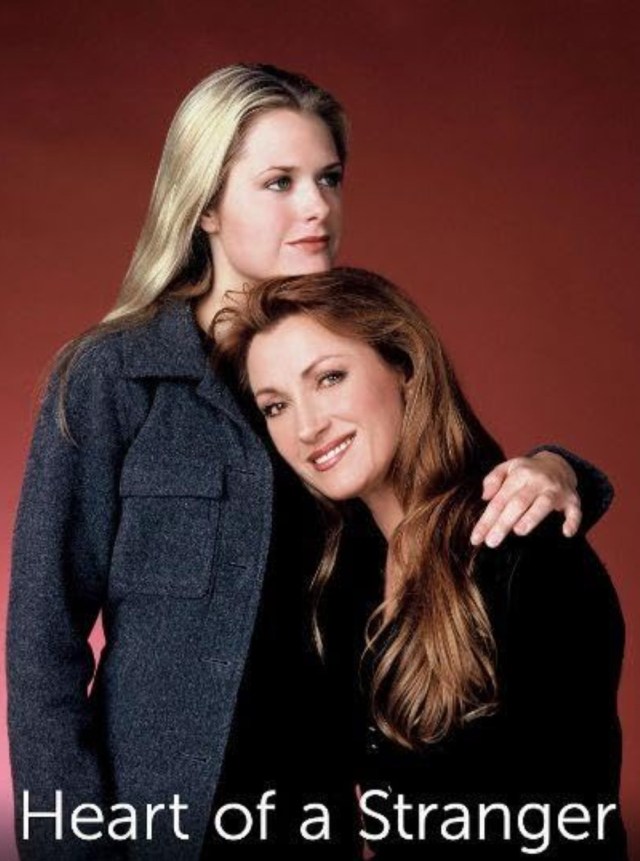
Heart of a Stranger poster created by Fogwood Films, Von Zerneck-Sertner Films, and Lifetime Television

Things I liked about the film:

The acting: In the introduction of my review, I mentioned how Heart of a Stranger’s protagonist received heart surgery and that the protagonist and her daughter wanted to see The Nutcracker. This story revolves around a mother and daughter’s changing relationship after the mother receives a heart transplant. Jane Seymour’s and Maggie Lawson’s performance created a believable familial relationship. That is what made the crux of the story work. At a local restaurant, Maggie’s character, Amanda, is excited by how her violin performance turned out. Jane’s character, Jill, is proud of her daughter. Their big smiles and warm demeanor are soon followed by changed feelings when Amanda makes a confession to her mother. Jill’s initial confusion transforms into anger as she and her daughter get into an argument. During this argument, Amanda’s frustrations are on full display, from the sharp tone in her voice to her eyes intensely focusing on her mother. Maggie and Jane helped make the scene I just described feel realistic!

Not only did Jane and Maggie create a believable familial relationship, their individual performances are believable as well! A perfect example is when Jill goes to a local car wash. Before the car wash process begins, Jill excitedly tells her daughter over the phone how she’s about to do a mundane task like going to the car wash. The reason for Jill’s excitement is how, before her heart surgery, she used to be too sick to run errands. But as the car wash continues, Jill receives flashbacks she believes are from her heart donor. These flashbacks, along with being in a confined space, cause Jill to become nervous. Her eyes, filled with concern, quickly scan her surroundings. Jill also develops a frown out of worry. Eventually, her emotions get the better of her as she runs out of her car mid-car wash. The scene ends with Jill flinching from a car wash employee. The way Jane used her acting talents to adapt to the changing emotions in that scene was fluid and never missed a beat. Jane and Maggie worked as a team carrying this film!

Amanda’s subplot: Like I previously mentioned, Jill receives a heart transplant. The surgery is not only a success, it allows Jill’s view on life to change. Amanda’s perspective on life is also impacted because of her mother’s newfound health. In her subplot, Amanda is trying to apply for a music conservatory. To prevent burnout and fatigue, she learns a new musical style from performers at a local restaurant. Using music as a compass to guide Amanda’s new journey was, in my opinion, a smart creative choice. Through Maggie’s performance as well as the screenwriting, Amanda’s dedication for her craft turned into motivation to mold her own future! This subplot also gave Amanda character development as she slowly, but surely gained independence.

The honesty surrounding post-surgery: Made-for-TV movies about characters receiving transplants usually build up to the transplant surgery. Because the story’s climax is the aforementioned surgery, there is little to no time to highlight the characters’ life post-surgery. In Heart of a Stranger, Jill’s surgery takes place at the beginning of the movie, with the rest of the film showing Jill adapting to her new heart and health. Throughout the story, Amanda reminds her mother to take her medicine prescribed after surgery. Even though the surgery was successful, Jill follows doctor’s orders to prevent her body from rejecting her new heart. Later in the film, Jill attends a support group with other transplant patients. This part of the story addresses loneliness that could occur after experiencing a major medical transformation. Weaving honesty into Heart of a Stranger presents a more realistic depiction of patients receiving transplant organs. For viewers unfamiliar with this medical process, the movie may give them an idea of what transplant patients may experience.

Heartbeat image created by Freepik at freepik.com. <a href=’https://www.freepik.com/free-vector/medical-logo_763775.htm’>Designed by Freepik</a>. <a href=”https://www.freepik.com/free-photos-vectors/logo”>Logo vector created by Freepik</a>. Image found at freepik.com.

What I didn’t like about the film:

An overshadowed mystery: According to a synopsis I read for Heart of a Stranger, the movie is about Jill trying to solve the mystery of who donated her heart. This is what led me to believe the story would emphasize Jill’s search for her donor. But when I revisited this film, I discovered the creative team chose to prioritize Jill’s new perspective on life after heart transplant surgery. I recognize how important that part of the story is, especially how it connects to the theme of taking advantage of second chances. However, the emphasis on Jill’s new perspective on life not only caused the mystery of Jill’s donor to, sometimes, be overshadowed, it gave the mystery a lack of urgency. While the mystery did get solved, I wish that had been the story’s main focus.

Unresolved parts of the story: As I just said in my previous point, the mystery of Jill’s donor was, sometimes, overshadowed because Jill’s new perspective on life was prioritized. But the aforementioned mystery is not the only overlooked part of the story. After unsuccessfully searching for information on Jill’s donor, Beth, a friend of Jill’s, shares her disapproval with Jill over locating the donor and their family. The rest of the story does not revisit this disapproval, despite showing Beth sharing Thanksgiving dinner with Jill. Later in the movie, Amanda has a fight with her boyfriend, Billy. Since this situation took place toward the end of the movie, there is little to no time to resolve this conflict. The creative team should had taken the time to tie up these loose ends instead of putting most of their eggs in one basket.

Brian’s subplot: One of Jill’s friends is a restaurant manager named Brian. When she visits the restaurant he works for, Brian shares with Jill his dream of starting his own restaurant. He even encourages her to become co-owner of the establishment. Despite this subplot receiving a satisfying conclusion, it was ignored for most of the movie. Even Brian himself made very few appearances in the story. The emphasis of Jill’s new perspective on life prevented Brian’s subplot from receiving a bigger role in Heart of a Stranger.

Blue sparkly Christmas tree image created by Macrovector at freepik.com. <a href=”https://www.freepik.com/free-photos-vectors/frame”>Frame vector created by Macrovector – Freepik.com</a>. <a href=’https://www.freepik.com/free-vector/merry-christmas-card_2875396.htm’>Designed by Macrovector</a>. Image found at freepik.com.

My overall impression:

Before I share my thoughts on Heart of a Stranger, I want to thank all the followers of 18 Cinema Lane! Whenever it’s time to write a Blog Follower Dedication Review, I try to select movies that I feel good about recommending. I would actually suggest this 2002 made-for-TV production as an ‘alternative Christmas movie’. While the story leads up to Christmas, the holiday is not the story’s primary focus. Instead, the film prioritizes a mother and daughter’s life post heart transplant surgery, as well as the mother’s new perspective on life. At best, Heart of a Stranger is a fine, decent movie. The depiction of patients receiving transplant organs is more realistic due to the honesty woven into the story. Maggie’s and Jane’s performance helped create a believable familial relationship. But compared to the types of films Lifetime creates today, especially in the 2020s, Heart of a Stranger is more mundane and pedestrian. This would explain why the network has moved away from creating movies like this one.

Overall score: 7 out of 10

Have you seen Heart of a Stranger? Are there any older Lifetime movies you’d like to see me review? Let me know in the comment section!

Have fun at the movies!

Sally Silverscreen

Evenings At The Shore: Tired of Waiting

When it comes to a new season of a television show, there’s a certain amount of waiting the viewers are expected to do. Whether it’s casting updates or the resolution of a particular story, things don’t often happen as quickly as we, the fans, would like. But this season of Chesapeake Shores is different. Since it is the final chapter, ‘Chessies’ (fans of the show) want the story to last a little longer. They want to hold on to these characters and this world as much as possible. Unfortunately, because it is the last season, time is a luxury that isn’t available. So, the only option ‘Chessies’ have is to enjoy the time the show’s creative team has given them. As Connor says in this episode, “Every day is a gift”.

Just a reminder: If you did not see the season premiere of Chesapeake Shores, there will be spoilers within this re-cap.

Chesapeake Shores season six poster created by Hallmark Media and Hallmark Channel

Season: 6

Episode: 1

Name: The Best Is Yet To Come

Abby’s story: Abby, along with most of the O’Brien family, are waiting at the hospital. During their wait, Abby receives a visit from not only Evan, but Jay as well. Throughout the night, it is revealed the voice-mail from the previous season was intended for Evan. However, he didn’t hear it until he left the hospital. The next day, Abby worries Evan doesn’t want to give their relationship a chance. But, while paying Abby an unexpected visit at work, Evan reveals how his delayed response was due to a misunderstanding. Once that small conflict is resolved, Abby and Evan agree to organize a first and second date. Because of Connor’s recent medical situation, this first date will have to be scheduled at a different time. Later in the episode, while sharing ice cream with Bree and Jess, Abby learns what Evan has planned for their first date. He shows up to the O’Brien shore with a yacht, dressed in a suit rented from Rome. After Abby dresses up in a green, floor-length gown, they share a lobster dinner created by Evan himself. They also dance, while almost sharing a kiss. However, Abby and Evan agree to take their relationship slowly.

Connor’s story: Connor is rushed to the hospital after suffering from a heart attack. He does, however, pull through, even promised a full recovery by his doctor. But due to the severity of the heart attack, Connor will have to make some healthier lifestyle choices. For the time being, he is just thankful to be alive. These new health concerns make Connor worried about his relationship with Margaret. However, Margaret reassures him they will work things out. Connor eventually returns home. When Margaret visits him at the O’Brien family’s house, he shares how, because of his recent health issues, he’ll have to take a break from working. To prevent his law firm from closing, Margaret agrees with help in any way possible.

Bree and Luke’s story: Bree and Luke spend more time with one another. This catches the attention of Mick. At The Bridge, Mick warns Luke what will happen if he hurts Bree. He also offers Luke a manager job, which Luke accepts. Later in the episode, Bree finds out about Mick’s conversation with Luke. She confronts Mick about this at the O’Brien family home. Bree feels she can take care of herself. Meanwhile, Mick just wants what’s best for his daughter. For now, though, Bree and Luke are still moving forward with their relationship. During bonding time with Abby and Jess, Bree reveals she is planning on writing another story. This time, though, it won’t involve the O’Brien family.

Illustrated image of yacht created by pongpongching at freepik.com. Ship sailboat vector created by pongpongching – www.freepik.com

Jess and David’s story: David’s father is still on the run overseas. This upsets David, as the news is also upsetting his mom and sister. Throughout all of this, Jess has become David’s shoulder to cry on. However, she is having doubts over whether her support for David is enough. One day, at the Bed and Breakfast, an FBI agent pays David a visit. She even gives him a business card, hoping he’ll give her the information she’s looking for.

Megan’s story: Megan is still upset over her and Mick’s conversation from the previous season. When he tries to apologizes, Megan senses he’s lying. Despite this, Mick attempts to be as honest with Megan as possible. Before Connor comes home, Mick and Megan agree with Connor staying in the O’Brien family home. Megan also agrees to help Connor in any way she can. Mick wonders if this means Megan is giving up the job offer from Los Angeles, the one that Megan was offered in season five. Megan confirms this by stating how her son needs her, also stating how she will never leave him again.

Heartbeat image created by Freepik at freepik.com. <a href=’https://www.freepik.com/free-vector/medical-logo_763775.htm’>Designed by Freepik</a>. <a href=”https://www.freepik.com/free-photos-vectors/logo”>Logo vector created by Freepik</a>. Image found at freepik.com.

Some thoughts to consider:

  • It’s honestly a shame this is the last season of Chesapeake Shores. One of the reasons why is how the show’s newer characters didn’t receive much of a chance to truly shine. Take Evan, for instance. He made a splash in the previous season, quickly becoming a fan favorite. Because of his background and Robert Buckley’s acting talents, the sky is the limit for Evan and his story. We even learned a little bit about Mandrake in this episode, with him revealing to Kevin how he was once in the military. I guess one way to look at it is the show’s cancellation is a blessing in disguise. At least we, the fans, don’t have to worry about these newer characters receiving terrible character development or stories.
  • With Chesapeake Shores’ final season receiving very little marketing and because last seasons more often than not garner bad raps, I’ve been lowering my expectations. It’s only the beginning of the season, so I’ll hold judgment for now. With the final season premiere, however, I thought it was fine. The stories weren’t deep, but they did attempt to tie up some loose ends from the previous season. From a storytelling perspective, I appreciate that effort.
  • I was pleasantly surprised to see a cat in this episode. From what I remember, there has never been a cat on any of Hallmark’s TV shows. I’d like to think Felix (the cat) will eventually become Evan’s pet. But because of how quickly he left, I’m wondering if Felix is meant to represent a symbol of some sort? Maybe he’ll visit the show’s other characters?
Evening view from the shore image created by 0melapics at freepik.com. <a href=’https://www.freepik.com/free-vector/landscape-in-a-swamp-at-night_1042860.htm’>Designed by Freepik</a>. <a href=”https://www.freepik.com/free-photos-vectors/background”>Background vector created by 0melapics – Freepik.com</a>. Image found at freepik.com.

Did you like the season premiere? Which story resolution are you anticipating? Please tell me in the comment section!

Have fun in Chesapeake Shores!

Sally Silverscreen

Take 3: The Elephant Man Review

Two years ago, I reviewed It’s a Mad, Mad, Mad, Mad, World. I chose to re-watch this movie in an attempt to give it a second chance. For the Anne Bancroft: A 90th Birthday Celebration Blogathon, I decided to do something similar with another movie. This time, the film of choice is The Elephant Man. Many years prior, I saw about ten minutes of the 1980 title.  At the time, I thought the film was boring. Upon discovering Anne starred in The Elephant Man, I thought it would give me a good excuse to re-visit this movie. It also provided a good opportunity to check out more of Anne’s filmography. So, in honor of Anne’s birthday, let’s raise the curtain on this review of The Elephant Man!

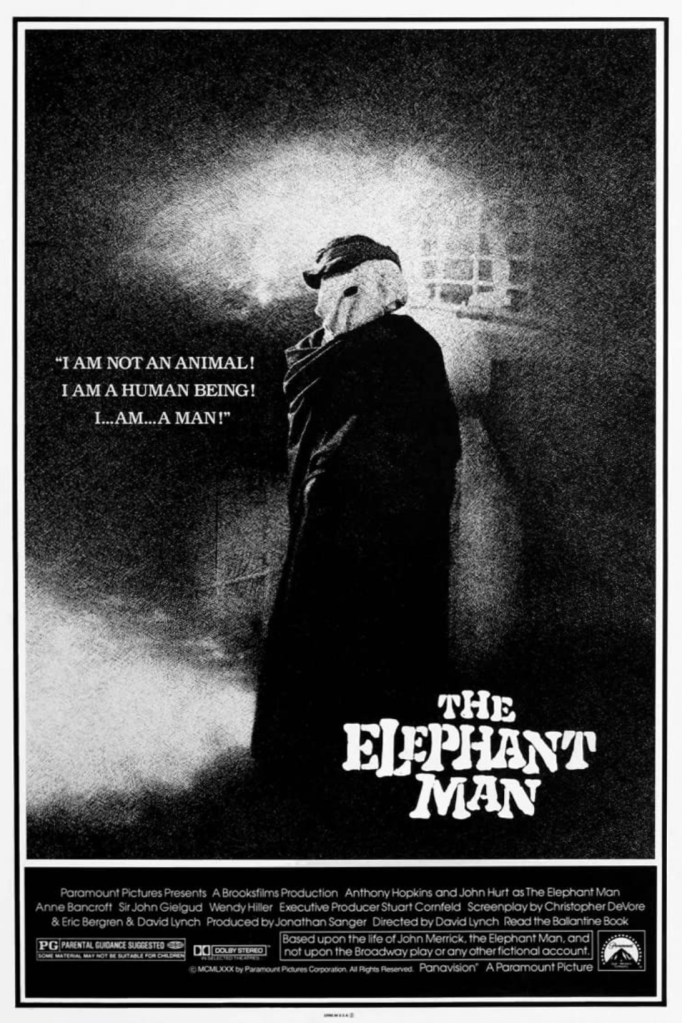
The Elephant Man poster created by Brooksfilms, Columbia-EMI-Warner Distributors, and Paramount Pictures

Things I liked about the film:

The acting: When I reviewed The Picture of Dorian Gray last week, I talked about how I was disappointed to see Peter Lawford in a smaller role, as he was one of the reasons why I watched the film in the first place. Anne Bancroft’s role in The Elephant Man made me feel similarly. She is one of the reasons why I chose to review the 1980 title. Like Peter Lawford, she appeared in the film for a short amount of time. However, I did like her acting performance! Portraying a stage actress named Mrs. Kendal, she brought a brightness to the story that was greatly needed. Her kind disposition is one of the reasons why I liked her interactions with John Merrick/ “The Elephant Man”. One of my favorite scenes is when Mrs. Kendal and John are reciting Romeo and Juliet. The way these actors conversed with one another helped create a genuinely sweet moment for both characters!

Speaking of John, I also liked John Hurt’s portrayal of the titular character! When it comes to historical figures or real-life people, it can, sometimes, be difficult to picture that person existing in the same world as us. That’s because we are, at times, so far removed from these individuals. With John’s performance, it made the realization of John Merrick’s/ “The Elephant Man’s” existence come alive. With the help of elaborate makeup, John was able to transform into another person. At the same time, he was able to bring the humanity out of his character. During the movie, John Merrick/ “The Elephant Man” builds a replica of a nearby cathedral. Even though this example is a simple one, it highlights John’s personality, as well as his desire to learn and dream.

Prior to re-watching The Elephant Man, I had seen some of Anthony Hopkins’ films. Out of the films I have seen, most of Anthony’s roles were a source of fear. For example, as I talked about in my review of Audrey Rose, his character seemed to have power over the situation. That’s because he carried the answers Ivy’s parents were desperately seeking. But in The Elephant Man, his character was not a source of fear. This gave Anthony different material to work with. While portraying Dr. Frederick Treves, he came across as charming. Frederick always had his heart in the right place, going to the ends of the earth for John Merrick/ “The Elephant Man”. But there was one scene when Frederick was angry for the right reasons. In that scene, he was truly scary, from angrily yelling to pushing someone across a room. However, this incident was meant to show how one’s suffering can cause another person to react.

The use of black-and-white imagery: Because this story takes place in the Victorian era, the creative team chose to present their project in black-and-white imagery. I found this to be an interesting choice, especially since the film was created during a time when color cinematic imagery was available. Whenever illustrations or pictures from the Victorian period are shown, they are typically in black-and-white. Therefore, the imagery gave the illusion of these illustrations and pictures coming to life. This creative choice allowed the audience to be transported back to that time. To me, I found the overall project immersive, thanks in part to the black-and-white imagery!

The cinematography: Another area of interest was the movie’s cinematography! At times, the camera was positioned as if the view is from John Merrick’s/ “The Elephant Man’s” perspective. When John first goes to Frederick’s office, he stands in a corner of the room. As Frederick is entering his office, the scene is presented from John’s corner, as if John himself is holding the camera. When it came to the cinematography, creative decisions were found. As John is entering the hospital for the first time, Frederick meets him at the front desk. During this interaction, a long shot looking down on John shows him walking around the front desk. This was an interesting way of presenting this scene, shown in a way I never would have considered.

Anne Bancroft: A 90th Birthday Celebration blogathon banner created by Crystal from In The Good Old Days of Classic Hollywood

What I didn’t like about the film:

Lots of establishing shots: Throughout the film, establishing shots built up to certain parts of the story. However, the abundance of these shots felt more like padding. A good example is when Frederick is on his way to see John/ “The Elephant Man” for the first time. Before Frederick arrives at his destination, scenes of him walking down streets and alleys are shown. But instead of the three or four establishing shots presented, there should have been only one. If some of these shots were cut, the movie would have a run-time of less than two hours.

Prolonging John’s/ “The Elephant Man’s” appearance: As the title suggests, The Elephant Man revolves around John Merrick/ The Elephant Man. The film is also based on an article titled The Elephant Man: A Study in Human Dignity by Ashley Montagu. With all that said, it appears the creative team tried to emphasize the idea of someone having different life experiences or medical conditions than ourselves. But instead of normalizing John’s appearance by showing him on-screen sooner, John’s presence was prolonged for the first thirty minutes of the movie. During that time, John was either shown very briefly or his appearance was hidden. One example is during a medical presentation, where only John’s shadow could be seen. Even the movie’s poster features John covered up by a mask and cape. These creative choices went against the team’s good intentions.

Missed opportunity for a mystery: While John is having tea at Frederick and Ann’s house, he mentions how he’d like to find his mother and meet her. As soon as John said this, I thought Frederick was going to solve the case. Sadly, this part of the story never came to fruition. This disappointed me because omitting this mystery felt like a missed opportunity. At the same time, I can understand why this mystery was, simply, a passing comment. As I mentioned before, The Elephant Man revolves around the true story of John Merrick/ The Elephant Man. If little to no information is known about his mother, then it wouldn’t be faithful to make up details for the sake of intrigue.

Theater seats image created by weatherbox at freeimages.com. “FreeImages.com/weatherbox.”

My overall impression:

In The Elephant Man, Mrs. Kendal tells John “the theater is the most beautiful place”. While the theater, both on screen and stage, can be beautiful, it can also be quite ugly. Throughout the 1980 film, the script presents both ugly and beautiful moments in John’s life. The story is told in a way that I’d refer to as a “slow burn”. Even though this movie is based on a true story, it is a character driven narrative. It is also presented in an interesting way. I’m glad I gave this film a second chance! Because of my choice, I got to see familiar actors take on different roles. I also got to see more films from the 1980s. Looking back, I realize both films I re-visited, The Elephant Man and It’s a Mad, Mad, Mad, Mad, World, were because I reviewed them for a blogathon. It will be interesting to see what film I plan to re-visit next.

Overall score: 7.4-7.5 out of 10

Have you seen The Elephant Man? Did you re-visit a film recently? Please tell me in the comment section!

Have fun at the movies!

Sally Silverscreen

Take 3: The House of God Review (A Month Without the Code #2)

The theme for August’s Genre Grandeur is “Medical Dramas”. I’m not going to lie, I had to do some research in order to find my entry. This is due to how specific the theme itself is. At first, I was going to review Article 99. But while reading some reviews on IMDB, I saw someone bring up the 1984 film, The House of God. Having never heard of this movie until this week, I read its synopsis on IMDB. After that, I was fortunate to find the movie on Youtube. According to IMDB’s description of The House of God, the film shares similarities with shows like M*A*S*H and St. Elsewhere. In fact, St. Elsewhere is referenced by a character named “The Fatman” in the 1984 title. While I’ve only seen pieces of M*A*S*H, I’ve never seen St. Elsewhere. However, I am familiar with each show’s premise.

The House of God poster created by United Artists. Image found at https://www.imdb.com/title/tt0087429/mediaviewer/rm2187241473.

Things I liked about the film:

The camaraderie between the characters: For a story like The House of God, the camaraderie between the characters is the heart and soul of that project. In the 1984 film, there was camaraderie to be found among the interns! The scene where they go to Dr. Watson’s Pub serves as a perfect example. Within this scene, the audience gets to learn about some of the characters. What the scene also does is showcase each of the characters’ distinct personalities. Because of the actors’ performances and their on-screen chemistry, it gave the impression that these characters got along well with each other. It also provided an interesting component to the movie!

A sense of honesty: In the synopsis for The House of God, it says “this film is closer to the truth than the public wants to know”. While watching the movie, I could tell the creative team wanted to present their story as truthful as possible. The character of “The Fatman” is one example of this honesty. He tells one of the interns that the reason why the doctors approve so many procedures is for the hospital to make money. Later in the film, Roy, one of the interns, questions the practices of Jo, one of the residents. He accuses her of caring more about autopsies than the needs of her patients. I know The House of God is based on a book written a real-life doctor. But I’m glad the film’s creative team chose not to sugar coat or glamorize their version of the medical world.

The informational inclusion of the medical world: Whenever a particular industry is showcased in a piece of media, there is sometimes an opportunity for the audience to learn something new. This is certainly the case for The House of God! One of the topics that “The Fatman” constantly brings up is “gomers”. He tells the interns this is an acronym standing for “get out of my emergency room”. “The Fatman” also explains that “gomers” are older patients who are dealing with a variety of medical situations, but are not high-risk. Dialogue like this is effectively used to educate the audience about the world of medicine. It helps them broaden their horizons and educate themselves in a cinematic way.

Heartbeat image created by Freepik at freepik.com. <a href=’https://www.freepik.com/free-vector/medical-logo_763775.htm’>Designed by Freepik</a>. <a href=”https://www.freepik.com/free-photos-vectors/logo”>Logo vector created by Freepik</a>. Image found at freepik.com.

What I didn’t like about the film:

The House of God’s limited scope: At the beginning of the film, the interns are shown a light-up map of the entire hospital. They are also instructed to follow colorful lines on the floor in order to reach a specific ward. Throughout the movie, however, the only areas of the hospital that are highlighted involve older patients and patients that are dealing with high-risk medical situations. I know there’s only so much story that can be told in an hour and forty-eight minutes. I’m also aware of how people in the medical field have to make rotations among different wards during their training period. But because the hospital’s scope was limited, it felt like a disservice was committed.

Limited amount of character development: While I liked the camaraderie among the characters, I never felt like I truly got to know them. That’s because the character development was limited. During the movie, the audience learns a little bit about some of the interns and the people working alongside them. But, in my opinion, more was desired in this department. In The House of God, there was a doctor named Dr. Alfred Pinkus. The only information about this character that the movie provides is he’s from New Zealand and he’s the resident heart consultant of the hospital. Because he is only in the film for a few scenes, the audience isn’t given the opportunity to learn more about him.

No overarching conflict: When I read the synopsis for The House of God, I thought the story was about a group of interns who oppose a lead doctor at the hospital they work at. This caused me to expect a narrative that features underdogs fighting against the leaders in their medical world. Instead, I got a story that didn’t have an overarching conflict. Sure, there were smaller scenarios within the movie that did get resolved. But this made the overall story feel more mundane than interesting. It also makes the synopsis on IMDB sound misleading.

A Month Without the Code Blogathon banner created by Tiffany and Rebekah Brannan from Pure Entertainment Preservation Society. Image found at https://pureentertainmentpreservationsociety.wordpress.com/2020/07/27/announcing-amonthwithoutthecode2020/.

My overall impression:

When I was searching the internet for medical dramas, suggestions for television shows were included as results. One of the most well-known is St. Elsewhere, which was referenced in The House of God. When I look back on this film, I honestly think the story would have benefited as a TV show rather than a movie. There was so much going on The House of God, but not enough time to explore it to the fullest extent. One of these areas is the character development, where some of the characters received a small amount. But the stronger components should not be ignored. The camaraderie among the interns was one of the most interesting parts of this story. It was brought to the audience through the acting performances and on-screen chemistry. This is not one of the worst films I’ve seen this year, but I can think of medical dramas that are better than this one. Despite The House of God being rated R, it could be “breenable”. However, these are the things that would need to be changed:

  • Throughout the film, there was language used that is not Breen Code friendly. This ranges from swearing to sexual references. More appropriate word choices would need to be chosen before production starts.
  • In one scene, Roy, one of the interns, and a nurse passionately kiss. This scene also heavily implies that they are about to have sex. During the screen-writing process, that particular scene would need to be rewritten to fit Breen Code standards.
  • Another scene in this film heavily implied a male and female intern was about to have sex during an autopsy check. These characters took their shirts/smocks off right before passionately kissing. This is another scene that would need to be rewritten to fit Breen Code standards.
  • One scene shows one of the interns using the bathroom. Because this scene doesn’t serve the plot and is not Breen code appropriate, this scene would be removed.
  • One of the interns ends up committing suicide. Instead of showing the act, it could be implied through Breen Code appropriate dialogue.
  • One of the patients at the hospital is shown bleeding. The amount of blood shown on screen would have to be reduced.

Overall score: 6 out of 10

Have you seen The House of God? Do you like watching medical dramas on television? Tell me your thoughts in the comment section!

Have fun at the movies!

Sally Silverscreen