Three weeks ago, I wrote a Word on the Street story about an upcoming Hallmark Christmas movie, speculating if the film shared any connection with the Gloria Estefan song, “Christmas Through Your Eyes”. I then published another Word on the Street about that same Christmas movie, revealing the cast of what was then known as “A Christmas Through Your Eyes”. Now, with the release of 2026’s official Countdown to Christmas schedule, more information is known about the movie that has changed its title to Snow Globe Town. According to Variety, the film is about the following:
“Inspired by Brad Paisley’s song “Snow Globe Town,” this heartfelt holiday romance follows Emily Church (Kimberley Sustad), who joins her sister Zoe and Zoe’s longtime boyfriend on a Christmas getaway to Pine Grove, the town famously known as the Christmas Proposal Capital of America. Expecting to help capture a photos of Zoe’s perfect engagement moment as is their family’s tradition, Emily instead finds herself unexpectedly sidelined by the town’s couples-only traditions and paired with Bert Baxter (Scott Michael Foster), a skeptical journalist researching the celebrated romantic legacy inspired by his grandfather. As Emily quietly works behind the scenes to help Zoe’s proposal plans come together, she and Bert are drawn into the town’s festive traditions, holiday competitions and Christmas celebrations. Along the way they discover a shared outlook on love and life that challenges both of their expectations. As old assumptions are tested and new possibilities emerge, Pine Grove reminds them that love, family and the spirit of Christmas often arrive in the most unexpected ways.”
Snow Globe Town is directed by Peter Benson and written by Nicole Drespel. Alongside Kimberley and Scott, the film also stars Madison Ryne Smith, Veena Sud, Daniel Bacon, Amanda Khan, Baraka Rahmani, and Eva Zuill Smith. December 12th has been selected as Snow Globe Town’s release date.
I’m going to be honest, I’m disappointed this movie isn’t an adaptation of Gloria Estefan’s song, “Christmas Through Your Eyes”, as I always believed her song would beautifully lend itself to a movie. But besides my disappointment, the synopsis of Snow Globe Town kind of left me confused. Is Emily’s sister, Zoe, planning on proposing to her boyfriend or is she and her boyfriend mutually involved in the engagement process? Also, if Zoe and her boyfriend knew Pine Grove is known for hosting “couples-only traditions”, why would they bring Emily to an environment where she’s going to, more often than not, feel left out? Despite this confusion, Snow Globe Town sounds, to me, less interesting than other Christmas movie offerings this year. However, Hallmark does have some 2026 Christmas releases that sound like they have potential.
What are your thoughts on this piece of movie news? Are you looking forward to seeing Snow Globe Town? Let me know in the comment section!
Last week, I published a Word on the Street story about an upcoming Hallmark movie titled “A Christmas Through Your Eyes”. In this article, I speculated whether the Gloria Estefan song, “Christmas Through Your Eyes”, would share any connection with the movie. Now, as of early September, 2026, the cast has been revealed on the official IMDB page of “A Christmas Through Your Eyes”! The cast members and their characters’ names are the following:
At the time of this Word of the Street story’s publication, it’s unknown if more cast members will be revealed in the coming weeks. It’s also unknown if “A Christmas Through Your Eyes” will premiere during this year’s Countdown to Christmas line-up, even though 2026 is listed next to both of the film’s distributors on IMDB. But what I noticed about the listed cast is how most of them have appeared in at least one Hallmark production prior to “A Christmas Through Your Eyes”. In fact, three cast members, Madison Ryne Smith, Amanda Khan, and Daniel Bacon, have starred in at least one Hallmark Christmas film before. With that said, it’s nice to see Hallmark utilizing the talent within their community.
What are your thoughts on this piece of movie news? Do you think “A Christmas Through Your Eyes” will be released during this year’s Countdown to Christmas line-up? Let me know in the comment section!
Production Weekly is a website that records movies and television shows that are either currently in production or about to enter production. In the most recent listing from August 27th, a project titled “Christmas Through Your Eyes” was included. My first thought when I saw that title was “Is the Gloria Estefan song finally receiving a film adaptation?”, as I’ve always wanted to see her song turned into a movie. I then searched for this title on IMDB, in order to learn more information about the project. The only upcoming production matching the title “Christmas Through Your Eyes” listed on IMDB is a television movie called “A Christmas Through Your Eyes”. At the time of this Word on the Street story’s publication, the following information is the only known information about the film:
The original title of “A Christmas Through Your Eyes” was “Untitled Snow Globe Project”.
The TV Movie has received a TV-G rating.
“A Christmas Through Your Eyes” is currently in pre-production.
“Holiday Comedy” and “Comedy” are the official classifications for the movie.
The official synopsis for the film is “A town where everybody wants to fall in love and get engaged”.
“A Christmas Through Your Eyes” will be directed by Peter Benson and written by Nicole Drespel.
One of the movie’s production companies is Hallmark Media, with Hallmark Channel as one of the distributors. The year 2026 is listed next to Hallmark Channel’s name.
As I already mentioned in this Word on the Street story, I wondered if Gloria Estefan’s song was going to receive a film adaptation when I saw the title “Christmas Through Your Eyes” on Production Weekly. Besides the song and upcoming Hallmark movie sharing the same title, there are other reasons why I wonder if Gloria’s song will have any influence over the film. Like I said earlier in this article, the official synopsis of “A Christmas Through Your Eyes” is “A town where everybody wants to fall in love and get engaged”. Though there is no strong indication the narrator of the song, “Christmas Through Your Eyes”, is referring to a romance, a romance could be interpreted, especially with the line “Never afraid to let your love show, Won’t you show me how”. According to the official IMDB page for “A Christmas Through Your Eyes”, one of the listed plot details is “cynicism”. In Gloria’s song, “Christmas Through Your Eyes”, the narrator admits cynicism is a reason why they no longer see Christmas the same way they did when they were younger. The line, “Had to grow up and see the world, Through different shades of doubt” emphasizes this. But as of the publication of this Word on the Street story, there is no confirmation Gloria’s song and the upcoming Hallmark film share any connection. At this point, it is pure speculation.
What are your thoughts on this piece of movie news? Do you think Gloria Estefan’s song shares any connection with the Hallmark Christmas movie, “A Christmas Through Your Eyes”? Please tell me in the comment section!
If you have followed 18 Cinema Lane long enough, you would know how much I have strongly disliked the 2004 Hallmark Hall of Fame movie, Back When We Were Grownups. Not only did I choose this film as the number one worst Hallmark movie of all time, I also criticized the Davitch family (the protagonist’s family in Back When We Were Grownups) for being a dysfunctional family for the sake of it. But since creating my list of the Top 10 Worst Hallmark Movies of All Time back in 2018, I have watched (and even wrote about) Hallmark presentations that I think are worse than Back When We Were Grownups. This made me wonder if the 2004 Hallmark Hall of Fame production was truly as bad as I remembered. For the It Grew On Me Blogathon from Taking Up Room (an event about movies or TV shows a blogathon participant changed their mind on), I decided to find an answer to that question. When I revisited Back When We Were Grownups (over eight years after first watching it), I realized it wasn’t as bad as I initially believed. In fact, I thought it was good! So, for this editorial, I will explain why I’ve changed my mind about this film, arguing against statements I’ve made in the past about Back When We Were Grownups.
Hallmark Hall of Fame’s Back When We Were Grownupsposter created by Hallmark Hall of Fame Productions, McGee Street Productions, and CBS
“Rebecca Davitch is one of the worst protagonists in Hallmark movie history, mainly because she doesn’t do anything in the film that seems memorable or note-worthy”.
In Back When We Were Grownups’ synopsis on IMDB and Goodreads, it’s stated how Rebecca Davitch (the protagonist of the 2004 Hallmark Hall of Fame presentation) believes she became “the wrong person”. That’s because Rebecca has doubts about how her life turned out, wondering if she could have made choices that would have produced better outcomes. Her personal conflict leads her to make changes in her life, from continuing her research on Robert E. Lee to adopting a new wardrobe. Even though this personal conflict was a driving force for Rebecca throughout the story, that’s not the only thing she did in Back When We Were Grownups. As the owner of the party planning business, The Open Arms, Rebecca is almost always hosting events, either for family or clients. She also provides her support to members of the Davitch family who truly need it, such as when Rebecca agrees to attend a Grandparents’ Day exhibition at Peter’s (her step-grandson) school. Rebecca even provides advice to clients of The Open Arms, such as when she advised someone to host a graduation party despite the graduate in question failing to graduate (to show the graduate the party’s guests still support them no matter the academic outcome). These examples show how Rebecca is a very active character who is open to making progress in her life. The memorable and note-worthy things she does throughout Back When We Were Grownups place her in situations the audience could find relatable.
“The [Davitch] family seems dysfunctional just for the sake of it, with the cast having little material to work with”.
The dysfunctionality of the Davitch family has been one of my biggest criticisms of Back When We Were Grownups, as it felt like the family was dysfunctional just for the sake of it when I first watched the movie. But calling the Davitch family “dysfunctional” is one of the biggest overstatements on 18 Cinema Lane. In fact, the most dysfunctional family in the 2004 Hallmark Hall of Fame presentation is Dr. Will Allenby (Rebecca’s ex-boyfriend) and his daughter, Beatrice, whose two scenes together were filled with tension and animosity. If I could select words to describe the Davitch family, it would be either “colorful” or “quirky”. While the Davitch family has their issues, they are still able to put their differences aside to help each other where help is needed and enjoy one another’s company at family gatherings. Plus, everyone in the Davitch family appears to live typical, well-adjusted, productive lives, with each family member possessing their own interests and perspectives. This distinctness was partly made possible by the cast themselves, as their chemistry and camaraderie naturally blended together. The acting overall was actually so strong, it was easy to stay invested in Back When We Were Grownups’ story and forget the actors and actresses were portraying a character. One of the best scenes in this film is when Rebecca invites Will to one of her family dinners. During the dinner itself, Rebecca recalls a memory of one of her first party planning jobs. Because the memory brings up positive feelings, the Davitch family is smiling, laughing, and appearing very jovial during Rebecca’s recollection. Meanwhile, confusion is painted on Will’s face as he looks lost and awkward. This described scene perfectly showcases the feeling of being an outsider looking in, especially when it comes to family related events.
Speaking of “colorful”, I’d like to point out how Back When We Were Grownups is one of the most colorful pictures from the Hallmark Hall of Fame collection. I’m pointing this out because of how color was incorporated into the set design. In Rebecca’s kitchen, themed boxes based on different holidays and special events found a home on a tower of shelves. These boxes are coated in hues of red, pink, purple, and even green, becoming a focal point in a kitchen adopting softer hues like pale yellow and beige. While decorating for an upcoming graduation party, the blue decorations nicely stand out against the faded yellow and red walls of the sitting rooms within the Davitch family home. Even during a backyard wedding, rows of hot pink flowers pop within a gray stone fountain. I found this aspect of Back When We Were Grownups such a pleasant surprise because it showed the creative team’s understanding for how and when to utilize color in their project.
“Back When We Were Grownupsdoesn’t run on a plot or storyline, but rather on the reactions of (mostly) the main protagonist (who doesn’t seem to put in a lot of effort into solving her family’s dysfunctionality)”.
As I’ve already mentioned in this editorial, Rebecca deals with a personal conflict surrounding her doubts over how her life turned out and questioning the choices she could have made instead. She also lives a very active life, from running a party planning business to hosting family gatherings. Therefore, what I said about Back When We Were Grownups running on the reactions of (mostly) the main protagonist is completely false. What’s false as well is what I said about Rebecca not seeming to put in a lot of effort into solving her family’s dysfunctionality. Why should that be her problem to solve if dysfunctionality isn’t the Davitch family’s problem at all? But another false claim I made was how Back When We Were Grownups doesn’t run on a plot or storyline. Because of Rebecca’s personal conflict, the story is very reflective and poignant, addressing themes and messages that are relatable for an older audience. As Rebecca looks back on her younger years, flashbacks are woven into the production. These flashbacks produce a softer light and hazy cinematography, which allows them to appear distinct from the “present day” scenes. The costume design and music selections effectively bring the 1960s back to life in a believable presentation. Even the dialogue carries the poignancy related to Rebecca’s personal conflict. As Rebecca and Peter are playing a game of Scrabble, Rebecca expresses her frustrations over hosting the 100th birthday party of a family member named Poppy. She claims Poppy will forget about the party after it happens, trying to justify cancelling the party altogether. But Peter reminds Rebecca how Poppy will remember the party as it’s happening, with Peter’s statement encouraging Rebecca to continue hosting the party. This piece of dialogue respectfully addresses the importance of actively showing up and making an effort for loved ones.
While Back When We Were Grownups will forever be remembered for the “Happy 100th Poopy” banner, I was actually able to, kind of, overlook it during my second viewing of the movie. Screenshot taken by me, Sally Silverscreen.
“As a Warehouse 13 fan, I was excited to see Allison Scagliotti’s performance in this film [BackWhen We Were Grownups],but, unfortunately, she was featured in this movie for about two minutes or less”.
This is less of a criticism of the movie and more of a personal nitpick. Like I’ve stated in the past, I’m a Warehouse 13 fan, with Claudia Donovan being my favorite character from the show. So, when I discovered Allison Scagliotti (the actress who portrayed Claudia) had starred in a Hallmark Hall of Fame movie, I was excited to see her performance in the film. You can imagine my disappointment when I found out her character, Emmy, was given a shorter length of screen-time in Back When We Were Grownups. However, as I reflected on this disappointment after watching the 2004 Hallmark Hall of Fame film for a second time, I was reminded of my disappointment over Amédée only appearing in two scenes in the 1992 Hallmark Hall of Fame film, O Pioneers!. While I haven’t read the source material for Back When We Were Grownups, I have read the source material for O Pioneers!. Even though I’m not a fan of how Amédée’s part of the story turned out in both the book and its adaptation, I have a better understanding why he was in that overall story for such a short amount of time. O Pioneers! revolves around the Bergson family, with a rotation of friends and neighbors making appearances throughout the story. Since Amédée was a friend of Emil’s (the protagonist, Alexandra’s, brother) and possessed a life of his own, it makes sense for him to have a very limited presence in O Pioneers!. It’s a similar scenario for Emmy in Back When We Were Grownups. She’s the granddaughter of Rebecca who does not reside in the same household as her grandmother. Plus, Emmy never experiences any issues Rebecca needed to resolve. As I mentioned earlier in this review, Back When We Were Grownups addresses themes and messages that are relatable for an older audience. With everything said, plus the movie containing an ensemble cast, it explains why Emmy’s role in the overall story was so small. Yet again, I don’t know what her role was like in the book the movie is based on.
Since I brought up Allison Scagliotti’s portrayal of Emmy in Hallmark Hall of Fame’s Back When We Were Grownups, I thought including a portrait of her in this review makes sense.
The more I think about Back When We Were Grownups, the more it reminds me of It’s a Wonderful Life. Though the 2004 Hallmark Hall of Fame presentation doesn’t contain a personal crisis, angels, or a story revolving around Christmas, it does focus on a protagonist who other characters depend on and cherish. When Rebecca is upset over her absence in a collection of home videos, her brother-in-law, Zeb, reminds her how she’s the glue that keeps the Davitch family together. Another reminder of It’s a Wonderful Life is how, in Back When We Were Grownups, Rebecca reflects on her life and wonders how different it might have been if other choices were made. But in the case of the Hallmark Hall of Fame production, this reflection serves as a driving force for Rebecca to make changes in her life. These changes, along with the messages and themes of Back When We Were Grownups, were woven into a movie that made me laugh, cry, think, and care. That’s what a good movie, let alone one from the Hallmark Hall of Fame collection, should do; make the audience care about the story and its characters. Back When We Were Grownups actually reminded me of Hallmark’s motto, “When you care enough to send the very best”. But what this movie shows is how it’s not just about sending the very best. It’s also about choosing the very best, making sure the very best is indeed “the very best”, and having the very best be special and memorable. While I wouldn’t say Back When We Were Grownups is the “best” Hallmark Hall of Fame movie, as it does have its flaws, it’s certainly better than I initially believed.
I published a list article last December about my ten “hot takes” on film. That was the first time I had ever written a list exclusively about movie “hot takes”. Since publishing that article, it has been well received by 18 Cinema Lane’s readers, obtaining over one thousand views. This success inspired me to write another “hot takes” list. But this time, I’ll be discussing my ten “hot takes” on television, as I have talked about TV shows and television related topics from time to time on my blog. Like my movie “hot takes” list, all my TV “hot takes” have never been brought up on 18 Cinema Lane before, in order to keep the list interesting and fresh. Also, like my movie “hot takes” list, I organized each television “hot take” based on how “hot” each take could be perceived. Before I begin this list, I’d like to state how my list is not intended to be mean-spirited or negative. It’s just simply a way to express my opinion.
Campfire with marshmellows and shooting stars image created by macrovector at freepik.com.
10. Harris Trinsky Should Have Appeared in the Freaks and Geeks episode, ‘Chokin’ and Tokin’’
Last year, I published an editorial explaining the similarities between Harris Trinsky (from Freaks and Geeks) and Eddie Munson (from Stranger Things). One of my main talking points was how Harris (as well as Eddie) showed his leadership through putting others before himself, using the example of Harris’ attempts to protect the younger “geeks” (Bill, Sam, and Neil) from Alan (the “freshman tormentor”/bully of the “geeks”) in the Freaks and Geeks’ Halloween episode, “Tricks and Treats”. But another episode I think Harris should have appeared in is “Chokin’ and Tokin’”. In this episode, Alan believes Bill is lying about having a peanut allergy. To prove Bill is telling the truth, Alan contaminates Bill’s sandwich with peanuts, causing Bill to have a severe allergic reaction. Had Harris appeared in “Chokin’ and Tokin’”, the audience could have seen how Bill’s emergency affected him, especially since a) Harris knows what Alan is capable of when it comes to his bullying behavior, b) Harris was bullied when he was a freshman (to the point his tailbone became broken), and c) Harris knows about Bill’s peanut allergy (Bill admitted this while Harris and the “geeks” went trick-or-treating in the episode, “Tricks and Treats”). The dynamic of the friendship between Harris and the “geeks” not only could have been further explored, the audience also could have learned more about Harris, better understanding why he is an older brother figure to the “geeks”. I think this aspect of the story would have been more compelling than the redemption arc Freaks and Geeks’ creative team tried giving Alan in “Chokin’ and Tokin’”, which I, personally, don’t believe was affective. This “hot take” is placed at the bottom of my list due to Freaks and Geeks lasting only one season.
9. Moses Valentine, from Miss Scarlet, Should Have Received His Own Spin-off Show
While I have talked about Miss Scarlet before on my blog, I’ve never talked about my favorite character from the show, Moses Valentine. For three seasons, he possessed a captivatingly commanding presence, using his charm and street smarts to help Eliza Scarlet (the show’s titular character) solve mysteries. In the third episode of Miss Scarlet’s sixth season, ‘The Delivery’, the story primarily revolves around Moses as he searches for a missing diamond. Not only was this the best episode from the sixth season (in my opinion), it made me wish Moses had received his own spin-off show. From seasons four to six, Moses has been living in Paris. This backdrop could have given the spin-off show a colorful landscape and an eccentric group of characters, allowing the show to be distinct from Miss Scarlet’s London environment. It was revealed in ‘The Delivery’ and the fifth episode of Miss Scarlet’s sixth season, ‘The Night Shift’, that Moses is not only married, he also has a son. His family would have offered a unique dynamic from Miss Scarlet, as Eliza is not married and isn’t a mother. There could have even been a crossover episode between Moses’ spin-off show and Miss Scarlet, where Eliza visits Moses in Paris and helps him solve a mystery. But, sadly, a Moses centered spin-off show will likely not happen because the seventh season of Miss Scarlet will be the show’s last.
8. I Don’t Think Lauren Should Have Won the Reach for the Stars Competition in the Matlock episode, ‘The Starlet’
Toward the beginning of the Matlock episode, ‘The Starlet’, a talent contest called the Reach for the Stars Competition takes place. Whoever wins the competition will receive a two-year studio contract, a brand-new car, and $25,000. The final four contestants, Morgan, Dana, Abby, and Lauren, have their talent performances featured in ‘The Starlet’. While Morgan captivated by singing an energetic pop song, Abby sang a country song that sounded like it came straight from the heart. Dana’s performance of a song on saxophone was solid, adding her strong contribution to the soundtrack of the 1980s. But Lauren’s performance, which helped her win the Reach for the Stars Competition, was, in my opinion, unimpressive compared to the aforementioned three performances. Lauren performed a dance routine that was, to put it simply, basic. Its contents were a few arm movements, stepping in place several times, and some simple turns. I know Lauren’s victory was intended to create a domino effect for the events that took place in ‘The Starlet’. I also recognize what the creative team behind this Matlock episode was trying to say about connections being prioritized over talent when it comes to success, as Lauren’s mother, Janet, won the very first Reach for the Stars Competition. But I still don’t think Lauren should have won the contest based on talent performance alone.
7. I wish Tommy Vaughn Hadn’t Been the Murder Victim in the Murder, She Wrote episode, ‘Murder in Tempo’
In the Murder, She Wrote episode, ‘Murder in Tempo’, Dr. Seth Hazlitt organizes a benefit concert in an effort to save a local forest called Cabot Woods, with a band named In Tempo being the stars of the concert. One of In Tempo’s band members, Tommy Vaughn, has a dinner plate full of personal issues; from alcohol dependency that led him to rehab to dealing with a stalker prior to coming to Cabot Cove and even almost getting shot during the band’s concert rehearsal. But during his interactions with a Cabot Cove resident named Rachel, there are glimmers of hope that Tommy could, potentially, turn his life around. In a conversation he shared with Rachel, Tommy confesses his father passed away in an alcoholic ward, admitting his father’s issues made him look at the world pessimistically. He also acknowledges how he’s developed a poor reputation and how he needs to seek medical attention when he experiences problems with his vocal cords. Tommy even agreed to perform at the benefit concert because he truly believed in the cause of saving Cabot Woods, refusing to quit the concert despite pressure from the band’s manager, Wylie Trey. I’m aware Murder, She Wrote possesses a limited number of recurring characters and ‘Murder in Tempo’ premiered within the show’s last season. But I’d like to think if Tommy’s life had been spared, he would have received a second chance to obtain a happier next chapter to his story. Tommy could have even appeared in one of Murder, She Wrote’s made-for-TV movies or one of the books from the Murder, She Wrote book series. While advocating for the preservation of Cabot Woods, Jessica Fletcher says, “But even small battles are important”. Sadly, Tommy never got the chance to win at least one of his “small battles”.
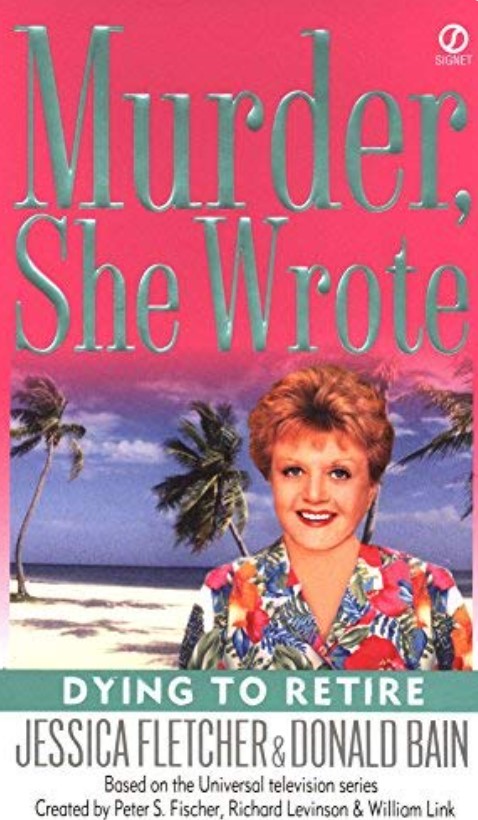
Since one of my television “hot takes” relates to Murder, She Wrote, I thought featuring the book cover for Murder, She Wrote: Dying to Retire in this list article made sense. Murder, She Wrote: Dying to Retire book cover found on Goodreads
6. One of the HGTV Dream Homes Should Have Been Built in Hawaii
For almost thirty years, HGTV (Home and Garden Television) has hosted their annual Dream Home sweepstakes, with a completely furnished house as the grand prize. Eighteen of the fifty United States have hosted a prize home in varying styles and diverse landscapes. But, in my opinion, one of those states should have been Hawaii. The “gimmick” of HGTV’s Dream Home sweepstakes is for someone to win a “dream” home in a “dream” location. For years, Hawaii has been known as a “dream” travel destination for many people, yet owning a home in Hawaii is a “dream” few people can achieve for a variety of reasons. Realistically, I’m not sure what the logistics would be in order to make an HGTV Dream Home in Hawaii a reality. On paper, however, a Hawaiian Dream Home would fit the intent of HGTV’s contest.
5. I wish Sophia’s Son, Phil, Had Made, At Least, One On-Screen Appearance on The Golden Girls
Looking back on all the times I’ve watched The Golden Girls, one consistent story element always comes to mind; how Sophia singles out her son, Phil, whenever she brought up her children. Because it seemed like he was mentioned often on the show, I always wondered if what was said about him by the other characters was true. This curiosity made me want to see, at least, one on-screen appearance of him, in order to learn more about Phil from his perspective. Unfortunately, this never happened as Phil died off screen, with his death acknowledged in the season six episode, ‘Ebbtide’s Revenge’. It would have been fascinating to see Phil’s interactions not only with Sophia, but with the other “golden girls” as well. Plus, this role would have given an up-and-coming or underrated actor a chance to start or progress his career, especially considering The Golden Girls is one of the most successful and beloved television shows of all time. It also would have been interesting to see how The Golden Girls’ audience responded to Phil’s appearance on the show, if perhaps he had become a fan favorite. Though to quote the iconic Tootsie Pop commercial, “the world may never know”.
4. I Don’t Find the Gilligan’s Island episode, ‘The Hunter’, Funny or Entertaining
Gilligan’s Island is a show that is known for being light-hearted and hilarious, typically presenting the characters in low-stakes situations despite being stranded on the titular island. But the episode, ‘The Hunter’ is quite different from what the show is known for. Jonathan Kincaid is introduced in this episode as a big-game hunter. When he is unable to find any animals on the island to hunt, Jonathan then decides to hunt the other characters. The story of ‘The Hunter’ is tonally inappropriate for the type of program Gilligan’s Island is. With the show’s laugh track still featured in this episode, it makes the characters’ fear seem like it is played for laughs instead of being taken seriously. I was so horrified by ‘The Hunter’, I couldn’t find anything entertaining or funny about it. I, honestly, questioned what the creative team behind Gilligan’s Island was thinking creating and airing the episode. Because ‘The Hunter’ has been received better than other episodes of Gilligan’s Island, obtaining a 7.3 out of 10 on IMDB, this “hot take” is ranked higher on my list.
3. I Don’t Understand the Hype Surrounding ‘Shark Week’
According to Wikipedia, Shark Week debuted almost forty years ago on Discovery Channel with educational intentions, emphasizing conservation and debunking misconceptions. But as time went on, the annual event grew a life of its own. The term “shark week” has been added to the pop cultural lexicon, with people knowing what that is even if they’ve never watched any program associated with the event. Merchandise has been created to capitalize Shark Week, from shirts to scouting patches and even stuffed animal sharks from Build-A-Bear Workshop. But despite the promotion and fanfare it’s received, I don’t understand the hype surrounding Shark Week. With the amount of information available about sharks now than there was thirty-eight years ago, it almost seems unnecessary to reserve only one week to shark related education. In fact, shark related education can be accessed any time of year. Because sharks are such a specific subject, the event could run the risk of running out of content or programming. Plus, there are other animals who would also benefit from receiving education about them and conversation efforts for them. Yet they don’t receive their own special week.
2. If Eddie Munson Had Been Introduced on Stranger Things Sooner, The Show’s Creative Team Would Have Prioritized His Popularity, Similar to Steve Urkel (from Family Matters)
Once upon a time, on December 15th, 1989, Steve Urkel made his debut on the sitcom, Family Matters. What started as Steve asking one of the show’s key family members, Laura Winslow, to a dance turned into Steve becoming one of the most popular characters in television history. As Steve’s popularity grew, he received more screen-time and significance in the story. He not only became very marketable, having products based off Steve like Urkel-O’s Cereal and a talking doll, Family Matters also became defined by Steve’s iconic catchphrase, “Did I do that?”. But Steve’s popularity came at the expense of the titular Winslow family and their matters, which defied the original intent of the sitcom. If Eddie Munson had been introduced on Stranger Things sooner, I believe the show’s creative team would have allowed a similar scenario to happen. Like Steve Urkel, Eddie Munson became very popular after appearing in one season of his respective show. Also, like Steve, Eddie became very marketable, with products ranging from a replica of his Hellfire Club shirt to books about Eddie’s side of the story. But Eddie made his debut in Stranger Things’ fourth out of five seasons, with Eddie also passing away at the end of the fourth season. Though if Eddie had debuted in either season one or two, Eddie’s popularity would have given the show’s creative team an excuse to not only keep him on the show, but to also upgrade his status from ‘recurring’ to ‘main’ character. But, similar to Steve on Family Matters, the emphasis on Eddie’s popularity could have run the risk of other characters and stories getting overshadowed, potentially leaving mysteries and story-threads unresolved. There’s also a chance Stranger Things‘ creative team could have turned Eddie into “too much of a good thing”, giving Eddie elements to his story that may not make sense, such as receiving a catchphrase that seems unnecessary.
1. Writing Jack Thornton Off When Calls the Heart is the Show’s Biggest Mistake
When the creative team behind When Calls the Heart decided to write Jack Thornton (one of the show’s main characters) off the show by having him die off screen, that was one of the most controversial creative decisions in Hallmark Channel history, as characters are typically not written off the network’s programs in this fashion. But looking back on this creative choice eight years later, writing Jack off When Calls the Heart has proven, in my opinion, to be pointless. If Jack had stayed on the show, other creative decisions I’m, personally, not a fan of wouldn’t have been made. Some of these decisions are the love triangle between Elizabeth, Lucas, and Nathan (that lasted three seasons), as well as backtracking Elizabeth’s decision to fall in love with and become engaged to Lucas. When it comes to the argument for why Elizabeth should be in a romantic relationship with Nathan, the McGarries (fans of Elizabeth and Nathan) have claimed that because Elizabeth falls in love with a Mountie in the book series the show is based on, she has to fall in love with a Mountie on the television show. With that logic in mind, if it was so important for Elizabeth to be in a romantic relationship with a Mountie, why write Jack off the show at all? I’m aware of Daniel Lissing’s (the actor who portrayed Jack) desire to leave the show to pursue other projects. However, I think recasting Jack would have attracted less backlash than writing him off the show. When Jack was still on When Calls the Heart, it seemed like his relationship with Elizabeth organically complimented the show’s overarching story. It also helped that Daniel and Erin Krakow (the actress who portrays Elizabeth) had stronger on-screen chemistry together. But now that Elizabeth and Nathan’s relationship has been prioritized since season eleven, its promotion, in my opinion, not only feels forcefully manufactured, it has come at the expense of other characters and stories, such as Rosemary, once again, not receiving her theater and new characters like Fernando becoming underutilized.
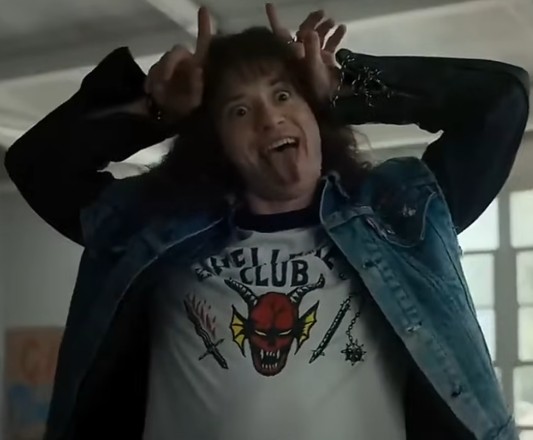
Since another television “hot take” in this list article relates to Eddie Munson and Stranger Things, I believed including this iconic picture of Eddie in this post was appropriate. Original image created by 21 Laps Entertainment, Monkey Massacre, Netflix, and Upside Down Pictures
What are your thoughts on my TV “hot takes”? Do you have a TV related “hot take” you’d like to share? Please tell me in the comment section below!
Among the three times I’ve participated in the Classic Literature on Film Blogathon, I reviewed To Kill a Mockingbird, 1948’s The Three Musketeers, and The Grapes of Wrath. Looking back on these selections, I’m surprised I haven’t chosen a title from William Shakespeare sooner. In fact, as of July, 2026, the only Shakespeare adaptation I covered on 18 Cinema Lane (so far) is the 2000 film, Romeo Must Die, which I reviewed all the way back in 2019. So, you could say another article about a Shakespeare adaptation is long overdue. Because it fits the criteria for the Classic Literature on Film Blogathon and because it was recommended by Hamlette (from Hamlette’s Soliloquy), I will review the 2000 television movie, Hamlet! Similar to Romeo Must Die, the TV film version of Hamlet is a “modern” adaptation of a famous William Shakespeare story. But this time, the production “is revisioned in America at the turn of the 20th Century” (according to IMDB). Did I enjoy watching Hamlet as much as or more than Romeo Must Die? Thanks for joining me for this review, as we’re now about to answer that question!
Hamlet(2000) poster created by Hallmark Entertainment, Spare Room Productions, Artisan Home Entertainment, Cowboy Booking International, and Lions Gate Films Home Entertainment
Things I liked about the film:
The acting: Campbell Scott portrays Hamlet in the 2000 adaptation of William Shakespeare’s story. If I could describe Campbell’s performance in one word, it would be ‘fluid’! During the famous “To be or not to be” monologue, Campbell adopts a variety of facial expressions, vocal inflections, emotions through the eyes, and even movements of the head to showcase Hamlet’s ever-changing mood. Not only that, Campbell’s transitions between emotions are so effortless, Hamlet possesses a captivating presence within the movie. Ophelia also has a captivating presence in Hamlet! Portrayed by LisaGay Hamilton, Ophelia’s expressions of emotion always appeared genuine. A great example is when she is sharing her concerns about Hamlet with her father, Polonius. With a furrow in her brow and speaking carefully in a calm yet concerned voice, Ophelia gives her father (and the audience) a reason to take note of her serious observations. Blair Brown delivers a strong performance as well, portraying Hamlet’s mother, Gertrude! Whether frightened by the horrifying emotional deterioration of her son to her joy as she awaits the start of a play, Blair carries her character so believably, it was easy to forget I was watching an actress portray a character. What worked in her performance’s favor was her understanding of how and when to utilize emotions to her advantage. Even though I liked the three performances mentioned, I thought the cast as a whole was strong!
The set design: The original source material of Hamlet revolves around royalty. This component of the text was translated to the 2000 adaptation, as Hamlet and his family are sometimes referred to by their royal titles. Since the majority of this film version of Hamlet takes place within Hamlet’s family’s home, the set design effectively represented their opulence. Home décor pieces, like gold sconces, rich wood furniture, and ornate rugs, found their place throughout the story. Chairs boasted intricately woven designs, appearing as their own form of art. Carved detailing was present on a wooden staircase, a stone fireplace, and even on a ceiling in one scene. Smaller pieces of set design were not overlooked either, such as a burning piece of paper being placed on a silver platter. Not only did Hamlet’s set design make its project visually elegant, it complimented Shakespeare’s source material as well!
Use of music: When a movie’s creative team incorporates music into their project, the intended mood of a given scene can be elevated. This is how the creative team behind Hamlet approached the musical element of the 2000 adaptation. Whenever a suspenseful moment took place, such as the ghost of Hamlet’s father suddenly appearing, the rhythmic sound of drums played in the background. Because the sound of the drums was loud and with the drums possessing a quicker rhythm, the feelings of fear, confusion, and even irritation rose among the characters who could visualize the ghost for themselves. Raised adrenaline from the audience can also happen because of the drum music’s incorporation within Hamlet. That music contributes to a viewer’s feeling of being on the edge of the seat, eager to discover what will happen next!
Shakespearian speech in a “modern” story: As I mentioned in my Romeo Must Die review, I was not a fan of Romeo + Juliet. The reason is how the characters adopt Shakespearian speech while the movie appears to take place in 1995-1996. The 2000 adaptation of Hamlet makes the same creative choice. Like I brought up in this review’s introduction, Hamlet “is revisioned in America at the turn of the 20th Century”. So, the references to kings, Denmark, and Norway don’t make sense. Having the characters speak in the Shakespearian manner sounds jarring, as it breaks the illusion of immersion of the late 1800s to early 1900s presented on screen. Because I don’t hear Shakespearian speech often, I not only had to actively pay attention to what was happening in the film (or else I would have missed important context), I was sometimes confused by what the characters were saying. This aspect of the project became a frustrating part of my movie-viewing experience.
Forgotten storylines: Ophelia’s brother, Laertes, desires to travel to France. Even though their father, Polonius, allows Laertes to journey to France, he has his doubts of whether his son will behave himself in a gentlemanly fashion while there. This storyline from Hamlet became forgotten as the film progressed. That was due to the script prioritizing Hamlet’s downward spiral. Even though Laertes returns later in the movie, his trip to France wasn’t brought up. I was disappointed Laertes’ French travels didn’t play a bigger role in the 2000 adaptation of Hamlet, as there was potential for that narrative to be intriguing. However, I’m not sure how much influence Laertes’ adventure through France had in the original source material.
The run-time: The Hamlet adaptation from 2000 received a run-time of two hours and fifty-eight minutes (according to IMDB). Similar to my thoughts on Gods and Generals and The Assassination of Jesse James by the Coward Robert Ford, Hamlet’s run-time could certainly be felt. The pace of Hamlet is mostly slower, with a few action-packed, suspenseful scenes incorporated into the story. That, along with the movie’s two hour and fifty-eight-minute run-time, makes the 2000 adaptation feel unnecessarily stretched out. Like my experience watching The Assassination of Jesse James by the Coward Robert Ford, I was zoning in and out while watching Hamlet, trying not to fall asleep during this movie-viewing experience. Had the 2000 adaptation of Hamlet been split into two parts, like Hallmark’s 2004 adaptation of Frankenstein, the movie wouldn’t run the risk of feeling like an endurance test.
To review or not to review, that is the question (ok, I couldn’t resist making that reference, especially in this review). Back in 2019, I shared in my Romeo Must Die review how much I liked that film. Because it was a “modern” adaptation of Romeo and Juliet featuring martial arts, the 2000 movie was successfully able to create a unique version of William Shakespeare’s story. Seven years later, after watching the 2000 adaptation of Hamlet, I find the picture just ok. The creative team behind Hamlet had visual ambition, setting their interpretation “in America at the turn of the 20th Century”. This ambition could be seen in the set and costume design, attempting to bring the late 1800s to early 1900s back to life through elegance and historical accuracy. But having the characters adopt Shakespearian speech breaks that illusion of immersion. Having a two hour and fifty-eight-minute run-time also negatively impacts the film’s chances for rewatchability. However, the cast as a whole gave strong performances, with everyone doing a good job, acting wise, with the material they received. The movie itself is also a competently made project, incorporating elements that enhanced the movie-viewing experience, such as the use of music. But at the end of the year, when I look back on the movies I’ve seen (and even reviewed), the adaptation of Hamlet from 2000 will not be a film I reflect on as fondly as other films.
Overall score: 6-6.1 out of 10
Have you seen the 2000 adaptation of Hamlet? Are there any “modern” adaptations of William Shakespeare’s stories you’d like to check out? Please share your thoughts in the comment section!
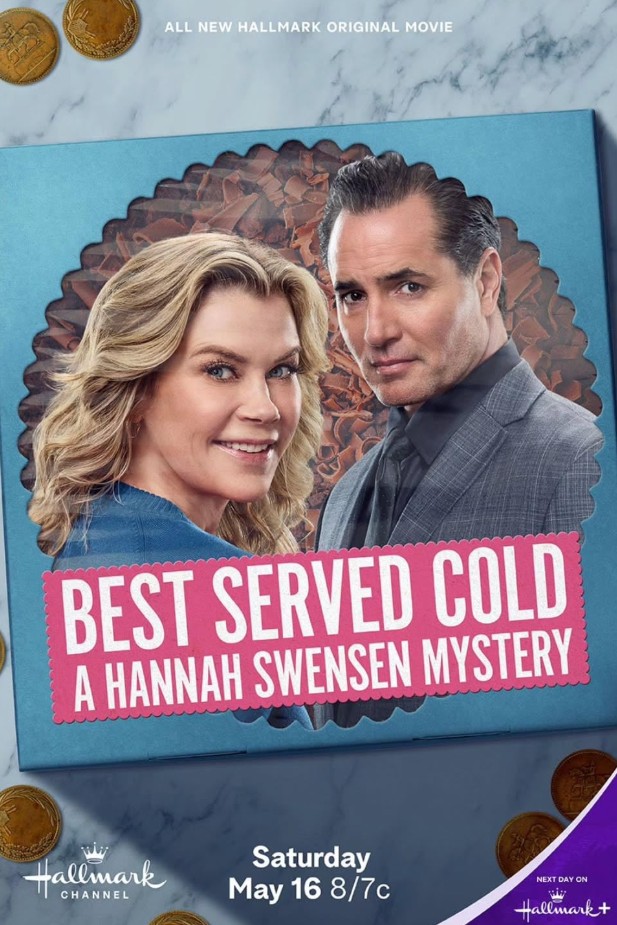
Since 2023, when I reviewed Carrot Cake Murder: A Hannah Swensen Mystery, I have expressed my frustrations over the re-brand of the Murder, She Baked/Hannah Swensen series. It got to the point where, by the time I wrote about Reality Bites: A Hannah Swensen Mystery, I wasn’t looking forward to future installments. But that started to change when I saw Pie To Die For: A Hannah Swensen Mystery. Even though the movie was just ok, it was slightly better than its predecessor. Then, when I reviewed Sugar & Vice: A Hannah Swensen Mystery, I found that film ok as well. As I learned about another chapter in the series, Best Served Cold: A Hannah Swensen Mystery, I was ready to discuss the film with an open mind! Would that movie be ok like the previous two chapters? Keep reading my review to find out!
Incorporation of Delores’ private investigation business: When I talked about One Bad Apple: A Hannah Swensen Mystery in my list of the worst movies I saw in 2024, I criticized the creative decision of allowing Delores to become a private investigator. At the time, I believed this creative choice went against Delores’ character, especially after spending years objecting to Hannah getting involved in cases. But in Best Served Cold: A Hannah Swensen Mystery, Delores’ role as a private investigator made sense within the context of the story. One of the plots of this chapter is a court case involving fraudulent coins. Not only did Chad use Delores’ evidence in the case, Delores also testified during the case’s trial. Along with making sense, incorporating Delores’ private investigation business into Best Served Cold: A Hannah Swensen Mystery gave Delores more involvement in, at least, one area of the script.
Michelle’s wardrobe: Since her debut in Sweet Revenge: A Hannah Swensen Mystery, Hannah’s younger sister, Michelle, has been known for being a free-spirited and creative woman. These personality traits have been reflected through her wardrobe, with Michelle’s wardrobe in Best Served Cold: A Hannah Swensen Mystery being no exception! When Michelle visits The Cookie Jar (Hannah’s bakery), she wears an outfit consisting of a black shirt, black leather jacket, a short yellow plaid skirt, black tights, and black boots. Michelle even wore a pair of yellow smiley face earrings, providing a nice bridge between the black and yellow hues of the outfit. During another trip to The Cookie Jar, Michelle’s outfit boasts a brown and white color combination. But this time, she wears an ensemble made up of a long brown and white cow print skirt, a white shirt, brown sweater, and brown boots. Earrings were, once again, the statement accessory. However, Michelle’s earrings looked like cowgirl boots. Kelsey Baran, the costume designer of Best Served Cold: A Hannah Swensen Mystery, did a great job putting together attire that complements both Michelle and the actress who portrays her, Tess Atkins!
Utilizing Hannah’s “quirk”: I’ve mentioned in the past how detectives in pop culture, especially those that are more well-known, have a “quirk”. This “quirk” helps set fictional detectives apart from other fictional detectives, whether it’s a catchphrase, special interest, or having a signature style. However, a “quirk” isn’t always utilized in solving cases. Hannah has gained a reputation for being a respected baker, as well as the successful proprietor of her bakery, The Cookie Jar, setting the Murder, She Baked/Hannah Swensen series apart from other Hallmark mystery series. From what I remember, though, I don’t recall Hannah using her baking skills to solve a case. But in Best Served Cold: A Hannah Swensen Mystery, Hannah was able to use her baking skills in her favor! I can’t say exactly the role Hannah’s skills played in the film’s mystery, as I don’t want to spoil the film. What I will say is the way they were written into the story was not only clever, but also unique for the series. Sometimes, a fictional detective’s “quirk” can contribute to their perspective, especially when approaching a case. Hannah’s baking skills certainly achieved this, as she was able to notice details overlooked by other characters! The utilization of Hannah’s “quirk” was refreshing, especially compared to a movie like One Bad Apple: A Hannah Swensen Mystery, where Hannah didn’t even solve the mystery.
Lack of urgency: I brought up earlier in this review how one of the plots of Best Served Cold: A Hannah Swensen Mystery is a court case involving fraudulent coins. The other two plots were a murder mystery and a missing person case. While these three plots interconnected with one another, the court case was prioritized in the script. This creative decision caused the story to lack urgency, which seems to be a consistent flaw in the more recent Murder, She Baked/Hannah Swensen movies. With so much emphasis on the court case, it felt like characters were taking their time solving both the missing person case and the murder mystery. Intrigue was decreased because of the lack of urgency.
Limited number of suspects: Like I just mentioned in my review, the script of Best Served Cold: A Hannah Swensen Mystery emphasized the fraudulent coin court case. Few key characters were involved in the court case, which provided a limited number of suspects. When a mystery story features a collection of suspects, it can add to the fun of trying to figure out “whodunit”, as the audience plays an engaging guessing game. It can also maintain a sense of intrigue to help viewers hold their interest in the film. Sadly, these elements were absent due to how few suspects were in Best Served Cold: A Hannah Swensen Mystery. This creative decision made the mystery’s reveal feel a bit predictable as well.
Underutilized part of the story: Toward the beginning of Best Served Cold: A Hannah Swensen Mystery, Hannah is testing new recipes for an upcoming baking contest. She even offers one of her new pastries to Delores. But other than being brought up in two scenes, this baking contest barely plays a role in the script. In fact, it’s never revealed which pastry Hannah will submit to the contest. I found this underutilized part of the story disappointing because of its wasted potential. I recall the baking contest being international, which could have served either an interesting subplot or main plot. Looking back on Best Served Cold: A Hannah Swensen Mystery, as well as the more recent Murder, She Baked/Hannah Swensen movies, it seems like underutilizing elements of the story is a trend within this series.
When I talked about Reality Bites: A Hannah Swensen Mystery in my list of the best and worst movies I saw in 2025, I saidif the Murder, She Baked/Hannah Swensen series continues in 2026, I’d like to see the quality become more consistent. Reflecting on Best Served Cold: A Hannah Swensen Mystery (as well as Pie To Die For: A Hannah Swensen Mystery and Sugar & Vice: A Hannah Swensen Mystery), I would say this consistency was achieved! Best Served Cold: A Hannah Swensen Mystery was, in my opinion, just ok. However, this movie improved upon some of the series’ flaws. Not only was Delores’ antics toned down again, her private investigation business was incorporated into the story in a way that made sense. This latest chapter in the Murder, She Baked/Hannah Swensen series contributed its own set of strengths, such as Hannah’s “quirk” becoming utilized within the script. But there are weaknesses in this series, including in Best Served Cold: A Hannah Swensen Mystery, I wish were not consistent, like the lack of urgency and underutilizing parts of the story. According to IMDB, ‘Cooked to Death: A Hannah Swensen Mystery’ is currently in pre-production. There also appears to be an Alison Sweeney and Ashley Williams project in development. Even though no official word has been made about the future of the Murder, She Baked/Hannah Swensen series, it’ll be interesting to see where this story goes from here.
Overall score: 6-6.1 out of 10
Have you seen Best Served Cold: A Hannah Swensen Mystery? Would you like to see the Murder, She Baked/Hannah Swensen series continue? Please tell me in the comment section!
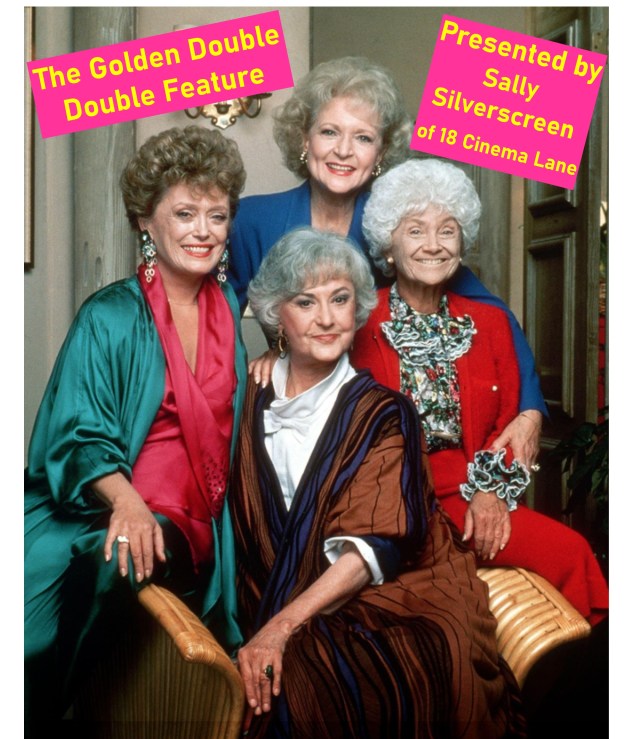
When I chose the theme for this year’s double feature, I wanted to do something different from previous double features I’ve hosted by reviewing four films. With The Golden Girls featuring four main stars (Betty White, Estelle Getty, Bea Arthur, and Rue McClanahan) and with those stars possessing their own filmographies, I found a reason to seek out more of their projects. The movies I selected, Hallmark Hall of Fame’s The Lost Valentine, Mask, Mame, and The Little Match Girl, are just as unique as the “golden girls” themselves! I was reminded why I like Hallmark Hall of Fame’s The Lost Valentine when I decided to revisit it. Not only did I rediscover forgotten elements like the story’s humor, I, once again, came to appreciate what makes the film good. Mask was such a pleasant surprise because of how solid the movie is! It’s a biopic that brings something different to the genre’s table as well as genuineness. While I found both Mame and The Little Match Girl fine, I enjoyed the films for different reasons. Mame’s choreography and colorful palette helped make the film as entertaining as it was. Meanwhile, the cleverly written dialogue in The Little Match Girl allowed interactions between characters to be memorable. Now, as the sun sets on Miami and all the cheesecake has been eaten, I’d like to say thank you for being a friend of the Golden Double Double Feature!
The Golden Double Double Feature banner created by me, Sally Silverscreen. Original image created by Touchstone Television, Witt/Thomas/Harris Productions, 20th Television, and National Broadcasting Company (NBC)
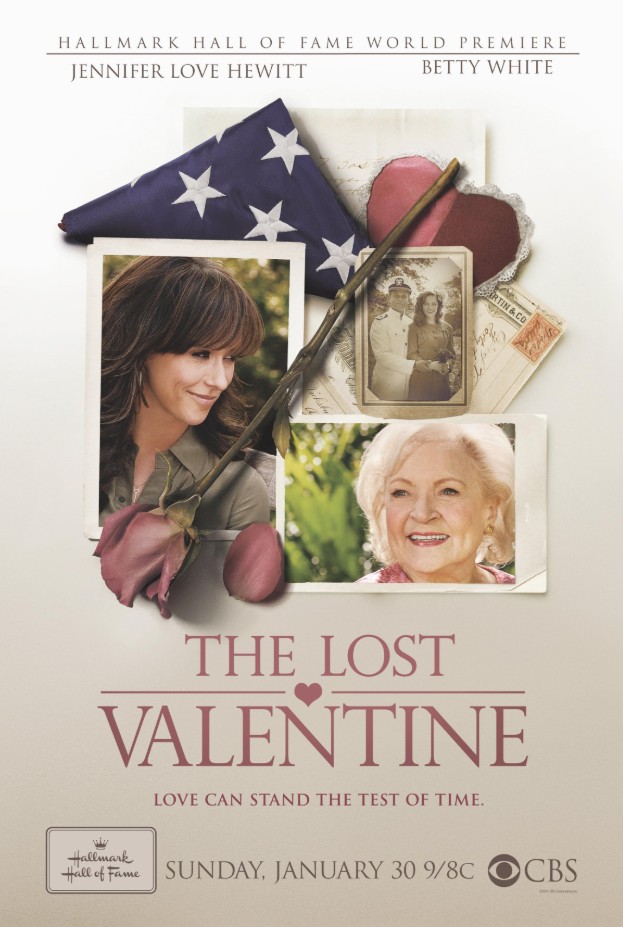
Thanks for joining me for the first part of my Golden Double Double Feature! The majority of my review of Hallmark Hall of Fame’s The Lost Valentine is spoiler-free. If you’d like to learn more about why I chose this year’s double feature theme, you can check out the introduction in the link below.
Hallmark Hall of Fame’s The Lost Valentineposter created by Hallmark Hall of Fame Productions, Ridini Entertainment, and CBS
1. Out of the movies from Betty White’s filmography, why did you select Hallmark Hall of Fame’s The Lost Valentine?
When I created my Hallmark Hall of Fame tier rank list in 2020, I not only placed The Lost Valentine in the “Get It On Sale for Half Off” (a.k.a. Good) tier, I also recommended the film because of the use of flashbacks and recognition of Valentine’s Day. But it’s been over eight years since I’ve seen The Lost Valentine. While selecting the 2011 Hallmark Hall of Fame picture for this review, I didn’t know if my opinion on the film would remain the same as it was years ago. On my Year-Long Bingo Card, three of the bingo squares are “Review at least 2 Hallmark Hall of Fame films”, “Revisit a movie you haven’t seen in over 5 years”, and “Review a holiday themed movie that isn’t Christmas”. So, when I saw The Lost Valentine on Betty’s filmography, I remembered liking the movie, as well as how the movie would complete those aforementioned bingo squares.
2. In Hallmark Hall of Fame’s The Lost Valentine, Betty portrays Caroline Thomas. How is Caroline Thomas similar or different from Rose?
On The Golden Girls, Rose Nylund is known for her innocence and naivete. These qualities add charm to Rose’s character, as well as provide some of the show’s comedic moments. Betty’s character in The Lost Valentine, Caroline Thomas, lacks Rose’s naivete for two reasons. Caroline’s experiences during World War II and even afterwards give her an awareness of how unpredictable life can truly be. Her lack of naivete also makes sense with the story itself, as The Lost Valentine is a serious drama grounded in reality.
3. Hallmark Hall of Fame’s The Lost Valentine is based on a book by James Michael Pratt. What book adaptation would you have liked to see Betty star in?
For 2024’s Eurovisionathon readathon, I read The Readers of Broken Wheel Recommend by Katarina Bivald. From what I remember of the book, I could picture Betty portraying a character from that story. Katarina crafted characters that sounded and felt distinct from one another. Plus, the small-town setting seemed Hallmark-esque, creating a sense of community through dramatic and comedic character interactions. The “golden girls” have distinct personalities on The Golden Girls, allowing each character to be unique. Even though the show is classified as a sit-com, there were emotional, serious moments woven into episodes. With all that said, I think a story like The Readers of Broken Wheel Recommend would have complimented Betty’s acting talents, as The Lost Valentine perfectly showcased her comedic and dramatic timing.
4. Was there anything about Hallmark Hall of Fame’s The Lost Valentine you liked or didn’t like?
As I mentioned in answer number one, I recommended The Lost Valentine because of the use of flashbacks. These flashbacks added context to the events presented on screen, especially when it came to Caroline’s part of the story. Meghann Fahy portrayed Caroline’s younger self while Billy Magnussen portrayed Caroline’s husband, Neil. Both Meghann’s and Billy’s acting performance was strong. But together, their on-screen chemistry effectively sold the believability of Neil and Caroline’s relationship! What works in the favor on this relationship is the emotional depth Billy and Meghann bring. A great example is how Caroline’s and Neil’s eyes possessed the pain of being apart from each other. Watching Meghann’s and Billy’s performance felt like witnessing a couple upholding their promise of love instead of two actors simply portraying characters. I wish Billy and Meghann had been cast in more Hallmark projects together.
Jennifer Love Hewitt stars in The Lost Valentine as a television reporter named Susan Allison. Susan received a subplot where she contemplates her future with her boyfriend, Andrew. This is one of those subplots where you know the relationship isn’t going to last because the film’s female protagonist will eventually fall in love with the male protagonist, which, in The Lost Valentine, is Caroline’s grandson, Lucas. That creative decision led to Susan’s subplot being predictable. Instead, her subplot should have prioritized her reconciliation with her family, especially since Susan mentioned toward the beginning of The Lost Valentine how she doesn’t have a strong relationship with them.
5. The Golden Girls didn’t receive any television films (like other shows such as Little House on the Prairie, Murder, She Wrote, etc.) In your opinion, why do you think this creative decision was made?
A typical episode of The Golden Girls is about thirty minutes long. Meanwhile, most television movies receive a run-time between an hour and thirty minutes to two hours. If a tv show’s creative team chooses to make a made-for-TV movie, they need to create a story that justifies a longer length of time. So, I’m guessing the creative team behind The Golden Girls never figured out a story that couldn’t be told in half an hour.
6. Did you develop any thoughts and/or questions while watching this film?
Like I said in my number one answer, it’s been over eight years since I’ve seen The Lost Valentine. Because of this, I had completely forgotten the humor woven into the story. Comedic moments sprinkled throughout the film was such a pleasant surprise for me. One of my favorite scenes was when Caroline reads a sports magazine to a group of veterans at a local hospital. While she’s talking about the New York Yankees, Caroline says she doesn’t hate the team, she just doesn’t like it when they beat a team she likes more. How that piece of dialogue was written, as well as Betty’s sweetly honest delivery, created a scene that was genuinely hilarious. Moments like the one I described alleviated some of The Lost Valentine’s heavier scenes yet never overshadowed the story’s serious subject matter.
For this part of my review, I will spoil The Lost Valentine. If you have not seen this movie and are planning on watching it, skip ahead to question number seven.
Toward the end of The Lost Valentine, after Caroline welcomes Neil home, she discovers rose buds growing on a rose bush in her garden. That specific rose bush was not only the first plant Caroline and Neil planted when they moved into their home, the rose bush was believed to be dead for the majority of the movie. When Caroline discovers the rose buds, she reminisces about Neil as she dances to music from the past. All of a sudden, a man who I assumed was Neil’s ghost appeared behind Caroline. After that, the hose Caroline was holding falls to the ground. But the scenes that follow are flashbacks of Caroline and Neil and scenes featuring Lucas and Susan. Is the fallen hose implying Caroline passed away, joining Neil in the afterlife? Or was Caroline so caught up in remembering the past, she dropped the hose by accident? That part of the story was, in my opinion, too open-ended for a stand-alone film. But because The Lost Valentine is based on a book, maybe the source material would provide a clearer explanation than the adaptation did.
7. Throughout The Golden Girls, cheesecake became an iconic staple of the show. What would you say is the iconic staple of Hallmark Hall of Fame’s The Lost Valentine?
You’d think I’d pick the titular valentine, as it plays a significant role in The Lost Valentine. But, instead, I’m choosing the red rose. When it comes to growing roses, it takes time, patience, commitment, and care. Even as Lucas wants to uproot a rose bush he believes is dead, Caroline reminds her grandson how she doesn’t give up on things that easily. These aspects perfectly represent some of the major themes of The Lost Valentine; like serving others and putting your love toward something you believe matters. Caroline’s rose bush also provides the story with a nice full-circle moment.
8. The Hallmark Hall of Fame collection overlapped with The Golden Girls (in terms of existence). Why do you think Hallmark Hall of Fame didn’t try to capitalize on the popularity of the “golden girls”?
From 1979 to 2011, Hallmark Hall of Fame movies aired on CBS. The Golden Girls existed on NBC. While Hallmark Hall of Fame and The Golden Girls overlapped (between 1985 to 1992), there were two to four Hallmark Hall of Fame films released per year, implying tighter production schedules. Though a typical season of The Golden Girls ran from September to May, a certain amount of time needed to be set aside to film episodes, especially since The Golden Girls was filmed in front of a live studio audience. These factors may have made casting any of the “golden girls” in a Hallmark Hall of Fame presentation difficult, but not impossible. However, trying to accommodate any of the “golden girls” schedules could have affected the schedules of the other cast and crew members of a Hallmark Hall of Fame project.
9. Hallmark Hall of Fame’s The Lost Valentine was released in 2011 (19 years after The Golden Girls ended). Is there any element from the movie you wish was incorporated on the show?
One of the overarching themes of The Lost Valentine is serving others. A great example is when Caroline visits veterans at a local hospital. On The Golden Girls, there were two episodes involving veterans; ‘From Here to the Pharmacy’ and ‘Charlie’s Buddy’. However, these episodes prioritized Rose’s and Blanche’s attempt to finding romance. As far as I know, there wasn’t an episode of The Golden Girls where the “golden girls” took the time to honor veterans. Therefore, I wish this type of story had been incorporated on the show. One example is the “golden girls” volunteering at an Honor Flight ceremony.
10. After watching Hallmark Hall of Fame’s The Lost Valentine, is there anything you can take away from your movie-viewing experience?
For years, Hallmark’s motto has been “When you care enough to send the very best”. Hallmark Hall of Fame’s The Lost Valentine perfectly represents that motto! The amount of care that Caroline put into waiting for Neil is a beautiful display of putting the needs of others before oneself, one of the major themes of The Lost Valentine. Other parts of the story represent this theme as well, such as Susan’s quest to find the truth about Neil’s whereabouts. By revisiting the 2011 Hallmark Hall of Fame movie, I was reminded why I like it. Strong elements, such as the acting performances and the screenwriting, made my movie-viewing experience enjoyable. I was also reminded of things I had completely forgotten, like the humor woven into the story. As I said in this review, the comedic moments alleviated some of The Lost Valentine’s heavier scenes yet never overshadowed the story’s serious subject matter. This is a Hallmark Hall of Fame movie that still holds up, even fifteen years later. Therefore, it will stay in the “Get It On Sale for Half Off” (a.k.a. Good) tier of my Hallmark Hall of Fame tier rank list!
The Golden Double Double Feature banner created by me, Sally Silverscreen. Original image created by Touchstone Television, Witt/Thomas/Harris Productions, 20th Television, and National Broadcasting Company (NBC)
The residents of Benson Hills will move back home after the Harvest Festival. But in this season’s finale of When Calls the Heart, some of Elizabeth’s students from Benson Hills are hesitant to return home. This is because they’ll miss the friends they’ve made in Hope Valley. Elizabeth reassures these students they are always welcome to return to Hope Valley, saying, “A community doesn’t dissolve just because we don’t see each other every day”. Her quote is the perfect way to describe When Calls the Heart. Hope Valley and its residents haven’t dissolved because the show airs for a certain period of time. The creative team thinks of new ways to continue to story. Filming and editing are completed in between seasons. In the context of the story itself, Hope Valley’s residents are living their lives to their fullest. With a fourteenth season on the way, the world of When Calls the Heart will continue to stay.
Just a reminder: If you did not see the season finale of When Calls the Heart, there will be spoilers within this re-cap.
When Calls the Heartseason thirteen poster created by Hallmark Media, Crown Media Family Networks and Hallmark Channel
Season: 13
Episode: 12
Name: Harvest Moon
LJ is still disappointed he isn’t allowed to travel to Parson’s Peak. Nathan creates an alternative by giving LJ an opportunity to climb to the top of Hope Valley’s water tower. Not only does Nathan’s plan work, other children want to climb the water tower too. Meanwhile, Nathan tries to find the perfect time to propose to Elizabeth. But Bill advises Nathan to propose when the moment feels right. Nathan lets Allie know this is how his proposal will go. While the Harvest Festival is going on, Nathan takes Elizabeth to the top of Hope Valley’s water tower and finally proposes to her. Elizabeth accepts this proposal, meaning a wedding is in her future.
On her last day of school before going home to Benson Hills, Gwen wears the dress Rosemary made for her toward the beginning of the season. But the dress becomes dirty and ripped during a baseball game. Gwen is upset by the destruction of the dress, believing she ruins everything. But Rosemary insists Gwen has brought so much joy to the lives of the Coulter family. Before going back to Benson Hills, Gwen gives each member of the Coulter family a gift. Lee receives a fishing hook, Rosemary gets a hand-carved picture frame, and Goldie is given a pair of dolls.
Edie returns to Hope Valley to help collect insurance claims for the rest of Benson Hills’ residents. Lucas sees this as a second chance to share his feelings for Edie. At the Harvest Festival, Lucas announces he’ll be stepping down as Governor. However, he will give his support to Maisie’s campaign. Maisie is unsure whether she should run for Governor in the upcoming election. But Mike gives her encouragement, which helps Maisie accept Lucas’ nomination. Meanwhile, at the Queen of Hearts, Lucas and Edie have a heart-to-heart conversation about their relationship. Not only do Edie and Lucas share a kiss, Lucas also agrees to go to New York with Edie, where she’ll be going to help the Franklin And Sons Foundation.
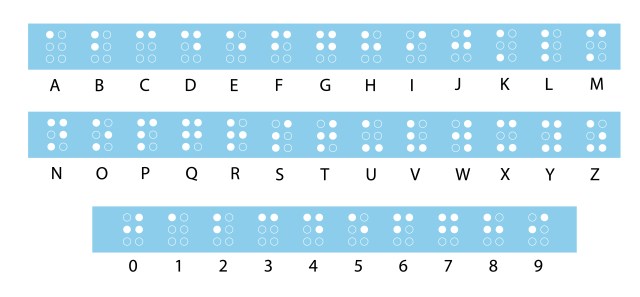
Angela surprises her family by coming back home to Hope Valley. The Canfield family surprises Angela not only with the café’s new name, Minnie’s Café, but also an official café sign in Braille. During her visit to Hope Valley, Angela reconnects with Allie. At the Harvest Festival, Angela senses Allie and Oliver like each other. Allie claims she and Oliver are just friends. But Angela respectfully disagrees, believing there’s something more to Oliver and Allie’s relationship.
Last December, Hallmark confirmed Lori Loughlin would return to When Calls the Heart in six of season fourteen’s episodes. These creative decisions were divisive due to Hallmark’s response to Lori’s involvement in 2019’s college admissions scandal. What’s even more divisive is making Lori’s return to the show the “cliffhanger”/major selling point for season fourteen. While some Hearties are supportive of Lori’s return, other Hearties will not agree with this decision. Therefore, I think the aforementioned creative choices could divide When Calls the Heart’s fanbase more than the love triangle between Elizabeth, Lucas, and Nathan did. I also believe Lori’s return could cause When Calls the Heart to lose instead of gain viewership.
When I’ve talked about When Calls the Heart, I sometimes brought up the creative team’s habit of making promises to their audience they knew they couldn’t keep. Rosemary’s Playhouse is the most recent example. As I said in the introduction of season thirteen’s premiere re-cap post, I have been waiting for Rosemary’s dream of opening a theater to come true for over ten years. It was bad enough taking the Playhouse away from Rosemary before it was shown on screen. But what’s even worse was the script spending more time reminding the audience of the Playhouse’s destruction than trying to restore Rosemary’s dream. As a long-time fan of When Calls the Heart, I find these creative decisions cruel and unnecessary.
The best aspect of season thirteen, in my opinion, was the introduction of Fernando. In my re-cap post for this season’s sixth episode, I said I really hope Fernando becomes a series regular on When Calls the Heart. But throughout season thirteen, he only appeared in three episodes. Plus, within the context of the show’s story, Fernando wasn’t given much to do. With all this said, I wonder what the intended purpose was for his incorporation in season thirteen? Plus, if When Calls the Heart’s creative team always planned on having Edie and Lucas develop a romantic relationship, why would Fernando be included in that dynamic between himself, Edie, and Lucas?
Now that season thirteen has concluded, I can express my honest opinion on the season as a whole. Personally, I think it’s a mixed bag. Episodes one through six were strong because they prioritized the mystery surrounding the fire. When I watched those episodes, I honestly thought season thirteen would be one of the best seasons of When Calls the Heart. But from episode seven to the season finale, the priority shifted toward stories with lower stakes. The suspenseful and intriguing momentum built up within the first six episodes stalled in favor of stories like Rosemary’s silent movie and LJ’s memory scavenger hunt. Because of this, season thirteen felt like it ended on a whimper.
What are thoughts on When Calls the Heart’s season thirteen finale? Do you think Lori Loughlin should return to the show? Let me know in the comment section.