Take 3: A Little Romance (1979) Review

Back in 2022, I wrote a list of the top ten movies I’d love to review. One of the films on that list was 1979’s A Little Romance. Since publishing that article three years ago, I haven’t gotten around to reviewing the movie. But Gill’s (from Realweegiemidget Reviews) and Barry’s (from Cinematic Catharsis) blogathon, Adventure-A-Thon, finally gave me an opportunity to check A Little Romance out! When it comes to “adventure” in cinema, that term can have different meanings depending on who you ask. For me, an “adventure” movie is when the story’s characters go on a journey to achieve something. In the case of A Little Romance, the protagonists, Daniel and Lauren, travel to Italy to prove the legitimacy of a legend. The 1979 film is not the only picture I’ve reviewed this year involving Italian travel. I wrote about Roman Holiday back in January. In my opinion, the movie was just ok, as I wanted to like it more than I did. Was A Little Romance ok like Roman Holiday? Let’s start the adventure of this review!
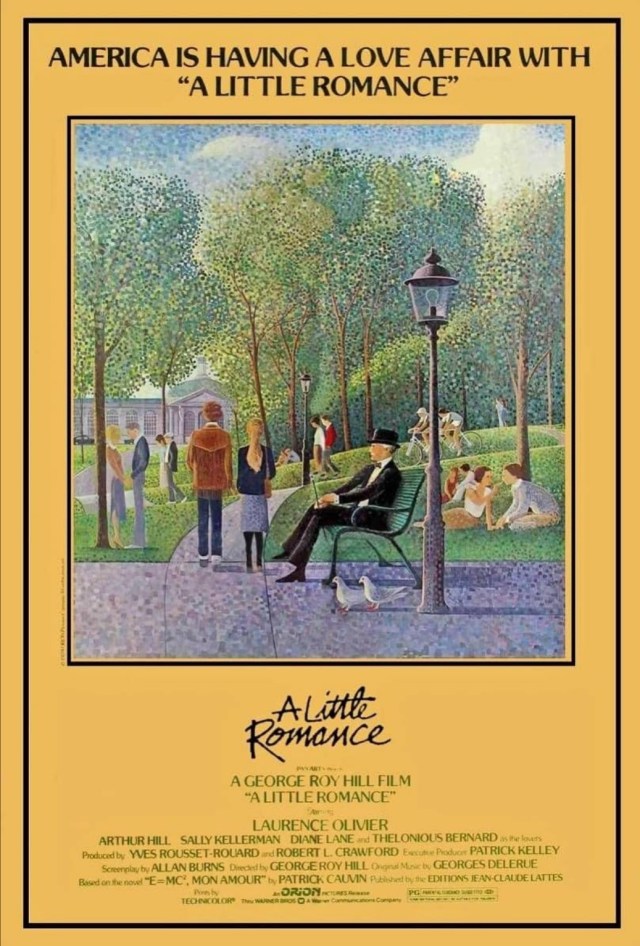
A Little Romance (1979) poster created by Orion Pictures, Pan Arts, Trinacra Films, and Warner Bros.

Things I liked about the film:

The acting: When it comes to teenagers in movies, it can be easy for a creative team to present those characters stereotypically. If written or directed to adopt certain behaviors and attitudes, teenage characters could even come across as caricatures. Fortunately, this was not the case in A Little Romance! Though there are only four teenage characters in the movie, their interactions didn’t feel scripted, making the characters themselves seem realistic. One example shows Lauren (portrayed by Diane Lane) and her friend, Natalie (portrayed by Ashby Semple), looking at sculptures during a class trip. As they observe the sculptures, Lauren nonchalantly tells tall tales about her time spent with Daniel. Natalie naively believes Lauren, her eyes becoming wide and her tone of voice revealing how shocked she is. Lauren, with a casual smile on her face and a giggle in her voice, then shares with Natalie how her tall tales were fabricated. This exchange between the two friends illustrates how teenagers can sometimes tease and joke with each other.

In this review’s introduction, I mentioned how the protagonists, Daniel and Lauren, travel to Italy to prove the legitimacy of a legend. Their journey was enjoyable to watch because of how strong Diane Lane and Thelonious Bernard’s on-screen chemistry was! Every time Lauren and Daniel interacted with one another, they always looked like they got along so well. There was a sweetness to their relationship that was wholesome and charming. It also helps how both Daniel and Lauren had likable personalities that complimented each other. While Thelonious and Diane deserve credit for their performances, credit should also be given to the screenwriting.

An appreciation for film: Before watching A Little Romance, I knew what the basic premise was about. But when I finally saw the 1979 picture, I was pleasantly surprised by the appreciation for film woven into the script! As soon as the movie starts, the audience sees Daniel watching a collection of films in a local cinema. As the story progresses, he sometimes quotes the movies he sees and even wants Lauren to call him “Boggie”, as he believes Humphrey Bogart and Lauren Bacall were meant to be together. Daniel’s decisions and perspectives are also influenced by the world of film. When Daniel receives rude comments about his relationship with Lauren from a movie director named George de Marco, Daniel punches George. Not only does Daniel strongly dislike George’s films, Daniel believes George’s comments cheapen the meaning of love he’s learned from movies.

The dialogue: In some of the movies I’ve reviewed this year, one of the strengths was the dialogue. The way it was written and delivered allowed this film-making component to be memorable for the right reasons. The dialogue was also a strength in A Little Romance! Through the screenwriting, the audience can tell how much thought was put into this aspect of the 1979 production. While Lauren talks about her family, Daniel asks her why she calls her stepfather ‘Richard’. Lauren replies by saying “It’s easier to lose a Richard than a dad”. From that one quote, Lauren is able to express how her mother’s multiple marriages have affected the family dynamic. In order to make enough money for their trip to Italy, Daniel and Lauren plan to bet on race horses. They want to figure out the betting odds to increase their chances of choosing a winning horse. When Lauren suggests using a computer to get these numbers, Daniel says “I am not a computer”. This simple quote stresses how humans, as well as betting odds, don’t always provide the correct answers.
The Adventure-A-Thon banner created by Gill from Realweegiemidget Reviews and Barry from Cinematic Catharsis

What I didn’t like about the film:

The adventure’s prolonged delay: Like I said in this introduction, Daniel and Lauren travel to Italy to prove the legitimacy of a legend. But their Italian journey doesn’t begin until a little over an hour into an hour and fifty-minute story. That’s because the first half of the movie is devoted to setting up the motives for the journey and building up to the trip itself. It’s important for any creative team to set up their movie’s premise and provide build up to significant parts of the presentation. For A Little Romance, however, that set up/build up took a little too long.

Lack of subtitles: About half of A Little Romance takes place in France. This means some scenes feature characters speaking in French to one another. But when the story presented French dialogue, subtitles did not appear on screen. For viewers who are not fluent in French, they may feel like the creative team is withholding context from them. Even though clues such as body language can help the audience assume what is happening in the story, I still wish subtitles had been included in A Little Romance.

An absence of Daniel’s father: At the beginning of A Little Romance, the audience is introduced to Daniel and his father, Michel. According to Daniel, Michel is a taxi driver who watches horse races from time to time. Throughout the movie, however, Michel’s appearances are so far and few between, I almost forgot he was in the movie. Meanwhile, Lauren’s parents, Richard and Kay, are consistently involved in the story. I recognize A Little Romance revolves around Daniel and Lauren’s relationship and adventure. But I still think Michel should have received a larger role in the film. Perhaps his involvement in the story could have related to one of the movie’s central themes.

Colorful travel suitcase image created by Pikisuperstar at freepik.com. <a href=’https://www.freepik.com/free-vector/beautiful-illustration-of-travel_2686674.htm’>Designed by Freepik</a>. <a href=”https://www.freepik.com/free-photos-vectors/watercolor”>Watercolor vector created by Pikisuperstar – Freepik.com</a>. Image found at freepik.com.

My overall impression:

When I first brought up A Little Romance in 2022, I said the story seemed like a light-hearted version of Rich Kids. While there is some truth to this statement, my initial claim now seems a bit too simplistic. Both Rich Kids and A Little Romance revolve around adolescent characters relying on themselves and each other to navigate the world around them. But unlike Rich Kids, there’s a hopeful optimism in A Little Romance! Because the story emphasizes Daniel and Lauren’s Italian journey, the audience witnesses Lauren and Daniel’s relationship grow throughout the story. The acting performances and screenwriting allow these characters to share meaningful and heart-felt moments together. Strong messages and themes are sprinkled into the script, from the importance of being your authentic self to having the courage to achieve dreams. Though it took a little over an hour for the journey to begin, A Little Romance is a delightful, pleasant film! A significant point the film makes is how adventure can come in different forms. The 1979 picture can also cause viewers to think about what it truly means to be a “legend”.

Overall score: 7.3 out of 10

Have you seen A Little Romance? What does the term “adventure movie” mean to you? Let me know in the comment section!

Have fun at the movies!

Sally Silverscreen

Take 3: Crimes of Fashion: Killer Clutch Review

I’m going to be honest; even though it’s only March, Hallmark has not impressed me with their new mystery films, so far. Both True Justice: Family Ties and Gilded Newport Mysteries: Murder at the Breakers were, in my opinion, just ok. I did not enjoy CrimeTime: Freefall, turning the movie off after about forty minutes. Hoping luck would turn itself around, I decided to check out the newest mystery title from Hallmark; Crimes of Fashion: Killer Clutch. In the 2020s, so far, Hallmark has come up with some interesting ideas for their mystery films. While some of those ideas could lead to a potential series, other ideas were not utilized to their full potential. With Crimes of Fashion: Killer Clutch, the movie contains several interesting ideas. Not only does the story take place in Paris, France, the protagonist is a psychologist in the world of fashion. Could these ideas come together to create a stylish and entertaining film? Keep reading my review to find out!

Crimes of Fashion: Killer Clutch poster created by Cineflix Media, Untitled Entertainment, and Hallmark Movies & Mysteries

Things I liked about the film:

Brooke D’Orsay and Gilles Marini’s on-screen chemistry: A staple of Hallmark’s mystery films is a male and female protagonist working together to solve a mystery. Sometimes, these protagonists will share a romantic relationship, with the initial spark taking place between these characters in a series’ first film. While it’s unknown at this time if Crimes of Fashion: Killer Clutch will lead to a series, I will say I liked Brooke D’Orsay and Gilles Marini’s on-screen chemistry! Brooke portrayed the protagonist, Lauren, with a warm and bubbly personality. Meanwhile, Gilles’ character, Andre, consistently carried his character with a serious demeanor. However, there were times when kindness broke through the seriousness. Together, Lauren and Andre shared a mutual understanding that allowed them to get along with each other. One scene shows Andre sharing a part of his life story with Lauren. Through the expression on her face and the look in her eye, Lauren appears sympathetic toward Andre. A subtle look of sadness is present in Andre’s eyes, yet he appears he can trust Lauren, despite barely knowing her.

The costume design: If a story is going to take place within the fashion world, the costume design should strive to look appealing to the eye. I can only speak for myself, but there were some style choices I liked seeing in this movie! More often than not, Lauren wears either red or pink. The pieces paired with these shades not only complimented the outfit itself, it also complimented Brooke D’Orsay. While walking home from a party, Lauren wears a red, silk gown with a halter top. As her jacket of choice, she wore a dark denim jacket that sparkled at just the right moments. Throughout the film, Lauren carried a red purse. In one scene, this purse was paired with a short, beige jacket. The dark and warm shades of the aforementioned jackets provided visually appealing color combinations!

Showcasing various facets of the fashion world: Throughout Hallmark’s cinematic history, there have been stories that explored the behind-the-scenes of a given industry. In the case of Crimes of Fashion: Killer Clutch, the world of the fashion industry is examined. When Lauren first arrives in Paris, she is introduced to many members of a fashion label, from a model scout to a financial adviser. This scene alone showcases the many moving parts associated with a fashion company. Lauren learns about counterfeits and how they affect the fashion industry. I’m glad the film’s creative team didn’t shy away from including the not-so-glamourous side of the fashion world, as a more balanced perspective of fashion was presented to the audience.

Sewing pattern image created by Nenilkime at freepik.com. <a href=”https://www.freepik.com/free-photos-vectors/background”>Background vector created by Nenilkime – Freepik.com</a>. <a href=’https://www.freepik.com/free-vector/sewing-color-background_1380853.htm’>Designed by Freepik</a>. Image found at freepik.com.

What I didn’t like about the film:

An underutilized profession: In Crimes of Fashion: Killer Clutch, Lauren is a “fashion psychologist”; meaning she applies her psychology skills to the world of fashion. The idea of a psychologist using their skills and expertise to question suspects and come up with motives makes sense for a mystery story. Featuring a psychological perspective within the fashion world is a unique angle for a Hallmark mystery production. Unfortunately, Lauren didn’t utilize any of her psychology skills toward solving the mystery. In fact, her skills were so underutilized, they became pointless. There were even some characters who refused to accept Lauren’s psychological help. If anything, Lauren seemed more like an over glorified intern.

Thick French accents: I’ve mentioned before on 18 Cinema Lane how the delivery of accents can make or break a production. What can also make or break a production is how thick an actor or actress’ accent is. Within Crimes of Fashion: Killer Clutch, several characters delivered thick French accents. This made it difficult to understand what they were saying and keep track of who was who. There were even subtitles, occasionally, shown on screen to help viewers understand what the characters were saying. However, some time was spent trying to figure out what the characters were saying that I wasn’t able to be fully invested in the film.

Underutilized characters: Riccardo Dolce is a fashion designer Lauren meets while working in Paris. With a striking appearance, Riccardo was surrounded in mystery. I genuinely wanted to know more about his designs, as well as his perspective on fashion. Sadly, Riccardo was featured in the movie only about two or three times total. Toward the beginning of Crimes of Fashion: Killer Clutch, Riccardo claimed he wanted to collaborate with the designer Lauren was hired by. His reasons for the collaboration are never explained. Riccardo is just one of several characters who were underutilized in this film.

Illustration of Paris, France created by Freepik at freepik.com. <a href=”https://www.freepik.com/free-photos-vectors/travel”>Travel vector created by freepik – http://www.freepik.com</a>. Image found at freepik.com.

My overall impression:

When I talked about Mystery Island in my list of the worst movies I saw in 2023, I hoped Hallmark would find the motivation to create better mystery productions. Despite it only being March 2024, I think Hallmark is still looking for that motivation. If I could describe Crimes of Fashion: Killer Clutch in one word, it would be ‘underwhelming’. Lauren’s psychology skills were not fully utilized, making her seem like an over glorified intern. The script caused several characters to be underutilized, sometimes featuring them in the movie for only a handful of scenes. Thick French accents made it difficult to understand what the characters were saying, which prevented me from becoming fully invested in the movie. Up until this point, Hallmark’s newer mystery films seemed to contain ideas that could allow more than one chapter. But now that I’ve seen Crimes of Fashion: Killer Clutch, I honestly don’t know how this story could lend itself to a multi-chapter series.

Overall score: 5.2 out of 10

Have you seen Crimes of Fashion: Killer Clutch? What are your thoughts on the current state of Hallmark’s mystery movies? Tell me in the comment section!

Have fun at the movies!

Sally Silverscreen

Take 3: Hallmark Hall of Fame’s A Tale of Two Cities Review

For this year’s edition of the Broadway Bound Blogathon, I wanted to write about a Hallmark film based on a pre-existing Broadway play. My original plan was to read a play and then watch its adaptation, creating an editorial on how these works are similar or different. But, to my surprise, the films I wanted to talk about were based on plays that premiered off-Broadway. During my search for another option, I learned the Charles Dickens story, A Tale of Two Cities, was adapted into a Broadway musical in 2008. For this review, I’ve decided to write about the 1980 Hallmark Hall of Fame version of the aforementioned story. Though I haven’t read A Tale of Two Cities, I have enjoyed seeing the adaptations of Charles Dickens’ literary work. In fact, I liked 1968’s Oliver! so much, I ended up reading Oliver Twist after seeing the movie! So, where does this Hallmark Hall of Fame production stand among other stories by Charles Dickens? Turn the page on this review to find out!

Hallmark Hall of Fame’s A Tale of Two Cities poster created by Hallmark Hall of Fame Productions, Marble Arch Productions, Norman Rosemont Productions, and Columbia Broadcasting System (CBS)

Things I liked about the film:

The acting: One of the strongest scenes in A Tale of Two Cities is when Lucie (portrayed by Alice Krige) reunites with her father, Dr. Alexander Manette (portrayed by Peter Cushing), for the first time in over ten years. After mistaking Lucie as the jailer’s daughter, Alexander goes to his bed, in an attempt to avoid Lucie. As Lucie slowly approaches her father, Alexander’s voice is shaky and he is flinching, unsure of what to make of this visitor. But as soon as he discovers Lucie’s hair matches a lock of hair he kept for many years, Alexander realizes Lucie is, indeed, his daughter. Alexander’s expression changes from fear to shock, as he is in awe about seeing Lucie again. He even gives his daughter a hug. Meanwhile, Lucie is overcome with emotion, tears falling down her face and her voice quivering. Both Alice and Peter were able to effectively sell this on-screen relationship as believable and genuine. The emotions expressed felt realistic as well, which allowed this scene to be so strong!

In A Tale of Two Cities, Chris Sarandon portrays both Sydney Carton and Charles Darnay. Out of these two characters, my favorite was Sydney Carton! Throughout the story, Sydney carried himself with a laid-back confidence that made his personality appealing. Yet, more often than not, he displayed a sad look on his face. Even his eyes looked sad, giving the audience an idea of what he wasn’t saying. This made Sydney brooding and mysterious, making me want to know more about him and curious to see where his story would go. The likability of Sydney Carton can be attributed to Chris’ strong acting talents!

Attention to detail: What can make or break a historical drama is a creative team’s attention to detail. This element in the film-making process can make that story’s world feel immersive, transporting the audience to a specific period in time. The Hallmark Hall of Fame adaptation of A Tale of Two Cities takes place in the late 1700s. Jarvis Lorry’s office provides a great example of this film’s attention to detail when it comes to historical accuracy. On a nearby table, there is a large book, boasting a weathered brown cover. Rolled up paper documents and more brown covered books are scattered in the office’s foreground. In the background, Jarvis can be seen working at a desk similar to that of Ebenezer Scrooge. Though the room invites natural light through a dome shaped window, a small candle chandelier and a multi-candle candle stick provide the office with additional light.

The pacing: The Hallmark Hall of Fame adaptation of A Tale of Two Cities is two hours and thirty-six minutes. This is longer than a typical Hallmark production, which is about an hour and thirty to forty minutes. But A Tale of Two Cities never felt like a long movie to me. That’s because I was so invested in what the characters were doing, as well as the story itself. Though this is a character driven film, there was a satisfying amount of suspense, intrigue, even action. Where these elements were placed in the story made the movie feel evenly paced. The way scenes were filmed, written, and edited also contributed to the overall pace, never making parts of the story feel drawn out or wrapped up too quickly. I was so engaged watching A Tale of Two Cities, the run-time was the last thing on my mind!

The Sixth Broadway Bound Blogathon banner created by Rebecca from Taking Up Room

What I didn’t like about the film:

Inconsistent inclusion of the French Revolution: An overarching conflict in A Tale of Two Cities is the rise of the French Revolution. In the first half of the movie, this conflict seemed like an afterthought, as the primary focus was placed on events happening in England, such as Charles’ court hearing. When a certain situation causes Charles to return to France, the French Revolution played a larger role in the film’s second half. The movie’s creative team built up to the event itself, visually presenting the harsh reality of the French public versus the upper-crust of French society. However, I wish this conflict had a more consistent presence within the story.

Lack of French accents: Because the French Revolution plays a role in A Tale of Two Cities, some of the story’s key characters are French. But the 1980 Hallmark Hall of Fame presentation is one of those films where every character speaks in a British accent, despite the cultural differences. After a while, I became used to the similarity in accents. I don’t blame the actors, as all I can expect from any actor or actress is for them to try their best with the material given. In my opinion, though, I fault the movie’s casting director for not encouraging the use of French accents.

Unexplained parts of the story: On a few occasions, there were parts of A Tale of Two Cities that confused me, due to their lack of explanations. One perfect example involves Monsieur Ernest Defarge’s wife, Therese. While a man is being guillotined, Therese tells her friend she has recorded the Evrémonde family in her stitching. After this scene takes place, Therese’s statement is never clarified. In fact, that particular stitching isn’t brought up again. Parts of the story like this one should have included explanations within the dialogue.

Hand-written letter image created by Veraholera at freepik.com. <a href=”https://www.freepik.com/free-photos-vectors/background”>Background vector created by Veraholera – Freepik.com</a>. <a href=’https://www.freepik.com/free-vector/love-letter-pattern_1292902.htm’>Designed by Freepik</a>. Image found at freepik.com.

My overall impression:

Most of Charles Dickens’ adaptations I’ve reviewed on 18 Cinema Lane have garnered favorable results. Both Oliver! and Nicholas Nickelby left such a good impression on me, they respectively found a place in my year-end best movies lists! Now that I have seen A Tale of Two Cities, I can honestly say that tradition will continue! The 1980 Hallmark Hall of Fame production tells an immersive story, taking the audience on a journey through time. What also adds to the experience is the strength of the characters, as the acting and the screenwriting worked well together. From the featured props to the costume design, the creative team’s attention to detail was on full display in this film, showing the care and effort that went into this project. Looking back on A Tale of Two Cities, I can see how the story could be adapted into a Broadway musical. As a matter of fact, I think a musical movie adaptation of A Tale of Two Cities would be very interesting to watch!

Overall score: 8.9 out of 10

Have you seen any adaptations of A Tale of Two Cities? Which story Charles Dickens’ is your favorite? Let me know in the comment section below!

Have fun on Broadway!

Sally Silverscreen

Take 3: To Catch a Thief Review

For The Master Of Suspense Blogathon, I was originally going to review the 1958 classic, Vertigo. I selected this film because it had been recommended by one of my readers. Unfortunately, my plans fell through at the last minute. So, I had to quickly choose an alternative. As I looked back at the blogathon’s participant list, I discovered the 1955 film, To Catch a Thief, hadn’t been selected. That is the film I am now reviewing for The Master of Suspense Blogathon. I have seen some of Alfred Hitchcock’s movies before this event. From what I know of To Catch a Thief, the 1955 production is different from other titles such as Psycho and Rear Window. But will this difference impact the quality of the film? Keep reading my review in order to solve this mystery!

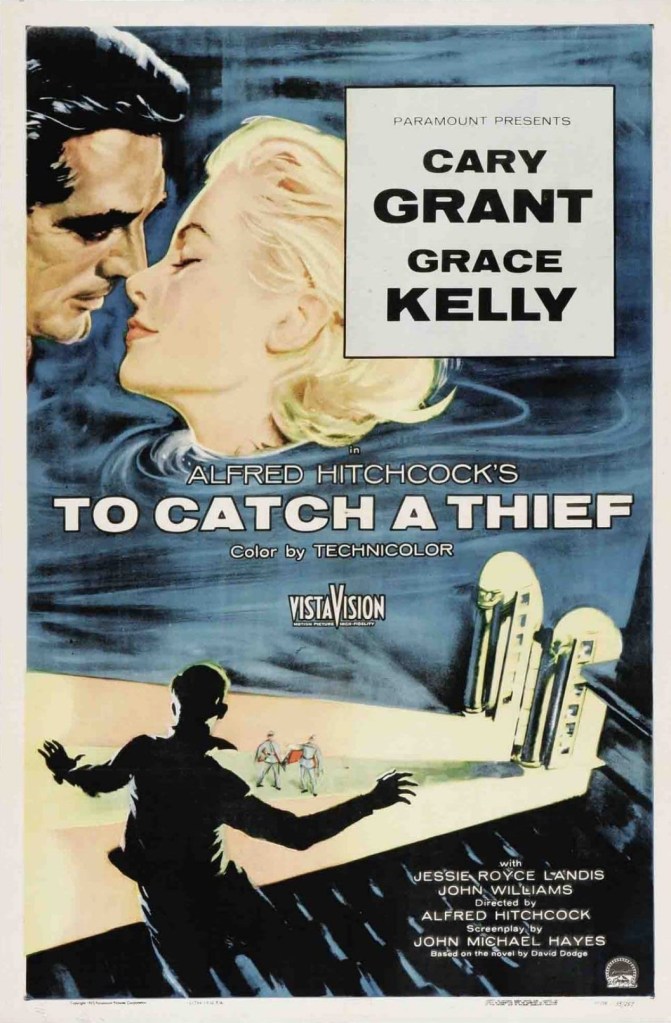
To Catch a Thief poster created by Paramount Pictures

Things I liked about the film:

The acting: In To Catch a Thief, Cary Grant portrayed John Robie, a former jewel thief looking to clear his name. A man of suave charisma, John was afraid of being accused of something he didn’t do. But he never lets this fear get to him. Instead, with the talents of Cary Grant, John was confident and intelligent. Grace Kelly was also cast in To Catch a Thief, portraying Frances Stevens. Frances carried herself with dignified confidence. However, this confidence did not come across as snobbish or arrogant. It added to Frances’ likability, along with her gentle demeanor and respectful elegance. Danielle Foussard is a friend of John’s. Portrayed by Brigitte Auber, Danielle had a spunky streak in her, adding liveliness to her and John’s interactions. A scene I really liked was when John, Frances, and Danielle are swimming in the ocean together. This scene perfectly showcased their personalities, as their banter bounced among each other like a soaring beach ball. What made that scene great to watch was the joining of the acting talents of Cary Grant, Grace Kelly, and Brigitte Auber!

The scenery: Most of the car chases in To Catch a Thief are captured in long, establishing shots. This is very different from car chases in other films, where the chases are shown in medium or close up shots. To Catch a Thief’s approach to car chases emphasizes the scenery surrounding these chases. Looking back on this film’s scenery, I can understand why To Catch a Thief’s creative team would make that decision. With the majority of the production filmed in France, the story shows pieces of the French countryside and seaside. Giant green mountains and deep blue waters present an isolated oasis. A smattering of orange roofed houses perched on these mountains add to the movie’s vibrant color palette. On the French seaside, bright yellow sands welcome the deep blue waters of the ocean. Most of the story’s exterior shots feature a blue sky with a handful of clouds. Even the flowers are appealing bursts of color, boasting shades of red, pink, and even purple. To Catch a Thief is a pretty looking movie and it knows it!

The dialogue: During discussions of Alfred Hitchcock’s movies, use of music, cinematography, and lighting are typically talked about by fans and film enthusiasts. But one area of film-making I feel is overlooked, specifically when it comes to Alfred’s work, is the dialogue. This element of story-telling was a pleasant surprise in To Catch a Thief! It not only suited the characters respectively, it also sounded like the screenwriters put a lot of thought into what the characters told each other. While driving through the French countryside, John and Frances are discussing Frances’ past. As the discussion carries on, John accuses Frances of looking for a husband on her trip. But Frances responds by saying, “The man I want doesn’t have a price”. This statement represented the respectful elegance Grace consistently carried throughout the film. It also hinted at foreshadowing.

The Master Of Suspense Blogathon banner Maddy from Classic Film And TV Corner

What I didn’t like about the film:

Limited amount of urgency: At the beginning of To Catch a Thief, John learns he is accused of stealing valuable jewelry. He evens claims to have ten days in order to clear his name. You’d think with this tight timeline, there would be a strong sense of urgency in the story. But this urgency to find the truth is, unfortunately, inconsistent. Instead, more emphasis is placed on the scenery, the romance, and the “finer things in life”. While the mystery was resolved, the limited amount of urgency held the story’s suspense and intrigue back.

A small amount of suspense and intrigue: Alfred Hitchcock’s productions are known for incorporating suspense and intrigue. This reputation has earned Alfred the title of “Master of Suspense”. In To Catch a Thief, however, suspense and intrigue were only served in small amounts. Part of this problem results from the limited amount of urgency I previously talked about. Another reason for this problem is how suspense and intrigue were used sparingly instead of evenly spread out throughout the story. It got to the point where I almost forgot this story had a mystery.

Lack of suspects: A typical mystery will include a collection of suspects, individuals who may or may not have a reason to be the guilty party. These characters are presented as uniquely as possible, in order to help the audience remember them and their reasoning. To Catch a Thief lacked this ingredient. Because the mystery was not as prioritized as in other works from Alfred Hitchcock, no room was made to include suspects. There was a red herring in To Catch a Thief, but this reveal felt random. Even the reveal of the mystery’s guilty party wasn’t completely surprising.

Illustration of Paris, France created by Freepik at freepik.com. <a href=”https://www.freepik.com/free-photos-vectors/travel”>Travel vector created by freepik – http://www.freepik.com</a>. Image found at freepik.com.

My overall impression:

As I said in this review, To Catch a Thief is a pretty looking movie and it knows it. While the scenery was the film’s crown jewel, there were other aesthetically pleasing components of this production, like the costume design and the set design. When it comes to the story, though, it wasn’t as suspenseful and intriguing as other Alfred Hitchcock movies. The visuals ended up overshadowing the script. I will give Alfred Hitchcock credit where it’s due, as it seems like he tried to take a different approach to cinematic story-telling. But out of his films I have seen, I prefer titles like Strangers on a Train.

Overall score: 6.3-6.4 out of 10

Have you seen To Catch a Thief? Which titles of Alfred Hitchcock’s do you prefer? Please tell me in the comment section!

Have fun at the movies!

Sally Silverscreen

Take 3: The Song of Bernadette Review

Shock and sadness. That’s how I felt when I discovered the passing of Patricia, from Caftan Woman, on Twitter. Upon hearing the announcement of the Caftan Woman Blogathon, I wanted to participate as a way to pay my respects to a fellow blogger. Over the years, Patricia has recommended several films for future reviews. So, it was only fitting for me to choose one of her suggestions for the event. Since the blogathon is commemorating a loss, I felt The Song of Bernadette was the most appropriate choice out of the recommendations on my Pinterest board. This also compliments other religious/faith-based films I’ve reviewed in the past, such as Ben-Hur and The Carpenter’s Miracle. With all that said, let’s start this review of The Song of Bernadette.

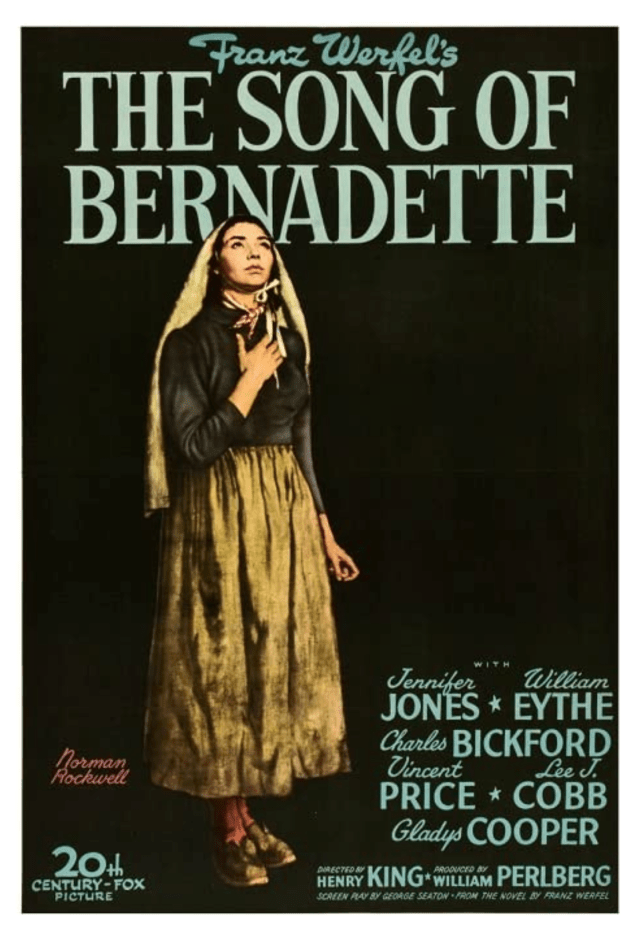
The Song of Bernadette poster created by 20th Century Fox

Things I liked about the film:

The acting: One of my favorite movies is Portrait of Jennie. Jennifer Jones’ consistent and captivating performance is one of the reasons why I love that film so much. In The Song of Bernadette, Jennifer’s portrayal of the titular character reminded me of her portrayal of Jennie. This is because she has a talent for pulling off an innocent demeanor without coming across as childish or immature. Throughout the film, Bernadette claims she is dumb. Yet, when asked what a sinner is, she tells the local reverend a sinner “is someone who loves sin”. The reverend even comments how Bernadette chose to say “loves sin” instead of “commits sin”. Personality wise, Jennifer brought a gentleness to her character. When speaking with one of Lourdes’ members of police, the policeman gets details of Bernadette’s story wrong. In a polite manner, Bernadette corrects him, pointing out the policeman’s errors in a soft-spoken voice. This innocence and gentleness allowed Bernadette to be taken seriously by the audience.

On 18 Cinema Lane, I have reviewed several of Vincent Price’s films. In most of these movies, Vincent portrays a character that can exude a sense of fear for the audience. But in The Song of Bernadette, his role of Vital Dutour was very different from his other roles. One reason is how Vincent is a part of an ensemble instead of a main focus in the story. Another reason is how Vital’s actions and choices were not chosen to cause fear. Despite all of this, Vincent carries his character with elegance and arrogance. In an effort to get to the bottom of Bernadette’s “visions”, Vital questions her story in his office. He speaks to Bernadette with a stern voice and presents a no-nonsense attitude. By interacting with her in this way, Vital is attempting in enforce his authority, thinking he will get his way. But because of Bernadette’s strength in her faith and her innocent demeanor, she is able to stand up to Vital. With that, both Jennifer Jones and Vincent Price are able to, acting-wise, go toe-to-toe with each other!

The set design: The Song of Bernadette takes place in the French countryside of 1858. But according to IMDB, the movie was filmed in California. Despite this, the set didn’t look like a set. Instead, it looked like a small French town from the 1850s! The architecture of Lourdes’ buildings was simple. Materials such as stone cover these structures. A traditional roof shingle design is displayed on top of these buildings. Like any well-researched production, the attention to detail was not overlooked! Vital’s office boasts two impressive things: a large desk and fireplace. The desk is a big piece of furniture that is coated in darker wood. Small, gold detailing can be found on the side of the desk. The fireplace is a massive marble structure, with etched detailing just below the mantle. Attention to detail and thorough research made this on-screen world an immersive environment!

Correlations with Biblical stories: When I reviewed the 1959 film, Ben-Hur, I talked about how certain Biblical events were incorporated into the overall story. With The Song of Bernadette, I could pick out moments that felt like unintentional correlations with some stories from the Bible. Toward the beginning of the film, Bernadette’s father is hired to dispose dirty rags from hospital patients. Shortly after being hired, Bernadette’s father can be seen pulling the wagon filled with dirty rags up a hill. This scene reminded me of the Crucifixion story, when Jesus is carrying the cross. The scene can also serve as a reminder how everyone has their own cross to bear, literally or figuratively. After Bernadette sees her first “vison”, Bernadette’s neighbors offer Bernadette’s family extra food they had acquired. The neighbors’ multiplying of food is reminiscent of the story where Jesus multiplied two fish and five loaves. Because this scene takes place after the first “vision”, I saw it as a miracle similar to the aforementioned Biblical story.

Using little to no dialogue: In two scenes, the movie’s creative team did a great job using little to no dialogue! One of them was the aforementioned scene where Bernadette’s father climbed up the hill. Orchestral music replaces any dialogue, which captures the emotions of Bernadette’s father. A long shot showcases the journey, elaborating how small Bernadette’s father is compared to the hill. This scene visually explained how difficult his life is. Another scene that used no dialogue is when Bernadette experiences her first “vision”. Not only is orchestral and choir music incorporated, the creative team uses a spotlight to accentuate Jennifer’s facial expressions. At one point in this scene, wind blew unexpectedly, signaling something was about to happen. Both scenes were able to say so much while saying so little!

The Caftan Woman Blogathon banner created by Lady Eve from Lady Eve’s Reel Life and Jacqueline from Another Old Movie Blog

What I didn’t like about the film:

The under-utilization of Antoine and his mother: In The Song of Bernadette, the titular character appears to be friends with a man named Antoine. Antoine also appears to be close with his mother. These two characters were only shown in a handful of scenes. Even when they were included in the story, their significance in the overall plot was weaker. The under-utilization of Antoine and his mother was disappointing, as I felt they could have offered more to the story. But since this movie was based on a book I haven’t read, I’m not sure if the limited presence of these characters is close to the source material.

A few ignored details: Toward the beginning of the movie, a friend of Bernadette’s explains to their teacher how Bernadette has asthma. This diagnosis is brought up on a few occasions by Bernadette’s family throughout the movie. But, for the most part, this detail was ignored and had little significance in the story. There were times when Vital Dutour was seen wiping his nose with a handkerchief. At one point in the story, he claims it’s “influenza”. However, it isn’t clearly explained what he’s medically dealing with. As I already said, The Song of Bernadette is based on a book I haven’t read. But if the creative team knew they weren’t going to utilize these details, it makes me wonder why they would include them in the movie?

Rose illustration image created by Freepik at freepik.com. <a href=”https://www.freepik.com/free-photos-vectors/background”>Background vector created by freepik – http://www.freepik.com</a>. Image found at freepik.com.

My overall impression:

Incorporating faith into film can be a tricky task. On the one hand, you don’t want to run the risk of alienating those who aren’t religious. At the same time, you want to acknowledge the beliefs of those who choose to include religion in their lives. The Song of Bernadette finds a way to achieve “the best of both worlds”! Bernadette’s story is shown as a procession, a good exploration of how religious phenomena can affect a small town. The film doesn’t seem to take sides when it comes to the actual topic. Yes, some people make fun of Bernadette because of her “visions”. But there’s no antagonist or villain in the movie. Lourdes’ mayor and his friends don’t believe Bernadette. However, none of the men are religious, approaching the situation from a legal and literal perspective. Even the town’s reverend isn’t quick to assume the “visions” are religious. Out of all the movies I’ve seen this year, so far, I’d say The Song of Bernadette is the strongest one! If you are interested in checking this film out, I think Easter would be an appropriate time to see it. Personally, I wish I had seen it sooner, especially since I can no longer thank Patricia for the recommendation.

Overall score: 8.2-8.3 out of 10

Rest in Peace Patricia

Sally Silverscreen

Take 3: Another Man, Another Chance Review

When it comes to blog events taking place on or around Valentine’s Day, romantic stories or favorite couples are usually the chosen topic. But for Pure Entertainment Preservation Society’s Unhappy Valentines Blogathon, there was an interesting twist placed on their event. For this blogathon, the theme was love stories that were “unhappily ever after”. After reading the requirements, I knew exactly which film I wanted to write about! For about a year, I have had the 1977 movie Another Man, Another Chance on my DVR. In this film, a man and woman who have each lost their spouses fall in love with one another. For some people, Valentine’s Day may not be a happy time. This can be the case for a variety of reasons. Whenever I’ve reviewed a Valentine’s Day themed film in honor of this holiday, the tone of those stories were lighthearted. So, it was nice to be given the opportunity to select a change of pace!

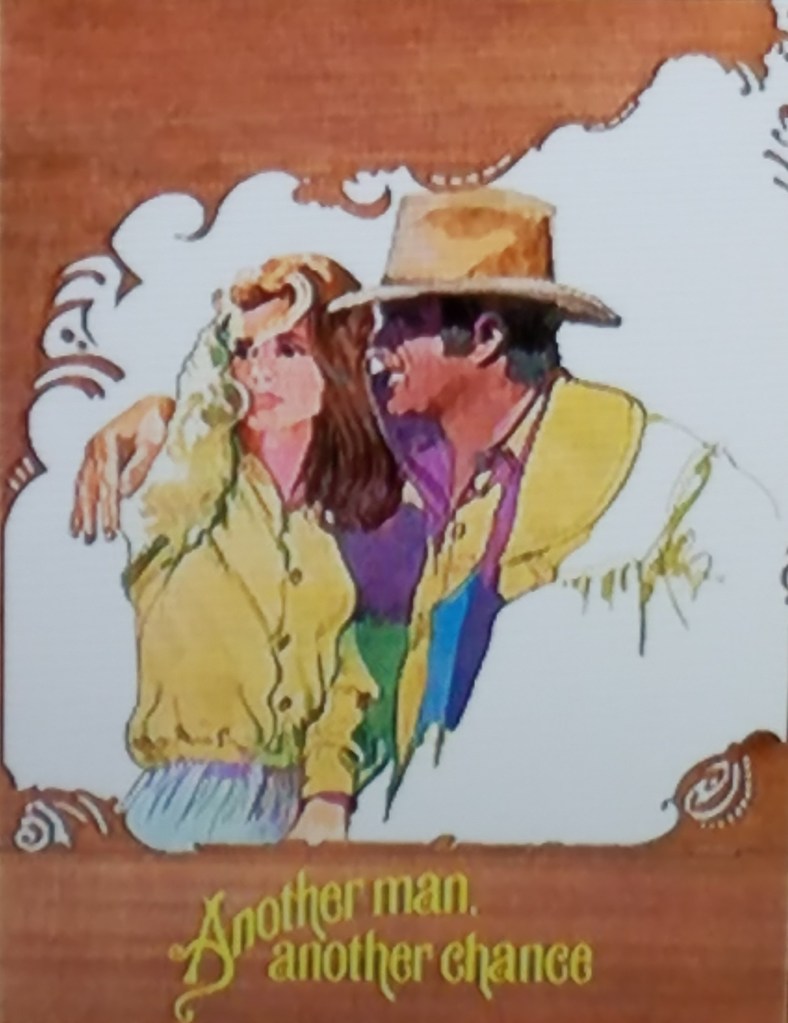
Because the poster for Another Man, Another Chance was featured on my television, I decided to take a screenshot of it with my phone. Screenshot taken by me, Sally Silverscreen.

Things I liked about the film:

The acting: This isn’t the first western of James Caan’s I’ve seen. Prior to reviewing Another Man, Another Chance, I have seen JL Family Ranch and JL Family Ranch: The Wedding Gift (with the latter film receiving a review on this blog). In those films, James’ character was more reserved, his character, Tap, learning from his mistakes and defending his family. With his character in Another Man, Another Chance, David, he appeared surer of himself. However, he wasn’t afraid to express emotions. When he was looking for his wife, David expresses genuine concern throughout his search. As he discovers his wife has died, his eyes tear up as he physically turns away from the sight of his wife’s dead body. Within the movie, the relationship of Francis and Jeanne stole the show! Portrayed by Francis Huster and Geneviève Bujold, both actors had good on-screen chemistry, giving the impression their characters truly loved each other. Geneviève brought a gentleness to her role that is sometimes seen in female protagonists in westerns. This presented a contrast to the harsh environment Jeanne experienced in France and the United States. Francis had a way with words and thought outside the box. When Francis invites Jeanne to come to the United States with him, she reminds him how he barely knows her. Without skipping a beat, Francis tells her how he barely knows America. In order to earn extra money for his family, Francis tries to apply for a part time job at a newspaper by offering to be the Gazette’s photographer. These two examples show the intelligence and wisdom Francis was able to bring to his character!

Showcasing photography: It was interesting to see what the art and business of photography was like in the 1800s! Not only did the equipment look different, but the techniques were different as well. When a customer visits the studio, Jeanne makes him sit in a special chair. This chair features a vertical metal bar with a smaller, curved metal piece at the top. It helped customers sit up straight and keep their head in place as they had their picture taken. While in France, Francis says he can only take pictures for a certain amount of time and on certain days due to needing sunlight. His solution to this problem is moving to the United States and settling in the West, where he feels there will be more natural light.

An immigrant’s perspective: When it comes to stories in the western genre, most of them revolve around characters that were either born or raised in the United States. By devoting a large piece of the story to Francis and Jeanne, the audience is able to see a perspective that is rarely explored in this area of cinema. It also allowed the audience to witness these characters’ contributions to their environment. As I mentioned in this review, Francis tries to apply for a part time job at a newspaper by offering to be the Gazette’s photographer. In the 1800s, photographs were not included in newspapers. However, the editor in chief of the Gazette solved this dilemma by agreeing to create stencils of Francis’ photos and adding them to the paper. If it weren’t for Francis’ talent and profession, the Gazette would never have been ahead of their time!

The Unhappy Valentines Blogathon banner created by the Brannan sisters from Pure Entertainment Preservation Society.

What I didn’t like about the film:

Limited time spent with Jeanne and David’s relationship: One of the biggest plot points (and one of the reasons why I watched this film) is Jeanne and David learning to fall in love again. However, they don’t officially meet until an hour and twenty-eight minutes into the movie. Most of the film revolves around David’s and Jeanne’s life prior to their relationship. I know that context and build-up are important to any story. But for Another Man, Another Chance, there was too much build-up to Jeanne and David’s romance.

The run-time: Another Man, Another Chance is a two hour and sixteen-minute film. Personally, I think this run-time was unnecessary. Several scenes lasted longer than they needed to because of the creative team’s desire to satisfy this length in time. One example is when Francis and Jeanne open their photography studio. The scene itself is somewhere between two to five minutes. Because there are no major conflicts or significant moments happening, that scene could have reduced to either a few seconds or a minute. The film’s run-time might have been an hour and twenty or thirty minutes if scenes like that one had been shorter.

Too many unanswered questions: In the story of Another Man, Another Chance, there is a lot going on within the overall plot. This resulted in many questions remaining unanswered. At the beginning of the film, a wealthy woman named Alice is interested in opening a boarding school in France. She shares how she is unable to have children of her own and mentions her sympathy toward the French people. Later in the movie, Alice ends up starting a partial boarding school in her neighborhood. What caused her to change her mind about that boarding school in France? Where did her sympathy for the French people go? These questions were ignored throughout the story.

Small, western town image created by Freepik at freepik.com. <a href=”https://www.freepik.com/free-photos-vectors/background”>Background vector created by freepik – http://www.freepik.com</a>. Image found at freepik.com.

My overall impression:

Every so often, I come across a film that, intentionally or not, made a significant contribution to the world of film. In the case of Another Man, Another Chance, this was done by telling a type of story that isn’t often seen in westerns. The creativity found in this movie is something I can appreciate. It should also be noted how this is one of the few bilingual westerns. But, to me, the overall project could have been much stronger. Another Man, Another Chance did not need to be over two hours. While watching the film, I noticed several scenes that could have easily been cut shorter. It also doesn’t help that Jeanne and David’s relationship was not featured in the story as much as the synopsis advertised. Even though this blogathon highlights romance gone wrong, I feel there are better stories of this nature to watch on Valentine’s Day. My personal choice is the PixL film, Same Time Next Week. Similar to Another Man, Another Chance, the protagonists learn to fall in love again. But in the 2017 film, the overall story is a lot stronger.

Overall score: 6.1 out of 10

Have you watched a western on Valentine’s Day? If so, which one was it? Tell me in the comment section!

Have fun on Valentine’s Day!

Sally Silverscreen

Take 3: Funny Face Review (Fred Astaire and Gene Kelly Blogathon Part 2)

For the second part of my Fred Astaire and Gene Kelly double feature, I’ve chosen to review the 1957 film, Funny Face! Last September, when 18 Cinema Lane received 135 followers, I reviewed my first Fred Astaire movie. That was The Sky’s the Limit, which I thought was just ok. Speaking of firsts, reviewing Funny Face is a first for 18 Cinema Lane, as it is the first musical film starring Aubrey Hepburn I’ve seen! Even though I have seen Breakfast at Tiffany’s and The Nun’s Story, those films would be classified as dramas. Since this was my first time seeing Audrey perform in a different genre, I was curious to see if she would be able to hold her own. When I read the synopsis for Funny Face, it sounded similar to another musical starring Audrey: My Fair Lady. Because I haven’t seen that movie, I can’t make a comparison between it and Funny Face.

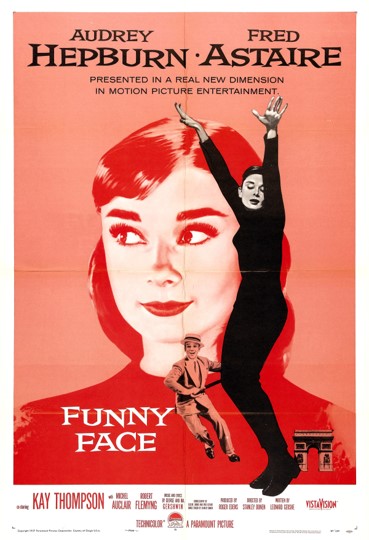
Funny Face poster created by Paramount Pictures.

Things I liked about the film:

The acting: The one word I’d use to describe the cast in Funny Face is comfortable. I chose this word because every actor and actress appeared comfortable in their role! This presented the characters as if they were real-life people dealing with real-life situations. Watching Audrey’s performance in this movie reminded me of her performance in The Nun’s Story for this reason: her character grows over the course of the movie. In Funny Face, Jo opens her heart and mind to a new chapter in her life that she never thought she’d embark on. She steps out of her comfort zone to not only follow her dream of meeting her favorite philosopher, but she also creates new dreams for herself. Audrey’s ability to adapt to any scenario helped her make Jo’s journey seem believable! As I mentioned in the introduction, I saw The Sky’s the Limit last September. Personally, I liked Fred’s character in Funny Face more than his character in the 1943 film. This is because Dick Avery had a better personality. He came across as easy-going and approachable, someone who you would want to tour Paris with. This made Dick Avery worth rooting for! Kay Thompson stood out to me as Maggie Prescott! While her character was no-nonsense and straight-forward in what she wanted, she was never cold-hearted or mean for the sake of it. This is different from other characters of this specific type. What’s also different is how Maggie was allowed to be silly, as could be seen when she and Dick are attempting to find Jo at the home of Jo’s favorite philosopher. This gave Kay an opportunity to apply her acting abilities to various situations!

The use of color: I love how color was used in Funny Face! Whenever scenes had a primarily plain color palette, like white or beige, objects or pieces of clothing were added to bring a pop of color to the space. The opening scene is such a great example! Each door of Quality magazine’s office was painted a bright shade of various colors, providing visual appeal to a mostly white lobby and hallway. Maggie’s office adopted a beige hue for about 85% of that location. However, certain pieces of fabric and even an assistant’s green coat add bold colors to a place that would have remained dull without them. This decision to use color was very detail oriented and showed how the film’s creative team really paid attention to how their project would be presented!

The musical numbers: Funny Face’s musical numbers were not only entertaining to watch, they also incorporated creative ideas that made them memorable. The very first musical number, “Think Pink!”, showed a montage of the different ways the color pink could be worn. Through the use of colorful visuals, it helped illustrate the point Maggie was trying to stress to her assistants as well as the audience. “Bonjour, Paris!” showed Maggie, Dick, and Jo simultaneously in a split screen shot. I have never seen a musical use a split screen before, so this detail is the one I remember the most! Each performer in these musical numbers looked like they truly enjoyed what they were doing! “Basal Metabolism” showed Audrey Hepburn having fun performing her dance trio. She appeared in her element and joy radiated from her routine. This definitely added to the overall enjoyment of Funny Face’s musical numbers!

Illustration of Paris, France created by Freepik at freepik.com. <a href=”https://www.freepik.com/free-photos-vectors/travel”>Travel vector created by freepik – http://www.freepik.com</a>. Image found at freepik.com.

What I didn’t like about the film:

No major conflict: While watching Funny Face, I noticed something was missing from this movie. That would be a major conflict, which I think would have made the story a little more interesting. Smaller conflicts, like finding a new face for Quality magazine, kept the film moving forward. But, because a major conflict was absent, it made situations feel like they worked out too easily in the characters’ favor. One idea could have shown Dick struggling to decide if he should continue to be a fashion photographer or become a stage performer. If this would have been a conflict in the story, it would have presented a mystery as to which career path Dick will choose.

A prolonged transformation: Like I said in the introduction, I haven’t seen My Fair Lady. Therefore, I can’t compare the two movies. What I will say about Funny Face is how Jo’s transformation doesn’t happen until the film’s halfway point. In the first half of the story, Jo’s perspective starts to change, allowing her to expand her intellectual horizons. But the physical transformation, from bookworm to fashion model, happens a lot later than most movies of this nature. When a character makes a dramatic change to their appearance, that moment may be the audience’s most anticipated moment. If they are forced to wait too long, they may start to lose interest.

An attraction that happened too quickly: In my review of The Crow: City of Angels, I pointed out how, to me, Ashe and Sarah’s attraction for one another was a flaw of that movie because it came about so quickly. The attraction between Jo and Dick in Funny Face makes the same error, as it also happens too quickly. Minutes after meeting for the first time, Jo and Dick share a kiss. Shortly after this encounter, Jo sings “How Long Has This Been Going On?”, a song about falling in love. If this song had been sung later in the film, after she had spent more time with Dick, the song itself would have been more impactful. Even though it is somewhat predictable for Jo and Dick to form a relationship, it should have taken its time to come to fruition.

With Glamour & Panache: A Fred Astaire & Gene Kelly Musicals Blogathon banner created by Heidi from Along the Brandywine.

My overall impression:

Funny Face is a film I had heard of for years, but had never seen. Whenever I heard about classic films or even movies starring Aubrey Hepburn, this film has, more often than not, been brought up. Now that I have seen Funny Face, I have developed an understanding for why this is the case. This is not just a good musical or a good Audrey Hepburn title. It is a good movie in general! Creative ideas within this project help it stand out. Some examples include using a split screen and incorporating objects with color into scenes with plain color palettes. Musical numbers were well-choreographed, featuring performers that appeared to enjoy the material they were given. Every actor and actress seemed comfortable in their roles, giving their characters a life of their own. While Funny Face does have its strengths, it has its weaknesses as well. Just one example is how Jo’s transformation happens much later in the film. Despite having seen only two of Fred Astaire’s movies, I’d pick Funny Face over The Sky’s the Limit. I would even choose Funny Face over Take Me Out to the Ball Game!

Overall score: 7.8 out of 10

Have you seen Funny Face? Which Fred Astaire musical is your favorite? Please share your thoughts in the comment section!

Have fun at the movies!

Sally Silverscreen

Take 3: Day for Night Review + 250 Follower Thank You

October’s theme for MovieRob’s Genre Grandeur is French New Wave Films. Because I’m not as familiar with this particular genre as I am with others, I had to look up potential titles for this review. One of the films that appeared in my internet search was the 1973 French film, Day for Night. When I read the movie’s tagline, “A movie for people who love movies”, I felt it was the perfect choice for the movie blogger I am! MovieRob’s Genre Grandeur is not the only reason why I’m reviewing this film. Day for Night is also my choice for Pure Entertainment Preservation Society’s 4th Annual Great Breening Blogathon! When I participated in this specific blogathon last year, I reviewed Vampyr, a movie released before the Breen Code was created. As I already said, Day for Night was released in 1973, two decades after the Breen Code era. Like my Vampyr review, this current article is going to be a blog follower dedication review. Last week, 18 Cinema Lane received 250 followers!

Day for Night poster created by Les Films du Carrosse
PECF, Produzione Internazionale Cinematografica, and Warner Bros.

Things I liked about the film:

The acting: I’ve said before one of my favorite Hallmark films is An Old Fashioned Thanksgiving. The acting performances are a great part of it, especially Jacqueline Bisset’s portrayal of Isabella. In Day for Night, Jacqueline portrayed American actress, Julie Baker. Her on-screen persona was a pleasant surprise, as it was down-to-earth and kind. This was very different from the “diva” attitude that some lead actress characters are given in stories of this nature. Valentina Cortese is another actress that gave a memorable performance in Day for Night! She portrays Severine, an older actress looking for a come-back. One scene shows Severine turning to drinking as a way to get through the scene and cope with personal issues. Valentina effectively showed the emotional transition her character was experiencing; starting out confident but slowly turning to sadness as the scene continues. Jean-Pierre Léaud portrays Alphonse, a fellow actor who works alongside Julie and Severine. His performance came across very natural on screen, making it look effortless. A scene that shows Alphonse having a bad evening is a good example of this, the look on his face appearing defeated and his body language showing the audience how he was walking aimlessly in a hotel hallway.

The film-making process: The story of Day for Night revolves around a director making a movie alongside his cast and crew. A behind the scenes lens is how the film is presented, with the production process being the primary focus. As someone who loves movies, I found this part of Day for Night fascinating! Seeing the different ways film-making related problems were solved was interesting to watch! The director of the film’s movie, Ferrand, is looking for a car for an upcoming scene. Because of the movie’s budget, he ends up using a car from one of the crew members. Later in the production of “Meet Pamela” (the movie being filmed in Day for Night), the cast and crew are struck with a tragedy. Ferrand decides to cut some scenes from the movie as a result of this event. He discusses these decisions with a script writer named Joëlle, as well as talking with investors.

The cat scene: While filming “Meet Pamela”, the cast and crew want to include a cat drinking milk from a food tray. At first, a kitten is placed in the scene. However, the kitten doesn’t take direction very well. After several failed attempts, the director decides to use a “studio cat” instead. To me, this scene was hilarious because it was a good use of the “comedy of errors” style of humor. It also highlights the idea of animals being difficult to work with in film.

The 4th Annual Great Breening Blogathon banner created by Tiffany and Rebekah Brannan from Pure Entertainment Preservation Society.

What I didn’t about the film:

Thinly written characters: Day for Night features an ensemble cast, showing their audience how multiple people are responsible for the creation of a single movie. However, all of these characters are thinly written, as they were defined by the main issue they were dealing with in the film’s story. For example, Julie experienced a breakdown prior to the events of Day for Night. Because of this, Julie is known as “the woman who experienced a breakdown”. Throughout the movie, she does talk about her marriage to her doctor and her working hours as an actress. But her personal situation is highlighted the most.

Too much going on: As I just mentioned, this movie has an ensemble cast. This means there are a lot of characters involved in the overall story. It also means Day for Night contains several subplots. Personally, I found it difficult to keep up with the characters, as I thought there were too many to focus on. Even though this happened briefly, there were moments when I forgot who was who. The subplots were not interesting to me, as they revolved around situations I just didn’t care about. It felt more like a bland soap opera than a compelling part of the behind the scenes of “Meet Pamela”. Honestly, I wish this movie had put more emphasis on the film-making aspect of the narrative.

The director’s dreams: On three separate occasions, the dreams of the director, Ferrand, are shown. These scenes are filmed in black-and-white and contain no dialogue. I thought the inclusion of the dreams were random, as they didn’t seem to have anything to do with the overarching story. It also doesn’t help that no explanations are provided for what these dreams could mean. If anything, they were simply there to satisfy the run-time.

Image of vintage movie camera created by Macrovector at freepik.com. <a href=”https://www.freepik.com/free-photos-vectors/background”>Background vector created by macrovector – http://www.freepik.com</a>. Image found at freepik.com.

My overall impression:

Like I said in the introduction, the tagline of Day for Night is “A movie for people who love movies”. While I do love movies, I did not love this film. Sure, there were things about it I liked, such as the acting and the film-making process shown. But if you’re going to make a movie, you need to provide your audience with interesting characters worth watching. The characters in Day for Night were thinly written, defined by their personal situations. Even though it can be intriguing to see how characters overcome their obstacles, they have to have other qualities about them. Because of the poor writing for the characters, their subplots were not interesting. Issues among them were basically at a stand-still, not really getting resolved to a satisfying degree. What would have helped this story is if it were presented in a mockumentary format, giving more emphasis to the behind the scenes aspect of film-making. Before I end this review, I want to thank all 250 of 18 Cinema Lane’s followers! The success this blog has received would never have happened without you!

Overall score: 6.2 out of 10

Have you seen Day for Night? Are there any movies about film-making you’ve seen? Please tell me in the comment section!

Have fun at the movies!

Sally Silverscreen
Take 3: Alphaville Review

For July’s Genre Grandeur, the theme is “French Film Noir”. Originally, I was going to review a film released within the Breen Code Era, as I’ve been participating in Pure Entertainment Preservation Society’s Clean Movie Month. But anytime I searched for a French film noir title that premiered between 1934 and 1954, the movie was either too expensive to purchase or unavailable to rent. So instead, I chose to review the 1965 film, Alphaville, as I was able to rent it. In my review of Alice in the Cities, I said that out of all the movies I’ve seen and/or reviewed that were created outside of North America, most of them came from Europe. The majority of these films were released from France. While researching Alphaville, I learned that the movie is labeled as a science fiction story. As someone who has seen both film noir and sci-fi movies, I was curious to see what a story with this specific genre combination would look like.

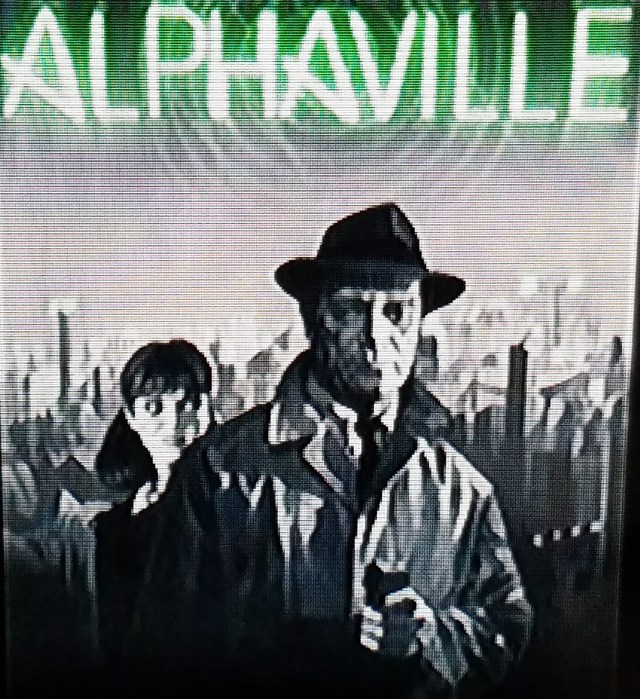
Since I saw a picture of the film’s poster on my television, I decided to take a screenshot of it. Screenshot taken by me, Sally Silverscreen.

Things I liked about the film:

The acting: Because I’ve seen a limited number of French films, I wasn’t familiar with these actors and actresses. However, I thought the acting performances in Alphaville were good! Eddie Constantine’s portrayal of Lemmy Caution reminded me of the performances I’ve seen from John Wayne. What I mean by this is Eddie presented his character with a tough and masculine exterior, but allowed emotion to break through that exterior. He also adopted a “no nonsense” attitude that worked for a story of this nature. Anna Karina also gave a performance that worked for this story! She incorporated a gentleness to her portrayal of Natacha von Braun. This can be heard through her soft-spoken voice and seen through her caring nature. Throughout her performance, Anna displayed emotions in a subtle way. In one scene, when Lemmy is being arrested, Natacha can be seen crying as silently as possible. Despite appearing in the film for less than five scenes, I liked watching Akim Tamiroff’s portrayal of Henri Dickson! The best part about it was how believable it was. A good example of this is any time Henri was experiencing a heart attack, as pain could be seen in his face.

The cinematography: There were some scenes in Alphaville that were shot in interesting ways! This was accomplished by applying various film-making techniques. When Lemmy was walking to a particular location, a continuous shot followed Lemmy to his destination. A perfect example can be found toward the beginning of the film, when Lemmy is being led toward his hotel room. For scene transitions, flashing lights were incorporated to signify a bridge between scenes. After Alphaville’s computer, Alpha 60, is finished explaining one of the city’s many beliefs, a neon sign of a math equation flashes until a scene involving Lemmy begins. Toward the end of the movie, some scenes were presented using an infrared light. This was to show a glitch in Alphaville’s technological system.

The film’s sci-fi world: When most people think of the science fiction genre, fantastical worlds with elaborate costumes, set designs, and makeup are usually what come to mind. For Alphaville, the creative team purposefully chose to film in real-life locations. This decision causes the titular city to appear grounded in reality. The science fiction elements of this story were woven into the behaviors of the citizens and the beliefs they hold. Using what they already had to create a science fiction narrative allowed the movie’s creative team to submit a film that goes against the genre’s norm.

Magnifying fingerprints image created by Balintseby at freepik.com. <a href=”https://www.freepik.com/free-photos-vectors/glass”>Glass vector created by Balintseby – Freepik.com</a>. <a href=’https://www.freepik.com/free-vector/fingerprint-investigation_789253.htm’>Designed by Freepik</a>. Image found at freepik.com.

What I didn’t like about the film:

The film’s science fiction ideas: In a typical science fiction film, the sci-fi ideas are presented as understandable enough for the audience to know what’s happening on screen. This was unfortunately not the case for Alphaville. The ideas associated with this story were so high-concept and complex, that I found myself not understanding what the characters were talking about most of the time. It also doesn’t help that the characters fail to provide clearer explanations for these ideas. This feels like the creative team expected the audience to know what was being discussed before they saw the movie.

Lack of context: In my review of The Crow, I talked about how questions emerged without an answer or an elaboration being provided. This is the exact same mistake that the creative team behind Alphaville made. The majority of female characters in the 1965 picture can be seen with number tattoos. No context is given for why they have this type of tattoo or the meaning behind the tattoo itself. In one scene, Lemmy and Natacha are attending a gathering where people who disobey Alphaville’s beliefs are being punished. Natacha explains how there are more men than women who get punished at these gatherings. She never gives further explanation for why this is the case. Because of the lack of context, it adds to the story’s overarching confusion.

No sense of urgency: Film noir movies usually have a slower pace. This is done on purpose to flesh out the overall story. However, there is an underlying sense of urgency. While watching Alphaville, I could not detect any amount of urgency in the story. For most of the film, Lemmy could be seen in his hotel room, roaming around the city, or visiting the Alpha 60 headquarters on rare occasions. Even though he resolves the film’s conflict, this doesn’t happen until about the last twenty minutes.

Colorful galaxy image created by Freepik at freepik.com. <a href=’https://www.freepik.com/free-vector/lovely-hand-drawn-galaxy-background_2943080.htm’>Designed by Freepik</a>. <a href=”https://www.freepik.com/free-photos-vectors/background”>Background vector created by Freepik</a>. Image found at freepik.com.

My overall impression:

I like participating in Movierob’s Genre Grandeur blogathon because it gives me an opportunity to see films that I may not have watched otherwise. This is certainly the case for this month’s selection, Alphaville. A combination of sci-fi and film noir was something I hadn’t seen before. But I found it to be an interesting contribution to both genres. The world presented in this story is not always found in sci-fi narratives. Bringing a newer idea to the table is what basing the world in a more realistic setting did. Cinematography was also a highlight of this project. It gave the film’s creative team a chance to experiment with different film-making techniques. However, the overall story was just ok. This was caused by confusing science fiction ideas and a lack of context. The majority of content from this story flew over my head, as I didn’t understand what the characters were talking about most of the time. I was frustrated by the overall project because I wasn’t able to grasp the concepts within Alphaville.

Overall score: 6.1 out of 10

Have you seen any French film noirs? Are there any movies from this specific genre you’d like to see me review? Please tell me in the comment section!

Have fun at the movies!

Sally Silverscreen
Take 3: Cyrano de Bergerac (1990) Review

When I published my Hallmark Hall of Fame Reading Challenge last March, one of the literary works I listed was Cyrano de Bergerac by Edmond Rostand. While I’ve never read the play, I was interested in seeing how Hallmark Hall of Fame would adapt this particular story. Sadly, I couldn’t find this specific version on DVD, VHS, or digital, as a lot of the collection’s movies from the ‘50s to about the early ‘80s appear to be lost. When I discovered Vincent Perez starred in the 1990 adaptation of Cyrano de Bergerac, I thought seeing this version would be the next best thing. It was also a perfect choice for The Third Broadway Bound Blogathon, as it was listed under the “Movies Made From Broadway Shows” section in the very first announcement for the event. This blogathon also happens to take place days before Vincent’s birthday, so this became another reason to review Cyrano de Bergerac! I was able to obtain a copy of this film, but I had to purchase two DVDs and a Blu-Ray just to find one that worked with my home entertainment system. Read my review to find out if this film was worth the search!

After weeks of searching, I finally found a DVD copy of Cyrano de Bergerac I could watch! Screenshot taken by me, Sally Silverscren.

Things I liked about the film:

The acting: Since I chose this film because of Vincent’s involvement, I’ll talk about his performance first. One aspect that stood out to me was how his voice was always soft-spoken. This fit his character, Christian de Neuvillette, well because he wasn’t as confident with his words, like Cyrano. I also noticed how sincere Vincent’s performance came across. No matter what situation Christian is in, he always has his heart in the right place. The goodness of this character showed through in Vincent’s portrayal, which helped Christian be as likable as possible! Since I just mentioned Cyrano, I will now talk about Gérard Depardieu’s performance. The word I’d use to describe his portrayal of the titular character is expressive. Every feeling Cyrano was experiencing felt genuine, emotions appearing in his facial expressions, body language, and poetry. Toward the beginning of the film, Cyrano performs at a local theater and participates in a dual shortly after. Gérard was able to adapt to every situation given to his character. Besides Vincent and Gérard, the cast is filled with talented actors and actresses. Anne Brochet is one of those cast members, bringing a gentle nature to her character, Roxane. Through emotionality, Anne brings her character to life in a way that feels believable. One example is when Christian and Cyrano visit her at her balcony.

The historical accuracy: As I’ve said before on this blog, the quality of a film’s historical accuracy can show how much a creative team cares about their project. The historical accuracy of Cyrano de Bergerac is proof of this statement! The world in this movie felt immersive, presenting the locations with a sense of realism. The set designs reflected the financial situation/social status of the characters, with the local bakery and Roxane’s room being perfect examples. While the bakery featured a simpler interior design, Roxane’s room appeared elegant. Costumes looked appropriate for that specific time period, with the color palette for the cast’s wardrobe ranging from lighter shades of beige and blue to darker tones of gray and black. Tools and utensils from yesteryear were used by the characters, such as Cyrano and Christian applying a wax seal on letters to Roxane. This movie shows that no detail was ignored.

The humor: One of the strongest elements of this film was the humor! Not only was it well-written, but the humor itself seemed to fit that world. The funny moments within Cyrano de Bergerac were also given good executions by the actors. My favorite scene is when Christian continuously interrupts Cyrano’s story by making references to Cyrano’s nose. During this exchange, Christian would sometimes only say “nose” to get a reaction from Cyrano. While Christian appears unfazed by Cyrano’s reactions, Cyrano becomes more irritated as the scene continues. This scene made me repeatedly laugh, as I found it hilarious!

The Third Broadway Bound Blogathon banner created by Rebecca from Taking Up Room. Image found at https://takinguproom.wordpress.com/2020/03/20/announcing-the-third-broadway-bound-blogathon/.

What I didn’t like about the film:

The under-utilization of Vincent Perez: Vincent Perez is one of the reasons why I sought out the 1990 adaptation of Cyrano de Bergerac, as I’ve enjoyed his acting performances so far. Before watching this movie, I knew his involvement in the project was a break-out role and likely the biggest role he received at that time. However, because Vincent is billed as the main supporting actor, I was disappointed to find out he was in the film for a limited amount of time. The majority of the story revolves around Cyrano, which means that Vincent was only given a reduced amount of material to work with. There were even large intervals when Vincent was not featured on screen. Usually, main supporting actors receive about half the screen-time the film’s protagonist does. In the case of Cyrano de Bergerac, however, the antagonist, Comte Antoine de Guiche, is given more prominence in the production than Vincent’s character.

The war storyline: Prior to seeing Cyrano de Bergerac, I had a general knowledge of what the story was about. The movie is even classified as a “comedy-drama”, with the assumption that the romantic aspects of the story would fall under the “drama” part. While the comedy and romance within Cyrano de Bergerac dominated the first half of the film, a storyline involving a war took over the film’s second half. The build-up toward the event and the reasoning behind it felt too “inside baseball”. It also caused the entire story to pull a “bait and switch” with its overall tone. Based on the knowledge I had about this film and even based on the DVD cover, I expected the light-hearted tone within the first half to have a consistent presence throughout the film. Even though there were romantic and light-hearted moments within the second half, some of them didn’t feel like they fit in the context of the war.

The poetic monologues: I’m aware that Cyrano is known for being “a man of many words”. I also know the original play was written only in verse. The poems themselves weren’t the issue, as the poetic monologues within this film were performed and written well. However, some of them lasted too long. Toward the end of the movie, Cyrano recited one of his signature monologues. Because it was long in time length, the monologue made the scene drawn out. I realize that the reason for the long monologues was to satisfy the film’s run-time. Personally, I think, at least, a few of the them should have been a bit shorter in length.

Birthday cake image created by Freepik at freepik.com. <a href=’https://www.freepik.com/free-vector/chocolate-birthday-cakes-collection_765437.htm’>Designed by Freepik</a>. <a href=”https://www.freepik.com/free-photos-vectors/birthday”>Birthday vector created by Freepik</a>. Image found at freepik.com.

My overall impression:

I’ve heard that the 1990 adaptation of Cyrano de Bergerac is “the definitive film version of the Edmond Rostand play from 1897.” This is the only film version of the story I have seen. As I also said in the introduction, I have never read the play. So, I can only judge this film simply as a film. Cyrano de Bergerac is a good, solid movie! I found myself invested as the story was unfolding and I can definitely see how this could be presented on Broadway. The poetic dialogue was an interesting choice that helped this project achieve a unique identity. However, there were aspects that prevented the production from being better than it was. Some of the poetic monologues were too long, causing scenes to feel drawn out. Despite flaws like that one, I’m glad I was given an opportunity to see this film! If you do choose to watch this version of Cyrano de Bergerac, keep in mind it is a rarer title to find on physical media. While this movie did receive a Blu-Ray release, prices can get expensive.

Overall score: 7.6 out of 10

Do you enjoy movies based on Broadway shows? Are there any literary adaptations that you like? Tell me in the comment section!

Have fun on Broadway!

Sally Silverscreen