That’s a Wrap for my Second Chance Christmas Double Feature

Now we’ve come to the end of another double feature, as both chosen titles, Young at Heart and An Old Fashioned Christmas, have been watched and reviewed! In the introduction, I brought up the following question:

Did these two movies deserve a second chance?

For my answer, I’ll say Young at Heart was more deserving of a second chance than An Old Fashioned Christmas. With Young at Heart, I not only received an opportunity to check out more projects from Frank Sinatra’s and Alan Hale Jr.’s filmography, I was also given an official introduction to Doris Day’s movies. I found a good excuse to see more musicals, as well as films from the 1950s. Overall, I enjoyed Young at Heart more than Hallmark’s 2010 presentation. As someone who loves An Old Fashioned Thanksgiving, the sequel left a lot to be desired. Despite being titled An Old Fashioned Christmas, the film didn’t feel like a Christmas film. Instead of prioritizing the messages and themes of the holiday, the script primarily focused on stories that could have taken place any time of year. It also doesn’t help how so much of the story revolves around a love triangle. Looking back on An Old Fashioned Christmas, it makes me wonder if the sequel’s poorer quality, as well as becoming forgotten by time and Hallmark themselves, is the reason why I’ve, more often than not, seen DVD copies of the movie included in Christmas movie box sets?

Christmas themed movie tickets image created by Kraphix at freepik.com. <a href=’https://www.freepik.com/free-vector/movie-tickets-christmas_971544.htm’>Designed by Kraphix</a>. <a href=”https://www.freepik.com/free-photos-vectors/christmas”>Christmas vector created by Kraphix – Freepik.com</a>. Image found at freepik.com.

Have fun at the movies!

Sally Silverscreen

Take 3: An Old Fashioned Christmas Review (Second Chance Christmas Double Feature Part 2)

Thank you for joining me for the second part of my Second Chance Christmas Double Feature! Unlike my review of Hallmark’s Frankenstein, this review of An Old Fashioned Christmas will contain a few spoilers. If you’re curious about why I chose An Old Fashioned Christmas  for this double feature, you can check out the introduction in the link below.

Coming Soon to a Blog Near You; The Second Chance Christmas Double Feature!

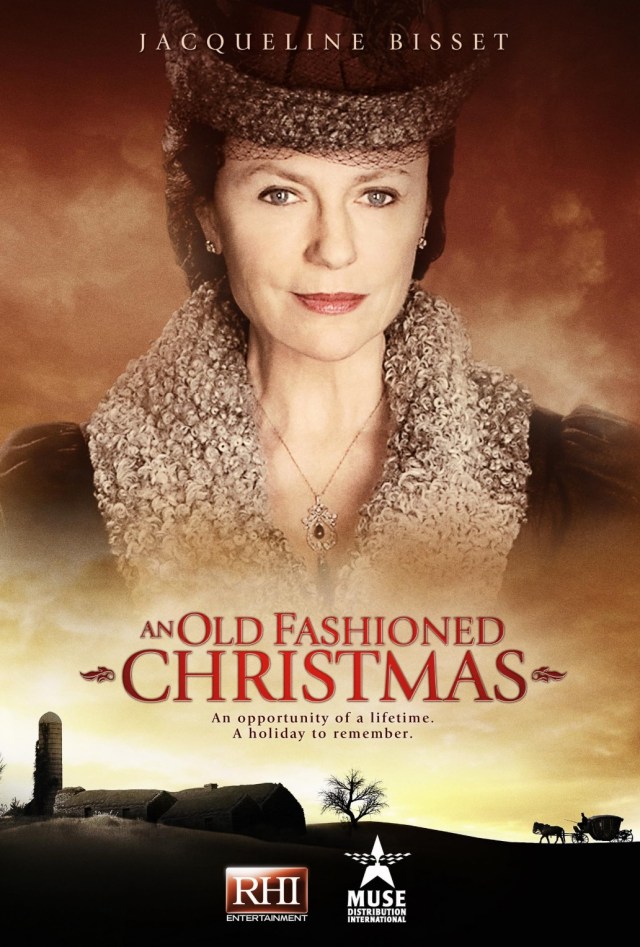
An Old Fashioned Christmas poster created by RHI Entertainment, The Government of Ireland, Parallel Film Productions, MNG Films, Muse Entertainment Enterprises, and Hallmark Channel

1. How were you introduced to An Old Fashioned Christmas and why was it selected for this double feature?

I have declared An Old Fashioned Thanksgiving as one of my favorite Hallmark movies. Years ago, when I discovered the 2008 film received a sequel, I was eager to check that movie out. But as time went on, Hallmark gave the sequel fewer airings during their Christmas line-ups, making it more difficult to watch the film. I’ve always looked for the right time to write about An Old Fashioned Christmas. I even included it on two lists; 2022’s top ten movies I’d love to review and 2023’s top ten Christmas movies I’d love to review. On both lists, I said I found a few DVD copies of the 2010 title. But, more often than not, these DVDs were included in Christmas movie box sets, which, typically, are expensive. Fortunately, An Old Fashioned Christmas was uploaded on Youtube, which is how I watched it.

2. You’ve mentioned An Old Fashioned Thanksgiving being one of your favorite Hallmark movies. Did An Old Fashioned Christmas contain any elements that made you like the 2008 film?

One of the reasons why I love An Old Fashioned Thanksgiving is how immersive the production is! The attention to detail and historical accuracy created the illusion of taking the audience to another time and place. This same strength was found in An Old Fashioned Christmas! One simple, yet effective, example were the props. Anytime Tilly and Isabella shared a meal with the Shannon family, the table was covered with fine china dishes, crystal goblet-style glasses, and even a shiny silver teapot. These specific props reflected the story’s time period, which appears to be the late 1800s. They also symbolized the prestigious family history of the Shannons.

3. Is the theme of “second chances” incorporated in An Old Fashioned Christmas’ story? If so, how?

One of the reasons why Tilly wanted to travel to Ireland was to meet her father’s side of the family. After she gets to know her paternal grandfather and uncle, Tilly writes a letter in the hopes Isabella will make amends with Sean (Tilly’s grandfather). So, in An Old Fashioned Christmas, not only is Tilly given a second chance to connect with her father’s side of the family, Isabella received a second chance to build a bridge between herself and Tilly’s grandfather.

4. Was there anything about An Old Fashioned Christmas you liked or didn’t like?

Similar to Young at Heart, the dialogue was one of the best parts of An Old Fashioned Christmas! Because of the thought and effort put into this film-making aspect, conversations between characters sounded intelligent and eloquent. During breakfast one morning, Lady Shannon asks, “Wouldn’t it be lovely for Americans to have titles”? This question relates to how her son, Cameron, will become an Earl someday. Isabella responds by saying, “Actually, we do. We all share the same title: American”. The way Isabella answered Lady Shannon’s question carried a sense of confidence and grace, simply stating a major difference between her world and the world of the Shannon family. I also thought Isabella’s response to Lady Shannon’s question was pretty clever.

Speaking of Lady Shannon’s son, Cameron, I found him to be the worst character in An Old Fashioned Christmas. He always acted like he had something to prove. Plus, Cameron attempted to get the last word in every argument or conversation. The longer I watched An Old Fashioned Christmas, the more annoying Cameron became. I recognize the film’s creative team was trying to create a male character different from Gad (Tilly’s fiancé). However, this goal can be achieved without making that male character completely unlikable.

Blue sparkly Christmas tree image created by Macrovector at freepik.com. <a href=”https://www.freepik.com/free-photos-vectors/frame”>Frame vector created by Macrovector – Freepik.com</a>. <a href=’https://www.freepik.com/free-vector/merry-christmas-card_2875396.htm’>Designed by Macrovector</a>. Image found at freepik.com.

5. On 18 Cinema Lane, you’ve covered plenty of Christmas films. How is An Old Fashioned Christmas similar to or different from other Christmas pictures written about on your blog?

As I answered for question number three, meeting her father’s side of the family was the reason Tilly wanted to travel to Ireland. Like I also answered for question number four, Isabella responded to Lady Shannon’s question by stating Americans share the same title: American. The story of an American protagonist traveling to Ireland to learn more about her father’s side of the family felt very reminiscent of Christmas at Castle Hart. Another similarity these films share is how a majority of their stories take place in an Irish castle.

6. Did you develop any thoughts and/or questions while watching this film?

What makes An Old Fashioned Thanksgiving such a great movie is how the story embraces the Thanksgiving holiday. The film boasts a Thanksgiving dinner and showcases themed decorations, like a handmade blanket. But the 2008 picture also weaves the messages and themes of the holiday into the story and dialogue, truly making An Old Fashioned Thanksgiving feel like a Thanksgiving movie. An Old Fashioned Christmas definitely looked like a Christmas movie, as decorations and themed activities were sprinkled throughout the film. However, it did not feel like a Christmas picture. That’s because the majority of the story emphasized the love triangle between Tilly, Gad, and Cameron. An Old Fashioned Christmas is a Hallmark presentation where the protagonist says they are going to do something, but spends the majority of the film not doing what they said they were going to do. One of the reasons for Tilly and Isabella’s trip to Ireland was for the Earl of Shannon to mentor Tilly in her writing, in the hopes of getting Tilly’s work published. But throughout the one hour and fifteen-minute movie, Tilly barely accomplishes any writing goals. In fact, the only writing Tilly does is composing letters to her mother.

7. How would the story of An Old Fashioned Christmas change if it revolved around another holiday?

I just mentioned for question number six how the majority of An Old Fashioned Christmas’ story emphasized the love triangle between Tilly, Gad, and Cameron. Other stories, such as the Earl of Shannon mentoring Tilly, didn’t really have anything to do with the Christmas holiday. Therefore, changing the plot of An Old Fashioned Christmas to another time of year wouldn’t make a difference.

8. Did An Old Fashioned Christmas deserve a second chance? If so, why?

Now that I have seen An Old Fashioned Christmas, this is, honestly, a tough question to answer. On the one hand, I received some closure for how the story continues after An Old Fashioned Thanksgiving. I also developed my own, honest opinion about the sequel. But, on the other hand, An Old Fashioned Christmas, kind of, let me down. The Christmas holiday almost seems like an afterthought in the 2010 title. There were underutilized aspects of the story, like Tilly pursuing her writing dreams. So, to answer this question, I’m thankful I received an opportunity to check out An Old Fashioned Christmas. However, I don’t think it was worth the wait.

9. After watching An Old Fashioned Christmas, is there anything you can take away from your movie viewing experience?

If you ignore the fact An Old Fashioned Christmas was created as a sequel to An Old Fashioned Thanksgiving, this is an ok film. The attention to detail and historical accuracy create a visually immersive experience. The dialogue was also well written and delivered. But if you intend to watch An Old Fashioned Christmas as a sequel to An Old Fashioned Thanksgiving, you will be underwhelmed. With Tilly, Gad, and Isabella as the only returning characters, the family dynamic between Tilly’s family and Isabella is absent. Like I said for questions number six and seven, the majority of An Old Fashioned Christmas’ story emphasizes the love triangle between Gad, Tilly, and Cameron. It did not help that Cameron was such an unlikable character. Honestly, this movie will likely be a one-time watch for me. Since I still love An Old Fashioned Thanksgiving, I’ll just stick with the 2008 picture.

Irish heart image created by Freepik at freepik.com. <a href=”https://www.freepik.com/free-photos-vectors/label”>Label vector created by freepik – http://www.freepik.com</a>. Image found at freepik.com.

Have fun at the movies!

Sally Silverscreen

Take 3: Young at Heart Review (Second Chance Christmas Double Feature Part 1)

Thank you for joining me for the first part of my Second Chance Christmas Double Feature! Similar to last year’s review of I Am David, my review of Young at Heart is spoiler-free. If you’re curious about why I chose Young at Heart for this double feature, you can check out the introduction in the link below.

Coming Soon to a Blog Near You; The Second Chance Christmas Double Feature!

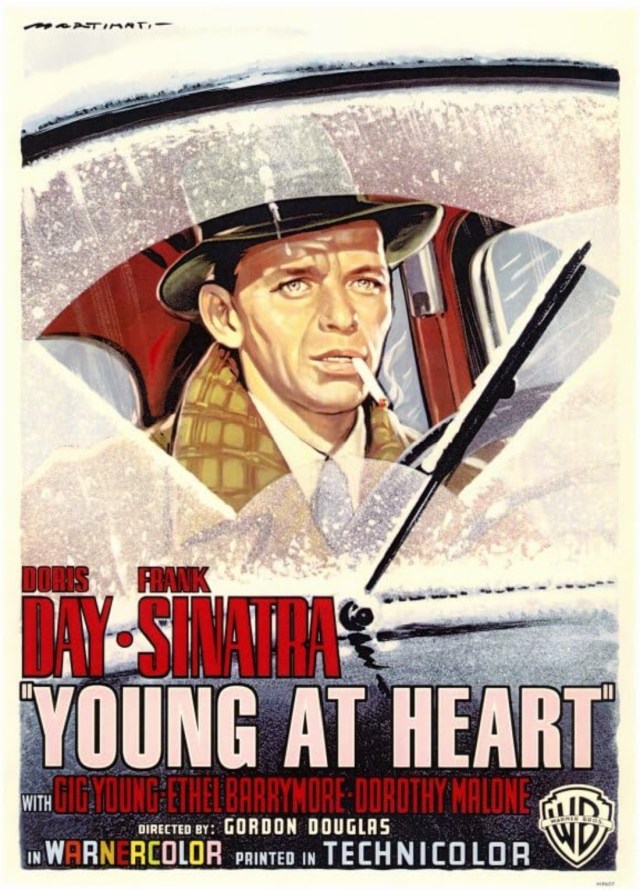
Young at Heart poster created by Arwin Productions and Warner Bros.

1. How were you introduced to Young at Heart and why was it selected for this double feature?

I was introduced to Young at Heart back in January of 2020, through a recommendation from Maddy (of the blog, Maddy Loves Her Classic Films). Several months later, I received another recommendation for Young at Heart. This time, the suggestion came from Moviecriticqueen (of the blog, Movies Meet Their Match). For five years, this movie has stayed on my movie recommendation board on Pinterest. But I have tried to find the right opportunity to write about the film. When I participated in the Sixth Annual Barrymore Trilogy Blogathon, I was originally going to review two movies; Young at Heart and Twentieth Century. Due to technical difficulties, I only had time to write about one film, which I selected the 1934 title. In 2021, I wanted to participate in the Star/Genre Of The Month Blogathon, as January’s featured star was Doris Day. But a busy schedule prevented me from joining the event.

2. You discovered Young at Heart was a Christmas movie after you learned more about the film on IMDB. What else have you discovered about the 1954 picture?

While watching Young at Heart, I discovered Alan Hale Jr. portrayed a character named Bob. Those familiar with their television history would recognize Alan from his starring role (‘Skipper’) on Gilligan’s Island. I will admit the only projects from his filmography I’ve seen are Gilligan’s Island and The North Avenue Irregulars. Even though I’m more familiar with Alan’s appearances on Gilligan’s Island, it was a pleasant surprise to see him star in a different medium!

3. Is the theme of “second chances” incorporated in Young at Heart’s story? If so, how?

Yes, specifically in Barney’s part of the story! When he’s introduced in Young at Heart, Barney (portrayed by Frank Sinatra) is a very pessimistic man. He feels no matter what he does, he will never find success. Throughout the film, one of the few people who believes in Barney is Doris Day’s character, Laurie. During their initial meeting, Laurie tells Barney how anyone can control their own fate. She also encourages him to complete one of his songs. By befriending Barney, Laurie gave him a second chance to prove how valuable he is. Without spoiling the movie, Laurie and Barney’s friendship pays off!

4. Was there anything about Young at Heart you liked or didn’t like?

One of the best aspects of Young at Heart was the dialogue! The writing and delivery were so sharp and witty, it made interactions between the characters interesting! When Barney first arrives at the Tuttle family’s house, he meets Aunt Jessie. During their conversation, Barney nonchalantly asks Aunt Jessie what kind of aunt she is. With a stern tone in her voice, Aunt Jessie promptly tells him her name came first and the curtains came later. This simple exchange between Aunt Jessie and Barney shows some of their character development, as well as the dynamic these characters share.

As I answered for question number three, Barney is a very pessimistic man who believes he can’t find success. I recognize how overcoming insecurities and doubts takes time. But, in Young at Heart, Barney spends most of the movie being pessimistic. He doesn’t change his perspective until the end of the film. This creative choice made Barney a static character. I wish his transformation had gradually taken place over the course of the story.

Adorable Christmas card image created by Rawpixel.com at freepik.com. <a href=’https://www.freepik.com/free-vector/christmas-greeting-card-vector_2824854.htm’>Designed by Rawpixel.com</a>. <a href=”https://www.freepik.com/free-photos-vectors/christmas”>Christmas vector created by Rawpixel.com – Freepik.com</a>. Image found at freepik.com.

5. On 18 Cinema Lane, you’ve covered plenty of Christmas films. How is Young at Heart similar to or different from other Christmas pictures written about on your blog?

It is true that Christmas has a place in Young at Heart. However, the story spans over the course of several months. This means only a portion of the movie is set during Christmas. So, if I had to compare Young at Heart to any of the Christmas films I’ve reviewed, it would be Meet Me in St. Louis. The 1944 movie not only takes place over a year, there is one scene set during Christmas.

6. Did you develop any thoughts and/or questions while watching this film?

As I was watching Young at Heart, I found moments of irony when it came to Barney. When Barney first meets Laurie, he talks about serving in the military during World War II. This reminded me of how Frank’s character, Clarence “Brooklyn” Doolittle, was in the Navy in Anchors Aweigh. During his conversation with Laurie, Barney says he’s never created a hit song. Throughout Frank’s career, he had several hit songs to his name. One notable example is “New York, New York”, which has become the unofficial theme song for New Year’s in Times Square. Any time Barney performed at a restaurant, the patrons didn’t pay him any attention. I’d like to think if Frank had shown up at any restaurant, most of the patrons would have stopped what they were doing to focus on Frank.

7. How would the story of Young at Heart change if it revolved around another holiday?

Like I answered for question number five, Young at Heart spans over the course of several months, with Christmas playing a role in only a portion of the movie. Therefore, I don’t think the story would change much had another holiday served as the primary focus.

8. Did Young at Heart deserve a second chance? If so, why?

I do believe Young at Heart deserved a second chance! By finally checking this movie out, it gave me an opportunity to see more projects from Frank Sinatra’s and Alan Hale Jr.’s filmography. Young at Heart also became my introduction to Doris Day’s films, as I had never seen any of her movies before 2025.

9. After watching Young at Heart, is there anything you can take away from your movie viewing experience?

Young at Heart and The Chalk Garden share one thing in common; a character-driven story that works because of the strength of the cast. But a major difference between these films is how Young at Heart’s script is more “slice of life”. There were conflicts woven into the story. However, these conflicts were either abandoned or resolved at the very end of the movie. I wish Young at Heart had put a little more emphasis on problem-solving among the characters. Another thing The Chalk Garden and Young at Heart have in common is the dialogue, as it was well-written and delivered in both films. There was, clearly, thought and effort put into this film-making component, which made interactions between characters interesting. While I found The Chalk Garden good, Young at Heart was, in my opinion, just fine. The 1954 production could be used as an introduction to Doris Day’s filmography.

Group of puppies image created by Rawpixel.com at freepik.com. <a href=”https://www.freepik.com/free-photos-vectors/background”>Background photo created by rawpixel.com – http://www.freepik.com</a>. Image found at freepik.com.

Have fun at the movies!

Sally Silverscreen

Coming Soon to a Blog Near You; The Second Chance Christmas Double Feature!

Whenever I publish one hundred posts, I commemorate the achievement by creating a double feature! The two movies are chosen based on a shared theme. My 900th post was a Comparing with the Critics introduction to 1976. But my review of The Chalk Garden is what inspired this edition’s double feature. When I reviewed the 1964 film earlier this month, I talked about receiving a second chance to write about the movie. This opportunity caused me to think about other titles I’ve been meaning to check out. Looking back on all the blogathons I participated in, I realized I still haven’t seen 1954’s Young at Heart. Upon discovering it was a Christmas movie, I immediately found the perfect excuse to finally see An Old Fashioned Christmas. After selecting and watching these films, I will try to answer the following question:

Did these two movies deserve a second chance?

Christmas Tree with boxes image created by Freepik at freepik.com. <a href=’https://www.freepik.com/free-vector/christmas-tree-out-of-gift-boxes_1448089.htm’>Designed by Freepik</a>. <a href=”https://www.freepik.com/free-photos-vectors/background”>Background vector created by Freepik</a>. Image found at freepik.com

Have fun at the movies!

Sally Silverscreen

Concluding my Double Feature: 2004 Edition

It’s time to wrap up another double feature, as both chosen titles, Hallmark’s Frankenstein and I Am David, have now been watched and reviewed! In the introduction, I brought up the following question:

Based on these two movies, how has the cinematic landscape changed in twenty years?

Looking back on each movie, a realization came to me. One thing I Am David and Hallmark’s Frankenstein have in common is the timelessness each story contains. It also helps how these stories are more straight-forward, which makes it easier for the audience to understand what is happening on screen. Realizing these statements could also be applied to The Polar Express, my answer to the aforementioned question is how, back in 2004, it seems like there was a desire on the cinematic landscape to create timeless entertainment. Now, twenty years later, studios and film companies are competing with one another to make the most relevant titles possible. On the current cinematic landscape, it’s all about capitalizing on trends and fads, creating titles for the here and the now. The problem with this film-making approach is how five, even ten plus years from that movie’s release, that movie will be dated on arrival. This film-making approach also makes movies seem more disposable instead of a long-lasting product with more opportunities to be revisited.

Popcorn and movie ticket image created by Freepik at freepik.com. <a href=’https://www.freepik.com/free-photo/cinema-tickets-in-bucket-with-popcorn_2303439.htm’>Designed by Freepik</a>. <a href=”https://www.freepik.com/free-photos-vectors/layout”>Layout image created by Freepik</a>. Image found at freepik.com.

Have fun at the movies!

Sally Silverscreen

Take 3: I Am David Review (Double Feature: 2004 Edition Part 1)

Thank you for joining me for the first part of Double Feature: 2004 Edition! Similar to last year’s review of The Great Muppet Caper, my review of I Am David is spoiler-free. If you’re curious about why I chose I Am David for this double feature, you can check out the introduction in the link below.

Introducing my Double Feature: 2004 Edition!

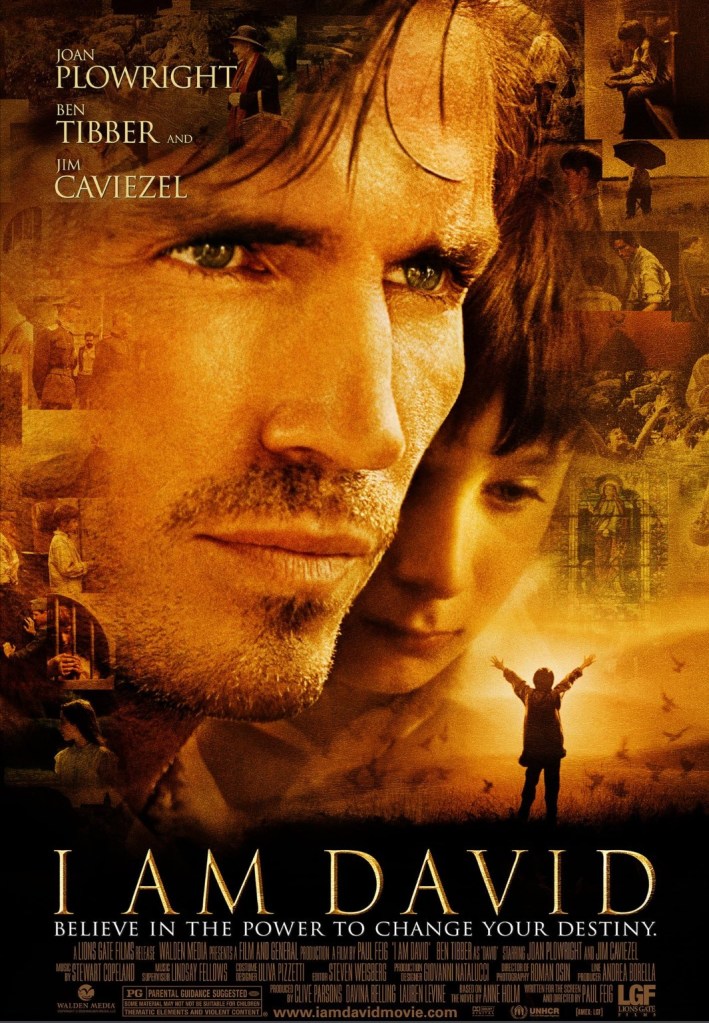
I Am David poster created by Walden Media, Film and General Productions, Lionsgate Films, Artisan Entertainment, and David Productions Ltd.

1. What are your thoughts on 2004 as a cinematic year?

When I look back on the cinematic landscape of 2004, my first thought is how studios and film companies were more willing to create stand-alone productions. Twenty years ago, about fifteen sequels were released in theaters. In 2024, that number has increased, with about twenty-three sequels scheduled to premiere. My second thought about 2004 is how creativity was celebrated at the box office. The Polar Express, the reason why this double feature exists, was the tenth highest grossing film of 2004. Even though that movie was based on a pre-existing book, the production was not a remake or a sequel of a preceding film. Plus, The Polar Express brought something new to the cinematic table, as the movie was created through motion-capture technology.

2. I Am David was released on December 3rd, 2004 (around “award season”). Why do you think the film was overlooked on the award circuit?

The 77th Academy Awards was a televised event. This means those involved with the creation of the show had to make decisions that would increase or maintain higher viewership numbers. Million Dollar Baby, the movie that won Best Picture, was a film the majority of the Academy Awards’ audience had either heard of or seen. The movie was directed by Clint Eastwood and starred Hilary Swank, two actors this same Academy Awards audience were familiar with. Because I Am David premiered around the same time as Million Dollar Baby and lacked the star power Million Dollar Baby had, I Am David became overshadowed by a bigger, more popular production.

2004 was when The Passion of the Christ made waves at the box office. Becoming the third highest grossing film of that year, it earned the distinction of being one of the most successful faith-based movies in history. Similar to Million Dollar Baby, The Passion of the Christ contained star power, directed by Mel Gibson and starring Jim Caviezel. I wouldn’t go so far as to call I Am David a faith-based movie. However, elements of faith are woven into the story. While Jim Caviezel stars in I Am David, his presence in this film is very limited. With all that said, I Am David became overshadowed by another big, more popular title.

3. Is there anything about I Am David you liked or didn’t like?

The story of I Am David revolves around the titular character escaping from a Bulgarian labor camp in 1952. Throughout his journey, David takes refuge in the natural landscape surrounding him. The natural environment in this film serves two purposes; protecting David and giving him a gateway to freedom. A peaceful scene where he casually walks through a tunnel of trees beautifully captures this idea, providing a symbolic light at the end of the tunnel. The importance given to Europe’s natural landscape allows it to become its own character, with the elements, more often than not, working in David’s favor. It also showcases a side of Europe that could be easily taken for granted.

I Am David is a story where the audience learns more about David as the film progresses. While this keeps the audience invested in the film, this creative decision means answers aren’t provided until toward the end of the movie. On the one hand, I, kind of, wish some of the revelations about David were revealed sooner. But, on the other hand, major questions were answered within two plot twists that I found effective. Even though the longer wait for answers is a flaw, I was able to, for the most part, overlook it because of the strength of the plot twists.

4. In your Word on the Street story about a potential sequel for The Polar Express, you mentioned the technology that was applied to the film. Could you detect any technology incorporated into I Am David?

As far as I could tell, I didn’t sense any technology within I Am David other than cinematography, sound, and editing. Because of the nature of the movie, though, I don’t think technological film-making techniques were necessary.

Italian countryside image created by Bill Silvermintz at freeimages.com. “FreeImages.com/Bill Silvermintz.” Photo by <a href=”/photographer/edudflog-58908″>Bill Silvermintz</a> from <a href=”https://freeimages.com/”>FreeImages</a&gt;.

5. I Am David is based on a book published in the 1960s. Has the entertainment industry changed its approach to adapting pre-established stories?

Throughout 2004, about twenty adaptations based on literature premiered in theaters. Out of those twenty, eleven adaptations contained a built-in audience for a variety of reasons. Observing which movies are scheduled to premiere in 2024, the entertainment industry is, once again, choosing source material with a built-in audience. But now this selection process has expanded beyond literature; with movies, tv shows, and popular characters receiving their own adaptations. Even though there were productions in 2004 based on popular IPs (intellectual properties), the number of adaptations based on IPs has doubled in twenty years, with about 44 of 2024’s films fitting this criterion. One of these films is the musical remake of Mean Girls. While the original movie was based on the book, Queen Bees and Wannabes by Rosalind Wiseman, the remake is based on the 2004 film.

6. Did you develop any thoughts and/or questions while watching this film?

I didn’t develop any questions while watching I Am David. But as I followed the story, I took note of the film’s exploration of light and darkness. When the film begins, David attempts his escape from the labor camp. This scene is intense, emphasizing David’s dire situation through limited lighting, cinematography, and music. Flashbacks are sprinkled throughout the story, showing only enough harshness to get the point across. When the lighter moments appear in the movie, they feel earned, taking place after David experiences a trial in his journey. Primarily showcased in bright lights and with peaceful, even cheery music playing in the background, these lighter moments address how our world can be a beautiful place. Showing the light and darkness taking place in the world, especially in Europe post World War II, is a more balanced way of presenting the environment surrounding David.

7. On Ebert & Roeper, I Am David was not covered. Why do you think the movie was omitted from the show?

Ebert & Roeper, one of the iterations of At the Movies, was a nationally televised program. Smaller titles with limited releases were sometimes featured on the show. But the types of movies that populated the program were mainstream productions with widespread releases. This decision was likely made to maintain the show’s viewership, similar to the aforementioned 77th Academy Awards. The choice to emphasize more mainstream films was also probably made to provide the show’s audience with a chance to check out the movies brought up on the show, as those titles would be showing in more theaters.

8. Now that it’s been twenty years since I Am David premiered, has the movie stood the test of time or become a product of its time?

This film has definitely stood the test of time! A major reason for this is due to the timeless, universal messages woven into the script. Perseverance, trying to find the goodness in our world, and kindness progressing the journey forward are messages most people can appreciate. These messages may also inspire audience members to apply them to their own lives.

9. After watching I Am David, is there anything you can take away from your movie viewing experience?

If I could describe I Am David in one word, it would be ‘genuine’. Every aspect of this film, from the acting performances to the screenwriting, allowed the story of David and his journey to be told with genuine emotion and sincerity! Creative decisions were delivered as pleasant surprises for me, such as the plot twists that caught me off guard. I was really impressed by the inclusion of Europe’s natural landscape, given enough emphasis to be its own character. The exploration of light and darkness provided a more balanced perspective on David’s world. I Am David is a movie I wish had been nominated during “award season”. In fact, I wish more people knew about this film! But if someone wanted to watch I Am David, I would suggest watching it knowing as little information about the story as possible, as I don’t want the film’s aforementioned plot twists to be spoiled for first time viewers.

Popcorn and movie ticket image created by Freepik at freepik.com. <a href=’https://www.freepik.com/free-photo/cinema-tickets-in-bucket-with-popcorn_2303439.htm’>Designed by Freepik</a>. <a href=”https://www.freepik.com/free-photos-vectors/layout”>Layout image created by Freepik</a>. Image found at freepik.com.

Have fun at the movies!

Sally Silverscreen

Introducing my Double Feature: 2004 Edition!

Every time I publish one hundred posts, I commemorate the achievement by creating a double feature; reviewing two films that have at least one thing in common. My 800th blog post was a Word on the Street story about the possibility of a sequel for The Polar Express. Since that movie was released in 2004, I chose two titles from that year to review in this double feature. Those titles are I Am David and Hallmark’s adaptation of Frankenstein. It’s been a while since I attempted to answer a question through my double feature reviews. So, this time, I will try to find an answer to the following question:

Based on these two movies, how has the cinematic landscape changed in twenty years?

Popcorn and movie ticket image created by Freepik at freepik.com. <a href=’https://www.freepik.com/free-photo/cinema-tickets-in-bucket-with-popcorn_2303439.htm’>Designed by Freepik</a>. <a href=”https://www.freepik.com/free-photos-vectors/layout”>Layout image created by Freepik</a>. Image found at freepik.com.

Have fun at the movies!

Sally Silverscreen

The Sun Sets on My Great Muppet Guest Star Caper Double Feature!

Now that The Great Muppet Guest Star Caper Blogathon has concluded and I reviewed both films, it’s time to share my overall thoughts! First, I’d like to thank Gill, from Realweegiemidget Reviews, and Rebecca, from Taking Up Room, for hosting this event! A Muppets themed blogathon was not only a creative idea, it also gave me an excuse to check out Muppet related films. Out of the two movies I reviewed, The Great Muppet Caper and Follow That Bird, one clearly stood out more than the other. That would be 1981’s The Great Muppet Caper! I had such a great experience watching this movie! It felt reminiscent of productions like Anchors Aweigh and Singin in the Rain, where the interactions between the characters and the musical numbers prevented the simpler story from being weak or predictable. Follow That Bird, on the other hand, was a fine, first attempt at creating a film. However, there were several story-telling elements within the project that weren’t utilized to their fullest extent. Some creative decisions were confusing as well. Now that another successful double feature has been completed, I wonder what will be the theme of my next double feature?

The Great Muppet Guest Star Caper banner created by Rebecca from Taking Up Room and Gill from Realweegiemidget Reviews

Have fun on Sesame Street!

Sally Silverscreen

Take 3: Sesame Street Presents: Follow That Bird Review (The Great Muppet Guest Star Caper Double Feature Part 2)

Welcome to part two of The Great Muppet Guest Star Caper Double Feature! Like my review of The Great Muppet Caper, this review of Sesame Street Presents: Follow That Bird will be spoiler-free. I will also be referring to the movie as ‘Follow That Bird’ instead of its full title. If you would like to know why I selected this movie, I will provide the link to this double feature’s introduction. The link to my review of The Great Muppet Caper will be provided as well.

The Great Muppet Guest Star Caper Double Feature is On Its Way!

Take 3: The Great Muppet Caper Review (The Great Muppet Guest Star Caper Double Feature Part 1)

Sesame Street Presents: Follow That Bird poster created by Warner Bros. and Children’s Television Workshop

1. Were you familiar with Follow That Bird before The Great Muppet Guest Star Caper Blogathon?

Similar to The Great Muppet Caper, I was familiar with Follow That Bird before participating in the blogathon. I own a copy of the film’s soundtrack, so I knew what the story was about. When it comes to the movie itself, I’d only seen pieces of it.

2. Who was the featured guest star in Follow That Bird?

Sesame Street’s Big Bird was a guest on The Muppet Show. As I said in my review of The Great Muppet Caper, The Muppets and Sesame Street were created by Jim Henson. Keeping this fact in mind, I’ve always seen the characters from each intellectual property (IP) as being extended members of the same family. So, when it comes to The Muppet Show, I was surprised Big Bird was considered a “guest”.

3. How would Follow That Bird’s story change if a different Sesame Street character was the main character?

Like The Muppets, Sesame Street has a large cast of characters. Whether that character is a human or a muppet, each one has their own unique personality, set of likes and dislikes, and talents to offer. With that said, this would be a completely different movie if the story revolved around a different Sesame Street character. Grover is one example, as an important part of his character is his desire to become a superhero. If Grover were the main character of a Sesame Street movie, his story would likely be a “superhero’s tale”, where the protagonist fights crime and saves the day with superpowers.

4. Did you develop any thoughts and/or questions while watching this film?

While watching Follow That Bird, I found some parts of the story confusing. As some of the characters watch a news report on a television at Mr. Hooper’s store, Chevy Chase makes a cameo appearance as a newscaster. During the weather report, he quotes the theme song to Mister Rogers’ Neighborhood. Out of all the references Chevy could make in a Sesame Street movie, why that one? Wouldn’t it make more sense for Fred Rogers to appear in the film and quote the theme song of his own show? Another example is when several characters spot Big Bird in a parade. These characters can clearly see their feathered friend, but their path is blocked due to the parade taking place. How come none of the characters considered getting out of their car and following Big Bird through the parade on foot? It’s decisions like this one that, for me, didn’t make sense.

Similar to The Great Muppet Caper, I was surprised by which characters were included in the movie and how much screen-time they received. Toward the end of Follow That Bird, Elmo makes such a brief cameo appearance, he doesn’t even have any lines. On one hand, Elmo was introduced on Sesame Street in 1980. By the time Follow That Bird was released in theaters, he had been on the show for about five years. On the other hand, at the time of Follow That Bird’s premiere, Elmo was not as popular as he would later become. Despite these facts, I was kind of surprised by Elmo’s limited appearance.

5. Follow That Bird was the first Sesame Street movie ever created. Why do you think it took the show’s creative team that long to make a film?

I have two answers why this decision was likely made. A lot of the cast members from the Sesame Street show worked on Follow That Bird. This includes cast members who worked on Muppet related projects, such as The Great Muppet Caper and The Muppet Show. Like I said in my review of The Great Muppet Caper, my guess is Sesame Street’s creative team wanted to prevent creative burn-out and spreading their talent too thin.

At the time Follow That Bird was released, Sesame Street had been on the air for sixteen years. During that time, the show’s creative team worked very hard to cultivate a program that was creatively and educationally consistent. Like any television show, Sesame Street’s audience grew over time. When it comes to creating a movie, I would guess Warner Brothers, the studio who distributed Follow That Bird, and Children’s Television Workshop, Sesame Street’s production company, wanted to wait until they felt they could make a satisfying profit on the film.

The Great Muppet Guest Star Caper banner created by Rebecca from Taking Up Room and Gill from Realweegiemidget Reviews

6. Is there anything about Follow That Bird you liked or didn’t like?

As I said in answer number four, I was surprised by which characters were included in the movie and how much screen-time they received. But I also found it interesting how these characters were utilized in the story. On Sesame Street, Oscar the Grouch, more often than not, stays in his trash can and maintains a negative disposition. These factors cause Oscar to appear on the show in certain situations, such as interacting with The Wicked Witch of the West from The Wizard of Oz. While he still had a negative disposition in Follow That Bird, Oscar explored the world beyond his trash can. That’s because he was one of the assigned drivers searching for Big Bird. In Follow That Bird, Oscar was a lot more humorous than I expected. My favorite line of his was spoken during the road trip preparations. Oscar exclaims how he loves a good goose chase. Then, he randomly says, “Let’s get lost”. Giving Oscar more humorous lines and allowing him to join the road trip gave this character an opportunity to be utilized more than he has on the show!

In my review of The Great Muppet Caper, I mentioned the characters’ knowledge of being in a movie as one of the story’s overarching jokes. This was one of the highlights of the 1981 film, as the dialogue relating to the joke was cleverly written and successfully delivered. Two of the characters in Follow That Bird, Oscar the Grouch and Count von Count, acknowledged the film’s audience was watching their movie. But other than “The Grouch Anthem” and the end credits, this knowledge was not consistently brought up in the script. That is just one example of a creative element that wasn’t fully utilized in the 1985 movie.

7. Could a new Sesame Street movie work in 2023?

Since its debut in 1969, Sesame Street has become a global phenomenon. The success of the show has encouraged countries outside of the United States to create their own version of Sesame Street. In the thirty-eight years since Follow That Bird’s premiere, the cinematic landscape has become more globalized. If Sesame Street’s creative team wanted to make another movie, an important question they would have to answer is which characters will be included in the story. Would it exclusively focus on the characters from Sesame Street or would it also feature characters from one of the international shows? If you wanted to create a movie in 1985, you had three distribution options: releasing the film in theaters, premiering the movie on television, or putting the production directly on video cassette. With the invention of streaming services, studios and production companies are now given the option to forgo the process of theatrical releases, as well as selling a movie on physical media. The distribution of a Sesame Street film is another important question the show’s creative team would have to address.

8. What does Sesame Street mean to you?

To me, Sesame Street represents the idea of timelessness. The show has found its place in the pop cultural landscape and stayed there for over fifty years. In that timeframe, the world and Sesame Street itself has seen so many changes. But despite all of that, some elements of the program have remained the same. Each episode has been given an official letter and number. Follow That Bird even adopted this component from the show, with ‘W’ and ‘B’ being the movie’s letters, representing the studio that distributed the film, Warner Brothers. That simple creative decision has taught children the alphabet and how to count. This knowledge lays the educational foundation so children can master other skills, such as constructing sentences and mathematical equations. The simplicity and consistency of including letters and numbers into Sesame Street is a reminder of the timeless nature of these lessons.

9. After watching Follow That Bird, is there anything you can take away from your movie viewing experience?

According to Muppet Wiki, Sesame Street created three television specials in the 1980s focusing on Big Bird traveling around the world; Big Bird in China, Big Bird in Australia, and Big Bird in Japan. With Follow That Bird being released in 1985 and with the story about Big Bird traveling outside of Sesame Street, it makes me wonder if the movie was meant to correlate with the aforementioned television specials? Speaking of the movie, I thought it was a fine, pleasant, cute enough production. But compared to The Great Muppet Caper, Follow That Bird could have been stronger. There were several creative elements within the movie that weren’t consistently utilized. “The Grouch Anthem” and the end credits being the only two instances of the characters acknowledging the audience is watching their movie is just one example I mentioned in my review. As I also mentioned in my review, some creative decisions didn’t make sense, such as Chevy Chase quoting the theme song of Mister Rogers’ Neighborhood. However, this wasn’t a bad first attempt at making a movie. In fact, there are aspects of the project that worked in the movie’s favor, like the musical numbers! I feel Follow That Bird is one of those films that younger children would enjoy more than an older audience member would.

Image of Colorado road created by welcomia at freepik.com. <a href=”https://www.freepik.com/free-photos-vectors/mountain”>Mountain photo created by welcomia – http://www.freepik.com</a>. Image found at freepik.com.

Have fun at the blogathon!

Sally Silverscreen

Take 3: The Great Muppet Caper Review (The Great Muppet Guest Star Caper Double Feature Part 1)

Welcome to part one of The Great Muppet Guest Star Caper Double Feature! Unlike past double feature reviews, my review of The Great Muppet Caper is spoiler-free. If you’re wondering why I chose this movie for the blogathon, you can check out this double feature’s introduction at the link below.

The Great Muppet Guest Star Caper Double Feature is On Its Way!

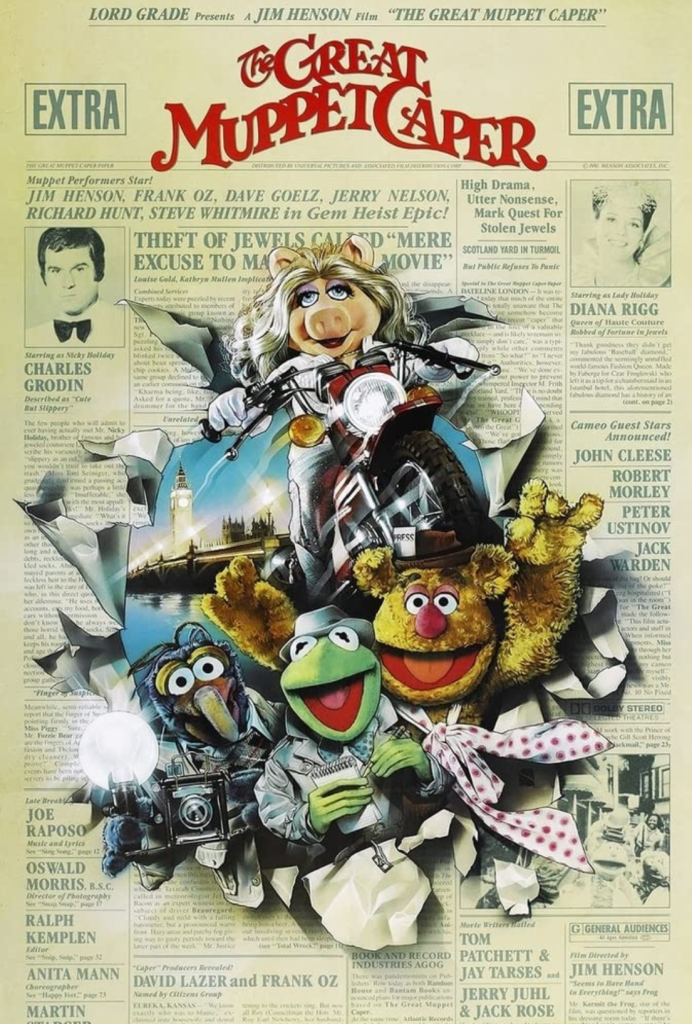
The Great Muppet Caper poster created by
ITC Entertainment, Henson Associates, and
Universal Pictures

1. Were you familiar with The Great Muppet Caper before The Great Muppet Guest Star Caper Blogathon?

I had heard of The Great Muppet Caper prior to being invited to the blogathon. One reason why I’m familiar with the 1981 film is Christine Elizabeth Nelson’s cameo. Christine is the daughter of Jerry Nelson, who was not only a member of The Muppets cast, he also worked on The Great Muppet Caper. Christine’s mother, Jacquie Gordon, wrote a book about her, titled Give Me One Wish: A True Story of Courage and Love, which chronicled Christine’s young life with a Cystic Fibrosis diagnosis. When I sought out her cameo, before seeing The Great Muppet Caper, I admit I was confused why Christine referred to Kermit as a bear. But as I watched the movie, I realized her line was part of a running joke where Kermit and Fozzie Bear are mistaken for twins, as they wear similar looking hats.

2. Who was the featured guest star in The Great Muppet Caper?

That would be John Cleese! He portrayed a character named Neville, a wealthy British resident. John and Joan Sanderson were featured in the scene where Miss Piggy breaks into a high-end home in an attempt to portray her boss, Lady Holiday.

3. If Neville was portrayed by a different actor, how would his role in The Great Muppet Caper change?

The Great Muppet Caper is similar to It’s a Mad, Mad, Mad, Mad, World in that the majority of the cast is given smaller roles, which results in a shorter amount of time on-screen. This surprised me, as I expected John to have more appearances in the movie. While John did a good job with the limited material given, I don’t think the role of Neville would change no matter who portrayed him. This is because The Muppets were the stars of the show, which is expected for this particular title.

4. Did you develop any thoughts and/or questions while watching this film?

In the film’s opening number, “Hey A Movie!”, a city landscape served as the number’s backdrop. From what I could tell, the city didn’t look like the background on Sesame Street. I was surprised by this creative decision, as both The Muppets and Sesame Street were created by Jim Henson. Because of this fact, I expected more cross-overs between the two intellectual properties (IPs). But the only Sesame Street reference I could find in The Great Muppet Caper was a cameo appearance from Oscar the Grouch. Personally, I think having Sesame Street serve as the backdrop for “Hey A Movie!” would have been a nice nod to that show. With both Sesame Street and The Muppets containing their own large cast of characters and their own specific stories, it makes sense why The Great Muppet Caper featured little acknowledgement of Sesame Street.

The inclusion and exclusion of certain Muppet characters also surprised me. Looking back on The Great Muppet Caper, I remember Pepe the King Prawn was nowhere to be found. In my recollections of The Muppets, Pepe and The Great Gonzo have been good friends. So, I was a bit confused why Pepe wasn’t featured in the story. After doing some research about the character, I learned he joined The Muppets family in 1996, a decade after The Great Muppet Caper premiered. Had Pepe starred in this movie, he likely would have worked with Lady Holiday’s fashion label.

The Great Muppet Guest Star Caper banner created by Rebecca from Taking Up Room and Gill from Realweegiemidget Reviews

5. The Great Muppet Caper was not only the second Muppet movie created, it was also released at the end of The Muppet Show’s run. Why do you think the creative team behind the Muppets chose to make and premiere this film toward the end of the show’s lifespan?

If you want to create a movie, especially a good one, there is a lot of time, dedication, creative energy, and resources needed to make that a reality. This can also be said for the creation of a television show. Many cast members from The Muppet Show also worked on The Great Muppet Caper. Had both of these programs been created around the same time, this creative team would have run the risk of their talent being spread too thin as well as creative burn-out.

6. Is there anything about The Great Muppet Caper you liked or didn’t like?

One of the overarching jokes in this story was the characters’ knowledge of being in a movie. The way this knowledge was written and delivered felt like the film’s creative team was winking at the audience. One example is when Lady Holiday, portrayed by Diana Rigg, tells Miss Piggy about her brother, Nicky, and why she doesn’t like him. After Miss Piggy asks Lady Holiday why she’s telling her this information, Lady Holiday responds, in a nonchalant and matter-of-fact way, that what she said is exposition and it needs to go somewhere. I liked this part of the story because of how it was cleverly incorporated into the script. The quality of the screen-writing made this overarching joke feel like it fit within the movie’s world.

The plot of The Great Muppet Caper revolves around Kermit, Fozzie Bear, and The Great Gonzo solving the mystery of stolen jewels. As someone who seeks out media from the mystery genre, I was intrigued by the idea of a mystery story starring The Muppets. But when I watched the movie, I quickly learned the musical numbers were given more emphasis than the mystery. Because I enjoyed watching and hearing these numbers, I didn’t mind this creative decision too much. However, I still wish the mystery itself was given a little more focus.

7. Could a new Muppets movie work in 2023?

In the short term, I believe a new Muppet movie could work, purely based on nostalgia. The Muppets is an IP (intellectual property) many people are fond of, so the movie itself might have a huge draw on opening weekend. But for long term success, meaning memorability, merchandising, and home entertainment sales, the story needs to be able to stand the test of time. To achieve that, the script has to be timeless and straight-forward.

8. What does The Muppet Show mean to you?

When I think of The Muppet Show, the word “tradition” comes to mind. It’s one of those shows the family can watch together, sitting around the television every weekend and enjoying the program, as well as each other’s company. With the large cast of characters, a variety of guest stars, and plenty of musical numbers, there seems to be something for everyone. Sadly, I can’t think of many shows today like The Muppet Show, a show that brings families together.

9. After watching The Great Muppet Caper, is there anything you can take away from your movie viewing experience?

When it comes to movies, especially musicals, sometimes the simplest, most straight-forward stories are the ones that work the best. As I reflect on The Great Muppet Caper, I am reminded of Singin in the Rain and Anchors Aweigh. These three films contain stories that are easier to follow. But the strength of the talent, pleasant musical numbers, and execution of the final product worked in the story’s favor, making each title so enjoyable to watch! Seeing The Great Muppet Caper was such a fun experience! I found myself laughing and smiling during the film, as it exuded so much joy. That joy will carry in my heart long after the end credits roll. Then again, how can you not feel joy when The Muppets come around?

Sketch of London image created by Archjoe at freepik.com. <a href=’https://www.freepik.com/free-vector/hand-drawn-houses-of-parliament_1133950.htm’>Designed by Archjoe</a>. <a href=”https://www.freepik.com/free-photos-vectors/background”>Background vector created by Archjoe – Freepik.com</a>. Image found at freepik.com.

Have fun at the blogathon!

Sally Silverscreen