Comparing with the Critics – Worst of 1984 – Harry & Son

This review is from my series, Comparing with the Critics. If you’d like to learn more about the series, click on the link below.

Introducing my new series, Comparing with the Critics!

Toward the end of At The Movies’ ‘Stinkers of 1984’ episode, Gene Siskel and Roger Ebert share a collection of films they felt were some of the worst movies of 1984. One of the films Roger brought up was Harry & Son. In a brief segment about the movie, Roger refers to the picture as a “sincere, but misguided dream”. Roger also calls Harry & Son “a painfully contrived tear-jerker”. Gene responds before the segment ends that “he and Burt Reynolds are two of the worst in ‘84”, likely referring to Paul Newman. I honestly hadn’t heard of this film until I watched this episode of At The Movies. Therefore, I approached the title with little to no expectations. But now that I have seen Harry & Son, I think calling the picture one of the worst of 1984 is, actually, a bit harsh.

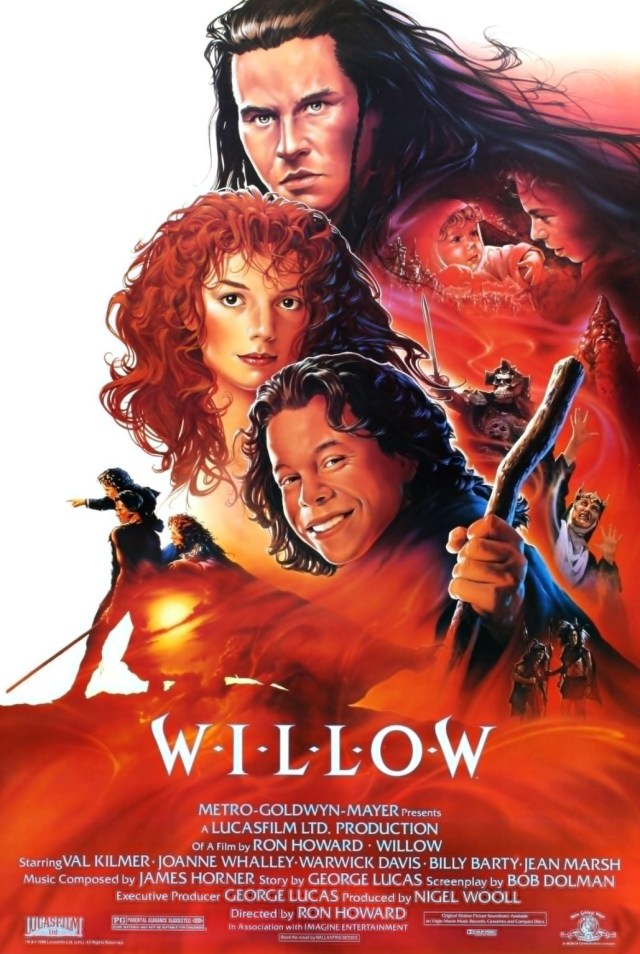
Harry & Son poster created by Orion Pictures

While briefly talking about Harry & Son, Roger brings up Robby Benson. But instead of simply referring to Robby by his name, Roger says “Robby “gee Dad, want a diet pop” Benson”, even saying it in a mocking tone. By addressing Robby’s name in this way, Roger gives the impression Robby’s character, Howard “Howie” Keach, is just a stereotypical surfer jock. As I got to know this character while watching Harry & Son, I discovered this assumption was far from the truth. Throughout the story, Howie always has his heart in the right place. More often than not, he brings a burst of positivity, choosing to look at the glass half full. In a scene where Howie and his father, Harry, are on their porch, Harry orders his son to find a job, a bitter tone in his voice due to his frustrations over his declining health. In a positive, yet matter-of-fact way, Howie informs his dad how he already has a job washing cars. Another scene shows Howie coming home, excited to see his dad arrive so early from work. A big smile is spread across his face and his eyes shine bright with joy. But as he learns his dad has just lost his job, Howie’s face changes to display confusion and fear. This change in persona is seamless, never missing an emotional beat. Moments like this one were made possible by Robby’s acting abilities, showcasing a wide range of emotions and expressions. In my opinion, I think Robby should have, at least, been nominated for his performance in Harry & Son.

It’s In The Name Of The Title Blogathon banner created by Gill from Realweegiemidget Reviews and Rebecca from Taking Up Room

As I just mentioned in the previous paragraph, Harry is frustrated over his declining health. After an incident at a construction site, Harry is forced to be honest about his poor eyesight. One scene has Harry talking with one of his co-workers about his health issues, raising concerns over how these issues will affect his employment. In the 21st century, specifically the 2020s, there has been a risen awareness for men to address their medical issues. So, for Harry to talk to a peer about his health in a movie from the ‘80s is kind of ahead of its time. Later in the story, Howie learns his friend doesn’t have health insurance. When he takes his friend to the hospital, Howie is frustrated by the rejection his friend faces due to the hospital’s policies. The importance of health insurance is another medical topic that has gained attention in the 21st century, including the 2020s. Similar to what I said about Harry’s honesty about his health, I appreciate these brief, yet necessary moments to bring up these serious health subjects, especially in a time when they weren’t found in common societal conversations yet.

Since Harry & Son takes place in Florida, I thought this picture of a Florida shaped pool would make sense for this review. Screenshot taken by me, Sally Silverscreen. Image originally found at https://www.youtube.com/watch?v=tiBkULOrf7Y.

In the introduction of my review, I quoted Roger Ebert’s statements about Harry & Son, with Roger saying the film was a “sincere, but misguided dream” and “a painfully contrived tear-jerker”. I will agree with Roger about the movie being sincere. There were some sweet moments that were written, acted, and directed with a strong amount of sincerity. One example is when Howie goes to a high-end clothing store to purchase a suit jacket. When I first saw that scene, I honestly thought Howie had bought the jacket for himself, showing his dad how he can afford nicer attire. So, imagine my shock when Howie gave the jacket to his dad as a birthday present.

Where Roger and I disagree is how the movie is a “misguided dream” and a “painfully contrived tear-jerker”. I will admit Harry & Son has its flaws, such as scenes ending too quickly and emphasizing showing without telling. But I wouldn’t go so far as to say the movie is “misguided” or “painfully contrived”. With scenes ending too quickly, it felt like the characters were expected to say more. When Nina (Harry’s daughter and Howie’s sister) is talking with a client at a hair salon, I thought Nina was going to respond to the client’s story about their estranged father. But the moment is quickly forgotten as the story moves on. As Howie is reconnecting with Katie, an ex-girlfriend, their conversation is one of the most cryptic pieces of dialogue I’ve ever heard in a movie. While I could see these characters still cared for one another, by observing their expressions and displayed emotions, it took me a few minutes to figure out what Katie and Howie were saying to each other. This is just one example of showing without telling.

Comparing with the Critics banner created by me, Sally Silverscreen. TV show title cards created by WTTW National Productions, WTTW, Public Broadcasting Service (PBS), Lifetime Television, Tribune Entertainment, Buena Vista Television, and Disney-ABC Domestic Television

Gene added his thought on Harry & Son, stating “he and Burt Reynolds are two of the worst in ‘84”, as he possibly referred to Paul Newman. Since I haven’t seen many of Paul’s or Burt’s films, I can’t agree or disagree with Gene’s statement. But what I can do is share my overall thoughts on Harry & Son. This is an ok, slice of life story, which, in my opinion, would have worked better as a stage play. My reason is how the cast is smaller and the story seems more condensed. While I liked the acting performances in this film, Robby Benson ended up being the star of the show. If anyone has an interest in watching Harry & Son, I’d recommend the film for Robby’s performance alone. With the flaws I already mentioned, I also felt like there was too much happening in a short amount of time. However, the story itself was easier to understand. Harry & Son will not become one of the best movies I’ve seen this year, so far. But compared to some of the films I’ve, so far, seen, there are far worse titles than Harry & Son.

This review was brought to you by

Sally Silverscreen

Comparing with the Critics – 1984 – Introduction

In the history books of cinema, 1984 is considered one of
the strongest years at the theater. This statement is based on the belief that an
abundance of quality films were released in 1984, with some of these titles
even earning the distinction of being a “classic”. A few of these movies
include, but are not limited to The Karate Kid, Indiana Jones and the
Temple of Doom
, and the highest grossing film of the year, Ghostbusters.
Though 1984 may have been a strong year in cinema, it definitely was not a
perfect year. In December of 1984, movie audiences were introduced to the
infamous “so bad it’s good” picture, Breakin’ 2: Electric Boogaloo. Sylvester
Stallone and Dolly Parton’s feature film, Rhinestone, failed to sparkle.
The movie was so bad, Sylvester earned a Golden Raspberry Award for Worst
Actor. For this edition of Comparing with the Critics, my choice for Best and
Worst of 1984 share one thing in common: each film features a name in the
title. The similarity between these movies is not a coincidence, as I’m
reviewing them for the upcoming event, It’s In The Name of The Title blogathon.
In this event, I’ve selected Harry & Son as the Worst of 1984 and
the Oscar winning movie, Amadeus, as the Best of 1984.

Comparing with the Critics banner created by me, Sally Silverscreen. TV show title cards created by WTTW National Productions, WTTW, Public Broadcasting Service (PBS), Lifetime Television, Tribune Entertainment, Buena Vista Television, and Disney-ABC Domestic Television


Comparing with the Critics – Best of 1976 – Network

This review is from my series, Comparing with the Critics. If you’d like to learn more about the series, click on the link below.

Introducing my new series, Comparing with the Critics!

There are two reasons why I chose Network for my first review of Comparing with the Critics. The first reason is how the movie is an appropriate title for The 6th Golden Boy Blogathon: A William Holden Celebration, hosted by Virginie and Emily from The Wonderful World of Cinema and The Flapper Dame. Network appearing on Gene Siskel’s and Roger Ebert’s list of the top five films from 1976 is the second reason. When I looked through William Holden’s IMDB filmography in preparation for the blogathon, I remembered how Ebert and Siskel liked Network. In fact, it was one of the few films they agreed on. I was aware of Network prior to the Comparing with the Critics series because I had heard it was adapted into a stage play. Toward the beginning of the ‘Best Films of 1976’ episode, Siskel proclaimed how “1976 was a pretty lousy year for movies”. I can’t speak on the cinematic year of 1976 as a whole. But based on my thoughts on Network, this movie would fit Siskel’s argument about the state of 1976 when it comes to film.

Network poster created by Metro-Goldwyn-Mayer (MGM) and United Artists


When it’s his turn to talk about Network, Siskel says
“I think she’s gonna win an Oscar for this picture”, referring to Faye Dunaway’s
performance in the film. Siskel got his wish when Faye did win the Best Actress
award at the 49th Academy Awards. While I can’t compare her portrayal
of Diana Christensen to the other performances that were nominated that year, I
can comment on how interesting some of Faye’s interactions were with William
Holden’s character, Max Schumacher. While having dinner one evening, Diana asks
Max a series of questions, in order to learn more about her co-worker. The more
personal the questions become, the more reserved Max appears. This reserved demeanor
is consistently carried by William throughout the movie, using emotion more
subtly. When Max does become more emotional, it happens at certain moments,
such as when he’s recalling a story about his first broadcasting job. Meanwhile,
Diana expresses her emotions more openly. She’s more honest when it comes to
her perspective, believing no subject is off limits. The pairing of Max and Diana,
portrayed by William and Faye, represents the “old school” and “new school”
mentality of the world of broadcast television. It also represents “old” and “new”
Hollywood.

News reporter being filmed image created by Macrovector at freepik.com. <a href=’https://www.freepik.com/free-vector/journalist-reporter-profession-isometric-banner_2875517.htm’>Designed by Macrovector</a>. <a href=”https://www.freepik.com/free-photos-vectors/banner”>Banner vector created by Macrovector – Freepik.com</a>, Image found at freepik.com.

Some of Hallmark’s movies have pulled back the curtain on
certain industries. One great example, Cooking with Love, shows a
behind-the-scenes look at how to create a television show. As you’re reading
this editorial, you’re probably wondering what a film such as Cooking with
Love
has to do with Network. Similar to the 2018 aforementioned production,
the 1976 film explores the behind-the-scenes operations of network television. Network shows the various steps that are needed
to make network television run as smoothly as possible. The movie also
addresses how television programs are brought to the screen. During a typical
work day, Diana was presented with a set of tv pilots. Hearing the premise of these
pilots makes her realize how similar they all sound. This revelation inspires Diana
to create a program that is drastically different. While talking about Network,
Siskel shares how “I also like movies that deal with what’s really going on in
the world”. Because the movie, more often than not, grounds itself in reality,
the realistic presentation of network television’s behind-the-scenes are
insightful and even educational for the audience.

The 6th Golden Boy Blogathon: A William Holden Celebration banner created by Virginie and Emily from The Wonderful World of Cinema and The Flapper Dame

As I just wrote about in this editorial, Network explores
the behind-the-scenes operations of network television. While I liked this
aspect of the movie, there were times when I felt the movie’s creative team
expected their audience to know what they were talking about. The mention of “shares”
is just one example. The term “shares” was thrown around like confetti on New
Year’s Eve. Diana even dreams about creating a show that will earn a certain number
of shares. Trying to figure out what this part of network television was, I was
confused if the characters were referencing the Stock Market or a program’s
viewership. According to Wikipedia, Network is considered a “satirical
drama”. I could tell when moments were intended to be satire. But, in my
opinion, effective satire is when a story’s creative team knows when to play it
straight and when to acknowledge the joke. Network’s creative team
played it a little too straight, taking their production too seriously. All of
this led to a movie that was pretentious.

Newspaper image created by Zlatko_plamenov at freepik.com. <a href=’https://www.freepik.com/free-psd/newspaper-mockup_1386098.htm’>Designed by Freepik</a>. <a href=”https://www.freepik.com/free-photos-vectors/mockup”>Mockup psd created by Zlatko_plamenov – Freepik.com</a>. Image found at freepik.com.

In this review’s introduction, I mentioned how Network was one of the few films Ebert and Siskel agreed on. They both stated how comedic Network was. While Ebert called the film “funny”, Siskel said “I laughed a lot at Network”. Comedy, like cinema, is subjective. With that said, the only time I giggled during the film was when Max Schumacher suggests hiring a psychic to report the weather. The story overall was not only dry, it took itself too seriously, as I already mentioned in this review. Network’s first half was a drawn-out search for a resolution to the story’s conflict. The movie’s second half turned into a contest to figure out which character could yell the loudest and angriest. To me, this was a recipe for a headache and not a hilarious two hours. Then again, I don’t find characters yelling and screaming at each other funny.

Comparing with the Critics banner created by me, Sally Silverscreen. TV show title cards created by WTTW National Productions, WTTW, Public Broadcasting Service (PBS), Lifetime Television, Tribune Entertainment, Buena Vista Television, and Disney-ABC Domestic Television


Network was one of the films featured in the ‘Best Films
of 1976’ episode of Opening Soon…at a Theater Near You. As stated in
this review’s introduction, the movie appeared on Gene Siskel’s and Roger Ebert’s
list of the top five films of 1976. If I made a guest appearance on the show, Network
would not be on my top five or even top ten films list of that year. In fact, I’d
consider the movie as one of the “Dogs of the Year”. Network, for me,
was an endurance test that almost made me fall asleep. Taking itself too
seriously by expecting too much from the audience and telling a dry, boring
story didn’t help Network’s case. Though comedy is subjective, I didn’t
find the film very funny. However, there were aspects of the film I liked, such
as the acting and the peek behind network television’s curtain. But, like
network television itself, there are many parts needed to make a movie work. As
I wrap up this review for Comparing with the Critics, I’d like to respond to
the film’s overarching quote; I’m bored as heck, and I wish Network used
its indoor voice.


This review was brought to you by

Sally Silverscreen