The Top Ten Best Stand-Alone Films

On this day in 2000, The Road to El Dorado made its official debut. While the movie didn’t meet or exceed DreamWorks’ expectations, it certainly found an audience, which stuck with the film for all these years. I once heard The Road to El Dorado was intended to be the first story in a trilogy. But fate decided it worked better as a stand-alone picture. This caused me to think about the other stand-alone movies I’ve come to love. So, in honor of The Road to El Dorado’s 25th anniversary, I have compiled a list of what I believe are the top ten best stand-alone films! For my list, the criteria for a stand-alone film is not only a title that didn’t receive a sequel, but also isn’t affiliated with a series/franchise. If I covered a film on 18 Cinema Lane, I will provide a link to that article or review in this list. Each title will be presented in order of release year and each choice is based on my opinion.
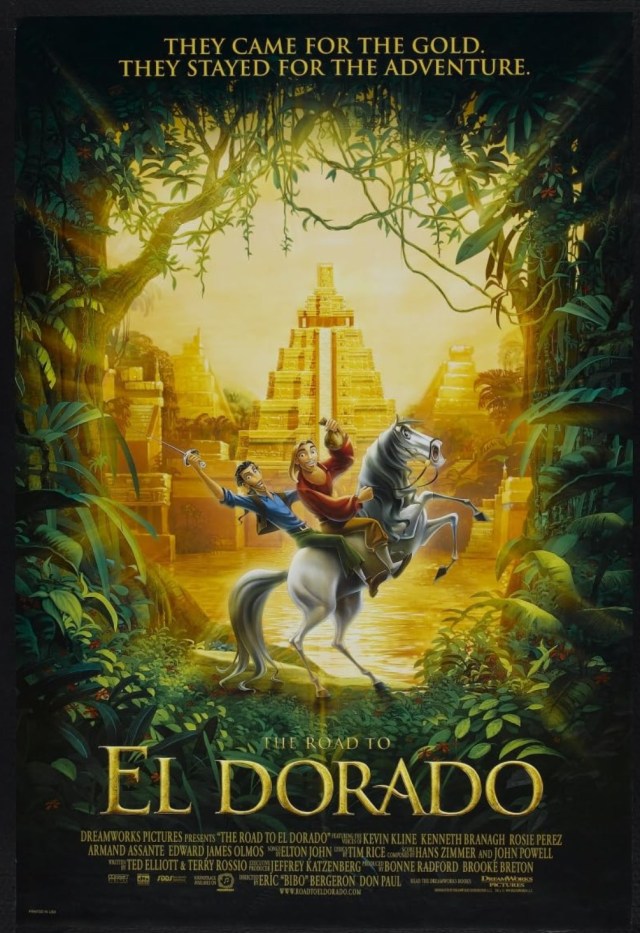
The Road to El Dorado poster created by Dreamworks Pictures, DreamWorks Animation, and DreamWorks Distribution

1. Singin in the Rain (1952)

    I start my list with a classic I was introduced to because of my blog. Now that I have finally seen Singin in the Rain, I have an understanding and appreciation for why the movie is so beloved. Gene Kelly’s iconic musical number, “Singin in the Rain”, should provide enough explanation for why you should check the film out! The number itself feels immersive, as it takes place within the story’s context. Gene adds uniqueness to the number by jumping and splashing in puddles. “Singin in the Rain” successfully represents the spirit of the film, while also delivering the message of seeing the good in a not-so-good situation. That number is just one reason why Singin in the Rain is a solid musical!

    Watching ‘Singin in the Rain’ for the First Time

    2. Ben-Hur (1959)

    If you’re going to watch any classics, you have to see 1959’s Ben-Hur! Though the three-hour run-time can seem intimidating, that time flew by for me, as I was so engrossed in the story. The emotional intensity of Charlton Heston’s, Stephen Boyd’s, and Haya Harareet’s performance complimented the scope of the overall film. Ben-Hur contains other likable qualities as well, from the magnificent sets/scenery to the interesting cinematography. How Christianity/faith was incorporated into the story sets the 1959 production apart from other “sword and sandal” pictures. Those who celebrate Easter may find Ben-Hur an appropriate seasonal title.

    Take 3: Ben-Hur (1959) Review + 60 Follower Thank You

    3. To Kill a Mockingbird (1963)

    While the book, To Kill a Mockingbird, received a sequel, the film adaptation did not. The 1963 movie presents one of the few times where, in my opinion, the film was better than its source material. Getting straight to the point a lot sooner was a main focus for the creative team. The film’s visual nature worked in the favor of certain elements from the book. Showing suspenseful moments from the source material makes those moments seem real, as well as intensifies uncertainty. Leaving out scenes that feel like padding helps the movie maintain a steadier pace.

    Take 3: To Kill a Mockingbird Review

    4. The Boy Who Could Fly (1986)

    When I first saw The Boy Who Could Fly, it subverted my expectations. That’s because the 1986 picture aged surprisingly well! Through Milly and Eric’s friendship, the script shows how people with Autism can create and maintain meaningful relationships. Helping someone with Autism based on their personal preferences and accommodations may have seemed ahead of its time back in the mid to late ‘80s. Timeless messages and themes make up one of the reasons why I love the 1986 film. Showing compassion for others, dealing with grief, and understanding people’s differences take center stage.

    Take 3: The Boy Who Could Fly Review (PB & J Double Feature Part 2)

    5. The Bodyguard (1992)

    In 2022, I wrote an editorial explaining why The Bodyguard held up thirty years later. Because I love the 1992 film, finding explanations wasn’t difficult. “The kitchen scene” is, in my opinion, the best scene from any action movie. One reason why is how the kitchen’s smaller space is seen by the actors as a challenge instead of a hindrance. What also worked in The Bodyguard’s favor was Whitney Houston’s portrayal of Rachel Marron. Throughout the story, Whitney realistically showcases emotions and expressions. This helped Rachel become a multi-layered character.

    I Will Always Love You: ‘The Bodyguard’ at 30
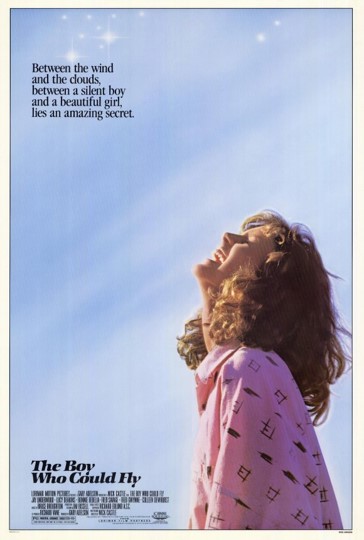
    The Boy Who Could Fly poster created by Lorimar Motion Pictures and 20th Century Fox. Image found at https://www.imdb.com/title/tt0090768/?ref_=nv_sr_srsg_0.

    6. Swept from the Sea (1998)

    Swept from the Sea was one of the earliest hidden gems I discovered in 2019. It’s a movie that’s so great, I just had to include it on this list. There are so many things to like about Swept from the Sea. From Vincent Perez’s captivating performance to the beautiful scenery, the film’s components came together to create an endearing and emotional presentation! The 1998 film is a character-driven story, relying on on-screen chemistry in order to work. Because of Vincent Perez’s and Rachel Weisz’s differing acting styles, the on-screen chemistry between Yanko and Amy was very sweet and genuine.

    Take 3: Swept from the Sea Review (A Month Without the Code — #8)

    7. Phantom of the Megaplex (2000)

    This is another movie I just had to include on my list. But this time, it’s because Phantom of the Megaplex is also celebrating its 25th anniversary this year! The Disney Channel picture showed that the movie-going experience can be fun. As I explained in my editorial celebrating the film’s 20th anniversary, the made-for-TV movie also serves as a time capsule of how the cinema operated in the beginning of the millennium. Phantom of the Megaplex even shows how movies can influence our lives. Though I’m not sure if that aspect of the story was intentional, it makes the 2000 title, somewhat, thought-provoking.

    ‘Phantom of the Megaplex’ at 20: A Reflection on the Movie-Going Experience

    8. I Am David (2004)

    I Am David was the biggest pleasant surprise of 2024. It became the year’s best movie in March and stayed number one until the very end! What set I Am David apart was the film’s genuine emotion and sincerity. This was seen and felt through every aspect of the production. The 2004 movie emphasized visual depth. Achieved by exploring light and darkness, as well as showcasing Europe’s natural landscape, the creative team used the visual nature of film to their project’s advantage. Two effective plot twists are another reason why I liked I Am David. Their delivery in the story was well-written.

    Take 3: I Am David Review (Double Feature: 2004 Edition Part 1)

    9. From Up on Poppy Hill (2011)

    This 2011 presentation is one of Studio Ghibli’s stronger projects. A reason is one of the overarching themes; honoring the past. The film intelligently and creatively shows its audience how important history is in our lives and our world. Whether referencing the 1964 Olympics or focusing on the characters’ relationships, the theme of honoring the past acts as an umbrella sheltering Poppy Hill and its surrounding areas. Studio Ghibli’s signature colorful palette is consistently on display in the 2011 film. The strong understanding for how and when to use color makes scenes look like priceless pieces of art! Personally, I think movies like From Up on Poppy Hill present an argument why 2-D animation still has its time and place.

    Take 3: From Up on Poppy Hill Review + 200 Follower Thank You

    10. The Wild Robot (2024)

      I think it’s fitting to close this list with a DreamWorks movie, as a DreamWorks movie is the reason why I created this list in the first place. Though this was a recent watch for me, The Wild Robot is, so far, the best film I’ve seen this year! The animation itself is absolutely gorgeous! Sometimes, scenes look like paintings and other times, they look like priceless photographs. I was not expecting the story to contain as much emotional depth as it did. An abundance of good messages and themes add a sense of timelessness to the production. Though it’s unknown right now if The Wild Robot will gain an audience like The Road to El Dorado has, I can confidently say it was a really good movie!

      Phantom of the Megaplex poster created by the Walt Disney Company and Disney Channel. © Disney•Pixar. All rights reserved. Disney XD© Disney Enterprises, Inc.

      Have fun at the movies!

      Sally Silverscreen
      Buzzwordathon 2023: Review of ‘Their Eyes Were Watching God’ by Zora Neale Hurston

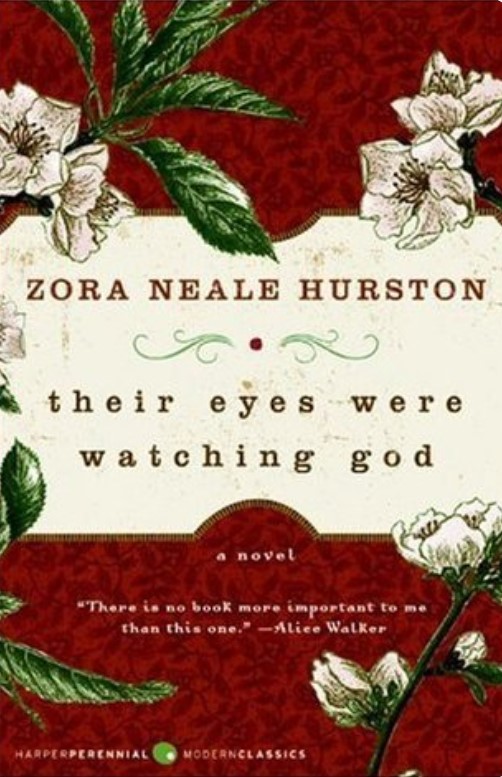
      For August’s edition of the Buzzwordathon readathon, I chose to read Their Eyes Were Watching God by Zora Neale Hurston! This is because August’s theme was ‘body parts’, meaning that a body part had to be mentioned somewhere in a book’s title. While sharing Janie’s story, Zora is able to use words artistically and lyrically. However, this approach to storytelling never feels too “flowery”. A great example is when Zora describes a hurricane roaring over Florida’s Everglade region. She refers to the hurricane itself as a “monster”. As the storm is moving closer to the Everglade region, Zora writes, “The people felt uncomfortable but safe because there were the seawalls to chain the senseless monster in his bed”. In this sentence alone, Zora creates an image the reader can visualize. She also makes the hurricane larger than life, an antagonist for the characters to encounter.

      Their Eyes Were Watching God book cover found on Goodreads

      I’ve said before on 18 Cinema Lane that I don’t seek out “slice of life” stories. The reason is I don’t find “slice of life” stories to be as compelling as other types of stories. In the first half of Their Eyes Were Watching God, the story was more “slice of life”. Conflicts within the story don’t arrive until Tea Cake, Janie’s third husband, is introduced in the book. Because he appears in the story’s second half, I found the second half of the book more interesting than the book’s first half. Their Eyes Were Watching God is a fine, well-written novel. I am aware there was a 2005 made-for-tv adaption starring Halle Berry. Now that I have read the movie’s source material, I would be interested in reviewing the film in the future!

      Overall score: 3.6 out of 5

      Have fun during Buzzwordathon!

      Sally Silverscreen

      Disclaimer: Their Eyes Were Watching God contains subject matter that some readers may find offensive, including:

      Language reflective of the book’s release, the 1930s. This includes the use of racial slurs.

      References to heavier topics, such as death and abuse

      Swearing on some occasions

      Mrs. Turner’s beliefs, which are filled with prejudice

      The inclusion of a hurricane

      My First Buzzwordathon Fail of 2023

      When I first participated in the Buzzwordathon readathon last year, I experienced my first Buzzwordathon fail in May. At the time, I didn’t finish The Light Between Oceans within May because the book put me in a “reading slump”. For this year’s readathon, I encountered another fail. This time, however, I prioritized my involvement in the Eurovisionathon readathon, as well as preparing for next year’s Eurovisionathon. Despite this fail, I will still publish my review of The Grapes of Wrath, the book I chose for this month’s Buzzwordathon. I will also not let this fail deter me from my reading goals.

      The Grapes of Wrath book cover found on Goodreads.

      One of the criticisms of The Grapes of Wrath is the infamous “turtle chapter”. As the book’s third chapter, this part of the story has caused frustration and confusion among readers, from readers viewing the chapter as boring to readers questioning why the chapter exists. For me, though, the “turtle chapter” serves an even greater purpose. It not only provides foreshadowing for the next part of the story, it also showcases the book’s descriptive imagery. Throughout The Grapes of Wrath, John Steinbeck takes the time to describe almost every aspect of the story. In the aforementioned “turtle chapter”, John chooses words that will help readers picture the turtle in their minds. Some of these words are “high-domed shell”, “yellow-nailed feet”, and “fierce, humorous eyes”. John’s use of descriptive imagery allows scenes, characters, and environments to feel realistic. This element helped paint an almost complete picture surrounding the story.

      Joshua Tree National Park in California image created by Welcomia at freepik.com. <a href=”https://www.freepik.com/free-photos-vectors/tree”>Tree photo created by welcomia – http://www.freepik.com</a>. Image found at freepik.com.

      The way I feel about The Grapes of Wrath is similar to how I feel about All the Light We Cannot See. That’s because John Steinbeck prioritizes providing explanations for characters, situations, and the world surrounding the characters over telling a story. Getting to the heart of the story, it is a drawn-out, “slice-of-life” tale. As I’ve said in the past on 18 Cinema Lane, I don’t seek out “slice-of-life” stories, as I find them too mundane for my liking. In my opinion, The Grapes of Wrath is just that: mundane. I recognize this story has its time and place, as the book captures a fictionalized account of The Great Depression/Dust Bowl. However, it’s not a book I plan on revisiting.

      Overall score: 3 out of 5 stars

      Have fun during Buzzwordathon!

      Sally Silverscreen

      Disclaimer: Because The Grapes of Wrath was written and published in the late 1930s, the language, situations, and perspectives are going to be reflective of that period in time. Reader discretion is encouraged.

      Ten Classic Movies I Watched Because of My Blog

      18 Cinema Lane is almost five years old. In that time, I have reviewed many films; from the blockbuster to the underrated and everything in between. Sometimes, I had the opportunity to talk about “classic” films. These opportunities were formal introductions to these titles. This list highlights some of the “classic” movies I watched because of my blog. Whether it was a blogathon entry or a Blog Follower Dedication Review, I’m thankful I was able to see these films. That way, I can now have an honest opinion about them. Since I have reviewed all the films on my list, I will provide links in this article. I will also be sharing my thoughts on these films, so anything I say is not meant to be mean-spirited or negative.

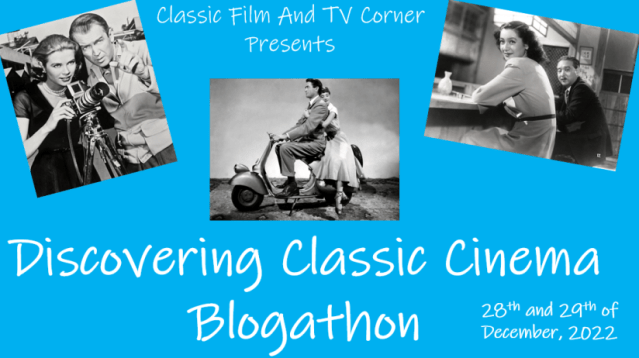
      The Discovering Classic Cinema Blogathon banner created by Maddy from Classic Film and TV Corner

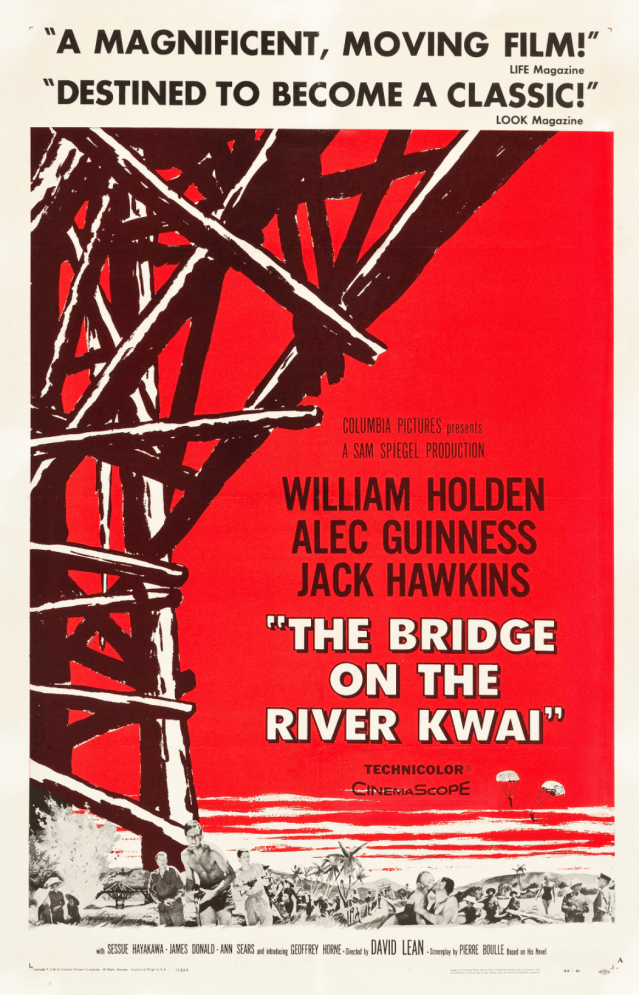
      The Bridge on the River Kwai

      The Bridge on the River Kwai poster created by Horizon Pictures and Columbia Pictures

      Starting this list is the most recent “classic” I reviewed. I chose to write about The Bridge on the River Kwai for The 5th Golden Boy Blogathon, where I was the only participant to select it. This movie made me question why some movies do or don’t end up on AFI’s list of The 100 Greatest American Movies Of All Time. Until I watched The Bridge on the River Kwai, I believed these titles met one of two criteria: those that represent the time they were released and those that brought something new to the cinematic table. With the 1957 film, I still haven’t figured out why it’s on the list. I am not saying this is a bad movie. But, at best, I thought it was just fine.

      Take 3: The Bridge on the River Kwai Review

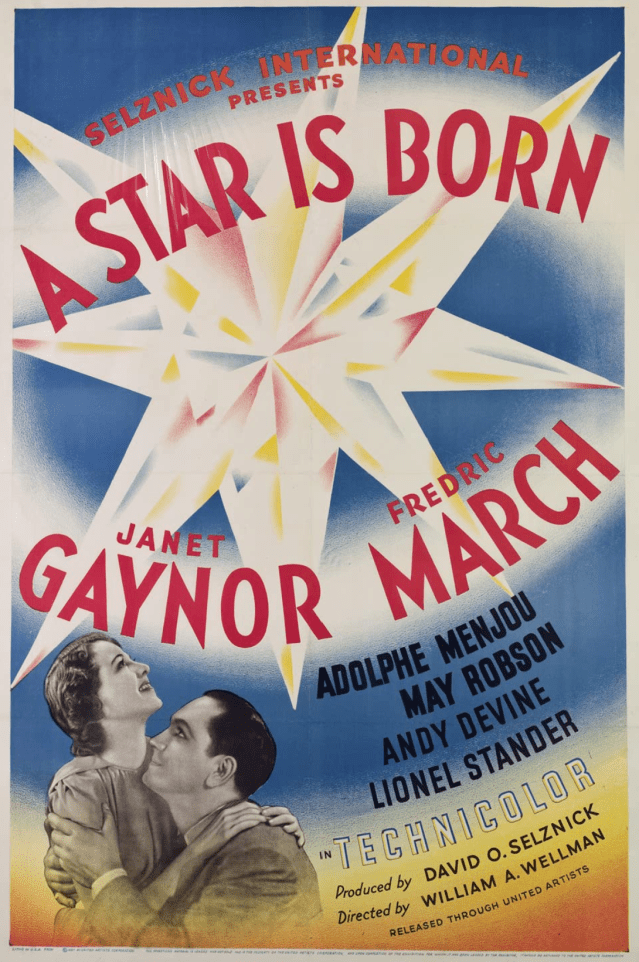
      A Star Is Born (1937)

      A Star Is Born (1937) poster created by Selznick International Pictures and United Artists

      Before participating in the Fredric March Blogathon, I didn’t have an interest in watching any version of A Star Is Born. Because this story has been remade on more than one occasion, I thought each version was going to share a recycled plot, with little variation among them. As of this list’s publication, I’ve only seen the 1937 original. However, I was surprised by how impressive the movie was! Fredric March’s performance was so strong, not just among the Breen Code era films I’ve seen, but among any movie I have seen. He worked well alongside Janet Gaynor, sharing really good banter between each other. A Star Is Born made me want to actively seek out more films from Fredric’s filmography!

      Take 3: A Star Is Born (1937) Review

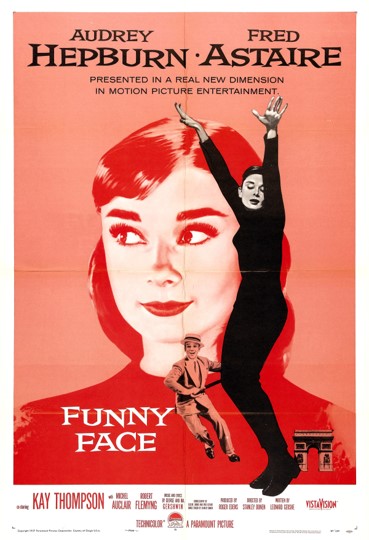
      Funny Face

      Funny Face poster created by Paramount Pictures.

      As Fred Astaire famously said, “Do it big, do it right, and do it with style”. When it comes to his movie, Funny Face, that’s exactly what happened. This is a pleasant looking production! I remember loving the use of color, as pops of color were placed in scenes with a primarily plain color palette. The musical numbers were also entertaining to watch, with creative ideas woven through them. Though I haven’t seen many of Audrey Hepburn’s films, Funny Face is one of her projects I like. She appeared to be enjoying whatever she was doing, whether it was dancing in the “Basal Metabolism” number or portraying Jo traveling to Paris. Then again, Audrey did famously say “I believe that happy girls are the prettiest girls”.

      Take 3: Funny Face Review (Fred Astaire and Gene Kelly Blogathon Part 2)

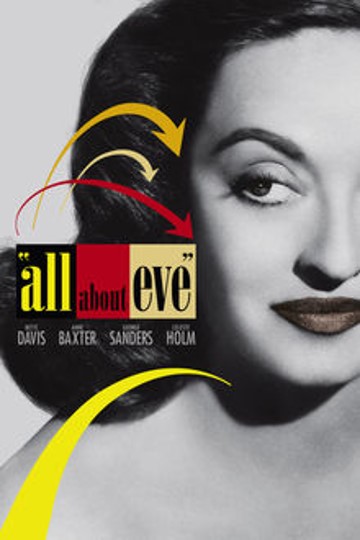
      All About Eve

      All About Eve poster created by 20th Century Fox. Image found at https://www.foxmovies.com/movies/all-about-eve.

      As the last movie I reviewed for 2019’s Clean Movie Month, All About Eve is a film I thought was just fine. A peek behind the theater world’s curtain was refreshing, providing the story with interesting perspectives. The use of voice-overs not only allowed the audience to witness Eve develop as an individual, but connect with the other characters as well. However, I found the title to be misleading, as the story was led by Margo. As I said in my review, the film would be called “Mostly About Margo” or “Sometimes About Eve” if given an honest title.

      Take 3: All About Eve Review (Clean Movie Month — #5)

      Nosferatu

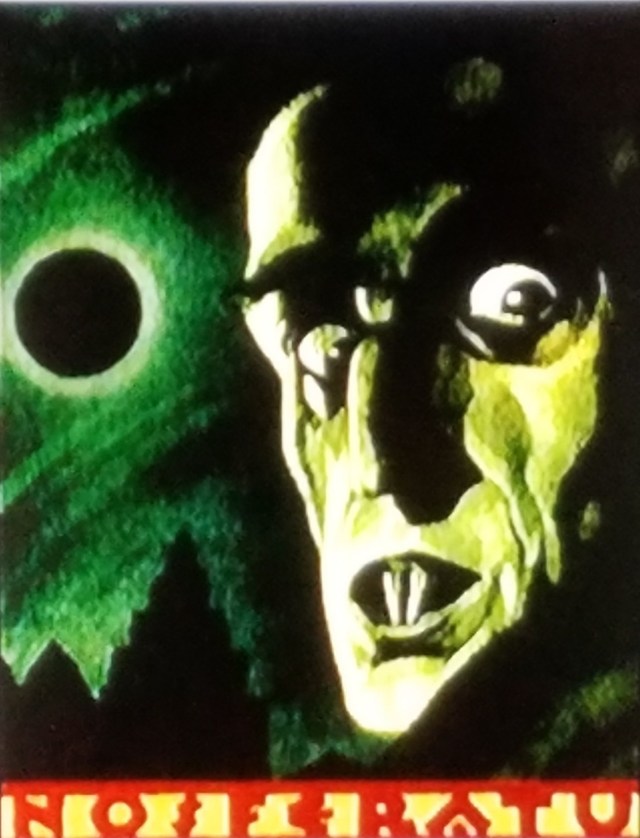
      Screenshot taken by me, Sally Silverscreen.

      The same year I reviewed All About Eve, I also wrote about Nosferatu. My review of the 1922 “classic” was for 2019’s A Month Without the Code. I’m thankful for the opportunity I had to see Nosferatu, as the film was not only created under strict copyright rules, but has also been preserved over time. This film serves as a stone in cinema’s foundation, showcasing elements still found in today’s movies, such as using music to elevate the story’s tone. I don’t often talk about horror films on 18 Cinema Lane. But out of the ones I have reviewed, Nosferatu is definitely one of the better titles!

      Take 3: Nosferatu Review (A Month Without the Code — #1)

      To Kill a Mockingbird

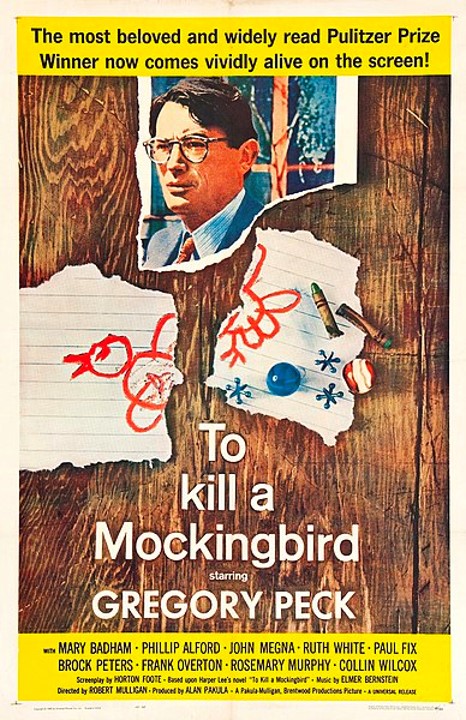
      To Kill a Mockingbird poster created by Brentwood Productions, Pakula-Mulligan, and Universal Pictures. Image found at commons.wikimedia.org/wiki/File:To_Kill_a_Mockingbird_(1963_US_theatrical_poster).jpg

      Like I recently said in my list, ‘The Top 10 Best Movies I Saw in 2022’, there are few movies I found better than their source material. To Kill a Mockingbird is one of those films! I like this adaptation because the script gets straight to the point sooner than the book did. It also places more emphasis on the trial, the part of the book I found the most interesting. The visual nature of film elevated the suspenseful moments from the original story, presenting realistic situations with an intensified level of uncertainty. This is one of those times where I would suggest skipping the book and going straight to the film.

      Take 3: To Kill a Mockingbird Review

      Citizen Kane

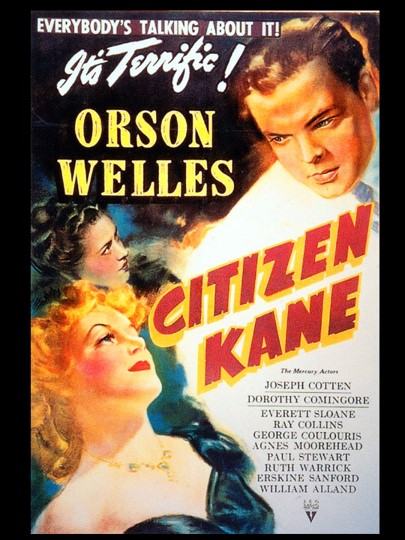
      Citizen Kane poster created by Mercury Productions and RKO Radio Pictures. Image found at http://www.tcm.com/tcmdb/title/89/Citizen-Kane/#.

      In my opinion, Citizen Kane is an over-hyped movie. I know that’s a controversial opinion. But when I reviewed the movie in 2019, I didn’t find it the flawless masterpiece others have made it out to be. For starters, I don’t think the film needed an hour and fifty-nine-minute run-time. I also found it difficult to connect with the characters. Despite my view on Citizen Kane, I don’t think it’s a bad movie. If anything, I thought it was decent. But like I said with The Bridge on the River Kwai, I wonder why Citizen Kane is number one on AFI’s list of The 100 Greatest American Movies Of All Time?

      Take 3: Citizen Kane Review (Clean Movie Month — #2)

      Lawrence of Arabia

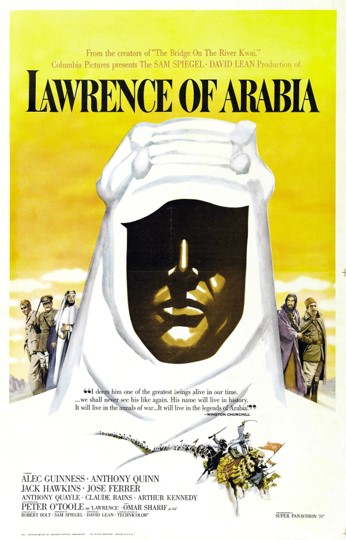
      Lawrence of Arabia poster created by Columbia Pictures. Image found at http://www.tcm.com/tcmdb/title/4455/Lawrence-of-Arabia/#

      This is another “classic” I feel is over-hyped. However, the over-hyped status of Lawrence of Arabia is not to the same degree as Citizen Kane, in my opinion. The 1962 film is one of the most iconic “sword and sandal” titles. But beyond this simplified distinction is a World War I story from a unique perspective. Reviewing Lawrence of Arabia for The World War One On Film Blogathon was not my first choice. I had actually planned to review a different movie, which ended up being released on DVD after the blogathon took place. This last-minute decision was a blessing in disguise, as it gave me an excuse to check out Lawrence of Arabia!

      Take 3: Lawrence of Arabia Review

      Ben-Hur (1959)

      Ben-Hur (1959) poster created by Metro-Goldwyn-Mayer and Loew’s, Inc. Image found at https://commons.wikimedia.org/wiki/File:Ben_hur_1959_poster.jpg

      When I chose to watch this movie for a Blog Follower Dedication Review, I had no idea how much I would love it! I remember being so invested in Judah’s journey, I wasn’t too bothered by the film’s three-hour run-time. This is another iconic “sword and sandal” picture. But only referring to this film by that simplified title does it such a disservice. That’s because the movie is, in my opinion, one of the better faith-based films! I’ve heard 1959’s Ben-Hur is a remake of a film from the ’20s. Maybe that version will be covered in a future review!

      Take 3: Ben-Hur (1959) Review + 60 Follower Thank You

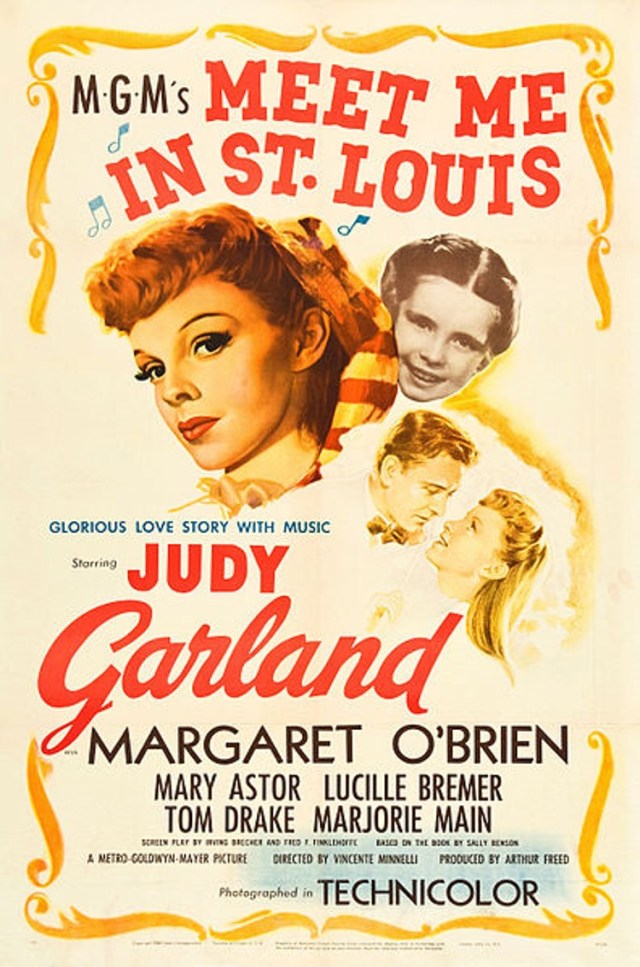
      Meet Me in St. Louis

      Meet Me in St. Louis poster created by Metro-Goldwyn-Mayer and Loew’s, Inc. Image found at https://commons.wikimedia.org/wiki/File:Meet_Me_in_St._Louis_poster.jpg

      The Breen Code era gave us some good musicals. Meet Me in St. Louis is no exception! A musical is only as strong as its musical numbers. In the 1944 film, there was an assortment of enjoyable songs. From Judy’s iconic rendition of “Have Yourself a Merry Little Christmas” to my favorite, “Under the Bamboo Tree”, this part of the story added to my movie viewing experience. While the film does have its flaws, it is a pleasant production. If I were introducing someone to the Breen Code era, Meet Me in St. Louis is a film I would recommend!

      Take 3: Meet Me in St. Louis Review + 75 Follower Thank You

      Have fun at the movies!

      Sally Silverscreen

      Take 3: A Boyfriend for Christmas Review

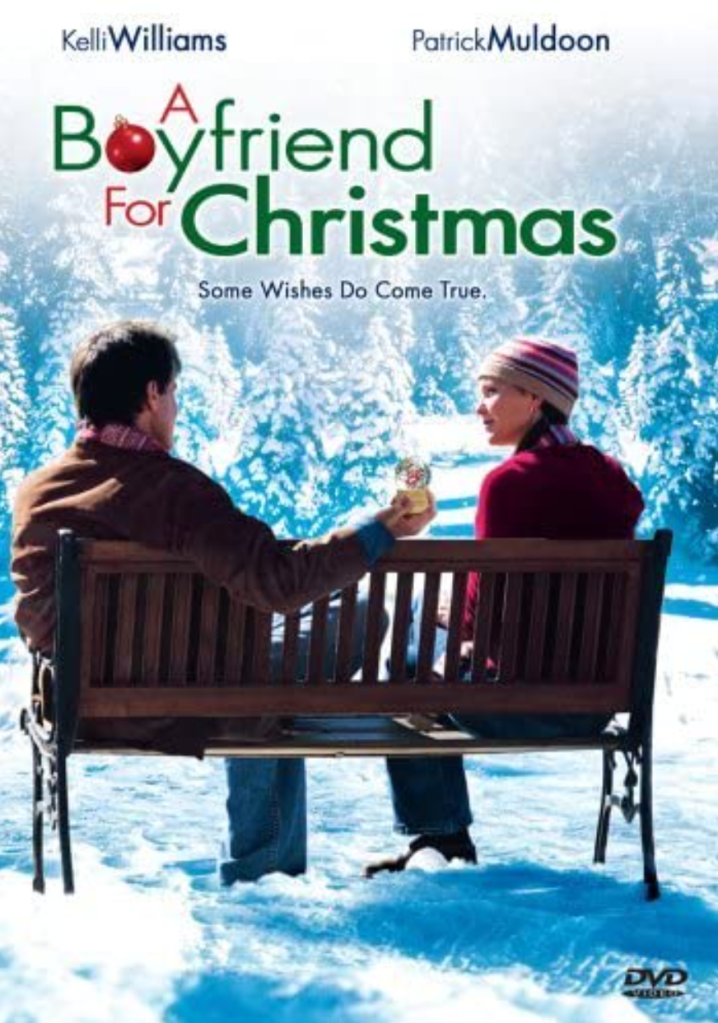
      This month’s Genre Grandeur theme is ‘Films With Santa Claus or Santa Claus impersonators’. With that in mind, I knew I’d find at least one Hallmark movie starring jolly old St. Nick. While reflecting on various titles, I remembered one film I had never seen in its entirety. That film is 2004’s A Boyfriend for Christmas. Over the eighteen years since its release, this movie has garnered a reputation among the Hallmark fan community. A Boyfriend for Christmas has been labeled a “classic”, as well as, more often than not, securing a place in Hallmark’s annual Christmas line-ups. When it comes to Hallmark Christmas movies with notoriety, I try to check them out in an attempt to discover if their “hype” is deserved. This is why I reviewed The Christmas Card and The Nine Lives of Christmas in the past. So, has A Boyfriend for Christmas earned its reputation? Keep reading my review while you’re waiting for Santa’s arrival!

      A Boyfriend for Christmas poster created by Hallmark Entertainment,  MAT IV,  Alpine Medien Productions, Larry Levinson Productions, Gaiam Entertainment, and Hallmark Channel 

      Things I liked about the film:

      The parallels between Holly and Ryan: When the audience meets the film’s protagonists, Holly and Ryan, in “present day”, they see these two characters are at odds with each other. On the surface, Ryan and Holly are as different as night and day. But in one specific scene, it is shown they have more in common than they realize. In this scene, Holly and Ryan come home after a long day. The choices they make in their respective home are presented in parallels, alternating between the two characters. For example, Holly turns on the radio at her house, while Ryan turns on his television at his apartment. Toward the end of this scene, Holly and Ryan look out their window to observe their landscape. Ryan is greeted to a lighted city skyline and Holly sees her neighbor’s outdoor Christmas decorations, as well as the moon. Through these visuals and without the use of dialogue, the idea of Ryan and Holly sharing more similarities was effectively showcased!

      Holly’s figure skating past:  When Ryan shares dinner with Holly’s family, he and the audience learn about Holly’s figure skating talents. Not only did she place second in a state final (when she was younger), she also has the trophies to prove her dedication and athleticism. As indicated in the dialogue, Holly retired from the world of figure skating. However, she performs an impromptu skating solo at a local outdoor rink. This was the most interesting part of Holly’s story! I wanted to learn more about her relationship with the sport. It’s too bad this side of Holly was only brought up in passing, as it could have lent itself to a fascinating subplot.

      Ice skating pair photo created by fxquadro at freepik.com. Image by fxquadro on Freepik

      What I didn’t like about the film:

      Inconsistent writing: Throughout A Boyfriend for Christmas, there were several instances of inconsistent writing. Holly’s interactions with Ryan are a perfect example. Toward the beginning of the story, it is revealed she and Ryan are working on the same pro bono case. This scene’s dialogue gives the impression Holly has met Ryan before. While leaving the court house, she crosses paths with Ryan, hearing his voice and seeing his face. But when Holly and Ryan interact at a Christmas tree lot several hours later, it doesn’t seem to cross her mind that she’s recently heard his voice. Even when Ryan arrives at Holly’s house on Christmas Day, she acts like she’s never met him. Inconsistencies like this one made the story too unbelievable for my liking.

      Lack of Christmas magic: When I reviewed Chasing Leprechauns last March, I said the film wanted to have its cake and eat it too. This was because the story included a magical element (leprechauns), yet prioritized the realistic aspects of the movie’s world. A Boyfriend for Christmas makes the exact same mistake. Santa appears several times in this story. Yet, he never utilizes any Christmas magic. Even when he’s giving Holly her titular boyfriend for Christmas, the execution of her wish was not magical or whimsical. It honestly makes me wonder why Santa was incorporated in the movie at all?

      Holly’s subplot with Ted: Ted is Holly’s ex-boyfriend. His behaviors and actions clearly indicate how he’s “bad news”, providing one reason why he and Holly aren’t meant to be. I know his inclusion in the story was intended to present a conflict for the protagonists. However, it reminded me of Paul and his conflict from The Christmas Card. Ted’s personality, plus Holly’s lack of interest in getting back together with him, gives the audience the impression this relationship isn’t going anywhere. Because of that, this subplot felt like a waste of time.

      The fast pace of Holly and Ryan’s relationship: In a typical Hallmark movie, the protagonists’ relationship progresses in a shorter amount of time. But in A Boyfriend for Christmas, Ryan and Holly’s relationship evolved too quickly. In fact, it felt very “insta-love”. Despite acting like she’s never met Ryan before, Holly almost immediately falls head over heels for him. She doesn’t even question why Ryan is suddenly interested in her. Because of how fast this on-screen relationship progressed, it was difficult to determine if Kelli Williams and Patrick Muldoon had any on-screen chemistry.

      Santa stationary image created by Freepik at freepik.com. <a href=’https://www.freepik.com/free-vector/creative-christmas-letter-and-envelope-template_3281562.htm’>Designed by Freepik</a>. <a href=”https://www.freepik.com/free-photos-vectors/christmas”>Christmas vector created by Freepik</a>. Image found at freepik.com. 

      My overall impression:

      There are some Hallmark Christmas movies that have gained notoriety. Some of this “hype” was earned, such as the case for The Nine Lives of Christmas. Other times, the “hype” felt more over-rated, like how I kind of feel about The Christmas Card. Sadly, A Boyfriend for Christmas falls into the latter category. This is not a movie I was impressed with. The script was one of the weakest I’ve ever witnessed in a film. Like I said in my Lake Effects review, if the script isn’t strong, there’s only so much a creative team can do to remedy the issue. Unfortunately, the other aspects of the movie didn’t make up for the script’s weaknesses. The acting ranged from wooden to serviceable. The set design didn’t leave a memorable impression. There was no charm, whimsy, or Christmas magic present in the story. If anything, A Boyfriend for Christmas was a huge letdown from what it could have been.

      Overall score: 4.3 out of 10

      Have you seen A Boyfriend for Christmas? What Hallmark Christmas movies do you think are surrounded in “hype”? Tell me in the comment section!

      Have fun at the movies!

      Sally Silverscreen

      Buzzwordathon 2022 – Review of ‘A Little Princess’ by Frances Hodgson Burnett

      With my Travel Gone Wrong Blogathon underway and the start of May around the corner, it’s time for another Buzzwordathon book review! For April, the theme is ‘Big & Little’. Participants had one of two options: 1. Read a book that has the word ‘big’ or ‘little’ in the title or 2. The title has to feature a word associated with ‘big’ or ‘little’. Because I happen to own a beautiful copy of A Little Princess and because ‘little’ is in the middle of that book’s title, I decided to read Frances Hodgson Burnett’s classic! The 1905 story has been a favorite of mine for a very long time. However, this is the first time I read it in a novel format.

      Here is a screenshot of my copy of A Little Princess. Sorry if the cover’s bottom half appears blurry. I tried to capture how sparkly the cover is. Screenshot taken by me, Sally Silverscreen.

      While reading A Little Princess, I became nostalgic of the 1995 adaptation, as I have loved that film since its release. So, it was interesting to read how similar and different the movie was from its respective source material. One major difference is how Frances provides explanations for character motivations and situations. I haven’t seen the 1995 adaptation of A Little Princess in years. From what I remember, though, Sara’s dad goes missing during battle and is assumed dead. This provides the catalyst for Sara’s struggles and lost fortune. Looking back on the film, it never made sense, to me, for Sara to lose everything simply because her father was missing in action. If her dad knew there was a chance he could be in danger, wouldn’t he have created a will for Sara? The source material provided a stronger explanation for the lost fortune, as Sara’s father invested in diamond mines, but his money was mishandled. Even though this situation is resolved by the book’s end, the inclusion of these explanations was a strength for the book itself!

      Princess tiara image created by Freepik at freepik.com. <a href=’https://www.freepik.com/free-vector/ornamental-princess-crowns_1109199.htm’>Designed by Freepik</a>. <a href=”https://www.freepik.com/free-photos-vectors/gold”>Gold vector created by Freepik</a>. Image found at freepik.com.

      Another strength of the book is how Frances used descriptions to flesh out the characters and their world. At the beginning of the story, Sara is referred to as “wise beyond her years”. She’s also described as “intelligent”, “imaginative”, and “courageous”. Interactions between characters and narrations from an anonymous narrator provide proof of those statements. On the first day of class, Miss Minchin gives Sara a French textbook in preparation for an upcoming French lesson. Throughout this scene, Sara tries to explain to the headmistress that she already knows basic French, as she grew up learning the language from her dad. It’s not until the French teacher arrives that he and Miss Minchin discover how advanced Sara is in French. In the 1995 adaptation, important and timeless messages and themes can be found throughout the story. That is also true for the source material! Because Sara imagines she is a princess, she assumes how a princess would behave. This includes assuming how a princess would treat others. After finding some money on the ground, Sara plans to buy some food from a nearby bakery. But just before she enters the bakery, Sara sees a girl who appears to be worse off than herself. With the found money, Sara purchases a set of rolls. But she ends up giving most of the rolls to the aforementioned girl.

      Here is one of the full page illustrations that is featured in my copy of A Little Princess. Artwork created by Ethel Franklin Betts and found on https://en.wikisource.org/wiki/A_Little_Princess.

      Even though A Little Princess has been near and dear to my heart, I’ll be one of the first readers to admit it is not a perfect or near perfect book. Though this flaw wasn’t consistent throughout the text, there were times when parts of the story were repetitive. A portion of the book’s last chapter provides a great example, as it re-caps almost everything that happened prior to that point. As a reader, I don’t like longer chapters. This can, sometimes, cause a book’s pace to be slower. While A Little Princess’ pace was steady, the book contained longer chapters, with thirteen pages given to the longest chapter. In my copy of the book, there are full page illustrations that bring to life certain parts of the story. I honestly wish these illustrations had a more consistent presence, as they could have broken up some of the chapters. Other than that, though, I still enjoyed reading A Little Princess all these years later! I’m so glad I was given the opportunity to read it again!

      Overall score: 4.1 – 4.2 out of 5 stars

      Have fun during Buzzwordathon!

      Sally Silverscreen

      Disclaimer: Because A Little Princess was published in 1905, some of the words and phrases are reflective of that time, with their context different from today. A few of these words are “queer”, “gay”, “fat”, and “chubby”. At one point in the story, a man from India is referred to as “oriental”. There is also a stereotype about Chinese people included in the text. Again, these parts of the story are reflective of the book’s time; 1905.

      Word on the Street: ‘To Catch A Thief’ Remake and Film about Beanie Babies on the way

      When I write a Word on the Street story, I sometimes talk about stories that were covered on the Youtube channel, Clownfish TV. I not only like Kneon and Geeky Sparkle’s commentary, but I also learn about subjects I never would have known about before. So, when I watched one of their newer videos, I figured it would be an interesting topic to discuss on 18 Cinema Lane! In the video, ‘Elizabeth Banks Doing a BEANIE BABIES Movie?!’, my initial assumption was the movie being similar in execution to the 2014 hit, The Lego Movie. But as I watched the video, I learned the film would revolve around the popularity of Beanie Babies in the ‘90s. While analyzing an article from The Hollywood Reporter, Kneon and Geeky share how actors Elizabeth Banks and Zach Galifianakis are going to headline a film based on The Great Beanie Baby Bubble: Mass Delusion and the Dark Side of Cute, a book written by Zac Bissonnette.  According to the original article, the movie will focus on the production and consumption of the classic stuffed animals, including “a celebration of the women who helped power Ty Warner’s success”.

      Tiger stuffed animal image created by alesia17 at freeimages.com. “FreeImages.com/alesia17.”

      While watching Kneon and Geeky’s video, ‘Elizabeth Banks Doing a BEANIE BABIES Movie?!’, they brought up a documentary titled Beanie Mania. In this documentary, the rise and fall of Beanie Babies are explored. From “a lot of drama” to “the one woman even has a rap song she wrote” (referring to a rap song dedicated to the Beanie Babies), Beanie Mania presents the perspectives of those heavily affected by the iconic toy. As I watched Kneon and Geeky’s video and listened to their commentary, I couldn’t help but feel Elizabeth and Zach’s project was a re-hash of the HBO Max documentary. When speculating which direction the film was headed, Geeky says “I think their take on it’s going to be very similar, cause I think the one guy that wrote the book they’re basing it on was in the documentary”. With this and everything else said, it makes me wonder what is the point of Elizabeth and Zach’s movie? What can they offer to the conversation that Beanie Mania didn’t? Personally, I’d like to see a documentary about Tickle Me Elmo, the coveted toy that dominated 1996.

      Preschool classroom image created by Vectorpocket at freepik.com. <a href=”https://www.freepik.com/free-photos-vectors/background”>Background vector created by vectorpocket – http://www.freepik.com</a>. Image found at freepik.com.

      Speaking of re-hashed ideas, this next story I found in Kneon and Geeky’s video, as it was an advertised article on Deadline’s website. According to the aforementioned site, Justin Kroll writes about a “remake of the classic thriller To Catch a Thief” in the pre-production stages. The Paramount Pictures project has recruited Gal Gadot to star in the film and produce it. Eileen Jones will pen the script, with Jaron Varsano and Neal Moritz also producing the movie. Similar to what I said about the Beanie Baby film, I wonder what the point of this remake is? I know you can ask that about any cinematic production. But what can this creative team bring to the table that Alfred Hitchcock and his team hasn’t already? Personally, I think the remake seems unnecessary.

      Image of vintage movie camera created by Macrovector at freepik.com. <a href=”https://www.freepik.com/free-photos-vectors/background”>Background vector created by macrovector – http://www.freepik.com</a>. Image found at freepik.com.

      What are your thoughts on these movie news stories? Are you anticipating any of the projects mentioned in this article? Let me know in the comment section!

      Have fun at the movies!

      Sally Silverscreen
      Sources to articles referenced in this article:

      https://www.hollywoodreporter.com/movies/movie-news/zach-galifianakis-elizabeth-banks-starring-in-apple-film-the-beanie-bubble-1235073361/

      deadline.com/2022/01/eileen-jones-paramounts-to-catch-a-thief-reboot-gal-gadot-1234908113/

      In Defense of ‘It’s a Wonderful Life’

      When I was invited by The Classic Movie Muse to join their It’s a Wonderful Life Blogathon, I had no idea what to write about. Because there are so many moving parts to this seventy-five-year-old film, it was kind of overwhelming to choose just one aspect. But then I remembered an editorial written by fellow blogger, J-Dub. On his blog, Dubsism, he has a series called ‘Movies Everybody Loves That I Hate’. The first entry was about It’s a Wonderful Life. In his editorial, J-Dub explains, without the sugar-coating, bells, or whistles, why he does’t like the Christmas classic. While I respect J-Dub’s opinion, I personally disagree with him. These differing viewpoints inspired me to write my editorial, where I defend It’s a Wonderful Life. Like I have said in previous editorials, my article is not meant to be mean-spirited or negative. It is only meant to express my opinion and present a different view to the subject of It’s a Wonderful Life. If you are interested in reading J-Dub’s article, you can visit his blog at dubsism.com.

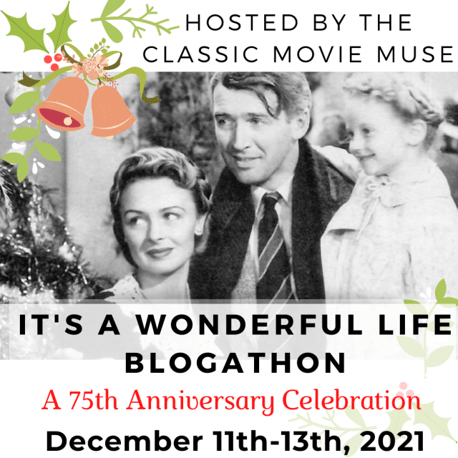
      It’s A Wonderful Life Blogathon: A 75th Anniversary Celebration banner created by The Classic Movie Muse from The Classic Movie Muse

      Debunking the “Lie” of It’s a Wonderful Life

      Throughout the editorial, ‘Movies Everybody Loves That I Hate’: Episode 1 – “It’s A Wonderful Life”, J-Dub claims the film is a lie. He believes the film is not only filled with nihilism, but that Pottersville is wrongfully villainized. J-Dub also says the film tells the viewer they are among “jerks who will crush our dreams for no other reason so they can suck the life out of us”. This statement relates to J-Dub’s belief that everyone in George’s life is trying to hold him back. For this part of the editorial, I’m going to discuss three points. The first point is about Pottersville. While the glitzy sparkle of the “dream town” may give the appearance of a successful paradise, it’s what the city represents that is important.

      When George first visits Pottersville, he is unfamiliar with his surroundings. Beloved locals have drastically changed, but so have its citizens. One of these citizens is Nick, a bartender who works at Martini’s Bar. In the “dream town”, Nick owns the bar. With this ownership comes a mean attitude. He not only treats George and Clarence horribly, he also embarrasses Mr. Gower. The pharmacist in this “dream town” is now an ostracized criminal who is known for poisoning a patient. This leads me to my second point. The idea of success is not a bad one. However, it has the ability to change people for the worse. Pottersville is also the complete opposite of Bedford Falls, with Bedford Falls representing familiarity. Why do so many movie studios and companies choose to revisit well known franchises and IPs? It’s because they can, sometimes, capitalize on a fandom’s familiarity with certain characters and stories. Familiarity can also be experienced during the Christmas/holiday season, as people may choose to gather with those they are familiar with or carry on familiar traditions. Therefore, Bedford Falls’ representation of familiarity debunks J-Dub’s claim of the film containing nihilism.

      My third point involves the people in George’s life. Earlier in this part of my argument, I mentioned how J-Dub feels the characters surrounding George are holding him back. But when you pay attention to what these same characters are saying and doing, this is not the case. Let me bring up Mary as just one example. Ever since they were children, Mary knew George wanted to travel the world. That was the plan after they got married. But when the Bailey Building & Loan was in financial trouble due to the Great Depression, those plans quickly changed. After seeing George desperately trying to help his clients, it was Mary’s idea to use their honeymoon money to pay these clients. To make up for the financial sacrifice, Mary organizes a honeymoon dinner at the infamous Sycamore House. The living room in this house is decorated with posters of faraway lands. Music fills the room to help elaborate the immersion of travel. Throughout the scene, Bert and Ernie can be seen assisting Mary in her plan of giving George a thoughtful alternative. If she was truly a “millstone” around George’s neck, why would Mary bother helping George save the Building & Loan on more than one occasion? Why would she plan the honeymoon dinner on the same day as the aforementioned crisis? Heck, why would Mary take the time to pray for George at the beginning of the movie? Personally, I think Mary serves as George’s reminder of what really matters the most.

      Because this blogathon is celebrating one of the most iconic Christmas movies of all time, I thought sharing my cat ornament would make sense. Screenshot taken by me, Sally Silverscreen.

      George is the “Every Person”, Not a Criminal

      A point J-Dub stresses in his editorial is how George Bailey is a criminal. This is because he sees the protagonist as “a predatory lender” by “economically enslaving a large part of the town’s population by saddling them with debt they can never pay”. There are instances throughout the movie where Bailey’s Building & Loan is struggling to get by. Potter has explained the operations of “Bailey Park”, where the homes are lower in initial value. But these things are not done to cheat the system or live above the law. As the audience can see even from George’s younger years, the folks at Bailey’s Building & Loan simply care about people.

      When the viewer is first introduced to George’s father, he is conducting a meeting with Potter. In this meeting, Potter claims the establishment’s payments are late. While this statement is true, Mr. Bailey tells Potter he is waiting payment from his clients, as he extended their deadline in order to prevent them from losing their homes. As George grows up and eventually takes over the Building & Loan, he chooses to follow in his father’s footsteps by putting the customer first. The purpose of “Bailey Park” was to provide their customers with the option of owning a house, instead of renting one through Potter. Even when Uncle Billy loses the $8,000 the Building & Loan needs to stay afloat, the situation is nothing more than an accident. Though Potter does threaten to have George arrested for the missing $8,000, he does this because he thinks his plan will help him finally achieve the Building & Loan, the same establishment he has always wanted to own. As George’s father said about Potter, “He hates anybody that has what he can’t have”.

      George Bailey is one of the most beloved characters in not only the realm of Christmas movies, but within the world of cinema. Like I said in the title of my second argument, George is the “every person”, which makes him a memorable and likable character. Throughout the story of It’s a Wonderful Life, George experiences his ups and downs. He can become so frustrated, he destroys the architectural corner of his living room. But there are moments where he places others before himself, with George helping Violet start a new chapter in her life by giving her money as one example. Even though George’s life plays out differently from those in the audience, it does contain a sense of relatability. While working in the drug store one day, George is mistreated by Mr. Gower. The pharmacist physically hurts and yells at George for not delivering a bundle of pills. During this ordeal, George stands up to his employer, explaining how the pharmacist mistakenly placed poison in the pill capsules. This mistake was caused by Mr. Gower’s consuming grief, due to his son, Robert, dying of Influenza. Everyone has experienced a time in their life when bravery was needed. Because bravery can look different for each individual, the audience may see George’s decision as a huge step in his story. They may also see it as “something big, something important”.

      Similar to what I said about my cat ornament, I thought posting my Christmas tree from last year would make sense for this editorial. Screenshot taken by me, Sally Silverscreen.

      Standing Up for Clarence

      Another aspect of disagreement between J-Dub and I is Clarence the Angel. J-Dub is not a fan of this character. He claims Clarence uses “predatory skills” to give George a false narrative by “misrepresenting reality in order to make an exceptionally nihilistic point”. Even as the film begins, the script makes it pretty clear Clarence really wants to earn his wings. But if you’ve been waiting over 200 years to get what you wanted, you’d make sure you did your job as best you could. Plus, with Clarence having the “heart of a child”, he wants to find the best in George’s character. While Clarence accepts his mission with awaiting wings in mind, he is not selfish. At the end of the film, Clarence gives George his copy of Tom Sawyer. Also, when George makes his ultimate wish of having never been born, Clarence gives George what he wants. But this granted wish is used as a teachable moment; showing how getting what you want doesn’t always mean getting it the way you want.

      The “dream world” Clarence creates was never meant to be literal or mess up time. Instead, this exaggerated alternate universe was simply a visual example of a very important point. After being kicked out of Nick’s Bar in the “dream world”, Clarence tells George “Each man’s life touches so many other lives”. Even though this can be said about any other character in this film, George is the one who needed to hear it the most. At that point in the story, George is filled with fear, insecurities, and self-doubt. In fact, one of George’s reasons for considering suicide was Potter’s harsh claim that George is “worth more dead than alive”. If it’s anybody giving a false narrative, it’s Potter. With that said, Clarence tries to expose Potter’s lies throughout his mission.

      Since Clarence is an angel, sharing this angel ornament was appropriate for this part of the editorial. Screenshot taken by me, Sally Silverscreen.

      George Plays His Part

      In his editorial, J-Dub claims George “runs into a gigantic example of “crab in the bucket” syndrome”. This connects to his previously stated belief that the people in George’s life are holding him back. Toward the beginning of the film, George told his father he wanted to do “something big, something important”. That’s why he had dreams of going to college to become an architect. George’s father reminds him how working at the Building & Loan is important, as they are helping people acquire a home. As the story plays out, George’s father is proven right. Another way Mr. Bailey is proven right is during World War II. Everyone in Bedford Falls does their part to help the war effort. One of George’s responsibilities is hosting various drives, such as a scrap metal drive. Even though this seems like a small role in the grand scheme of things, it is “something big, something important”. United States history will tell you every aspect of the war effort provided a huge help in winning World War II. This includes things like scrap metal drives, as the metal was used to create weapons and machinery for the U.S. troops. Having those materials available was not only “big”, but “important” as well. George’s role may not have been glamourous like Potter’s life or news worthy like Harry’s military achievements. But to everyone who was helped by George, his role made a tremendous difference.

      Cute Christmas image created by freepik at freepik.com. <a href=”https://www.freepik.com/free-photos-vectors/background”>Backgroundvector created by freepik – http://www.freepik.com</a>. Image found at freepik.com.

      In Conclusion

      Though this editorial was submitted to celebrate the 75th anniversary of It’s a Wonderful Life, it was written to present a different opinion from that of a fellow blogger. J-Dub is not wrong for disliking this film and I’m not correct for defending it. What I’m emphasizing is how subjective film is. Both J-Dub and I approached the same movie. We each wrote an editorial, presenting the material in two differing ways. This provides more content for the reader and an opportunity to keep the conversation going. Maybe this is why It’s a Wonderful Life has been well-regarded for so long. Remember when I said how there are so many moving parts to this film? Well, I’m starting to realize that’s the beauty of it. No matter which aspect of the story you choose, there’s a conversation waiting to be spoken. With that said, I hope you check out J-Dub’s editorial. He put as much work into his as I did into mine. When it comes to blogathons, that’s what it’s really all about.

      Have fun at the anniversary!

      Sally Silverscreen