Take 3: For Me and My Gal Review

Looking back on Judy Garland’s movies I’ve seen, I can
honestly say I haven’t seen a movie I didn’t like. Even though some pictures were
better than others, I can’t say any of Judy’s films were “bad”. Hoping this
streak will continue, I joined the Third Judy Garland Blogathon by reviewing For
Me and My Gal
! This film was recommended by the Brannan sisters from Pure
Entertainment Preservation Society. They not only introduced me to this film,
they introduced me to the Breen Code era! Between 1934 to 1954, the Breen Code
served as a set of guidelines for film-makers. These guidelines addressed the
dos and don’ts of movie-making based on a series of morals. Within that period
of time, Hollywood gave their audience films that have stood the test of time
and even become “classics”. But will this statement hold true for For Me and
My Gal
? Keeping reading my review to find out!
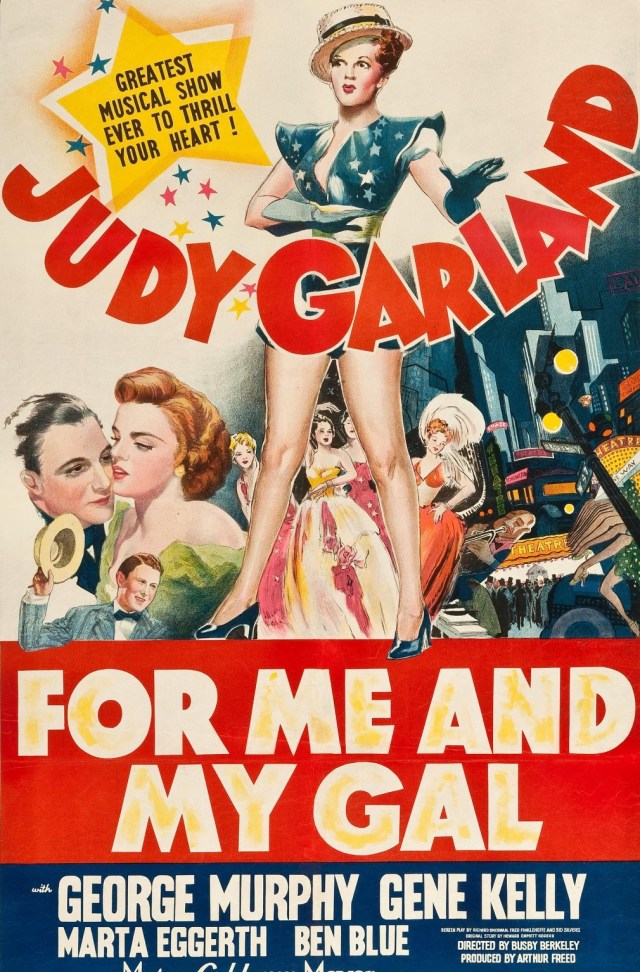
For Me and My Gal poster created by Metro-Goldwyn-Mayer (MGM)

Things I liked about the film:

The on-screen chemistry: Since I chose to review this movie
for the Third Judy Garland Blogathon, I want to discuss Judy’s performance in For
Me and My Gal
. However, I want to talk about her performance in relation to
her on-screen chemistry with Gene Kelly. When a movie musical features a
romantic relationship, the on-screen chemistry of the lead actor and actress
can sell the idea their characters truly love one another. This is what Gene
and Judy achieved through their portrayals of Harry Palmer and Jo Hayden! One
perfect example is presented during the musical number, “For Me and My Gal”.
Through facial expressions, the choreography, and their singing abilities, Jo
and Harry realize they share the same dream, despite being complete strangers
only hours ago. This musical number emphasizes how these characters were always
meant to be together.


How World War I was incorporated: For Me and My Gal takes place in the middle of the 1900s, the time when World War I took place. The story revolves around civilian perspectives; vaudeville
performers trying to make their dreams come true. At the beginning of the
movie, newspaper headlines broadcast events related to World War I. But the
newspaper’s front page is turned away from the characters, as they are more
concerned with how their performances were reviewed by the critics. As the
story progresses, World War I starts to take center stage in their lives,
affecting each character differently. This progression is steady and the
changes happen more subtly. The way World War I was incorporated into For Me
and My Gal
felt realistic. Though fictional musical movies require a
certain amount of disbelief to be suspended, it was refreshing for realism to
be woven into the film.


A story with stakes: Movie musicals, especially those from
the Breen Code era, contain simpler stories. These stories range from looking
for another member of a talent group or characters expressing their love for
each other. In For Me and My Gal, the overarching
story focuses on characters working toward their dreams. Throughout the movie,
Jo and Harry experience obstacles and attempt to overcome them. At one point in
the film, Harry receives an offer to perform at The Palace, a theatre in New
York every vaudeville performer aspires to go. While the offer itself sounds
amazing, the problem is Harry would no longer be able to perform with Jo. This
is one example of For Me and My Gal containing a story with stakes. In
the case of the aforementioned conflict, there were stakes not only for Harry’s
career, but also for his relationship with Jo.
The Third Judy Garland Blogathon banner created by Crystal from In The Good Old Days Of Classic Hollywood and Kristen from Hoofers and Honeys

What I didn’t like about the film:

The “insta-love” trope: In stories where a romantic
relationship in included, part of the story is devoted to showcasing the
progression of that relationship. If a story’s relationship moves too quickly,
it may be difficult for the audience to become invested in that relationship or
determine if the actors have on-screen chemistry. While Judy Garland and Gene
Kelly had good on-screen chemistry, I found their characters’ initial attraction
to happen too quickly. In fact, this attraction happened so quickly, it almost
felt unbelievable. I recognize there’s only so much story to tell in an hour
and forty-four minutes. However, I wish Harry and Jo’s attraction for one
another had taken its time.


An unresolved debt: Toward the beginning of For Me and My
Gal
, Jo’s brother, Danny, pays Jo a visit after one of her shows. During
their conversation, Jo tells Danny she will pay him back after she becomes a
big vaudeville star. But this is the only time throughout the movie where this
debt is mentioned. The debt is not revisited or resolved as the story progresses.
That part of the story ended up becoming a loose end that was left behind by
the end of the movie.


A confusing conflict: For this part of my review, I will
spoil For Me and My Gal. If you have not seen this movie and are
interested in watching it, skip this part of my review and continue reading where
it says “My overall impression”.


After Jo and Harry discover their love for each other, they
receive a telegram congratulating them on their upcoming performance at The
Palace, a theatre in New York they have dreamed about for so long. When they
arrive at The Palace, Harry and Jo learn there was a misunderstanding. They
received a gig at The Palace theatre in Newark, New Jersey. In the telegram, its
sender stated The Palace was in New York. But any performer on the vaudeville
scene would know there’s only one Palace theatre, the one in New York City.
That quote in the telegram references how Eve Minard, a singer Jo and Harry met
on a train trip, brought up the idea of more than one Palace theatre. For Me
and My Gal
was released during the Breen Code era. When a character makes a
poor choice within a film from this time period, they either face accountability
for that choice or learn from their mistake. However, Eve is never confronted
about the telegram. This leaves me confused, wondering if Eve was intentionally
ruining Harry and Jo’s plans or if she was genuinely trying to help, but her
message became lost in translation?

Children holding American flags during a sunset image created by rawpixel.com at freepik.com. <a href=”https://www.freepik.com/free-photos-vectors/people”>People photo created by rawpixel.com – http://www.freepik.com</a>. Image found at freepik.com.

My overall impression:

The term, “The Golden Age of Hollywood”, gets thrown around
from time to time in conversations about the film industry. This term’s
definition depends on who you ask, as film itself can be subjective. In my
opinion, one of Hollywood’s “golden ages” was the Breen Code era. For Me and My Gal serves as one example to prove my point. The 1942 picture sets itself apart from other musical films by
presenting a story with stakes. It also incorporates World War I in a realistic
way. As I’ve stated in past reviews, the strength of a musical movie lies in
its musical numbers. For the most part, For Me and My Gal features
musical numbers that are pleasant to watch! This is the second Judy Garland
production I reviewed this year I was not only recommended, but ended up liking
as well. The streak of enjoyable Judy Garland movies I mentioned in this review’s
introduction is still going strong!


Overall score: 7.6 out of 10


Have you seen For Me and My Gal? What is your
favorite movie of Judy Garland’s? Please let me know in the comment section!


Have fun at the movies!

Sally Silverscreen


Take 3: Dance ‘Til Dawn (1988) Review

You probably saw the title of this review, read the film’s synopsis on IMDB, and wonder, “What does this made-for-TV movie from the ‘80s have to do with the subject of neighbors”? What if I asked you to think about the subject of neighbors from Mr. Rogers’ perspective? On the television show, Mister Rogers’ Neighborhood, the opening theme song was “Won’t You Be My Neighbor?” The show’s overarching theme of neighbors is more about community and a sense of belonging to it. With this perspective in mind, the 1988 made-for-TV production, Dance ‘Til Dawn, fits this definition of neighbors. The story revolves around students and their families belonging to the community of Hoover High School. Most of the movie focuses on Hoover High School’s Senior Prom, showing different points of view throughout the event. Whenever I participate in a blogathon, I try to approach a given topic from a more unique perspective. With Dance ‘Til Dawn reviewed for The Neighbors Blogathon, hosted by Rebecca from Taking Up Room and Quiggy from The Midnite Drive-In, my entry will definitely show a different side to the subject of neighbors!

Dance ‘Til Dawn (1988) poster created by Konigsberg/Sanitsky Company and National Broadcasting Company (NBC)

Things I liked about the film:

The cast’s adaptability: One of the selling points of Dance ‘Til Dawn is the gathering of actors and actresses from television shows that were popular around the movie’s premiere. While television stars are used to working alongside a large group of talent, they grow accustomed to working with their cast from their respective show. They even become familiar with the character they portray, especially if a television show develops a long lifespan. In Dance ‘Til Dawn, the cast was not only given new material to work with, they also had to portray characters that were different from those they were used to. Alan Thicke and Tracey Gold represent everything I’ve been saying. Both actors starred as father and daughter on the sitcom, Growing Pains. Alan Thicke graced television screens as a kind yet fair soul who tried to set a good example for his children. Meanwhile, Tracey’s character, Carol, had a friendly personality (from what I remember), a good candidate for her high school’s welcoming committee. Though Tracey and Alan starred in the same film, they shared very few scenes together. Alan portrayed Dan’s father, Jack, an extroverted, over-confident man who wants his son to be just like him. Tracey portrayed Angela, a young lady who was more introverted and had little confidence to stand up for her dreams. Through Alan’s and Tracey’s performance, as well as the performances from the rest of the cast, every actor and actress sold the illusion of how this talent was always meant to work together. They also sold the idea these characters were always meant to co-exist.

The costume design: A school’s prom provides an excuse for students to dress up in fancy attire and partake in glamour. This is no different for the characters in Dance ‘Til Dawn. The film’s costume designer was Taryn De Chellis and Gingiss FormalWear provided the movie’s prom attire. In collaboration with Patricia Wolfe (the movie’s costume supervisor) and Steve Hicke (the movie’s costumer), the Hoover High School prom attendants looked photogenic in their formal outfits. This was achieved by providing the cast with formalwear that complimented their natural features. Out of the actors portraying high school students, Christina Applegate was the only blonde actress. Wearing an off-the-shoulder gown in a shade that appears to be metallic cherry red, Christina’s blonde hair presents a nice contrast with the bold hue of her character’s prom dress. Though Tracey Gold and Alyssa Milano are brunettes, Tracey’s hair looks a shade lighter than Alyssa’s hair. Similar to Christina receiving a dress in a darker shade, Tracey wore a stunning black, sparkly, sleeveless gown. Meanwhile, Alyssa was given a strapless white dress, paired with white satin pump heels and a pink hair bow.

Different ways of celebrating Prom: In films about Prom, so much focus is given to the party itself that one of two things happen; either prom alternatives are not presented or prom alternatives are frowned upon. But that was not the case in Dance ‘Til Dawn. While Hoover High School’s Prom party was highlighted throughout the story, not every student chooses to celebrate Prom this way. Angela’s original plan was to host a sleepover with her friend, Margaret, spending all night watching movies. No one criticizes or questions Margaret and Angela for wanting to commemorate Prom in this fashion. In fact, the film’s script celebrates the uniqueness of prom festivities. The idea of Prom being what you make it is rarely found in stories about this event, so I appreciate Dance ‘Til Dawn’s creative team making this one of the movie’s themes!

The Neighbors Blogathon banner created by Quiggy from The Midnite Drive-In and Rebecca from Taking Up Room

What I didn’t like about the film:

Some cliched stories: Throughout Dance ‘Til Dawn, creative ideas were expressed, from the aforementioned uniqueness of prom festivities to several pieces of dialogue. However, there were some stories within the movie that were cliched. One example is Angela and Kevin’s story. Angela is asked to Prom by Kevin, who wants to date her for the wrong reasons. Before arriving at the prom party, Angela transforms from an introverted “geek” to a beautiful young lady worthy of being prom royalty. Attending an event under false pretenses, as well as a My Fair Lady-esque makeover, have become so common in stories about teenagers, they are cliches at this point. Personally, I wish Angela and/or Kevin’s story had taken a different route. A more unique story option would be having Angela asking an Italian exchange student to Prom, developing a friendship and a shared interest in Italian art.

The underutilization of Tempestt Bledsoe: As I mentioned earlier in this review, Angela originally plans to host a sleepover with her friend, Margaret. Portrayed by Tempestt Bledsoe, Margaret was a character with her own style and not afraid to speak her mind. But compared to the other characters, Margaret appeared in only a handful of scenes. In fact, Margaret wasn’t given much to do in this story. Not only was Margaret an underutilized character, Tempestt’s acting talents were underutilized as well. Like I said about Angela and Kevin’s story, I wish Margaret’s story had been a bit more creative. An example would be Angela daring Margaret to go to Prom, with Margaret having a better time than she expected.

Some things that don’t make sense: There were a few times in Dance ‘Til Dawn where things don’t make sense. A good example takes place in Shelley and Dan’s story. Because Shelley lacks a date for Prom, she spends most of the evening trying to avoid people from Hoover High School to prevent embarrassment. While in the drive-thru of a fast-food restaurant, Shelley recognizes the voice on the other end of the drive-thru menu; a student whose locker is next to Shelley’s. What didn’t make sense to me was how Shelley and Dan did not realize how close they were to the menu’s microphone, meaning the student on the other end would recognize Shelley’s voice. Maybe the screenwriters forgot how drive-thru menus worked?

Image of high school students dancing at prom created by Jan Sundstedt at freeimages.com. Photo by <a href=”/photographer/jansun-33414″>Jan Sundstedt</a> from <a href=”https://freeimages.com/”>FreeImages</a&gt;. Image found at freeimages.com.

My overall impression:

Throughout this review, I’ve been using Dance ‘Til Dawn to elaborate on Mister Rogers’ perspective on neighbors. Learning more about the production after watching the movie, I realized some of the cast members would be considered neighbors, as their shows aired on the same network. With stars from other networks joining the aforementioned cast members, the group as a whole provides a blend of talents, personalities, and perspectives. The film’s behind-the-camera team also adds to this blend of people. When they came together, they created a made-for-TV film that, in my opinion, was just ok. The movie didn’t go above and beyond enough to be considered good or great. But at the same time, it wasn’t offensive enough to be bad or even disappointing. The on-camera talent worked together to sell the illusion that they were always meant to act together and their characters were always meant to co-exist. The behind-the-camera team, such as the costume department, collaborated to make the movie look photogenic and feel cohesive. Looking back on Dance ‘Til Dawn, I wonder why there was never a film about the Disneyland attraction, Videopolis. In fact, the prom party in the 1988 film made me think about that place in Disneyland. Now that I completed this review, I guess I have a new mystery to solve!

Overall score: 6 out of 10

Have you seen Dance ‘Til Dawn? Are there any stars you wish had appeared in the movie? Please let me know in the comment section!

Have fun at the movies!

Sally Silverscreen

Comparing with the Critics – Best of 1984 – Amadeus

This review is from my series, Comparing with the Critics. If you’d like to learn more about the series, click on the link below.

Introducing my new series, Comparing with the Critics!

I was intrigued to review Amadeus for a number of reasons. One of those reasons was the song, “Rock Me Amadeus” by Falco. For years, I thought the song was created to promote the movie, given the coincidence of two pieces of Amadeus related media debuting in the ‘80s. With the song released in 1985, a month before Amadeus won Best Picture at the 57th Academy Awards, I’d like to believe I was kind of right. In At The Movies’ ‘Best of 1984’ episode, both Gene Siskel and Roger Ebert liked the glamourous, musical biopic. Roger made the film his “personal choice for the best film of 1984”. Like Network and Harry & Son, I had never seen Amadeus, so I approached the movie with little to no expectations. Though I heard good things about the picture since its premiere in 1984. As I write this review after watching the movie, I can definitely see why Amadeus was, at least, nominated for an Oscar.

Amadeus poster created by The Saul Zaentz Company, AMLF, and Orion Pictures

When I reviewed RKO 281 last July, I complimented Liev Schreiber’s portrayal of Orson Welles. In that review, I said Liev brought humanity back to Orson’s name, finding the heart of the “genius” and putting some genuine emotion behind it. This is the same way I felt while witnessing Tom Hulce’s portrayal of the titular man. Reading about an iconic figure like Amadeus can make one wonder what his personality was like. Similar to Orson Welles, Amadeus can be thought of as more than just a man with a gift. Through good times and bad times, Tom shows the film’s audience how Amadeus was, simply, human. As his father comes to visit him in Vienna, Amadeus expresses pure joy when he sees his father at the top of the stairs. Amadeus’ smile alone showcases the happiness within his heart. One evening, when Amadeus is composing an opera, he slowly slips into exhaustion. His eyelids rise and fall, he sways out of rhythm, and his face looks as white as the lace on his shirt. Roger claimed Tom’s portrayal of Amadeus was “one of the year’s most engaging performances”. Tom’s performance serves as an example where Roger, the Academy, and I were on the same page.

F. Murray Abraham’s portrayal of Antonio Salieri reminded me of Gloria Swanson’s portrayal of Norma Desmond in Sunset Boulevard. What I mean by this is the character in question’s search for fame is so strong, it forces the character to become increasingly obsessive, even making questionable choices. Throughout Amadeus, Antonio reflects on his life and how it was impacted by the success of Amadeus. At the beginning of his story, wistfulness can sometimes be heard in Antonio’s voice as he shares his dream of making music for God. As his reflected encounters with Amadeus continue, the tone in Antonio’s voice evolves into bitterness, hinting at the frustration he bottled up over the years. This frustration can also be seen if one looks closely at Antonio’s facial expressions. Before a scene from the movie was shared in the ‘Best of 1984’ episode, Roger called F. Murray’s portrayal “a brilliant performance”. The Academy certainly agreed with Roger, as F. Murray won the Best Actor Oscar instead of Tom at 1985’s Academy Awards. Personally, I liked both F. Murray’s and Tom’s performance for various reasons. Through their portrayals, Tom and F. Murray displayed how fame can negatively impact the human soul.

It’s In The Name Of The Title Blogathon banner created by Gill from Realweegiemidget Reviews and Rebecca from Taking Up Room

As I mentioned in this review’s introduction, Roger chose Amadeus as his “personal choice for the best film of 1984”. One reason why is how “this movie doesn’t contain one bit of the pretentious, solemnity that we usually associate with movie biographies of classical musicians”. To add to Roger’s comment, I’d like to point out how the film serves as an immersive, detail-oriented character study of how the music industry can be both rewarding and cruel. When Antonio shares his life story with a visiting priest, he emphasizes how he was the only member of his family who was interested in music. This organic talent and rise to prominence provide an opposite view of how Amadeus claimed his fame. Scenes and dialogue illustrate how Amadeus was raised to be a star, with his father providing both the music education and connections for a comfortable future. While discussing a new opera with the Emperor, Amadeus successfully argues why his opera should be performed. He states how he worked many hours on the project and how the opera’s lack of politics will prevent the audience from being alienated. The examples I provided in this paragraph show how, sometimes, talent isn’t enough when it comes to the music industry. It also highlights the effort that goes into making music, let alone one song.

String of musical notes image created by Freepik at freepik.com. <a href=’https://www.freepik.com/free-vector/pentagram-vector_710290.htm’>Designed by Freepik</a> <a href=”https://www.freepik.com/free-photos-vectors/background”>Background vector created by Freepik</a>. Image found at freepik.com. 

While sharing his thoughts on Amadeus, Roger stated how the film was “a cheerful, rambunctious, irreverent film”.  I disagree with his statement to an extent. There are cheerful moments within the movie. However, I wouldn’t claim the movie itself is “cheerful”. The overall story contains darker, sadder moments as well, especially toward the end of Amadeus’ life. One part of the story revolves around someone masquerading as a deceased loved one Amadeus knows. Due to his grief and unresolved issues, Amadeus truly believes the masquerading imposter is the loved one brought back from the dead. This imposter is so cruel to use Amadeus’ pain for their own personal gain. Another statement of Roger’s I disagree with is about how the movie views Amadeus himself. Roger claims how the film “doesn’t so much concern with the actual details of Mozart’s life as with its own feelings about his genius, his personality”. The movie allows the characters, including Amadeus, to be flawed. But there were a few instances where the story seemed one sided. After a successful opera performance, Antonio’s student is upset because she learned Amadeus was engaged to a woman named Constanze. This leads Antonio to believe Amadeus and the student had a relationship. However, the story never clarifies if Antonio’s belief was true. In fact, Antonio stated he didn’t know how his student and Amadeus met or how long they knew each other. To me, this goes against what a cinematic biography should do; introducing an audience to a historical figure through an unopinionated lens.

Comparing with the Critics banner created by me, Sally Silverscreen. TV show title cards created by WTTW National Productions, WTTW, Public Broadcasting Service (PBS), Lifetime Television, Tribune Entertainment, Buena Vista Television, and Disney-ABC Domestic Television

Before moving on to the next featured film in At The Movies’ ‘Best of 1984’ episode, Once Upon A Time in America, Gene tells Roger “what I love about the film is that it celebrates creativity and that is a subject that most Hollywood movies are simply not concerned with”. As I was about to disagree with Gene by bringing up RKO 281, I remembered that a) RKO 281 was an HBO made-for-TV movie and b) RKO 281 was released in 1999, a decade after Amadeus. But this review is not debating how much creativity is incorporated into Hollywood’s films, especially during the mid-80s. This article is simply an exploration of whether I agree or disagree with Roger and Gene’s thoughts on Amadeus. Earlier in this review, I mentioned how the film was an immersive, detail-oriented character study of how the music industry can be both rewarding and cruel. The movie’s immersion and focus on detail can be seen in the production’s costume and set design. These elements make the entire picture look and feel historically accurate. While Amadeus is a beautiful looking film, it also contains substance. The script provides thought-provoking material, exploring themes like how success can affect someone both positively and negatively. The glamourous and not-so-glamourous sides of the music industry are shown through the stories of both Amadeus and Antonio. Like I previously brought up in this review, Amadeus successfully argued why his opera should be performed. With everything I said, it makes me wonder how much Falco argued in favor of his song, “Rock Me Amadeus”?

This review was brought to you by

Sally Silverscreen

Comparing with the Critics – Worst of 1984 – Harry & Son

This review is from my series, Comparing with the Critics. If you’d like to learn more about the series, click on the link below.

Introducing my new series, Comparing with the Critics!

Toward the end of At The Movies’ ‘Stinkers of 1984’ episode, Gene Siskel and Roger Ebert share a collection of films they felt were some of the worst movies of 1984. One of the films Roger brought up was Harry & Son. In a brief segment about the movie, Roger refers to the picture as a “sincere, but misguided dream”. Roger also calls Harry & Son “a painfully contrived tear-jerker”. Gene responds before the segment ends that “he and Burt Reynolds are two of the worst in ‘84”, likely referring to Paul Newman. I honestly hadn’t heard of this film until I watched this episode of At The Movies. Therefore, I approached the title with little to no expectations. But now that I have seen Harry & Son, I think calling the picture one of the worst of 1984 is, actually, a bit harsh.

Harry & Son poster created by Orion Pictures

While briefly talking about Harry & Son, Roger brings up Robby Benson. But instead of simply referring to Robby by his name, Roger says “Robby “gee Dad, want a diet pop” Benson”, even saying it in a mocking tone. By addressing Robby’s name in this way, Roger gives the impression Robby’s character, Howard “Howie” Keach, is just a stereotypical surfer jock. As I got to know this character while watching Harry & Son, I discovered this assumption was far from the truth. Throughout the story, Howie always has his heart in the right place. More often than not, he brings a burst of positivity, choosing to look at the glass half full. In a scene where Howie and his father, Harry, are on their porch, Harry orders his son to find a job, a bitter tone in his voice due to his frustrations over his declining health. In a positive, yet matter-of-fact way, Howie informs his dad how he already has a job washing cars. Another scene shows Howie coming home, excited to see his dad arrive so early from work. A big smile is spread across his face and his eyes shine bright with joy. But as he learns his dad has just lost his job, Howie’s face changes to display confusion and fear. This change in persona is seamless, never missing an emotional beat. Moments like this one were made possible by Robby’s acting abilities, showcasing a wide range of emotions and expressions. In my opinion, I think Robby should have, at least, been nominated for his performance in Harry & Son.

It’s In The Name Of The Title Blogathon banner created by Gill from Realweegiemidget Reviews and Rebecca from Taking Up Room

As I just mentioned in the previous paragraph, Harry is frustrated over his declining health. After an incident at a construction site, Harry is forced to be honest about his poor eyesight. One scene has Harry talking with one of his co-workers about his health issues, raising concerns over how these issues will affect his employment. In the 21st century, specifically the 2020s, there has been a risen awareness for men to address their medical issues. So, for Harry to talk to a peer about his health in a movie from the ‘80s is kind of ahead of its time. Later in the story, Howie learns his friend doesn’t have health insurance. When he takes his friend to the hospital, Howie is frustrated by the rejection his friend faces due to the hospital’s policies. The importance of health insurance is another medical topic that has gained attention in the 21st century, including the 2020s. Similar to what I said about Harry’s honesty about his health, I appreciate these brief, yet necessary moments to bring up these serious health subjects, especially in a time when they weren’t found in common societal conversations yet.

Since Harry & Son takes place in Florida, I thought this picture of a Florida shaped pool would make sense for this review. Screenshot taken by me, Sally Silverscreen. Image originally found at https://www.youtube.com/watch?v=tiBkULOrf7Y.

In the introduction of my review, I quoted Roger Ebert’s statements about Harry & Son, with Roger saying the film was a “sincere, but misguided dream” and “a painfully contrived tear-jerker”. I will agree with Roger about the movie being sincere. There were some sweet moments that were written, acted, and directed with a strong amount of sincerity. One example is when Howie goes to a high-end clothing store to purchase a suit jacket. When I first saw that scene, I honestly thought Howie had bought the jacket for himself, showing his dad how he can afford nicer attire. So, imagine my shock when Howie gave the jacket to his dad as a birthday present.

Where Roger and I disagree is how the movie is a “misguided dream” and a “painfully contrived tear-jerker”. I will admit Harry & Son has its flaws, such as scenes ending too quickly and emphasizing showing without telling. But I wouldn’t go so far as to say the movie is “misguided” or “painfully contrived”. With scenes ending too quickly, it felt like the characters were expected to say more. When Nina (Harry’s daughter and Howie’s sister) is talking with a client at a hair salon, I thought Nina was going to respond to the client’s story about their estranged father. But the moment is quickly forgotten as the story moves on. As Howie is reconnecting with Katie, an ex-girlfriend, their conversation is one of the most cryptic pieces of dialogue I’ve ever heard in a movie. While I could see these characters still cared for one another, by observing their expressions and displayed emotions, it took me a few minutes to figure out what Katie and Howie were saying to each other. This is just one example of showing without telling.

Comparing with the Critics banner created by me, Sally Silverscreen. TV show title cards created by WTTW National Productions, WTTW, Public Broadcasting Service (PBS), Lifetime Television, Tribune Entertainment, Buena Vista Television, and Disney-ABC Domestic Television

Gene added his thought on Harry & Son, stating “he and Burt Reynolds are two of the worst in ‘84”, as he possibly referred to Paul Newman. Since I haven’t seen many of Paul’s or Burt’s films, I can’t agree or disagree with Gene’s statement. But what I can do is share my overall thoughts on Harry & Son. This is an ok, slice of life story, which, in my opinion, would have worked better as a stage play. My reason is how the cast is smaller and the story seems more condensed. While I liked the acting performances in this film, Robby Benson ended up being the star of the show. If anyone has an interest in watching Harry & Son, I’d recommend the film for Robby’s performance alone. With the flaws I already mentioned, I also felt like there was too much happening in a short amount of time. However, the story itself was easier to understand. Harry & Son will not become one of the best movies I’ve seen this year, so far. But compared to some of the films I’ve, so far, seen, there are far worse titles than Harry & Son.

This review was brought to you by

Sally Silverscreen

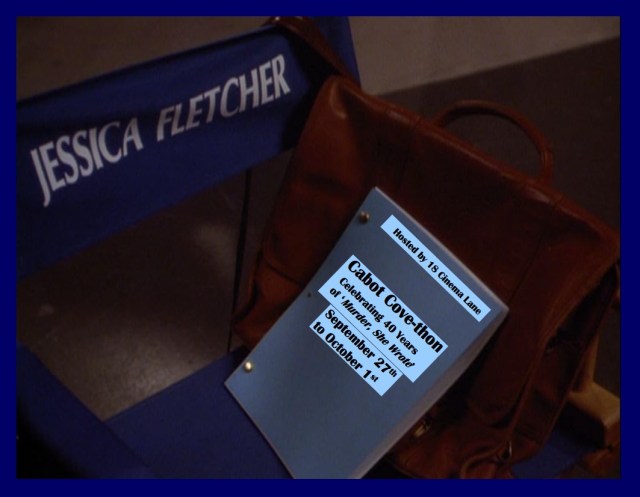
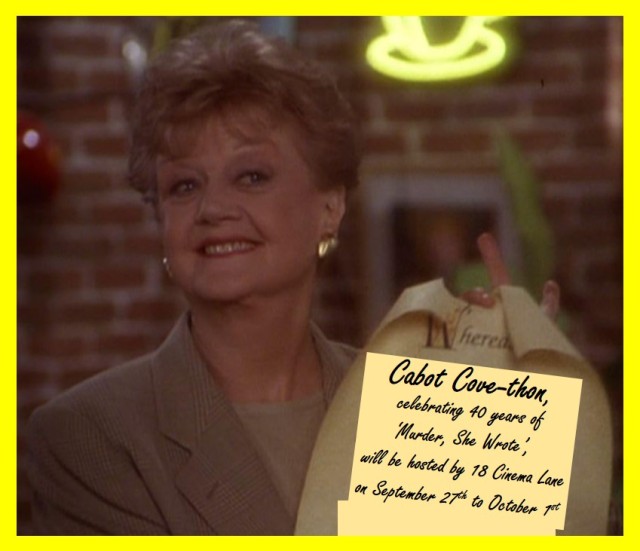
Celebrating 40 Years of ‘Murder, She Wrote’ with the Blogathon; Cabot Cove-thon!

When I signed up for the It’s In The Name of The Title Blogathon, one of the movies I chose to review was Harry & Son starring Robby Benson. When I think of Robby, I think of how he voiced Beast in the 1991 animated film, Beauty and the Beast. Remembering how Angela Lansbury also starred in that film, I always thought it was a missed opportunity for Murder, She Wrote to not promote the 1991 movie, especially since the show was still a popular program at the time. This led me to realize Angela and Robby have another thing in common; they both starred in a project released in 1984. In Angela’s case, that program was Murder, She Wrote! In honor of the show’s 40th anniversary, I’m hosting Cabot Cove-thon! Because Murder, She Wrote is a multifaceted program, there are many ideas for blogathon participants to choose from. Here is a list of possible subjects:

Cabot Cove-thon banner created by me, Sally Silverscreen. Original picture found on IMDB.
  • Murder, She Wrote episodes
  • Characters, locations, or stories from the show
  • Actors, Actresses, behind-the-scenes team members, etc. who worked on Murder, She Wrote
  • Murder, She Wrote made-for-TV movies
  • Murder, She Wrote books
  • The Murder, She Wrote theme park attraction at Universal Studios Florida
  • Movies, tv shows/tv show episodes, or books taking place in a location featured on Murder, She Wrote (example: a movie set in Maine)
  • Movies, tv shows/tv show episodes, or books released between 1984 to 1996
  • Programs Angela Lansbury starred in (example: 1991’s Beauty and the Beast)

Cabot Cove-thon banner created by me, Sally Silverscreen. Original picture found on IMDB.

If you’re interested in joining Cabot Cove-thon and found an idea you’re interested in writing about, please read the official rules before signing up for the event.

  1. Please be respectful to your fellow blogathon participants and the subject you’re writing about
  2. Only new entries are allowed
  3. Participants are able to publish a maximum of four entries
  4. Only two blogathon participants are allowed to write about a blogathon subject (example: no more than two people can write about a specific Murder, She Wrote episode)
  5. Creativity and fun are encouraged
  6. Blogathon entries must be submitted between September 27th to October 1st
  7. If you plan to publish your entry earlier or later than the blogathon week, please let me know before the event
  8. If you’d like to join the blogathon, share your blogathon ideas in the comment section of this announcement post
  9. Feature one of the five blogathon banners anywhere in your entry
Cabot Cove-thon banner created by me, Sally Silverscreen. Original picture found on IMDB.

Cabot Cove-thon Participants

Sally from 18 Cinema Lane — Editorial about Why Universal Orlando Resort Should Host Murder, She Wrote Weekend, Review of Murder, She Wrote: Dying to Retire by Jessica Fletcher and Donald Bain

— Kristen from Hoofers and Honeys — Review of The Harvey Girls (1946)

— Rebecca from Taking Up Room — Review of Death on the Nile (1978)

Cabot Cove-thon banner created by me, Sally Silverscreen. Original picture found on IMDB.

Comparing with the Critics – Best of 1976 – Network

This review is from my series, Comparing with the Critics. If you’d like to learn more about the series, click on the link below.

Introducing my new series, Comparing with the Critics!

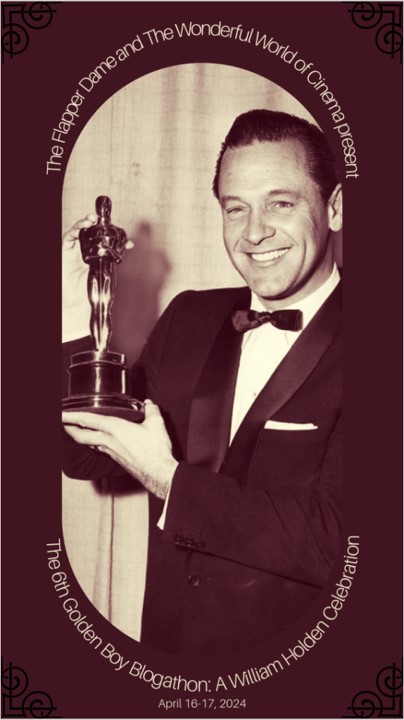
There are two reasons why I chose Network for my first review of Comparing with the Critics. The first reason is how the movie is an appropriate title for The 6th Golden Boy Blogathon: A William Holden Celebration, hosted by Virginie and Emily from The Wonderful World of Cinema and The Flapper Dame. Network appearing on Gene Siskel’s and Roger Ebert’s list of the top five films from 1976 is the second reason. When I looked through William Holden’s IMDB filmography in preparation for the blogathon, I remembered how Ebert and Siskel liked Network. In fact, it was one of the few films they agreed on. I was aware of Network prior to the Comparing with the Critics series because I had heard it was adapted into a stage play. Toward the beginning of the ‘Best Films of 1976’ episode, Siskel proclaimed how “1976 was a pretty lousy year for movies”. I can’t speak on the cinematic year of 1976 as a whole. But based on my thoughts on Network, this movie would fit Siskel’s argument about the state of 1976 when it comes to film.

Network poster created by Metro-Goldwyn-Mayer (MGM) and United Artists


When it’s his turn to talk about Network, Siskel says
“I think she’s gonna win an Oscar for this picture”, referring to Faye Dunaway’s
performance in the film. Siskel got his wish when Faye did win the Best Actress
award at the 49th Academy Awards. While I can’t compare her portrayal
of Diana Christensen to the other performances that were nominated that year, I
can comment on how interesting some of Faye’s interactions were with William
Holden’s character, Max Schumacher. While having dinner one evening, Diana asks
Max a series of questions, in order to learn more about her co-worker. The more
personal the questions become, the more reserved Max appears. This reserved demeanor
is consistently carried by William throughout the movie, using emotion more
subtly. When Max does become more emotional, it happens at certain moments,
such as when he’s recalling a story about his first broadcasting job. Meanwhile,
Diana expresses her emotions more openly. She’s more honest when it comes to
her perspective, believing no subject is off limits. The pairing of Max and Diana,
portrayed by William and Faye, represents the “old school” and “new school”
mentality of the world of broadcast television. It also represents “old” and “new”
Hollywood.

News reporter being filmed image created by Macrovector at freepik.com. <a href=’https://www.freepik.com/free-vector/journalist-reporter-profession-isometric-banner_2875517.htm’>Designed by Macrovector</a>. <a href=”https://www.freepik.com/free-photos-vectors/banner”>Banner vector created by Macrovector – Freepik.com</a>, Image found at freepik.com.

Some of Hallmark’s movies have pulled back the curtain on
certain industries. One great example, Cooking with Love, shows a
behind-the-scenes look at how to create a television show. As you’re reading
this editorial, you’re probably wondering what a film such as Cooking with
Love
has to do with Network. Similar to the 2018 aforementioned production,
the 1976 film explores the behind-the-scenes operations of network television. Network shows the various steps that are needed
to make network television run as smoothly as possible. The movie also
addresses how television programs are brought to the screen. During a typical
work day, Diana was presented with a set of tv pilots. Hearing the premise of these
pilots makes her realize how similar they all sound. This revelation inspires Diana
to create a program that is drastically different. While talking about Network,
Siskel shares how “I also like movies that deal with what’s really going on in
the world”. Because the movie, more often than not, grounds itself in reality,
the realistic presentation of network television’s behind-the-scenes are
insightful and even educational for the audience.

The 6th Golden Boy Blogathon: A William Holden Celebration banner created by Virginie and Emily from The Wonderful World of Cinema and The Flapper Dame

As I just wrote about in this editorial, Network explores
the behind-the-scenes operations of network television. While I liked this
aspect of the movie, there were times when I felt the movie’s creative team
expected their audience to know what they were talking about. The mention of “shares”
is just one example. The term “shares” was thrown around like confetti on New
Year’s Eve. Diana even dreams about creating a show that will earn a certain number
of shares. Trying to figure out what this part of network television was, I was
confused if the characters were referencing the Stock Market or a program’s
viewership. According to Wikipedia, Network is considered a “satirical
drama”. I could tell when moments were intended to be satire. But, in my
opinion, effective satire is when a story’s creative team knows when to play it
straight and when to acknowledge the joke. Network’s creative team
played it a little too straight, taking their production too seriously. All of
this led to a movie that was pretentious.

Newspaper image created by Zlatko_plamenov at freepik.com. <a href=’https://www.freepik.com/free-psd/newspaper-mockup_1386098.htm’>Designed by Freepik</a>. <a href=”https://www.freepik.com/free-photos-vectors/mockup”>Mockup psd created by Zlatko_plamenov – Freepik.com</a>. Image found at freepik.com.

In this review’s introduction, I mentioned how Network was one of the few films Ebert and Siskel agreed on. They both stated how comedic Network was. While Ebert called the film “funny”, Siskel said “I laughed a lot at Network”. Comedy, like cinema, is subjective. With that said, the only time I giggled during the film was when Max Schumacher suggests hiring a psychic to report the weather. The story overall was not only dry, it took itself too seriously, as I already mentioned in this review. Network’s first half was a drawn-out search for a resolution to the story’s conflict. The movie’s second half turned into a contest to figure out which character could yell the loudest and angriest. To me, this was a recipe for a headache and not a hilarious two hours. Then again, I don’t find characters yelling and screaming at each other funny.

Comparing with the Critics banner created by me, Sally Silverscreen. TV show title cards created by WTTW National Productions, WTTW, Public Broadcasting Service (PBS), Lifetime Television, Tribune Entertainment, Buena Vista Television, and Disney-ABC Domestic Television


Network was one of the films featured in the ‘Best Films
of 1976’ episode of Opening Soon…at a Theater Near You. As stated in
this review’s introduction, the movie appeared on Gene Siskel’s and Roger Ebert’s
list of the top five films of 1976. If I made a guest appearance on the show, Network
would not be on my top five or even top ten films list of that year. In fact, I’d
consider the movie as one of the “Dogs of the Year”. Network, for me,
was an endurance test that almost made me fall asleep. Taking itself too
seriously by expecting too much from the audience and telling a dry, boring
story didn’t help Network’s case. Though comedy is subjective, I didn’t
find the film very funny. However, there were aspects of the film I liked, such
as the acting and the peek behind network television’s curtain. But, like
network television itself, there are many parts needed to make a movie work. As
I wrap up this review for Comparing with the Critics, I’d like to respond to
the film’s overarching quote; I’m bored as heck, and I wish Network used
its indoor voice.


This review was brought to you by

Sally Silverscreen


Take 3: The 39 Steps Review

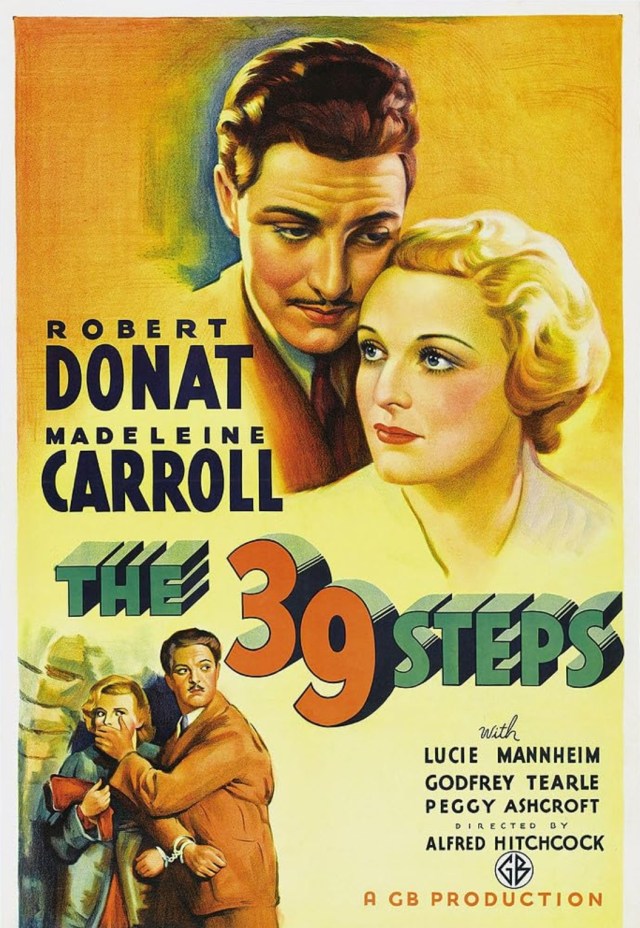
For the first annual Master of Suspense Blogathon (hosted by Maddy from Classic Film And TV Corner), I wrote about the 1955 film, To Catch a Thief. While I addressed how it was a “pretty looking movie”, I found To Catch a Thief prioritizing style over substance. In this year’s event, I have selected the 1935 production, The 39 Steps, which was recommended by Maddy from Maddy Loves Her Classic Films! There are several titles in Alfred Hitchcock’s filmography that have gained popularity over the years. But The 39 Steps has been overshadowed by Alfred’s more well-known projects. In fact, before signing up for the second annual Master of Suspense Blogathon, I knew very little about the film. However, I was familiar with Alfred’s forte for mystery and suspense, assuming I was, at least, going to see a creative concept come to life on screen. Was I correct in my assumption? Keep reading my review of The 39 Steps to find out!

The 39 Steps poster created by Gaumont British Picture Corporation and Gaumont British Picture Corporation of America

Things I liked about the film:

Robert Donat’s performance: Throughout The 39 Steps, I found the acting performances ranging from fine to well-done. However, I did like Robert Donat’s portrayal of Richard Hannay! What stood out to me was how at ease Robert appeared on screen. A perfect example is when Richard shares some of his family history with Pamela, who was portrayed by Madeleine Carroll. While telling Pamela about his family, Richard was comfortable giving this information, despite barely knowing Pamela. His body language appears relaxed and his facial expressions presented on his face effortlessly. The story itself rolled off Richard’s tongue as if he had told it multiple times. During this conversation, Richard was also yawning, indicating how tired he was by the events surrounding him during the film’s story.

The set design of Alt-na-Shellach: During the movie, Richard visits Alt-na-Shellach, the home of a man named Professor Jordan. The only room shown on screen was the sitting room, where a party was taking place. Despite appearing in only one scene, the room boasted nice set design pieces! Characters were greeted by a large, carved, wooden door. These carvings were intricately detailed, showing how much care went into creating that door. A big, ornate rug covered the majority of the floor, nicely complimenting the space. But the showstopper was the huge window overlooking a nearby river and featuring stained glass designs. I wish more scenes had taken place at Alt-na-Shellach, as I’m pretty sure other rooms would have looked great on screen too!

The mise-en-scène: For those who aren’t familiar with the term, mise-en-scène, it means how a scene is presented in a movie. In The 39 Steps, mise-en-scène was utilized in clever and visually intriguing ways. A great example is when Richard boards a train. On this trip, Richard is sitting across from two men. To avoid eye contact, Richard hides his face behind a newspaper. Wondering if the two men are watching him, Richard peeks over the top of the newspaper, where the audience can only see the men’s eyes. These visuals symbolized how Richard was hiding something behind the windows of his soul, how the eyes are sometimes described.

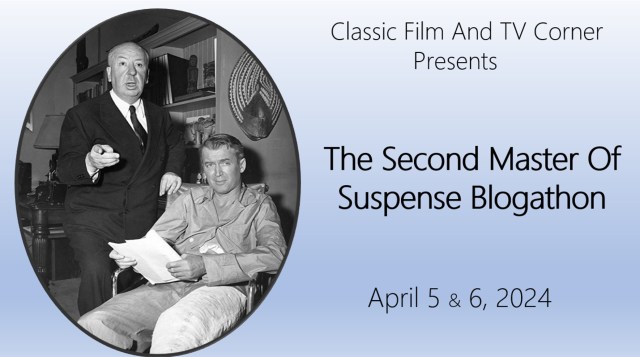
The Second Master Of Suspense Blogathon banner created by Maddy from Classic Film And TV Corner

What I didn’t like about the film:

Limited sense of urgency: Based on Alfred Hitchcock’s films I’ve seen, I’ve come to expect his stories to be filled with mystery and suspense. Because of these elements, I also expect a given story to contain a strong sense of urgency. While there were suspenseful, urgent moments sprinkled throughout The 39 Steps, these moments were not consistent. This made the story take its time being told instead of getting straight to the point sooner. During these suspenseful, urgent moments, there was no music playing in the background. A low amount of adrenaline and excitement was present in these moments partly due to the lack of music.

The “Insta-love” trope: In my recent review of Easter Parade, I explained what the “insta-love” trope was and why it was a major flaw in the 1948 movie. The “insta-love” trope was a major flaw in The 39 Steps as well. Richard and Pamela do not like each other. Even after being arrested, they continue to dislike one another. When they check into a hotel and pose as a married couple, Pamela and Richard’s dislike carries on. But hours later, they act like they’ve always been in a romantic relationship. The inclusion of the “insta-love” trope caused Richard and Pamela’s attraction to be abrupt, with the abruptness preventing on-screen chemistry between Robert and Madeleine.

An over-shadowed mystery: As I just mentioned in this review, I have come to expect stories filled with mystery based on Alfred Hitchcock’s movies I’ve seen. Because of those selected titles from Alfred’s filmography, I expect the mystery to be the story’s primary focus. In The 39 Steps, however, the story’s mystery was overshadowed due to the film’s creative team emphasizing Richard being on the run from the authorities. The mystery taking a backseat in the movie means the mystery itself wasn’t solved until the very end of the film. A longer wait time for answers causes The 39 Steps to feature a limited amount of intrigue.

Essentials of Scotland image created by macrovector_official at freepik.com. <a href=”https://www.freepik.com/free-photos-vectors/background”>Background vector created by macrovector_official – http://www.freepik.com</a>. Image found at freepik.com.

My overall impression:

Alfred Hitchcock has obtained a reputation for creating memorable productions. Whether it’s incorporating “modern” technology in The Birds or showcasing a pretty location in To Catch a Thief, Alfred’s movies have boasted his stamp of approval through various creative ideas. But out of Alfred’s films I have seen, and even reviewed, The 39 Steps is the most “meh” title from his filmography. The 1935 picture had such a limited sense of urgency and intrigue, I almost fell asleep while watching it. Richard and Pamela’s relationship was heavily affected by the “insta-love” trope, causing the relationship to feel like it belonged in a different film. This is a movie that seems longer than an hour and twenty-six minutes, creating a slow and boring build-up to a reveal that feels kind of ridiculous and anti-climactic. With all the flaws I discussed in this review, it’s a shame The 39 Steps turned out this way. That’s because there were aspects of this movie I liked, such as Robert Donat’s performance.

Overall score: 5 out of 10

Have you seen The 39 Steps? Are there any films of Alfred Hitchcock’s you like or don’t like? Let me know in the comment section!

Have fun at the movies!

Sally Silverscreen

Sally Watches…The Twilight Zone

When the curtains rose and the golden gates of Hollywood opened for him, Buster Keaton likely had one goal: to make people laugh. After conquering Vaudeville and starring in over a hundred film and television credits, Buster not only made people laugh, he left behind a legacy of humor, joy, and timeless entertainment! So, you probably saw the title of this article and wondered, “What does The Twilight Zone have to do with Buster Keaton”? One of Buster’s many film and television credits was an episode of The Twilight Zone. This is a show I am familiar with, having seen several episodes prior to The 10th Annual Buster Keaton Blogathon (hosted by Lea from Silent-Ology). However, on paper, The Twilight Zone and Buster Keaton seem like a random combination. Buster’s forte was comedy, while The Twilight Zone incorporates elements of science-fiction and horror. But is this episode, “Once Upon a Time”, an example of “opposites attract”? Let’s step into another dimension to find that answer through this review!

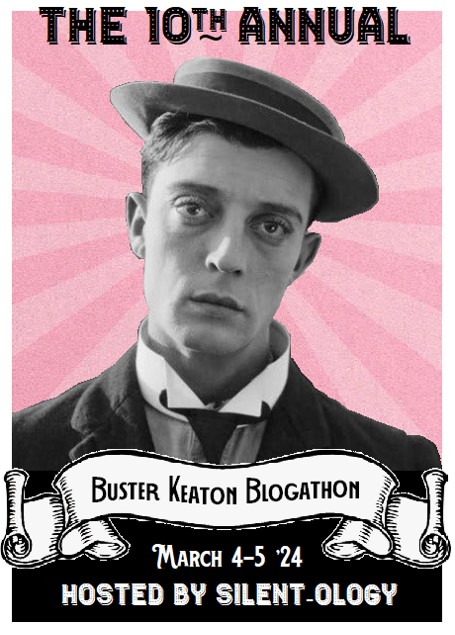
The 10th Annual Buster Keaton Blogathon banner created by Lea from Silent-Ology

Episode Name: Once Upon a Time

Season 3, Episode 13

Premiere Date: December 15th, 1961

What I liked about this episode:

As I stated in this review’s introduction, Buster’s forte was comedy. His specific acting forte was physical, “slapstick” performances. The creative team behind this episode paid attention to Buster’s comedic work, as Buster was given plenty of opportunities to showcase his comedy skills! One scene shows Buster’s character, Woodrow Mulligan, trying to hide from a police officer. At first, he walks behind Rollo, a character Woodrow meets in the “future”. When both men turn a corner, Rollo moves behind Woodrow, allowing Woodrow to walk in front of him. As they pass a rack of suit pants, Woodrow not only grabs a pair, Rollo picks Woodrow up so he can put the pants on. No beats were missed during this scene. The writing and delivery of this performance was simple, yet effective when it comes to the comedy!

What I didn’t like about this episode:

The run-time for “Once Upon a Time” is twenty-five minutes. Even though the script told a story that could be wrapped up in a short amount of time, there were parts of the episode that were drawn out. Chase scenes serve one example of moments lasting longer than necessary. When Woodrow first travels to 1962, the Time Helmet becomes misplaced. He spends several minutes trying to get the Helmet back, with the Helmet itself getting destroyed in the chase. Another drawn out scene is when Rollo argues with a man who owns a repair shop. While this argument takes place, Woodrow marvels at the “modern” inventions surrounding him. He also discovers a clothing store near the repair shop. In this part of the story, I found Woodrow’s observations hilarious. But I didn’t find the argument interesting.

Masks of comedy and tragedy images created by freepik at freepik.com. <a href=”https://www.freepik.com/free-photos-vectors/background”>Background vector created by freepik – http://www.freepik.com</a>. Image found at freepik.com.

The story itself:

Throughout this review, you’ve read references to a Time Helmet and Woodrow traveling to the “future”. That’s because “Once Upon a Time” is a story revolving around time travel! When the episode begins in 1890, Woodrow is disgruntled about the world around him. One of his major issues is how noisy his world is. However, this part of the story is presented as a silent film. After he seeks a quieter time period to travel to, he discovers the “future” (1962) is much noisier than he expected. Through this visual and auditory juxtaposition, the creative team behind this episode addressed how sounds can constitute our lives. If you know anything about The Twilight Zone, not everything is what it seems. Each episode shares a lesson or message with its audience, with the story leading up to that message or lesson. Without spoiling “Once Upon a Time”, the way the events play out provide a lesson that members of the audience can relate to.

The other factors from this episode:

For this part of my review, I will be spoiling “Once Upon a Time”. If you have not seen this episode and are interested in watching it, skip ahead to the second point in this section.

  • When the Time Helmet is first introduced in the story, Woodrow overhears how the Helmet can allow someone to travel in time for only thirty minutes. This is the conflict Woodrow experiences after he travels to 1962. Because Rollo finds 1890 an appealing time period, he is taken back to 1890 through the Time Helmet when Woodrow is on his way home. Toward the end of the episode, a title card states the story is now taking place one week later. Rollo is still in 1890, adjusting poorly to his new surroundings. If the Time Helmet can allow someone to explore different time periods for only thirty minutes, how has Rollo been able to stay in 1890 for a week?
  • Like I have mentioned in this review, the parts of the episode taking place in 1890 are presented as a silent film, complete with title cards and an overarching tune. Viewers familiar with Buster Keaton’s filmography will know he is one of the most celebrated actors from the silent film era. This creative choice in presentation was such a nice nod to Buster’s career! It also gave this episode its own distinct identity!
  • During Woodrow’s time in 1962, Rollo admits he is not only a scientist, he is also an expert on 1890. Yet, Rollo and Woodrow take the Time Helmet to a repair shop to get it fixed. Why didn’t Rollo fix the Helmet himself, especially since he seemed capable of knowing how to repair it? Had Rollo repaired the Helmet himself, there wouldn’t be the need for his argument with the man from the repair shop.
Image of vintage movie camera created by Macrovector at freepik.com. <a href=”https://www.freepik.com/free-photos-vectors/background”>Background vector created by macrovector – http://www.freepik.com</a>. Image found at freepik.com.

My overall thoughts:

 I said in this review’s introduction how I have seen several episodes of The Twilight Zone before. But this was the first time I saw “Once Upon a Time”. What surprised me was how light-hearted the story was compared to other episodes I’ve watched. The Twilight Zone is a show known for dabbling in the strange and even the sad. The best parts of “Once Upon a Time” were Buster’s comedic performances! Every comedy scene was written and delivered well, effectively making me laugh! What didn’t work in this episode were the drawn-out scenes. Even though the story was short, some scenes were just too long. When I reviewed television show episodes, I have stated if that episode would serve as a good introduction to its respective show. In my opinion, “Once Upon a Time” is a good place to start for those who either have never seen The Twilight Zone or who are just getting into the show. The story is strange, but not in an unsettling way. It even contains a happy ending. But if you want to know what that happy ending is, you’ll have to enter The Twilight Zone!

Rating: A 3.5 out of 5

Have fun on television!

Sally Silverscreen

Take 3: Mount Hideaway Mysteries: Exes and Oh No’s Review

When I write a movie review, I typically discuss what I liked and didn’t like about a movie, as well as summing up my thoughts in an overall impression. But for the 6th So Bad It’s Good Blogathon, I’m taking a different approach for this review. Readers of 18 Cinema Lane will know how long I’ve been searching for my “so bad it’s good” movie. Last year, when I wrote about Jesse James Meets Frankenstein’s Daughter, I mentioned how I giggled a few times while watching the film. This was taken as a step in the right direction to finding my “so bad it’s good” title! For the aforementioned 6th So Bad It’s Good Blogathon, my original intent was to choose a movie that was built on a gimmick. Then I remembered how I found Mount Hideaway Mysteries: Heartache and Homecoming so bad, it was, at times, unintentionally funny. I also recalled how the 2022 project was actually a sequel to the 2018 film, Mount Hideaway Mysteries: Exes and Oh No’s. Now that I’ve seen both films, I can, honestly, say the 2018 movie was so bad, it was, at times, unintentionally funny, though not as much as the sequel. So, in this review, I will provide examples of why Mount Hideaway Mysteries: Exes and Oh No’s is so bad, it’s unintentionally funny at times!

Mount Hideaway Mysteries: Exes and Oh No’s poster created by Glass House Distribution

Dr. Amy Bradford and her Veterinary Clinic

When I discussed Mount Hideaway Mysteries: Heartache and Homecoming in my worst movies of 2023 list, I mentioned how even though the protagonist is a veterinarian, she didn’t have to hold an animal every time a scene takes place at the veterinary clinic. This flaw constantly reminded the audience of the protagonist’s profession, making those parts of the script seem unnecessarily repetitive. When Dr. Amy Bradford first visits her veterinary clinic with her friend, Bethany, in Mount Hideaway Mysteries: Exes and Oh No’s, it makes sense to show Amy with a bearded dragon. That scene establishes Amy’s role in the town and the story itself. But after the initial introduction, Amy is, once again, shown holding animals, whether Bethany is visiting the clinic or Amy is talking on the phone with her friends. It seems like the creative team behind Mount Hideaway Mysteries: Exes and Oh No’s didn’t have confidence in their audience to remember Amy’s job. Personally, I found this flaw funny because of how frequent it was.

Collection of white rabbit images created by freepik at freepik.com Hand drawn vector created by freepik – www.freepik.com

Obvious Production Errors

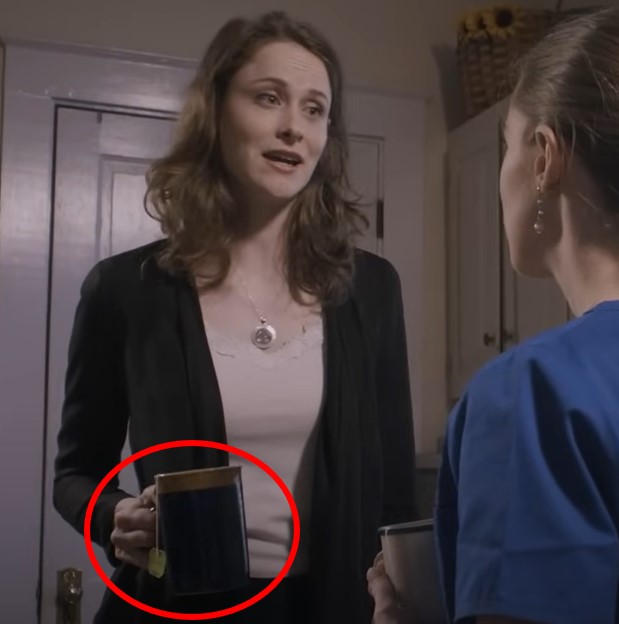
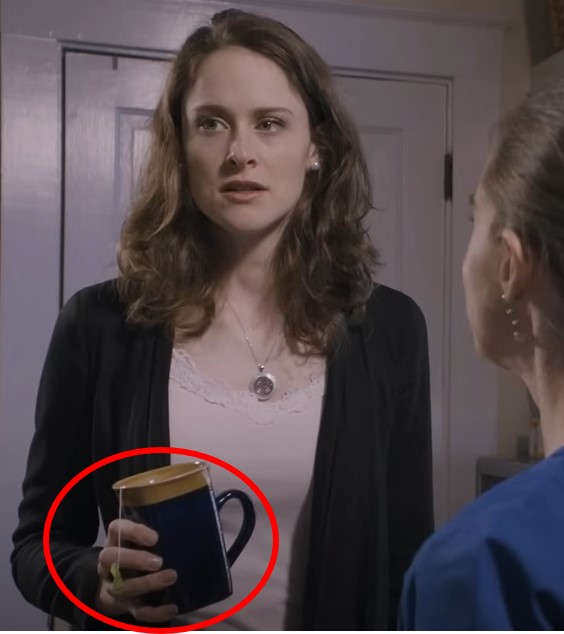
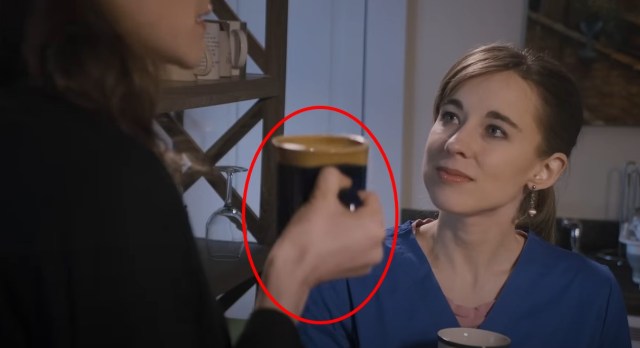
Any movie will have its fair share of production related errors. But in Mount Hideaway Mysteries: Exes and Oh No’s, several production errors were more obvious. Remember when I said Amy held an animal every time she was shown in her veterinary clinic? While on the phone with Bethany, Amy holds a brown rabbit with tall ears. A few seconds later, Amy is then holding a white rabbit with floppy ears. When Bethany and Amy first go to the veterinary clinic, both women drink a mug of tea. Before clinking mugs, Bethany is holding her mug by its handle in her right hand. After clinking mugs, she’s now holding the mug on its side with that same right hand. As she’s putting the mug to her lips, Bethany’s right hand returns to the mug’s handle. Toward the end of the movie, the villain escapes in a getaway van. One scene shows the villain entering the van and closing the door before it moves. The scene after that, the van drives away with the villain’s door open.

These three screenshots illustrate a production error I described in this review. Screenshots taken by me, Sally Silverscreen. Images created by Glass House Distribution

Not Understanding How Things Work

As I talked about in my 2023 edition of my worst movies of the year list, the script for Mount Hideaway Mysteries: Heartache and Homecoming reminded me of The Cookie Mobster, with the screenwriters not displaying an understanding for how some things worked. The example I brought up was how Game Boy Color video game consoles were incorporated into the story. Similarly, in Mount Hideaway Mysteries: Exes and Oh No’s, the screenwriters repeated the same mistake as the 2022 film. One glaring example takes place as a character tries to use their cell phone. A volunteer at the protagonist’s church is about to watch a livestream video from her “smart” phone, with the video starting in a few seconds. The woman sitting next to her suggests she watches the video on the television that happens to be in the room. Confused by what the woman is requesting, the livestream viewer asks if it’s possible to do that with a phone. The woman then grabs the viewer’s phone, presses the phone’s touchscreen a few times, then the video magically appears on the television. It should be noted how the television was turned off prior to the woman turning the livestream video on the television. Cell phones in 2018 (when Mount Hideaway Mysteries: Exes and Oh No’s was released) contain more advanced technology than cell phones from previous years. However, they are not “smart” enough to automatically turn on a television and connect to the television without the use of connecting wires or a remote control.

The Sixth So Bad It’s Good Blogathon banner created by Rebecca from Taking Up Room

Writing and Delivery of Dialogue

In this review so far, I’ve addressed some of the issues with the movie’s screenwriting. One flaw in this department is how the dialogue is written. There are some scenes where a character is supposed to deliver a strength filled line meant to be taken seriously. Due to the screenwriting, though, these lines don’t contain that emotional impact, causing them to sound funnier than intended. When Bethany visits a local real estate agent, she meets the realtor and his ex-wife. During Bethany’s visit, the realtor and his ex-wife get into an argument. After the realtor mentions how he should have fired his ex-wife, his ex-wife reminds him how that’s not possible by stating, “but I got half this company in the divorce settlement”. In an attempt to get the last word, the realtor replies, “Well, at least I got the cat”. Later that same day, Bethany is confronted at the local church by the villain. When the villain tries to intimidate Bethany to help them leave town, she utilizes some martial arts techniques to retrieve the villain’s gun and knock the villain to the ground. The villain then asks Bethany where she learned to fight. Bethany replies, in a serious tone, “I was homeschooled”.

Another issue with the movie’s script was how the dialogue was delivered. There were times when an actor’s line delivery was so unnatural, it sounded robotic. Toward the beginning of the film, Bethany is discouraged by her inability to bake a pie. Her mother reassures her by saying “No, it’s not. You’re much better with people than you are with pies. I mean, seriously, I have never met anyone that can connect with every single person that she meets. And that’s a gift”.  While Bethany’s mother gives her daughter a nice, encouraging comment, the limited use of vocal inflections and over-enunciating make this comment sound less genuine. When Bethany’s friend, Grace, visits Bethany’s family’s orchard, Grace reveals how she has worked in the Mount Hideaway facility for the past two weeks. Shocked by this piece of news, Bethany responds by saying, “You’re working at the classified facility outside my hometown?” This line delivery is so flat and over-enunciated, it sounds like Bethany is talking in slow-motion.

Red apples in basket photo created by Valeria_aksakova at freepik.com. <a href=’https://www.freepik.com/free-photo/fresh-tasty-red-apples-in-wooden-basket-on-green-grass_1284495.htm’>Designed by Valeria_aksakova</a>. <a href=”https://www.freepik.com/free-photos-vectors/background”>Background image created by Valeria_aksakova – Freepik.com</a>. Image found at freepik.com.

Poor Special Effects

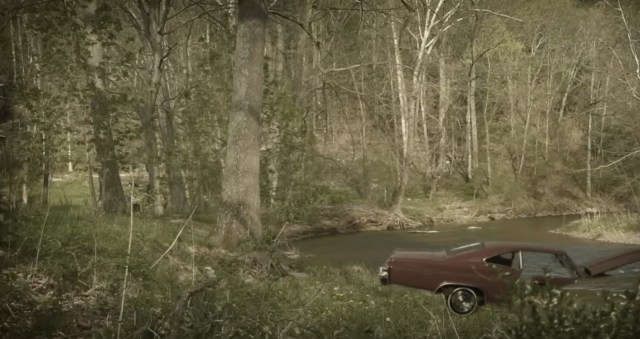
Whether a tv movie network production or an independent film, these types of movies are typically granted smaller budgets. This financial restriction means some film-making techniques could be out of reach, such as time-consuming and expensive special effects. If computer-created special effects are applied to a film with financial limitations, those effects could show the film’s budget. As Bethany is taking her burnt pie out of the oven, smoke appears to be coming out of the oven. But as Bethany is trying to fan the smoke away from the pie, it’s pretty clear the smoke is a computer-created effect resting atop the image and likely added in post-production. While Bethany is reminiscing on the past, she recalls how she and her friend, Jamie, spotted an abandoned car. This abandoned car looked too glossy for the long shot of the nearby river. In fact, the car appeared to be poorly photoshopped into the scene during the film’s editing stage. Because the car wasn’t blended into the scene well, its inclusion in the movie felt so jarring, it was distracting.

If you look at this picture’s bottom right hand corner, you will see how the car looks like it was probably added in the editing stage of this movie. Image created by Glass House Distribution

As Bethany pays her church a visit, she goes to the homeschool resource center. In this room, there is a poster that reads, “Mistakes are proof that you are trying”. This quote is how to sum up Mount Hideaway Mysteries: Exes and Oh No’s. The 2018 picture is filled with production and film-making mistakes. These range from the obvious (such as a poorly photoshopped car) to the subtle (like no display of understanding for how technology works). However, these mistakes are proof the movie’s creative team tried to visually tell a story. Making a film is a time-consuming and financially-consuming endeavor. This creative endeavor also consists of a lot of moving parts, requiring various people to oversee different departments of the film-making process. Going back to Mount Hideaway Mysteries: Exes and Oh No’s, I wouldn’t go so far as to choose this project as my “so bad it’s good” movie. But, while watching the 2018 film, I did find myself laughing more than I did watching Jesse James Meets Frankenstein’s Daughter. Therefore, I will take that as another step in the right direction to finally finding my “so bad it’s good” movie!

Have fun at the movies!

Sally Silverscreen

Take 3: The Deep End of the Ocean Review

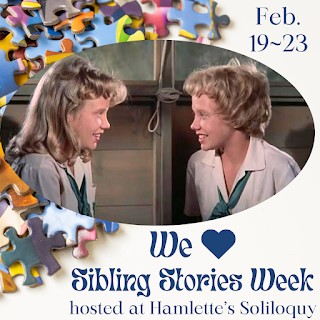
In the We Heart Siblings Stories Week event, hosted by Hamlette (from Hamlette’s Soliloquy), I wanted to review a movie that was more underrated. While searching for the perfect title, I discovered a list on IMDB about the best movies about siblings. On that list, the 1999 movie, The Deep End of the Ocean, was featured. Back in 2021, when I reviewed Taming Andrew, I remember Gill, from Realweegiemidget Reviews, recommending The Deep End of the Ocean for a future review. Since I try to write about a recommended picture every now and then and since the 1999 film fit the blogathon’s criteria, I found the perfect title to discuss! Similar to Taming Andrew, The Deep End of the Ocean revolves around a family whose child was kidnapped and eventually returned. Since the missing child in the 1999 movie has siblings, those children’s perspective are included in the story. So, without further delay, let’s begin this review of The Deep End of the Ocean.

The Deep End of the Ocean poster created by Columbia Pictures, Mandalay Entertainment, Via Rosa Productions, and Sony Pictures Releasing

Things I like about the film:

The acting: If a story includes a teenage character, it can be easy for that character to be written as an angsty or rebellious stereotype. But in The Deep End of the Ocean, Vincent never seemed like a stereotype or caricature.  Through Jonathan Jackson’s performance, Vincent came across as a realistic individual, trying his best to bottle up his emotions while putting on a brave face. After Ben/Sam was identified as Beth and Pat’s son, Vincent reveals to Beth how he has seen Ben/Sam around their neighborhood. When Beth questions him about this occurrence, Vincent’s demeanor is very nonchalant. His face displays a relaxed look and the tone of his voice sounds annoyed. But as the conversation continued, Vincent’s tone changed to irritation, his words sharply leaving his mouth. His eyes also took on an intense stare, which sometimes happens when Vincent is included in more dramatic scenes. This portrayal of Vincent was consistent with his younger self, keeping his feelings to himself while also trying to keep his family together. The subtle expressions from Jonathan Jackson do a good job at showing how emotions can trickle out of a character who has bottled up their emotions for so long.

Treat Williams is an actor I’m familiar with because of his inclusion in the Hallmark community. Through his involvement in projects such as Chesapeake Shores, his emotions and expressions have always come across as genuine. This is also the case for his portrayal of Pat in The Deep End of the Ocean. One morning, Pat brings up the idea of growing their family with his wife, Beth. At the start of this conversation, Pat appears happy, even adopting a playful tone in his voice. When Beth, portrayed by Michelle Pfeiffer, explains why she doesn’t want more children, Pat gradually becomes frustrated. This frustration grows into anger, with both Pat and Beth yelling at each other. The way this argument unfolds feels realistic, each character bringing up good points with a sense of honesty. Because of the acting abilities and on-screen chemistry of Michelle and Treat, scenes like this one don’t feel over-the-top or melodramatic.
Because this story revolves around the disappearance of Ben/Sam, I need to talk about Ryan Merriman’s performance. When I reviewed Taming Andrew, I said casting a young actor or actress who could, talent-wise, carry most of the movie is essential when a story revolves around a young character. The difference between Taming Andrew and The Deep End of the Ocean is how the whole family deals with Ben’s/Sam’s kidnapping in the 1999 movie, allowing Ryan is carry only part of the film. Despite this, Ryan still brought a good performance to the table, with a variety of emotions and expressions displayed. A great example was when Ben/Sam plays basketball with Vincent. The game starts off as a friendly duel, all smiles and playful banter. As the game continues, Ben/Sam becomes confused and even afraid as Vincent’s demeanor changes. Slowly but surely, Vincent allows his frustrations and irritation to get the better of him, going so far as to accidently hit Ben/Sam in the face. Ryan’s acting talents help Ben’s/Sam’s interactions with various characters create an interesting dynamic within the story.

Showing the process of searching and locating a missing person: As I just mentioned in this review, the difference between Taming Andrew and The Deep End of the Ocean is how the whole family deals with Ben’s/Sam’s kidnapping in the 1999 movie. Another major difference between the two films is how The Deep End of the Ocean shows the entire process of searching and locating a missing person. When Ben/Sam is first reported missing, the story addresses the sense of urgency in the 24 hours to about a week after Ben/Sam is kidnapped. A clock is routinely shown to indicate how much time has passed. A television interview and a cover of People magazine show the desperation Ben’s/Sam’s family has in finding Ben/Sam. Even the community surrounding Ben’s/Sam’s family come together to create posters and make phone calls. Even though Ben/Sam is found almost ten years later, this part of the process is also taken seriously, from addressing the need for a search warrant to placing Ben/Sam in a foster home before reintroducing him to his family. Because this entire process was shown in the movie, it gives the audience a sense of closure.

Featuring different perspectives: Like I’ve been saying in this review, The Deep End of the Ocean addresses how the whole family deals with Ben’s/Sam’s kidnapping. Each member of Ben’s/Sam’s family handles his disappearance differently throughout the course of the story. Beth is filled with grief over the situation. From giving up on her photography career to staying in bed most of the day, she carries a great sadness in her mind and heart. Meanwhile, Pat tries desperately to find the silver lining in life. He continues to work at a local restaurant while maintaining his dream of opening his own restaurant. Young Vincent is troubled by what happened, as well as becoming overshadowed by his little brother. He bottles up his feelings and tries to hold his family together. With the strength of the acting performances and the screenwriting, the dynamic among the family becomes fascinating to watch.

The We Heart Sibling Stories Week banner created by Hamlette from Hamlette’s Soliloquy

What I didn’t like about the film:

An underutilized perspective: When Ben/Sam was kidnapped, Kerry was just a baby. Years later, Kerry is confused by her mother’s, Beth’s, reaction after a chance encounter with Ben/Sam. This is because she has no recollection of the events surrounding her brother’s disappearance. Because of everything I just said, Kerry’s perspective didn’t add much to the overall story. In order to utilize Kerry’s perspective, I wish she was written as either a teenager or slightly younger than Vincent at the time of Ben’s/Sam’s kidnapping.

A few continuity errors: After the time jump from the late ‘80s to “nine years later”, Vincent is reintroduced as a sixteen-year-old with long hair. In the very next scene he’s featured in, Vincent is shown with short hair. No explanation is provided for the sudden change in hair style and none of the other members in Vincent’s family seem to notice this change. Yes, Officer Candy Bliss mentioned to Beth how Vincent needs a haircut. But that doesn’t explain this error in continuity. Even though this flaw was a minor one in The Deep End of the Ocean, the specific continuity issue I described is a glaring one.

A random dramatic moment: Toward the end of The Deep End of the Ocean, Vincent is arrested. To me, this dramatic moment felt random. I’m aware how this film is based on a book I haven’t read. But according to what the movie shows, Vincent never came across as a character who was a trouble-maker or someone seeking attention. Jonathan Jackson’s portrayal of Vincent shows this is a character that is not a stereotypical teenager displaying “teenage angst”. With the inclusion of Vincent’s arrest, however, it almost seems like that part of the story is contributing to the angsty and rebellious teenager stereotype.

Restaurant waitress and guest image created by Freepik at freepik.com. <a href=”https://www.freepik.com/free-photos-vectors/food”>Food vector created by freepik – http://www.freepik.com</a>. Image found at freepik.com.

My overall impression:

Throughout this review, I’ve been comparing and contrasting Taming Andrew and The Deep End of the Ocean. That’s because I was recommended The Deep End of the Ocean when I reviewed Taming Andrew. After seeing (and writing about) both films, it seems the only similarity these titles have is how the story revolves around a missing child being reunited with their family. If anything, The Deep End of the Ocean shares similar ideas and themes with The Face on the Milk Carton. Speaking specifically about the 1999 movie, this is a production I could take seriously. The acting performances were strong, creating a dynamic among the characters that was interesting to watch unfold. The screenwriting allowed the story and subjects within them to be honestly and respectfully told. But because of how serious the subject matter is, The Deep End of the Ocean does not have a high re-watchability rate. However, the film provides a mostly complete picture of the emotional rollercoaster the story’s family experienced.

Overall score: 7.3 out of 10

Have you seen The Deep End of the Ocean? Have you read the movie’s source material? Tell me in the comment section below!

Have fun at the movies!

Sally Silverscreen