Take 3: Hallmark Hall of Fame’s The Love Letter Review

I’m not going to lie; I love a good blog party! So, when I discovered Heidi, from Along the Brandywine, was hosting the Valentine’s Day Period Drama Blog Party, I couldn’t wait to sign up! Period dramas are not regularly covered on 18 Cinema Lane. While I do have a re-cap series for When Calls the Heart, I choose what films to watch based on how interesting their stories sound. There have been period dramas I loved, such as Swept from the Sea. But, for this blogathon, I wanted to review a film I hadn’t seen before. For about a year, I’ve had the Hallmark Hall of Fame movie, The Love Letter, on my DVR. Because parts of the movie take place in the 19th century, I felt it fit Heidi’s time period requirement of the 1600’s to World War II. I try to watch as many Hallmark Hall of Fame titles as I realistically can. Prior to reviewing The Love Letter, the only Hallmark Hall of Fame movie from 1998 I’ve seen is Grace & Glorie, which was one of the best movies I saw last year! While not all movies from this collection are created equally, I do watch these movies with an open mind.

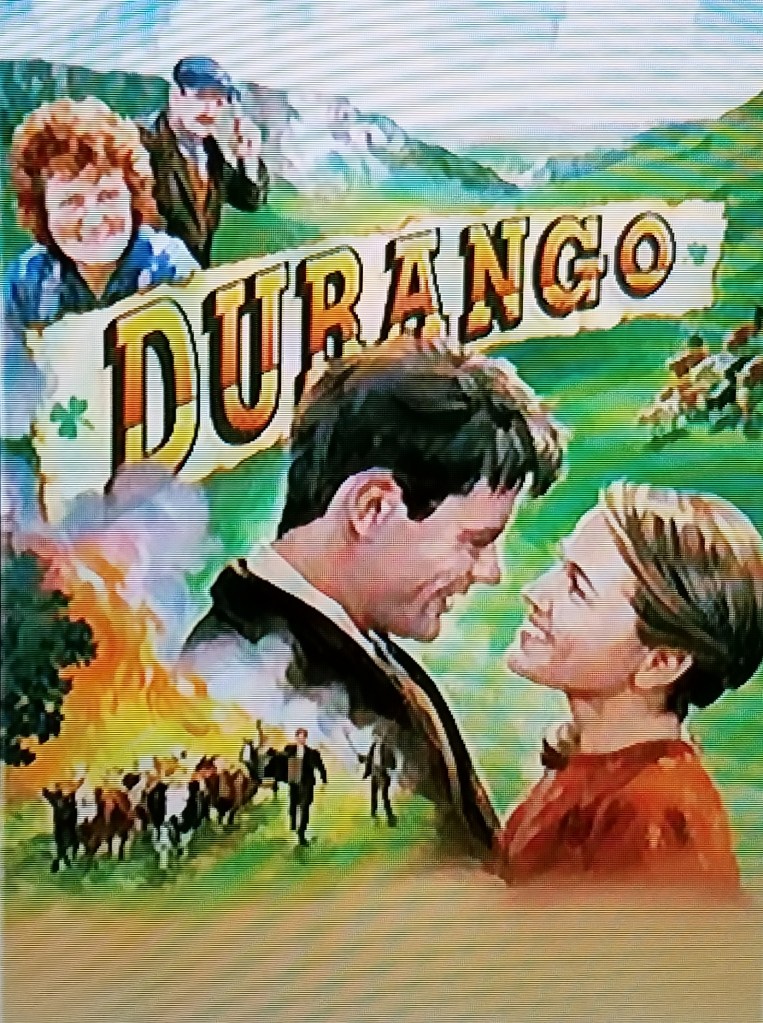
Since an image of The Love Letter‘s poster was featured on my television, I took a screenshot of it with my phone. Screenshot taken by me, Sally Silverscreen.

Things I liked about the film:

The acting: Because The Love Letter heavily relies on the performances of its lead actor and actress, this part of the review will focus on Campbell Scott’s and Jennifer Jason Leigh’s portrayal of Scott Corrigan and Elizabeth Whitcomb. With Campbell’s performance, there was always a sense of focus in his character. This focus could be seen in Scott’s eyes. When he was inspecting the desk at the antique store or restoring that same desk, Scott’s focus showed how much he cared. This was a consistent part of the character and helped whenever he wrote to Elizabeth. In historical fiction/period films, it would be easy for the screenwriter to give their lead female character one distinct type of personality. Elizabeth Whitcomb, on the other hand, held a balance of two that brought something unique to the character. She had a youthful radiance about her, being a “romantic dreamer” at heart. However, Elizabeth carried herself with a graceful maturity that prevented her from becoming childish or immature. Jennifer brought both aspects to Elizabeth equally and beautifully, allowing her character to be multi-dimensional.

The historical accuracy: I am not an expert on the 1860s and its historical significance. But based on what I do know about this particular period in time, Elizabeth’s part of the story looked and felt historically accurate! The Whitcomb family home was furnished with pieces that appeared antique, from the couch in the sitting room to the desk Elizabeth and Scott share. Dark wood held these structures together, with green cushions and intricate carvings finishing the couch and desk. The costumes were very detailed and also reflective of the 1860s. Embroidery on Elizabeth’s jacket and the overall design of her lacy parasol serve as two examples. Even the dialogue spoken by the characters sounded like it came directly from an era gone by. Pieces of the story like the ones I mentioned tell me, as an audience member, the creative team behind this film cared about the presentation of this part of their project!

A fantastical element: Most of the stories from the Hallmark Hall of Fame collection are grounded in reality, which means that fantastical elements are rarely found in these scripts. With The Love Letter, the story revolves around two people from different time periods who communicate to each other through letter writing. The idea of time manipulation is a concept that would likely be found in either a fantasy or science fiction film. While stories like Somewhere in Time and Portrait of Jennie have been dramas paired with this specific concept, I don’t recall Hallmark Hall of Fame creating their own film like that before or after 1998. Because The Love Letter’s creative team chose to include a fantastical element into their overall project, it gave the movie an opportunity to stand out from other titles. This was a creative risk that worked in the film’s favor!

The Valentine’s Day Period Drama Blog Party banner created by Heidi from Along the Brandywine.

What I didn’t like about the film:

Scott being engaged: A trope that has appeared in several Hallmark films is the male or female protagonist being engaged at the beginning of the story, only to fall in love with someone else by the end of that story. This trope has found its way into The Love Letter. For most of the movie, Scott is engaged to a woman named Debra. As he finds himself falling in love with Elizabeth, he strings Debra along and keeps the letter writing a secret. Scott does tell Debra the truth about his feelings, but this doesn’t happen until the movie is almost over. Personally, I think this trope is pointless, as the audience is spending time with a relationship that will end up leading nowhere. Scott should have remained single so the script could give its undivided attention to his and Elizabeth’s exchanges.

A rushed explanation: When fantastical or science fiction elements are included in a script, it helps to provide clear explanations to the audience so they can understand what is happening on screen. In The Love Letter, Scott’s mother tells Scott that an imbalance in the time-space continuum is the reason why he and Elizabeth are able to write to one another. However, this explanation was rushed, with Scott’s mother briefly bringing it up on only two occasions throughout the whole movie. She gives Scott stamps from the 1860s and had a special kind of writing ink made for him. Scott’s mother even found a post office that has existed since the Civil War era. These objects and the post office felt more like they conveniently benefited the plot instead of serving as ‘macguffins’ to move the story forward. As I already mentioned, this kind of story is rarely found in the Hallmark Hall of Fame collection. Despite this, a little more time should have been devoted to providing a clearer explanation.

Lack of physical interactions between Scott and Elizabeth: Because Scott and Elizabeth are from different time periods, it is not possible for them to physically interact with one another. Even though this is the nature of the story, it prevented the audience from seeing the on-screen chemistry between Campbell Scott and Jennifer Jason Leigh. One of the staples of a romance film is the on-screen chemistry between the lead actor and actress. Since that element was missing from The Love Letter, I was only invested in Scott and Elizabeth’s relationship to a certain extent. While their words were romantic, verbal communication only plays a part among any given couple.

Hand-written letter image created by Veraholera at freepik.com. <a href=”https://www.freepik.com/free-photos-vectors/background”>Background vector created by Veraholera – Freepik.com</a>. <a href=’https://www.freepik.com/free-vector/love-letter-pattern_1292902.htm’>Designed by Freepik</a>. Image found at freepik.com.

My overall impression:

As I said in my review, most Hallmark Hall of Fame stories are grounded in reality. These stories are also on the simple side, with messages and themes that audience members can relate to. Even though The Love Letter has a fantastical element that is rarely found in films from this collection, it has a simpler story that works! Romance through words and thoughts is what carries the overall story, with important advice woven into the script. Forming a relationship with someone you truly love and never giving up on yourself are nice sentiments that can make audience members feel good about what they are watching. The movie also has the ingredients of a good Hallmark Hall of Fame title, like the level of detail when it comes to the film’s historical accuracy. It is true the movie has its flaws. However, the execution of a creative risk like this makes up for The Love Letter’s weaknesses. Films such as this one make me wish Hallmark would be more creative with their stories and think outside the box more. With the ball in their court, I don’t know what their next creative step will be.

Overall score: 8 out of 10

Have you seen The Love Letter? What Hallmark Hall of Fame movies would you like to see me review? Let me know in the comment section!

Have fun at the movies!

Sally Silverscreen
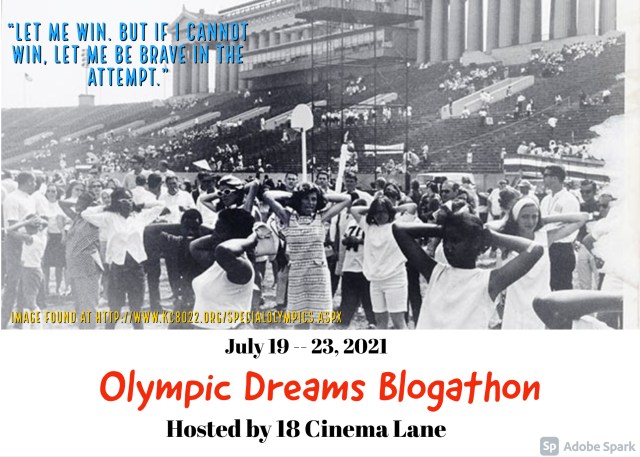
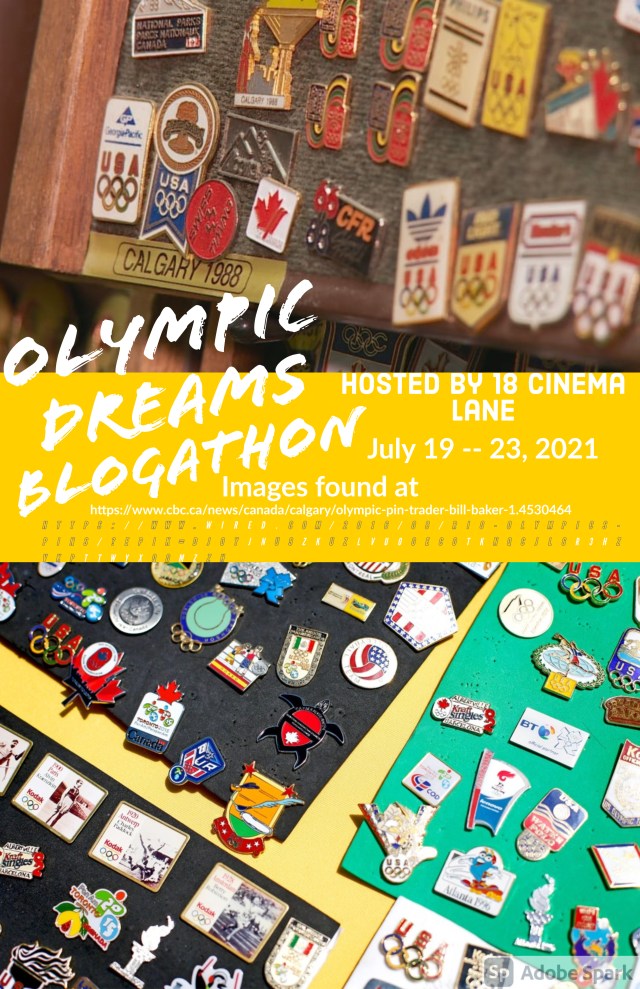
Introducing the Olympic Dreams Blogathon!

The Olympics are an event that many people around the world look forward to. However, the 2020 Summer Games were postponed due to the on-going Coronavirus. As of late January 2021, the Summer Olympics are still taking place. In honor of that, I am hosting an Olympic themed blogathon! Because the Olympics are such a broad topic, I am encouraging you to be creative! Movies, tv shows, books, music, art, etc. involving the following will be eligible for the blogathon:

  • Winter or Summer Games
  • Sports that have been a part of or are still in the Olympics
  • Olympic athletes past and present
  • Special Olympics
  • Paralympics
  • Countries and/or cities where Olympic games have taken place
  • Performers and/or performances from an Olympic opening or closing ceremony
  • Years when an Olympic game has taken place
  • Advertising promotions related to the Olympics

The Official Blogathon Rules

  1. Please be respectful when writing your entries and toward other participants.
  2. If you plan on publishing your post(s) earlier or later than the allotted time-frame (July 19th to the 23rd), please let me know in advance.
  3. Only new posts are allowed for this blogathon.
  4. As I mentioned, the Olympics are a broad topic. Therefore, I am not allowing duplicate entries for the Olympic Dreams Blogathon.
  5. A maximum of three entries are allowed for each participant.
  6. All entries must be original work.
  7. If you’re interested in participating, please share your idea(s) in the comment section below.
  8. Pick one of the five banners and let others know about the Olympic Dreams Blogathon!

The List of Participants

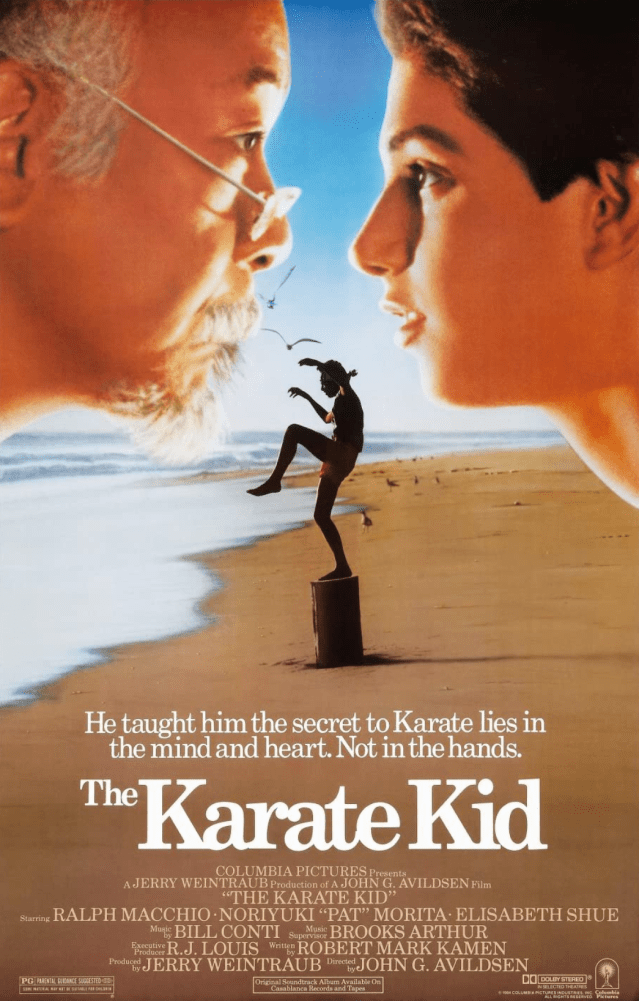
Sally of 18 Cinema Lane — Movie reviews of The Karate Kid and Karate Kid Part II (1984 and 1986)

Gill of Realweegiemidget Reviews — Movie review of Those Glory Glory Days (1983)

J-Dub of Dubsism — Movie review of Personal Best (1982)

Ruth of Silver Screenings — Movie review of Golden Boy (1939)

The Very Special Blog of The Very Special Blog — The Cutting Edge (1992)

Le of Crítica RetrôLaff-a-Lympics (1977/1978)

Movierob of MovieRob — 16 Days of Glory (1986), Blades of Glory (2007), Eddie the Eagle (2016), Prefontaine (1997), Visions of Eight (1973)

Created by me, Sally Silverscreen, on Adobe Spark.

Have fun at the Blogathon!

Sally Silverscreen

Take 3: Taming Andrew Review

When you hear the phrase, “Home Sweet Home”, what comes to mind? Perhaps warm, happy memories spent with family or the feeling of being safe within a chosen, personal environment. Unfortunately, some families don’t get to experience these feelings of safety and happiness. This could be the case for a variety of reasons. Because of that fact, I picked the 2000 movie, Taming Andrew, for Realweegiemidget Reviews’ and Taking Up Room’s Home Sweet Home Blogathon. The second reason why I selected this particular film is because of the subject matter itself. When it comes to cinematic stories that revolve around kidnapping, we mostly get two kinds of films; a movie that primarily focuses on the kidnapping or a movie where the supposed kidnapping victim’s identity is questioned. Taming Andrew is about the aftermath of a kidnapping, when a missing child is found. Since that specific storyline is not often found in film, I wanted to see this story unfold.

Taming Andrew poster created by Hearst Entertainment Productions, Michael Filerman Productions, Lifetime Television, and Starlight Home Entertainment

Things I liked about the film:

The acting: In Taming Andrew, there were some acting performances that stood out to me. The most notable one came from Seth Adkins, whose portrayal of the titular character stole the show! When a story revolves around a young character, casting a young actor or actress who can, talent-wise, carry most of the movie is essential. With Seth’s performance, it contained the emotional weight you would expect from a film of this nature. As Andrew’s mother, Gail, is helping Andrew get ready for bed-time, he refuses to show his mother any amount of affection. Andrew turns away from Gail and irritation can be seen on his face. When Gail turns off the light in Andrew’s room, he immediately screams, as the dark room reminds Andrew of what he experienced during the kidnapping. Another good performance came from Jason Beghe! Portraying Andrew’s stepfather, Eddie, Jason presented his character with a sense of realism. As Eddie and Gail are discussing recent events involving Andrew, Eddie is concerned about the safety of their baby. This scene showcases how Eddie’s acting talents appeared natural. Shannon Lawson portrayed Deena, Gail’s friend and co-worker. What made her performance memorable was how she was able to balance a sassy and serious persona. At the beginning of the film, Gail is sharing her fears about her ex-husband with Deena. Filled with concern in her face and words, Deena tells Gail that she’ll stand by her friend, offering to help Gail if she needed it. Later in the movie, when Gail is leaving her job in order to homeschool her son, Deena jokingly agrees that no one will replace Gail at work. These scenes are a good example of Shannon’s versatility when it comes to her acting talents!

Exploring the aftermath of a kidnapping: As I mentioned in the introduction, Taming Andrew focuses on the aftermath of a kidnapping. This means the story primarily shows what happens after Andrew is found. It was interesting to see the journey of a kidnapping victim overcoming their trauma. Because of Seth’s performance and because the script emphasizes Andrew’s emotional, psychological, and educational struggles, it effectively shows how a horrific situation like Andrew’s can affect a child. I also said the aftermath of a kidnapping is not often found in cinema. Since this is the case, I’m glad Taming Andrew chose this route for their script. It highlights what some individuals and families face, as well as address how one person’s decision can cause a ripple effect.

The inclusion of The National Center for Missing and Exploited Children: In one scene, when Gail and her mother are watching television, they see a news report featuring Gail. This report shows Gail making a speech about her missing son. During the speech, a banner for The National Center for Missing and Exploited Children is briefly shown. Buttons and posters displaying the photos of other missing children can also be seen on the television screen. The inclusion of the banner, buttons, and posters was a subtle, yet effective way of showcasing how big of an issue children’s safety really is. It highlights how abduction can take place at any time for any person as well.

Home Sweet Home Blogathon banner created by Gill from Realweegiemidget Reviews and Rebecca from Taking Up Room.

What I didn’t like about the film:

Andrew’s return is treated as no big deal: Like I just mentioned, Gail was featured on the news making a speech about her missing son. This news report was on a local news station, with the report itself taking place five months after Andrew was kidnapped. When Andrew returns five years later, no news reports are made about him. In fact, the event itself seems to be no big deal for almost anyone outside of Andrew’s family. Because Taming Andrew is based on true events, I, personally, find it hard to believe the aforementioned local news station wouldn’t cover Andrew’s return. Looking back on missing persons stories where the missing person was found alive, those types of stories tend to receive a lot of attention from the news.

A rushed journey: Even though Andrew’s personal journey was interesting to watch, I found it to be, at times, rushed. One example can be seen toward the beginning of Andrew’s journey. At an evaluation meeting, the medical professionals tell Gail that her son might need to be placed in a school for children who benefit from special education. A few moments later, the audience can see Gail taking Andrew to traditional public school. I know there is only so much story you can tell in an hour and twenty-eight minutes. However, it felt like important steps from point A to point B were missing.

The events of the kidnapping revealed at the end of the movie: When a movie’s story is about a kidnapping, the biggest question on almost every audience member’s mind is what happened during the event itself. These stories, more often than not, show or tell what happened as a way to provide the audience with a sense of closure. Taming Andrew does reveal how Andrew became traumatized by the kidnapping. However, this information isn’t presented until the end of the film. I understand those who have faced traumatic situations face their trauma at their own pace. But, as I already said, there is only so much story you can tell in an hour and twenty-eight minutes. With that said, the events surrounding Andrew’s kidnapping should have been revealed sooner.

Sneakers with shoelaces image created by Mrsiraphol at freepik.com. <a href=’https://www.freepik.com/free-photo/fashion-shoes_1123476.htm’>Designed by Mrsiraphol</a>. <a href=”https://www.freepik.com/free-photos-vectors/background”>Background image created by Mrsiraphol – Freepik.com</a>. Image found at freepik.com.

My overall impression:

Whenever I participate in a blogathon, I try to choose a film or topic that brings something different to the table. That is certainly the case for Taming Andrew, as it presents the aftermath of a kidnapping. I’m glad a film like this exists because it sheds light on a subject that doesn’t often get talked about in the world of cinema. But there are flaws that held this movie back from being stronger than it was. Parts of Andrew’s journey were rushed and the events surrounding the kidnapping were revealed at the end of the movie. These issues make me wish the film had been two hours. The part where the news completely ignores Andrew’s return is something I found unbelievable, especially since Taming Andrew is based on true events. What I can say about this movie is how it emphasizes the point I made in my introduction, how some families don’t experience safety and happiness. A missing child or trauma can certainly be just two factors that deny families these things.

 Overall score: 7.2 out of 10

Are you participating in the Home Sweet Home Blogathon? If so, which movie did you choose to write about? Let me know in the comments section!

Have fun at the movies!

Sally Silverscreen

Take 3: The Cabinet of Dr. Caligari Review

January’s theme for MovieRob’s Genre Grandeur is ‘Unreliable Narrator Movies’. I will admit this round of the blogathon wasn’t easy to find movies for, as most of the films that were continuously recommended were those I’d already seen. However, I discovered a movie that I had never even heard of on a list from IMDB. That film is The Cabinet of Dr. Caligari, a title from 1920! Silent movies and those from the ‘20s are not often covered on 18 Cinema Lane. This is due to the availability of the films themselves. Fortunately, I was able to rent The Cabinet of Dr. Caligari, as that is one of the reasons why I selected it for this blogathon. I was also curious to see who the unreliable narrator was. The Cabinet of Dr. Caligari sounded like an intriguing start to Genre Grandeur!

The Cabinet of Dr. Caligari poster created by Decla-Bioscop.

Things I liked about the film:

The acting: As I have said before, acting performances in silent films rely on facial expressions and body language. The actors in The Cabinet of Dr. Caligari utilize these acting techniques, as they represent one way to help the audience understand what is happening in the story. Lil Dagover gave a very expressive performance as a character named Jane! When one of her friends, Francis, tells her his friend, Alan, has died, horror and surprise wash over her face. In another scene, when Francis and Jane’s father are talking about a man named Cesare, fear can be seen in Jane’s eyes. This specific behavior tells the audience Jane is afraid of Cesare. The lead actor, Friedrich Fehér, gave an expressive performance as well! While portraying his character, Francis, Friedrich displayed a variety of emotions. A scene where Francis visits a police station serves as a perfect example, as he fearfully informs the police who is likely causing the murders throughout his neighborhood. For an earlier scene, his overall demeanor was much different, as Francis introduces his story as a joyful man with a positive outlook on life. As the titular character, Dr. Caligari, Werner Krauss gave a performance that comes across as unsettling. With wide eyes and exaggerated expressions, Werner appears excited whenever he’s presenting his sideshow act to his audience. Dr. Caligari’s animated demeanor truly makes up for the lack of dialogue!

The title cards: A common staple in silent films is the use of title cards. This concept is incorporated into The Cabinet of Dr. Caligari to help the audience understand what the characters are trying to say. Not only is this effectively shown, but we can also see other articles that the characters are given. Toward the beginning of the film, Francis and his friend, Alan, receive a flyer for an upcoming fair. In one shot, the text on this flyer is enlarged, revealing an advertisement for the fair itself. When Francis is figuring out Dr. Caligari’s true identity, he looks through books found in the doctor’s office. As he finds more clues, the audience is shown journal entries from Dr. Caligari himself. The inclusion of these articles makes the overall viewing experience more engaging!

The mystery: Throughout the film, Francis is attempting to solve the mystery surrounding a collection of murders in his neighborhood. In his efforts, he recruits the help of the local police and gathers clues. Out of all the silent films I’ve seen before, The Cabinet of Dr. Caligari has a pretty unique concept, as it is a mystery. This stands out from movies of this nature I have previously seen and/or reviewed, as those stories were either comedies, dramas, or horror. I also like how the audience gets to experience the story’s events alongside Francis. Even though pieces of the mystery are revealed as the film goes on, it allows the audience a chance to share an experience with the protagonist.

Carousel image created by Daviles at freepik.com. <a href=”https://www.freepik.com/free-photos-vectors/background”>Background image created by Daviles – Freepik.com</a>. <a href=’https://www.freepik.com/free-photo/carrousel-with-sky-background_954546.htm’>Designed by Freepik</a>. Image found at freepik.com.

What I didn’t like about the film:

The run-time: The Cabinet of Dr. Caligari is a little over an hour. Because of this, there were scenes throughout the movie that feel like “filler”. When the fair comes to town, scenes where people are walking around the fairgrounds for about a minute to two minutes each are shown. These scenes add up to a collection of moments that are there to satisfy the film’s run-time. In my opinion, this movie did not need to be over an hour. If the “filler” scenes had been shortened or removed, The Cabinet of Dr. Caligari could have been a forty- or fifty-minute short film.

An inconsistent use of title cards: While I appreciate the use of title cards in The Cabinet of Dr. Caligari, I feel its inclusion should have been more consistent. There were stretches of time where title cards were not used, watching as characters spoke with no form of dialogue. This caused confusion when certain scenarios happened on-screen. One of them was a flashback involving Dr. Caligari. Since there were no title cards indicating this was a flashback, it was a confusing transition from one scene to the next. Even the plot twist was confusing, as there was no clear indication, through title cards, that it was a separate component to Francis’ story. This made the overall movie less entertaining.

Some of the musical choices: Music plays a significant role in silent films, as it sets the stage for a particular scene’s tone. In The Cabinet of Dr. Caligari, however, there were a few scenes where the musical choices did not fit within a scene. When Francis is first introduced in the movie, as he is talking to a man sitting next to him, it sounded like there were two pieces of music playing at once. It made the scene itself feel jarring. Later in the film, when Francis goes to visit Dr. Caligari at his office, music that sounded more joyful than that scene called for could be heard. The piece of music itself felt out of place in that specific scene.

Magnifying glass image created by Freepik at freepik.com. <a href=’https://www.freepik.com/free-vector/magnifying-glass-with-fingerprint-in-flat-style_2034684.htm’>Designed by Freepik</a>. <a href=”https://www.freepik.com/free-photos-vectors/flat”>Flat vector created by Freepik</a>. Image found at freepik.com.

My overall impression:

The Cabinet of Dr. Caligari is a good example of how far cinema has come. Silent films show us how this particular entertainment medium has evolved over time. Even though I respect the movie for what it brought to the table, the overall project was weaker than it should have been. I found The Cabinet of Dr. Caligari to be more confusing than entertaining. This was caused by some of the musical choices and the inconsistent use of title cards. The limited amount of title cards prevented the reveal of the unreliable narrator from being surprising. Because of the film’s run-time, I felt tired by the length of the story. In fact, there were times where I felt taking a nap. Despite these flaws, I am glad I chose this movie for the blogathon! As I said in the introduction, silent films and those from the ‘20s are not often written about on my blog. Therefore, The Cabinet of Dr. Caligari joins 18 Cinema Lane’s growing list of movie reviews!

Overall score: 6 out of 10

Have you ever a silent film? If so, what was your viewing experience? Please tell me in the comment section!

Have fun at the movies!

Sally Silverscreen
Take 3: Ladies in Lavender Review

This is my first time participating in the Luso World Cinema Blogathon. Because I’m not familiar with the subject of Luso World Cinema, I gave my submission careful consideration. A movie I have wanted to watch for a while is Ladies in Lavender. When I discovered Daniel Brühl was one of the blogathon’s recommended subjects, I decided to review his 2005 film, as he is one of the starring actors in that movie. I haven’t seen many projects from Daniel’s filmography. In fact, the only film of his I’ve seen is Captain America: Civil War. So, this is a good opportunity for me to see what his acting talents have to offer outside of the Marvel Cinematic Universe. The synopsis of Ladies in Lavender reminded me of Swept from the Sea, a movie I reviewed two years ago. Because of this, I will compare and contrast these two films from time to time in this review.

Ladies in Lavender poster created by Tale Partnerships, Scala Productions, and Lakeshore International.

Things I liked about the film:

The acting: For this part of the review, I will take a moment to talk about Daniel Brühl’s performance, as he is the reason why I reviewed this movie. His portrayal of Andrea was enjoyable to watch! It combined both comedic and dramatic elements that helped make Daniel’s performance entertaining. One example is when Andrea is peeling potatoes with Dorcas. What also worked in Daniel’s favor was how he was able to portray his character realistically. Whenever Andrea is trying to make his wishes known to the other characters, you can see him becoming frustrated at times. This was achieved through Daniel’s facial expressions and body language. Despite not being familiar with Natascha McElhone as an actress, I did like her portrayal of Olga. She appeared throughout the film as an approachable character. Natascha also had a good on-screen relationship with Daniel Brühl as well as with the other actors. A perfect example is when Olga is interacting with Andrea in her cottage. Speaking of on-screen relationships, I liked seeing Judi Dench and Maggie Smith work together in this film. While they have similar acting styles, their characters were allowed to have their own distinct personalities. This let them shine individually as well as together! One of their best scenes is when their characters, Janet and Ursula, receive terrible news over the phone. As Janet is telling her sister what happened, Ursula immediately crumbles into tears. This scene showcases how the sisters have an unbreakable bond!

The scenery: Similar to Swept from the Sea, Ladies in Lavender takes place in the English countryside. This particular environment provided photogenic scenery that visually complemented the story! Because Ladies in Lavender is set in a seaside town, there are some scenes that take place around the ocean. It was captured very well on film at various moments, from a morning scene where the rising sun perfectly contrasted the water to a night-time shot of the rolling waves. Country landscapes were also included in the movie! In one scene, Olga is painting a landscape of rolling hills with a nearby tower. The location itself contained beautiful green hills that looked great on a sunny day. The gray of the nearby tower paired surprisingly well with the rolling hills’ green hue. Because of how picturesque this space was, it makes sense that Olga would want to capture it on canvas!

The cinematography: I was pleasantly surprised by the good cinematography found in Ladies in Lavender, especially when it came to scenes involving water! In films where a character is drowning, those scenes are usually presented with a fast pace and quick cuts. When we see Andrea’s flashbacks, they are presented at a slower pace. This allowed the audience to see what is happening on screen as Andrea is shown in the water. One of the most beautifully shot scenes I’ve ever seen is when Andrea is playing a violin on a rocky ledge at night. His dark silhouette perfectly contrasts with the deep blue ocean that looks like it sparkles in the evening. The color scheme of blue, white, and black are prominently featured and is visually appealing!

The Second Luso World Cinema Blogathon banner created by Le from Critica Retro and by Beth from Spellbound by Movies.

What I didn’t like about the film:

An unclear direction: In Swept from the Sea, the overall story is a drama with a romance included. This is a clear creative direction that was consistent throughout the film.  Ladies in Lavender is different, as the story went in many different directions. It gets to the point where it was difficult to determine what the plot was about besides the main premise. Was the story supposed to be about a forbidden romance? Or was it meant to revolve around the strained relationship between two siblings? Maybe it was supposed to partially focus on Andrea’s musical dreams? The story of Ladies in Lavender adopted too many ideas. That decision made the overall film feel like it was bouncing around from place to place.

Telling more than showing: At various moments in Ladies in Lavender, the audience is told how Andrea was washed up ashore. We are even shown flashbacks where he is seen drowning. However, we never get to see the events that caused Andrea to fall overboard. Because of this, the audience is not given a complete picture of what happened. At one point in the story, Janet and Ursula meet Olga. They express how they don’t like this new visitor. But the audience never receives an explanation for why Janet and Ursula do not like Olga. Visuals should have been used to illustrate the sisters’ point. If this had been the case, we might have gotten a better glimpse into Janet and Ursula’s perspective.

The exclusion of Andrea’s perspective: I know this movie is called Ladies in Lavender, with the title referring to Janet and Ursula. But because the overall story primarily focused on Janet and Ursula’s perspective, we don’t see the story from Andrea’s perspective. In Swept from the Sea, the story is narrated by Dr. Kennedy. Despite this, the audience is allowed to see that film’s world from Yanko’s perspective. That aspect of Swept from the Sea also gave the audience an opportunity to truly get to know Yanko as a character. With Ladies in Lavender, I feel like I barely know Andrea. The inclusion of Andrea’s perspective would have easily solved this issue.

Paper Boats in the Sea image created by Freepik at freepik.com. <a href=’https://www.freepik.com/free-vector/background-of-paper-boats-with-hand-drawn-waves_1189898.htm’>Designed by Freepik</a>. <a href=”https://www.freepik.com/free-photos-vectors/background”>Background vector created by Freepik</a>. Image found at freepik.com.

My overall impression:

Ladies in Lavender is a film that I found to be just ok. Yes, there are aspects worth appreciating, such as Daniel Brühl’s performance. As a matter of fact, this movie made me appreciate Daniel’s acting abilities more! But if I had to choose between Ladies in Lavender and Swept from the Sea, I’d choose Swept from the Sea. This is because I find that movie to be stronger among the two. With Ladies in Lavender, the direction of the overall story was unclear. While there was a main conflict, it was difficult to determine what the main plot was. More telling than showing was also one of the movie’s flaws, not giving the audience the full picture when it came to certain areas of the story. I found the lack of Andrea’s perspective to be disappointing as well. This prevented me from truly getting to know Andrea as a character. Even though Ladies in Lavender will not be one of the best movies I saw this year, I am glad I participated in the Luso World Cinema Blogathon. I wonder what I’ll chose to write about next year?

Overall score: 6.3 out of 10

Have you seen Ladies in Lavender? Are there any Luso World Cinema films you’d like to see me review? Share your thoughts in the comment section below!

Have fun at the movies!

Sally Silverscreen

What Readers Can Expect From 18 Cinema Lane in 2021

Another new year comes new goals and new paths! As 18 Cinema Lane embarks on a third year in the world of blogging, there are many more things to accomplish! Some of these things I’d like to share with you. I have created a post of what readers can expect for 2021, similar to articles from years past. The post will also include statistical highlights from 2020. The support I’ve received during this time has served as the fuel that has kept this blog going. To everyone who has left a like or comment, thank you. I also thank visitors and followers who have taken the time to read my content. To this day, it still amazes me how successful 18 Cinema Lane has become in such a short amount of time. Grateful is the word I would use to describe this blogging journey so far!

<a href=”http://<a href=”https://www.freepik.com/vectors/christmas”>Christmas vector created by BiZkettE1 – http://www.freepik.com</a>&#8221; data-type=”URL” data-id=”<a href=”https://www.freepik.com/vectors/christmas”>Christmas vector created by BiZkettE1 – http://www.freepik.com2021 New Year image created by BiZkettE1 at freepik.com.

2020

Total Blog Posts: 169

Total followers: 125

Total Comments: 697

Total Likes: 895

Awards: 8

Participated Blogathons: 52

Total Movie Reviews: 227

Total Word on the Street stories: 16

18 Cinema Lane’s Annual Blogathon

The tradition continues as I host a new blogathon in 2021! What is different about this year’s event is how it will take place during the summer, instead of the fall like the first two blogathons. Because of this, I will announce the event in January.

New Blogathon Folders

As I was resolving a technical blog-related issue, I was told my site’s blogathon folder was too long. To fix this problem, I decided to create a new folder for blogathons I participate in between 2021 to 2023. For the original blogathon folder, I have named it “My Blogathon Folder 2018-2020”. This decision was made to prevent my readers from becoming overwhelmed by blogathon related content, as I have participated in over fifty of these events.

Separate Blog Folders

At the top of 18 Cinema Lane’s home page, there are separate tabs for different content-related areas of the site. This was done to make my blog easier to navigate. Originally, I had a tab called “Sally’s Special Posts”, where readers were led to a section of the site that featured all the editorials, lists, and double features I’ve created, as well as all the awards I’ve won. Now, these categories are split into separate folders. For example, each award I have won will be located in the “Awards” folder.

No set schedules

Last year, I announced I would be publishing posts on Mondays, Wednesdays, Fridays. I thought this would promote structure and consistency on my blog. However, I found this particular schedule to be too restrictive for myself. While I continue to make regular content, it won’t be within a pre-set schedule. This means that posts may be published on any day of the week.

TBR Tin

Occasionally, I talk about books on 18 Cinema Lane. This is to create a sense of variety on my blog. In 2021, I chose a different way to determine which book I would select next. With the John Wayne Hot Chocolate tin I won in a blogathon, I have written titles on slips of paper and placed them in the tin. Every time I read a book, I will randomly pull a slip out of this tin in order to choose the next book I read. From time to time, I might bring up which books I selected. As of January of the new year, my first book is The Musician’s Daughter by Susanne Dunlap!

<a href=”http://<a href=’https://www.freepik.com/vectors/background’>Background vector created by pikisuperstar – http://www.freepik.com</a>&#8221; data-type=”URL” data-id=”<a href=’https://www.freepik.com/vectors/background’>Background vector created by pikisuperstar – http://www.freepik.comColorful 2021 image created by Pikisuperstar at freepik.com.

What are your thoughts on these announcements? Is there anything you’re looking forward to in 2021? Let me know in the comment section!

Have fun in 2021!

Sally Silverscreen

Take 3: The World of Suzie Wong Review

Sunset Blvd. is a “classic” that a majority of film fans have seen at least once in their lives. It is so iconic that the Brannan sisters, from Pure Entertainment Preservation Society, have decided to dedicate a blogathon to it! Because I’ve already seen Sunset Blvd., I choose a film that was new to me. As it is a brand-new year, I wanted the first movie of 2021 to be a fresh step forward. After looking through William Holden’s filmography, I selected the 1960 picture, The World of Suzie Wong! Whenever I think of William, I always think of Joe Gillis from Sunset Blvd. But, as a movie fan, I know that William, acting wise, is more than this iconic role. Therefore, I am grateful to be given this opportunity to explore more of his film work!

The World of Suzie Wong poster created by World Enterprises, Inc.
Worldfilm, Ltd, Paramount British Pictures, Ltd, and Paramount Pictures.

Things I liked about the film:

The acting: Since I’ve only seen Sunset Blvd. and Stalag 17, there’s only so much I can say about William Holden’s acting abilities. What I will say is how William’s performance in The World of Suzie Wong was consistent! From what I remember, William’s characters in Stalag 17 and Sunset Blvd. were serious and had their guard up due to being suspicious of those around them. In The World of Suzie Wong, his character was similar to those from the two previously mentioned movies. However, a major difference was how those characteristics were softened a bit. This was because William’s character, Robert, had a love interest, which is different from his characters in Stalag 17 and Sunset Blvd. I am not familiar with Nancy Kwan as an actress. Despite this, I really liked seeing her performance in this film! It reminded me of the portrayals from actresses in the “Golden Age” of film, where leading ladies not only worked well with other cast members, but were able to, talent wise, stand on their own. While starring as Suzie, Nancy was able to pull off a performance that was captivating, emotional, and memorable! Another performance I enjoyed seeing was Jacqueline Chan’s! As Gwennie Lee, she was able to use her on-screen personality to her advantage. The other female characters in The World of Suzie Wong carried themselves with a sense of sophistication, making themselves seem more mature than they really were. With Gwennie, her personality was joyful, carrying a youthful heart wherever she went. This creative decision helped Jacqueline stand out among the cast!

An educated and aware protagonist: In a story where a protagonist travels to a different country or new place, it can be easy for the screenwriter(s) to create a character that romanticizes a location to the point of being arrogant or clueless about that specific place. With Robert from The World of Suzie Wong, that was certainly not the case! While in Hong Kong, Robert tries to educate himself about his surroundings. When trying to find a hotel, he speaks Chinese to a police officer. Even though he didn’t memorize the question, it shows Robert was willing to go out of his way to learn the language of his temporary home. Robert also seems aware of the people and the customs of Hong Kong. When talking to a business associate, Ben, Robert senses that Ben is attempting to pursue a romantic relationship with Suzie for the wrong reasons. He stands up to Ben and reminds him how Suzie is a person with feelings. Everything I just mentioned effectively drives home a point Suzie made about “a boy cloud with a good heart”.

The use of color: A film’s color palette can help make a scene visually appealing as well as present creative ways to showcase various hues. With that said, I found the use of color in The World of Suzie Wong to be very interesting! At the bar next to Robert’s hotel, all of the female characters wore bright colors. This nicely contrasted the location of the bar itself, a place that didn’t feature a lot of color within the interior design. Color was also used in other ways throughout the movie. One example was the O’Neill family’s home, where a set of red seat cushions provide the only splash of color in their primarily white dining room. Another example is present when Robert tries to find Suzie in the city. Though this scene is brief, the colorful neon lights within this space nicely stand out against the city’s darkness.

Traditional Chinese dragon image created by Freepik at freepik.com. <a href=”https://www.freepik.com/free-photos-vectors/design”>Design vector created by freepik – http://www.freepik.com</a>. Image found at freepik.com.

What I didn’t like about the film:

The concept of “keeping face”: Throughout the film, Suzie and her friends talk about “keeping face”. One night, Gwennie asks Robert if he will enter the bar with her. She tells Robert that if she were to enter the bar by herself, she wouldn’t be able to “keep face”. Later in the film, after Suzie is physically injured by a drunken sailor, she tells Robert to say that he hurt her so she can “keep face”. Because there were no explanations for what “keeping face” was or why it was important, this concept ended up confusing me.

The run-time: The World of Suzie Wong is a little over two hours long. Personally, I don’t think this specific story needed its run-time. In fact, the film could have easily been set at an hour and thirty minutes. This might be achieved by shortening some of the movie’s longer scenes. One of them is when Suzie journeys to an undisclosed location for reasons unknown to Robert. In an attempt to find answers, Robert follows Suzie all the way to this undisclosed location in a scene that lasts about two minutes. When there are multiple scenes that are longer than necessary, they add up to a run-time that doesn’t feel justified.

An inconsistent relationship: While William Holden and Nancy Kwan had good on-screen chemistry, the on-screen relationship of their characters was inconsistent. Throughout the film, Robert and Suzie’s relationship was “on again/off again”. It also doesn’t help that Robert and Suzie don’t officially become a couple until about forty minutes into the movie. I understand that relationships take time to develop and that they contain good and bad moments. However, when a story includes a couple trying to pursue a romantic relationship, the relationship itself needs to be consistent enough for the audience to stay invested in.

The Sunset Blvd. Blogathon banner created by the Brannan sisters from Pure Entertainment Preservation Society.

My overall impression:

The World of Suzie Wong is a film that gets hurt by its run-time. This two-hour story could have been an hour and thirty minutes, with longer scenes cut shorter to move the story along faster. This also would help Robert and Suzie’s relationship officially start a lot sooner. Without spoiling the movie for anyone who hasn’t seen it yet, I will say The World of Suzie Wong is much sadder than I expected. I am aware of everyone experiencing different situations in their lives. However, the sadness in this movie made the story feel like there was a gray cloud hanging over the characters’ heads. There are aspects of this film that I appreciate. One of them is the protagonists sharing an interracial relationship in a time when that idea wasn’t commonly shown in cinema. I also appreciate some of the film’s artistic merit, such as the acting performances and the use of color within various scenes. In the end, though, I found The World of Suzie Wong to be a just ok start to 2021.

Overall score: 6.4 out of 10

Have you seen The World of Suzie Wong? Has a movie ever enticed you to travel to its featured location? Tell me in the comment section!

Have fun at the movies!

Sally Silverscreen
Take 3: Teenage Rebel Review (Ginger Rogers and Fred Astaire Double Feature Part 1)

I haven’t seen many films from Ginger Rogers’ and Fred Astaire’s filmography. Despite this, I joined the third Fred Astaire and Ginger Rogers Blogathon, in the hopes of expanding my cinematic horizons! Because I figured other participants would cover Ginger’s musicals, I chose one of her movies that wasn’t a part of the musical genre. As the title says, I’ll be reviewing Teenage Rebel! The aftermath of a divorce/custody battle is rarely explored in film. This is what made me take notice of this particular title. What I also thought was interesting was how this story discussed the subject of divorce during a time when the concept was not as talked about as it is today. While I have reviewed the 1939 movie, In Name Only, that film revolved around the divorce itself and what led up to it. Now, let us begin part one of my Ginger Rogers and Fred Astaire Double Feature!

Teenage Rebel poster created by 20th Century Fox.

Things I liked about the film:

The acting: Ginger Rogers is an actress from what would be considered the “Golden Era” of Hollywood. This particular period in time is often depicted with a sense of glamour. Because of this, Ginger carried herself in Teenage Rebel with that same sense of glamour I just brought up. Not only that, her emotionality really shined through in her role as Nancy Fallon! Some of her best scenes featured her interacting with Dorothy/Dodie. Both actresses go toe-to-toe with each other, acting-wise, and make their characters feel believable and genuine. Out of context, Dorothy/Dodie could be written off as a spoiled brat. But Betty Lou Keim’s performance, plus the aftermath of the divorce, makes the audience feel bad for Dorothy/Dodie. While Betty’s portrayal is consistent, she is given enough flexibility to add emotion. This highlights the idea that Dorothy/Dodie is simply human, with thoughts and feelings that need to be expressed. Warren Berlinger portrays Dick, one of the Fallon’s next-door neighbors. What I liked about his performance is how animated it is. This animation livened Warren’s portrayal without coming across as over-the-top. Instead, it gave him a wide range of emotions to work with. His conversation with his family about his long distance girlfriend is a perfect example of this.

The use of symbolism: One night, as a literal storm is brewing in the neighborhood, Nancy finds Dorothy/Dodie sitting outside by herself. The wind outside is strong and doesn’t have any plans to calm down. During their conversation, the sound of cracking lightening can be heard in the background. When Dorothy/Dodie and Nancy return to the house, rain starts to fall. These elements represented the personal turmoil taking place between mother and daughter.

The messages and themes: In films where younger characters are the center of the story, there is always a place for meaningful messages and themes. This is certainly the case for Teenage Rebel. One of the notable themes of this movie is having compassion for others. No matter how closed-off Dorothy/Dodie was, Nancy never gave up on her daughter. Even though Nancy does express feelings of frustration and stress, she always tried her best to make Dorothy/Dodie feel welcome and loved. Even Dick and his sister, Jane, show compassion for Dorothy/Dodie. They invite her to teenage functions like dances and a local car race. Because of the time they spend with her, Dorothy/Dodie allows herself to open her heart to others. The reason why Dorothy/Dodie distances herself from people is because she has lost her trust in them due to the divorce. As the story progresses, Dorothy/Dodie changes her life around. In one scene, Nancy gives her daughter a lecture about how she needs to stop living in isolation.  That speech and the overall message of opening your heart comes across in this story as genuine.

The Third Fred Astaire and Ginger Rogers Blogathon banner created by Crystal from In the Good Old Days of Classic Hollywood and Michaela from Love Letters to Old Hollywood.

What I didn’t like about the film:

A very misleading title: This film is called Teenage Rebel. Paired with the quotes on the movie’s poster, the film is advertised as a cautionary tale about teenagers going “over the edge”. However, none of the teens in this story rebel or misbehave. Even when there is a car race, the event itself appears to be well organized and legal. While Dorothy/Dodie has a bad attitude and runs away from home, she does these things to 1.) put on a brave face to protect her true feelings and 2.) find some alone time to get away from the tension between her and her mother. The title and marketing built this movie up to be something it wasn’t.

The character of Larry: Larry Fallon, portrayed by Rusty Swope, is Nancy and Jay’s son. He had some funny lines in this movie, such as when he said “a man” after Dorothy/Dodie asks him what he wants to be when he grows up. However, after a while, Larry kind of overstays his welcome. I don’t fault Rusty for this, as there was only so much he could do for an actor of his age. This specific flaw is the result of the screenwriting. Larry doesn’t have much to do in the overall story. In fact, he has little to no significance within the main plot. Prior to watching Teenage Rebel, I was expecting to see an interesting dynamic between half-siblings who didn’t grow up together. But, in reality, Dorothy/Dodie and Larry only interacted once. Either Rusty needed more material to work with or the character should have been written out of the movie completely.

An abrupt transformation: When Dorothy/Dodie is introduced in the film, she carries herself with a chip on her shoulder. It gets to the point where she and her mother have an emotionally fueled, tension filled conversation. As I mentioned earlier, Dorothy/Dodie’s attitude was caused by an ugly divorce with an even uglier custody battle. After the aforementioned conversation between Dorothy/Dodie and Nancy, Dorothy/Dodie runs away, where Dick finds her and takes her to a local soda shop. When she returns home, she acts nice toward her mother, like their previous conversation never happened. Similar to what I said about Larry, this flaw was the result of the screenwriting. This change in character should have been a consistent progression throughout the film as a whole.

Breaking heart image created by Kjpargeter at freepik.com. <a href=’https://www.freepik.com/free-vector/broken-heart-valentine-background_1041991.htm’>Designed by Freepik</a>. <a href=”https://www.freepik.com/free-photos-vectors/background”>Background vector created by Kjpargeter – Freepik.com</a>. Image found at freepik.com.

My overall impression:

Teenage Rebel is an ok film. However, its dishonest title and poster doesn’t help its case. In a time when teen centered films were on the rise, the studio wanted to capitalize on that. While a significant part of this story focused on a teenage perspective, it was marketed as something different than what it honestly was. Instead of selling the movie as a meaningful drama exploring the aftermath of divorce, they decided to make the film sound like it was about misbehaving youngsters, despite never being found in the story. Even though it seems like the creative team had their hearts in the right place, I was not a fan of how the story was more “slice of life” than I had wanted. I don’t find these types of stories intriguing, but I appreciate Teenage Rebel’s incorporation of its messages and themes. If you want to watch a teen movie with similar ideas, I’d recommend The Boy Who Could Fly. Not only does it emphasize showing compassion to others, but it’s a much stronger film.

Overall score: 6.3 out of 10

Have you seen Ginger Rogers’ movies? Which film about divorce would you recommend? Tell me in the comment section!

Have fun at the movies!

Sally Silverscreen
Take 3: To Grandmother’s House We Go Review

For the last Genre Grandeur of 2020, the theme is ‘Alternative Christmas Movies’. Whenever I think of this term, films where the story doesn’t rely on typical Christmas elements always comes to mind. After watching and reviewing If You Believe, I remembered another ‘90s Christmas movie I hadn’t seen in years: To Grandmother’s House We Go. However, when I thought about this film, it didn’t seem to focus on the Christmas holiday like other titles, such as those found on either of Hallmark’s networks. Sure, both Mary-Kate and Ashley Olsen are wearing Santa hats on the movie’s poster. You can also see Christmas lights behind the Olsen twins in the aforementioned image. But the story itself is not one that is exclusive to the Christmas movie genre. In fact, the idea of siblings running away to another family member’s house can be found in a plot from any time of year. Even the title, To Grandmother’s House We Go, doesn’t contain any Christmas references. Now that this introduction is almost over, I’ll take another trip down memory lane by reviewing this film from 1992!

To Grandmother’s House We Go poster created by Jeff Franklin Productions, Green/Epstein Productions, Lorimar Television, and Warner Bros. Television.

Things I liked about the film:

The acting: The appeal of any Olsen twins production is watching Mary-Kate and Ashley’s characters go on adventures that most of the audience will never experience. Though it has been years since I’ve seen any of their movies, I remember Mary-Kate and Ashley giving their characters a sense of likability, no matter the situation. This is what happened in To Grandmother’s House We Go, as Julie and Sarah were a delight to watch as the story progressed! Despite their young ages, Mary-Kate and Ashley had good comedic delivery. A good example of this is when Julie and Sarah give a street musician chicken drumsticks, using the edible item as a tip instead of money. It should also be noted that Mary-Kate and Ashley’s characters came across as genuine throughout the story. In a scene where they overhear their mother, Rhonda, telling her friend her daughters are a handful, the looks on the twins’ faces display feelings of sadness and betrayal that immediately makes the audience feel bad for Julie and Sarah. It also helped that Mary-Kate and Ashley worked alongside actors who can, acting wise, stand on their own! One of them is Cynthia Geary, who portrays Rhonda. When Julie and Sarah are missing, genuine concern can be seen on Rhonda’s face. Because the twins’ journey lasts the majority of the movie, it allows Cynthia’s performance to contain a good amount of consistency.

The inclusion of western movie scenes: Eddie is a delivery man who frequently visits the convenience store Rhonda works at. When something happens in Eddie’s part of the story, scenes from various western movies are shown to visualize how Eddie views his life. Usually, these scenes mirror what Eddie is doing in the “real world”. An example is when Eddie is taking a short cut to the convenience store, as a scene of Roy Rogers riding off the beaten path is presented while Eddie is driving his truck. The reason why these western scenes were included in the film is because Eddie loves westerns and dreams of owning his own ranch. What I liked about this element is how it provided a unique way to present a character’s perspective that isn’t usually seen in Christmas films. In movies of this nature, dream sequences or flashback scenes are given to a character when the story needs to share their point of view.

The messages and themes: A common component in family-friendly movies is the messages and themes that can be found in the overall story. This is especially the case for productions involving the Olsen twins. In To Grandmother’s House We Go, Julie and Sarah overhear their mother say her daughters are a handful and that she’d like a vacation. This causes the twins to run away to their grandmother’s house, in an attempt to help their mother. When all is said and done, the overarching lesson is how our words can, for better or worse, affect the actions of others. Doing the right thing is a theme that can also be found in To Grandmother’s House We Go. Harvey, one of the bandits in the film, helps his wife, Shirley, steal Christmas presents in order to sell them for money. As Harvey and Shirley spend more time with Julie and Sarah, Harvey starts to wonder what his life would be like if he wasn’t a criminal. While I won’t spoil the movie for anyone, Harvey does take the film’s aforementioned theme to heart.

Christmas Tree with boxes image created by Freepik at freepik.com. <a href=’https://www.freepik.com/free-vector/christmas-tree-out-of-gift-boxes_1448089.htm’>Designed by Freepik</a>. <a href=”https://www.freepik.com/free-photos-vectors/background”>Background vector created by Freepik</a>. Image found at freepik.com

What I didn’t like about the film:

Rhonda and Eddie’s inconsistent relationship: At the beginning of the film, Eddie wants to go on a date with Rhonda. No matter how many times he flirts with Rhonda, she politely declines, as she’s only interested in being his acquaintance. After Eddie finds out Rhonda is a single parent, he gives up pursuing her as a potential significant other. For the rest of the movie, Rhonda and Eddie go back and forth between liking and disliking one another. Their disagreements are resolved rather quickly and they get along for a short amount of time as well. While Cynthia and J. Eddie Peck work well together as actors, the inconsistency of their on-screen relationship prevented me from becoming fully invested in it.

The lottery subplot: Throughout the movie, Eddie is convinced he will win the lottery. He frequently purchases lottery tickets, hoping to win the jackpot so he can afford his dream ranch. This wasn’t a bad subplot, as it effectively connected to the main plot. However, with the majority of the plot revolving around Julie and Sarah’s journey, as well as Rhonda and Eddie’s search for the twins, the lottery subplot felt like it was included to provide an extra conflict. To Grandmother’s House We Go has enough going on to satisfy the run-time, so this specific part of the story didn’t necessarily need to be there.

A drawn-out story: Even though the main plot of To Grandmother’s House We Go is straight forward, there are plenty of twists and turns to keep the plot going. But some parts of the story do cause the overall project to feel drawn-out. In an attempt to raise $10,000 for a kidnapping reward, Rhonda and Eddie plan on selling other people’s Christmas gifts, with the intention of buying those gifts back after the twins have been returned. The entire process of their plan is shown in the movie, lasting for several scenes. This part of Rhonda and Eddie’s subplot could have limited to one or two scenes, as to help tell the story in a shorter amount of time.

Christmas snowman image created by Freepik at freepik.com  <a href=”https://www.freepik.com/free-photos-vectors/christmas-tree”>Christmas tree vector created by Freepik</a> <a href=’https://www.freepik.com/free-vector/set-of-pretty-christmas-tags_1337932.htm’>Designed by Freepik</a> Image created by freepik.com

My overall impression:

Calling To Grandmother’s House We Go an ‘alternative Christmas movie’ is tricky. On the one hand, there are scenes in the movie that rely on typical Christmas elements more than others. One of them is when Julie and Sarah are building a tiny snowman in front of their apartment building. But, as I said in the introduction, the story itself could be found outside of the Christmas season. For the sake of this review, I’ll call this film a “partial alternative Christmas movie”. As for the movie itself, To Grandmother’s House We Go is a fine, harmless, family-friendly title. Similar to what I said about The Strange Monster of Strawberry Cove, the 1992 picture will be more appealing for a younger audience, as the main story revolves around young children going on an adventure. Personally, I have no desire to re-watch it. Despite this, I am glad I was able to revisit the film.

Overall score: 7 out of 10

Do you remember watching any of the Olsen twins’ movies? If so, which one was your favorite? Let me know in the comment section below!

Have fun on Christmas!

Sally Silverscreen
Take 3: If You Believe Review

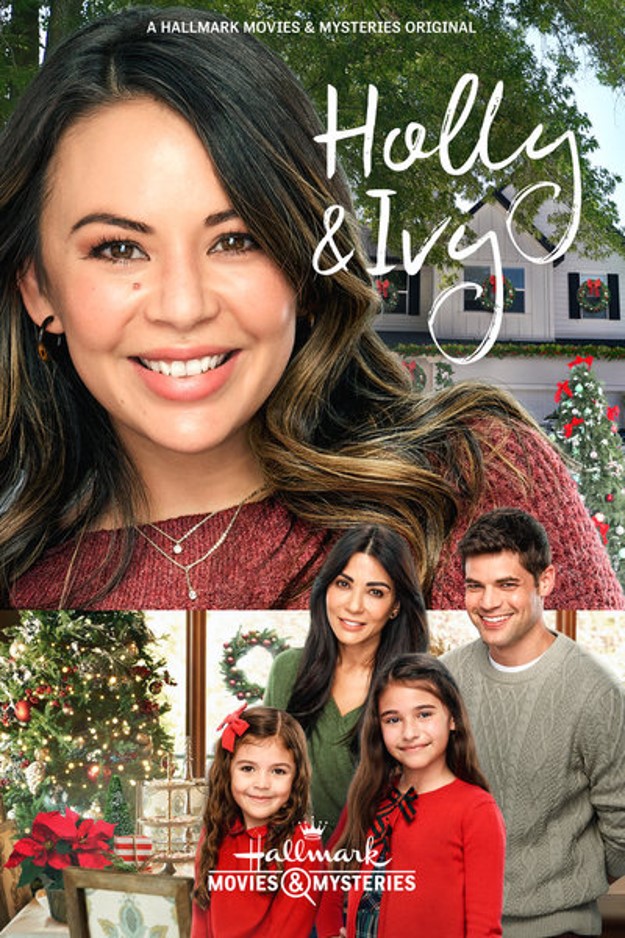
For last year’s Happy Holidays Blogathon, I reviewed the 2014 Hallmark Channel movie, The Nine Lives of Christmas. Even though it was my first time seeing the film, I found myself understanding why it has become so popular among Hallmark fans! Originally, I wanted to write about the 1999 film, If You Believe, and the 2020 Hallmark Movies & Mysteries film, Holly and Ivy. But because I wasn’t able to watch Holly and Ivy this week, due to a schedule that was busier than usual, I decided to stick with the one review of If You Believe. This is a film I have seen before, one I remember enjoying. However, it has been over twenty years since I last saw it. As Up Network was airing If You Believe one day, it was a perfect opportunity to take a trip down memory lane! From what I remember, this movie had a pretty unique concept for a Christmas story. In this film, the protagonist’s inner child comes into her present world to help her grow during the Christmas season.

Screenshot of If You Believe‘s poster taken by me, Sally Silverscreen.

Things I liked about the film:

The acting: When you have a story that revolves around a young character, that specific role needs to be given to a young actor or actress who has the right amount of talent to carry that film. Even though Hayden Panettiere is the main supporting actress, she single-handedly steals the show! While portraying a younger version of the protagonist, she had so much charisma for an actress so young. The versatility found in Hayden’s performance also added enjoyment to her portrayal of Suzie. Some of the best scenes in If You Believe show Suzie interacting with the film’s protagonist, Susan. This is because both Hayden and Ally Walker had good on-screen chemistry and worked well together. Speaking of Ally Walker, I liked seeing her performance as the protagonist! She brought a wide range of emotions to her role, allowing her character to feel like a realistic individual. This was shown in a scene where Susan and her brother are having a disagreement. Throughout the conversation, frustration and anger could be seen on her face. When her brother says he doesn’t want to see her anymore, Susan immediately starts tearing up.

The cinematography: I was pleasantly surprised to find some creative cinematography in If You Believe! A perfect example is when Susan and a writer named Tom have lunch at a local restaurant. As they discuss Tom’s book, the camera zooms in on Susan’s and Tom’s meal at various moments. This was meant to show how much time was passing during their interaction. Another good use of cinematography can be seen toward the beginning of the film. When Susan is leaving her office for the day, there is a shot of her walking in the hallway. This location is lit with a row of fluorescent lights from the ceiling. As this scene plays out, these lights provide a good contrast to Susan’s dark colored outfit.

The messages and themes: If You Believe is a movie that relies more on the messages and themes of Christmas than the aesthetics of the holiday. Even though these messages and themes could be found in films outside of the Christmas season, the script provides a solid argument for why they should be included in a Christmas movie. One of the biggest themes of If You Believe is believing in yourself. What starts Susan’s journey of personal growth is when she tries to dissuade her niece, Alice, from believing in Santa. This is because she stopped believing in things such as dreams and the magic of the season because of those around her putting her down. As the story continues, the audience see Susan regain her confidence and start believing in herself again, with some encouragement from Suzie. A perfect example is when Suzie coaxes Susan to read a manuscript called “Phooey” in order to find the next bestselling novel for her publishing firm, instead of avoiding another new author to help.

The 2nd Happy Holidays Blogathon banner created by the Brannan sisters from Pure Entertainment Preservation Society.

What I didn’t like about the film:

A drawn out first half: I found the first half of If You Believe to be drawn out. A few scenes lasted longer than they needed to, which caused this problem to occur. Suzie wants to go out on the town, as a way to help Susan move out of her comfort zone. Susan objects this idea, arguing with Suzie during their entire conversation. While this is an important moment in Susan’s journey, I feel the scene could have been shortened by a few seconds. This way, the point could have been reached sooner.

Telling instead of showing: At several moments in the film, Suzie recalls memories from Susan’s past where she was confident and stood up for herself. She shares these memories in various conversations with Susan, but the audience never gets to see them. I know there’s only so much content that can be shared in two hours. However, there should have been at least one or two flashbacks scenes. That decision would have helped illustrate the points Suzie was trying to make.

Glossing over mental illness: In If You Believe, Susan has a writer friend who happens to have a mental illness. When she suggested her friend take medication, he said his medicine ruined his creativity. This friend doesn’t receive much screen-time and his issues are resolved rather quickly. While I’m glad to see Susan’s friend receive the care and attention he needed, the subject of mental illness was glossed over in this story. Even though this was not one of the main topics of the film, it would have been nice if mental illness were given a little more focus in the script.

Group of Christmas figures image created by Pikisuperstar at freepik.com. <a href=”https://www.freepik.com/free-photos-vectors/christmas”>Christmas vector created by Pikisuperstar – Freepik.com</a>. <a href=’https://www.freepik.com/free-vector/hand-drawn-cute-christmas-character_3188970.htm’>Designed by Pikisuperstar</a>. Image found at freepik.com.

My overall impression:

As I mentioned in the introduction, If You Believe is a film that was released in 1999. Despite this, the film still holds up! Even though there are some flaws in this production, the creative team behind the film did a good job at expressing their intended point to the audience. Like I said in my review, one of the messages of this story is believing in yourself. What Susan’s journey tells us is if we believe in ourselves, then we’ll have enough confidence to believe in others. If we believe in others, we are able to believe in the magic of the season. While If You Believe is a more unconventional Christmas project, it’s one that is definitely worth the two hours! If you are able to find this film, please take the time to watch it.

Overall score: 8.3 out of 10

Have you seen If You Believe? Which ‘90s Christmas movie do you like watching? Please tell me in the comment section!

Have fun at the movies!

Sally Silverscreen