To celebrate the anniversary of 18 Cinema Lane’s beginning, I host a movie awards to highlight the best films I saw in the previous year. As I had several projects on my plate in February, the Gold Sally Awards were pushed back. However, the Gold Sally Awards are still happening, starting with the Best Movie category! In this division, all of the films that were featured on my Top 10 Best Movies I Saw in 2020 list will compete for the title of Gold Sally Awards’ Best Movie. Like in years past, you are allowed to vote for more than one nominee. But you can only vote once per person. This poll starts today and ends on March 14th. On the bottom of the poll, there is a link where you can submit your vote. If you’re having technical difficulties, please don’t hesitate to speak up in the comment section.
I usually don’t show this anniversary image on my blog. However, I thought it would make sense for the start of this year’s Gold Sally Awards! WordPress Anniversary image created by WordPress.
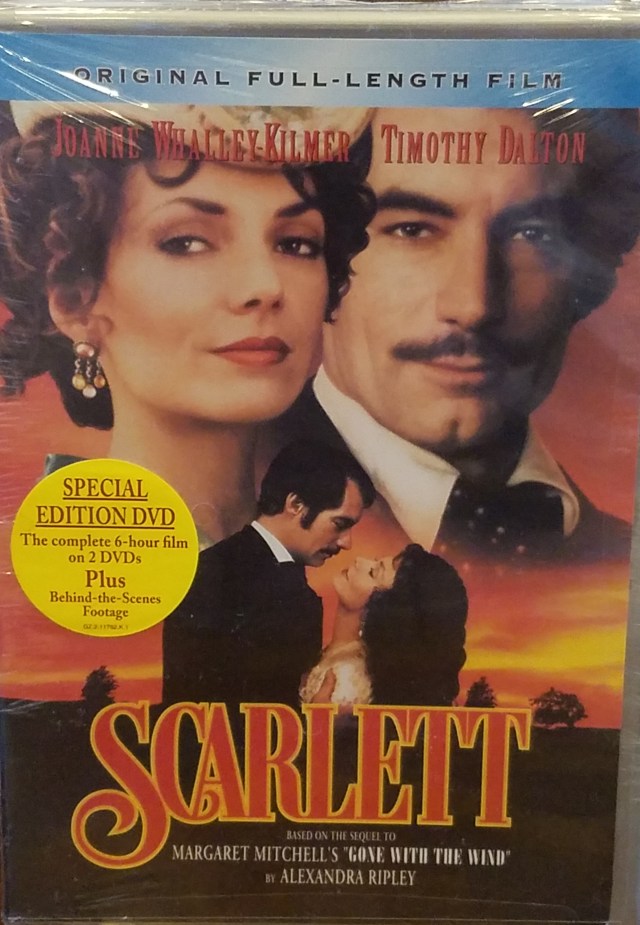
Originally, I was going to review a different movie for the 3rd Annual So Bad It’s Good Blogathon. But when I found a DVD copy of Scarlett at a local consignment store, I couldn’t pass up an opportunity to review the film! Last year, I discovered Gone with the Wind received a sequel many years after its release. While I’m not a fan of the sequel’s predecessor, I thought the 1994 film would be perfect content for the aforementioned event. According to IMDB, Scarlett premiered as a TV mini-series. This gives the sequel a run-time of six hours, which is even longer than the first movie. I never thought Gone with the Wind needed another chapter, as everything ended on a definitive note. However, curiosity got the best of me, as I wanted to find out if this could finally be the “so bad it’s good” movie I’ve been looking for!
This is the DVD I purchased from a local consignment store. Even the packaging calls Scarlett a six hour film. Screenshot taken by me, Sally Silverscreen.
Things I liked about the film:
The acting: While I like the acting overall, there were three performances that were stand-outs. The first one came from Sean Bean. I haven’t seen much from his filmography, but I remember his portrayal of Ian Howe from National Treasure. Based on these two movies, it seems Sean is very talented when it comes to portraying on-screen villains! Without spoiling the film, I will say Lord Richard Fenton is a despicable individual. However, it was interesting to see how Sean carried his character in each scene he appeared in. Whenever in public or around Scarlett, Richard comes across as a dashing gentleman. But behind closed doors, he reveals himself to be selfish and controlling, which makes Richard’s overall persona very ugly. In all my years of watching movies, I’ve seen few actors effectively portray characters that had likable and unlikable qualities. Within the film, Scarlett, Sean single-handedly accomplished this; making the audience despise Richard, but appreciate Sean’s acting abilities! The second stand-out performance was Annabeth Gish’s! In historical fiction/period stories, few female characters from a wealthier background contain a personality that is gentler in nature. With the way Annabeth approached her character, Anne, she brought something to the table that isn’t seen often. This not only provided a contrast to Scarlett, but allowed Anne to be her own character. Anne’s gentleness came across on screen very naturally as well! Tina Kellegher’s portrayal of Mary Boyle is the third stand-out performance! A strong sense of emotionality worked in Tina’s favor. This component to her performance presented her character as a believable individual, as if Mary had actually existed at some point in time. Miss Boyle experiences some difficult situations throughout the movie. However, Tina pulled off a performance that appeared flawless!
The costumes: In period films, one of the notable aspects is the costumes. They are one example of a physical representation of the story’s respective time period. The costumes in Scarlett not only looked historically accurate, but also impressive! It also helps how the costumes compliment the actors wearing them. Scarlett’s wardrobe was amazing! It featured a color palette that never appeared over-the-top. Each piece featured patterns and textures that felt fitting for the 1870s, with color combinations working well together. I honestly can’t choose a favorite outfit, as it was fun to discover what outfit Scarlet would wear next! While I realistically don’t have any place to wear one of Scarlett’s outfits, it’s nice to think about which piece I’d like to own in real-life.
The conflict between the British and Irish: Within the overall story, there was an ongoing conflict between the British and Irish. According to the Irish characters, this was due to the British wanting to take over Ireland. I’m not familiar with this particular period in world history. Despite that, I found this part of the story to be fascinating! Because of Scarlett’s Irish heritage and the fact she had family living in Ireland, it gave Scarlett a reason to be aware of the political and social environment around her. Her interactions with Richard also highlight the different sides of the conflict itself. There were other people in this story who were directly connected to this conflict as well. One of Scarlett’s cousin’s, Colum, is a priest. However, he is also a member of a group of Irish people fighting for freedom against the British. It was interesting to see how Colum navigated his own struggles of religious duty and standing up for his people.
Scarlett and Rhett’s on-again/off-again relationship: I am not a fan of Scarlett and Rhett’s relationship. Even when I try to give it a fair chance and watch it with an open mind, I still do not like their relationship in this movie. One of the reasons why is how it was continually on-again/off-again. This was so repetitive, it became tiresome. It was also difficult to determine if Joanne Whalley and Timothy Dalton, the actor and actress who portrayed Scarlett and Rhett, had any on-screen chemistry. Scarlett and Rhett’s relationship problems did not need to be explored, especially after Gone with the Wind’s ending. In fact, seeing Scarlett and Rhett’s on-again/off-again relationship diminishes one of the most famous scenes and quotes in cinematic history, where Rhett says “Frankly, my dear, I don’t give a damn”. In my opinion, this situation took place simply to justify the sequel’s existence.
Unnecessary stories: As I already mentioned in my previous point, Scarlett and Rhett’s on-again/off-again relationship felt like it was taking place simply to justify the sequel’s existence. This wasn’t the only story within the film to make me feel this way. In the first half of Scarlett, Ashley is struggling to keep his business afloat. Scarlett recruits Sam, a former slave of the O’Hara household, to assist Ashley in building more homes, in order to save Ashley’s business. That storyline is one I found myself not caring about. It also didn’t lead anywhere, as it didn’t have a consistent presence in the overall film. Scarlett’s feud with her sister was another story I thought was unnecessary. Throughout the film, they refused to see eye-to-eye about the future of Tara. While Scarlett’s sister was still living in the house, Scarlett was considering selling it. I thought it was odd for Scarlett to think about selling Tara. In the first movie, she loved Tara so much, Scarlett slapped a woman in the face for expressing her opinion against the place. For Scarlett to completely change her mind without any explanation seemed random.
Choppy scene transitions: At some points in the movie, there were scene transitions that were so abrupt, it caused the film’s overall flow to feel choppy. When visiting a family member, Scarlett is about to share how she became so wealthy. Right as she was about to tell her story, the next scene started, showing another family member walking toward his house. It seemed like parts of the movie were missing. Some of these scene transitions were so jarring because the change of tone was so drastic. One scene showed Colum speaking with an Irish neighbor about their plans to fight the British. This dramatic and serious moment was met with a light-hearted scene where Scarlett goes to a horse fair. The journey from point A to point B needed a bridge.
I can’t call Scarlett “so bad it’s good”. In fact, I would never consider it a bad movie. Objectively, this is a competently made project, where the creative team behind it clearly knew what they were doing. Subjectively, Scarlett is a mixed bag. The conflict between the British and Irish was the best part of this story! It was fascinating to see it unfold and discover how the characters were involved. With the parts of the story directly referencing Gone with the Wind, I found those to exist simply to justify the sequel. Until Scarlett went to Ireland, I was questioning why the movie was made. Personally, I would rather watch a miniseries about the British and Irish conflict over the one I just did. As I wrap up this review, I realize I still haven’t found my “so bad it’s good” movie. Time to go back to square one.
Overall score: 6.1 out of 10
Do you have a movie in your life that you’d consider “so bad it’s good”? If so, what is it? Let me know in the comment section!
I’m not going to lie; I love a good blog party! So, when I discovered Heidi, from Along the Brandywine, was hosting the Valentine’s Day Period Drama Blog Party, I couldn’t wait to sign up! Period dramas are not regularly covered on 18 Cinema Lane. While I do have a re-cap series for When Calls the Heart, I choose what films to watch based on how interesting their stories sound. There have been period dramas I loved, such as Swept from the Sea. But, for this blogathon, I wanted to review a film I hadn’t seen before. For about a year, I’ve had the Hallmark Hall of Fame movie, The Love Letter, on my DVR. Because parts of the movie take place in the 19th century, I felt it fit Heidi’s time period requirement of the 1600’s to World War II. I try to watch as many Hallmark Hall of Fame titles as I realistically can. Prior to reviewing The Love Letter, the only Hallmark Hall of Fame movie from 1998 I’ve seen is Grace & Glorie, which was one of the best movies I saw last year! While not all movies from this collection are created equally, I do watch these movies with an open mind.
Since an image of The Love Letter‘s poster was featured on my television, I took a screenshot of it with my phone. Screenshot taken by me, Sally Silverscreen.
Things I liked about the film:
The acting: Because The Love Letter heavily relies on the performances of its lead actor and actress, this part of the review will focus on Campbell Scott’s and Jennifer Jason Leigh’s portrayal of Scott Corrigan and Elizabeth Whitcomb. With Campbell’s performance, there was always a sense of focus in his character. This focus could be seen in Scott’s eyes. When he was inspecting the desk at the antique store or restoring that same desk, Scott’s focus showed how much he cared. This was a consistent part of the character and helped whenever he wrote to Elizabeth. In historical fiction/period films, it would be easy for the screenwriter to give their lead female character one distinct type of personality. Elizabeth Whitcomb, on the other hand, held a balance of two that brought something unique to the character. She had a youthful radiance about her, being a “romantic dreamer” at heart. However, Elizabeth carried herself with a graceful maturity that prevented her from becoming childish or immature. Jennifer brought both aspects to Elizabeth equally and beautifully, allowing her character to be multi-dimensional.
The historical accuracy: I am not an expert on the 1860s and its historical significance. But based on what I do know about this particular period in time, Elizabeth’s part of the story looked and felt historically accurate! The Whitcomb family home was furnished with pieces that appeared antique, from the couch in the sitting room to the desk Elizabeth and Scott share. Dark wood held these structures together, with green cushions and intricate carvings finishing the couch and desk. The costumes were very detailed and also reflective of the 1860s. Embroidery on Elizabeth’s jacket and the overall design of her lacy parasol serve as two examples. Even the dialogue spoken by the characters sounded like it came directly from an era gone by. Pieces of the story like the ones I mentioned tell me, as an audience member, the creative team behind this film cared about the presentation of this part of their project!
A fantastical element: Most of the stories from the Hallmark Hall of Fame collection are grounded in reality, which means that fantastical elements are rarely found in these scripts. With The Love Letter, the story revolves around two people from different time periods who communicate to each other through letter writing. The idea of time manipulation is a concept that would likely be found in either a fantasy or science fiction film. While stories like Somewhere in Time and Portrait of Jennie have been dramas paired with this specific concept, I don’t recall Hallmark Hall of Fame creating their own film like that before or after 1998. Because The Love Letter’s creative team chose to include a fantastical element into their overall project, it gave the movie an opportunity to stand out from other titles. This was a creative risk that worked in the film’s favor!
Scott being engaged: A trope that has appeared in several Hallmark films is the male or female protagonist being engaged at the beginning of the story, only to fall in love with someone else by the end of that story. This trope has found its way into The Love Letter. For most of the movie, Scott is engaged to a woman named Debra. As he finds himself falling in love with Elizabeth, he strings Debra along and keeps the letter writing a secret. Scott does tell Debra the truth about his feelings, but this doesn’t happen until the movie is almost over. Personally, I think this trope is pointless, as the audience is spending time with a relationship that will end up leading nowhere. Scott should have remained single so the script could give its undivided attention to his and Elizabeth’s exchanges.
A rushed explanation: When fantastical or science fiction elements are included in a script, it helps to provide clear explanations to the audience so they can understand what is happening on screen. In The Love Letter, Scott’s mother tells Scott that an imbalance in the time-space continuum is the reason why he and Elizabeth are able to write to one another. However, this explanation was rushed, with Scott’s mother briefly bringing it up on only two occasions throughout the whole movie. She gives Scott stamps from the 1860s and had a special kind of writing ink made for him. Scott’s mother even found a post office that has existed since the Civil War era. These objects and the post office felt more like they conveniently benefited the plot instead of serving as ‘macguffins’ to move the story forward. As I already mentioned, this kind of story is rarely found in the Hallmark Hall of Fame collection. Despite this, a little more time should have been devoted to providing a clearer explanation.
Lack of physical interactions between Scott and Elizabeth: Because Scott and Elizabeth are from different time periods, it is not possible for them to physically interact with one another. Even though this is the nature of the story, it prevented the audience from seeing the on-screen chemistry between Campbell Scott and Jennifer Jason Leigh. One of the staples of a romance film is the on-screen chemistry between the lead actor and actress. Since that element was missing from The Love Letter, I was only invested in Scott and Elizabeth’s relationship to a certain extent. While their words were romantic, verbal communication only plays a part among any given couple.
As I said in my review, most Hallmark Hall of Fame stories are grounded in reality. These stories are also on the simple side, with messages and themes that audience members can relate to. Even though The Love Letter has a fantastical element that is rarely found in films from this collection, it has a simpler story that works! Romance through words and thoughts is what carries the overall story, with important advice woven into the script. Forming a relationship with someone you truly love and never giving up on yourself are nice sentiments that can make audience members feel good about what they are watching. The movie also has the ingredients of a good Hallmark Hall of Fame title, like the level of detail when it comes to the film’s historical accuracy. It is true the movie has its flaws. However, the execution of a creative risk like this makes up for The Love Letter’s weaknesses. Films such as this one make me wish Hallmark would be more creative with their stories and think outside the box more. With the ball in their court, I don’t know what their next creative step will be.
Overall score: 8 out of 10
Have you seen The Love Letter? What Hallmark Hall of Fame movies would you like to see me review? Let me know in the comment section!
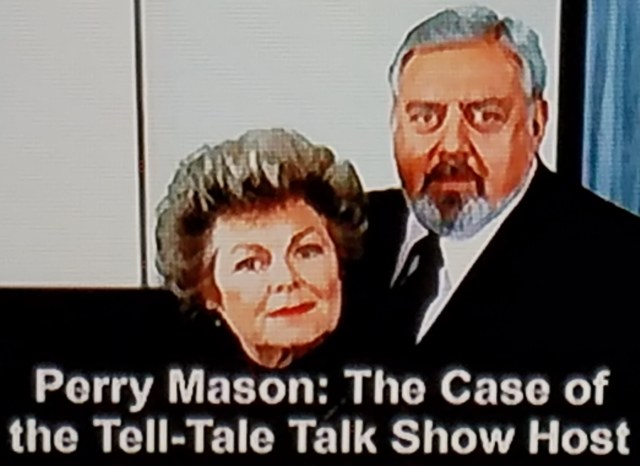
In February, Hallmark Movies & Mysteries will be airing two new mystery films! These movies are Crossword Mysteries: Terminal Descent and Chronicle Mysteries: Helped to Death. While I do plan on reviewing both films, they aren’t scheduled to premiere for another week or two, as their release dates are February 14th and February 21st. Until then, I’ll be talking about Perry Mason: The Case of the Telltale Talk Show Host! I enjoy watching films from this particular series. In fact, this isn’t the first time I’ve reviewed a Perry Mason movie. Last year, I wrote about Perry Mason Returns and Perry Mason: The Case of the Shooting Star, with both films receiving honorable mentions on my list of the best films I saw in 2020. Because I recently saw Perry Mason: The Case of the Telltale Talk Show Host and because I needed to publish my blog follower dedication review, in honor of my blog gaining 290 followers, this was the perfect opportunity to talk about another mystery film!
I wasn’t able to find a picture of this film’s poster, so I took a screenshot of this image from my television. Screenshot taken by me, Sally Silverscreen.
Things I liked about the film:
The acting: As of February 2021, I have seen some of the movies from the Perry Mason series. Based on those films, I’ve noticed how the acting performances have always been a consistent strength. Speaking of consistent, Raymond Burr does a good job bringing his character, Perry Mason, to life! The dry sense of humor and serious demeanor Perry is known for has had a constant presence in every film he has appeared in, including Perry Mason: The Case of the Telltale Talk Show Host. Toward the beginning of the film, Perry is talking on the phone with a colleague. When the conversation was almost finished, Perry responds that he is going to meet the colleague in two hours, when he was planning to wake up. Because the audience only sees Perry’s side of the conversation, they see that he was spending the night working on paperwork instead of sleeping. Perry Mason: The Case of the Telltale Talk Show Host features some real-life talk show hosts in the cast. Two of them are Regis Philbin and Montel Williams, as I’ve seen episodes of their respective shows before. In this film, Regis and Montel portrayed characters that were different from the personalities they have presented on their shows. Regis’ character, Winslow, was an antagonist who was self-centered and mean to those around him. Meanwhile, Montel’s character, Boomer, was only looking out for himself and avoided talking about issues from his past. These characters not only gave Regis and Montel interesting material to work with, but it also gave the audience something new to see. Like any mystery film, Perry Mason: The Case of the Telltale Talk Show Host provided an opportunity to introduce new characters. Cathy Paxton was one of them. Portrayed by Alex Datcher, Cathy had a spunky personality and the street smarts to help her with undercover police cases! She and Perry’s assistant, Ken Malansky, also worked well together. Out of the movies I’ve seen from the Perry Mason series, it doesn’t seem like Cathy made any appearances outside of this film. It makes me wish she would have joined the main cast of characters, as she fit in with the members of Perry Mason’s law firm so perfectly!
The inclusion of talk shows and their hosts: Like I just mentioned, Perry Mason: The Case of the Telltale Talk Show Host features some real-life talk show hosts in the cast. As their names were presented in the opening credits and based on the title itself, I was expecting the movie to focus on talk shows from television. But as I watched the film, I discovered it was about talk shows on the radio. To me, this was a pleasant surprise! It allowed the audience to see these hosts, like Regis and Montel, in a different media format. I also liked seeing the diverse personalities and shows within one radio station. When the story progresses and as each character is questioned by Perry, the audience can witness how they all bring something different to the table. A unique dynamic was formed because of this creative decision!
The mystery: On 18 Cinema Lane, I’ve mentioned there are mystery movies that adopt a type of story where the audience solves the case alongside the protagonist. The mystery in Perry Mason: The Case of the Telltale Talk Show Host is that kind of story. This case unfolds as the movie progresses, with Perry and his team making discoveries along the way. In that time, the audience learns more about the characters within the overall story. When Perry questions the talk show hosts from the radio station, we learn about their possible motives and even their backstories. It was a good way to incorporate character development. This kind of story worked for Perry Mason: The Case of the Telltale Talk Show Host because it maintained a steady amount of intrigue. My interest in this story also remained from the start to finish.
An overlooked murder: At the beginning of the movie, Sheila, Perry’s newest client, discovers a dead body in her house. She then calls the police and the body is removed from her home at a later time. After this happens, that murder is not referenced again. In fact, it has nothing to do with the main mystery. From a story-telling perspective, these two cases should had been related in some way. It would have prevented that early part of the script from being overlooked.
A glossed over tragedy: In a few moments of the film, Sheila mentions that her daughter died of a drug overdose. Outside of those moments, this detail is never explored to a fuller extent. Similar to the overlooked murder I previously mentioned, the tragedy doesn’t really have anything to do with the main mystery. It would have made more sense if the movie had included a subplot where Sheila helps someone who is struggling with a drug addiction. This would have allowed her to work through her grief and make peace with what happened to her daughter.
The reveal of the guilty party: Whenever I review a mystery movie, I try not to spoil it for anyone, as there could be readers who haven’t seen the film yet. That is the case for Perry Mason: The Case of the Telltale Talk Show Host, as I won’t be revealing the mystery’s outcome. However, I’m going to say that I didn’t like how the guilty party was discovered. This is because it felt out of character for a series like Perry Mason. The best way I can describe it is it’s more like Murder, She Wrote; presenting an outcome that most of the audience would not easily guess. I know that Perry is known for creating theories and connections off-screen. But in the movies I’ve seen so far, the outcome could be figured out by the viewer.
The Perry Mason series is a collection of films I enjoy talking about. Even though I don’t always get the opportunity to bring it up on my blog, I feel it is a series worth seeing. Based on the films I have seen from this collection, Perry Mason: The Case of the Telltale Talk Show Host is one of the stronger films! There are areas of the overall story that could have been elaborated upon or explained better. The murder that takes place at the beginning of the film and the tragedy in Sheila’s life are two examples. However, the movie as a whole was a solid production! It incorporated creative elements that made the story stand out from the other chapters in the series. The film also selected choices that I, personally, haven’t seen in any film before. Having real-life talk show hosts from television portraying talk show hosts on the radio is a perfect example of this. Before I end this review, I want to thank all of my 290 followers! I know this post is published later than expected, as the blog received 290 followers in January. However, I do appreciate your support.
Overall score: 8 out of 10
Do you watch the Perry Mason movies? If so, which one is your favorite? Share your thoughts in the comment section below!
2020 was a year that threw a huge wrench into a lot of movie-goers’ plans. As theaters shut their doors and new releases continuously changed dates, there were movie related content creators that had to either adapt as best they could or completely change their formula. Fortunately for 18 Cinema Lane, the impact of this year’s Coronavirus didn’t change the type of content published on the site. As with the previous two years, I saw more good movies than bad. This is honestly the first year where I had difficulty creating my top ten best movies list because of the quantity of enjoyable films that left a memorable impression on me. Since I published my worst movies of the year list first last year, I’ll post my best movies of the year list first this time around. As usual, I will begin the list with my honorable mentions and then move on to the official top ten list. Now let’s get this list started!
Crossword Mysteries: Abracadaver, Where There’s a Will, Generation Gap, A Beautiful Place to Die: A Martha’s Vineyard Mystery, Sweet Surrender, Picture Perfect Mysteries: Dead Over Diamonds, Riddled with Deceit: A Martha’s Vineyard Mystery, Mystery 101: An Education in Murder, To Kill a Mockingbird, Ruby Herring Mysteries: Prediction Murder, House of the Long Shadows, Up in the Air, The Crow, Mystery Woman: Game Time, Fashionably Yours, Finding Forrester, Cyrano de Bergerac (1990), Expecting a Miracle, Time Share, Little Lord Fauntleroy (1936), The Wife of Monte Cristo, Cry Wolf, Mystery Woman: Mystery Weekend, Perry Mason Returns, Perry Mason and the Notorious Nun, Perry Mason: The Case of the Shooting Star, The Terry Fox Story, Follow Your Heart, House of Wax, Funny Face, and The Christmas Bow
10. Nicholas Nickleby (2002)
Looking back on the four film adaptations of Charles Dickens’ work I’ve reviewed, I realize how lucky I am to come across those I enjoyed. Despite having never read Nicholas Nickleby, this production was both understandable and engaging! With the 2002 version of this story, its balance of joy and despair is a staple of the world-famous author’s I recognize from his other stories like Oliver Twist. As I said in my review of Nicholas Nickleby, it can be easy to forget the beauty this world can offer, especially during a year like 2020. I don’t often come across a movie that is so good, it makes me want to seek out its original source material. For this film, however, I just found an exception!
This is an interesting entry from the Breen Code era. It’s a darker musical that is dark in nature for the sake of providing thought-provoking commentary. Like I said in my review, The Unfinished Dance does a good job exploring what happens when truth disappears from the world. All of the musical numbers in this film have a strong reason for being in the story, as opposed to typical musicals where the numbers feel more spontaneous than planned. Even though dance is emphasized more than the story, the quality of the routines themselves make this film worth a watch! The movie is a hidden gem that I wish more people knew about.
I’m glad I was given an opportunity to re-watch this film, as it was just as enjoyable as when I first saw it! The story moves away from the aesthetic that most Christmas movies adopt. Instead, it relies on the messages and themes associated with the Christmas holiday. This creative decision is a breath of fresh air, bringing a different kind of narrative that isn’t often found during that time of year. If You Believe is a film that does what it sets out to do. It also helps that it has stood the test of time.
This is the kind of Hallmark Hall of Fame movie I wish was made more often, one where unique concepts are explored and celebrated. Instead of following a plot, the story revolves around a debate. The subject matter was not only handled with reverence, but each perspective was shown in a respectful light. I’m not a fan of this film’s ending, but I respect Hallmark’s decision to include it in the script, as it respects the audience’s intelligence. Sweet Nothing in My Ear is a title from this collection that can be used as an introduction to Hallmark Hall of Fame!
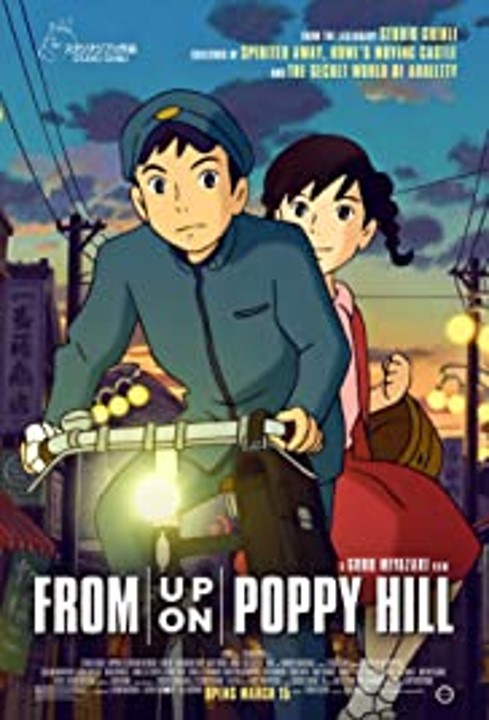
6. From Up on Poppy Hill
Studio Ghibli has a reputation for giving it their all when it comes to making movies. Besides their signature animation style, they also take the time to create fantastic worlds and memorable characters. While From Up on Poppy Hill doesn’t contain any of the magical elements that can sometimes be found in Studio Ghibli’s stories, the project doesn’t feel out of place in their collection. The plot is a simple one, but the inclusion of interesting characters and world-building is what makes it work. It also contains a great message about history that fits into the script very well.
Batman: Mask of the Phantasm is more than just a story about Batman. It’s a chance for audience members to see a side of this superhero that doesn’t often get presented in the world of film. The movie is a good example of how impressive 2-D animation can be. Even though the world has moved on to the wonders of 3-D and computer graphics, there will always be a place for older styles of animation. Despite having seen only a handful of Batman films, I can honestly say Batman: Mask of the Phantasm is one of the better options! The story itself is just as interesting as the world of Gotham City.
Grace & Glorie contains Hallmark’s favorite cliché of featuring a woman from a big city moving to a small town. But what sets this story apart is how that cliché is not the main focus of the film. Instead, the plot revolves around the friendship of Grace and Gloria. Because the titular characters were portrayed by two strong actresses, it made the dynamic between Grace and Gloria interesting to watch. Similar to From Up on Poppy Hill, this Hallmark Hall of Fame title has a simpler plot that works in its favor. Grace & Glorie is a type of story that is rarely seen on Hallmark Channel or Hallmark Movies & Mysteries. The movie is also an underrated gem that I wish more Hallmark fans were aware of.
3. Matinee
With the way the theatrical landscape was affected in 2020, it kind of feels weird that a film like Matinee would appear on a best movies of the year list for 2020. But instead of making me miss the cinema or feel jealous of the characters as they get to see a movie in a theater, this particular 1993 title reminded me of what I love about film. Because I have a special place in my heart for Phantom of the Megaplex, Matinee showed me that there is more than one story that could show people how movies can be fun. One of the messages of this narrative is that film can provide a much-needed break from the troubles of the real world. With the way 2020 turned out, Matinee seemed to come at the right place and time.
Every year, there is that one movie that catches me by surprise because of how good it is. The Boy Who Could Fly was definitely that film in 2020! I was pleasantly surprised by how well the overall story has aged. Given the subject material and the time it was released in, I can certainly say that my expectations were subverted. While The Boy Who Could Fly would be considered a “teen movie”, it doesn’t follow a lot of the patterns that most of these types of stories would contain. The themes of showing compassion for others, dealing with grief, and understanding people’s differences are given center stage.
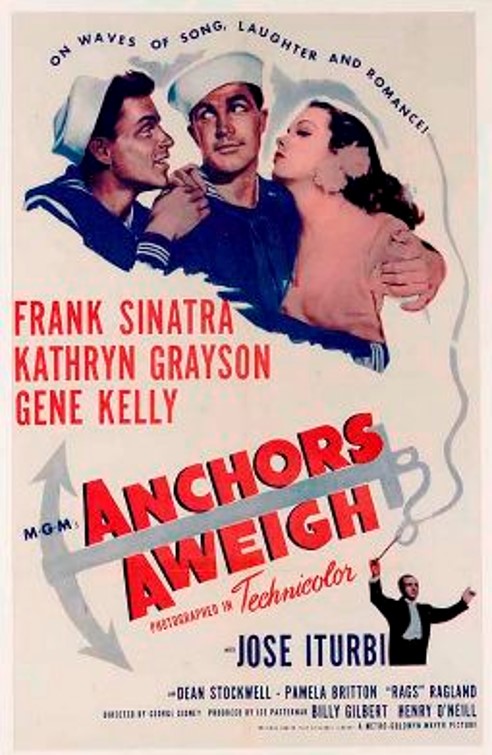
Who knew a Frank Sinatra movie would become the best one I saw in 2020? When I look back on this film, I remember how much fun I had watching it! As I said in my review, I spent most of my time smiling and laughing, which shows how the film’s joyful nature can certainly help anyone improve their mood. Anchors Aweigh is a strong movie on so many different levels. The acting, story, and musical numbers alone showcase how much thought and effort went into the overall production. If I were to introduce someone to the Breen Code era or musicals in general, this is the film I’d show them. Anchors Aweigh was certainly a bright spot in a year like 2020.
For the last Genre Grandeur of 2020, the theme is ‘Alternative Christmas Movies’. Whenever I think of this term, films where the story doesn’t rely on typical Christmas elements always comes to mind. After watching and reviewing If You Believe, I remembered another ‘90s Christmas movie I hadn’t seen in years: To Grandmother’s House We Go. However, when I thought about this film, it didn’t seem to focus on the Christmas holiday like other titles, such as those found on either of Hallmark’s networks. Sure, both Mary-Kate and Ashley Olsen are wearing Santa hats on the movie’s poster. You can also see Christmas lights behind the Olsen twins in the aforementioned image. But the story itself is not one that is exclusive to the Christmas movie genre. In fact, the idea of siblings running away to another family member’s house can be found in a plot from any time of year. Even the title, To Grandmother’s House We Go, doesn’t contain any Christmas references. Now that this introduction is almost over, I’ll take another trip down memory lane by reviewing this film from 1992!
To Grandmother’s House We Go poster created by Jeff Franklin Productions, Green/Epstein Productions, Lorimar Television, and Warner Bros. Television.
Things I liked about the film:
The acting: The appeal of any Olsen twins production is watching Mary-Kate and Ashley’s characters go on adventures that most of the audience will never experience. Though it has been years since I’ve seen any of their movies, I remember Mary-Kate and Ashley giving their characters a sense of likability, no matter the situation. This is what happened in To Grandmother’s House We Go, as Julie and Sarah were a delight to watch as the story progressed! Despite their young ages, Mary-Kate and Ashley had good comedic delivery. A good example of this is when Julie and Sarah give a street musician chicken drumsticks, using the edible item as a tip instead of money. It should also be noted that Mary-Kate and Ashley’s characters came across as genuine throughout the story. In a scene where they overhear their mother, Rhonda, telling her friend her daughters are a handful, the looks on the twins’ faces display feelings of sadness and betrayal that immediately makes the audience feel bad for Julie and Sarah. It also helped that Mary-Kate and Ashley worked alongside actors who can, acting wise, stand on their own! One of them is Cynthia Geary, who portrays Rhonda. When Julie and Sarah are missing, genuine concern can be seen on Rhonda’s face. Because the twins’ journey lasts the majority of the movie, it allows Cynthia’s performance to contain a good amount of consistency.
The inclusion of western movie scenes: Eddie is a delivery man who frequently visits the convenience store Rhonda works at. When something happens in Eddie’s part of the story, scenes from various western movies are shown to visualize how Eddie views his life. Usually, these scenes mirror what Eddie is doing in the “real world”. An example is when Eddie is taking a short cut to the convenience store, as a scene of Roy Rogers riding off the beaten path is presented while Eddie is driving his truck. The reason why these western scenes were included in the film is because Eddie loves westerns and dreams of owning his own ranch. What I liked about this element is how it provided a unique way to present a character’s perspective that isn’t usually seen in Christmas films. In movies of this nature, dream sequences or flashback scenes are given to a character when the story needs to share their point of view.
The messages and themes: A common component in family-friendly movies is the messages and themes that can be found in the overall story. This is especially the case for productions involving the Olsen twins. In To Grandmother’s House We Go, Julie and Sarah overhear their mother say her daughters are a handful and that she’d like a vacation. This causes the twins to run away to their grandmother’s house, in an attempt to help their mother. When all is said and done, the overarching lesson is how our words can, for better or worse, affect the actions of others. Doing the right thing is a theme that can also be found in To Grandmother’s House We Go. Harvey, one of the bandits in the film, helps his wife, Shirley, steal Christmas presents in order to sell them for money. As Harvey and Shirley spend more time with Julie and Sarah, Harvey starts to wonder what his life would be like if he wasn’t a criminal. While I won’t spoil the movie for anyone, Harvey does take the film’s aforementioned theme to heart.
Rhonda and Eddie’s inconsistent relationship: At the beginning of the film, Eddie wants to go on a date with Rhonda. No matter how many times he flirts with Rhonda, she politely declines, as she’s only interested in being his acquaintance. After Eddie finds out Rhonda is a single parent, he gives up pursuing her as a potential significant other. For the rest of the movie, Rhonda and Eddie go back and forth between liking and disliking one another. Their disagreements are resolved rather quickly and they get along for a short amount of time as well. While Cynthia and J. Eddie Peck work well together as actors, the inconsistency of their on-screen relationship prevented me from becoming fully invested in it.
The lottery subplot: Throughout the movie, Eddie is convinced he will win the lottery. He frequently purchases lottery tickets, hoping to win the jackpot so he can afford his dream ranch. This wasn’t a bad subplot, as it effectively connected to the main plot. However, with the majority of the plot revolving around Julie and Sarah’s journey, as well as Rhonda and Eddie’s search for the twins, the lottery subplot felt like it was included to provide an extra conflict. To Grandmother’s House We Go has enough going on to satisfy the run-time, so this specific part of the story didn’t necessarily need to be there.
A drawn-out story: Even though the main plot of To Grandmother’s House We Go is straight forward, there are plenty of twists and turns to keep the plot going. But some parts of the story do cause the overall project to feel drawn-out. In an attempt to raise $10,000 for a kidnapping reward, Rhonda and Eddie plan on selling other people’s Christmas gifts, with the intention of buying those gifts back after the twins have been returned. The entire process of their plan is shown in the movie, lasting for several scenes. This part of Rhonda and Eddie’s subplot could have limited to one or two scenes, as to help tell the story in a shorter amount of time.
Calling To Grandmother’s House We Go an ‘alternative Christmas movie’ is tricky. On the one hand, there are scenes in the movie that rely on typical Christmas elements more than others. One of them is when Julie and Sarah are building a tiny snowman in front of their apartment building. But, as I said in the introduction, the story itself could be found outside of the Christmas season. For the sake of this review, I’ll call this film a “partial alternative Christmas movie”. As for the movie itself, To Grandmother’s House We Go is a fine, harmless, family-friendly title. Similar to what I said about The Strange Monster of Strawberry Cove, the 1992 picture will be more appealing for a younger audience, as the main story revolves around young children going on an adventure. Personally, I have no desire to re-watch it. Despite this, I am glad I was able to revisit the film.
Overall score: 7 out of 10
Do you remember watching any of the Olsen twins’ movies? If so, which one was your favorite? Let me know in the comment section below!
For last year’s Happy Holidays Blogathon, I reviewed the 2014 Hallmark Channel movie, The Nine Lives of Christmas. Even though it was my first time seeing the film, I found myself understanding why it has become so popular among Hallmark fans! Originally, I wanted to write about the 1999 film, If You Believe, and the 2020 Hallmark Movies & Mysteries film, Holly and Ivy. But because I wasn’t able to watch Holly and Ivy this week, due to a schedule that was busier than usual, I decided to stick with the one review of If You Believe. This is a film I have seen before, one I remember enjoying. However, it has been over twenty years since I last saw it. As Up Network was airing If You Believe one day, it was a perfect opportunity to take a trip down memory lane! From what I remember, this movie had a pretty unique concept for a Christmas story. In this film, the protagonist’s inner child comes into her present world to help her grow during the Christmas season.
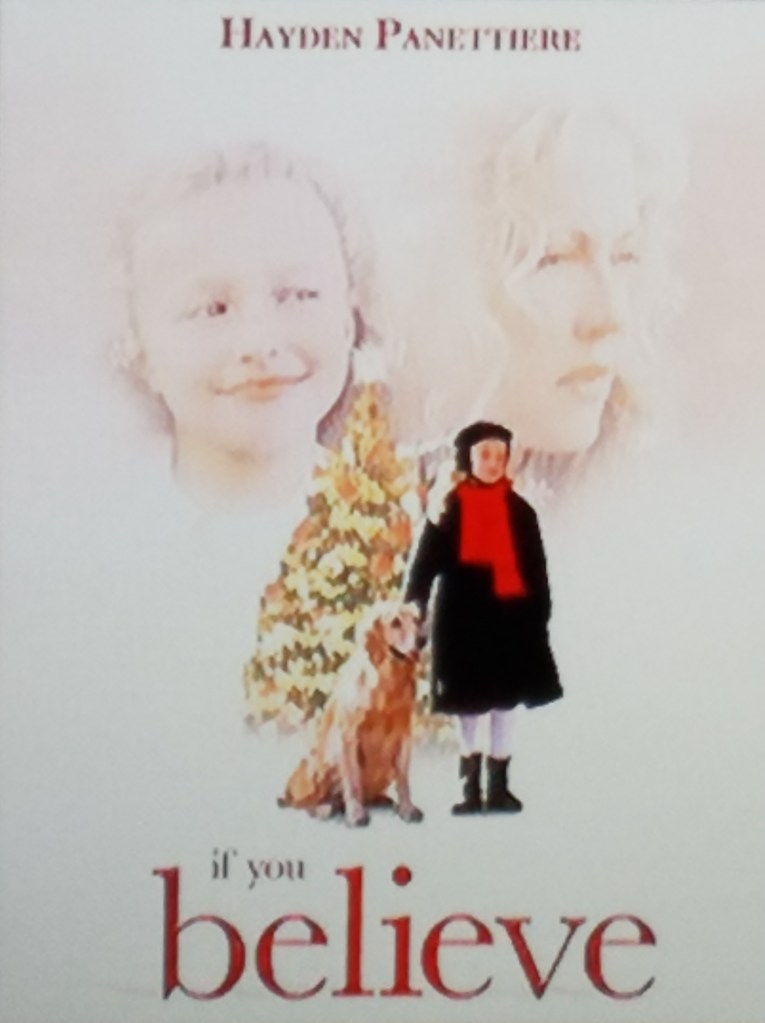
Screenshot of If You Believe‘s poster taken by me, Sally Silverscreen.
Things I liked about the film:
The acting: When you have a story that revolves around a young character, that specific role needs to be given to a young actor or actress who has the right amount of talent to carry that film. Even though Hayden Panettiere is the main supporting actress, she single-handedly steals the show! While portraying a younger version of the protagonist, she had so much charisma for an actress so young. The versatility found in Hayden’s performance also added enjoyment to her portrayal of Suzie. Some of the best scenes in If You Believe show Suzie interacting with the film’s protagonist, Susan. This is because both Hayden and Ally Walker had good on-screen chemistry and worked well together. Speaking of Ally Walker, I liked seeing her performance as the protagonist! She brought a wide range of emotions to her role, allowing her character to feel like a realistic individual. This was shown in a scene where Susan and her brother are having a disagreement. Throughout the conversation, frustration and anger could be seen on her face. When her brother says he doesn’t want to see her anymore, Susan immediately starts tearing up.
The cinematography: I was pleasantly surprised to find some creative cinematography in If You Believe! A perfect example is when Susan and a writer named Tom have lunch at a local restaurant. As they discuss Tom’s book, the camera zooms in on Susan’s and Tom’s meal at various moments. This was meant to show how much time was passing during their interaction. Another good use of cinematography can be seen toward the beginning of the film. When Susan is leaving her office for the day, there is a shot of her walking in the hallway. This location is lit with a row of fluorescent lights from the ceiling. As this scene plays out, these lights provide a good contrast to Susan’s dark colored outfit.
The messages and themes: If You Believe is a movie that relies more on the messages and themes of Christmas than the aesthetics of the holiday. Even though these messages and themes could be found in films outside of the Christmas season, the script provides a solid argument for why they should be included in a Christmas movie. One of the biggest themes of If You Believe is believing in yourself. What starts Susan’s journey of personal growth is when she tries to dissuade her niece, Alice, from believing in Santa. This is because she stopped believing in things such as dreams and the magic of the season because of those around her putting her down. As the story continues, the audience sees Susan regain her confidence and start believing in herself again, with some encouragement from Suzie. A perfect example is when Suzie coaxes Susan to read a manuscript called “Phooey” in order to find the next bestselling novel for her publishing firm, instead of avoiding another new author to help.
A drawn out first half: I found the first half of If You Believe to be drawn out. A few scenes lasted longer than they needed to, which caused this problem to occur. Suzie wants to go out on the town, as a way to help Susan move out of her comfort zone. Susan objects this idea, arguing with Suzie during their entire conversation. While this is an important moment in Susan’s journey, I feel the scene could have been shortened by a few seconds. This way, the point could have been reached sooner.
Telling instead of showing: At several moments in the film, Suzie recalls memories from Susan’s past where she was confident and stood up for herself. She shares these memories in various conversations with Susan, but the audience never gets to see them. I know there’s only so much content that can be shared in two hours. However, there should have been at least one or two flashback scenes. That decision would have helped illustrate the points Suzie was trying to make.
Glossing over mental illness: In If You Believe, Susan has a writer friend who happens to have a mental illness. When she suggested her friend take medication, he said his medicine ruined his creativity. This friend doesn’t receive much screen-time and his issues are resolved rather quickly. While I’m glad to see Susan’s friend receive the care and attention he needed, the subject of mental illness was glossed over in this story. Even though this was not one of the main topics of the film, it would have been nice if mental illness were given a little more focus in the script.
As I mentioned in the introduction, If You Believe is a film that was released in 1999. Despite this, the film still holds up! Even though there are some flaws in this production, the creative team behind the film did a good job at expressing their intended point to the audience. Like I said in my review, one of the messages of this story is believing in yourself. What Susan’s journey tells us is if we believe in ourselves, then we’ll have enough confidence to believe in others. If we believe in others, we are able to believe in the magic of the season. While If You Believe is a more unconventional Christmas project, it’s one that is definitely worth the two hours! If you are able to find this film, please take the time to watch it.
Overall score: 8.3 out of 10
Have you seen If You Believe? Which ‘90s Christmas movie do you like watching? Please tell me in the comment section!
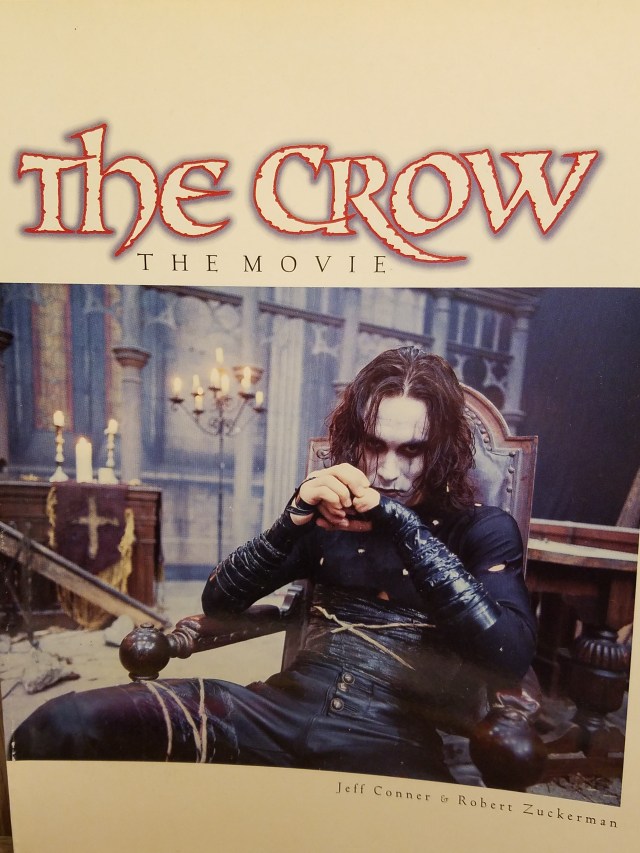
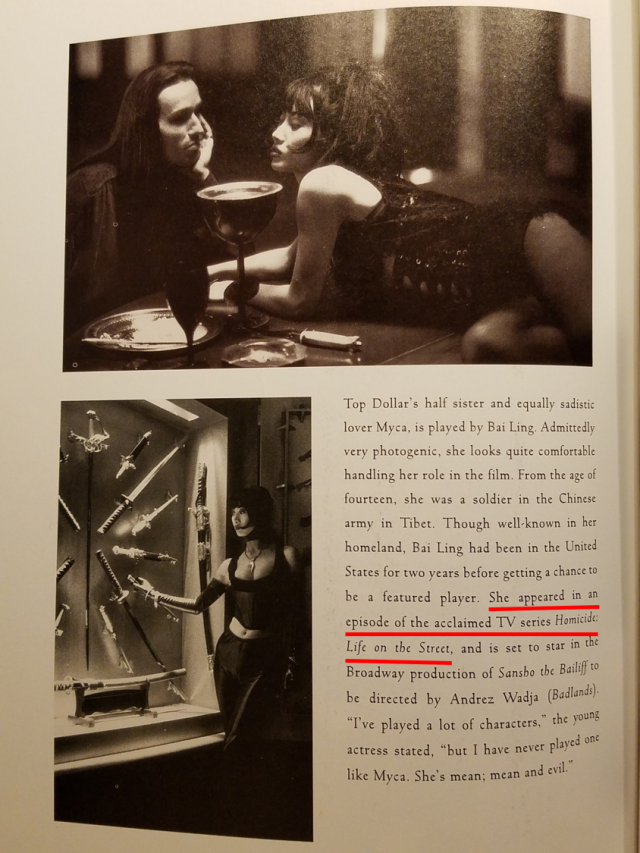
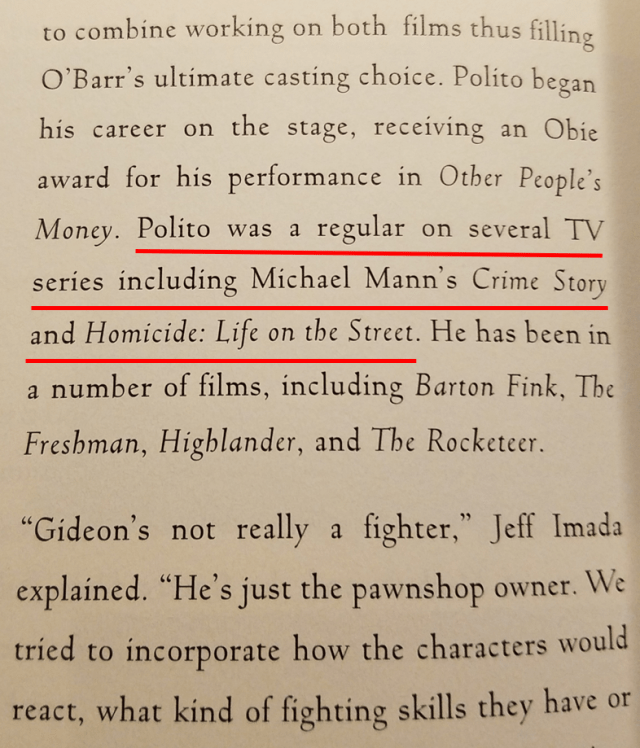
Recently, I purchased The Crow: The Movie, a book that explores the production of the 1994 film. While reading that book, I learned that Bai Ling, who portrayed Myca in the movie, guest-starred on an episode of Homicide: Life on the Street. The Crow: The Movie also revealed that Jon Polito, who portrayed Gideon, was a regular on the aforementioned television show. As of November 2020, I haven’t seen much from either actor’s filmography. Until a few days ago, I didn’t even know this show existed. Fortunately, I was able to find Bai and Jon’s episode online, which is one of the reasons why I’m reviewing it. Like my other television episode reviews, I will write about what I liked about the episode, what I didn’t like about the episode, the story itself, the other factors from the episode, and my overall thoughts. But similar to my episode review of Touched by an Angel, I won’t be sharing my thoughts on Homicide: Life on the Street as a series, as I’m only focusing on one episode.
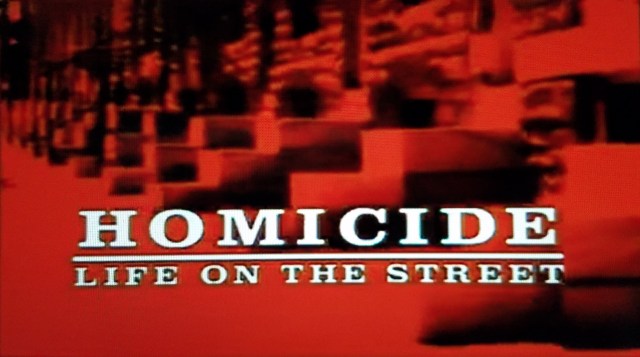
Screenshot of Homicide: Life on the Street‘s title card taken by me, Sally Silverscreen.
Episode Name: And The Rockets Dead Glare
Season 1, Episode 7
Premiere Date: March 17th, 1993
What I liked about this episode:
As I mentioned in the introduction, I have not seen much from Bai’s or Jon’s filmography. In fact, the only projects of Bai’s I’ve seen is The Crow and the Lost episode, “Stranger in a Strange Land”. Her roles on those programs, Myca and Achara, are presented as mysterious individuals who convey a sense of mysticism. This is portrayed through the characters’ actions and choices. Because Bai’s character on Homicide: Life on the Street, Teri Chow, is not mysterious in the same way as Myca or Achara, this forces her to rely on emotion instead of actions. “And The Rockets Dead Glare” shows Bai effectively using emotion when interacting with Jon Polito’s character, Steve Crosetti, and Meldrick Lewis, Steve’s detective partner. In the beginning of the episode, Teri tearfully reveals the identity of the murder victim and the likely cause of his death. Bai’s performance not only shows how murder can affect those surrounding the victim, but the battles some people may face as well. I also found her to be the stand-out actor in this episode!
What I didn’t like about this episode:
Just like The Crow, Jon and Bai share only one scene on their episode of Homicide: Life on the Street. However, a major difference is the aforementioned scene was Bai’s only scene in the entire fifty-four-minute episode. Teri is referenced by Steve and Meldrick long after her initial introduction. But aside from that first scene, she doesn’t make any further appearances. While Bai receives more lines in “And The Rockets Dead Glare” than she did in her and Jon’s scene from The Crow, her character is not as significant in the overall story as I hoped and expected. It also doesn’t help that the mystery in this specific storyline is overshadowed by Steve and Meldrick’s sightseeing adventure in Washington D.C. Because of this, the mystery remained unsolved. For almost an hour, a guilty party was not revealed, no clues were found, and there were no suspects being questioned.
The story itself:
When I first read the synopsis for “And The Rockets Dead Glare”, I felt there was too much going on in the episode’s overall story. After watching the episode, I still stand by that belief. “And The Rockets Dead Glare” features four storylines; Steve and Meldrick’s murder mystery/Washington D.C. trip, another murder mystery involving drugs, a court case featuring two of the series regulars (Beau Felton and Kay Howard), and a member of Baltimore’s police unit, Frank Pembleton, receiving a promotion. With four plots competing for screen-time, all of them ended up underwhelming. Even the one story I was the most invested in, Steve and Meldrick’s murder mystery, was not fully engaging because of the story’s misfocus. The plot that received the most attention, Beau and Kay’s court case, revolved around events from the show’s previous episode. Because of this and because “And The Rockets Dead Glare” is the only episode of Homicide: Life on the Street I’ve seen, I found the story to be uninteresting. Had this storyline been the main focus of a two-part episode, it might have worked better from a story-telling perspective. Every plot in “And The Rockets Dead Glare” lacked a sense of urgency. It seemed like the characters spent more time having casual conversations with one another than actually doing their jobs. This screenwriting decision takes away the suspense and intrigue that is usually found on mystery/crime shows.
The other factors from this episode:
Pieces of media from the past can be viewed one of two ways: as products of their time or standing the test of time. Parts of “And The Rockets Dead Glare” were reflections of the ‘90s that felt exclusive to that time period, with no room to expand beyond the decade. While waiting in the hallway at the court house, Beau asks Kay if she’d like to watch Oprah, referring to Oprah’s day-time talk show. Because that show has been off the air for almost a decade, as of November 2020, it doesn’t hold the same amount of relevance it did when “And The Rockets Dead Glare” first premiered. Another example is a conversation Steve has with a government official that has aged poorly, where Steve compliments the official for his use of English.
I really liked Homicide: Life on the Street’s introduction! All of the shots were filmed in black-and-white, with hints of red appearing on the screen. This reminded me of The Crow, where the film’s color palette shared similar hues throughout the story. In the introduction, mysterious music could be heard in the background. This sets a tone that indicates a suspenseful outcome of what will unfold.
As I said in the introduction, I had never heard of Homicide: Life on the Street before reading The Crow: The Movie. Therefore, I did not see “And The Rockets Dead Glare” when it originally aired. When I watched this episode for this review, I noticed how all of the on-screen text was backwards. I doubt this happened in March of 1993 when the episode first premiered on television. However, I’m wondering if the person who uploaded this episode online made this decision for copyright related reasons?
My overall thoughts:
Now that I have seen Homicide: Life on the Street, I understand why it isn’t well remembered. The episode I watched, “And The Rockets Dead Glare”, was one of the most mundane programs I’ve ever seen. While it had a strong start and promising potential, the stories themselves were not as interesting as they could have been. Despite having seen only one episode of this show, it felt like Homicide: Life on the Street was desperately trying to ride the coat-tails of a show like Law and Order without fully grasping what made a program like that work. Going against Homicide: Life on the Street’s favor is featuring four main storylines in the overall episode instead of one mystery case. The focus on characters having casual-style conversations with each other negatively impacted key areas of these plots. As stated in this review is how Steve and Meldrick’s trip to Washington D.C. overshadowed the murder mystery they were required to solve. If you are a fan of The Crow and are interested in seeing “And The Rockets Dead Glare”, I’d recommend watching the scenes involving Steve and Meldrick’s murder mystery for Bai’s and Jon’s performance alone. Everything else can be skipped, as it’ll just lead you to disappointment.
Rating: A very low 3 out of 5
This is a screenshot I took of my copy of The Crow: The Movie. Screenshot taken by me, Sally Silverscreen.
This is a screenshot I took from The Crow: The Movie‘s page about Bai Ling. Screenshot taken by me, Sally Silverscreen.
This is a screenshot I took from The Crow: The Movie‘s page about Jon Polito. Screenshot taken by me, Sally Silverscreen.
Have you watched The Crow? If so, what TV show episode featuring a star of this movie would you like to see me review? Please let me know in the comment section!
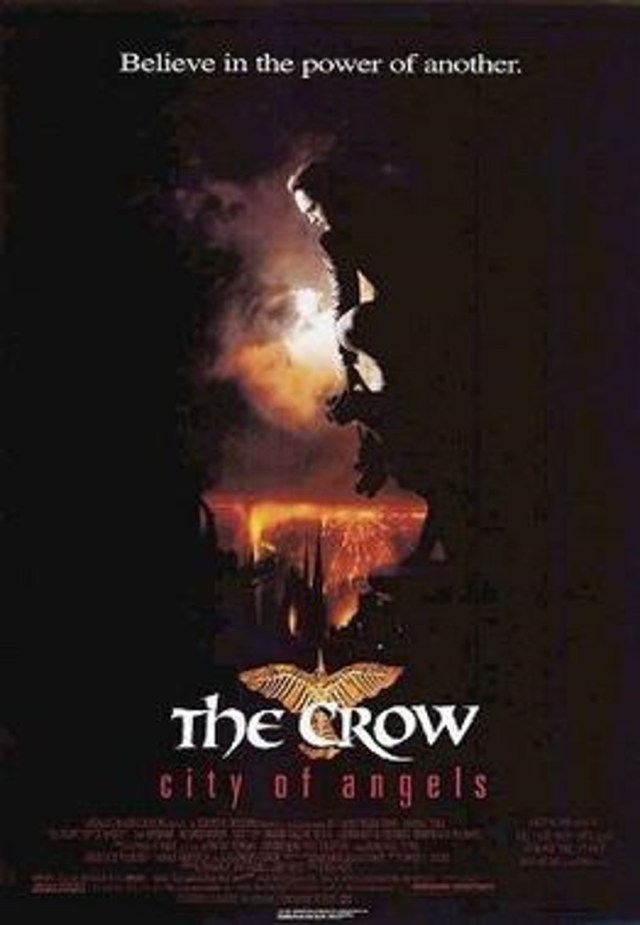
Because I received positive responses for the way I wrote my review of The Crow, I decided to write another open letter. This time, I’ve addressed it to The Crow: City of Angels. As I mentioned before, this isn’t the typical writing style I adopt for my reviews. But it’d only be fair to present this article in a similar fashion. Now, let me start this letter to The Crow: City of Angels.
The Crow: City of Angels poster created by Dimension Films and Miramax Films. Image found at en.wikipedia.org/wiki/File:The_Crow_2.jpg.
An Open Letter to The Crow: City of Angels,
I’m pretty sure you’ve heard of my editorial that I wrote back in May. You know the one; about how the Tim Pope cut should be released. A question you’re probably asking is “How can you advocate for a cut of a movie you’ve never seen”? Well, I’m glad you asked! I first learned about your experience with “studio intervention” from the Youtube video, “Exploring The Crow City of Angels”. I was not happy to hear what you had to go through, thinking it a circumstance that should have never happened. While scrolling through the video’s comment section, I read responses from people who expressed interest in seeing the Tim Pope cut. But despite this interest, it seemed like nothing was being done about the situation. From how I saw it, wishful thinking overshadowed any plans or ideas. After Justice League’s Snyder Cut was announced for a 2021 release, I knew it was the perfect time to bring up the Tim Pope cut and explain why it’s important. When other films were brought up in the discussion of special cuts, you weren’t really added to the conversation. So, I’m actually doing you a favor by advocating on your behalf. By the way, my original plan was to watch you and your predecessor, The Crow, around Halloween. But I’m guessing they told you about my change of plans.
Image of crow at sunset created by Rayudu NVS at freeimages.com. Photo by <a href=”/photographer/rayudu238-57835″>rayudu NVS</a> from <a href=”https://freeimages.com/”>FreeImages</a>. Image found at freeimages.com.
Because of a grammatical error I stumbled across on the internet, where your title was written as The Crow, City of Angels, I honestly thought Vincent Perez had starred in your predecessor. However, when I discovered The Crow Wiki, I learned he was the lead actor in the second chapter. Like I’ve said about movies like Swept from the Sea and Cyrano de Bergerac, Vincent’s involvement is what made me want to check you out. In the previous films of Vincent’s I’ve seen, he always steals the show for the right reasons. He certainly did that this time around! Similar to Brandon’s portrayal of Eric, Vincent brought an emotional intensity that made his performance captivating to watch! However, he went out of his way to set his character, Ashe, apart by adding a sense of showmanship to his role. In a scene where some of the villains are shooting at Ashe in a club, Ashe acts performative about the situation, using the violence against him in his one-man show. He even bows after the villains have finished shooting. This acting decision ended up working in Vincent’s favor! I’m not sure how much acting experience Iggy Pop had prior to his casting. However, I feel he did a fairly good job with the material he was given! While portraying Curve, one of the villains, Iggy effectively showcased the anger and frustration a person in that situation or environment might feel. This can be seen when Curve goes to Noah’s tattoo parlor and fights with Sarah. As Curve’s hostility grew, I quickly became concerned for Sarah and Noah’s safety. This scene showed me that Iggy’s performance was convincing. Speaking of Sarah, I liked seeing Mia Kirshner portray this character! Through her performance, she brought a calmness that the world surrounding Sarah was missing. Sarah’s gentle demeanor was a physical representation that hope wasn’t completely lost. This definitely worked in Mia’s favor, as it helped her performance stand out!
Over the twenty-four years you have existed, I’m guessing you’re tired of being compared to your predecessor. You so desperately wanted to be your own individual, but “studio intervention” prevented you from doing so. However, I made sure to notice how you were different from the first chapter. Eric and Ashe’s face disguise are just one example. In The Crow, Eric painted his face to resemble a mask he and Shelly owned when they were still alive. Ashe, in The Crow: City of Angels, uses some paints his son, Danny, owned before he died. This contrast shows the personal, sentimental touches each character’s appearance was given. Throughout the second chapter, Ashe moves around Los Angeles by primarily riding on a motorcycle. Because he was a mechanic before he became the Crow, this distinction makes sense. While we’re on the subject of Los Angeles, I really liked your set design! It’s griminess and unruliness showed a different way a city can express chaos. The sets were also colorful, which is the opposite of your predecessor’s black-and-white color palette. Day of the Dead festivities certainly made a contribution, as various masks, flowers and other items related to the holiday helped scenes visually pop. I’m glad you decided to use more light when presenting the story! This decision allowed me to clearly see what was happening on screen. It certainly sets you apart from the first chapter, as they only used a certain amount of light throughout the story.
Now it’s time for me to point out your flaws and mishaps. I’m not doing this to be mean, but only to be honest, as I do recognize your horrible experience with “studio intervention”. All of the villains were weak imitations of those who came before them. One perfect example is Sybil, who was the mystical figure Myca was in your predecessor. In a scene where she is explaining the connection between the crow and Ashe to Judah, Sybil sounded like she was quoting Myca word for word. Because of everything I just said, these villains were not allowed to have their own stories and be their own characters. It also made it easier for me to root for Ashe, as the villains didn’t have anything interesting or unique to offer. While I don’t have anything against Grace herself, I found her to be insignificant in the grand scheme of things. She didn’t add anything to the story or have a strong reason for being in that world. I’m guessing this was a “studio intervention” related decision, where the studio wanted Los Angeles to have their own “Sarah”. The difference between Sarah in The Crow and Grace in The Crow: City of Angels is Sarah receiving a vital role in the first chapter, serving as a reminder for Eric to keep his moral compass. In the second chapter, Grace could have been written out of the story and not much would change.
Now that I mention Sarah, I was not a fan of her and Ashe’s attraction for one another. This has nothing to do with the characters themselves or the actors portraying them. I just found this part of the story to be unnecessary. This is because nothing became of this attraction, which prevented it from going anywhere. Even Ashe warns Sarah against this attraction, as he tells her that nothing will likely happen. If Ashe knew this all along, then why would he even entertain this idea in the first place? I could see what you were trying to do; give Ashe a conflicting choice between life on Earth and the afterlife. This would have been an interesting concept had more time been devoted to it. Because Ashe and Sarah’s attraction for each other came about so quickly and with everything else happening in the film, it ended up as a spark that had trouble igniting.
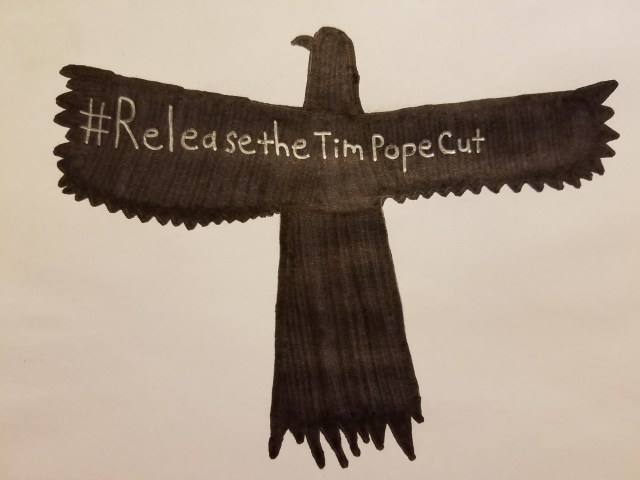
The image I created with the hashtag, #ReleasetheTimPopeCut. Screenshot taken by me, Sally Silverscreen.
As a movie, you’re a fine, run-of-the-mill action film. But, as a continuation to The Crow story, you were weaker than your predecessor. I did cut you a little bit of slack because of the one thing I’ve been mentioning throughout this letter: “studio intervention”. Now that I have seen you, I still believe the Tim Pope cut should see the light of day. You do deserve to be the movie you were meant to be and we the audience and fans deserve to see that happen. On 18 Cinema Lane, I feature a crow image with the hashtag, #ReleasetheTimPopeCut, on the homepage. This is so people who come to my blog can easily find my editorial and read it for themselves. I also posted the aforementioned hashtag on all of 18 Cinema Lane’s social media accounts. If you know anyone who wants to see the Tim Pope cut, please tell them to speak up. Paramount, the studio you now call “home”, will never hear the fans unless they say something. All I’m asking is for you to be kind and respectful if you share this letter with others. I recently watched Lee’s video review from his Youtube channel, Drumdums. When addressing the horrible circumstance you went through, he contemplated the likelihood of the Tim Pope cut’s release. While he felt anything was possible, he also didn’t believe this cut would ever be seen. As I close this letter, I’d like to remind Lee and those who may have doubts of what Eric said in The Crow: “It can’t rain all the time”.
Sincerely,
Sally Silverscreen
P.S. I’m giving you a score of 7 out of 10.
If you want to watch Lee’s review of The Crow: City of Angels, you can find it on Youtube by typing “The Crow: City of Angels Movie Review” into the search bar or visiting his channel, Drumdums.
For the Legends of Western Cinema Week, I was trying to decide if I should write a movie review for the 2015 film, Forsaken or create another television show review for Walker, Texas Ranger. Instead of selecting just one, I chose both options as my submissions for the blogathon! Prior to writing this post, I had never seen Walker, Texas Ranger. When I accepted my fourth Liebster Award back in July, I shared how I had never watched anything from Chuck Norris’ filmography. Hamlette and Heidi’s event gave me an excuse to not only change that, but to also expand my cinematic horizons to more westerns. Similar to last March’s review of Murder, She Wrote, I have randomly selected three episodes that happened to be airing on the INSP channel. This time, the episodes will be in the order of when I watched them, instead of chronologically. Each episode will be broken down into five categories: what I liked about the episode, what I didn’t like about episode, the story itself, other factors from the episode, and my overall thoughts. After reviewing these three episodes, I will share my final assessment of the show as a whole.
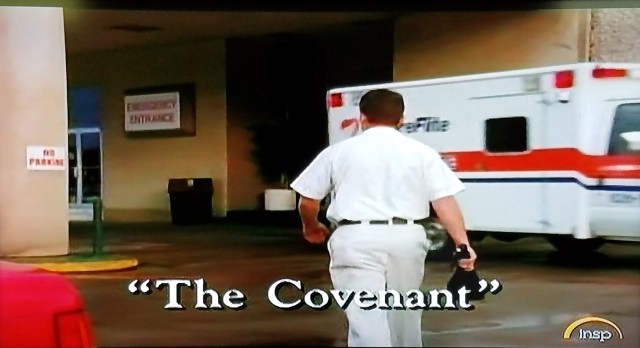
The title card for “The Covenant”. Screenshot taken by me, Sally Silverscreen.
What I liked about this episode:
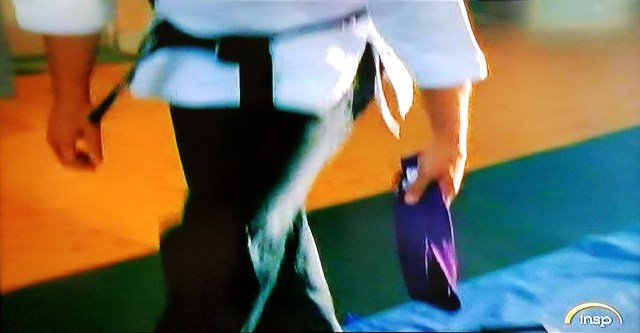
My favorite scene in ‘The Covenant’ takes place toward the beginning of the episode. During a karate class, Walker notices how one of his students, Ricardo, is missing their purple belt. When he asks Ricardo about the whereabouts of his belt, Ricardo tells Walker he placed the belt in his recently deceased sister’s casket so she could take it to Heaven. After his confession, Walker gives Ricardo another purple belt. When this happens, Ricardo’s face immediately lights up. The music playing during this moment sounded like a tune you’d hear when an athlete in an inspirational sports movie reaches a breakthrough. This scene was both heart-breaking and heart-warming, allowing it to stand out in this episode!
What I didn’t like about this episode:
Chuck Norris’ claim to fame is his karate skills, which have become a huge draw for any of his productions. This fact is the reason why Walker is an intelligent karate master. While karate was incorporated into this episode, its presence was very limited. In fact, the story was 80% crime drama, with 20% action. Before watching ‘The Covenant’, I had expected the episode to be 50/50 when it comes to the drama and action. However, the only times karate could be seen are in a montage during a karate class and in the story’s climax.
The story itself:
When I first read the synopsis for ‘The Covenant’, it caused me to ask two “what ifs” about The Karate Kid (the original 1984 film). What if Daniel had never crossed paths with Mr. Miyagi? What if Daniel had joined Cobra Kai? I thought watching this episode of Walker, Texas Ranger would give me a basic idea of what these “what ifs” might look like. But as I reflect on ‘The Covenant’, I realize that comparing the stories of Daniel and Tommy, a student of Walker’s, is like comparing an apple pie to an Apple computer. While Cobra Kai was the villainous/antagonistic group in The Karate Kid, I don’t recall any member of that group breaking the law. Meanwhile, the gang that Tommy interacts with are comprised of legitimate criminals with violent actions and police records. This makes Tommy’s situation more dire than Daniel’s.
To me, this episode of Walker, Texas Ranger felt rushed, as the overall pace was faster than other shows of this nature. I don’t know if this is because ‘The Covenant’ was the first episode of Walker, Texas Ranger I had ever seen or if this was a legitimate creative error. But whatever caused this to happen, I found it difficult to keep up with the story. Another flaw I noticed was how context was missing in certain areas of the narrative. Even though this episode is called ‘The Covenant’, I am still confused as to what the covenant is in relation to the plot. Was it an ideology or a group? This question was never answered.
The other factors from this episode:
I was not expecting this episode to be Christmas-themed. However, the plot did not feel like a Christmas story. Sure, there were decorations shown in the background. But ‘The Covenant’ could have taken place in any time of year and it wouldn’t have made a difference.
Every television show is bound to have aspects that feel of its time. With Walker, Texas Ranger, there are elements that definitely look like it came from the ‘90s. This can be seen through the characters’ clothes, the background graffiti, and even the opening montage. These things definitely make any show feel like a time capsule.
Throughout my life, I’ve seen established shows include real-life topics in their episodes. Sometimes, these topics are effortlessly woven in with the episode’s plot. The anti-gang message of ‘The Covenant’ seems like a PSA was wedged into the overall story. I was given the impression the show’s creative team had chosen to write a narrative around an actual issue. There was some dialogue that sounded more like potential slogans than actual conversation. Even a message at the end of the episode revealed how the ‘The Covenant’ was dedicated to young victims of gang violence.
My overall thoughts:
‘The Covenant’ is the episode that inspired me to write about Walker, Texas Ranger. The “what ifs” relating to The Karate Kid are also a part of that inspiration. This episode ended up being different from what I expected, as the limited presence of karate is one reason why this is the case. Even though I liked the inclusion of karate, there was less of the sport than I had been led to believe. This is because the episode leaned more toward the criminal/police procedural part of the overall story. If anything, ‘The Covenant’ came across as part crime drama, part “after school special”, with the anti-gang message being dropped into the story rather than woven in. While this is not one of the worst television episodes I’ve ever seen, it definitely could have been stronger.
Rating: A 3 out of 5
As Walker says in ‘The Covenant’, “These belts don’t come easy. You have to earn them”. Screenshot taken by me, Sally Silverscreen.
Episode Name: The Juggernaut
Season 3, Episode 16
Premiere Date: February 10th, 1996
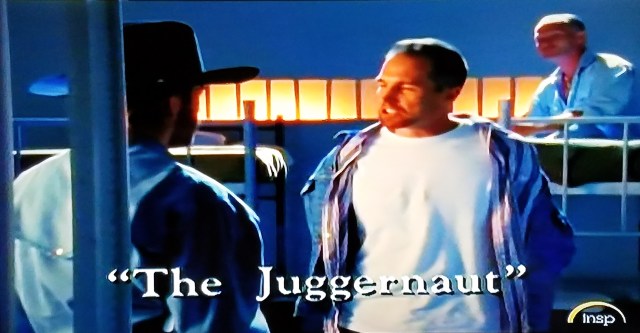
The title card for “The Juggernaut”. Screenshot taken by me, Sally Silverscreen.
What I liked about this episode:
In ‘The Juggernaut’, Walker has a limited presence within the story because he has to attend a weekend tournament. This creative decision allows the stakes to be raised to a higher level. It presents a scenario where the hero isn’t always readily available to save the day. It also forces the secondary characters to rely on their own skills to resolve the overarching conflict. Another component is how the episode’s villainous character posed a legitimate threat to Walker and those around him. Connie’s husband, Brad, was a terrifying character because of his realistic nature. Patrick St. Esprit’s performance added to Brad’s sinister persona as well. All of these elements helped make the episode suspenseful and it made me fear for the characters’ lives.
What I didn’t like about this episode:
As I just mentioned, Walker has to attend a weekend tournament. Because of this, Trivette steps in to host a self-defense class at a retreat for domestic violence survivors. I liked how the actual tournament was shown in the episode, as referenced events or situations aren’t always visually presented in TV episodes. But what I didn’t like was how the tournament itself seemed more like a karate clinic. This is because the referee was coaching the athletes during duels and the athletes were surrounding the ring as if listening to an instructor in a class. At the retreat, Trivette led his self-defense class in an interesting way, allowing the survivors to hit him while he was wearing multiple layers of padding. This helped the survivors become comfortable with striking an attacker. The actual lesson didn’t take place until the episode’s halfway point. In my opinion, this moment should have happened sooner in the story.
The story itself:
Unlike ‘The Covenant’, the topic of domestic violence was woven into the story of ‘The Juggernaut’. Instead of dropping this real-life subject into the plot and making it seem like a PSA, the situation presented in this episode feels like it belongs in the show’s world. It gives the message an opportunity to organically grow within the story. Because the retreat is led by Alex, a deputy district attorney and a friend of Walker’s, she’s the one who takes charge of the plot. She was also able to use her skills and expertise to save the day. I like how Alex progressed the narrative forward, as it gave one of the show’s secondary characters a moment to shine. It reminded me of The Babysitter’s Club, where each book is told from a different perspective.
The other factors from this episode:
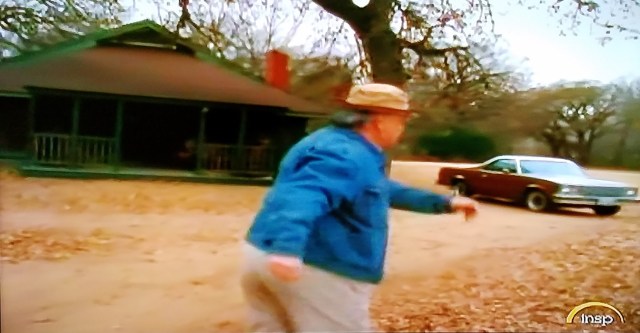
I thought Alex’s cabin looked cute, despite the living room being the only interior shot shown! The green porch was not only eye-catching, but inviting as well. I also think the grounds surrounding the cabin were scenic. I don’t know if this is a real-life house or if it was a set created for the show. However, the location scout did a good job when choosing this particular spot!
During the retreat, C.D. tells Connie a story about a retreat participant who was able to turn her life around. After this story was told, C.D. asks Connie if she’ll write a happy ending to her own story. When Connie asks him why he wants to know, C.D. tells her how he wants to share her story with future retreat participants. To me, this was the sweetest moment of the episode!
Speaking of C.D., ‘The Juggernaut’ presented the second time I’ve seen C.D. become seriously injured. I’m not sure if this happened often on the show or if it’s just a coincidence. But I felt like bringing it up as a factor of this episode.
My overall thoughts:
When I first reviewed Murder, She Wrote last March, I ended up liking the second episode, ‘Film Flam’ more than the first one, ‘The Legacy of Borbey House’. The exact same thing has happened with ‘The Covenant’ and ‘The Juggernaut’, as I prefer ‘The Juggernaut’ over ‘The Covenant’. The story of the third season’s sixteenth episode contained a better written narrative. It also helped that the delivery of the domestic violence topic didn’t feel forced or preachy. With Walker in the episode for a limited amount of time, it allowed the story to have higher stakes. It also gave secondary characters more screen time and opportunities to be involved in the plot. ‘The Juggernaut’ kind of reminded me of Touched by an Angel, where the series’ regulars approached real-life topics with their wisdom in tow and kindness toward those who needed their help. Maybe this is one of the reasons why I liked ‘The Juggernaut’!
Rating: A solid 4 out of 5
This is one of the few shots of Alex’s cabin that was shown in broad daylight. I wonder how many times it was featured on the show? Screenshot taken by me, Sally Silverscreen.
Episode Name: The Lynching
Season 3, Episode 8
Premiere Date: November 18th, 1995
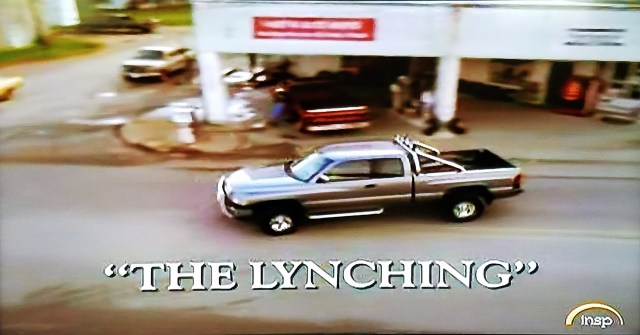
The title card for “The Lynching”. Screenshot taken by me, Sally Silverscreen.
What I liked about this episode:
There were two scenes in ‘The Lynching’ where Walker interacts with Jonah, a man who is accused of killing a local woman. In the first scene, Walker is questioning Jonah about the murder. When he is asked why he ran away from the crime scene, Jonah reveals he was so afraid, that he wanted to go to “Jonah’s Island”. It is implied that “Jonah’s Island” is an imaginary world Jonah created in his mind. Another scene has Jonah stating that he’s “slow in the head”. Walker tells him how there’s nothing wrong with him and how some people get in trouble for moving too fast. These moments were emotionally touching and contained heart.
What I didn’t like about this episode:
Wilma Casey, a local woman from a smaller Texas town, is killed in broad daylight. The people in this town are so upset by her death, that they form a mob against Jonah. Statements such as “Wilma was a good woman” were spoken among the members of the mob. Other than those vague statements, no explanation was given for why Wilma was so beloved. A small amount of information about Wilma is provided in this episode, revealing how she’s wealthy and how she helped Jonah after his parents died. But her influence in the town is not told. Was she a philanthropist or a former governor? These questions were never answered in ‘The Lynching’.
The story itself:
The story within the ‘The Lynching’ is a murder mystery, as Walker and other members of law enforcement come together to solve Wilma’s case. With a variety of clues and some shady characters, this plot was intriguing as well as engaging! It also made more sense for the plot to rely on the criminal/police procedural aspect of the show, as the majority of murder mysteries incorporate law enforcement officers in the story. The actions and choices of the people involved in the case did raise more questions than I expected to ask. In one scene, Walker comes across an object that could be used in court. However, he chooses not to collect this object as evidence. These questions didn’t take me out of the episode, but it happened more often than it should have.
The other factors from this episode:
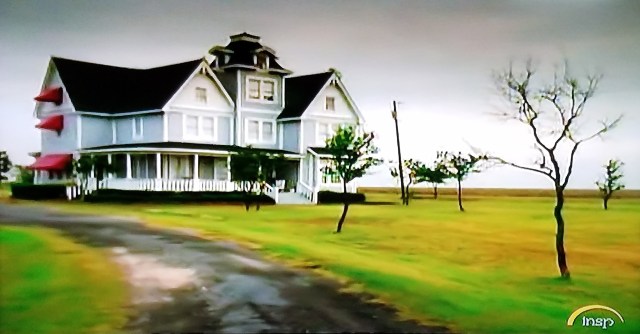
Wilma’s house in ‘The Lynching’ was absolutely picturesque! Most of this location was captured in exterior shots, with only the kitchen and office being shown on screen. Like Alex’s cabin in ‘The Juggernaut’, I’m not sure if this is a real-life structure. But whoever was the location scout for Walker, Texas Ranger deserves recognition!
According to INSP’s website, Trivette “is a little less “high noon,” and more “high tech” when it comes to fighting crime”. Based on the three episodes of Walker, Texas Ranger I saw, Trivette doesn’t use technology more or less than the other characters. INSP’s description makes it seem like he is the go-to guy for technology, similar to Angela’s adopted role on Bones. After seeing this show, I think the article from INSP is a little misleading.
At one point, Jonah has to be transferred from the jail to another location. Instead of taking him to a second jail, the people associated with Wilma’s case take Jonah to a secret area. What surprised me was how Walker didn’t suggest Alex’s cabin as a safer place for Jonah to stay. Even though the cabin is used for Alex’s domestic violence survivor retreats, I’d like to think she wouldn’t mind allowing Jonah to temporarily stay at her cabin.
My overall thoughts:
While I didn’t enjoy this episode as much as ‘The Juggernaut’, I did like it more than ‘The Covenant’. As someone who goes out of their way to talk about mysteries from time to time, the story was interesting enough to keep me invested in the plot. It contained the components that are usually found in a mystery: a collection of clues, potential suspects, some surprises, and suspense. Having this episode lean more toward the crime drama side of the show made sense with the narrative being told. This story is not without its flaws, however. Some of the actions and choices of the people involved in the overarching case were questionable in terms of believability. The lack of explanation for Wilma’s importance also didn’t help. Similar to ‘The Juggernaut’, the situation in ‘The Lynching’ felt it belonged in the world of Walker, Texas Ranger. This episode could have easily followed the footsteps of ‘The Covenant’, placing a message in the script and writing a story around it. Instead, ‘The Lynching’ focuses on themes that the audience could relate to; such as treating others as they would like to be treated.
Rating: A 3.6 out of 5
Is is just me or does this house remind anyone of Laura’s boarding house from Little House of the Prairie? Screenshot taken by me, Sally Silverscreen.
My final assessment:
In my first review of Murder, She Wrote, I said the show as a whole, based on the three episodes I wrote about, was fine. I also said that I’d watch the show if I had nothing else to do. With Walker, Texas Ranger, I thought it was fine as well. However, the overall quality of the episodes was more consistent than the ones from my Murder, She Wrote review. Even though ‘The Juggernaut’ was the best episode of the three I chose, I did enjoy watching ‘The Lynching’. My least favorite episode was ‘The Covenant’, as I thought it was just ok. One aspect that stood out to me was how karate was only used during select moments of each episode. There was enough action in ‘The Juggernaut’ and ‘The Lynching’ to keep the plot interesting. However, I thought ‘The Covenant’ was a little light on action. While I probably don’t see myself watching Walker, Texas Ranger religiously, I wouldn’t mind checking out an episode or two if it happened to pop up on my television. But who knows? Since last March, I’ve seen more episodes of Murder, She Wrote than I originally expected.
Have you seen Walker, Texas Ranger? Are there any episodes you’d want to see me review? Tell me in the comment section!