Back in August, I published my review of the Hallmark Hall of Fame movie, Face to Face. That article became my 425th published movie review. Then, when I published my review of Kind Hearts and Coronets, it became my 950th published post. To honor these milestones, I’m creating a type of list I have never written before. Over the seven years 18 Cinema Lane has existed, I have shared some of my “hot takes” on film. However, I haven’t created a list exclusively about movie “hot takes”. That is why, for this list, I will address my film related “hot takes” I didn’t previously discuss on my blog. This decision was made to keep the list itself fresh and interesting. I will also organize each “hot take” based on how “hot” each take could be perceived. Before I begin this list, I’d like to state how my list is not intended to be mean-spirited or negative. It’s just simply a way to express my opinion.
Campfire with marshmellows and shooting stars image created by macrovector at freepik.com.
10. Sister Act 2: Back in the Habit Should Have Been a Christmas Movie
I’m not saying Sister Act 2: Back in the Habit is a bad movie. I’m not even saying it’s a bad sequel, as I respect how the script tries to tell a new story instead of attempting to recapture the magic of the first film. However, I do believe it was a huge missed opportunity not to have Sister Act 2: Back in the Habit set during Christmas. I can picture Saint Katherine’s Parish, the church featured in the first movie, beautifully decked out in Christmas adornments. And can you imagine what Christmas songs like ‘O Holy Night’, ‘Away in a Manger’, and ‘Joy to the World’ would have sounded like under Deloris’/Sister Mary Clarence’s leadership? If those versions were even half as good as the songs were in Sister Act, the audience would have been in for a musical treat! Though there’s no guarantee making Sister Act 2: Back in the Habit a Christmas movie would have made it better or just as good as its predecessor. Therefore, this is the mildest “hot take” on my list.
9. Calypso/Tia Dalma and Davy Jones Should Have Shared More Screen-Time Together in Pirates of the Caribbean: At World’s End
One of my favorite movie scenes of all time is Calypso/Tia Dalma and Davy Jones’ interaction in Pirates of the Caribbean: At World’s End. Not only does this scene recontextualize everything the audience knew about Calypso/Tia Dalma up until that point, Naomie Harris and Bill Nighy’s on-screen chemistry made the attraction between Calypso/Tia Dalma and Davy Jones believable. This attraction makes me wish they shared more screen-time together. Throughout Calypso/Tia Dalma and Davy Jones’ interaction, issues are left unresolved and words are left unspoken. Yet their love for each other is still evident. Calypso/Tia Dalma and Davy Jones should have received an opportunity to resolve their issues and honestly communicate with one another. But in a movie like Pirates of the Caribbean: At World’s End with so many moving parts to it, aspects of the story like Calypso/Tia Dalma and Davy Jones’ relationship were overlooked.
8. Wanda Maximoff/Scarlet Witch’s Story in the Marvel Cinematic Universe (MCU) Should Have Been an Adaptation of Scarlet Witch, Vol. 3: The Final Hex
For this year’s Eurovisionathon readathon, I read Scarlet Witch, Vol. 3: The Final Hex. As I read the graphic novel, I couldn’t help but feel the Marvel Cinematic Universe (MCU) missed a great opportunity to adapt this story. Based on what I know about the MCU, mentor figures aren’t common. Agatha Harkness could have provided mentorship to Wanda Maximoff/Scarlet Witch like she did in the graphic novel, helping guide her throughout Phase 2 and beyond. Adapting Scarlet Witch, Vol. 3: The Final Hex would have given the MCU a reason to weave Serbian and Roma culture into Wanda Maximoff/Scarlet Witch’s, as well as Pietro Maximoff/Quicksilver’s, narrative. Themes of family, identity, and what it truly means to be a superhero could have also been explored. While I haven’t seen any of the MCU’s projects after Avengers:Endgame, I have heard of the directions Wanda Maximoff/Scarlet Witch’s story have taken. Had Scarlet Witch, Vol. 3: The Final Hex been adapted, maybe her story would have been better than what the audience received.
7. Cheryl Frasier from Miss Congeniality is More Intelligent Than Most People Give Her Credit For
The “April 25th” scene from Miss Congeniality is one of the most quotable and meme-able moments in film history. This scene is how most people know Cheryl Frasier (a.k.a. Miss Rhode Island), one of the story’s key characters. The moment where Cheryl chooses “April 25th” as her answer for her idea of a perfect date is presented as giving the wrong answer. Though whenever I think of this scene, I see it very differently. In an interview/question segment of a pageant, contestants must utilize their time wisely to earn enough points to progress to the next segment. With that said, Cheryl utilized critical thinking skills, logic, and looking outside the box to not only select her iconic answer, but to also come up with an explanation for that answer all within a limited period of time. Plus, I can understand how she would describe a date on the calendar, as the question is vague enough to be interpreted in different ways. This is one of the best examples from Miss Congeniality of Cheryl being more intelligent than most people give her credit for.
6. Pennywise from Stephen King’s IT (1990) is More Annoying Than Scary
Years ago, I saw Stephen King’s IT for the first time. But I found the experience underwhelming. One contributor was how Pennywise was more annoying than scary. While there were horrifying moments involving Pennywise, these moments were far and few between. One scene that always comes to mind is when Pennywise is in a library. In this scene, he was so over-the-top, loud, and obnoxious, his act got old really fast. I couldn’t take Pennywise seriously as a horror movie villain, as his silliness made him less threatening. Even in the film’s climax, his role was such a let-down, sucking all the suspense out of that scene. Tim Curry, the actor who portrayed Pennywise, is not at fault because he tried his best with the acting material provided. The fault lies with the director and screenwriters of Stephen King’s IT.
5. Gabby Gabby from Toy Story 4 is a Poorly Written Character
When I saw Toy Story 4 in 2019, I thought Gabby Gabby was a poorly written character. Six years later, I still feel this way about her. It seemed like the creative team behind Toy Story 4 couldn’t decide if Gabby Gabby should be the story’s villain, anti-hero, or simply misunderstood. So, instead of giving her one role and sticking to that creative decision, the creative team gave her all three roles. When Gabby Gabby received a redemption arc, I didn’t feel that was earned. How am I supposed to root for her when I don’t even know what her true role in this story is supposed to be? Last year, when I published my list of ten movie trends I don’t understand, I explained how adopting the ‘villains receiving the spotlight’ trend gives the audience mixed messages and makes villainous characters less straight-forward. Reflecting on that list and Toy Story 4, I wonder if how Gabby Gabby was written is the result of that trend?
4. ‘Elizabeth’ is the Most Overused Name in Historical Fiction/Period Drama Movies and TV Shows
In 2019, I created a list of the top ten worst clichés from Hallmark movies. The clichés featured in that list were those that were poorly or overly used. If I created a similar list about the worst clichés from historical fiction/period drama movies, characters named ‘Elizabeth’ would be near the top of the list. Personally, I find it hard to believe directors, producers, and screenwriters would keep selecting ‘Elizabeth’ despite having thousands of names at their disposal. The name, ‘Elizabeth’, keeps finding its way into scripts no matter the story’s time period. Some examples include Felicity: An American Girl Adventure, the Pirates of the Caribbean series, any version of Pride and Prejudice, and When Calls the Heart’s Christmas/seasonal films. This specific cliché is also present among historical fiction/period drama tv shows, ranging from Emily of New Moon to The Waltons. I don’t know when the cliché started being utilized or if it will ever stop. But if someone is considering creating a historical fiction/period drama movie or tv show, I hope they think outside the box when it’s time to name their characters.
3. I Don’t Find National Lampoon’s Christmas Vacation Funny
I’ve only seen National Lampoon’s Christmas Vacation once. Though it’s been years since I’ve seen it, I didn’t find it funny. I don’t remember laughing at any joke. Even when I see clips of the movie in other pieces of media, it doesn’t get a reaction out of me. I’m aware how comedy, as well as film itself, is subjective. But I just don’t understand the hype around National Lampoon’s Christmas Vacation. If I revisited the movie, maybe I’d change my mind on it. For now, though, National Lampoon’s Christmas Vacation is not a must-watch title for me this Christmas season.
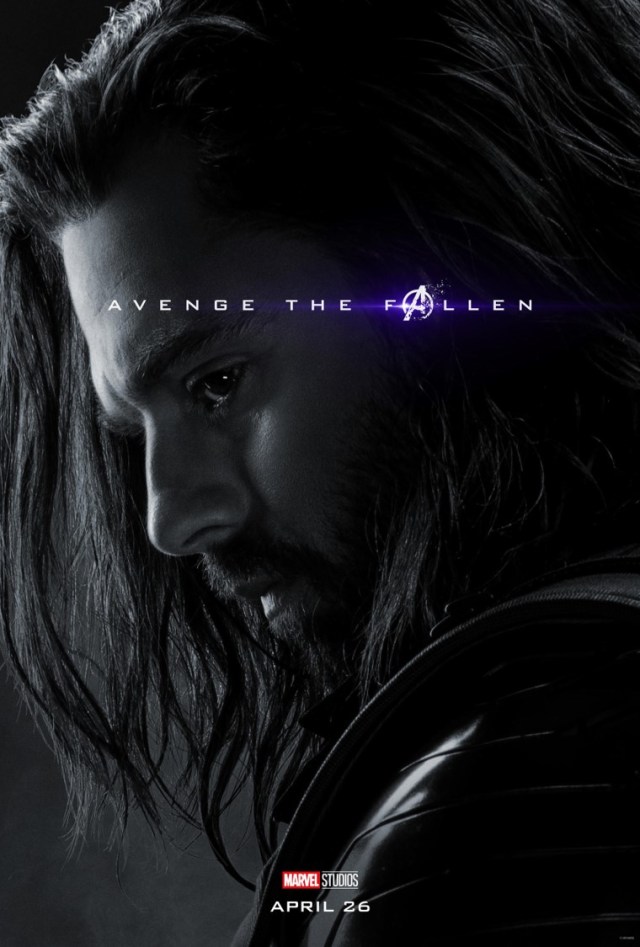
2. Bucky Barnes Should Have Received His Own Superhero Title Instead of Becoming the Next Captain America
Around the time Avengers: Infinity War was released, I was one of those fans who wanted to see Bucky Barnes become the next Captain America. I even expressed this wish in my very first movie blogger’s Christmas wish-list. But looking back almost ten years since Avengers: Infinity War and Avengers:Endgame premiered, I believe instead of becoming the next Captain America, Bucky should have received his own superhero title. As he grew into it over time, Bucky could have shaped this brand-new title to become truly his. So, when people think of that specific title, they’ll think of Bucky and vice versa. There would be no preconceived ideas or expectations due to the lack of comparisons to measure Bucky to. With his own superhero title, he could have received official Avenger status as well, which is why I wanted Bucky to become the next Captain America in the first place. I know he took up Captain America’s shield in Marvel’s comics. However, Bucky adopting his own, unique superhero identity would have added a fascinating chapter to Phases 4 and 5.
1. The Breakfast Club and Clue are Two of the Most Overrated Movies of the 1980s
It’s been years since I’ve seen The Breakfast Club or Clue. But from what I remember, I wasn’t a fan of either title. The Breakfast Club contained way too much swearing for my liking and I found its story too simplistic. When it came to Allison Reynolds’ reason for being in detention, the script was building up to what ended up being an underwhelming revelation. Meanwhile, in Clue, I laughed at only one joke throughout the entire film. The movie prioritized showing the characters running around and yelling/screaming at each other, which I find less hilarious and more headache-inducing. Having multiple endings based on when and where someone saw the film might work at the movie theater. Including all three endings in Clue, however, not only felt overwhelming, it also felt like the movie’s creative team couldn’t decide which ending best fit their script, leaving that ultimate decision to the audience. Perhaps if I revisited The Breakfast Club or Clue, my opinion on these titles might change. As of the publication of this list, though, I find Clue and The Breakfast Club overrated.
What are your thoughts on my movie “hot takes”? Do you have a film related “hot take” you’d like to share? Please tell me in the comment section below!
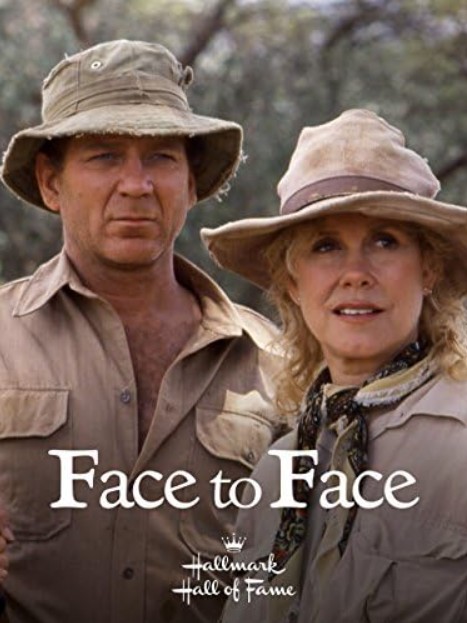
Any time I receive the opportunity to review a Hallmark Hall of Fame movie, I try to prioritize titles that are either VHS exclusive or harder to find. This decision has been made to help give those titles more recognition, as well as encourage more people to check those films out. One of these films is the 1990 picture, Face to Face! As far as I know, this Hallmark Hall of Fame presentation was not released on VHS or DVD. It also premiered months prior to the Hallmark Hall of Fame movie, Caroline?, which I have reviewed on 18 Cinema Lane. The synopsis is what intrigued me toward seeing Face to Face, as the story (according to IMDB) is about “an American paleontologist and a British miner get in a conflict over who has the rights to dig on a site in Kenya”. A conflict about two differing parties at odds over a shared problem isn’t often covered within the Hallmark Hall of Fame collection. In fact, the only movies I can think of that fit this description are The Summer of Ben Tyler and Sweet Nothing in My Ear. Face to Face’s Kenyan backdrop also provides a unique element to the movie. Africa is a setting that is rarely incorporated in Hallmark Hall of Fame’s films.
Hallmark Hall of Fame’s Face to Faceposter created by Hallmark Hall of Fame Productions, Robert Halmi, and CBS
Things I liked about the film:
The scenery: As I mentioned in this review’s introduction, Face to Face takes place in Kenya. The creative team behind the film took advantage of the Kenyan landscape by featuring long and medium shots of the story’s natural surroundings. One example is an establishing shot of a sunset. Half the shot is engulfed in an orange and yellow sky, with a grey mountain at the sunset’s root. Nearby trees adopt a black hue, standing out against the sky’s bright colors. The ground appears to be a mix of rustic red and brown, warmed by the light’s glow. This establishing shot is so gorgeous, I doubt pictures would do it justice.
The dialogue: In my recent review of 1973’s From the Mixed-Up Files of Mrs. Basil E. Frankweiler, I praised the film’s dialogue. I mentioned how some lines were so well-written, they became a memorable part of the movie. Hallmark Hall of Fame’s Face to Face shares the same strength! The film’s dialogue was not only witty and clever, it was also, at times, thought-provoking. During one evening, Face to Face’s protagonists, Diana and Tobias, are listening to the sound of a flute. This music is created by a young man named Enjoro, who works with Tobias. Impressed by Enjoro’s talent, Diana says “Just think what he could do with an education”. Tobias quickly replies by asking “Isn’t what he’s doing enough”? This conversation is a great example of how good intentions may be quite different from what a person wants or needs. Earlier in Face to Face, Diana’s arrival in Kenya is met by a colleague named Dr. Brinkman. On a nearby map, Dr. Brinkman is trying to locate Diana’s dig site. As he’s searching for the site, Diana says to Dr. Brinkman “You’re close”. When he asks her “How close”, she matter-of-factly tells him, “Got the right country”. The exchange between these two characters showcases the wittiness found in Face to Face’s script!
Enjoro’s subplot: Like I just said in this review, the flute music is created by a young man named Enjoro, who works with Tobias. But music is not his only passion. Enjoro is also a talented artist, with his drawings impressing Diana so much, she gives him an art set. Unfortunately, these artistic passions are frowned upon by his village, who would rather see Enjoro become a warrior. This personal struggle between village tradition and personal pursuits provides a subplot in Face to Face. A conflict like Enjoro’s is rarely incorporated in Hallmark Hall of Fame’s movies. In fact, I found Enjoro’s part of the story more interesting than the main plot. Had this film focused primarily on Enjoro’s personal conflict, I think the overall movie would have been more compelling.
An unlikable protagonist: I recognize the creative team behind Face to Face was trying to utilize the “enemies to lovers” troupe when it came to Tobias and Diana. I also acknowledge they were trying to give Diana and Tobias an “opposites attract” dynamic. Unfortunately, these parts of the story were not as effective as they could have been. One reason lies with how unlikable Diana was. For the majority of the movie, she was a static character; close-minded, stubborn, and entitled. When Tobias offered a compromise or tried to make peace with her, Diana shut down his offers and even saw him as beneath her. Even though Diana and Tobias eventually develop romantic feelings for each other, that attraction felt abrupt. If Diana’s change of heart had been more gradual, not only would she be a more likable character, the build up between her and Tobias’ attraction would have been stronger.
The audio: Face to Face premiered in 1990. Therefore, I’m aware of how film-making technology back then was not as advanced as it is today. But one of the signs of these times was the bad audio heard in the Hallmark Hall of Fame film. Most of Face to Face takes place outdoors. This means not only were the cast’s speech picked up by microphones, background noises were picked up as well. The collection of sounds sometimes made it difficult to understand what the characters were saying. Face to Face could have benefitted from using ADR (automated dialog replacement).
The “insta-love” troupe: When I talked about how unlikable Diana was, I brought up the “enemies to lovers” troupe Face to Face’s creative team tried to utilize. I also brought up how Diana and Tobias’ attraction for one another felt abrupt. This was caused by Tobias and Diana remaining “enemies” for more than half the movie. So much time was spent showing Diana and Tobias bickering, disagreeing, and being negative toward each other instead of the protagonists building a romantic bond over time. When Tobias and Diana eventually fall in love with one another, the “insta-love” troupe unnecessarily makes an appearance in Face to Face. Having the protagonists stay “enemies” for too long also made Elizabeth Montgomery and Robert Foxworth’s on-screen chemistry seem weak.
With the publication of my Face to Face review, I have now seen all three Hallmark Hall of Fame movies released in 1990. Out of these films, I find Caroline? the best one. As for Face to Face, I thought it was just ok. This is one of those movies where a better story idea was buried within the presentation Hallmark Hall of Fame gave its audience. I honestly wish Enjoro’s story had been chosen as the main plot. His personal conflict between village tradition and personal pursuits provided a compelling narrative. I also wish Tobias and Diana had spent more time developing a romantic relationship and working together to solve their shared problem. These creative decisions would have prevented flaws like the appearance of the “insta-love” troupe. Face to Face features merits such as the dialogue and the scenery. But I can think of better movies also featuring these merits. Though there are interesting ideas woven into the script, I can kind of see why Face to Face became lost to time.
Overall score: 6.1 out of 10
Have you seen Hallmark Hall of Fame’s Face to Face? Are there any Hallmark Hall of Fame films you’d like to see reviewed on 18 Cinema Lane? Please tell me in the comment section!
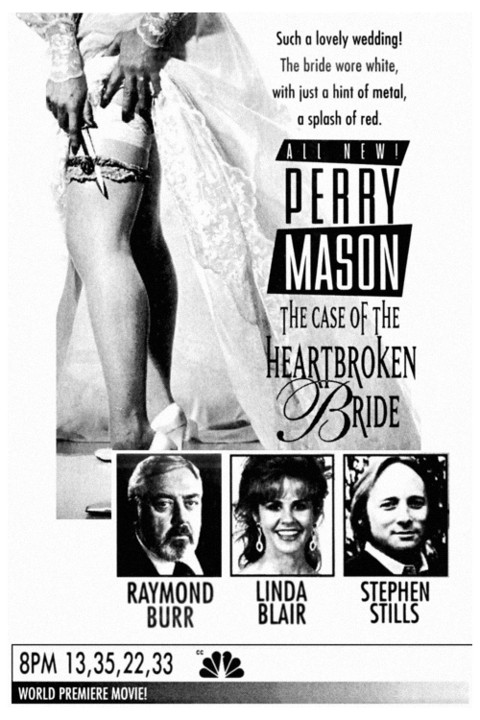
As I looked at the blogathon schedule for the rest of 2025, I discovered how few events were announced. This includes my upcoming blogathon, The Food & Film Blogathon. Despite the limited amount of blogathons, I wanted to provide more blogathon related content to my readers. So, I have decided to participate in Genre Grandeur! I have written reviews for this year-long blogathon before. However, the last time I participated in Genre Grandeur was October 2023, when I reviewed Christmas at Castle Hart. With July’s theme being “Movies Featuring Weddings”, I knew there were a lot of options at my disposal. But I wanted to talk about a movie that was more off the beaten path. When I learned there was a Perry Mason film revolving around a wedding, I knew I found the perfect title! Some of the movies from the Perry Mason TV film series have been covered on 18 Cinema Lane. These pictures have received likable reviews, as I have enjoyed them to varying degrees. How will this film, Perry Mason: The Case of the Heartbroken Bride, compare to those other entries? Keep reading my review to solve this mystery!
Perry Mason: The Case of the Heartbroken Bride poster created by Fred Silverman Company, Viacom Productions, Dean Hargrove Productions, National Broadcasting Company, and Viacom
Things I liked about the film:
Stand-out performances: In a mystery film, there is sometimes that one actor or collection of actors whose performance shines the brightest. That kind of performance came from Merle Kennedy, Brian McNamara, and Heather McAdam in Perry Mason: The Case of the Heartbroken Bride! The film’s titular bride is a pop star named Kaitlynn Parrish. From her style to her songs and even her dance moves, everything about Kaitlynn’s celebrity persona feels very Madonna-esque. But throughout the movie and also at the wedding, Kaitlynn’s personality is quite different. Heather McAdam portrays her character as a sweet, down-to-earth woman who hasn’t let fame and fortune get to her head. Instead of becoming a self-centered “bridezilla”, Kaitlynn shows concern for her dad’s legal situation. When Kaitlynn’s dad receives a phone call from a commissioner, the smile she had on her face as she walks into the room immediately melts into a look of worry. As she talks to her dad about the commissioner’s call, Kaitlynn’s tone of voice is filled with concern and there’s even a sad look in her eyes. She also suggests asking Perry Mason for help. Kaitlynn eventually goes back to appearing happy when her dad is in a better mood. Scenes like the one I described present a good example of how, sometimes, an entertainer’s real-life persona is quite different from what they present in the spotlight.
Brian McNamara portrays Sam Wald, a groomsman in Kaitlynn Parrish’s wedding. Merle Kennedy stars in the movie as Suzy Richards, a fan of Kaitlynn’s. What both Merle and Brian have in common is how their performance was charismatic! It also helps how their ability to adapt from scene to scene was effortless! Because of how strong Brian’s and Merle’s performance was, it allowed Sam and Suzy to be more intriguing. These elements made me look forward to seeing the characters appear on screen. I honestly wish Merle and Brian were given more material to work with in this movie.
The wardrobe: The Perry Mason TV movies are “contemporary” mysteries grounded in reality. This means the characters’ wardrobe not only runs the risk of appearing mundane, it also runs the risk of becoming overlooked. In Perry Mason: The Case of the Heartbroken Bride, however, some of the female characters’ wardrobe stood out to me. One of my favorite outfits appeared toward the beginning of the film. When Suzy is first introduced in the movie, she wears a red suede jacket with matching shiny red Doc Martin boots. Her outfit also includes a white shirt, black shorts, and black knee-high socks. My favorite piece was a black, cross-body purse with a silver buckle and silver corners. From what I could see, the purse looked like a mini trunk. The outfit I described was not only a great contrast from the other characters’ wardrobe, it also wonderfully represented Suzy’s personality! These results helped outfits like Suzy’s be memorable!
The set design: When I reviewed Perry Mason Returns and Perry Mason: The Case of the Lost Love, I talked about the set design as one of the strengths of both films. The exterior and interior of the highlighted spaces effectively visualized how well-off the characters are.Kaitlynn and her fiancé, Gary’s, wedding in Perry Mason: The Case of the Heartbroken Bride takes place in a large mansion. This mansion appears built out of warm-stone brick with cream borders around the windows and main door. To the left of the mansion is a multi-paneled cylinder, making the building look like a castle. With manicured foliage in front of the mansion, one might mistake the structure as a dream out of a fairytale! Later in the film, the office of a music producer named Jake Lubin is shown on screen. This space has a high ceiling, large windows, and a massive indoor balcony. Metal support pillars and frosted glass railings give the office a modern industrial style. Platinum and gold framed records represent Jake’s success as well as compliment the cream, silver, and gold color palette. Once again, the set design of Perry Mason: The Case of the Heartbroken Bride provided visual clues for the characters’ social status.
Lack of urgency: The Perry Mason television film series doesn’t rely on suspense or adrenaline. But the mysteries provide intrigue to keep the viewers invested in what’s happening on screen. The mysteries also provide characters with a sense of urgency, as they race against the clock to solve the case. However, Perry Mason: The Case of the Heartbroken Bride lacks that sense of urgency. Perry, Della, and even Ken meanderingly take their time building a legal case and questioning suspects. These characters act as if they don’t have a deadline or limited time frame to work with. This lack of urgency sometimes made the movie boring, as well as sucked the energy out of the story.
Things that don’t make sense: Ken Malansky suspects he’s being followed. Yet he doesn’t lock his car doors when he leaves his car to follow a lead at a music club. As Ken questions the music club’s owner, someone plants a recording device inside Ken’s car phone. When Ken eventually drives away from the music club, the car that was following him can clearly be seen through the front window of Ken’s car. That’s because the car following Ken was parked a few feet away from Ken’s vehicle. Decisions like Ken leaving his car doors open and ignoring the suspicious car created parts of the story that didn’t make sense.
Missed creative opportunities: My reviews for the Perry Mason TV movies have addressed the creativity each story had to offer. These creative choices helped give the movies a unique identity that was memorable. But Perry Mason: The Case of the Heartbroken Bride was a lackluster film because of the creative opportunities that were missed. Gary, Kaitlynn’s fiancé, has a sister named Hannah. After her music career failed, Hannah decided to pursue a legal career. She even tells Perry how she will soon take the bar exam. This career shift could have provided a subplot where Hannah either assists Perry in solving the case or where the script explores the concept of a celebrity taking their career in a different direction. Sadly, Hannah’s new career plan has little to no bearing over the story of Perry Mason: The Case of the Heartbroken Bride.
As I mentioned in my review of Perry Mason: The Case of the Heartbroken Bride, some of the female characters’ wardrobe stood out to me. There were outfits I really liked, with Suzy’s aforementioned introductory attire being one of them. But similar to what I said in the past about a film’s scenery, this movie’s wardrobe couldn’t save the film. Out of the titles from the Perry Mason TV movie series I’ve seen and even reviewed, Perry Mason: The Case of the Heartbroken Bride was an under-cooked and uninspired entry. While there were stand-out acting performances, they weren’t truly given a chance to shine. That’s because the actors’ respective characters did not have consistent enough appearances in the story. The movie featured so many creative opportunities that were missed, not allowing the story to be memorable or unique. It also doesn’t help that the picture lacked a sense of urgency. With any movie series boasting over ten titles, there’s going to be at least one “bad day at the office”. Perry Mason: The Case of the Heartbroken Bride was one of those days for the fictional detective.
Overall score: 5 out of 10
Have you seen Perry Mason: The Case of the Heartbroken Bride? Are there any films from the Perry Mason television movie series you’d like to see me review? Let me know in the comment section below!
Have you ever associated a particular actor with a specific movie or television show? For me, Jasmine Guy comes to mind every time I think of Touched by An Angel! In the earlier seasons of the show, Jasmine guest starred as an antagonist named Kathleen in three episodes. For the Luso World Cinema Blogathon, I decided to review these episodes of the show! According to Beth, one of the hosts of the event, Jasmine’s mother is Portuguese-American and her father is African-American. As I was looking for a topic to write about for the blogathon, I remembered seeing Jasmine’s name on a list of American film people with Portuguese heritage, which caused me to think about when she guest starred on Touched by An Angel. When Beth welcomed me as a Luso World Cinema Blogathon participant, I received another opportunity to review more Touched by An Angel episodes! Like my past reviews of television episodes, I’m going to discuss what I liked about the episode, what I didn’t like about the episode, the story itself, the other factors from the episode, and my overall thoughts. Now, let’s begin discussing Jasmine Guy’s Touched by An Angel episodes!
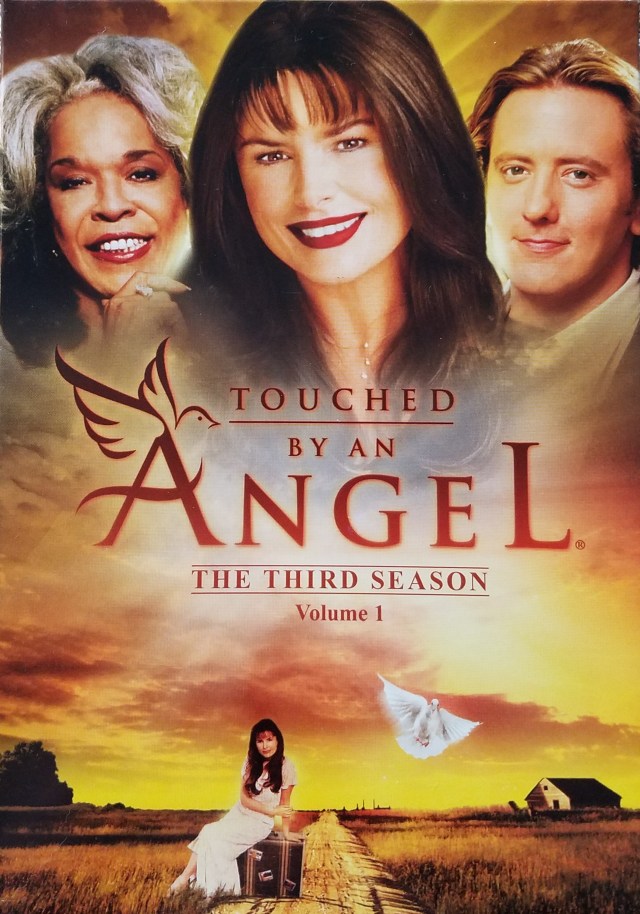
Touched by An Angelseason two poster created by CBS Productions, Caroline Productions, and MoonWater Productions
Episode Name: Sympathy for the Devil
Season 2, Episode 3
Premiere Date: October 7th, 1995
What I liked about this episode:
This episode of Touched by An Angel, “Sympathy for the Devil”, is where Kathleen makes her official debut. When she steps out of the truck at the fairgrounds, Jasmine Guy’s charisma already bursts off the screen! Her portrayal of Kathleen was so expressive. This made Kathleen’s interactions with other characters captivating to watch, especially when she crossed paths with Monica. Jasmine even brought some sass to her character, which helped Kathleen’s personality stand out. While watching this episode, I actually looked forward to seeing Kathleen appear in a scene. That’s because it meant I got another chance to see Jasmine’s strong acting performance!
What I didn’t like about this episode:
A conflict in “Sympathy for the Devil” is the fall out of Kathleen and Monica. Before this episode, they were best friends. But they grew apart when Kathleen turned to the “dark side” and Monica received her promotion as a case worker. This was an interesting story, especially since it dealt with a realistic conflict of friends growing apart and going their separate ways. Unfortunately, it became overshadowed by the episode’s main story of a father coming back into his son’s life. This was caused by the lack of balance between the plots in “Sympathy for the Devil”. Because both stories were strong, I wish they were placed in their own episodes.
The story itself:
Like I just mentioned in this review, “Sympathy for the Devil” contains two stories. The main story is about a father coming back into his son’s life, seeking forgiveness and redemption. The episode’s subplot revolves around the fall out between Monica and Kathleen. Monica’s mission is to reunite the father and son, helping them heal from years of heartache. Meanwhile, Kathleen wants to keep the son and father apart, just for the sake of causing chaos. As I already mentioned in my review, both stories were strong. Due to the lack of balance between these plots, though, it would have been more beneficial to put these stories in their own episodes, so they wouldn’t have to compete for screen-time. Without spoiling “Sympathy for the Devil”, I will say something happens in this episode that made me wonder why Andrew wasn’t introduced on Touched by An Angel sooner? While Andrew made his official debut in the show’s second season, it wasn’t until the twelfth episode, “The One That Got Away”.
The other factors from this episode:
During one of their confrontations, Ty Duncan (portrayed by Stacy Keach) calls his son “Chicken Boy”. Though it was intended to be an insult one takes seriously, I, personally, found it goofy. So, every time a character said “Chicken Boy”, I would burst out laughing. This is one of the most unintentionally funny moments I’ve seen on Touched by An Angel!
Matt Duncan (portrayed by Robert Kelker-Kelly) owns and operates a local fairground. His son, Daniel, admits his dad doesn’t like rodeos. Yet Matt agreed to host the fairground’s first rodeo despite his dislike. When he meets Monica, Matt confesses how he didn’t know a veterinarian needed to be on the premises at all times. I’m aware that the internet in 1995 was not as expansive as today’s internet. However, if Matt had little knowledge of how to host a rodeo, there were other resources at his disposal, especially considering his fairgrounds were located in Texas.
The purpose of Monica and Kathleen’s subplot was to address the battle of good vs. evil. While this was an interesting theme to include in this episode, I wish the backdrop had elaborated on this theme. Ty Duncan comes to the rodeo because he wants to ride his two thousandth bull. Daniel even dreams about riding a bull because of his grandfather. The sport of bull-riding could have provided symbolism for evil being conquered by the hero. But because bull-riding was simply presented as bull-riding, I found this a missed opportunity to connect one of the story’s themes to the background.
My overall thoughts:
When it comes to the introduction of new cast members or characters on television shows, the ultimate goal is to leave a good first impression. If this goal is achieved, those cast members could become series regulars and their characters may become popular. In the Touched by An Angel episode, “Sympathy for the Devil”, Kathleen was given a strong introduction. This is because Jasmine Guy’s performance was one of the best parts of the episode! Jasmine helped create a character that was captivating to watch, especially when Kathleen was interacting with other characters. I, honestly, wish Jasmine had been nominated for an award for her portrayal of Kathleen! As for the rest of the episode, I thought it was just fine. Even though both stories were strong, I think they should have been placed in their own episodes, so they wouldn’t need to compete for screen-time. I also believe the theme of good vs. evil should have been elaborated by the story’s backdrop. Looking back on “Sympathy for the Devil”, I wish Andrew had been introduced on Touched by An Angel sooner. If he had made his introduction in this episode, I wonder what job Andrew would have received at the fairground?
Rating: A 3.5 out of 5
White horse image created by Gabor Palla at freeimages.com. “FreeImages.com/Gabor Palla.”
In the Touched by An Angel episode, “Lost and Found”, Frank falls in love with Kathleen. Despite Kathleen providing Frank with a “false impression of love” (according to Monica), the story presents moments where their relationship feels honestly genuine. This is because the on-screen chemistry between Jasmine Guy and Bill Nunn was so sweet, they sold the concept of Kathleen and Frank being compatible, under different circumstances. It was almost easy to forget that these characters were not supposed to fall in love, as a result of the effective on-screen chemistry. Jasmine’s and Bill’s performance also worked in the on-screen chemistry’s favor. Unlike “Sympathy for the Devil”, Jasmine added a tender sweetness to Kathleen’s personality, allowing Kathleen to carry her charade. Bill consistently gave his character, Frank, a kind-hearted selflessness, which drove Frank to always help those in need.
What I didn’t like about this episode:
When I talked about what I didn’t like about “Sympathy for the Devil”, I explained how the overshadowing of Monica and Kathleen’s fall out was the result of a lack of balance between the episode’s plots. “Lost and Found” has the same flaw. There are two plots in this episode of Touched by An Angel: the relationship between Frank and Kathleen and the search for missing children. The first plot was actually interesting. If written differently, it could have had a conflict similar to the intended conflict of The Crow: City of Angels; where Kathleen must choose between remaining in the angelic world or becoming mortal in the name of love. The second plot, about the missing children, was also interesting, giving the characters a mystery to solve. But “Lost and Found” placed more emphasis on the missing children plot. The lack of balance between these two plots sometimes made me wonder what happened to Kathleen, as she would be absent for periods at a time. With both plots being strong, they should have existed in their own episodes. This way, they wouldn’t need to compete for screen-time.
The story itself:
Like I just mentioned in my review, there are two plots in “Lost and Found”, the search for missing children and the relationship between Frank and Kathleen. These plots are interconnected, as Frank himself provides the thread that keeps them together. As a policeman, Frank tries to help a missing boy return home. Yet he is haunted by the disappearance of another child. Kathleen uses her charade of love to disguise her true intentions; exploiting Frank’s trauma. The union of these stories express how the job of rescuing children can sometimes take its toll. Similar to “Sympathy for the Devil”, Monica must stop Kathleen from spreading evil and causing chaos. But unlike that episode, “Lost and Found” gives Andrew a reason to become involved in the story. Andrew’s job at the Center of Missing Children is with the computer department. Though his real assignment is guiding deceased children to Heaven. Andrew explains to Monica how he takes his role as “Angel of Death” very seriously. During their conversation, however, the bleakness of some children’s fate causes Andew to appear as if he’s about to cry. Andrew’s emotional response reenforces what I said earlier about the job of rescuing children sometimes taking its toll. From time to time, Touched by An Angel incorporates at least one plot twist into a given episode. While there is a plot twist in “Lost and Found”, I already knew what it was because I have seen this episode before. Therefore, it wasn’t as impactful as it was when I first saw the episode.
The other factors from this episode:
When I talked about the story of “Lost and Found”, I mentioned Andrew’s real assignment was guiding deceased children to Heaven. This part of the story addresses the sad reality some families of missing children face. There’s even a scene where Andrew helps a missing girl who just passed away. However, the dialogue between the girl and Andrew is subtle, giving the audience some time to figure out what is going on. Even the interaction between Andrew and the girl is friendly, with the girl expressing no fear over her situation. The combination of acting, screenwriting, and also the lighting acknowledges the bleakness of the moment without making the scene itself bleak.
Frank has a scrapbook of all the missing child cases he’s worked on. As he explains to Kathleen, the articles he collects are pieces of darkness he cuts out and traps into the scrapbook. Frank consistently does this to protect his soul, as he confesses how he doesn’t look back at the scrapbook once he adds another article. In entertainment media, scrapbooks have typically been portrayed positively. These books are collectors of good memories or visual time capsules. So, the way a scrapbook was written into “Lost and Found” was not only creative, but gave the episode a unique identity as well.
A janitor from a local mall wants to provide information on a missing child case. However, he’s nervous about going to the Center of Missing Children because he doesn’t know if what he saw and heard will truly help rescue the missing child. Tess gives the janitor some words of encouragement, saying, “ “If” is the saddest word in the history of language”. Tess’s conversation with the janitor emphasizes how worrying about “ifs” can sometimes take away the courage to make a difference and reach achievements. Tess’s motherly guidance and headstrong wisdom helped make this scene one of the most heart-warming in “Lost and Found”!
Some scenes in “Lost and Found” took place in Frank’s apartment. One of the items in his apartment is a large fish tank. The fish tank was placed on a metal shelf with wheels. A top shelf appeared to make opening the fish tank’s lid difficult. Anytime I’ve seen large fish tanks like Frank’s in entertainment media, they have been placed on their own stands. The lids have looked accessible, so the tank can be opened for cleaning or feeding the fish. With everything I said, Frank’s fish tank was one of the most questionable design choices I’ve ever seen on a television show.
My overall thoughts:
Touched by An Angel is both a heart-warming and heart-breaking show. There are times when the script doesn’t shy away from the world’s saddening truths. But there are also times when moments are up-lifting and inspiring, sharing valuable lessons with the characters and audience. “Lost and Found” is a perfect example of how the show can be joyful and sorrowful at the same time. The script addresses how searching for missing children doesn’t always have a happy ending. However, positive moments like Tess encouraging the mall janitor to speak up prevent the episode from becoming too “doom and gloom”. The stories of the missing children and Frank’s relationship with Kathleen were both interesting. Though I wish these stories were placed in their own episodes, to prevent them from competing for screen-time. The on-screen chemistry between Bill Nunn and Jasmine Guy was such a pleasant surprise, due to how sweet it was. Andrew was even given a reason to become involved in “Lost and Found”, as he was able to help in various ways. I have seen this episode before, so the plot twist wasn’t as impactful during the second viewing. Despite this, though, I found “Lost and Found” to be a decent episode.
It’s such an interesting coincidence how, prior to this review, I had only reviewed one Touched by An Angel from season three. Screenshot taken by me, Sally Silverscreen.
Episode Name: Clipped Wings
Season 3, Episode 18
Premiere Date: February 16th, 1997
What I liked about this episode:
Because this episode of Touched by An Angel revolves around Monica receiving an evaluation for her angelic work, the story takes place within an office building. Despite the limited use of locations, there were two examples of set design I really liked! For about half of the story, Monica mistakenly waits for the start of her evaluation in the waiting room of a psychiatrist’s office. This waiting room was one of the bougiest waiting rooms I’ve ever seen in the history of entertainment media! From marbled pillars and floor to the designer-esque furniture and even a giant cappuccino maker, this space did a convincing job at looking like Heaven on earth. Later in the episode, Monica must meet with the Angel of Angels. His office consisted of warm wood walls, an impressive wood desk, and complimentary blue carpet. Even the large fish tank had its own wooden cabinet, matching the wood of the walls and desk! The Angel of Angels’ office boasted a very masculine style, yet looked classy at the same time. I wish more scenes had taken place in this space.
What I didn’t like about this episode:
As I’ve stated in the introduction of this article, Jasmine Guy’s portrayal of Kathleen is the reason why I chose to review these episodes of Touched by An Angel. So, you can imagine my disappointment when, in this episode, Jasmine only appeared in four scenes. Compared to “Sympathy for the Devil” and “Lost and Found”, her acting talents in “Clipped Wings” were underutilized. This was led by the creative team’s decision to prioritize “Monica’s greatest hits”, showing clips from previously aired episodes. There were times while watching this episode of Touched by An Angel where I found myself wondering why Kathleen was even written into the story in the first place? Though Kathleen appeared in “Clipped Wings” for a reason, I think Jasmine should have received more screen-time.
The story itself:
As beloved as The Golden Girls have become over the years, that show is infamous for one creative choice: the “clip episode”. A typical “clip episode” of The Golden Girls focuses on the four protagonists sitting around the kitchen table and reminiscing over moments that took place in previous episodes. The Touched by An Angel episode, “Clipped Wings”, took a page from The Golden Girls’ playbook, devoting about 80% of the story to presenting clips of episodes airing before February 16th, 1997. Like I mentioned when I talked about what I didn’t like this episode, the creative team prioritized “Monica’s greatest hits”. Even though the script contained an original story involving Kathleen and another angel named Ruth, this part of the story was featured for only about 20% of the episode. These creative decisions were disappointing, especially since “Clipped Wings” commemorated Monica’s completion of fifty cases.
The other factors from this episode:
When I discussed the story of “Clipped Wings”, I mentioned how about 80% of the story was devoted to presenting clips of episodes airing before February 16th, 1997. In some of these clips, Tess reminds Monica how she shouldn’t take the “easy way out”. I found the inclusion of this advice ironic, as the decision to make “Clipped Wings” a “clip episode” seems like an “easy way out”, especially after watching (and reviewing) “Psalm 151”. I don’t know if this moment of self-awareness was intentional or coincidental. However, I wish the show’s creative team took Tess’s advice and gave this episode a stronger, more creative story.
One of the conflicts in this episode is Monica running late for her evaluation meeting. During the meeting, as Tess and Andrew discuss Monica’s flaws with Ruth, they remember how Monica has a history of misunderstanding directions. This realization helps Tess discover Monica’s reason for her tardiness. If Tess knew misunderstanding directions was a problem for Monica, why didn’t she come to the aforementioned conclusion sooner? Also, why didn’t Tess encourage Andrew to go look for Monica before the meeting started?
As I just mentioned in this review, Monica is late for her evaluation meeting. This mistake leads Ruth to enforce consequences. When Andrew and Tess object to Ruth’s decision, Ruth declares how Monica is now on her own. But for about half of this episode, Monica was on her own, seeming to be perfectly fine. I’m not sure if this moment of self-awareness was coincidental or intentional. However, I believe Ruth should have given Monica some grace and understanding.
My overall thoughts:
Whether a birthday or an anniversary, a 50th year is considered “golden”. From cake toppers to snowglobes, even pieces of art, the shiny metal has become a prize to be won in the journey of milestones. But when it comes to the Touched by An Angel episode, “Clipped Wings”, the show’s creative team missed a “golden” opportunity to commemorate Monica’s milestone of completing fifty cases in a more meaningful way. Unlike “Psalm 151”, where the script prioritized a unique story with its own set of conflicts and resolutions, “Clipped Wings” followed in The Golden Girls’ footsteps by emphasizing clips from previous episodes. This creative decision caused the original story involving Kathleen and Ruth to be overshadowed. Another missed opportunity was not giving Maureen McCormick’s character, Jodi, a larger role in the story. Other disappointing creative decisions include not showing James Earl Jones on-screen, underutilizing Jasmine’s acting talents, and the show’s creative team not taking Tess’s advice. Out of the Touched by An Angel episodes reviewed on 18 Cinema Lane, so far, “Clipped Wings” is my least favorite.
Rating: A 2.5 out of 5
Since I’m reviewing some episodes of Touched by An Angel, I figured including this screenshot would make sense. Screenshot taken by me, Sally Silverscreen.
On this day in 2000, The Road to El Dorado made its official debut. While the movie didn’t meet or exceed DreamWorks’ expectations, it certainly found an audience, which stuck with the film for all these years. I once heard The Road to El Dorado was intended to be the first story in a trilogy. But fate decided it worked better as a stand-alone picture. This caused me to think about the other stand-alone movies I’ve come to love. So, in honor of The Road to El Dorado’s 25th anniversary, I have compiled a list of what I believe are the top ten best stand-alone films! For my list, the criteria for a stand-alone film is not only a title that didn’t receive a sequel, but also isn’t affiliated with a series/franchise. If I covered a film on 18 Cinema Lane, I will provide a link to that article or review in this list. Each title will be presented in order of release year and each choice is based on my opinion.
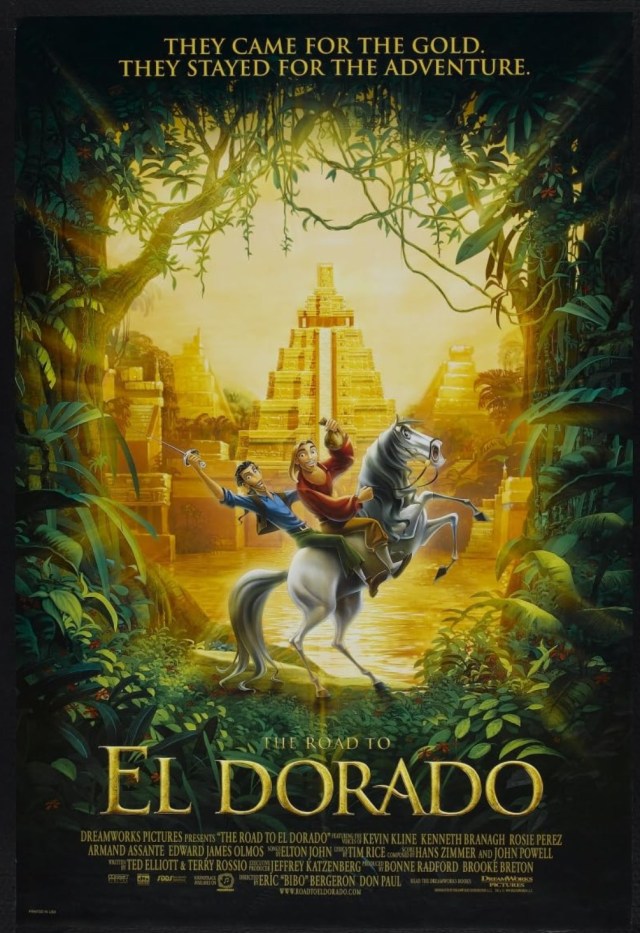
The Road to El Doradoposter created by Dreamworks Pictures, DreamWorks Animation, and DreamWorks Distribution
1. Singin in the Rain (1952)
I start my list with a classic I was introduced to because of my blog. Now that I have finally seen Singin in the Rain, I have an understanding and appreciation for why the movie is so beloved. Gene Kelly’s iconic musical number, “Singin in the Rain”, should provide enough explanation for why you should check the film out! The number itself feels immersive, as it takes place within the story’s context. Gene adds uniqueness to the number by jumping and splashing in puddles. “Singin in the Rain” successfully represents the spirit of the film, while also delivering the message of seeing the good in a not-so-good situation. That number is just one reason why Singin in the Rain is a solid musical!
If you’re going to watch any classics, you have to see 1959’s Ben-Hur! Though the three-hour run-time can seem intimidating, that time flew by for me, as I was so engrossed in the story. The emotional intensity of Charlton Heston’s, Stephen Boyd’s, and Haya Harareet’s performance complimented the scope of the overall film. Ben-Hur contains other likable qualities as well, from the magnificent sets/scenery to the interesting cinematography. How Christianity/faith was incorporated into the story sets the 1959 production apart from other “sword and sandal” pictures. Those who celebrate Easter may find Ben-Hur an appropriate seasonal title.
While the book, To Kill a Mockingbird, received a sequel, the film adaptation did not. The 1963 movie presents one of the few times where, in my opinion, the film was better than its source material. Getting straight to the point a lot sooner was a main focus for the creative team. The film’s visual nature worked in the favor of certain elements from the book. Showing suspenseful moments from the source material makes those moments seem real, as well as intensifies uncertainty. Leaving out scenes that feel like padding helps the movie maintain a steadier pace.
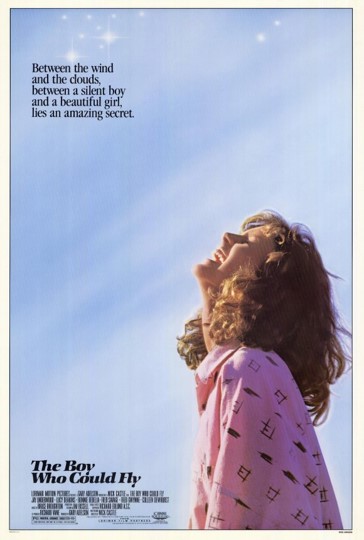
When I first saw The Boy Who Could Fly, it subverted my expectations. That’s because the 1986 picture aged surprisingly well! Through Milly and Eric’s friendship, the script shows how people with Autism can create and maintain meaningful relationships. Helping someone with Autism based on their personal preferences and accommodations may have seemed ahead of its time back in the mid to late ‘80s. Timeless messages and themes make up one of the reasons why I love the 1986 film. Showing compassion for others, dealing with grief, and understanding people’s differences take center stage.
In 2022, I wrote an editorial explaining why The Bodyguard held up thirty years later. Because I love the 1992 film, finding explanations wasn’t difficult. “The kitchen scene” is, in my opinion, the best scene from any action movie. One reason why is how the kitchen’s smaller space is seen by the actors as a challenge instead of a hindrance. What also worked in The Bodyguard’s favor was Whitney Houston’s portrayal of Rachel Marron. Throughout the story, Whitney realistically showcases emotions and expressions. This helped Rachel become a multi-layered character.
Swept from the Sea was one of the earliest hidden gems I discovered in 2019. It’s a movie that’s so great, I just had to include it on this list. There are so many things to like about Swept from the Sea. From Vincent Perez’s captivating performance to the beautiful scenery, the film’s components came together to create an endearing and emotional presentation! The 1998 film is a character-driven story, relying on on-screen chemistry in order to work. Because of Vincent Perez’s and Rachel Weisz’s differing acting styles, the on-screen chemistry between Yanko and Amy was very sweet and genuine.
This is another movie I just had to include on my list. But this time, it’s because Phantom of the Megaplex is also celebrating its 25th anniversary this year! The Disney Channel picture showed that the movie-going experience can be fun. As I explained in my editorial celebrating the film’s 20th anniversary, the made-for-TV movie also serves as a time capsule of how the cinema operated in the beginning of the millennium. Phantom of the Megaplex even shows how movies can influence our lives. Though I’m not sure if that aspect of the story was intentional, it makes the 2000 title, somewhat, thought-provoking.
I Am David was the biggest pleasant surprise of 2024. It became the year’s best movie in March and stayed number one until the very end! What set I Am David apart was the film’s genuine emotion and sincerity. This was seen and felt through every aspect of the production. The 2004 movie emphasized visual depth. Achieved by exploring light and darkness, as well as showcasing Europe’s natural landscape, the creative team used the visual nature of film to their project’s advantage. Two effective plot twists are another reason why I liked I Am David. Their delivery in the story was well-written.
This 2011 presentation is one of Studio Ghibli’s stronger projects. A reason is one of the overarching themes; honoring the past. The film intelligently and creatively shows its audience how important history is in our lives and our world. Whether referencing the 1964 Olympics or focusing on the characters’ relationships, the theme of honoring the past acts as an umbrella sheltering Poppy Hill and its surrounding areas. Studio Ghibli’s signature colorful palette is consistently on display in the 2011 film. The strong understanding for how and when to use color makes scenes look like priceless pieces of art! Personally, I think movies like From Up on Poppy Hill present an argument why 2-D animation still has its time and place.
I think it’s fitting to close this list with a DreamWorks movie, as a DreamWorks movie is the reason why I created this list in the first place. Though this was a recent watch for me, The Wild Robot is, so far, the best film I’ve seen this year! The animation itself is absolutely gorgeous! Sometimes, scenes look like paintings and other times, they look like priceless photographs. I was not expecting the story to contain as much emotional depth as it did. An abundance of good messages and themes add a sense of timelessness to the production. Though it’s unknown right now if The Wild Robot will gain an audience like The Road to El Dorado has, I can confidently say it was a really good movie!
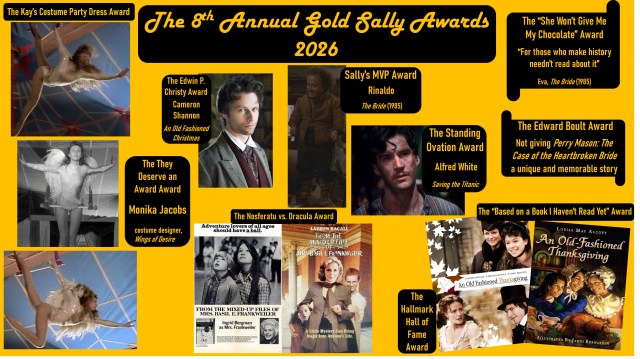
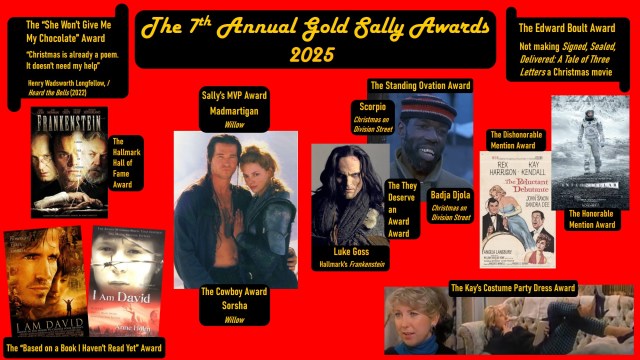
Here at 18 Cinema Lane, I maintain several annual traditions to give my readers something to look forward to. One of those traditions is the Gold Sally Awards, which commemorates my blog’s anniversary! The award categories are created by me and based on topics I’ve brought up on my blog. With two new awards in 2025, I’ll explain the significance of those categories. Like in 2024, I will discuss why I chose each recipient. Now, let the 7th Annual Gold Sally Awards begin!
7th Annual Gold Sally Awards Winners created by me, Sally Silverscreen.
The Kay’s Costume Party Dress Award
(Best Outfit from a Movie)
Helen’s Christmastime Outfit from Hallmark Hall of Fame’s Pack of Lies
When I thought about the various categories of the Gold Sally Awards, I realized there was no category recognizing the wardrobe department of the movie industry. To fix that, I created the Kay’s Costume Party Dress Award! The name of this award references the dress Kay (Joan Collins’ character) wore at a costume party in the 1983 tv movie, Making of a Male Model. I loved this dress so much, it was featured in 2021’s Movie Blogger’s Christmas Wish-List! From the films I saw in 2024, there were several outfits I really liked. The one that was the most memorable, however, came from the Hallmark Hall of Fame presentation, Pack of Lies! The outfit in question was featured in my Movie Blogger’s Christmas Wish-List from last year; the black and blue ensemble Helen (portrayed by Teri Garr) wore during Christmastime. This timeless outfit was worn in only one scene. That fact is why Helen’s outfit earned the inaugural Kay’s Costume Party Dress Award!
The Edward Boult Award
(Missed Opportunity in Cinema)
Not making Signed, Sealed, Delivered: A Tale of Three Letters a Christmas movie
Last June, I speculated how Signed, Sealed, Delivered: A Tale of Three Letters could be a Christmas film. In my editorial about my speculation, I explained how the movie’s title could be a reference to either the Nativity story or A Christmas Carol. I also wondered if Signed, Sealed, Delivered: A Tale of Three Letters and “Signed, Sealed, Delivered: To the Moon and Back” could be a two-part adaptation of A Christmas Carol, with the rock star character intended to be a Marley-like character. The official marketing for Signed, Sealed, Delivered: A Tale of Three Letters proved my speculation wrong. But the more I think about how this movie could have been a Christmas picture, the more I wish it had been a Christmas production. As of early February, 2025, the Signed, Sealed, Delivered series has received only one Christmas movie. Plus, my aforementioned editorial provided ideas for a potential Christmas script. With Hallmark Mystery’s ‘Miracles of Christmas’ viewership numbers lower in 2024 than 2023, maybe the network will consider creating another Signed, Sealed, Delivered Christmas film.
The They Deserve an Award Award
(An Actor or Actress Who Deserves Recognition)
Luke Goss (for his performance in Hallmark’s Frankenstein) and Badja Djola (for his performance in Christmas on Division Street)
There were several good acting performances I saw in 2024. So, it was difficult to choose just one recipient for this year’s Gold Sally Awards. Both Luke Goss’ and Badja Djola’s performance was so impressive! In Hallmark’s Frankenstein, Luke’s use of emotion allowed The Creature to speak without actually speaking. An example I used in my review of the 2004 television film was when The Creature bursts into tears while seeking refuge in a barn. Luke’s acting skills made his character as complicated as he was in Mary Shelley’s source material. Badja made his character, Scorpio, so memorable, despite having limited appearances in Christmas on Division Street. With a consistently commanding presence, Scorpio was a character I looked forward to seeing on screen. That’s because Badja used his acting talents to give Scorpio captivating interactions with other characters. The scene where Scorpio shares some of his backstory with Cleveland is the example I used in my Christmas on Division Street review.
The Cowboy Award
(Character Who Makes an Unnecessary, Drastic Change)
Sorsha from Willow
You’re probably wondering why I gave Sorsha the Cowboy Award, even though I grew to like her as a character. While I found her transformation from villain to hero necessary, it was drastic. In my Comparing with the Critics review of Willow, I shared how Sorsha’s aforementioned evolution was too abrupt. The transformation gave Sorsha some character development, but it left some questions unanswered. For this flaw, blame lies in the screenwriting.
Sally’s MVP Award
(Character Who Left a Memorable, Showstopping Impression)
Madmartigan from Willow
When I watch a movie, there is, sometimes, a character who leaves such a memorable impression on me, they end up stealing the show. I have called these types of characters “MVP”. To acknowledge the “MVPs” of 18 Cinema Lane, I created the new Sally’s MVP Award! One of these “MVPs” was Madmartigan from Willow. In my Comparing with the Critics review of the 1988 film, I talked about how Madmartigan was the story’s comic relief. His personality and comedic timing captivated my attention and kept me invested in his story. What helped Madmartigan become the “MVP” of Willow was the screenwriting and Val’s performance.
The “She Won’t Give Me My Chocolate” Award
(Best Quote from a Movie)
“Christmas is already a poem. It doesn’t need my help” – Henry Wadsworth Longfellow, I Heard the Bells (2022)
In the 2022 movie, I Heard the Bells, Fanny (portrayed by Rachel Day Hughes) encourages her husband, Henry, to create a Christmas themed poem. Henry (portrayed by Stephen Atherholt) told his wife, “Christmas is already a poem. It doesn’t need my help”. When Henry said this, I started to think about what his quote meant. Poems require planning and putting the right pieces together, in order for that poem to have good flow and writing structure. Christmas festivities require a certain amount of planning, whether it’s a local church’s Nativity play or a family’s Christmas party. Using these two examples, finding the right pieces is important, such as who will portray the Three Wise Men or what will be the entrée of Christmas dinner. Poems can also tell stories. One classic example is ‘‘Twas the Night Before Christmas’. Christmastime is filled with stories, from the Nativity story to A Christmas Carol. Henry’s aforementioned quote made me see Christmas in a completely different way! Plus, a quote from a Christmas movie has never won the “She Won’t Give Me My Chocolate” Award before.
The Honorable and Dishonorable Mention Award
(Best and Worst Movie from the Honorable and Dishonorable Mention Category)
Best – Interstellar
Worst — The Reluctant Debutante
For last year’s Gold Sally Awards, there was only the Dishonorable Mention Award. That’s because I didn’t see enough movies to include an honorable mention category. With the honorable mention category returning in 2024, the Honorable Mention Award is also coming back! Science fiction stories about space exploration will typically emphasize the thrills and wonder of the galaxy. This can make it easy for a movie’s audience to get caught up in how adventurous and exciting outer space can seem. In Interstellar, a major focus is space travel’s effect on human beings. So, themes of family, sacrifice, and the price of scientific achievement are woven into the script. That, along with quality acting performances and impressive special effects, is why I liked Interstellar!
Out of all the movies that ended up in the dishonorable mention category, I had the highest expectations for The Reluctant Debutante. This is because I not only reviewed the film for The John Saxon Blogathon, there was some well-known talent involved with the project. Unfortunately, the 1958 movie fell short of those expectations. The Reluctant Debutante was a premise driven story that felt longer than one hour and thirty-four minutes, due to the jokes being drawn-out. It also didn’t help how some story ideas were overlooked. When I reviewed the 1958 film, I shared how movies from the 1950s are covered so infrequently on 18 Cinema Lane. So, it’s disappointing when a production from the ‘50s is weaker than expected.
The Hallmark Hall of Fame Award
(Movie That Feels Like It Belongs in the Hallmark Hall of Fame Collection)
Hallmark’s Frankenstein
There are different kinds of stories in the Hallmark Hall of Fame collection. One kind of story is adaptations of pre-existing literature. Sometimes, “classic” literature became Hallmark Hall of Fame presentations, like The Secret Garden and A Tale of Two Cities. When these adaptations are good, they can be an immersive experience. This is how I would describe Hallmark’s Frankenstein! Due to the combination of screenwriting, acting performances, set design, and costume design, the movie made me feel like I was transported to another time and place. I also appreciate how close to the source material the 2004 television film is. Looking back on Hallmark’s Frankenstein and the Hallmark Hall of Fame collection, I’m actually surprised Mary Shelley’s novel wasn’t adapted into a Hallmark Hall of Fame project. Everything I said is why I chose Hallmark’s Frankenstein for the Hallmark Hall of Fame Award!
The “Based on a Book I Haven’t Read Yet” Award
(Movie Based on Source Material I Have Not Yet Read)
I Am David
Movies that won the “Based on a Book I Haven’t Read Yet” Award were first placed on a best films of the year list. I Am David is continuing that tradition! The 2004 film earned the top spot on my best movies list of 2024. This is the second time a number one movie of the year received the “Based on a Book I Haven’t Read Yet” Award! After I reviewed I Am David, I learned the movie was based on a book. I’m not sure how affective the story’s plot twists will be, as I already know what they are because I saw the film. However, I’d still be interested in reading I Am David someday!
The Standing Ovation Award
(Character Most Deserving of Receiving Their Full Potential)
Scorpio from Christmas on Division Street
When the Gold Sally Awards presented the Standing Ovation Award, the recipients were characters who should have received their “standing ovation”, but were denied that for various reasons. Scorpio (from Christmas on Division Street) actively worked toward getting where he wanted to go. As I said during the They Deserve an Award Award, Scorpio had limited appearances in the 1991 made-for-TV movie. Despite that, the audience learned enough about him to know what he had gone through. During this limited period of time, Scorpio attempts to overcome his obstacles. While I won’t spoil Christmas on Division Street, I will say those attempts earned Scorpio the Standing Ovation Award!
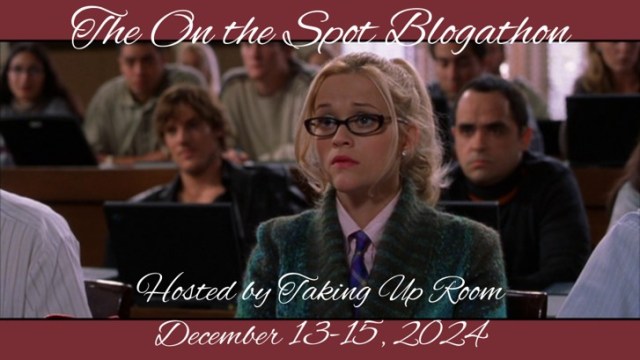
Have you ever been in a situation where instead of finding a movie, a movie found you? This is my case with the 1991 made-for-tv film, Christmas on Division Street. Earlier this year, I conducted research for my Sally Solves a Mystery article about who Bianca Marquez Walsh from As the World Turns is. During this process, a commercial for the movie crossed my path. As a movie blogger who reviews their fair share of television films, especially those that are Christmas themed, I’m always looking for potential movies to cover. So, I remembered the 1991 program in the hopes of reviewing it someday. Fast forward to mid-November, 2024. When I learned what Taking Up Room’s On the Spot Blogathon was about, I knew I had found the perfect movie to write about for the event! Plus, the blogathon took place in December, which gave me another reason to review Christmas on Division Street! Before 2024, I had never heard of the 1991 tv production. But I was familiar with the film’s lead actors. I had seen some of the projects from Fred Savage’s filmography; like The Princess Bride and The Wonder Years. Three years ago, I reviewed one of Hume Cronyn’s movies; the 1987 Hallmark Hall of Fame presentation, Foxfire. In the aforementioned commercial for Christmas on Division Street, I discovered the story was more unique from other Christmas productions I’ve covered on my blog. This is because the friendship between the main characters was prioritized.
Christmas on Division Streetadvertisement created by Columbia Pictures Television, Higher Ground Productions Inc., Morrow-Heus Productions, Procter & Gamble Productions (PGP), The Guber-Peters Company, W.I.C., and CBS
Things I liked about the film:
The acting: When you have a movie like Christmas on Division Street, where the story revolves around the friendship between two characters, it’s important to cast actors who can equally carry that production. Because of the strength of Fred’s and Hume’s performance, I was captivated by the story of Trevor and Cleveland! Hume’s character, Cleveland Meriwether, typically carries himself as a jolly mentor. He not only wanted to teach Trevor valuable lessons, he also wanted to help other people in need. However, there were moments that showed just how versatile of an actor Hume Cronyn is. After receiving a tin of cookies from Trevor, Cleveland heartily laughs to himself, remembering his friend’s kindness. Then, all of a sudden, Cleveland’s laughter morphs into sobbing, sadness now residing on his face. This transformation was seamless, showing Cleveland’s emotions bubbling over behind closed doors. The scene I described also presents Hume’s understanding for when and where to use emotionality.
Like I previously mentioned in this review, I was captivated by the story of Trevor and Cleveland because of the strength of Fred’s and Hume’s performance. One scene that illustrates this point is when Cleveland tries to help Trevor with an upcoming school assignment. After Cleveland reminds Trevor how they should be honest with each other, Trevor immediately becomes frustrated because he believes Cleveland has been dishonest with him. As he’s confronting Cleveland, Trevor’s tone of voice is sharp and his eyes narrow on Cleveland’s face. But as soon as Trevor calls Cleveland a “bum”, Trevor’s face quickly falls, realizing he’d messed up. Meanwhile, Cleveland looks deflated, as if his spirit had been crushed. Similar to Hume’s performance, Fred Savage knew how to use emotionality to his advantage. This knowledge allowed his portrayal of Trevor to be well-rounded!
Badja Djola portrayed Scorpio, a friend of Cleveland’s. Despite having limited appearances in Christmas on Division Street, he had such a commanding presence! One of my favorite scenes featuring Scorpio is when he’s sharing some of his backstory with Cleveland. With a combination of eye movements, vocal inflections, and even tilts of the head, Scorpio’s recollection was captivating. I clung on to every word, anticipating what he would say next. With everything I said, I wish Badja had received more screen time.
The messages and themes: As I mentioned in my review of Cancel Christmas, important messages and themes are sprinkled throughout the story of a typical Christmas film. While this was the case for Christmas on Division Street, the themes and messages within the story apply to the Christmas season as well as outside of Christmastime. A good example is when Trevor faces a dilemma; he doesn’t have any money for a ride home. With quick thinking, Cleveland tells Trevor he’s on his way to the bank. The next scene reveals Cleveland meant the blood bank, where he not only donates blood, he also makes enough money to help Trevor. This scene emphasizes how there are a variety of ways to help those in need any time of year. In another scene, Trevor tries to give Cleveland some used clothes. When he searches through the bag of clothes, Cleveland finds a long coat with a fur collar. Instead of taking the coat for himself, he gives the coat to a pregnant woman he knows. The theme of putting the needs of others before yourself is highlighted in this scene.
The inclusion of history: Toward the beginning of Christmas on Division Street, Trevor receives a class assignment to write a report about a topic relating to Philadelphia’s American Revolution history. Through this subplot, the movie’s creative team found an opportunity to incorporate history into the script. At the library, where Trevor and Cleveland first meet, Cleveland encourages Trevor to write about Benjamin Franklin. While Trevor takes notes, Cleveland shares how Benjamin Franklin created the first subscription library in Philadelphia. Cleveland also shares how Benjamin Franklin would sometimes write under the pen-name of Richard Saunders. Though these history lessons were brief, their inclusion in Christmas on Division Street was such a pleasant surprise!
The dialogue: I have said in the past how a made-for-TV movie’s dialogue can be very hit or miss. That’s because the quality of a television film’s dialogue depends on the skill and talent of the screenwriter. While watching Christmas on Division Street, I was impressed with this part of the production! The dialogue was not only clever, but also thoughtful. At the library one day, Cleveland meets with his social worker, Benedetti. After Benedetti expressed his frustrations over Cleveland’s lack of progress, Cleveland tells his social worker, “Weren’t for guys like me, you’d be out of a job. And before you know it, you’d be down here taking my place. I’d say I’m doing you a big favor”. Later in the movie, Cleveland gives the long coat with the fur collar to the pregnant woman he knows. Because Trevor was with Cleveland during this exchange, Cleveland says to Trevor, “Funny how people become invisible…when you keep your eyes closed”. Within these two examples, the screenwriter did a good job at providing Cleveland with character development through dialogue!
An inconsistent appearance of Christmas: With a movie titled Christmas on Division Street, you’d think the Christmas holiday would have such a consistent presence, it would seem like Christmas was its own character in the story. But that’s not what happened in the 1991 film. When I watched about thirty minutes of Christmas on Division Street, I wondered, “Isn’t this a Christmas film”? That’s because there was no acknowledgment of Christmas. The only noticeable seasonal element was fallen leaves occasionally shown in Philadelphia’s landscape. Christmas is finally recognized about forty minutes into an hour and thirty-three-minute movie. I recognize the emphasis in Christmas on Division Street is placed on the messages and themes of the holiday instead of the holiday itself. However, I still wish Christmas had a more consistent appearance in the film.
A quick resolution: Earlier in this review, I said, toward the beginning of Christmas on Division Street, Trevor receives a class assignment to write a report about a topic relating to Philadelphia’s American Revolution history. This subplot is interconnected with another subplot; Trevor’s conflict with a fellow student named Derek. For most of the story, Derek picks on Trevor. He even goes so far as to steal Trevor’s idea for his history report. But after their history reports have been graded, Trevor learns a little about Derek’s home life. This knowledge not only makes Trevor sympathetic toward Derek, he also becomes Derek’s friend. The subplot I just wrote about represents one of the story’s themes; that “everybody’s got their story”. However, the resolution to this conflict was, in my opinion, reached too quickly.
Tonal whiplash: After gathering research for his history report, Trevor rescues a pair of blue carnation flowers from the garbage with Cleveland. In this heartwarming scene, Trevor says how Cleveland sometimes reminds him of his grandpa, who had recently passed away. A scene later, a dead body is being placed in a coroner’s car, with Benedetti telling Trevor and Cleveland a man named Jake had died. The next scene shows Trevor and his family attending an event at their church. This tonal whiplash was not a consistent flaw in Christmas on Division Street. But among these aforementioned scenes, the transition between tones should have been smoother.
In the introduction of this review, I stated how I did not find Christmas on Division Street, the movie found me. After seeing the film, I can honestly say I’m glad it crossed my path! Out of the made-for-TV Christmas projects I’ve seen, let alone reviewed, the 1991 production is one of better programs ever created. The acting from both the lead actors and the supporting cast is equally strong. While Fred and Hume carried the story through the strength of their acting abilities, Badja found a way to make his character memorable. The dialogue was clever and thoughtful thanks to the screenwriter, Barry Morrow. In fact, the dialogue was one of most impressive parts of the movie! I wish Christmas had a more consistent presence throughout Christmas on Division Street. However, I recognize the themes and messages of Christmas were prioritized over the holiday itself. I also wish the conflict between Trevor and Derek hadn’t been resolved so quickly. But I acknowledge how this subplot represented the theme of “everybody’s got their story”. If you’re looking for a Christmas movie that’s found off the beaten path or could be considered a “hidden gem”, let Christmas on Division Street find you on your path!
Overall score: 7.5-7.6 out of 10
Have you seen Christmas on Division Street? Do you have a favorite Christmas film that is more “underrated”? Please tell me in the comment section!
From time to time, I have accepted movie recommendations from my readers. Some of these recommendations were chosen for past reviews, such as when Jillian (from The Classic Film Connection) suggested I check out Fried Green Tomatoes. But on a few occasions, I have taken television show recommendations. After Jillian gave me another suggestion; the Diagnosis Murder episode, “Guardian Angel”, I was waiting for the right time to finally write about it. Remembering the show starred Dick and Barry Van Dyke, I decided to review the episode for Taking Up Room’s We Are Family Blogathon! As the title of this review suggests, this is not the first time I’ve written about an episode of Diagnosis Murder. Back in 2022, I reviewed the 1998 episode, “An Education in Murder”. While I found that episode to be just fine, I was willing to watch more episodes of the show with an open mind. Did I like “Guardian Angel” more than “An Education in Murder”? To solve this mystery, you have to read my review!
Episode Name: Guardian Angel
Season 1, Episode 14
Premiere Date: April 1st, 1994
The title card for “Guardian Angel”. Screenshot taken by me, Sally Silverscreen.
What I liked about this episode:
On television shows or in movies, there is sometimes that one performance that is so strong, it carries the entire production. That kind of performance came from Catherine Hicks in “Guardian Angel”! Portraying the murder victim’s wife, Lauren, Catherine brought emotional variety to her role. This versatility allowed Catherine to adapt to any situation her character was experiencing. In a scene showing Dr. Mark Sloan paying Lauren a visit at her house, Lauren shares a personal story with Dr. Sloan. As she tells her story, Lauren’s expressions and emotions fluctuate, helping to make Lauren’s reflection come across as realistic. The aforementioned emotional variety and adaptability made Catherine’s performance captivating to watch! I honestly wish she had been, at least, nominated for her role in this episode.
What I didn’t like about this episode:
Toward the beginning of “Guardian Angel”, it is revealed Lauren knows a man named Strand. She not only calls him in the middle of the night, she also visits his apartment. As I watched “Guardian Angel”, I was waiting for an explanation about Strand and Lauren’s connection. Unfortunately, this explanation never came. Is Strand Lauren’s son from a previous relationship? Perhaps Strand is an undercover journalist working for Lauren’s husband’s political opponent? These unanswered questions left a hole in the episode’s plot. Not relating Lauren and Strand’s connection to the main conflict was also a missed opportunity. As of the publication of this review, the mystery of how Strand and Lauren know each other is still unsolved.
The mystery itself:
The mystery in “Guardian Angel” and “An Education in Murder” share two major similarities. The first is how the audience learns early in the story who the guilty party is. The second is how the audience is forced to just watch Dr. Mark Sloan figure out the mystery’s culprit. This approach to story-telling takes away the interactivity of solving the mystery alongside the protagonist. How Dr. Mark Sloan reached certain conclusions in “Guardian Angel” was a bit far-fetched. For these conclusions, the bridge between point A and B was missing. It also doesn’t help how there were few physical clues.
Earlier in this review, I mentioned how Lauren called Strand in the middle of the night. During this phone call, however, Lauren poses as a newspaper reporter. “Guardian Angel” establishes how Strand is obsessed with Lauren’s family. Not only does Strand have a collage of pictures and newspaper articles on his apartment wall, he also attends events Lauren and her husband were either invited to or hosting. With that said, I find it hard to believe Strand wouldn’t recognize Lauren’s voice during the aforementioned phone call, especially since Lauren wasn’t trying to disguise her voice.
I haven’t seen many episodes of Diagnosis Murder. But based on the episodes I have seen, I’ve noticed how Dr. Mark Sloan treats people fairly. In “Guardian Angel”, a man named Lewis was admitted into the hospital due to being hit by a car. Dr. Mark Sloan tells Lewis how he treats patients, not charity cases, at his hospital. After learning Lewis only has about five hundred dollars to his name, Dr. Mark Sloan advocates for Lewis to be registered into a “senior program”.
When I reviewed “An Education in Murder”, I wondered how often younger characters appeared on Diagnosis Murder. While I still don’t have the answer to that question, I think it’s an interesting coincidence how I’m reviewing another episode where Dr. Mark Sloan provides guidance to a younger character. Lauren has a teenage daughter named Melissa. When Dr. Mark Sloan discovers Melissa received an eating disorder diagnosis, he pays her a visit at a nearby hospital. During this visit, Dr. Mark Sloan breaks the ice by discussing music with Melissa. He also learns why she was diagnosed with an eating disorder. Dr. Mark Sloan’s willingness to mentor younger characters makes me believe he missed his calling as a teacher.
In some of my Murder, She Wrote episode reviews, I marveled over the set design and locations featured on the show. These places were so visually appealing, they became showstoppers in their respective episodes. It looks like “Guardian Angel” took a page from Murder, She Wrote’s playbook when it came to location scouting! I don’t know if Lauren’s house is a set or a real-life structure. However, this house was one of the most photogenic facilities I’ve ever seen on a television show! The exterior of the house boasted brick and deep brown wood. Details such as arched windows and small steepled roofs present a cozy, cottage-like appearance to this building. The interior of Lauren’s house is equally photogenic! Though only two rooms were shown in “Guardian Angel”, they looked like they came straight out of a castle. In the living room, the focal point is an impressive dark wood and marble fireplace, complete with carved designs just under the mantle. Meanwhile, the large dining room displays a cozy elegance. This aesthetic is made possible by combining printed cream curtains, a gold chandelier, and a large brick and wood fireplace.
This is the episode’s only clear shot of the exterior of Lauren’s house. Despite that, Lauren’s house displays an elegant, cottage-like appearance. Screenshot taken by me, Sally Silverscreen.
Though it can be difficult to decipher the carvings on the fireplace, the carvings add to the fireplace’s impressiveness. Screenshot taken by me, Sally Silverscreen.
Even though Dr. Mark Sloan and Lauren spend only one scene in the dining room, the space itself boasts a sophisticated, yet quaint style. Screenshot taken by me, Sally Silverscreen.
My overall thoughts:
Two years ago, when I shared my overall thoughts on “An Education in Murder”, I said the amount of stories in that episode never felt overwhelming. I also said each plot was connected to the mystery. These same claims cannot be made about “Guardian Angel”. In the 1994 episode, there is so much happening in the story, certain parts are either not clearly explained or not explained at all. As I mentioned in this review, the connection between Strand and Lauren was never revealed. What is also not revealed is why Strand was obsessed with Lauren’s family. “Guardian Angel” is another mystery where the audience discovers who the guilty party is early in the episode. It’s also another mystery where the audience simply watches Dr. Mark Sloan solving the case. But for all the faults of this Diagnosis Murder episode, there were aspects of the episode I liked. One of these aspects was Catherine Hicks’ portrayal of Lauren. “Guardian Angel” is not one of the worst episodes reviewed on 18 Cinema Lane. Similar to “An Education in Murder”, though, I was left desiring more.
2024 has hosted several anniversaries, from the 30th anniversary of the Disney animated film, The Lion King, to the 50th anniversary of Little House on the Prairie. But there is one anniversary that can’t be overlooked: the 30th anniversary of Touched by an Angel! With the show premiering on September 21st, 1994, I figured it would be appropriate to review some episodes this month in honor of the occasion. Since I reviewed three individual episodes of Touched by an Angel in the past, I will be writing about three episodes at once this time. Similar to past reviews of television episodes, I’m going to discuss what I liked about the episode, what I didn’t like about the episode, the story itself, the other factors from the episode, and my overall thoughts. Now, let’s talk about the three selected episodes: “The Southbound Bus”, “Psalm 151”, and “Mother’s Day”!
Touched by An Angel has incorporated serious, real-world topics into their stories; providing the show with dramatic, even sad, moments. But there are times when Touched by An Angel can become light-hearted. One perfect example is when David meets Tess for the first time. Tess arrives at David’s house as his new nanny. Because of hardships he experienced prior to the events of “The Southbound Bus”, David is skeptical of Tess and her new role. Tess, on the other hand, is ready to deal with David’s skepticism. Her no-nonsense attitude and motherly persona make it clear who’s in charge. She even calls David “dinosaur boy”, due to the dinosaur print on David’s shorts. The scene I described was genuinely hilarious because of how well written and acted it was. It also provided a balance between the episode’s light-hearted and serious tones!
What I didn’t like about this episode:
When she visits a rest stop known as Hewitt, Monica meets Ruth Ann and Christine. Later in the episode, a run-in with a local police officer forces Ruth Ann to confess to Christine how she’s attempting to flee the FBI due to her association with a criminal. During Ruth Ann’s attempt to flee, Monica pleads with Ruth Ann to confront her past. Monica’s pleading is fruitless, as not only Ruth Ann hitchhikes out of Hewitt, her part of the story is left unresolved. I know there’s only so much story you can tell in an hour-long episode. But if the show’s creative team knew Ruth Ann’s story wasn’t going to receive a resolution, why address it in the first place?
The story itself:
As I mentioned earlier in this review, Touched by An Angel has included dramatic, even sad, moments in their stories due to the show’s subject matter. However, as I’ve also mentioned, there are times when the show can become light-hearted. These tones were balanced very well in “The Southbound Bus” as viewers are introduced to Monica, Tess, and their roles as “case workers”! The story jumps right into the action as Monica not only receives an upgrade from “search and rescue”, she also receives her first assignment in her new role. This creative choice grabs viewers’ attention as Monica meets Tess at the bus stop. Touched by An Angel sometimes incorporates plot twists and surprises in their stories which can catch viewers off-guard. There is one plot twist in “The Southbound Bus” that I found really effective!
The other factors from this episode:
For this part of my review, I will spoil “The Southbound Bus”. If you have not seen this episode and are planning on watching it, please skip to the next point in this section.
When Monica confronts Christine on the loss of her daughter, Monica admits an angel was with Christine’s daughter, Katie, when she died. She also confesses how an angel is with Katie in Heaven. Monica’s statement confused me because I remembered how, prior to this episode, she was on “search and rescue”. Yet, when talking with her friend from “search and rescue”, Adam, Monica didn’t know the history of David’s family. Was Adam with Katie or was it perhaps Andrew, with this detail revealed in a later episode?
During her assignment to help David, Monica reconnects with a friend from “search and rescue” named Adam. Through their conversation, Monica receives key information about David’s mother and sister. From what I remember of Touched by An Angel, Adam doesn’t join the show’s main cast. This makes me believe Adam was the precursor of Andrew (who would make his debut in season two).
At the beginning of “The Southbound Bus”, Tess reminds Monica how she hasn’t appeared in human form for more than a few moments. This fact causes Tess to warn Monica not to eat everything in sight. Tess’s guidelines for the human world make me wonder what other rules angels have to follow? Were these rules expressed in other episodes?
My overall thoughts:
“The Southbound Bus” is the very first episode of Touched by An Angel. It’s also the very first time viewers meet Monica, Tess, and the world they interact with. I’d say this was a strong start for not only Touched by An Angel’s first season, but also for the series as a whole! The overall quality of the production sets up what viewers can expect from this show. “The Southbound Bus” addresses serious subjects like grief and neglect. But the way this story was written allowed moments of humor and even hope, providing a balance between serious and light-hearted tones. The dialogue is thought provoking as well, such as when Monica marvels at how humans have the courage to wake up and start a new day. I said in the past how “Perfect Little Angel” would be a good starting point when introducing someone to Touched by An Angel. Another good choice would be “The Southbound Bus”, as that is where it all began!
If I could choose one phrase to describe “Psalm 151”, it would be “genuine sincerity”. The reason is how genuine sincerity was the glue that kept this story together! The interactions between the characters felt sincere, giving the impression they truly wanted to respect Petey’s wishes. Cornelia/Celine and Petey’s friendship came across as genuine due to the performances of Mika Boorem and Joseph Cross, as well as the screenwriting. Even Céline Dion’s inclusion in this story felt sincere as she tells Petey and Cornelia/Celine to always focus on the light. This genuine sincerity left me invested in the story and caring about the characters!
What I didn’t like about this episode:
“Psalm 151”is a music-centric episode because music is one of the story’s main themes. As I mentioned in my review of the episode, “Perfect Little Angel”, Della Reese is a real-life singer. With that said, I think not incorporating Della’s singing talents in “Psalm 151” was a missed opportunity. Like I stated while talking about “The Southbound Bus”, there’s only so much story you can tell in an hour-long episode. This means there’s only so much time to include the singing talents of Céline Dion and Wynonna Judd. I still wish some amount of time had been given to Della so she could sing at least one song.
The story itself:
For Monica’s 100th case, the creative team behind “Psalm 151” could have turned this story into a “remember when” episode; where Monica, Tess, and Andrew reflect on flashbacks that occurred in previous episodes. Instead, Monica received a new case containing its own unique conflicts and resolutions. Even though the story of “Psalm 151” was different from preceding episodes, it shared a major similarity with “The Southbound Bus”: the story revolved around a mother and son dealing with a challenging situation. This similarity allowed Monica’s story to come full circle. When a television show chooses to create a musical episode, it can sometimes be met with skepticism due to the concern of the musical episode feeling out of character. But in the case of “Psalm 151”, a musical episode felt like an appropriate choice for Monica’s milestone, especially since Touched by An Angel is known for being a heart-warming, uplifting program.
The other factors from this episode:
Monica celebrates her 100th case by throwing a party. Tess explains to Andrew how Monica wanted coffee-flavored treats at her celebration. When Monica travels to Hewitt in “The Southbound Bus”, she tells Christine and Ruth Ann how coffee was a treat for her, as she consumed coffee so infrequently while on “search and rescue”. This creative detail was a nice throwback to Monica’s very first case!
Petey’s friend, Cornelia/Celine, calls herself “Celine” because she adores Céline Dion. In fact, one of Petey’s wishes is for Cornelia/Celine to meet her favorite singer. Céline Dion’s appearance in this episode serves an interesting coincidence. “Psalm 151” premiered in 1998, ten years after Céline won Eurovision. Reviewing this episode now also serves a coincidence, as Switzerland (the country Céline represented) won this year’s Eurovision and Céline performed during this year’s Olympic opening ceremony.
While reflecting on the coincidences in “Psalm 151”, I realized there is one coincidence related to Wynonna Judd. 2024 marks the 30th anniversary of when Wynonna performed during the Super Bowl half time show. This is also a coincidence, as 1994 is when Touched by An Angel made its television debut.
My overall thoughts:
According to IMDB, “Psalm 151” is a top-rated episode with a score of 9.5 out of 10. Looking back on this episode, I can see why so many people like “Psalm 151”! Touched by An Angel pulled out every stop they could think of for Monica’s 100th case! The screenwriters created a script that allowed Monica’s story to come full circle. This same script also gave viewers characters, interactions, and resolutions that felt genuinely sincere; inviting viewers to care about the characters and stay invested in their story! Musical television episodes can sometimes receive a bad rap due to those episodes feeling out of place among their respective shows. For “Psalm 151”, its musical nature made the episode feel like a joyous celebration. Yet the serious subjects of chronic illness and grief were never overlooked or sugarcoated. If I came up with a list of the top ten best Touched by An Angel episodes, “Psalm 151” would find a place on that list!
Wynonna Judd is, in my opinion, talented, yet underrated. Even though she guest-starred in “Psalm 151” and “Mother’s Day”, Wynonna’s strongest performance was found in “Mother’s Day”! The emotional intensity Wynonna brought to this episode made Audrey’s grief feel realistic. In a scene where Cornelia/Celine is confronting Audrey about her alcohol addiction, Audrey’s bitter tone, sharp look in her eyes, and anger show how she is not yet ready to handle the truth. Meanwhile, Cornelia/Celine is terrified of Audrey, even becoming sad and tearful by Audrey’s hurtfulness. Wynonna Judd should have, at least, been nominated for an award for her portrayal of Audrey in this episode!
What I didn’t like about this episode:
In order to help Audrey cope with Petey’s death, Monica is sent to “The Middle”; giving her the ability to enter Audrey’s dreams. The way these dreams were presented felt out of character for Touched by An Angel. The background and even certain objects were coated in bright, fluorescent colors. Monica would look at Audrey with a blank stare and speak to her in a cryptic manner. Even Petey’s iguana, Fluffy, talks to Audrey. The dreams Monica enters would be described as “trippy”, a word typically not used for a show known for being heart-warming and wholesome.
The story Itself:
“Mother’s Day” is the follow-up to “Psalm 151”, picking up the story after Petey passed away. The death of Petey causes Audrey to turn further into her grief as well as give up music. While the story has its touching moments and a resolution is found, it undermines the message of “Psalm 151”; how music can help people heal and bring them closer together. Cornelia/Celine understandably misses Petey. Yet her grief is glossed over due to the story primarily focusing on Audrey’s struggles. The story of “Psalm 151” dealt with serious topics such as chronic illness and grief. Yet the genuine sincerity I mentioned earlier in this review is one of the reasons why that episode felt heart-warming, even hopeful. Because Audrey is consumed by grief in the majority of “Mother’s Day”, the story felt depressing.
The other factors from this episode:
Jean Stapleton portrays Emma, an angel who poses as a housekeeper. Reflecting on Jean’s role on All in the Family made me realize how her appearance in this episode was an interesting coincidence. In All in the Family’s two-part episode, “Edith’s Crisis of Faith”, Edith struggles with grief and her faith after her friend is murdered around Christmastime. Touched by An Angel’s episode, “Mother’s Day”, shows Audrey struggling with grief and her faith after the loss of Petey.
Without spoiling this episode, I recognize why it is called “Mother’s Day”. Yet, in my opinion, this is a story that could have taken place any time of year presenting a similar outcome. When a television show episode is holiday themed, messages connected to that holiday serve as threads throughout the story. With all that said, it makes me wonder why, out of all the holidays on the calendar, was Mother’s Day selected for this episode? Why not Christmas or Petey’s birthday?
When I talked about “Psalm 151”, I mentioned how 2024 (the year I’m reviewing the episode) marks the 30th anniversary of when Wynonna performed during the Super Bowl half time show. It should also be noted that Naomi Judd also performed in 1994’s Super Bowl half time show, where she and Wynonna sang “Love Can Build a Bridge”. The reason why I’m bringing this fact up is because Naomi appears in “Mother’s Day”.
My overall thoughts:
When it comes to “Mother’s Day”, I’m honestly torn. Earlier in my review, I pointed out how “Psalm 151” is a top-rated episode on IMDB. Therefore, it makes sense for a popular episode to receive a follow-up. On the other hand, “Mother’s Day” isn’t as strong as “Psalm 151”. The message of music helping people heal and bringing them closer together is undermined as Audrey is consumed by grief for the majority of the episode. Even though there are touching moments in this story, as well as a resolution, the overall presentation didn’t feel as heartwarming or hopeful as “Psalm 151” or even “The Southbound Bus”. However, Wynonna’s portrayal of Audrey was a highlight of this episode, as her emotional intensity showed a more realistic depiction of grief. I also thought Mika Boorem gave a solid acting performance, showing how Cornelia/Celine tried to provide the thread that kept her world together. “Mother’s Day” is not a bad episode. But its weaker production kind of makes me wish a different episode had received a follow-up instead.
Imagine: You’ve been introduced to an actor while watching a popular television show. Impressed by their performance, you go to IMDB and look through their filmography. There, you discover this actor starred on a now defunct soap opera. You know soap operas aren’t as accessible as traditional tv shows due to the frequent release of episodes. So, you do the next best thing: go to the internet to learn more about the character the actor portrayed on the soap opera. But this proves to be trickier than you expected. Whichever website you go to, there is barely any information available. In fact, there’s so little information, it seems like this character doesn’t exist. You know this character does exist, as the character’s name and list of their episodes is featured on the actor’s IMDB filmography. So, why is it near impossible to learn more about the character in question?
Between 1956 and 2010, As the World Turns followed several families. One of those families was the Walsh family, a collection of some of the wealthier characters on the show. As the title of this article suggests, a character named Bianca eventually joined the Walsh family. But as this article’s introduction suggests, finding information about Bianca was near impossible. On websites like Soap Central and As The World Turns Wiki, Bianca’s name is listed, but she doesn’t have her own page. In an article about Lucinda Walsh from the website, Soap Hub, the only time Bianca is mentioned is when the article states Lucinda took Bianca in. Unfortunately, the article doesn’t explain why Bianca was taken in by Lucinda. Through extensive, thorough research, I was able to learn more about Bianca by discovering many archived episodes of As the World Turns on Youtube! From these episodes, I will try to solve these four interconnected mysteries:
Who is Bianca Marquez Walsh?
What is Bianca’s story?
How is Bianca connected to the Walsh family?
Why did Bianca leave Oakdale?
As the World Turns title card created by Procter & Gamble Productions (PGP) and CBS. ‘Who is Bianca Marquez Walsh?: An As the World Turns Mystery’ image created by Sally Silverscreen

B.O. – Before Oakdale
As the World Turns is primarily set in the Illinois town of Oakdale. But there were times when the story took place in locations beyond the borders of the show’s fictional town. One of these locations was a Central American country called Montega. Some of the show’s characters were from Montega, including Bianca. Her story begins in Montega, with her parents working as servants for a man named Antonio Reyes. Growing up, Bianca grew close to Antonio’s wife, Sierra. She was allowed to play with Sierra’s dolls and even turned to Sierra when her kitten was hurt. As years went on, a war broke out. Since Antonio and Sierra fought in the early days of the war, they were seen by fellow Montegans, including Bianca, as heroes. With the war raging on, Bianca lost her family, even her brother, Pedro, who fought in the war alongside Sierra. Antonio’s reputation and Bianca’s loss of family created the perfect storm for Bianca to become sponsored by Antonio and join him in the United States in the spring of 1988.
Bianca and Sierra reminiscing over their shared past in Montega. Screenshot from the Youtube channel, Oakdalian. As the World Turns was created by Procter & Gamble Productions (PGP) and CBS
1989 – Oakdale Welcomes Bianca
In the previous paragraph, I stated that Bianca came to the United States in the spring of 1988. Wikipedia claims Karina Arroyave, the actress who originally portrayed Bianca, made her debut on As the World Turns in late 1988. However, on Karina’s IMDB filmography, Bianca made her first appearance in 1989. According to As the World Turns’ archived episodes from 1988, Bianca is not featured. In fact, one of the show’s major stories focuses on Lien Hughes’ introduction, as she debuted on As the World Turns on February 2nd, 1988. Based on the available episodes, Bianca’s earliest known appearance took place on July 17th, 1989, the day after Karina’s 20th birthday. However, the first known reference of Bianca happened on May 26th, 1989. In this episode, Lucinda, the matriarch of the Walsh family, learns from Antonio her daughter, Lily, has traveled to Montega to look for her missing sister, Sierra. Antonio starts saying “Bianca had no right to–”, then followed that up with “According to Bianca, Lily said she didn’t have much more to live for. She would sacrifice her own life to find Sierra”. Before making her first known appearance on July 17th, Bianca was referenced again on the July 13th, 1989 episode. In this episode, two employees of a business firm named Emily and Paul talk about a charity ball that will take place that night. Emily asks Paul “Is Bianca looking forward to it?”, with Paul responding “I guess so”. Because Antonio is out of town, Paul wasn’t able to ask his permission to take Bianca to the event, which makes Paul concerned. With the way Bianca is referenced in these aforementioned episodes and even how characters interact with Bianca at the charity ball in the July 17th episode, Bianca’s introduction, as well as her existence, has already been acknowledged. This leads me to believe Bianca’s earliest days in Oakdale either took place off-screen or happened in an unarchived episode.
As I previously stated in this article, Antonio sponsored Bianca, which led her to come to the United States. At the start of her story in the show’s 1989 season, Bianca resided in Antonio’s penthouse apartment. While there, she receives her education from a tutor. Antonio also gives her clothes and a roof over her head. But the longer Bianca stays at Antonio’s apartment, the more she discovers things aren’t as they seem. Antonio repeatedly reminds Bianca not to share the origins of a wedding ring he claims is Sierra’s. When Bianca questions the legitimacy of the ring, Antonio tells her “I know you have doubts about that ring, about whether Sierra is alive. But you have to keep those doubts to yourself. If you were to share them with Craig and Lucinda now, it would be very bad. It would destroy their faith in me and worse yet, their belief that Sierra is alive.” Eventually, Antonio hires multiple security guards and even forbids Bianca from seeing Paul, who became one of her first friends. Antonio justifies these measures by telling Bianca that it’s “for your own protection”. Confused by these protective measures, Bianca asks “I thought we were safe in America”, to which Antonio replies, “It’s not only in Montega that people live in fear”. After a bodyguard named Walters was found dead at Antonio’s apartment building and believing a criminal named James was contacting Antonio, Bianca ran away to the Earl Mitchell Center, where Bianca then resided.
While staying at the Earl Mitchell Center, Bianca appears to be thriving. She’s making friends, such as a young man who is referred to as “Hey You”, and enjoying herself at the Center’s Halloween party. However, a dark storm cloud looms just around the corner. After learning Paul killed James in self- defense, Bianca is questioned by police about Antonio’s connection to James. Even though James never entered Antonio’s apartment, Bianca recalls seeing James’ picture in the pocket of one of Antonio’s security guards. Meanwhile, Antonio claims Bianca’s brother, Pedro, may still be alive. Even though she’s now residing at the Earl Mitchell Center, Bianca still relies on Antonio for any information from Montega, with her claiming, “You’re my only source, Senor Tonio”. Despite Antonio continuously reassuring Bianca Pedro may be living, Lucinda and Craig come to the Center to tell Bianca Pedro actually passed away. This news is later reconfirmed by Sierra when Bianca and Antonio go to Montega to learn of Pedro’s fate.
After sharing the sad news of Pedro’s death with Bianca, Lucinda is troubled by Bianca’s situation. Desperate to help Bianca out, Lucinda decides to adopt her. When Lucinda and her lawyer, Ambrose, propose the idea to Bianca, Bianca at first believes Lucinda wants to adopt her to work in the kitchen at the Walsh house. Lucinda clarifies how she wants to adopt Bianca as her daughter. Initially, Bianca tells Lucinda, “Senora, thank you, I’m so grateful. But I-I’m not worthy to be your daughter. My-My mother was a servant to-to people like you”. But after thinking the decision over, enough convincing from Lucinda, and discovering Antonio was giving her false hope about Pedro, Bianca eventually accepts Lucinda’s adoption offer. By the end of the 1989 season, Bianca is caught in a whirlwind. She not only testifies in Paul’s trial, she also moves into the Walsh house. Bianca then experiences her first Christmas and New Year’s in Oakdale.
Bianca being questioned by Duncan in her first known appearance in the July 17th, 1989 episode. As the World Turns was created by Procter & Gamble Productions (PGP) and CBS
1990 – Bianca Joins the Family
Even though Bianca is now a member of the Walsh family and living in the Walsh house, she is still friends with the residents of the Earl Mitchell Center. In fact, Bianca is dating “Hey You” by the end of the 1989 season. At a New Year’s party, “Hey You” suddenly runs away. This decision was caused by “Hey You” spotting a man named Brock, who “Hey You” believes murdered his family in September of 1988. Toward the beginning of the 1990 season, a major story revolves around “Hey You” (who ends up being identified as Bruce Dreyfuss) and Brock’s murder case. Because of her relationship with “Hey You”/Bruce, Bianca testifies in court. While volunteering at the Earl Mitchell Center, Bianca learns from a counselor named Frannie “Hey You”/Bruce is going back to his hometown in South Bend, Indiana. When Bianca wonders how difficult it would be for “Hey You”/Bruce to return home after everyone there knows about his past, Frannie reminds Bianca, “sometimes the only way that you can go on with your life is to face up to the things that are hardest for you”. In one of their final on-screen moments together, Bianca reminds “Hey You”/Bruce how he’s been kind to her and how she believes in him.
Despite her heartbreak toward the beginning of the 1990 season, things are looking up for Bianca. She hosted her first party at the Walsh house and found a friend in Lien Hughes. Bianca has also started applying for classes at Oakdale High School. Before taking the school’s placement exam, Bianca reconnects with a fellow new student named Courtney. The two met the night before at a restaurant called “The Cellar”. For the remainder of Bianca’s time on the show, she and Courtney are friends. However, their differences slowly but surely cause them to grow apart over time. In the May 1st, 1990 episode, Bianca and Courtney go to “The Cellar” on a school night. Bianca doesn’t think they should stay long not only because it’s a school night, but also because Lucinda doesn’t know where Bianca is. Courtney tells Bianca she worries too much and reminds her she aced her placement exam. In this same episode, Courtney and Bianca talk about Paul, who happens to be at “The Cellar”. When Courtney comments how Paul doesn’t act like he has money, Bianca asks her, “Oh yeah, well what is someone with money supposed to act like”? Courtney responds by telling her friend, “if you got it, flaunt it”.
Among the archived episodes of As the World Turns, Bianca’s age is never explicitly stated. But based on Bianca and Courtney going prom dress shopping in the May 17th, 1990 episode and based on a tutor named Mrs. McClausky commenting how Courtney and Bianca will be freshman at Oakdale University next fall, it is assumed Bianca is either 17 or 18 years old. Between her high school graduation and her acceptance into Oakdale University, Bianca works as a waitress alongside Courtney at Oakdale’s Yacht Club. During her time working at the Yacht Club, Bianca learns of Courtney’s other priority besides money: Andy, a student at Oakdale University. Courtney becomes so obsessed with Andy, she even plans on taking a photography class at college, with photography conveniently being Andy’s special interest. But Courtney isn’t the only young lady with a special man in her life. Starting in the August 31st, 1990 episode, Bianca goes on dates with a young man named Zach. The only known information about Zach is that, according the Bianca, Zach is a gentleman. Beyond school, falling in love with Zach, and developing a newfound social life, Bianca finds a new passion: singing. By the end of the 1990 season, Bianca is performing in her choir’s Christmas concert, as revealed in the December 18th, 1990 episode.
Consistent threads in Bianca’s story in the 1990 season are Bianca adjusting to her new life in America and Bianca reminiscing about her past life in Montega. While at the Yacht Club in the June 20th, 1990 episode, Paul reflects on how, in the previous season, Antonio wouldn’t let Bianca out of his sight. Paul’s statement also references how Bianca used to appear nervous and even afraid of Antonio whenever near him, as noted by multiple characters. At Lily’s surprise birthday party in the August 21st, 1990 episode, Courtney expresses her envy for Andy and his supportive family, as Courtney’s parents passed away when she and her brother, Sean, were younger. This envy prompts Bianca to tell Courtney, “I think you’re very lucky to have Sean, Courtney. I-I really miss my brother”. Sadly, Courtney’s priority for money overshadows her self-awareness as Courtney tells Bianca, “Well sorry, but, um, you’re lucky. Here, look at this place you live”. After Bianca’s date with Zach in the aforementioned August 31st, 1990 episode, Lucinda confesses she wishes she knew Bianca sooner, as she feels she missed out on watching Bianca grow up and spending time with her. Bianca reassures Lucinda by telling her, “I mean, you know, this time that-that I’ve been here, that I’ve spent with you has been very special to me and I feel as if I’ve lived with you, like, for an eternity”. Lucinda says to Bianca “but I want the heartache to be behind you” and vows to help make Bianca’s dreams come true. Bianca then replies “My-My dreams have already come true”.
A magazine clipping adversing As the World Turns. Based on Karina’s long hair and Heather Rattray portraying Lily Walsh, this image appears to promote the 1990 season. As the World Turns was created by Procter & Gamble Productions (PGP) and CBS
1991 – Changing Faces
It seems like the longer Bianca stayed on As the World Turns, the less involved she became in the show’s stories. The first time Bianca is referenced in the 1991 season is when, in the March 25th, 1991 episode, Lucinda says she’s on her way home to see Bianca. Because the March 25th, 1991 episode is partially archived, it’s unknown what Bianca’s role in the story was. This is also the case for the March 27th, 1991 episode, an episode IMDB claims Karina starred on. This claim is supported by Karina’s name appearing in the episode’s credits. According to the available episodes from this season, Bianca’s first appearance in 1991 was in the April 3rd, 1991 episode, when Bianca shares with Lucinda how she found out Antonio died. During a heart-to-heart conversation, Lucinda and Bianca talk about how Antonio was a complicated man. One moment, he was supporting Montega during their tumultuous years and the next, he was guilty of several crimes. But Bianca and Lucinda can agree on one thing. While consoling her daughter, Lucinda says to Bianca, “Best thing about Tonio, the greatest thing he ever did was to be good to you when you first came to this country.”
During her job at the Yacht Club, Bianca learns from Lily and Holden that three of Lucinda’s employees, Kirk, Evan, and Connor, staged a takeover of Walsh Enterprises, kicking Lucinda out of her own company. Disgusted by these employees’ behavior, especially from Kirk (who helped Bianca get her waitress job), Bianca quits working at the Yacht Club and goes to work at the clothing store, Fashions, instead. After the June 28th, 1991 episode, Bianca and Courtney grow further apart. This is also the last time Bianca is present on the show until November 1991, when she attends Lily and Holden’s wedding as a bridesmaid. But this time, Bianca is portrayed by a different actress named Christine Langer. The events surrounding Holden and Lily’s wedding reveal Bianca became friends with a woman named Tess. Because of the huge gap in time between late June to early November of 1991, it’s unknown how Bianca became friends with Tess or even when Christine made her debut on As the World Turns. With these November episodes being the only available evidence Bianca was re-cast, it is likely Christine’s debut took place sometime during the second half of 1991. It’s also known that Bianca did not appear in 1991’s Christmas episode. Not only was her name not listed in the credits, no explanation was provided for her lack of appearance.
Bianca telling Lucinda she loves her in the April 3rd, 1991 episode. As the World Turns was created by Procter & Gamble Productions (PGP) and CBS
Christine Langer portraying Bianca in the November 1991 episodes. As the World Turns was created by Procter & Gamble Productions (PGP) and CBS
1992 – Dreaming of Montega
IMDB claims Bianca appeared in four episodes from 1992: on January 21st, February 21st, October 2nd, and December 24th. But based on the available archived episodes from Youtube, Bianca only appears in two of these episodes. It should also be noted that Karina reprised her role as Bianca in the 1992 season. In the February 21st, 1992 episode, Bianca shares with Lucinda an incident that took place at an event the night before, where Andy punched Courtney’s date, Evan, in the face. Later, at Oakdale University, Bianca crosses paths with Courtney. While Courtney and Bianca are still friendly to each other, this scene reveals Bianca is now friends with two women named Simone and Meredith. Another important note is how Bianca is now being acknowledged in As the World Turns’ credits as Bianca Marquez Walsh, when her name was listed as Bianca Marquez until this point.
The October 2nd, 1992 episode is the first and only time Bianca expressed any interest in leaving Oakdale since becoming a member of the Walsh family. During the 1992 season, Bianca became friends with Inez, a pregnant Montegan woman who’d like to have her baby in Montega. Bianca wants to return to Montega to help Inez with the arrival of her child. But this return doesn’t happen due to Lucinda disapproving of the idea. Not only does Lucinda remind Bianca of the upcoming school term, Lucinda tells her daughter “I need you, you got to be my stalwart with Lily when she gets back from Zurich”. Though Lucinda’s reasoning seems selfish, it was actually a blessing in disguise for Bianca. This is because Bob and Dr. Stewart, the doctors who traveled to Montega with Inez, were kidnapped by Antonio, who had been alive until that point. The reason Antonio kidnapped Dr. Stweart and Bob is because he needed appendicitis surgery, which he received. Antonio later tried to kidnap Sabrina, a woman he developed a past romantic relationship with. This plan is thwarted by a resident of Oakdale named Duncan who tripped Antonio, causing him to hit his head. Antonio ended up dying due to his head injury.
Bianca telling Dr. Stewart she can’t go to Montega in the October 2nd, 1992 episode. As the World Turns was created by Procter & Gamble Productions (PGP) and CBS
1993 and 1994 – The Departure of Bianca Marquez Walsh
1993 was the final year As the World Turns’ head writer, Douglas Marland, wrote for the show. This is due to Douglas passing away earlier that year. At the end of the May 5th, 1993 episode, a commemorative montage highlighted some of the most memorable moments during Douglas’ time writing for As the World Turns. But throughout this montage, Bianca is nowhere to be found. In fact, she only appeared in four episodes in 1993. When it comes to Bianca’s story, the only new development is that she is now a junior at Oakdale University. But for the most part, Bianca is simply responding to other character’s stories. Whether sharing her thoughts on Lucinda and John possibly getting back together (despite John and Lucinda recently getting divorced) or being happy for Lily in her new relationship with a man named Damien, Bianca is not as involved in the show’s stories like toward the beginning of her time on the show. Even when a new character named Royce joins the Walsh family, Bianca still has little to do in Oakdale. Sure, she receives a Christmas ornament from Royce in the 1993 Christmas episode. Bianca also attends a New Year’s party with Lucinda, where she asks Lucinda about Royce’s search for his twin brother. For Karina Arroyave’s last year portraying Bianca, however, this departure was pretty underwhelming.
Though Karina’s last year portraying Bianca was 1993, 1994 was the final year Bianca appeared on As the World Turns. Like in 1991, Bianca was portrayed by Christine Langer. But similar to the 1993 season, Bianca was given little to do within the show’s stories. Once again, the only update about Bianca is how she’s still in school. She does learn from Craig that the phone system in Montega is “temporarily permanently out of order”. However, there is no explanation provided for Bianca leaving Oakdale. As the curtain closed on Bianca Marquez Walsh’s story, this tale ended on a whimper.
One of Karina’s last scenes portraying Bianca in the December 30th, 1993 episodes. As the World Turns was created by Procter & Gamble Productions (PGP) and CBS
One of the few known scenes of Christine Langer portraying Bianca in the 1994 season. As the World Turns was created by Procter & Gamble Productions (PGP) and CBS
When trying to solve the mystery of why Bianca left Oakdale, there are two ways of looking at this mystery: from a story-telling perspective and from a production perspective. Based on the story-telling perspective, Bianca has made her wishes known all along. Before learning of Pedro’s fate at the Earl Mitchell Center, Bianca tells Lucinda and Craig she wants to go back to Montega after the war. She says “Thank you, but I-I want to go back. And I want to be a part of the rebuilding, just like Sierra was”. As I mentioned earlier in this article, Bianca wanted to return to Montega to help her friend, Inez. However, from a production perspective, Bianca Marquez Walsh was too wholesome for As the World Turns. Soap operas are not known for being “family oriented” content. These types of programs are also designed to keep their audience invested in the stories for as long as realistically possible. When there’s a character on the show that doesn’t feed into a story’s intrigue, it is difficult for that character to get or remain involved in any of the featured stories. This not only does a disservice to the character in question, it also does a disservice to the actor or actress portraying that character.
From the archived episodes of As the World Turns, Bianca Marquez Walsh appeared in an estimated total of sixty-eight episodes over the course of five years. Without these episodes, this mystery would not be partially solved. This article would not exist at all. But the more episodes I watched and the more I learned about Bianca, my article took on a different purpose besides solving the mystery of who Bianca Marquez Walsh is. Through this article, a purpose to preserve Bianca’s story and prevent it from becoming lost to time was born. The story of Bianca Marquez Walsh is an important one. A reason is for its recognition of international adoption as well as the adoption of teenagers during a time when those subjects weren’t widely discussed as they are today. Another reason is for the lessons to be learned from Bianca’s story. At the very beginning of Bianca’s journey, she had been through so much in a short amount of time. Once she got to Oakdale, there were people who let her down, such as Antonio Reyes. But the way she responded to all of this was out of peace and hope. Instead of living in fear of Antonio, Bianca chose family, as she stood up for Lucinda when she needed her daughter the most. Instead of remaining sad over what she had lost, Bianca focused on what she had gained, as she grew to become a student at Oakdale University. And instead of being angry at what Montega had gone through, Bianca chose peace, as she desired to make her country a better place than how it was given to her. In the book, Wonder, the protagonist, Auggie, stated “Everyone in the world should get a standing ovation at least once in their life because we all overcometh the world”. From the way I see it, Bianca Marquez Walsh did, indeed, overcometh the world, even as it turned.
Bianca telling Lucinda her dreams have already come true in the August 31st, 1990 episode. As the World Turns was created by Procter & Gamble Productions (PGP) and CBS