Take 3: The Boy Who Could Fly Review (PB & J Double Feature Part 2)

Welcome to the second part of my PB & J Double Feature! This review may contain spoilers and here are the links to the double feature’s introduction and the first part:

My PB & J Double Feature’s Introduction

Take 3: The Last Full Measure Review (PB & J Double Feature Part 1)
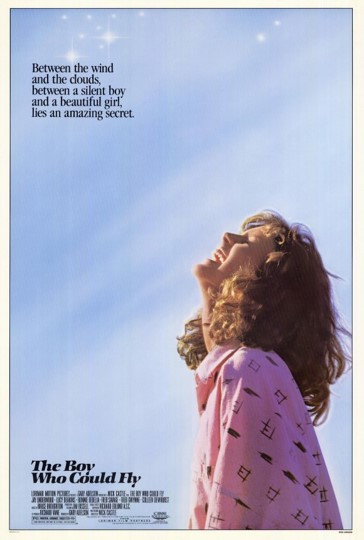
The Boy Who Could Fly poster created by Lorimar Motion Pictures and 20th Century Fox. Image found at https://www.imdb.com/title/tt0090768/?ref_=nv_sr_srsg_0.

1. What is the purpose of Girl Scout fun patches? What is the significance of the PB & J patch that you talked about in the introduction?

I already explained this in my review for The Last Full Measure, so you can read that post if you want to learn more about Girl Scout fun patches and the PB & J patch.

2. How did you come across The Boy Who Could Fly?

I came across the poster for The Boy Who Could Fly while visiting Pinterest. After making this discovery, I read the film’s synopsis. I was curious to see how the subject of Autism would be discussed in a movie set in and released during the ‘80s. The possible meaning behind the title is also what sparked my interest.

3. You elaborated in the introduction how a PB & J sandwich represents a collection of ideas. Can any of these ideas be found in The Boy Who Could Fly?

One of these ideas that can be found in The Boy Who Could Fly relates to building connections. In this film, the audience learns that Mrs. Sherman, Milly and Eric’s teacher, has become one of Eric’s biggest advocates. It was her decision to place him in her class so he can interact with the other students. She also reveals to Milly that she protested against sending Eric to an institution so he could live in an environment that was familiar to him. Because of Mrs. Sherman’s encouragement and after she volunteered to be his gym class partner, Milly chooses to stay by Eric’s side and be his friend. Even when she experiences frustration and considers throwing in the towel, Milly perseveres in helping Eric be the best version of himself that he can be. It’s because of these connections that Eric is able to grow as a person and inspire the people around him.

As I mentioned in answer number one, the PB & J patch is earned by making peanut butter and jelly sandwiches. This activity is usually performed when feeding people in need. Volunteers who choose to serve others in this fashion build connections with other volunteers, as well as with the organizers of this activity. These connections help build a community of life-minded individuals who share a common goal. They may even form connections with the people they are serving.

4. Are there other patches you can think of that would complement The Boy Who Could Fly?

A patch related to Autism seems like an appropriate choice. It could be earned in a variety of ways, from participating in an Autism Walk to meeting members of a local Autism council. One of the major themes in The Boy Who Could Fly is believing in yourself. There is one patch from Mad About Fun Patches that would perfectly fit with this theme. On the website, there is a Dumbo themed patch that says “Believe You Can Fly & Soar”. In The Boy Who Could Fly, Milly reads a Dumbo picture book to Eric. She does this to help Eric communicate and connect with others by using a topic he loves: flight.

5. Is there anything about The Boy Who Could Fly that you liked or didn’t like?

I was surprised by how well this movie aged, especially when it comes to the subject of Autism. While there is language in the film that wouldn’t be used today, the way Eric is treated and viewed by the other characters is positive. A great example is the formation of Milly and Eric’s friendship. The movie presents the possibility of people with Autism successfully creating and maintaining meaningful relationships. This helps dispel stereotypes that could leave a negative impact for those on the Spectrum. While watching The Boy Who Could Fly, I noticed how the audio of the actors was on the quieter side. I had to turn up the volume on my television just to hear what the characters were saying.

Paper airplane image created by Freepik at freepik.com. <a href=’https://www.freepik.com/free-vector/paper-plane-in-cartoon-style_766478.htm’>Designed by Freepik</a>. <a href=”https://www.freepik.com/free-photos-vectors/paper”>Paper vector created by Freepik</a>. Image found at freepik.com. 

6. Did you develop any thoughts and/or questions while watching this film?

A thought I developed during my viewing of The Boy Who Could Fly is how some moments felt ahead of their time. In answer number four, I mentioned how Milly uses Eric’s favorite subject to help him communicate and connect with other people. I read a story several years ago about a woman whose autistic son loved bees, so she based his entire homeschool curricular around that subject. She did this in order to help him enjoy his lessons. The idea of helping someone with Autism based on their personal preferences and accommodations is a practice commonly known today than it might have been in the mid to late ‘80s. After suffering a minor concussion and experiencing a life-like dream, Milly has a conversation with a psychologist from the hospital. The interaction itself normalizes the use of therapy, with the psychologist hearing Milly’s side of the story without any judgement or criticism. Seeking therapy for those with mental health related situations is encouraged and accepted today that it could have been four decades ago.

7. As stated in answer number one, fun patches are earned by either completing an activity or reaching a goal. What goal or activity could correlate with this movie?

Similar to The Last Full Measure, most scouts would not be able to see The Boy Who Could Fly. This is due to language and a scene involving minors consuming alcohol. But, like The Last Full Measure, troops can participate in activities that relate to the movie. As I mentioned in answer number four, a Dumbo themed patch would correlate perfectly with The Boy Who Could Fly. Younger scouts can watch Dumbo and discuss the importance of self-esteem. Meanwhile, older scouts can learn about different forms of flight and discovering how their unique talents can play a vital role in their community.

8. Fun patches are about learning new skills or lessons. Are there any lessons one can learn from this film?

Like I said in answer number four, a major theme in The Boy Who Could Fly is believing in yourself. There are several occasions where characters are facing difficult situations in their lives. Instead of giving up, they persevere and discover a resolution to their conflict. In scouting, troops can face many obstacles. It could be as simple as last-minute changes to pre-set plans. Challenges may be bigger, causing troop leaders to search for an answer in a longer period of time. Despite this happening, it’s important for troop members to learn how to believe in themselves, especially since this lesson is a valuable one in preparation for the real world.

9. Sometimes, patches are created to tie in with a popular movie or IP (intellectual property). If given the opportunity to create a new patch, how would a patch for this movie look? What activity or goal would need to be met?

Because Eric likes creating paper planes, a patch that looks like a paper plane would definitely be a good choice. Maybe a quote from the movie could be featured on the patch. As for the activity, it would have something to do with flight. Making paper planes is a good place to start. Inviting a pilot to a meeting or talking about air travel are also good suggestions.

10. After watching this film, is there anything you can take away from your movie viewing experience?

The Boy Who Could Fly is, so far, the best movie I’ve seen this year! The messages and themes within this story are just as relevant today as they were back in the ‘80s. While I wasn’t expecting Eric to literally fly, it was a creative choice that worked in this narrative. The movie was an emotional rollercoaster and I was invested from start to finish. I’m grateful to have stumbled across this film on Pinterest.

Image of peanut butter and jelly sandwiches created by Katinka Kober at freeimages.com. Photo by Katinka Kober from FreeImages

Have fun at the movies!

Sally Silverscreen
Take 3: The Great Mouse Detective Review

I will admit that before I signed up for the Suave Swordsman: Basil Rathbone Blogathon, I wasn’t familiar with Basil as an actor. However, I didn’t let this stop me from participating! While looking through his filmography, I discovered Basil had a role in the 1986 film, The Great Mouse Detective. Because I hadn’t seen this movie before and because I knew I’d likely be one of the few people to discuss an animated film, I selected The Great Mouse Detective as my submission! If you’ve visited my blog before, you’d see that mysteries have a consistent presence on the site. I have set aside time to talk about the films from Hallmark Movies & Mysteries. Some episodes of Murder, She Wrote has been reviewed. I even participated in the Murder, She Wrote Cookalong! Despite the abundance of mystery related content on 18 Cinema Lane, The Great Mouse Detective is only the second animated mystery movie to be featured on my blog. However, at least this review will bring something new to the table!

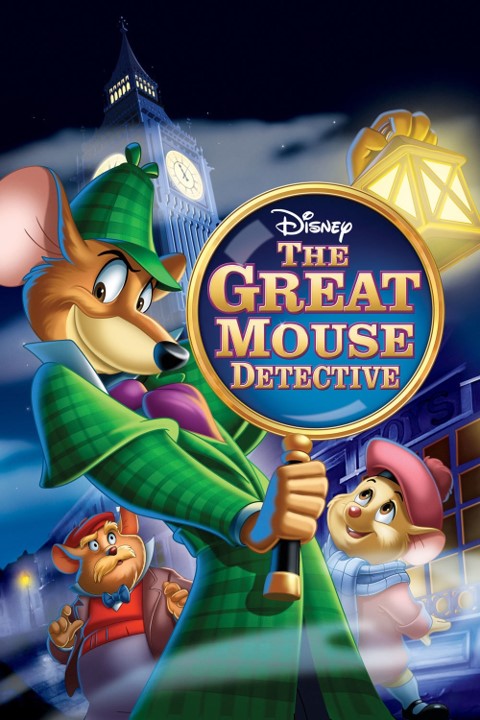
The Great Mouse Detective poster created by Buena Vista Distribution, Silver Screen Partners II, Walt Disney Feature Animation, and Walt Disney Pictures. ©Disney•Pixar. All rights reserved. Image found at https://movies.disney.com/the-great-mouse-detective.

Things I liked about the film:

The animation: Animated films from Disney’s library usually contain quality visuals and art styles. The Great Mouse Detective continues this pattern of animation excellence! Throughout the film, the backgrounds were presented in softer frames with lighter colors, while close-up images were given sharper lines and brighter colors. One example is when Basil, Olivia, and Dr. David are exploring a toy store. The contrasts within the animation made it easier to focus on the characters and their involvement in the story. This art design reminded me of films such as The Aristocats, 101 Dalmatians, and Lady and the Tramp. Similar to what I said in my From Up on Poppy Hill review, all of the characters were expressive! Their facial expressions and body language were fluid when reacting to different scenarios. A perfect example is when Olivia and Dr. David meet Basil. The Great Mouse Detective’s claim to fame is how it was the first project from Disney to feature computer-generated animation. This creative choice is seen in the climax, when Basil and Ratigan fight in the Big Ben Tower. While it might not seem like a big deal now, this scene was ahead of its time in the mid to late ‘80s. The scene itself has aged well, while also containing gravitas and depth. It reminded me of the bells from The Hunchback of Notre Dame.

The use of shadows: The Great Mouse Detective has a primarily darker tone. To emphasize this aspect of the story, shadows were used in various scenes. Toward the beginning of the film, Hiram Flaversham, Olivia’s father, and Fidget, Ratigan’s henchman, are fighting at Hiram’s toy store. In this scene, shadows of the fight are projected over Olivia’s hiding place. Because Hiram and Fidget are not shown on screen, their shadows helped bring an element of suspense and mystery. The shadows also left me wondering what would happen next.

The humor: Despite the film’s darker tone, there were some light-hearted moments that prevented the movie from being too dark. Some of these moments even contained humor. One scene involved Basil ruining a group of pillows in an attempt to solve a mystery. What made this scene funny was the reaction of Basil’s maid over the mess. Another funny moment was when Ratigan called his cat “honey bunny”. What I like about these hilarious scenes is how well written they were. It also helps that there weren’t too many of them, as it would have made the overall picture seem too silly.

Sketch of London image created by Archjoe at freepik.com. <a href=’https://www.freepik.com/free-vector/hand-drawn-houses-of-parliament_1133950.htm’>Designed by Archjoe</a>. <a href=”https://www.freepik.com/free-photos-vectors/background”>Background vector created by Archjoe – Freepik.com</a>. Image found at freepik.com.

What I didn’t like about the film:

The musical numbers: A large number of Disney’s animated films are musicals, with their musical numbers feeling like they belong in that production. Because musicals have become a staple in Disney’s animated filmography, it allows their audience to know what to expect. But The Great Mouse Detective was not a musical movie, especially compared to pictures like Oliver & Company or any of the Disney Renaissance films. The Great Mouse Detective also had a primarily darker tone, with some light-hearted moments. These aspects made the musical numbers seem out of place. The two most notable musical scenes were “Let Me Be Good to You” and “The World’s Greatest Criminal Mind”, which had entertainment value. While “Let Me Be Good to You” had some reason for its existence, “The World’s Greatest Criminal Mind” was randomly placed in the film. It was a light-hearted and upbeat song that came right after a darker scene, featuring Basil explaining the wrong-doings of Professor Ratigan. “The World’s Greatest Criminal Mind” was a combination of “Gaston” from Beauty and the Beast and “Mine, Mine, Mine” from Pocahontas. However, what makes “Gaston” and “Mine, Mine, Mine” work is how they fit within their respective productions.

The oversharing of the mystery: When I talked about The Mystery Cruise in my list of the Top 10 Worst Hallmark Movies of All Time, I shared how I didn’t like the film’s mystery being revealed after the mystery was introduced. The Great Mouse Detective makes a similar mistake with their mystery narrative. Within the first half of the movie, the details of Hiram Flaversham’s kidnapping are shown in a series of scenes that share a timeline with the events surrounding Basil. These scenes show the whodunit, howtheydunit, and whytheydunit of the mystery. Because these pieces of information are revealed early in the movie, the audience knows more than the characters in the story. This prevents them from solving or experiencing the mystery alongside the characters.

The subplot of the Queen’s Diamond Jubilee: One of the subplots in The Great Mouse Detective revolved around the Queen’s Diamond Jubilee. This wasn’t a bad idea, but it was very under-utilized. In fact, I forgot this event was taking place within the story until the film’s climax arrived. Because the premise of this movie was basic and straight-forward, this subplot felt like it was there for the sake of being there. If the Queen’s Diamond Jubilee had been removed from the film, it wouldn’t make a huge difference.

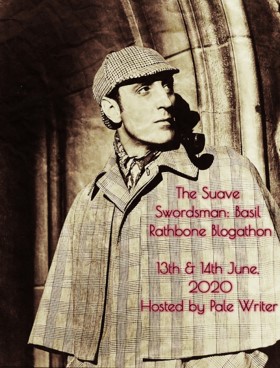
The Suave Swordsman: Basil Rathbone Blogathon banner created by Pale Writer from Pale Writer. Image found at https://palewriter2.home.blog/2020/02/01/announcing-the-suave-swordsman-basil-rathbone-blogathon/.

My overall impression:

Two years ago, I reviewed Oliver & Company. In that review, I said the movie was the pioneer for what a Disney animated film could and should be at the time of its release. The Great Mouse Detective gave me a similar feeling. Within this film, there were elements that laid the foundation for animated Disney films that came after it. The climax at the Big Ben Tower is one example, with the scenes utilizing computers to bring them to life. Also, in my Oliver & Company review, I said the movie was fine and that there were animated Disney films that are stronger than it. The Great Mouse Detective made me feel this way as well. While watching this film, there were scenes that reminded me of scenes from other Disney projects that were executed better. Some scenes in The Great Mouse Detective felt rushed, making me wonder if Disney was trying to meet a deadline or wanted to take advantage of a busy box office year. Even with everything I just said, this film is worth bringing up in the conversation of animated films. It may get overshadowed, but I think it serves as an important part of animation history.

Overall score: 7 out of 10

Have you seen The Great Mouse Detective? What are some of your favorite mystery films? Tell me in the comment section!

Have fun at the movies!

Sally Silverscreen

Take 3: Without a Trace Review + 35 Follower Thank You

Because I received 35 followers on 18 Cinema Lane earlier this week, it’s time for me to review a film that turned 35 years old in 2018! While looking at my options for which film to watch, I came across a film from 1983 called Without a Trace. After reading the movie’s synopsis, I became intrigued by the mystery aspect of the film. As a fan of the mystery movies on Hallmark Movies & Mysteries, I do enjoy a story that is intriguing and engaging. My interest for Without a Trace grew when I discovered that it was loosely based on a true story. I was curious about how this real-life event would influence the film. Keep reading to see how I feel about Without a Trace!

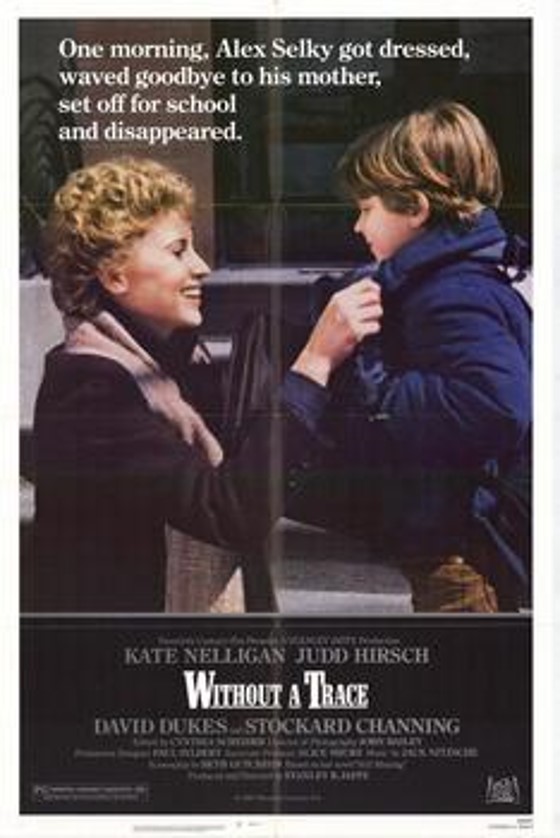
Without a Trace poster
Without a Trace poster created by 20th Century Fox. Image found at https://en.wikipedia.org/wiki/File:Without_a_Trace.jpg

Things I liked about the film:

The acting: The whole cast in this movie was good! Kate Nelligan’s portrayal of Susan Selky was definitely one of the highlights of this film! Her performance was so emotional and versatile, that it felt like her character’s emotions were being transferred from her own personal feelings to the audience, allowing viewers to worry about Alex’s fate alongside Susan. I also thought that Kathleen Widdoes’ portrayal of the psychic, Ms. Hauser, was captivating and memorable. Kathleen’s acting talents were so versatile, it had the power to keep viewers engaged in the events happening on-screen.


The story: The basic premise of Without a Trace is figuring out what happened to Alex Selky. This story is treated like a mystery, where anyone could be a suspect and every possibility is explored. The way this narrative is written allows the audience members to solve the mystery alongside the characters. Because there are few scenes that feature Alex, it encourages viewers to ask “whodunit” and keeps them engaged as the story unfolds.


Comparisons and differences between the early ‘80s and today: Because this movie was released in 1983, I knew there was going to be some differences between the depicted world in the film and the world outside the film today. However, I was surprised by how many of the film’s topics were those that are still being brought up 35 years later. In a scene where Alex’s parents and Detective Al Menetti are being interviewed by several journalists, one journalist asks Al if Alex, a 6 year old child, was too young to be walking to school all by himself. As I watched this film for the first time in 2018, I found myself asking this exact same question. It was also interesting to see and hear how things appeared differently in the early ‘80s compared to today. In one scene, Jocelyn, Susan’s friend, asks Susan why the police aren’t using computers to solve missing persons cases. Because computers have a larger presence in society now than they did 35 years ago, I would have assumed that most crimes are solved with the use of computers. But, it stood out to me how the screenwriters were thinking that far ahead into the future at how some situations, such as those found in Without a Trace, could be improved upon.

21-150-01
Magnifying fingerprints image created by Balintseby at freepik.com. <a href=”https://www.freepik.com/free-photos-vectors/glass”>Glass vector created by Balintseby – Freepik.com</a>. <a href=’https://www.freepik.com/free-vector/fingerprint-investigation_789253.htm’>Designed by Freepik</a>. Image found at freepik.com.

What I didn’t like about the film:

Lack of suspense: When I first read the synopsis for Without a Trace, I was expecting a mystery story with suspense and intrigue throughout the film. While this movie did have intrigue, there was very little suspense that was found. There was such a lack of suspense that it made the characters appear like they didn’t have a sense of urgency. This is not a good thing, especially when a film’s plot revolves around a kidnapping.


The run-time: Without a Trace is a 2-hour long film. This caused the movie to contain scenes that felt like were included just for the sake of satisfying this run-time. This run-time also made the movie feel longer than it was probably intended. Personally, I think that Without a Trace’s run-time should have been an hour and 25 to 30 minutes. This way, it would allow the story to be more suspenseful and keep the intrigue going throughout the film.


The pace: Without a Trace’s pace was slow. This pace made some scenes drag on longer than they might have been intended. It was also the result of a longer run-time, where these scenes were possibly drawn out to fill Without a Trace’s 2 hour long time-frame.

OYHKOT0
Newspaper image created by Zlatko_plamenov at freepik.com. <a href=’https://www.freepik.com/free-psd/newspaper-mockup_1386098.htm’>Designed by Freepik</a>. <a href=”https://www.freepik.com/free-photos-vectors/mockup”>Mockup psd created by Zlatko_plamenov – Freepik.com</a>. Image found at freepik.com.

My overall impression:

Without a Trace is an ok film. Yes, this movie did have its flaws. However, I could tell that the effort, from the movie’s creative team, to make a compelling and thought-provoking film was there, even if that effort was not as strong as I would have hoped. When looking back on this film, I still can’t get over how some things have stayed the same. Trends change, popularity rises and falls, and style evolves. But certain subjects and messages are the things that remain everlasting. As I mentioned earlier, I knew there were going to be differences between the world of the ‘80s that appeared on my tv screen and the real world of 2018 that I’m living in today. Despite these differences, it’s the similarities that left a lasting and the biggest impression on me as I share this film with all my readers and followers. Thank you, once again, for making this review possible. 18 Cinema Lane would not be the same without you.


Overall score: 6.5 out of 10


Have you seen Without a Trace? What’s your favorite mystery story? Leave your thoughts in the comment section below!


Have fun at the movies!

Sally Silverscreen