Comparing with the Critics – Best of 1988 – Wings of Desire

This review is from my series, Comparing with the Critics. If you’d like to learn more about the series, click on the link below.

Introducing my new series, Comparing with the Critics!

Five years ago, I advocated for the release of The Crow: City of Angels’ Tim Pope cut. This version of the movie was not only supposed to be 160-minutes, it was also supposed to tell a different story from its predecessor. The Crow: City of Angels’ intended conflict showed the protagonist, Ashe, choosing between reuniting with his son, Danny, in the afterlife or staying on Earth to form a romantic relationship with Sarah, who appeared in The Crow. When Roger Ebert brought up Wings of Desire in Siskel & Ebert’s Best of 1988 episode, he said the film was “about an angel who wants to be a human because he would rather have real, physical feelings than live forever”. His explanation of Wings of Desire reminded me of The Crow: City of Angels’ intended conflict I described. Since I don’t know if and/or when the Tim Pope cut of The Crow: City of Angels will be released, Wings of Desire will be my unofficial placeholder in terms of storytelling. The other reason why I chose Wings of Desire for my Comparing with the Critics series’ Best of 1988 review is because it was on Roger’s list of the ten best films of 1988, even though both he and Gene Siskel liked it. I approached this film with an open mind because I had never seen or heard of it prior to my series. Now that I have seen Wings of Desire, I think calling it one of the best movies of the year is giving the film a little too much credit.

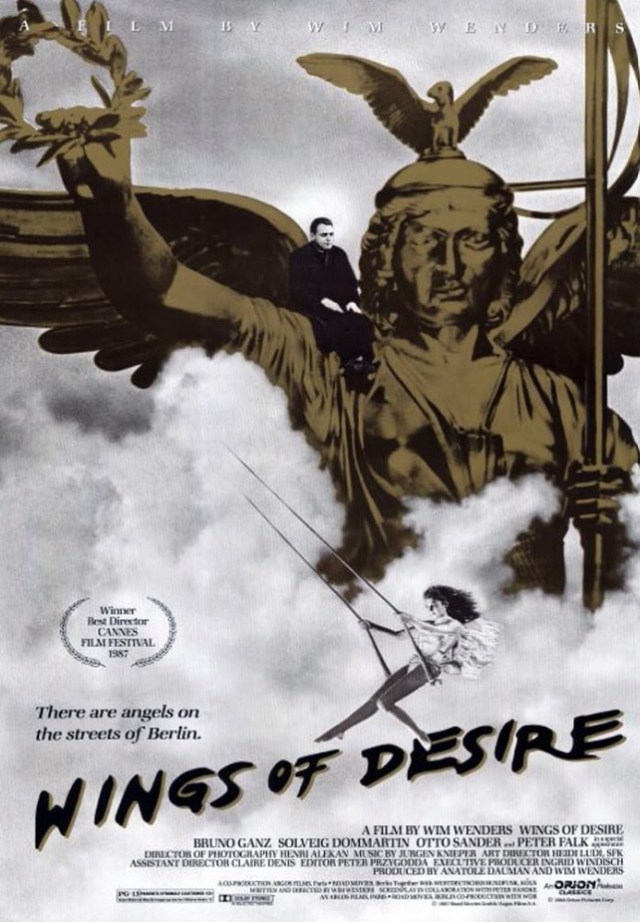
Wings of Desire poster created by Road Movies Filmproduktion, Argos Films, Westdeutscher Rundfunk (WDR), Wim Wenders Stiftung, Orion Classics, Basis-Film Verleih, and Filmverlag der Autoren

As I said in the introduction of this review, both Roger and Gene liked Wings of Desire. In an episode of Siskel & Ebert, they gave the film a thumbs-up. Roger commented on how the movie “has a mood to it. It takes the time to establish that mood”. Meanwhile, Gene points out that Wings of Desire “gives more than equal time to the angels’ thoughts”. What Roger and Gene said was achieved through mise-en-scène and music. A great example is when Damiel (portrayed by Bruno Ganz) is at a crossroads over whether he truly wants to become human or remain an angel. The majority of the scene is presented through “shaky cam”, giving the illusion Damiel is quickly turning his head and moving in circles. Sharp, quick violin sounds play over the scene, heightening Damiel’s panic and confusion. Shots of humans crying or looking frightened are interspersed throughout the scene. This creative choice reflects Damiel’s thoughts and feelings. Whenever “shaky cam” is incorporated into a movie, it is usually met with criticism due to how the film-making technique distorts a scene to the point of becoming unwatchable. However, the use of “shaky cam” in Wings of Desire is one of the few times where it works. This is because that creative decision was utilized purposefully to enhance the emotional aspect of the story.

Since there are angels in Wings of Desire, I thought adding this angel picture to my review made sense. Screenshot taken by me, Sally Silverscreen.

Wings of Desire is mostly presented in black-and-white imagery. But there are a handful of scenes shown in color. This creative choice differentiates the perspective between the angels and the humans. Damiel and Cassiel, two angels from the film’s main cast of characters, see the human world in black-and-white, as they are outsiders looking in. The humans’ environment is visually represented in color, showcasing life in 1980s West Berlin. Black-and-white and color imagery’s incorporation into Wings of Desire is purposeful as it addresses concepts like a sense of belonging, unique points of view, and what it means to be a part of a community. Wings of Desire’s creative decision reminded me of Schindler’s List, a black-and-white movie that occasionally utilized color to emphasize certain ideas.

Map of Germany image created by Macrovector at freepik.com. Background vector created by macrovector – www.freepik.com. Image found at freepik.com.

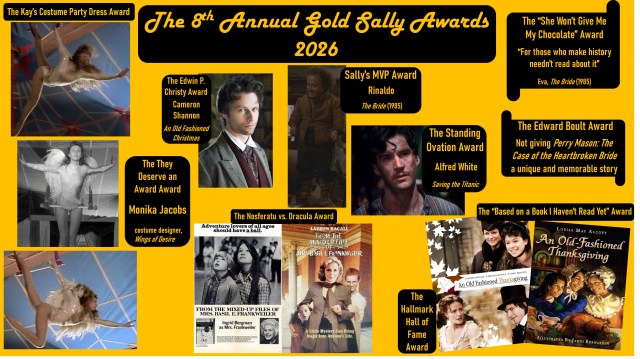
Another visual aspect of the movie I liked was Marion’s wardrobe. In Wings of Desire, Marion (portrayed by Solveig Dommartin) is a trapeze artist who is afraid her dream may be coming to an end due to the circus’ struggling finances. Her performances give her an excuse to wear gorgeous costumes! When she is first introduced in the story, Marion wears a long-sleeved leotard with an attached skirt. This costume is made up of a beige velour-like material and covered in diamond-esque gems. The shoulders of the costume feature a shiny applique. To give circus attendants the impression Marion is a flying angel, she wears large, white wings while performing in the air. The exquisiteness of Marion’s costumes makes me wish they were shown in color more consistently. I also wish Wings of Desire’s costume designer, Monika Jacobs, was nominated for, at least, one award.

Group of clowns image created by Freepik at freepik.com. Image by Freepik

After a clip of Wings of Desire was presented on Siskel & Ebert, Gene declares “the juiciest part of this picture is how close we get to everyday people, their joys, their heartbreaks”. He also says, “director, Wim Wenders, does a real remarkable thing here; he praises life as it is lived, yet making sense out of life’s confusions to the point where we enjoy being alive in a fresh way”. While I agree with Gene about the realistic portrayal of the humans’ lives, I wish the dialogue had sounded more realistic. Every time a character speaks, they deliver philosophical speeches instead of conversations. This made the characters sound like they were spending more time expressing ideas than putting ideas into action. Though looking back on Wings of Desire, I wonder if that was intended commentary on how people spend less time solving problems and more time talking about them?

Breaking heart image created by Kjpargeter at freepik.com. <a href=’https://www.freepik.com/free-vector/broken-heart-valentine-background_1041991.htm’>Designed by Freepik</a>. <a href=”https://www.freepik.com/free-photos-vectors/background”>Background vector created by Kjpargeter – Freepik.com</a>. Image found at freepik.com.

Like I mentioned earlier in my review, Damiel and Cassiel are outsiders looking in on the human world. Despite this, both angels observe, listen, and occasionally intervene in the humans’ lives. That means Wings of Desire’s audience can hear the thoughts of the humans Cassiel and Damiel cross paths with. But because the angels are disconnected from the human world, story ideas are either loosely connected or not connected at all. A man’s parents concerned over his musical ambitions serve as one example, with the concerns themselves brought up but never resolved. There are four main plots within Wings of Desire. However, only three of them were related to each other. Plus, these three plots didn’t connect until toward the end of the movie. Waiting for the bridges of the plots to form felt tedious, in my opinion.

Comparing with the Critics banner created by me, Sally Silverscreen. TV show title cards created by WTTW National Productions, WTTW, Public Broadcasting Service (PBS), Lifetime Television, Tribune Entertainment, Buena Vista Television, and Disney-ABC Domestic Television

In the introduction of this review, I said calling Wings of Desire one of the best movies of the year is giving the film a little too much credit. It’s not a bad movie, I just didn’t like or love it as much as Roger and Gene did. Wings of Desire is a fine, interesting film that kept me invested in what was happening on screen. The movie also has artistic merit due to creative decisions purposefully incorporated into the project. But major flaws lie in the script. I wish dialogue between characters sounded more conversational, as it would have complimented the realistic depiction of life in 1980s West Berlin. Story ideas should have developed stronger connections to one another, especially among the four main plots. Waiting for three of those main plots to connect was, in my opinion, tedious. During their discussion of Wings of Desire on their show, Siskel & Ebert, Gene tells Roger how Wim Wenders “doesn’t sweeten life to the point that it’s false”. Looking back on my experience watching the movie, I can see, and even appreciate, Gene’s point. Wings of Desire captures Germany before the Berlin Wall would eventually fall.  The Wall itself is even featured in a few scenes. Through visuals, text, and even musical selection, the edge of change I addressed in my 1988 introduction of Comparing with the Critics was brought to life on the big screen. The creative team behind Wings of Desire played a small role in history, even if they didn’t know it at that time.

This review was brought to you by

Sally Silverscreen

Comparing with the Critics – 1988 – Introduction

1988 is known as a year on the edge of change. In the United States, a Presidential election let Americans decide how they wanted their country to be led. The foundations of the “Disney Renaissance” were laid into place before Disney made a splash heard around the world. And one year later, President Ronald Reagan’s words to “tear down this wall” were finally put into practice. Reflecting on 1988’s box office, especially the highest-grossing films of that year, this edge of change could be seen and felt. Who Framed Roger Rabbit proved it was, indeed, possible for live action and animation to join forces. Tim Burton helped Beetlejuice walk so Batman could soar. In May of 1988, two films made contributions that would cause ripple effects throughout cinema. Though Gene Siskel and Roger Ebert appreciated one of these efforts more than the other. These movies are Wings of Desire and Willow. The Best of 1988 episode of Siskel & Ebert showed Wings of Desire earning a spot on Roger’s list of the year’s best movies, even though both he and Gene liked it. Meanwhile, in the show’s Worst of 1988 episode, Gene and Roger believed Willow was just a retread of Star Wars. However, the film only ended up on Gene’s list of 1988’s worst pictures. If you read my review of Willow from last year, you would know I selected it for Comparing with the Critics’ Worst of 1988. As for Wings of Desire, that is my choice for Best of 1988 in my Comparing with the Critics series.

Comparing with the Critics banner created by me, Sally Silverscreen. TV show title cards created by WTTW National Productions, WTTW, Public Broadcasting Service (PBS), Lifetime Television, Tribune Entertainment, Buena Vista Television, and Disney-ABC Domestic Television

A Movie Blogger’s Ten “Hot Takes” on Film

Back in August, I published my review of the Hallmark Hall of Fame movie, Face to Face. That article became my 425th published movie review. Then, when I published my review of Kind Hearts and Coronets, it became my 950th published post. To honor these milestones, I’m creating a type of list I have never written before. Over the seven years 18 Cinema Lane has existed, I have shared some of my “hot takes” on film. However, I haven’t created a list exclusively about movie “hot takes”. That is why, for this list, I will address my film related “hot takes” I didn’t previously discuss on my blog. This decision was made to keep the list itself fresh and interesting. I will also organize each “hot take” based on how “hot” each take could be perceived. Before I begin this list, I’d like to state how my list is not intended to be mean-spirited or negative. It’s just simply a way to express my opinion.

Campfire with marshmellows and shooting stars image created by macrovector at freepik.com.

10. Sister Act 2: Back in the Habit Should Have Been a Christmas Movie

I’m not saying Sister Act 2: Back in the Habit is a bad movie. I’m not even saying it’s a bad sequel, as I respect how the script tries to tell a new story instead of attempting to recapture the magic of the first film. However, I do believe it was a huge missed opportunity not to have Sister Act 2: Back in the Habit set during Christmas. I can picture Saint Katherine’s Parish, the church featured in the first movie, beautifully decked out in Christmas adornments. And can you imagine what Christmas songs like ‘O Holy Night’, ‘Away in a Manger’, and ‘Joy to the World’ would have sounded like under Deloris’/Sister Mary Clarence’s leadership? If those versions were even half as good as the songs were in Sister Act, the audience would have been in for a musical treat! Though there’s no guarantee making Sister Act 2: Back in the Habit a Christmas movie would have made it better or just as good as its predecessor. Therefore, this is the mildest “hot take” on my list.

9. Calypso/Tia Dalma and Davy Jones Should Have Shared More Screen-Time Together in Pirates of the Caribbean: At World’s End

One of my favorite movie scenes of all time is Calypso/Tia Dalma and Davy Jones’ interaction in Pirates of the Caribbean: At World’s End. Not only does this scene recontextualize everything the audience knew about Calypso/Tia Dalma up until that point, Naomie Harris and Bill Nighy’s on-screen chemistry made the attraction between Calypso/Tia Dalma and Davy Jones believable. This attraction makes me wish they shared more screen-time together. Throughout Calypso/Tia Dalma and Davy Jones’ interaction, issues are left unresolved and words are left unspoken. Yet their love for each other is still evident. Calypso/Tia Dalma and Davy Jones should have received an opportunity to resolve their issues and honestly communicate with one another. But in a movie like Pirates of the Caribbean: At World’s End with so many moving parts to it, aspects of the story like Calypso/Tia Dalma and Davy Jones’ relationship were overlooked.

8. Wanda Maximoff/Scarlet Witch’s Story in the Marvel Cinematic Universe (MCU) Should Have Been an Adaptation of Scarlet Witch, Vol. 3: The Final Hex

For this year’s Eurovisionathon readathon, I read Scarlet Witch, Vol. 3: The Final Hex. As I read the graphic novel, I couldn’t help but feel the Marvel Cinematic Universe (MCU) missed a great opportunity to adapt this story. Based on what I know about the MCU, mentor figures aren’t common. Agatha Harkness could have provided mentorship to Wanda Maximoff/Scarlet Witch like she did in the graphic novel, helping guide her throughout Phase 2 and beyond. Adapting Scarlet Witch, Vol. 3: The Final Hex would have given the MCU a reason to weave Serbian and Roma culture into Wanda Maximoff/Scarlet Witch’s, as well as Pietro Maximoff/Quicksilver’s, narrative. Themes of family, identity, and what it truly means to be a superhero could have also been explored. While I haven’t seen any of the MCU’s projects after Avengers: Endgame, I have heard of the directions Wanda Maximoff/Scarlet Witch’s story have taken. Had Scarlet Witch, Vol. 3: The Final Hex been adapted, maybe her story would have been better than what the audience received.

7. Cheryl Frasier from Miss Congeniality is More Intelligent Than Most People Give Her Credit For

The “April 25th” scene from Miss Congeniality is one of the most quotable and meme-able moments in film history. This scene is how most people know Cheryl Frasier (a.k.a. Miss Rhode Island), one of the story’s key characters. The moment where Cheryl chooses “April 25th” as her answer for her idea of a perfect date is presented as giving the wrong answer. Though whenever I think of this scene, I see it very differently. In an interview/question segment of a pageant, contestants must utilize their time wisely to earn enough points to progress to the next segment. With that said, Cheryl utilized critical thinking skills, logic, and looking outside the box to not only select her iconic answer, but to also come up with an explanation for that answer all within a limited period of time. Plus, I can understand how she would describe a date on the calendar, as the question is vague enough to be interpreted in different ways. This is one of the best examples from Miss Congeniality of Cheryl being more intelligent than most people give her credit for.

6. Pennywise from Stephen King’s IT (1990) is More Annoying Than Scary

Years ago, I saw Stephen King’s IT for the first time. But I found the experience underwhelming. One contributor was how Pennywise was more annoying than scary. While there were horrifying moments involving Pennywise, these moments were far and few between. One scene that always comes to mind is when Pennywise is in a library. In this scene, he was so over-the-top, loud, and obnoxious, his act got old really fast. I couldn’t take Pennywise seriously as a horror movie villain, as his silliness made him less threatening. Even in the film’s climax, his role was such a let-down, sucking all the suspense out of that scene. Tim Curry, the actor who portrayed Pennywise, is not at fault because he tried his best with the acting material provided. The fault lies with the director and screenwriters of Stephen King’s IT.

Group of Christmas figures image created by Pikisuperstar at freepik.com. <a href=”https://www.freepik.com/free-photos-vectors/christmas”>Christmas vector created by Pikisuperstar – Freepik.com</a>. <a href=’https://www.freepik.com/free-vector/hand-drawn-cute-christmas-character_3188970.htm’>Designed by Pikisuperstar</a>. Image found at freepik.com.

5. Gabby Gabby from Toy Story 4 is a Poorly Written Character

When I saw Toy Story 4 in 2019, I thought Gabby Gabby was a poorly written character. Six years later, I still feel this way about her. It seemed like the creative team behind Toy Story 4 couldn’t decide if Gabby Gabby should be the story’s villain, anti-hero, or simply misunderstood. So, instead of giving her one role and sticking to that creative decision, the creative team gave her all three roles. When Gabby Gabby received a redemption arc, I didn’t feel that was earned. How am I supposed to root for her when I don’t even know what her true role in this story is supposed to be? Last year, when I published my list of ten movie trends I don’t understand, I explained how adopting the ‘villains receiving the spotlight’ trend gives the audience mixed messages and makes villainous characters less straight-forward. Reflecting on that list and Toy Story 4, I wonder if how Gabby Gabby was written is the result of that trend?

4. ‘Elizabeth’ is the Most Overused Name in Historical Fiction/Period Drama Movies and TV Shows

In 2019, I created a list of the top ten worst clichés from Hallmark movies. The clichés featured in that list were those that were poorly or overly used. If I created a similar list about the worst clichés from historical fiction/period drama movies, characters named ‘Elizabeth’ would be near the top of the list. Personally, I find it hard to believe directors, producers, and screenwriters would keep selecting ‘Elizabeth’ despite having thousands of names at their disposal. The name, ‘Elizabeth’, keeps finding its way into scripts no matter the story’s time period. Some examples include Felicity: An American Girl Adventure, the Pirates of the Caribbean series, any version of Pride and Prejudice, and When Calls the Heart’s Christmas/seasonal films. This specific cliché is also present among historical fiction/period drama tv shows, ranging from Emily of New Moon to The Waltons. I don’t know when the cliché started being utilized or if it will ever stop. But if someone is considering creating a historical fiction/period drama movie or tv show, I hope they think outside the box when it’s time to name their characters.

3. I Don’t Find National Lampoon’s Christmas Vacation Funny

I’ve only seen National Lampoon’s Christmas Vacation once. Though it’s been years since I’ve seen it, I didn’t find it funny. I don’t remember laughing at any joke. Even when I see clips of the movie in other pieces of media, it doesn’t get a reaction out of me. I’m aware how comedy, as well as film itself, is subjective. But I just don’t understand the hype around National Lampoon’s Christmas Vacation. If I revisited the movie, maybe I’d change my mind on it. For now, though, National Lampoon’s Christmas Vacation is not a must-watch title for me this Christmas season.

2. Bucky Barnes Should Have Received His Own Superhero Title Instead of Becoming the Next Captain America

Around the time Avengers: Infinity War was released, I was one of those fans who wanted to see Bucky Barnes become the next Captain America. I even expressed this wish in my very first movie blogger’s Christmas wish-list. But looking back almost ten years since Avengers: Infinity War and Avengers:Endgame premiered, I believe instead of becoming the next Captain America, Bucky should have received his own superhero title. As he grew into it over time, Bucky could have shaped this brand-new title to become truly his. So, when people think of that specific title, they’ll think of Bucky and vice versa. There would be no preconceived ideas or expectations due to the lack of comparisons to measure Bucky to. With his own superhero title, he could have received official Avenger status as well, which is why I wanted Bucky to become the next Captain America in the first place. I know he took up Captain America’s shield in Marvel’s comics. However, Bucky adopting his own, unique superhero identity would have added a fascinating chapter to Phases 4 and 5.

1. The Breakfast Club and Clue are Two of the Most Overrated Movies of the 1980s

It’s been years since I’ve seen The Breakfast Club or Clue. But from what I remember, I wasn’t a fan of either title. The Breakfast Club contained way too much swearing for my liking and I found its story too simplistic. When it came to Allison Reynolds’ reason for being in detention, the script was building up to what ended up being an underwhelming revelation. Meanwhile, in Clue, I laughed at only one joke throughout the entire film. The movie prioritized showing the characters running around and yelling/screaming at each other, which I find less hilarious and more headache-inducing. Having multiple endings based on when and where someone saw the film might work at the movie theater. Including all three endings in Clue, however, not only felt overwhelming, it also felt like the movie’s creative team couldn’t decide which ending best fit their script, leaving that ultimate decision to the audience. Perhaps if I revisited The Breakfast Club or Clue, my opinion on these titles might change. As of the publication of this list, though, I find Clue and The Breakfast Club overrated.

Avengers: Endgame Bucky Barnes poster created by The Walt Disney Company and Marvel Studios. © Disney•Pixar. All rights reserved. Marvel and Avengers Characters: ©2017 Marvel. Image found at https://www.marvel.com/articles/movies/mcu-heroes-unveil-avengers-endgame-character-posters

What are your thoughts on my movie “hot takes”? Do you have a film related “hot take” you’d like to share? Please tell me in the comment section below!

Have fun at the movies!

Sally Silverscreen

The ‘Stranger Things’ Ending We Could (and Should) Get

In this editorial are spoilers for Stranger Things. Read at your own discretion.

I recently wrote an editorial, ‘Eddie Munson and Harris Trinsky: Two Sides of the Same Coin’, where I explained the similarities between Eddie Munson from Stranger Things and Harris Trinsky from Freaks and Geeks. While discussing how their stories were told in only one season, I brought up how there was speculation over whether Eddie could, somehow, return in Stranger Things’ fifth and final season. I’ve heard a variety of ideas how Eddie could come back. Some people have even wondered if Eddie will appear in Stranger Things’ last season at all. Based on how beloved Eddie is, I think he will appear in the fifth and final season of Stranger Things. But from what I’ve seen and heard, I have an idea for how Eddie might return. Before I explain the ending we could (and should) get, I want to remind my readers how everything I say is based purely on speculation. Even though the chances of viewers (and Eddie’s fans) receiving the ending I’ll propose are one in a million, I will explain throughout my editorial how it could and why it should be possible.

As I publish this editorial, my other editorial, ‘Eddie Munson and Harris Trinsky: Two Sides of the Same Coin’, has steadily grown in viewership, partly due to Eddie’s popularity. Original image created by 21 Laps Entertainment, Monkey Massacre, Netflix, and Upside Down Pictures

The Proposed Ending

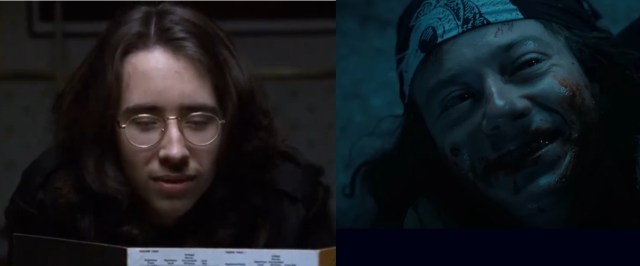
During the climax of the final episode, “The Rightside Up”, the characters are in the middle of a battle with Vecna. During the epic battle, a scratching noise becomes louder and louder. The very next scene reveals the scratching noise is coming from colored pencils, as someone is drawing the battle from the previous scene. A close-up shot of the drawing itself gradually becomes a medium shot, showing Eddie Munson’s hands completing the masterpiece. As two more shots of Eddie drawing are shown, a voice-over from Wayne Munson, Eddie’s uncle, can be heard. He sounds like he’s having a conversation on the phone, saying things like “Eddie was just telling me about the Upside Down” and “I don’t know how he comes up with this stuff, but it’s certainly creative”.

The scene progresses to show it’s taking place in the Munson trailer. When Wayne approaches Eddie and asks him to see his latest drawing, Wayne (and the audience) sees other drawings and mementos related to past seasons of Stranger Things are found in Eddie’s notebook. Some of these include a newspaper article about Starcourt Mall, a portrait of Dustin Henderson, and even a note written by Chrissy Cunningham herself. As Wayne gives the notebook back to his nephew, he reminds Eddie how he’s been through so much, yet he’s proud of Eddie for using his creativity and imagination to overcome trauma and his other struggles. Wayne also tells his nephew how he’s genuinely excited to see what his future holds. While Wayne is saying these things, Eddie’s eyes start filling with tears, becoming overwhelmed with the love and support from his uncle. Eddie then tearfully says, “I wish everyone saw me like you do”. Wayne reassuringly tells Eddie, “Someday, they will”.

Overcome by his emotions (as well as his uncle’s love and support), Eddie bursts into tears. As Wayne gives his nephew a hug, the camera moves past them toward the living room of the Munson trailer. While a medium shot of the space gradually becomes a close-up shot, Eddie’s guitar and jacket are placed on a nearby chair. This visual tells the audience how music still plays a significant role in Eddie’s life. The final close-up shot shows two photos and an object placed on a table next to the chair I just mentioned. On the left is Eddie’s graduation portrait, not only indicating how 1986 was, indeed, Eddie’s year, he finally accomplished the one goal he wanted to achieve. On the right is a group photo of The Hellfire Club. This picture lets the audience know Dungeons and Dragons, as well as staying true to himself, remains important to Eddie. The object in the center is a snow globe featuring a tiny replica of Hawkins Public Library with small bats floating around inside.

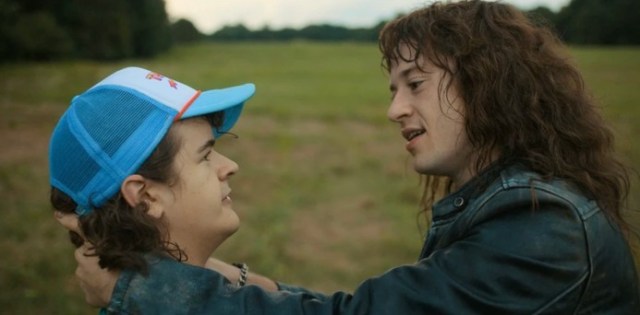
While the scene between Dustin and Wayne is a well acted and written scene, I wish Dustin had told Eddie some that praise before he passed away. Original images created by 21 Laps Entertainment, Monkey Massacre, Netflix, and Upside Down Pictures

Why We Should Get This Ending

As you read the proposed ending of Stranger Things, you probably thought “I’ve seen this song and dance before”. That’s because it shares a lot of similarities with St. Elsewhere’s infamous series finale, “The Last One”, which reveals the entire show was a product of the imagination of the protagonist’s (Dr. Donald Westphall) son, Tommy. However, I think the creative team behind Stranger Things could take this concept and build upon it. Tommy appears in seventeen out of St. Elsewhere’s one hundred and thirty-seven episodes. While this fact establishes his presence on the show, Tommy’s inconsistent appearances and limited role in the overall story prevent the audience from developing an emotional attachment for him as a character. Though Eddie only appears in Stranger Things’ fourth season, he is featured in eight out of the season’s nine episodes. This allows Eddie to have a more consistent appearance on the show, as well as a more significant role in the season’s overarching story. Through my research for my editorial, ‘Eddie Munson and Harris Trinsky: Two Sides of the Same Coin’, I learned Eddie is a very beloved (and dearly missed) character. With everything I said, having Eddie be the one to imagine Stranger Things would give the final season’s ending more emotional weight.

I mentioned earlier how infamous St. Elsewhere’s series finale, “The Last One”, is due to the revelation the entire show was a product of Tommy’s imagination. Though this is not explicitly stated in the final episode. In fact, all Dr. Donald Westphall says is how Tommy is “in his own world”. But based on the context of Tommy’s appearances on St. Elsewhere, I believe he imagined the show itself to deal with changes and situations in his life that seem out of his control. In the second season’s eighth episode, “All About Eve”, Tommy learns from his father how the family’s housekeeper will be leaving them. Dr. Donald Westphall becomes hospitalized in season four’s fifth episode, “Slice O’Life”. The Westphall family even move to another state in the sixth season’s seventeenth episode, “Their Town”. With those three examples potentially causing stress or trauma in a child as young as Tommy, it would make sense for Tommy to utilize imagination to gain some control within the world around him. Like I mentioned in my editorial, ‘Eddie Munson and Harris Trinsky: Two Sides of the Same Coin’, Eddie has experienced trauma in his life, from his mom passing away to his dad becoming incarcerated. In Stranger Things’ first episode of the fourth season, “The Hellfire Club”, when Chrissy asks Eddie if he ever feels like he’s losing his mind, he tells her “on a daily basis”. Keeping this information in mind, Stranger Things being the result of Eddie’s imagination would be compatible with his story, giving him a sense of normalcy in a world that feels chaotic. Overcoming trauma being an explicitly stated reason for Eddie concocting the universe of the show could address themes of how resilient the mind is and how creativity and imagination can help heal, connect with others, and shape perspectives on the world.

While conducting research for my editorial, ‘Eddie Munson and Harris Trinsky: Two Sides of the Same Coin’, I discovered Eddie and Wayne never shared any scenes together in Stranger Things’ fourth season. By having uncle and nephew share a heart-felt moment in the series finale I proposed, it would give the creative team of Stranger Things an opportunity to present the audience a heartwarming scene they were denied in season four. Throughout the fourth season, I don’t recall any of the characters in Eddie’s life telling him they were proud of him. So, my proposed ending would allow Eddie to hear encouraging words he should have heard sooner. The series finale I proposed would also give Eddie a second chance to reach his full potential and receive a semblance of a happily ever after. In an article from Variety titled ‘Saying Goodbye to ‘Stranger Things’: The Duffer Brothers Tell All on Season 5 Secrets, the Tearful Finale and Leaving Netflix for Paramount (Exclusive)’, Ross Duffer, one of the show’s creators, stated “when future Netflix subscribers binge the entire series, “It doesn’t feel like we dropped a storyline – it all connects””. Ross’ comment, along with the possibility of a series finale reminiscent of St. Elsewhere’s “The Last One” could create a new theory, the Eddie Munson Universe Theory, similar to how St. Elsewhere’s series finale is responsible for the Tommy Westphall Universe Theory (shows that crossed over with St. Elsewhere and crossed over with the crossover shows were also a product of Tommy’s imagination). Like I mentioned in my editorial, ‘Eddie Munson and Harris Trinsky: Two Sides of the Same Coin’, Eddie is a very marketable character. Replicas of Eddie’s notebook and the snow globe I described earlier could be sold as official merchandise for $19.86 (yes, that price is intentional).

If the Eddie Munson Universe Theory was created, how would characters, like Dustin, be impacted by it? Original image created by 21 Laps Entertainment, Monkey Massacre, Netflix, and Upside Down Pictures

How We Could Get This Ending

Listed below are observations I’ve made that make me believe we could get a St. Elsewhere-esque ending where Eddie created Stranger Things through his imagination.

— In a video from the Youtube channel, Michael Jae, titled ‘Why This Would Be The Absolute Worst Ending For Stranger Things’, Michael claims “The Duffer brothers have said for a while now that they have known how the show was going to end, at least, back since season four”. That is the same season where Eddie made his debut.

— Within a video titled ‘Stranger Things Season 5 Finale Teased! (*EMOTIONAL*)’ from the Youtube channel, Film Stocked, Chris stated Stranger Things’ fifth and final season will “be set in November of 1987”, yet the on-screen text says “In The Fall of 1987”. Fall of 1987 is when the sixth and final season of St. Elsewhere made its debut, the very season that produced the infamous series finale, “The Last One”.

— In the Variety article I referenced earlier, it reveals “The Duffers studied series finales that they felt really worked”. One of these finales is from the television show, The Sopranos, which gained a well-known reputation for being one of the most controversial endings in television history due to the final scene abruptly cutting to black for no reason. I’d argue if we didn’t get St. Elsewhere’s “The Last One”, we may never have gotten the series finale of The Sopranos. With that said, perhaps the Duffer brothers (as well as the rest of Stranger Things’ creative team) could opt for a more conversional/divisive ending that leaves viewers talking long after the show ended?

— A replica of Eddie’s guitar is the grand prize in the Chips Ahoy! x Stranger Things Sweepstakes (which was created to promote the show’s fifth and final season)

— All four volumes of the comic book miniseries, Stranger Things x Dungeons & Dragons: The Rise of Hellfire (which is partially about Eddie’s past) were published in 2025, the same year Stranger Things’ fifth and final season is debuting in.

— The “Dungeons & Dragons Stranger Things: Welcome to The Hellfire Club” Adventure Box (a version of the game modeled after the game Eddie played in the fourth season) was released on October 7th, a month before Stranger Things’ first volume of season five premieres.

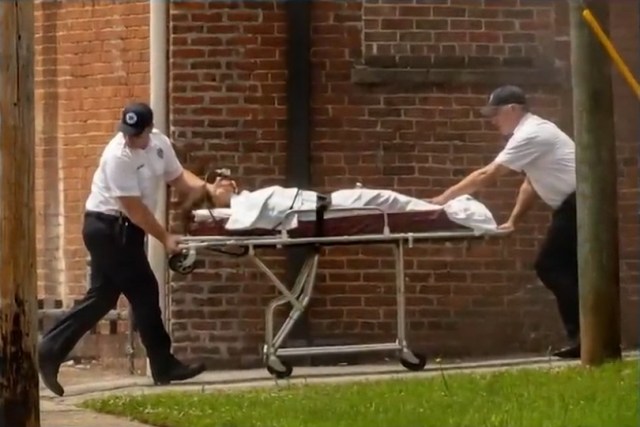
— Michael Jae shares a behind-the-scenes photo from Stranger Things in the video ‘Why Stranger Things Season 5 Writer Is Bringing Eddie Back!’ The photo, allegedly taken from a filmed scene, prominently features Eddie on a hospital stretcher. As I observed the photo for myself, I noticed Eddie didn’t appear to be wearing the black bandanna he wore in the fourth season’s last episode, “The Piggyback”. If the series finale I’ve been proposing does come to fruition, perhaps Eddie required a trip to the hospital due to the trauma/struggles Wayne reminds his nephew about? Maybe that filmed scene will be used as a flashback to explain what led up to Eddie imagining the world of Stranger Things?

— In that same video, ‘Why Stranger Things Season 5 Writer Is Bringing Eddie Back!’, Michael brings up the book, Stranger Things: Flight of Icarus by Caitlin Schneiderhan. He claims “the same writer is working on the Eddie book as well as season five”. Stranger Things: Flight of Icarus is also addressed in the Film Stocked video, ‘Stranger Things Season 5…Eddie Munson Returns?’. Chris explains in that video how the book’s author, Caitlin Schneiderhan, “was in the writer’s room for Stranger Things four and has been a part of Stranger Things’ crew since season two”.

— Michael Jae brings up in the video, ‘Joseph Quinn Just Spoiled Something Big in Stranger Things Season 5’, how the Duffer brothers emphasized “immediately after season four how big of a role Eddie’s death will play in season five”. If Stranger Things ends the way I’ve been proposing, maybe it will be revealed Eddie’s death was more figurative? With the possibility of Eddie creating the show’s universe through his imagination, perhaps Eddie dying and even his headstone are visual representations of how the parts of Eddie’s life plagued by trauma, struggles, and even grief have “died” due to him overcoming those issues, allowing him to be “now at peace” through healing and moving forward with the rest of his life? This would explain Eddie’s dilemma over running away throughout season four, his decision to stay and fight the Demobats, and even asking Dustin “I didn’t run away this time, right?”

— The clips I’ve seen of Eddie fighting the Demobats look, to me, like the bats are moving in a circular motion, almost as if they’re trapped in a snow globe. Even the terms “Upside Down” and “Rightside Up” sound like motions used to make the snowflakes in a snow globe move. First, you tip the snow globe “upside down” so the snowflakes go to the “bottom”. Then you flip the snow globe “rightside up”, allowing the snowflakes to fall as they would in real life.

— Any fan of Stranger Things would know Stranger Things Day takes place on November 6th because one of the show’s characters, Will Byers, disappeared on November 6th, 1983. But does anyone else notice how that date also takes place during the 1983-1984 school year, when Eddie tried to graduate high school the first time around? Could this detail just be coincidence or connected in some fashion?

— According to Stranger Things Wiki, “the curse gates converged upon the library on March 27th, 1986 (the day Eddie died). As I described earlier in this editorial, Eddie’s snow globe in the proposed ending features a tiny replica of Hawkins Public Library. Perhaps the aforementioned event could be a symbolic visual of how the library, like the mind, is the ultimate source of imagination?

— One of the villains of Stranger Things, Vecna, just so happens to be a character from Eddie’s “Cult of Vecna” Dungeons & Dragons campaign that Eddie himself brought up in season four’s very first episode, “The Hellfire Club” (the same episode Eddie made his official debut).

— In a short video from the Youtube channel, Film Stocked, Chris talks about the last episode of Stranger Things’ fifth and final season being shown in theaters. In the background, title cards announce volume one will premiere on November 26th and volume two will premiere on Christmas. These title cards feature a snowflake pattern, with The Hellfire Club’s logo in the middle of some of the snowflakes and the initials ‘HFC’ (standing for The Hellfire Club) above those snowflakes.

— Eddie’s solo of Metallica’s ‘Master of Puppets’ was one of the most memorable moments not just in season four, but arguably in Stranger Things’ history. But have you ever wondered why Eddie picked that specific song to perform? While we know Eddie is a Dungeon Master, perhaps the song choice is an allusion to Eddie being the “master” of Stranger Things’ universe, with the other characters and stories simply being “puppets”?

This is the behind-the-scenes photo from Michael Jae’s Youtube video, ‘Why Stranger Things Season 5 Writer Is Bringing Eddie Back!’, I referenced. If you look really closely, you’ll noticed how it doesn’t look like Eddie is wearing the black bandanna he wore in “The Piggyback”.
These are the title cards from Film Stocked’s Youtube video, ‘STRANGER THINGS SEASON 5 FINALE OFFICIALLY COMING TO THEATERS!’, I referenced. Some of the snowflakes I described have been circled for greater emphasis on my point.

Why I Hope We Get This Ending

Back in 2022, I wrote a list about the top ten characters who didn’t reach their full potential. In that list, I explained how a character reaching their “full potential” means a character is given the opportunity to reach their goals, make their dreams come true, and allow their stories to be told to a satisfying extent. Though the list only features ten characters, I can think of more that fit the criteria. And, frankly, this thought makes me tired of seeing characters not reaching their full potential for a variety of reasons. Creatively speaking, this seems like a growing problem without an obvious solution. But if my proposed ending of Stranger Things comes true, the show’s creative team would find, at least, one answer to this problem. I can only speak for myself, but I’d rather think about Eddie finally graduating high school, the world being his oyster, and doing anything and everything his heart desires. Similar to St. Elsewhere’s series finale, “The Last One”, it would be a commonly discussed ending, extending the relevancy of Stranger Things a little bit longer. Plus, it would recontextualize the entire show, allowing the audience to see things from a new perspective.

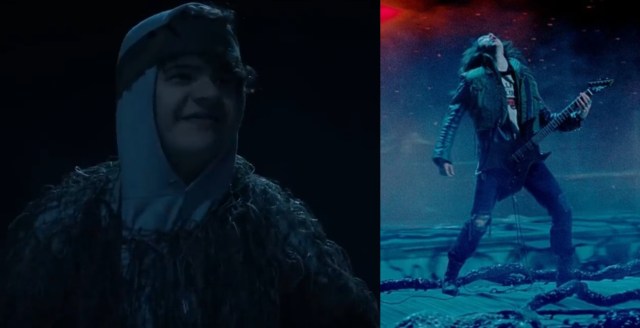
If Stranger Things was the result of Eddie’s imagination, how would it change the context of scenes like Eddie’s ‘Master of Puppets’ solo? Original images created by 21 Laps Entertainment, Monkey Massacre, Netflix, and Upside Down Pictures

Editorial References:

Stranger Things Wiki

Eddie Munson and Harris Trinsky: Two Sides of the Same Coin

Top Ten Characters Who Didn’t Reach Their Full Potential

https://variety.com/2025/tv/features/stranger-things-5-duffer-bros-ending-spinoffs-1236551615/

https://www.ign.com/articles/where-to-buy-dungeons-and-dragons-stranger-things-welcome-to-the-hellfire-club

https://screenrant.com/st-elsewhere-controversial-series-finale-revisited/

en.wikipedia.org/wiki/St._Elsewhere

en.wikipedia.org/wiki/List_of_St._Elsewhere_episodes

St. Elsewhere‘s official IMDB page: imdb.com/title/tt0083483/?ref_=ttfc_ov_bk

Michael Jae Youtube Channel: ‘Why This Would Be The Absolute Worst Ending For Stranger Things’, ‘Why Stranger Things Season 5 Writer Is Bringing Eddie Back!’, and ‘Joseph Quinn Just Spoiled Something Big in Stranger Things Season 5’

Film Stocked Youtube Channel: ‘Stranger Things Season 5 Finale Teased! (*EMOTIONAL*)’, ‘Stranger Things Season 5…Eddie Munson Returns?’, and ‘STRANGER THINGS SEASON 5 FINALE OFFICIALLY COMING TO THEATERS!’

Eddie Munson and Harris Trinsky: Two Sides of the Same Coin

In our landscape known as entertainment, a select group of movies, television shows, or characters are given the title of “popular”, “iconic”, or even “classic”. Sometimes, I try to check out programs or learn more about characters that get these titles to try to gain an understanding for why that program or character is well-liked in the first place. Back in 2022, when Stranger Things’ fourth season was released, I remember seeing pictures of Eddie Munson making his famous goofy face sprinkled across the internet like confetti on New Year’s Eve. Since I don’t watch the show, I didn’t think much of it then. That changed, however, when I saw the trailer for the fifth and final season of Stranger Things. Seeing Eddie’s headstone left me confused; how did this guy who seemed so popular on the internet end up dead? Like I said, I don’t watch the show. Therefore, I didn’t think it had a reputation like Lost or Game of Thrones; where no character is safe from getting killed off. Curiosity got the better of me almost immediately and I learned anything and everything I could about Eddie. To my surprise, the more I learned about him, the more I realized Eddie shared an uncanny amount of similarities with Harris Trinsky, my favorite character from Freak and Geeks. My curiosity, paired with my being a Harris Trinsky fan, are what led to the conception of this editorial, where I will discuss in depth why Eddie Munson and Harris Trinsky are two sides of the same coin!

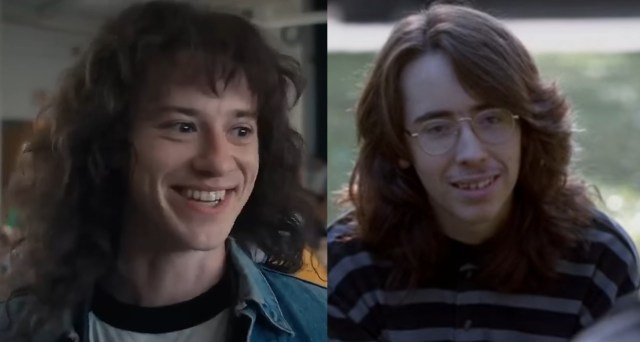
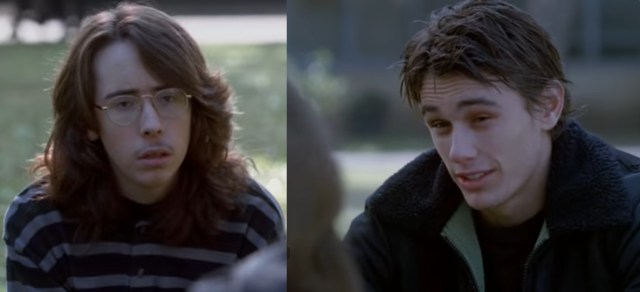
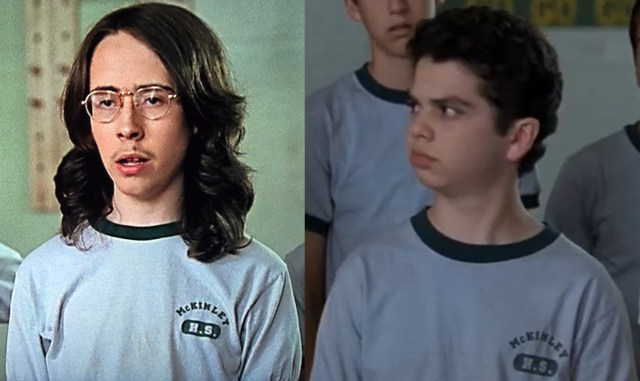
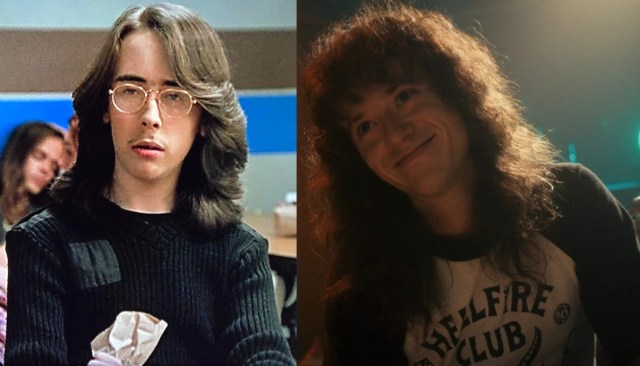
Is it just me or do Harris Trinsky and Eddie Munson look similar to one another? Original images created by 21 Laps Entertainment, Monkey Massacre, Netflix, Upside Down Pictures, Apatow Productions, DreamWorks Television, and National Broadcasting Company (NBC)

Who is Eddie Munson and Harris Trinsky?

Before I officially begin this editorial, we need to establish who Eddie Munson and Harris Trinsky are, especially for readers who are unfamiliar with these characters. Eddie Munson made his debut in the fourth season of the popular Netflix show, Stranger Things. He was introduced as the Dungeon Master of The Hellfire Club as well as the local “metalhead” (someone who like metal music). Since his debut in 2022, Eddie has become one of the most beloved characters not just from Stranger Things, but in television history. Eddie’s distinct appearance and personality have also made him a very marketable character. Harris Trinsky is a character the titular “geeks” are friends with on Freak and Geeks. Though he appears in ten of the show’s eighteen episodes, Harris has a reputation for being someone the “geeks” turn to for advice and guidance. Because of his inconsistent appearances on the show, only a portion of information is known about Harris. Despite this, his dry sense of humor and brutal honesty left a memorable impression.

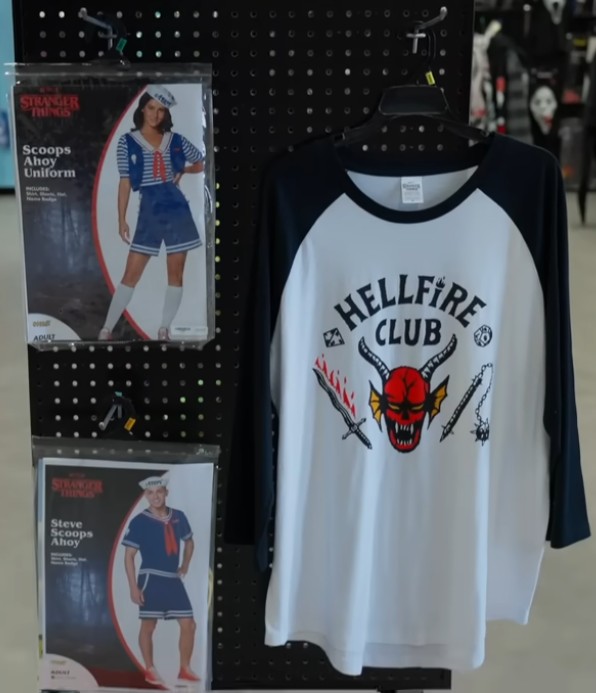
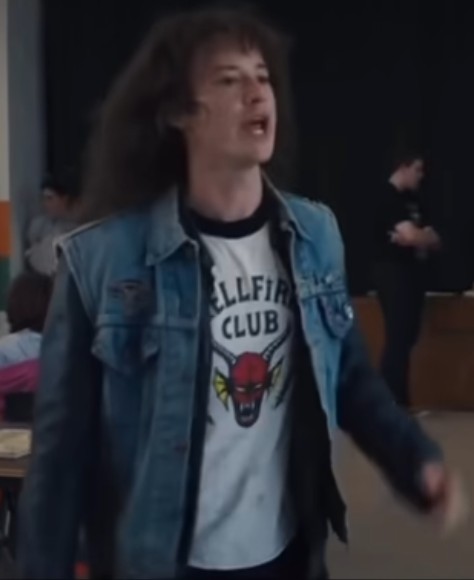
This Stranger Things display in the Youtube video, ‘Spirit Halloween 2025 Store Tour’, from the Youtube channel, Spirit Halloween, proves how marketable Eddie is by prominently featuring his Hellfire Club shirt
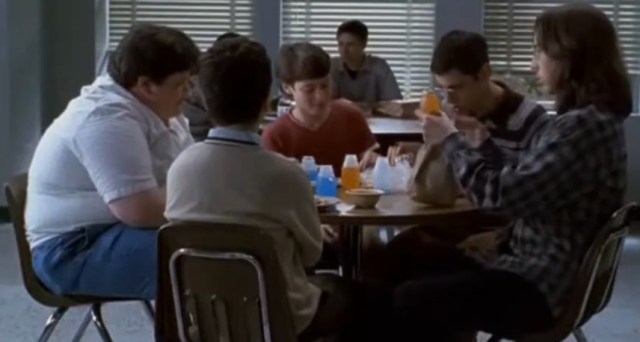
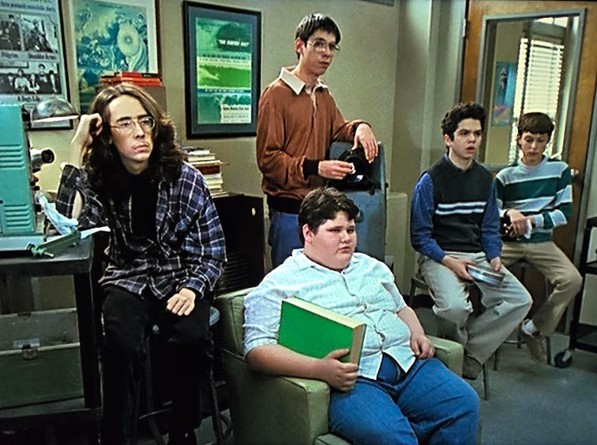
From time to time, Harris joins the “geeks” at their lunch table on Freaks and Geeks. Original image created by Apatow Productions, DreamWorks Television, and National Broadcasting Company (NBC)

1. Eddie and Harris are Dungeon Masters

This similarity is what initially sparked the discovery of other similarities that exist between these two characters. In fact, when I learned Eddie was a Dungeon Master, the first thing I said was, “just like Harris Trinsky”. In Dungeons & Dragons, a game that relies on adventure and strategy, Dungeon Masters are the ones who essentially control the game (known to players as campaigns). On Freaks and Geeks and Stranger Things, both Harris’ and Eddie’s Dungeons & Dragons groups participate in a campaign. During these campaigns, each group welcomes a new member. In the Freak and Geeks episode, “Discos and Dragons”, Harris (who is affiliated with the “geeks”) invites Daniel (a member of the “freaks”) to join his group’s upcoming campaign. When Daniel experiences his first campaign, he realizes he enjoys Dungeons & Dragons and the company of Harris’ group, which consists of Sam, Neil, Gordon, and Bill. He even successfully completes his first campaign because Harris and the “geeks” explain the game along the way.

In the Stranger Things episode, “The Hellfire Club”, Lucas (one of the members of Eddie’s Dungeons & Dragons group) is unable to attend that night’s campaign due to a basketball game. Dustin and Mike (two other members of The Hellfire Club) invite Lucas’ sister, Erica, to stand in for Lucas. What works in Erica’s favor is how she is familiar with Dungeons & Dragons prior to being invited to The Hellfire Club. Her familiarity with the game, along with Eddie and the rest of The Hellfire Club’s support of her participation, help Erica win her first campaign.

Even though Harris and Eddie are Dungeon Masters of their respective Dungeons & Dragons groups, the way these groups are led is quite different. Harris’ approach is more casual, simply giving the “geeks” a reason to hang out on the weekends. Before the campaign in Freaks and Geeks, Harris reveals how “ancient Babylonia” is incorporated into the campaign itself. Not only does the campaign featured in “Discos and Dragons” take place at one of the character’s houses, the campaign schedule is also flexible, as the “geeks” agree to meet the following Saturday after Daniel expresses interest in playing again.

Eddie’s group, The Hellfire Club, is more established. It has an official name, an official logo printed on official shirts, an official yearbook photo, and even an official meeting room (located in the drama/theatre room at Hawkins High School). The “Cult of Vecna” campaign featured in the episode, “The Hellfire Club”, incorporates elements of fantasy and science fiction, which reflects Stranger Things itself. Despite these differences, another major similarity between Harris’ and Eddie’s story is how Dungeons & Dragons is included to serve an overarching theme. Freak and Geeks uses Dungeons & Dragons to promote themes of acceptance, friendship, and building bridges (with Daniel and Harris’ Dungeons & Dragons group building a bridge between the “freaks” and the “geeks”). Stranger Things’ creative team uses Dungeons & Dragons in season four’s script to provide commentary on the “Satanic Panic” that took place during the 1980s.

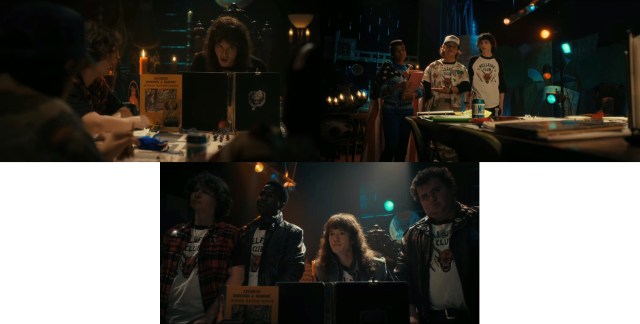
These photos from “The Hellfire Club” present Eddie’s Dungeons & Dragons group like a elaborate production. Notice the stage lights in the background? Original images created by 21 Laps Entertainment, Monkey Massacre, Netflix, and Upside Down Pictures
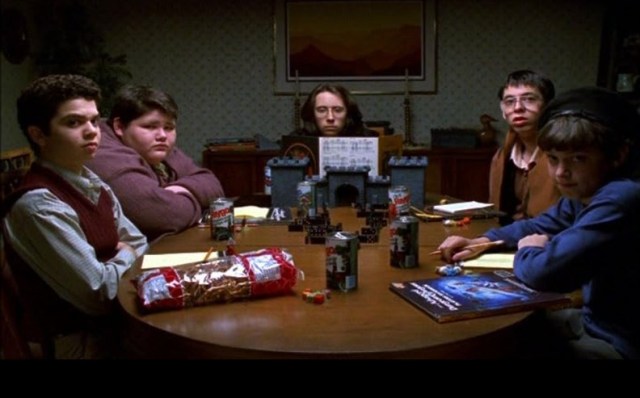
In this picture from “Discos and Dragons”, Harris’ Dungeons & Dragons group takes a more casual approach to the game. Original image created by Apatow Productions, DreamWorks Television, and National Broadcasting Company (NBC)

2. Harris’ and Eddie’s Stories Take Place in the 1980s, in High School, and in the Midwest

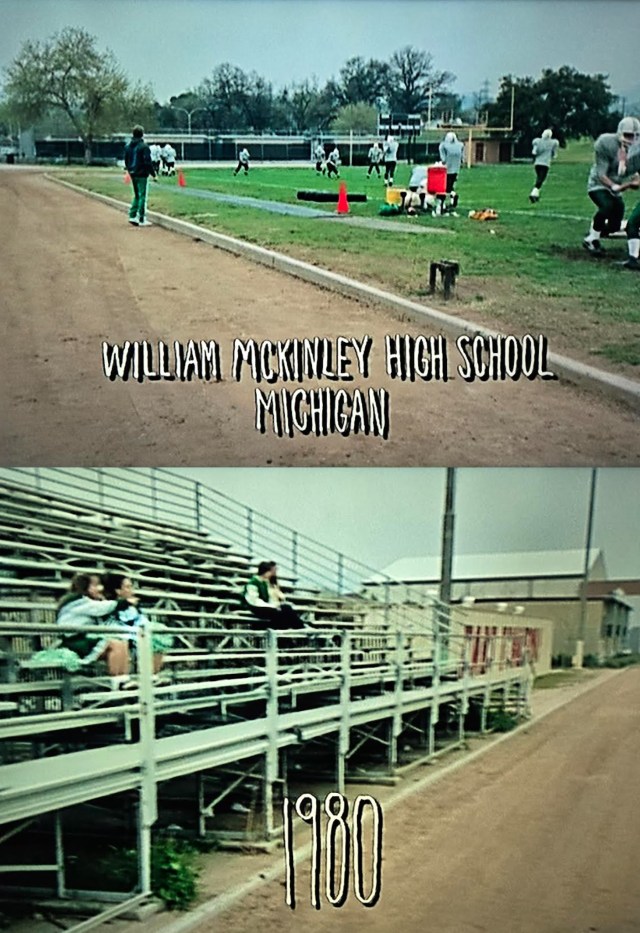
In the pilot episode of Freak and Geeks, “William McKinley High School”, “Michigan”, and “1980” are shown on screen. This text sets the stage for when and where Harris’ story (as well as the show) takes place. According to the video, “From CANCELED to CULT CLASSIC (Freaks and Geeks)”, from the Youtube channel, Media Pastimes, the characters live in the fictional town of Chippewa, Michigan. Because one of Freak and Geeks’ episodes is set on Halloween, the script establishes the story takes place specifically during the 1980-1981 school year. Through the dialogue, it’s revealed Harris is a sophomore at the aforementioned high school. Neil points out in “Tests and Breasts” how Harris is only a year older than the “geeks”. Harris also shares his story in the show’s pilot episode about how he faced his “freshman tormentor”, with the story being told in past tense.

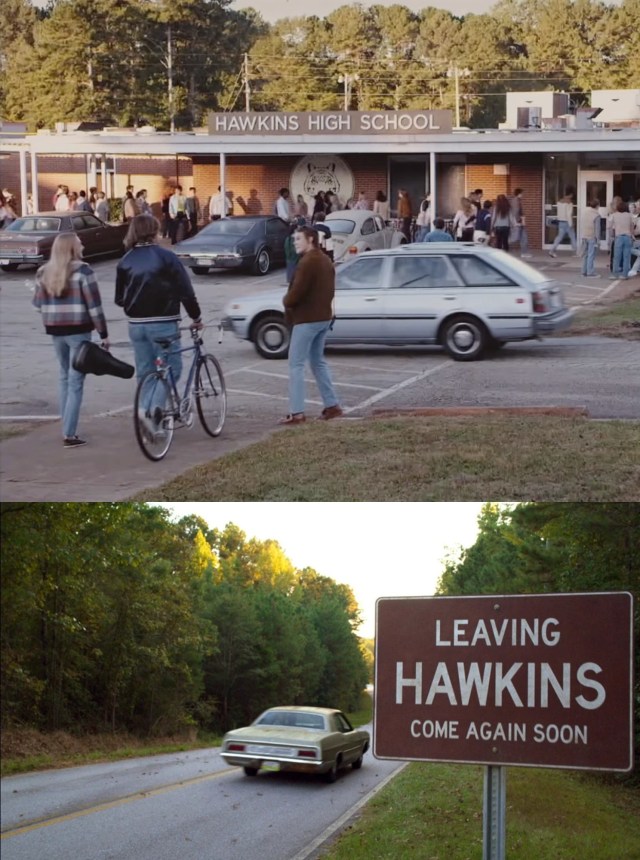
Stranger Things is consistently set in the fictional town of Hawkins, Indiana. This major detail was established long before the show’s creative team even thought about including Eddie on the show. However, Stranger Things’ fourth season does provide the necessary information that determines when and where Eddie’s story takes place. Just in the first episode, “The Hellfire Club”, alone, the audience learns Eddie attends Hawkins High School. With the fourth season set during March 21st to 27th, 1986, it emphasizes Eddie’s story takes place during the 1985-1986 school year. This detail is emphasized again when it’s revealed Eddie is a “super senior”. In the episode, “The Hellfire Club”, Gareth and Jeff (two of The Hellfire Club’s members) call Eddie out for failing to graduate in 1984 and 1985. Despite this, Eddie expresses a desire to graduate in 1986.

If you begin watching Freaks and Geeks, these are the first images you’ll see. Original images created by Apatow Productions, DreamWorks Television, and National Broadcasting Company (NBC)
Hawkins High School and the “Leaving Hawkins” sign have become familiar landmarks for viewers of Stranger Things. Original images created by 21 Laps Entertainment, Monkey Massacre, Netflix, and Upside Down Pictures

3. Eddie and Harris Have An “Outsider” Status

Though Eddie and Harris are known as Dungeon Masters in their friend groups, they are both considered “outsiders” by those not affiliated with their personal circles. On Freaks and Geeks, Harris is labeled a “geek” primarily due to his association with the “geeks” (Sam, Neil, Gordon, and Bill). Meanwhile, Eddie admits he and the other members of The Hellfire Club are labeled as “freaks” when he says, “We’re the freaks because…we like to play a fantasy game?”

Harris and Eddie were not only mistreated in their respective shows for being “outsiders”, they were also bullied prior to the events of their stories. Though the only time Harris is treated poorly on Freaks and Geeks is when Alan (the “freshman tormentor” of the “geeks”) harasses the “geeks” in the episode, “Tricks and Treats”, Harris either admits to or implies other times he was bullied, such as when Harris shares his story about how he faced his “freshman tormentor”. Things got so out of hand, Harris’ “freshman tormentor” (Tom Cressman) broke Harris’ tailbone, which led to him getting expelled. When Daniel walks past Harris in the episode, “Looks and Books”, Harris asks Daniel, “You’re not gonna beat me up, are you?”

As mentioned before, Eddie was mistreated before and during his time on Stranger Things for being an “outsider”. Stranger Things Wiki states that “Upon beginning high school, Eddie found himself being targeted for bullies”. It’s unknown what the extent of the bullying was. In the episode, “The Hellfire Club”, when Eddie is delivering his famous monologue about the hypocrisy of forced conformity, one of Hawkins High School’s basketball players, Jason, calls Eddie a “prick” and a “freak”. This same character also creates false accusations against Eddie, such as claiming he is the leader of a Satanic cult. Jason takes things a step further when he not only kept a log of every location Eddie frequented, he and his friend, Patrick, also chased Eddie out of his hiding place while he had run away after Chrissy’s death.

Despite all the mistreatment Harris and Eddie have faced, neither is fazed by his “outsider” status. In fact, each wears it as a badge of honor by actively choosing to be his authentic self. This decision earns them respect and adoration from other characters in their stories. During their conversation in “Looks and Books”, Daniel commends Harris by telling him “you do your own thing”, you’re “comfortable with yourself”, and “You got it pretty wired, huh?” Keep in mind this conversation takes place before Harris invites Daniel to join his Dungeons & Dragons group. In a conversation from the Stranger Things episode, “The Piggyback”, Dustin shares with Eddie’s uncle, Wayne, “Even in the end, he never stopped being Eddie, despite everything”. Eddie also gains the friendship of characters outside of his social sphere, like Steve Harrington and Nancy Wheeler, due to his ability to help them when they needed him the most.

After writing this editorial, I now try to imagine how this conversation would go if Harris were talking to Eddie. Original images created by Apatow Productions, DreamWorks Television, and National Broadcasting Company (NBC)
As Clarence tells George in It’s a Wonderful Life, “Each man’s life touches so many other lives”. This image of Dustin giving Wayne his nephew’s guitar pick necklace is a beautiful representation of Clarence’s quote. Original images created by 21 Laps Entertainment, Monkey Massacre, Netflix, and Upside Down Pictures

4. Harris’ and Eddie’s Sense of Style

This similarity between Eddie and Harris is more trivial than the other similarities discussed in this editorial. However, it is still a similarity I noticed while conducting research for this article. As I said earlier, the fourth season of Stranger Things is set during March 21st to 27th, 1986. Therefore, Eddie’s story is more condensed than Harris’ story, which is more episodic and takes place over the course of several weeks. Despite this difference, both characters wear the same articles of clothing in multiple episodes. Harris can be seen wearing a gray plaid shirt in four episodes of Freaks and Geeks: “Discos and Dragons”, “Smooching and Mooching”, “Tricks and Treats”, and “Carded and Discarded”. Meanwhile, Eddie practically lives in his Hellfire Club shirt throughout his time on Stranger Things. It should also be noted how black is the most prominent color in both Eddie and Harris’ wardrobe. Every outfit Harris wears on Freaks and Geeks is either completely black or contains at least one article of clothing with the color black in it. Even though Eddie wears the same outfit for the entirety of Stranger Things’ fourth season, his articles of clothing containing the color black are the following:

  • Hellfire Club shirt (sleeves and collar of shirt are black)
  • Jeans
  • Watch
  • Leather jacket
  • Bracelet
  • Bandanna (Eddie wears this later in the season)

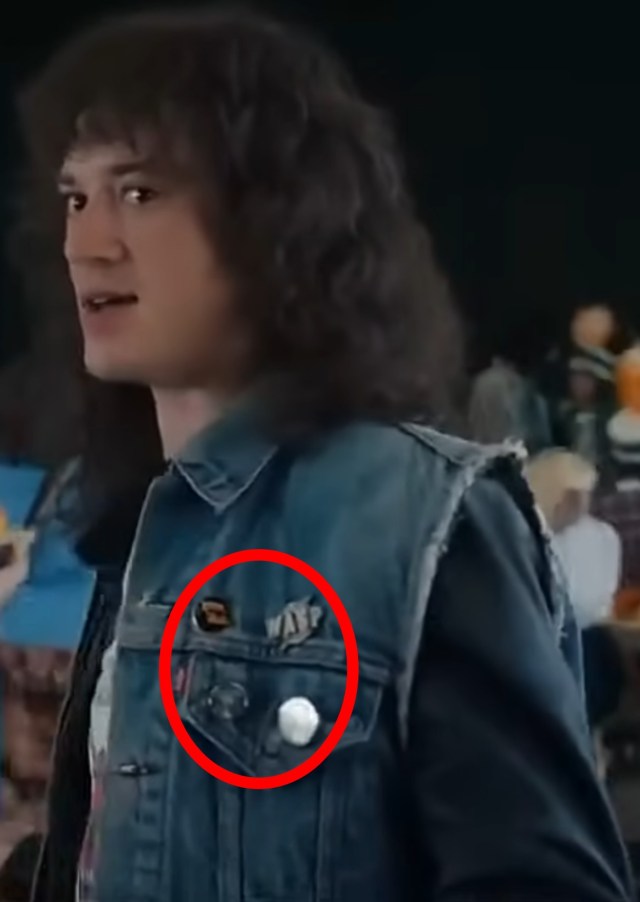
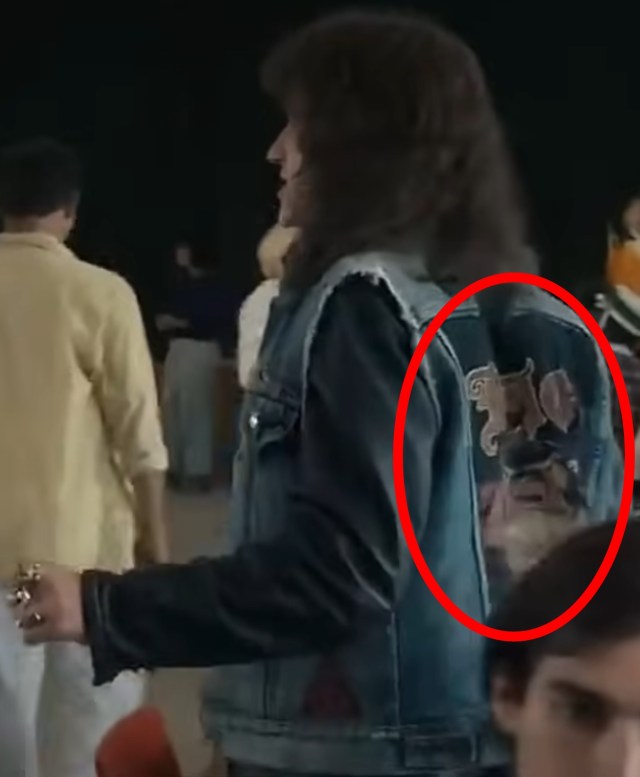
While we’re on the subject of Eddie’s wardrobe, a major difference is how his style is more personalized than Harris’. The shirt Eddie consistently wears promotes The Hellfire Club (his Dungeons & Dragons group). His denim vest features pins and patches of metal bands he’s a fan of, which are Motorhead, W.A.S.P., Judas Priest, Megadeth, Dio, Accept, Merciful Fate, and Iron Maiden. Though Eddie and Harris’ attire appears distinct from one another, their style is casual and low maintenance, promoting personal comfort and what makes them feel good about themselves.

These photos accurately show how many times Harris wears his gray plaid shirt. Original images created by Apatow Productions, DreamWorks Television, and National Broadcasting Company (NBC)
These pictures represent some examples of how the color black is incorporated into Harris’ wardrobe. Original images created by Apatow Productions, DreamWorks Television, and National Broadcasting Company (NBC)
In these photos, I point out how the color black is incorporated into Eddie’s wardrobe. Original images created by 21 Laps Entertainment, Monkey Massacre, Netflix, and Upside Down Pictures
In these three pictures, I point out the band pins and patches on Eddie’s denim vest. Original images created by 21 Laps Entertainment, Monkey Massacre, Netflix, and Upside Down Pictures

5. Eddie and Harris Possess a Rebellious Streak

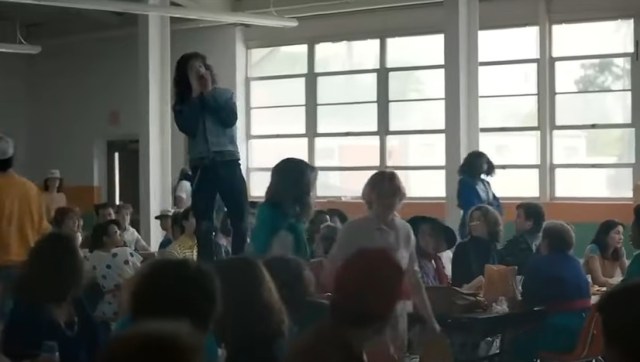
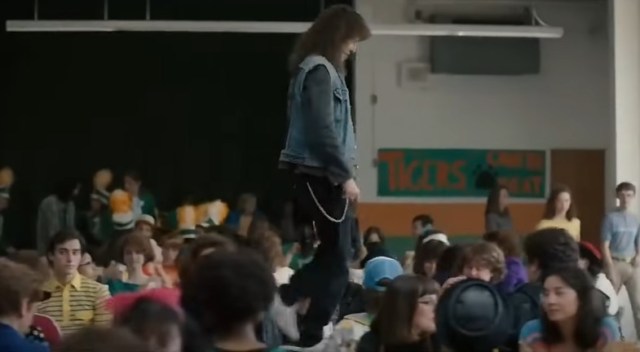
Earlier in this editorial, I brought up Eddie’s famous monologue about the hypocrisy of forced conformity. If one were to watch that scene with little to no context, it might be easy to write Eddie off as a “rebel” or an “attention-seeker”. It is true Eddie has a prominent and consistent rebellious streak while on Stranger Things. But it’s important to pay attention to why Eddie possesses a rebellious streak. Eddie’s monologue is featured in the episode, “The Hellfire Club”. When he is introduced in this episode, Eddie reads a magazine article about the “dangers” of Dungeons & Dragons. The members of The Hellfire Club become discouraged over being considered “freaks” by the other students at Hawkins High School. This is when Eddie delivers his famous monologue, telling his friends;

“We’re the freaks because…we like to play a fantasy game? But as long as you’re into band, or science, or parties, or a game where you toss balls into laundry baskets! It’s forced conformity. That’s what’s killiiiiing the kiiiiids! That’s the real monster.”

During this monologue, Eddie climbs on the cafeteria table, yells loudly, and even makes his well-known goofy face I referenced in this editorial’s introduction. If you look past the theatrics and really listen to what Eddie is saying, he’s stressing how The Hellfire Club is treated differently due to the school community’s perception of the various extracurricular groups. By pointing out this hypocrisy, Eddie emphasizes the importance of embracing uniqueness and being a free-thinker. His monologue is such a beautiful example of how his rebellious streak is a product of his choices, as Eddie pursues his interest in Dungeons & Dragons despite the criticism and screaming the quiet parts out loud.

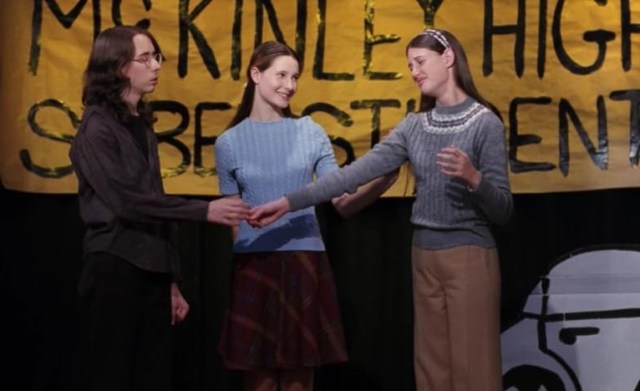
On Freaks and Geeks, Harris is known for having a laid-back personality. But he does show a glimmer of a rebellious streak in the episode, “Beers and Weirs”. Harris is a member of the group, McKinley High Sober Students, which discourages under-age drinking. Later in the episode, however, he attends a party hosted by Sam’s sister, Lindsay, that happens to be serving (non-alcoholic) beer. Before taking a large gulp of (non-alcoholic) beer, a party guest asks Harris if he’s a member of McKinley High Sober Students. Harris replies by telling the guest, “I only did that cause it looks good on my transcript for college.” Though this rebellious streak is brief, it is the result of Harris’ actions. Not only did he literally act in an improv performance hosted by McKinley High Sober Students, he also acts in his own interests by joining the group for academic gain instead of genuinely supporting the cause.

These two photos are from Eddie’s monologue about the hypocrisy of forced conformity. Though the theatrics make this monologue memorial, Eddie does bring up excellent points. Original images created by 21 Laps Entertainment, Monkey Massacre, Netflix, and Upside Down Pictures
One of the most popular pictures of Eddie, which has probably been seen all over the galaxy. Original image created by 21 Laps Entertainment, Monkey Massacre, Netflix, and Upside Down Pictures
Toward the beginning of “Beers and Weirs”, Harris performs in an improv presentation with two other group members named Cindy and Millie. Original image created by Apatow Productions, DreamWorks Television, and National Broadcasting Company (NBC)

6. Harris and Eddie Have a Healthy Sense of Confidence

What makes Harris and Eddie such likable characters is their healthy sense of confidence. Both of them consistently appear comfortable with themselves and satisfied with their skills and talents. After gym class, in the episode, “I’m with the Band”, Harris asks Sam if he’ll sign up for French next year. During this conversation, Harris expresses a desire to take German because he’s “a quarter German”. He then speaks German on two occasions: when he shares parting words with Sam and when he responds to Coach Fredericks’ roll call in gym class. Some people might feel intimidated or self-conscious about speaking a new language in front of their peers due to fear of judgement. But in “I’m with the Band”, Harris speaks German with confidence and ease. He prioritizes using the language in contexts he deems appropriate over other people’s reactions. Because of his healthy sense of confidence in his learning abilities, Harris receives an academic head-start, as he uses everyday situations to practice and master a new language.

Eddie has been the lead guitarist of the band, ‘Corroded Coffin’, since middle school. He even discusses his musical talents with a fellow student of Hawkins High School named Chrissy. In the Stranger Things episode, “The Piggyback”, Eddie’s guitar skills play a major and even lifesaving role. While in the Upside Down, the Demobats pose a huge threat to Eddie and his friends. In order to distract the Demobats so his friends can be protected, Eddie performs a solo of Metallica’s “Master of Puppets”. This plan ends up working, as his friends, Steve, Robin, and Nancy, are able to safely get away from the Demobats and reach their intended destination. Eddie’s healthy sense of confidence in his musical abilities allowed him to become a part of something greater than himself (which was the battle of good vs. evil). It also helped Eddie find a sense of belonging and purpose, especially after being considered an “outsider” and a “freak”. Eddie’s performance even left a good impression on Dustin, as he claims the “Master of Puppets” solo was the “most metal ever”.

Neil Schweiber was definitely caught off-guard when Harris spoke German in their gym class. Original images created by Apatow Productions, DreamWorks Television, and National Broadcasting Company (NBC)
Eddie’s solo was so “metal”, it earned Dustin’s stamp of approval. Original images created by 21 Laps Entertainment, Monkey Massacre, Netflix, and Upside Down Pictures

7. Eddie and Harris Display Self-Awareness

One quality that makes Eddie a great character is his self-awareness, which doesn’t get talked about enough. I will bring up two perfect examples where Eddie’s self-awareness shines through. When I said earlier how Eddie is a “super senior”, I mentioned Gareth and Jeff calling Eddie out for failing to graduate in 1984 and 1985. Eddie responds to this criticism by saying, “Yeah, yeah, and I was full of shit”. Anyone who knows anything about Eddie would know he’s been through some trauma in his young life. According to Stranger Things Wiki, Eddie experienced heartbreak at six years old when his mom, Elizabeth, passed away. His dad, Alan, became incarcerated, which led to Eddie’s uncle, Wayne, obtaining custody of his nephew. Keeping this information in mind, Eddie could have used his trauma as an excuse for not graduating high school sooner. He could have blamed others for his choices or given up by dropping out of school. But by admitting he was “full of shit”, he takes full accountability for his decisions and mistakes. At one point, Eddie states, “I am army crawling my way toward a D in Ms. O’Donall’s”, admitting how his grades aren’t the best, yet is trying to make some improvement in order to graduate. Later in season four, during a conversation with Steve, Eddie confesses, “…when the other dads were teaching their kids how to fish or play ball, my old man was teaching me how to hot-wire. Now, I swore to myself I wouldn’t wind up like he did…” Based on this quote alone, Eddie acknowledges two things. The first is how the way he grew up and the way his dad raised him isn’t “normal” or healthy. The second is how Eddie knows what kind of man he doesn’t want to be. This self-awareness I described explains some of Eddie’s decisions in Stranger Things’ fourth season, such as his sacrifice in “The Piggyback”. It fuels his objectives as well, like wanting to finally graduate high school.

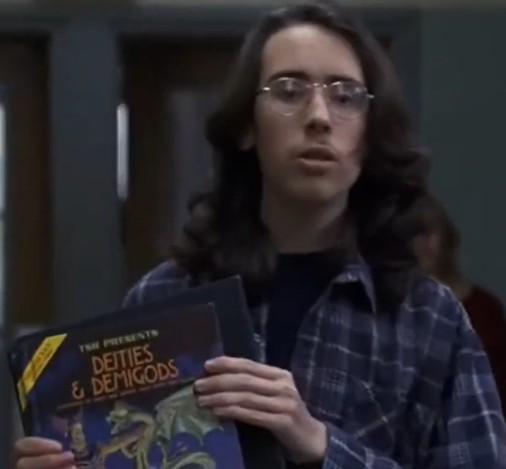
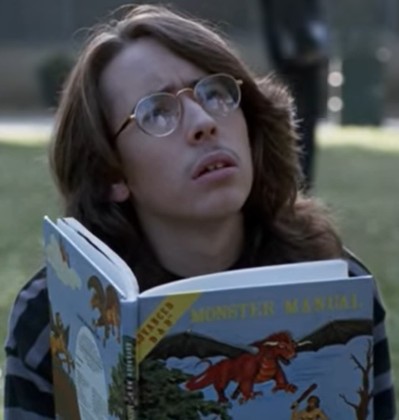
Earlier in this editorial, when I brought up Harris’ explanation for why he’s a member of McKinley High Sober Students, it wasn’t just an act of rebellion for him. It was also Harris’ display of self-awareness for what he wants (to graduate high school) and how he’s going to achieve his goal. Other ways Harris works to achieve his goal are joining the William McKinley High School’s Audio/Visual Club (a group that consists of Harris and the “geeks”) and getting good grades (a fact he admits in his conversation with Daniel in the episode “Looks and Books”). On two separate occasions, Harris is in possession of a Dungeons & Dragons handbook: The Monster Manual (in “Looks and Books”) and Deities and Demigods (in “Discos and Dragons”). By owning these Dungeons & Dragons handbooks and taking the time to read them, Harris shows how eager he is to learn how to make campaigns as fun and engaging for everyone. He wants to truly understand the rules as well, so he can teach others how to play the game. These examples show Harris’ self-awareness for his role as a Dungeon Master and the responsibilities it entails.

Eddie responds to Gareth and Jeff’s criticism by showing his self-awareness. Original image created by 21 Laps Entertainment, Monkey Massacre, Netflix, and Upside Down Pictures
Harris stays involved in the school community of William McKinley High School by joining the Audio/Visual Club. Original image created by Apatow Productions, DreamWorks Television, and National Broadcasting Company (NBC)
On Freaks and Geeks, Harris reads more than one Dungeons & Dragons handbooks so he can learn as much as he can about the game. Original images created by Apatow Productions, DreamWorks Television, and National Broadcasting Company (NBC)

8. Harris and Eddie Assume a Leadership Role and Become Role Models for Their Stories’ Younger Characters

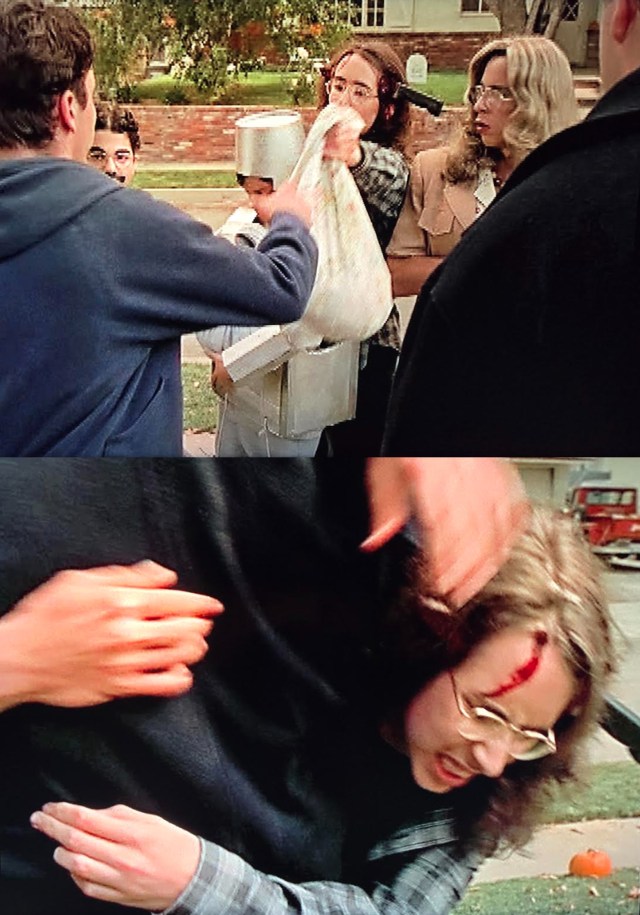
In their respective stories, Eddie and Harris earn a leadership role through their actions and choices. They both show their leadership through putting others before themselves. Alan (in the Freaks and Geeks episode, “Tricks and Treats”) claims he’ll leave the “geeks” alone if they give him their candy. Out of all the “geeks” Alan and his friends harassed, Harris is the only one to give Alan his candy. He even tries to tackle one of Alan’s friends in order to protect the younger “geeks”. Harris was willing to sacrifice his Halloween candy and fun so Sam, Neil, and Bill wouldn’t face further torment from Alan.

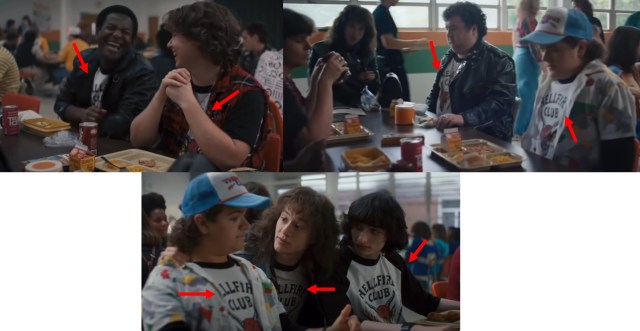
During Eddie’s monologue about the hypocrisy of forced conformity, he brings up three extracurricular groups: “band”, “science”, and the basketball team. What these three groups share in common is how their members are eligible to receive letterman jackets. Depending on the school, a student’s academic/extracurricular interests will be stitched somewhere on the jacket. Patches and medals related to those interests may be added to the jacket as well. Letterman jackets are representative of a student’s time spent in an extracurricular group, as well as symbolizes those members being a part of something greater than themselves. Eddie likely saw Hawkins High School’s letterman jackets and believed The Hellfire Club deserved something similar. So, he went the extra mile to create official Hellfire Club shirts and gave them to the group’s members. Though the gesture is simple, Eddie giving Hellfire Club shirts to each member makes them feel important, even when they don’t see themselves that way. Making his Dungeons & Dragons group inclusive through the little things makes Eddie a worthy Dungeon Master and an attentive leader.

These two photos from “Tricks and Treats” show how Harris tries everythins he can to protect the “geeks”. Original images created by Apatow Productions, DreamWorks Television, and National Broadcasting Company (NBC)
In these photos, I point out how every member of The Hellfire Club wears their official shirt to school. Original images created by 21 Laps Entertainment, Monkey Massacre, Netflix, and Upside Down Pictures

Before Sam, Neil, and Bill go trick-or-treating, Harris warns them of rumors he heard about candy potentially being contaminated. When the “geeks” eventually go trick-or-treating, Sam expresses interest in going to a wealthy neighborhood because “they hand out the best candy”. Harris then points out, “That’s not true. Rich people traditionally give out the cheapest candy. That’s how they stay rich”. These two examples from “Tricks and Treats” show Harris looking out for the best interests of the “geeks” by wanting them to stay safe and trying to help them think logically about how to best utilize their time. Harris being a role model for the “geeks” inspired them to look out for others, like when they swapped out actual beer for non-alcoholic beer before Lindsay’s party in “Beers and Wiers”.

Throughout his time in Stranger Things’ fourth season, Eddie proves to be a man of his word. One excellent example is how he is always willing to lend a helping hand. When Eddie instructs Dustin and Mike to look out for “little lost sheepies” to substitute for Lucas, he specifically encourages them to find those “who need help”. During his story, Eddie consistently helps other characters, no matter their social standing. From reassuring Chrissy she’s not the only one who feels like they’re losing their mind to encouraging Steve to work things out with Nancy, helping where help is needed is one of Eddie’s top priorities. This has influenced Dustin the most. Eddie also consistently roots for Dustin to be his genuine, authentic self, such as telling him to “never change” and pointing out how brave it was for Dustin to wear a Weird Al t-shirt to school. When Eddie dies at the end of season four, Dustin is understandably devastated, as he lost his role model.

Harris joined the “geeks” on their trick-or-treating excursion in the episode, “Tricks and Treats”. Original image created by Apatow Productions, DreamWorks Television, and National Broadcasting Company (NBC)
Eddie tells Dustin to “never change” in the episode, “Papa”. Original image created by 21 Laps Entertainment, Monkey Massacre, Netflix, and Upside Down Pictures

9. Eddie and Harris’ Stories Are Told in Only One Season

The fact Harris’ and Eddie’s story are told in only one season is the most heartbreaking similarity between these characters. There has been speculation, however, over whether Eddie could, somehow, return in Stranger Things’ fifth and final season. Eddie was introduced at the beginning of Stranger Things’ fourth season, but died at the end of season four due to his injuries caused by the Demobats. On the other hand, Harris’ story lasted for only one season because that’s how long Freaks and Geeks stayed on television. The show was cancelled after its first and last season due to a variety of issues, including leadership changes at NBC (the network that distributed Freaks and Geeks), creative differences between the show’s creative team and the network, an inconsistent schedule, and NBC failing to properly promote the show. These creative decisions, like cancelling Freaks and Geeks and killing off Eddie, leave questions that may never get answered, such as if Harris eventually married his “high school sweetheart”, Judith, and what Eddie’s life would look like after graduation. They not only deny the audience a satisfying conclusion, they also deny Eddie and Harris an opportunity to reach their full potential.

The last shots of Harris and Eddie on their respective shows. Original images created by 21 Laps Entertainment, Monkey Massacre, Netflix, Upside Down Pictures, Apatow Productions, DreamWorks Television, and National Broadcasting Company (NBC)

Conclusion

I initially spent hours researching Eddie Munson because I wanted to understand why he was so popular. Not only did I achieve that understanding, I found a connection between Eddie and Harris Trinsky. The more I think about these characters, the more I see them as a lighthouse among a stormy sea, proving reliable in times of need. But if I had to be brutally honest, I wish Harris and Eddie had been a lighthouse for each other. Maybe Eddie could have protected Harris from getting his tailbone broken by Tom Cressman. Maybe Harris could have encouraged Eddie to graduate high school sooner and make better choices with his life. And maybe, just maybe, every year could have been “Eddie’s year”. I wish there was an alternate/parallel timeline/universe/dimension/multiverse where Harris’ and Eddie’s stories overlapped and they also became best friends, perhaps even brothers. Because I could see that as “the beginning of a beautiful friendship”. Stranger Things and Freaks and Geeks didn’t just give us two likable characters. They didn’t just give us two heroes worth rooting for either. What these shows gave us are two sparkling, shooting stars in our landscape known as entertainment.

Harris Trinsky and Eddie Munson: two sparkling, shooting stars. Original images created by 21 Laps Entertainment, Monkey Massacre, Netflix, Upside Down Pictures, Apatow Productions, DreamWorks Television, and National Broadcasting Company (NBC)

Editorial References:

Stranger Things Wiki

I Willie Dont Know (Youtube channel)

“From CANCELED to CULT CLASSIC (Freaks and Geeks)” from the Youtube channel, Media Pastimes

“The IMPOSSIBLE musician, Eddie Munson” from the Youtube channel, RemGames

“Eddie Munson beinghimself for 6 minutes straight (contains ST4 spoilers)” from the Youtube channel, Will Breyers

“Top 10 Reasons We Love Eddie Munson on Stranger Things” from the Youtube channel, MsMojo

Take 3: Let Me In (2010) Review

I apologize to my readers for my lack of blog posts these past two weeks. I’ve been working on an editorial I’m publishing on Halloween. Researching, writing, and curating that editorial has taken up a lot of time. But I wasn’t going to miss out on participating in Taking Up Room’s Secret Places and Trippy Houses Blogathon, especially since my selected film is a perfect choice for Halloween! When I learned one of the eligible subjects was “strange neighbors”, I was reminded how I was recommended the 2010 movie, Let Me In. Suggested by John L. Harmon, I had heard it was one of the better vampire films in the world of cinema. Since I had heard of the movie, but never saw it, I couldn’t agree or disagree with that statement. But now that I’ve finally seen Let Me In, I can now give my honest opinion about the film!

Let Me In (2010) poster created by Overture Films, Exclusive Media Group, Hammer Films, EFTI, and Relativity Media

Things I liked about the film:

The mise-en-scène: As I explained in my review of 1955’s The End of the Affair, mise-en- scène is how a film’s scene is presented to the audience. Throughout Let Me In, the way mise-en- scène was utilized presented scenes in visually creative ways. At the very beginning of the movie, a snowy forest was shown during the night. The only source of light comes from two police cars and an ambulance. A long shot slowly becomes a close-up shot, giving the audience a reason to focus on the bright vehicles. Anytime Owen and Abby look through the peephole of their apartment door, the shot is shown in a fish-eye lens. This film-making technique puts the audience in Abby and Owen’s perspective, allowing them to see what the children are seeing. It also emphasizes how, despite their differences, Owen and Abby have shared experiences like seeing who is at their door.

How music was incorporated: Music can be an effective component of film-making. It can elevate a scene’s emotions or set a scene’s tone. In Let Me In’s opening scene I just referenced in this review, a rhythmic drumbeat is one of the first sounds the audience can hear. That specific sound creates a sense of urgency, signifying danger is on the horizon. When Abby moves into Owen’s apartment building, gentle angelic-sounding singing can be heard. This is symbolic of how Owen sees Abby; an angel who will provide a light in his darkness. The two examples from Let Me In I discussed add additional context to the scenes themselves. How the film’s creative team incorporated music into the 2010 picture shows the understanding they had for how music can work in their project’s favor.

Disguising Abby’s vampire identity: Before watching Let Me In, I knew it was a vampire movie. But I was pleasantly surprised by how Abby’s vampire identity was disguised. Most of Abby and Owen’s interactions take place at night, at first seeming like just a coincidence. When Owen notices Abby isn’t wearing shoes, she states how she doesn’t feel cold. Abby even tells Owen she’s stronger than he thinks. These verbal and visual clues creatively signified how Abby was a vampire. But because of the clues’ subtlety, it leaves the audience guessing why, on the surface, Abby seems so strange. New twists on vampire cliches, like vampires avoiding sunlight, made Let Me In more unique from other vampire films.

The Secret Places and Trippy Houses Blogathon banner created by Rebecca from Taking Up Room

What I didn’t like about the film:

The audio: When I reviewed Fist of Fury, I talked about the film’s audio being one of the major flaws. I had to turn up my television’s volume in order to hear what the characters were saying. Let Me In shares this same issue. Once again, I had to raise my television’s volume just to hear the dialogue, as the characters’ speech was quiet. As I suggested in my review of the Hallmark Hall of Fame movie, Face to Face, Let Me In’s creative team should have used ADR (automated dialog replacement).

The bullying subplot: One of the subplots in Let Me In involves Owen dealing with bullies. This subplot gave Owen a conflict to resolve, with the conflict eventually reaching a resolution. But because the script prioritized Abby and Owen’s friendship, the bullying subplot wasn’t consistently focused on. In fact, Owen stands up to his bullies about an hour into this hour and fifty-six minute movie. The inconsistency of the bullying subplot also drew that story out longer than necessary.

Underutilized religious undertones: In a scene taking place at a hospital, President Ronald Reagan is delivering a speech on television. During the speech, he talks about evil being present in the world and how people are joined together by Scripture. Owen’s mother says prayers during mealtime and features religious relics in her apartment. These are some examples of the religious undertones in Let Me In. With the movie set in early 1983, I thought the “Satanic Panic” was going to play a large role in this story, especially with Abby being a vampire. However, the religious undertones present in the script were underutilized, not providing any commentary or interesting perspective. In fact, it felt like this part of the film was there just for the sake of being there.

Happy vampire image created by Freepik at freepik.com. <a href=’https://www.freepik.com/free-vector/several-vampires-ready-for-halloween_1317599.htm’>Designed by Freepik</a>. <a href=”https://www.freepik.com/free-photos-vectors/party”>Party vector created by Freepik</a>. Image found at freepik.com.

My overall impression:

Vampires are no stranger to 18 Cinema Lane. Out of the vampire movies I’ve seen (and reviewed), these projects have shown that this type of story can be as creative as film-makers want it to be. 2010’s Let Me In is an interesting and creative vampire film! Abby’s vampire identity was disguised in very clever ways, even putting new twists on vampire cliches. How mise-en-scène and music were incorporated into the movie showcases the creative team’s more unique approach to a familiar type of story. While Let Me In has its merits, it also has its flaws. Religious undertones that could have provided commentary or an interesting perspective to the script were underutilized instead. Poor audio and an overshadowed subplot also didn’t help. But the 2010 project does stand out from other vampire titles. If you don’t mind a slow-burn story that primarily focuses on the power of friendship, then I’d say give Let Me In a chance.

Overall score: 7 out of 10

Have you seen Let Me In? What kinds of movies do you like to watch around Halloween? Let me know in the comment section!

Have fun at the movies!

Sally Silverscreen
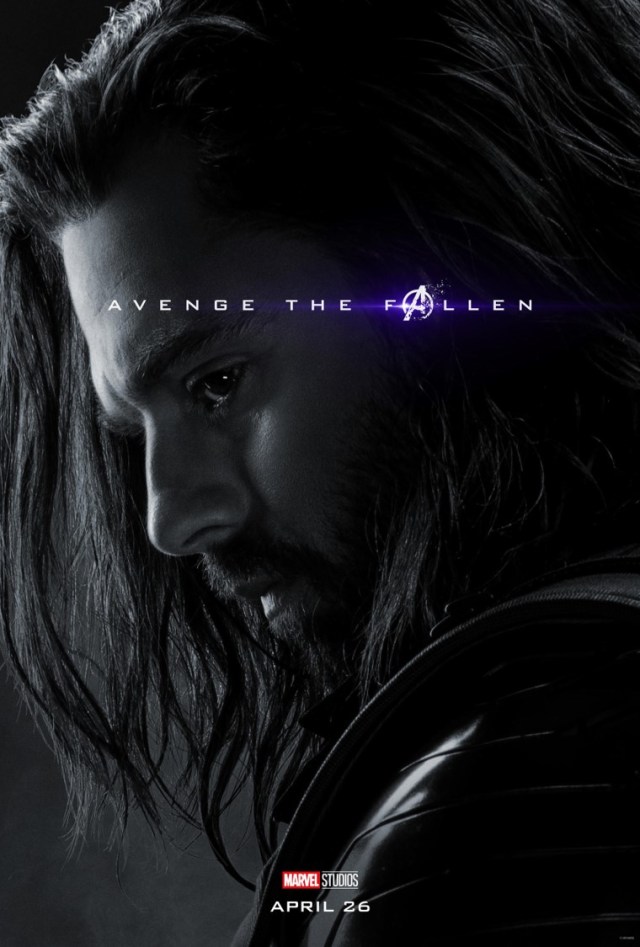
Comparing with the Critics – Best of 1985 – Mad Max Beyond Thunderdome

This review is from my series, Comparing with the Critics. If you’d like to learn more about the series, click on the link below.

Introducing my new series, Comparing with the Critics!

In my Comparing with the Critics review of Amadeus, I mentioned the Falco song, “Rock Me Amadeus”, being one of the reasons why I was intrigued to review the movie. I actually have a similar experience with Mad Max Beyond Thunderdome. Every time I think of this film, I think of the Tina Turner song, “We Don’t Need Another Hero (Thunderdome)”. This is an ironic coincidence, as “We Don’t Need Another Hero (Thunderdome)” and “Rock Me Amadeus” were released in 1985. Another ironic coincidence is how, for the Comparing with the Critics series, I, once again, selected an ‘80s film both Roger Ebert and Gene Siskel liked. Though Mad Max Beyond Thunderdome only appeared on Roger’s list of the top ten best films of 1985, each critic gave the movie a thumbs-up when they reviewed it on an episode of At The Movies. Before this Comparing with the Critics review, I had never seen any of the Mad Max movies, let alone Mad Max Beyond Thunderdome. Therefore, I couldn’t agree or disagree when Roger stated that Mad Max Beyond Thunderdome was “the best of the Road Warrior movies” or when Gene declared it was “a great, violent, fun picture”. Now that I have seen the film, I can honestly say I don’t agree with Gene’s and Roger’s praise. It’s not that Mad Max Beyond Thunderdome is a bad movie, I just didn’t like or love it as much as the critics did.

Mad Max Beyond Thunderdome poster created by Kennedy Miller Productions and Warner Bros.

While sharing his opinion on Mad Max Beyond Thunderdome in an episode of At The Movies, Gene complements the directors, George Miller and George Ogilvie, as both of them “successfully creates a complete alien world on film”. To add to Gene’s statement, Roger commented how the film’s “world is as rich as Casablanca or as rich as Oz”. I admit one of the strengths of Mad Max Beyond Thunderdome was its set design, as the movie’s creative team presented an atmosphere that felt immersive! One of the conflicts in the story is Max battling in a duel against a character named Blaster, in order to retrieve his stolen items. They fight within the titular Thunderdome, a circular caged structure built out of steel-like material. What adds to the scene’s immersion is the medium and close-up shots captured within the Thunderdome. The combination of these creative choices helps the audience feel like they are right in the middle of the excitement! Even the sign advertising the Thunderdome is a blend of color, light, and dirt. This specific prop captures the thrill of the dueling action while also consistently displays the film’s aesthetic.

Image by Freepik

As I said in this review’s introduction, Mad Max Beyond Thunderdome ended up on Roger’s list of the top ten best films of 1985. One of his reasons was how he “was overwhelmed by the wealth of new ideas they came up with in the third picture”. Specifically speaking about Max and Blaster’s aforementioned duel, Roger explains how this scene presents two new ideas; “a new place to put the audience, which is over the top of the dome, and a new way to fight by putting the people on elastic bands so they have a three or a four dimensional, if you will, fight instead of regular punching it out”. Adding to Roger’s explanation, both Max and Blaster were given more freedom to move around the Thunderdome because of their elastic harnesses. While there was fist-fighting in the duel, flips and large jumps were incorporated in the fight choreography. Blaster and Max were presented with a variety of weapons, which added to the duel’s unpredictability. It also shows how the duel itself was a battle of strategy. This scene is definitely one of the most memorable from Mad Max Beyond Thunderdome!

Back to 1985 Blogathon banner created by Quiggy from The Midnite Drive-In and Hamlette from Hamlette’s Soliloquy

While Gene and Roger sang the praises of Mad Max Beyond Thunderdome, I was disappointed they ignored Tina Turner’s portrayal of Aunty Entity. Personally, I think Tina is a better actress than some people give her credit for. Her performance in this film proves that. A great example is when Master confronts Aunty Entity about the true leadership of Bartertown. Before this confrontation, Aunty Entity is confident in her ability to rule over this little community. Master calls her out by questioning who’s in charge. Aunty’s confidence gradually turns into anger. She develops a stern look on her face, the anger itself filling her eyes. There’s even a point where Aunty’s bottled-up anger causes her to shake. This scene shows how Tina’s performance was able to say so much while utilizing very little dialogue.

Illustrated image of Arizona desert created by pikisuperstar at freepik.com. Background vector created by pikisuperstar – www.freepik.com

Like I brought up in my review’s introduction, I didn’t like or love Mad Max Beyond Thunderdome as much as Roger and Gene did. A reason for my opinion is how the script left several questions unanswered. When Max meets the children of the Planet Erf tribe, the children believe he is Captain Walker. They describe Captain Walker as a plane pilot who will lead them to a better land. Because Jedediah was introduced in Mad Max Beyond Thunderdome as a man who could successfully fly a plane, I thought he could be Captain Walker, connecting him to the Planet Erf tribe’s part of the story. But this wasn’t the case, leaving questions about Captain Walker’s whereabouts. I was also not a fan of the creative team’s decision to prioritize telling over showing. A good example is when Blaster is about to be defeated in his and Max’s duel. Master begs Max not to kill Blaster, as he has a lot of respect for Blaster. However, this respect isn’t shown leading up to that scene. The only interactions with Master and Blaster are Master simply using Blaster as a means of transportation. Had the respect and camaraderie between Blaster and Master been better displayed, the duel itself and even its aftermath would have carried more emotional weight.

Comparing with the Critics banner created by me, Sally Silverscreen. TV show title cards created by WTTW National Productions, WTTW, Public Broadcasting Service (PBS), Lifetime Television, Tribune Entertainment, Buena Vista Television, and Disney-ABC Domestic Television

When Roger Ebert placed Mad Max Beyond Thunderdome on his list of the top ten best films of 1985, he called it “a great looking, high styled thriller”. Gene Siskel even claimed that “kids are gonna want toys out of this film” and “people are gonna dress like out of this film”. I can only speak for myself, but I wouldn’t go out of my way to seek out merchandise related to this movie or even revisit this movie. That’s because I thought Mad Max Beyond Thunderdome was just a fine, well-made picture. I couldn’t become fully invested in this story because of the collection of unanswered questions, which left me confused. I did not like the creative team’s decision to emphasize telling over showing as well. But the movie does have its merits. The world-building was one of the strongest aspects of the production, as the directors helped create an on-screen world that felt immersive. I not only liked the acting, I also believe the Thunderdome duel was one of the film’s most memorable scenes. So, this is yet another review where I didn’t agree with the critics. Now, if you’ll excuse me, I’ve got to go sing along to Tina Turner’s song, “We Don’t Need Another Hero (Thunderdome)”!

This review was brought to you by

Sally Silverscreen
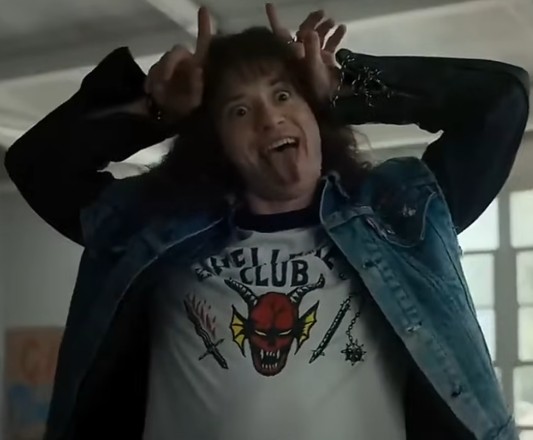
Comparing with the Critics – Worst of 1985 – The Bride

This review is from my series, Comparing with the Critics. If you’d like to learn more about the series, click on the link below.

Introducing my new series, Comparing with the Critics!

The summer of 1985 was a disappointing time for Gene Siskel and Roger Ebert. They were so let down by that particular time of the year, At The Movies dedicated an entire episode to discussing the worst movies of the summer. The Bride, which was released on August 16th, was the first film featured in this episode. It left such a bad impression on Roger and Gene, it also appeared on the ‘Worst of 1985’ episode of the show. In each of these episodes, Roger describes The Bride as “an ambitious film that lost it’s way” and a movie that “shot for the stars and failed miserably”. Because I hadn’t even heard of The Bride before starting my Comparing with the Critics series, I couldn’t agree or disagree with Roger’s sentiments. From the way the movie was described, it seemed to answer the question of what would happen if Victor Frankenstein’s female creation fell in love with him? This is a question that is infrequently asked in Frankenstein related media. As someone who has read Mary Shelley’s source material, I was curious to see how the film’s creative team would answer this question. But now that I have seen The Bride, I’m disappointed by how this question was approached. Unlike Gene and Roger, though, I wouldn’t go so far to say the movie is bad.

The Bride poster created by Colgems Productions Ltd., Delphi III Productions, Lee International Studios, and Columbia Pictures

After showing a clip from The Bride in At The Movies’ Worst Movies of the Summer episode, Roger claims the film “didn’t know whether it wanted to be a serious movie about the philosophical issues raised by the whole Frankenstein legend or whether it just wanted to be a glamourous, sleek remake”. I personally believe the movie’s creative team knew exactly what they were doing, accomplishing two goals in one picture. Throughout The Bride, there are two parallel stories; the first about Frankenstein and his female creation (Eva) and the second about Frankenstein’s male creation (Viktor) and Rinaldo. These stories show Viktor and Eva learning about the world around them as well as interacting with those they depend on. Every time Rinaldo introduces Viktor, he always refers to Viktor as “his friend”. Meanwhile, Frankenstein calls Eva “his ward”. The stories in The Bride were, in my opinion, intended to take a specific approach to the Nature vs. Nurture debate, presenting how two creations created by the same man could journey to the same outcome.

In Mary Shelley’s original source material, there aren’t really any heroes in that story. That’s because it focuses on the main message of some good intentions possibly leading to bad results. In The Bride, Viktor receives a “hero’s journey”, where he not only gets to fall in love, he also gets to save the day. His name, according to Rinaldo, even means “He will win”. As I mentioned in this review’s introduction, I have read Mary Shelley’s novel. From what I remember, Frankenstein destroys his female creation and his male creation is presented in the story as more of a cautionary tale. With that said, I think this creative liberty added an interesting dynamic to The Bride!

Hand-written letter image created by Veraholera at freepik.com. <a href=”https://www.freepik.com/free-photos-vectors/background”>Background vector created by Veraholera – Freepik.com</a>. <a href=’https://www.freepik.com/free-vector/love-letter-pattern_1292902.htm’>Designed by Freepik</a>. Image found at freepik.com.

While talking about The Bride’s two parallel stories, Gene says the story of Viktor and Rinaldo “was much more interesting than Frankenstein and the monster”. I find myself agreeing with Gene, especially since this story included a “hero’s journey” and a conflict that needed to be resolved. But another reason why I liked Rinaldo and Viktor’s story is David Rappaport’s portrayal of Rinaldo. When Rinaldo first meets Viktor, he’s surprisingly not intimidated by Viktor’s size. Instead, Rinaldo’s confidence helps Viktor find a sense of belonging as well as build a friendship between himself and Viktor. Rinaldo’s charisma shows the audience his good intentions, always striving to give Viktor a better life than Frankenstein did. As he’s giving Viktor a new shirt, Rinaldo is horrified by the scars on Viktor’s back. The sight immediately brings concern to Rinaldo’s face, his saddened tone of voice concluding how Viktor must have been mistreated. The scene I just described shows how David’s performance gave Rinaldo a genuineness that allowed him to be a likeable character. Though this film is titled The Bride, Rinaldo became this movie’s MVP!

Back to 1985 Blogathon banner created by Quiggy from The Midnite Drive-In and Hamlette from Hamlette’s Soliloquy

Both Roger and Gene agreed that Viktor and Eva should have spent more screen-time together. Roger proclaims “if we’re gonna have those parallel stories for two hours, let’s have a pay-off at the end”, with Gene adding “a pay-off for half an hour, not for five minutes”. Like I talked about earlier in this review, I believe the creative team’s intention for The Bride was to present a specific approach to the Nature vs. Nurture debate, as well as giving Viktor a “hero’s journey”. However, my biggest criticism with these parallel stories was the editing. The way these stories were sewn together made the movie feel disjointed. This is because some parts of the story were longer than others. One scene shows Eva studying a series of pictures by herself for only a few seconds. The very next scene shows Viktor and Rinaldo on their journey to the circus, with the scene itself lasting several minutes. Frankenstein and Eva receiving shorter screen-time sometimes prevented the audience from seeing interesting interactions between these two characters. This creative decision also gave Eva and Frankenstein’s story less intrigue.

Group of clowns image created by Freepik at freepik.com. Image by Freepik

When I was introduced to The Bride, I was given the impression the film was trying to answer the question of what if Victor Frankenstein’s female creation fell in love with him. This made me curious to see how the movie’s creative team would answer this question. But like I said in my review’s introduction, I’m disappointed by how this question was approached. That’s because the film’s creative team didn’t answer or explore the question at all. They bring up an equally interesting and infrequently asked question of what if Frankenstein fell in love with his female creation? However, so much time was spent focusing on Eva learning about the world around her, the aforementioned question was given little time for exploration or discussion. When it came to Frankenstein’s love for Eva, it simply came across as possessive and controlling. As I’ve been saying throughout this review, Viktor was given a “hero’s journey”. This means the story always intended to have Eva fall in love with Viktor, not Frankenstein. Even though I liked the creative decision of Viktor’s “hero’s journey”, I’m still disappointed by the potential questions that were left unanswered.

Comparing with the Critics banner created by me, Sally Silverscreen. TV show title cards created by WTTW National Productions, WTTW, Public Broadcasting Service (PBS), Lifetime Television, Tribune Entertainment, Buena Vista Television, and Disney-ABC Domestic Television

Toward the beginning of At The Movies’ Worst Movies of the Summer episode, Gene claims the summer of 1985 “happened to be one of the dullest, most juvenile, most homogenized summer movie seasons in recent memory”. Out of the movies that premiered during that time, I’ve only seen six pictures in their entirety, including The Bride. Personally, I didn’t find any of these films to be bad or disappointing. Specifically speaking about The Bride, I thought it was a fine, serviceable, interesting enough title. Though I was disappointed the movie’s creative team didn’t answer the question of what if Victor Frankenstein’s female creation fell in love with him, there were aspects of the film I liked. While the acting was one of the strengths of The Bride, David Rappaport’s portrayal of Rinaldo shined the brightest! Rinaldo was such a likable character, he became my favorite! Another strength of this film was Viktor receiving a “hero’s journey”. Even though it was a creative liberty, it added an interesting dynamic to The Bride’s story. It was also interesting to see the creative team’s approach to the Nature vs. Nurture debate. I apologize for sounding like a broken record, but this is yet another Comparing with the Critics review where I disagreed with Roger and Gene. As I continue with my series, I have to wonder how often this will keep happening?

This review was brought to you by

Sally Silverscreen
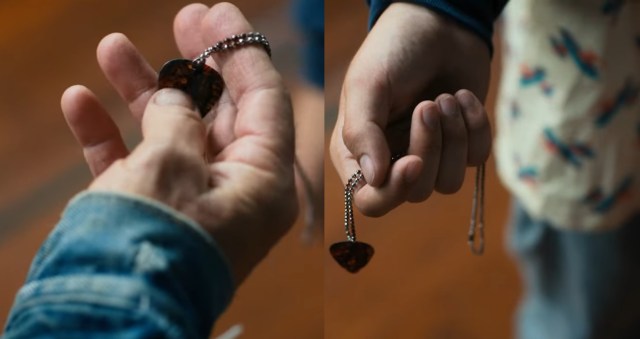
Comparing with the Critics – 1985 – Introduction

Looking back on 1985, one can see the abundance of stand-alone films released that year. While cinemas welcomed sequels, these movies were exceptions to the rule, compared to the box office of 2025. That’s because studios and film companies were more selective about which titles received another chapter. Mad Max Beyond Thunderdome joined this exclusive club. It even left such a good impression, it earned a place on Roger Ebert’s list of the top ten best films of 1985. As I mentioned earlier in this introduction, 1985 saw an abundance of stand-alone movies. However, these projects were not created equally. The Bride tried to find an answer to the infrequently asked question of what would happen if Victor Frankenstein’s female creation fell in love with him?  Both Roger and Gene Siskel were so disinterested in finding an answer to this question, that the film was not only featured in At The Movies’ Worst Films of 1985 episode, it also made an appearance in the show’s Worst Movies of the Summer episode. At this point in the introduction, you probably think Mad Max Beyond Thunderdome and The Bride being singled out is purely a coincidence. But these titles were specifically chosen for Midnite Drive-in’s and Hamlette’s Soliloquy’s Back to 1985 Blogathon, where I’m reviewing The Bride as the Worst of 1985 and Mad Max Beyond Thunderdome as the Best of 1985!

Comparing with the Critics banner created by me, Sally Silverscreen. TV show title cards created by WTTW National Productions, WTTW, Public Broadcasting Service (PBS), Lifetime Television, Tribune Entertainment, Buena Vista Television, and Disney-ABC Domestic Television

Take 3: The Dark Crystal Review + 510 Follower Thank You

For this Blog Follower Dedication Review, I wanted to write about an animated film. That’s because the last animated movie I reviewed was hoops&yoyo’s Haunted Halloween last October. As I was looking for the right title to choose, I realized I don’t often talk about animated films involving puppetry. Therefore, my Blog Follower Dedication Review will highlight 1982’s The Dark Crystal! On 18 Cinema Lane, the only projects of Jim Henson’s I’ve reviewed were 1981’s The Great Muppet Caper and 1985’s Follow That Bird. Choosing to write about The Dark Crystal has now become ironic, as all three of these movies were released in the 1980s. While I thought Follow That Bird was Sesame Street’s fine first attempt at making a movie, The Great Muppet Caper was a fun, joyful experience. Where will The Dark Crystal rank among these two pictures? Journey through this review to find out!

The Dark Crystal poster created by Incorporated Television Company (ITC), Henson Associates (HA), Henson Organisation, The Jim Henson Company, Associated Film Distribution (AFD), and Universal Pictures

Things I liked about the film:

The puppetry: Jim Henson has set the bar high when it comes to the art of puppetry! Through his work with The Muppets and on Sesame Street, Jim created characters that were fascinating to watch and were adoringly memorable. In The Dark Crystal, his craftmanship, direction, and artistic vision contribute to the quality his style of puppetry is known for. The way characters move provide just one example. Jen, the movie’s protagonist, goes on a quest to fulfill a prophecy by finding a crystal shard. This quest shows Jen walking, climbing, riding, and even jumping. The execution of these movements were so well-done, there were times I forgot I was watching a puppet. How Jen was able to blink and move his head was also impressive!

The scenery/set design: Films in the fantasy genre, like The Dark Crystal, have a reputation for presenting imaginative, fantastical worlds. Good movies in this particular genre will make these respective worlds immersive through an emphasis on attention to detail. I can honestly say the creative team behind The Dark Crystal truly cared about how the world surrounding the characters was showcased. An excellent example is when Kira and Jen meet for the first time. The location itself is a tropical oasis; complete with green plants, soft earth on the ground, and even a small body of water.  It feels like an actual jungle because of the realistic appearance of the materials. More often than not, the tropical space is peaceful, which gives the audience a break from the tension of the film’s conflict. The tonal and visual pairing of the jungle helps the audience stay invested in the story.
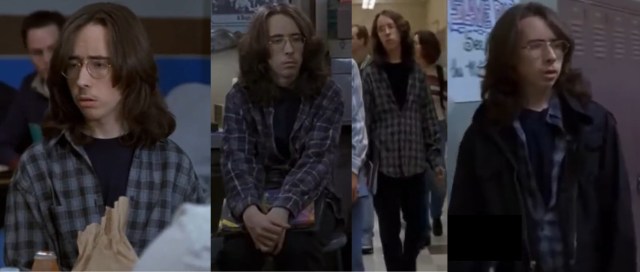
Use of practical effects: In the 21st century, CGI (computer generated imagery) has become the go-to tool of film-making. The popularity and accessibility of CGI has caused a debate over whether this film-making tool is over-used. So, watching a film like The Dark Crystal in 2025 is refreshing, as the 1982 production utilizes practical effects. In one scene, the Skeksis Emperor dies. Instead of the Skeksis Emperor simply laying unconscious, the body literally crumbles like rocks being broken down. Another scene shows Jen and Kira rowing on a lake. The foliage surrounding the lake appeared life-like, as did the body of water itself. This is because the film’s creative team incorporated actual water and other related props to make the scene feel as realistic as possible.

Colorful galaxy image created by Freepik at freepik.com. <a href=’https://www.freepik.com/free-vector/lovely-hand-drawn-galaxy-background_2943080.htm’>Designed by Freepik</a>. <a href=”https://www.freepik.com/free-photos-vectors/background”>Background vector created by Freepik</a>. Image found at freepik.com.

What I didn’t like about the film:

An underutilized character: When the Skeksis General becomes the next Emperor, he shuns the Chamberlain from the Skeksis kingdom. The Chamberlain then tries to find ways to get back into the Emperor’s good graces. Despite these attempts, the Chamberlain was underutilized in The Dark Crystal. He appeared in only a handful of scenes and his role in the film’s plot was minimal as well. I was hoping the Chamberlain’s rejection would express the ideas of standing against group mentality and changing a person’s way of thinking. Sadly, these ideas were not incorporated into the Chamberlain’s story.

Scenes that became padding: The run-time of The Dark Crystal is an hour and thirty-three minutes. However, the movie’s run-time seemed longer because some scenes became padding. One example shows a group of Skeksis eating dinner. This scene features a medium shot of each dinner guest eating their meal, making the scene feel drawn out. If The Dark Crystal’s run-time had been less than an hour and thirty-three minutes, scenes like the Skeksis’ dinner would be trimmed.
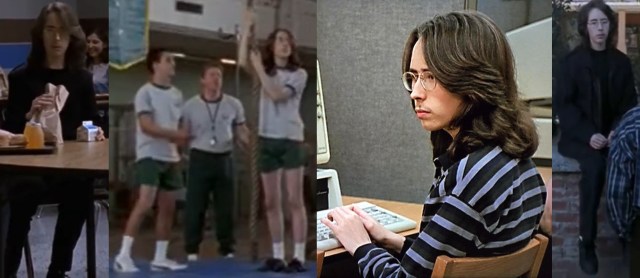
A confusing resolution: For this part of my review, I will spoil The Dark Crystal. If you haven’t seen this movie and are planning on watching it, skip to the part of my review titled ‘My overall impression’.
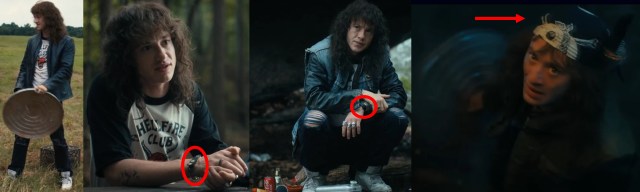
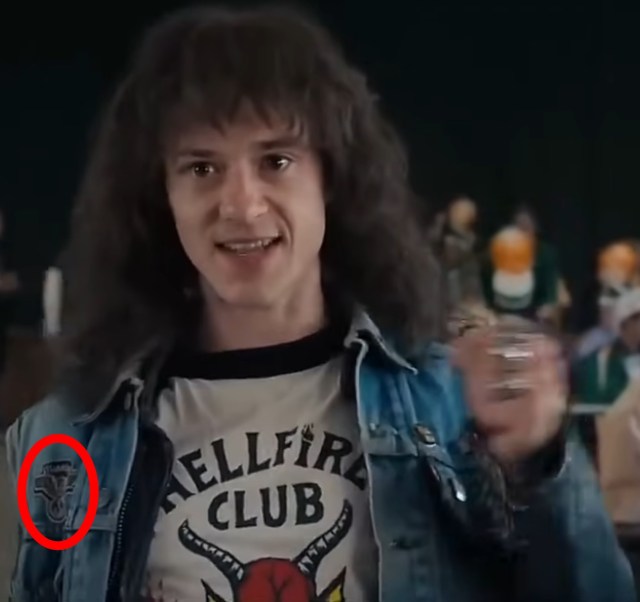
A voice-over at the beginning of The Dark Crystal explains how the Skeksis and Mystics were at odds with each other after the titular crystal broke. The upcoming Great Conjunction will determine who will rule the land, with Jen’s quest to find a crystal shard playing a role in this decision. The way this conflict was explained made me believe the overall story was a battle of good versus evil. But when Jen reunites the crystal shard with the titular crystal, the resolution became confusing. As the Skeksis kingdom falls apart and the Skeksis themselves are running around in fear, the Mystics arrive and surround the titular crystal. The Mystics and Skeksis then merge to become one ghost-like being. The reunion between these groups was never explained throughout the movie. Maybe a scene explaining why this particular resolution was reached was left on the cutting-room floor?

Image by Freepik

My overall impression:

When it comes to quality, the art of puppetry is a spectrum. On the higher end of this spectrum has always been the work of Jim Henson. The Dark Crystal provides a strong example for why that statement is true. The puppets’ artistry and execution were truly impressive, with their movements making me sometimes forget I was even watching puppets at all. Set design and scenery from the 1982 production looked like the film’s creative team truly cared about how the story’s world was presented. I also liked how practical effects were used, which brought a sense of realism to certain moments! Even though The Dark Crystal had its strengths, it had its flaws too. From a confusing resolution to an underutilized character, the film wasn’t perfect. But it was a fine, interesting presentation, definitely one of Jim Henson’s more ambitious projects. Before I conclude this review, I’d like to thank my blog’s followers for their support of 18 Cinema Lane! These articles always encourage me to expand my cinematic horizons!

Overall score: 7 out of 10

Have you seen The Dark Crystal? Which Jim Henson presentation would you like to see in a future Blog Follower Dedication Review? Please tell me in the comment section!

Have fun at the movies!

Sally Silverscreen