Top 10 Christmas Movies I’d Love to Review

Last June, I published a list of the top ten movies I’d love to review someday. Since publishing that list, I have written about some of the films I talked about! Now that it is “Christmas in July”, it seemed like the perfect time to write about the top ten Christmas movies I’d love to review in the future! The films on my list were distributed through various studios and movie companies, varying in accessibility. But this time, I’ll be listing the movies based on the year they were released. While there are plenty of Hallmark productions I either have never seen or haven’t seen in years, I tried not to include too many Hallmark titles on this list. That’s because I could create a top ten list entirely comprised of Hallmark films. So, while Santa is checking which films are worthy of his nice list, let’s look at the top ten Christmas movies I’d love to review!

Santa stationary image created by Freepik at freepik.com. <a href=’https://www.freepik.com/free-vector/creative-christmas-letter-and-envelope-template_3281562.htm’>Designed by Freepik</a>. <a href=”https://www.freepik.com/free-photos-vectors/christmas”>Christmas vector created by Freepik</a>. Image found at freepik.com. 

10. Holiday Inn (1942)

There are few very Christmas movies I’ve been recommended by my readers. 1942’s Holiday Inn is one of those films. I will admit I have heard of this movie over the years, but never checked it out. Now that I think of it, I’ve reviewed only a handful of Christmas movie musicals. Holiday Inn would definitely make up for that. Plus, it would give me an excuse to seek out more of Fred Astaire’s projects from his filmography. There is a part of the story that takes place during Thanksgiving, from what I’ve heard. So, I might review Holiday Inn around Thanksgiving!

9. Emmet Otter’s Jug-Band Christmas (1977)

I brought up Emmet Otter’s Jug-Band Christmas in a past Word on the Street story. But while creating this list, I realized how I still haven’t seen this movie. I have written about some animated films on my blog. However, few of those films were animated through puppetry. This would make the 1977 film a more unique picture to write about. Back in January, I saw and reviewed The Great Muppet Caper, a film I genuinely enjoyed. Since Emmet Otter’s Jug-Band Christmas is a Jim Henson production, it makes me wonder if I’ll like this movie as much as The Great Muppet Caper?

8. Bush Christmas (1983) and Miracle Down Under (1987)

I stumbled upon Miracle Down Under (also known as Bushfire Moon or The Christmas Visitor) while searching for movies to review. When looking for more information on the 1987 film, I discovered the 1983 movie, Bush Christmas. Thinking about the Christmas productions I’ve seen, I tend to think of these stories taking place somewhere in the United States. If a Christmas film is set outside the United States, the location is typically Canada or Europe. Australia is a country rarely included in the Christmas movie landscape. Therefore, Miracle Down Under and Bush Christmas offers a yuletide perspective that is unique from other Christmas titles! This shared connection makes these movies perfect choices for a double feature!

7. Mrs. Santa Claus (1996)

As I was writing this list, I remembered how I’ve seen few of Angela Lansbury’s live-action projects from her filmography. Yes, I’ve seen my fair share of Murder, She Wrote episodes. But I’m talking about Angela’s live-action films. I have come across the poster for Mrs. Santa Claus on multiple occasions. Yet, I have never seen this movie. Because of this, I didn’t know that a) the 1996 film is a musical and b) it is a historical fiction story. When I talked about Holiday Inn, I mentioned reviewing only a handful of Christmas movie musicals on my blog. Not only would Mrs. Santa Claus make up for that, but it would also give me an opportunity to talk about a movie that seems underrated in the world of Christmas cinema.

6. Little Men (1998)

For years, I knew there was a continuation to Louisa May Alcott’s classic story, Little Women. I also knew this continuation was given a film adaptation. But the aforementioned continuation, Little Men, is one I haven’t seen or read. With that said, I was unaware the 1998 movie was a Christmas production. While creating my list, I noticed how a lot of the movies were made-for-TV or straight-to-video/streaming presentations. As Little Men was theatrically released, I thought it would add some variety to my list. Maybe I’ll write a double feature review for Little Men and Little Women. Question is, which version of Louisa’s story would pair well with the 1998 movie?

Holly berry Christmas wish-list image created by Freepik from freepik.com. Christmas vector created by freepik – www.freepik.com

5. Three Days (2001)

Three Days is similar to the 1999 film, If You Believe; these are Christmas movies that don’t rely on the tropes and cliches found in typical Christmas projects. In the 2001 story, a workaholic man is taking his life and wife for granted. After his wife dies, the man is given a second chance to re-live the previous three days of his life, in order to save his wife and turn his life around. I haven’t seen this movie in years, but I do remember liking it. As of the publication of this list, though, the only place Three Days is available is through the streaming service, Disney+. I hope Freeform (formerly known as ABC Family) airs this film again during their annual ‘25 Days of Christmas’ line-up. That way, I could talk about a film that is, in my opinion, one of the most underrated in Christmas movie history.

4. The Night Before The Night Before Christmas (2010)

The Night Before The Night Before Christmas is one of the first movies I was ever recommended by one of my readers. Since then, I have been trying to find the perfect opportunity to review the film. But as far as I know, the 2010 presentation isn’t airing on any of Hallmark’s networks during their ‘Christmas in July’ line-ups. So, I hope the film airs sometime during the Christmas season. I have found DVD copies of The Night Before The Night Before Christmas. Therefore, if Hallmark doesn’t air the movie again, I still have a chance to write about this production.

3. An Old Fashioned Christmas (2010)

I included this movie in my list of the top ten movies I’d love to review. In that list, I mentioned how I have come across a few DVD copies of An Old Fashioned Christmas. But these DVDs were included in Christmas movie box sets, which tend to be expensive. While this statement is still true, the movie has been uploaded on Youtube, as of mid-July, 2023. Now I might be able to review the film sooner than I expected! Similar to The Night Before The Night Before Christmas, An Old Fashioned Christmas isn’t airing during Hallmark’s ‘Christmas in July’ line-ups. So, I hope the 2010 movie makes an appearance during this year’s Christmas season.

2. Christmas with Tucker (2013)

Christmas with Tucker is a prequel to the 2009 Hallmark Hall of Fame movie, A Dog Named Christmas. I have seen the latter film, which I remember liking. However, it’s been several years since I’ve seen the Hallmark Hall of Fame presentation. Since I also haven’t seen Christmas with Tucker, I don’t know how the 2013 movie and the 2009 movie connect with each other. I might review these films in a future double feature in order to solve that mystery.

1. An American Girl Story: Maryellen 1955 – Extraordinary Christmas (2016)

Years ago, I wrote an editorial about how Jiggy Nye was not an effective villain in Felicity: An American Girl Adventure. Since publishing that editorial, I have not reviewed any of American Girl’s films. I did see some of their films, but An American Girl Story: Maryellen 1955 – Extraordinary Christmas was not one of them. When this film was released, it was only available on Amazon Prime. But American Girl’s Amazon Prime exclusive movies, including An American Girl Story: Maryellen 1955 – Extraordinary Christmas, were recently removed from the streaming service for reasons unknown. For the time being, this film is considered “lost media”. But I hope it either is re-released on DVD or available on another streaming service.

Group of Christmas figures image created by Pikisuperstar at freepik.com. <a href=”https://www.freepik.com/free-photos-vectors/christmas”>Christmas vector created by Pikisuperstar – Freepik.com</a>. <a href=’https://www.freepik.com/free-vector/hand-drawn-cute-christmas-character_3188970.htm’>Designed by Pikisuperstar</a>. Image found at freepik.com.

Have fun at the movies!

Sally Silverscreen
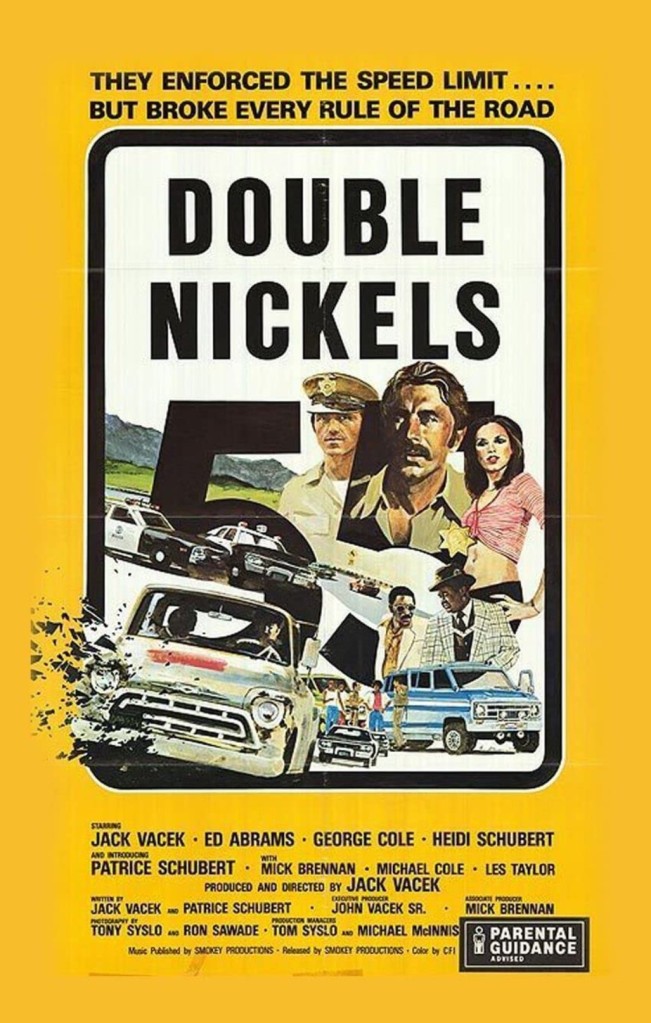
Take 3: Double Nickels (1977) Review

When I reviewed The Last Child, I wondered if I would find a made-for-tv movie from the 1970s I liked. So, with this month’s Genre Grandeur on the horizon, I decided to start my quest for a good made-for-tv movie from the ‘70s! As ‘Car Chase Movies’ are the theme of May’s event, I stumbled upon the 1977 title, Double Nickels. Though not a television film, it’s a project I found intriguing. Before this year, I had never heard of the 1977 production. But blogathons can be a time when participants discover films that are new to them. Looking back on my Genre Grandeur reviews from this year, most of the movies I’ve reviewed were just ok, with one film being just fine. Will Double Nickels break that track record? Drive through this review in order to find out!

Double Nickels poster created by Smokey Productions

Things I liked about the film:

The use of music: Music is an integral part of film-making, elevating a scene’s tone and attempting to make the audience feel a certain emotion. Even during a car chase, music can heighten the intensity of the moment itself. Double Nickels gives some of their car chases background music. But the music in this film emphasizes the different types of car chases within the story. Smokey, in his police car, chases a dune buggy. When the dune buggy gets away and drives up a nearby dune, a light-hearted banjo tune plays in the scene’s background. At the beginning of the movie, there is a chase involving a motorcycle. For this scene, rock music can be heard as the chase continues. These tunes are determined by the vehicles presented in the scene. Combining these two elements, it feels like the movie’s creative team made thoughtful musical choices for their car chases!

Different types of cars: The story of Double Nickels takes place in Southern California. This particular landscape provides a reason for different types of cars to be present in the movie. When Smokey meets Jordan for the first time, she appears to be driving a red Ferrari. Earlier in the film, Ed and Smokey stop two vans in order to give their drivers a ticket. These vans, a blue one and a green one, look like they’d be found at a beach or on a campsite. The variety of vehicles highlights the diverse preferences of drivers. This creative decision also makes sense with Smokey and Ed’s profession, as they would encounter different types of cars.

Ways of presenting a car chase: There are several car chases featured in Double Nickels. These chases were presented in different ways, providing new paths for cars to travel through. During one chase, two cars drive down a flight of stairs. Another chase shows three cars driving through giant puddles of water, with the water splashing around the cars. While watching Double Nickels, I had to remind myself how this movie was created during a time when CGI and special effects were not at a film-maker’s disposal like it is today. With that in mind, I appreciated the efforts and resources it took to make these car chases look good on screen!

What I didn’t like about the film:

A small sense of urgency: When a movie includes car chases, those car chases are there for a reason. It typically means a character’s life is in danger or a character needs to achieve a mission. No matter the specific situation, a strong sense of urgency would be present, making the audience care about the characters and their story. In Double Nickels, though, the sense of urgency was small. Smokey and Ed repossess cars in order to make extra money. Eventually, they learn their operation is not what it seems. But Smokey and Ed’s entire process is presented in a very nonchalant way, forgetting about the danger that could be lurking behind them. Even when a climactic car chase takes place, I didn’t feel scared for the characters and their well-being. The small sense of urgency also caused the film’s suspense to feel limited.

Weak acting performances: No matter the production, all I can expect out of any actor is for them to try their best with the material they are given. Sometimes, those efforts are strong. But in Double Nickels, I found the acting performances weak. Serving as one example, Smokey and Ed are discussing the idea of repossessing cars. Throughout this scene, Ed and Smokey display a limited number of facial expressions. Their voices carry the same singular tone, with their conversation seeming unusually rushed. Despite Jack Vacek and Edward Abrahms’ efforts with the script, the interaction feels robotic and unnatural. The weakness of the acting performances was, sometimes, distracting.

A drawn-out story: As I’ve already mentioned in this review, Smokey and Ed repossess cars, with their plan turning out differently than expected. The movie itself is an hour and twenty-eight minutes. But the story feels longer than its run-time. The aforementioned small sense of urgency played a role in the story being drawn out. Unnecessary inclusion of story points added to this as well. Tami is in a romantic relationship with Smokey. During the movie, it is revealed she is cheating on Smokey with another man. After this reveal, Tami and her new significant other are never seen or heard from again. Smokey didn’t bring them up either. This is just one example of a part of the story that could have been cut, which would have tightened the script.

Mountain Road Colorado – Colorado Adventure Trip.

My overall impression:

There are many reasons for the creation of a movie. Sometimes, it is because a film-maker has an interesting story to tell. Other times, a studio wants to capitalize on the nostalgia of a well-known title. In the case of Double Nickels, that reason, to me, feels like an excuse to film cool-looking car chases. I will admit the car chases themselves were the highlight of this project. A significant amount of effort and thought was put into their delivery, from the musical selections to the way they were presented on screen. All of the other aspects of this story, though, fall flat. Despite the car chases in the story, the sense of urgency was small. It also didn’t help how the story felt longer than necessary. Double Nickels is the third film from the 1970s I’ve reviewed this year. With this movie being so underwhelming, I haven’t had the best of luck finding a title I like.

Overall score: 5.7 out of 10

Have you seen Double Nickels? Is there a car chase movie you like? Please let me know in the comment section below!

Have fun at the movies!

Sally Silverscreen
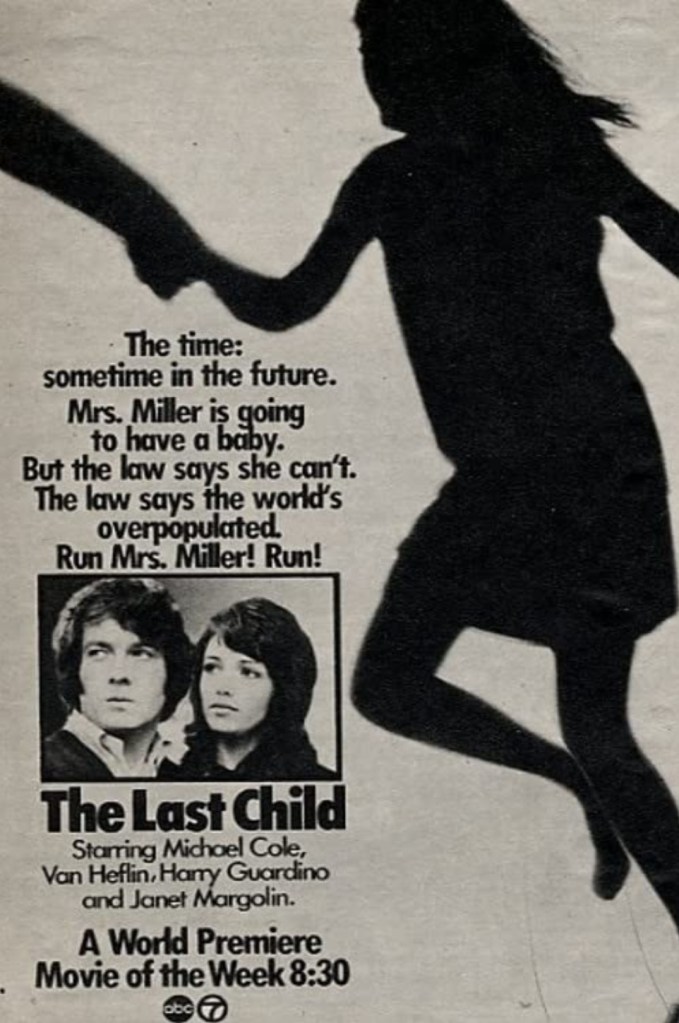
Take 3: The Last Child Review

When the future is depicted in made-for-TV movies, that production is typically presented with a distinct, futuristic aesthetic. This creative choice makes that movie’s world look and feel different from the one the audience is living in. But when I came across the 1971 film, The Last Child, I took note of how the story adopted a “contemporary” appearance. That is the reason why I’m writing about this movie for the Futurethon event! Instead of putting on a futuristic appearance, The Last Child introduces their version of the future in more subtle ways. The dialogue among the characters is how the film’s creative team brings this idea to the screen. Sometimes, futuristic stories will feature a conflict that strikes fear into the story’s characters as well as the audience. The world in The Last Child discusses the subject of population control, which presents a dire circumstance for the protagonists.

The Last Child poster created by Aaron Spelling Productions and American Broadcasting Company (ABC)

Things I liked about the film:

Stand-out performances: When I watch a movie, sometimes an actor or actress will give a performance that stands out among the movie’s cast, leaving a memorable impression on me. In The Last Child, there were three actors who gave stand-out performances! I’ve seen some of Ed Asner’s films prior to watching The Last Child. In these films, Ed’s character has typically been presented as a friendly, kind-hearted individual. But in the 1971 made-for-tv movie, Ed’s role was different from those I saw in the past. Portraying a police officer named Barstow, Ed carried his character with a no-nonsense attitude. At the same time, he incorporated a sense of confidence into his portrayal, which allowed Ed to go toe-to-toe with other actors. One of these actors was Van Heflin, who portrayed Senator George. Van also incorporated confidence in his performance. However, this form of confidence was more dignified, reflective of George’s political background. Yet, there was a kindness within George, a kindness that felt genuine. The scene where the film’s protagonists, Allen and Karen, meet George for the first time perfectly showcases this kindness, as it can be heard in George’s voice and seen in his eyes.

The last stand-out performance came from Harry Guardino! Portraying Karen’s brother, Howard, Harry presents a man who is both concerned about his influential position and scared for his family. In a scene where Howard is trying to get Karen out of the Population Control Center, Howard’s voice sounds very professional over the phone. He even sounds professional when speaking to his brother-in-law. But throughout that scene, there is fear in Howard’s eyes. Because he is in the presence of family, Howard feels he can safely express this fear. The ability to present both the professional and emotional sides of Howard was made possible by Harry’s versatile acting talents!

The cinematography: Cinematography in made-for-tv movies can be hit or miss. It can either be surprisingly good or obviously bad. But in The Last Child, I was surprised by the cinematography, as some scenes were captured in ways I wasn’t expecting. In scenes where characters were moving in public crowds, the camera would use close-up shots. The camera would also be placed in front of or behind the characters. These techniques gave the audience the illusion they were moving alongside the characters, making those scenes feel immersive.

Senator George’s house: A location in a movie is meant to visually represent the environment the characters exist in. This holds true for a character’s house. As I mentioned in this review, George is a Senator. The interior and exterior spaces of George’s house are a reflection of his power and influence. Brick and stone make up the face of his house. Large, paned glass windows hint at rooms with high ceilings and expansive square feet. Inside George’s house, luxurious details can be seen in each room. One room features a floor to ceiling, cream colored fireplace, complete with carved detailing. Another room includes a dainty white, oval table that not only boasts drawers, it also appears to be utilized as a small dining table. These details show how the creative team cared about how George’s personal living space was presented in their movie!

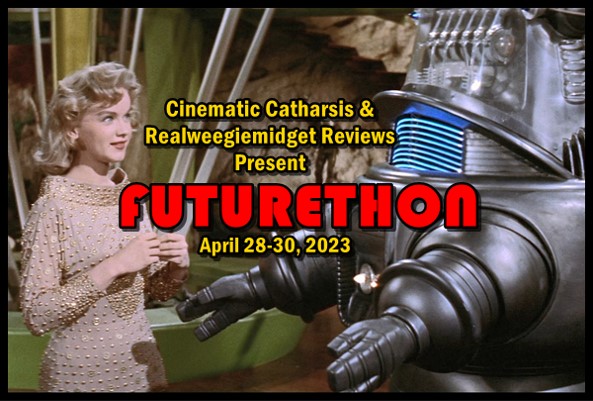
Futurethon banner created by Gill from Realweegiemidget Reviews and Barry from Cinematic Catharsis

What I didn’t like about the film:

An unexplained future: In my review of Night of the Comet, I said a film’s science needed to be explained, in order for the audience to understand what’s happening in the story. The same can be said if creating a story set in the future. There has to be a reason for a film’s world being so different from the audience’s. These reasons can give the audience an understanding for these differences, allowing them to contemplate how they’d respond to that film’s world. In The Last Child, though, it was never explained why the movie’s world had strict population control laws. None of the characters mentioned how these laws came to be, what led to their existence. The audience was forced to accept the world of The Last Child at face value.

Little sense of urgency: The Last Child is about a couple expecting their second child, as their first child died shortly after birth. Because of their world’s strict population control laws, only allowing one child per family, the couple has a very difficult conflict on their hands. Despite this conflict, the sense of urgency in The Last Child was far and few between. There were times when a sense of urgency was present, such as during the film’s climax. But this element of the story was not consistent. This prevented me from truly fearing for the couple’s safety and well-being. It also caused the story to feel like it had too many low-stakes.

Inconsistent technology: The use of technology is established in the world of The Last Child. In fact, the incorporation of technology was introduced toward the beginning of the film. When Allen and his friend are questioned by the police, a police officer puts their identification cards into a computer. This computer not only reveals a person’s identification number, it also records a person’s personal information. But when Allen’s wife, Karen, is taken to the Population Control Center and can’t remember her identification number, the Center’s nurse doesn’t entertain the idea of looking Karen’s number up on the computer. Perhaps this nurse didn’t have the authority to use one of these computers. However, her reason for not using it wasn’t explained in the dialogue.

New York City skyline with letters image created by Freepik at freepik.com. <a href=’https://www.freepik.com/free-vector/new-york-skyline-typographic-silhouette_719554.htm’>Designed by Freepik</a>. <a href=”https://www.freepik.com/free-photos-vectors/background”>Background vector created by Freepik</a>. Image found at freepik.com.

My overall impression:

The Last Child is the seventh made-for-tv movie from the 1970s I’ve reviewed. These seven films have ranged from decent to ok to underwhelming. The Last Child is, in my opinion, in the latter category. The idea of a futuristic story with a “comtemporary” aesthetic is one I haven’t often seen through the made-for-tv movie realm. But in The Last Child, this idea seemed better on paper than on screen. The small amount of urgency kept the story’s stakes low, preventing me from feeling scared for the protagonists’ safety and well-being. The reason for the population control laws in The Last Child was never explained, forcing the audience to accept the movie’s world at face value. Even when there were things about the film I did like, such as stand-out performances and Senator George’s house, it wasn’t enough to leave a lasting, memorable impression on me. I’m starting to wonder if I’ll ever find a made-for-tv movie from the 1970s I like?

Overall score: 5.1 out of 10

Have you seen The Last Child? Are there any futuristic movies with “comtemporary” aesthetics you like watching? Let me know in the comment section!

Have fun in the future!

Sally Silverscreen

Take 3: The White Buffalo Review

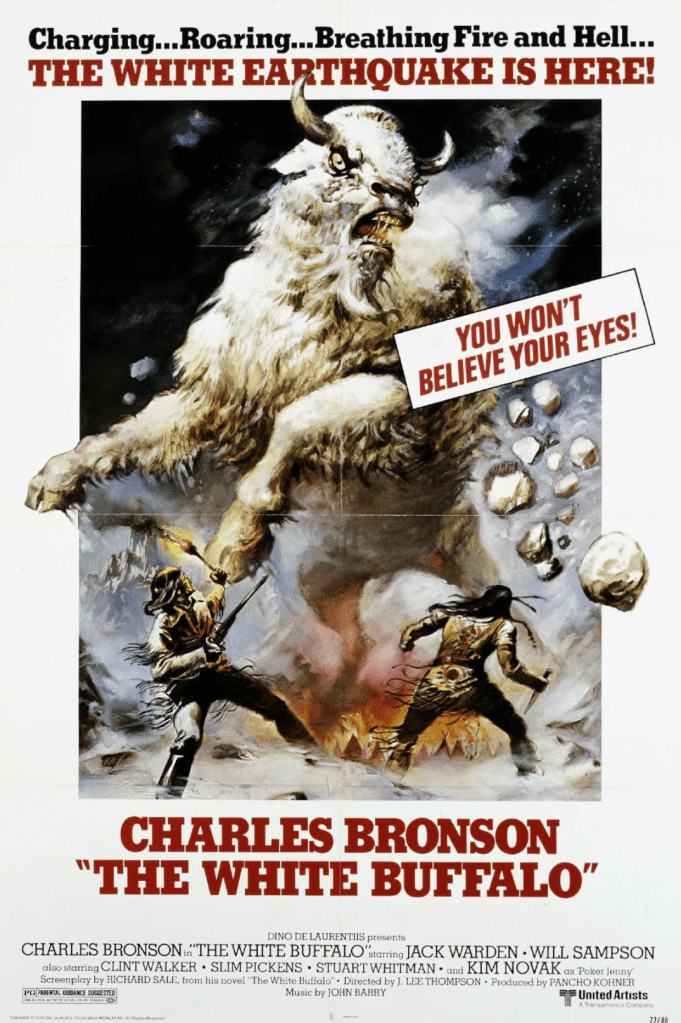
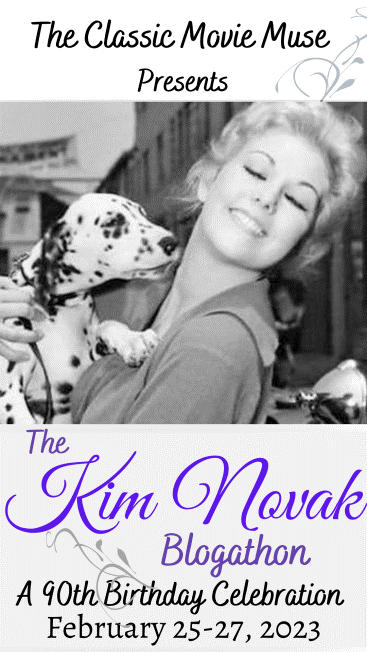
Though it’s only February, it seems like 2023 has become the year where movies that sound “bonkers” end up getting reviewed on 18 Cinema Lane. First, it was the Lifetime movie, Sea Change. Most recently, it was Jesse James Meets Frankenstein’s Daughter. Now, for Classic Movie Muse’s Kim Novak Blogathon, it’s The White Buffalo. If it wasn’t for this event, I would have never heard of this film, as I happened to stumble upon it on Kim’s IMDB filmography. Based on the title, synopsis, and poster, The White Buffalo seemed like it would be “bonkers”. But as Sea Change and Jesse James Meets Frankenstein’s Daughter have taught me, just because a movie sounds “bonkers”, doesn’t mean it will be “bonkers”. So, I was curious to see if The White Buffalo met my expectations. I’ve also mentioned in the past how westerns aren’t often reviewed on 18 Cinema Lane. So writing about The White Buffalo for the Kim Novak Blogathon has given me an excuse to check out more western films!

The White Buffalo poster created by Dino De Laurentiis Company and United Artists

Things I liked about the film:

Kim Novak and Charles Bronson’s on-screen chemistry: In The White Buffalo, Kim portrays Poker Jenny, a widow from the town of Cheyenne. When Bill, portrayed by Charles Bronson, arrives in town, he pays Jenny a visit. Though these characters spent only a brief period of time together, I felt Kim and Charles had strong on-screen chemistry! There was camaraderie between Jenny and Bill, a shared history only they knew. Confident personalities complimented one another, highlighting how well they get along. Because of their strong acting performances, both Kim and Charles successfully sold this relationship! I wish their characters shared more screen time together.

Using the buffalo sparingly: The White Buffalo has gained legend status in the world within this movie. This is because of the terror it inflicts on people who have crossed its path. The buffalo itself is only shown in a handful of scenes, while the majority of the film shows the characters either talking about the buffalo or searching for its existence. That creative decision was a good way of building tension and suspense for the audience. Limited presentation of the buffalo highlights how this creature is a threat who can show up unexpectedly. It is also a film-making technique from the horror genre, where the unseen can be scarier than what is seen. This reminds me of films such as Jaws.

Building atmosphere: In any film, the atmosphere can compliment the world the characters and story exist in. It can also elevate the movie’s intended tone. In the opening scene of The White Buffalo, a snowy landscape is presented at night-time. Slow camera movements travel over the landscape, building up to the audience’s first look of the White Buffalo. Suspenseful music is heard on top of the footage, providing a reason for the viewer to be scared of the titular creature. When the buffalo finally appears on screen, it’s an explosive moment where adrenaline and terror collide. The opening scene of this movie lays down the foundation for what this story is about!

The Kim Novak Blogathon: A 90th Birthday Celebration banner created by Ari from The Classic Movie Muse

What I didn’t like about the film:

Limited sense of urgency: Throughout the film, Bill and Crazy Horse, portrayed by Will Sampson, are seeking the White Buffalo in order to destroy it. This quest serves as the main conflict in The White Buffalo. While there was a sense of urgency in the story, it wasn’t consistently featured in the movie. Along with the film’s main conflict, sub-conflicts share the run-time, such as Bill’s encounter with a criminal from his past. Because of this creative decision, those sub-conflicts took away from the urgency toward finding the White Buffalo.

The under-utilization of Kim Novak: In past blogathons, I have reviewed a movie because of a certain actor’s involvement, only to see that actor’s talents under-utilized. This was the case when watching The White Buffalo, as Kim Novak is one of the reasons why I sought out this film. As I mentioned earlier in this review, Jenny and Bill spent only a brief period of time together. During this hour and thirty seven minute movie, Kim appeared in about three to four scenes. She did a good job with the acting material she was given. However, I was disappointed by her limited on-screen appearances.

The run-time: When talking about Kim’s few appearances in The White Buffalo, I said the movie was an hour and thirty seven minutes. With the story itself being straight-forward, the run-time doesn’t need to be very long. This could have been achieved had the sub-conflicts been eliminated from the script. The run-time could have also been shortened if some scenes were cut down. One example is when Bill meets Charlie for the first time, a scene that lasts about fifteen minutes.

Snowy mountain image created by Freepik at freepik.com. <a href=’https://www.freepik.com/free-vector/landscape-background-of-snow-track-and-mountains_968656.htm’>Designed by Freepik</a>. <a href=”https://www.freepik.com/free-photos-vectors/background”>Background vector created by Freepik</a>. Image found at freepik.com.

My overall impression:

In the introduction of this review, I said just because a movie sounds “bonkers”, doesn’t mean it will be “bonkers”. That is what happened when I saw The White Buffalo. At best, the movie is ok. The atmosphere was well-built and the acting was strong. The film even does a better job at combining the western and horror genres than Jesse James Meets Frankenstein’s Daughter! But the film isn’t without its flaws. The story contains a limited sense of urgency and the movie is a bit drawn out. I was also disappointed by the under-utilization of Kim’s talents. However, watching The White Buffalo did give me an opportunity to seek out more projects from Will Sampson’s filmography, as I am familiar with his performance in One Flew Over the Cuckoo’s Nest. Like I said in this review’s introduction, I was also given an excuse to watch more western movies. Therefore, I’m grateful I was able to expand my cinematic horizons!

Overall score: 6-6.1 out of 10

Have you seen The White Buffalo? Are there any westerns you’ve checked out that also feature the horror genre? Please tell me in the comment section!

Have fun at the movies!

Sally Silverscreen

The Top 10 Worst Movies I Saw in 2022

My worst movies list of 2022 is different from that of the previous year. This time, I’ll be talking about more films that were “so bad they were bad”, as only three of these movies were disappointments. The Dishonorable Mentions portion of the list has also returned! Though I did see more good movies than bad, I couldn’t avoid coming across a “stinker” every now and then. I like to think I’ll, one day, see less than ten films for my annual worst list. But someday has not come this year, as the title of this article suggests. As I’ve stated in past lists, I did not write my list to be mean-spirited or negative. It’s just a way to express my own, honest opinion. Since some of these films have been reviewed on my blog, I will provide links to those reviews.

Dishonorable Mentions

Signed, Sealed, Delivered: The Vows We Have Made, A Place for Annie, Swim Instructor Nightmare, Nikki & Nora: Sister Sleuths, The Corsican Brothers (1985), and Donnie Brasco (I only watched forty minutes of the film before turning it off)

<a href=”http://<a href=’https://www.freepik.com/vectors/new-year’>New year vector created by freepik – http://www.freepik.com</a>&quot; data-type=”URL” data-id=”<a href=’https://www.freepik.com/vectors/new-year’>New year vector created by freepik – http://www.freepik.com2022 Changing numbers image created by Freepik at freepik.com

10. The New Adventures of Heidi

In 2022, I was hoping to finally find my coveted “so bad, it’s good” movie. Sadly, The New Adventures of Heidi was not it. As I said in my review, this film is “spectacularly average”. The more I think about the 1978 made-for-tv movie, the less justifiable reasons I can think of for the project’s existence. Yes, The New Adventures of Heidi was intended as a “modern” re-telling of Johanna Spyri’s story. But the movie didn’t feel unique enough, despite all the changes. Every year I’ve participated in the So Bad It’s Good Blogathon, there has been a pattern between movies that turned out ok and movies that were just disappointing. Hopefully, in 2023, I can break this pattern.

Take 3: The New Adventures of Heidi Review

9. Love in Wolf Creek

When I first read the synopsis for Love in Wolf Creek, I was excited at the idea of a “cozier” story filled with adventure and excitement. The 2022 television film seemed better on paper than in practice. For a movie titled Love in Wolf Creek, there was very little romance in the story. The writing was weaker than I hoped, filled with scenarios that were too unrealistic for my liking. This project was too ambitious for INSP, the network who created the film. It was so disappointing, I didn’t bother watching its sequel, Christmas in Wolf Creek.

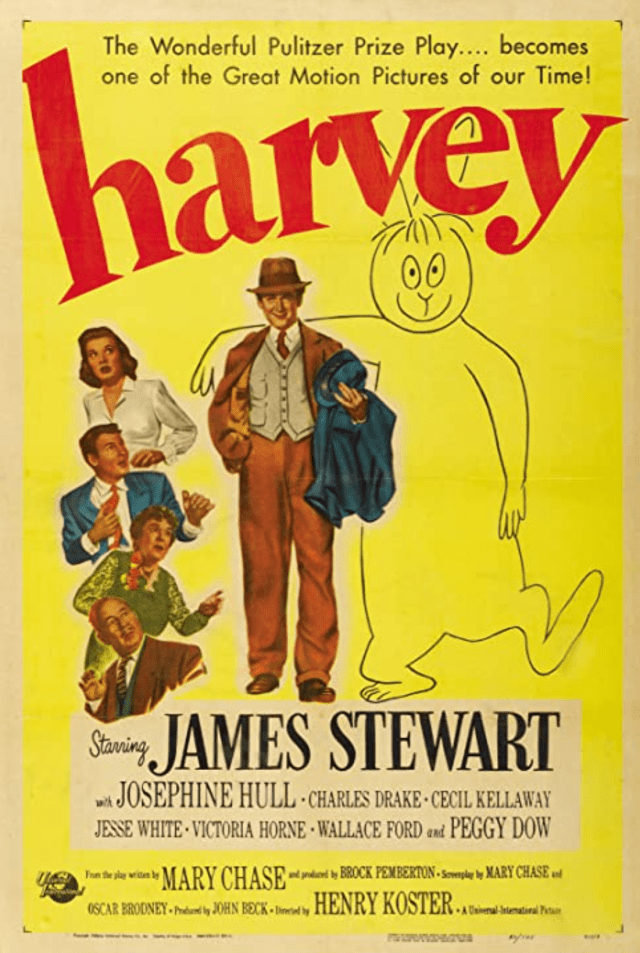
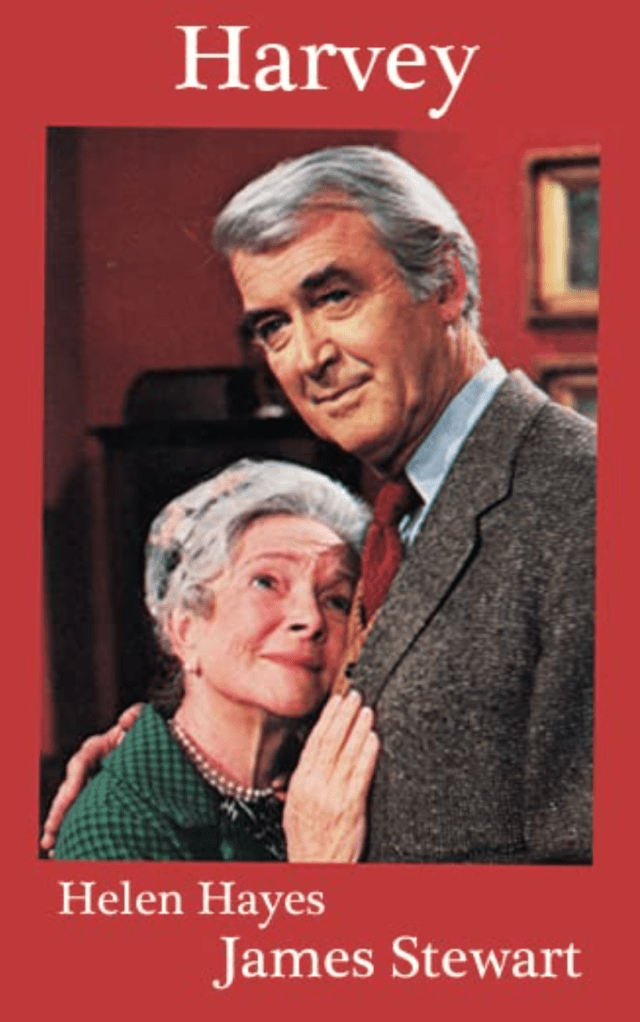
8. Harvey (1950)

I think the 1972 Hallmark Hall of Fame adaptation of Harvey is better than its 1950 predecessor. While I’m aware how controversial my opinion is, the 1972 film had more success executing its intended points. A mistake the 1950 movie makes is trying to be a comedy and a drama. This decision led the comedy to not only be underutilized, but also showcased medical negligence in a way that didn’t sit well with me. “Magical realism” was lacking in the 1950 film. This took away any opportunity for the story to be charming and whimsical. When I reviewed Harvey back in January, it was the most disappointing movie I saw in 2022. Now, eleven months later, the 1950 picture still holds that title.

Take 3: Harvey (1950) Review

7. Journey

The 1995 Hallmark Hall of Fame presentation made the same mistake Durango did: not giving the audience a reason to care about the characters and their story. In the case of Journey, the creative team failed to provide explanations for the characters’ choices. At the beginning of the film, the protagonist’s mother, Min, abandons her family, claiming she hates her parents. But the script never explains why she made this decision. Even when there are cut-away scenes featuring Min, she isn’t doing anything significant. How am I expected to care about Min’s choice affecting her family when I don’t even know why she left in the first place?

6. My Mom Made Me Do It

According to a synopsis I read for this 2022 Lifetime film, the protagonist, Jade, turns to stealing in order to help her mom pay the bills. Both the title and synopsis turned out to be a lie because 1) Jade’s decisions were made on her own and 2) Jade never steals anything. What she does instead is crash wealthy people’s parties and photographs their belongings. Other issues contained in this movie are weak lead performances and characters who make one dumb choice after another. I will admit there was at least one effective plot twist. But I wish it had taken place in a better film.

Harvey (1950) poster created by Universal Pictures

5. The Sundowners (1960)

For a little while, I thought The Sundowners was going to be the worst movie I saw this year. Even though I was proven wrong, the 1960 film has still remained in my top five. Like I said in my review, one of the worst things you can do as a film-maker is waste your audience’s time. The story felt longer than necessary, which made the movie two hours and thirteen minutes not well spent. One of my biggest issues with The Sundowners was its “bait and switch” ending. While I won’t go into detail about the ending, as I don’t want to spoil the film, I will say it was cruel for both the characters and the audience.

Take 3: The Sundowners (1960) Review

4. The North Avenue Irregulars

This movie attempts to answer the question; “Wouldn’t it be funny if a group of women came together to solve a mystery”? By the time The North Avenue Irregulars was released in 1979, that question made the film dated on arrival, as there were several television programs from the ‘70s featuring at least one female character solving mysteries or fighting crime. The movie’s creative team told too many types of stories, yet failed at all of them. One minute, the film felt like a precursor to the Mitford series, revolving around a preacher trying to live his best life. The next minute, the film turns into a gangster heist picture, paired with car chases that were longer than necessary. Honestly, I wish this movie was a Scooby Doo-esque story about the film’s fictional band, Strawberry Shortcake. Maybe then the movie would seem more timeless.

3. Lake Effects

For the first time in 18 Cinema Lane history, all the movies in my worst list’s top three are Hallmark productions. Accepting the bronze is the 2012 film, Lake Effects. This movie has so many Hallmark movie clichés, you could create a bingo game around them. You could also create a bingo game around the many storylines found in this script. Lake Effects is a production that relies on style over substance. While Smith Mountain Lake, Virginia was captured well on film, there’s only so much the movie’s creative team could do with the weak script at their disposal. In my review from August, I stated how the movie seemed forgotten over the years. Its poor quality makes it not worth remembering.

Take 3: Lake Effects Review

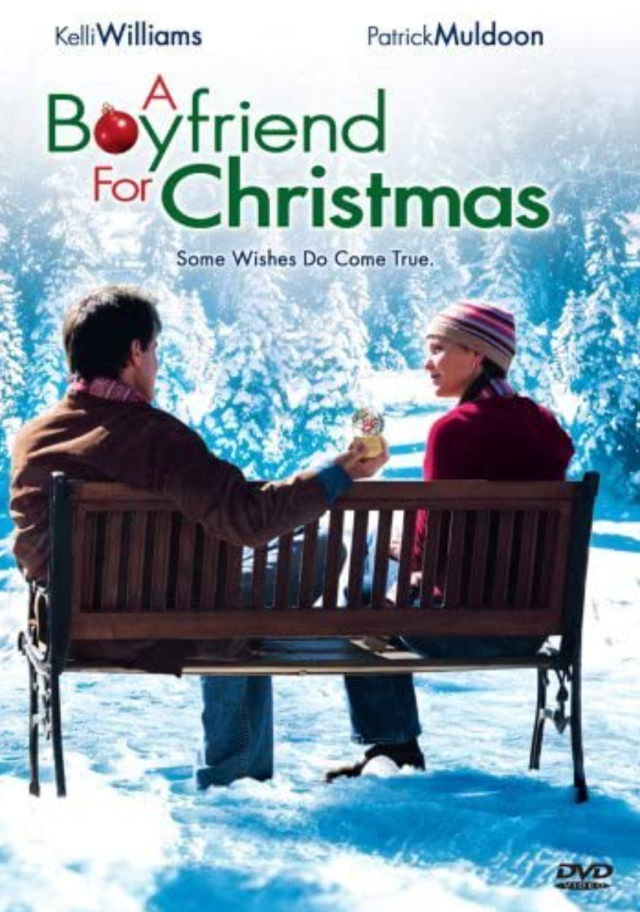
2. A Boyfriend for Christmas

In 2019 and 2020, a Hallmark Christmas movie ended up in the top three of my annual worst movies list. History is kind of repeating itself with A Boyfriend for Christmas in second place. Like Lake Effects, the 2004 film contained a weak script. But in A Boyfriend for Christmas, I only liked two minor parts of the story. The lack of Christmas magic made my movie viewing experience unenjoyable. It was one of those stories that became worse the longer I watched it. I know this movie is one of the most beloved titles in Hallmark’s cinematic library. Honestly, though, I found it over-rated.

Take 3: A Boyfriend for Christmas Review

1. Francesca Quinn, PI

Remember when I said one of the worst things a film-maker can do is waste their audience’s time? Well, another worst thing a film-maker can do is disrespect their audience’s intelligence. As I watched Francesca Quinn, PI, I was given the impression the film’s creative team didn’t want me to solve the mystery alongside the protagonist. That’s because Francesca explained things that didn’t need explaining. Despite Francesca being a professional private investigator, she constantly made decisions an amateur detective would likely make. Her lack of personality didn’t help either. According to IMDB, Francesca Quinn, PI could replace the Mystery 101 series. The reason is “the main characters’ relationship and the crime at the end of Deadly History are the same as the main characters’ relationship and crime in Francesca Quinn, PI”. If this is the case, the Mystery 101 fans, including myself, deserve so much better.

A Boyfriend for Christmas poster created by Hallmark Entertainment,  MAT IV,  Alpine Medien Productions, Larry Levinson Productions, Gaiam Entertainment, and Hallmark Channel 

Have fun in 2023.

Sally Silverscreen

The Top 10 Best Movies I Saw in 2022

As the sun begins to set on 2022, it’s time to publish my best and worst movies of the year lists! Last year, every film on my best list had been reviewed on 18 Cinema Lane. But that’s not the case this time around. For this list, only two movies were not reviewed, while another movie served as an editorial subject. Any film I covered on my blog will have a link included in this post. I’m thankful another year was filled with more good movies than bad. I’ll even have more titles in my Honorable Mentions! While these lists have become great traditions on their own, the variety of this collection of films has become another tradition. So, without any delay, let’s begin the list of the best movies I saw in 2022!

Honorable Mentions

Cut, Color, Murder, Sailor Moon S: The Movie, Cyrano de Bergerac (1950), Children of a Lesser God, Sweet Revenge: A Hannah Swensen Mystery, Aurora Teagarden Mysteries: Honeymoon, Honeymurder, The Princess and the Pirate, Dirty Little Secret, Singin in the Rain, McBride: Tune in for Murder, McBride: Dogged, McBride: Requiem, Hugo, Akeelah and the Bee, The Shoplifting Pact, and Secrets at the Inn

<a href=”http://<a href=’https://www.freepik.com/vectors/background’>Background vector created by malikadesign – http://www.freepik.com</a>&quot; data-type=”URL” data-id=”<a href=’https://www.freepik.com/vectors/background’>Background vector created by malikadesign – http://www.freepik.com2022 Sparkler image created by malikadesign at freepik.com

10. Fiddler on the Roof

When I reviewed the 1971 musical back in February, I said it was too early to say whether it would be one of the best movies I saw this year. But Fiddler on the Roof captivated me so much, the film ended up on my annual top ten list! I described the movie as a well-made quilt, with each of the film’s strengths representing a different quilt piece. The inclusion of Jewish faith/culture also gave the project a unique identity by asking questions and discussing topics that aren’t often found in musicals. Looking back on this movie, Fiddler on the Roof was three hours well spent. It’s a special project in both the world of musicals and cinema. I hope to check out more Jewish cinematic stories in 2023!

Take 3: Fiddler on the Roof Review

9. The Lost Empire/The Monkey King

Out of all the movies on my best list for 2022, The Lost Empire/The Monkey King is the most unique one! A fantasy film based on Chinese folklore, this was an imaginative production I enjoyed watching. The story was sometimes thought-provoking and even somewhat educational, as it included literature related discussions. Strong acting performances brought to life characters who seemed believable. The set designs boasted a realistic and fantastical setting, which effectively presented the illusion of an immersive world. I wish Hallmark created more movies like The Lost Empire/The Monkey King, where the stories and ideas are more creative. With the network prioritizing rom-coms and dramas, though, I don’t know what their decisions will be in the new year.

Take 3: The Lost Empire/The Monkey King Review

8. Aurora Teagarden Mysteries: Haunted by Murder

Talking about this movie is bittersweet, as it is the last film in the Aurora Teagarden series. I’ve thought about all the moments the fans will never get to see, such as Aurora and Nick’s first Christmas, Phillip’s college graduation, and Sally falling in love. But if this is where the story must end, at least it ended on a strong note. The realistic and supernatural elements of the story complimented each other nicely. Supernatural elements being incorporated at all gave this chapter a more creative approach to the series. It was nice to spend time with Lawrenceton’s favorite residents; the acting performances and on-screen camaraderie remaining consistent. Even though I would have loved to see the Aurora Teagarden series continue for many more years, I know nothing lasts forever. But as the saying goes “Don’t cry because it’s over. Smile because it happened”.

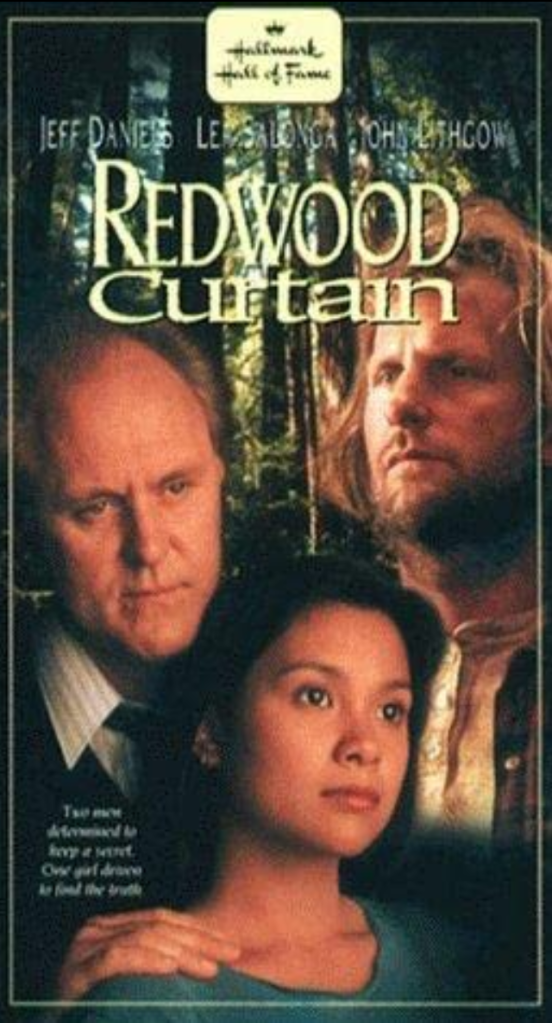
7. Redwood Curtain

There are very few movies I found better than their source material. Redwood Curtain just so happens to be one of them! The creative team behind the Hallmark Hall of Fame adaptation took advantage of the expansive nature of film by providing the story with more locations. Allowing characters like Julia and Laird to appear in the movie showcase the Riordan family dynamic not present in the play. I found Geri more likable as a character in the movie. Lea’s performance paired with the screenwriting gave Geri an empathetic and understanding personality. Redwood Curtain is a Hallmark Hall of Fame presentation I wish was re-released on DVD.

‘Redwood Curtain’: From Stage to Screen

6. The Pit and the Pendulum

The Pit and the Pendulum was one of the biggest pleasant surprises of 2022! Despite the film not being my first choice for its respective blogathon, I thought it was engaging and entertaining. Vincent’s performance didn’t disappoint, as his portrayal of Nicholas was versatile and fueled on emotion. The mystery not only started right away, but it also allowed the audience to experience the journey alongside Francis, the main character. The Pit and the Pendulum is, to me, one of the more effective horror movies, like 1962’s Cape Fear. While this film would be a perfect choice to watch on Halloween, I’m glad I had the opportunity to see it around Vincent’s birthday!

Take 3: The Pit and the Pendulum (1961) Review

Redwood Curtain poster created by Chris/Rose Productions, Hallmark Hall of Fame Productions, American Broadcasting Company (ABC), and Republic Pictures (II)

5. The Song of Bernadette

And another film of Vincent’s joins my list! Faith based films come in two forms; those that emphasize a message and those that emphasize a story. The Song of Bernadette falls into the latter category, as it revolves around religious phenomena affecting a small town. What I like about the 1943 film is how different perspectives relating to the phenomena are explored, highlighting how various members of the town view the events unfolding. The story doesn’t choose sides on the main topic, allowing the audience to come to their own conclusions about what is taking place in the movie. Even though The Song of Bernadette was released during the Breen Code era, the film is a good representation of the quality from that period in cinema. As I said in my review, Easter would be an appropriate time to watch the movie!

Take 3: The Song of Bernadette Review

4. Heaven Is for Real

Heaven Is for Real shares a major similarity with The Song of Bernadette. The 2014 film also revolves around religious phenomena affecting a small town. But what Heaven Is for Real does differently is encourage the audience to have a conversation about their beliefs on Heaven. Like I previously stated, faith based films come in two forms; those that emphasize a message and those that emphasize a story. However, I’ve rarely seen a movie of this nature start a discussion about one of their themes. This creative decision brings something new to the table and gives Heaven Is for Real a unique identity.

3. Words on Bathroom Walls

It seems like I’ve been talking about this title for as long as my blog has been around. But I’m glad I finally got the chance to see Words on Bathroom Walls this year, as it was such a good adaptation! There were changes between text and film. Despite that, the adaptation was, for the most part, respectful to its source material. The visual presentation of the story gave the audience a glimpse inside Adam’s mind. Interactions between the characters were believable, thanks to the actors’ performances and screenwriting. As I mentioned in my review a month ago, the adaptation for Words on Bathroom Walls seems more underrated. Based on the response my review received, my statement may be wrong.

Take 3: Words on Bathroom Walls Review

2. Top Gun: Maverick

I’m going to be honest; I had low expectations for Top Gun: Maverick. That’s because sequels released over ten years after their predecessor can be hit or miss. Top Gun: Maverick ended up surpassing my expectations, making it in the top three of my best of the year list! From what I know about Top Gun, the sequel respected what came before it. At the same time, new elements were added to the story, like focusing on an overarching mission. In a cinematic landscape where a film receiving over a billion dollars has become a rarity, Top Gun: Maverick achieved what some studios only dream of. As the 2020s move forward, maybe more filmmakers will turn to this film as an example of what can be cinematically possible.

Take 3: Top Gun: Maverick Review + 450 Follower Thank You

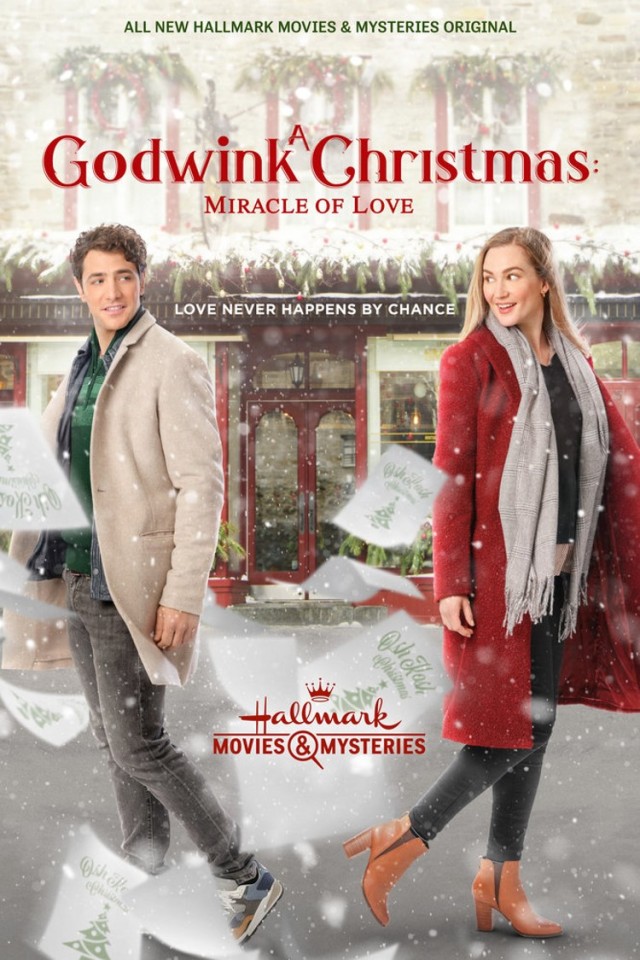
1. A Godwink Christmas: Miracle of Love

When it comes to “Godwink” stories, I prefer those that focus on a conflict. While that is the case for A Godwink Christmas: Miracle of Love, I found the overall production impressive! The interactions among the characters, as well as each volunteer’s talent being showcased, provided a nice amount of character development. Christmas activities were incorporated in more unique ways, such as the Romero family’s gift exchange. The inclusion of Advent was a newer approach to the Christmas movie genre. I don’t know what’s in store for the Godwink series. But I’d love to see more adaptations of these stories!

Take 3: A Godwink Christmas: Miracle of Love Review

A Godwink Christmas: Miracle of Love poster created by Crown Media Productions and Hallmark Movies & Mysteries

Have fun in 2023!

Sally Silverscreen

Take 3: Hallmark Hall of Fame’s Harvey (1972) Review

One of the first movies I reviewed this year was the 1950 film, Harvey. Since publishing my review back in January, that movie has become the most disappointing one I’ve seen this year, so far. Jillian, from The Classic Film Connection, recommended I give this story a second chance by checking out the 1972 Hallmark Hall of Fame production. Since this title is a remake and since I’m participating in The “Take Two!” Blogathon (which focuses on remakes), I found the perfect opportunity to watch this movie! When I reviewed 1950’s Harvey, I questioned what the point of the story was. This is because I was confused by what the movie’s creative team was trying to say through their project. Will I be less confused by the 1972 adaptation? Keep reading if you want to find out!

Harvey (1972) poster created by Foote, Cone and Belding Productions, Hallmark Hall of Fame Productions, Talent Associates-Norton Simon, and National Broadcasting Company (NBC)

Things I liked about the film:

Changes from the original film: As I said in my review of the 1950 film, there were things about Harvey I didn’t like. One of them was the medical negligence Veta experiences at Chumley’s Rest. In the 1972 version, that specific scene plays out differently. When Veta is being interviewed by Dr. Lyman Sanderson, he notices how distressed Veta appears. Her body language, tone of voice, and tears are noted by the doctor as he listens to what Veta has to say. This leads Dr. Lyman to admit Veta into the hospital for her well-being. The mix-up is presented as an example of good intentions leading to bad results. The film’s dramatic tone also helps elaborate how terrifying Veta’s experience would be.

A sense of magical realism: An element I thought was lacking in the 1950 version of Harvey was a sense of ‘magical realism’. Because the story featured a 6 foot 3 ½ inch, invisible white rabbit, I thought that aforementioned element would be automatically included in the film. In the 1972 adaptation, there was a stronger sense of ‘magical realism’ within the overall story. At the hospital, a hat with two holes on top is found in Dr. Lyman Sanderson’s office. The staff question who this hat could possibly belong to. Since the holes on the hat would allow rabbit ears to stick out, the hat itself implies Harvey does exist. This along with other strange occurrences in the story show how the film’s creative team put more effort into including ‘magical realism’.

The acting: When I reviewed the 1950 version of Harvey, I talked about James Stewart’s portrayal of Elwood P. Dowd, saying it was “laid-back” and “somewhat philosophical”. Reprising this role in the 1972 version of the story, James brought these same elements to his performance. But this time, his portrayal of Elwood reminded me of Mister Rogers from Mister Rogers Neighborhood. What I mean by this is Elwood came across as the type of man you’d want to spend hours having a conversation with. Elwood’s approachable and pleasant persona make him such a fascinating individual. If Elwood P. Dowd existed in the real world, I’d like to think he’d come up with an interesting TED Talk!

Despite appearing in the film for a limited period of time, I liked Madeline Kahn’s portrayal of Nurse Ruth Kelly! Her pleasant on-screen personality allowed her to stand out and give a memorable performance! Her interactions with the other characters also came across as realistic. After Veta was admitted to the hospital, Dr. Lyman has difficulty finding her. In a state of panic, he thinks Veta escaped. Sensing Dr. Lyman’s panic, Ruth becomes concerned. Her face has fallen from the smile she usually carries and her tone of voice contains a sense of dread. There’s even an ounce of timidness to her overall demeanor. Scenes like this one make me wish Madeline was given more on-screen appearances.

The “Take Two!” Blogathon banner created by Annette from Hometowns to Hollywood

What I didn’t like about the film:

Most of the story being rehashed: When creating a remake of a pre-established story, it’s important to do two things: respect the source material that came before your project and bring your own voice to the table. In the case of Hallmark Hall of Fame’s version of Harvey, more emphasis was placed on respecting the original film. While this idea isn’t a bad one, the 1972 movie’s creative team didn’t allow themselves to create a unique identity for their project. The sets in this film looked almost exactly like they did in the 1950 film. The story, more often than not, followed the 1950 movie’s narrative, making very few deviations. While watching the 1972 version of Harvey, I wondered, at times, why this remake exists?

A televised version of a play: In my review of Hallmark Hall of Fame’s Foxfire, I talked about how that title felt more like a televised play. This is because the 1987 film contained a smaller cast and a condensed story. The 1972 adaptation of Harvey also felt like a televised version of a play. Fewer locations are a reason why. In the 1950 version, Elwood is shown taking Harvey to Charlie’s Pub. Elwood simply recalls this experience in the 1972 version. What’s also important to note is how the 1972 story takes place in either the hospital or the Dowd family home.

The underutilization of Betty Chumley: At one point in the 1972 story, Elwood makes plans with Dr. Chumley’s wife, Betty, to meet at Charlie’s Pub and share drinks. But because this trip was never shown on-screen, Betty received one less on-screen appearance. Within the story, she only appeared in two scenes. Personally, I think Betty should have had a stronger significance in the film.

Collection of white rabbit images created by freepik at freepik.com Hand drawn vector created by freepik – www.freepik.com

My overall impression:

After publishing my review of the 1950 version of Harvey, Jillian, from The Classic Film Connection, explained how the story’s point was “about the right to be uniquely yourself and live life on your own terms”. Now that I’ve seen the 1972 version of this story, I think the Hallmark Hall of Fame film did a better job at executing this idea. What worked in the movie’s favor was how the story was just a drama instead of trying to be both a drama and comedy. Scenes like Veta’s hospital admittance elaborated how terrifying her situation would be. There was also a sense of ‘magical realism’, something I thought was lacking in the 1950 film. However, the majority of the 1972 movie was a copy of the 1950 movie. In 1993, Hallmark Hall of Fame released the film, To Dance With the White Dog. Based on what I know about the story, it sounds like a version of Harvey. But this time, a man sees a white dog only he can see. Maybe I’ll write about that movie in a future review.

Overall score: 6.1 out of 10

Have you seen any version of Harvey? Are there any Hallmark Hall of Fame movies you’d like to see me review? Let me know in the comment section below!

Have fun at the movies!

Sally Silverscreen

Take 3: Tommy Review

For my third year participating in the Rule, Britannia Blogathon, I, at first, considered reviewing an adaptation based on a book I’ve read. This would be similar to when I wrote about the 2002 adaptation of Nicholas Nickleby. But the more I thought about it, the more I realized I had a perfect opportunity on my hands. That opportunity was the chance to review the 1975 film, Tommy! Years ago, long before I became a movie blogger, I saw a trailer for Tommy on Turner Classic Movies (TCM). On the one hand, the story itself seemed interesting; a man with disabilities living his best life and making his dreams come true. But, on the other hand, the visuals within this trailer appeared “bonkers”, making the movie seem intimidating. After reading some reviews, I came to the conclusion Tommy is a polarizing film. This isn’t the first time I have written about a movie that received mixed reviews. Two years ago, for another blogathon, I reviewed the 2011 Hallmark film, The Cabin. Historically, this is considered one of the most polarizing titles the network has ever created. When I got around to seeing it, I found The Cabin so bad, it was disappointing.

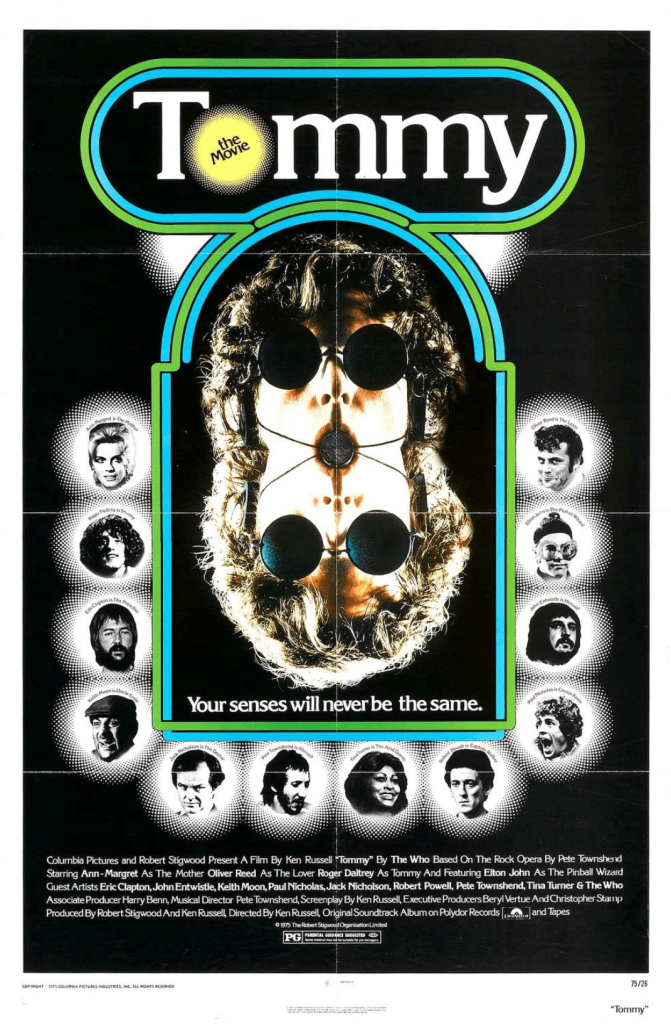
Tommy poster created by Robert Stigwood, Organization Ltd., Hemdale Film Corporation, and Columbia Pictures

Things I liked about the film:

The acting: Prior to watching Tommy, I had seen Bye Bye Birdie. In the 1963 film, Ann-Margret gave an expressive portrayal of Kim MacAfee. The 1975 movie shows Ann-Margret in a completely different role, which allowed her to expand her acting abilities. Portraying the titular character’s mother, Nora, Ann-Margret gave a well-rounded performance! Because this story incorporates heavier subjects, her portrayal contains the emotional intensity required for a story of this nature. While watching television, Nora sees her son on TV. As she’s watching, a sense of guilt grows within her. This guilt causes Nora to appear disgusted, a grimace slowly overcoming her face. She attempts to change the channel in order not to see Tommy, only for the TV to magically switch to Tommy’s image. Angry about her plan not working, Nora throws her champagne bottle at the television, which results in a flood of laundry detergent, beans, and chocolate. Relieved to instantly receive the items she just saw in television commercials, Nora suddenly is taken over by pleasure. A smile appears on her face as she rolls around on the floor in the commercial materials.

When discussing a movie heavily revolving around a titular character, it’s important to talk about the actor or actress portraying that character. In the case of Tommy, that role was given to Roger Daltrey. Based on some reviews I’ve read of Tommy, it seems like Roger had little to no acting experience prior to working on this movie. Despite this, his performance was such a strong addition to the story! Roger’s portrayal had the emotionality and versatility to make Tommy a character worth rooting for. These aspects also held my interest in Tommy’s journey. In one scene, Tommy stays over at Cousin Kevin’s house. During his stay, Kevin tries to burn Tommy with a cigarette. As Tommy is sitting tied up in a chair, his face instantly changes from exhaustion and writhing in pain. This change in facial expressions is seamless, Roger never missing an emotional beat.

While I have heard good things about Tina Turner’s acting performances, this was the first time I had seen any of them. Tommy shows Tina portraying The Acid Queen. Even though her performance was limited to one scene, she gave so much energy to her role. While her portrayal was over-the-top, it fit the tone and vibe the movie was going for. With all that said, I honestly wish Tina had received more appearances in this film.

Ann-Margret’s wardrobe: Even though I knew Ann-Margret would be starring in Tommy, I was pleasantly surprised by how much I liked her wardrobe! Each outfit she wore complimented her so well, while also looking great on-screen! Toward the beginning of the movie, as Nora and her husband, Captain Walker, are running through the war-torn streets of England, she wore an asymmetrical, sky-blue gown. The dress itself was simple, but it was elegant enough to not be plain. Ann-Margret’s strawberry blonde hair paired beautifully with the color of the dress. Later in the movie, Nora wears a silver, mesh pant suit. Accompanied by shiny, silver sandals and a white furry cape, this ensemble boasted a posh look. While the outfit felt very reflective of the 1970s, it was a divine version of that type of outfit. Ann-Margret definitely pulled off this film’s wardrobe in style!

The symbolism: In some reviews I read about Tommy, it was mentioned how there was symbolism found among the over-the-top, flashier imagery. Since I knew before watching the movie there was going to be this type of imagery, it allowed me to focus on what the film’s creative team was trying to say through their story. In a desperate attempt to cure her son, Nora takes Tommy to The Church of Marilyn Monroe. Other patrons with disabilities are also in attendance, from a woman with a guide dog to multiple people utilizing wheelchairs. Marilyn’s likeness can be seen throughout the facility, with the most notable being a giant statue of Marilyn in the iconic flown skirt pose. I interpreted the scene as a piece of commentary on how people who claim to be religious and/or contain the ability to cure everyone with anything can, sometimes, take advantage of those in vulnerable positions. Those people could be considered “false prophets”. So, choosing Marilyn as the film’s church icon is interesting, as Marilyn’s name and image were all a fabricated version of Norma Jean.

The 9th Annual Rule, Britannia Blogathon banner created by Terence from A Shroud of Thoughts

What I didn’t like about the film:

Some villains not receiving their comeuppance: There were several characters in Tommy’s life that failed him. While a few of these characters did receive their comeuppance, most of them did not. Whenever Tommy went to stay at Cousin Kevin’s house, Kevin would physically abuse and torment Tommy. Kevin only appeared in a sequence of scenes showing Tommy mistreated by him. Because of this, Kevin’s comeuppance was never shown. I’m not sure if this creative decision was made because there wasn’t enough time to show each character’s comeuppance or if it was meant to show how unfair life can be.

Some confusing parts of the story: At one point in Tommy’s story, his parents take him to see The Specialist, in an attempt to figure out why Tommy has several disabilities. During this appointment, Nora and The Specialist continuously flirt with each other. After this scene, this interaction and The Specialist himself are not brought up again. I was unsure if Nora planned on leaving Frank to start a relationship with The Specialist or if she was flirting with The Specialist simply to encourage him to lower her son’s medical bills. Either way, the movie does not provide a clear explanation.

An unclear time-line: This story starts during and shortly after World War II. The script heavily implies Tommy was born sometime in 1945. Most of this story takes place when Tommy is an adult. If Tommy were, say, twenty during the film’s events, that would mean the story takes place in 1965. With that said, why do the wardrobe, set design, and special effects look like they came straight out of the 1970s? I know this film was released in 1975. But because Tommy’s age is not specified, the movie’s time-line is unclear.

Music and stage image created by Topntp26 at freepik.com. <a href=’https://www.freepik.com/free-photo/music-sign_1179519.htm’>Designed by Topntp26</a>. <a href=”https://www.freepik.com/free-photos-vectors/vintage”>Vintage image created by Topntp26 – Freepik.com</a>. Image found at freepik.com.

My overall impression:

The way I feel about Tommy is similar to how I feel about Queen of the Damned. Is this one of my favorite films? No. Is it one of the best movies I’ve seen this year? Also, no. But, for what it was, I enjoyed it. Yes, the visuals can be “bonkers”. When you look past all of that, though, you will see the film’s creative team had something interesting to say. The story itself was easier to follow. The symbolism and messages associated with it appeared to be given a lot of thought and effort. Therefore, artistic merit can be found in this movie. The story of Tommy is a heartbreaking one. However, it is also a somewhat uplifting story. I won’t spoil the film for those who may be interested in seeing it. I will say when a climatic event happens, the moment itself feels earned.

Overall score: 7.3 out of 10

Have you seen Tommy? Are there any musical films you’d like to see me review? Let me know in the comment section below!

Have fun at the movies!

Sally Silverscreen

Take 3: Dr. Phibes Rises Again Review + 420, 425, and 430 Follower Thank You

While looking for a movie to review for my next Blog Follower Dedication Review, I realized it’s been a month since I wrote about a “spooky” title. It’s also been two months since I reviewed a sequel. Because of those factors, I choose to review the 1972 movie, Dr. Phibes Rises Again! Last year, I saw the predecessor, The Abominable Dr. Phibes, after one of my readers recommended it to me. In my opinion, the film was just fine, as I found the horror in the horror-comedy classification heavily emphasized. The fact The Abominable Dr. Phibes received a sequel was surprising to me. That’s because I had no idea the 1971 title received a second chapter until I recently stumbled across it. What other surprises are in store? Let’s take a trip through this review of Dr. Phibes Rises Again in order to find out!

Dr. Phibes Rises Again poster created by
American International Pictures and Anglo-EMI Film Distributors Ltd./MGM-EMI

Things I liked about the film:

A mystery-adventure: In my review of The Abominable Dr. Phibes, I stated how the story was more of a horror-mystery due to the limited incorporation of comedy. Like its predecessor, the sequel also features a mystery. But this time, an adventure story is included in the script, as the characters travel to Egypt. The change in scenery allowed something new to be brought to the overall story. It also added an exciting component, with the audience receiving an opportunity to witness new sights and join the ride with the characters. A new setting made the film’s twists and turns interesting, as Dr. Phibes came up with different ways to attempt to reach his goal. A distinct identity was given to Dr. Phibes Rises Again because of these creative decisions!

Toned down character demises: One of The Abominable Dr. Phibes’ flaws was how over-the-top demises of characters were, as they came across more gross than scary. These demises also overshadowed Vincent Price’s performance, which led to his talents being underutilized. While Dr. Phibes continued to go after anyone who stood in his way in Dr. Phibes Rises Again, the execution of his plan was toned down. Not only were there less demises, but there was also less on-screen gore compared to the first film. Vincent’s acting abilities received more emphasis because of this creative decision. That creative decision also allowed me, as a viewer, to focus on Vincent’s body language, facial expressions, and vocal inflections. Vincent’s role in Dr. Phibes Rises Again felt more like lead actor material compared to The Abominable Dr. Phibes.

Robert Quarry’s portrayal of Darius Biederbeck: When I talked about Queen of the Damned in my article, Twentieth Century vs. Queen of the Damned at the Against the Crowd Blogathon, I said the movie presented Lestat as a more likable protagonist. Stuart Townsend’s portrayal of Lestat helps make this statement accurate, as his consistent suave, confidence added to Lestat’s likability. Robert Quarry’s portrayal of Darius Biederbeck in Dr. Phibes Rises Again reminded me of Stuart Townsend’s portrayal of Lestat. This is because Darius’ suave, confidence was similar to Lestat’s. Darius was a goal-driven man, believing in himself and his mission. Even when those around him had their doubts, his confidence was unwavering, presented consistently by Robert. What also helped was how strong Robert’s acting abilities were, giving him an opportunity to present a stand-out performance. These aspects of Robert’s portrayal of Darius made it enjoyable for me to watch!

Egyptian hieroglyphic image created by wirestock at freepik.com. Luxor photo created by wirestock – www.freepik.com

What I didn’t like about the film:

A somewhat rehashed story: Dr. Phibes’ story in The Abominable Dr. Phibes revolved around trying to find a solution for his deceased wife, Victoria. This quest for a solution drove Dr. Phibes to go after those he felt wronged him and his wife. In Dr. Phibes Rises Again, Dr. Phibe travels to Egypt. But his mission is similar to the first film: find a solution for Victoria. I won’t claim this story is a carbon copy of The Abominable Dr. Phibes. However, I wish it had less similarities to the predecessor.

Confusing parts of the story: A confusing part of Dr. Phibes Rises Again is the return of Vulnavia. Dr. Phibes’ assistant, Vulnavia, was one of the key characters in The Abominable Dr. Phibes. Without spoiling the first movie, I will say something happens that prevents Vulnavia from appearing in the sequel. Yet, she does appear in Dr. Phibes Rises Again, with no clear explanation provided. This is just one example of confusing parts of the story that should have received more context.

An unresolved mystery: While in Egypt, Dr. Phibes discovers a sarcophagus. When he opens the sarcophagus, it appears a mummy had been removed. Dr. Phibes even questions what happened to the aforementioned mummy. But after this scene took place, the mystery is never resolved. In fact, it was never brought up after Dr. Phibes’ initial discovery. This made me wonder why the film’s creative team would include that mystery in their script if they had no intentions to solve it on screen?

Scary movie screening image created by Freepik at freepik.com. <a href=’https://www.freepik.com/free-photo/small-skeleton-with-popcorn-and-tv_1323292.htm’>Designed by Freepik</a>. <a href=”https://www.freepik.com/free-photos-vectors/background”>Background image created by Freepik</a>. Image found at freepik.com.

My overall impression:

Before I share my overall impression of Dr. Phibes Rises Again, I’d like to thank all my followers! I appreciate your support of 18 Cinema Lane! Now, on to my thoughts on Dr. Phibes Rises Again. On the one hand, the sequel tries to go in a different direction from the first movie. It even fixes some of the predecessor’s flaws. On the other hand, though, Dr. Phibes’ story was similar to his story in The Abominable Dr. Phibes. It also doesn’t help how parts of the story were confusing and a mystery was unresolved. Therefore, I will say this: as a movie, Dr. Phibes Rises Again is fine. As a sequel, it is slightly better than the first film.

Overall score: 7.2 out of 10

Have you seen The Abominable Dr. Phibes or its sequel? Are there any sequels you think are better than their predecessor? Please tell me in the comment section!

Have fun at the movies!

Sally Silverscreen

Take 3: The Disappearance of Flight 412 Review

Aviation is one of the broadest topics when it comes to the world of cinema. However, I was determined to find a movie to review for Taking Up Room’s Aviation In Film Blogathon. While visiting the Youtube channel, Cult Cinema Classics, I came across a film titled The Disappearance of Flight 412. As this title suggests, there is a plane within the story. But the story itself is what led me to ultimately select the movie for this review! The idea of the military possibly crossing paths with a UFO is fascinating, especially in film. I also don’t receive many opportunities to review tv movies from the 1970s. So, fasten your seatbelts and get ready for takeoff, as we’re about to start this review of The Disappearance of Flight 412!

The Disappearance of Flight 412 poster created by Cine Films Inc., Cinemobile Productions, and NBC

Things I liked about the film:

The use of time-stamps and a voice-over: Throughout the movie, a male voice-over can be heard explaining what was happening on screen. His tone is serious, which complemented the film’s tone. The inclusion of this technique reminded me of The Twilight Zone, where the narrator is presenting the film as a case study. Another technique used in this film was time-stamps. These showed how much time had passed since the mystery started. The time-stamps also shared locations, informing the audience when a scene transition took place. This technique added to the film’s intended delivery; a classified file the audience is given exclusive access to.

A different side of the military: When one thinks of the military’s presence in a film, movies involving war/combat typically come to mind. However, there are films that depict the military in less combative environments. The Disappearance of Flight 412 is one of those films, as members of the Air Force are performing daily operations or testing a plane. The 1974 tv movie also focuses on the leadership within the military. As the story revolves around the military’s approach to unexplained phenomena, various military leaders handle the situation in a way they feel is best. With all that said, The Disappearance of Flight 412 presents a different side of the military, allowing the film to have its own unique identity!

The mystery’s start time: I’ve stated before how I prefer mysteries start sooner rather than later. This is so the audience can get, and stay, invested in the mystery. In The Disappearance of Flight 412, the mystery started six minutes into the movie. Because of this, it allowed the audience to get hooked into the story. It also allowed the story to get straight to the point sooner.

Military plane image created by Brgfx at freepik.com. <a href=”https://www.freepik.com/free-photos-vectors/background”>Background vector created by brgfx – http://www.freepik.com</a>. Image found at freepik.com.

What I didn’t like about the film:

A misleading title: This movie is titled The Disappearance of Flight 412. But throughout the story, the audience follows the members of the titular flight. Therefore, they know exactly where this plane ended up. There were two fighter jets, named Tango 1 and Tango 2, that did disappear. However, the title does not acknowledge those jets. With that said, I found this movie’s title misleading.

Few opportunities to know the characters: According to both IMDB and the title of the Youtube video, The Disappearance of Flight 412 is classified as a mystery. But because the story primarily revolves around this mystery, there aren’t many opportunities to get to know the characters. Sure, the audience learns a little bit of information about them, such as some of their military history. However, this information isn’t enough to truly get to know the characters. If anything, the audience simply becomes familiar with them.

The prolonged mention of UFOs: At the beginning of the movie, the aforementioned voice-over provides explanations and details about possible UFO sightings. This sets the stage for what’s to come in the story. After this introduction, though, the subject of UFOs isn’t brought up until about thirty-seven minutes into the movie. If that introduction hadn’t been included in the film, the first mention of UFOs would have been an unexpected surprise for the audience. But because of the introduction’s inclusion and because the introduction felt more like a news reel, it, in a way, presented false expectations of more serious UFO discussion.

Detective work image created by Photoroyalty at freepik.com. <a href=’https://www.freepik.com/free-vector/investigation-background-design_1041877.htm’>Designed by Freepik</a>. <a href=”https://www.freepik.com/free-photos-vectors/background”>Background vector created by Photoroyalty – Freepik.com</a>. Image found at freepik.com.

My overall impression:

There are movies where the subject itself is more interesting than the film. Some examples are Over the Edge and The Last Full Measure. In my opinion, The Disappearance of Flight 412 fits in this category. As I mentioned in my review, the story primarily revolves around the mystery of the disappearing fighter jets. Since the movie also covers the subject of the military dealing with unexplained phenomena, I think this topic would serve as an interesting documentary. That way, more time could be given to the subject, while also exploring the debates and perspectives surrounding it. At the end of the movie, a series of text states how the film’s characters and events are fictional. Maybe if The Disappearance of Flight 412 had been based on a real-life story, the project would be more memorable than it was.

Overall score: 6.2 out of 10

Have you seen The Disappearance of Flight 412? Are there any films involving aviation you like? Let me know in the comment section!

Have fun at the movies!

Sally Silverscreen