Thank You for Being a Friend of The Golden Double Double Feature

When I chose the theme for this year’s double feature, I wanted to do something different from previous double features I’ve hosted by reviewing four films. With The Golden Girls featuring four main stars (Betty White, Estelle Getty, Bea Arthur, and Rue McClanahan) and with those stars possessing their own filmographies, I found a reason to seek out more of their projects. The movies I selected, Hallmark Hall of Fame’s The Lost Valentine, Mask, Mame, and The Little Match Girl, are just as unique as the “golden girls” themselves! I was reminded why I like Hallmark Hall of Fame’s The Lost Valentine when I decided to revisit it. Not only did I rediscover forgotten elements like the story’s humor, I, once again, came to appreciate what makes the film good. Mask was such a pleasant surprise because of how solid the movie is! It’s a biopic that brings something different to the genre’s table as well as genuineness. While I found both Mame and The Little Match Girl fine, I enjoyed the films for different reasons. Mame’s choreography and colorful palette helped make the film as entertaining as it was. Meanwhile, the cleverly written dialogue in The Little Match Girl allowed interactions between characters to be memorable. Now, as the sun sets on Miami and all the cheesecake has been eaten, I’d like to say thank you for being a friend of the Golden Double Double Feature!

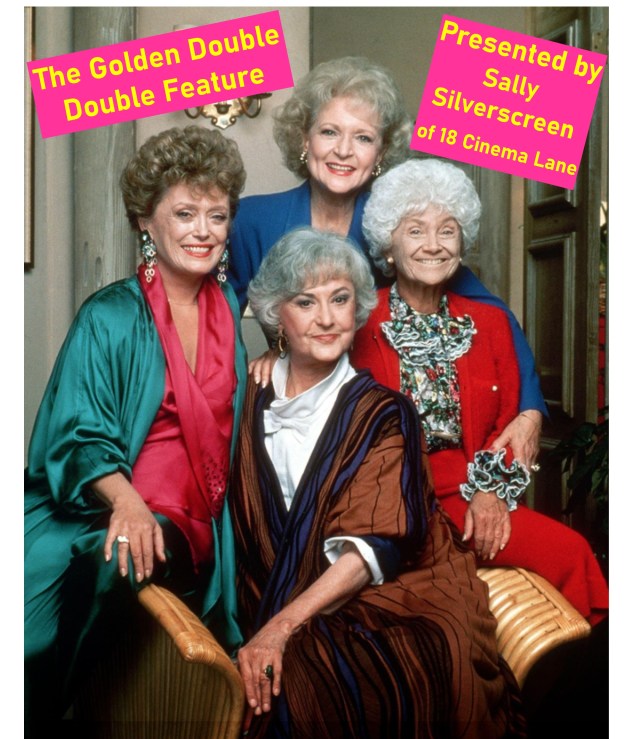
The Golden Double Double Feature banner created by me, Sally Silverscreen. Original image created by Touchstone Television, Witt/Thomas/Harris Productions, 20th Television, and National Broadcasting Company (NBC)

Have fun on the lanai!

Sally Silverscreen

Take 3: Mame (1974) Review (Golden Double Double Feature Part 3)

Thanks for joining me for the third part of my Golden Double Double Feature! My review of 1974’s Mame is spoiler-free. If you’d like to learn more about why I chose this year’s double feature theme, you can check out the introduction in the link below.

Announcing The Golden Double Double Feature!

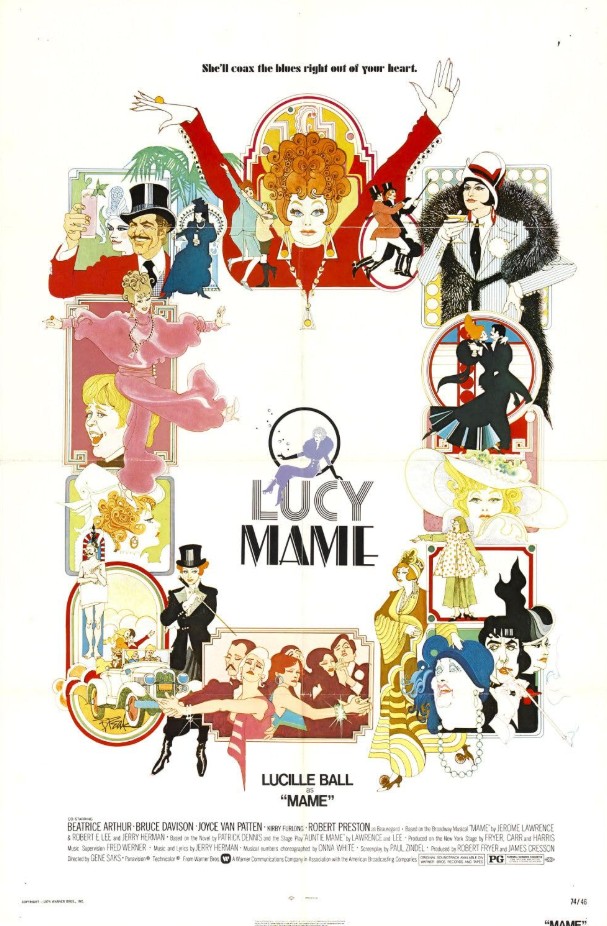
Mame (1974) poster created by Warner Bros. and American Broadcasting Company (ABC)

1. Out of the movies from Bea Arthur’s filmography, why did you select Mame?

Similar to what I said about my decision to review Mask, I had no idea Bea starred in Mame until I saw the movie listed on her IMDB filmography. While I have heard of Mame prior to selecting it for the Golden Double Double Feature, I had never seen the film. But as I researched Mame before publishing this review, I learned the movie’s reception was mostly negative. Even though I watch every film I write about with an open mind, including Mame, the aforementioned reception led me to approach Mame with low expectations.

2. In Mame, Bea portrays Vera Charles. How is Vera Charles similar or different from Dorothy?

If I could choose one word to describe Dorothy Zbornak, it would be “honest”. In fact, her brutal honesty helps her achieve distinctiveness on The Golden Girls. I remember one scene on the show when Rose asks Dorothy if she can ask her a question. Dorothy matter-of-factly responded to Rose by saying, “Better than anyone I know”. Bea’s character in Mame, Vera Charles, shares this brutal honesty with Dorothy. The musical number, “Bosom Buddies”, perfectly highlights this characteristic. But there is a major difference between Dorothy and Vera. Because Vera is a stage actress, her personality is more dramatic. Meanwhile, Dorothy carries herself with a “tell it like it is” attitude. Though some viewers could perceive this type of attitude as rude, it has become appreciated not just by the other characters on The Golden Girls, but by the show’s fans as well.

3. According to Wikipedia, Mame was the Easter attraction at Radio City Music Hall. Yet, on The Golden Girls, it doesn’t seem like there was an Easter themed episode. Why do you think The Golden Girls didn’t capitalize on the Easter holiday?

Radio City Music Hall choosing Mame as their Easter attraction is a surprising decision. This is because, according to Wikipedia, Disney’s adaptation of Alice in Wonderland (a movie with more family-friendly appeal and a rabbit as one of the main characters) was re-released in March of 1974. To answer question number three, I believe the creative team behind The Golden Girls just never found an Easter themed story that was worth telling on the show. This belief is similar to my answer for the fifth question of my Hallmark Hall of Fame’s The Lost Valentine review, where I speculate why The Golden Girls never received a television film.

4. Was there anything about Mame you liked or didn’t like?

As I said in answer number two, Vera was a brutally honest woman with a dramatic personality. These qualities, along with a drier sense of humor, allowed Vera to add some comic relief to Mame. One of the film’s funniest scenes is when Vera wakes up in Mame’s bathtub after Mame throws an extravagant party the previous evening. To help Vera become more awake, Mame turns on the shower. Vera just stands in the middle of the bathtub, providing no reaction to the shower’s water. I found that lack of reaction hilarious because I wasn’t expecting Vera to just stand in the middle of the bathtub and simply appear irritated due to the interruption caused by the shower’s water. In my opinion, Bea’s portrayal of Vera stole the show!

According to IMDB, Mame has a run-time of two hours and twelve minutes. This run-time could be felt, especially after Mame’s nephew, Patrick, grows up. The second half of Mame was drawn-out, which caused the film’s pace to slow down. In fact, the overall pace of Mame was inconsistent because of how drawn-out the second half was. Had the movie been trimmed to about an hour and forty minutes, Mame’s pace could have been a bit faster.

5. Mame is an adaptation of its respective Broadway musical. Several musical moments were featured on The Golden Girls, from the song about Miami I mentioned in my Mask review to “The Sky Is Falling” number from the episode, ‘Henny Penny – Straight, No Chaser’. What Broadway musical do you wish had been referenced on the show?

Like I said in my third answer of my Mask review, the overarching story of The Golden Girls is grounded in reality, meaning the situations depicted on the show seem realistic, more often than not. Though I haven’t seen any performances of Cats, I have heard it’s a musical that prioritizes performance and presentation over the story, forcing the audience to suspend a lot of their disbelief. I’m not sure if Cats was ever referenced on The Golden Girls. But if it wasn’t, I wonder how a show like The Golden Girls would have incorporated a musical like Cats into the story?

Colorful galaxy image created by Freepik at freepik.com. <a href=’https://www.freepik.com/free-vector/lovely-hand-drawn-galaxy-background_2943080.htm’>Designed by Freepik</a>. <a href=”https://www.freepik.com/free-photos-vectors/background”>Background vector created by Freepik</a>. Image found at freepik.com.

6. Did you develop any thoughts and/or questions while watching this film?

If you look at Mame’s poster, you’ll notice the bright colors sprinkled across the plain white background. This poster is such a good representation of the movie because Mame is a colorful film! The set and costume design adopts bold hues that nicely burst on screen. A great example presents itself during the musical number, “Mame”. All the men in that number, including Mame’s love interest, Beau, wear red riding jackets. Meanwhile, all the women, especially Mame, wear black riding jackets. These two colors effectively contrasted against the green foliage of the Burnside family plantation. While we’re still on the subject of the musical number, “Mame”, I want to talk about the choreography. As I just mentioned, the “Mame” number takes place at the Burnside family plantation. This sprawling space provided plenty of opportunities to showcase impressive dance sequences. Multiple groups of three men each leaped over hedges lining a walkway. These leaps felt reminiscent of horses jumping, which makes sense because, prior to the number, the characters participated in a fox hunt. Later in the number, both men and women leaped around a circular fountain. This creative choice was a simple yet visually appealing way of utilizing the landscape Mame’s creative team had at their disposal.

7. Throughout The Golden Girls, cheesecake became an iconic staple of the show. What would you say is the iconic staple of Mame?

Similar to when I reviewed Mask, there are several good answers I could choose for this question. Since I can pick only one “iconic staple” for Mame, though, I’ll select Vera’s telescope. In Mame, Vera portrays an astronomer in one of her plays. During the musical number, “The Man in the Moon”, Vera carries a beautiful telescope prop covered in gold glitter and pearls. Telescopes are typically associated with exploring, especially when it comes to space. This particular tool can help people see places and objects clearer, as well as discovering new possibilities. Mame’s musical number, “Open a New Window”, stresses one of the film’s major themes of opening your heart and mind to new opportunities, possibilities, and experiences in order to make life more fulfilling. What I said about the telescope perfectly correlates with this major theme from Mame!

8. Christmas plays a role in Mame, as “We Need a Little Christmas” is one of the movie’s musical numbers. Meanwhile, there are two Christmas episodes of The Golden Girls; ‘‘Twas the Nightmare Before Christmas’ and ‘Have Yourself a Very Little Christmas’. When it comes to Christmas stories, do the aforementioned episodes and Mame share any similarities?

Based on the “We Need a Little Christmas” musical number from Mame, as well as the synopsis for both Christmas episodes of The Golden Girls, I’d say a major similarity is how the events of each story affect a small group of characters to varying degrees. Though it’s a week before Thanksgiving, according to Patrick, Mame makes the decision to celebrate Christmas early. Because she, as well as the other characters in Mame, have been impacted by the Great Depression, she attempts to create joy during a time of hopelessness. Meanwhile, the “golden girls” not only discover Stan’s situation while volunteering at a soup kitchen together, they are also held hostage together by “Santa Claus”. Each Christmas episode of The Golden Girls emphasizes the characters working together to deal with the events affecting them.

9. Mame was released in 1974 (11 years before The Golden Girls premiered). Was there any element from the movie you think could have impacted the show?

I already brought up in this review how the musical number, “Bosom Buddies”, perfectly highlights Vera’s brutal honesty. However, this musical number also highlights how Mame can be brutally honest. The purpose of “Bosom Buddies” is to stress how, despite the brutal honesty among Mame and Vera, their friendship remains valued by each woman. As I was watching this musical number, I was reminded of the friendship between Sophia, Dorothy, Blanche, and Rose on The Golden Girls. There have been times where, at least, one of these women has been so honest, it catches the others off-guard. But, at the end of the day (or by the end of an episode), the friendship among the “golden girls” is cherished, even over a serving of cheesecake. So, to answer this question, I’d say the honest friendship in Mame could have impacted the friendship on The Golden Girls.

10. After watching Mame, is there anything you can take away from your movie-viewing experience?

When I answered question number one in this review, I brought up how I learned Mame’s reception was mostly negative. On IMDB, the film received a score of 5.9. Personally, I think the negativity toward Mame is a bit harsh. Yes, the movie has its flaws, such as its two hour and twelve-minute run-time. But, in my opinion, Mame is fine and entertaining-enough. The set and costume design clearly showed the film’s creative team had a strong vision and consistently stuck with it. The choreography was executed well, especially during the musical number, “Mame”. Bea’s portrayal of Vera was such a highlight, I wish she was featured in the movie more. Vera’s brutal honesty, dramatic personality, and drier sense of humor helped her steal the show! I’m honestly glad I approached Mame with low expectations. Those expectations were surpassed, allowing me to enjoy this film.

The Golden Double Double Feature banner created by me, Sally Silverscreen. Original image created by Touchstone Television, Witt/Thomas/Harris Productions, 20th Television, and National Broadcasting Company (NBC)

Thank you for being a friend!

Sally Silverscreen

Comparing with the Critics – Best of 1978 – Autumn Sonata

This review is from my series, Comparing with the Critics. If you’d like to learn more about the series, click on the link below.

Introducing my new series, Comparing with the Critics!

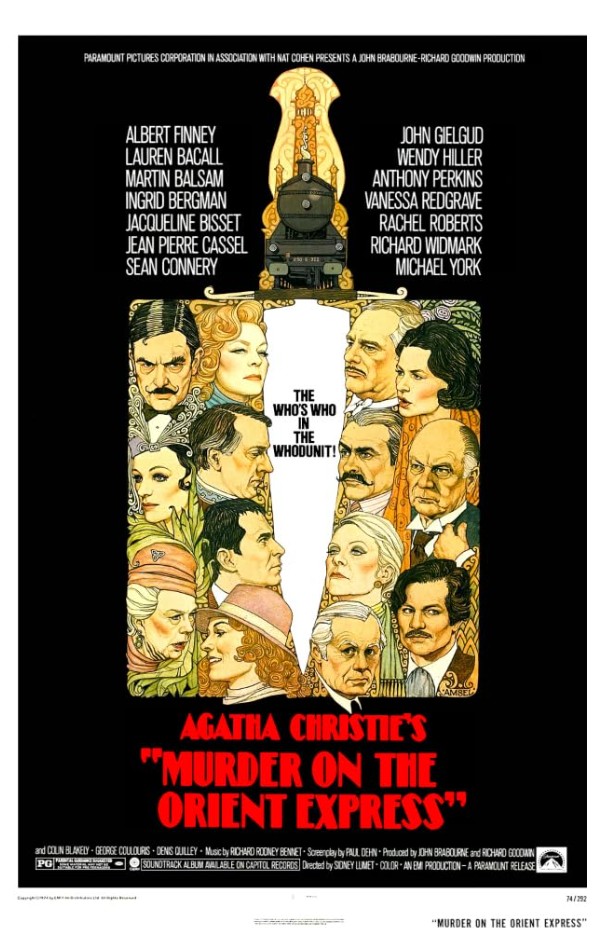
March’s theme for Genre Grandeur is “Oscar Losing Movies (Oscar nominees that failed to garner even one win)”. Upon learning this theme, I was going to select a movie nominated for the 76th Academy Awards, when The Lord of the Rings: The Return of the King won a history-making eleven awards. But after researching which films were nominated the evening of February 29th, 2004, I discovered other pictures besides The Lord of the Rings: The Return of the King walked away with a trophy. This discovery meant there weren’t as many Oscar “losers” as I initially believed. So, as I continued my research for March’s Genre Grandeur, I learned Autumn Sonata was nominated for two awards at the 51st Academy Awards. These categories were Best Writing and Best Leading Actress. Sadly, Autumn Sonata lost both categories to a movie titled Coming Home. I have heard of Autumn Sonata prior to choosing it for this particular review. Not only was the film recommended to me by Virginie (from The Wonderful World of Cinema), it was also featured in ‘The Best Films of 1978’ episode of Gene Siskel’s and Roger Ebert’s show, Sneak Previews. In that episode, both Roger and Gene admitted to placing Autumn Sonata on their lists of the ten best films of 1978. Now that I’ve seen the movie for myself, I can understand why it would find a place on their lists. I can also understand why Autumn Sonata was nominated for its respective categories at the 51st Academy Awards in 1979.

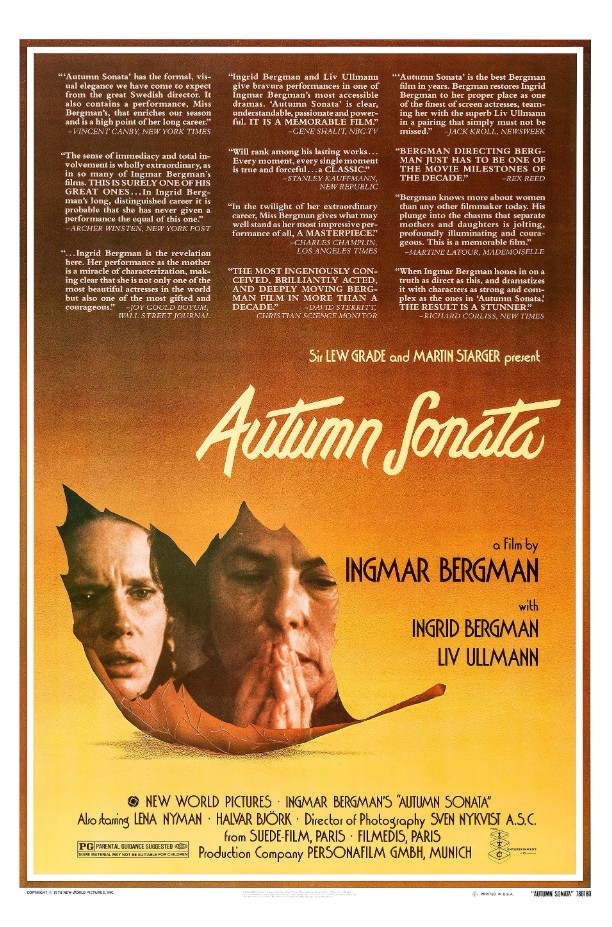
Autumn Sonata poster created by Persona Film, Suede Film, Incorporated Television Company (ITC), Svensk Filmindustri, Constantin Film, ITC Film Distributors, and New World Pictures

As I just mentioned in this review’s introduction, Autumn Sonata was nominated for two awards at the 51st Academy Awards. One of these categories was Best Leading Actress, with Ingrid Bergman as one of five actresses to receive a nomination. While discussing Autumn Sonata in Sneak Previews’ ‘The Best Films of 1978’ episode, Gene called Ingrid’s portrayal of Charlotte Andergast “riveting”. Even after a scene featuring Ingrid and Liv Ullmann (who portrayed Charlotte’s daughter, Eva) is presented in the episode, Gene says “Again, some real pain there”, referring to the emotions on display through Liv’s and Ingrid’s performance. Though I agree with Gene’s assessment of Ingrid’s portrayal of Charlotte, the word I’d use to describe it (as well as Liv’s portrayal of Eva) is captivating. In one of the best scenes from Autumn Sonata, Charlotte shares with Eva how her close friend, Leonardo, passed away. Throughout her recount of Leonardo’s last days in the hospital, Charlotte has a pained, disgusted look on her face. With a glossy, teary-eyed stare and a drawn-out frown, Charlotte is heartbroken over the loss of her friend. When I saw that scene, I wasn’t watching an actress portraying a character. I was witnessing a woman experiencing grief, with Ingrid’s performance possessing a strong sense of realism.

String of musical notes image created by Freepik at freepik.com. <a href=’https://www.freepik.com/free-vector/pentagram-vector_710290.htm’>Designed by Freepik</a> <a href=”https://www.freepik.com/free-photos-vectors/background”>Background vector created by Freepik</a>. Image found at freepik.com. 

Like I also said in my review, Liv Ullmann’s portrayal of Charlotte’s daughter, Eva, was captivating. This is because Liv was able to go toe-to-toe with Ingrid, acting-wise, understanding how to utilize emotion to her character’s advantage, as well as when to increase or decrease the intensity of those emotions. As I previously mentioned, there was a scene from Autumn Sonata featuring Ingrid and Liv in Sneak Previews’ ‘The Best Films of 1978’ episode. In that scene, Charlotte and Eva share an emotionally explosive conversation over the reasons why their relationship is strained. Eva states how she didn’t like Charlotte’s desire to turn her daughter into someone she wasn’t. During her reflections of her past, Eva is visibly distraught. With gritted teeth and eyes overflowing with tears, even shaking at one point, Eva confesses how Charlotte’s decisions have deeply impacted her and her life choices. Because of her performance in Autumn Sonata, I wish Liv Ullmann had been nominated for an Oscar as well.

Image by macrovector on Freepik

During their discussion of Autumn Sonata in ‘The Best Films of 1978’ episode of Sneak Previews, neither Roger nor Gene brought up the film’s screenwriting. This is a shame, as the screenwriting was one of the movie’s strengths. Autumn Sonata is a character-driven, “slice of life” story. However, the quality of the dialogue made conversations between characters sound emotionally deep and thought provoking. In one scene, Eva asks her husband, Viktor, if he thinks she’s an adult. Viktor responds by telling her, “I guess being an adult is being able to handle your dreams and hopes, not longing for things”. He could have simply given his wife a “yes” or “no” answer. But Viktor’s response gives Eva, as well as the audience, meaningful insight about growing up, managing expectations, and even gratitude. Later in Autumn Sonata, Charlotte confesses one of her realizations to Eva. She says, “I have never grown up. My face and my body have aged. I acquire memories and experiences but inside all that I haven’t even been born.” Similar to Viktor’s aforementioned quote, Charlotte’s quote addresses growing up. In Charlotte’s case, however, her reflections sound more regretful. Disappointment can even be heard in her voice, with those pent-up feelings finally being addressed through words. As I stated in this review’s introduction, Autumn Sonata was nominated for the Best Writing category. Through a thoughtfully crafted script, that nomination was, in my opinion, earned.

Envelope with hearts image created by Freepik at freepik.com. <a href=’https://www.freepik.com/free-photo/hearts-and-pink-envelope-for-mothers-day_1950691.htm’>Designed by Freepik</a>. <a href=”https://www.freepik.com/free-photos-vectors/love”>Love image created by Freepik</a>. Image found at freepik.com.

While continuing their discussion of Autumn Sonata, Roger tells Gene about a call he received from a reader who was interested in seeing Autumn Sonata. Roger then says the reader told him, “I couldn’t make head or tail of it. What is it about?” Meanwhile, Gene claims “the conflict is how do you reconcile your public career with your personal responsibilities to your family”. Based on my experience watching Autumn Sonata, I think it’s not just about balancing a public and personal life. I think it’s also about the brutal honesty of strained familial relationships. When Eva and Charlotte talk about the past, no figurative punches are held back. They tell each other exactly what’s on their minds and hearts, no matter who’s feelings get hurt. It would have been easy for Autumn Sonata’s creative team to paint either Charlotte or Eva as the “villain” of the story. Instead, both women are not only flawed, they have valid points to their sides of the narrative. How the story plays out kind of reminds me of The Royal Tenenbaums, where the strained relationship between Eva and Charlotte is the result of little things culminating over time. The acting performances and the screenwriting successfully bring a sense of realism to Autumn Sonata.

Norway’s past and present image created by Macrovector at freepik.com. <a href=”https://www.freepik.com/free-photos-vectors/poster”>Poster vector created by macrovector – http://www.freepik.com</a>. Image found at freepik.com.

According to IMDB, Autumn Sonata was filmed in Norway. Based on the scene where Charlotte drives to Eva and Viktor’s house, the Norwegian scenery looked like a beautiful painting. But the majestic hills, mountains, and large body of water from Norway wasn’t incorporated into Autumn Sonata beyond that one scene. I wish the “autumn” in Autumn Sonata played a larger role in the story, perhaps visually representing some of the movie’s themes. Another aspect of the story I wish had been utilized more was Eva’s sister, Helena. When Charlotte first arrives at Eva and Viktor’s house, Eva reveals how Helena is now living at their house instead of at a hospital. Throughout Autumn Sonata, Helena deals with an illness that greatly affects her mobility. I thought she was intended to be a bridge between Eva and Charlotte, helping them find a more peaceful middle ground. One reason for this belief came from Helena falling out of her bed during an emotionally explosive conversation between Charlotte and Eva. Sadly, it seems like Helena was in Autumn Sonata just for the sake of it.

Comparing with the Critics banner created by me, Sally Silverscreen. TV show title cards created by WTTW National Productions, WTTW, Public Broadcasting Service (PBS), Lifetime Television, Tribune Entertainment, Buena Vista Television, and Disney-ABC Domestic Television

Prior to reviewing Autumn Sonata, the only movie I agreed with Gene and Roger on was 1984’s Amadeus. I could also see why the film was, at least, nominated for an Oscar. Now I can confidently say that Autumn Sonata is the second film I agree with Roger and Gene on! While I typically don’t gravitate toward “slice of life” stories, the 1978 movie works because of the strength of the screenwriting and acting performances. Similar to The Royal Tenenbaums, the brutal honesty woven into the script brought a sense of realism when to came to addressing strained familial relationships. The story itself was emotionally deep and thought provoking because of the effort put into it by Autumn Sonata’s creative team. I understand why the movie is titled Autumn Sonata, as music plays an integral role in Charlotte’s life. However, I wish the “autumn” in Autumn Sonata was utilized more in the story, especially considering how beautiful the Norwegian landscape was in the film. The movie also doesn’t have a high rewatchability rate due the some of the heavier subject matter incorporated into the story. But I can honestly say that Autumn Sonata is one of the best films I’ve seen in 2026, so far!

This review was brought to you by

Sally Silverscreen

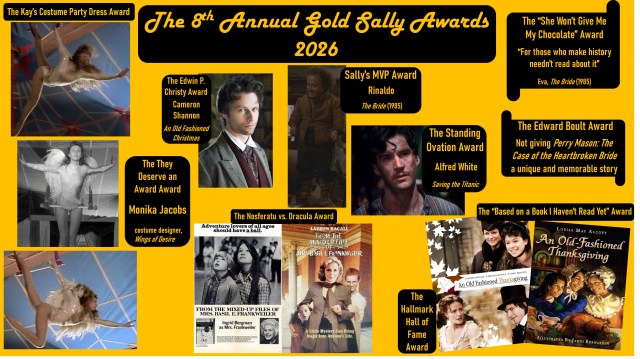
The 8th Annual Gold Sally Awards Have Arrived!

The Gold Sally Awards, a beloved tradition on 18 Cinema Lane, have returned! For those new to my blog, this is an annual post I publish to commemorate my blog’s anniversary. Winners of the Gold Sally Awards are chosen based on movies I saw the previous year. The award categories are created by me, based on topics I’ve brought up on 18 Cinema Lane. Every year, I try to introduce at least one new award category. But in 2026, I’ve brought back two existing categories instead. I will discuss why I chose each recipient, like I’ve done in past award posts. So now, let the 8th Annual Gold Sally Awards begin!

8th Annual Gold Sally Awards Winners created by me, Sally Silverscreen.

The Standing Ovation Award

(Character Most Deserving of Receiving Their Full Potential)

Alfred White from Saving the Titanic

Overcoming a fear takes bravery, determination, and perseverance. When one conquers a fear that was holding them back, it is an accomplishment worth celebrating, especially considering what that person may have gone through to reach that accomplishment. In Saving the Titanic, Alfred White had a fear of heights. He eventually overcame his fear when tasked with reporting everything happening above Titanic’s deck. The fact Alfred faced and conquered his fear during the highly stressful time of Titanic’s sinking is quite amazing. But as Alfred was addressing his fear of heights, he also taught me about the Titanic’s fourth fake funnel, a fact I was unaware of before watching Saving the Titanic. For these reasons, I have chosen Alfred White to receive this year’s Standing Ovation Award!

The Hallmark Hall of Fame Award

(Movie That Feels Like It Belongs in the Hallmark Hall of Fame Collection)

An Old Fashioned Thanksgiving

When I gave Hallmark’s Frankenstein the Hallmark Hall of Fame Award last year, I described the 2004 television movie as an immersive experience. The combination of screenwriting, acting performances, set design, and costume design presented the illusion of transporting me to another time and place. This is exactly how I felt when revisiting An Old Fashioned Thanksgiving! In the case of the 2008 tv film, this illusion was achieved through attention to detail and historical accuracy. Similar to Hallmark’s Frankenstein, I’m surprised An Old Fashioned Thanksgiving wasn’t a Hallmark Hall of Fame presentation. It’s even more surprising none of Louisa May Alcott’s literary work was adapted into Hallmark Hall of Fame titles. So, those are the reasons why I chose An Old Fashioned Thanksgiving for this year’s Hallmark Hall of Fame Award!

The “She Won’t Give Me My Chocolate” Award

(Best Quote from a Movie)

“For those who make history needn’t read about it” – Eva, The Bride (1985)

I will admit this was the most difficult category to choose a winner for. That’s because there were several strong quotes that were deserving of this year’s “She Won’t Give Me My Chocolate” Award. But the quote I ended up selecting was the one Eva told Josef in 1985’s The Bride. Outside the movie’s context, the quote itself is powerful and epic. Within the movie, however, it’s a simplistic yet meaningful acknowledgment of how far Eva came from when she was first introduced in the story. By Eva telling Josef, “For those who make history needn’t read about it”, she’s no longer the blank slate Frankenstein originally created her to be. Instead, Eva can think and speak for herself, even if she did need some help along the way. This quote provides character development in an interesting and memorable way!

The Edwin P. Christy Award

(Most Annoying Character in Film)

Cameron Shannon from An Old Fashioned Christmas

Looking back on 2025, Cameron Shannon, from An Old Fashioned Christmas, sticks out in my memory. But his memorability is for the wrong reasons. As I said in my review of the 2010 tv picture, Cameron was the worst character in An Old Fashioned Christmas. This was due to how annoying he became over the course of the movie. Cameron always acted like he had something to prove, as well as attempting to get the last word in every argument or conversation. So, it was satisfying to see Gad confront Cameron toward the end of the story. Like I also said in my An Old Fashioned Christmas review, the majority of the film emphasized the love triangle between Tilly, Gad, and Cameron. Honestly, I don’t know what Tilly saw in Cameron because his unlikability was static.

The Edward Boult Award

(Missed Opportunity in Cinema)

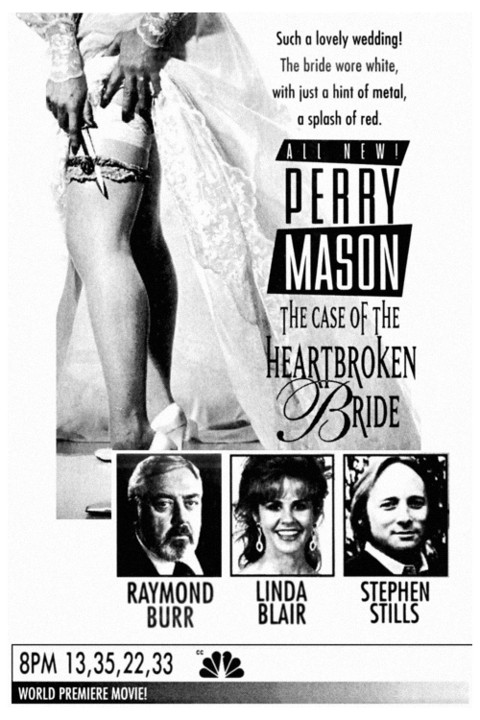
Not giving Perry Mason: The Case of the Heartbroken Bride a unique and memorable story

Last July, when I reviewed Perry Mason: The Case of the Heartbroken Bride, I criticized the movie for its missed creative opportunities. This major flaw made the twenty-third chapter in the Perry Mason movie series lackluster. In my review, I gave two subplot ideas that could have helped Perry Mason: The Case of the Heartbroken Bride obtain a more memorable story. The first is how Hannah, the sister of Kaitlynn’s fiancé, converted her failed music career into a promising legal career. Kaitlynn’s real personality being quite different from her celebrity persona serves as the second subplot idea. Sadly, these ideas weren’t utilized nor did they contribute to the mystery of Perry Mason: The Case of the Heartbroken Bride. The 1992 television film was Perry Mason’s “bad day at the office”.

The “Based on a Book I Haven’t Read Yet” Award

(Movie Based on Source Material I Have Not Yet Read)

An Old-Fashioned Thanksgiving

Louisa May Alcott is best known for her iconic novel, Little Women. But she has written some short stories throughout her career. One of those short stories was An Old-Fashioned Thanksgiving, which was the source material for the 2008 Hallmark Channel movie of the same name. You’d think with how much I adore An Old-Fashioned Thanksgiving’s film adaptation, I would have read the source material by now. But as of late February to early March, 2026, I still have not read Louisa May Alcott’s short story. Hopefully, I can finally check out An Old-Fashioned Thanksgiving this year!

The Nosferatu vs. Dracula Award

(Two Movies That Feel Like You’re Watching the Same One)

From the Mixed-Up Files of Mrs. Basil E. Frankweiler from 1973 and 1995

If you read my review of 1973’s From the Mixed-Up Files of Mrs. Basil E. Frankweiler, you would know this adaptation, as well as the 1995 version, would likely receive the Nosferatu vs. Dracula Award. This is due to both movies sharing a lot of the same strengths and flaws. Even though each version of From the Mixed-Up Files of Mrs. Basil E. Frankweiler does have its differences, it’s not enough to give the films strong differentiations between them. Even though I slightly prefer the 1995 adaptation over the 1973 version, these movies made me feel like I was watching the same film twice.

The Kay’s Costume Party Dress Award

(Best Outfit from a Movie)

Marion’s Angel Costume from Wings of Desire

In my Comparing with the Critics review of Wings of Desire, I complimented the movie’s costume design. I even described one of Marion’s trapeze artist costumes in detail. That costume is the angel costume Marion wore when she was first introduced in Wings of Desire. The craftsmanship and detail that went into creating the costume allowed the costume itself to stand out long after the movie was over. As I said in my review, the exquisiteness of Marion’s costumes, including her angel costume, makes me wish they were shown in color more consistently.

Sally’s MVP Award

(Character Who Left a Memorable, Showstopping Impression)

Rinaldo from The Bride (1985)

Back in June, 2025, when I reviewed The Bride, I proclaimed Rinaldo was the movie’s MVP. So, when it came time to decide who should receive the Sally’s MVP Award, I already knew the perfect winner! From the moment he meets Viktor, Rinaldo genuinely has Viktor’s best interests at heart. He strives to give Viktor a better life than Frankenstein did, even going so far as to educating Viktor on the importance of his name, which means “He will win”. Rinaldo always refers to Viktor as “his friend”. If it wasn’t for Rinaldo, I don’t believe Viktor would have received the “hero’s journey” he did in The Bride. Similar to when I gave Madmartigan the Sally’s MVP Award last year, Rinaldo became The Bride’s MVP because of David Rappaport’s performance and the screenwriting.

The They Deserve an Award Award

(Someone Associated with a Movie Who Deserves Recognition)

Monika Jacobs (for her costume designs in Wings of Desire)

In the past, I would give this award to actors or actresses who gave a performance that was memorably showstopping. But this year, I decided to expand the They Deserve an Award Award to other departments of film-making. That’s because there are other important components of creating a movie besides acting. When I reviewed Wings of Desire, I praised the film’s costume design, specifically pointing out one of Marion’s trapeze artist costumes. I said I wish Wings of Desire’s costume designer, Monika Jacobs, was nominated for, at least, one award. Costume design isn’t just about crafting attire that’s appealing to the eye. It’s also about creating attire that compliments the actor or actress wearing it. Through Marion’s wardrobe in Wings of Desire, Monika achieved these objectives. Even though Marion’s trapeze artist costumes were stunning, her casual and formal attire made Solveig Dommartin look like the best dressed star of Wings of Desire!

Have fun at the movies!

Sally Silverscreen
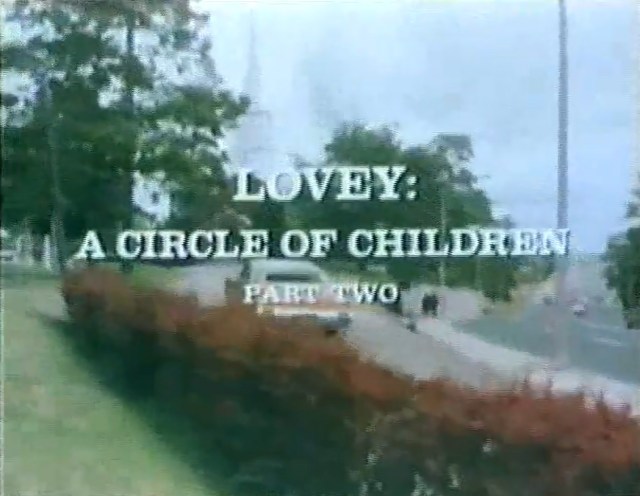
Take 3: Lovey: A Circle of Children, Part II (1978) Review

As I explained in my recent review of A Circle of Children, I’m covering the sequel, Lovey: A Circle of Children, Part II for the Film. Release. Repeat. Blogathon. Because I’ve been meaning to review the 1978 television film since 2022, I believed the blogathon was a great time to finally check the movie out! But as I also mentioned in my review of A Circle of Children, I haven’t found a made-for-tv movie from the 1970s I actually like. Whenever I’ve selected this particular type of film to write about, I find the film itself either fine, ok, or underwhelming. This is one of the reasons why I put “1970s Made-for-TV movie” on my Year-Long Bingo card, so I could, hopefully, find a television movie I enjoy from that decade. When I saw and reviewed A Circle of Children, I thought it was just ok. Will its sequel be better? Let’s begin this review to find out!

Lovey A Circle of Children, Part II title card created by Time-Life Television Productions and CBS

Things I liked about the film:

A smaller cast: In my review of A Circle of Children, I mentioned the film containing a large cast of characters. This is one of the reasons why the audience was forced to either only become familiar with the characters or not getting to know them at all. This flaw became remedied in Lovey: A Circle of Children, Part II! In the 1978 sequel, the cast is much smaller. Even Mary’s class contains fewer students. Because the story has less characters to keep track of, it gives the audience an opportunity to truly get to know the characters. The audience also has more time to spend with characters like Mary’s students and even Mary’s boyfriend, Cal, because of a tightly written script.

Progression that’s written gradually: When I reviewed A Circle of Children, I talked about how Sarah’s sudden achieved progress taking place after being a static character for half the movie felt like it was written into the story for the sake of plot and time convenience. Even though I was happy to see Sarah achieving progress, I wish that progress was gradually woven into the script. It seems like the creative team behind Lovey: A Circle of Children, Part II felt the same way I did, as Hannah’s/Lovey’s progression was gradual. Hannah/Lovey joins Mary’s class as an unruly child who is very unpredictable. But as the film goes on, Mary’s influence takes effect on Hannah/Lovey as she becomes more responsive, less violent, and even participates in class. The smaller cast size I talked about earlier certainly influenced this part of the story. It allowed Hannah’s/Lovey’s progression to receive emphasis instead of competing against other stories. The transformative power of Mary’s teaching abilities is also on full display because of the gradually written progression of Hannah/Lovey.

The dialogue: Like I said in my list of The Best and Worst Movies I Saw in 2025, how well-written the dialogue was in The Chalk Garden allowed me to remember what Laurel said about the term “good morning”. The quality of the screenwriting was also a strength in Lovey: A Circle of Children, Part II! Some of the dialogue in the 1978 movie sounded profound without trying too hard to be philosophical. A great example can be heard during a conversation between Mary and a fellow teacher named Patty. Patty feels discouraged over the lack of progress from her students. Mary reassures Patty that her impact on the students has been positive, reminding Patty how hope comes from believing the children can learn something. Patty then tells Mary, “Yeah, but you can’t mop the floors with hope”. Mary experiences her own period of discouragement after Hannah/Lovey has an angry outburst involving paint. In a voice-over, Mary says, “For a moment, my dreams and plans for Hannah shattered. But paint is only paint and never worth a dream. Besides, a teacher’s dream dies hard”. The two examples I provided show how Mary’s and Patty’s frustrations and concerns were eloquently and thoughtfully written into the script.

The Film. Release. Repeat. Blogathon banner created by Quiggy from The Midnite Drive-In and Hamlette from Hamlette’s Soliloquy

What I didn’t like about the film:

How Hannah was introduced: As I’ve already said in this review, Hannah/Lovey joins Mary’s class as an unruly child who is very unpredictable. However, I found her introduction in Lovey: A Circle of Children, Part II to be distasteful. As Mary walks down the hallway to retrieve Hannah/Lovey, suspenseful music plays over the scene. The music itself sounds as if it came straight out of a horror movie. The reveal of Hannah’s/Lovey’s face was prolonged because of specific camera angles that were utilized. When Hannah’s/Lovey’s face was finally revealed, a frozen close-up shot was presented to intentionally appear frightening. To me, the introduction I described felt sensationalized to the point of being counterproductive of what Lovey: A Circle of Children, Part II was trying to achieve; making the audience feel empathetic toward Hannah/Lovey by looking past her horrific behavior. I truly believe there was a more tasteful way Hannah/Lovey could have been introduced in the story, especially compared to how some of the students were introduced in A Circle of Children.

Doris’ limited involvement in the story: A Circle of Children introduced Doris as the director of the Children’s School for Special Education. Though she appeared in only a handful of scenes, Doris’ role was pivotal as she literally and figuratively opened the door for Mary to the world of Special Education. Doris was one of the few characters from the first movie to return in the sequel. But she was given even more limited involvement in the second film. While she was still the director of the Children’s School for Special Education, her role in Mary’s story had a reduced significance. I wish Doris received more to do in Lovey: A Circle of Children, Part II because I think she could have made a bigger impact.

Lack of further progression: I said earlier in this review how Hannah’s/Lovey’s progression was written gradually into the story. Even though this was one of the movie’s strengths, I didn’t like how there was a lack of further progression for two of Mary’s students. While Hannah/Lovey was improving her reading skills and Brian (from the first movie) was learning how to board the bus by himself, Rufus and Jamie were at a standstill in their education. With a smaller cast size I talked about in this review, there should have been room in the script to give Jamie and Rufus at least a small victory. At the end of Lovey: A Circle of Children, Part II, Mary reveals through a voice-over what happened to her students. However, not showing Rufus and Jamie achieving further progression in the movie was a missed opportunity.

Preschool classroom image created by Vectorpocket at freepik.com. <a href=”https://www.freepik.com/free-photos-vectors/background”>Background vector created by vectorpocket – http://www.freepik.com</a>. Image found at freepik.com.

My overall impression:

Sometimes, a sequel ends up becoming better than its predecessor. Lovey: A Circle of Children, Part II just so happens to be one of those films! Some of the flaws of A Circle of Children were improved upon in the second chapter, such as containing a smaller cast and the script featuring a gradual progression for Hannah/Lovey. The sequel even had its own unique strengths from its predecessor, like how well-written the dialogue was. But despite these positive aspects, Lovey: A Circle of Children, Part II did have its flaws. I believe there are more respectful ways Hannah/Lovey could have been introduced into the story, as her debut in the film was too sensationalized for my liking. I not only wish Jamie and Rufus had received further progression in the movie, I also wish Doris was given a greater significance in the script. But similar to what I said in my review of A Circle of Children, I’m grateful Lovey: A Circle of Children, Part II exists at all. The 1978 film gives the audience a glimpse into what Special Education was like in the 1970s. It’s a made-for-tv movie that was spared from getting lost to time as well.

Overall score: 7.2 out of 10

Have you seen Lovey: A Circle of Children, Part II? Are there any made-for-tv movies from the 1970s you’d like to see me cover on 18 Cinema Lane? Please tell me in the comment section!

Have fun at the movies!

Sally Silverscreen
Take 3: A Circle of Children (1977) Review

Back in 2022, I wrote a list of the Top 10 Movies I’d Love to Review. Each chosen film was categorized based on how accessible they are. Reflecting on this list, I realized that as of early January 2026, the only more “accessible” titles not yet covered on my blog were A Circle of Children and Lovey: A Circle of Children, Part II. With the Film. Release. Repeat. Blogathon (an event about remakes and sequels) on the horizon, I finally found a reason to review the 1978 sequel. However, I’ve never seen its predecessor, A Circle of Children. So, in preparation for my review of Lovey: A Circle of Children, Part II, I’m also writing about the first film. As I said in my list of the Top 10 Movies I’d Love to Review, both A Circle of Children and Lovey: A Circle of Children, Part II are based on the true story of a teacher named Mary MacCracken. Like I also said in my list, Mary’s books were not only the source material for these movies, Mary was also one of the screenwriters for both films. But over these eight years of 18 Cinema Lane’s existence, I haven’t found a made-for-tv movie from the 1970s I actually like. Will A Circle of Children change that? Let’s begin the first movie review of 2026 to find out!

A Circle of Children (1977) title card created by Edgar Scherick Productions, 20th Century Fox Television, and CBS

Things I liked about the film:

The acting: In A Circle of Children, the protagonist, Mary, visits the mother of a student named Brian O’Connell. During Mary’s conversation with Mrs. O’Connell, Brian’s mother consistently has a worn look on her face. Not only did Mrs. O’Connell’s eyes look heavy, her mouth was set in a straight line as well. Her voice almost sounded monotone, lacking emotion over her situation. Though she admits to Mary that she’s tired, Mrs. O’Connell was able to express how tired she was without relying too much on dialogue. That’s because Judy Lewis, the actress who portrayed Mrs. O’Connell, effectively utilized vocal inflection, facial expression, and even her eyes to emphasize what her character was going through.

Speaking of Brian O’Connell, I want to talk about Matthew Labyorteaux’s performance! I am familiar with his portrayal of Albert on Little House on the Prairie. Therefore, Matthew’s acting capabilities are already known to me. Mary teaching Brian to speak presents a great display of Matthew’s acting talents. When Mary is using a tape recorder in order to help Brian learn to speak, Brian has a blank look on his face. But when a teacher named Dan sings a song to the students, he offers the microphone to Brian. This time, Brian has a determined look on his face, as he intensely looks at the microphone and makes a great effort of trying to repeat Dan’s song. The next scene shows Brian receiving a second chance to speak into the microphone. His eyes become really wide and a smile spreads across his face, excited by the opportunity given by Mary and Dan. As I watched A Circle of Children, it made me believe Little House on the Prairie’s creative team chose wisely when they cast Matthew as Albert!

Since A Circle of Children is based on the true story of Mary MacCracken, I must discuss Jane Alexander’s portrayal of Mary. Throughout the movie, Jane’s performance brought empathy and relatability to her role. One great example happens when Mary encourages Brian to say his name. Brian puts together a puzzle resembling a short story he was reading earlier in the film. Because one of the characters in that story was named Brian, Mary uses this fact to motivate Brian to say his name for the first time since coming to the Children’s School for Special Education. When this plan fails, Mary develops a look of defeat on her face. Her mouth is turned into a frown and her eyes present a mixture of sadness and concern. This medium shot of Mary’s face not only says so much without saying anything at all, it also shows the audience how much she cares about the students, especially Brian.

The chemistry of Mary and Dan: When Mary first visits the Children’s School for Special Education, she meets a teacher named Dan. Over the course of A Circle of Children, Dan and Mary develop a friendship that is shown in only a handful of scenes. Despite this, their chemistry highlights how the two have become kindred spirits, bringing thoughtfulness and understanding to their friendship. The chemistry between Mary and Dan works because the on-screen chemistry between Jane Alexander and David Ogden Stiers (the actor who portrays Dan) works! The strength of their acting abilities allows David and Jane to effectively present a friendship that looked and felt believable. Because of how well they seemed to get along, I was hoping Dan and Mary’s friendship would gradually become a romance. Mary and Dan’s chemistry was such a pleasant surprise in A Circle of Children!

Creating a complex character: One of the teachers at the Children’s School for Special Education is Helga. At first, she and Mary don’t see eye to eye due to how Helga treats the students. Some examples include making a child plunge the toilet and intentionally hiding a young girl’s (literal) security blanket. But as the story goes on, Mary, as well as the audience, learns Helga actually has good intentions for the students. In fact, she wants the children to succeed just as much as Mary does. It would have been so easy for A Circle of Children’s creative team to present Helga as a one-dimensional mean teacher. Instead, the screenwriting and Rachel Roberts’ performance created a character that was complex, representing how, sometimes, approaches to education aren’t straightforward. Helga’s complexity made her a memorable character as well!

Preschool classroom image created by Vectorpocket at freepik.com. <a href=”https://www.freepik.com/free-photos-vectors/background”>Background vector created by vectorpocket – http://www.freepik.com</a>. Image found at freepik.com.

What I didn’t like about the film:

Only becoming familiar with characters: A Circle of Children consists of a large cast of characters. That’s because most of the characters are students from the Children’s School for Special Education. But A Circle of Children has a run-time of an hour and thirty-six minutes, leaving the audience with not enough time to truly get to know the characters. The film’s run-time actually forces the audience to either only become familiar with the characters or not getting to know them at all. Had A Circle of Children received a longer run-time, more opportunities to show Mary getting to know her students and help them could have been provided in the story.

Scene transitions that weren’t smooth: If a movie features smooth transitions between scenes, they can not only help the audience process the story unfolding, they can also maintain the film’s overarching pace. But in the case of A Circle of Children, choppy scene transitions sometimes created emotional whiplash. In one glaring example, Mary and her husband, Larry, confess to their daughter, Liz, of their recent separation. This confession is so upsetting, Mary herself appears to be on the verge of crying. However, the very next scene shows Mary being interviewed for a teaching aide position at the Children’s School for Special Education. This scene is intended to be less sad than the scene I previously described. To me, the transition between these two scenes felt jarring because the transition itself was choppy and abrupt.

Solutions happening for the sake of plot and time convenience: Within the first fifteen minutes of A Circle of Children, a young girl named Sarah is enrolled at the Children’s School for Special Education. According to Sarah’s mother, Sarah is unable to stand or walk. She’s also so attached to a blanket that she continuously screams at the top of her lungs if the blanket is taken away from her. For half the movie, though, Sarah is a static character. She’s either shown lying on the floor sucking her thumb or screaming because she can’t find her blanket. But at a Christmas party that takes place a little more than halfway through the movie, Sarah not only randomly starts walking, she also willingly trades her blanket for a doll. While I was happy to see Sarah achieving progress, I wish this progress was gradually woven into the script. Because Sarah suddenly achieved progress after being a static character for half the movie, the moment itself felt like it was written into the story for the sake of plot and time convenience.

String of musical notes image created by Freepik at freepik.com. <a href=’https://www.freepik.com/free-vector/pentagram-vector_710290.htm’>Designed by Freepik</a> <a href=”https://www.freepik.com/free-photos-vectors/background”>Background vector created by Freepik</a>. Image found at freepik.com. 

My overall impression:

In the introduction of this review, I said I haven’t found a made-for-tv movie from the 1970s I actually like. Sadly, A Circle of Children will not be the film to change that. The 1977 production isn’t a bad movie. In fact, it has its merits, especially when it comes to the acting performances. But I found the story itself to be too “slice of life” for my liking. Plus, there were other flaws that stood out to me, such as the run-time and choppy scene transitions. Looking back on A Circle of Children, however, I will admit my gratitude for its existence at all. This movie is like a time capsule when it comes to Special Education, giving viewers a glimpse into how this specific topic was approached in the 1970s. Though the film only shares one teacher’s perspective, it does express themes of helping others reach their full potential, working together to achieve a common goal, and not giving up on others. The creative team behind A Circle of Children definitely had their hearts in the right place. Now that I’ve finally seen this movie, it’ll be interesting to see where the story in Lovey: A Circle of Children, Part II goes from here.

Overall score: 6 out of 10

Have you seen A Circle of Children? Are you looking forward to my review of Lovey: A Circle of Children, Part II? Let me know in the comment section!

Have fun at the movies!

Sally Silverscreen

The Best and Worst Movies I Saw in 2025

2025 has been a strange year for 18 Cinema Lane. That’s because most of the movies I’ve seen and/or reviewed this year have been ok or fine. After seeing so few good or bad films in 2025, I wasn’t able to create separate top ten best and worst movies lists like in years past. So, instead, I wrote a combined list where I discuss the movies I saw this year that I liked and didn’t like. What’s also different about this year’s end of year list is how there are no Honorable Mentions, due to how few good movies I saw in 2025. But there are two Dishonorable Mentions; Recipe for Murder and Black Bag. The only reason why these films are considered Dishonorable Mentions is because I DNFed (did not finished) both of them. For this year’s list, I will start talking about 2025’s worst movies then end the list by talking about 2025’s best movies. If I reviewed any of the movies on my list, I will provide a link to those reviews.

Worst Movies I Saw in 2025

7. Stalked by My Amish Boyfriend

Lifetime movies, like Hallmark movies, are not created equally. The 2024 film, Stalked by My Amish Boyfriend, is just one example of this statement. While it was interesting to see and hear how information about Amish culture was woven into the story, that part of the script couldn’t overshadow the major flaws of the movie. I was frustrated by how some characters would make dumb decisions simply for the sake of making dumb decisions. Stalked by My Amish Boyfriend was also, in my opinion, a mostly forgettable film. This is the reason why the 2024 picture is at the bottom of my list.

6. She Wore a Yellow Ribbon

As I said in my review of She Wore a Yellow Ribbon, I expected the 1949 movie to be an action-packed, suspenseful, and even intriguing story. What I got instead was an underwhelming film that prioritized presentation over product. I praised She Wore a Yellow Ribbon for its pretty looking scenery. But a photogenic background was unable to save the film from its weak script. A limited amount of action took away a lot of the story’s suspense and intrigue. It also doesn’t help how I only became familiar with most of the characters instead of truly getting to know them. She Wore a Yellow Ribbon is one of two movies I saw this year that almost made me fall asleep.

Take 3: She Wore a Yellow Ribbon Review

5. Kind Hearts and Coronets

Kind Hearts and Coronets is the second film I saw in 2025 that almost made me fall asleep. But the flaws in this movie greatly differ from She Wore a Yellow Ribbon’s emphasis on scenery over substance. Despite Kind Hearts and Coronets being classified as a “comedy”, I didn’t laugh at all while watching the film. I also had no idea what the story’s moral was supposed to be, due to the moral being treated as an afterthought. Like I said in my Kind Hearts and Coronets review, I’m not entirely sure what this movie was trying to say. That lack of clarity not only makes the movie underwhelming, it also makes the movie confusing.

Take 3: Kind Hearts and Coronets Review

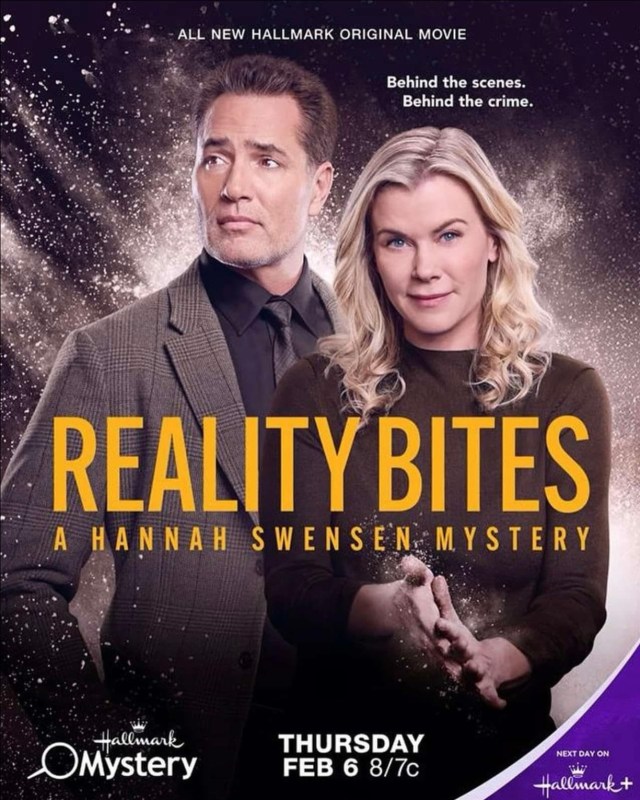
4. Reality Bites: A Hannah Swensen Mystery

Having Reality Bites: A Hannah Swensen Mystery on my worst movies of the year list and finding Pie To Die For: A Hannah Swensen Mystery slightly better than its predecessor feels like déjà vu. That’s because One Bad Apple: A Hannah Swensen Mystery was placed on my worst of 2024 list, with its follow-up, A Sprinkle of Deceit: A Hannah Swensen Mystery, being slightly better. Though Reality Bites: A Hannah Swensen Mystery had its own set of flaws. Forced humor felt straight out of a sit-com, especially when Delores was involved in the story. As I said in my review, I wondered why a laugh track was missing. Both of the film’s mysteries contained such a small sense of urgency, the run-time felt a bit drawn-out. The story’s overall intrigue was weaker due to this flaw. If the Murder, She Baked/Hannah Swensen series continues in 2026, I’d like to see the quality become more consistent.

Take 3: Reality Bites: A Hannah Swensen Mystery Review

Reality Bites: A Hannah Swensen Mystery poster created by Hallmark Movies & Mysteries

3. Perry Mason: The Case of the Heartbroken Bride

Perry Mason: The Case of the Heartbroken Bride is the most disappointing movie I saw in 2025. There were so many missed creative opportunities in this story, the film itself was under-cooked and uninspired. The movie was sometimes boring because of the lack of urgency. Seeing Perry, Della, and even Kevin meanderingly take their time building a legal case sucked the energy out of the story. I said in my review how any movie series boasting over ten titles was going to have at least one “bad day at the office”. I also said in my review how Perry Mason: The Case of the Heartbroken Bride was one of those days for the fictional detective.

Take 3: Perry Mason: The Case of the Heartbroken Bride Review

2. My Gal Sunday

This 2014 movie is a perfect example of Hallmark putting the cart before the horse. Instead of creating a solid stand-alone film that could have naturally led to more chapters, the network put more effort into trying to build the foundation for a potential series. Parts of this story didn’t make sense. One glaring example is when an itinerary shows the protagonist couple’s plans of going dancing at 11 p.m. on Saturday then going to church at 8 a.m. on Sunday, begging the question of when these characters were supposed to go to sleep. The on-screen chemistry between Cameron Mathison and Rachel Blanchard made their characters, Henry and Sunday, feel less like a married couple and more like a couple who are about to start dating. It’s, honestly, a shame My Gal Sunday wasn’t a stronger picture. Mystery stories about married couples are uncommon from Hallmark, so this 2014 story could have offered something unique to the network’s table.

1. Mystery by the Book

This film actually has two titles; Mystery by the Book and Key to Love. However, I saw the movie on Great American Family under the title, Mystery by the Book. Therefore, I will be referring to that title for the sake of my list. For a movie with the word ‘mystery’ in the title, the story’s mystery is an afterthought, which makes the title itself very misleading. Instead, the characters develop other priorities, like playing dress-up and tapping glasses four times during one dinner date. Parts of the script don’t make sense, like how the protagonists find a treasured antique key. Mystery by the Book is even so bad, it’s, at times, unintentionally funny. A perfect example is when Corey Sevier’s character, Josh, is looking for a set of keys, only to find a set of keys seconds later on a key hook labeled “Keys”. Thank goodness Great American Family’s Ainsley McGregor Mysteries series is growing stronger in quality. But if the network wants to expand their mystery library, they have a long road ahead of them.

Perry Mason: The Case of the Heartbroken Bride poster created by Fred Silverman Company, Viacom Productions, Dean Hargrove Productions, National Broadcasting Company, and Viacom

Best Movies I Saw in 2025

8. The Phantom of the Opera (1925)

I’m still shocked by how the 1925 version of The Phantom of the Opera was never included on any of American Film Institute’s 100 movies lists, even months after I reviewed the film. Looking at everything the movie has to offer, I believe there is an argument to be made for its inclusion on, at least, one of those lists. Lon Chaney’s performance alone highlights how make-up, body language, and even the eyes can enhance an acting performance. Each area of the Opera House was presented through color coded film, which gave the movie a unique identity. What also helps 1925’s The Phantom of the Opera standout is how the cinematic lens showed the audience the expansive nature of storytelling. This is why, in my opinion, the story of the Phantom and his opera house is better suited for film than the stage.

Take 3: The Phantom of the Opera (1925) Review (Silent Pioneers Double Feature Part 2)

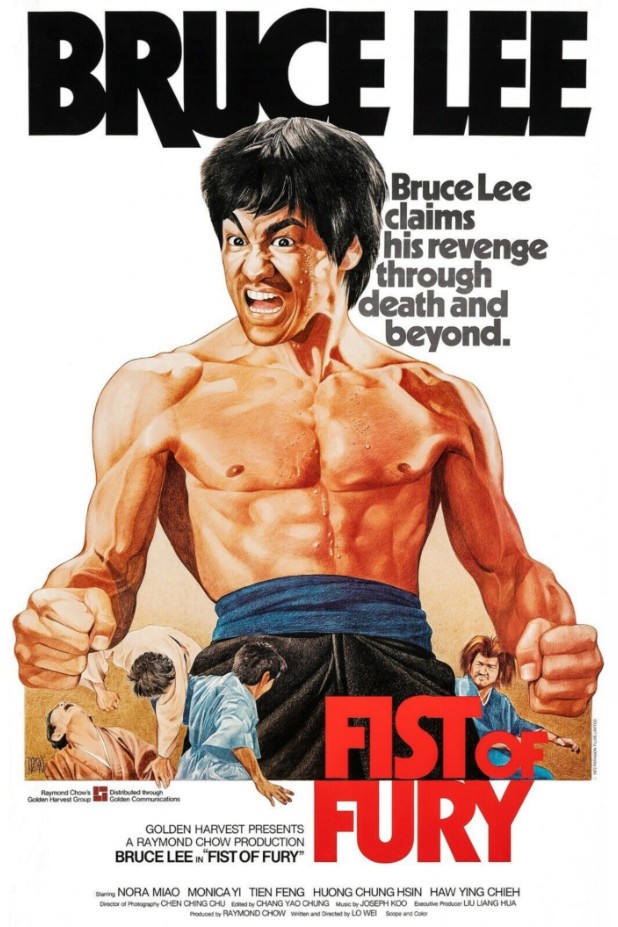
7. Fist of Fury

For an introduction to Bruce Lee’s filmography, I think Fist of Fury is a good one! The martial arts choreography was definitely one of the strengths of this film. But the movie contained other aspects I liked as well. Bruce’s portrayal of Chen is a reason why Fist of Fury was so memorable. Clever writing and higher stakes woven into the script create a story that was clever, suspenseful, and intriguing. Because of how much I enjoyed watching Fist of Fury, I hope to check out more of Bruce’s movies in 2026!

Take 3: Fist of Fury Review

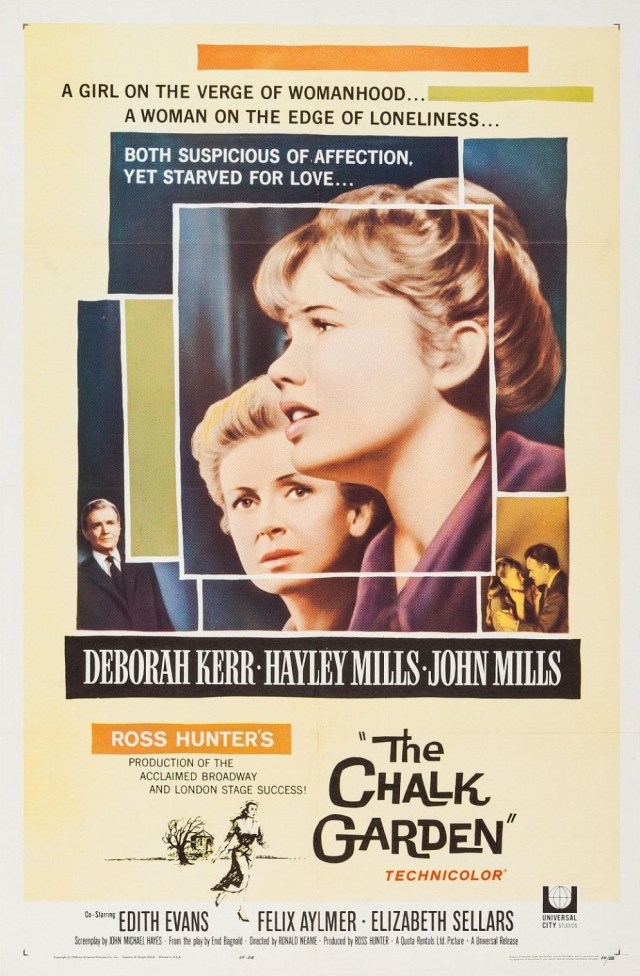
6. The Chalk Garden

Even though I reviewed this film back in February, I still think about what Laurel said about not liking being told “good morning”. How well-written the dialogue was is one of the reasons why I remember Laurel saying, “what is a good morning to someone else is rarely a good morning to me”. Speaking of Laurel, Hayley Mills’ utilization of animated expressions and a variety of emotions helped the audience see how complex her character truly is. But Hayley is not the only actress whose performance was strong. The Chalk Garden is a movie where every actor and actress does a great job with the acting material they were given. The 1964 presentation is part character study, part mystery that works!

Take 3: The Chalk Garden Review + 505 Follower Thank You

5. The Night Before the Night Before Christmas

The Night Before the Night Before Christmas is another movie I saw (and reviewed) this year where it was difficult to choose a favorite acting performance. The strength of the cast’s acting abilities not only made watching the story unfold more enjoyable, it even helped characters become more likable. Emphasizing the theme of giving painted a portrait of Santa I hadn’t really thought of before; someone who has a reputation for giving. It was also a clever way to remind viewers of one of the Christmas season’s important components. How Christmas activities were included in the script was a breath of fresh air as well. As I said in my review, I wish Hallmark went back to creating titles that didn’t rely too much on a formula, tropes, and/or cliches.

Take 3: The Night Before the Night Before Christmas Review + 515 Follower Thank You

The Chalk Garden poster created by Quota Rentals Limited, Ross Hunter Productions, and Universal Pictures

4. Ben-Hur: A Tale of the Christ (1925)

It’s amazing how two movies on this year’s best films list not only turned 100 years old, they also utilized color coded film to their advantage! But what sets Ben-Hur: A Tale of the Christ apart from The Phantom of the Opera is how title cards went above and beyond in Ben-Hur: A Tale of the Christ due to how well-written they were. Another aspect that distinguishes Ben-Hur: A Tale of the Christ is the cinematography’s capturing of the scope of the film. Long and medium shots effectively showcased a world that looked and felt larger than life. The visual presentation of the movie was certainly impressive. However, Ben-Hur: A Tale of the Christ found a balance between style and substance!

Take 3: Ben-Hur: A Tale of the Christ (1925) Review

3. The Man Who Invented Christmas

Despite being the most recently reviewed movie on my list, The Man Who Invented Christmas is one of the best biopics I’ve ever seen! How the creation of A Christmas Carol lent itself to exploring Charles Dickens’ life story brought a unique element to the biopic genre. Watching Charles’ iconic tale come to live, literally and figuratively, provided the film a creative and memorable identity. The “Easter Eggs” related to A Christmas Carol sprinkled throughout the story was an engaging way to stay invested in the movie. The Man Who Invented Christmas is a solid Christmas title that would make a good double feature with I Heard the Bells.

Take 3: The Man Who Invented Christmas Review

2. The Wild Robot

I first talked about The Wild Robot in my list of The Top Ten Best Stand-Alone Films. Even though I published that list back in March, the 2024 animated movie has still held up as one of the best titles I saw this year! Like I said in The Top Ten Best Stand-Alone Films list, the animation was gorgeous, appearing as a blend of paintings and priceless photographs. A pleasant surprise was how much emotional depth the story contained. What adds a sense of timelessness to the production was the abundance of good messages and themes. While it’s too early to say how The Wild Robot will stand in the test of time, I think it has potential.

1. An Old Fashioned Thanksgiving

I actually revisited this film in preparation for my review of An Old Fashioned Christmas. Watching An Old Fashioned Thanksgiving again after so many years reminded me why I love this movie! Attention to detail and historical accuracy created the illusion of taking the audience to another time and place. How the messages and themes of the Thanksgiving holiday were woven into the story allow An Old Fashioned Thanksgiving to truly embrace the holiday itself. The more I think about the 2008 movie, it makes me surprised it wasn’t a Hallmark Hall of Fame presentation. My belief is due to An Old Fashioned Thanksgiving containing elements that would likely be found in a Hallmark Hall of Fame project, such as strong acting performances and a historical fiction lens.

The Man Who Invented Christmas poster created by The Mazur Kaplan Company, The Mob Film Company, Ingenious Media, Nelly Films, Parallel Films, Rhombus Media, and Bleecker Street Media

Have fun in 2026!

Sally Silverscreen

Take 3: Fist of Fury Review

Years ago, on 18 Cinema Lane, I admitted I had never seen any of Bruce Lee’s films. Since admitting that, I wanted to find the perfect opportunity to review a movie from his filmography. Now, I finally received that opportunity because of one man. In one of his interviews, Stefan “Princ” Zdravković said he watched Bruce Lee’s films when he was a kid. Ever since I saw that interview, I made a promise to review one of Bruce’s movies on Princ’s birthday. When I discovered Princ’s birthday was on September 29th, I knew I found a chance to fulfill that promise. Therefore, for this review, I have selected 1972’s Fist of Fury! Martial arts films are rarely covered on 18 Cinema Lane. Despite this, the ones I’ve seen (and reviewed) have been enjoyable. So, will I find Fist of Fury enjoyable as well? Read my review to find out!

Fist of Fury poster created by Golden Harvest Company, Nova Media, and Legend Films

Things I liked about the film:

The acting: Bruce Lee has earned a good reputation for his mastery of marital arts skills. However, based on my experience watching Fist of Fury, I believe Bruce is a stronger actor than most people give him credit for. A scene taking place after Huo Yuanjia’s funeral is the perfect example. Bruce’s character, Chen, is devastated by the loss of his martial arts teacher. He sits in silence and bears a serene yet sad look on his face as he tries to shut out the world around him. But as soon as his peers bring up how Huo Yuanjia died of pneumonia, Chen snaps into anger, shouting in denial with a fierce look in his eyes. This quick transition of emotions was flawless, making Bruce’s performance memorable! Another strong acting performance in Fist of Fury came from Ping-Ou Wei. Portraying an interpreter for a Japanese martial arts school named Wu, Ping-Ou effectively showcased a character that was smarmy and dislikable. This was achieved through vocal inflections, expressive eyes, and even tilts of the head. I actually looked forward to seeing Ping-Ou’s performance because it was that good!

Martial arts choreography: When I choose to watch a martial arts film, especially one starring Bruce Lee, I expect to see scenes featuring really good martial arts choreography. I can honestly say the choreography in Fist of Fury is excellent! All the execution of the movements are sharp and precise. Each duel looked like an intricate and calculated dance, with every opponent delivering strength and agility. Even the incorporation of swords and nunchucks showed how opponents use strategy to gain the upper hand. It also helps how each duel Chen battled in increased in intensity, building up to the movie’s climax. With everything I said, all the martial arts scenes maintained the excitement within the story!

Clever writing: Toward the beginning of Fist of Fury, Wu and two students from a Japanese martial arts school deliver a hand-written threat to Chen and his peers at the Chinese martial arts school. One of the students who accompanied Wu says if Chen defeats the Japanese martial arts school students, he’ll eat his words. Later in the film, when Chen goes to the Japanese martial arts school, he does defeat every student there. He then rips up the hand-written threat his school received earlier and forces two of the Japanese martial arts school students to, literally, eat their words. This is just one example of how some of the writing in Fist of Fury was clever!

Higher stakes: As I mentioned earlier in this review, Chen’s martial arts teacher, Huo Yuanjia, passed away. But Chen believes foul play was involved. Throughout the story, he vows to find the truth about what happened to his teacher. Meanwhile, a Japanese martial arts school wants to assert their dominance over the Chinese martial arts school. They go so far as to destroy property and threaten to close the Chinese martial arts school down. These parts of the story created higher stakes, giving the audience a reason to care about Chen and his wellbeing, as well as that of his peers. The higher stakes in Fist of Fury also brought suspense and intrigue to the overall presentation!

Birthday party set-up image created by Freepik at freepik.com. <a href=”https://www.freepik.com/free-photos-vectors/food”>Food photo created by freepik – http://www.freepik.com</a>. Image found at freepik.com.

What I didn’t like about the film:

The sporadic incorporation of the mystery: Like I brought up in my point about Fist of Fury’s higher stakes, Chen vows to find the truth about what happened to his teacher, as he believes foul play was involved. This mystery was one of the most intriguing parts of the story. But, unfortunately, it was sporadically incorporated into the movie. That creative decision led the mystery’s reveal to be somewhat underwhelming. It also made the mystery itself seem, at times, forgotten about. I wish the mystery had a more consistent presence in Fist of Fury.

The audio: I recognize technology in the 1970s was very different from the technology of today. However, a major flaw of Fist of Fury I couldn’t ignore was the audio. I had to turn up my television’s volume because it was difficult to understand what the characters were saying. They, sometimes, sounded muffled, almost like lines were recorded in a library and added in during the film’s post-production phase. Since this is my first time watching any of Bruce Lee’s films, I don’t know if the audio has been an issue in his other movies?

Introducing a character toward the end of the film: Petrov is a Russian martial artist who is friends with the administration at the Japanese martial arts school. Portrayed by Robert Baker, Petrov also performed impressive feats, like bending metal. Even though Petrov was an interesting character, I didn’t like how he was introduced toward the end of the film. This creative decision prevented him from making a bigger impact on the story. In my opinion, if Petrov had been written out of Fist of Fury, it wouldn’t have made much difference.

Martial arts image created by Freepik at freepik.com. <a href=”https://www.freepik.com/free-photos-vectors/red”>Red vector created by freepik – http://www.freepik.com</a>. Image found at freepik.com. 

My overall impression:

Like I said in this review’s introduction, I admitted I had never seen any of Bruce Lee’s films. So, for an introduction, I’d say Fist of Fury is a good one! Yes, the martial arts choreography was impressive. But what I also liked about the 1972 movie was how engaging the story itself was. While I wish the mystery had a more consistent presence in the script, it did provide the film with intrigue and suspense. The mystery also provided the characters with higher stakes to deal with. I not only thought some of the writing was clever, I also liked the acting performances, especially Bruce’s portrayal of Chen. In fact, Bruce’s performance made watching Fist of Fury a memorable and enjoyable experience! For me, 2025 has become a year where I’ve gone out of my way to check out movies I’ve been meaning to see. So, with that said, I’m glad I finally got to see at least one of Bruce Lee’s films!

Overall score: 7.7 out of 10

Have you seen Fist of Fury? Would you like to see more of Bruce Lee’s films reviewed on 18 Cinema Lane? Let me know in the comment section!

Have fun at the movies!

Sally Silverscreen
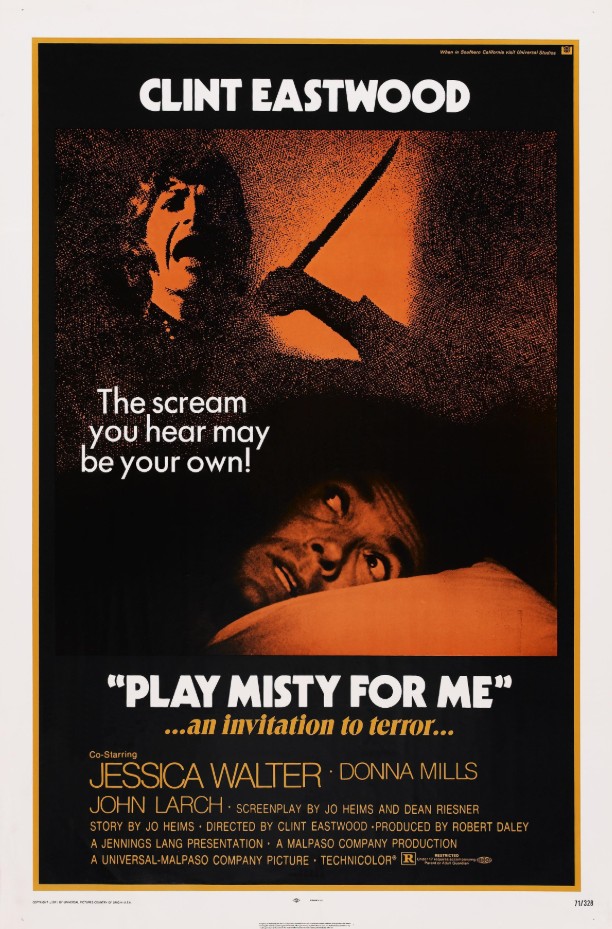
Take 3: Play Misty for Me Review

August’s theme for Genre Grandeur is “Eastwood connected Movies (Clint or his progeny in any capacity)”. As soon I discovered this month’s selected theme, I immediately knew which movie I would choose! For years, I wanted to check out the 1971 film, Play Misty for Me. This is because I had heard Play Misty for Me is the precursor to Fatal Attraction. Since I have seen the 1987 movie, I was curious to see how many similarities or differences Play Misty for Me and Fatal Attraction shared. With this month’s Genre Grandeur theme, I am finally getting that chance! By writing about Play Misty for Me, this is the first time I’m reviewing any of Clint Eastwood’s movies on 18 Cinema Lane. I am familiar with Clint as an actor, so I knew the types of roles he’s typically known for. Therefore, choosing to review Play Misty for Me as the first film of Clint’s covered on my blog is interesting, as it’s quite different from the westerns and action pictures he has usually starred in.

Play Misty for Me poster created by Universal Pictures, Jennings Lang, and The Malpaso Company

Things I liked about the film:

The acting: While I liked the acting as a whole in Play Misty for Me, I have to highlight Clint Eastwood’s and Jessica Walter’s performance. This is because their characters were given the most screen time. Throughout his film career, Clint has gained a reputation for portraying tough, unbreakable heroes. That reputation has been a result of starring in films from the western genre and in titles like Sudden Impact. But in Play Misty for Me, Clint’s character, Dave, adopted a very different persona. The radio disc jockey carries a suave personality with a hint of gentleness. In a great example when Jessica’s character, Evelyn, is restocking Dave’s refrigerator in preparation for dinner, Dave explains to Evelyn how he already has dinner plans. His explanation, however, is calm, which puts Evelyn at ease. Dave’s kind tone of voice, the understanding look in his eyes, and even the relaxed look on his face shows how he isn’t mad at Evelyn. Clint’s versatile acting abilities effectively portray how easy it is to fall in love with Dave!

As I just mentioned in this review, Jessica Walter portrays Evelyn. What I liked about her performance was her ability to seamlessly adopt different emotions. One perfect example is when Evelyn and Dave are having a conversation outside. Before Evelyn leaves Dave’s house, her attitude is friendly. A smile is painted on her face and her personality seems bubbly. But when a neighbor comes outside to complain about the noise, Evelyn immediately becomes very angry. She yells at the neighbor and her entire demeanor is tense. As soon as the neighbor leaves, Evelyn goes back to being friendly like nothing unusual had taken place. Jessica’s ability to seamlessly adopt different emotions was consistent throughout Play Misty for Me. This acting strength made Evelyn an unpredictable character.

The scenery: The biggest pleasant surprise in Play Misty for Me was the scenery! Filmed in Monterey and Carmel, California, the 1971 film features a lot of scenes showcasing the ocean and its surrounding landscape. A perfect example of how photogenic the scenery is can be seen when Dave and Tobie are on a date. One shot proudly displays the ocean at sunset. An orange and yellow sky is met with calm waters shimmering in blue, periwinkle, and lavender. In the foreground, a nearby tree, the edge of a cliff, and the characters’ silhouettes are shadowed, which are contrasted against the lighter colors of the sea. To me, this was one of the most beautiful shots in Play Misty for Me!

The incorporation of jazz music: In movies classified as “psychological thrillers”, the soundtrack primarily consists of suspenseful orchestral music to increase the suspense within that story. The creative team behind Play Misty for Me decided to take a different approach. Jazz tunes provide the main musical sound in the 1971 movie. This is not only because Dave works at a jazz radio station, he also attends a jazz concert. The sounds of this particular music genre invoke a sense of maturity and sophistication. That sophistication and maturity were woven into Play Misty for Me, which allowed the story to be taken seriously. Jazz music also pairs nicely with the oceanic scenery I talked about earlier in this review. The rhythmic movements of the waves and the steady notes of the music create a visual and auditory paradise!

String of musical notes image created by Freepik at freepik.com. <a href=’https://www.freepik.com/free-vector/pentagram-vector_710290.htm’>Designed by Freepik</a> <a href=”https://www.freepik.com/free-photos-vectors/background”>Background vector created by Freepik</a>. Image found at freepik.com. 

What I didn’t like about the film:

A more annoying antagonist: Alex, from Fatal Attraction, is one of the scariest antagonistic characters in film history. While she is emotionally unstable, her attempts to infiltrate Dan’s life are calculated and intentional. A classic example is when Dan discovers the fate of his daughter’s pet rabbit. When I watched Play Misty for Me, Evelyn came across as more annoying than scary. That’s because her efforts to infiltrate Dave’s life are sporadic, whiny, and desperate. These factors caused me to not take Evelyn as seriously as Alex when it comes to being an antagonist.

Inconsistent suspense: Like I said in this review’s introduction, I have heard Play Misty for Me is the precursor to Fatal Attraction. Though it’s been years since I’ve seen the 1987 movie, I remember the story’s suspense being consistent. With all that said, I believed the suspense in Play Misty for Me would be consistent as well. Unfortunately, I was proven wrong. The suspense of Play Misty for Me was sparingly incorporated, only appearing in certain moments of the story. Most of the film features mundane moments with low energy, such as Tobie and Dave’s date, which lasts for about five minutes. That creative decision caused Play Misty for Me to lack a strong amount of adrenaline and intrigue.

A drawn-out film: According to IMDB, Play Misty for Me has a run-time of an hour and forty-two minutes. To me, though, the film felt longer than its run-time. This feeling was the result of some scenes being drawn out longer than necessary. Earlier in this review, I mentioned Dave attending a jazz concert. The scene featuring the concert lasted approximately five minutes. I mentioned Tobie and Dave’s date lasting about five minutes as well. Had these scenes been trimmed down to maybe three minutes or less, more time could have been spent providing Play Misty for Me with more suspenseful moments.

Recording studio image created by Senivpetro at freepik.com. Music photo created by senivpetro – www.freepik.com

My overall impression:

In my review’s introduction, I said I heard Play Misty for Me is the precursor to Fatal Attraction. Now that I’ve seen both movies, I can honestly say I’d prefer Fatal Attraction over Play Misty for Me. From what I remember of the 1987 film, the story’s suspense is consistent. Plus, Alex is a much scarier antagonist than Evelyn. Play Misty for Me contains flaws like inconsistent suspense and the film itself being drawn out. However, the 1971 movie does have its merits. I liked the acting performances, especially those from Clint Eastwood and Jessica Walter. The scenery was the biggest pleasant surprise of the film. Incorporating jazz music was an interesting approach to the psychological thriller genre, giving the story a sense of maturity and sophistication. With everything I’ve been saying, Play Misty for Me is, in my opinion, just ok.

Overall score: 6 out of 10

Have you seen Play Misty for Me? Are there any projects from Clint Eastwood’s or Jessica Walter’s IMDB filmography you’d like to see me cover on 18 Cinema Lane? Let me know in the comment section!

Have fun at the movies!

Sally Silverscreen

Take 3: From the Mixed-Up Files of Mrs. Basil E. Frankweiler (1973) Review

All the way back in 2019, I reviewed the 1995 adaptation of From the Mixed-Up Files of Mrs. Basil E. Frankweiler. After I shared my thoughts on the film, Gill, from Realweegiemidget Reviews, recommended the 1973 adaptation, which is sometimes titled The Hideaways. Whenever Virginie, from The Wonderful World of Cinema, has hosted the Ingrid Bergman Blogathon, I have wanted to check out the 1973 adaptation, due to Ingrid Bergman starring in the film. Now, for the 110 Years of Ingrid Bergman Blogathon, I finally received the opportunity to write about the movie! While I still haven’t read the book, I am familiar with the story because I covered the 1995 adaptation on 18 Cinema Lane. Back in 2019, I said the film was just ok, as one of my biggest criticisms was the underutilization of Lauren Bacall’s acting talents. Will I give similar criticisms to the 1973 adaptation of From the Mixed-Up Files of Mrs. Basil E. Frankweiler? To solve this mystery, keep reading my review!

From the Mixed-Up Files of Mrs. Basil E. Frankweiler (1973) poster created by Cinema 5, Westfall Productions, and Cinema 5 Distributing

Things I liked about the film:

Sally Prager’s and Johnny Doran’s acting performance: Starring in From the Mixed-Up Files of Mrs. Basil E. Frankweiler as the protagonists, Claudia and Jamie Kincaid, Sally Prager and Johnny Doran carry about 95% of the film. Because of how strong their performances were, they successfully carried the movie by presenting their characters believably! One example takes place toward the beginning of the film. Jamie is telling his sister, Claudia, about a movie he had recently seen. As he talks about the movie, his speech becomes increasingly animated. Even after Claudia kicks him out of her room, Jamie talks even louder, his excitement never faltering. After Jamie and Claudia arrive in New York City, they go to the Metropolitan Museum of Art. When Jamie asks her why she wants to go to the museum, Claudia enthusiastically describes the museum as a castle like the tales of King Arthur. This scene perfectly showcases how Sally effectively portrayed Claudia as precocious; containing enough self-awareness to know exactly what she wants, yet displaying that sense of wonder one would expect from a child her age.

The cinematography: When I reviewed the 1995 adaptation of From the Mixed-Up Files of Mrs. Basil E. Frankweiler, I complimented the film’s cinematography. That adaptation’s creative team made some interesting choices when presenting certain scenes, like using close-ups to present the museum’s artifacts. The 1973 adaptation of From the Mixed-Up Files of Mrs. Basil E. Frankweiler features good cinematography as well! Similar to the 1995 adaptation, some scenes were shown from Claudia and Jamie’s perspective. While hiding on the school bus, Jamie constantly peeks from behind the seat to see if the bus driver has spotted them. A few shots look like they’re from Jamie’s point of view, with the camera peering around the seat to catch a glimpse of the bus driver. When Jamie and Claudia are at the Metropolitan Museum of Art, they look over the railing at the museum’s employees and security guards in the lobby. Once again, the scene is presented from the point of view of the children. The camera peers over the museum’s railing, looking down at the security guards and employees. Shots like the ones I described make the audience feel like they’re with the characters, creating the illusion of immersion.

The dialogue: A pleasant surprise in 1973’s From the Mixed-Up Files of Mrs. Basil E. Frankweiler was the dialogue! Some lines were so well-written, they became a memorable part of the movie. In one scene, as Jamie navigates through the museum, a janitor asks him where he came from. Speaking confidently in a matter-of-fact way, Jamie tells the janitor, “My mother said I came from Heaven”. I not only found this response a clever comeback, it was also a creative way to answer the question. Another scene shows Jamie sharing with Claudia one of the reasons why he ran away with her. While spending a night in the museum, Jamie tells his sister how concerned he was by the thought of her traveling alone, as he believed she would be afraid. Claudia responds to her brother’s belief by saying, “Being self-sufficient doesn’t automatically make a person brave”. This quote showcases an eloquent way of addressing how anyone at any age can be afraid of something.

Angelic statue image created by Marcelo Gerpe at freeimages.com. “FreeImages.com/Marcelo Gerpe.”

What I didn’t like about the film:

Telling instead of showing: In both adaptations of From the Mixed-Up Files of Mrs. Basil E. Frankweiler, Jamie and Claudia go to Mrs. Basil E. Frankweiler’s house, searching for an angel statue’s legitimacy. From what I remember of the 1995 movie, a scene shows Claudia and Jamie looking for answers about the statue by rummaging through Mrs. Basil E. Frankweiler’s mixed-up files. The 1973 version, on the other hand, has Mrs. Basil E. Frankweiler telling the answer of the mystery instead of showing the children putting the mystery’s pieces together. Because the creative team behind the 1973 adaptation chose telling over showing, some of the excitement of seeing the protagonists achieve their goal was taken away.

Less emphasis on the mystery: An overarching part of From the Mixed-Up Files of Mrs. Basil E. Frankweiler’s story is the mystery surrounding an angelic statue. However, this mystery received less emphasis in both the 1973 and 1995 adaptations. Specifically speaking about the 1973 version, the story focused more on Claudia and Jamie’s adventures in New York City. In fact, the angel statue doesn’t make an appearance until 44 minutes in an hour and forty-five-minute film. Like I said in my review of the 1995 version, this creative decision took a lot of intrigue out of the film, causing the story not to be as engaging or interactive.

The underutilization of Ingrid Bergman: During this review’s introduction, I brought up one of my biggest criticisms of 1995’s From the Mixed-Up Files of Mrs. Basil E. Frankweiler; the underutilization of Lauren Bacall’s acting talents. Sadly, I have the same criticism for the 1973 version. Just like the 1995 adaptation, Ingrid Bergman is the top-billed actor in the adaptation from 1973. Yet she doesn’t appear in the story until an hour and fourteen minutes in an hour and forty-five-minute movie. I recognize the 1973 version of From the Mixed-Up Files of Mrs. Basil E. Frankweiler premiered toward the end of Ingrid’s career. I also acknowledge the story prioritizes the adventures of Claudia and Jamie Kincaid. But as I said about Lauren Bacall in my review of the 1995 movie, this underutilization not only does Ingrid’s acting talents a disservice, it also comes across as misleading.

110 Years of Ingrid Bergman Blogathon banner created by Virginie, from The Wonderful World of Cinema

My overall impression:

For the 5th Annual Gold Sally Awards, I introduced the Nosferatu vs. Dracula Award. This award is given to two movies that feel like you’re watching the same one. Looking back on my experience watching the 1973 adaptation of From the Mixed-Up Files of Mrs. Basil E. Frankweiler and reflecting on my review of the 1995 adaptation, the Nosferatu vs. Dracula Award will likely be brought back for 2026’s edition of the Gold Sally Awards. The 1973 movie shares a lot of the same strengths and flaws as the 1995 version. These similarities made me feel like I was watching the same film twice. I knew what to expect from the story, due to seeing From the Mixed-Up Files of Mrs. Basil E. Frankweiler from 1995. However, I still wish both adaptations contained stronger differentiations between them. The films I’ve seen of Ingrid Bergman’s from the 1970s have, in my opinion, been underwhelming. While I found A Walk in the Spring Rain a flavorless picture, I think A Matter of Time and now From the Mixed-Up Files of Mrs. Basil E. Frankweiler are just ok.

Overall score: 6 out of 10

Have you seen 1973’s From the Mixed-Up Files of Mrs. Basil E. Frankweiler? Which book adaptation do you wish starred a “classic” film star? Tell me in the comment section!

Have fun at the movies!

Sally Silverscreen